The Circle of Life

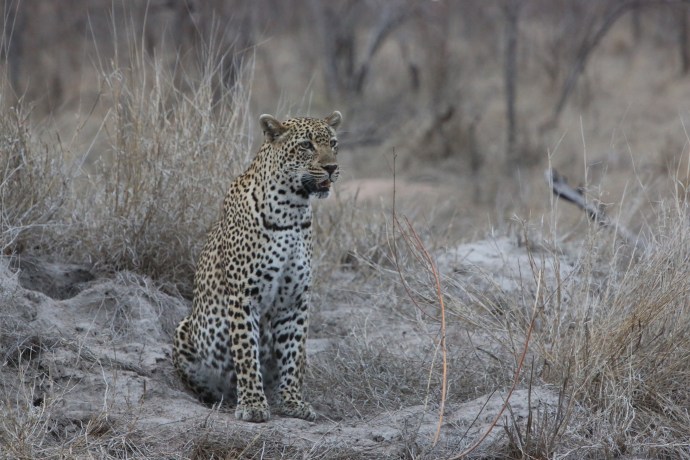
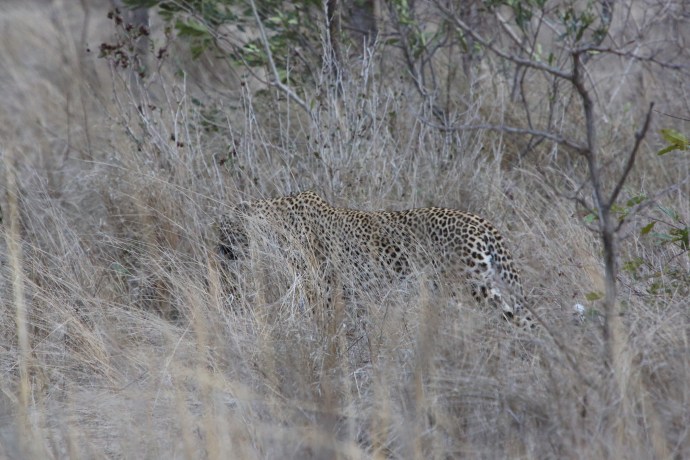
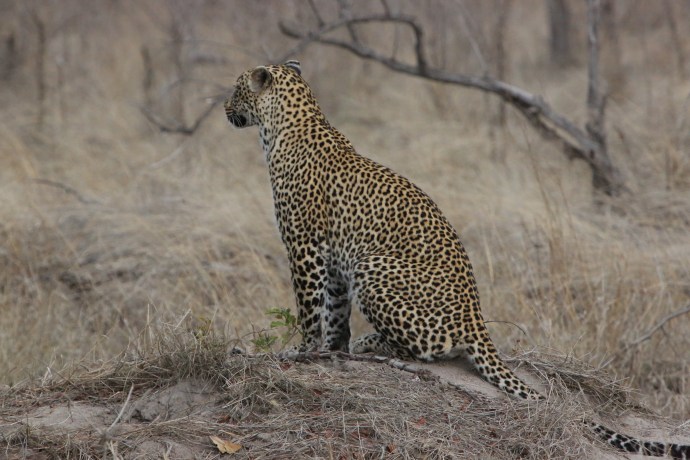
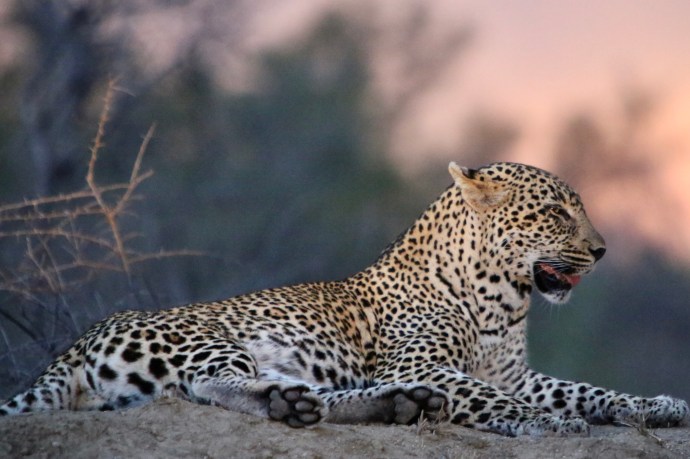
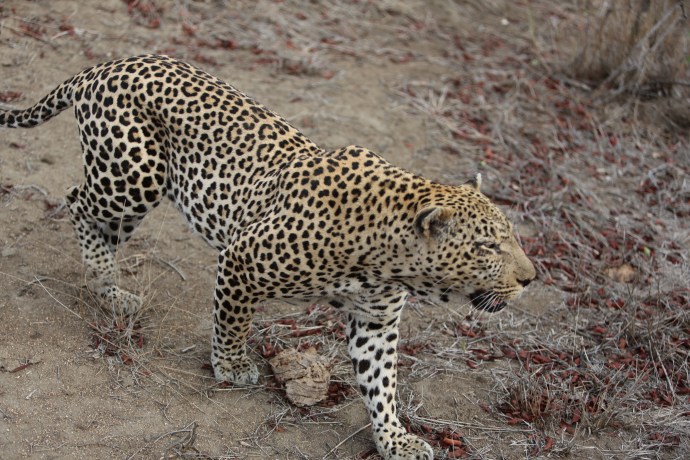
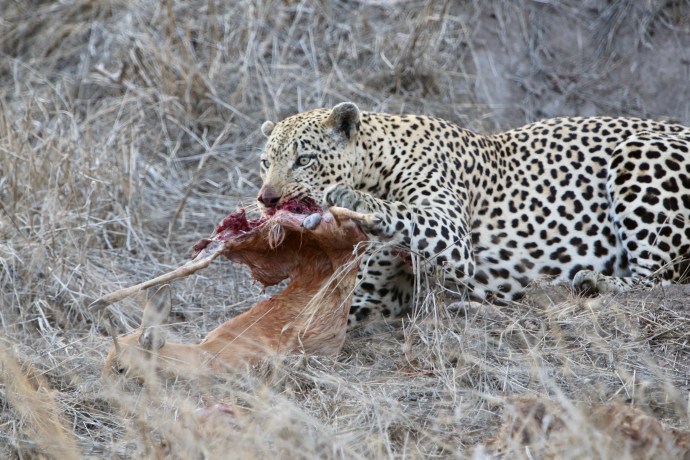
She suddenly stood at attention. Each one of her senses heightened. A storm was coming. The perfect time for the female leopard to find a meal for her 6-month old cub. The winds mask her scent from prey and makes it harder to hear her footsteps. We were on our final safari excursion last night when Ruth, our guide, got a radio message that the mother leopard had been located. She wasn’t far from us and it didn’t take long to find her. Soon after she came to attention she crouched down and started moving in a deliberate way through the long grass of the savannah.

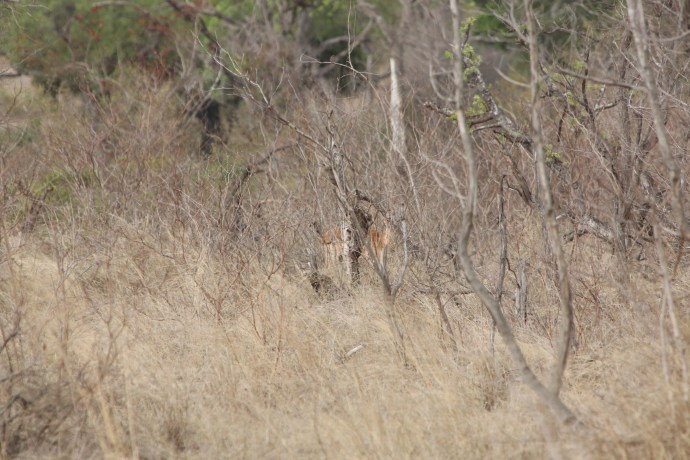
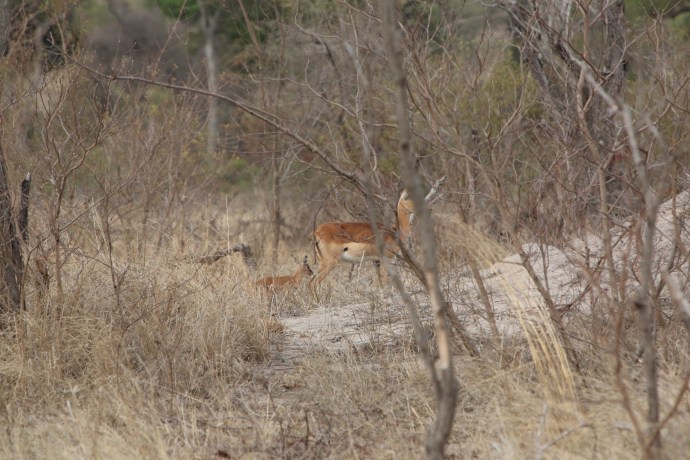
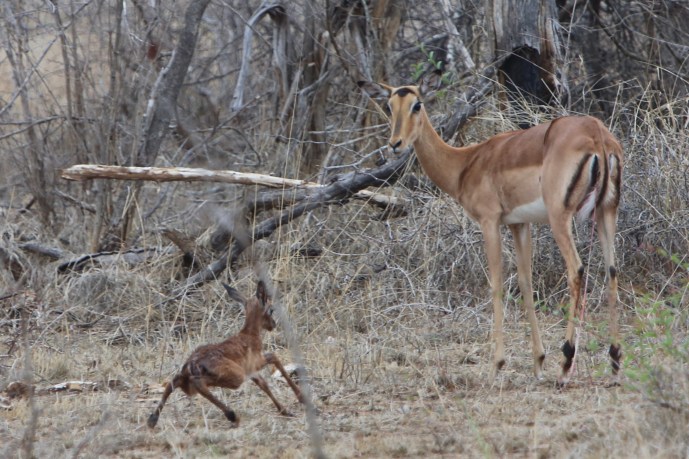
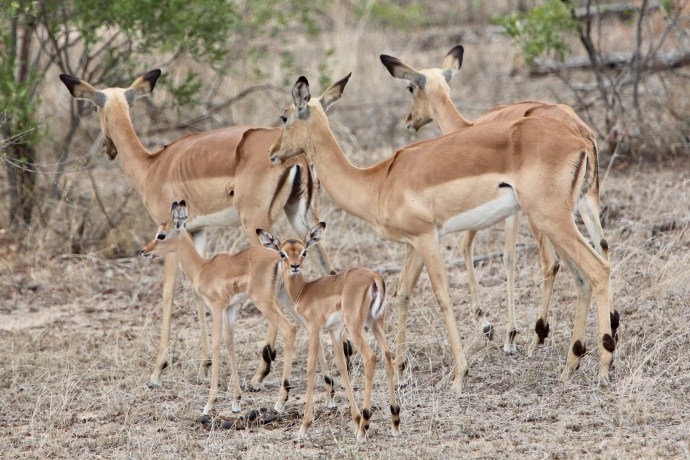
It is late Spring in the African bush. Impalas, which are like small deer, are everywhere. The females are delivering their babies in droves. We had seen several new mothers and their babies over the past couple of day. Impala mothers separate from the herd when they deliver and they stay alone with their fawn for about three days to allow the mother to imprint on their newborn. The babies are able to walk within only a few minutes. But, of course, they are slower and less agile than they will be as they grow. A new mother with her fawn was hiding in the tall grass and shrubs about 200 yards from us.

Leopards are very patient hunters. They are extremely fast but don’t have great stamina. So, they work to get as close as possible without detection before they pounce. Impalas too are fast. They are also more agile than their predators. Still, with a baby in tow, mothers are far more vulnerable.

The leopard stopped and surveyed the situation. She had moved to within 100 yards of her target and was determining her next move.

She then began her move. She stealthily crept closer at a measured pace.

We had a vantage point that allowed us to see both the leopard and the impalas. The mother impala was frozen. She knew that escape would be a challenge. When the leopard got within about 25 yards she sprinted toward the impalas. Mother and baby ran behind a large rock closely followed by the leopard. We thought for sure the leopard had caught one or the other. But, they eluded the leopard by making a 90 degree turn and they came running back from behind the rock in the other direction.

As we watched all of this develop we couldn’t help but wonder whose side we were on. On one hand we wanted the mother and baby to survive. They were cute and vulnerable. On the other hand the leopard was hunting for her baby and without food, it would surely die. We were mere spectators as intervening on behalf of one or the other isn’t morally proper. Nature can be cruel and difficult to accept, but, the circle of life requires this drama to be played out.

Seconds later the leopard caught the baby impala. We heard a small shriek and it was over. The mother, who had escaped, looked on from a distance with what we interpreted as a deep sadness.

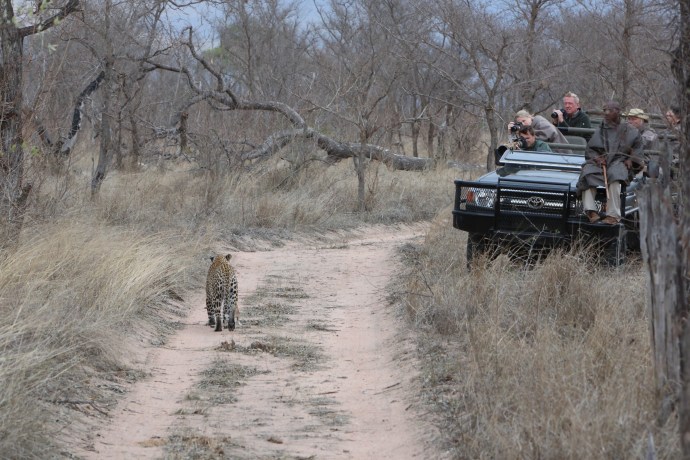
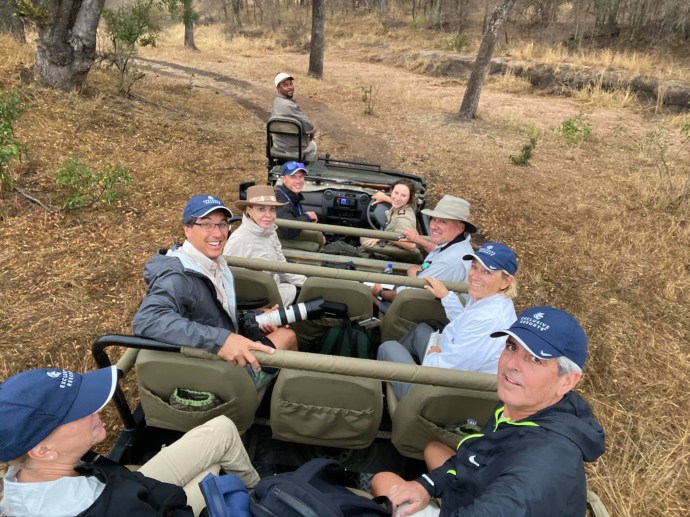
As the storm clouds grew closer the leopard began her trek back to her cub’s den. She traveled about a half mile as we followed. It is fascinating the way these animals pay absolutely no attention to us. They do not see people in Land Cruisers as a threat. We were nothing more than a part of the landscape to her.

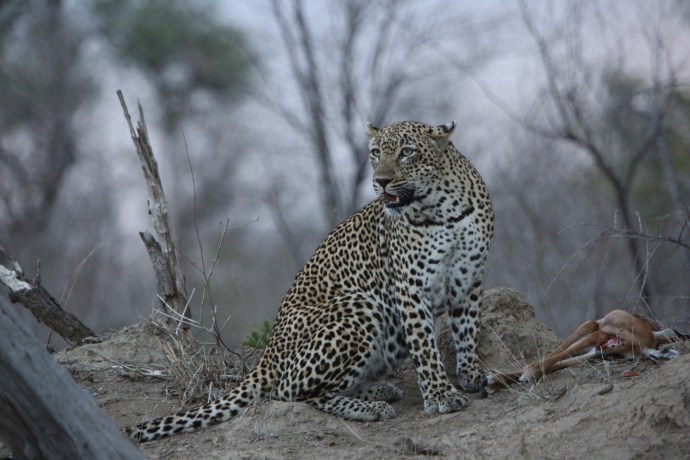
The leopard reached a clearing and set down her kill. She made a bleating call to her cub and waited. The winds continued to blow hard and the cub did not appear. At six-months old, it is beginning to wander off and likely did not hear her. The mother leopard began to look anxious. It isn’t unusual for a group of hyenas to follow a leopard and steal their prey. While the leopard could surely fight off a single hyena, they are no match for more than one. Her cub still didn’t appear. She picked up the fawn and continued to head south.

The bush is spotted with termite mounds. They range from a couple of feet to ten feet high. Many are abandoned and used as dens by mongoose, warthogs and other smaller animals. The leopard headed toward a termite mound situated next to a large tree. She climbed to the top of the mound. There she seemed to relax. From this perch she could see any approaching hyenas and should they come, she could climb the tree. Leopards are strong climbers and can carry over 200 pounds up a tree so the fawn provided no challenge should she need to ascend.

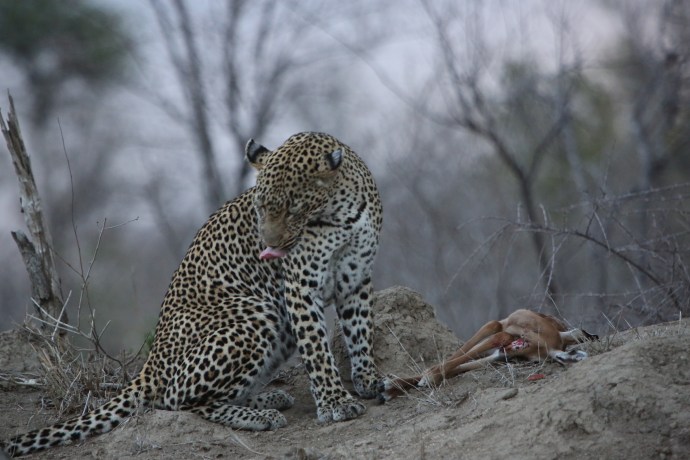
Mother leopard continued to bleat (that’s the only word that I can think of to describe the sound) for her cub. But, as she relaxed, she also began to clean herself not unlike a house cat does.

The cub still did not appear. She laid down and continued to wait. The thunderstorms grew close with lighting strikes and thunder. As the sun began to set and the storm upon us, we decided to head back to our lodge.

As we drove back to camp we hoped that the cub was okay. This morning we heard that it was spotted in the same area we had left its mother the night before. I assume it had a full belly.

The circle of life continues.

Categories: Africa, Safari, South Africa, Travel | Tags: , , , , , | 2 Comments

Things We Learned on our First Safari

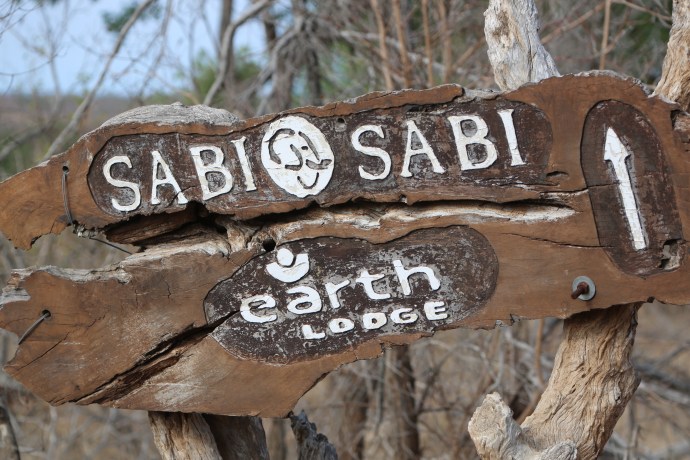
Brad and I are in Sabi Sabi Private Game Reserve experiencing our first safari and enjoying every second of it. Here are a few things we have learned so far. In no particular order whatsoever.

— Safaris happen when the animals are most active. This means that you get up at the crack of dawn, rest during the middle of the day, and go back out in the evening. Because you are out for three and four hour stretches, they do require that you plan ahead for your beverage management. For me, that means maybe only a half cup of coffee before we go! Yikes!

— Be prepared to gain five pounds. The dining schedule goes like this.

5:30 am: Light Breakfast

9:00 am: Hearty Breakfast

1:00 pm: Lunch

4:00 pm: Afternoon High Tea

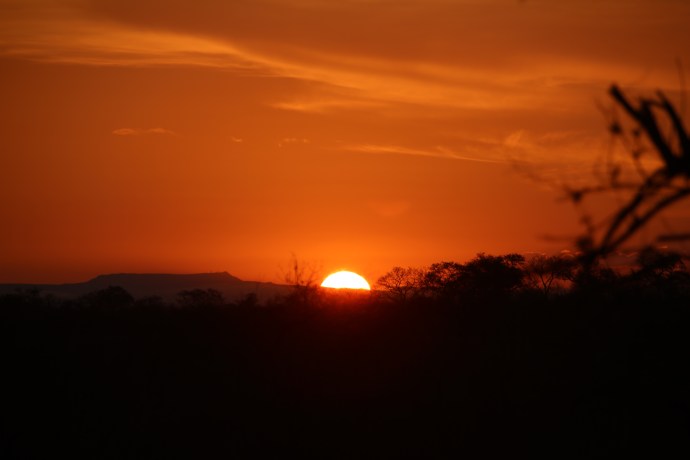
6:30: Cocktail while watching the sunset in the Savannah

7:30: Pre-dinner drinks in bar

8:00: Dinner

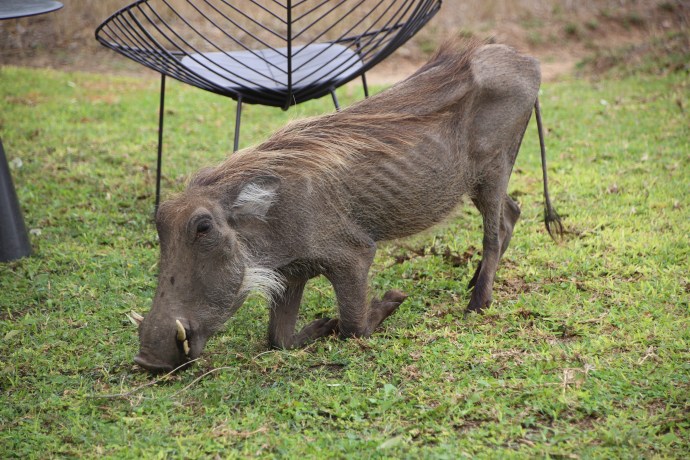
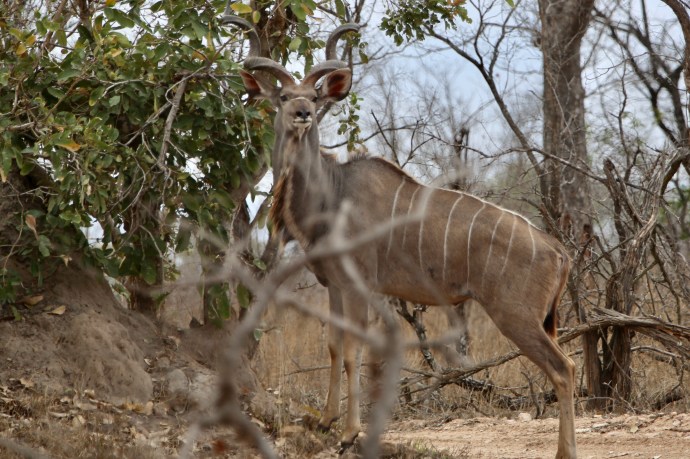
— Have your camera at the ready at all times. Impala, Kudu, and Warthogs have joined us at the lodge and at our patios. Apparently, just recently an elephant was found on the roof of our lodge!

— You will be escorted to your room by a guide when it gets dark. You don’t want to become someone’s midnight snack!

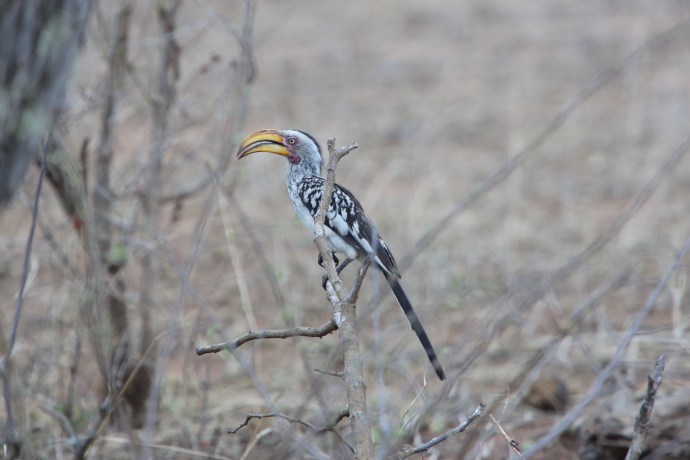
— Safaris can be relaxing. There are hundreds of species of birds here and their songs are very peaceful. I may have become a “birder” on this trip and could be joining Mary Frandsen in her love and appreciation of birds. Sorry Brad and Mike!

— Safaris can be joyous. We witnessed the birth of a baby impala and watched her take her first steps. She wobbled and fell down several times at the beginning but with her Mother’s encouragement she was up and running in about five minutes. It was joyful.

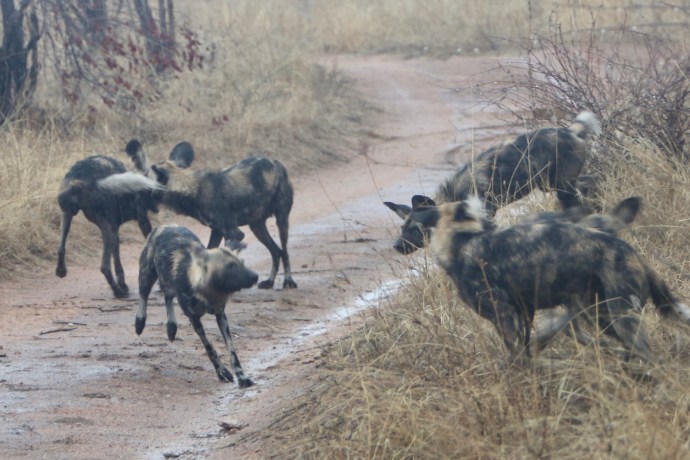
— Safaris can be intense. Think the Indiana Jones ride in Disneyland on steroids. We got a call that there was a wild dog siting one morning and our guide, Ruth, sped so fast in the pouring rain that we may or may not have almost lost Mary Stevens out the back of the Jeep once or twice!

Safaris can be heart-stopping. We came upon a leopard yesterday and he came within five feet of our Jeep in his effort to go find dinner. A few of us in the Jeep stopped breathing for a moment or two.

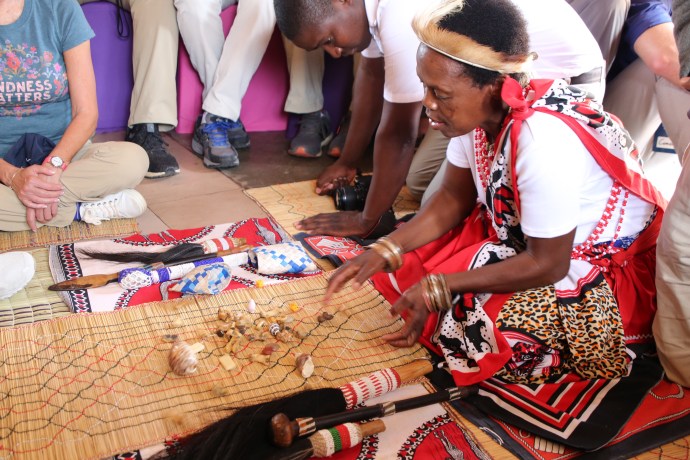
— Shamans are real. We visited a shaman in the nearby village and she predicted our group would see a leopard and within thirty minutes on the ride home we all encountered our first leopard. He had been eluding us for days.

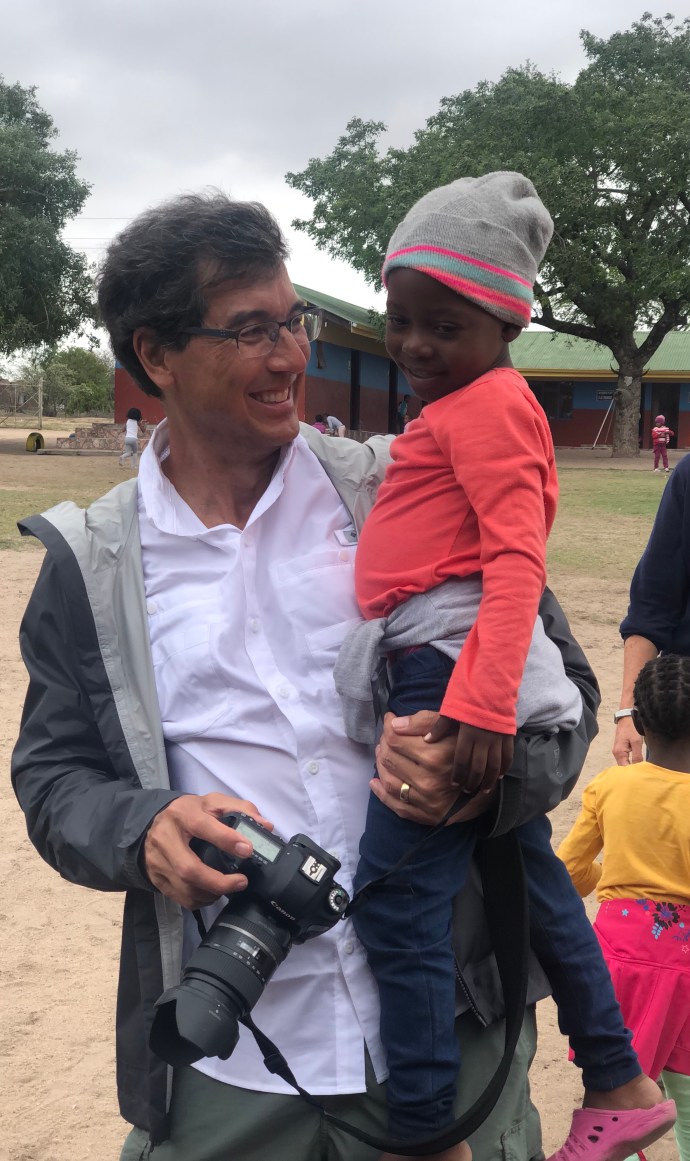
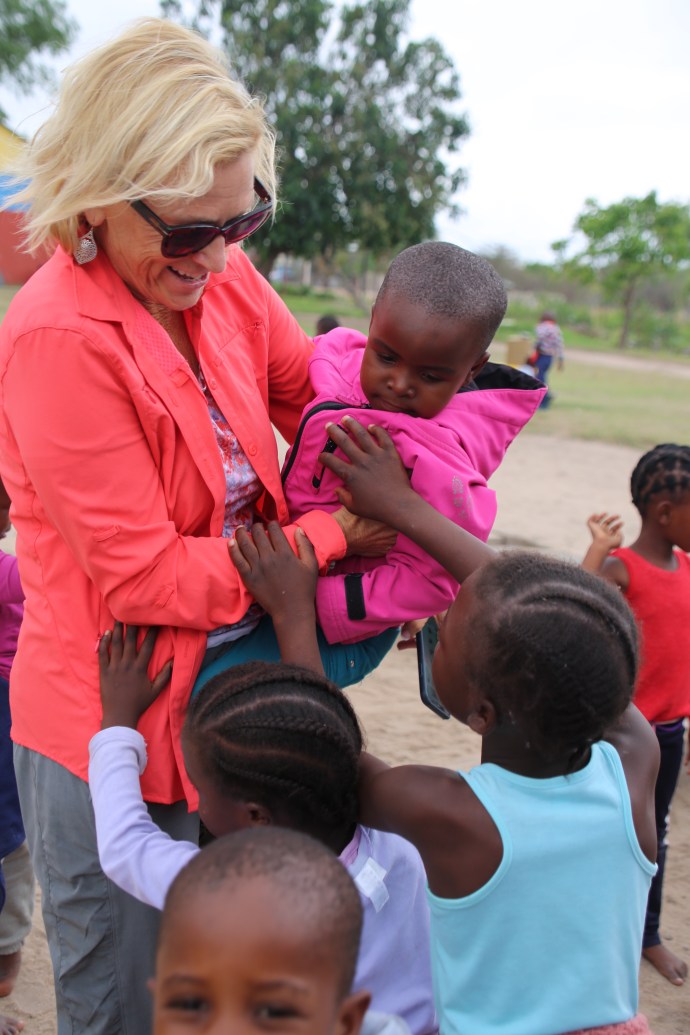
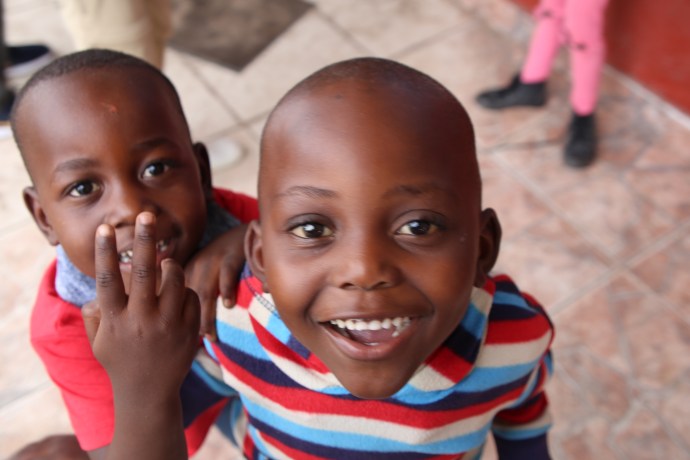
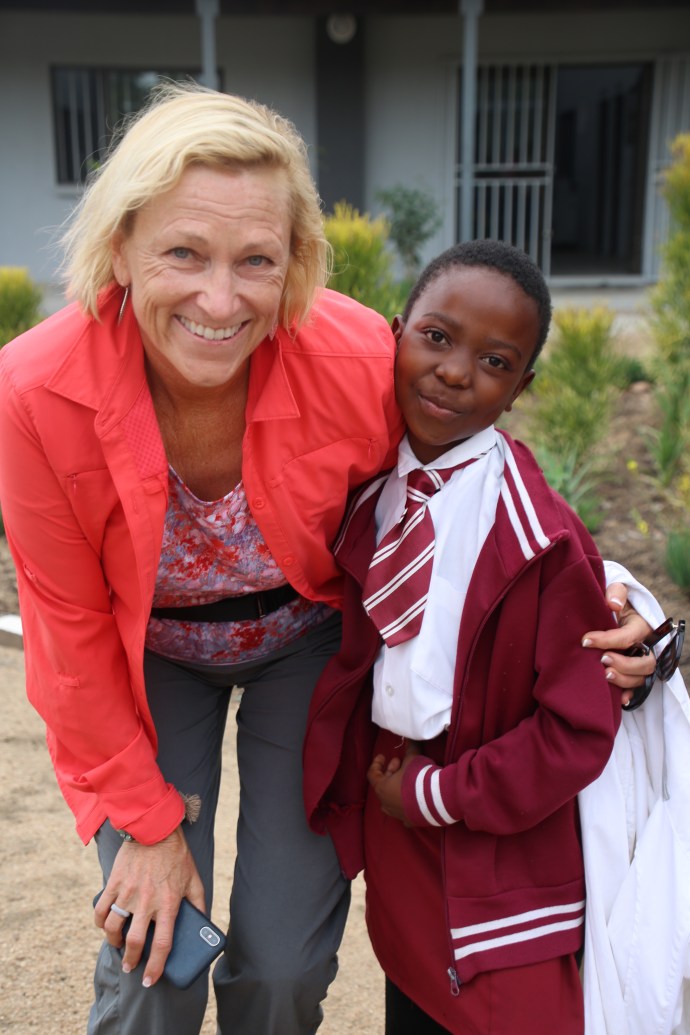
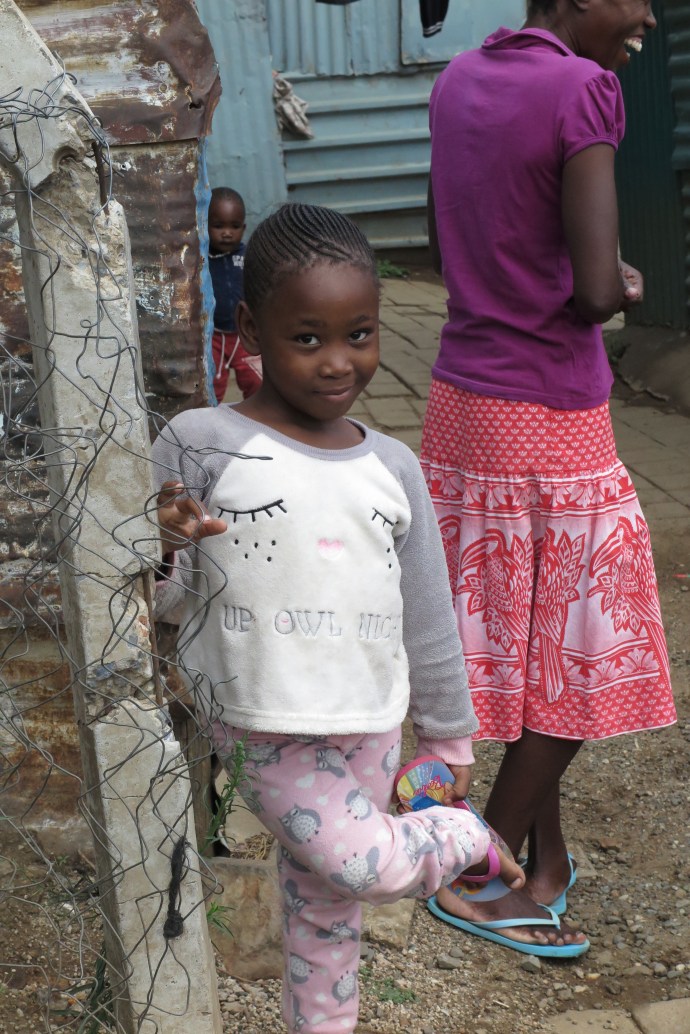
— African children are loving and are eager to pose for photos and give you hugs. We spent a morning at several nearby schools and were completely overwhelmed by the children’s hugs and smiles.

— Mothers are the heroes of the Savannah but also can be the most vulnerable. The gestational periods for elephants can be up to 22 months , the Rhino up to 15-16, while the hippo and impala are only 6-8 months. The Lionesses have cubs in only 110 days. The Mothers we saw were very protective of their young while the male species were off galavanting or possibly watching football! Sadly, Mothers and Babies can also be prey because they are the most vulnerable especially after they have just given birth.

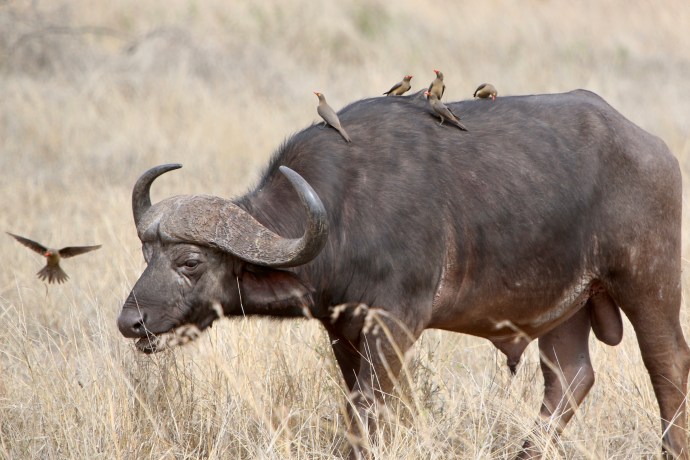
— There is an incredible diversity of animals and birds on the Savannah and they even provide you a check list to mark them off! I love lists so it has been great fun. So far, I have checked off 24 animal species including animals I had never heard of like Kudus, Bushbucks, and Duikers. We have also checked off 32 species of beautiful, colorful birds with names like the Square-Tailed Nightjar, the Red-Billed Oxpecker, and the Lilac-breasted Roller.

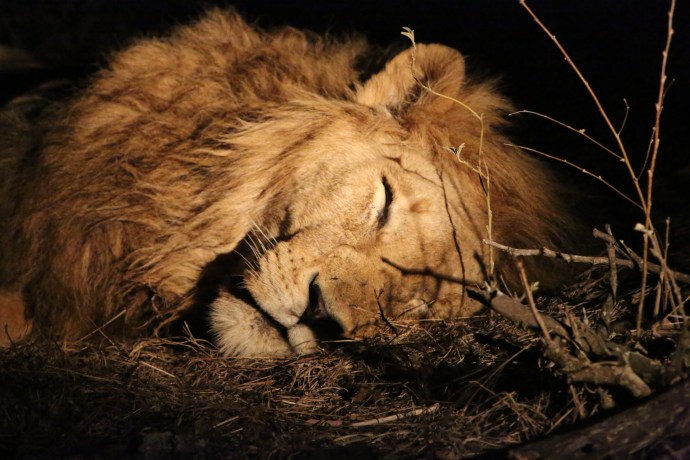
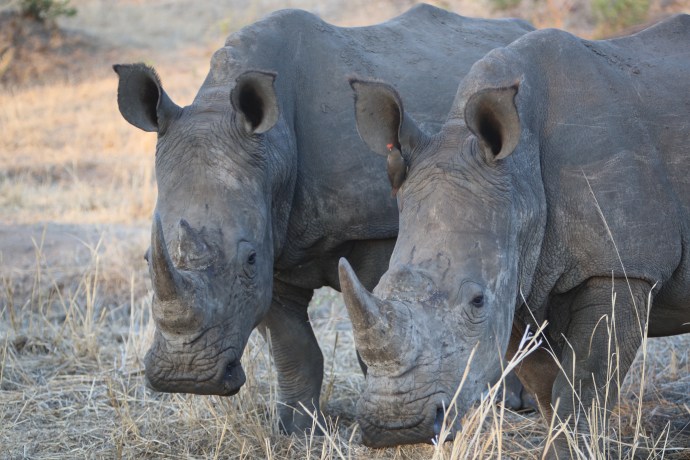
— We saw the Big Five and are allowed to go off road to follow them. So far, we have seen Lions, Rhinos, Cape Buffalo, Elephant, and our elusive Leopard. Following a leopard as he went after a kill might be one of the most exciting animal experiences I have ever heard. We have been close to seeing the Magnificent Seven which include all the Big Five, Wild Dogs, and Cheetah. All we need to do is find that rarely-sighted Cheetah.

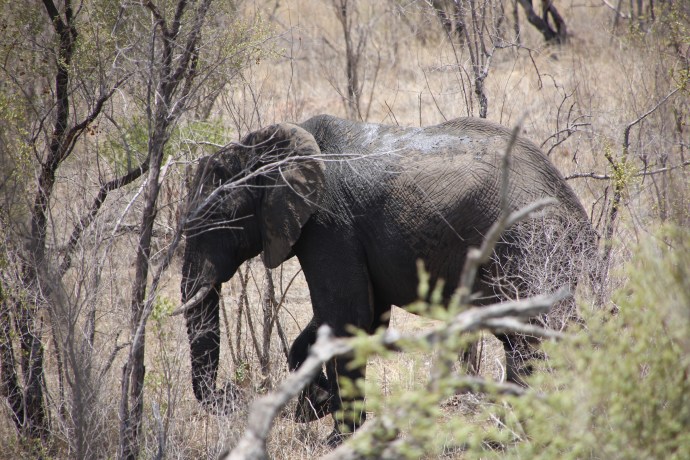
— Bush Walks have their own element of excitement. We went out today with two guides whose rifles were loaded and told us what to do if we happened to run upon a lion or elephants. The rules are no walking and talking and no running away or screaming if we happen upon a large animal. While we were on foot, we chanced upon an elephant, a hippo, and more kudu. Not your average walk around the property!!

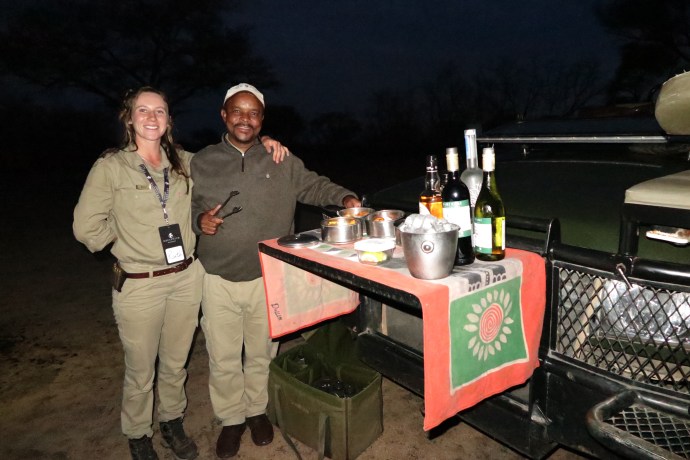
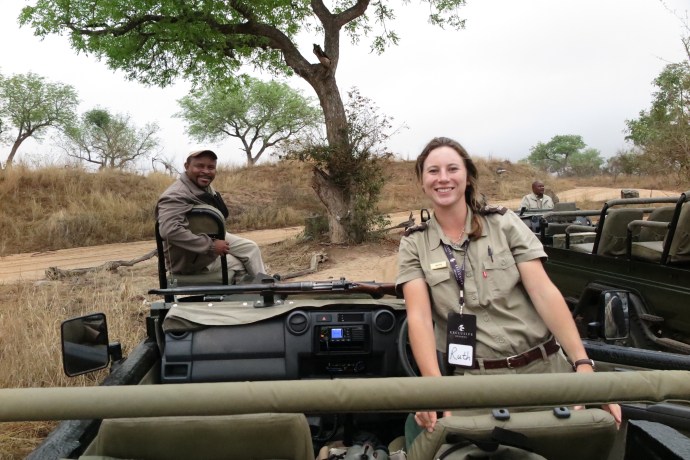
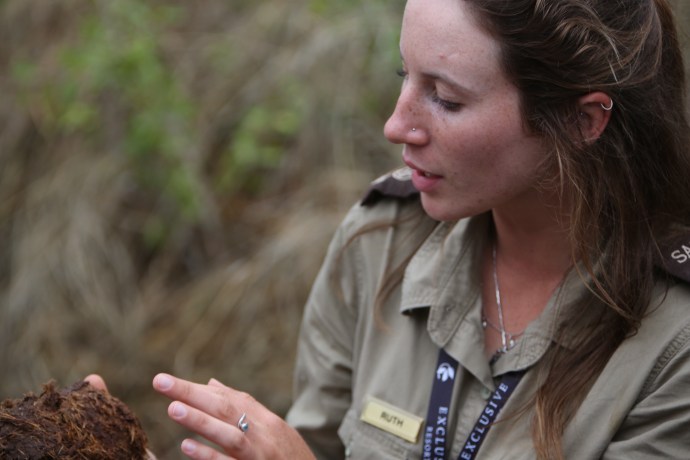
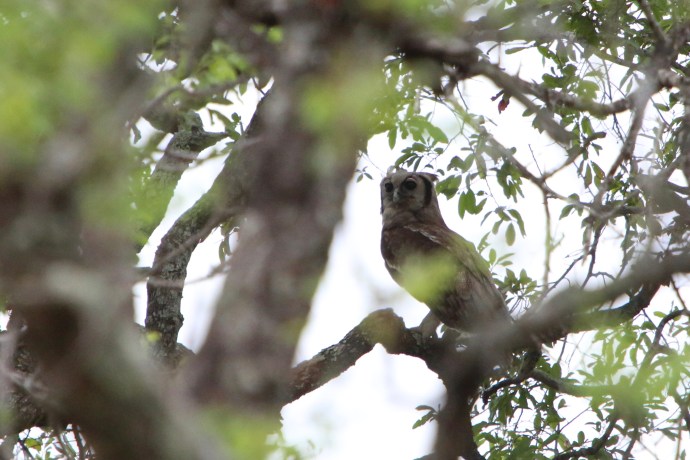
Our guide and tracker are passionate and incredibly knowledgeable. Our guide, Ruth is a 23 year old woman from CapeTown who has a love of the Savannah that is unparalleled. Her knowledge of every living creature that we have encountered is astounding. She is willing to pick up Elephant Dung and show us everything the elephants have had for breakfast as well as telling us colorful mating stories of African Crake (The males stick around in this story). Dollen, our tracker can sight a Serval in the high grass in the dark or a Verreaux’s Eagle Owl in a dense tree from afar. His sensory perception is unreal. We have felt fortunate to have Ruth and Dollen as our team this week. It is going to be hard to say good-bye tomorrow. There will be tears.

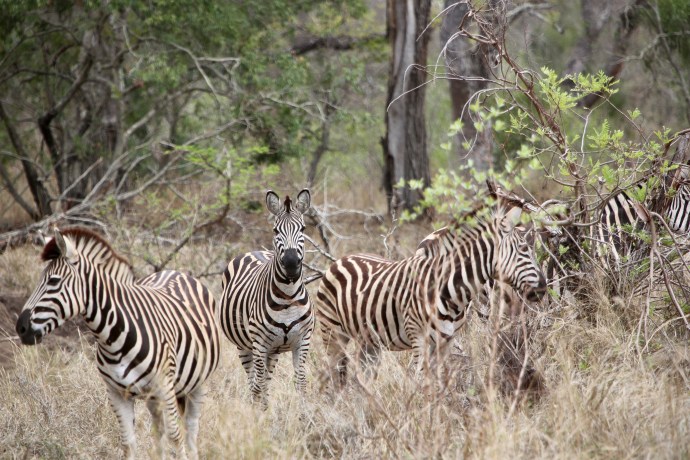
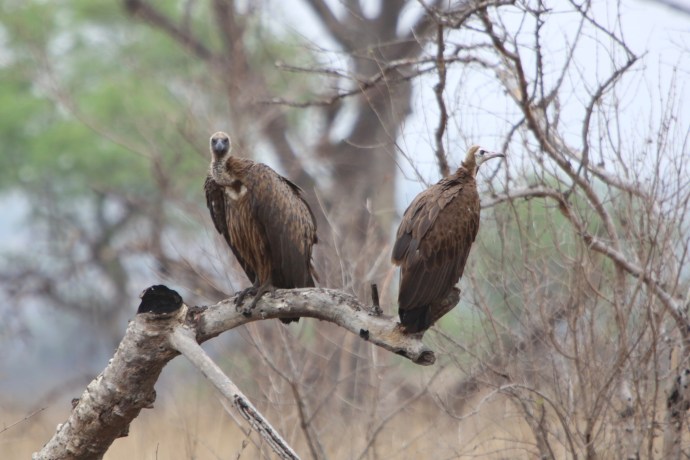
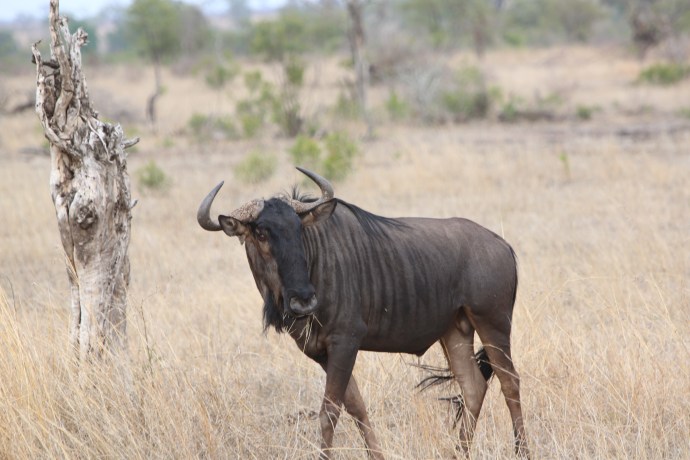
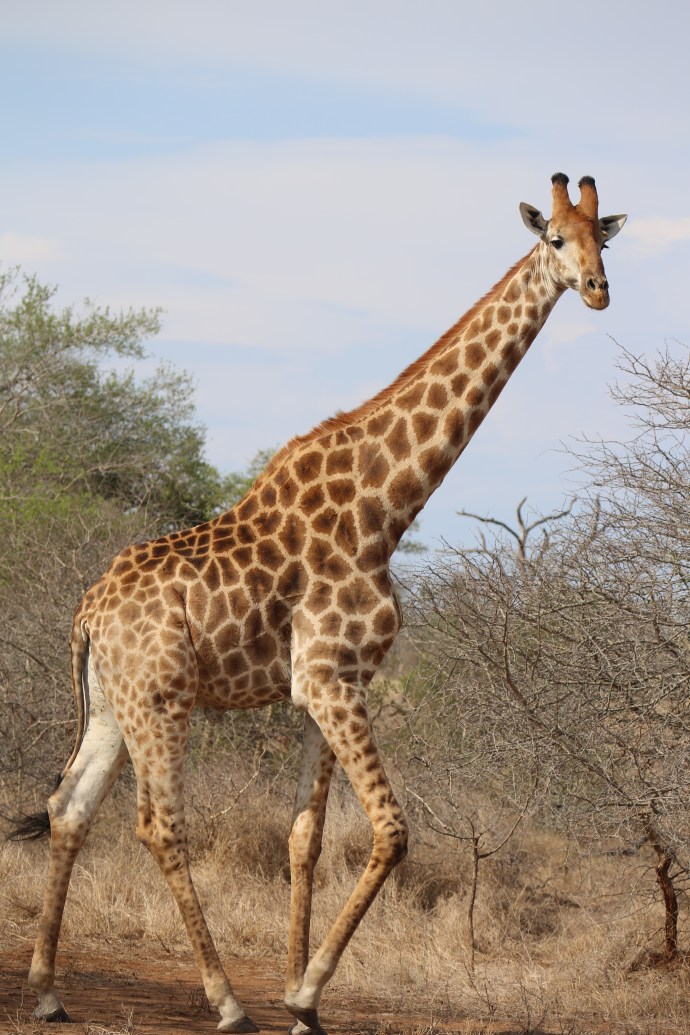
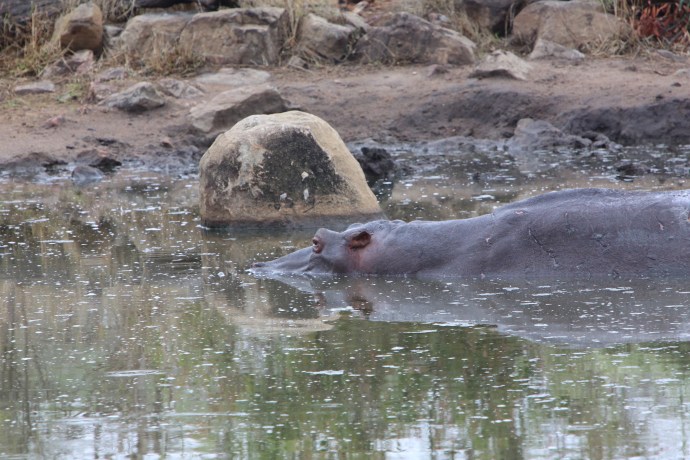
Here are a sampling of other animals we saw along the way:

Categories: Africa, Safari, South Africa, Travel | Tags: , , , , , , | 9 Comments

Johannesburg — Black, White, and Gold

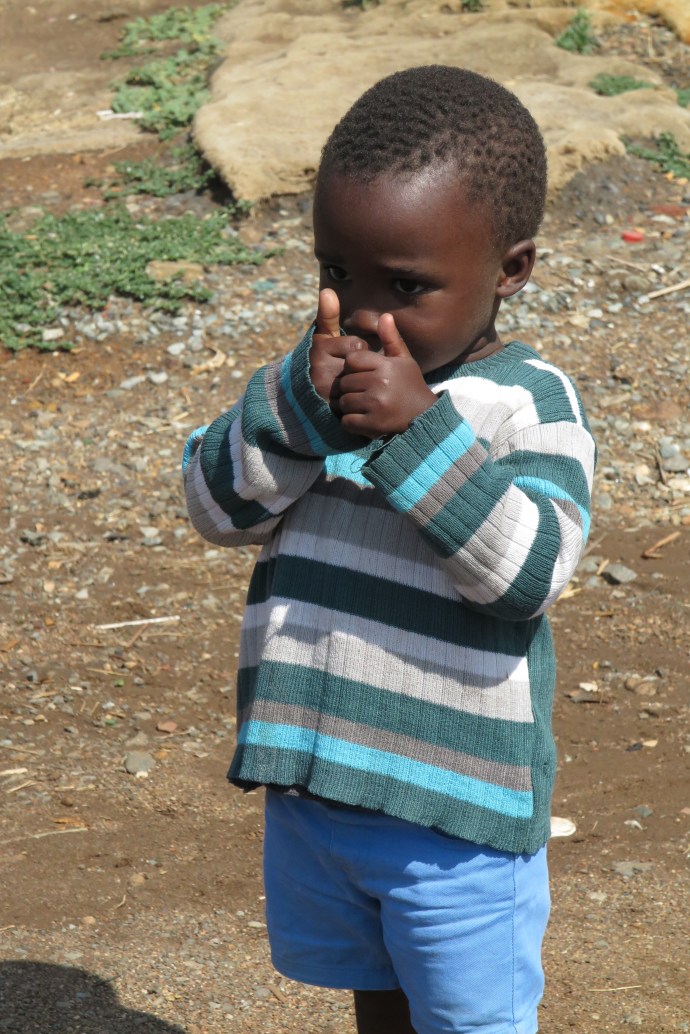
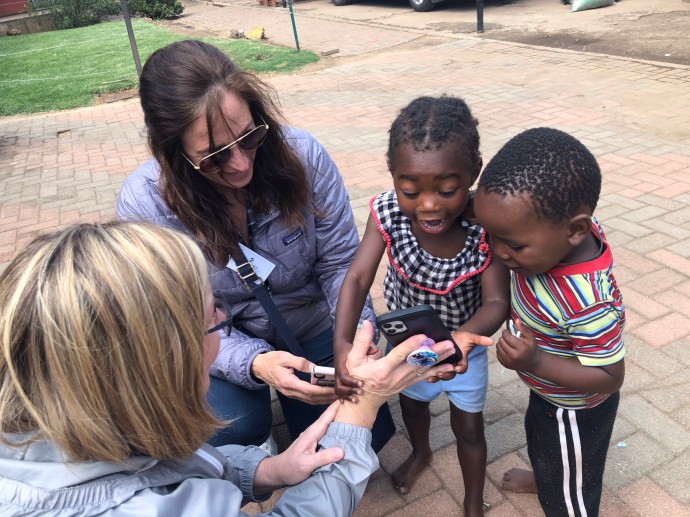
A little girl smiles shyly and strikes a timid pose. A toddler gives two thumbs up. Another little girl enthusiastically takes a selfie. No matter where we go in the world, children are the same, regardless of our circumstances. The kids of Soweto are no different.

To understand the the life these kids will face, we need to give you a brief (and oversimplified) history of Johannesburg and South Africa. So, bear with me here.

South Africa was inhabited by Black African kingdoms and chiefdoms for centuries. The Dutch began to colonize the region in the 17th century and the British in the 19th century. By the early 1900s the colonists began to establish laws that segregated Black Africans and limited their ability to own land (land that they had previously owned). Africans were also given no right to vote.

In 1948, the National Party, whose leaders sympathized with the now-defeated Adolf Hitler, won the South African election and began to institute an even more repressive system known as apartheid. Africans were relocated from their homes to areas designated by the government, they were limited in their travel, and their separate education system was far inferior to that of whites. The African National Congress (ANC) was established to resist these oppressive laws. Nelson Mandela’s rise through the leadership of the ANC ultimately put him in a position to liberate the country. Lisa and I are reading Mandela’s autobiography, which he completed at our hotel here in Johannesburg. Seeing the city has helped bring his writings to life for us.

After significant strife over several decades, including Mandela’s 28-year imprisonment, apartheid was finally repealed in 1991. With Black Africans now allowed the vote, Nelson Mandela became the country’s first native African president.

Johannesburg is a relatively young city. It wasn’t established until 1886 when one of the world’s largest deposits of gold was discovered. This caused a gold rush, primarily of Dutch and British mining companies. Because England established the global price of gold, the way mining companies increased their profits was through cheap labor from Black Africans. Today, at 5.6 million residents, Johannesburg is the largest city in South Africa.

Soweto (an acronym for SOuth WEstern TOwnships), was one of the areas near Johannesburg that was designated for African relocation. Nelson Mandela lived here. It has a population of roughly 1.5 million residents today — with almost exclusively Black residents. We visited Kliptown, one of Soweto’s townships.

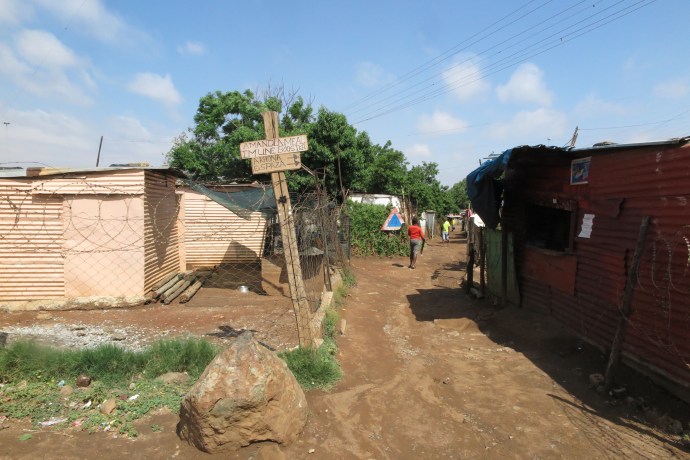
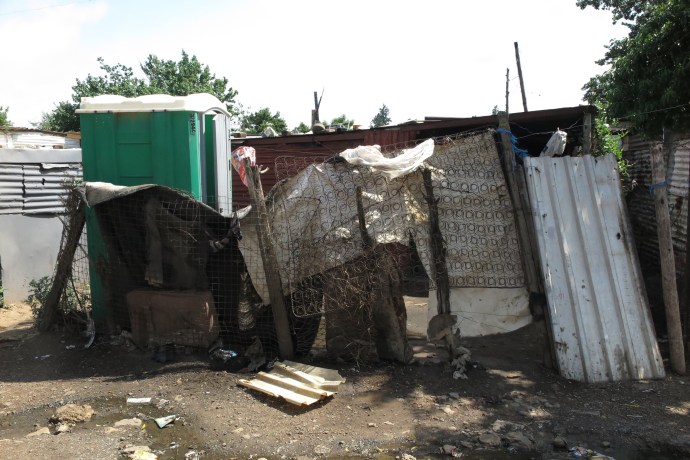
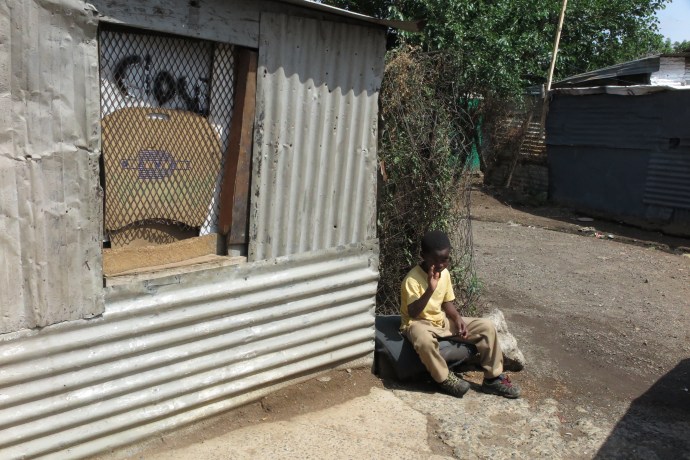
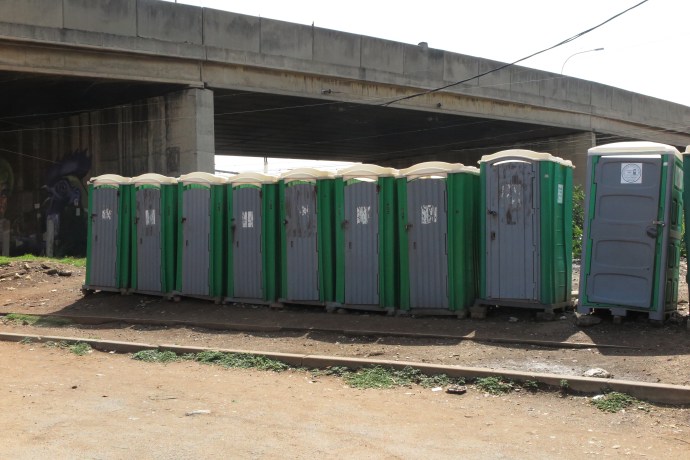
Kliptown, like much of the rest of Soweto, is comprised of shacks made from sheet metal, plywood, chicken wire and whatever else people can use as building material. Homes aren’t insulated and often leak. So, people get cold in the winter, hot in the summer, and wet when it rains. This town of 46,000 uses port-a-potties for bathroom facilities with roughly 12 to 15 families sharing one port-a-potty. Since they are only emptied once a week, they often fill to overflowing. There are 50 water spigots in town to be shared by all residents for drinking, washing, and bathing. Opioid use is at epidemic proportions.

There is no school in Kliptown, so the kids walk 30 to 45 minutes to get to school in a neighboring township. Life is hard here. Despite the end of apartheid and the implementation of majority rule, centuries of oppression cannot be rectified in a couple of decades. There is tremendous wealth in Johannesburg. We drove through areas with mansions walled off with electric wire not 20 minutes drive from Kliptown. The wealth gap is stark and felt so wrong to us.

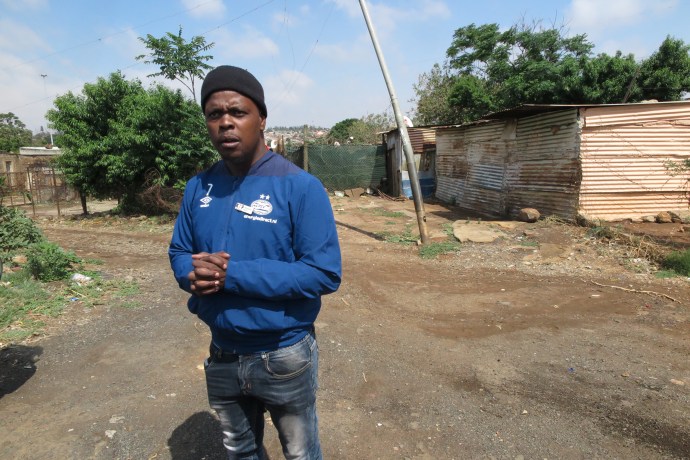
With the many challenges we witnessed you would think that people would simply give up. That wasn’t what we saw. We saw the happy children playing like those in our own neighborhoods. We saw adults meeting in the center of town to work through the issues of the day. And, the most hopeful sign for the community was shown to us by Monwabisi Baleni (also known as Mo).

Mo is one of the leaders of a community program called the Kliptown Youth Program. This program is designed to give the children of Kliptown supplemental education so they can graduate high school and go to college or vocational school. Education is empowering and if the community can educate its children and prepare them for good employment, they can break the cycle that residents are experiencing today.

The program has over 500 kids participating. Mo says that this is only one-fifth of the number of kids that would like to be in the program. But, they are limited by funding. His heart breaks each year when children cry when they find out they didn’t get in the program.

But, for the 500 who are in, they get reinforcement of their schooling in math, English, and science. They learn basic computer skills and other practical vocational subjects. Their parents can even get certified in computer skills. To date, they have seen 50 students graduate college (nearly none had prior to the program) with many more to come as they work their way from first grade through high school.

Human resilience is a powerful thing. Lisa and I were deeply moved with what we saw. It was at once depressing and hopeful. We have vowed to do what we can to help. If you want to pitch in, just go to https://www.kliptownyouthprogram.org.za/ and donate to their effort.

It was a powerful day for us as we also visited the Apartheid Museum and Nelson Mandela’s home in Soweto. The cruelty man can impose on others is discouraging, but, the good in people will always prevail. Mo reminded us of this in a most poignant way.

Next, a safari in the Sabi Sands Game Preserve. Stay tuned . . .

Categories: Travel | 1 Comment

Failure to Launch

Well, it’s 11:45pm and we are sitting in San Francisco airport’s baggage claim waiting to retrieve our luggage. Yeah, I know. We’re supposed to be on our way to Johannesburg, South Africa.

We arrived at SFO promptly at 4:15 for our 6:45 flight because Lisa likes to be prompt when we travel. I, on the other hand, like to get to the airport just in time to board. But, after 34 years of marriage, one learns to compromise — which means Lisa gets to decide.

We were entertained in the waiting area by a mother with a toddler and a 3-year old. They were running around the waiting area saying “aah, aah”. Constantly. Really loudly. That made us happy. Not because we like kids that are yelling really loud. We were happy because we weren’t the ones chasing the kids around the waiting area.

After about a 30-minute delay, we boarded our United flight to Frankfurt. Then we sat. And sat. Apparently a light in the cockpit suggested one of the doors wasn’t closing. The crew knew the door was closing, but, clearly that little light in the cockpit didn’t. So, we sat some more.

After about 3 hours the pilot glumly announced that the flight was cancelled and we all needed to get off. Lisa and I didn’t want to get off because we had to get to Johannesburg. The flight attendant politely nudged us out of our seats and off the plane.

Travel, like life, can throw you unexpected curveballs. It happens to all of us. Success and happiness don’t depend on things going as planned. They depend on how you respond. For Lisa and I it meant waiting in line to reschedule our flight for tomorrow, calling the house sitter to send her home, grabbing bad Asian food and a beer while we waited for our luggage to be retrieved, and then riding home in an Uber where I sit writing this blog entry.

We are feeling pretty fortunate even though we’d rather be on our way. After all, we’re not the mom chasing around two toddlers.

Categories: Africa, Safari, South Africa, Travel | Tags: | 3 Comments

Off to Africa!

Well, it’s been four years since Lisa and I have taken a blog-worthy trip. We leave on November 6th for South Africa and Zambia and we feel this one is certainly going to be worth writing about. For those of you who are first-time readers of this blog, you’ll find we write about the history and economy of the places we visit; we write about the people and cultures of those places; and we write about our adventures (or misadventures — see our Chile experience entitled Crimes, Punishment, and Other Travel Inconveniences). We’ve chronicled our travels to Southeast Asia, South America, and the Himalayas.

South Africa promises to be an adventure of a lifetime. The country has a deep and troubled history. We look forward to learning about the culture and to meeting its people. Current events there are also interesting. Lisa and I have been reading Nelson Mandela’s autobiography, Long Walk to Freedom. It’s quite long, so, I am not sure we’ll finish it before we arrive. But, we at least have a start on understanding the nature of this great man.

We look forward to bringing you along on the trip. Our great friends Dave and Mary Stevens will be joining us so that increases the fun and, um, potential for mischief. Follow our blog and we’ll do our best to convey the depth and texture of this beautiful part of the world. Oh, and we are looking forward to capturing and sharing photos of the people, the wildlife, and the landscape too!

Categories: Africa, Safari, South Africa, Travel, Uncategorized | 8 Comments

“Freedom is just another word for nothing left to lose….Nothing don’t mean nothing if it ain’t free.”

We are on our way back from our trip to the Himalayas and as always it’s the story of the people we met and the guides we got to know that complete the story of our trip.  We have seen more Buddhas than we can count and visited numerous fascinating temples and stupas  Over time, these places will probably all run together in our mind but the stories of the people on our trip will stick with us for a long time.

Our guide in Bangkok, Sarah, taught us about “sticking together like sticky rice” as we toured the crowded city of Bangkok.  She also conveyed the importance of family and multi-generations caring for one another in her country.  We spent extra time with her and got to know all about her life at home and as a tour guide; how she refused to get married when her father wanted her to put her in an arranged marriage and how she is embarrassed by the color of her skin.  She thinks it is too dark and it makes her look like working-class.  We, of course, tried to tell her that most people around the world would never judge her that way.
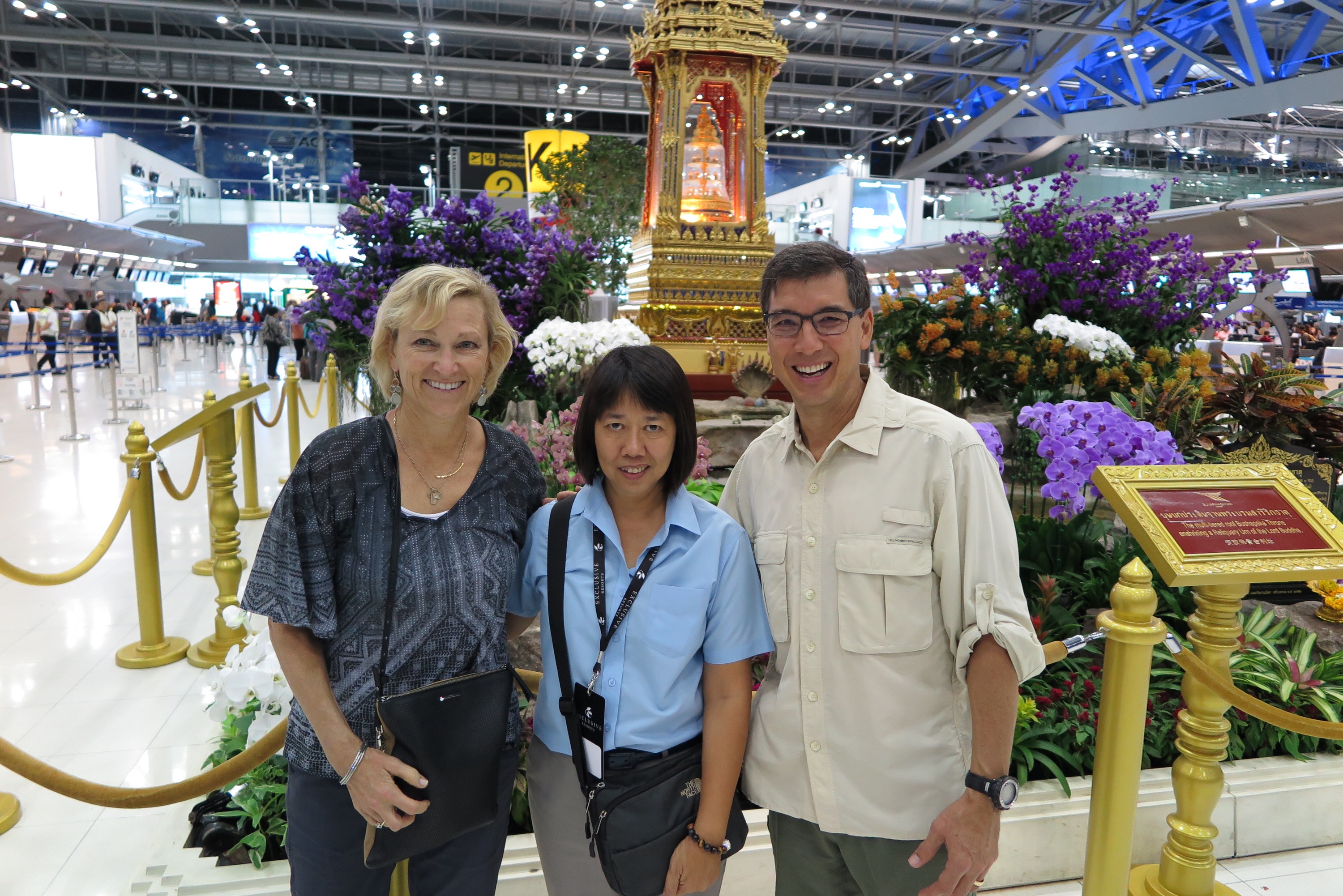
Saying good-bye to Sarah at the Bangkok Airport

Nima was our guide in Bhutan and he exemplified the people of Bhutan with his jovial nature, his devout spiritualism, and his mischievous sense of humor!  He went out of his way to get to know us and was so proud of his country and the democracy that he lives in.  The Bhutanese are extremely devout people and they seem to practice what they believe.  They are kind and loving towards their elders as well as with each other.  Bhutan was such a special place.   Not only was the scenery spectacular but the people and their smiles will be with us forever.
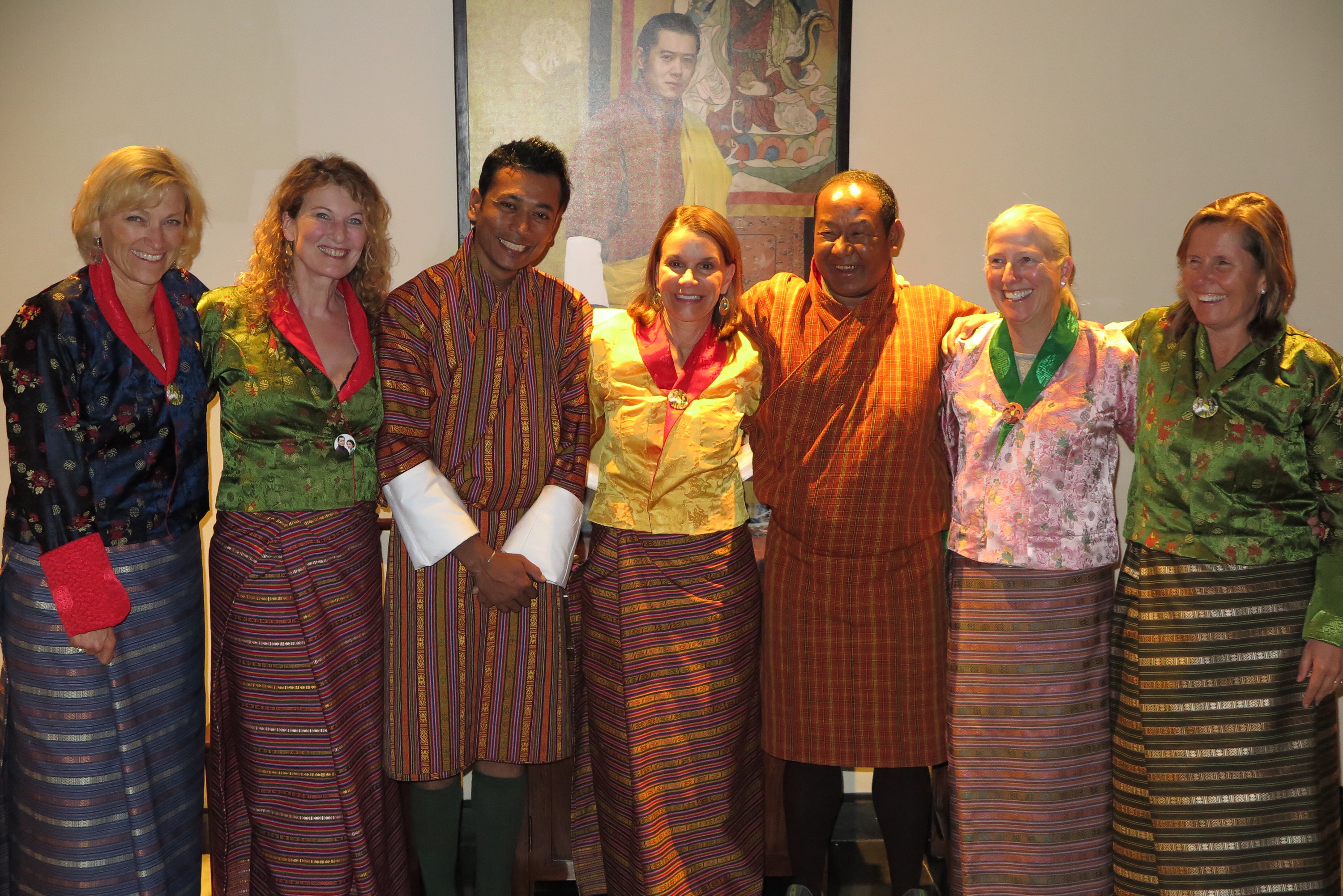
Nima enjoying some time with the ladies!

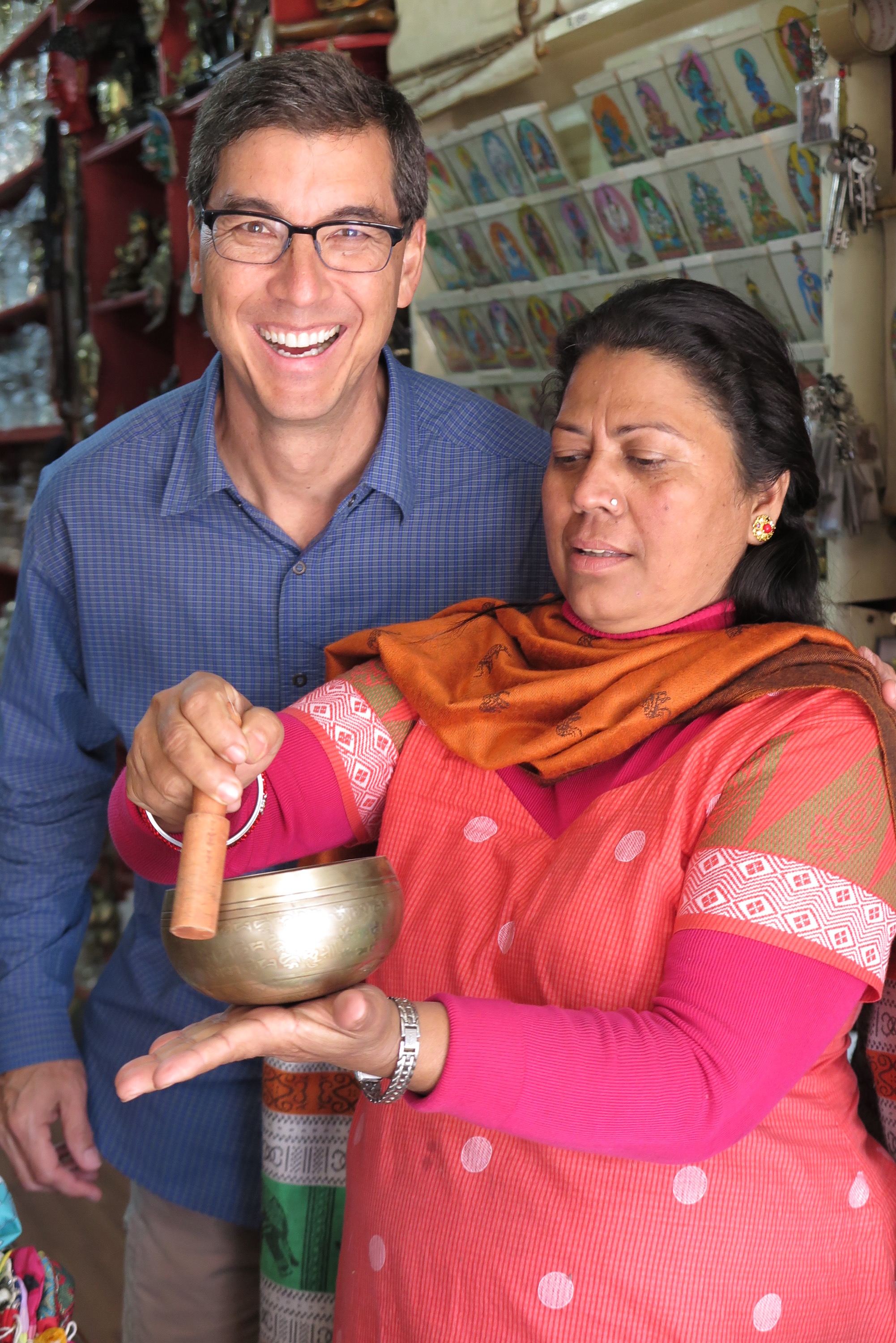
We only had a few hours in Nepal but we had a wonderful encounter with a woman who sold us some singing bowls.  She was very interested in meeting us and talking to us about our life in California and our children.  As we left, she asked us to keep her in our dreams so that one day she could visit the United States.  ( She might also have loved us because Brad is — intentionally — the worst barterer known to man and we probably payed double the price she would have settled for!)


Buying singing bowls in Nepal

 
We felt most like tourists in China and, unfortunately, didn’t get to know our guide very well.  She clearly had a speech that she was supposed to give the tourists and stuck to that.  The other bus, however, had a young woman who told them all kinds of personal stories and she was very open with them.  The most compelling story was about how her parents had to send her sister away for five years when she was born because of the one-child rule.  Her sister has never really been able to assimilate with the family and has had many  mental health issues as she has grown up.  China has just adopted a new law to allow two children in the family as their population is starting to age and decline.  The law should go into effect in January and we heard a lot about what the changes may mean to their country.

We were warned before we went to Tibet that we wouldn’t be allowed to ask any questions to our guide in public about the Chinese and we were strictly forbidden to take pictures of the police and the airport.  We were also told that we wouldn’t be allowed on any social media, Google, or our blog.  Katie said it would be good for us to be off of social media for a while but it is one thing to willingly choose to not go on Facebook or Twitter, it’s quite another thing when it is forbidden.  The Paris Tragedy happened while we were in Tibet and we felt very isolated not being able to read about it or hear the U.S. perspective from the New York Times or Wall Street Journal.  (That was also the day I wanted to hop back on a plane and go home and hug the girls! It’s hard to be that far from home when a tragedy hits.)

Our guide in Tibet had a lovely disposition about him.  He was patient and friendly and told us all about life in Tibet.  His country is slowly being assimilated into the Chinese culture and he says in twenty years there will be no Tibet left.  He did acknowledge that there have been great improvements in their transportation and educational systems under Chinese rule.  Hearing about our guide’s lack of freedoms made us appreciate all of the little things we take for granted in the United States.  From his inability to get a passport to having no say in the political process to having to watch what he says in public, his life has very strict limitations.  The newer Communist part of Tibet is not very attractive with identical, plain buildings and apartment houses lining the streets.  The old Tibet is full of life, culture and interesting shops.  It is sad to think that the real Tibet will slowly disappear.

We were especially taken by the number of pilgrims that filled the streets of Tibet.  The pilgrims make a spiritual journey to the Dali Llama’s palace and to the other temples of Tibet.  They can be seen circum-ambulating (walking clockwise) around the temples chanting and using their prayer beads.  They also do spiritual prostrations in front of the temples and statues.  (It sort of looks like a burpee)  We really felt like we stepped back in time when we witnessed the pilgrims throughout the city of Lhasa.

Our most unique memory of Tibet is of hiking down to a nunnery and getting our jendu blessed.  A jendu is a bright, colorful macrame’d object.  We saw them in the market and thought they looked like great Christmas ornaments for the girls.  Little did we know that once we bought them we had to get them blessed by a nun or a monk in order for them to bring good luck and ward off evil spirits.  We got lucky at the convent when the nuns welcomed us in and were willing to bless our jendu.  All of the women were smiling and chanting.  They encouraged us to sit with them and included us in a ritual of holy water and more chanting.  The head nun put barley seeds in a bag to go with our jendu to give us prosperity.  At one point in the ceremony, I closed my eyes and just listened to the sound of 40 nuns chanting and thought to myself I will remember this sound at every yoga and meditation class I go to for the rest of my life.

But the most compelling story of the trip is that of our trip leader, Rakesh.  Rakesh took care of our group’s every need with his attention to detail and compassionate nature.  He is by far the best trip leader we have ever had with our group trips.  Rakesh lives in Khatmandu with his wife and nine month old son. He was born Buddhist, learned Hinduism, and went to a Catholic school.  His parents own a souvenir shop in Khatmandu but he wanted to do more so he trained to be a guide at base camp for Mt. Everest.  He eventually learned the hard way that he didn’t do so well at high altitudes and became a tour leader in Nepal and the other Himalayan countries.  Although Rakesh was looking forward to being reunited with his family when this trip was over, he let us know he was also sad and frustrated with the standard of living in Nepal.  There is currently a gas and oil blockage in Nepal because the Nepal govenment and India cannot come to agreement on the details of the new Nepal constitution.   The blockade has been going on for two months and he will have to wait two days in line in order to get gas for his family.  He is also worried that he won’t have enough heat this winter because of the blockade and because they had a low monsoon season that didn’t create enough hydro-electricity for the country.  He made sure that we noticed how empty the streets were because no one had enough gas to drive their cars or motor scooters.   He also pointed out the tent cities where people are still living after the destruction of the earthquake last spring.  Tourism (his bread and butter) is way down since the earthquake because the country does not have the infrastructure rebuilt for tourists yet.  This fact already hurts a weak economy like Nepal that depends on money from tourism.   Rakesh questioned whether it is better to be free and have to fight for necessities or if it would be better to lose their sovereignty to India or China in exchange for a better standard of living.  We wish the best for our friend Rakesh and hope to keep in touch with him and his family.  We will certainly be paying attention to the news in Nepal and their oil and gas  and earthquake recovery situation when we get back home.  
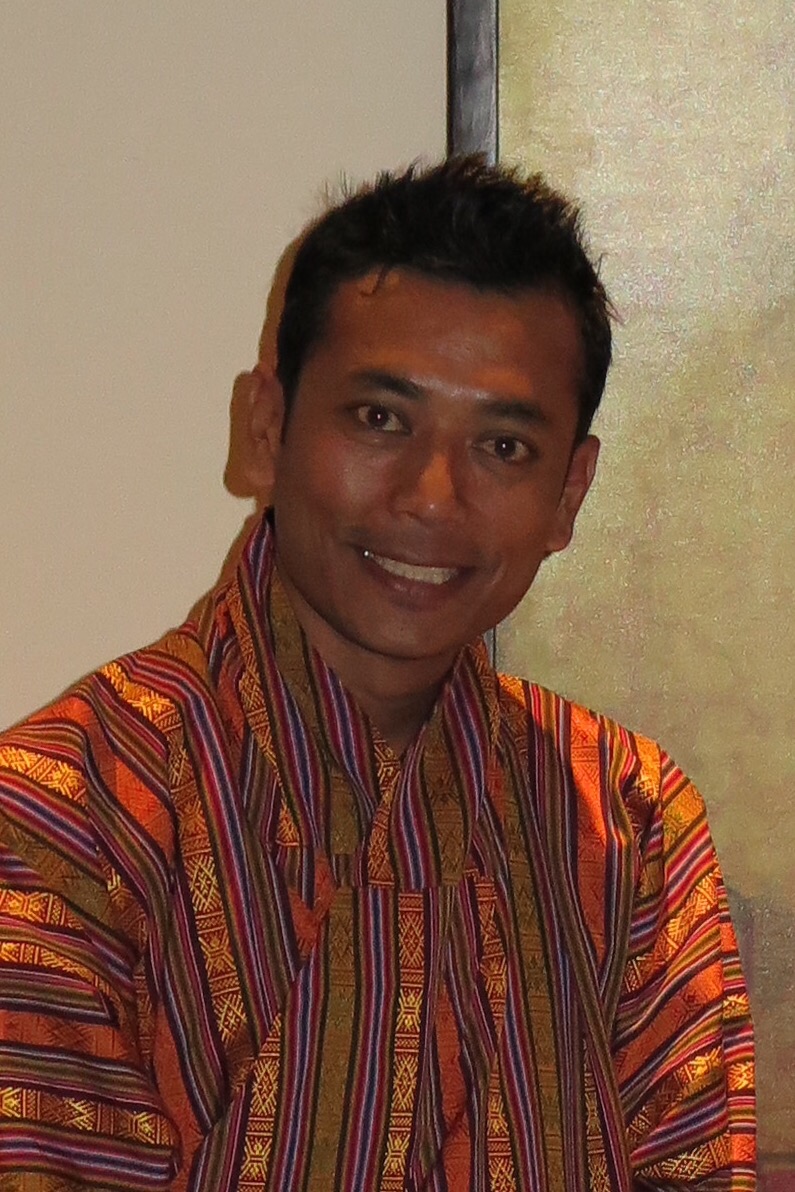
Rakesh

 
 Before we sign off from this blog, we have to finish with some of the more personal stories of travelling to the Himalayas.  These are in no particular order.

Altitude is real!  Although we had no real issues with living at 12,000 feet we did have the weirdest dreams every night. Also, watch out how much wine you drink on the Farewell Dinner at high altitude…It will catch up with you later.

Yak Meat is Chewy!  Brad tried it in all forms…Steak, hamburger, tongue, possibly ear.  It’s all chewy.

Pushing happens.

Monks carry iphones.  They can download their chants in their native language on them.  Yes, there’s an App for that.  We may have even seen a few of the younger monks texting while chanting.

Western toilets are the best invention ever!  The women in the group were toilet-challenged frequently.  The Western toilets (or the elderly and disabled toilets as they are called in Tibet) were few and far between and we had many interesting experiences waiting in line in the restrooms.  Enough said.

Although Brad didn’t get detained by security for an apple on this trip, he did lose his camera in the back seat of a taxi in Tibet.  This caused quite a stir with our tour guides which led to a brief meeting with Brad and the Tibetan police.  I don’t know if our friends at home had an “over-under” bet going with whether Brad might have an encounter with the police.  Well, it happened and somebody in Tibet is enjoying a really nice camera with all of our pictures on it.

Buddhism is complicated and varied.  Every country observes a different form of Buddhism and their belief systems are complicated. There are some universal truths that will stick with us, however.  Do all things in moderation, show compasssion to all living beings, and make your own way by your actions. ….And you probably don’t want to come back as an insect in your next life.

Karma is real and leads to a better after-life.  I have become a true believer because my astrologer in Bhutan told me so! (Of course, the fact I was a God at one time means I better work on my Karma so I can get back to that status some day.)

Group travel is so much more fun than going solo.  Our group of seven couples were from all over the U.S. and Canada.  Most were well-traveled and all were up for every adventure. We hit it off from the first day and we would travel with every one of these people again!

Having elections and the freedom to vote and make choices is a good thing even in this crazy election season with twenty-some candidates and sound-bite politics.  We should never take it for granted.

On our Farewell dinner, we went around the table talking about our favorite moments.  We each had some special conversations and memories.  I summed it up by saying that I am a different person than I was two weeks ago; appreciative of our home and freedoms in the U.S., humbled by the belief systems of the Asian people, and grateful to get a chance to experience travel to this beautiful, spiritual part of the world with such a great group of people.  
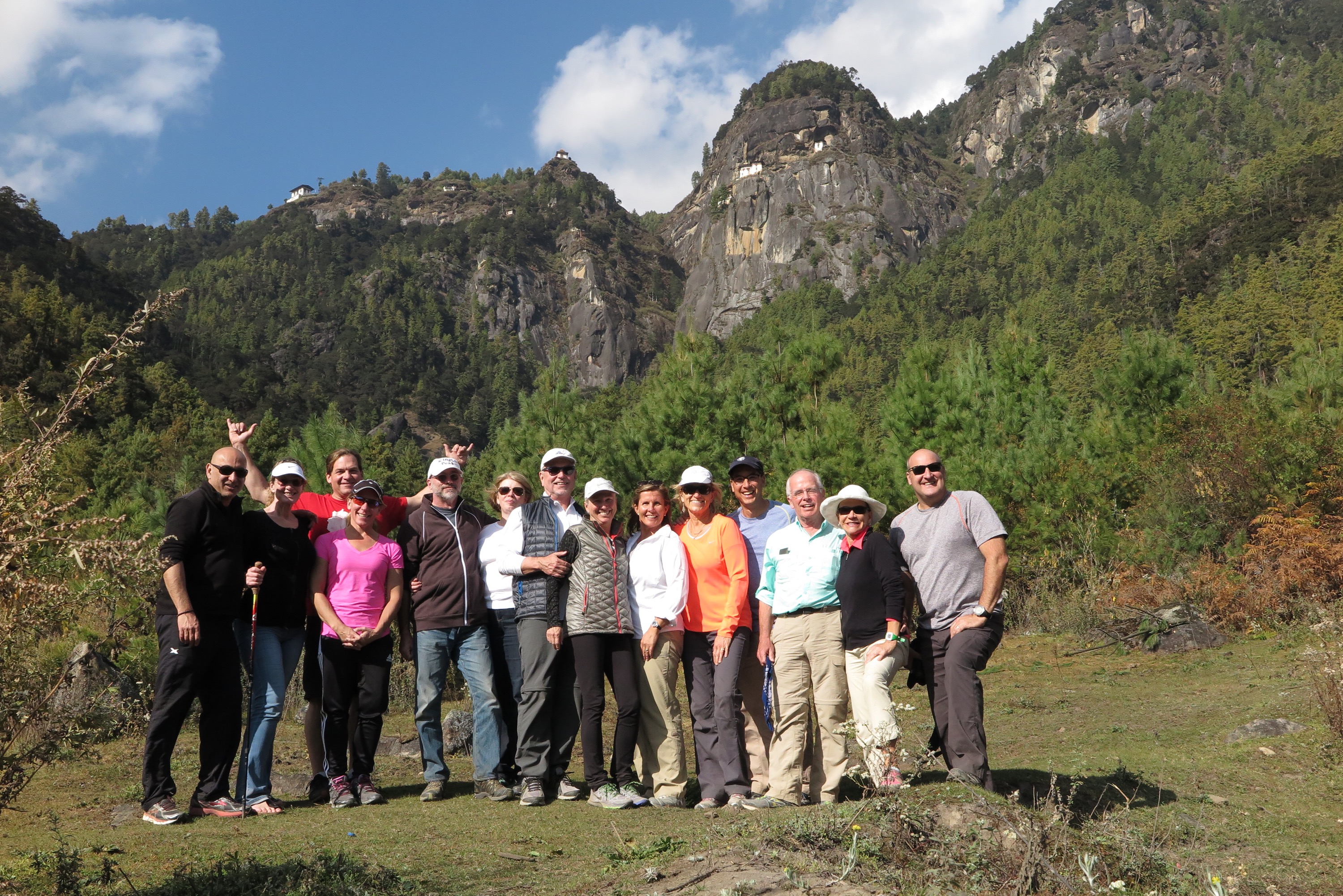
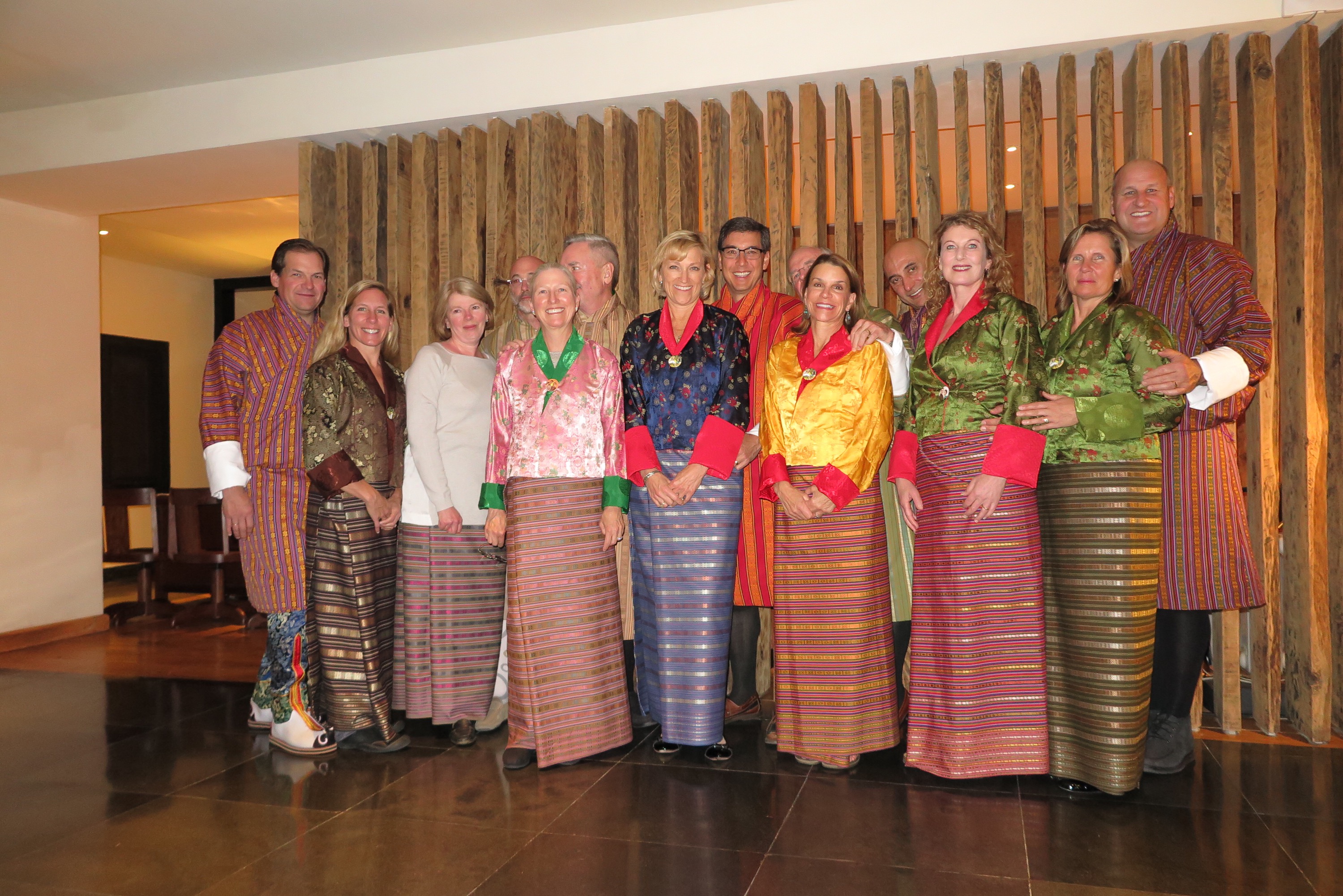
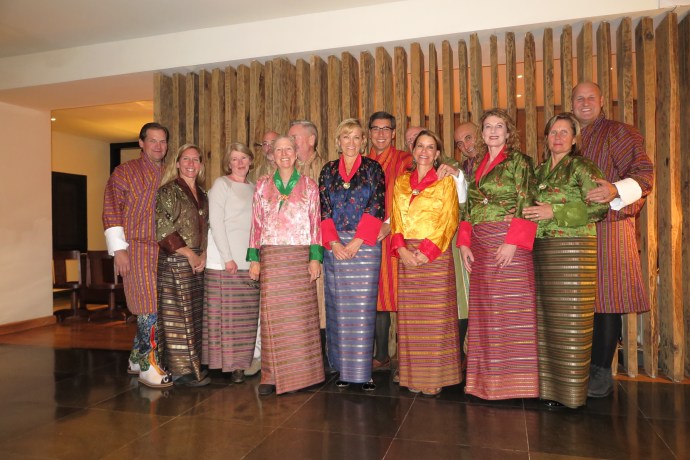
Our group after the Tiger’s Nest hike in Bhutan


Categories: Uncategorized | 2 Comments

Tibetan Culture on the Roof of the Earth (and Chewy Yak, Too)

The final stop on our Himalayan journey was Lhasa, the capital of Tibet.  Lhasa sits at 12,000 feet above sea level.  While Lisa and I have hiked higher, we have never stayed at this altitude for any length of time. Breathing isn’t an optional activity, so, we were wondering how things would transpire.  As it turned out, we acclimated quickly, so, other than a few strange dreams (sleeping at altitude is an adventure), we had a great time exploring this remote land on the doorstep to the highest mountains in the world.

Tibet was “liberated” by China in 1959.  This forced the Dalai Lama — the governmental and religious leader of Tibet –to flee to India.  He hasn’t been able to return since.  During Mao’s “Cultural Revolution” in the 60’s and 70’s, many of the cultural and religious buildings, monuments, and relics were destroyed. China believes that Tibet is a part of their country, the Tibetans feel very differently, although they are not allowed to express those views.  There is still a clear feeling of Chinese occupation in the region and police and military vehicles are part of the landscape.

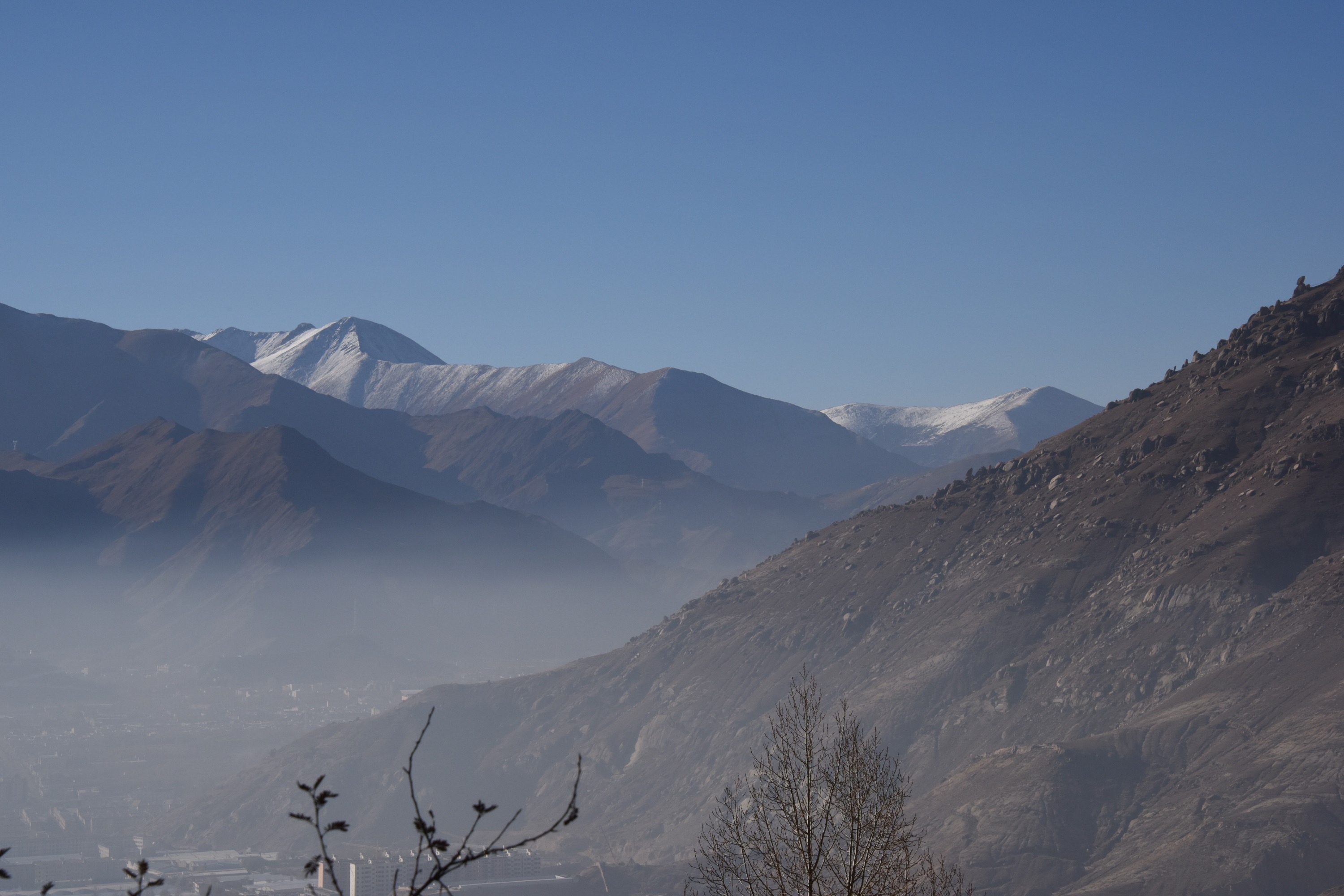
The political climate notwithstanding, we were fascinated by the deep history and culture here.  And, while the landscape was far different than we expected (more Southern Utah than Colorado), it was beautiful.


Lhasa landscape. Photo by Bryan Pearson

 
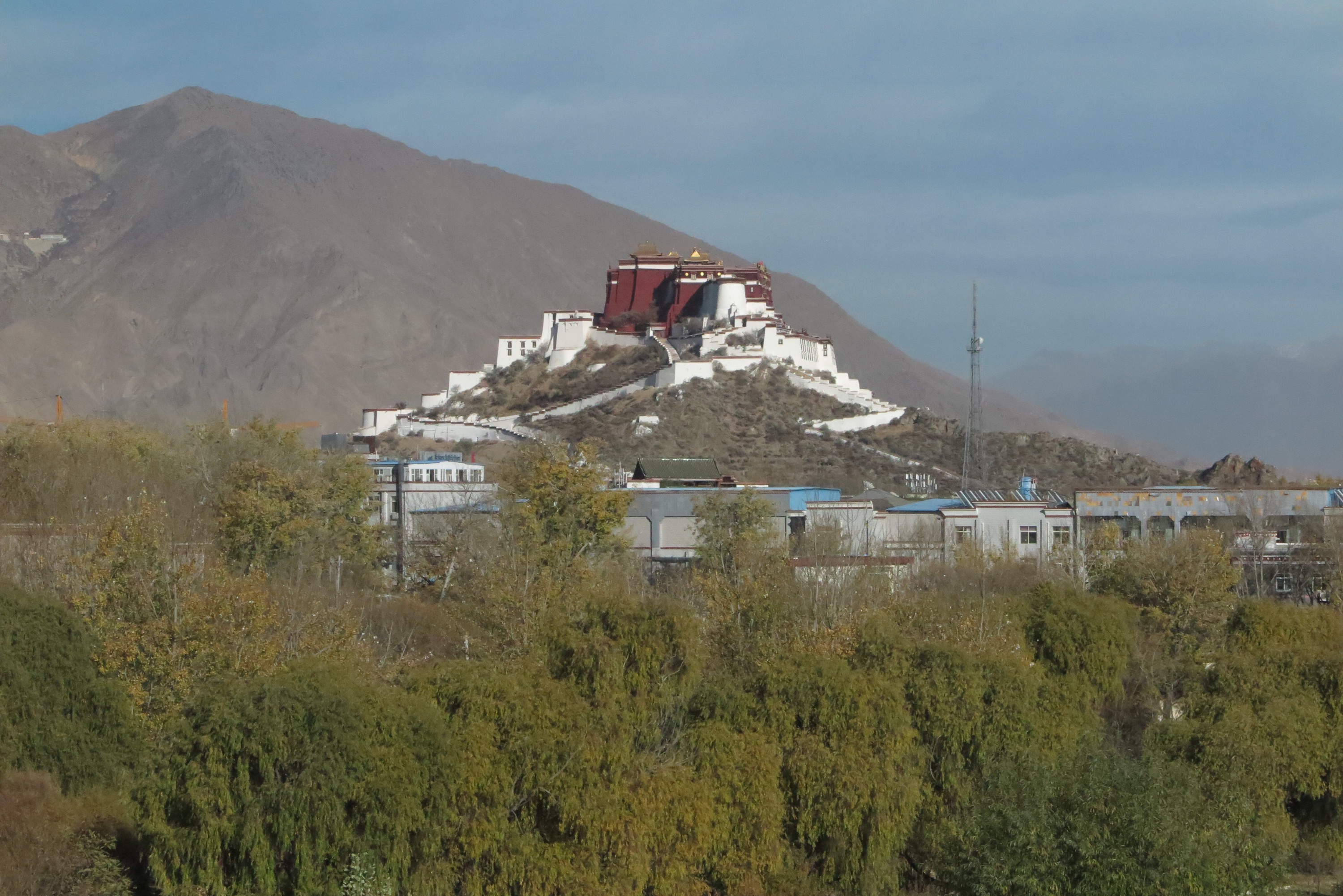
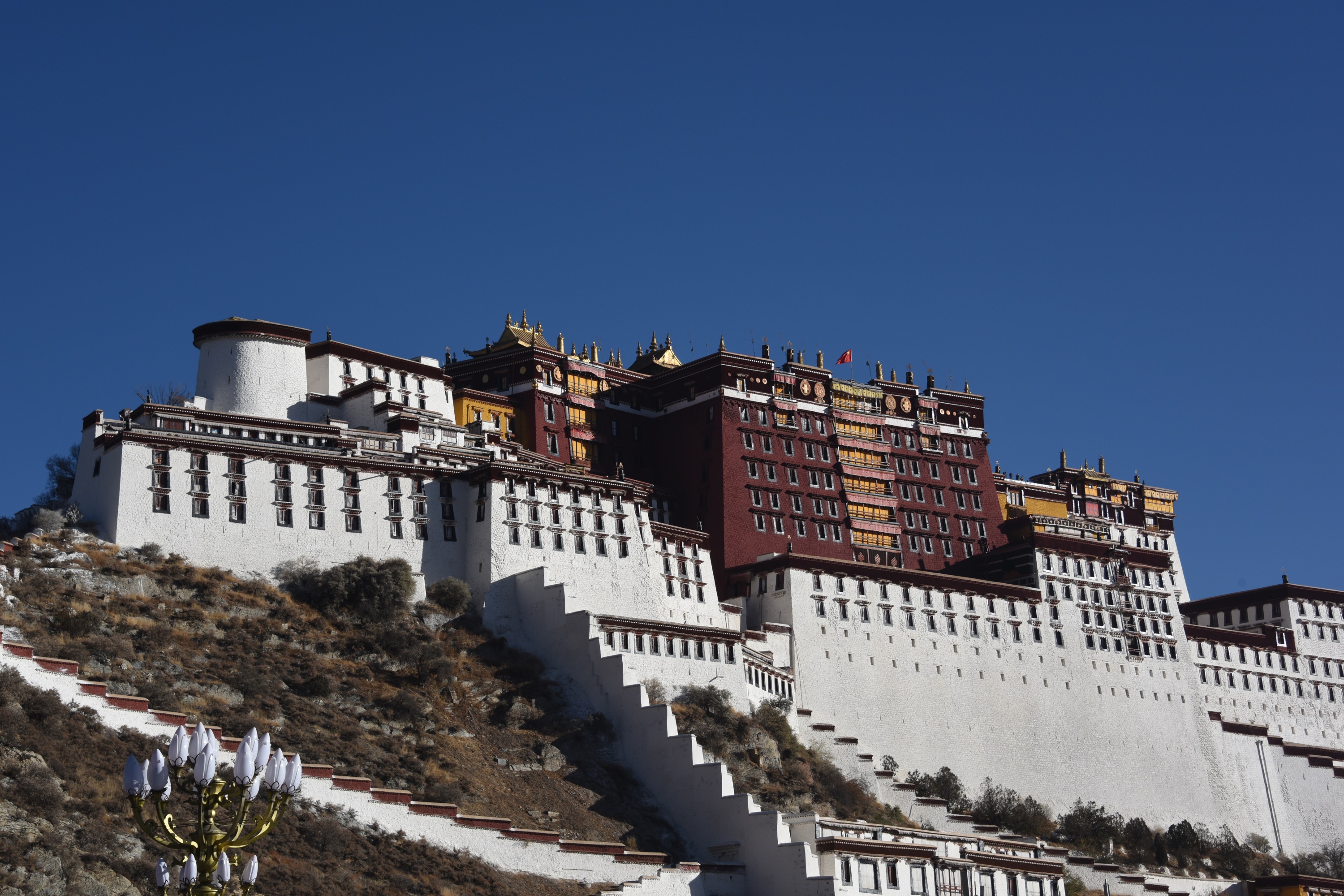
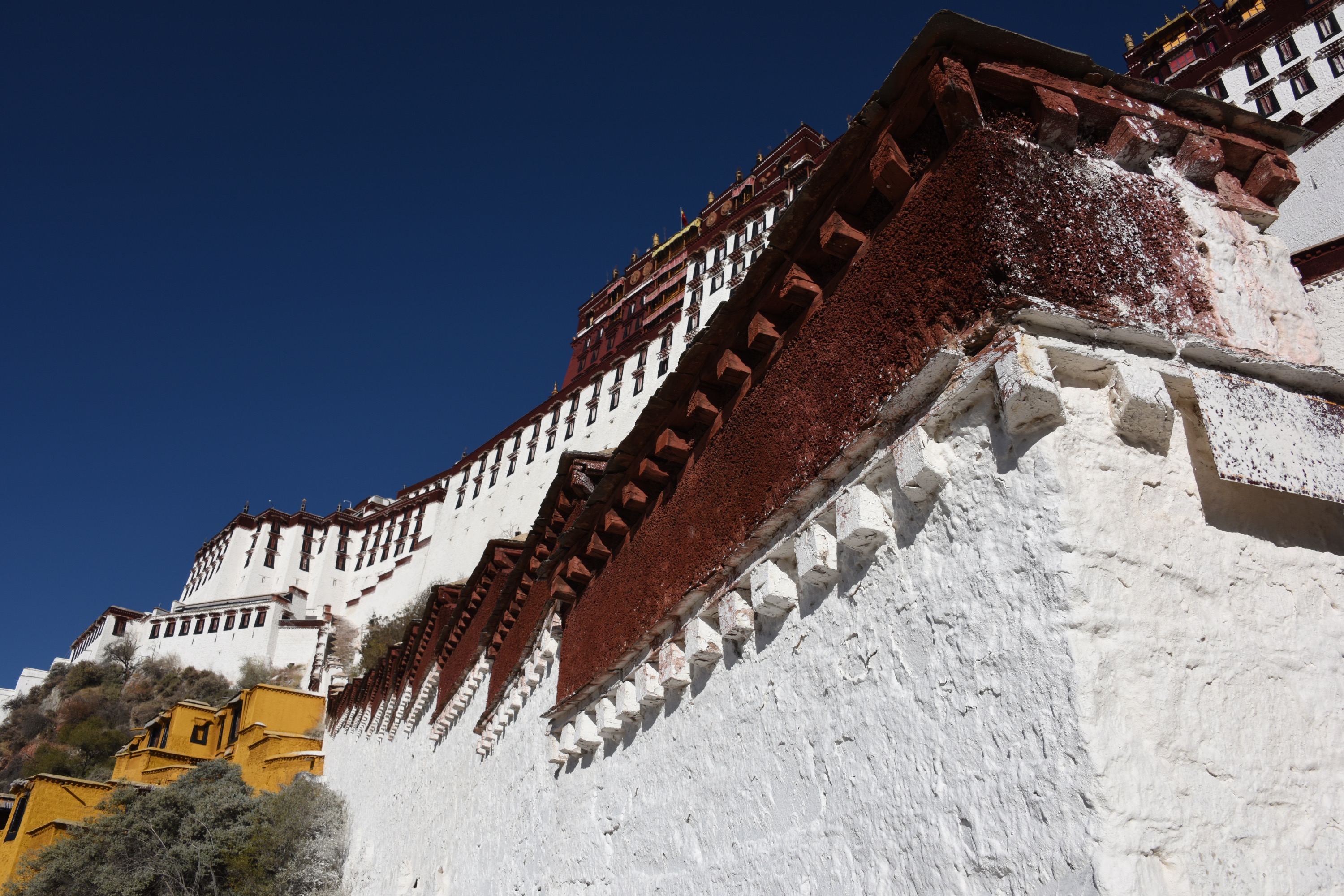
One of the few historical buildings that wasn’t destroyed during the Cultural Revolution was the Potala Palace — the Dalai Lama’s Winter Palace.  This huge complex was built in 1645 by the Fifth Dalai Lama (the current one is the 14th).  Parts of it, however, are over 1500 years old.  It housed governmental officials, religious leaders, and monks.  This amazing facility was visible out the window of our hotel room.  And, it was our first stop during our tour of Lhasa.

View of the Potala Palace from our hotel room window.


Potala Palace. Photo by Bryan Pearson


Photo by Bryan Pearson


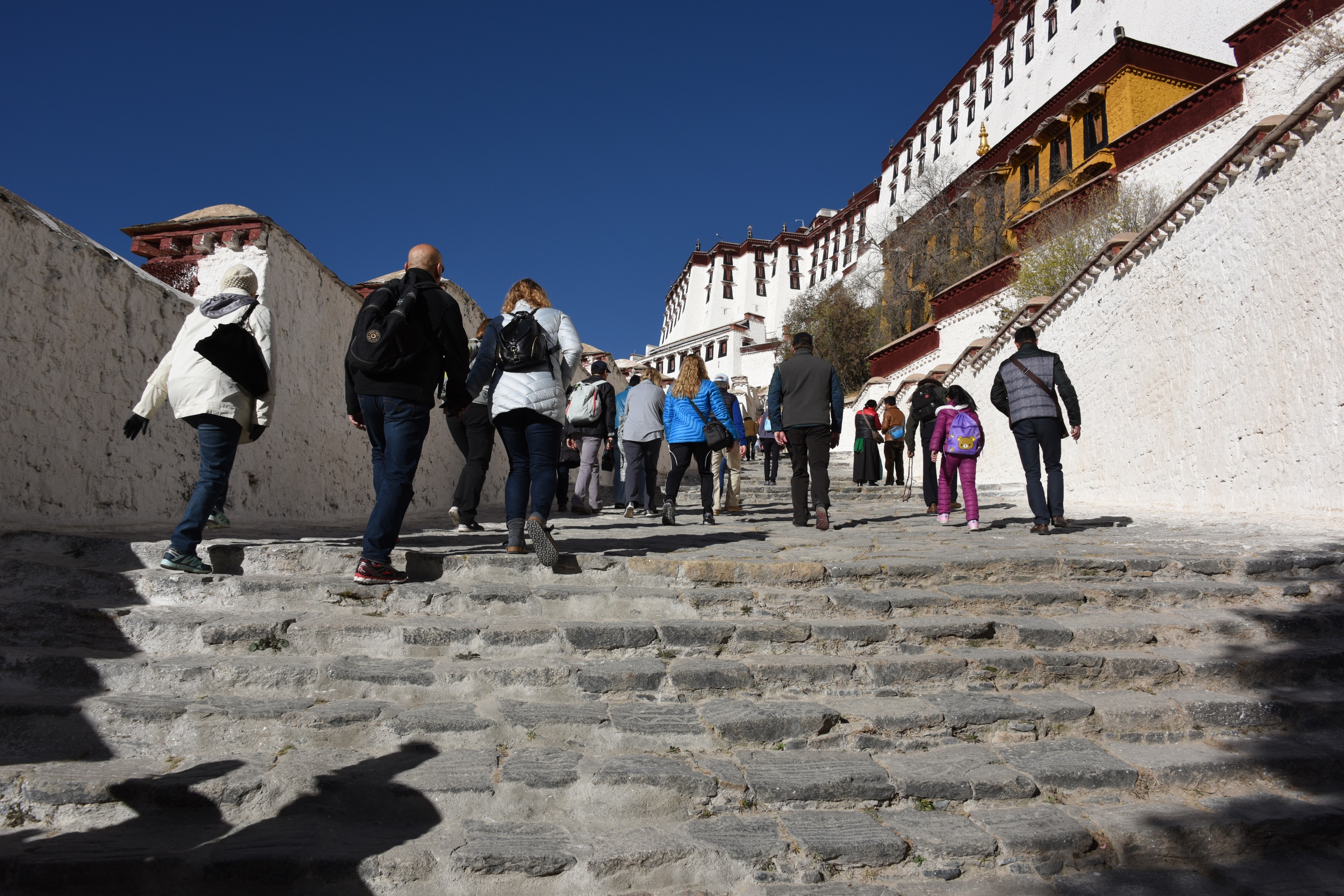
We climbed a lot of steps to get to the top of the Potala. Photo by Bryan Pearson

 
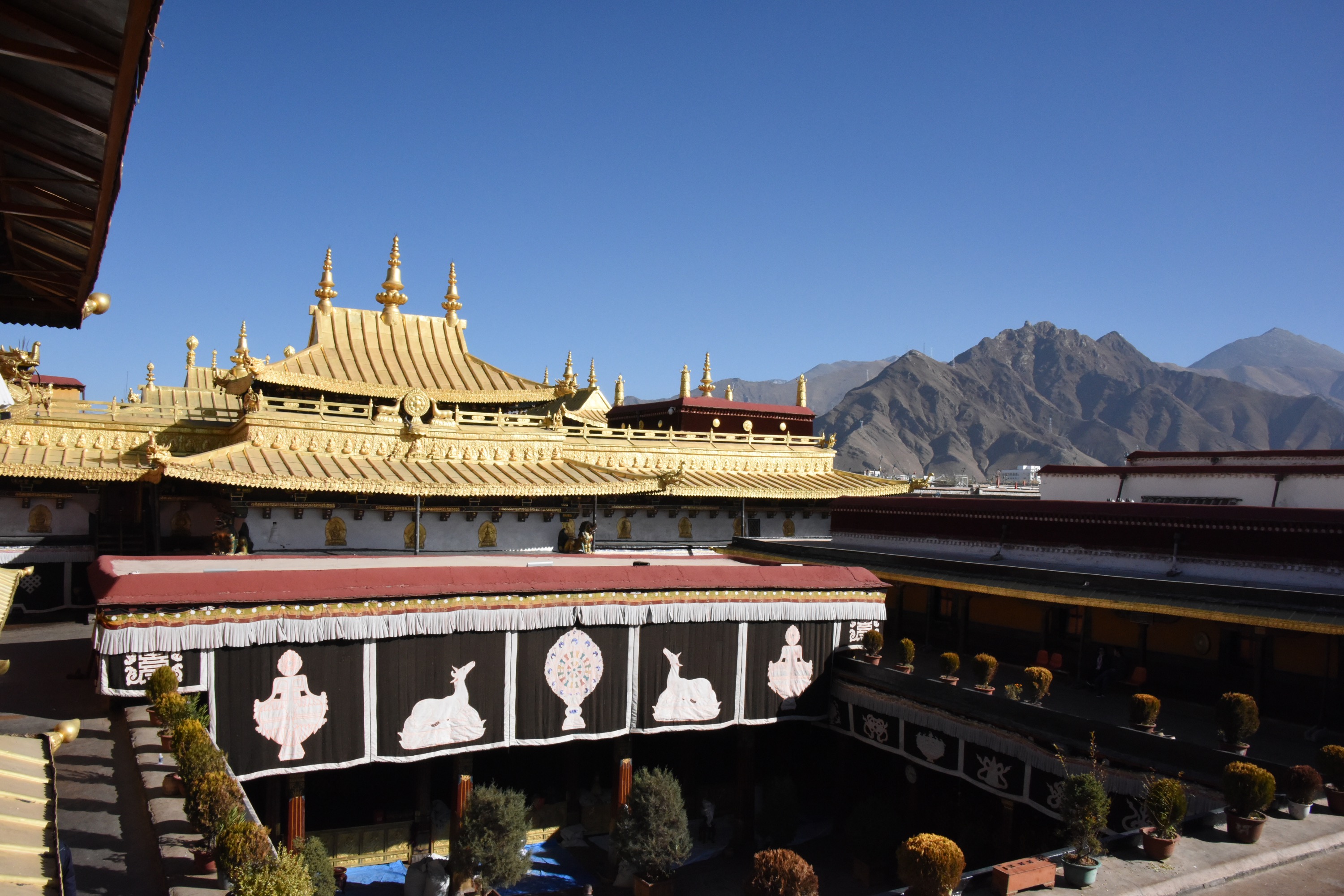
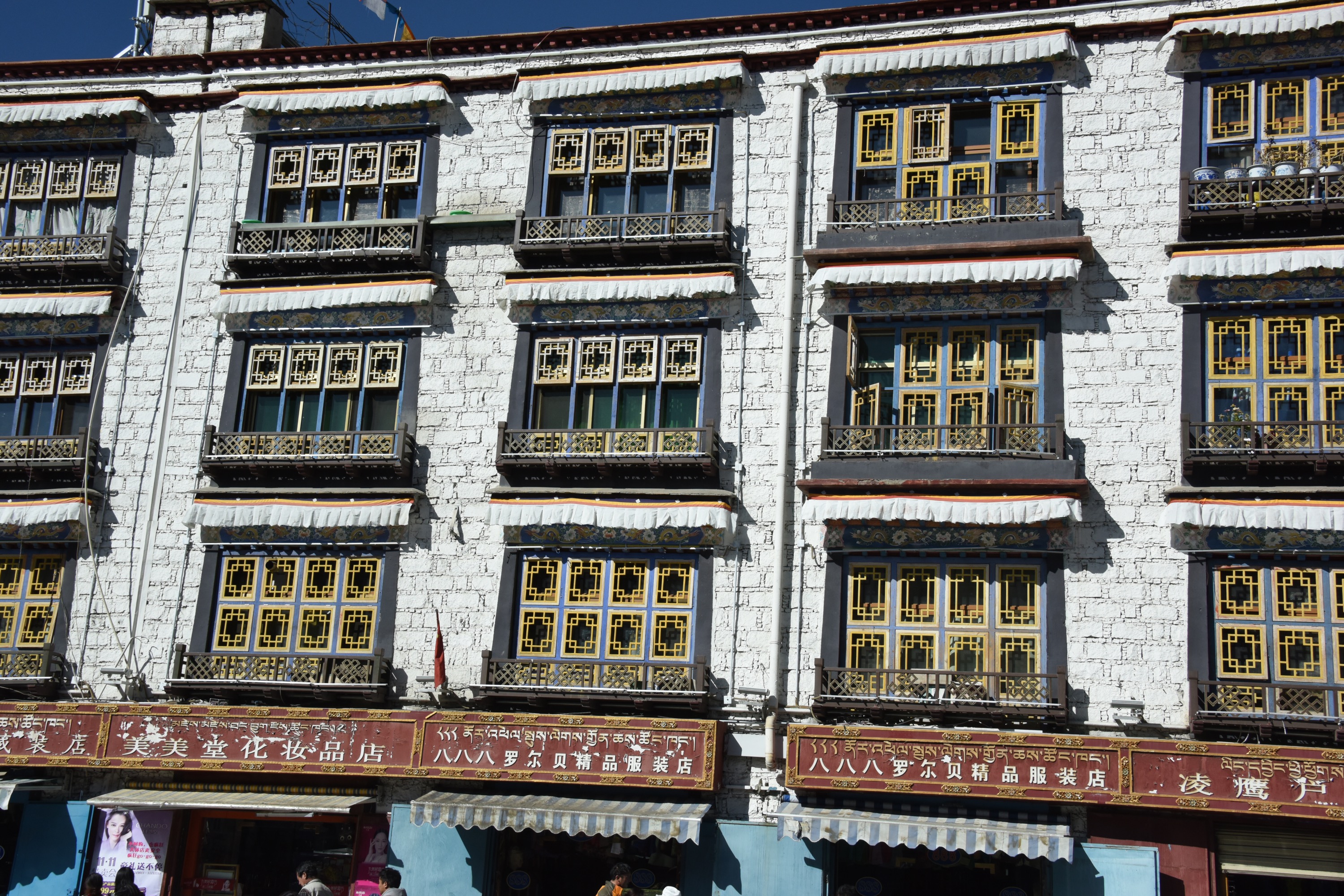
We then visited the Jokhang Monastery in the old town of Lhasa.  Surrounding old town, the Chinese have built scores of poorly designed concrete apartment buildings.  In the old town one can see the way Lhasa used to appear.  The buildings have beautiful windows and form interior courtyards where many apartments form a community. They also share, uh, facilities.  One to a floor.  

When devout Buddhists pilgrims make their way to Tibet, they circumambulate (walk around — always clockwise) the religious buildings.  We saw many people circumambulating the Jokhang monastery.  In addition to walking around, old town was a great place to shop for Tibetan merchandise.  


View from the top of the Jokhang Monastery. Photo by Bryan Pearson


Old town Lhasa as seen from the top of the Jokhang Monastery. Phtot by Bryan Pearson


Typical apartment buildings in old town Lhasa. Photo by Bryan Pearson.

 
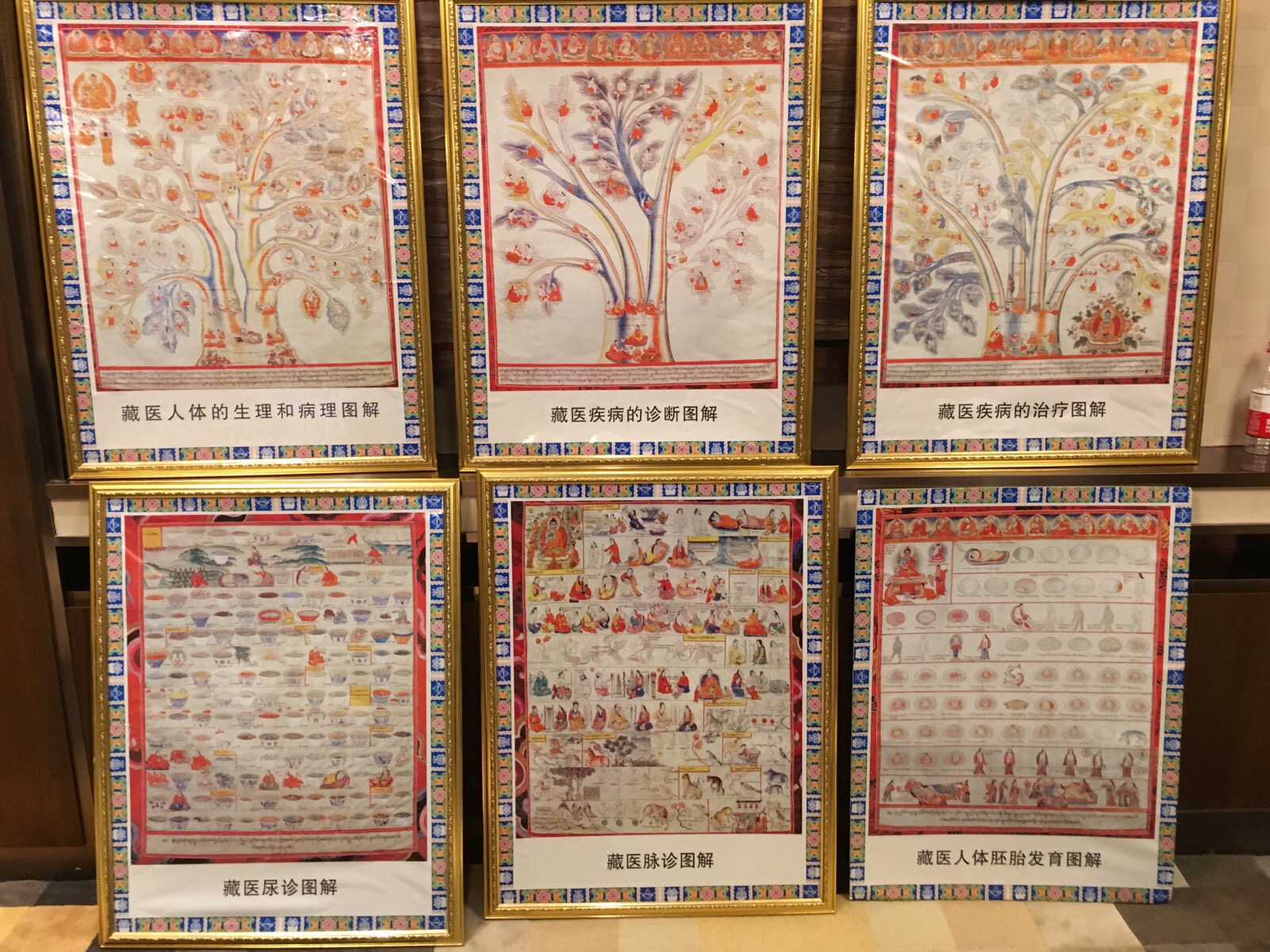
We had the privilege of meeting one of the most prominent Buddhist doctors in Tibet.  He gave us a lecture on Easten medicine.  It was fascinating.  And, while I can’t pretend to understand everything he said, he summed up his thoughts on healthy living like this:  Prevention first.  Take care of yourself, eat right and exercise.  Second, there is a place for both Eastern and Western medicine.  He was not the type that rejected science.  And finally, everything in moderation leads to the best outcome.  I’ve always taught this to our girls.  People who take anything to the extreme generally aren’t very healthy.


Our Buddhist doctor’s medical charts.

 
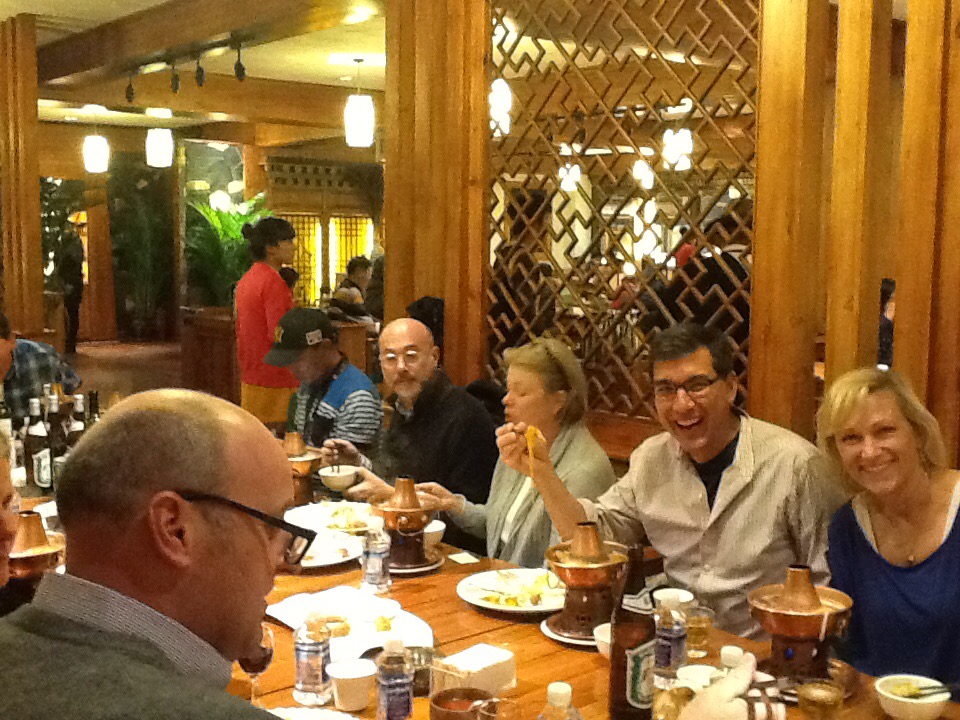
We finished our first evening with a traditional meal cooked in a Tibetan hot pot. It is a little like fondue cooked in broth — except you cook yak.  Delicious — but chewy.  I learned, through experience, that all yak is chewy.  I even had a yak burger for lunch one day. Have you ever had a chewy burger?  I have. Afterwards, Lisa and I decided we had to have hot pots for home. The next day we searched old town for them and finally found them on a side street (thanks, Bryan, for your eagle shopping eye). We bought two beautiful hand made copper pots.  They are  crudely crafted by the store owner, which makes them very endearing to us.  Come over some time and we’ll cook a delicious hot pot meal for you. But, we probably won’t include yak on the menu. If I haven’t mentioned yet, it’s chewy.


Lisa and I enjoying our Tibetan hot pot meal. Photo by Rakesh

 
The new hot pots, however, turned out to be a very expensive purchase.  You see, I seemed to have left our camera in the cab. Rats.  That is why the photos you see in this blog edition are credited to others — mostly Bryan Pearson who graciously downloaded his photo card to my iPad.

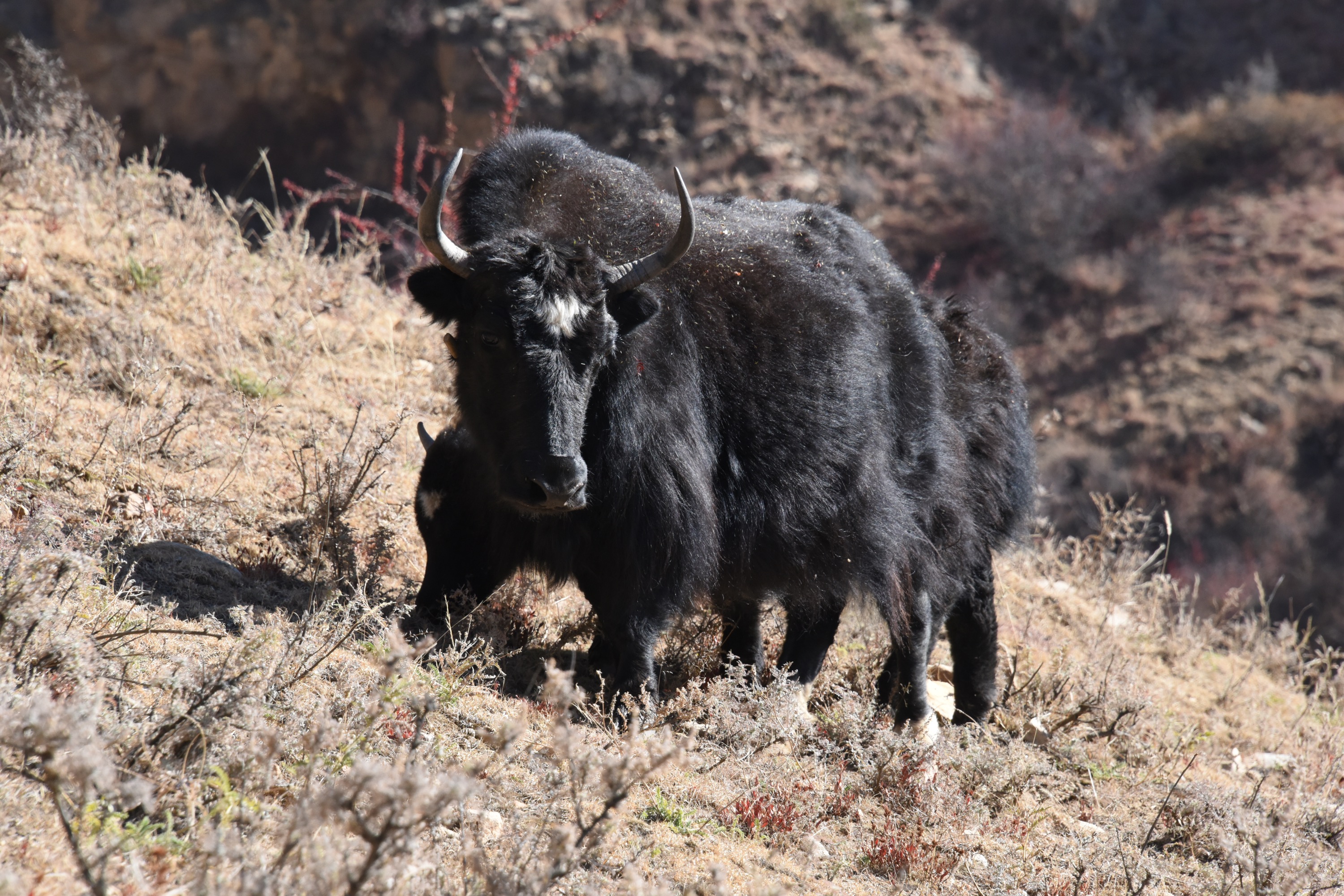
The next morning we hiked up to a monastery in the mountains.  What a beautiful hike.  By now we were well acclimated and didn’t have any trouble getting to the 13,200 feet-above-sea-level landmark.  I even did burpees at the top on a dare from my friend Mark Schratz.  The guides thought I was a bit strange.  So did my traveling companions, I think.  But, a dare is a dare. We also saw yaks. The guides fed them our underripe bananas.  I wonder if that will tenderize them a bit.


Yaks. They’re chewy. Photo by Bryan Pearson


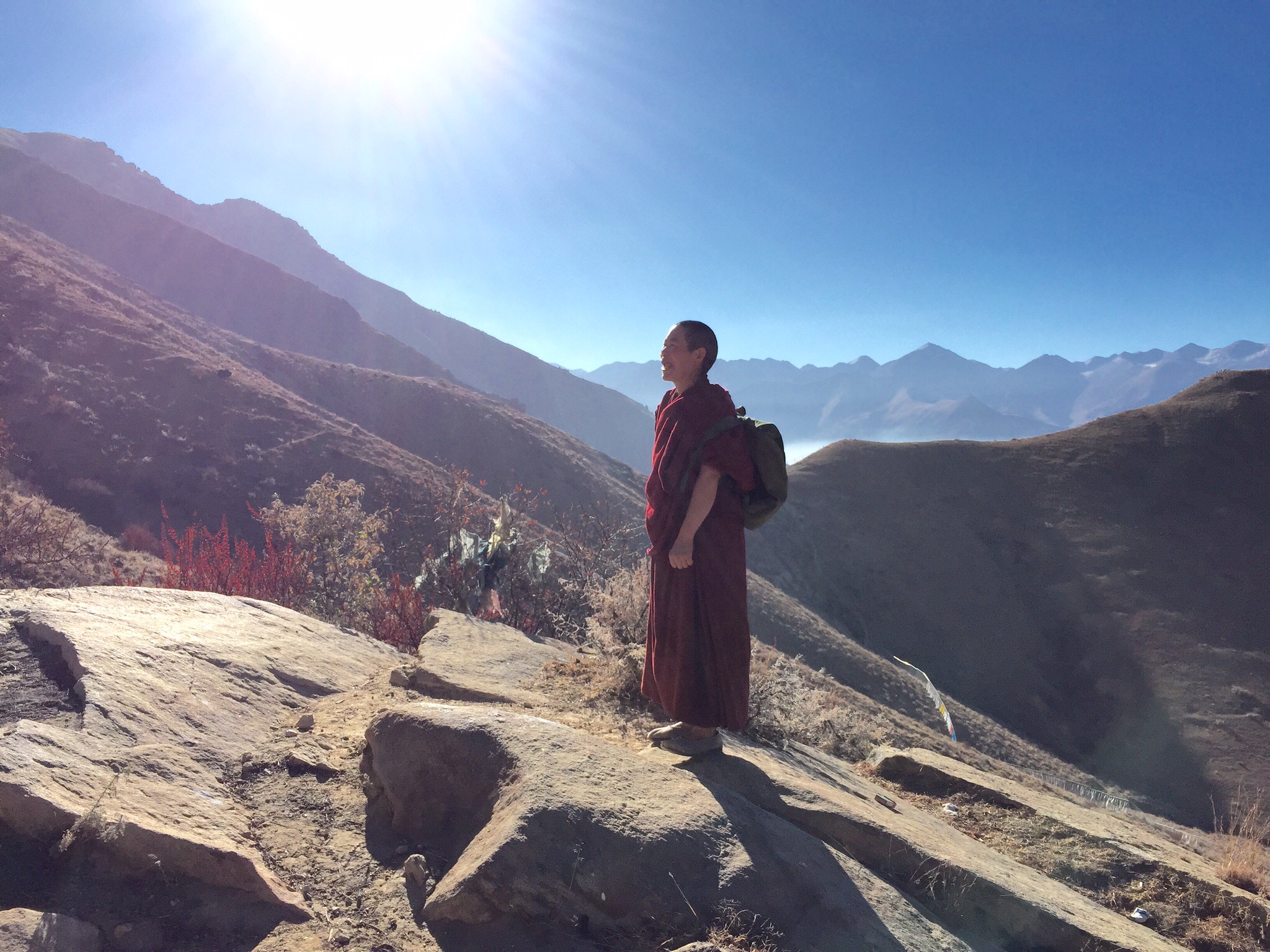
A beautiful nun we encountered while hiking. She was heading up to her convent at about 14,000 ft. Photo by Rosemary Dunbar.


Lisa wrote up some final thoughts on our trip.  Take a look at the next entry for our complete perspective on this adventure.  I’ll just add one brief thought:  Sarah, our Bangkok guide, advised us as we went to the royal palace grounds, to stay together like sticky rice.  She wanted to make sure we didn’t get lost.  I think, however, she meant more than that.  You see, one of the primary reasons we love the Exclusive Resorts journeys is because of the people we meet and travel with.  They are always interesting, down to earth, caring people.  As this trip progressed, our group grew closer to one another. We laughed together, helped each other and truly enjoyed each others’ company.  At the farewell dinner on the final night, no one wanted to leave.  Long after the last dish was served (which was a relief as the food at the hotel wasn’t so good), we all lingered at the dinner table.  We talked about what we learned; we laughed about our mishaps; we reflected on our experiences.  We all agreed with Lisa’s comment that we are different people than we were two weeks ago when the trip began.  This experience has become a bond — like sticky rice — that we will share for the rest of our lives.  As we said goodbye, we all promised that we will see each other again.  And, I believe we will.

Categories: Uncategorized | Leave a comment

Images of Chengdu: Pandas, People, and Lots of Food

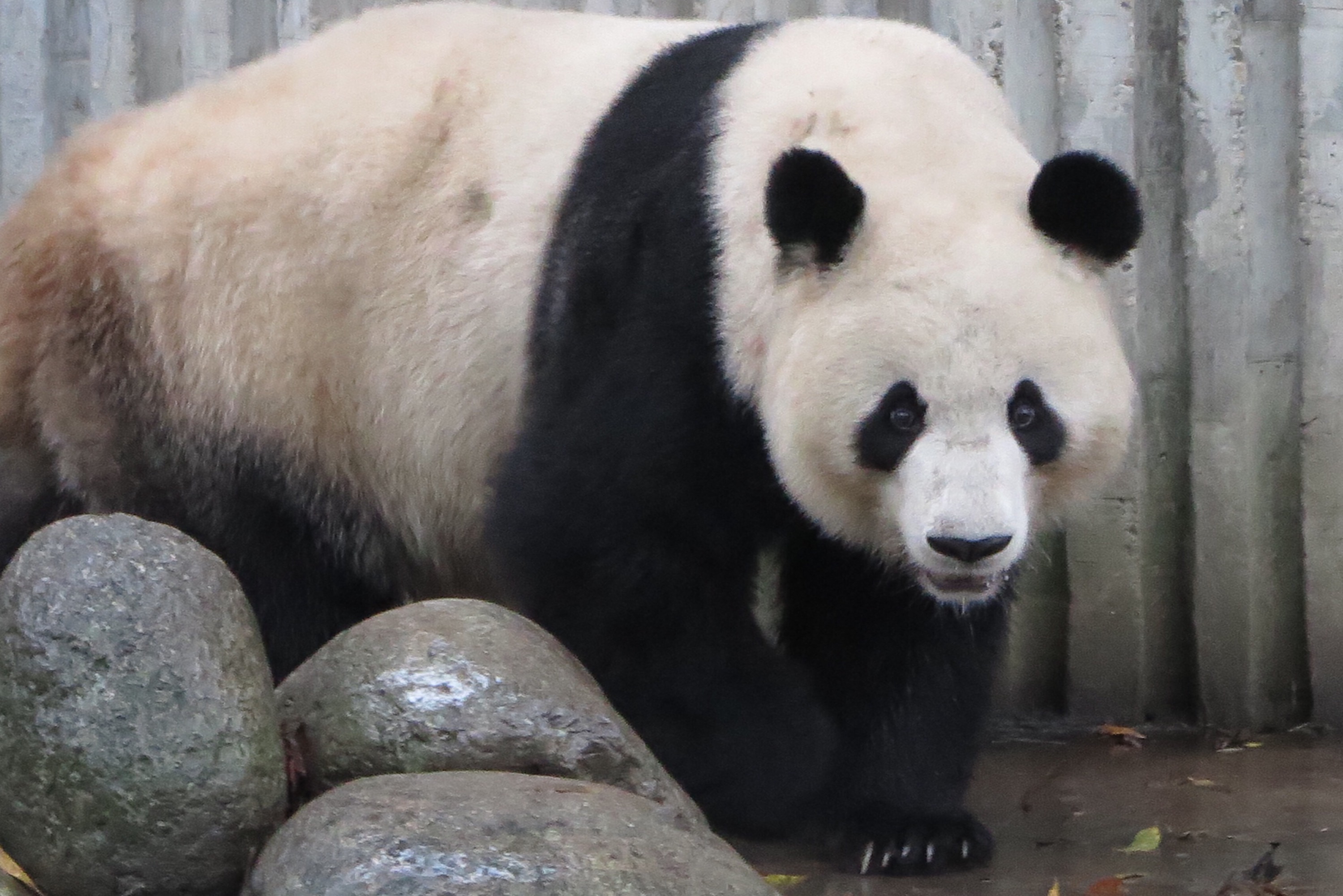
A quick one-day visit to Chengdu, China yet we covered a lot of ground.  Chengdu is in the Sechwan provence of southwest China.  Most of you are familiar with the spicy Chinese food from this region. The weather is often cloudy, the terrain stretches from high plains to mountains, and, besides the food, it is most famous for being the natural habitat for pandas.  Our first stop of the day was at the National Panda Research Conservatory.  There are over 150 pandas here.

Pandas are very challenged to reproduce.  Our guide, Helen, said they have three strikes against them. First, the have difficulty getting pregnant — 70 percent of the females and 20 percent of the males are sterile. Second, the babies have a very low survival rate. They weigh 100 grams or less at birth.  And, third, the mothers aren’t very good at nurturing their young.  Seems as if Mr. Darwin may have been naturally selecting them out.

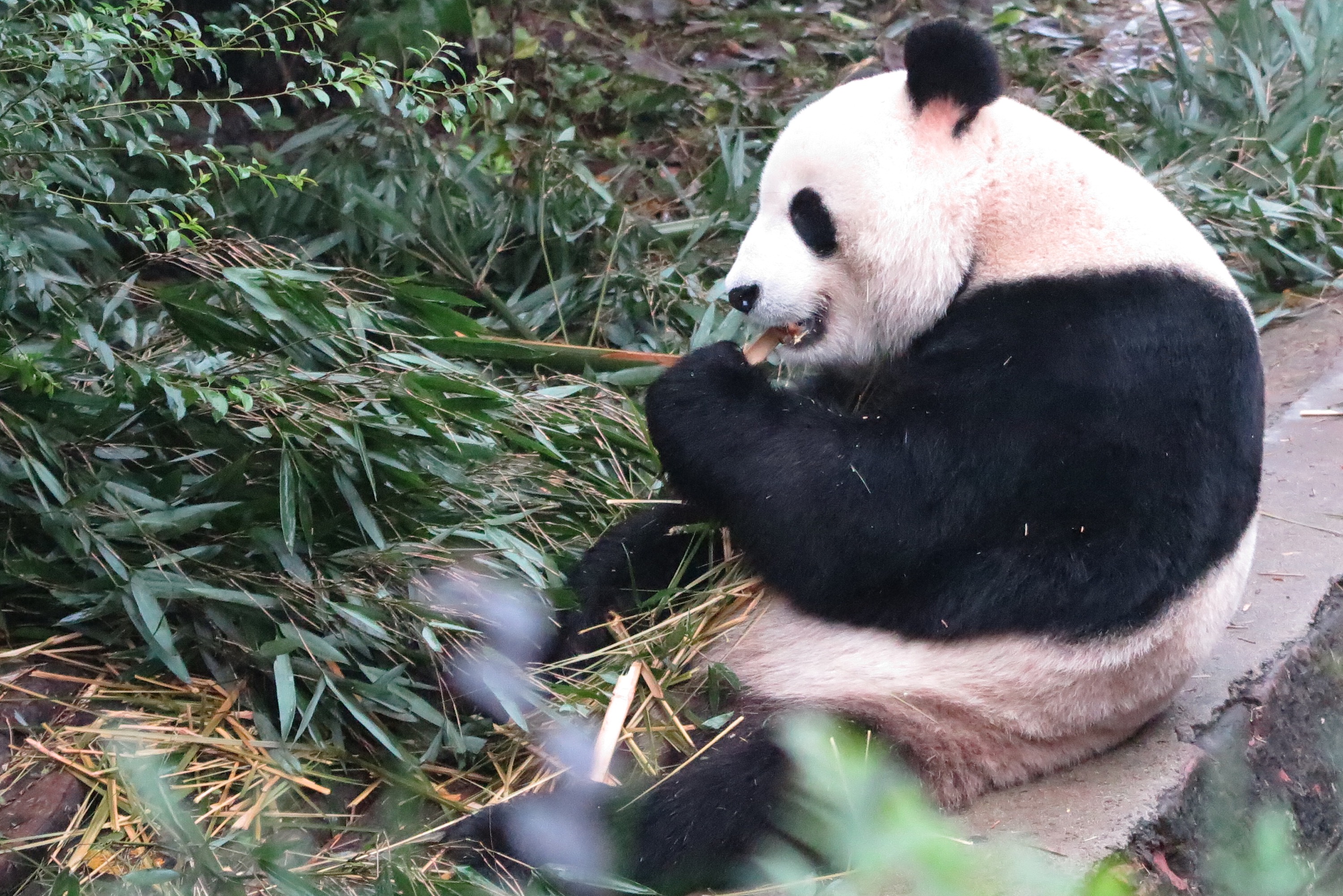
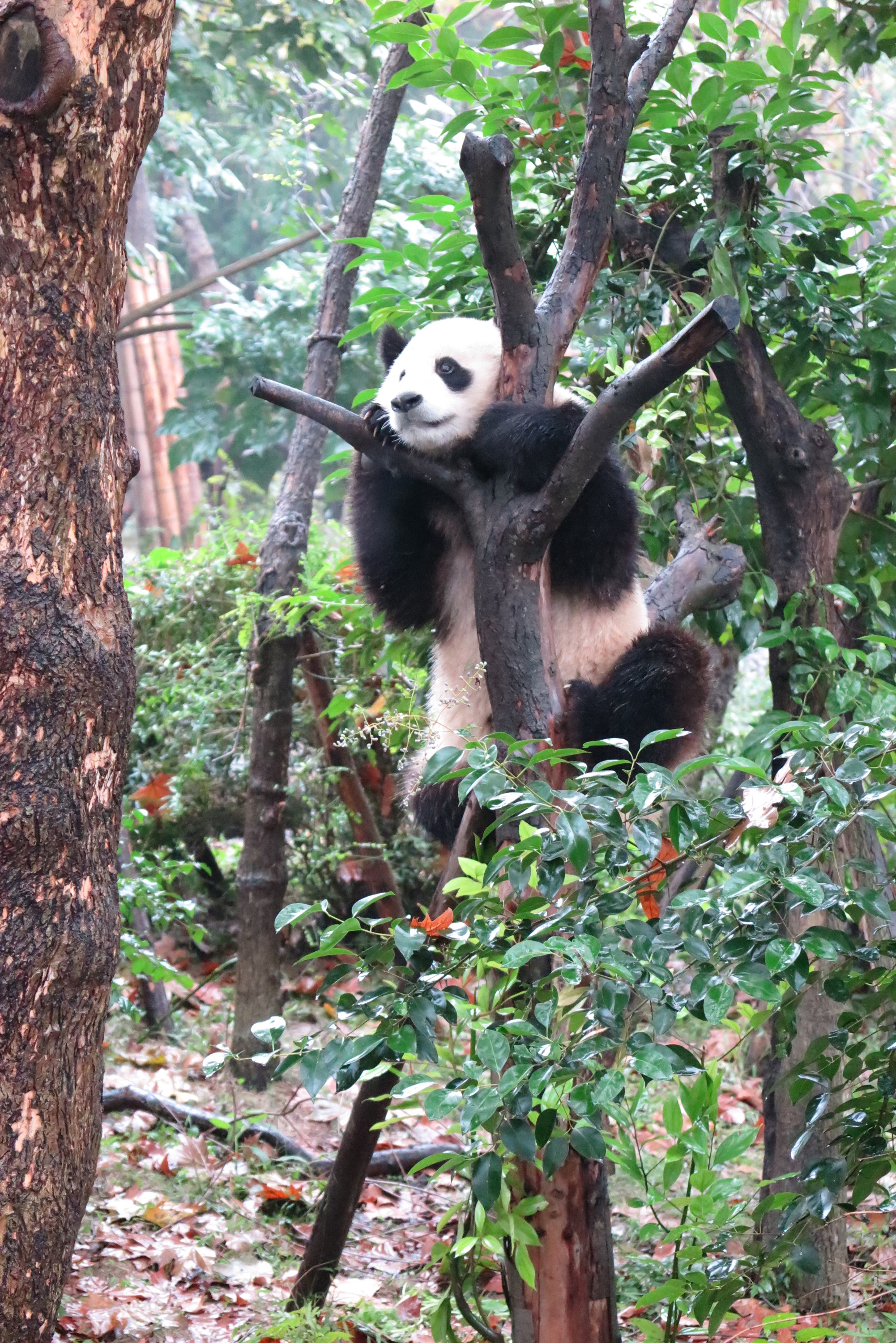
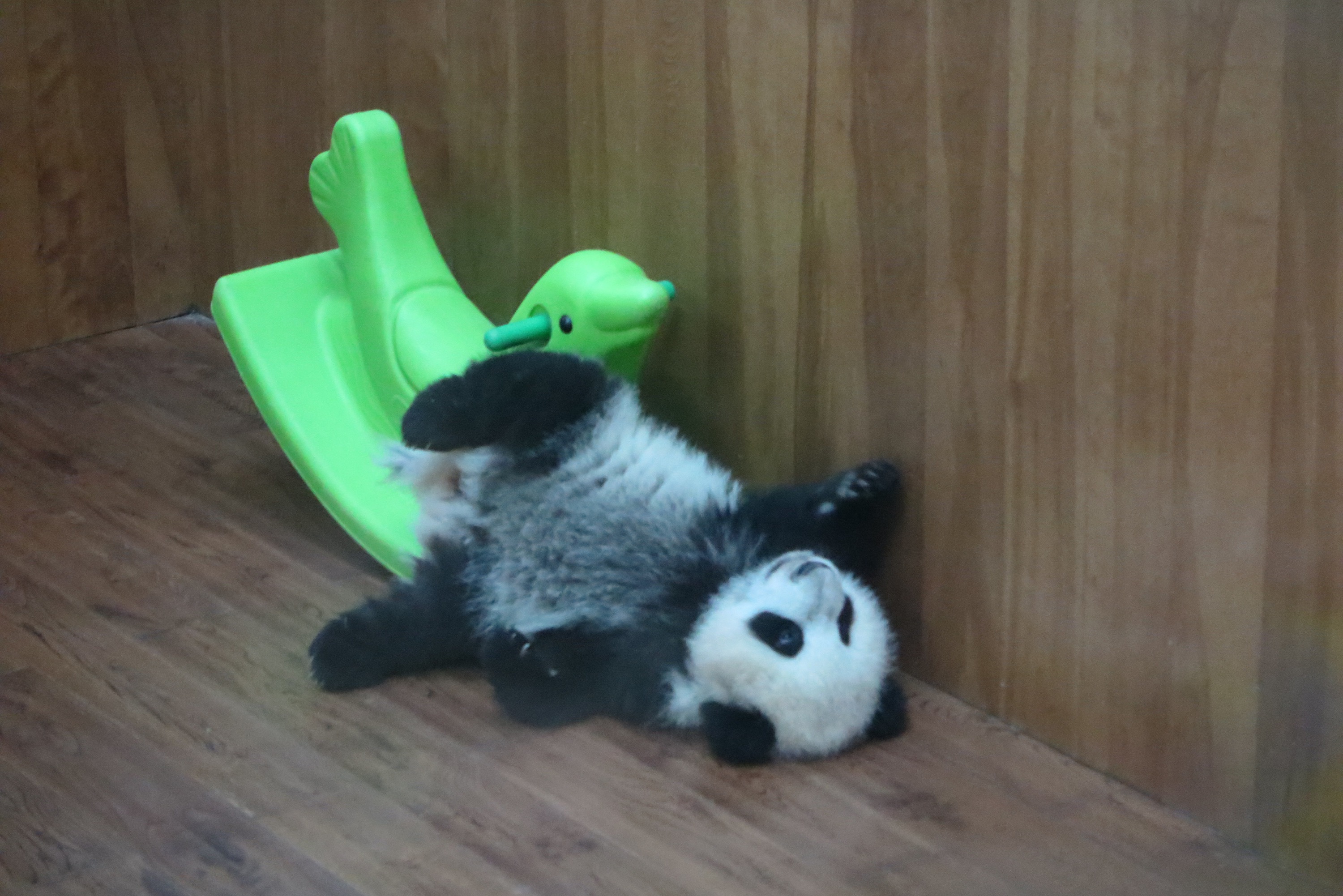
Still, they are beautiful animals.  Below are some of the pandas we saw, from full-grown adults to relative newborns.

Here is an adult panda snacking on fresh bamboo


An adolescent panda doing pull ups


Three-month-old baby panda playing in the nursery


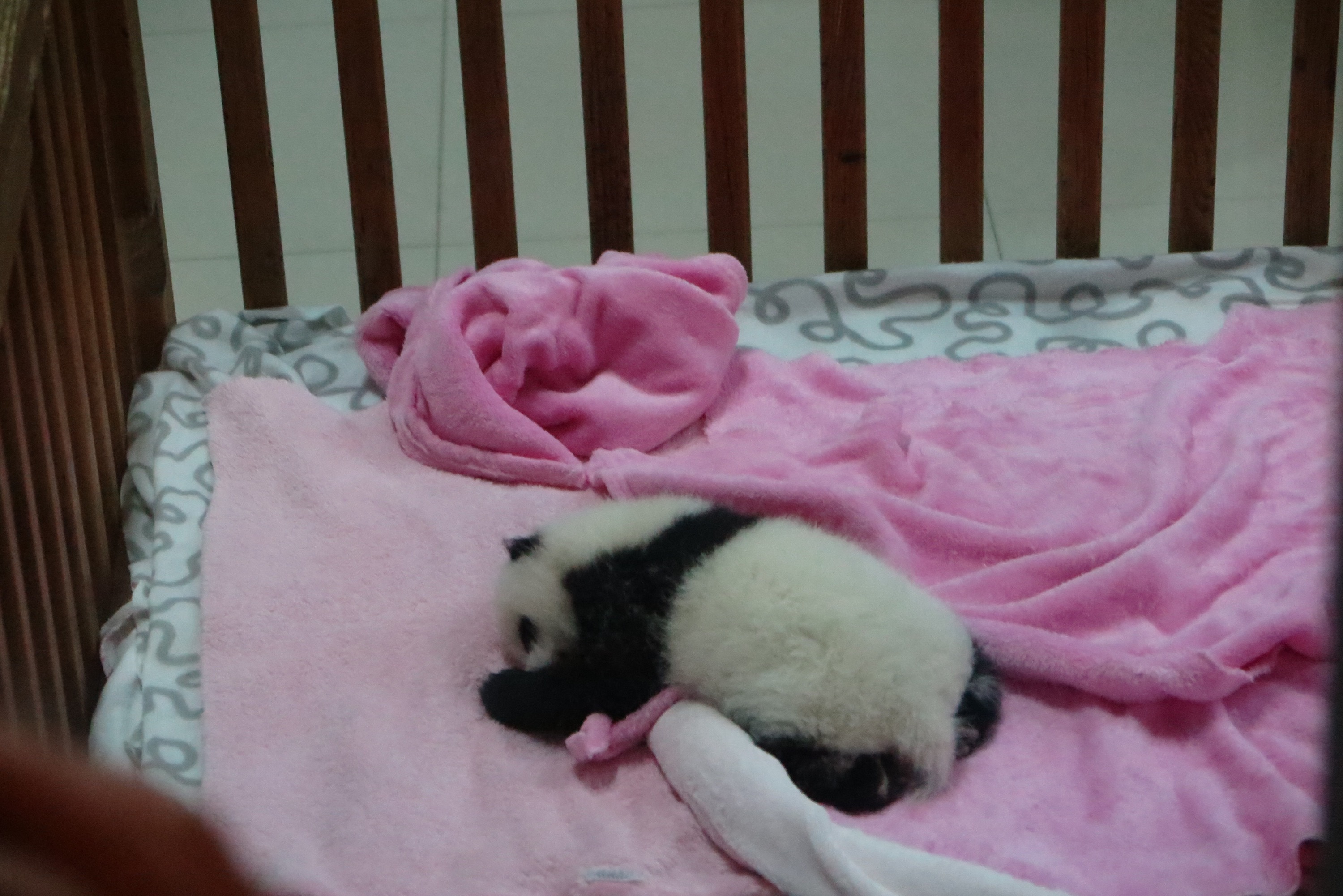
One-month-old baby panda in his crib


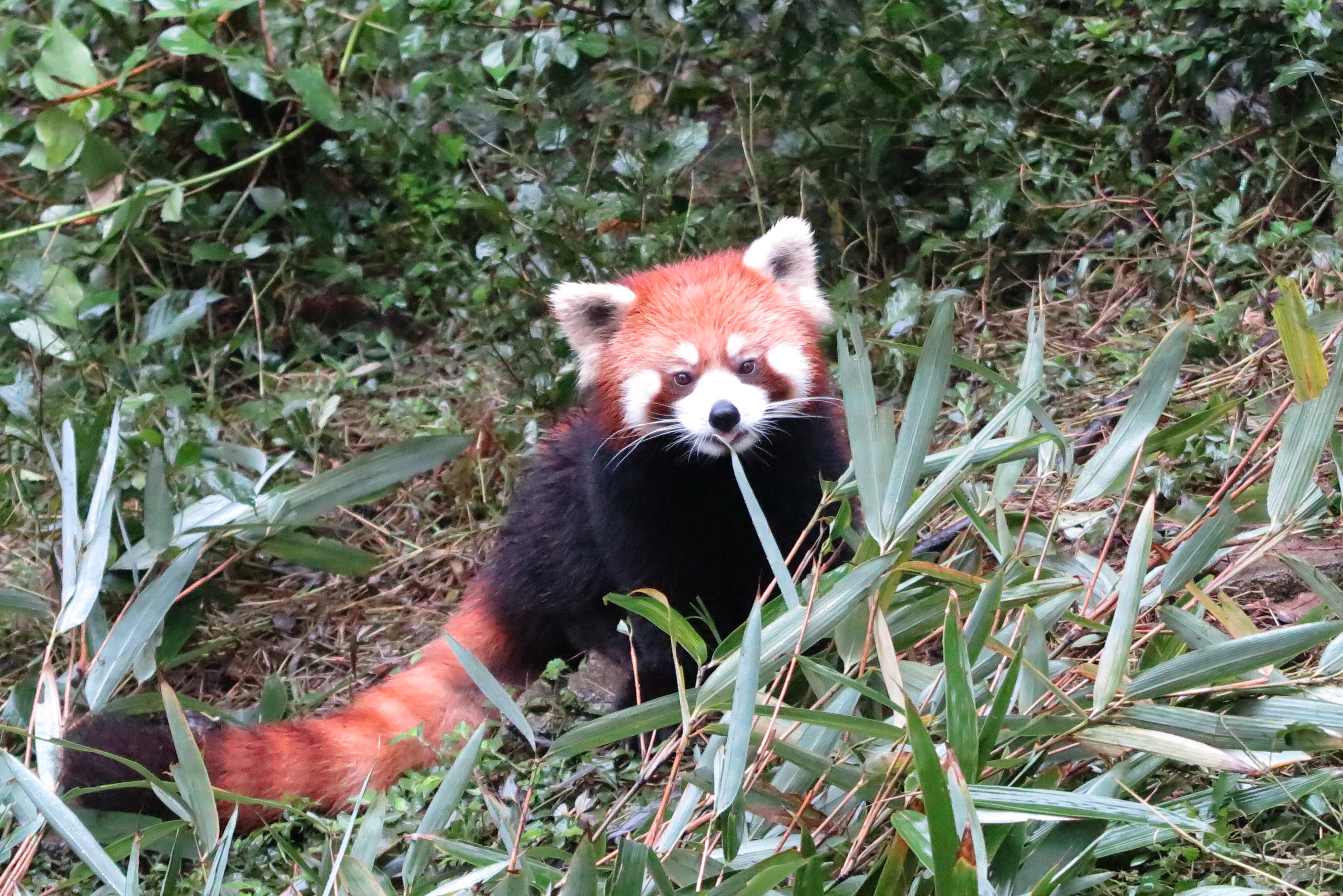
We also saw rare red pandas. They are relateded to racoons.

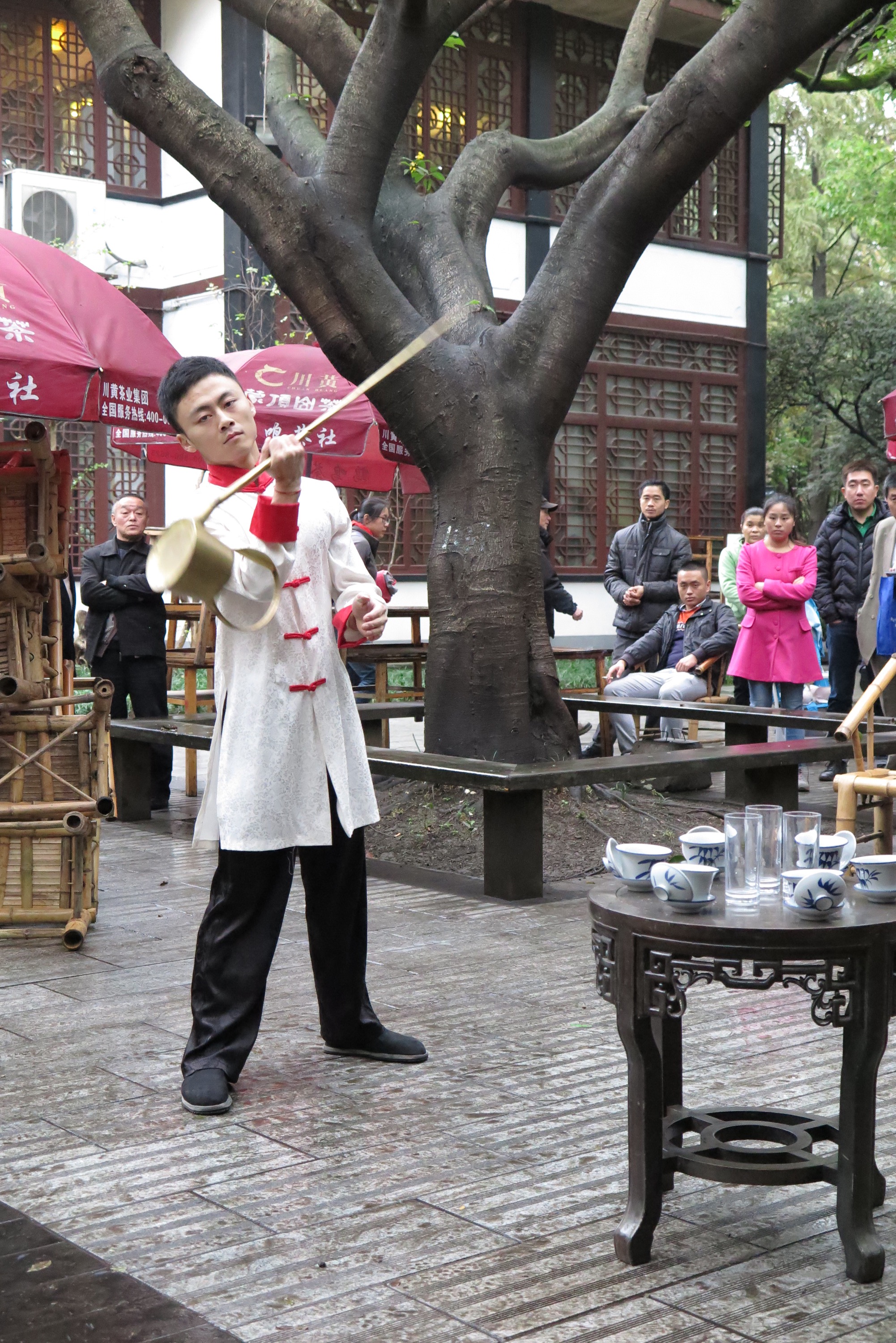
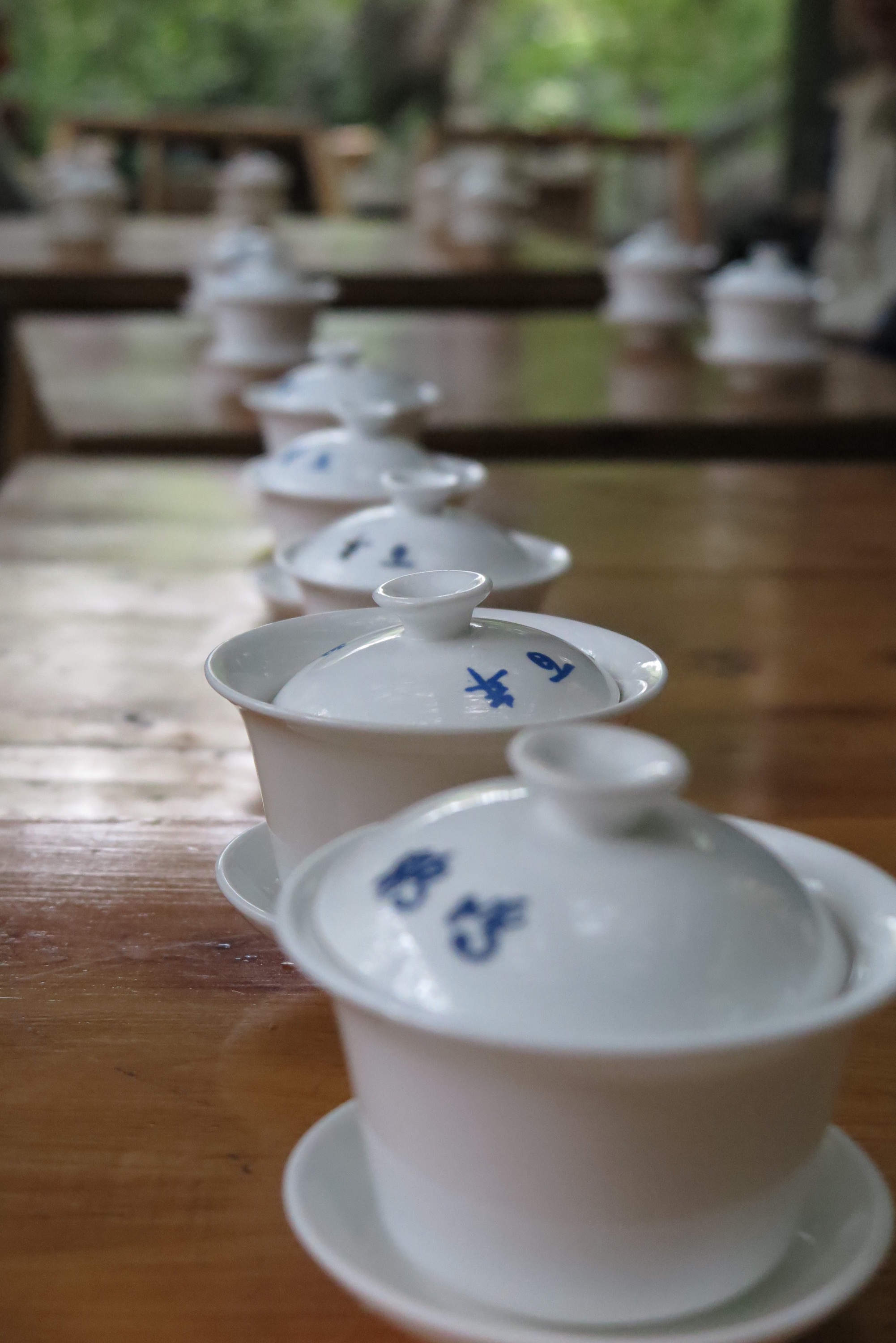
We then visited People’s Park where we had tea and watched a tea master.  The tea master has a pot with a very long spout.  These traditional teapots were used to reach over a crowded tea house to pour for the patrons.  Well, someone a long time ago decided he could become somewhat of a baton twirler with his tea pot.   Thus was born the art of tea mastering.  It was quite a show.


The park also had “ear cleaners” who offered to clear out your ears for a fee. Lisa wanted me to try, but, I like my hearing too much.


A little girl watching her sugar rooster being made at the park

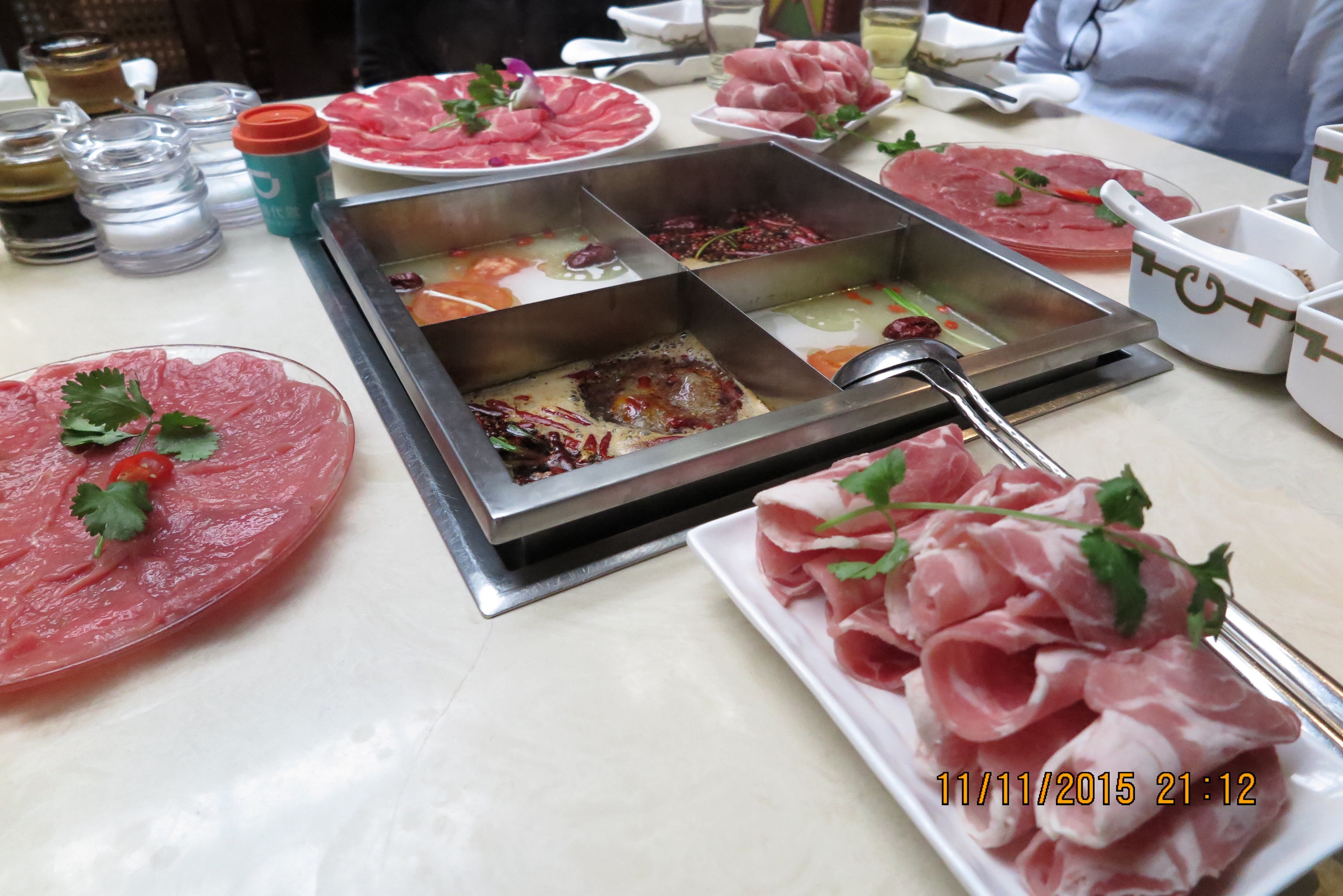
We also went to an old section of Chengdu that has been revived as a shopping district.  It’s called Wide and Narrow Alley and dated from the Qing Dynasty in 1644 – 1911.  We had a traditional hot pot lunch then wandered the area.


The hot pot lunch was a little like fondue. The hot liquid in the middle of the table is broth, one with peppers in it, the other more mild.


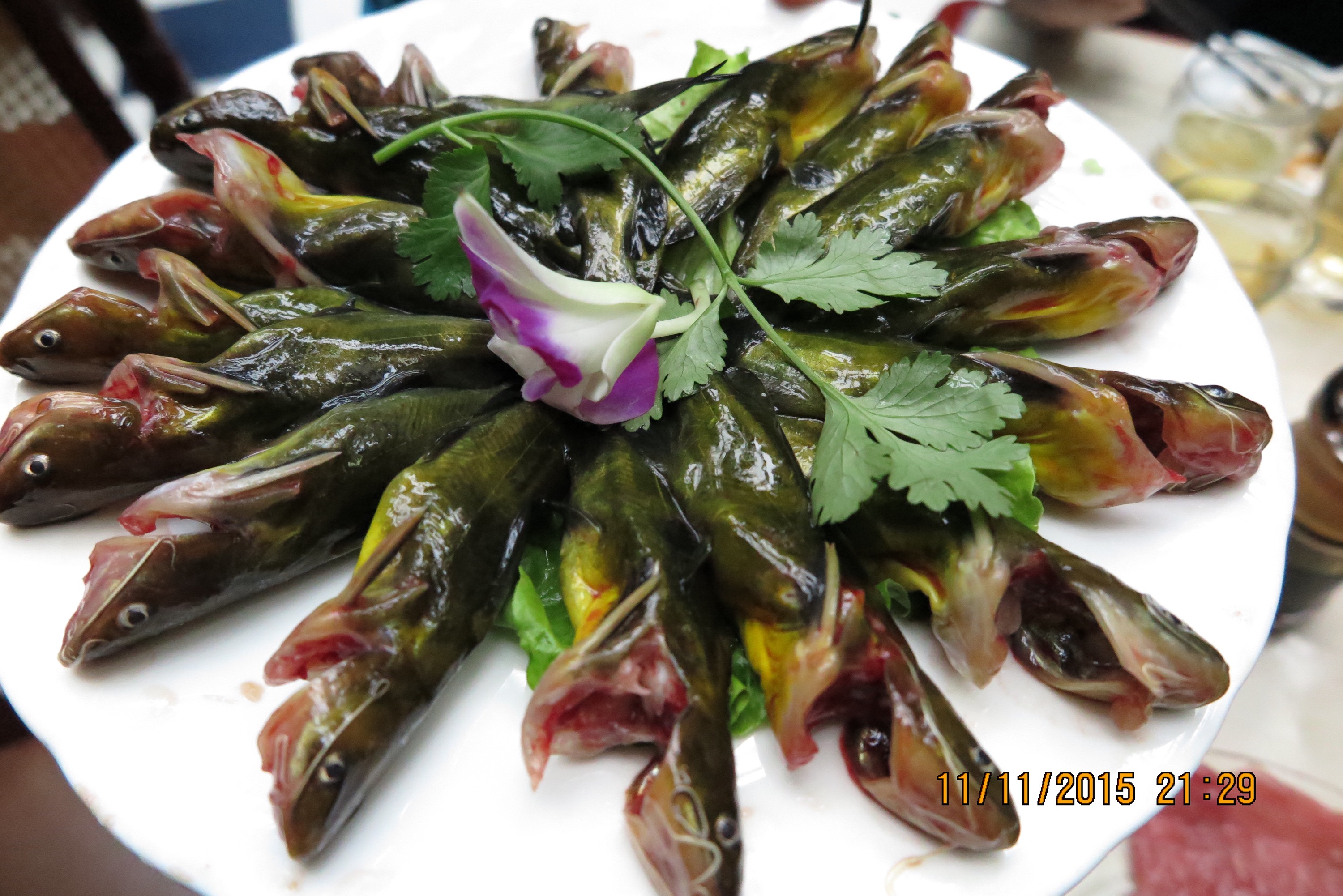
After we got used to the idea of cooking the meats, this local catfish delicacy came out. It looked, uh, interesting to us.


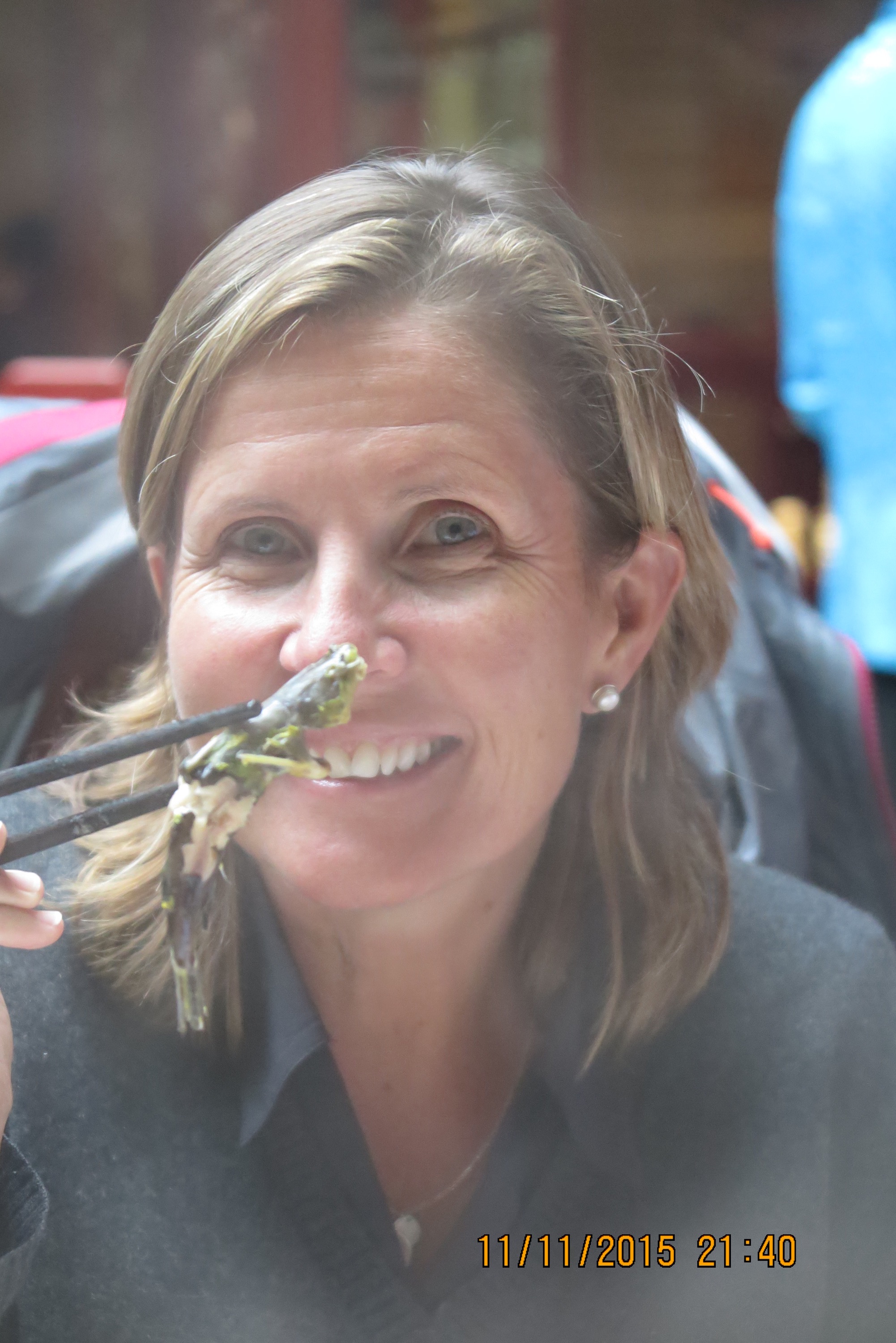
Our friend and travel partner Sally braving the first taste of the catfish. It was actually quite good.


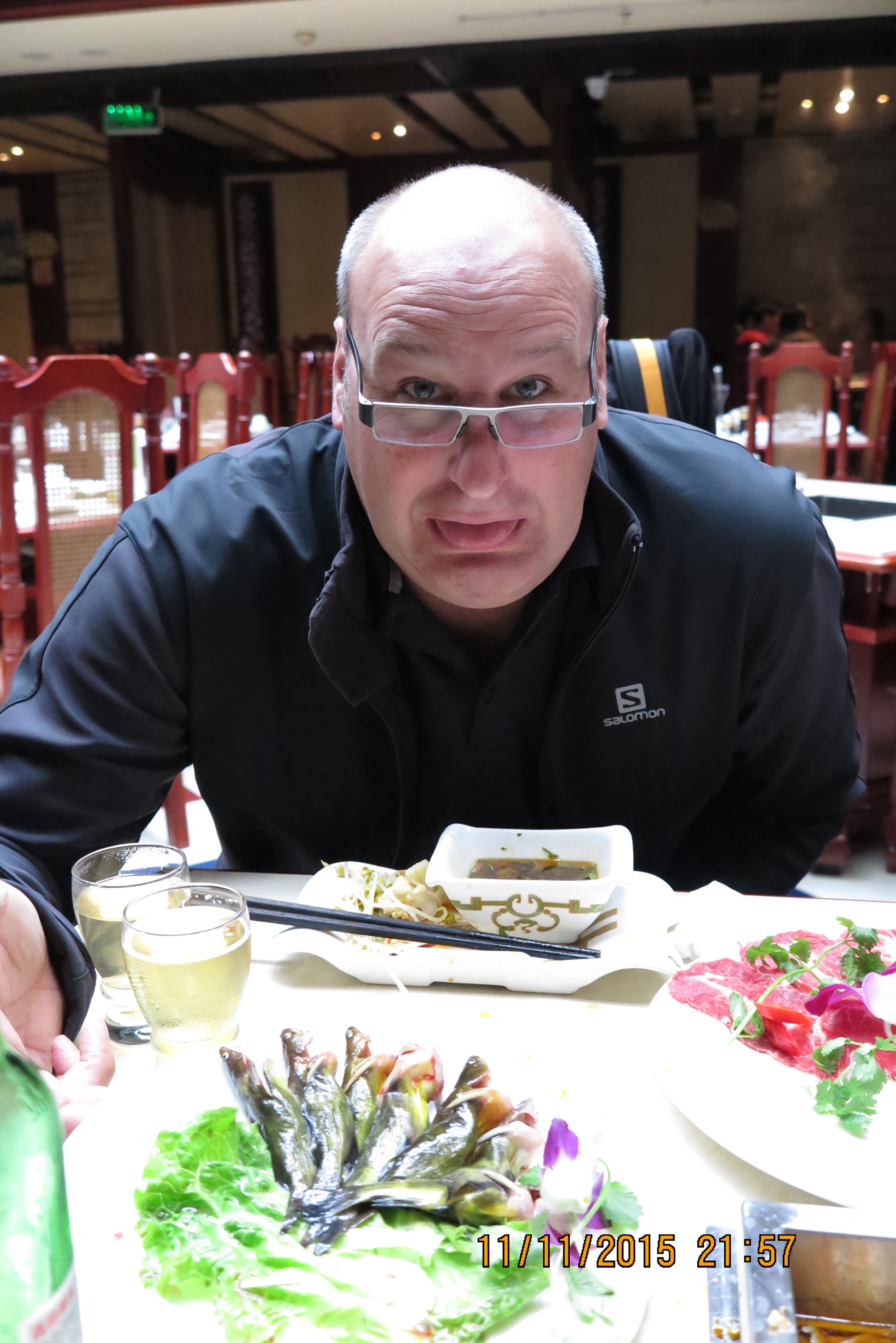
Sally’s husband Bryan illustrating his opinion of the catfish.


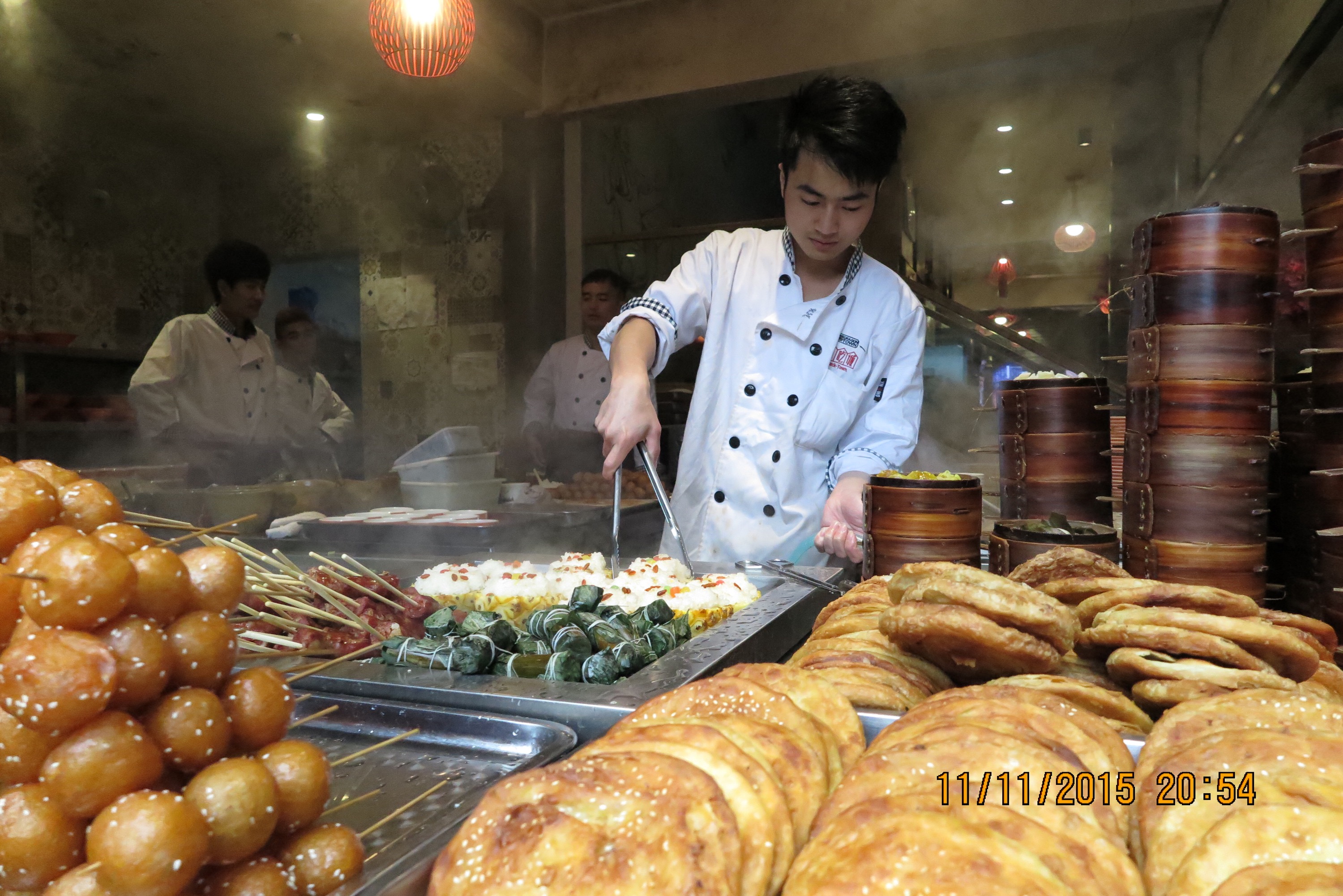
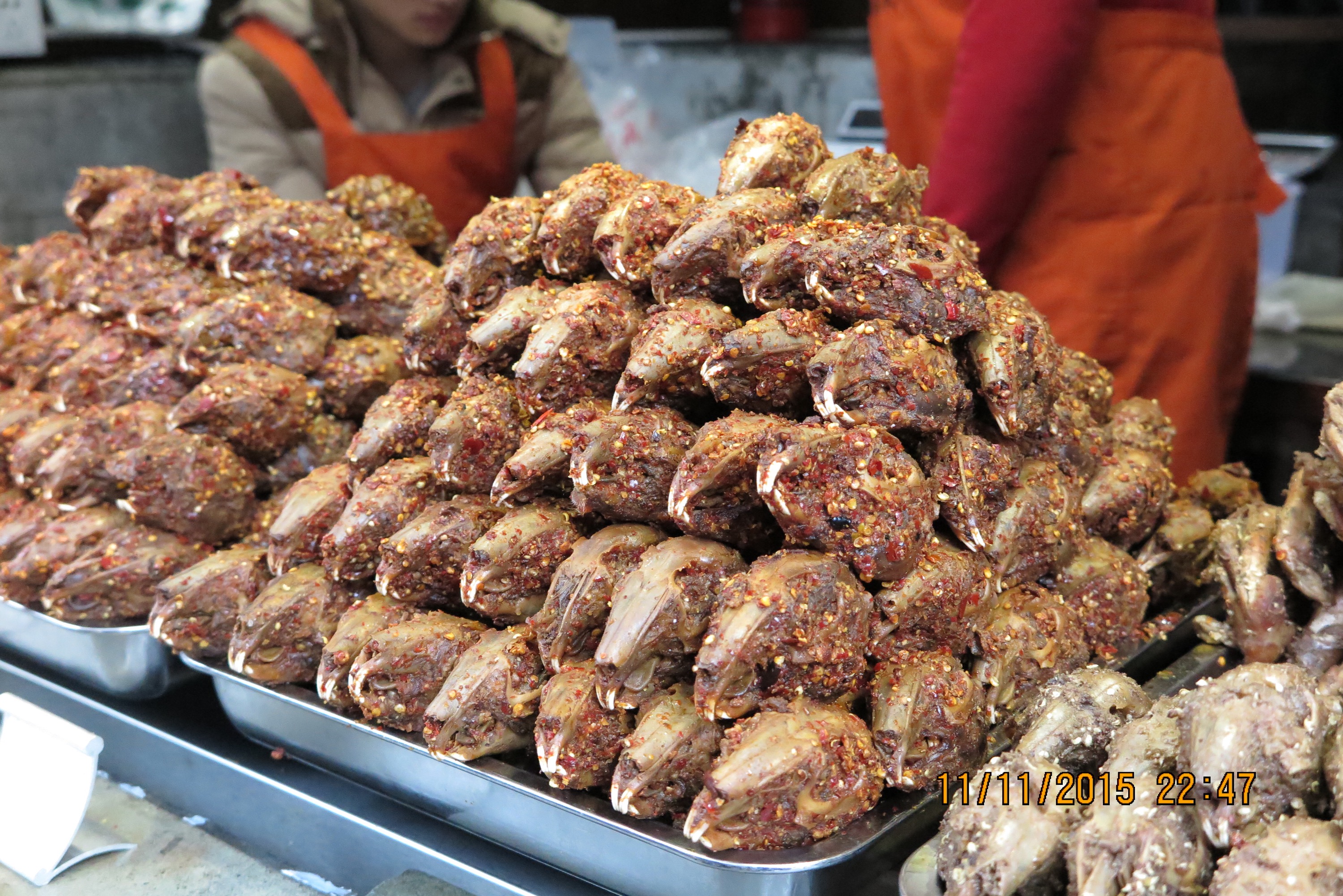
Street food in the open air market on Narrow Alley


More open air market food on Narrow Alley. Let’s just say Peter Cottontail wouldn’t approve.


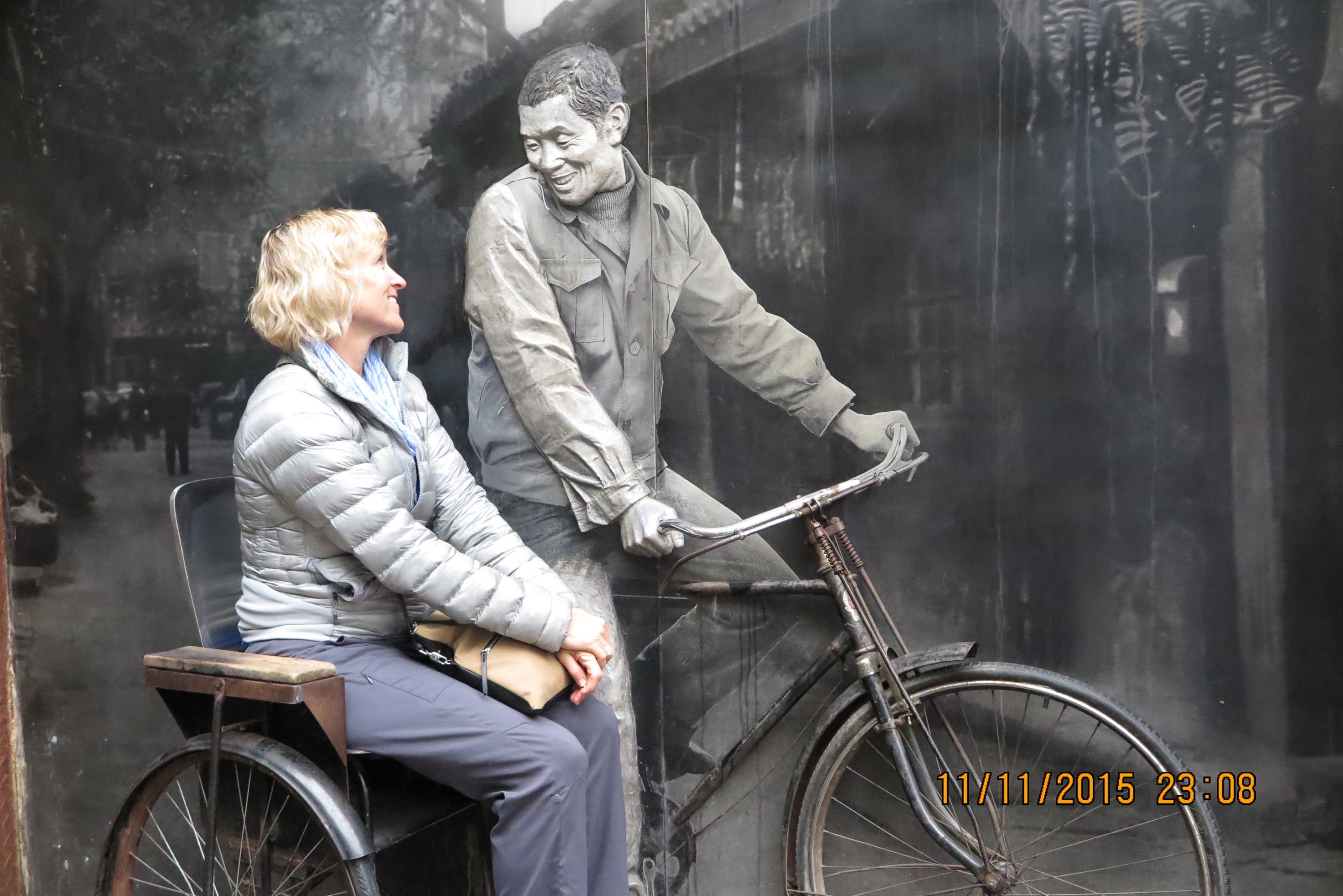
Lisa interacting with the multi-medium art on the street. Should I be worried?

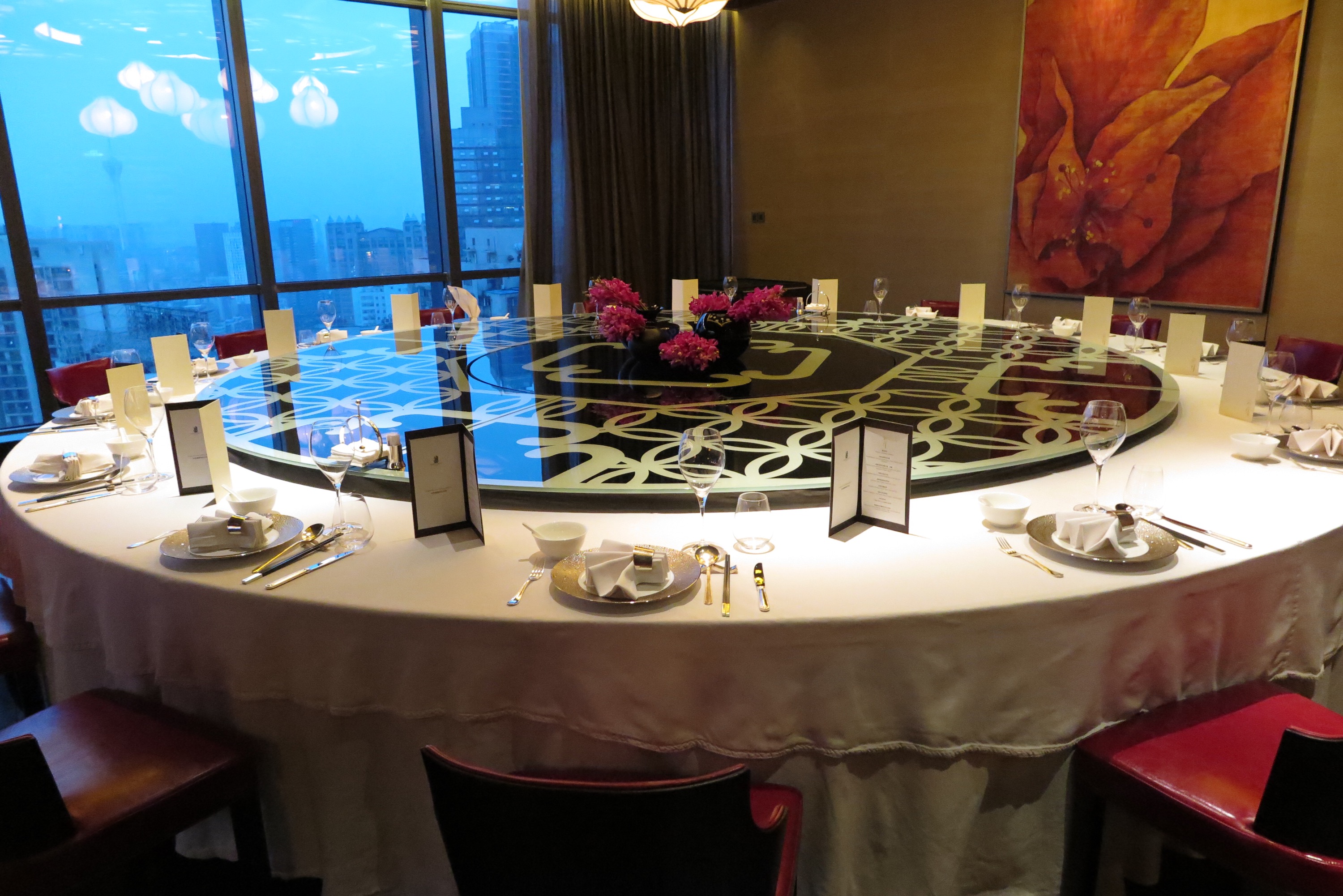
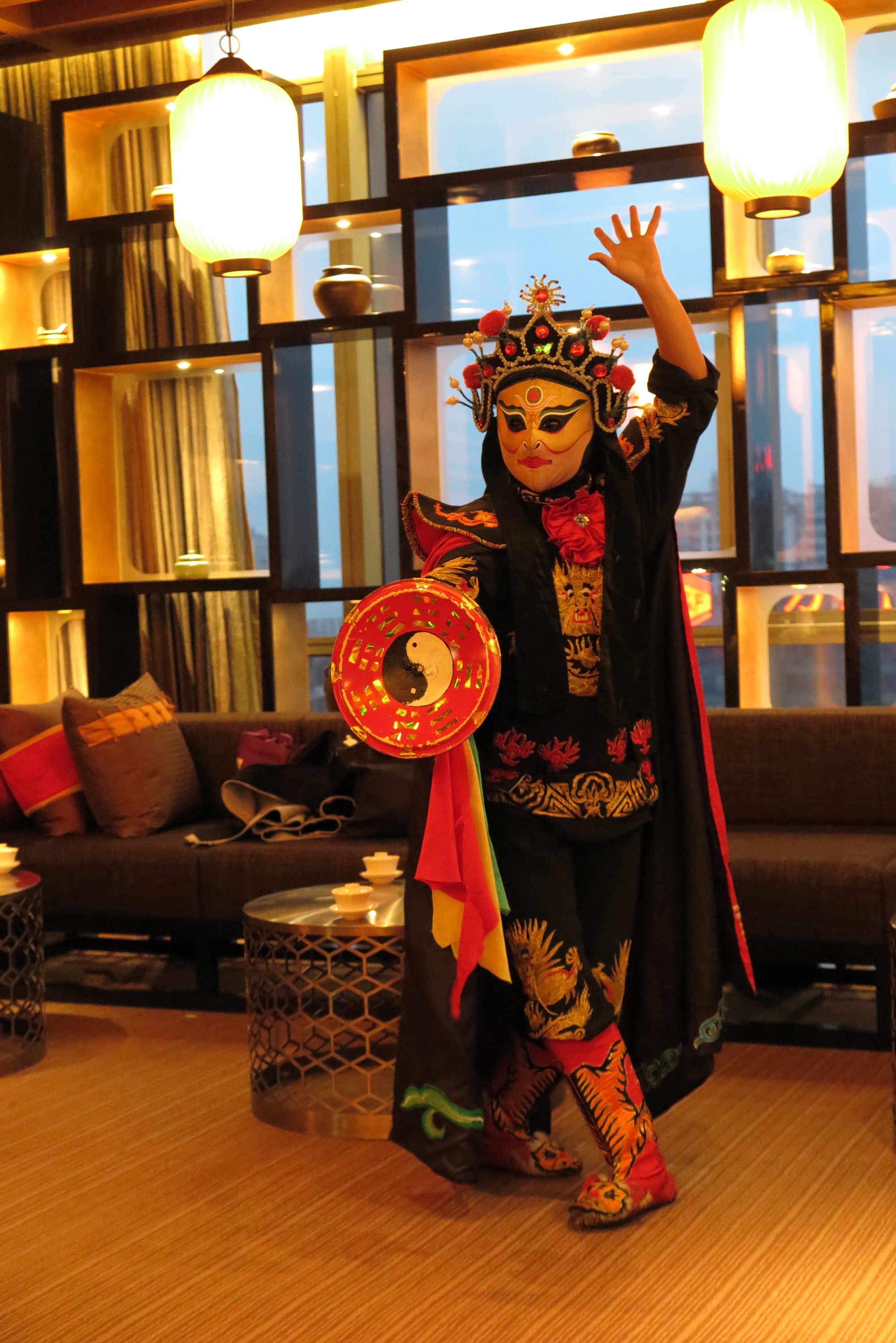
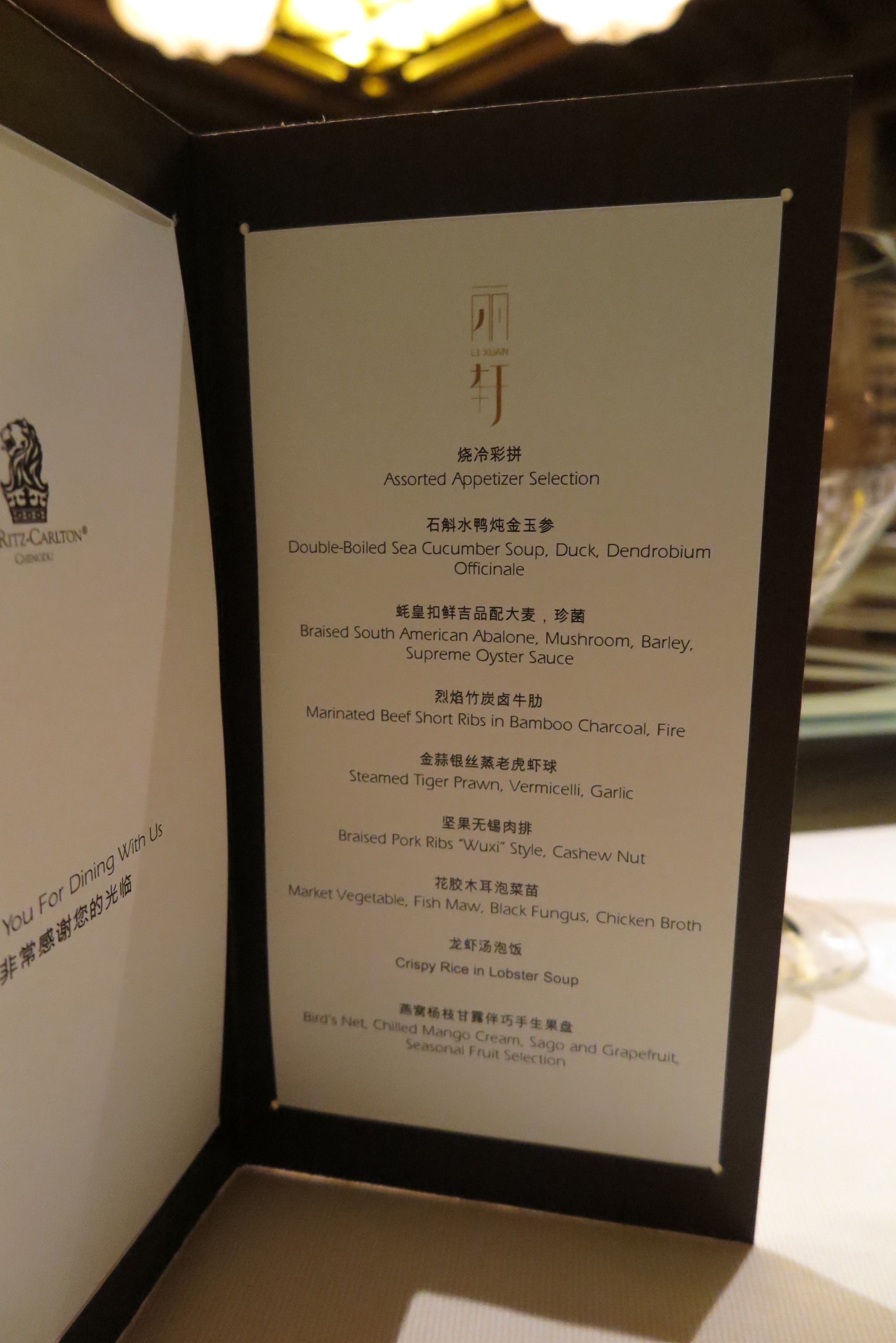
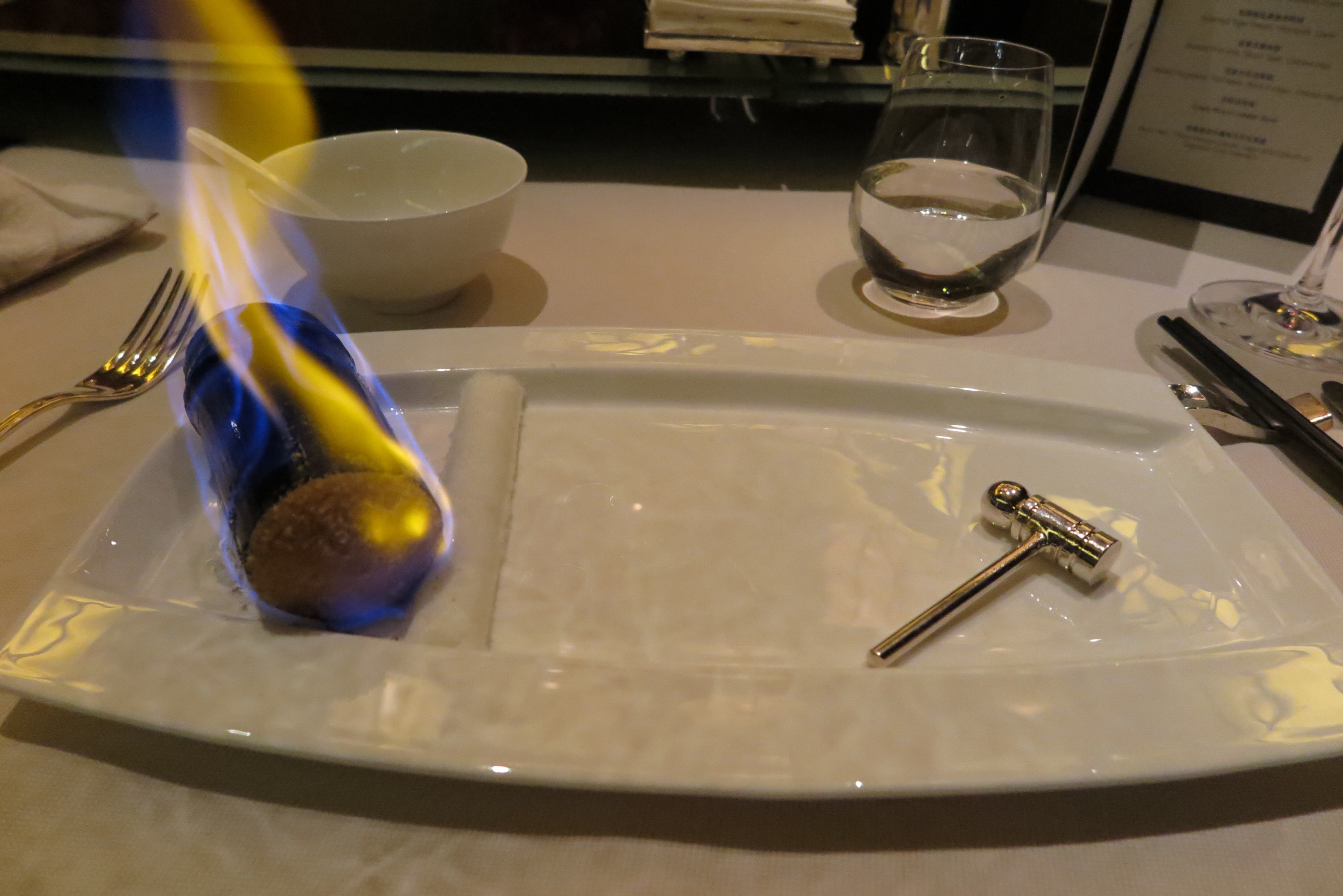
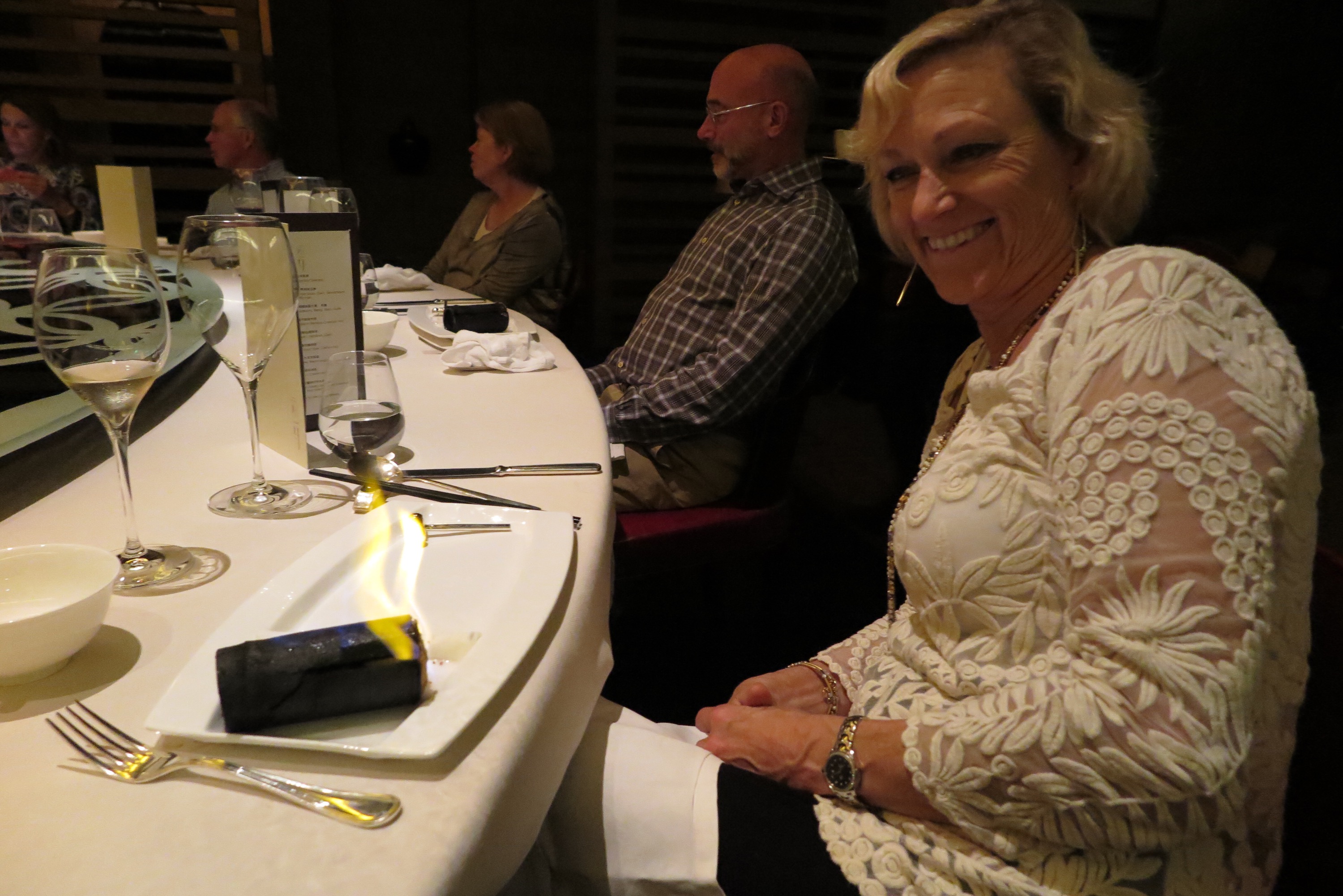
We finished the day with one of the most incredible meals we’ve ever had.  It was nine courses and featured new foods (like sea cucumber soup), and novel, impressive presentation like the bamboo charcoal beef short rib.  We were all seated around a beautiful round table overlooking Chengdu.  The meal opened with a “changing faces” dancer.   Throughout his dance, his masks kept changing.  We still aren’t sure how he did it.  Our group has gotten so close, we finished the evening off with a couple of fun party games.

Our dinner table overlooking the city.


The “Changing Faces” dancer. He instantly changed his mask several times without any of us seeing how he did it.


The evening’s menu


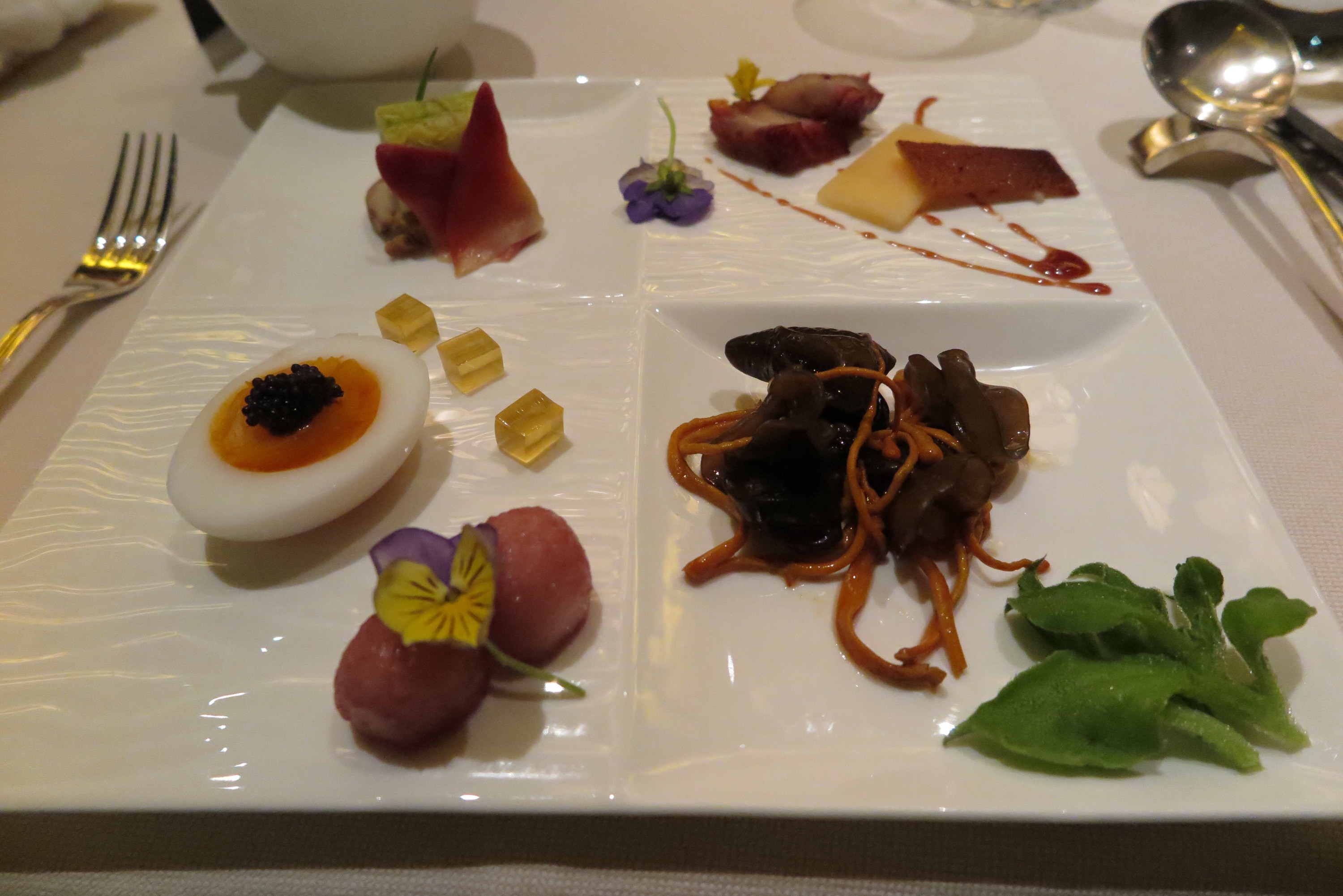
Our appetizer


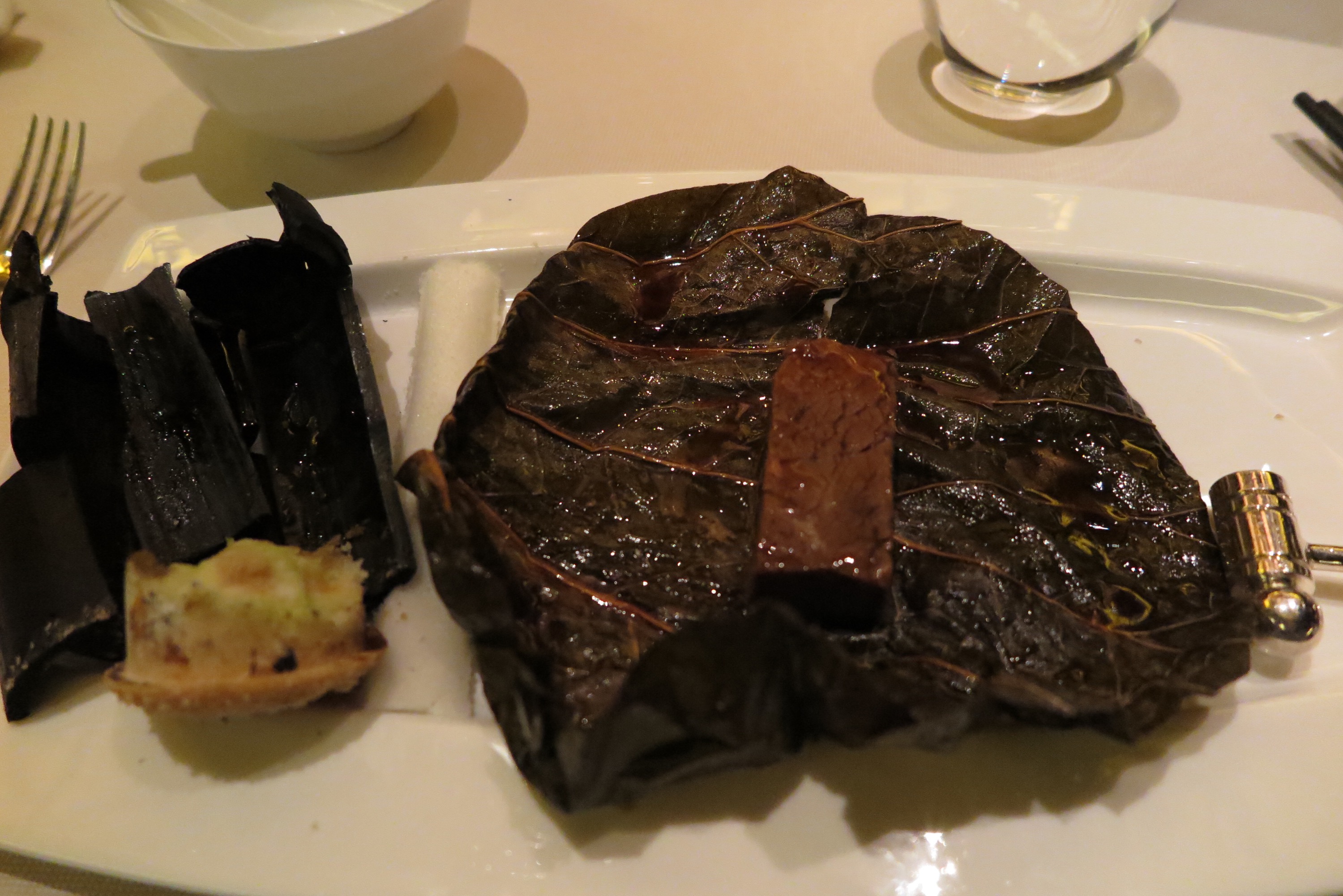
That is a charcoal piece of bamboo wood on fire. A piece of marinated short rib has been grilled inside. The hammer is used to break open the bamboo


Lisa checking out her flaming bamboo


The finished short rib after removing it from the bamboo. It was wrapped in a lotus leaf.

It was a whirlwind day in Changdu.   Stay tuned for our next posting about our adventures in Tibet!

Categories: Uncategorized | Leave a comment

“Does anybody really know what time it is?”

Today was a travel day from Bhutan through Khatmandu to Chengdu, China.  Not only have we lost all track of  dates and days of the week by this time in our travels, today really did a number on our sense of the concept of time.  When we landed in Nepal the time was 15 minutes behind Bhutan and when we landed in China we were two hours and 15 minutes ahead of Nepal and when we texted the girls upon our arrival at 7:00 pm in China, it was something like 2:00 am in the morning in California.

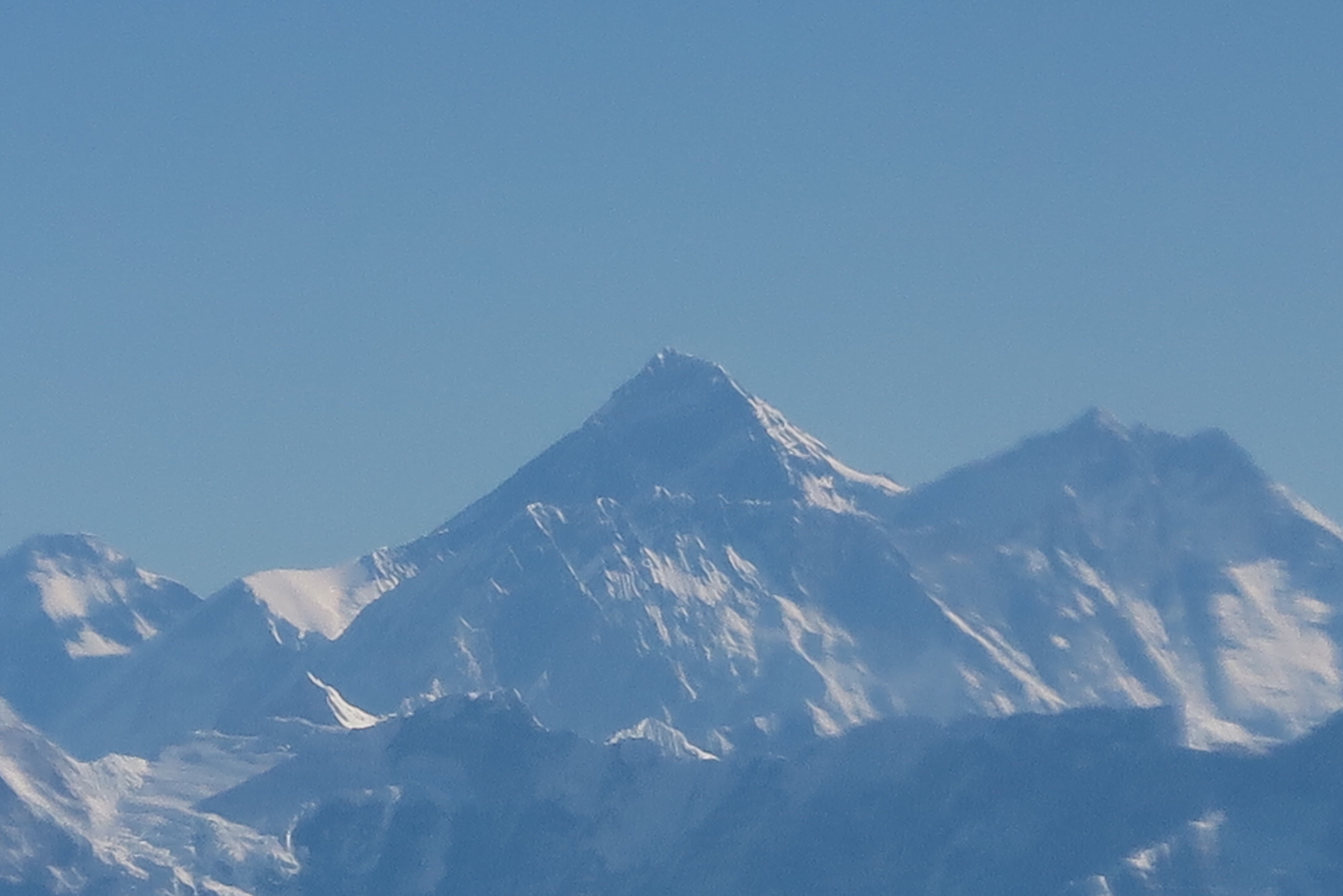
  Mount Everest taken from the window of our airplane as we flew from Bhutan to Kathmandu.

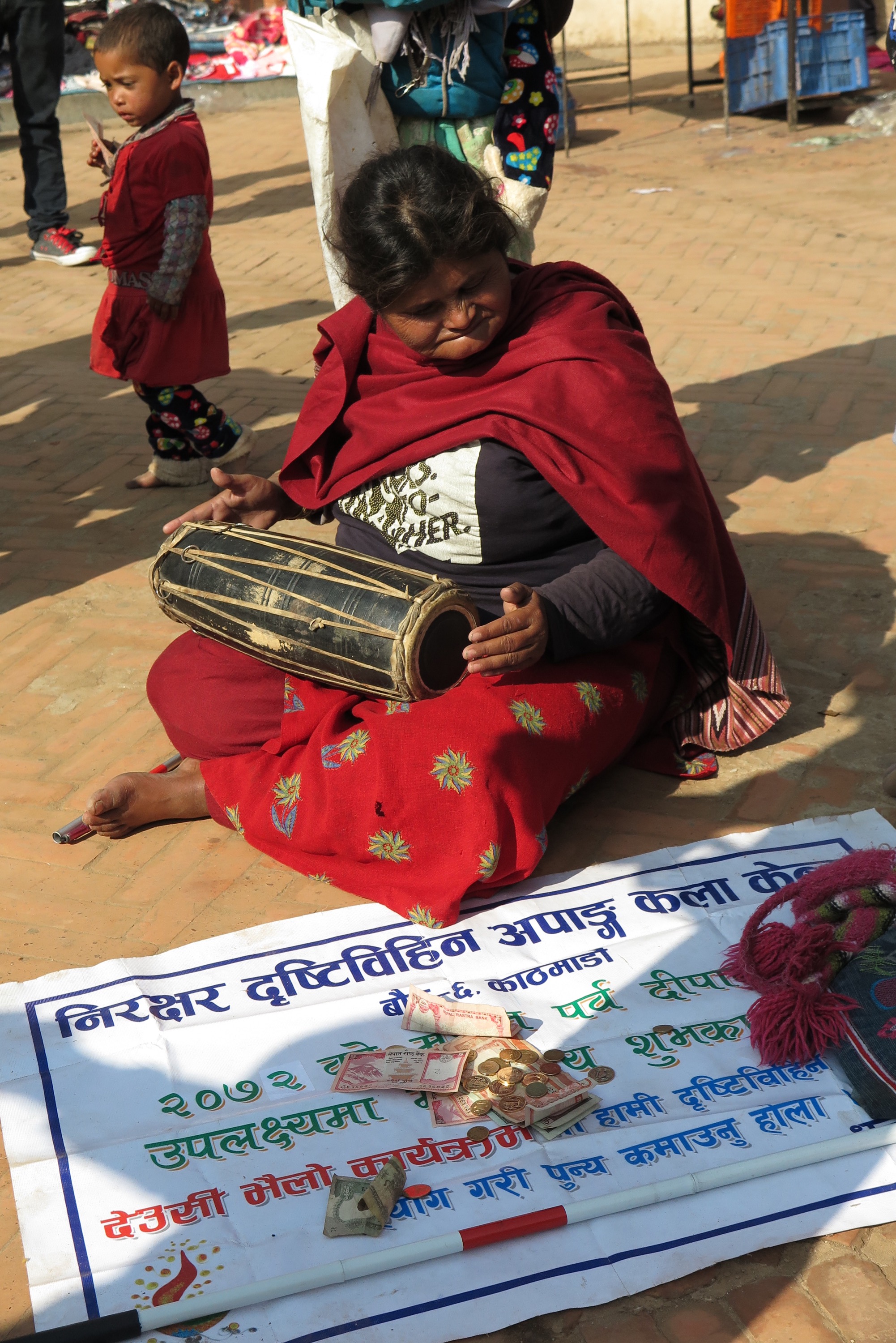
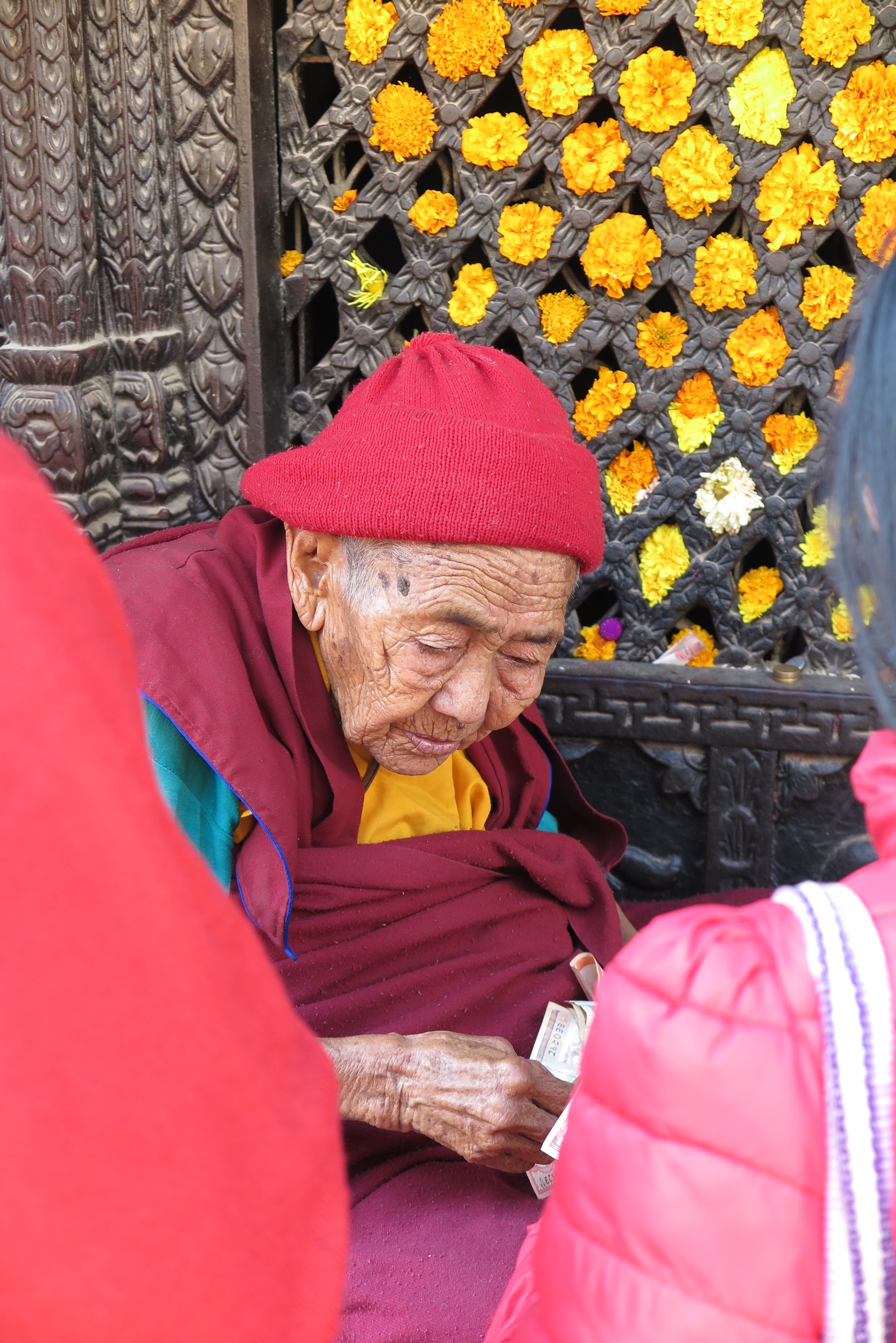
Not only did we struggle with the concept of time today, we also experienced three immensely different cultures.  We left our friendly, happy, peaceful community of Bhutan and flew to Khatmandu where we had a four hour layover. (Many of you may recall that our trip was originally scheduled to go to Nepal and Mt. Everest for three days.  Because of the earthquake, this part of the trip was cancelled due to infrastructure issues) Our fantastic trip leader Rakesh made it possible for us to leave the airport, visit the largest Stupa in Nepal and get in a little shopping.  What a shock to the senses this two hour trip was!  The area around the Stupa was crawling with Tibetan refugees and Nepalese.  Large groups were singing songs and chanting.  The streets were streaming with beggars.  The entire pulse of Khatmandu was high energy and a very different contrast to Bhutan.  After our “Chevy Chase does Khatmandu” tour, we were back on a plane to Chengdu, China.

  The Stupa in Kathmandu.  It was felled by the earthquake. You can see what it used to look like in the foreground. It is currently being rebuilt.


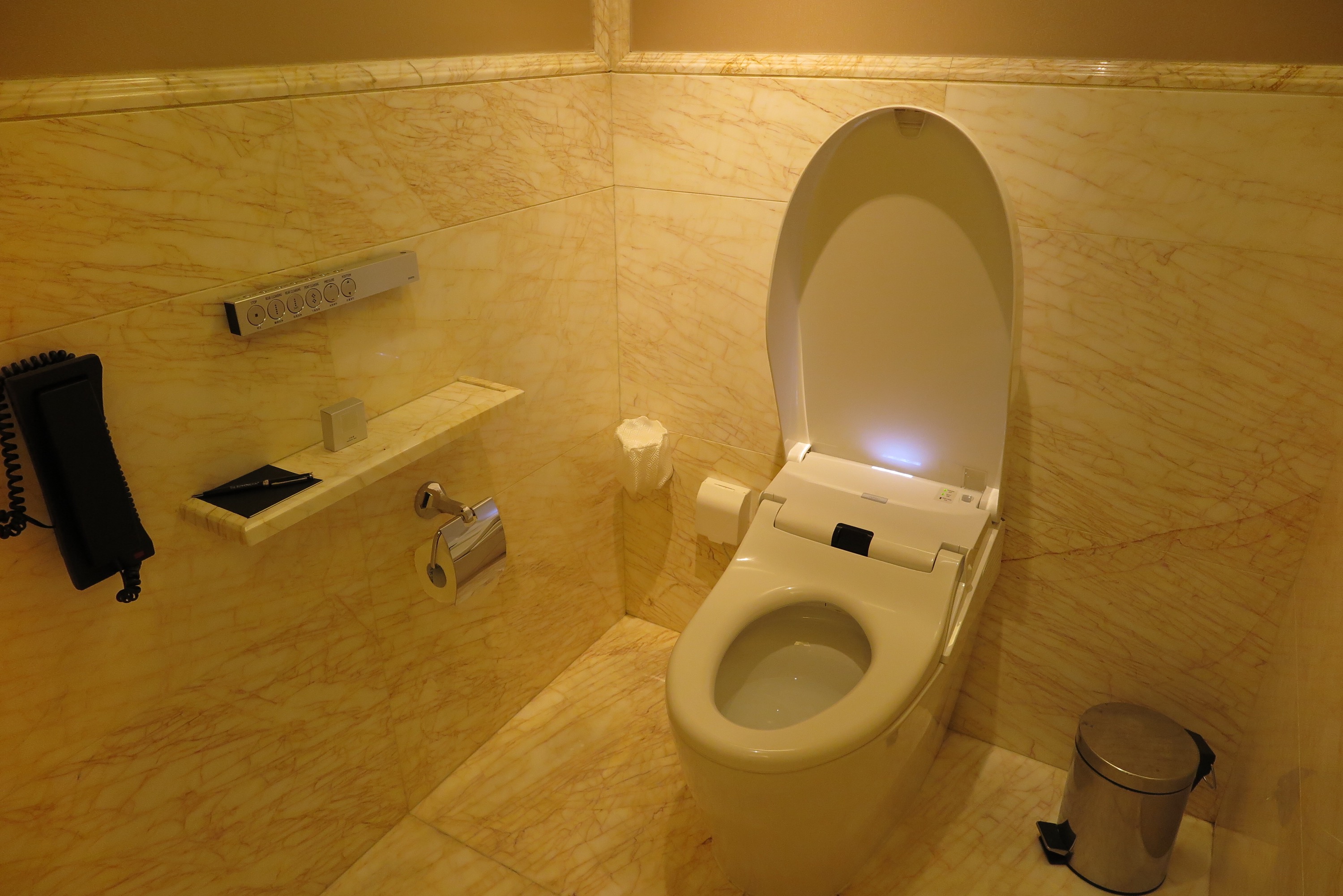
Chengdu, China is also a very different shock to our senses.  It is an ultra-modern metropolis with 14 million residents.   Brad said it felt like we were dropped into a movie set of a futuristic city with flying cars.  We are staying in a hotel on the 41st floor looking out at high-rise upon high-rise.  We were certainly not expecting a city this modern or a hotel room that sported the world’s coolest toilet ever!

  Chengdu skyline from our hotel room. Chengdu has a population of 14 million people.

   
 The toilet and its control panel.  It does just about everything for you!

Before we conclude this post, we would be remiss to leave out the efforts of our trip leader Rakesh.  Rakesh is with us 24 hours a day and takes care of our every need.  Our group was a little disappointed about the fact that our time in Nepal was cancelled.  Rakesh made sure that, if possible, he would get us into the city.  We were whisked through customs, into a bus, dropped off at the Stupa, given time to shop, picked back up by the bus, visited a beautiful hotel, and were dropped off at the airport where our luggage was all checked in for us and taken care of.  The timing was impeccable and Rakesh keeps saying it is because our group has good karma.  We may have a little of that but what we really have is Rakesh working tirelessly behind the scenes to make sure every detail is taken care of!  What he did for us today was a bit of a miracle that we won’t soon forget!


Categories: Uncategorized | 1 Comment

The Kingdom of Bhutan: A Land of Progressive Tradition

Happiness.

As we flew alongside the Himalayan Mountains and descended into Paro International Airport, happiness wasn’t our first thought.  Fear might be the better word.   Out my window seat I could see the wing of the plane get unusually close to the mountainside.  Then the plane made a sharp bank to the right in order to   follow the Paro Valley’s topography.

There is a reason why they call this the world’s most dangerous landing.

As you might guess, we survived.  But, we find ourselves leaving Bhutan just a little richer than when we arrived.  This small country of 700,000 people has spectacular terrain, rich traditions, and beautiful, intelligent, loving people. It also has a unique view on what is important in life. Getting to know this land has left an impression that will stay with us the rest of our lives.

Bhutan was unified from a number of fiefdoms in 1907. King Ugyen Wnagchuck was popularly chosen to lead this new country.  He is referred to as K-1.   In 2006, K-4 abdicated the throne to his son, now known as K-5 and announced that the country would be holding parlimentary elections in 2008.  This wasn’t, however, your usual case of popular uprising to take power from a ruling dictator.  The people didn’t want to lose their beloved king.  They didn’t see a need for a larger voice in the direction of their country.   But, the King knew that in order to modernize Bhutan and to ensure its long-term viability the people needed to have control.

This wasn’t a King that lavished riches on himself in ornate palaces and luxury automobiles.  His “palace” is a modest home in the woods. And, to convince the people that they should vote for the democracy, he walked to the most remote corners of the country where automobiles couldn’t go to speak about his vision for the country. He is also a cycling enthusiast who often goes out for rides by himself.

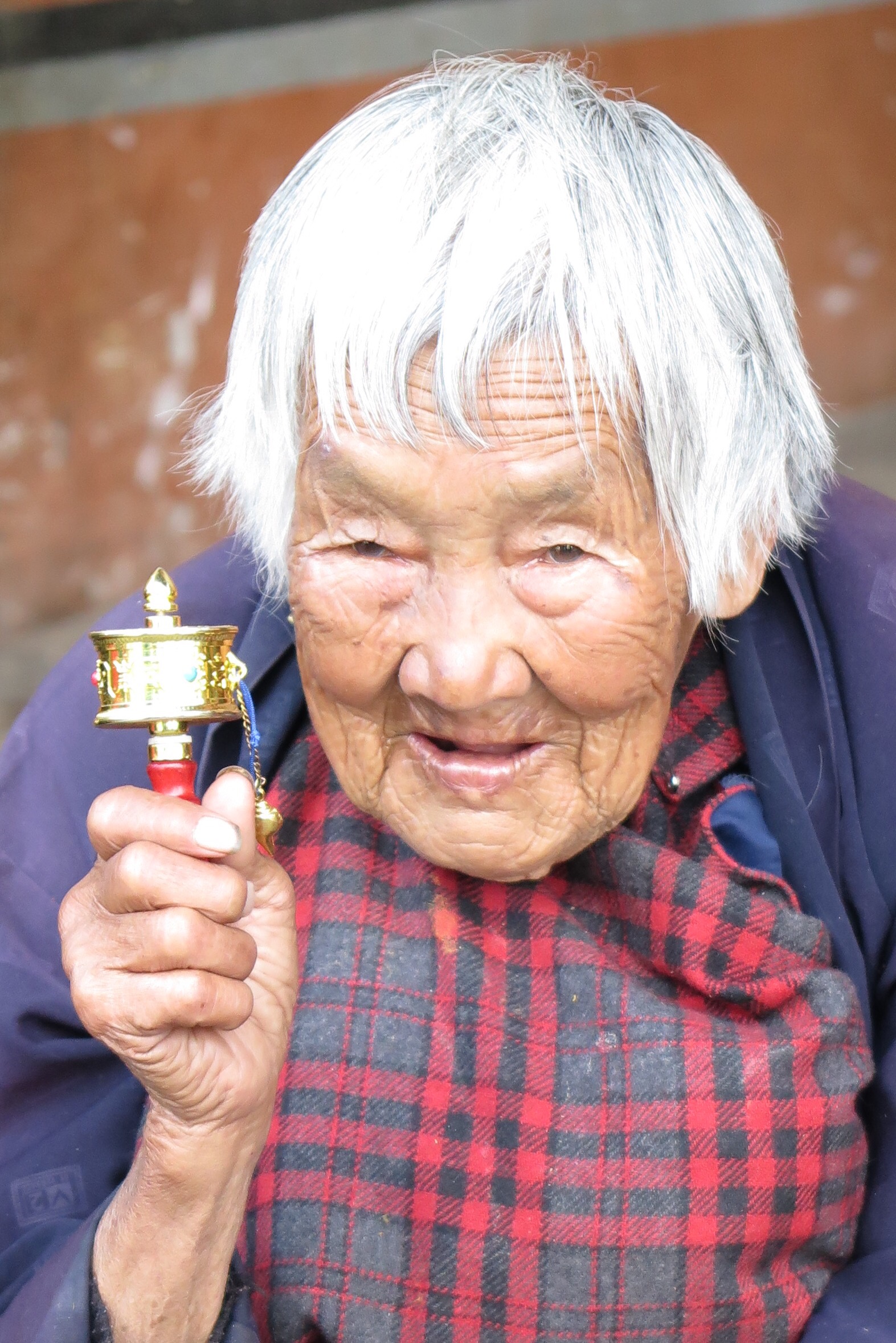
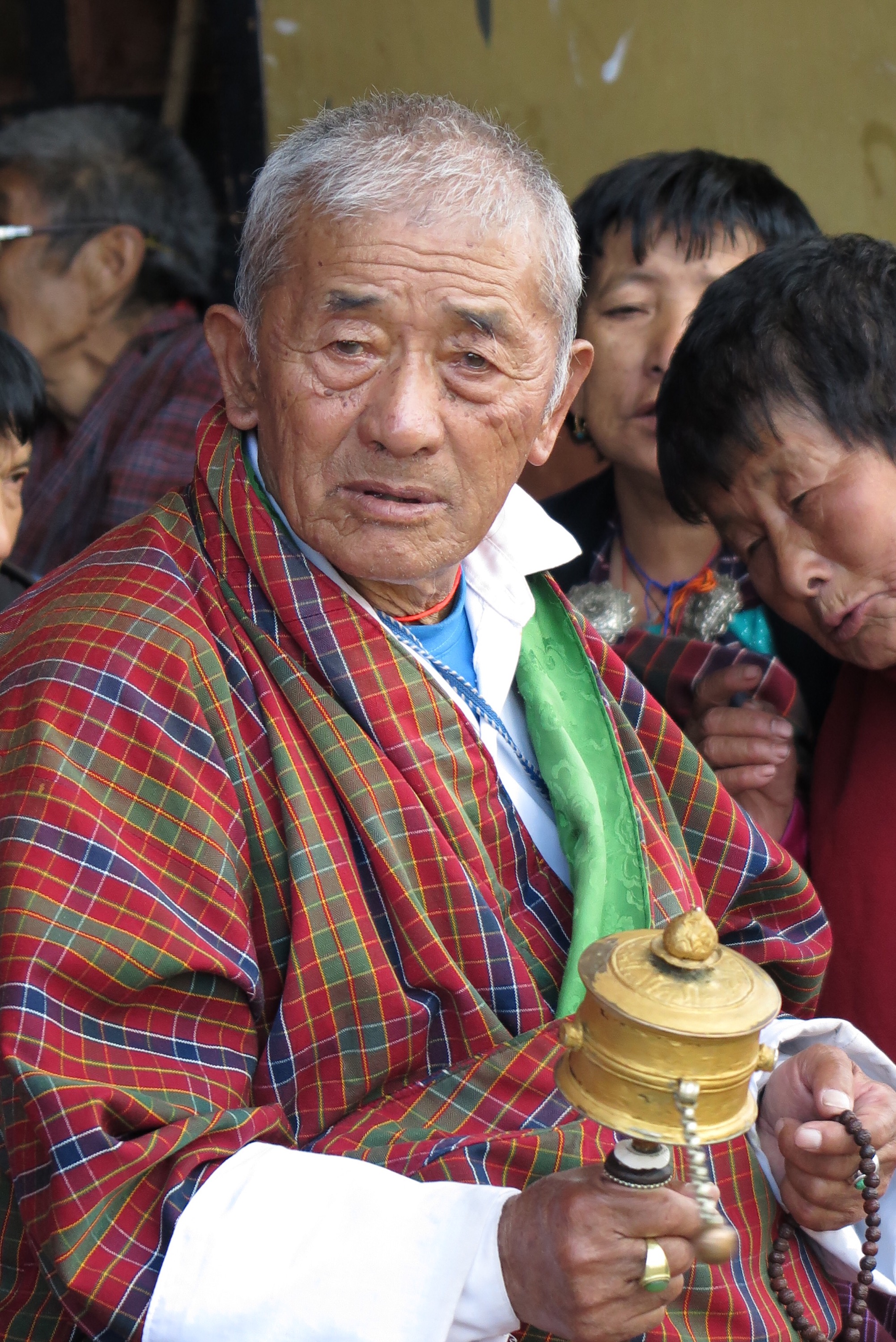
The Butanese people hold tight to their traditions.  The men all wear the traditional garb called a gho (pronounced “go”), and the women wear a kira.  The dominant religion is Buddhism and they hold to the ancient rituals and practices.  There are many temples throughout the country.  The economy is largely agricultural (rice and buckwheat are their major crops). Tourism is tightly controlled to keep the country from being overrun with tourists. And, like many Asian countries, extended families live together. 

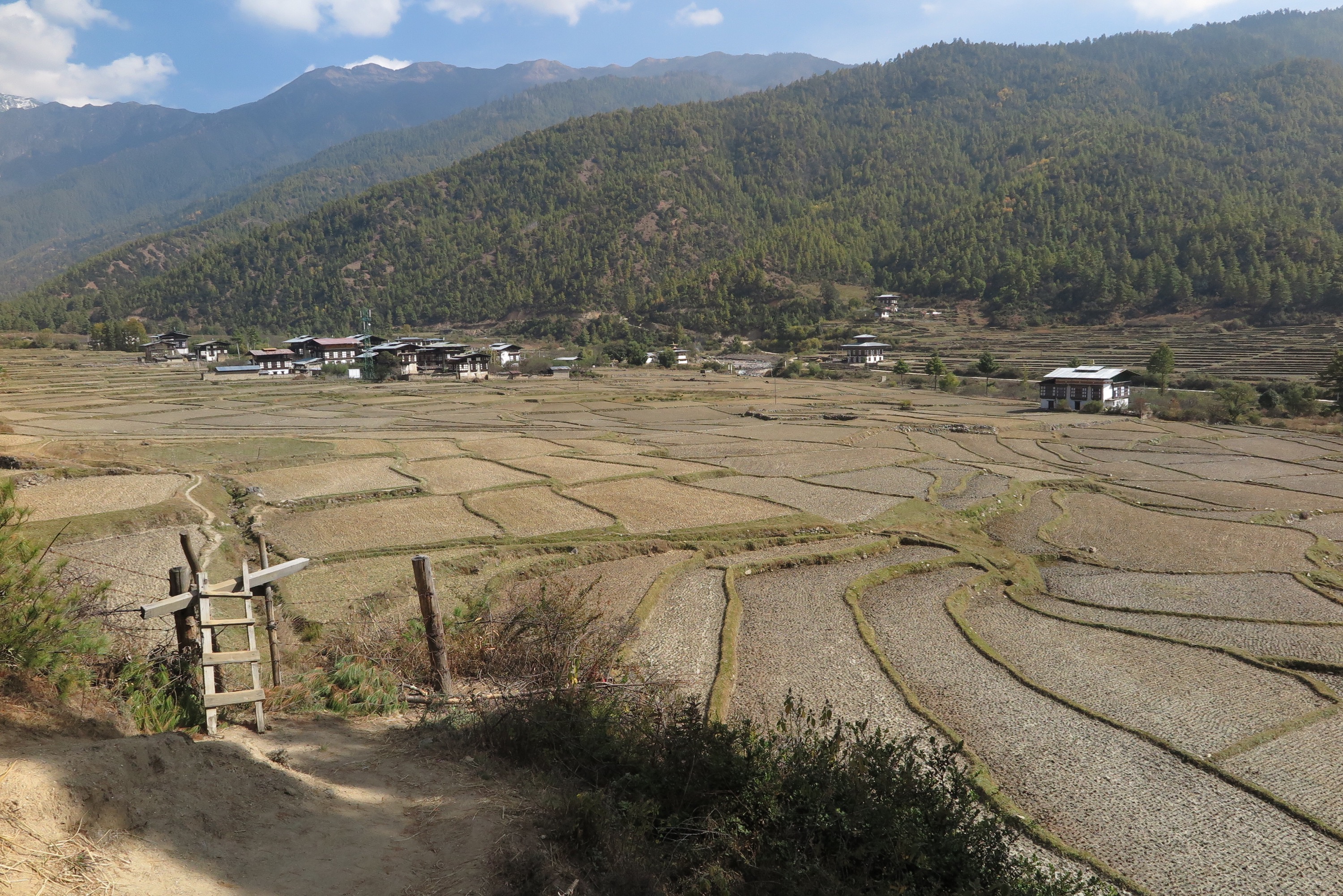
  Rice fields in the Paro Valley.  The rice was harvested a few weeks ago.

Where Bhutan diverges from many traditional small countries is in the way it holds to these traditions while taking a progressive approach to their future.  As they develop their country, they focus on improving their primary metric, the GNH — Gross National Happiness.  This metric considers health, employment, income, education, the environment, and the overall well-being of its citizens.  GNH is given priority over everything else when leaders establish policy.

Women have the same educational and employment opportunities as men, and, interestingly, when it is time for an inheritance, the parents pass their estates to their daughters.  The men must move in to their wives homes when they get married.  Think about that boys!

Our tour guide, Nima, led us on our four-day visit to Bhutan.  We hiked to the Tigers Nest Monastery; Mountain-biked through farmlands in the valley (although there is no such thing as flat terrain in Bhutan so Lisa finally had to learn how to shift gears on a bike!); visited Dzongs, which were fortresses designed to protect the town citizens from invaders; and ate traditional Bhutanese cuisine.
  Lisa on her mountain bike!

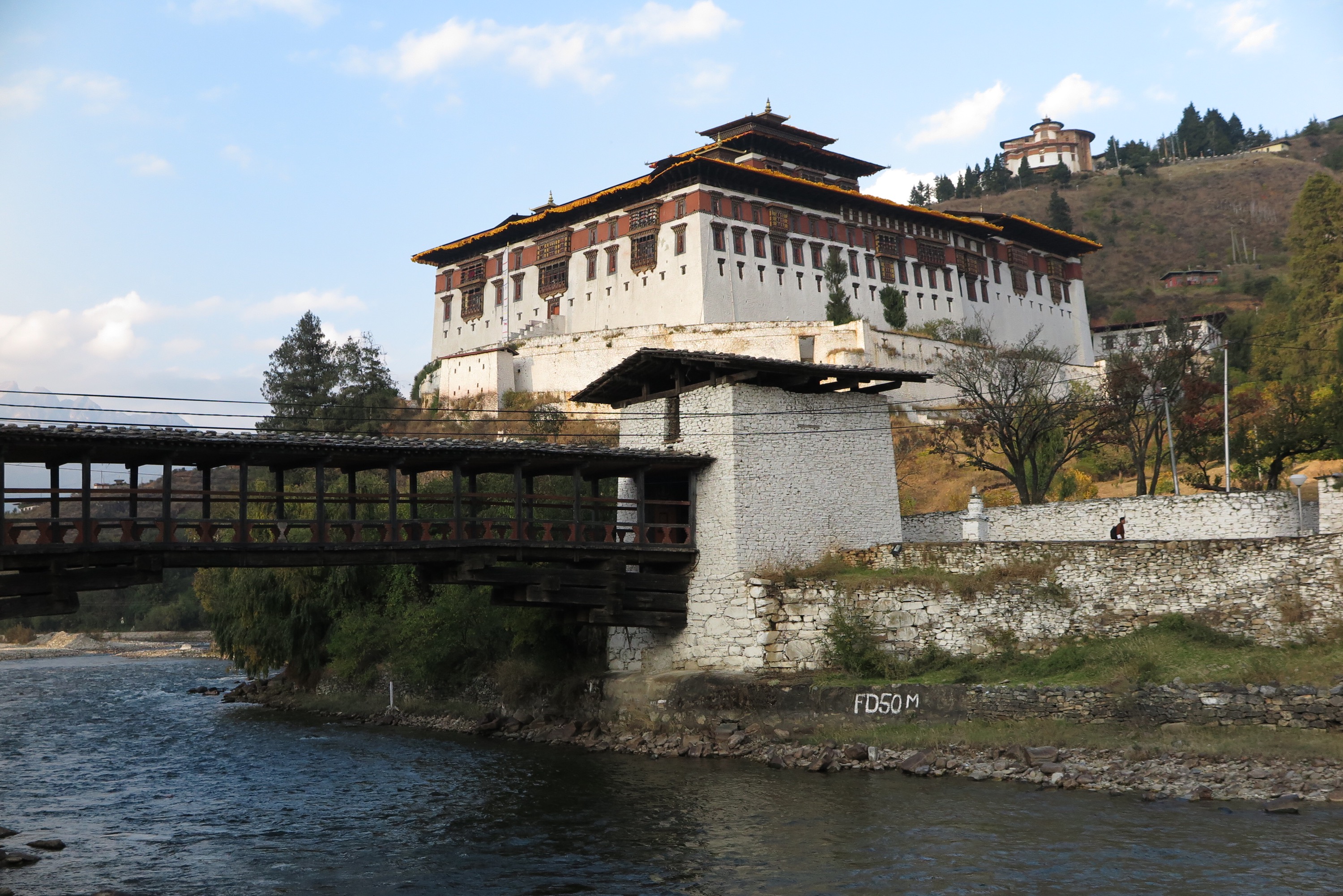
  The Rimpung Dzong in Paro.

 Bhutanese flag 

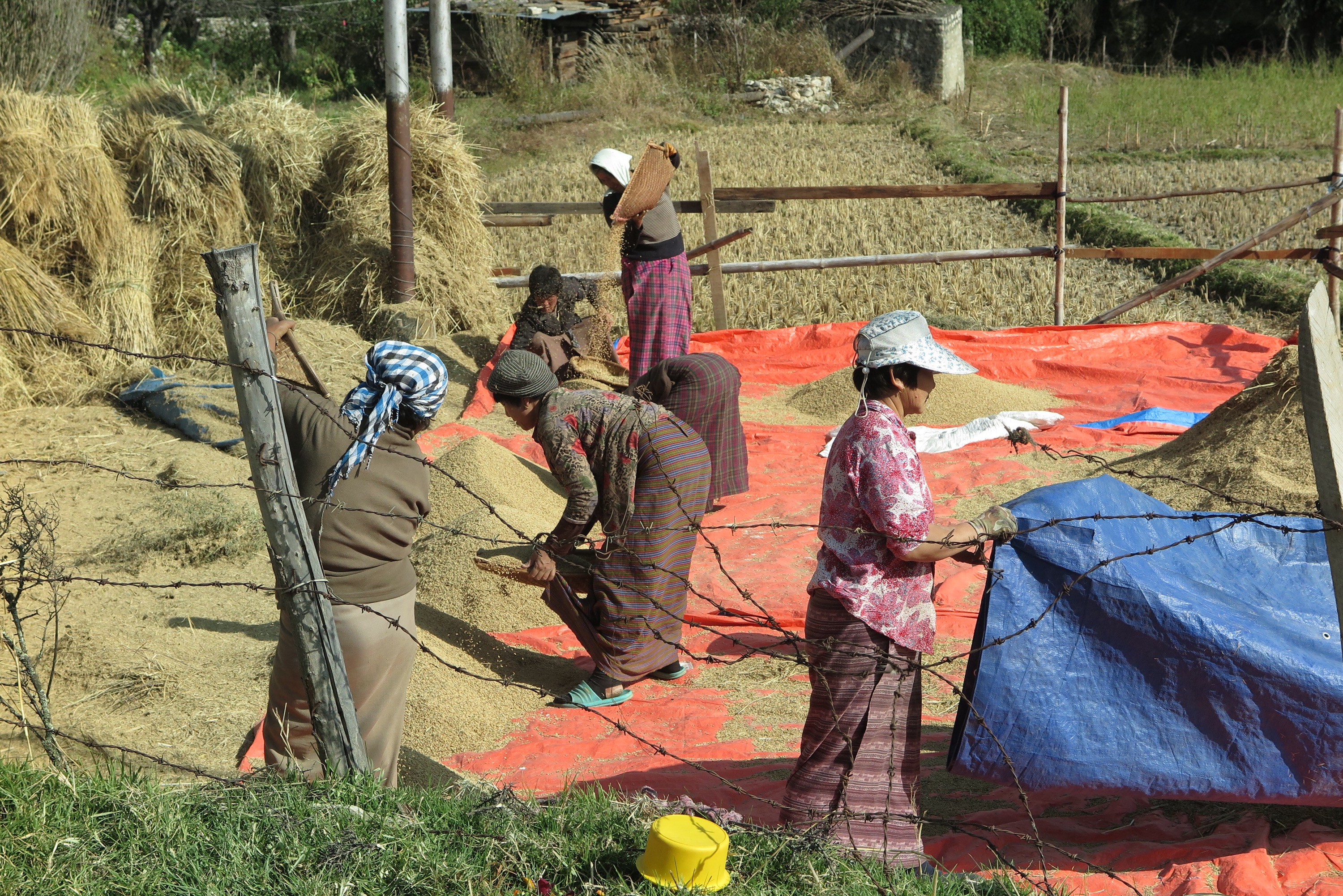
  Bhutanese women separating rice from the stalk. 

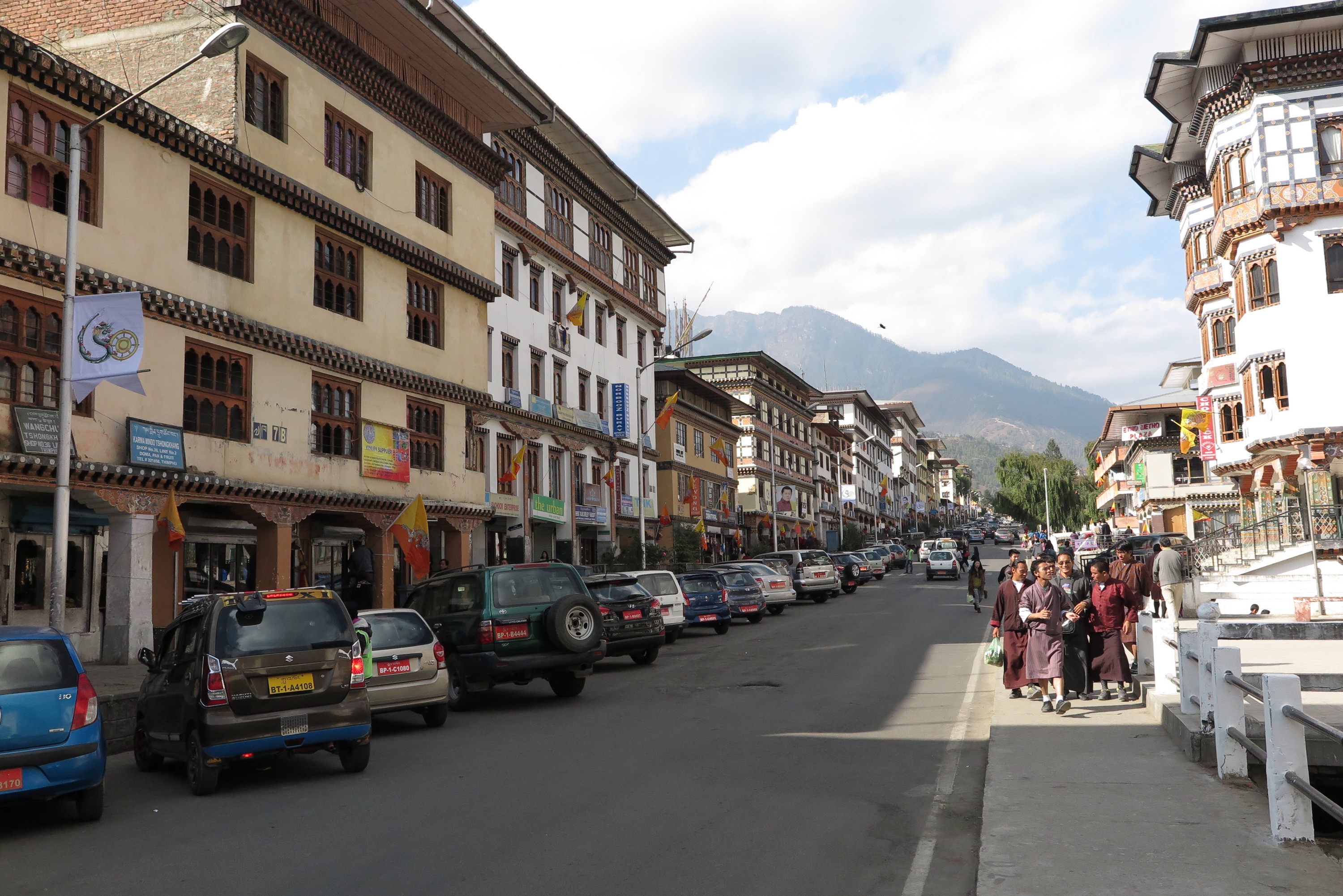
  Downtown Thimpu, the capital of Bhutan.

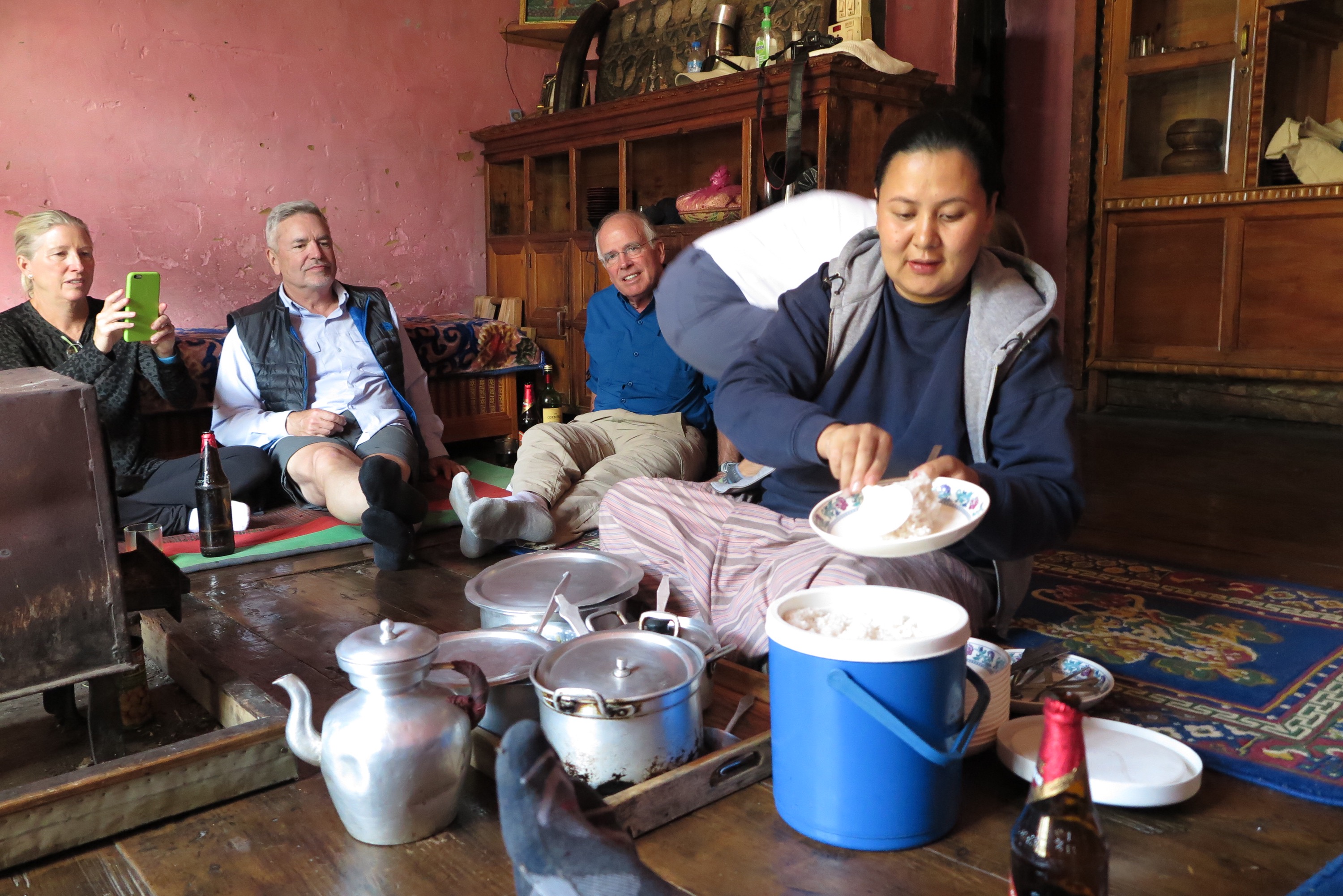
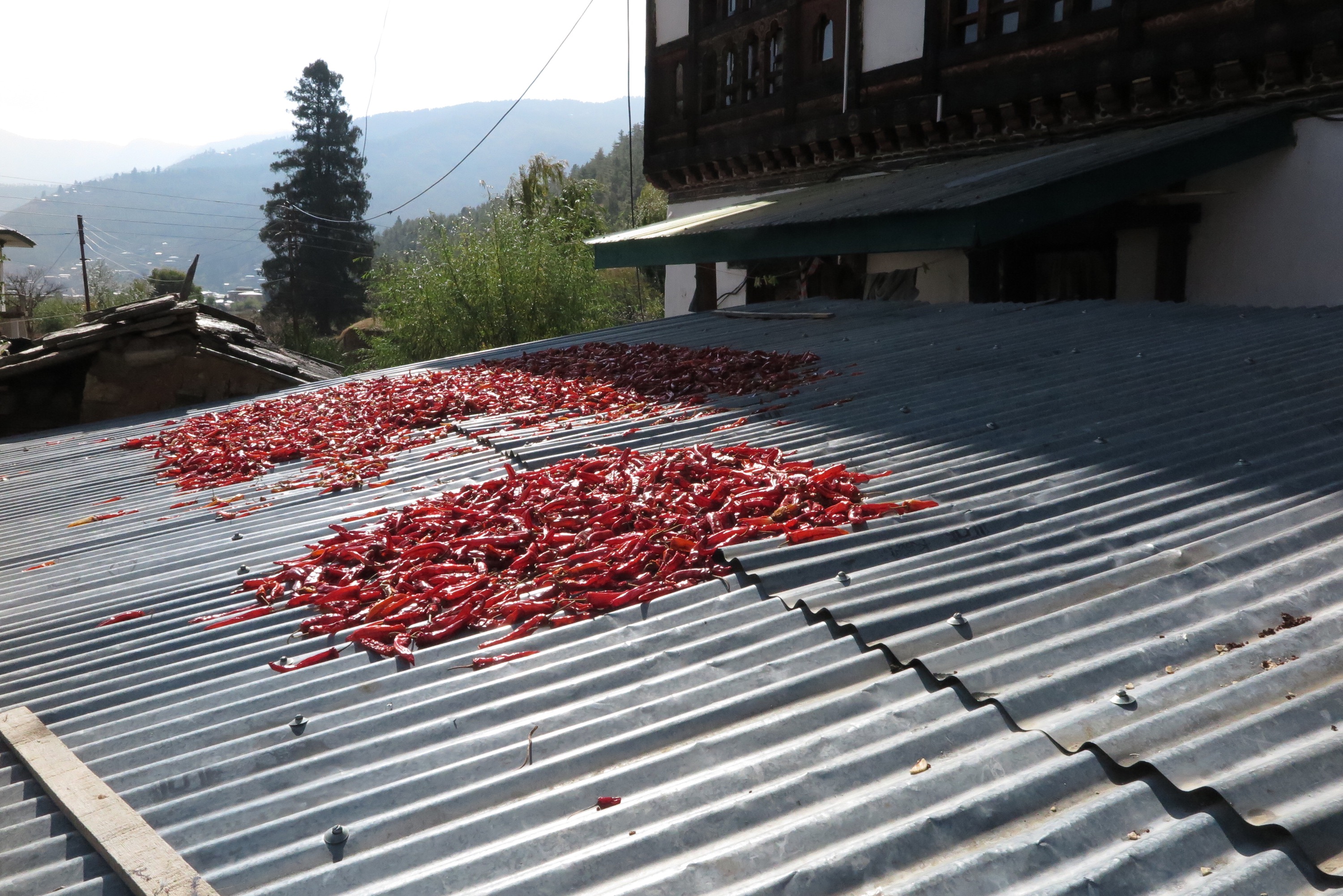
Nima fancies himself a cook and showed us how to make emadatshi, a chile cheese dish.  Bhutanese eat this dish with most every meal.  It is made with red or green chiles, water, and an easily meltable white cheese. You serve it over rice.  The dish is not for the faint of heart as it is very spicy.  These chiles are grown throughout Bhutan and the farmers dry them on the roofs of their homes. We’ll make some for you when you come to visit us. We had an opportunity to visit a real farmhouse with a lunch cooked by the family. Sitting on the floor, we had red rice (the most common rice of Bhutan. It’s delicious), potatoes with cheese, beef with rice noodles, spinach in broth, and of course, emadatashi. We drank butter tea and had a bit of their home made grain alcohol.  All of the produce, rice, chiles, etc., were grown on their farm.  A delicious way to experience the culture.
  Lunch in the farmhouse.

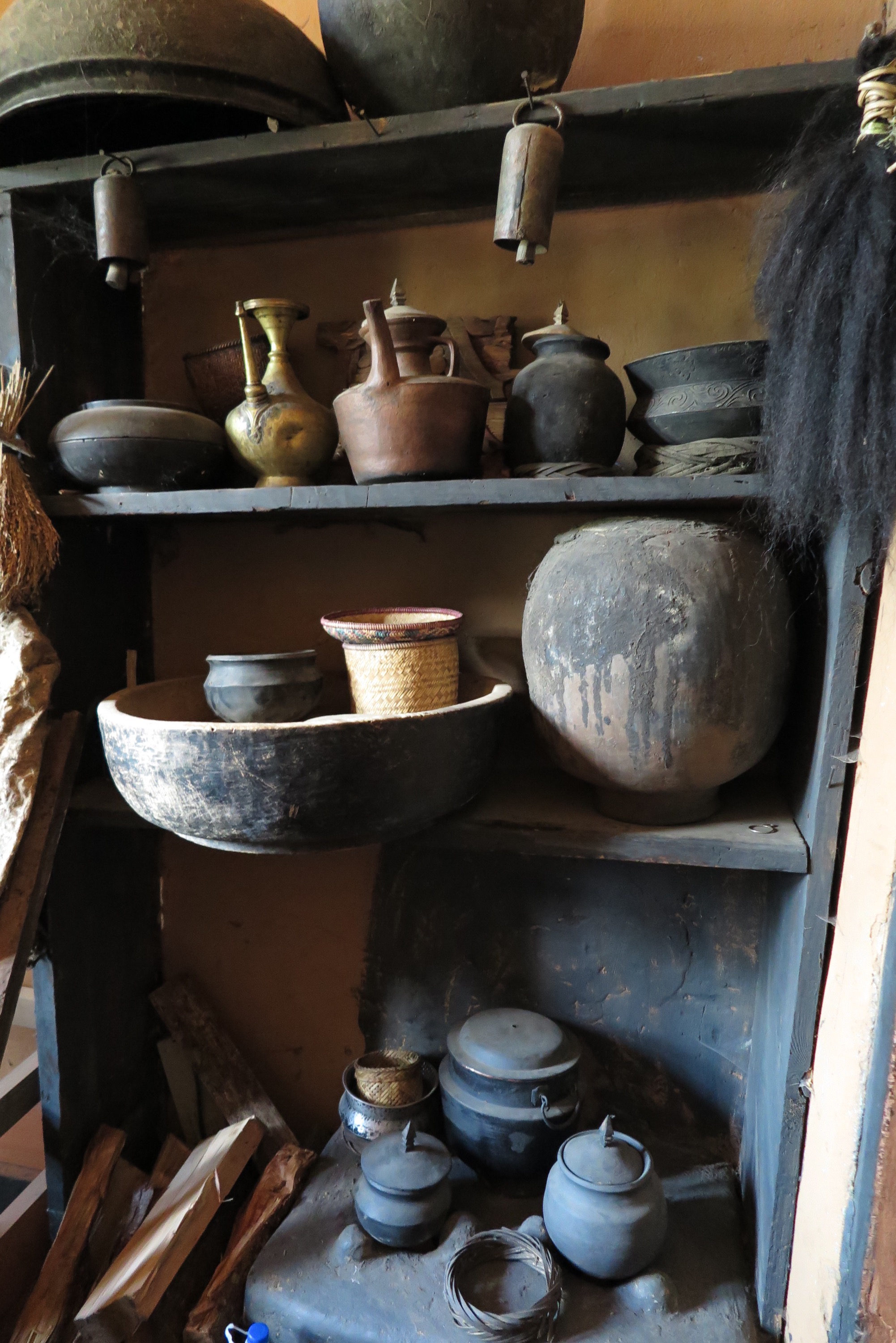
  The farmhouse kitchen cupboard.  

  The farmhouse where we ate lunch.  A fallow rice field is in the foreground.
  Red chiles drying on the roof of the farmhouse.

We also had a chance to visit a park frequented by the elders.  Their children drop them off in the morning before they head to work.  The elders visit with their friends, pray or meditate, and enjoy the day.  When the workday is over, their children pick them up and take them home.  We went to this park, anchored with a Stupa, a building that serves as a center for Buddhists. On the day of our visit there was a ceremony taking place to kick off K-4’s 60th birthday celebration.  The entire country is preparing for the event of the week culminating on November 11th.  So, there were many more people there than normal.
  The Stupa in the park.
   
 As we became familiar with the history and the people and the beauty of the country, we gained an appreciation for the way the people are guiding its development.  Responsible economic growth, environmentalism, education, and health care are carefully balanced with the rich traditions that have been crafted over centuries. The mountains here — among the highest in the world seem to have influenced its people to reach for the sky while staying grounded in the land they have grown to love. 

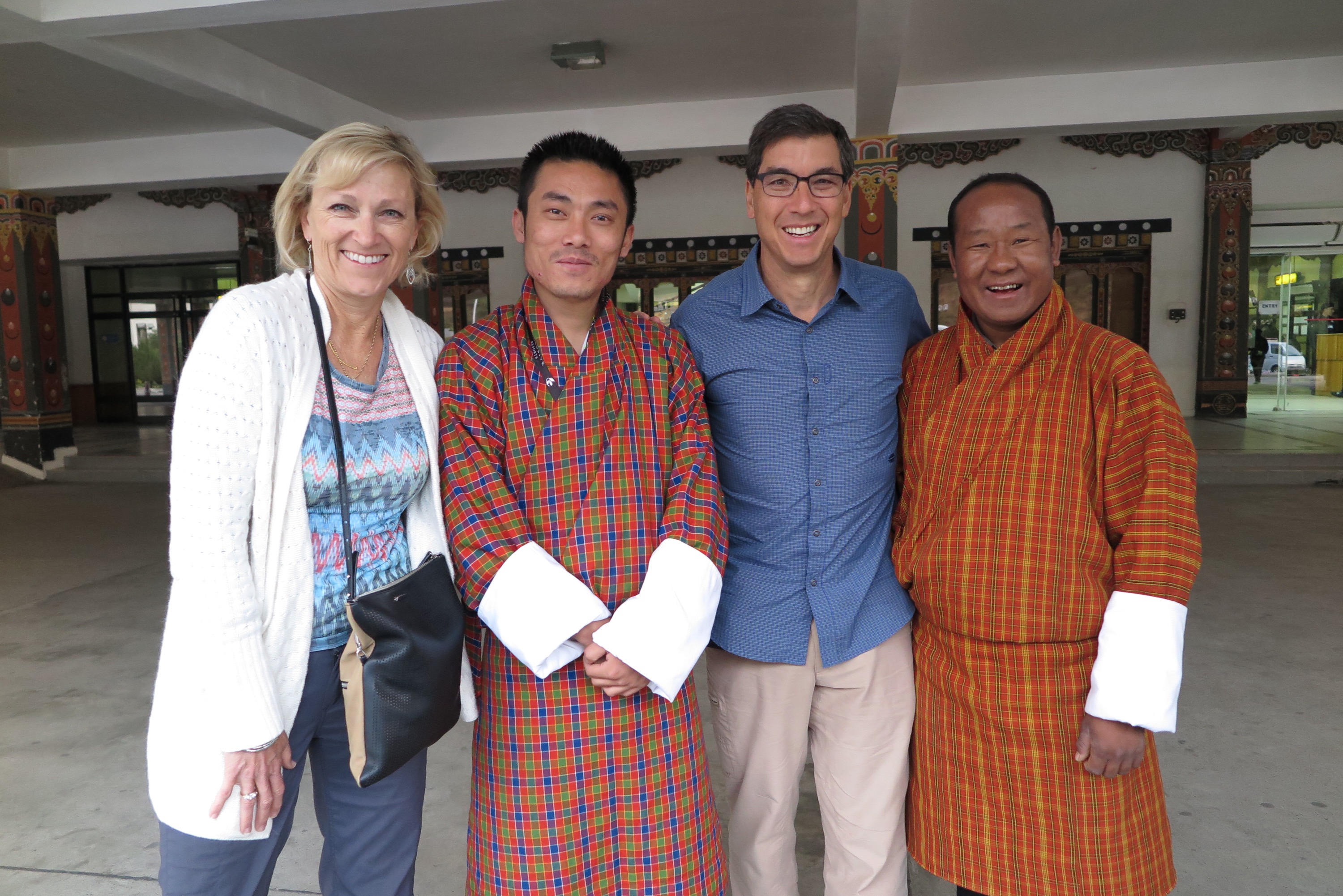
As we said goodbye to Nima at the airport, we couldn’t help but feel a bit sad to leave what now felt like an old friend.

  Nidup, left and Nima right.  Saying goodbye to them was hard.

Categories: Uncategorized | 2 Comments

Blog at WordPress.com.