
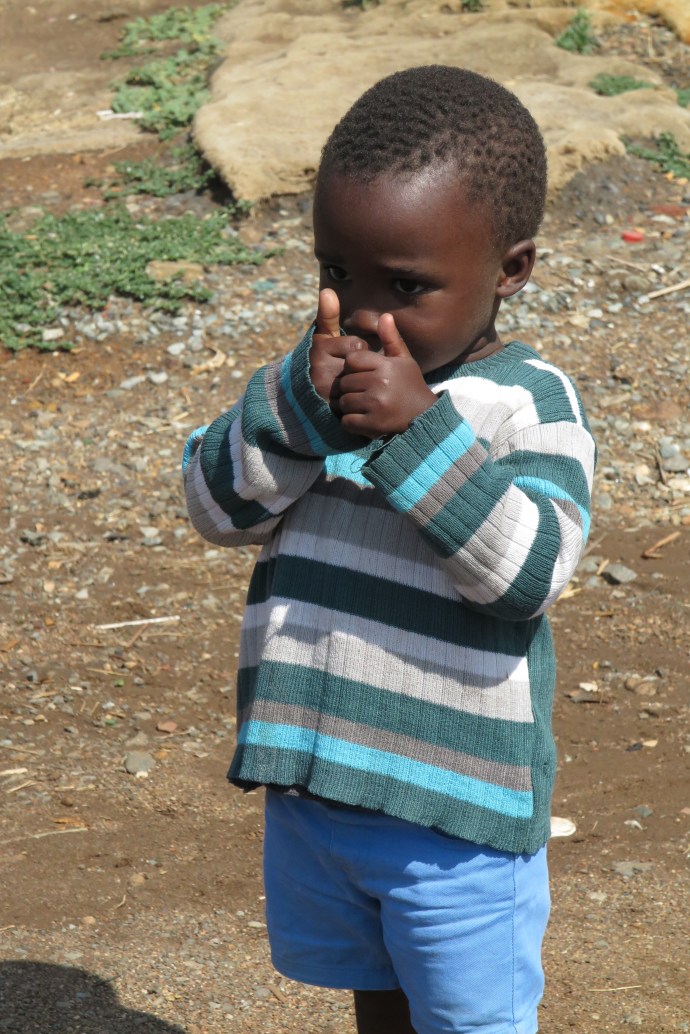
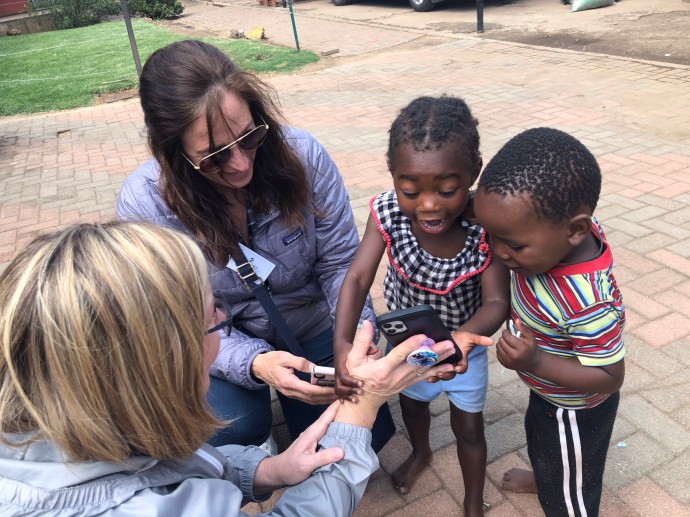
A little girl smiles shyly and strikes a timid pose. A toddler gives two thumbs up. Another little girl enthusiastically takes a selfie. No matter where we go in the world, children are the same, regardless of our circumstances. The kids of Soweto are no different.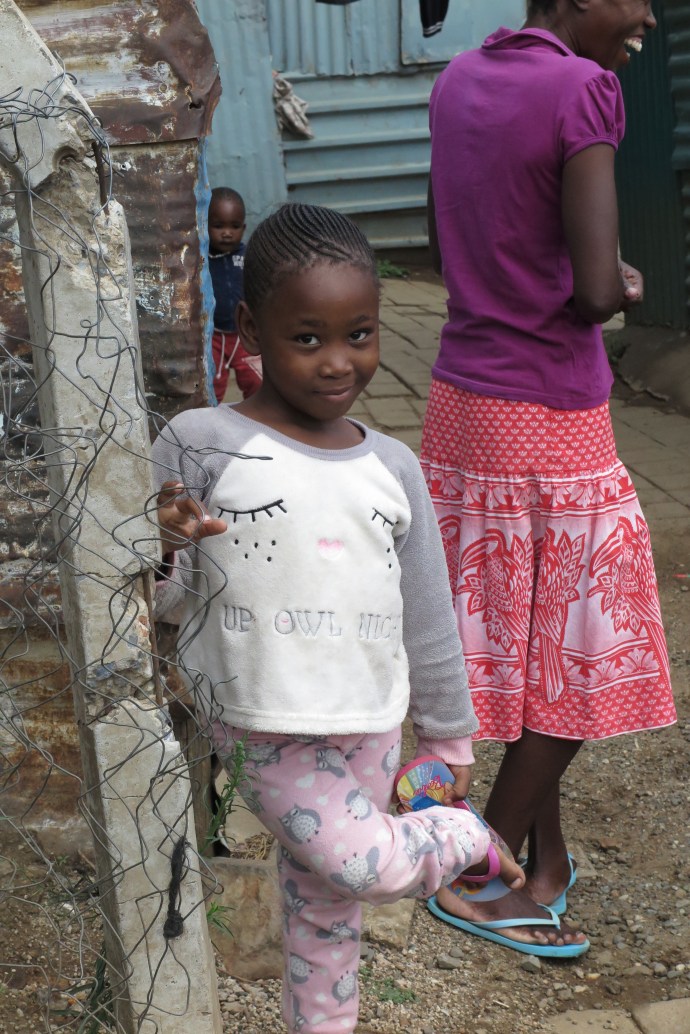
To understand the the life these kids will face, we need to give you a brief (and oversimplified) history of Johannesburg and South Africa. So, bear with me here.
South Africa was inhabited by Black African kingdoms and chiefdoms for centuries. The Dutch began to colonize the region in the 17th century and the British in the 19th century. By the early 1900s the colonists began to establish laws that segregated Black Africans and limited their ability to own land (land that they had previously owned). Africans were also given no right to vote.
In 1948, the National Party, whose leaders sympathized with the now-defeated Adolf Hitler, won the South African election and began to institute an even more repressive system known as apartheid. Africans were relocated from their homes to areas designated by the government, they were limited in their travel, and their separate education system was far inferior to that of whites. The African National Congress (ANC) was established to resist these oppressive laws. Nelson Mandela’s rise through the leadership of the ANC ultimately put him in a position to liberate the country. Lisa and I are reading Mandela’s autobiography, which he completed at our hotel here in Johannesburg. Seeing the city has helped bring his writings to life for us.
After significant strife over several decades, including Mandela’s 28-year imprisonment, apartheid was finally repealed in 1991. With Black Africans now allowed the vote, Nelson Mandela became the country’s first native African president.
Johannesburg is a relatively young city. It wasn’t established until 1886 when one of the world’s largest deposits of gold was discovered. This caused a gold rush, primarily of Dutch and British mining companies. Because England established the global price of gold, the way mining companies increased their profits was through cheap labor from Black Africans. Today, at 5.6 million residents, Johannesburg is the largest city in South Africa.
Soweto (an acronym for SOuth WEstern TOwnships), was one of the areas near Johannesburg that was designated for African relocation. Nelson Mandela lived here. It has a population of roughly 1.5 million residents today — with almost exclusively Black residents. We visited Kliptown, one of Soweto’s townships.
Kliptown, like much of the rest of Soweto, is comprised of shacks made from sheet metal, plywood, chicken wire and whatever else people can use as building material. Homes aren’t insulated and often leak. So, people get cold in the winter, hot in the summer, and wet when it rains. This town of 46,000 uses port-a-potties for bathroom facilities with roughly 12 to 15 families sharing one port-a-potty. Since they are only emptied once a week, they often fill to overflowing. There are 50 water spigots in town to be shared by all residents for drinking, washing, and bathing. Opioid use is at epidemic proportions.
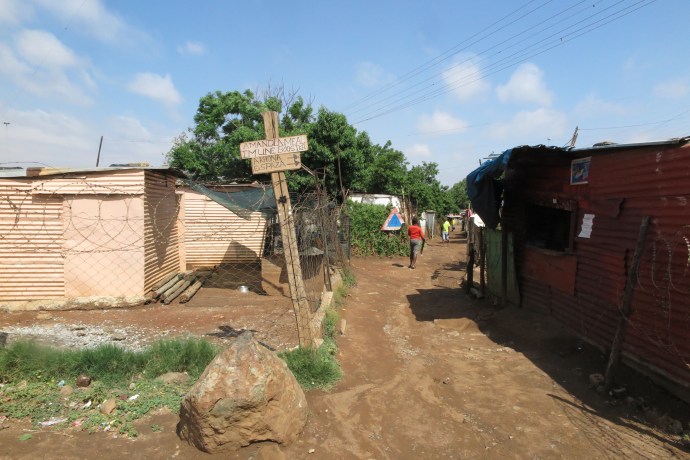


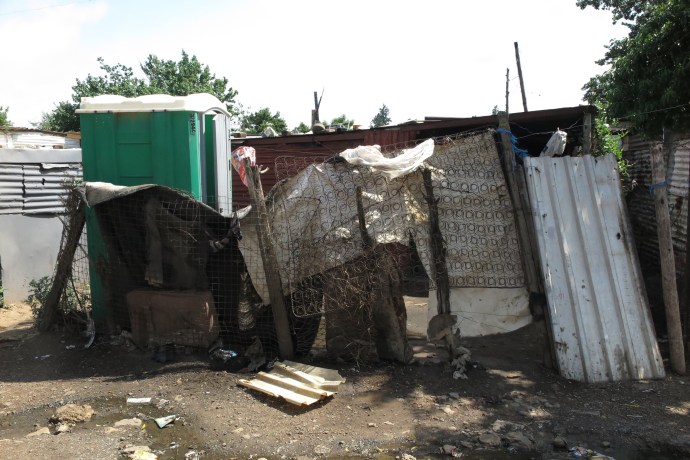
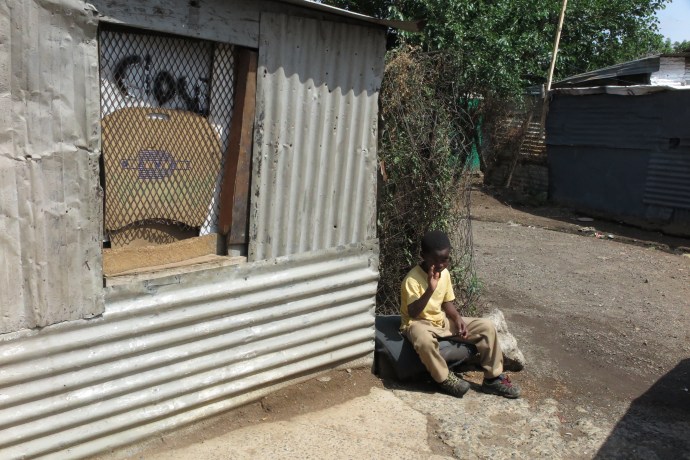
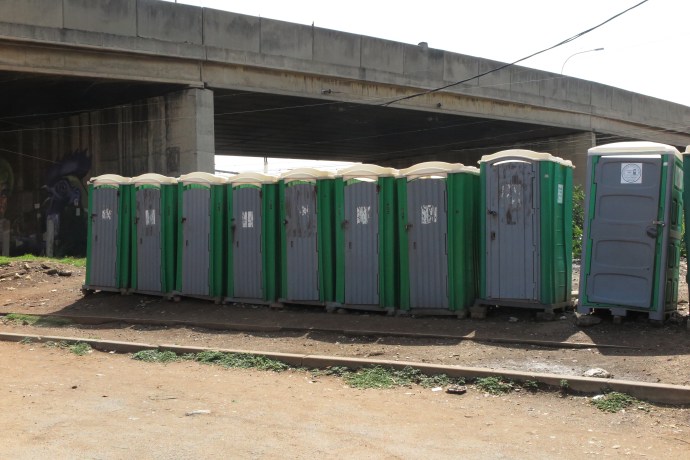
There is no school in Kliptown, so the kids walk 30 to 45 minutes to get to school in a neighboring township. Life is hard here. Despite the end of apartheid and the implementation of majority rule, centuries of oppression cannot be rectified in a couple of decades. There is tremendous wealth in Johannesburg. We drove through areas with mansions walled off with electric wire not 20 minutes drive from Kliptown. The wealth gap is stark and felt so wrong to us.
With the many challenges we witnessed you would think that people would simply give up. That wasn’t what we saw. We saw the happy children playing like those in our own neighborhoods. We saw adults meeting in the center of town to work through the issues of the day. And, the most hopeful sign for the community was shown to us by Monwabisi Baleni (also known as Mo).
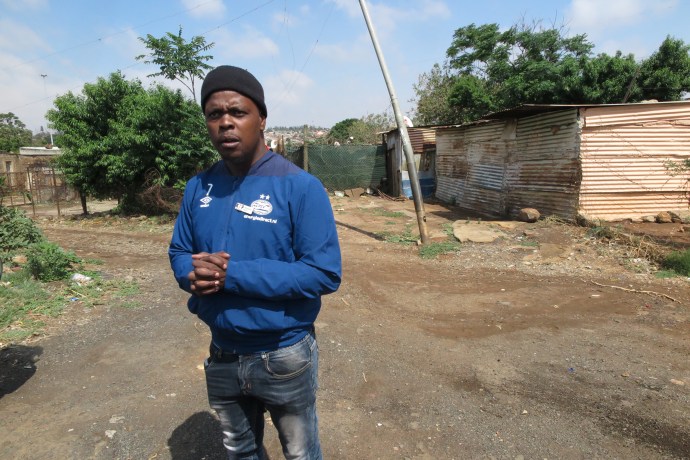
Mo is one of the leaders of a community program called the Kliptown Youth Program. This program is designed to give the children of Kliptown supplemental education so they can graduate high school and go to college or vocational school. Education is empowering and if the community can educate its children and prepare them for good employment, they can break the cycle that residents are experiencing today.
The program has over 500 kids participating. Mo says that this is only one-fifth of the number of kids that would like to be in the program. But, they are limited by funding. His heart breaks each year when children cry when they find out they didn’t get in the program.
But, for the 500 who are in, they get reinforcement of their schooling in math, English, and science. They learn basic computer skills and other practical vocational subjects. Their parents can even get certified in computer skills. To date, they have seen 50 students graduate college (nearly none had prior to the program) with many more to come as they work their way from first grade through high school.
Human resilience is a powerful thing. Lisa and I were deeply moved with what we saw. It was at once depressing and hopeful. We have vowed to do what we can to help. If you want to pitch in, just go to https://www.kliptownyouthprogram.org.za/ and donate to their effort.
It was a powerful day for us as we also visited the Apartheid Museum and Nelson Mandela’s home in Soweto. The cruelty man can impose on others is discouraging, but, the good in people will always prevail. Mo reminded us of this in a most poignant way.
Next, a safari in the Sabi Sands Game Preserve. Stay tuned . . .
 Lisa and Brad's Travels
I wish everyone could visit similar communities around the world. It is truly life changing!