Author Archives: loansbrad

The Circle of Life

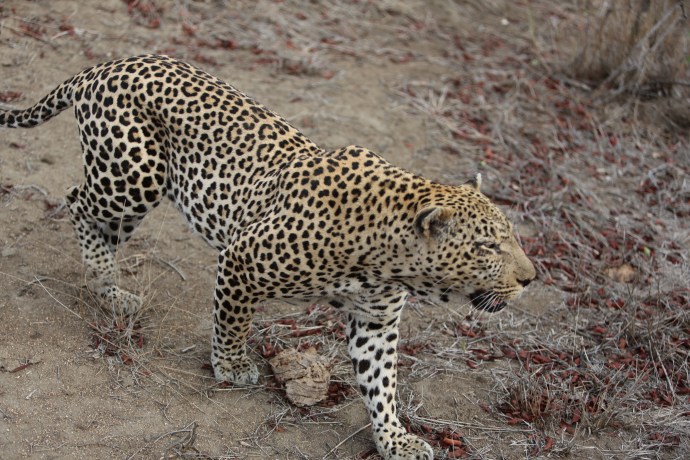
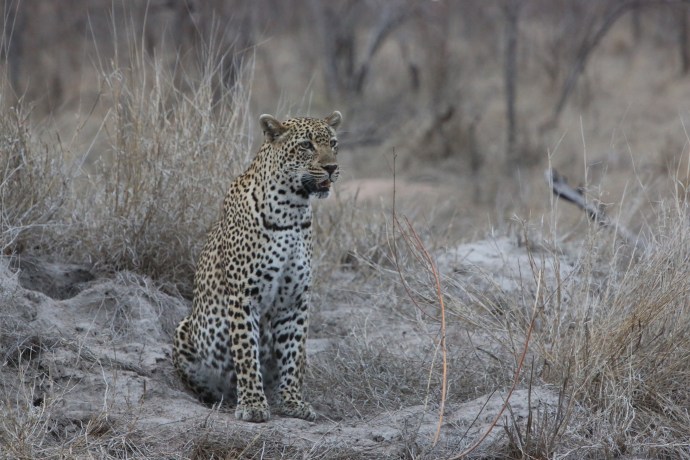
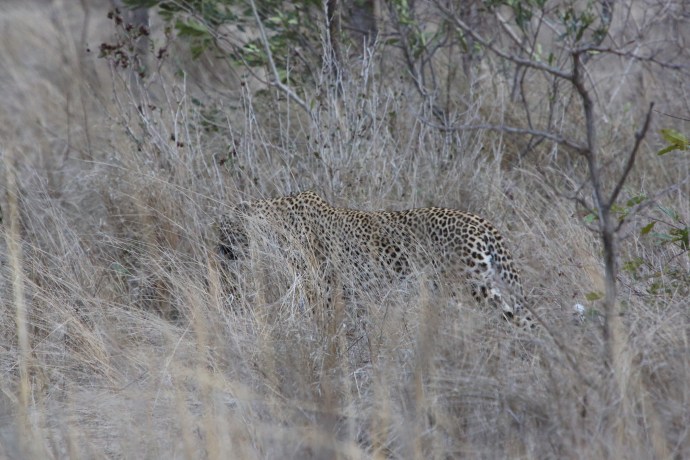
She suddenly stood at attention. Each one of her senses heightened. A storm was coming. The perfect time for the female leopard to find a meal for her 6-month old cub. The winds mask her scent from prey and makes it harder to hear her footsteps. We were on our final safari excursion last night when Ruth, our guide, got a radio message that the mother leopard had been located. She wasn’t far from us and it didn’t take long to find her. Soon after she came to attention she crouched down and started moving in a deliberate way through the long grass of the savannah.
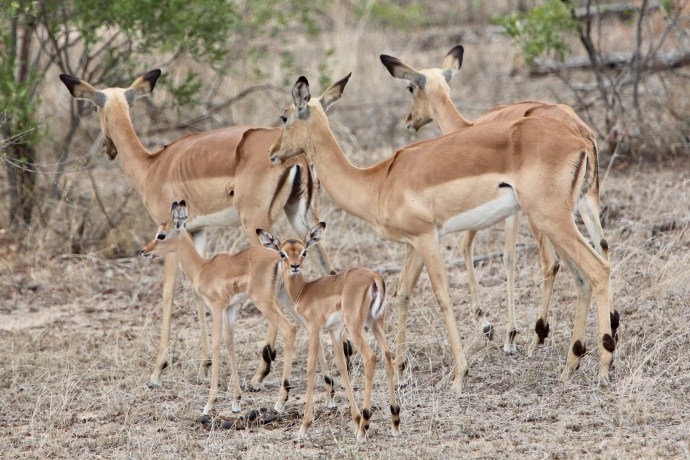
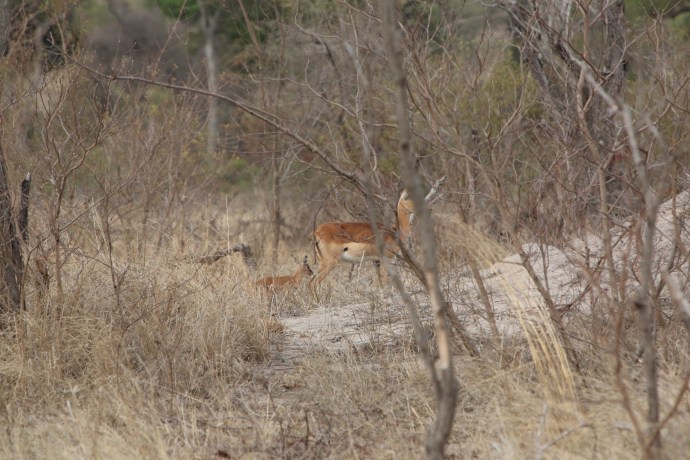
It is late Spring in the African bush. Impalas, which are like small deer, are everywhere. The females are delivering their babies in droves. We had seen several new mothers and their babies over the past couple of day. Impala mothers separate from the herd when they deliver and they stay alone with their fawn for about three days to allow the mother to imprint on their newborn. The babies are able to walk within only a few minutes. But, of course, they are slower and less agile than they will be as they grow. A new mother with her fawn was hiding in the tall grass and shrubs about 200 yards from us.
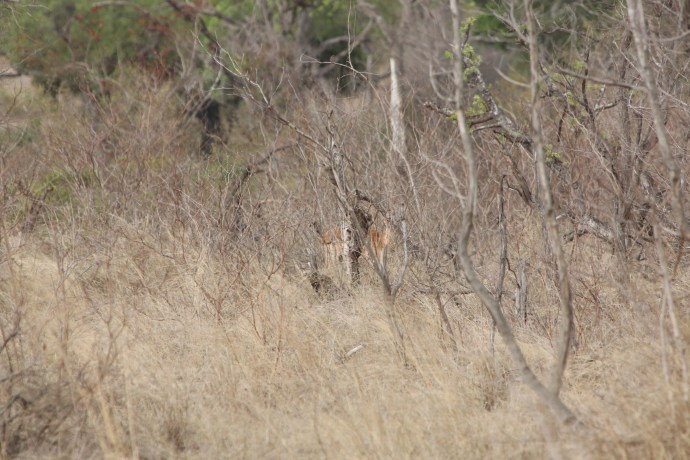
Leopards are very patient hunters. They are extremely fast but don’t have great stamina. So, they work to get as close as possible without detection before they pounce. Impalas too are fast. They are also more agile than their predators. Still, with a baby in tow, mothers are far more vulnerable.

The leopard stopped and surveyed the situation. She had moved to within 100 yards of her target and was determining her next move.
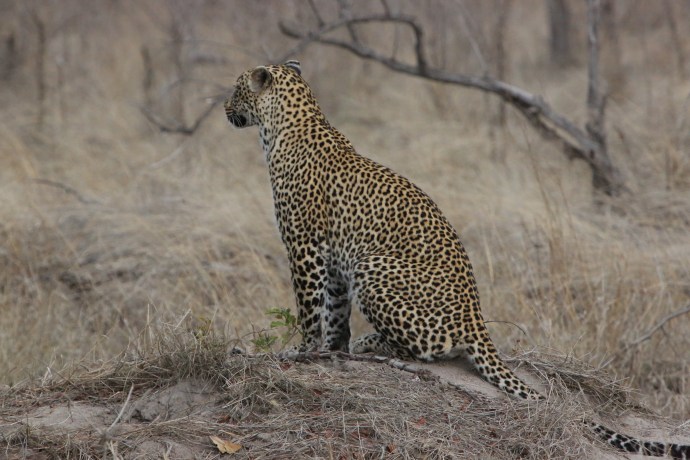
She then began her move. She stealthily crept closer at a measured pace.

We had a vantage point that allowed us to see both the leopard and the impalas. The mother impala was frozen. She knew that escape would be a challenge. When the leopard got within about 25 yards she sprinted toward the impalas. Mother and baby ran behind a large rock closely followed by the leopard. We thought for sure the leopard had caught one or the other. But, they eluded the leopard by making a 90 degree turn and they came running back from behind the rock in the other direction.

As we watched all of this develop we couldn’t help but wonder whose side we were on. On one hand we wanted the mother and baby to survive. They were cute and vulnerable. On the other hand the leopard was hunting for her baby and without food, it would surely die. We were mere spectators as intervening on behalf of one or the other isn’t morally proper. Nature can be cruel and difficult to accept, but, the circle of life requires this drama to be played out.

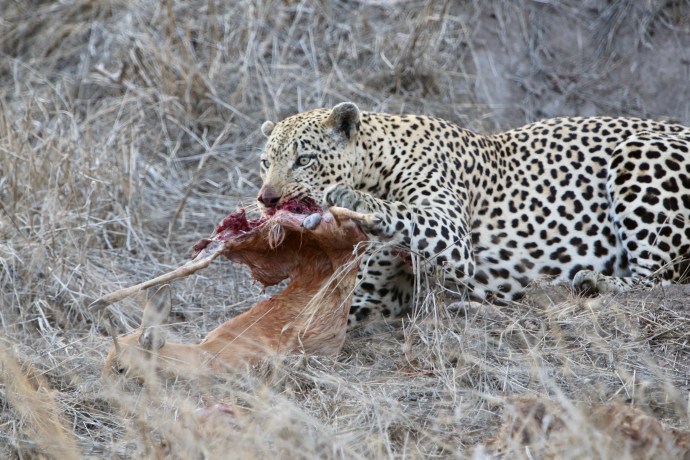
Seconds later the leopard caught the baby impala. We heard a small shriek and it was over. The mother, who had escaped, looked on from a distance with what we interpreted as a deep sadness.

As the storm clouds grew closer the leopard began her trek back to her cub’s den. She traveled about a half mile as we followed. It is fascinating the way these animals pay absolutely no attention to us. They do not see people in Land Cruisers as a threat. We were nothing more than a part of the landscape to her.

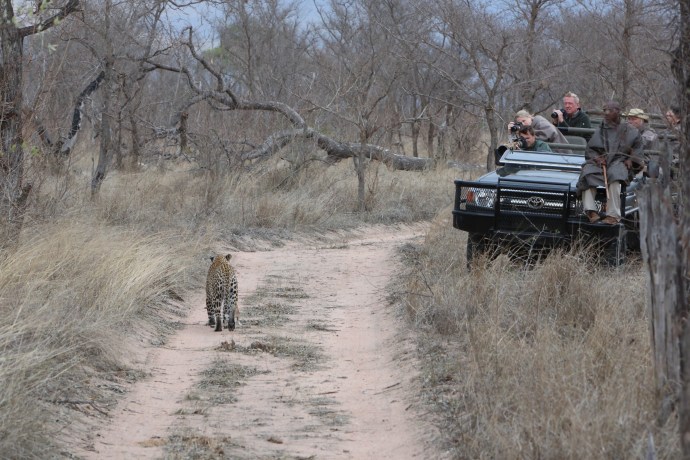
The leopard reached a clearing and set down her kill. She made a bleating call to her cub and waited. The winds continued to blow hard and the cub did not appear. At six-months old, it is beginning to wander off and likely did not hear her. The mother leopard began to look anxious. It isn’t unusual for a group of hyenas to follow a leopard and steal their prey. While the leopard could surely fight off a single hyena, they are no match for more than one. Her cub still didn’t appear. She picked up the fawn and continued to head south.

The bush is spotted with termite mounds. They range from a couple of feet to ten feet high. Many are abandoned and used as dens by mongoose, warthogs and other smaller animals. The leopard headed toward a termite mound situated next to a large tree. She climbed to the top of the mound. There she seemed to relax. From this perch she could see any approaching hyenas and should they come, she could climb the tree. Leopards are strong climbers and can carry over 200 pounds up a tree so the fawn provided no challenge should she need to ascend.

Mother leopard continued to bleat (that’s the only word that I can think of to describe the sound) for her cub. But, as she relaxed, she also began to clean herself not unlike a house cat does.
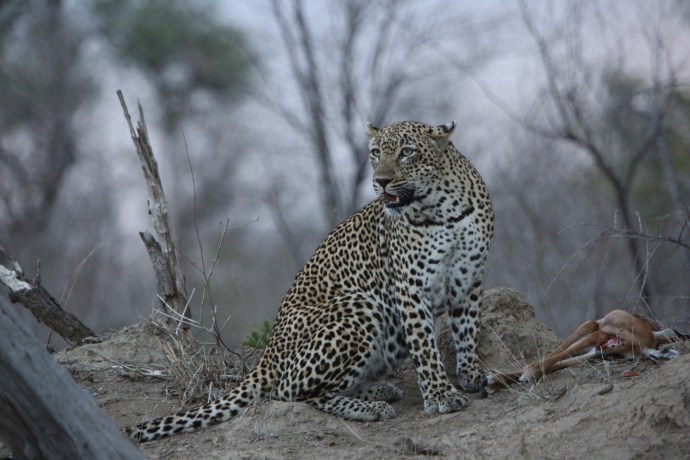
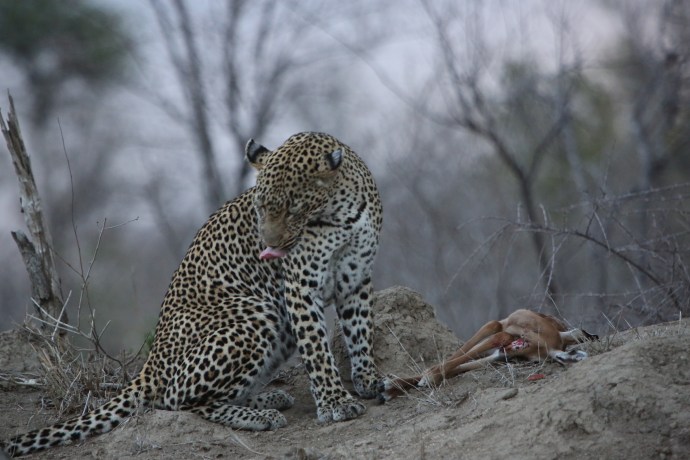
The cub still did not appear. She laid down and continued to wait. The thunderstorms grew close with lighting strikes and thunder. As the sun began to set and the storm upon us, we decided to head back to our lodge.
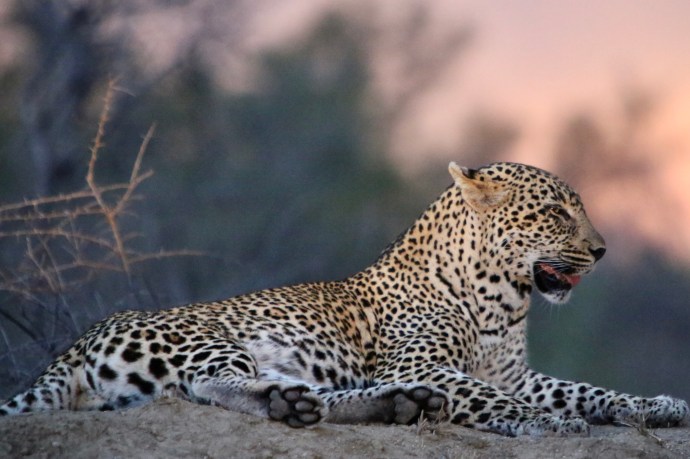
As we drove back to camp we hoped that the cub was okay. This morning we heard that it was spotted in the same area we had left its mother the night before. I assume it had a full belly.

The circle of life continues.
Categories: Africa, Safari, South Africa, Travel | Tags: , , , , , | 2 Comments

Things We Learned on our First Safari

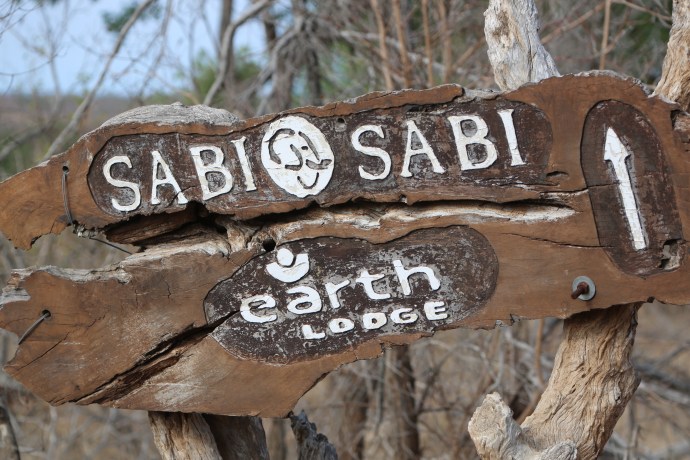
Brad and I are in Sabi Sabi Private Game Reserve experiencing our first safari and enjoying every second of it. Here are a few things we have learned so far. In no particular order whatsoever.

— Safaris happen when the animals are most active. This means that you get up at the crack of dawn, rest during the middle of the day, and go back out in the evening. Because you are out for three and four hour stretches, they do require that you plan ahead for your beverage management. For me, that means maybe only a half cup of coffee before we go! Yikes!

— Be prepared to gain five pounds. The dining schedule goes like this.

5:30 am: Light Breakfast

9:00 am: Hearty Breakfast

1:00 pm: Lunch

4:00 pm: Afternoon High Tea

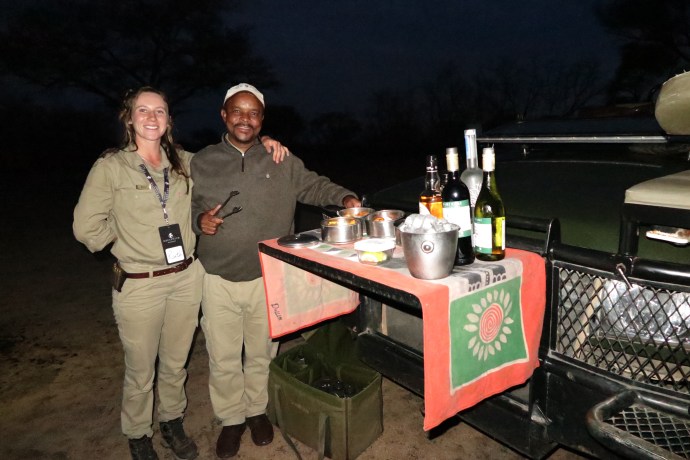
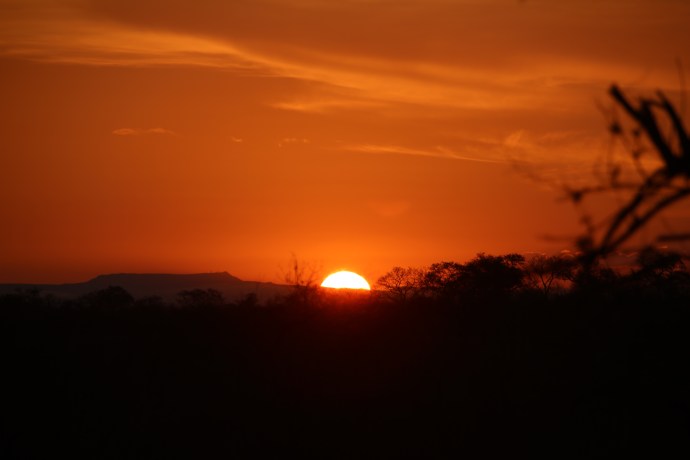
6:30: Cocktail while watching the sunset in the Savannah

7:30: Pre-dinner drinks in bar

8:00: Dinner

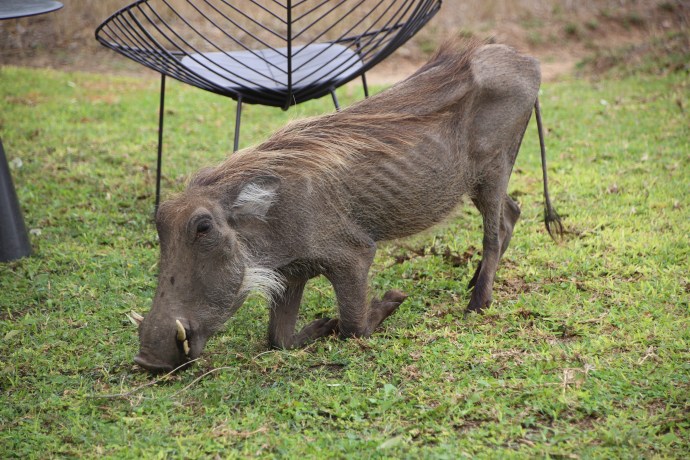
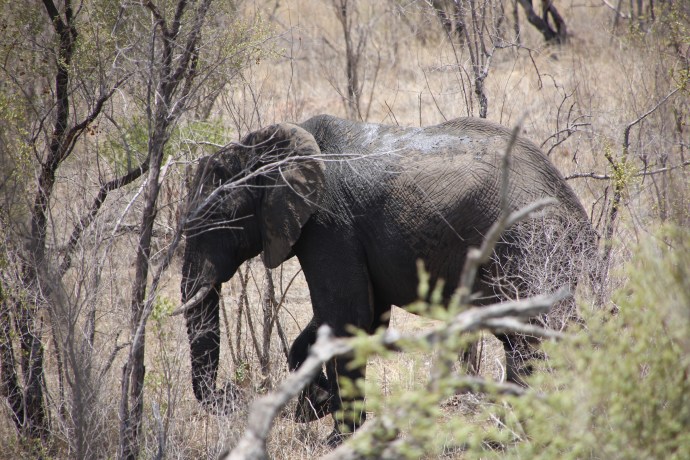
— Have your camera at the ready at all times. Impala, Kudu, and Warthogs have joined us at the lodge and at our patios. Apparently, just recently an elephant was found on the roof of our lodge!
— You will be escorted to your room by a guide when it gets dark. You don’t want to become someone’s midnight snack!

— Safaris can be relaxing. There are hundreds of species of birds here and their songs are very peaceful. I may have become a “birder” on this trip and could be joining Mary Frandsen in her love and appreciation of birds. Sorry Brad and Mike!

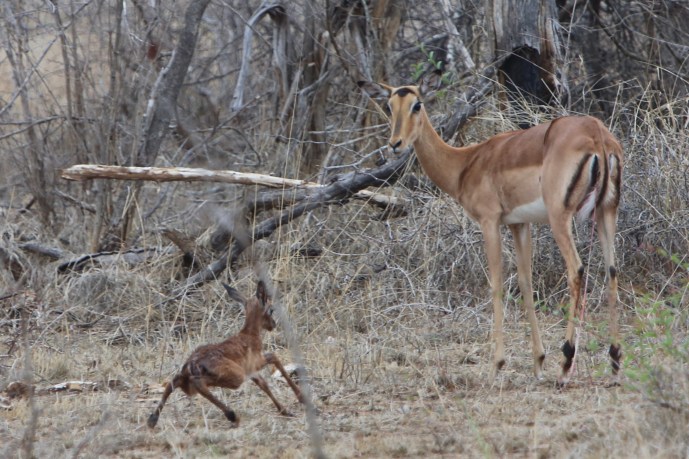
— Safaris can be joyous. We witnessed the birth of a baby impala and watched her take her first steps. She wobbled and fell down several times at the beginning but with her Mother’s encouragement she was up and running in about five minutes. It was joyful.

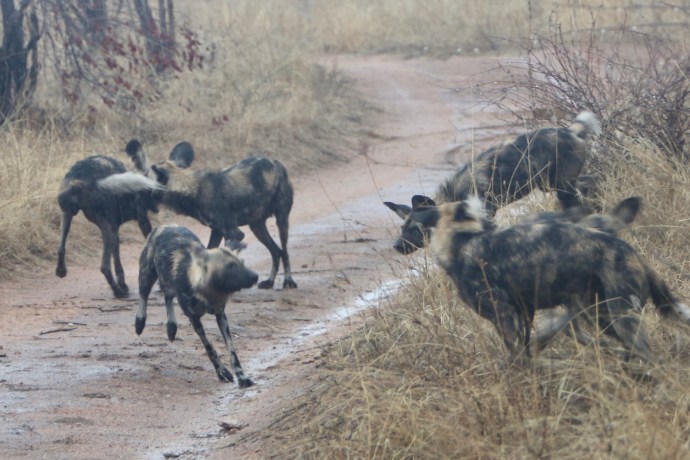
— Safaris can be intense. Think the Indiana Jones ride in Disneyland on steroids. We got a call that there was a wild dog siting one morning and our guide, Ruth, sped so fast in the pouring rain that we may or may not have almost lost Mary Stevens out the back of the Jeep once or twice!

Safaris can be heart-stopping. We came upon a leopard yesterday and he came within five feet of our Jeep in his effort to go find dinner. A few of us in the Jeep stopped breathing for a moment or two.

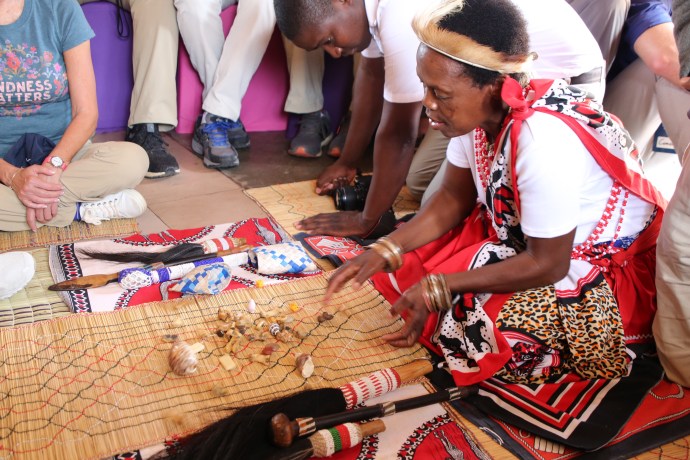
— Shamans are real. We visited a shaman in the nearby village and she predicted our group would see a leopard and within thirty minutes on the ride home we all encountered our first leopard. He had been eluding us for days.

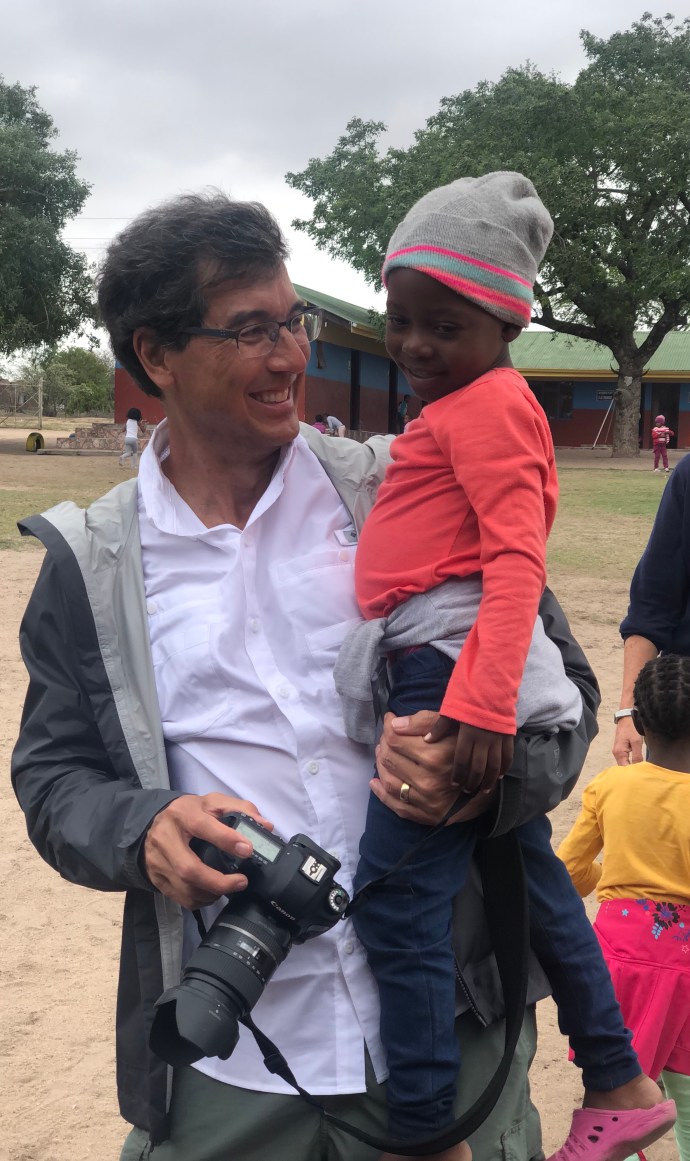
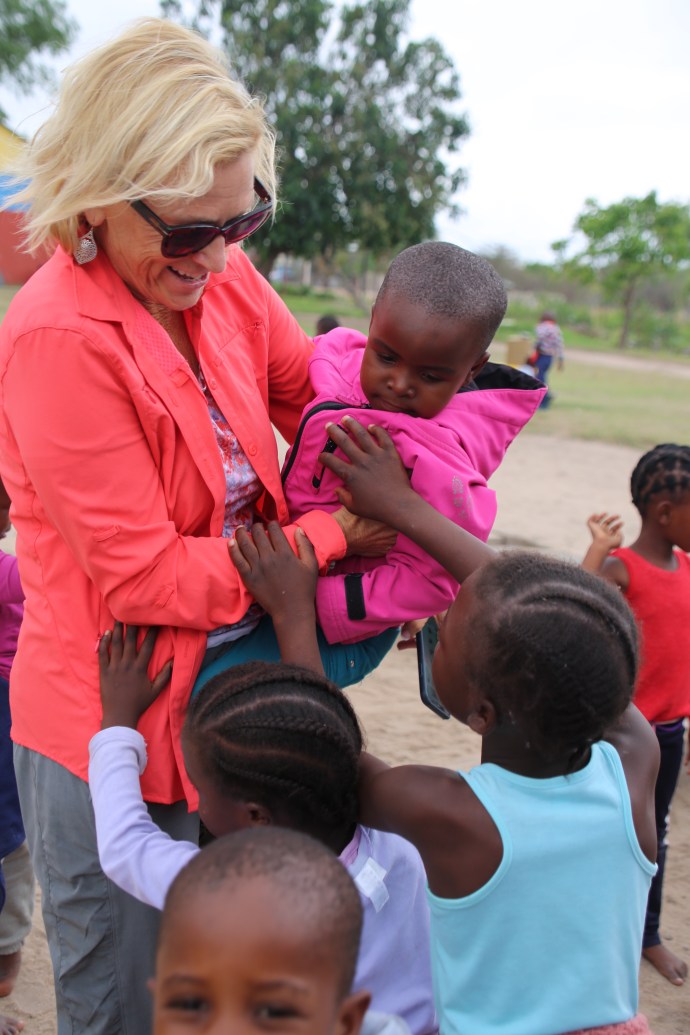
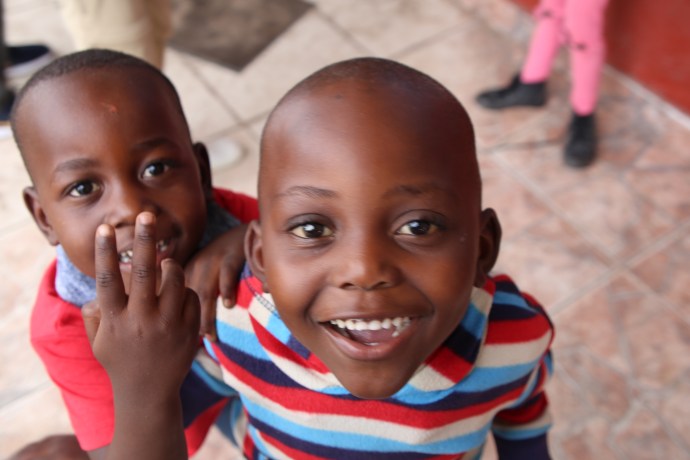
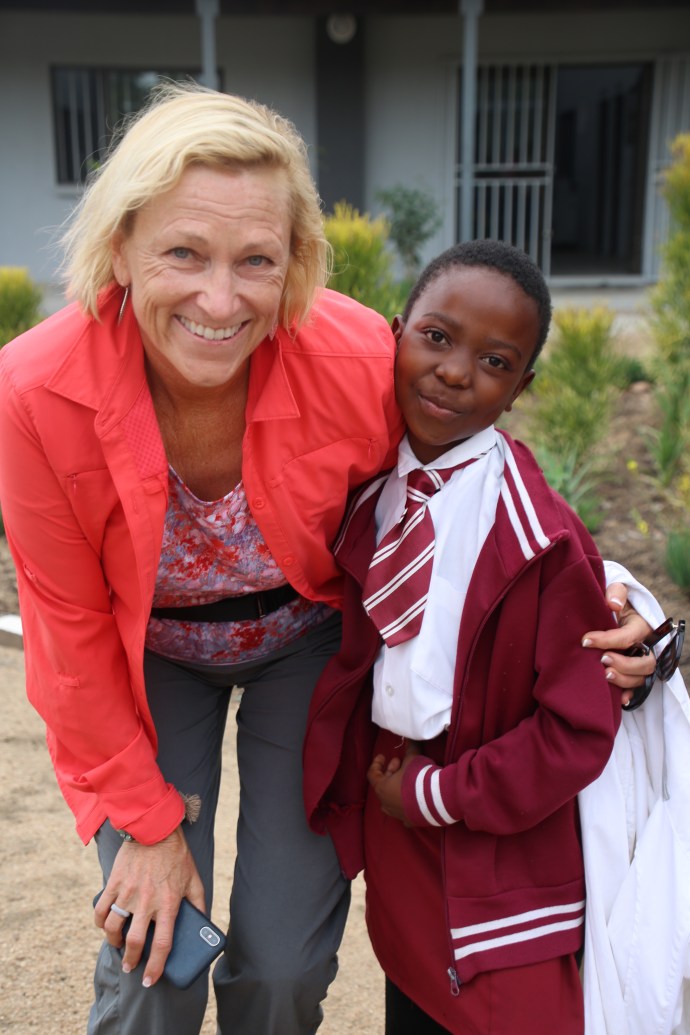
— African children are loving and are eager to pose for photos and give you hugs. We spent a morning at several nearby schools and were completely overwhelmed by the children’s hugs and smiles.

— Mothers are the heroes of the Savannah but also can be the most vulnerable. The gestational periods for elephants can be up to 22 months , the Rhino up to 15-16, while the hippo and impala are only 6-8 months. The Lionesses have cubs in only 110 days. The Mothers we saw were very protective of their young while the male species were off galavanting or possibly watching football! Sadly, Mothers and Babies can also be prey because they are the most vulnerable especially after they have just given birth.

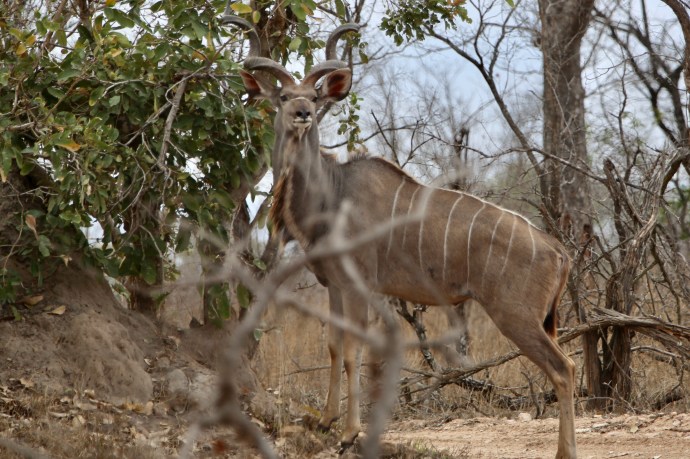
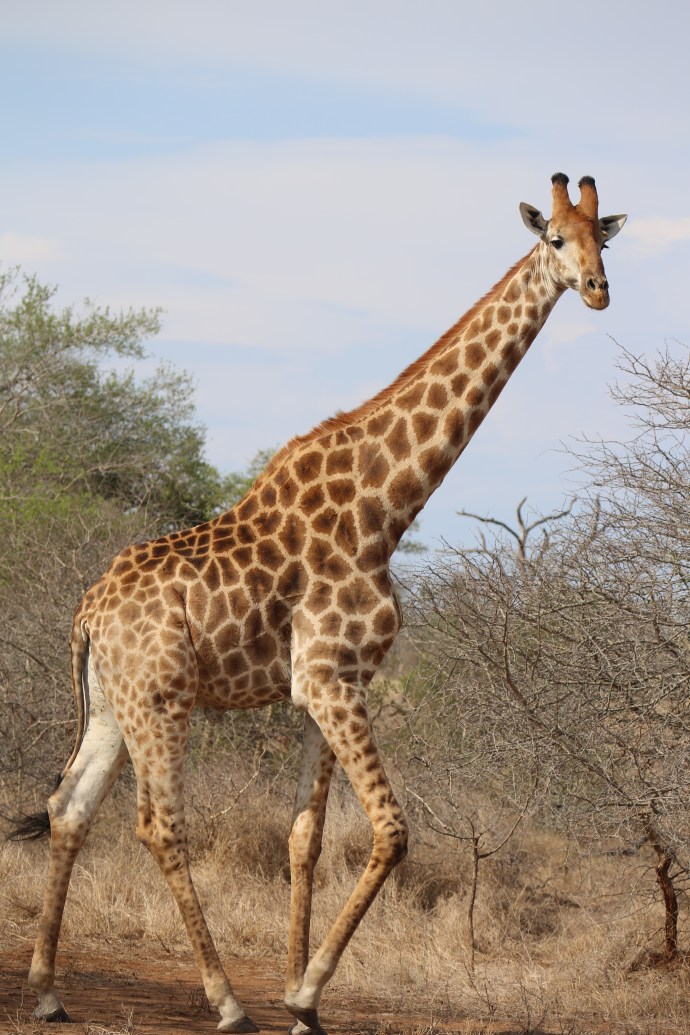
— There is an incredible diversity of animals and birds on the Savannah and they even provide you a check list to mark them off! I love lists so it has been great fun. So far, I have checked off 24 animal species including animals I had never heard of like Kudus, Bushbucks, and Duikers. We have also checked off 32 species of beautiful, colorful birds with names like the Square-Tailed Nightjar, the Red-Billed Oxpecker, and the Lilac-breasted Roller.

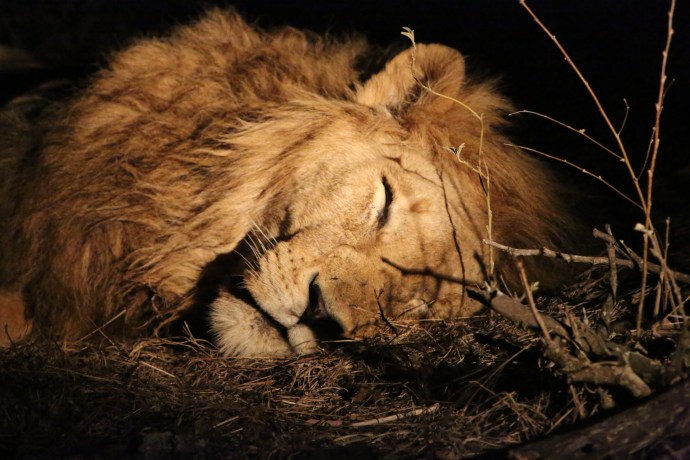
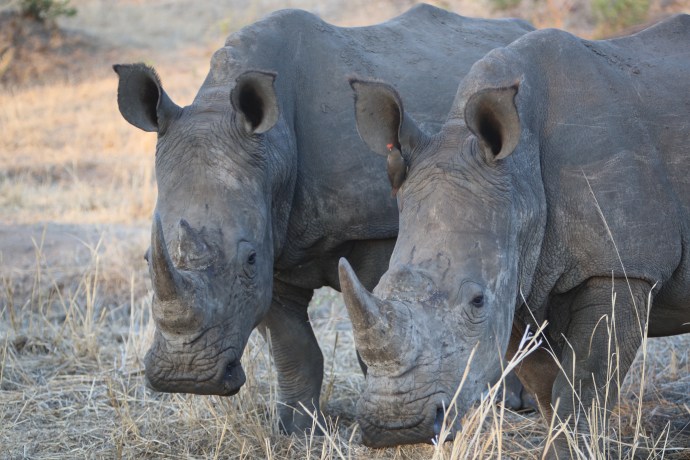
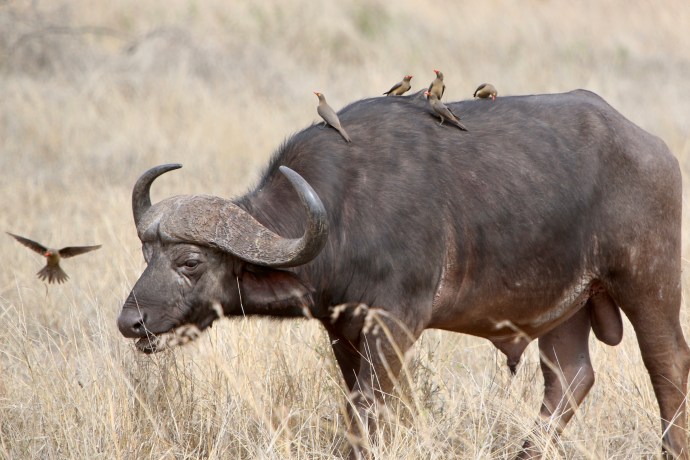
— We saw the Big Five and are allowed to go off road to follow them. So far, we have seen Lions, Rhinos, Cape Buffalo, Elephant, and our elusive Leopard. Following a leopard as he went after a kill might be one of the most exciting animal experiences I have ever heard. We have been close to seeing the Magnificent Seven which include all the Big Five, Wild Dogs, and Cheetah. All we need to do is find that rarely-sighted Cheetah.

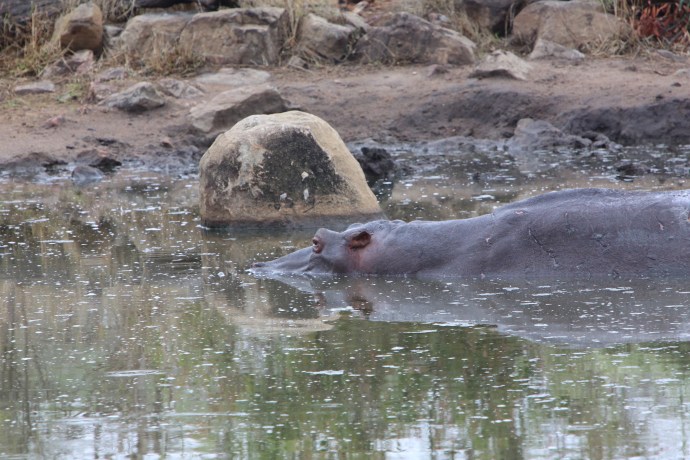
— Bush Walks have their own element of excitement. We went out today with two guides whose rifles were loaded and told us what to do if we happened to run upon a lion or elephants. The rules are no walking and talking and no running away or screaming if we happen upon a large animal. While we were on foot, we chanced upon an elephant, a hippo, and more kudu. Not your average walk around the property!!

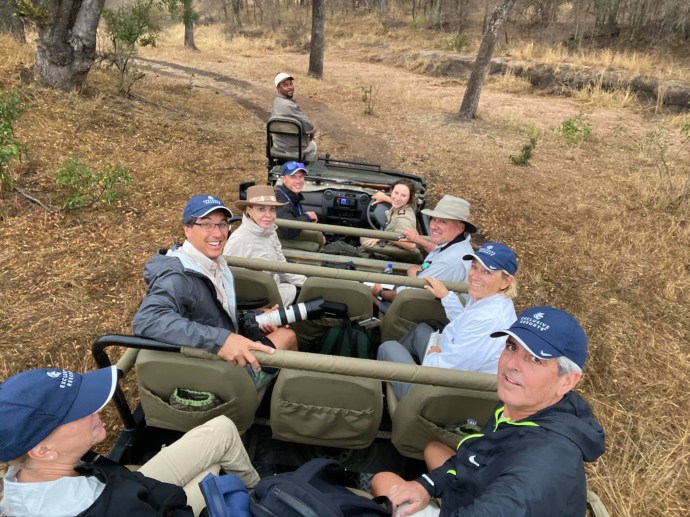
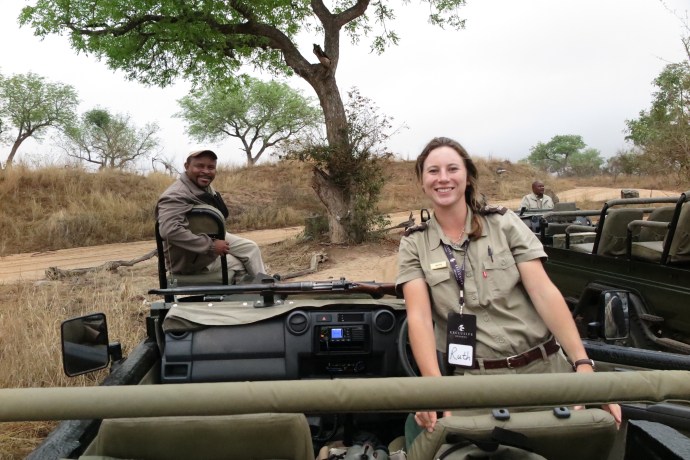
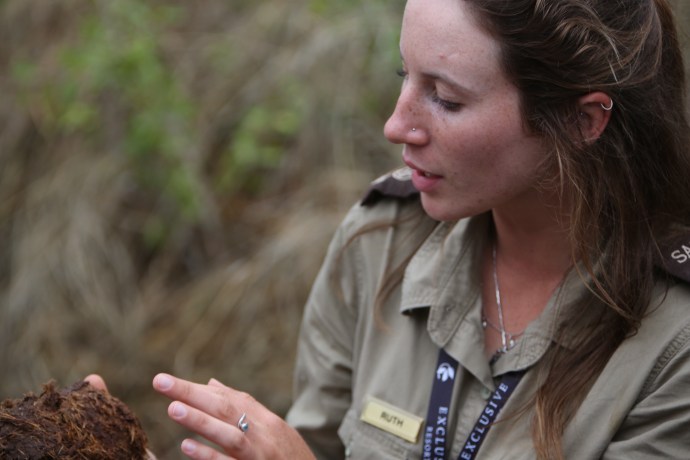
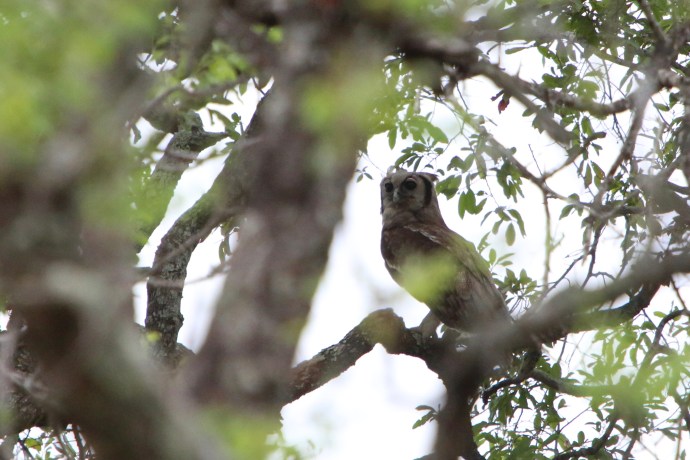
Our guide and tracker are passionate and incredibly knowledgeable. Our guide, Ruth is a 23 year old woman from CapeTown who has a love of the Savannah that is unparalleled. Her knowledge of every living creature that we have encountered is astounding. She is willing to pick up Elephant Dung and show us everything the elephants have had for breakfast as well as telling us colorful mating stories of African Crake (The males stick around in this story). Dollen, our tracker can sight a Serval in the high grass in the dark or a Verreaux’s Eagle Owl in a dense tree from afar. His sensory perception is unreal. We have felt fortunate to have Ruth and Dollen as our team this week. It is going to be hard to say good-bye tomorrow. There will be tears.

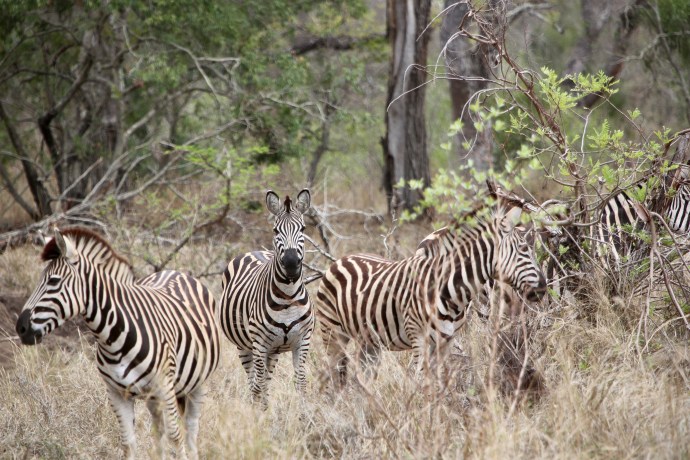
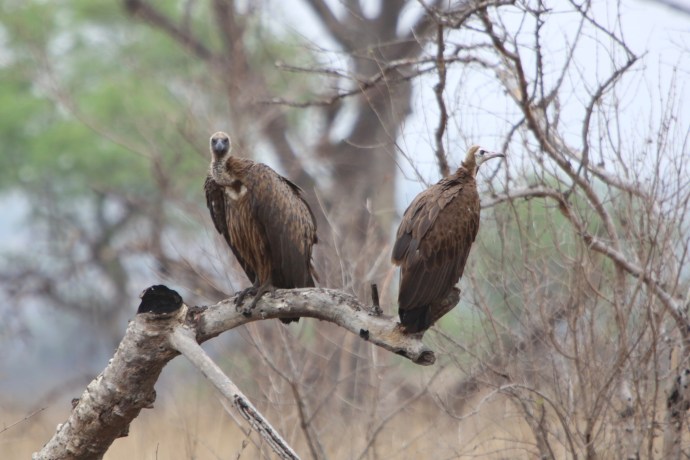
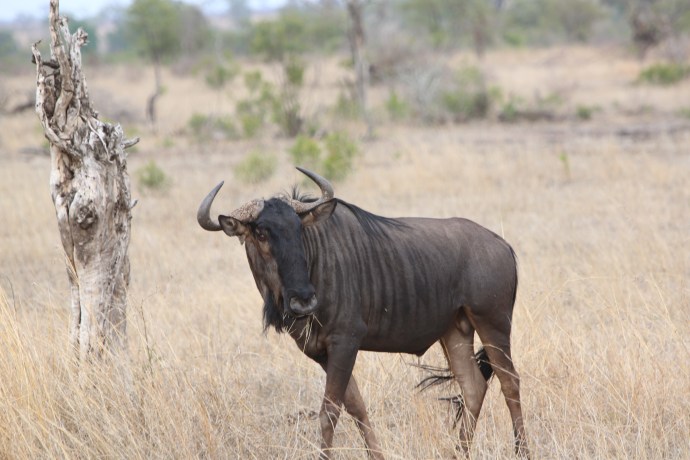
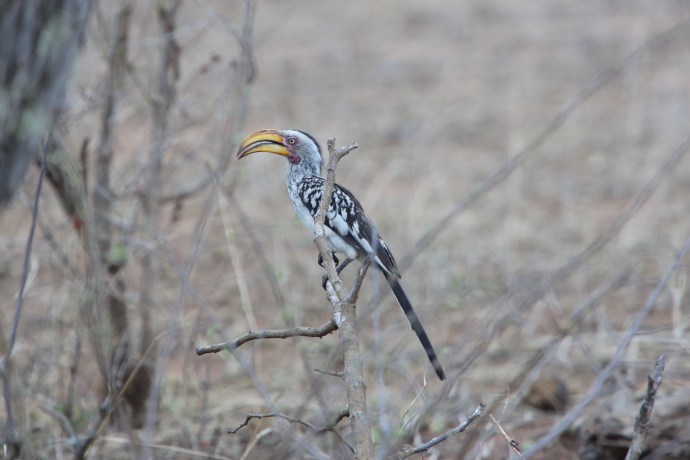
Here are a sampling of other animals we saw along the way:

Categories: Africa, Safari, South Africa, Travel | Tags: , , , , , , | 9 Comments

Johannesburg — Black, White, and Gold

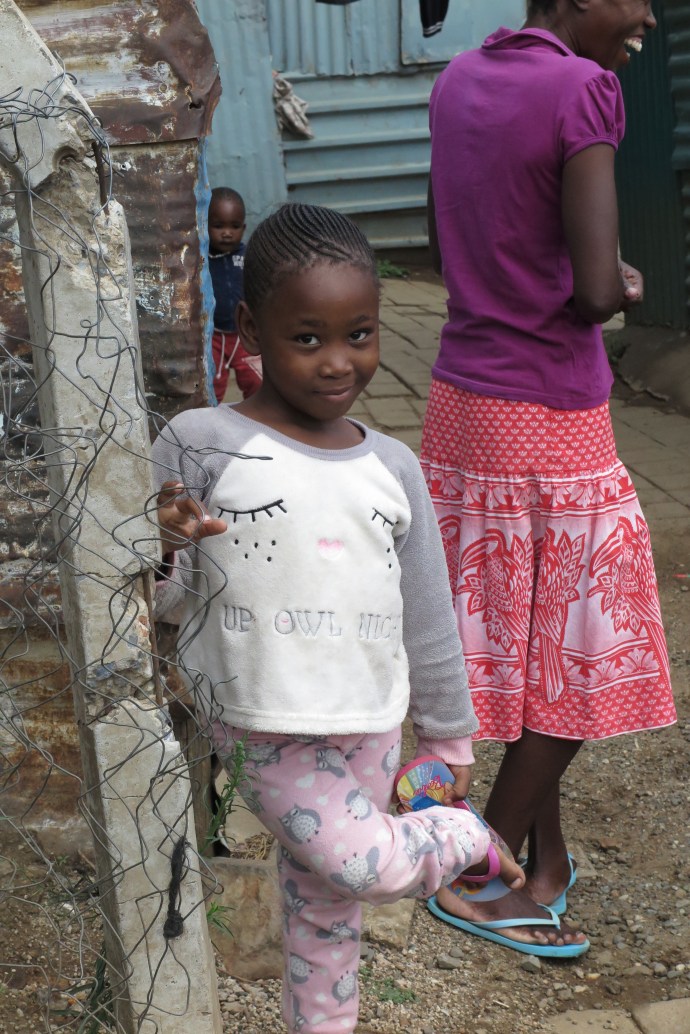
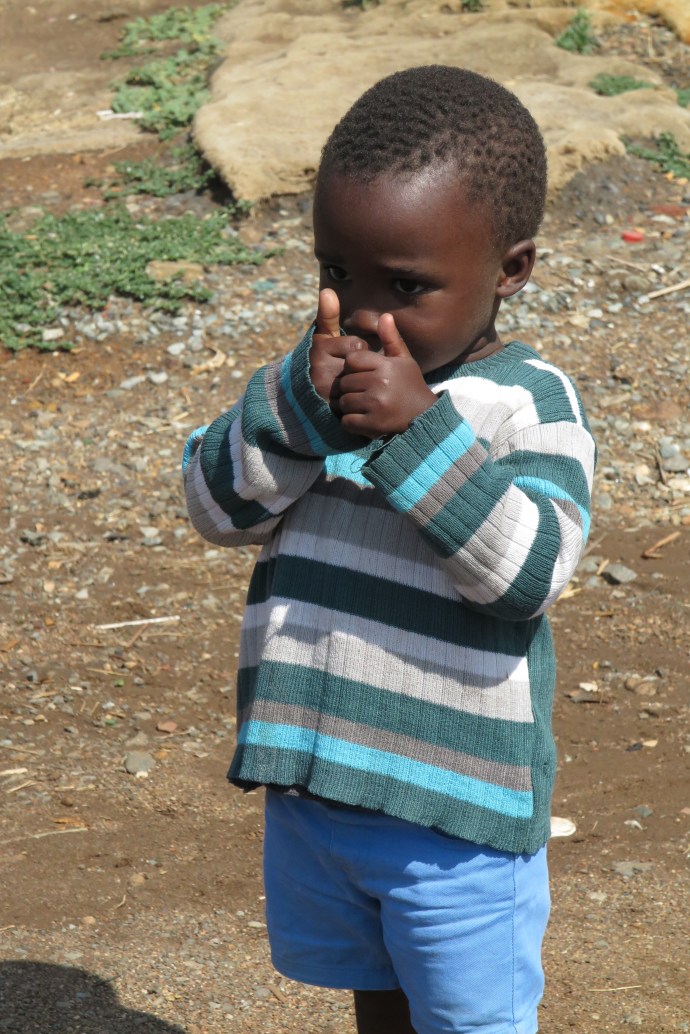
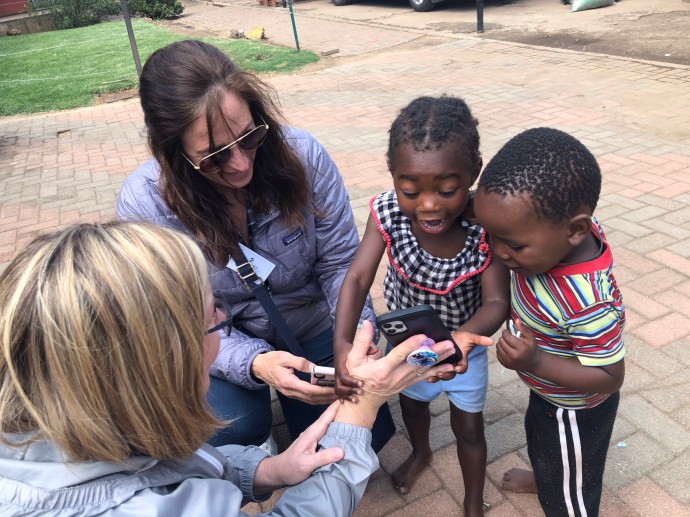
A little girl smiles shyly and strikes a timid pose. A toddler gives two thumbs up. Another little girl enthusiastically takes a selfie. No matter where we go in the world, children are the same, regardless of our circumstances. The kids of Soweto are no different.

To understand the the life these kids will face, we need to give you a brief (and oversimplified) history of Johannesburg and South Africa. So, bear with me here.

South Africa was inhabited by Black African kingdoms and chiefdoms for centuries. The Dutch began to colonize the region in the 17th century and the British in the 19th century. By the early 1900s the colonists began to establish laws that segregated Black Africans and limited their ability to own land (land that they had previously owned). Africans were also given no right to vote.

In 1948, the National Party, whose leaders sympathized with the now-defeated Adolf Hitler, won the South African election and began to institute an even more repressive system known as apartheid. Africans were relocated from their homes to areas designated by the government, they were limited in their travel, and their separate education system was far inferior to that of whites. The African National Congress (ANC) was established to resist these oppressive laws. Nelson Mandela’s rise through the leadership of the ANC ultimately put him in a position to liberate the country. Lisa and I are reading Mandela’s autobiography, which he completed at our hotel here in Johannesburg. Seeing the city has helped bring his writings to life for us.

After significant strife over several decades, including Mandela’s 28-year imprisonment, apartheid was finally repealed in 1991. With Black Africans now allowed the vote, Nelson Mandela became the country’s first native African president.

Johannesburg is a relatively young city. It wasn’t established until 1886 when one of the world’s largest deposits of gold was discovered. This caused a gold rush, primarily of Dutch and British mining companies. Because England established the global price of gold, the way mining companies increased their profits was through cheap labor from Black Africans. Today, at 5.6 million residents, Johannesburg is the largest city in South Africa.

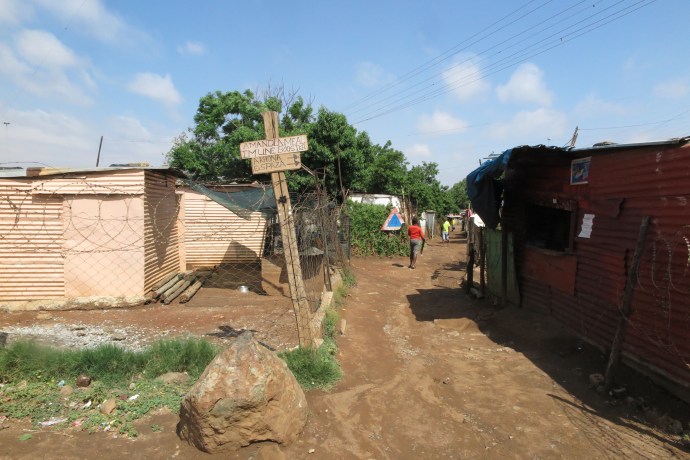
Soweto (an acronym for SOuth WEstern TOwnships), was one of the areas near Johannesburg that was designated for African relocation. Nelson Mandela lived here. It has a population of roughly 1.5 million residents today — with almost exclusively Black residents. We visited Kliptown, one of Soweto’s townships.

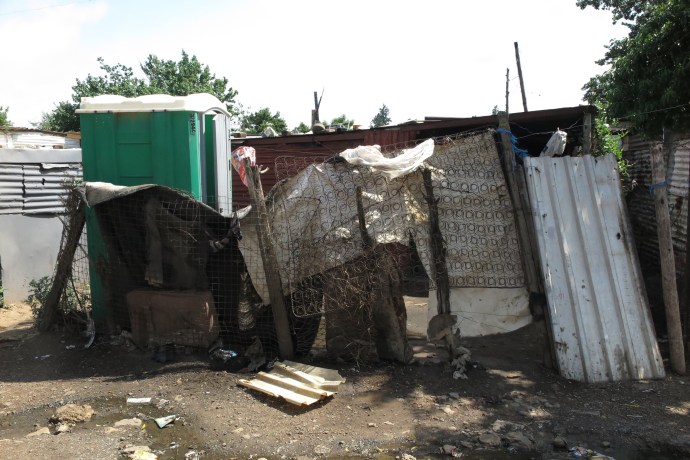
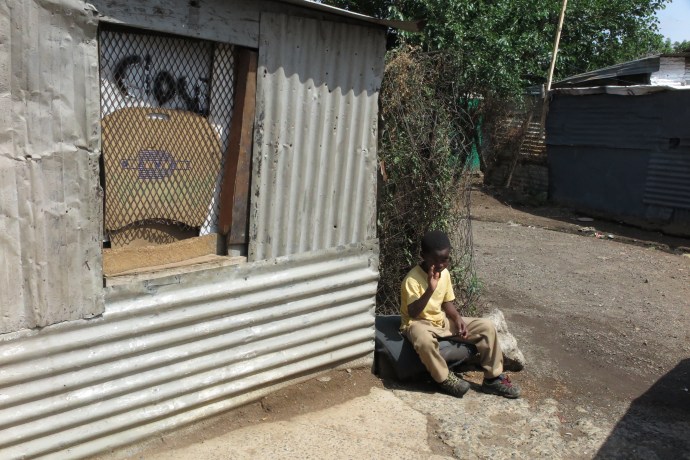
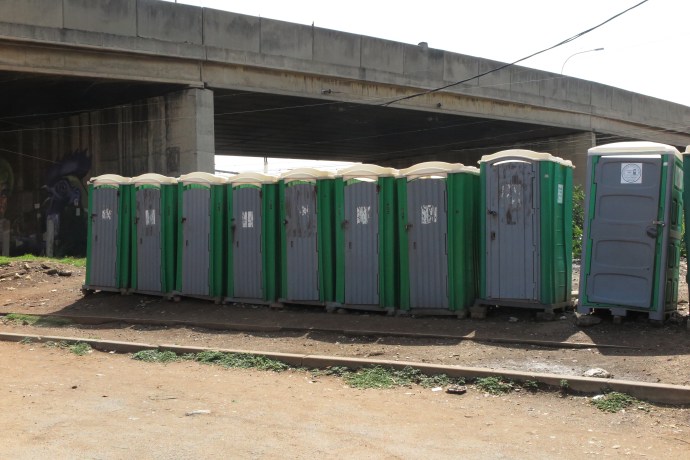
Kliptown, like much of the rest of Soweto, is comprised of shacks made from sheet metal, plywood, chicken wire and whatever else people can use as building material. Homes aren’t insulated and often leak. So, people get cold in the winter, hot in the summer, and wet when it rains. This town of 46,000 uses port-a-potties for bathroom facilities with roughly 12 to 15 families sharing one port-a-potty. Since they are only emptied once a week, they often fill to overflowing. There are 50 water spigots in town to be shared by all residents for drinking, washing, and bathing. Opioid use is at epidemic proportions.

There is no school in Kliptown, so the kids walk 30 to 45 minutes to get to school in a neighboring township. Life is hard here. Despite the end of apartheid and the implementation of majority rule, centuries of oppression cannot be rectified in a couple of decades. There is tremendous wealth in Johannesburg. We drove through areas with mansions walled off with electric wire not 20 minutes drive from Kliptown. The wealth gap is stark and felt so wrong to us.

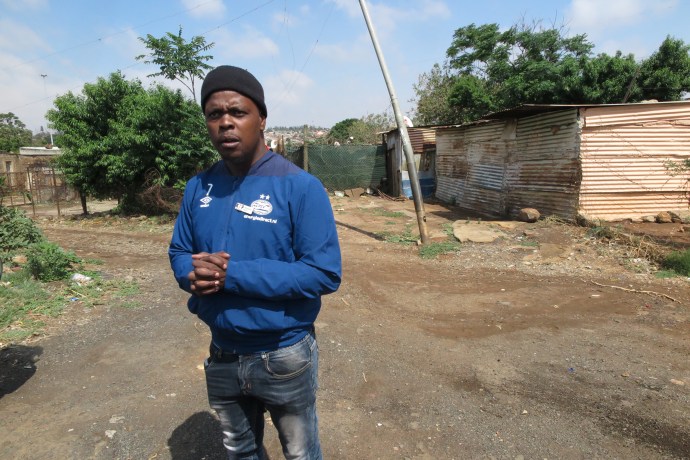
With the many challenges we witnessed you would think that people would simply give up. That wasn’t what we saw. We saw the happy children playing like those in our own neighborhoods. We saw adults meeting in the center of town to work through the issues of the day. And, the most hopeful sign for the community was shown to us by Monwabisi Baleni (also known as Mo).

Mo is one of the leaders of a community program called the Kliptown Youth Program. This program is designed to give the children of Kliptown supplemental education so they can graduate high school and go to college or vocational school. Education is empowering and if the community can educate its children and prepare them for good employment, they can break the cycle that residents are experiencing today.

The program has over 500 kids participating. Mo says that this is only one-fifth of the number of kids that would like to be in the program. But, they are limited by funding. His heart breaks each year when children cry when they find out they didn’t get in the program.

But, for the 500 who are in, they get reinforcement of their schooling in math, English, and science. They learn basic computer skills and other practical vocational subjects. Their parents can even get certified in computer skills. To date, they have seen 50 students graduate college (nearly none had prior to the program) with many more to come as they work their way from first grade through high school.

Human resilience is a powerful thing. Lisa and I were deeply moved with what we saw. It was at once depressing and hopeful. We have vowed to do what we can to help. If you want to pitch in, just go to https://www.kliptownyouthprogram.org.za/ and donate to their effort.

It was a powerful day for us as we also visited the Apartheid Museum and Nelson Mandela’s home in Soweto. The cruelty man can impose on others is discouraging, but, the good in people will always prevail. Mo reminded us of this in a most poignant way.

Next, a safari in the Sabi Sands Game Preserve. Stay tuned . . .

Categories: Travel | 1 Comment

Failure to Launch

Well, it’s 11:45pm and we are sitting in San Francisco airport’s baggage claim waiting to retrieve our luggage. Yeah, I know. We’re supposed to be on our way to Johannesburg, South Africa.

We arrived at SFO promptly at 4:15 for our 6:45 flight because Lisa likes to be prompt when we travel. I, on the other hand, like to get to the airport just in time to board. But, after 34 years of marriage, one learns to compromise — which means Lisa gets to decide.

We were entertained in the waiting area by a mother with a toddler and a 3-year old. They were running around the waiting area saying “aah, aah”. Constantly. Really loudly. That made us happy. Not because we like kids that are yelling really loud. We were happy because we weren’t the ones chasing the kids around the waiting area.

After about a 30-minute delay, we boarded our United flight to Frankfurt. Then we sat. And sat. Apparently a light in the cockpit suggested one of the doors wasn’t closing. The crew knew the door was closing, but, clearly that little light in the cockpit didn’t. So, we sat some more.

After about 3 hours the pilot glumly announced that the flight was cancelled and we all needed to get off. Lisa and I didn’t want to get off because we had to get to Johannesburg. The flight attendant politely nudged us out of our seats and off the plane.

Travel, like life, can throw you unexpected curveballs. It happens to all of us. Success and happiness don’t depend on things going as planned. They depend on how you respond. For Lisa and I it meant waiting in line to reschedule our flight for tomorrow, calling the house sitter to send her home, grabbing bad Asian food and a beer while we waited for our luggage to be retrieved, and then riding home in an Uber where I sit writing this blog entry.

We are feeling pretty fortunate even though we’d rather be on our way. After all, we’re not the mom chasing around two toddlers.

Categories: Africa, Safari, South Africa, Travel | Tags: | 3 Comments

Blog at WordPress.com.