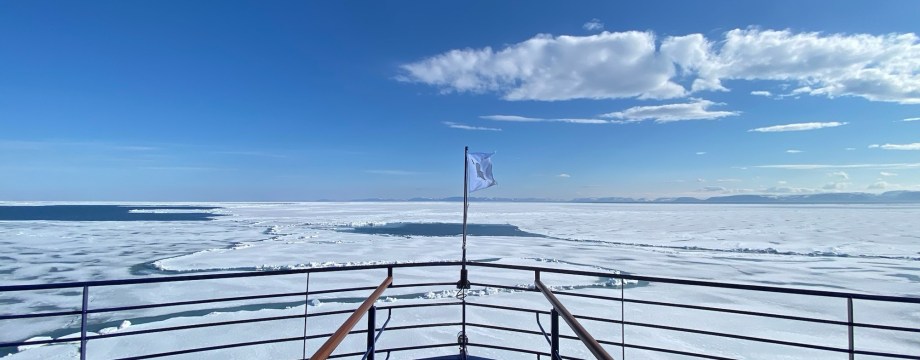
Lisa and I were awakened in the morning to a 4.0 magnitude earthquake. At least that’s how it felt. We looked outside and we were surrounded by sea ice.
The National Geographic Resolution is the world’s first Polar Class 5 icebreaker cruise ship. This means it can go places in arctic waters that virtually no other cruise ship would attempt. Today was a day we did just that. As we came around to the east side of the Spitsbergen the sea was iced over throughout much of the route. The ship vibrates like an earthquake as it plows through the frozen ocean.
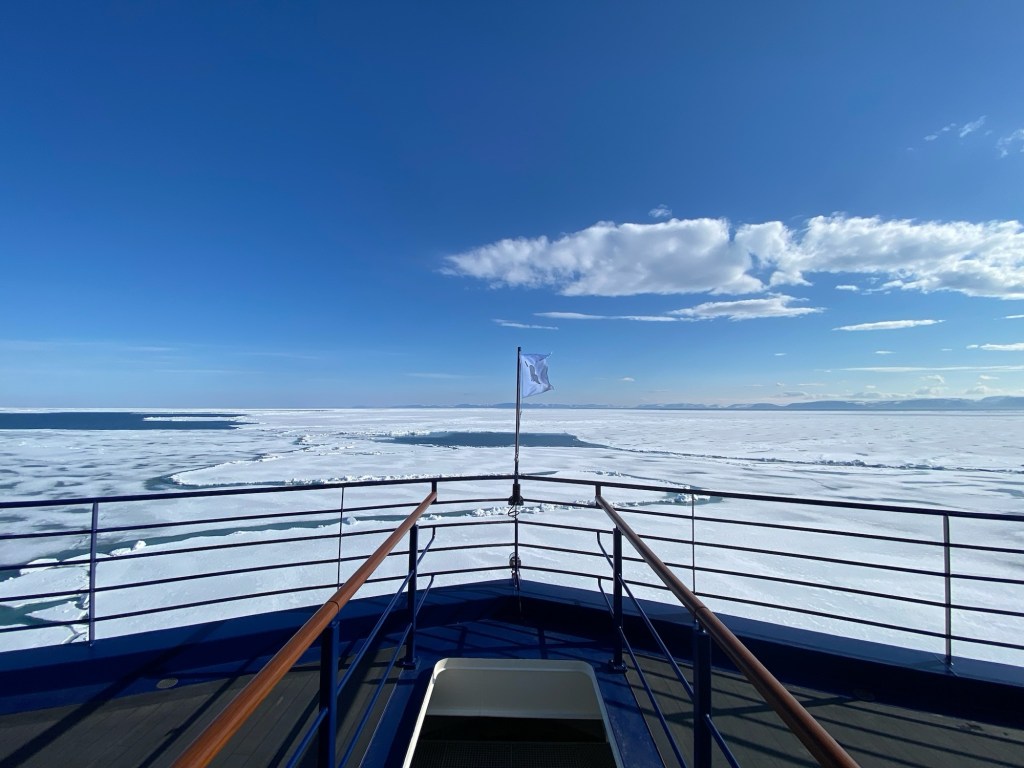
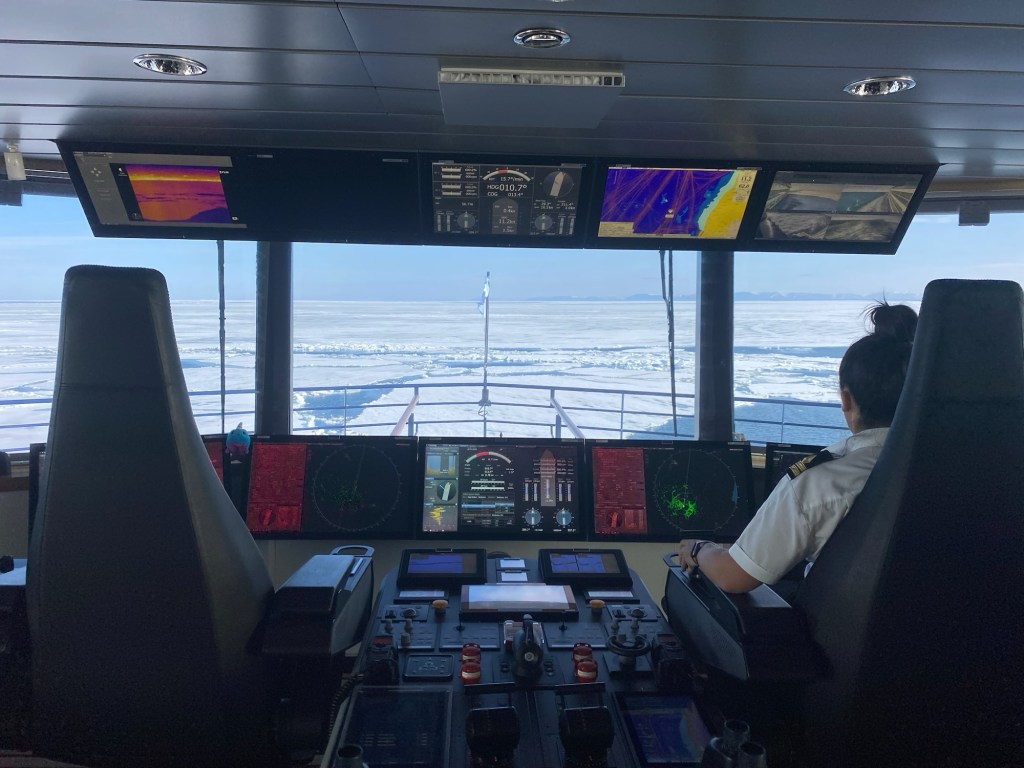
The bridge of the ship is always open to passengers (one of the unique opportunities for passengers on the Resolution). So, Lisa and I thought we’d better head up there to see what was going on.
We arrived to find a flurry of activity. The navigation officer was driving. She had the biggest smile on her face as she guided the Resolution through the ice. Apparently it is one of the most fun aspects of piloting a ship. And an experience not available to most cruise ship officers.

Watching the ship carve though the ice is mesmerizing. Take a look at this short video. Make sure the sound is up on your device.
The crew told us we were plowing through ice in search of polar bears. They largely spend their time on sea ice in search of seals, their favorite food. The ship has extraordinary technology to search for wildlife. The bridge has both infrared cameras and telephoto cameras to spot bears. The infrared cameras pick up the heat signature of the animals and the regular cameras confirm what type of animal had been spotted.
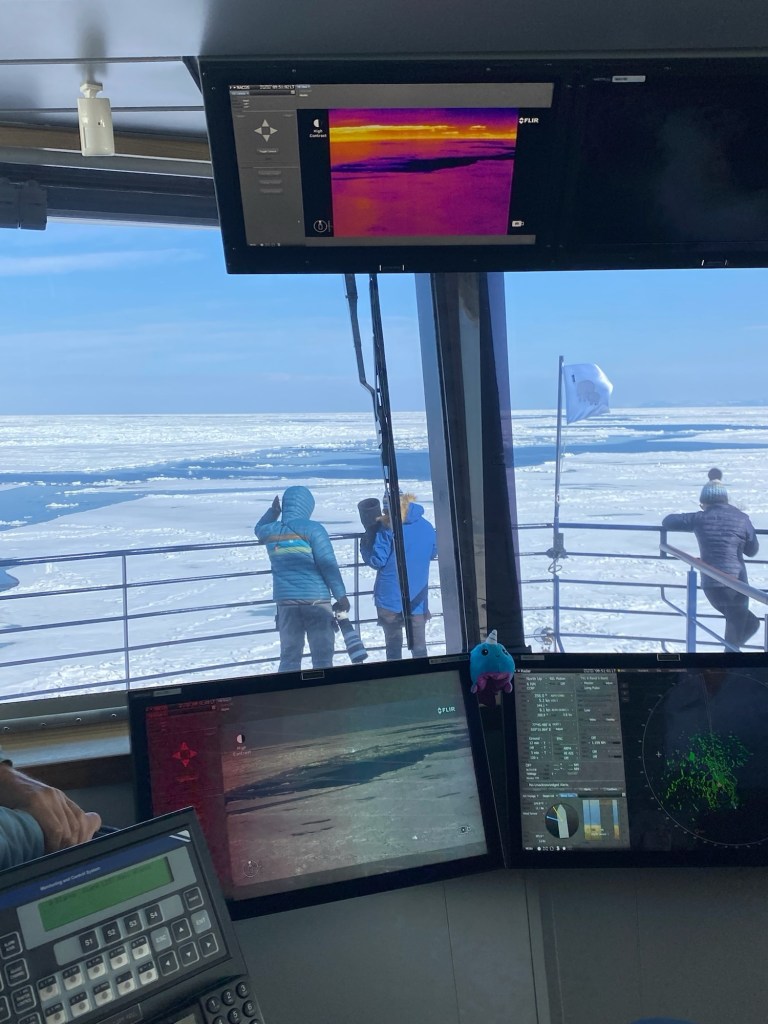
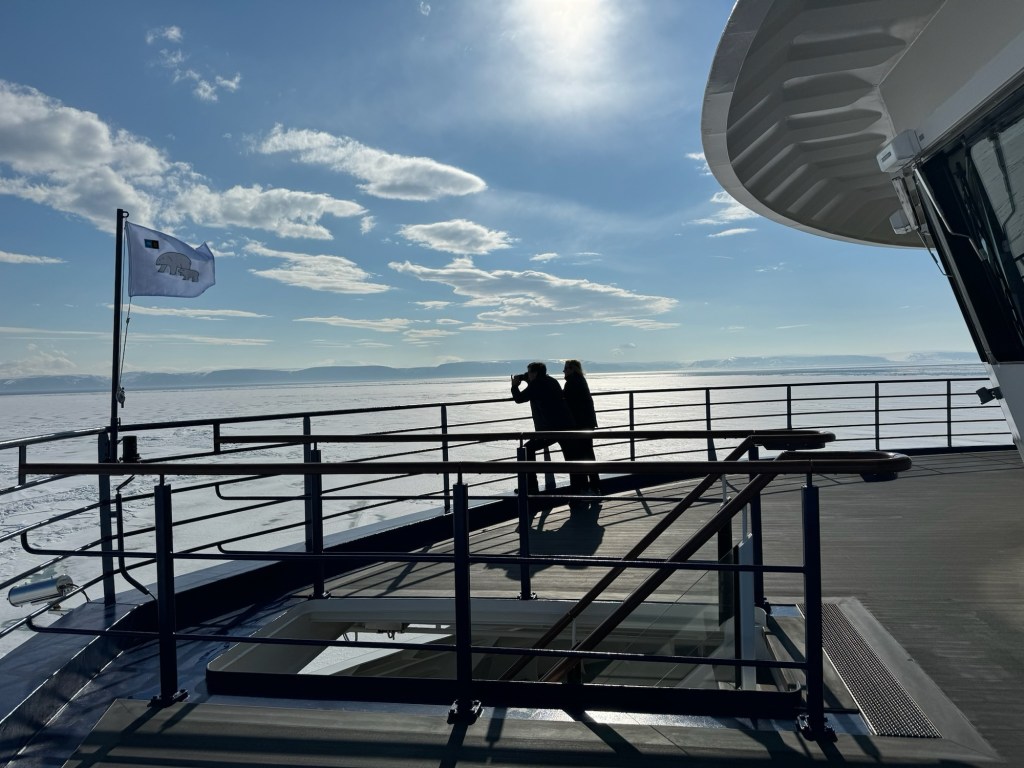
After a full morning of searching, alas, no polar bears.
We did, however, catch site of a walrus lounging on the ice.
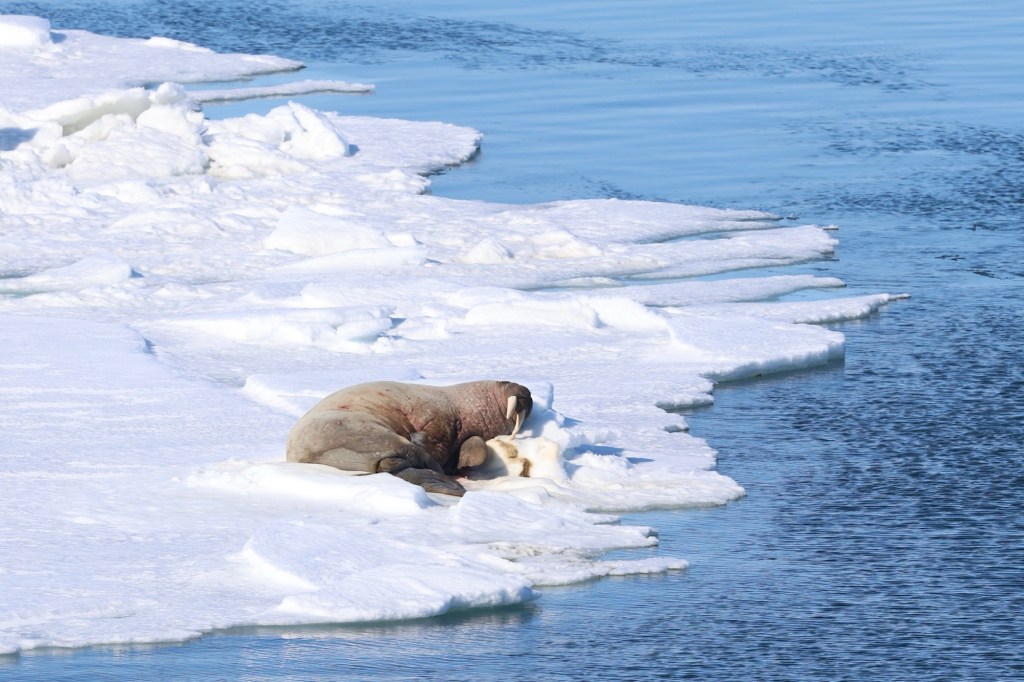
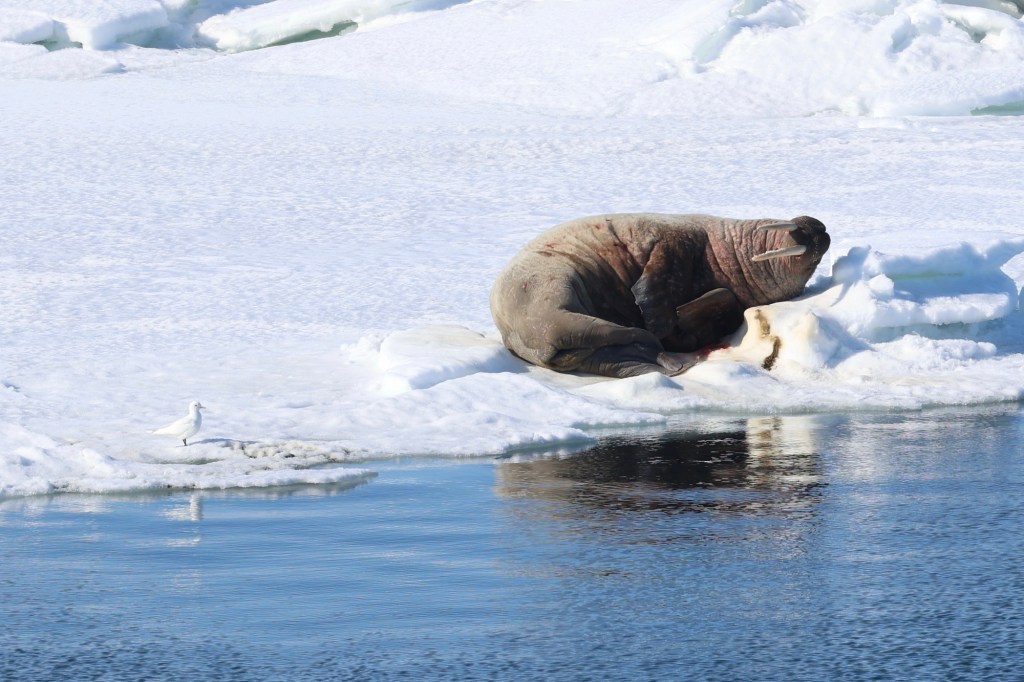
The ice we were carving through is called drift, or pack ice. It is floating out in the ocean. We kept hearing about fast ice — the kind we aren’t allowed to navigate through. Was it moving too quickly? As it turns out, fast ice is a term for ice that is “fastened” to the land. Since it is essentially an extension of the land, it is considered habitat for polar bears, seals, and walruses. So, we stay out of these areas so as to not destroy their habitat.
Sea ice is rapidly disappearing. The warming of the planet is occurring quickly and even faster at the poles. There is clearly more we need to do to slow Earth’s warming. Diminishing sea ice eliminates the habitat for many of the species we are seeing on this visit. It also means ice on land such as Greenland is melting in the ocean which significantly raises sea levels and affects coastal areas all over the world. Scientists estimate the Arctic could be ice free by 2040.
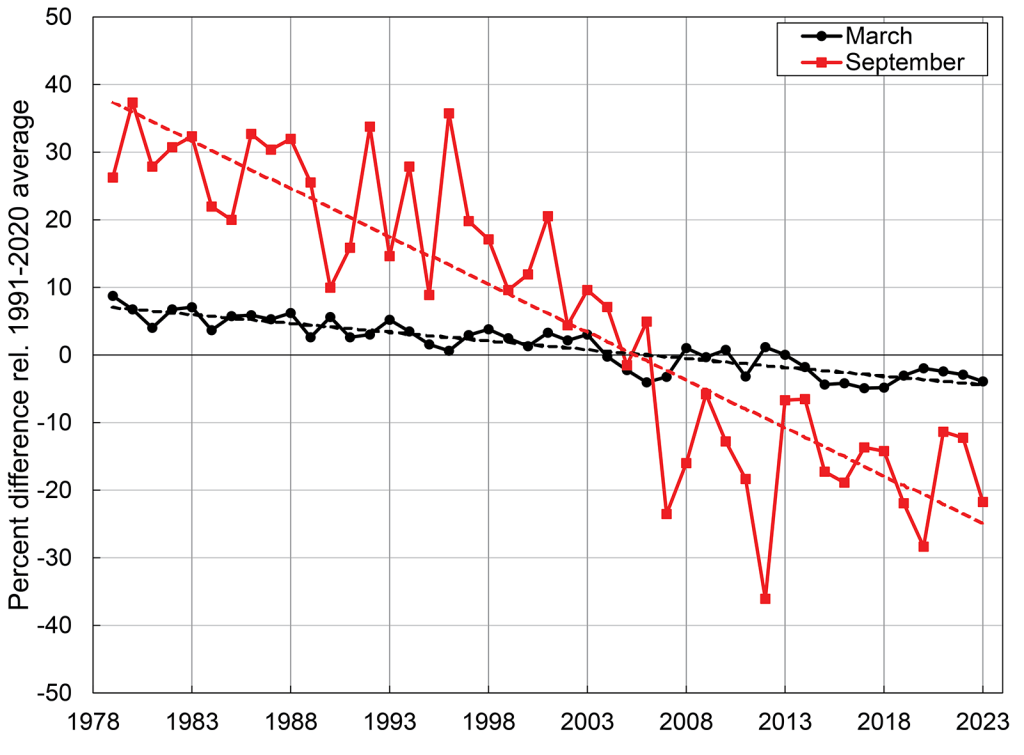
After lunch, since we still have Arctic ice, we got out into our Zodiacs for an afternoon cruise. The weather was spectacular.

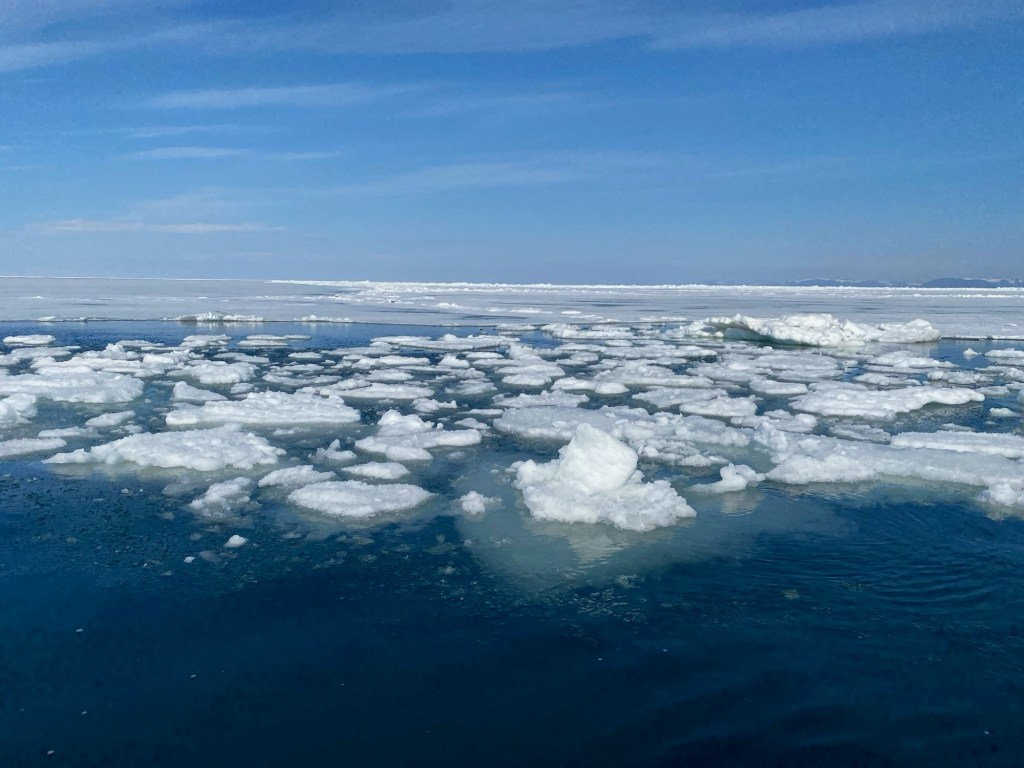
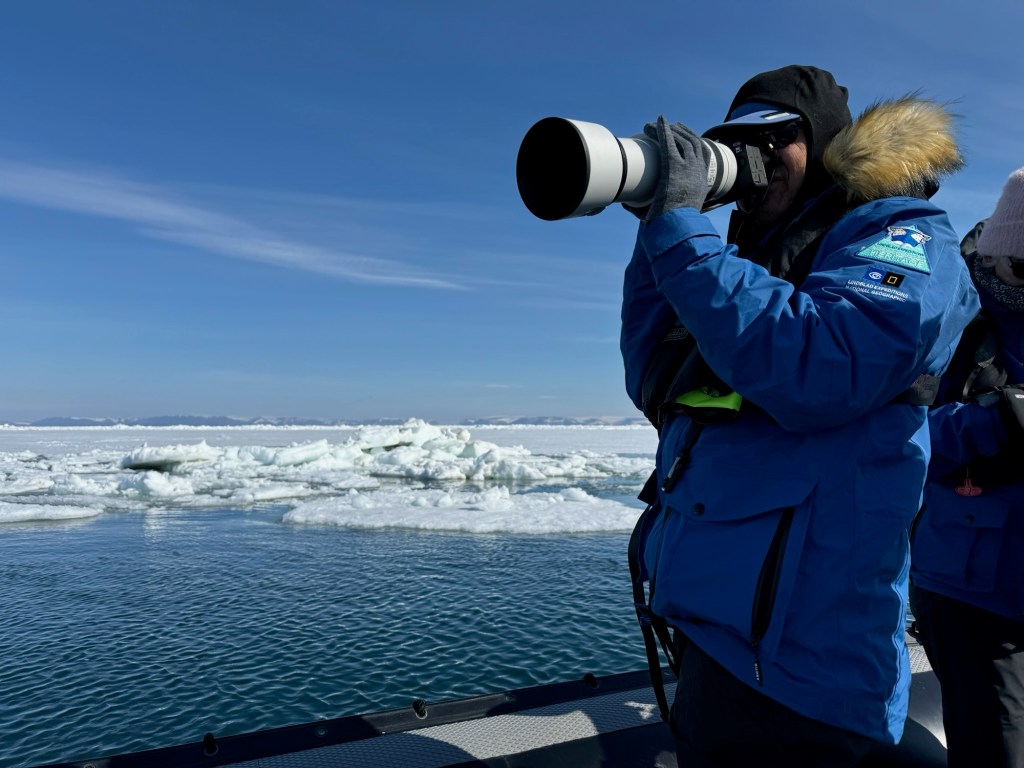
Our Zodiac group was led by a National Geographic photographer. He was a great educator, helping us get the most out of our cameras. He was also good at identifying the arctic birds that were flying overhead.
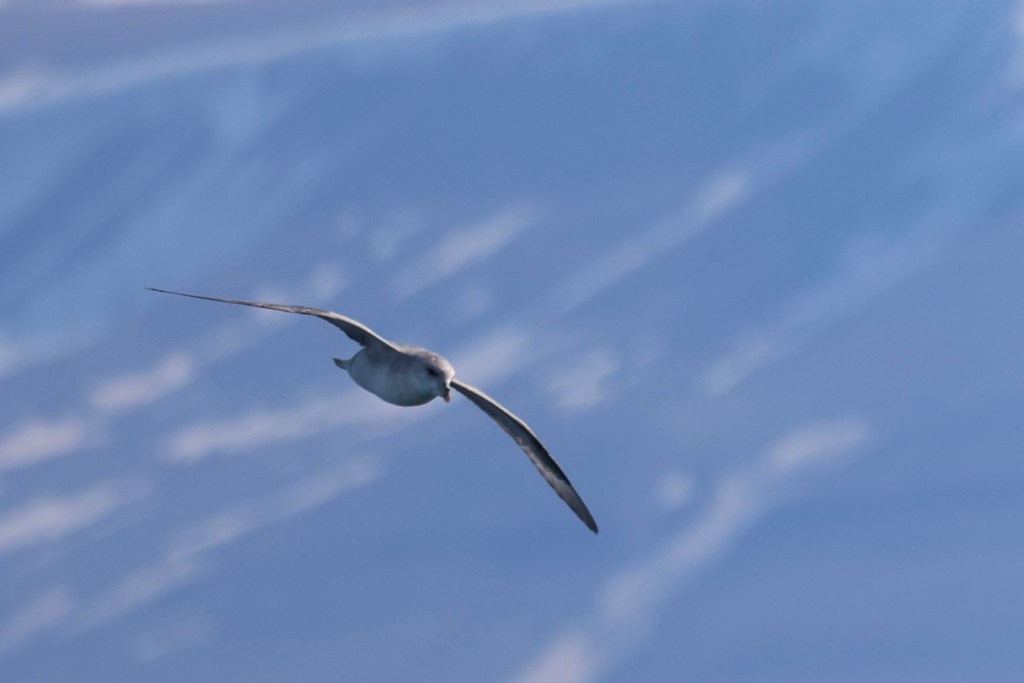
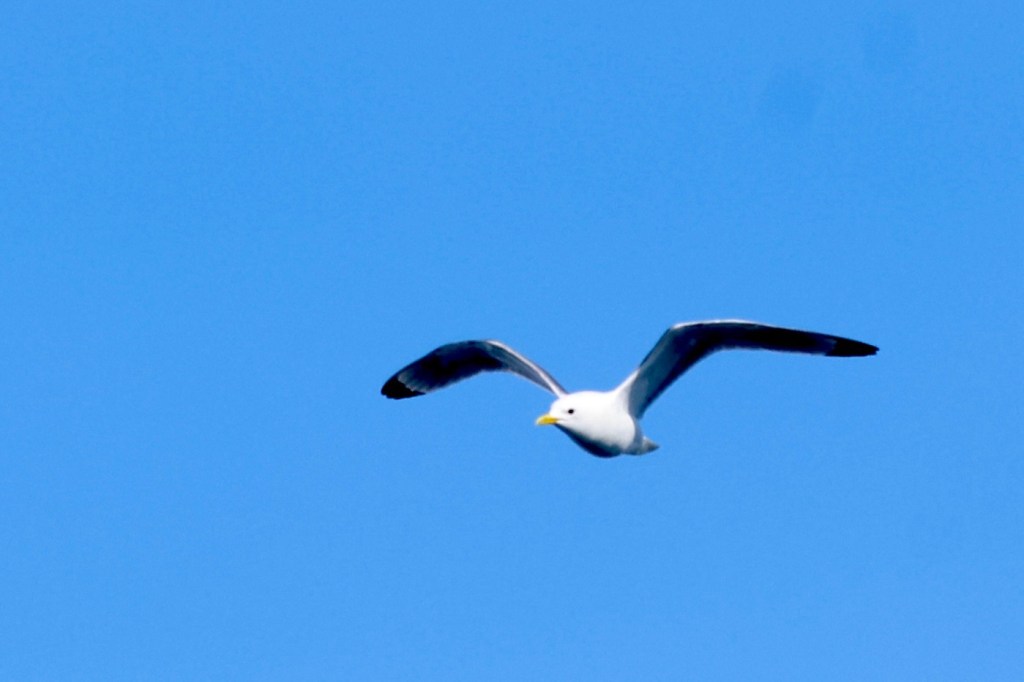
No luck finding a polar bear today, however. So, we’ll try again tomorrow. We’re heading north through more sea ice that is prime polar bear territory. We’ll keep our eyes open and let you know if we spot one!
 Lisa and Brad's Travels
Nice blog. Nice pics. Pro tip : make sure to hold on to your lens with your hand underneath it. Let the lens rest on your hand and tuck in your elbows tight against your chest. You’ll achieve greater stability and will get away with using lower shutter speeds. We saw 3 polar bears there 3 weeks ago. It had been the first spotting since February. Hope nanook shows up for you guys!