
Happiness.
As we flew alongside the Himalayan Mountains and descended into Paro International Airport, happiness wasn’t our first thought. Fear might be the better word. Out my window seat I could see the wing of the plane get unusually close to the mountainside. Then the plane made a sharp bank to the right in order to follow the Paro Valley’s topography.
There is a reason why they call this the world’s most dangerous landing.
As you might guess, we survived. But, we find ourselves leaving Bhutan just a little richer than when we arrived. This small country of 700,000 people has spectacular terrain, rich traditions, and beautiful, intelligent, loving people. It also has a unique view on what is important in life. Getting to know this land has left an impression that will stay with us the rest of our lives.
Bhutan was unified from a number of fiefdoms in 1907. King Ugyen Wnagchuck was popularly chosen to lead this new country. He is referred to as K-1. In 2006, K-4 abdicated the throne to his son, now known as K-5 and announced that the country would be holding parlimentary elections in 2008. This wasn’t, however, your usual case of popular uprising to take power from a ruling dictator. The people didn’t want to lose their beloved king. They didn’t see a need for a larger voice in the direction of their country. But, the King knew that in order to modernize Bhutan and to ensure its long-term viability the people needed to have control.
This wasn’t a King that lavished riches on himself in ornate palaces and luxury automobiles. His “palace” is a modest home in the woods. And, to convince the people that they should vote for the democracy, he walked to the most remote corners of the country where automobiles couldn’t go to speak about his vision for the country. He is also a cycling enthusiast who often goes out for rides by himself.
The Butanese people hold tight to their traditions. The men all wear the traditional garb called a gho (pronounced “go”), and the women wear a kira. The dominant religion is Buddhism and they hold to the ancient rituals and practices. There are many temples throughout the country. The economy is largely agricultural (rice and buckwheat are their major crops). Tourism is tightly controlled to keep the country from being overrun with tourists. And, like many Asian countries, extended families live together.
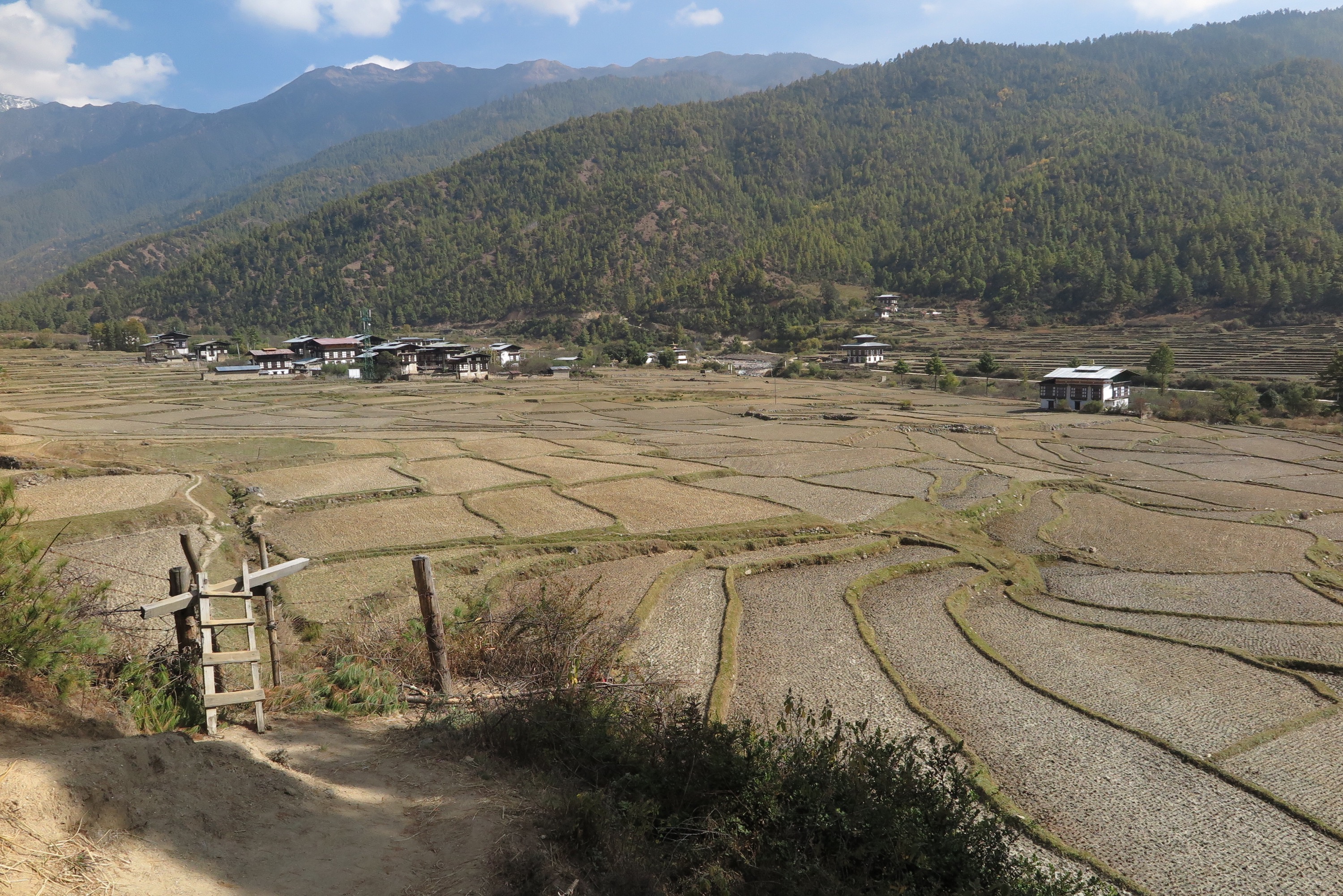 Rice fields in the Paro Valley. The rice was harvested a few weeks ago.
Where Bhutan diverges from many traditional small countries is in the way it holds to these traditions while taking a progressive approach to their future. As they develop their country, they focus on improving their primary metric, the GNH — Gross National Happiness. This metric considers health, employment, income, education, the environment, and the overall well-being of its citizens. GNH is given priority over everything else when leaders establish policy.
Women have the same educational and employment opportunities as men, and, interestingly, when it is time for an inheritance, the parents pass their estates to their daughters. The men must move in to their wives homes when they get married. Think about that boys!
Our tour guide, Nima, led us on our four-day visit to Bhutan. We hiked to the Tigers Nest Monastery; Mountain-biked through farmlands in the valley (although there is no such thing as flat terrain in Bhutan so Lisa finally had to learn how to shift gears on a bike!); visited Dzongs, which were fortresses designed to protect the town citizens from invaders; and ate traditional Bhutanese cuisine.
 Lisa on her mountain bike!
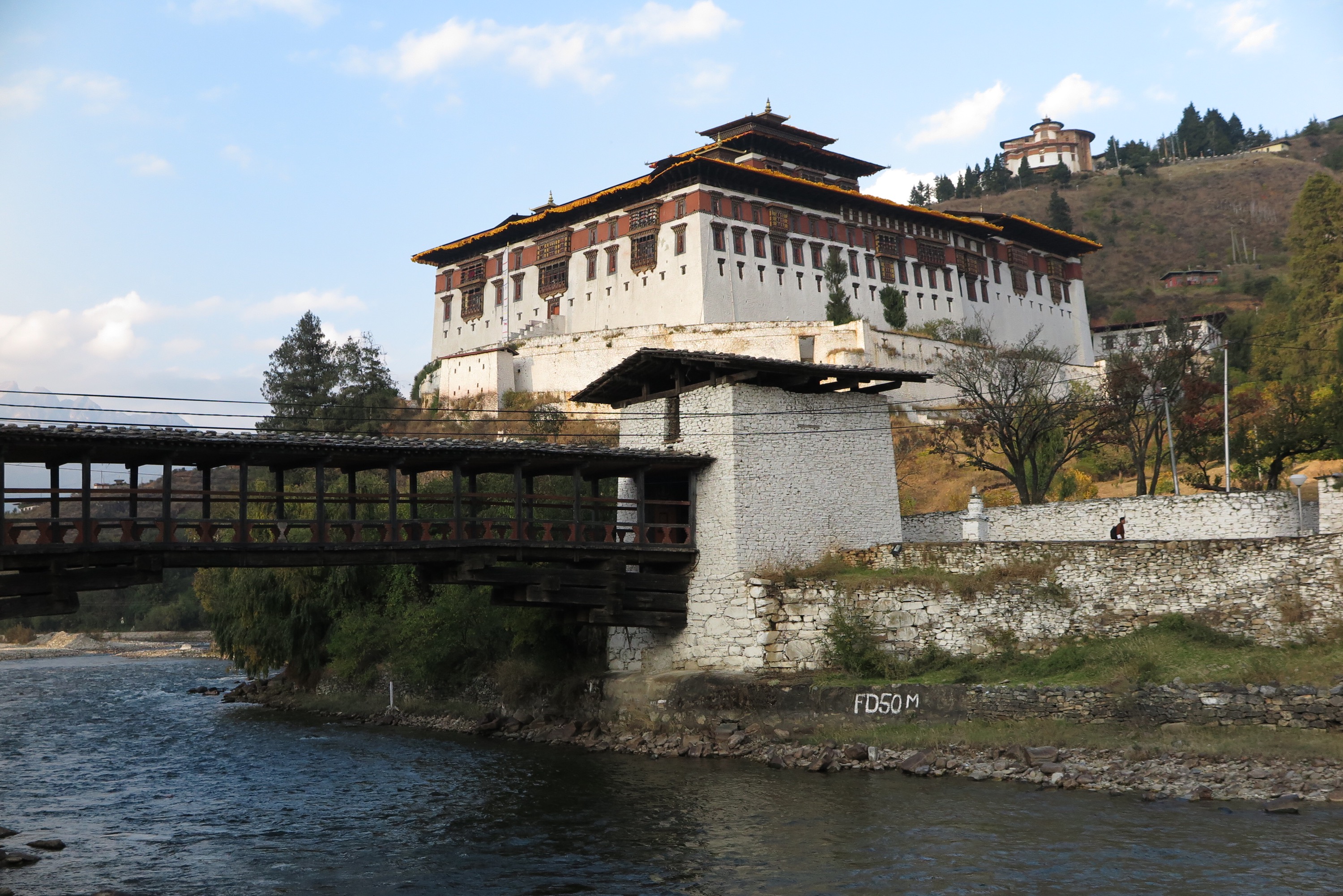 The Rimpung Dzong in Paro.
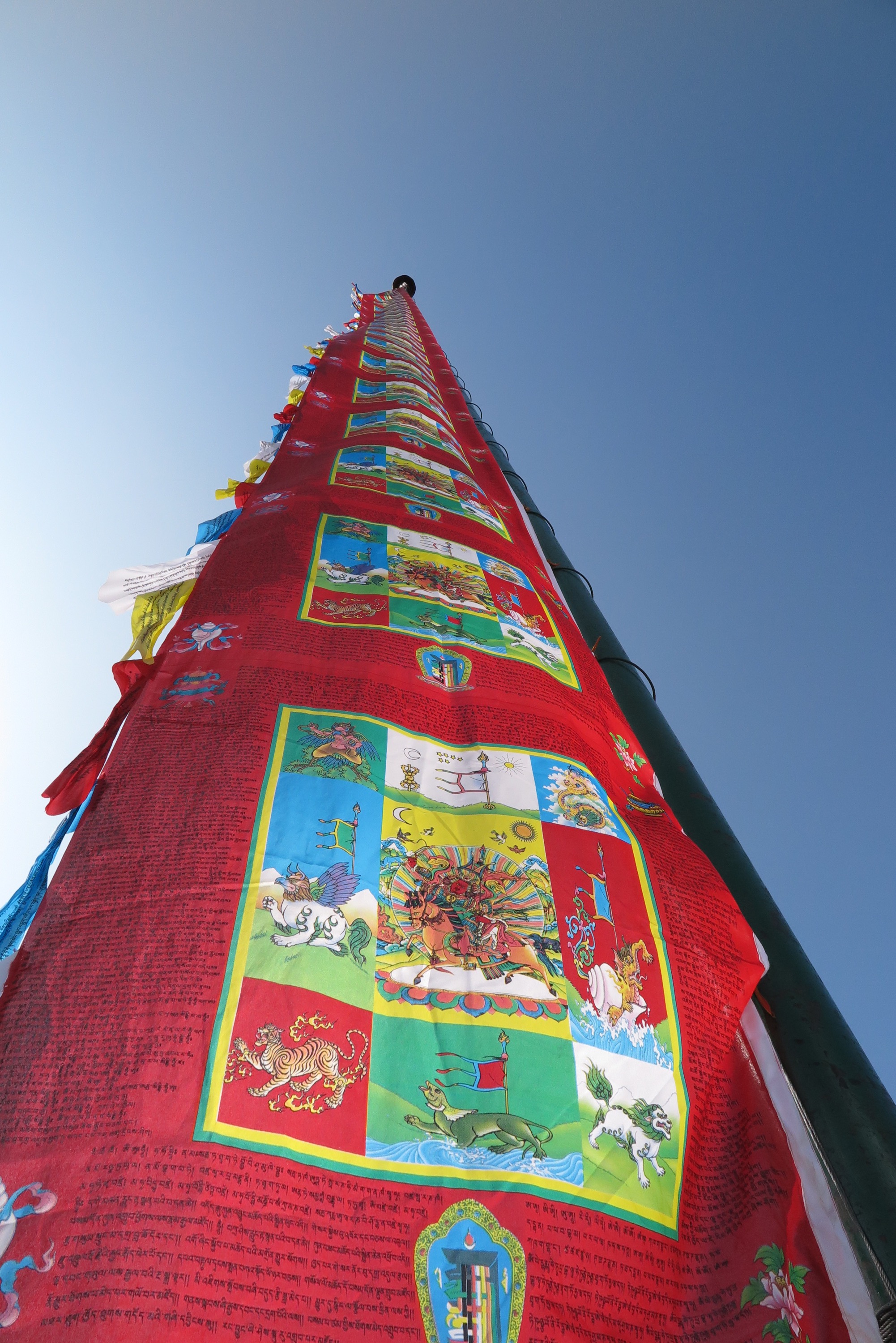 Bhutanese flag
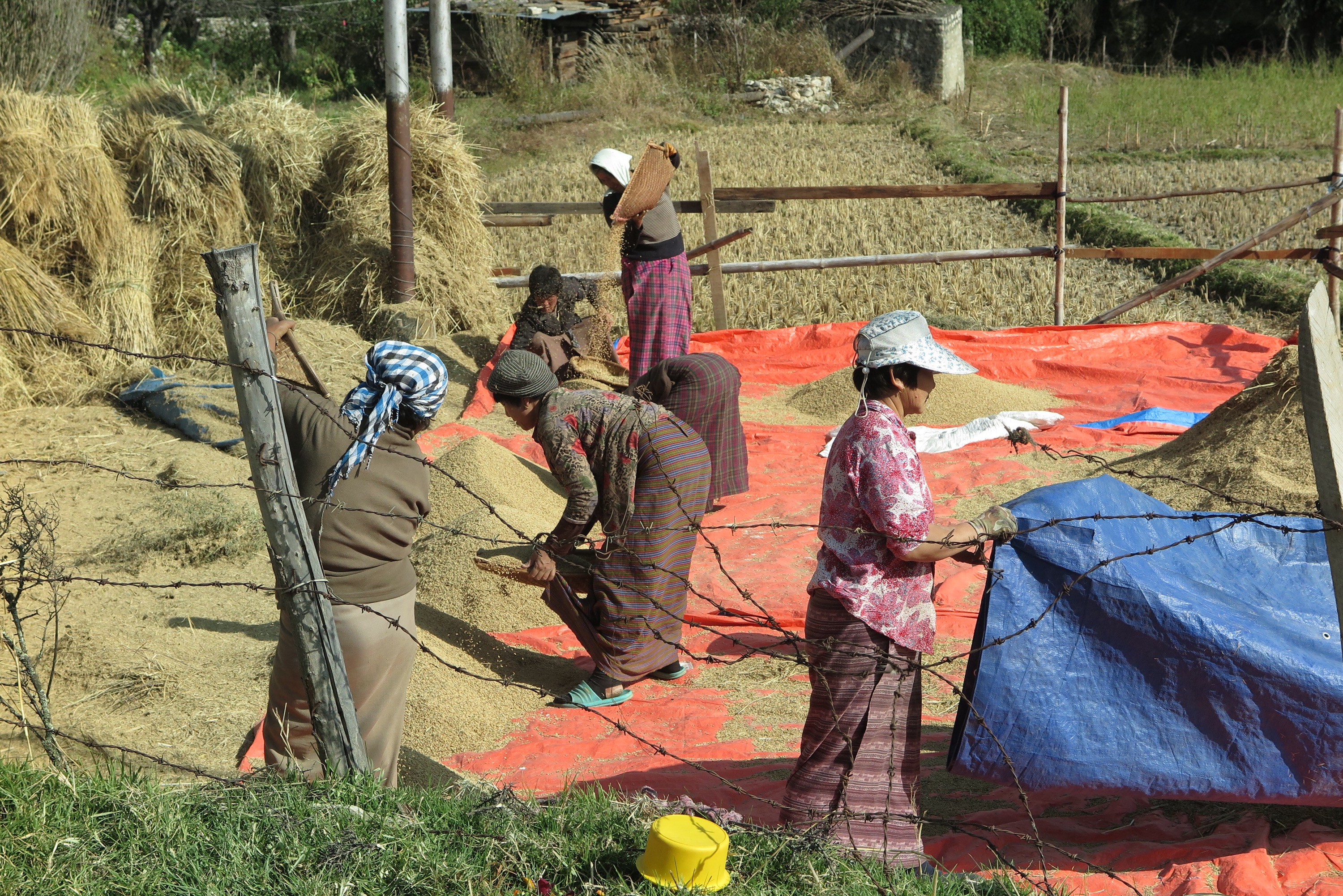 Bhutanese women separating rice from the stalk.
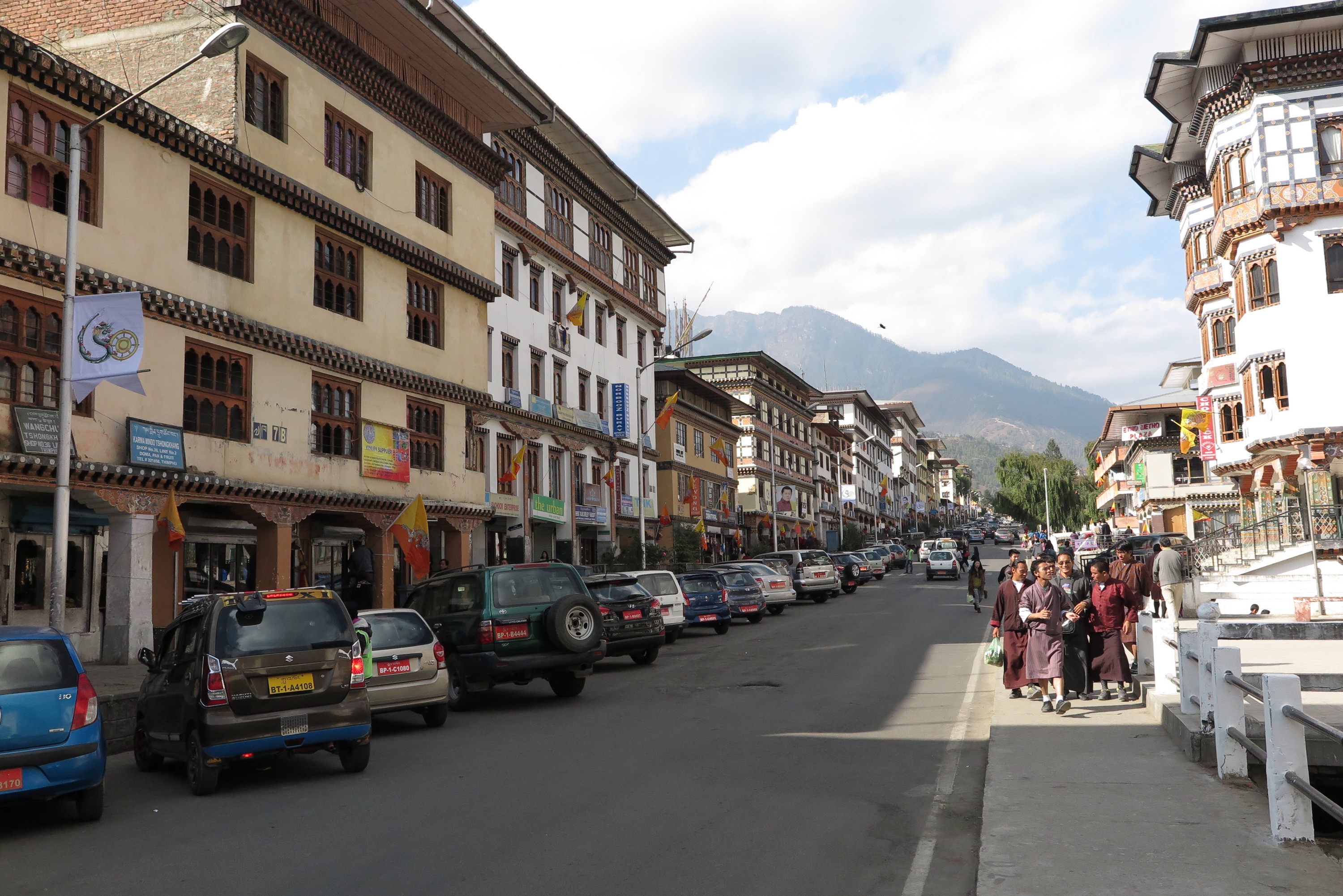 Downtown Thimpu, the capital of Bhutan.
Nima fancies himself a cook and showed us how to make emadatshi, a chile cheese dish. Bhutanese eat this dish with most every meal. It is made with red or green chiles, water, and an easily meltable white cheese. You serve it over rice. The dish is not for the faint of heart as it is very spicy. These chiles are grown throughout Bhutan and the farmers dry them on the roofs of their homes. We’ll make some for you when you come to visit us. We had an opportunity to visit a real farmhouse with a lunch cooked by the family. Sitting on the floor, we had red rice (the most common rice of Bhutan. It’s delicious), potatoes with cheese, beef with rice noodles, spinach in broth, and of course, emadatashi. We drank butter tea and had a bit of their home made grain alcohol. All of the produce, rice, chiles, etc., were grown on their farm. A delicious way to experience the culture.
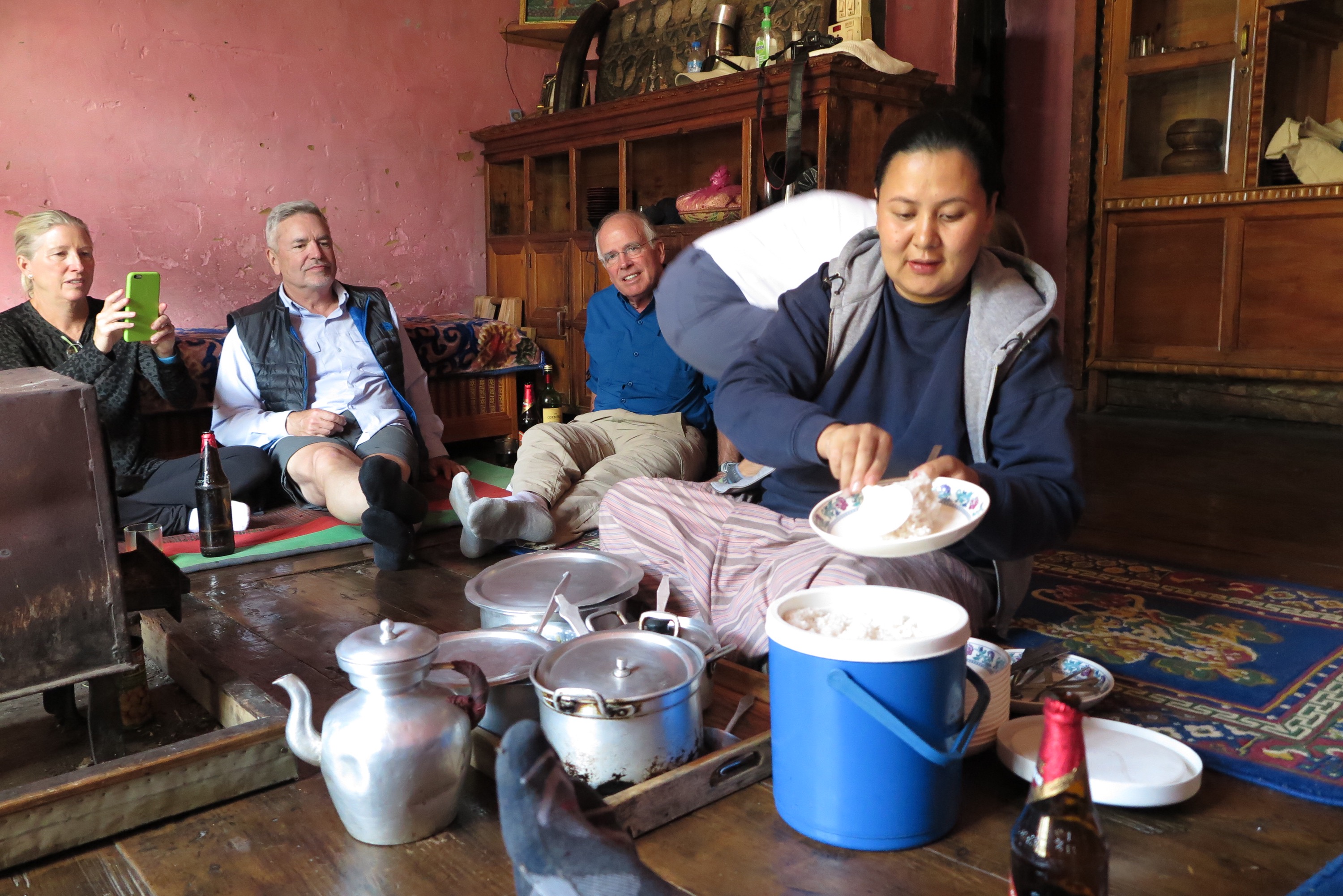 Lunch in the farmhouse.
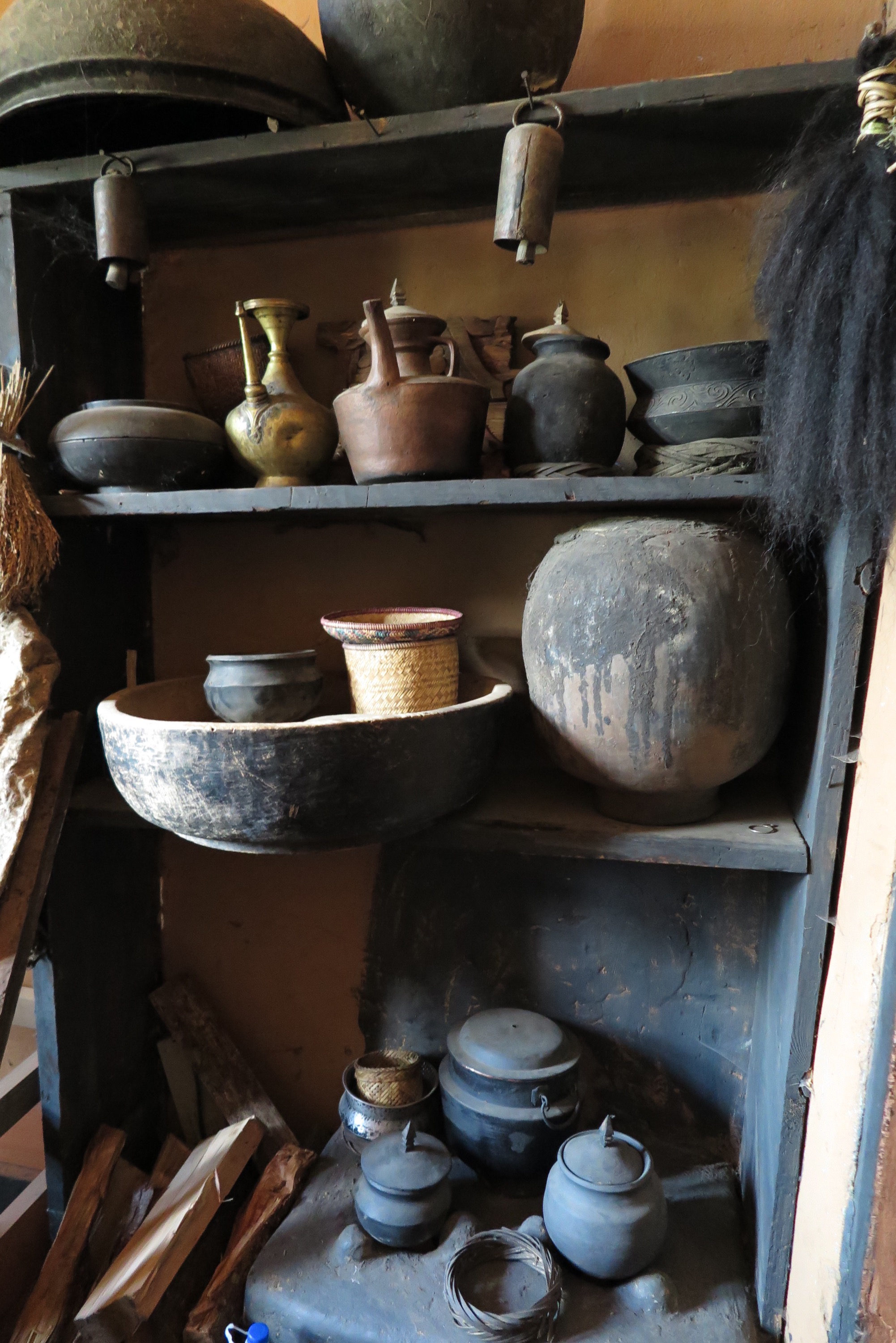 The farmhouse kitchen cupboard.
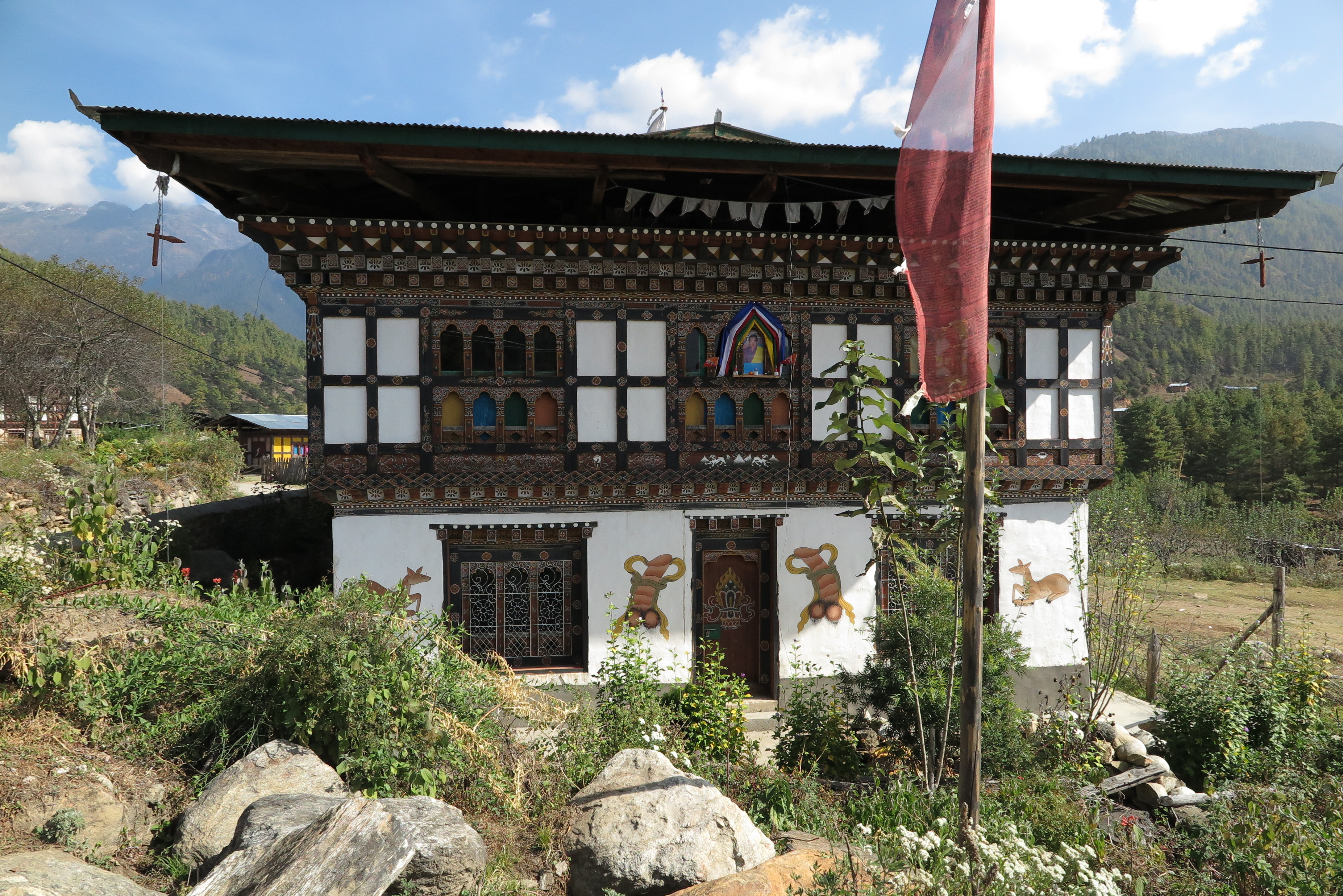
 The farmhouse where we ate lunch. A fallow rice field is in the foreground.
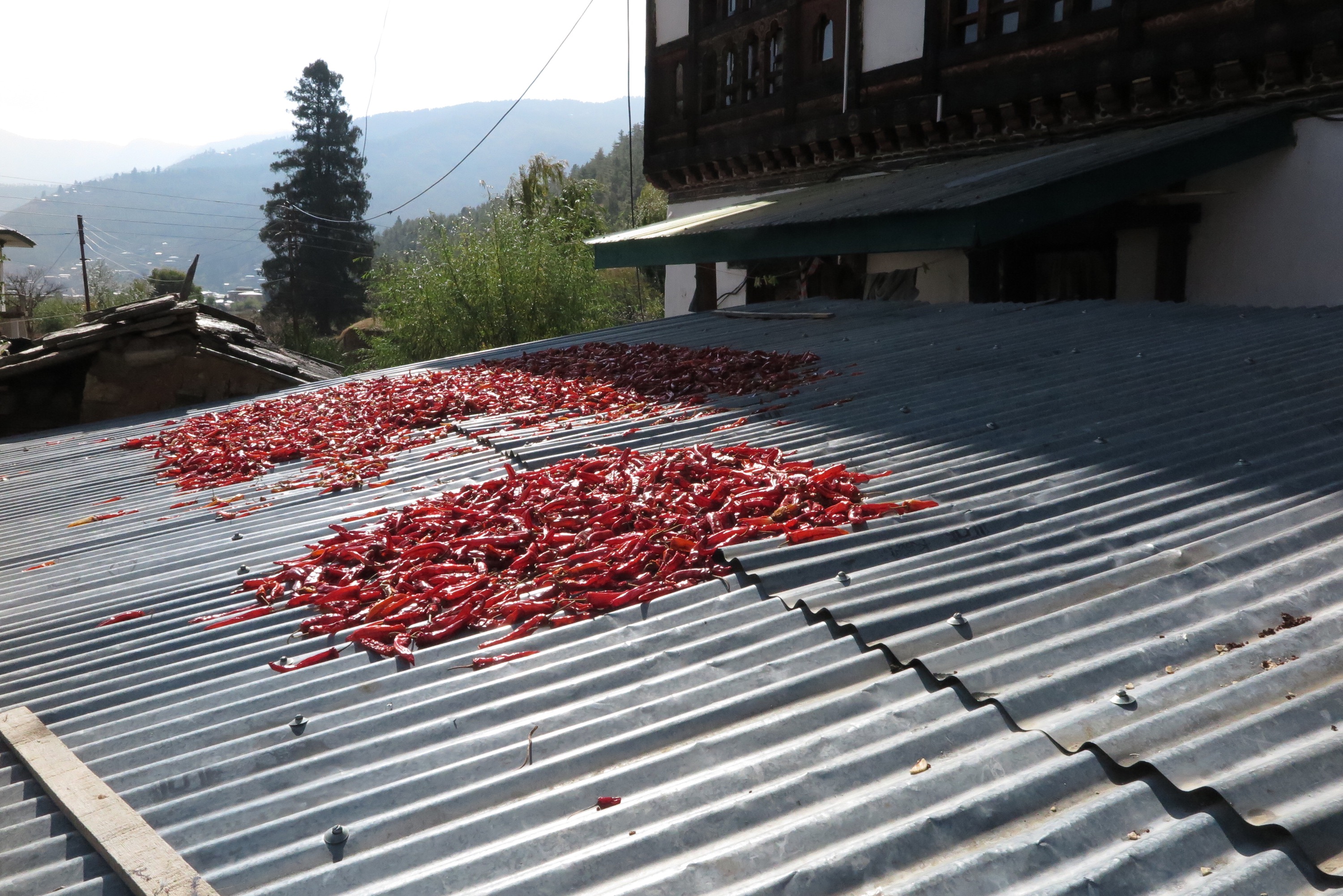 Red chiles drying on the roof of the farmhouse.
We also had a chance to visit a park frequented by the elders. Their children drop them off in the morning before they head to work. The elders visit with their friends, pray or meditate, and enjoy the day. When the workday is over, their children pick them up and take them home. We went to this park, anchored with a Stupa, a building that serves as a center for Buddhists. On the day of our visit there was a ceremony taking place to kick off K-4’s 60th birthday celebration. The entire country is preparing for the event of the week culminating on November 11th. So, there were many more people there than normal.
 The Stupa in the park.
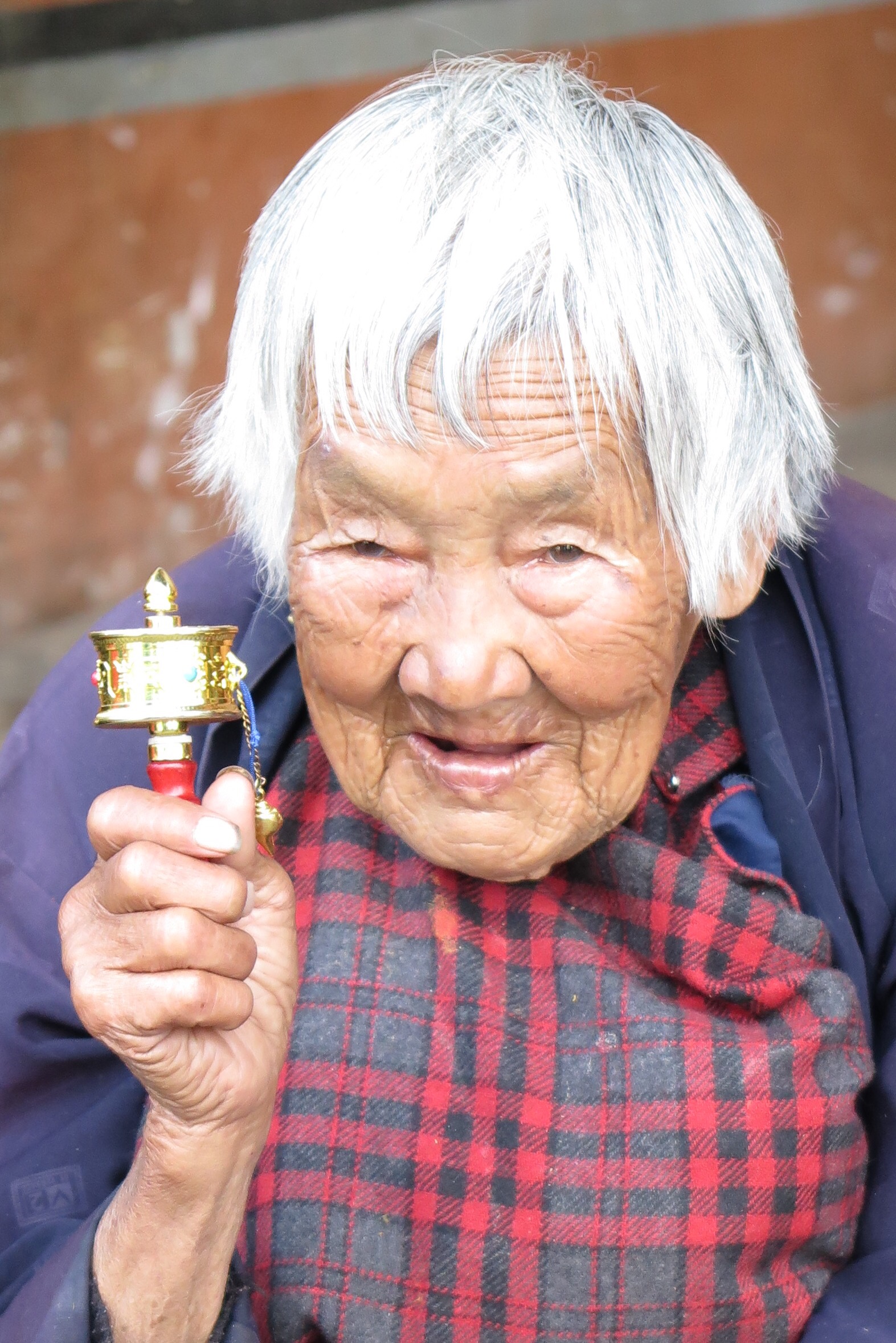
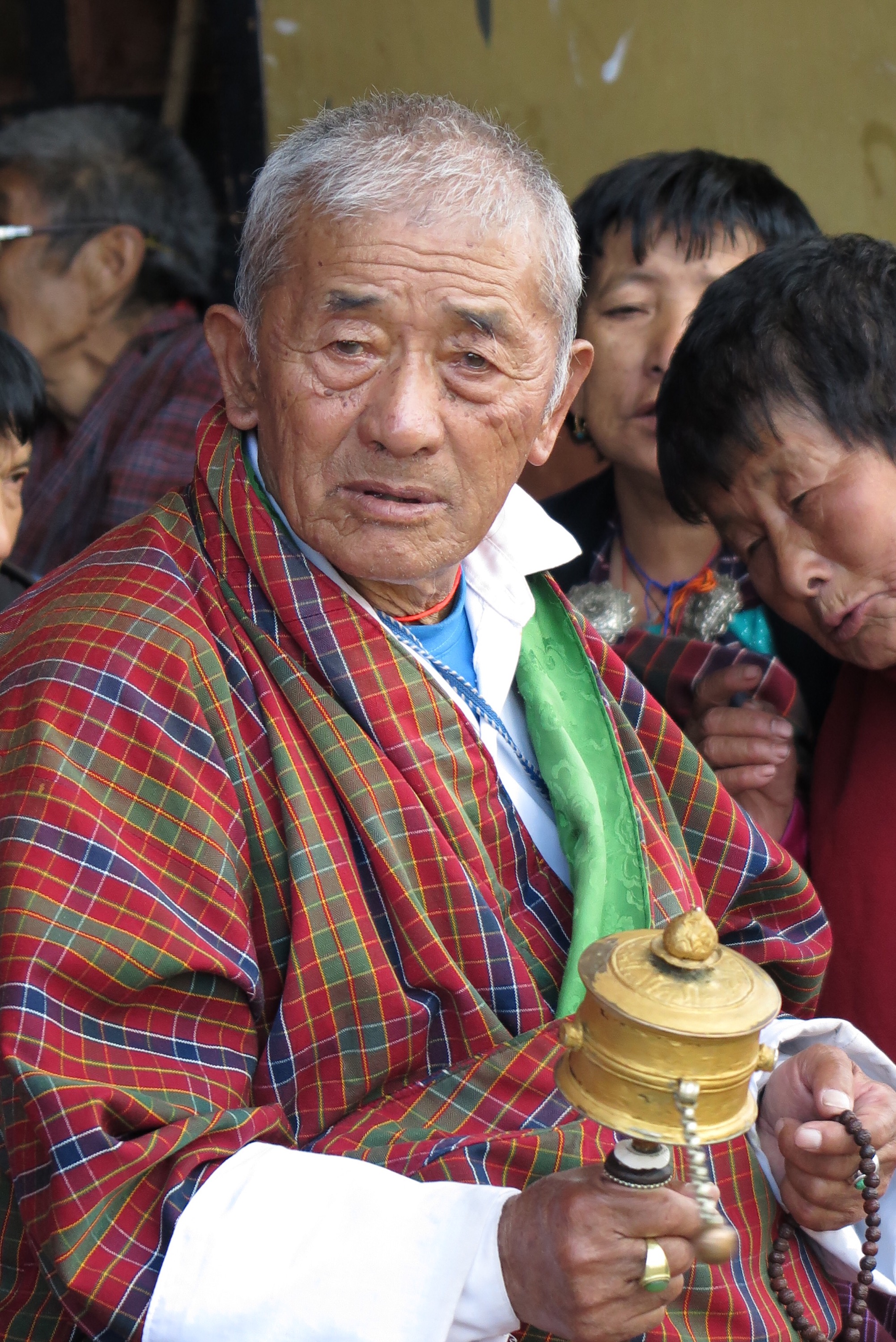
As we became familiar with the history and the people and the beauty of the country, we gained an appreciation for the way the people are guiding its development. Responsible economic growth, environmentalism, education, and health care are carefully balanced with the rich traditions that have been crafted over centuries. The mountains here — among the highest in the world seem to have influenced its people to reach for the sky while staying grounded in the land they have grown to love.
As we said goodbye to Nima at the airport, we couldn’t help but feel a bit sad to leave what now felt like an old friend.
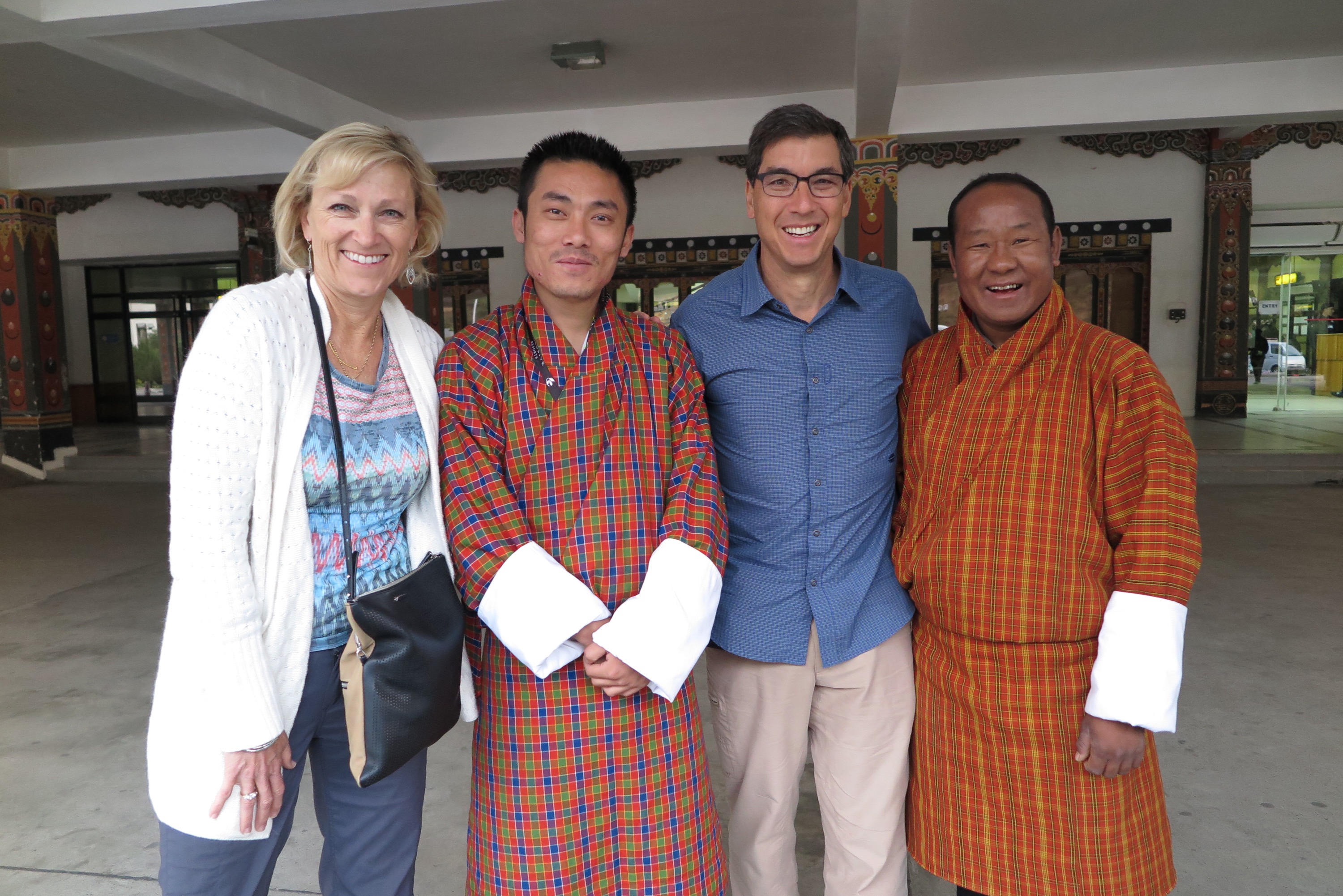 Nidup, left and Nima right. Saying goodbye to them was hard.
 Lisa and Brad's Travels