Posts Tagged With: Safari

Zambia — Waterfalls, Elephants, a Village, and the Devil’s Pool

We took off from Cape Town in a small Kenya Air aircraft, landing in Victoria Falls Airport in Zimbabwe. Victoria Falls, one of the seven natural wonders of the world, sits right on the border of Zimbabwe and Zambia. As we landed we saw bush country for as far as we could see. Lisa and I are now on our own. We said farewell to the rest of the group in South Africa.

Our guide and driver for the week was named Charles. Charles is native to Zambia and was eager to tell us about his country. Zambia is a landlocked country in southern Africa. It was a British colony that gained its independence in 1964. The primary industry is agriculture, but, it has an abundance of copper so mining is also a major source of revenue and employment to the country. Finally, with Victoria Falls on its southern border, tourism is the primary industry where we stayed.

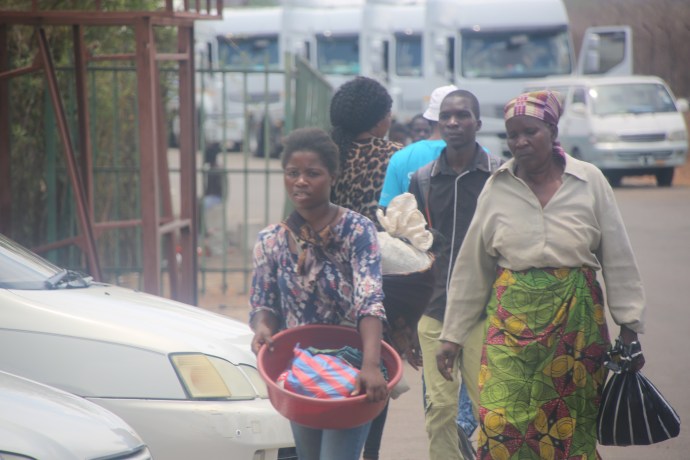
Our first impression upon landing as we crossed the border from Zimbabwe to Zambia was the large number of people walking and riding bicycles laden with goods. Charles explained that there are significant price differentials between the two countries. So, with the high unemployment rate in traditional industry, many residents of both countries will cross the border each day to buy goods that are more expensive in one country than the other, effectively arbitraging the difference in order to generate a profit.

For example, Coca-Cola costs 80 cents a bottle in Zambia but $2 a bottle in Zimbabwe. So, Zimbabweans will cross the border (which is quite the process) to buy Coke and carry it back home to sell. Flour, rice, corn meal, sugar, and many other products are more or less expensive in each country so this process occurs with a plethora of goods. Imagine supporting your family by carrying heavy loads for miles each day.
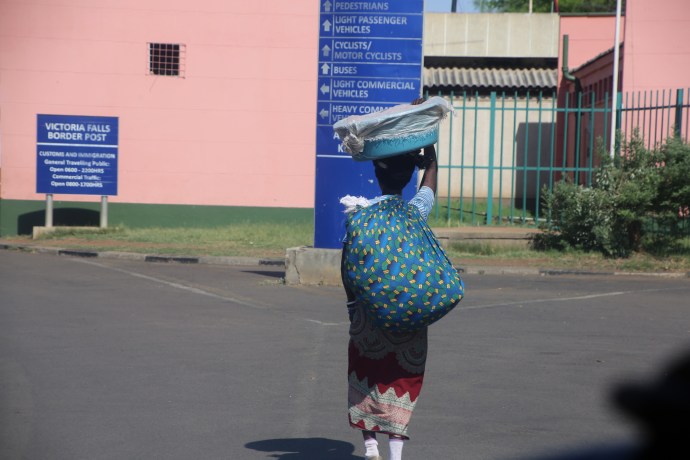
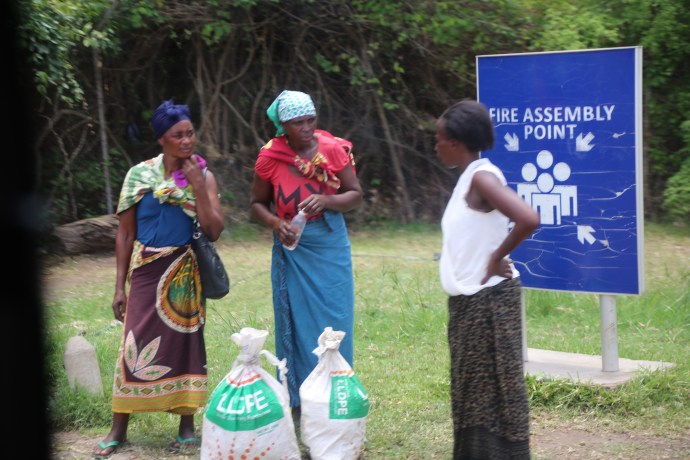
Interestingly, the men rode bicycles while the women walked. I’m not sure why that is but I’m afraid to raise the topic with Lisa.

The tourism industry in the area seems to provide much good employment both directly and through ancillary businesses. Being a guide is one of the most sought-after jobs. It requires a good command of the English language (the primary language spoken here), strong knowledge of the history, flora and fauna, and geography of the region.

Our trip consisted of a mixture of activities to learn about the culture and history of the region and partake in fun tourist activities. We’ll give you a sampling of both.

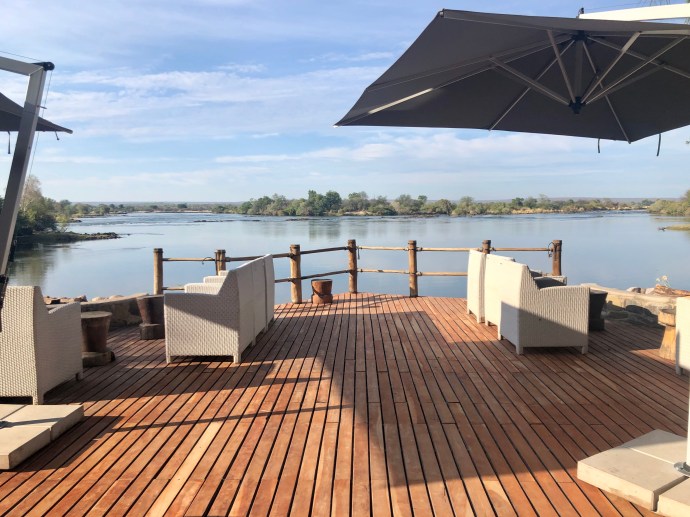
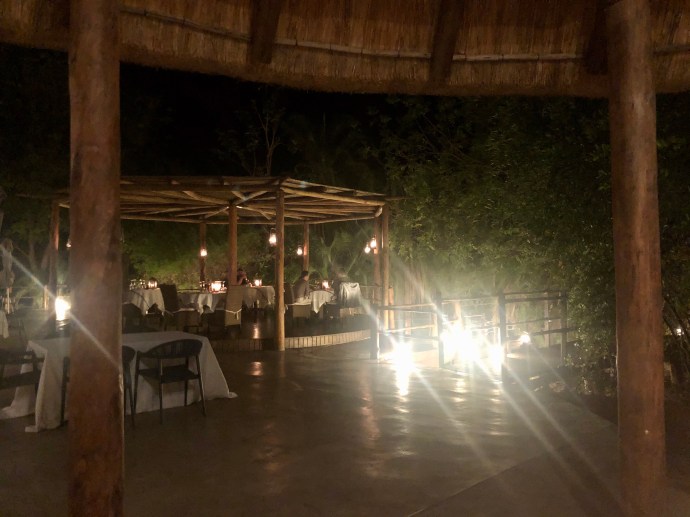
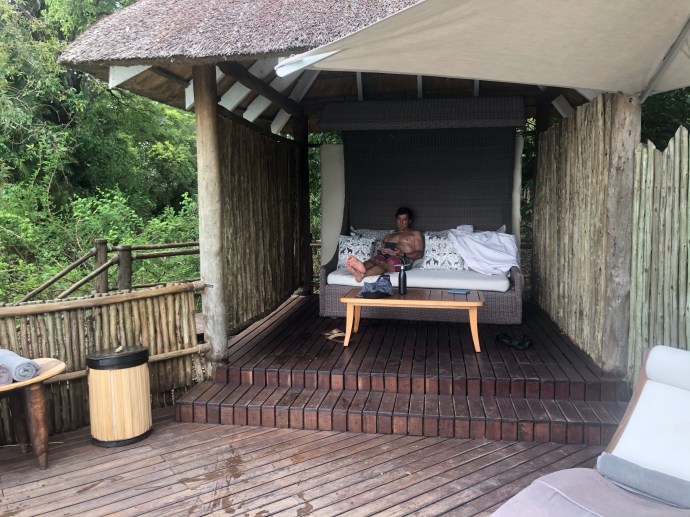
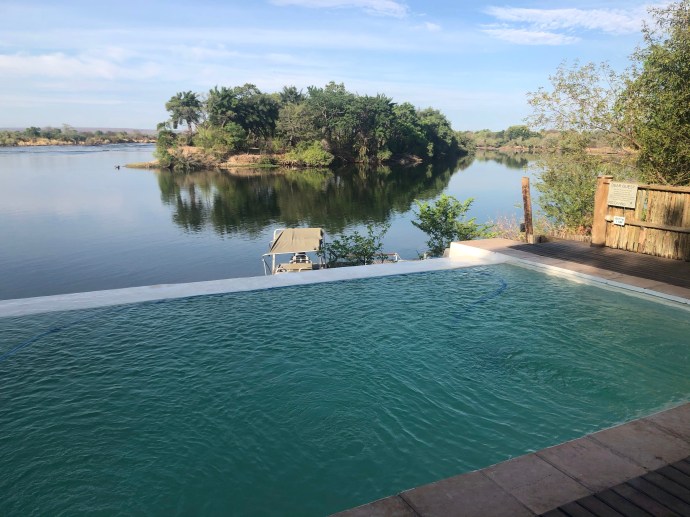
Victoria Falls is fed by the Zambezi River. Our resort sat right on the Zambezi looking west into Zimbabwe. Called Sanctuary Sussi and Chuma (Dr. Livingstone “discovered” Victoria Falls on his explorations. Sussi and Chuma were his guides), the resort consisted of 12 elevated huts that they called treehouses. We got around by walkways that were 8 to 10 feet off the ground. With the wild animals in the area, we had to be escorted to our rooms at night just like we did on safari in South Africa. The place is beautiful and we highly recommend it should you come to Zambia.
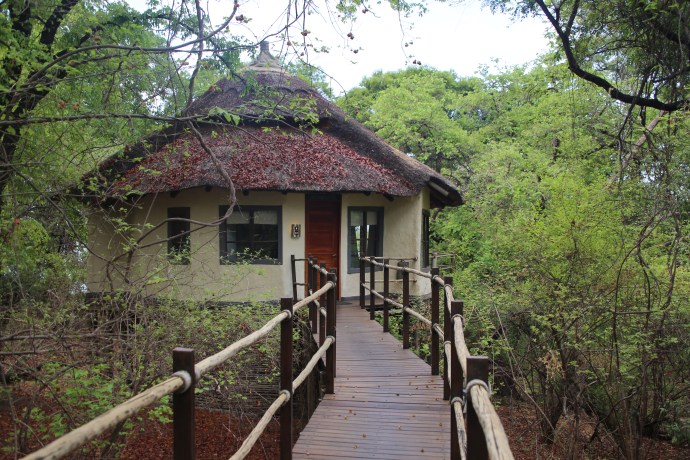
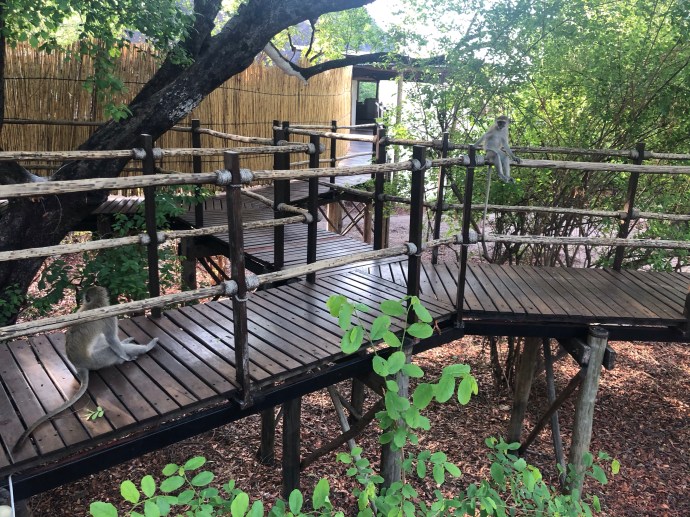
Not only is this a stunning resort with amazing service, they are also tremendously supportive of their local community. We had a chance to visit the nearby village of Nakatindi. Sussi and Chuma along with Abercrombie and Kent have provided assistance to the education, health and economic well-being of this 3000-person village.

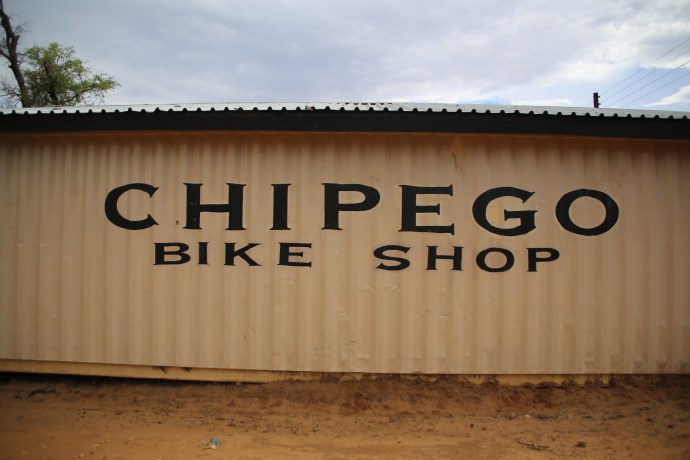
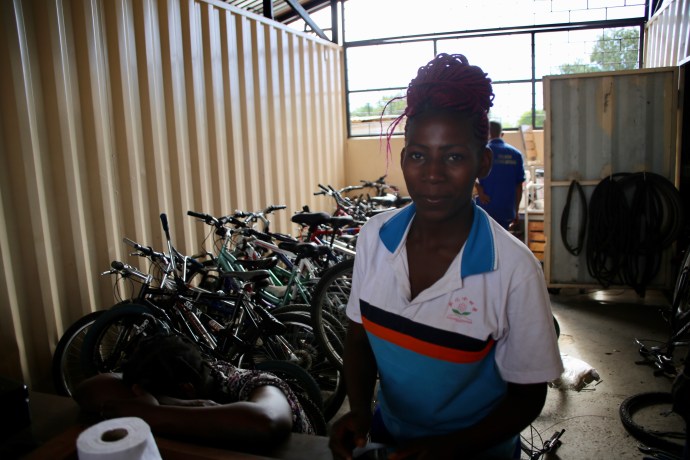
Our first stop in the village was the commerce section. There they had a barbershop, fruit and vegetable stands, a bike shop, jewelry store and other miscellaneous stands. Having good friends who are in to cycling (that’s you Mike and Chris), we decided to walk in to the bike shop. This shop gets used bicycles donated to them from the US, Australia, and Great Britain. They fix them up and sell them to locals. They also donate a bike to each child in the village who graduates eighth grade. The high school is several miles away so the bikes help them to further their education.
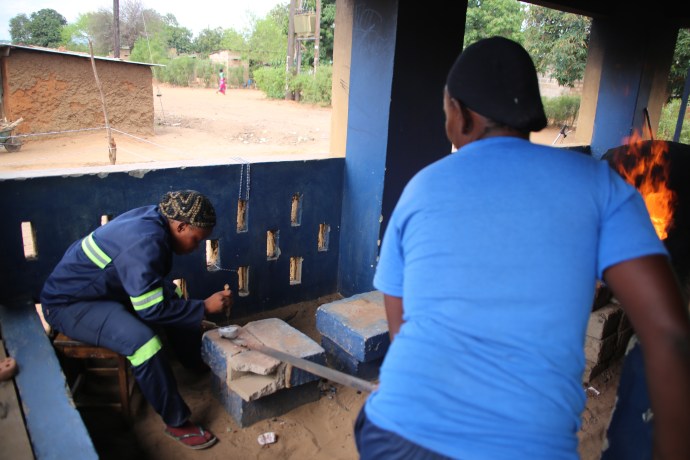
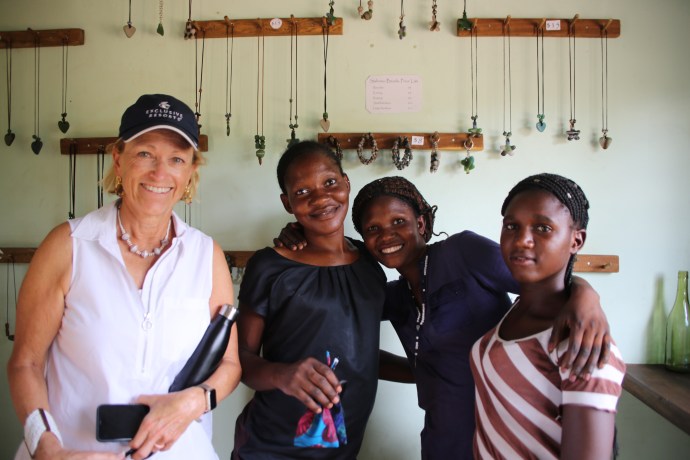
We went next to the jewelry store. The artisans here crush up empty glass bottles , melt the glass and form it into beads, hearts, and other beautiful pieces of jewelry. Lisa, of course, decided to support a local business and will be coming home with a few nice pieces.
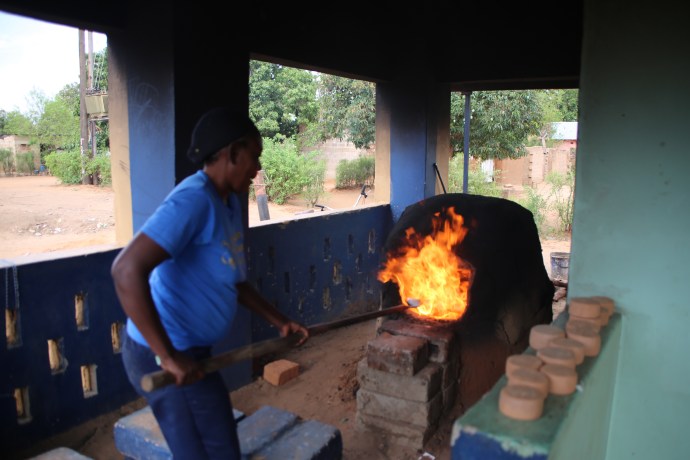
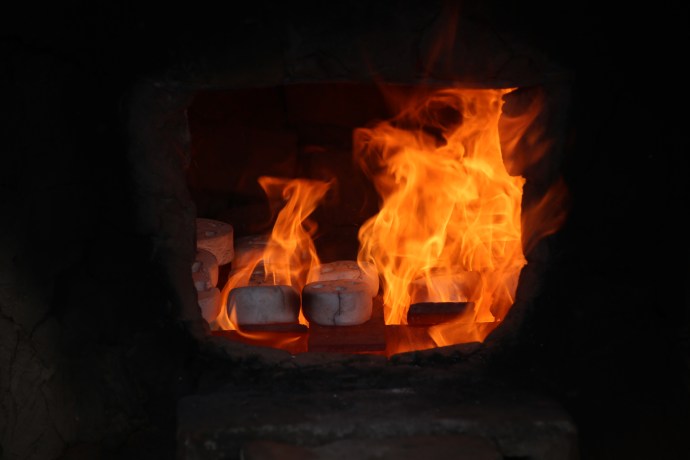
Sussi and Chuma resort helped both of these stores with training on how to run a business, financial support to get started, and, they even sell the jewelry in their own store.

The village seems to do a great job of self-governing. They have elected village leaders, a neighborhood watch program, and they regularly work with the federal government for support even though they don’t seem to get much help from that source. Crime isn’t a major problem in the village. They have worse issues with elephants trampling through town, eating vegetables and making a mess.

Their most recent addition has been a health clinic, again supported by Abercrombie and Kent and our resort. HIV is a serious problem in Zambia, orphaning millions of children and driving the country’s average life expectancy down below the age of 50. The clinic as staffed by nurses with an on-call doctor who visits periodically. The clinic allows people who are sick to get immediate treatment; it provides health education, including sex education for teens; and, dispenses needed medication. The HIV problem is improving meaningfully because the clinic is here. And, people are getting better health care overall.

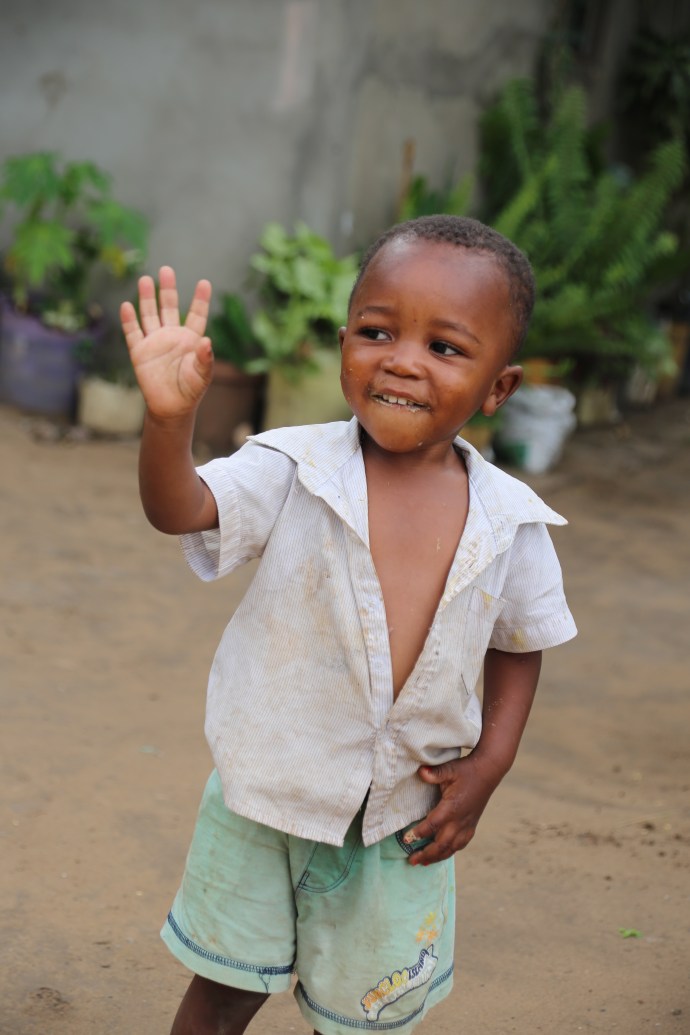
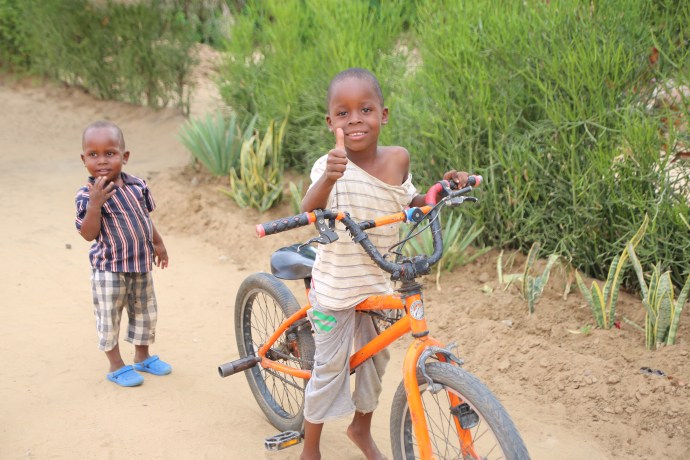
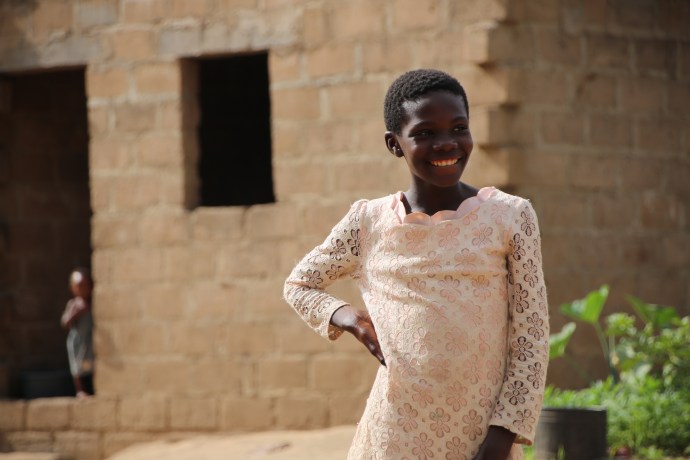
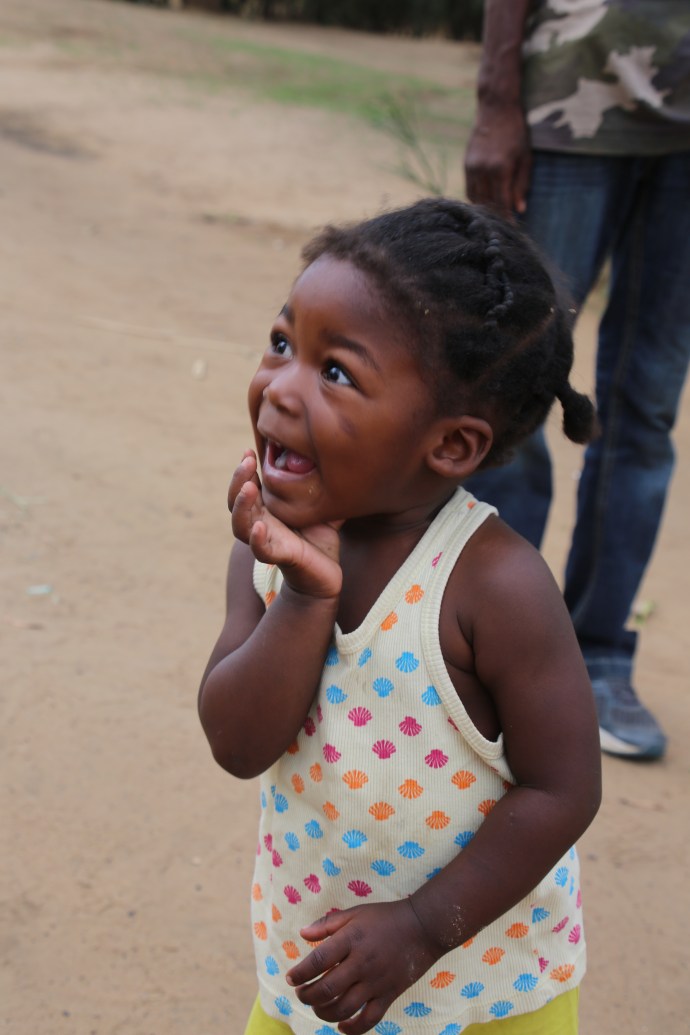
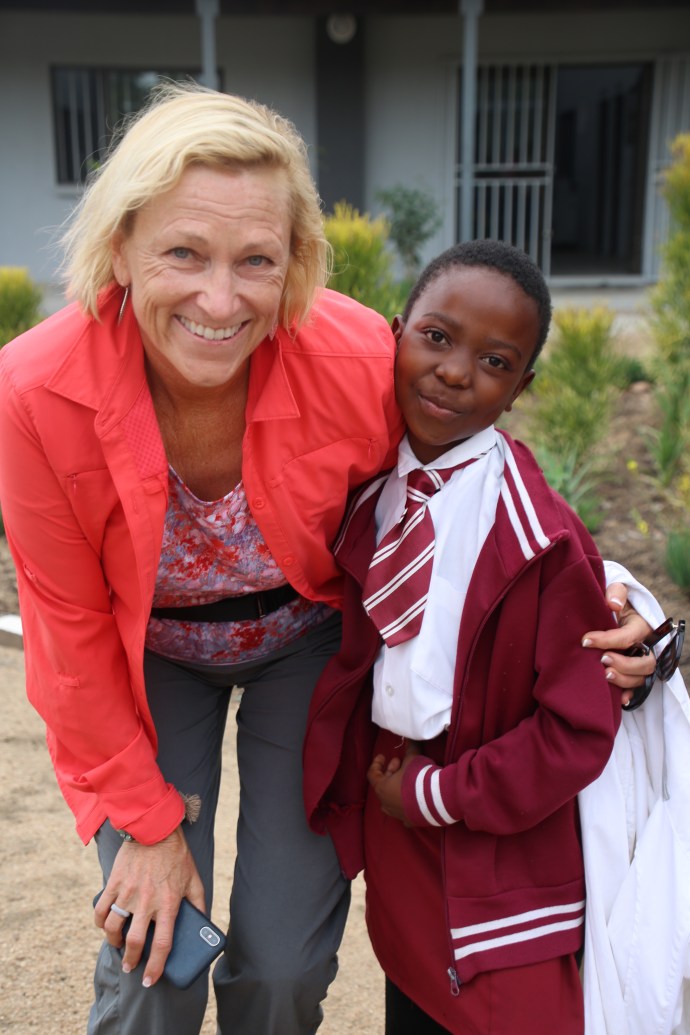
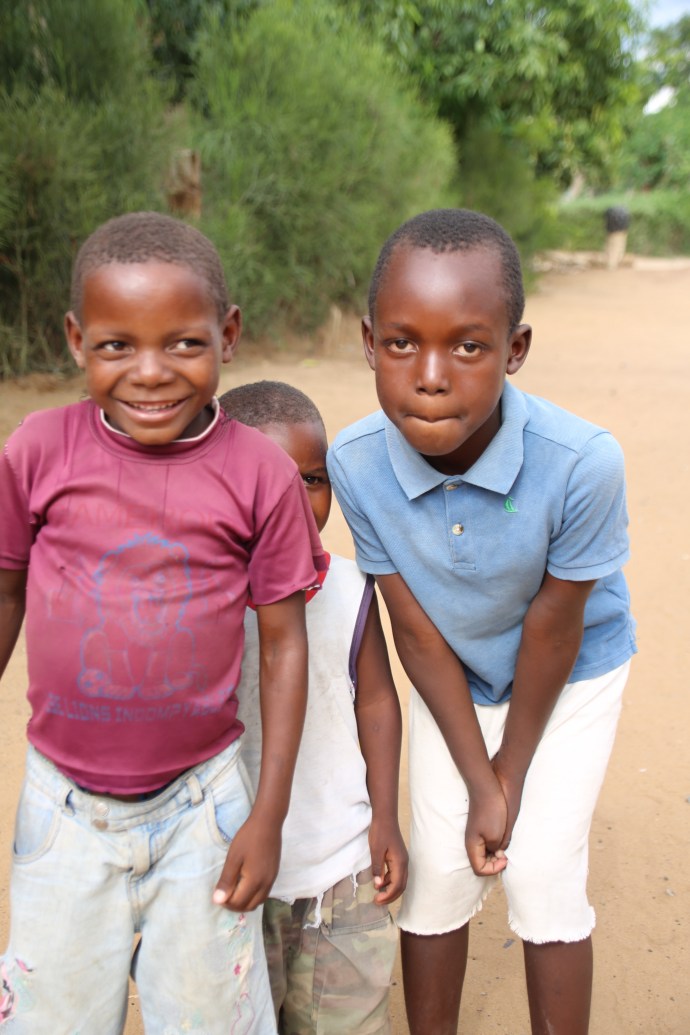
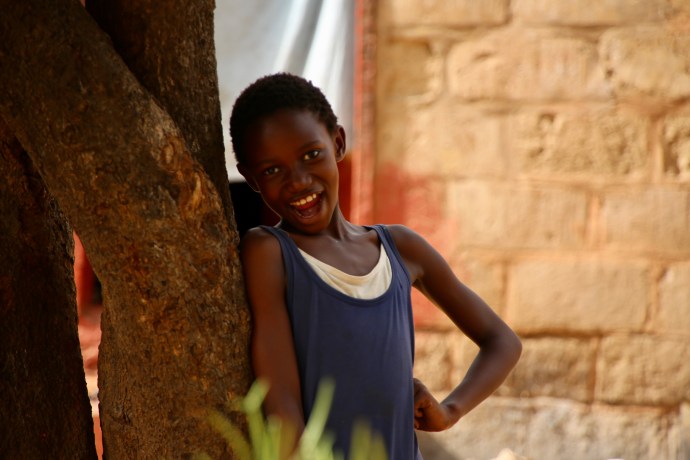
The children were delightful with several following on our tour asking for their picture to be taken, looking for high fives, or jumping into our arms to be hugged. The last major area of support from Sussi and Chuma was the school. They provide support to give free lunches to all the children so they can focus on learning, not their empty stomachs.
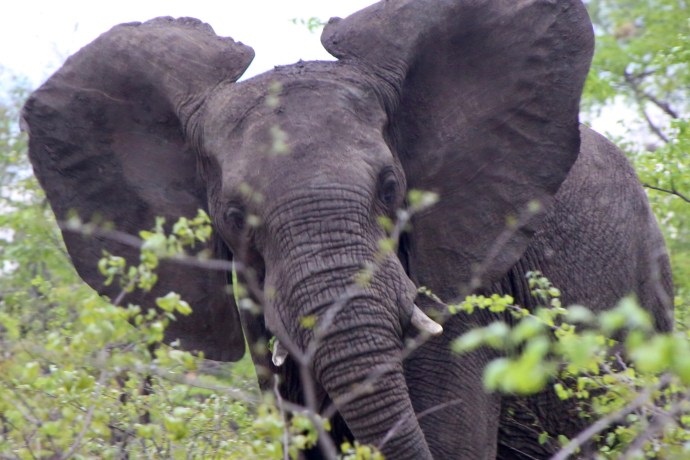
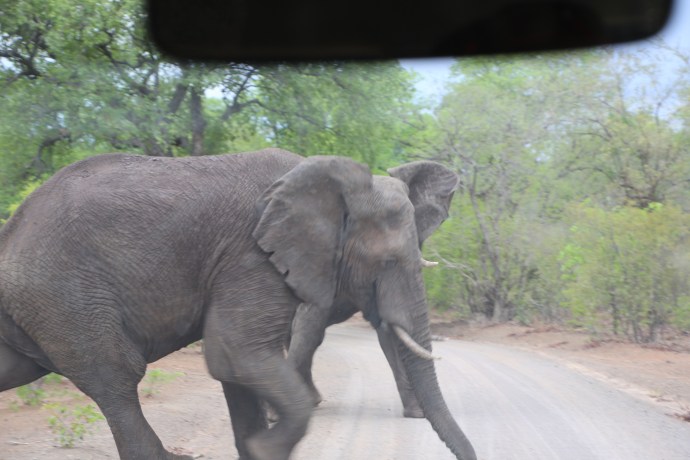
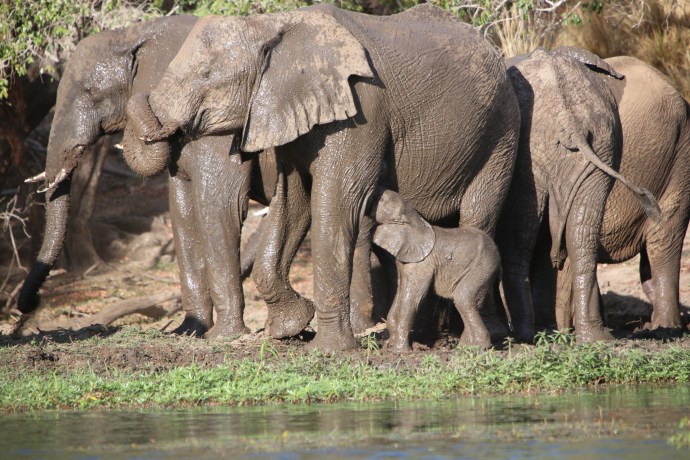
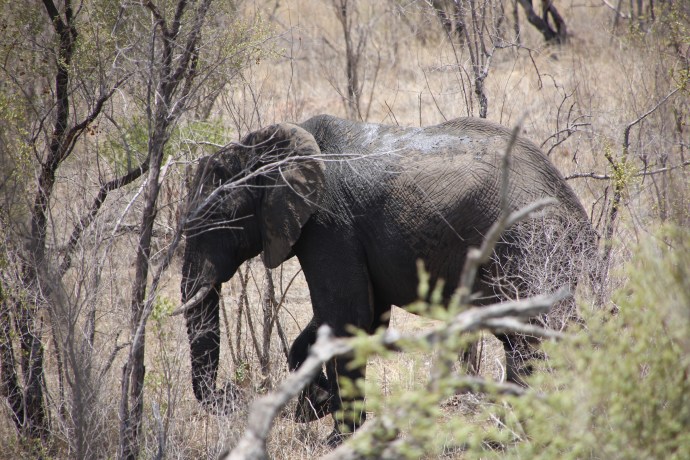
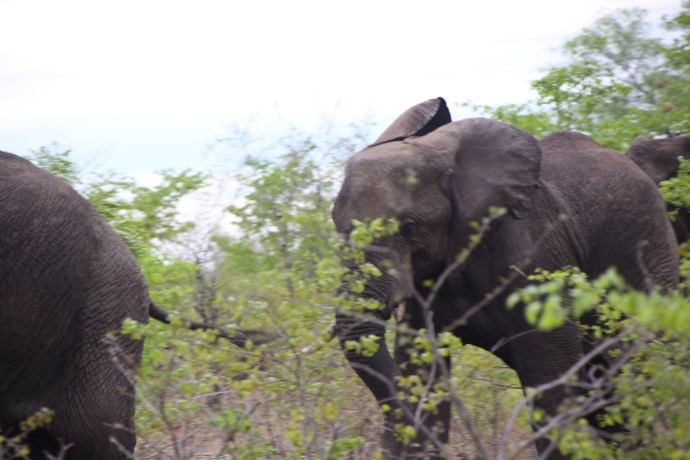
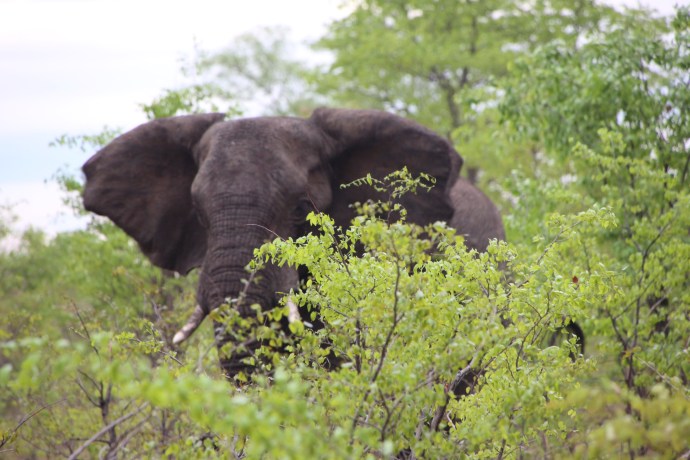
As we left the village and drove back up the road to our resort, a herd of elephants came charging through the bush, running straight at up and across the road both in front of and behind our car. It was quite a sight.
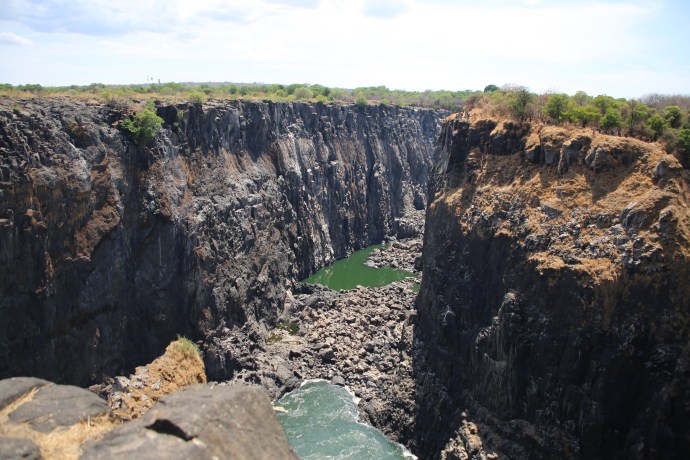
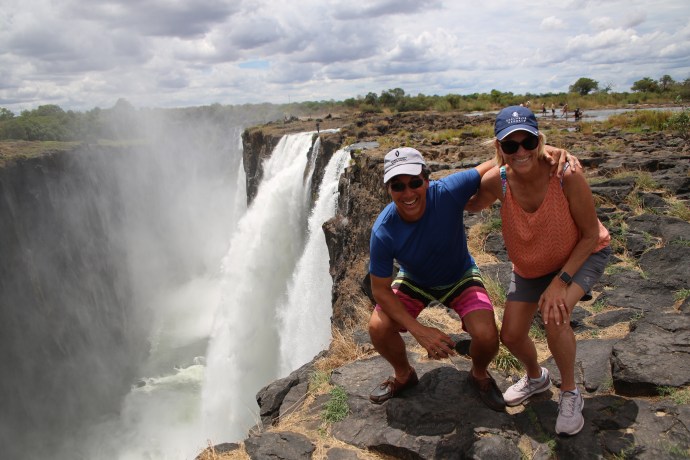
Victoria Falls flows from the Zambezi river into a deep gorge. Unlike Niagara Falls, it flows at varying strengths depending on the time of year. During the rainy season in January, for example, it is roaring across its full length of 1.25 miles. We were here in the dry season so the flow is far less with much of the cliff dry and exposed. Nevertheless, it is an incredible sight. We looked at it from both the Zimbabwean side, which flows all year, and the Zambian side that is dry this time of year.
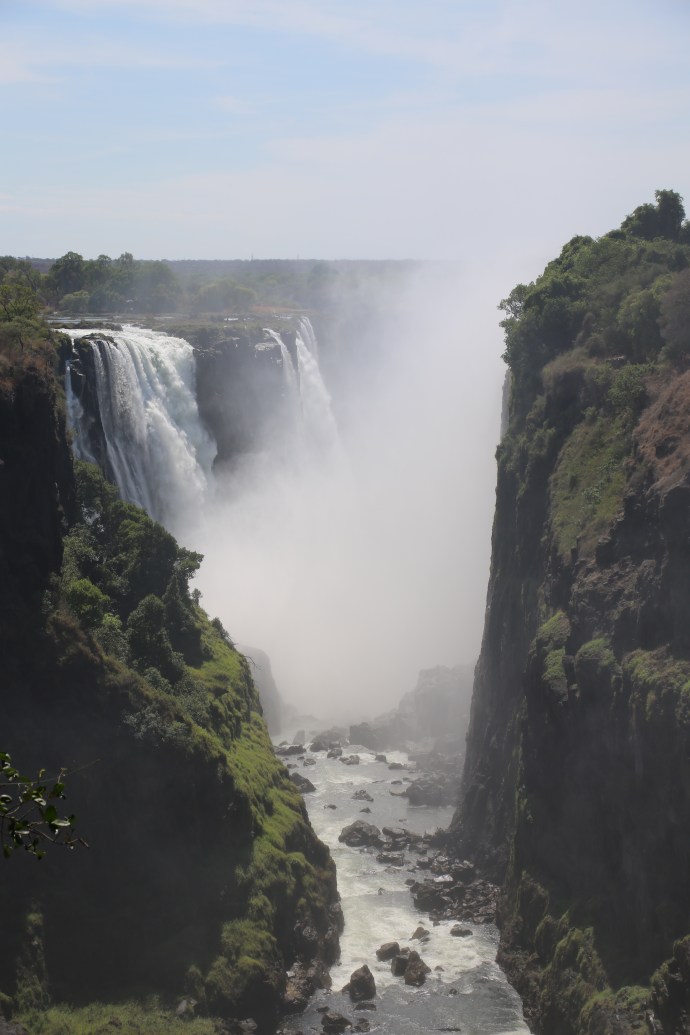
This section of the falls runs fast and furious during the rainy season. It is dry right now as the Zambezi River is low.

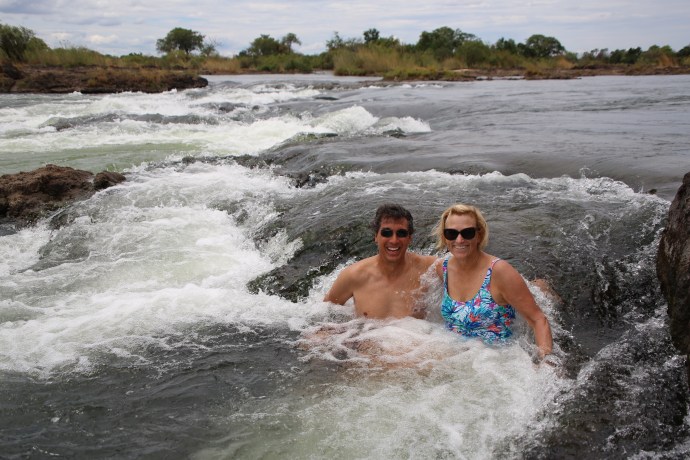
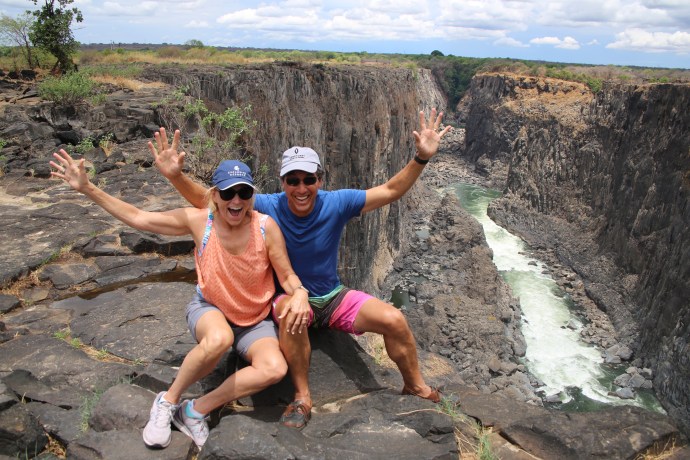
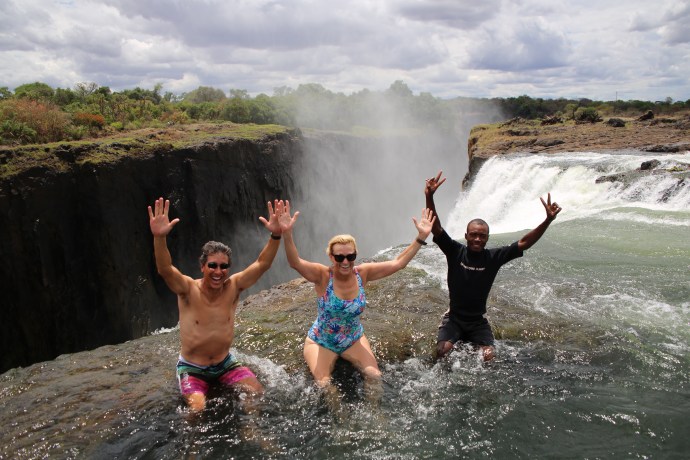
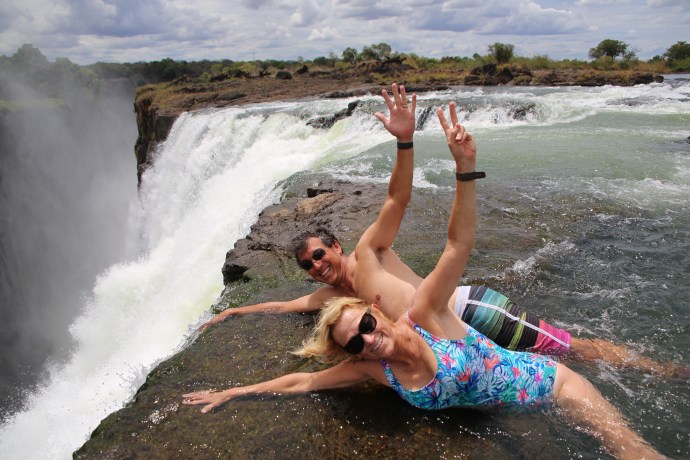
After visiting the falls from the, um, general viewing area, we decided to get up close and personal with the falls. We went for a swim in the Devil’s Pool which is a natural pool at the top of the falls. One can only visit Devil’s Pool when the water is low as it is today. Otherwise the volume of water would sweep one over the falls. Getting there required a boat trip out to Livingstone Island, a short hike to the falls, and a swim out to the pool. While the height certainly got our attention, we were more concerned for our guides who had no problem walking out to the edge and leaning out so they could get just the right angle on a photo for us. Oh, and Lisa really didn’t care for the small fish in the pool that nibbled on our feet (see our Vietnam blog on her fish pedicure). All-in-all it was a fun, exhilarating experience.

Here we are before swimming out to the pool on the edge of the cliff where the falls are dry today.
And, here we are at the edge of the roaring falls.
And, finally, here we are hamming it up in the pool.
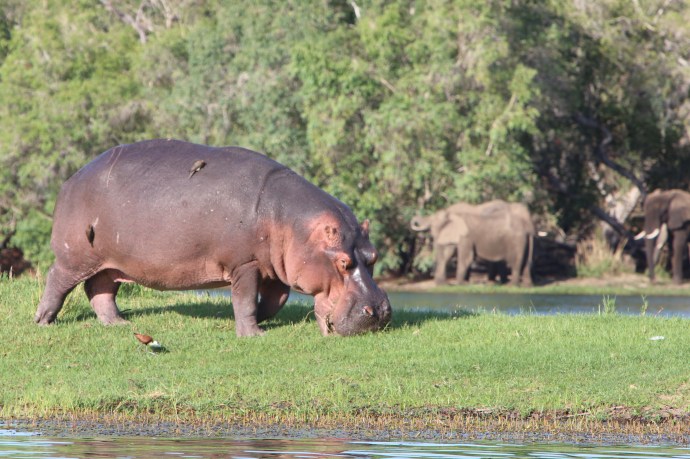
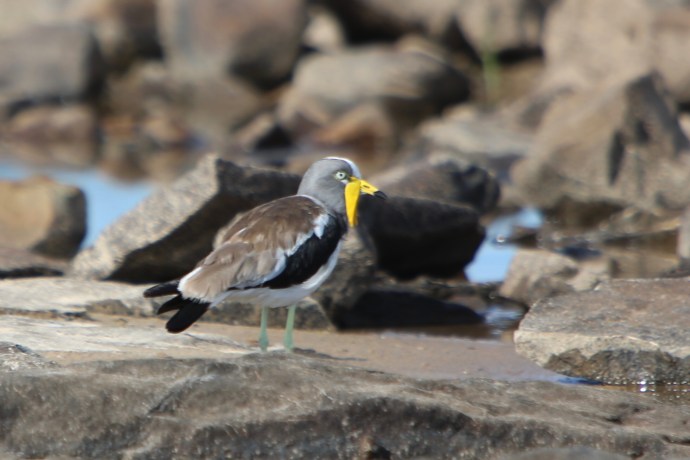
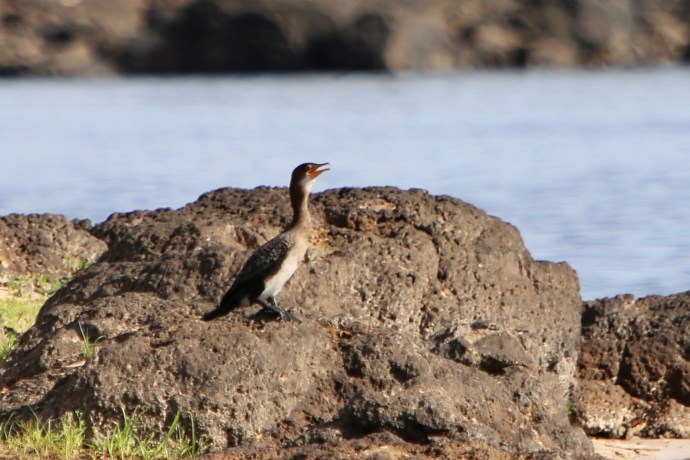
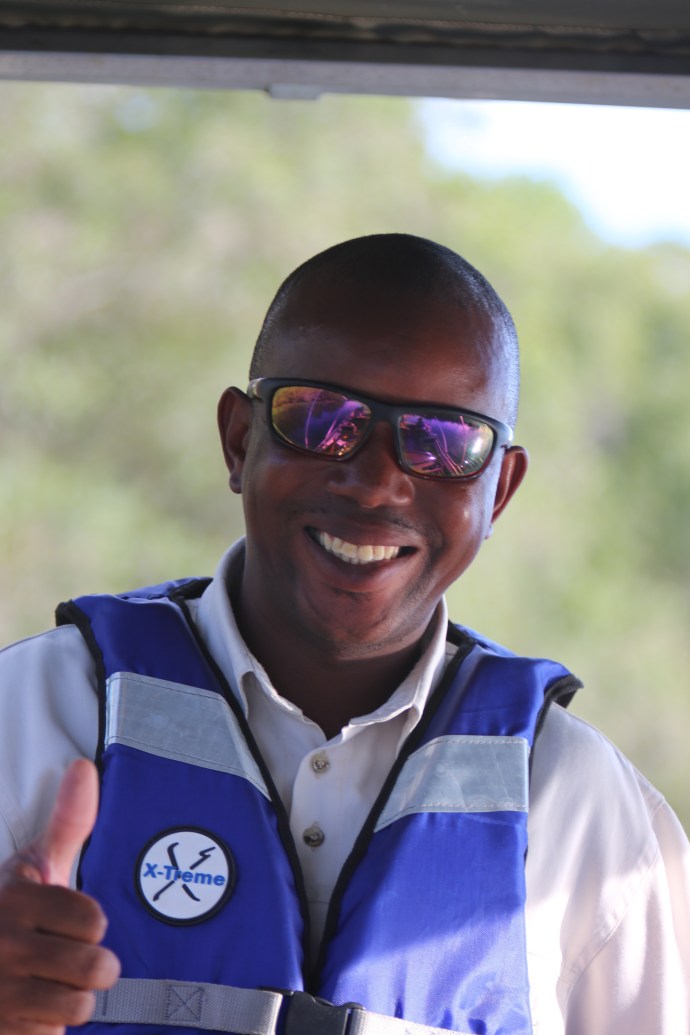
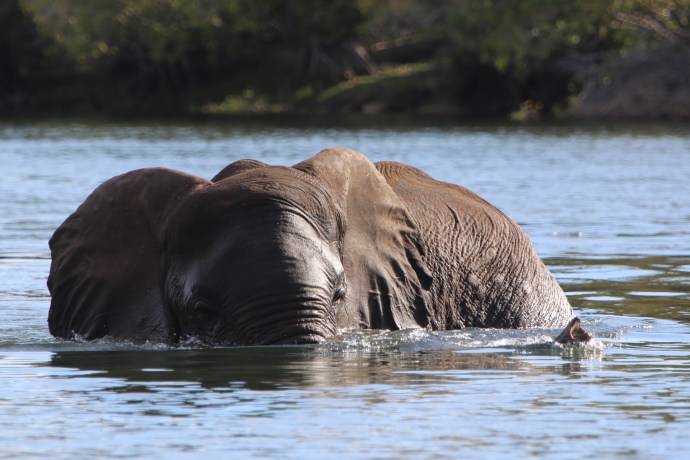
On our final evening we took a river cruise with our resort guide, Junior. The boat ride was essentially a safari on the water. We saw an elephant crossing the river, hippos both in and out of the water, monkeys, a herd of elephants on the bank, and many exotic birds. It was one of our favorite activities.
Zambia is an exotic, friendly, beautiful place to visit. We are so glad we visited. We’ll be back someday.
Categories: Africa, Safari, Travel, Victoria Falls, Zambia | Tags: , , , , , , | 3 Comments

The Circle of Life

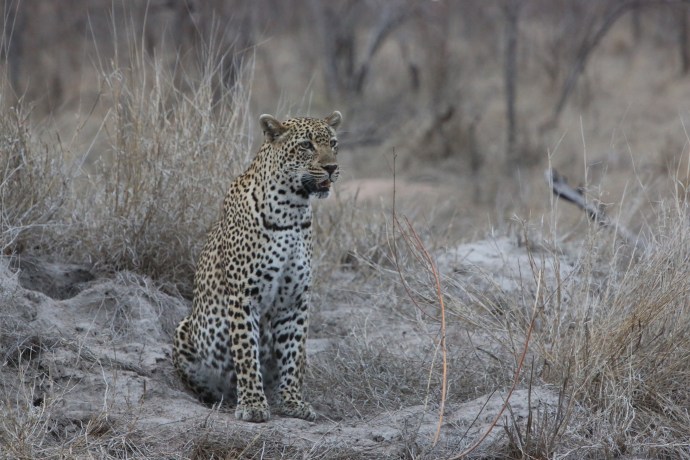
She suddenly stood at attention. Each one of her senses heightened. A storm was coming. The perfect time for the female leopard to find a meal for her 6-month old cub. The winds mask her scent from prey and makes it harder to hear her footsteps. We were on our final safari excursion last night when Ruth, our guide, got a radio message that the mother leopard had been located. She wasn’t far from us and it didn’t take long to find her. Soon after she came to attention she crouched down and started moving in a deliberate way through the long grass of the savannah.

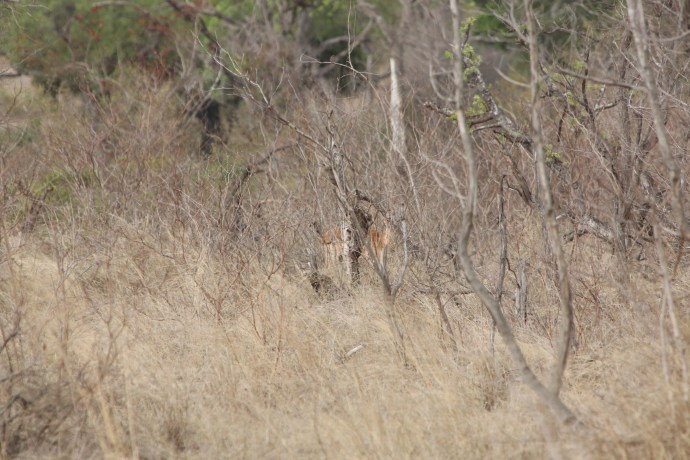
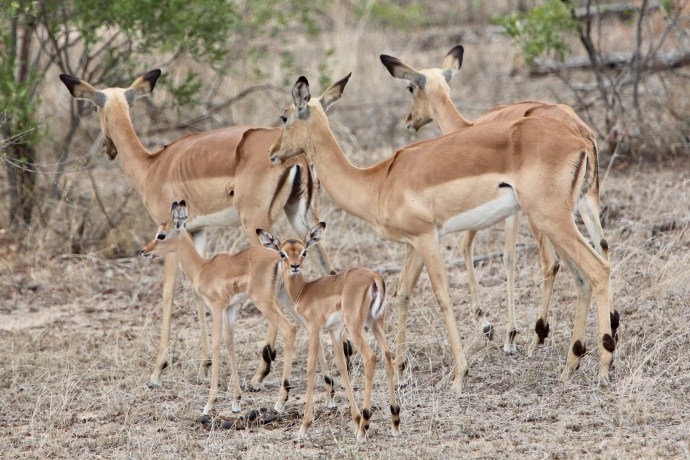
It is late Spring in the African bush. Impalas, which are like small deer, are everywhere. The females are delivering their babies in droves. We had seen several new mothers and their babies over the past couple of day. Impala mothers separate from the herd when they deliver and they stay alone with their fawn for about three days to allow the mother to imprint on their newborn. The babies are able to walk within only a few minutes. But, of course, they are slower and less agile than they will be as they grow. A new mother with her fawn was hiding in the tall grass and shrubs about 200 yards from us.
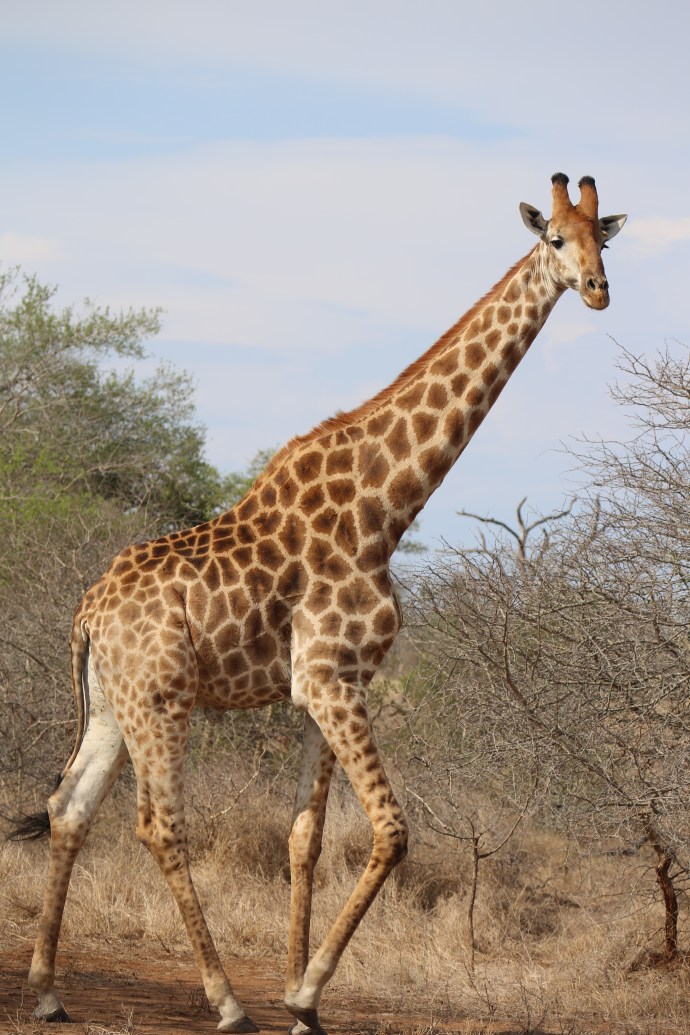
Leopards are very patient hunters. They are extremely fast but don’t have great stamina. So, they work to get as close as possible without detection before they pounce. Impalas too are fast. They are also more agile than their predators. Still, with a baby in tow, mothers are far more vulnerable.

The leopard stopped and surveyed the situation. She had moved to within 100 yards of her target and was determining her next move.

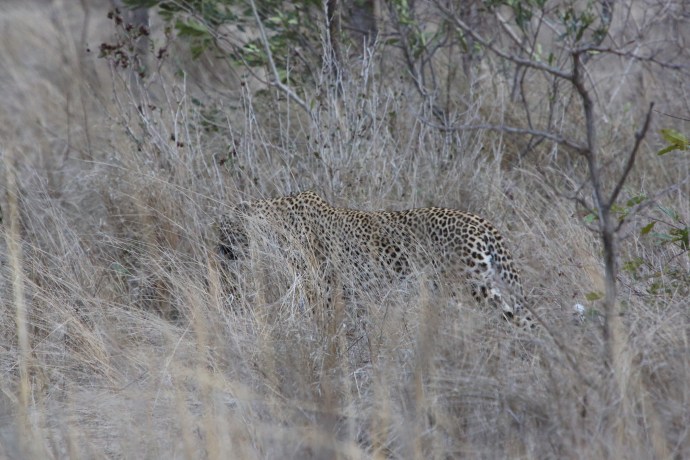
She then began her move. She stealthily crept closer at a measured pace.

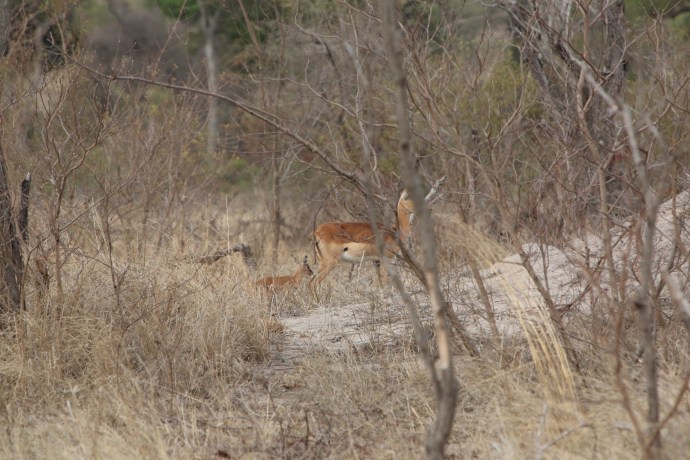
We had a vantage point that allowed us to see both the leopard and the impalas. The mother impala was frozen. She knew that escape would be a challenge. When the leopard got within about 25 yards she sprinted toward the impalas. Mother and baby ran behind a large rock closely followed by the leopard. We thought for sure the leopard had caught one or the other. But, they eluded the leopard by making a 90 degree turn and they came running back from behind the rock in the other direction.

As we watched all of this develop we couldn’t help but wonder whose side we were on. On one hand we wanted the mother and baby to survive. They were cute and vulnerable. On the other hand the leopard was hunting for her baby and without food, it would surely die. We were mere spectators as intervening on behalf of one or the other isn’t morally proper. Nature can be cruel and difficult to accept, but, the circle of life requires this drama to be played out.

Seconds later the leopard caught the baby impala. We heard a small shriek and it was over. The mother, who had escaped, looked on from a distance with what we interpreted as a deep sadness.

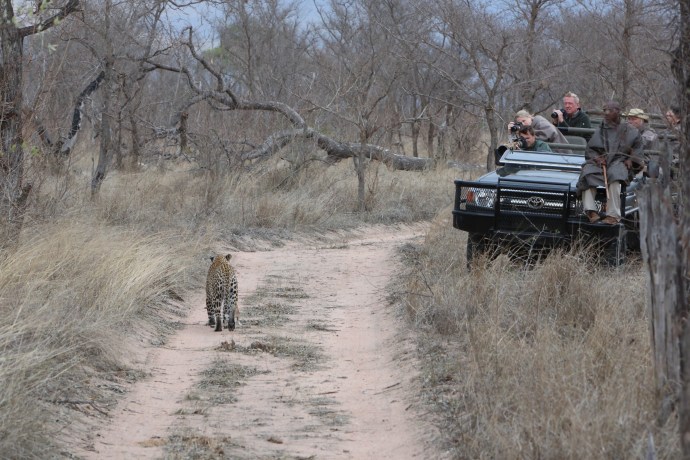
As the storm clouds grew closer the leopard began her trek back to her cub’s den. She traveled about a half mile as we followed. It is fascinating the way these animals pay absolutely no attention to us. They do not see people in Land Cruisers as a threat. We were nothing more than a part of the landscape to her.

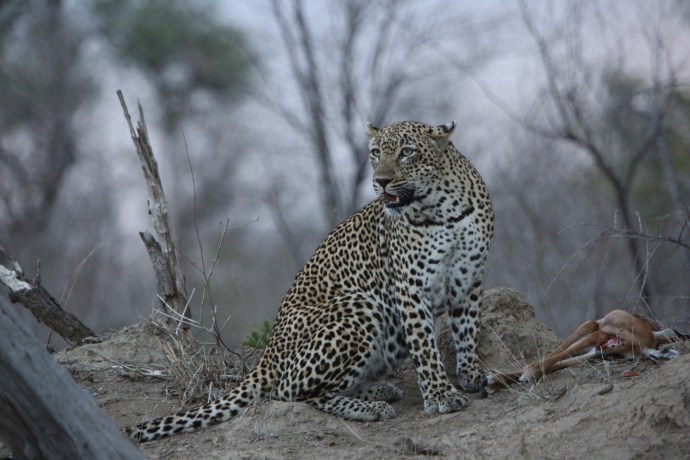
The leopard reached a clearing and set down her kill. She made a bleating call to her cub and waited. The winds continued to blow hard and the cub did not appear. At six-months old, it is beginning to wander off and likely did not hear her. The mother leopard began to look anxious. It isn’t unusual for a group of hyenas to follow a leopard and steal their prey. While the leopard could surely fight off a single hyena, they are no match for more than one. Her cub still didn’t appear. She picked up the fawn and continued to head south.

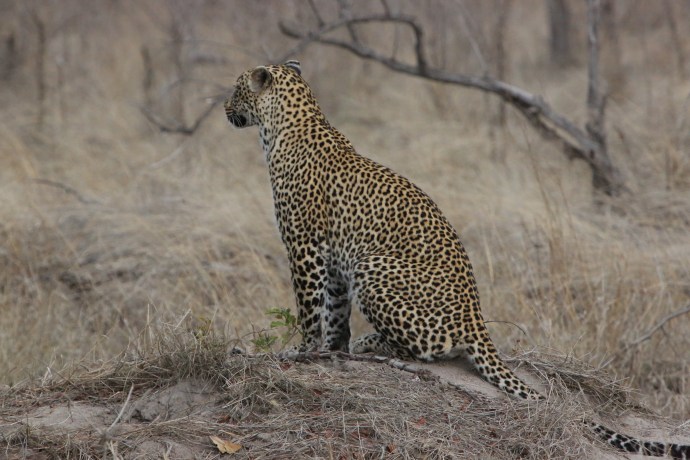
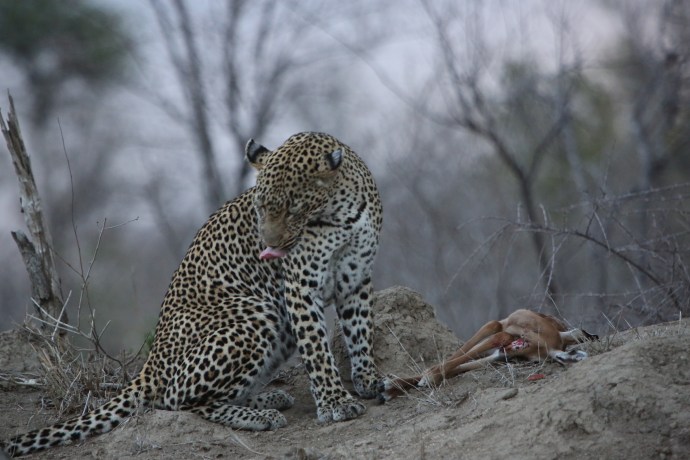
The bush is spotted with termite mounds. They range from a couple of feet to ten feet high. Many are abandoned and used as dens by mongoose, warthogs and other smaller animals. The leopard headed toward a termite mound situated next to a large tree. She climbed to the top of the mound. There she seemed to relax. From this perch she could see any approaching hyenas and should they come, she could climb the tree. Leopards are strong climbers and can carry over 200 pounds up a tree so the fawn provided no challenge should she need to ascend.

Mother leopard continued to bleat (that’s the only word that I can think of to describe the sound) for her cub. But, as she relaxed, she also began to clean herself not unlike a house cat does.

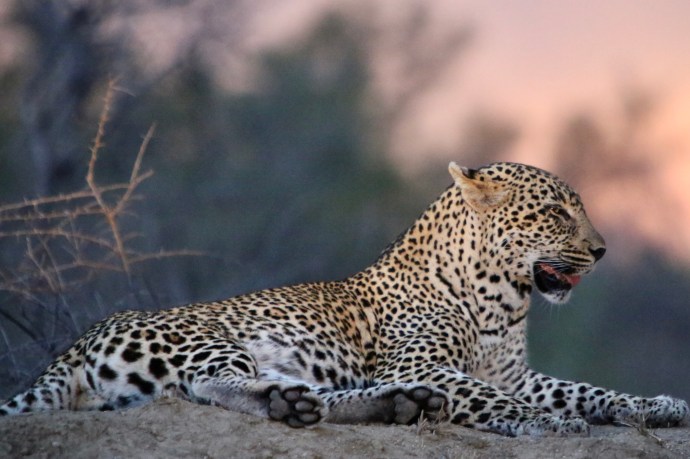
The cub still did not appear. She laid down and continued to wait. The thunderstorms grew close with lighting strikes and thunder. As the sun began to set and the storm upon us, we decided to head back to our lodge.

As we drove back to camp we hoped that the cub was okay. This morning we heard that it was spotted in the same area we had left its mother the night before. I assume it had a full belly.
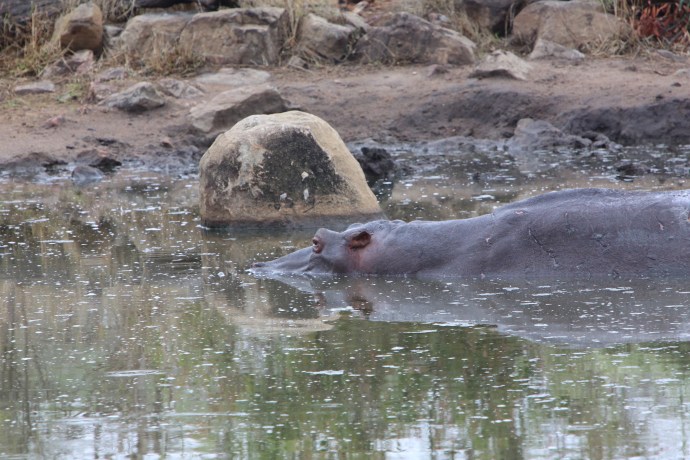
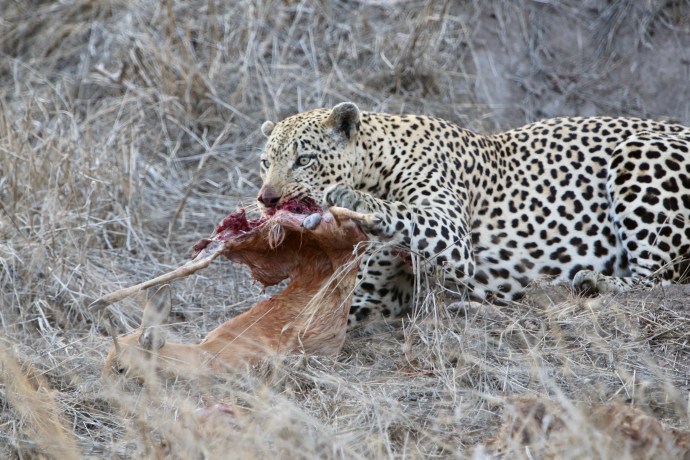
The circle of life continues.
Categories: Africa, Safari, South Africa, Travel | Tags: , , , , , | 2 Comments

Things We Learned on our First Safari

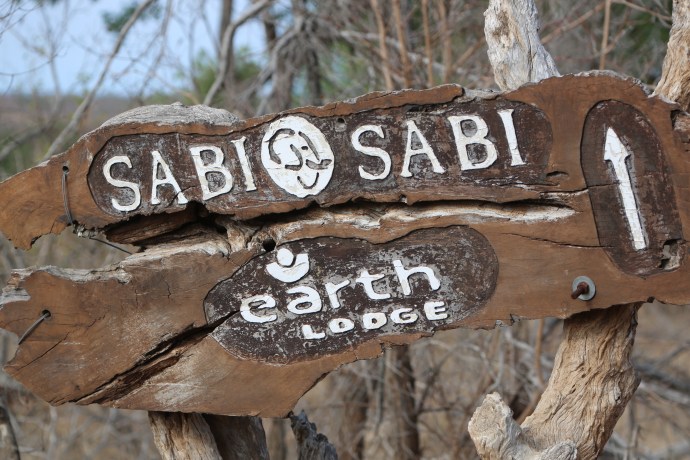
Brad and I are in Sabi Sabi Private Game Reserve experiencing our first safari and enjoying every second of it. Here are a few things we have learned so far. In no particular order whatsoever.

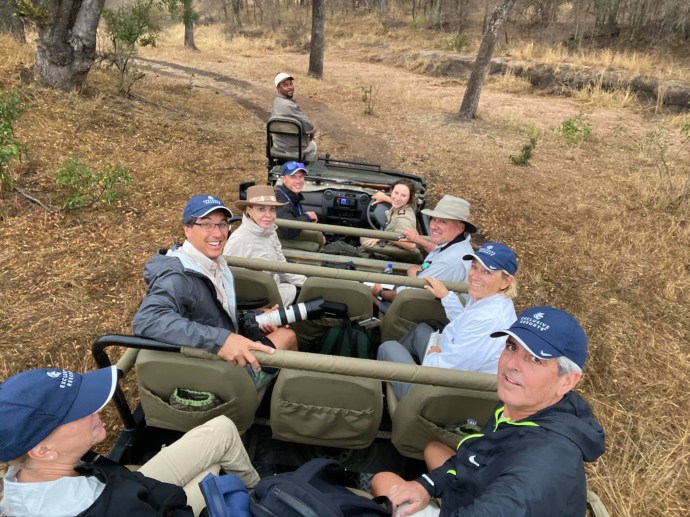
— Safaris happen when the animals are most active. This means that you get up at the crack of dawn, rest during the middle of the day, and go back out in the evening. Because you are out for three and four hour stretches, they do require that you plan ahead for your beverage management. For me, that means maybe only a half cup of coffee before we go! Yikes!

— Be prepared to gain five pounds. The dining schedule goes like this.

5:30 am: Light Breakfast

9:00 am: Hearty Breakfast

1:00 pm: Lunch

4:00 pm: Afternoon High Tea

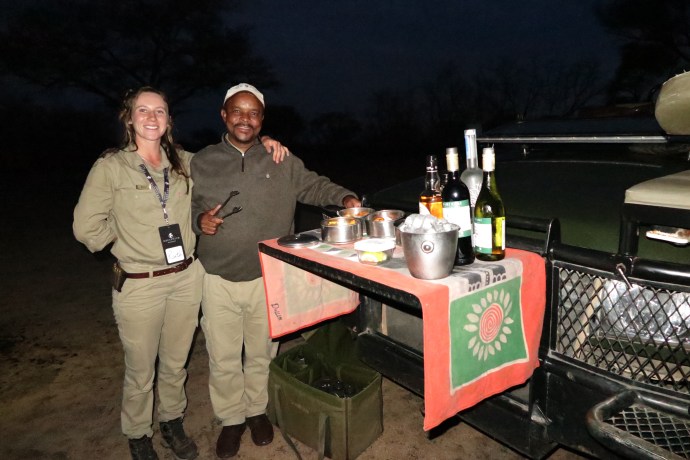
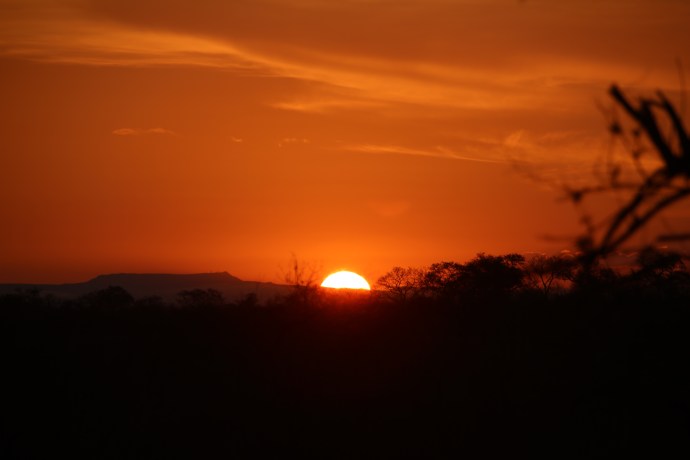
6:30: Cocktail while watching the sunset in the Savannah

7:30: Pre-dinner drinks in bar

8:00: Dinner

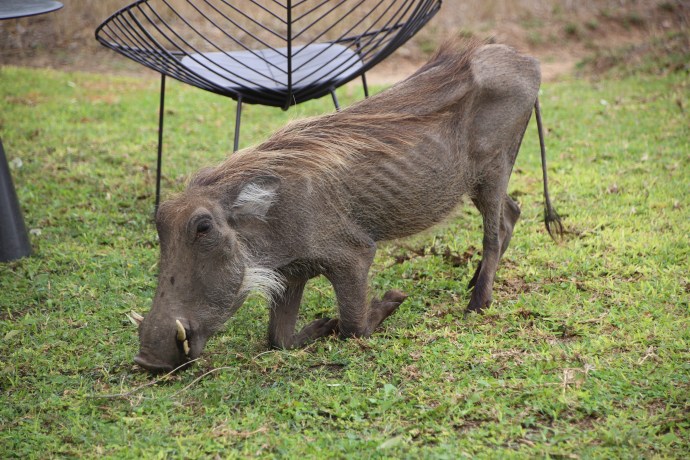
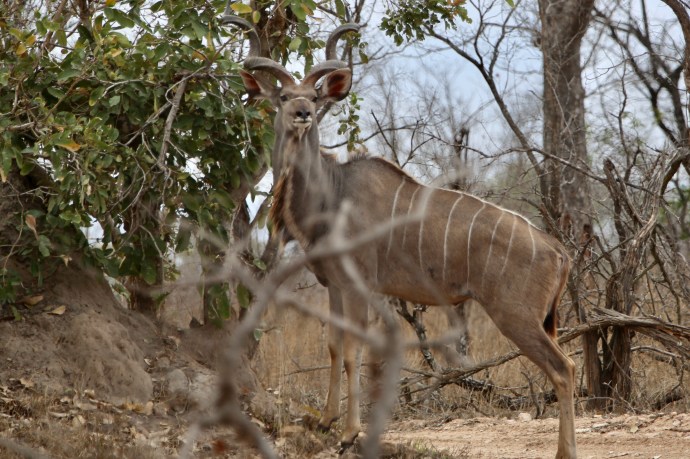
— Have your camera at the ready at all times. Impala, Kudu, and Warthogs have joined us at the lodge and at our patios. Apparently, just recently an elephant was found on the roof of our lodge!

— You will be escorted to your room by a guide when it gets dark. You don’t want to become someone’s midnight snack!

— Safaris can be relaxing. There are hundreds of species of birds here and their songs are very peaceful. I may have become a “birder” on this trip and could be joining Mary Frandsen in her love and appreciation of birds. Sorry Brad and Mike!

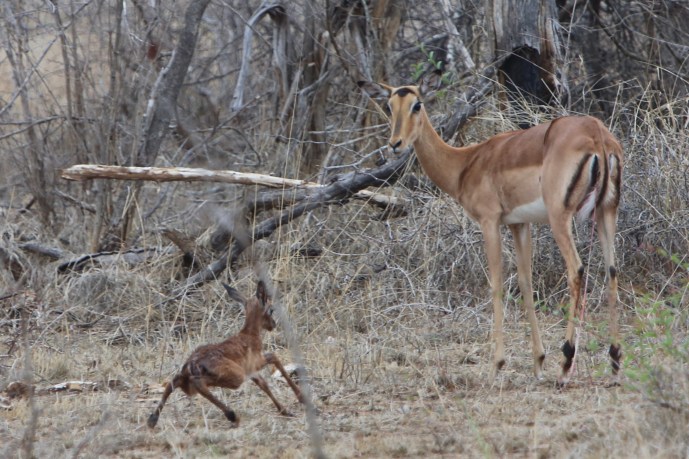
— Safaris can be joyous. We witnessed the birth of a baby impala and watched her take her first steps. She wobbled and fell down several times at the beginning but with her Mother’s encouragement she was up and running in about five minutes. It was joyful.

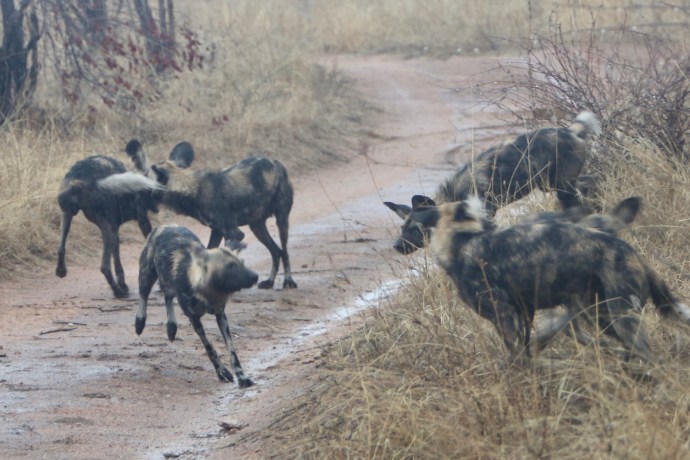
— Safaris can be intense. Think the Indiana Jones ride in Disneyland on steroids. We got a call that there was a wild dog siting one morning and our guide, Ruth, sped so fast in the pouring rain that we may or may not have almost lost Mary Stevens out the back of the Jeep once or twice!

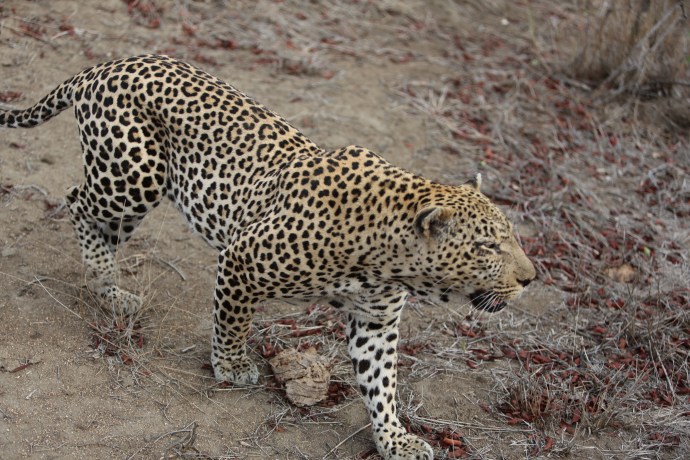
Safaris can be heart-stopping. We came upon a leopard yesterday and he came within five feet of our Jeep in his effort to go find dinner. A few of us in the Jeep stopped breathing for a moment or two.

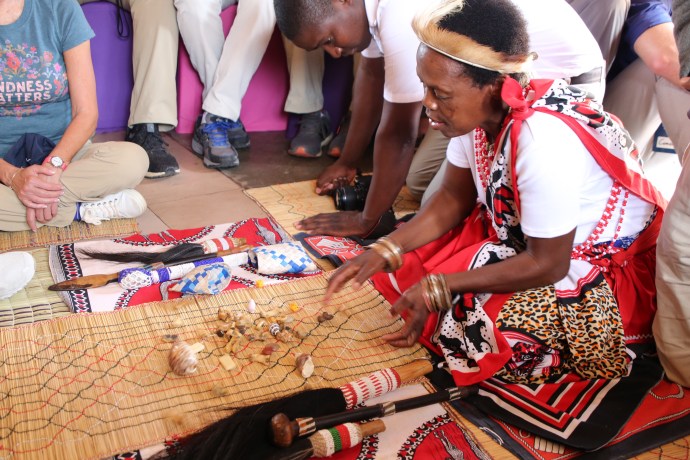
— Shamans are real. We visited a shaman in the nearby village and she predicted our group would see a leopard and within thirty minutes on the ride home we all encountered our first leopard. He had been eluding us for days.

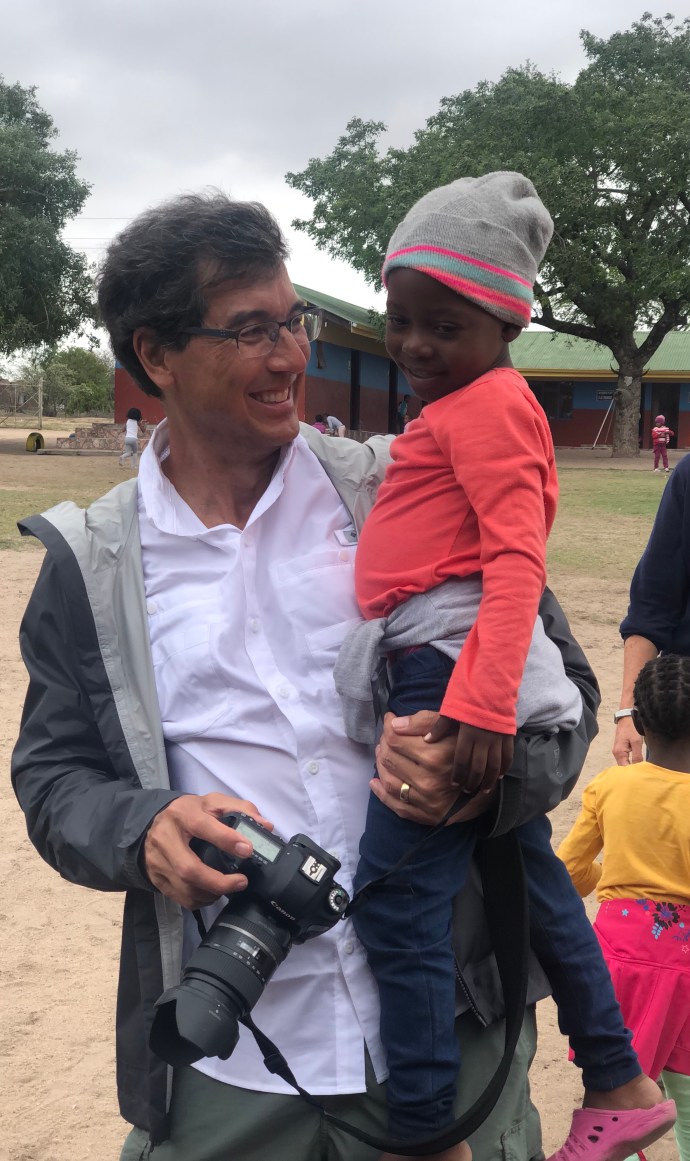
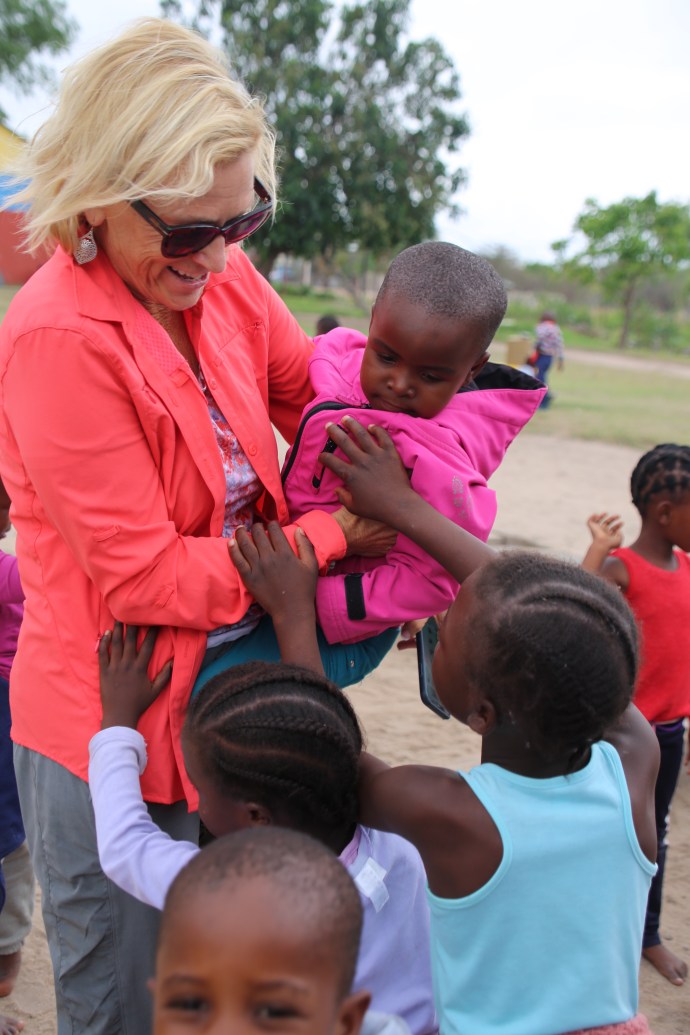
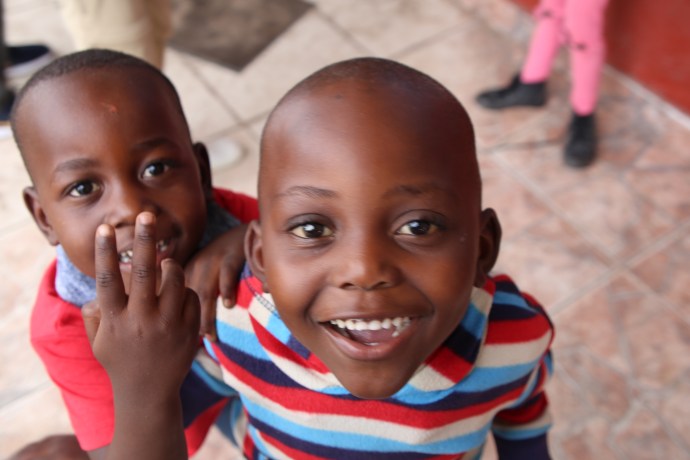
— African children are loving and are eager to pose for photos and give you hugs. We spent a morning at several nearby schools and were completely overwhelmed by the children’s hugs and smiles.

— Mothers are the heroes of the Savannah but also can be the most vulnerable. The gestational periods for elephants can be up to 22 months , the Rhino up to 15-16, while the hippo and impala are only 6-8 months. The Lionesses have cubs in only 110 days. The Mothers we saw were very protective of their young while the male species were off galavanting or possibly watching football! Sadly, Mothers and Babies can also be prey because they are the most vulnerable especially after they have just given birth.

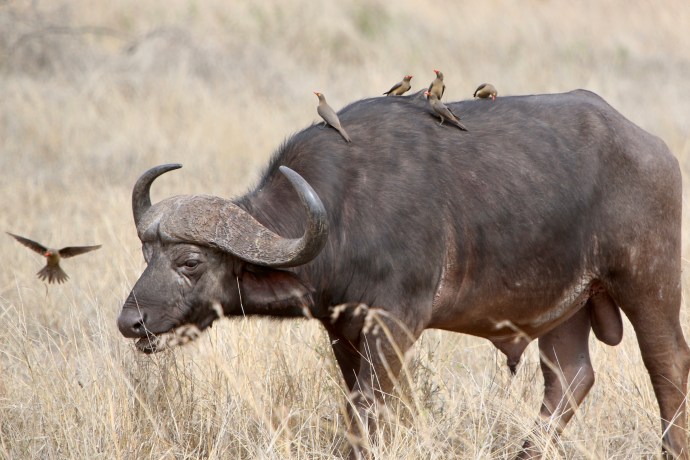
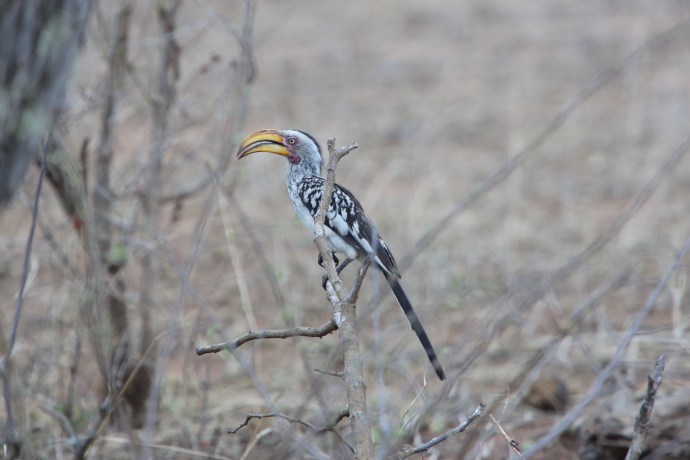
— There is an incredible diversity of animals and birds on the Savannah and they even provide you a check list to mark them off! I love lists so it has been great fun. So far, I have checked off 24 animal species including animals I had never heard of like Kudus, Bushbucks, and Duikers. We have also checked off 32 species of beautiful, colorful birds with names like the Square-Tailed Nightjar, the Red-Billed Oxpecker, and the Lilac-breasted Roller.

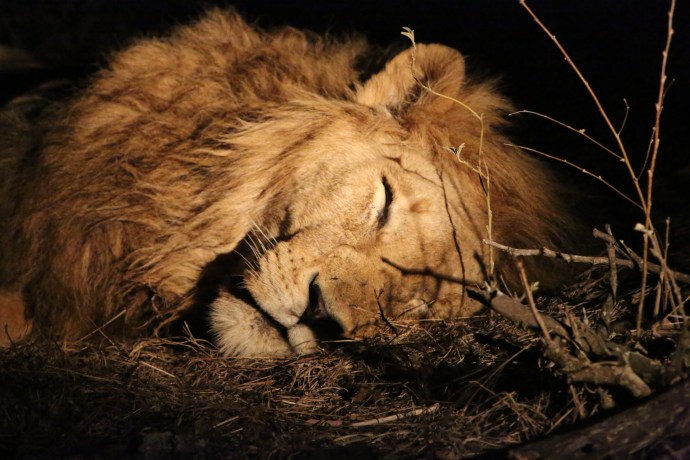
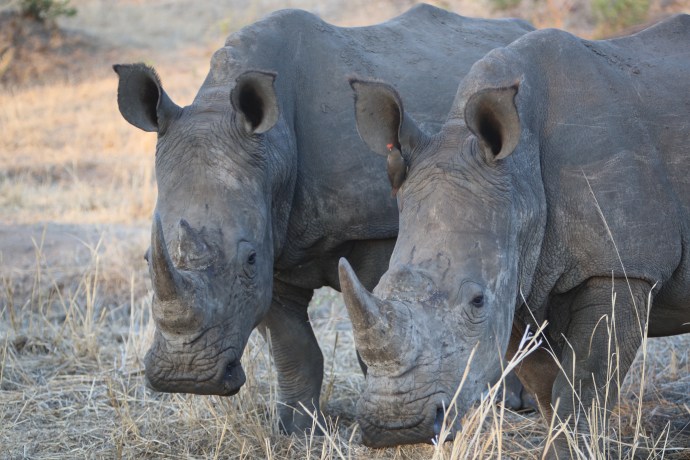
— We saw the Big Five and are allowed to go off road to follow them. So far, we have seen Lions, Rhinos, Cape Buffalo, Elephant, and our elusive Leopard. Following a leopard as he went after a kill might be one of the most exciting animal experiences I have ever heard. We have been close to seeing the Magnificent Seven which include all the Big Five, Wild Dogs, and Cheetah. All we need to do is find that rarely-sighted Cheetah.

— Bush Walks have their own element of excitement. We went out today with two guides whose rifles were loaded and told us what to do if we happened to run upon a lion or elephants. The rules are no walking and talking and no running away or screaming if we happen upon a large animal. While we were on foot, we chanced upon an elephant, a hippo, and more kudu. Not your average walk around the property!!

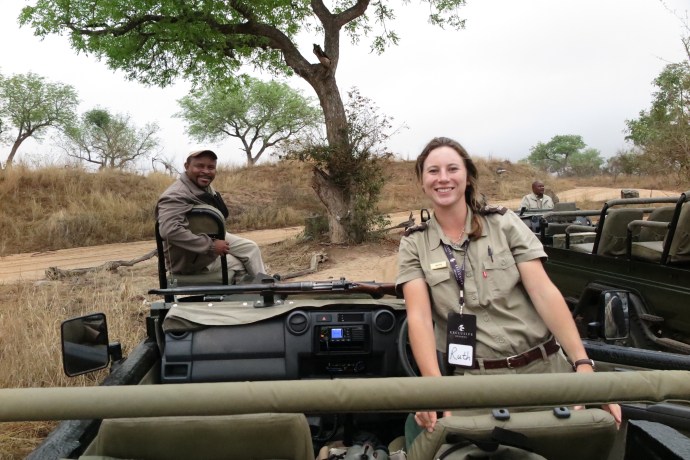
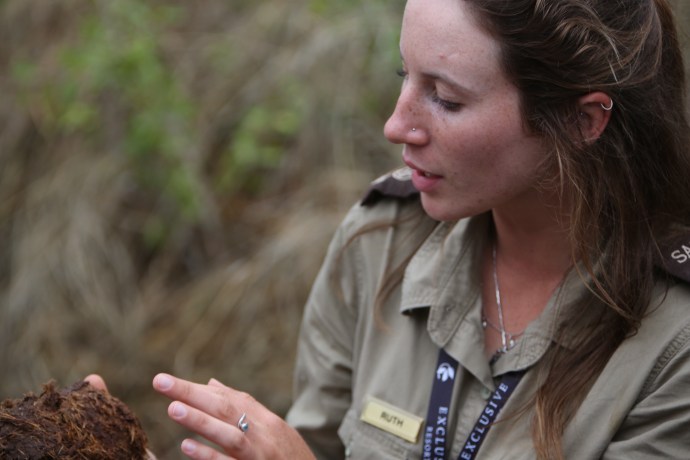
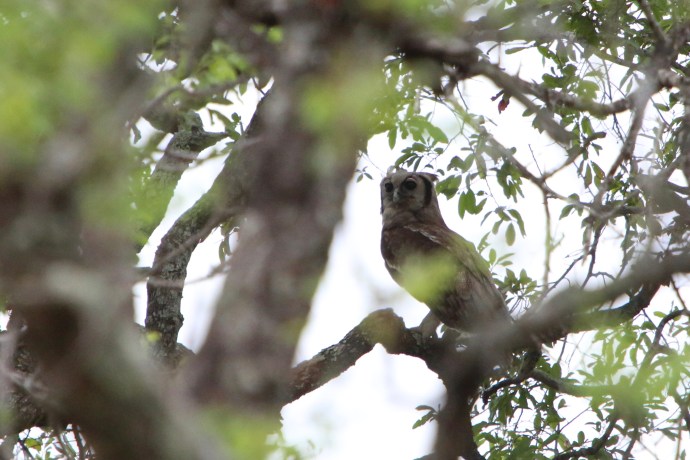
Our guide and tracker are passionate and incredibly knowledgeable. Our guide, Ruth is a 23 year old woman from CapeTown who has a love of the Savannah that is unparalleled. Her knowledge of every living creature that we have encountered is astounding. She is willing to pick up Elephant Dung and show us everything the elephants have had for breakfast as well as telling us colorful mating stories of African Crake (The males stick around in this story). Dollen, our tracker can sight a Serval in the high grass in the dark or a Verreaux’s Eagle Owl in a dense tree from afar. His sensory perception is unreal. We have felt fortunate to have Ruth and Dollen as our team this week. It is going to be hard to say good-bye tomorrow. There will be tears.

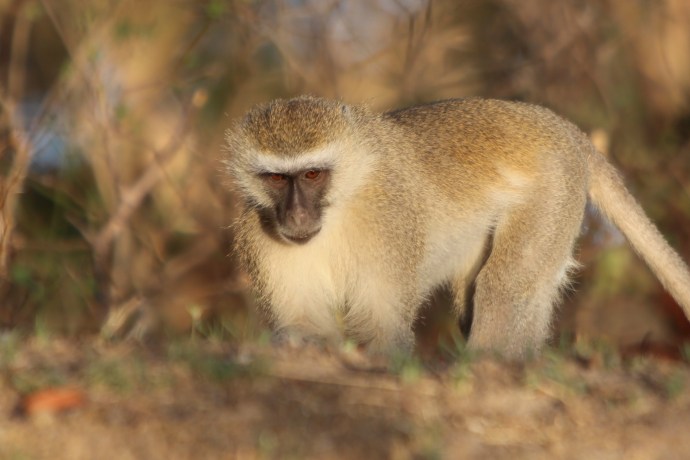
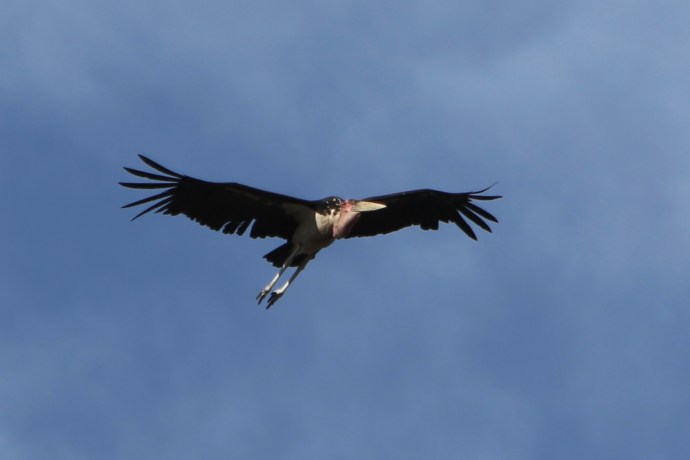
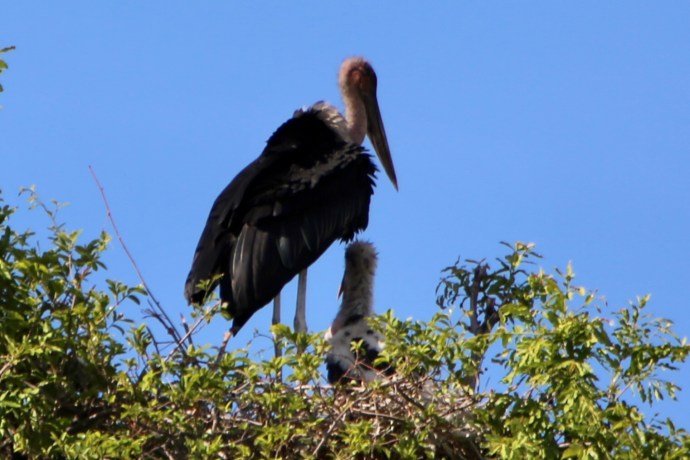
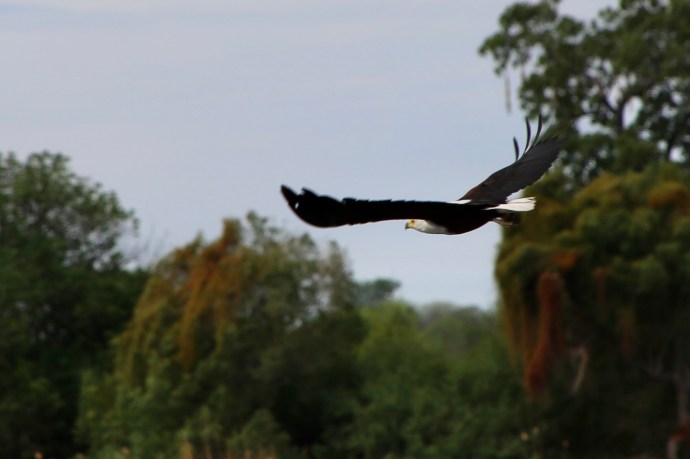
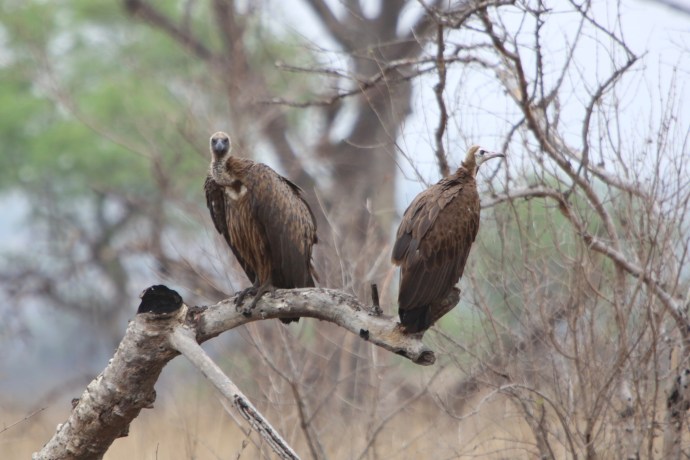
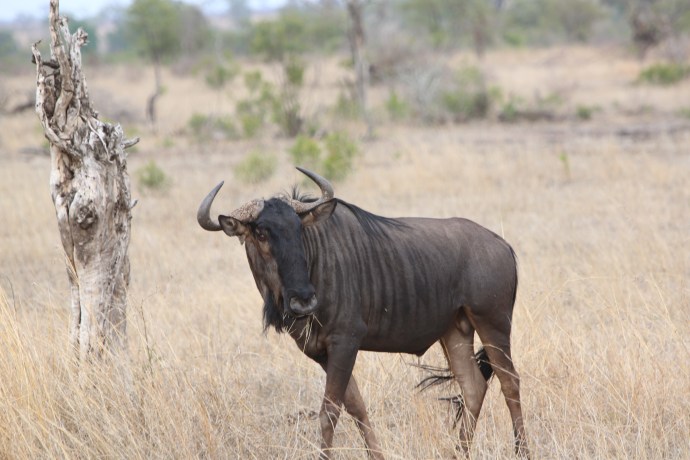
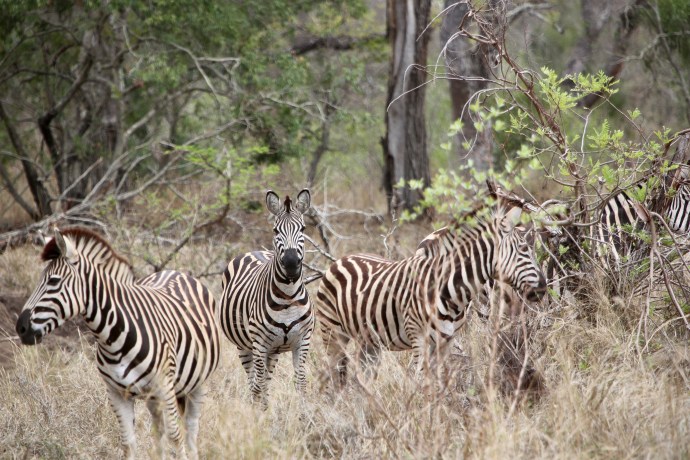
Here are a sampling of other animals we saw along the way:

Categories: Africa, Safari, South Africa, Travel | Tags: , , , , , , | 9 Comments

Blog at WordPress.com.