Posts Tagged With: Photography

Heading North. A Ferry Ride to Another Time

“You can’t make old friends.” — Kenny Rogers

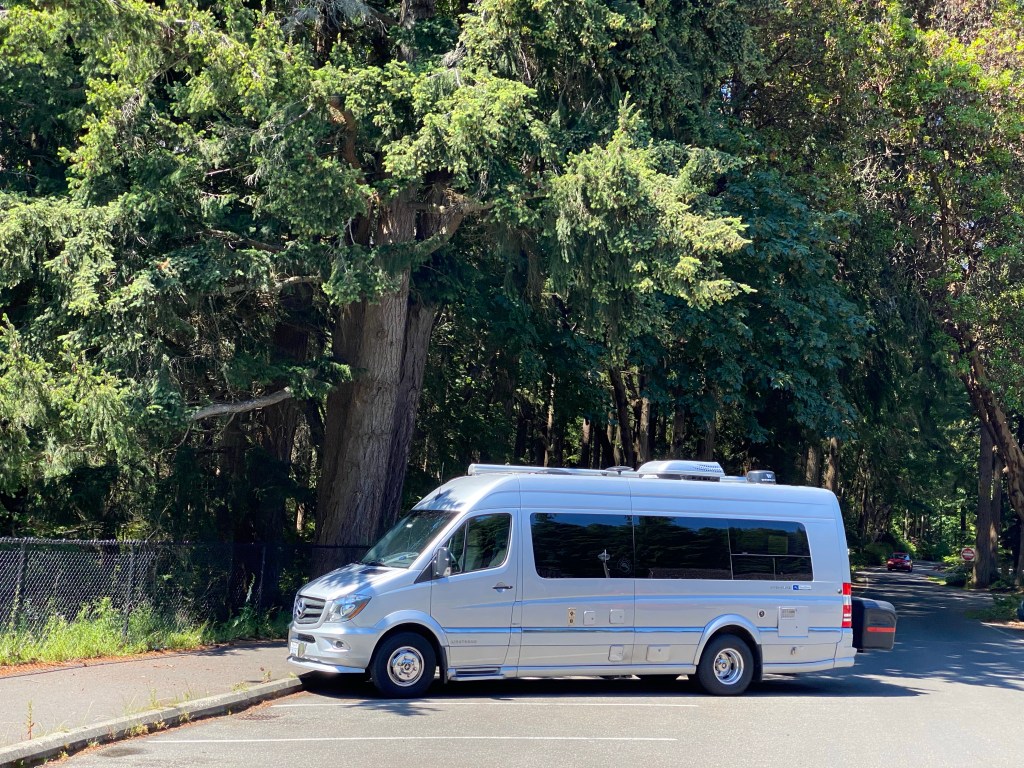
We left Portland and continued our trek north on Interstate 5. The Winona Rider had never been to Washington so we were excited to cross the border and bag a new state. Lisa and I compete to see who gets into a new state first, usually by sticking our hand toward the windshield at the border, therefore having a body part enter the state first. As we approach the border I distract Lisa by pointing a random something-or-other and then stick my hand out to enter the state first. She looks at me with pity and shakes her head.

Vashon Island sits in the middle of Puget Sound between Tacoma and Seattle. An old friend of ours, Kevin Hoffberg and his wife Eddy live on Vashon Island. When we drew up our route for this trip, I reached out to Kevin to see if we might stop by for a visit. He enthusiastically invited us to stay the night with them and we enthusiastically accepted.

Kevin and I met over 20 years ago. I had just started my job at Wells Fargo and I needed to develop a mortgage growth strategy for the West Coast. Wells was then a distant third in market share. Our goal was to get to number one but that would need discipline and a good plan. Someone told me Kevin was a great consultant and could help. We met and almost immediately developed a connection. From that point on, Kevin and I worked together on bigger and bigger projects. His brilliance helped refine the knowledge and expertise of the Wells team and his ability to articulate the key issues and strategies to address them was unrivaled. We often met at High Tech Burrito for our meetings. That’s why, to this day, we never say we need to catch up. We simply say we need to grab a burrito.

Our relationship goes beyond a professional one, however. We have seen each others’ kids grow up, we have spent time with our spouses, we have gone through career changes, and life changes. We trust each other without question. In short, we have a long and rewarding history together. Lisa and I were looking forward to seeing Kevin and Eddy.

Now, Vashon Island, with about 10,000 residents, has no bridges. It is a relatively rural island (one might call it rural chic, however) and the people who live there want to keep it that way. So, the only way to get to Vashon is via ferry. Kevin texted me the ferry schedule and said to simply drive up pay the fare and drive on. The Winona Rider’s first boat ride!

We arrived at the line to get on the ferry at 1:15 to catch the 1:40 ferry. As we pulled up to the toll booth, the woman in the booth looks at our van, shakes her head, looks at me and says, “This van can’t get on.” “Um, ever?” I replied. I know I had checked the length of vehicles that could ride and we should have been fine. “We’re at low tide,” she said and that meant a vehicle of our length and clearance couldn’t get down the ramp without bottoming out. You see, the further north you go, the greater the tidal variation. Being in Seattle, tides go up and down a lot. That means the ramp onto the ferry was angled steeply down and 1:40 and the nose of our van would go straight into the floor of the ferry. “OK, when can we go?” I asked. “The tide will be up far enough for the 3:40 ferry. Come back then,” she responded. As I pulled out of the line and turned around, I hoped this wasn’t one of those Wizard of Oz “Come back later” moments.

Lisa and I went into the town of Ruston for lunch and then hung out at Point Defiance Park to see their gardens, run the dogs at their dog park, and stretch our legs.
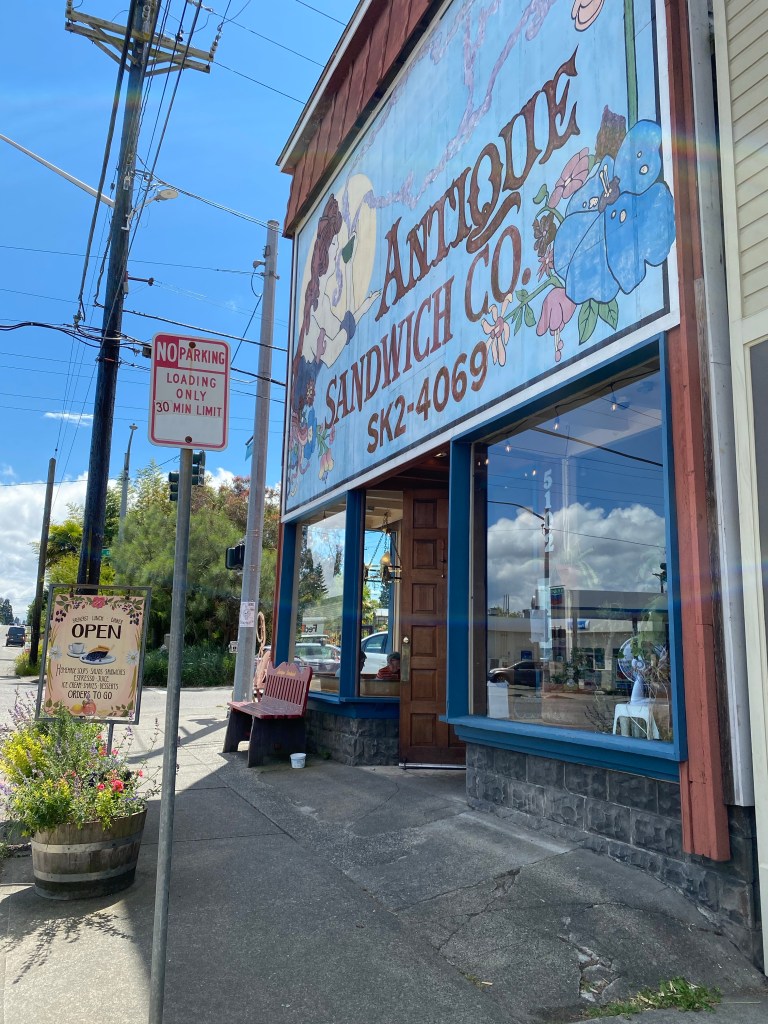
The Antique Sandwich Company. A delightful place for lunch.
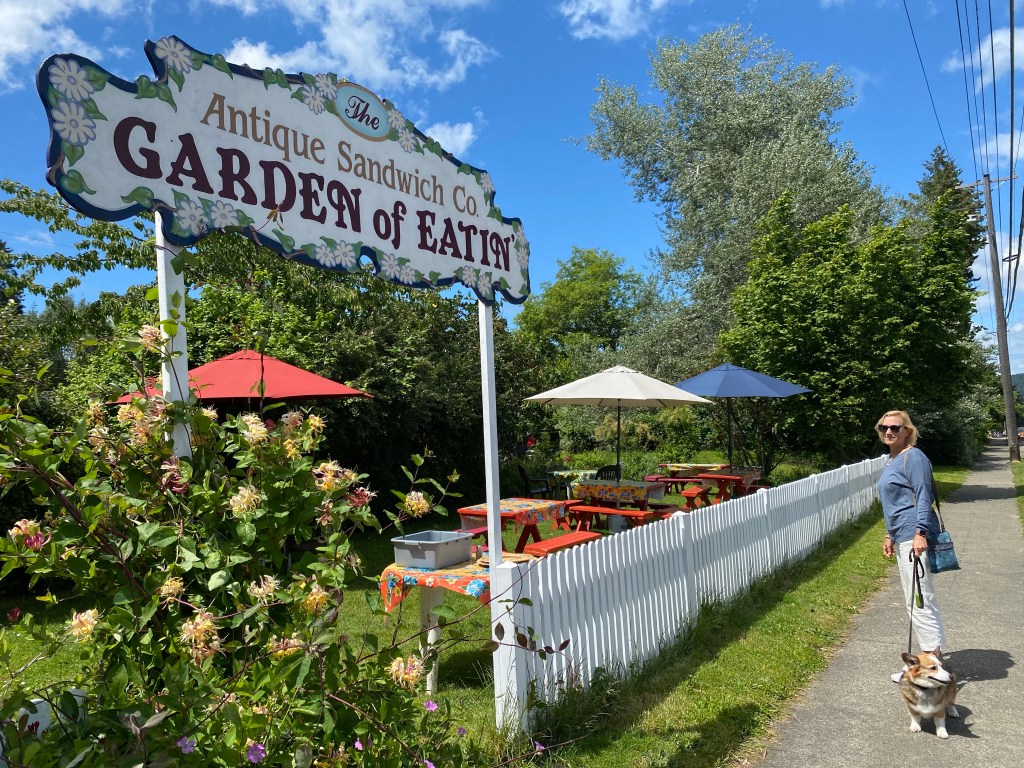
Garden of Eatin’. My kind of pun.
The dog park. Sophie had a great time. Ralphie got a time out because he doesn’t play well with other.
Point Defiance Park is, like much of the Northwest, quite wooded.
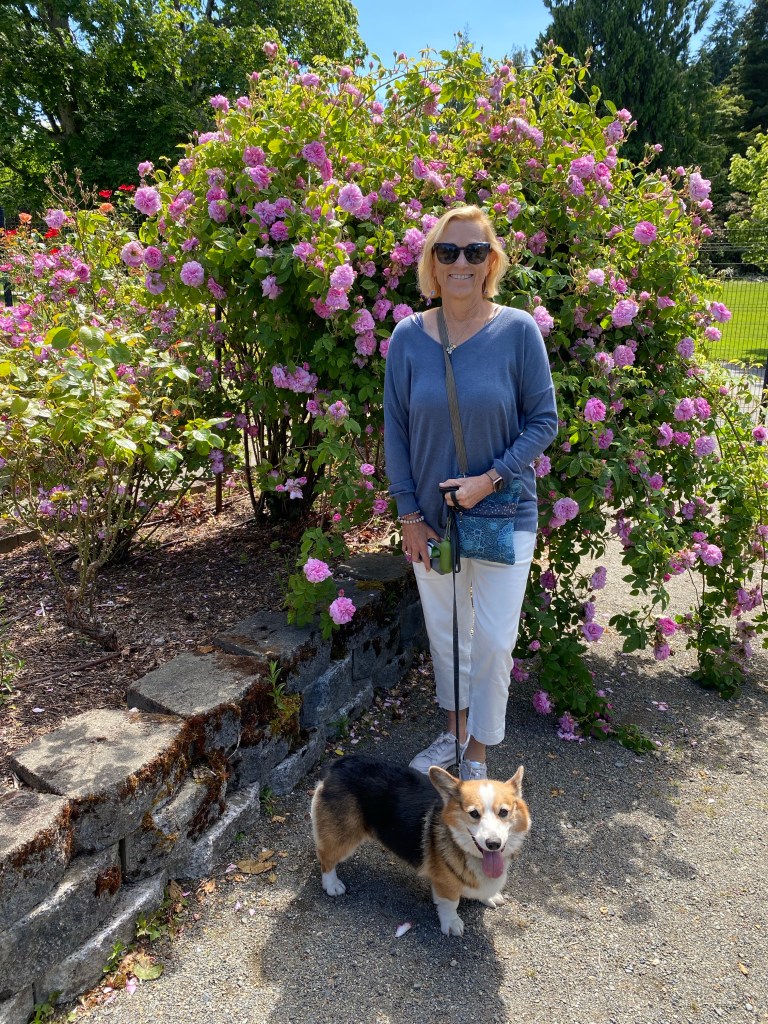
Lisa loved the rose gardens.

Once 3:00 rolled around we drove back to the ferry entrance. The woman who sent up away before gladly took our money and sent us into the ferry line. Soon we started loading and a guy directed us onto the ferry.
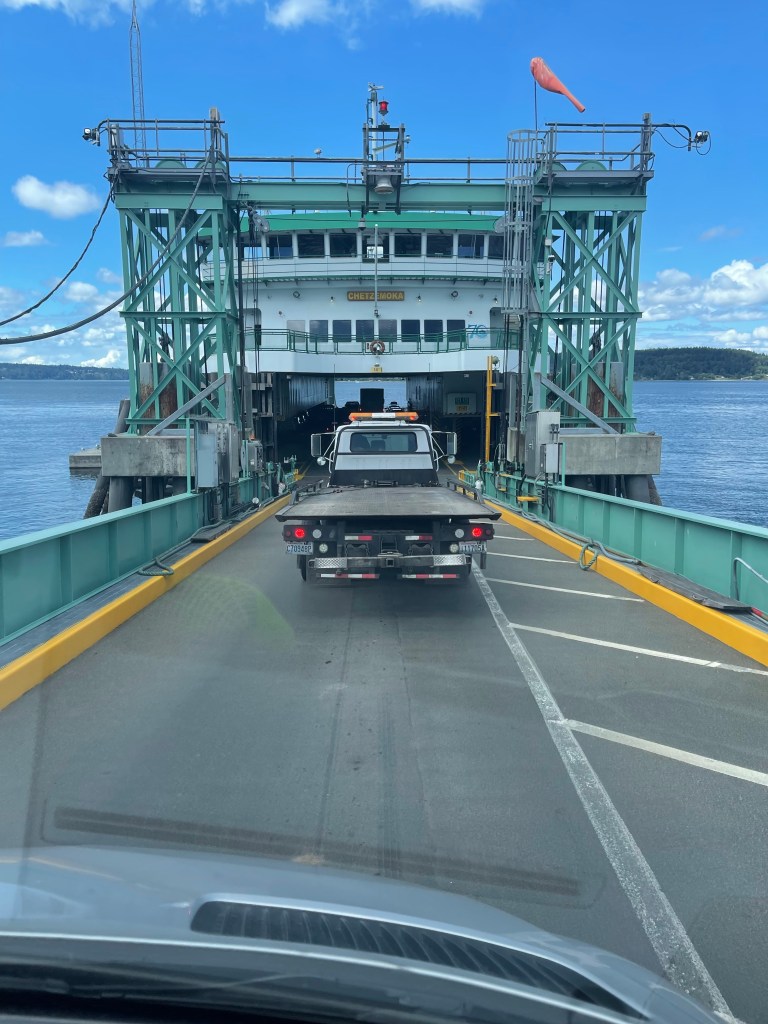
Driving onto the Vashon Island Ferry

Kevin and Eddy bought an old five-acre farm in 2012. The farm had been owned by a Japanese family for nearly 100 years. When they were sent to an internment camp during World War II a local farmer watched over it for them. The place is oozing with history. It also needed a lot of work.

We arrived at the Hoffberg property after a beautiful drive through Vashon Island. Kevin and Eddy greeted us with hugs, Sophie and Ralphie enthusiastically greeted Kevin and Eddy, and soon we were off on a tour of this magnificent place.

No matter how long you’ve known someone, there is always more to learn about them. Kevin, a business consultant, and Eddy an accomplished artist, also are quite capable farmers (they are adamant this is a “hobby farm”), carpenters, mechanics, gardeners, beekeepers, furniture makers, bakers, and overall fix-it people. Much of the renovation of the original home, and construction of outbuildings has been done by Kevin, Eddy, or both. I had no idea. And, the fact that I have no talent for any of these things made this discovery all the more impressive.

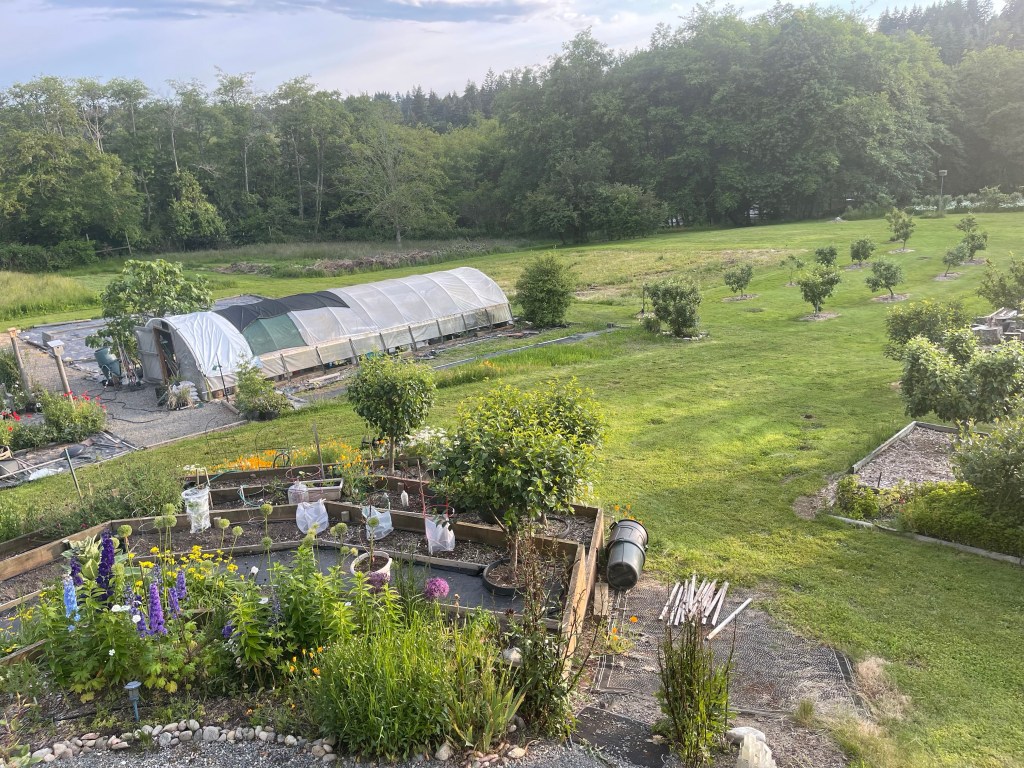
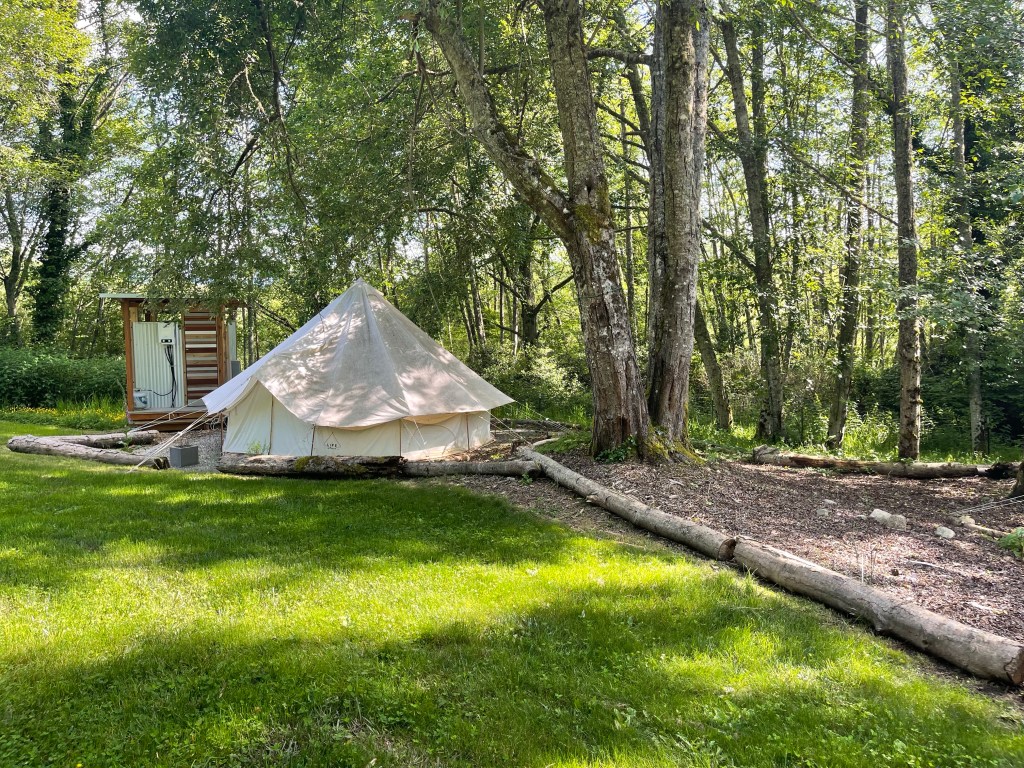
The property has many apple trees that Kevin and Eddy use to make cider. It also has pear trees, buckwheat, lavender, beehives, any vegetable you can name, a wood shop, art studio, flowers of all variety, tractors, an ATV, and even an area where people can glamp (luxury camping). The property is simply beautiful.
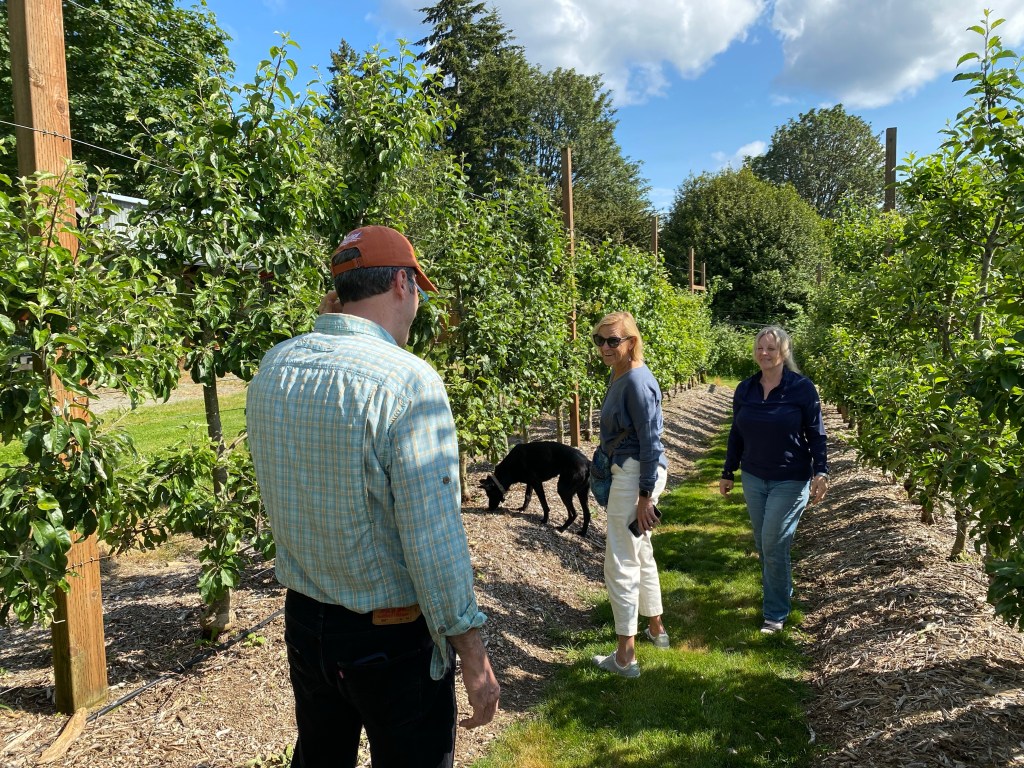
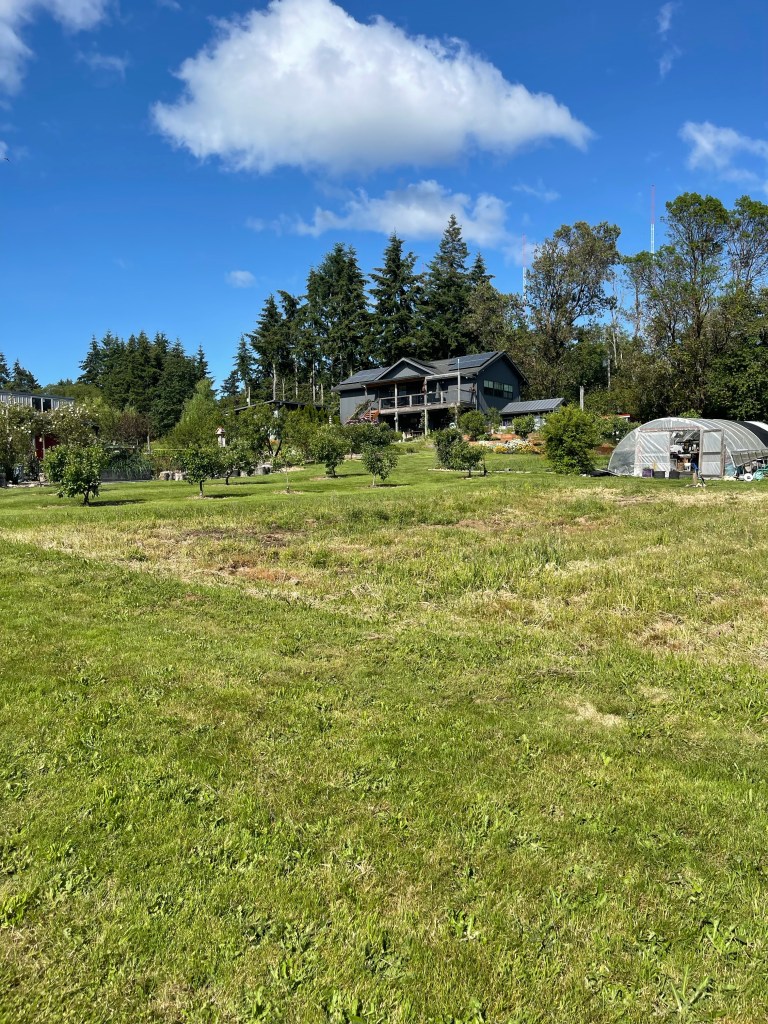
Rows of apple trees. They are cultivated a bit like grapevines.
Kevin and Eddy’s home. They did most of the renovations themselves.
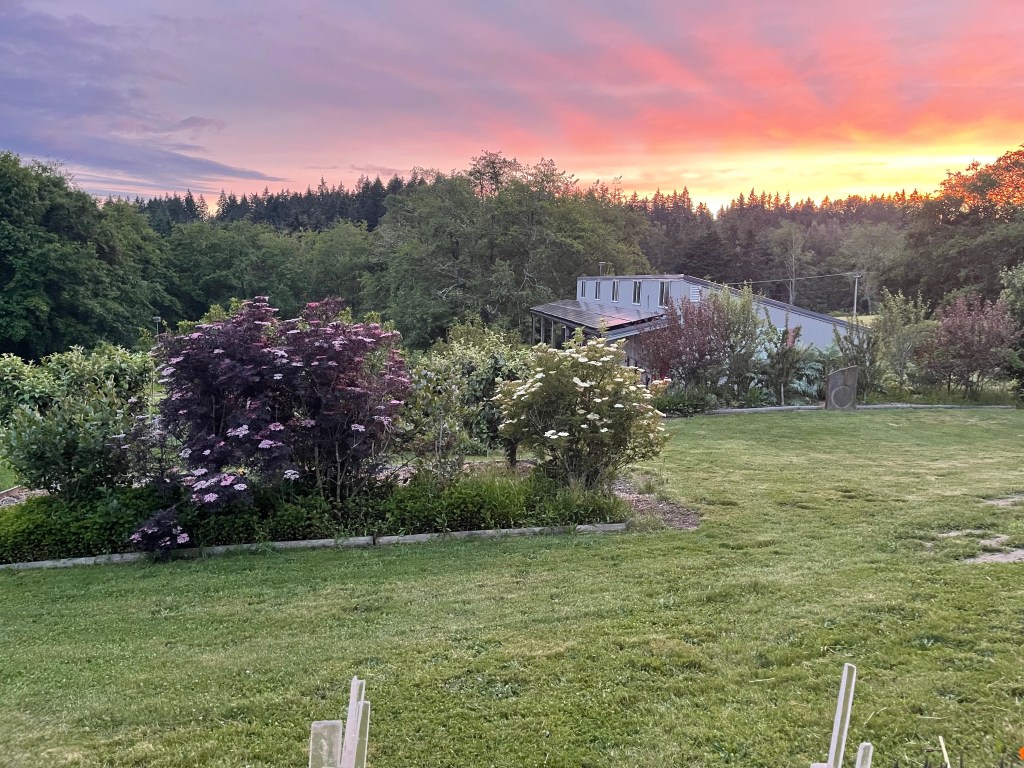
The view from the house.
An outbuilding containing a wood shop, art studio, and soon a production studio for their professional dancer daughter’s videos.
The orangery that Kevin built. Basically a hothouse with citrus and other warm weather plants in it.
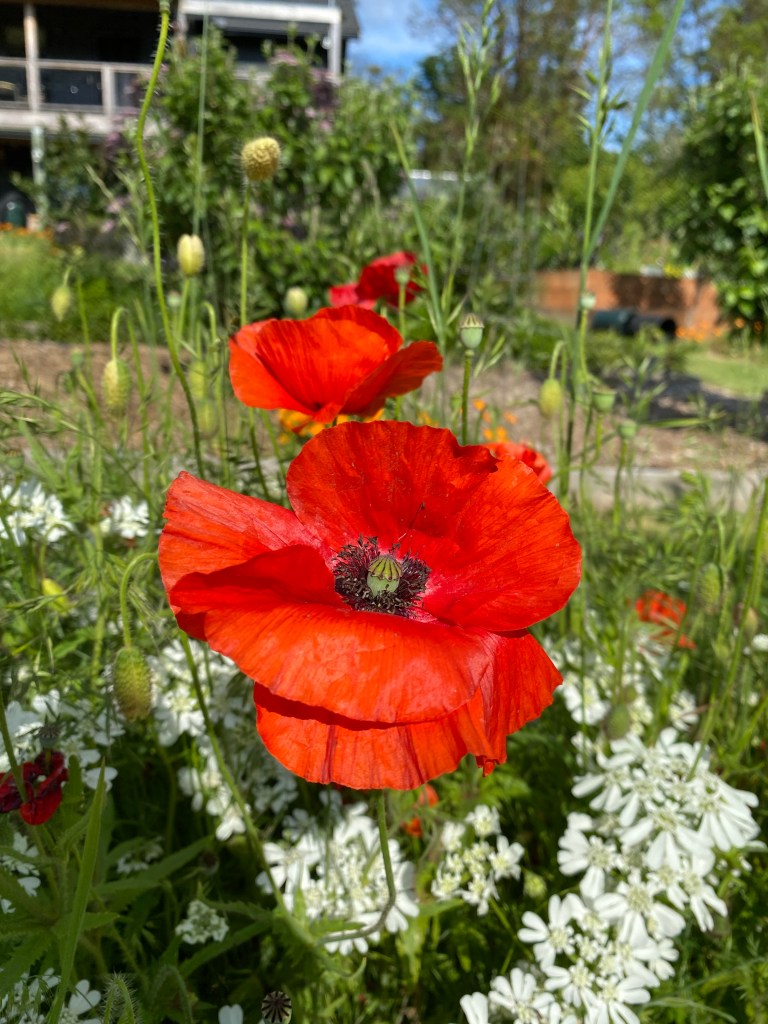
Poppies
Glamping Tent
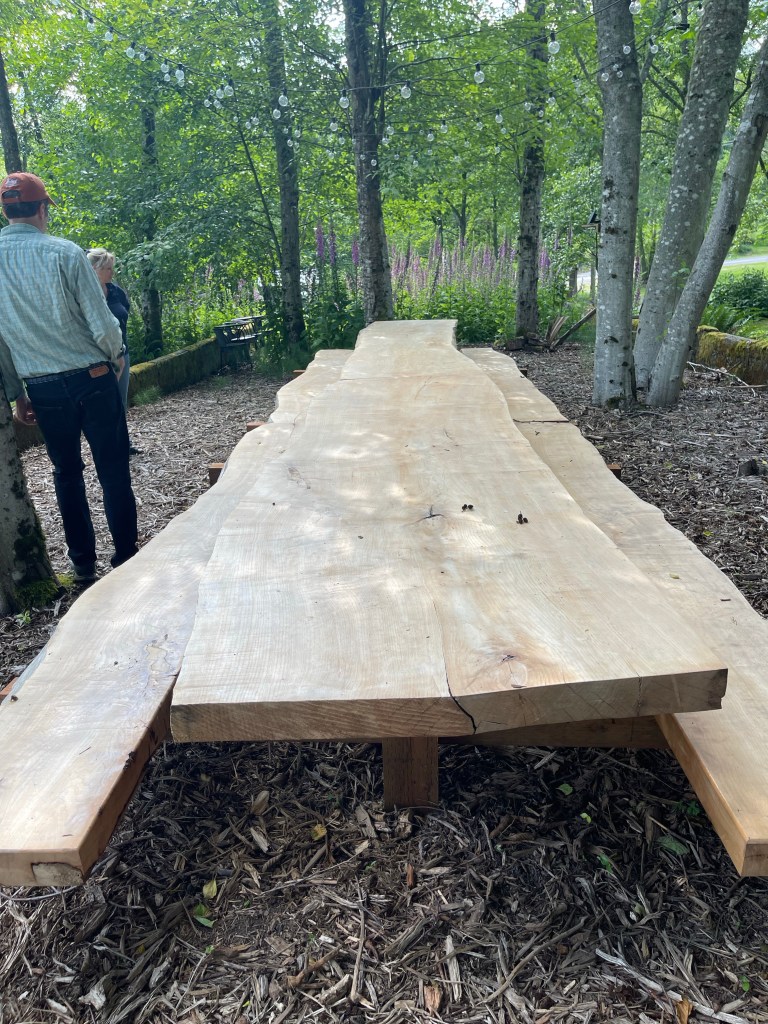
A magnificent table that Kevin made himself in the glamping area.

We had a delicious dinner on their patio. For dessert we had Eddy’s homemade biscotti with Vin Santo, an Italian dessert wine that, I am embarrassed to say, had never had. It was delicious.

Kevin somehow remembered we were fans of the Golden State Warriors so he ushered us into the house to watch the fourth quarter of game six — one that the Warriors would win to take the championship. We cheered them on, turned off the TV, gabbed for a while longer then went out to watch the sunset. The days are very long this far north so sunset is quite late. In the morning we had a delicious breakfast of egg salad on homemade sourdough toast. We also got to sample honey from the bees out back (delicious).

Our conversations continued apace in the morning. Too soon, we had to leave before the tide went down and we couldn’t get off the island. As we said goodbye, I’ll confess to having a bit of a tear in my eye. You see, old friends are woven into the fabric of our lives. They are irreplaceable. Lisa and I are fortunate enough to have many old friends. The past two nights we were able to visit with two of them — Jon and Sallie Cohen, then Kevin and Eddy. We’re less than a week into the trip and it’s already created many memories.

If you have a chance today, reach out to one of your old friends and say hello. You will both be glad you did.
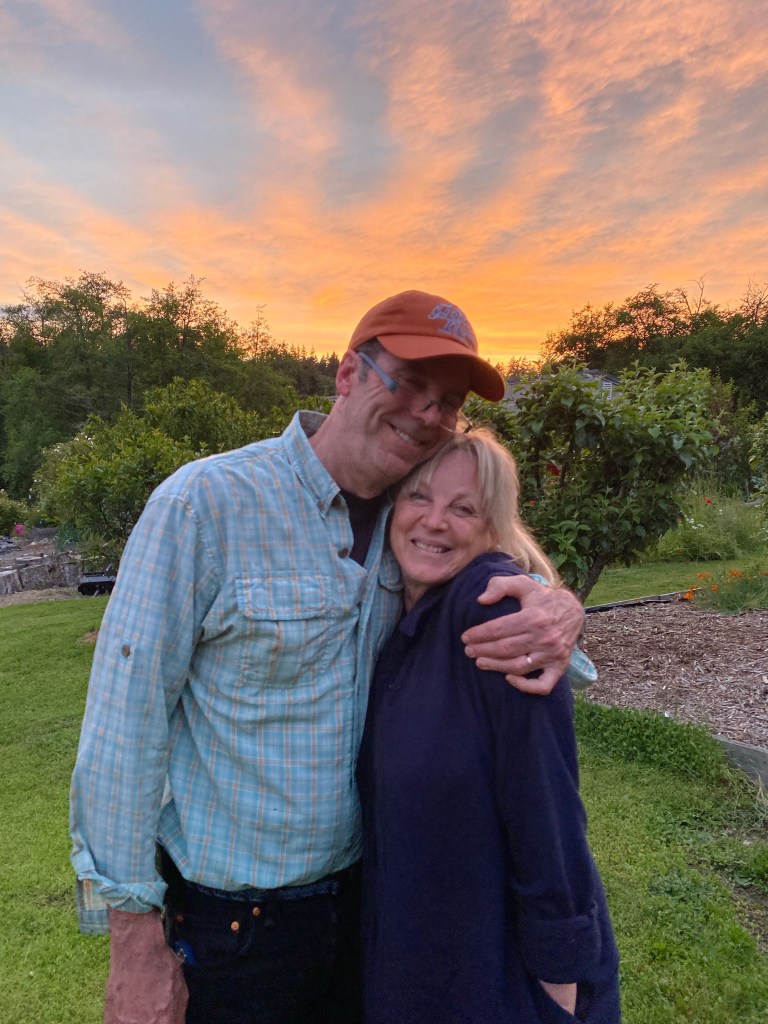
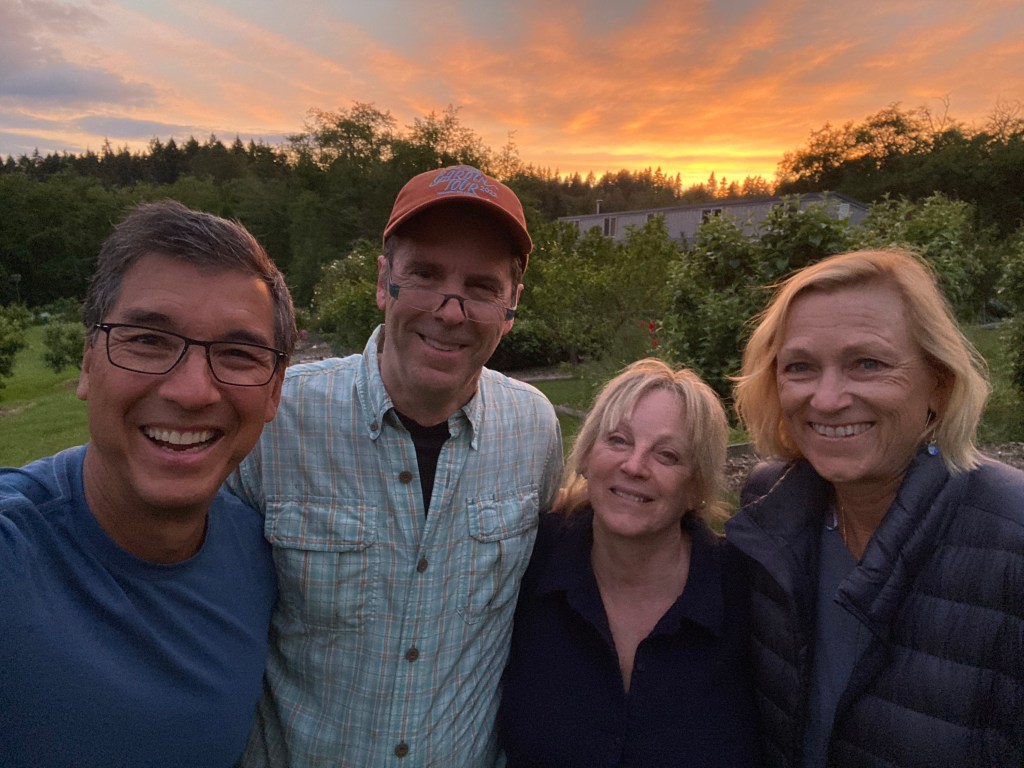
Kevin and Eddy
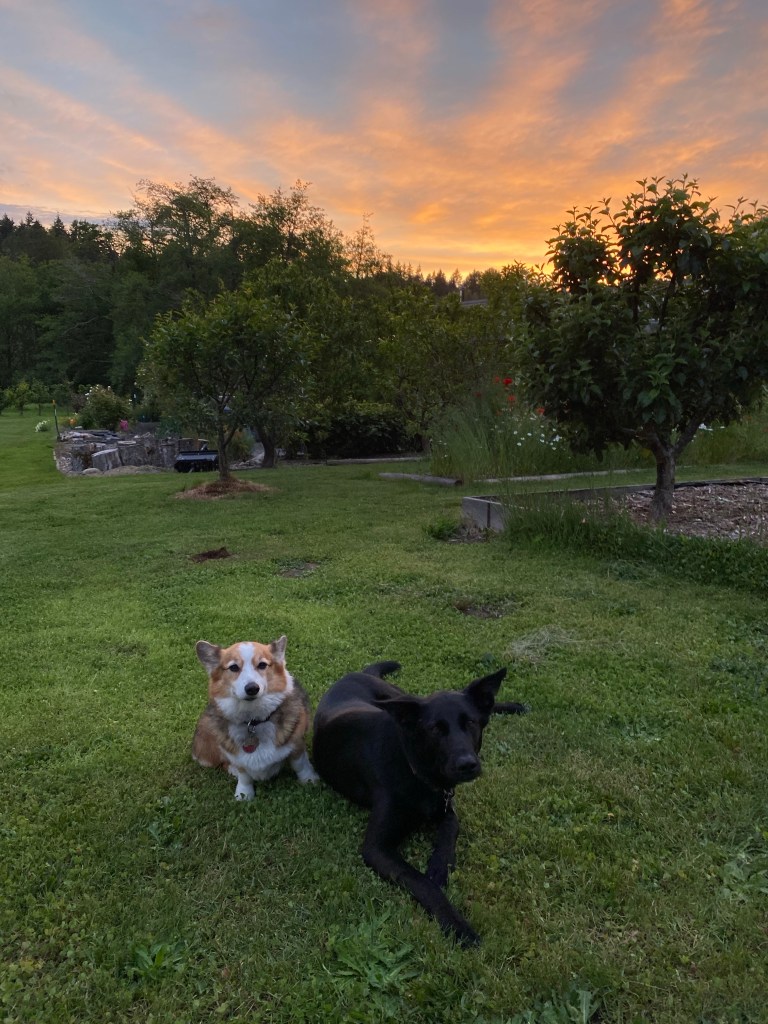
Our daily “Dogs at Sunset” shot. I think Sophie and Ralphie are getting bored of this.
Ralphie at the front door as we were getting ready to leave. I don’t think he wanted to go.
Categories: RV, Travel, Wine | Tags: , , , , , , | 1 Comment

Zambia — Waterfalls, Elephants, a Village, and the Devil’s Pool

We took off from Cape Town in a small Kenya Air aircraft, landing in Victoria Falls Airport in Zimbabwe. Victoria Falls, one of the seven natural wonders of the world, sits right on the border of Zimbabwe and Zambia. As we landed we saw bush country for as far as we could see. Lisa and I are now on our own. We said farewell to the rest of the group in South Africa.

Our guide and driver for the week was named Charles. Charles is native to Zambia and was eager to tell us about his country. Zambia is a landlocked country in southern Africa. It was a British colony that gained its independence in 1964. The primary industry is agriculture, but, it has an abundance of copper so mining is also a major source of revenue and employment to the country. Finally, with Victoria Falls on its southern border, tourism is the primary industry where we stayed.

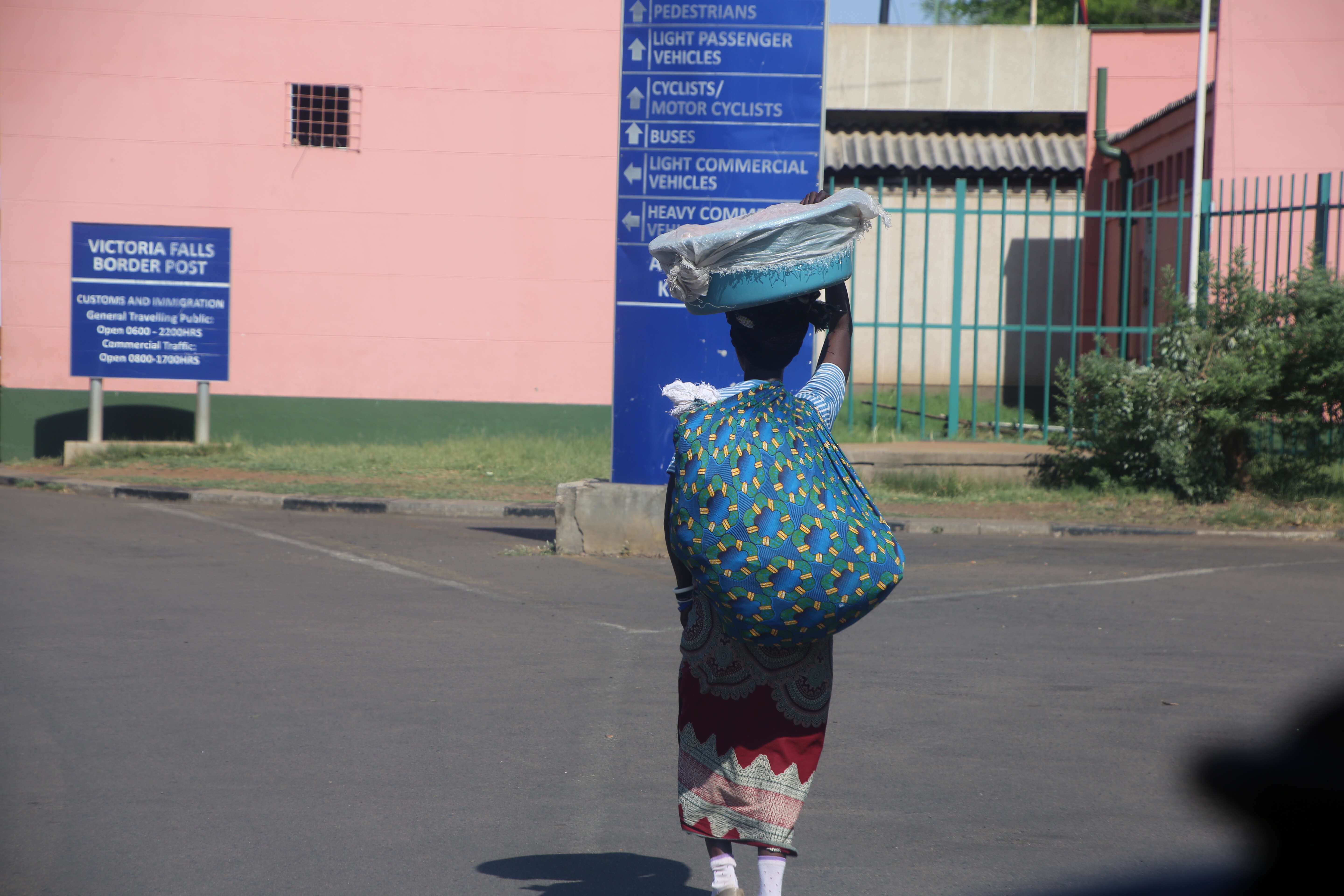
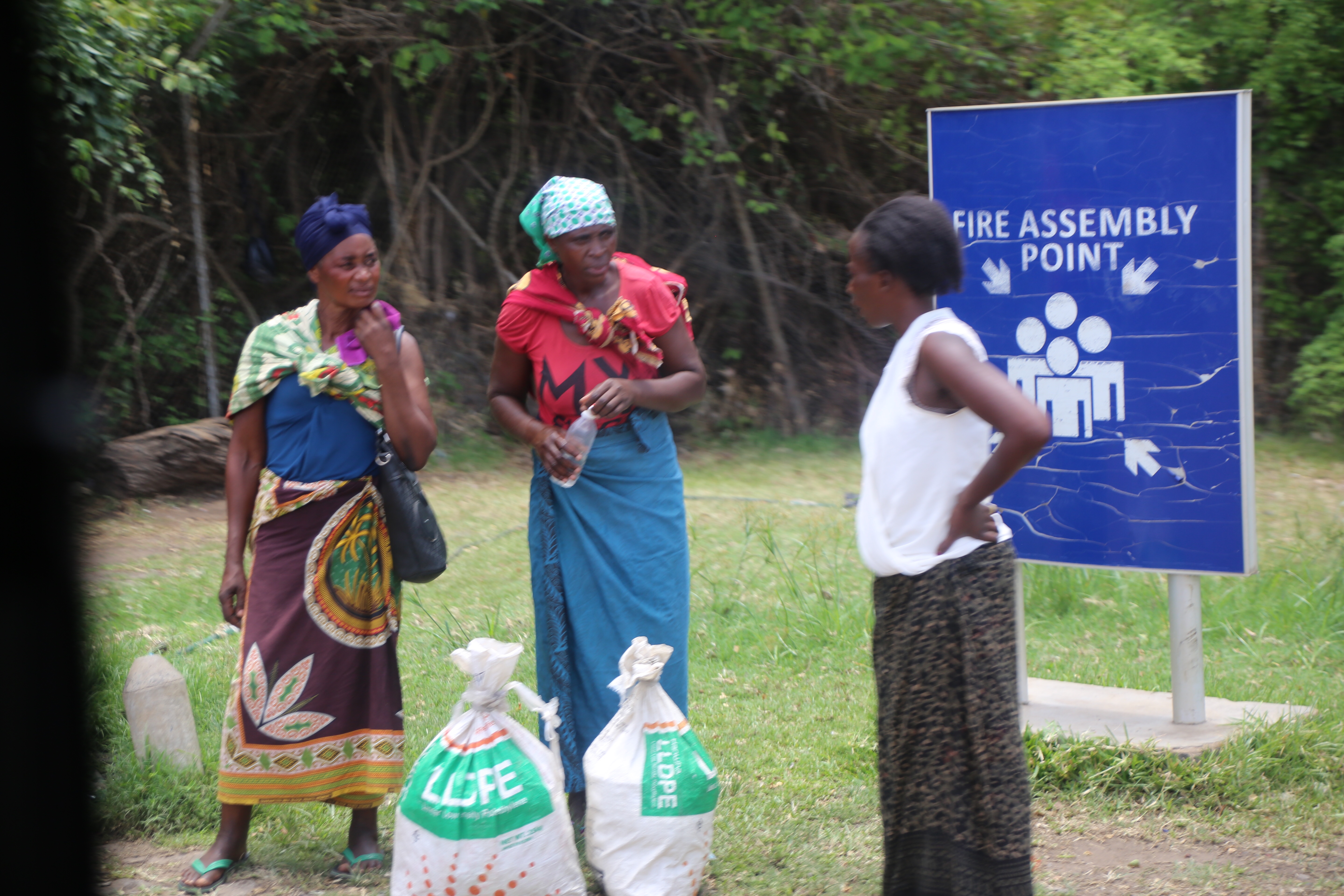
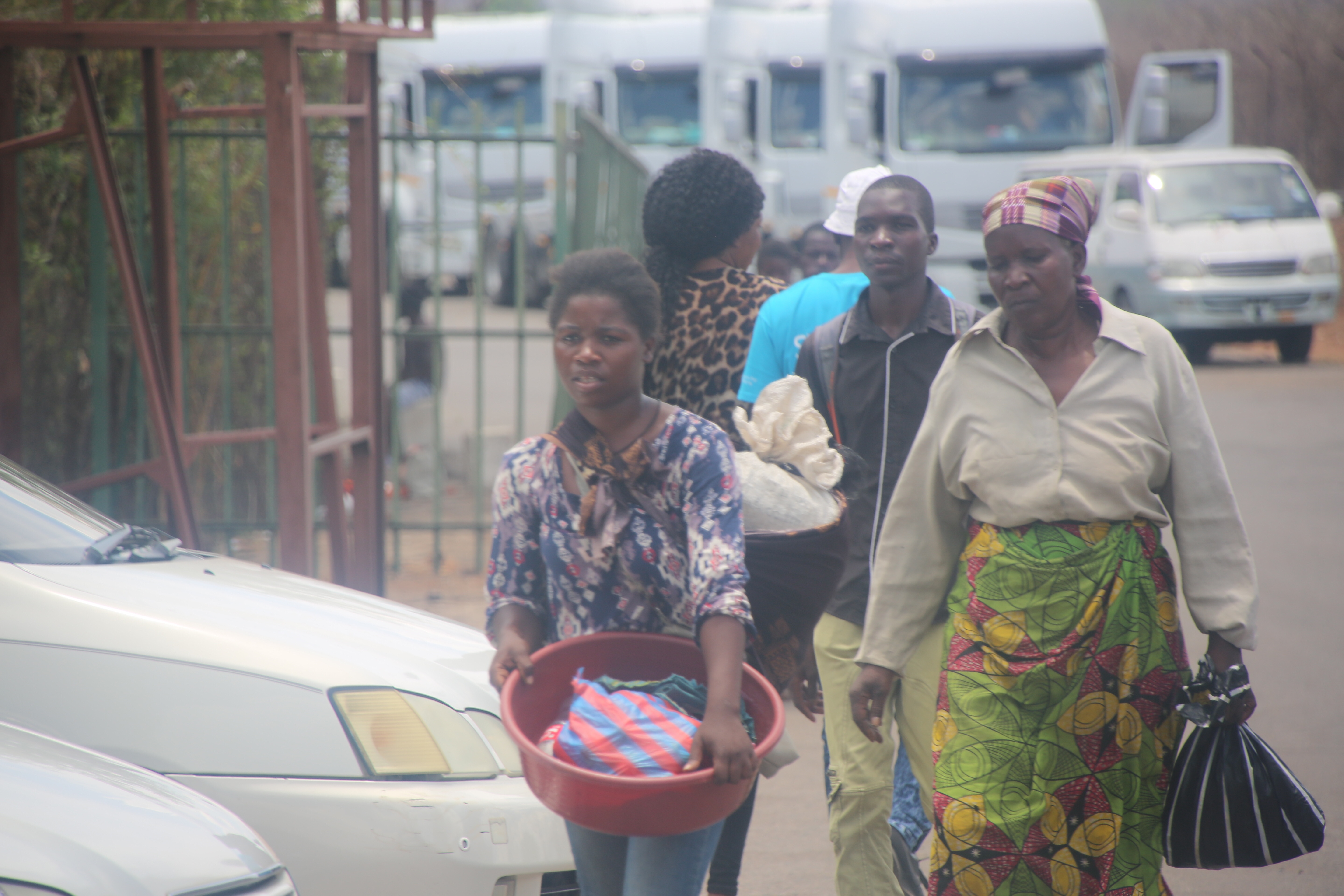
Our first impression upon landing as we crossed the border from Zimbabwe to Zambia was the large number of people walking and riding bicycles laden with goods. Charles explained that there are significant price differentials between the two countries. So, with the high unemployment rate in traditional industry, many residents of both countries will cross the border each day to buy goods that are more expensive in one country than the other, effectively arbitraging the difference in order to generate a profit.

For example, Coca-Cola costs 80 cents a bottle in Zambia but $2 a bottle in Zimbabwe. So, Zimbabweans will cross the border (which is quite the process) to buy Coke and carry it back home to sell. Flour, rice, corn meal, sugar, and many other products are more or less expensive in each country so this process occurs with a plethora of goods. Imagine supporting your family by carrying heavy loads for miles each day.

Interestingly, the men rode bicycles while the women walked. I’m not sure why that is but I’m afraid to raise the topic with Lisa.

The tourism industry in the area seems to provide much good employment both directly and through ancillary businesses. Being a guide is one of the most sought-after jobs. It requires a good command of the English language (the primary language spoken here), strong knowledge of the history, flora and fauna, and geography of the region.

Our trip consisted of a mixture of activities to learn about the culture and history of the region and partake in fun tourist activities. We’ll give you a sampling of both.

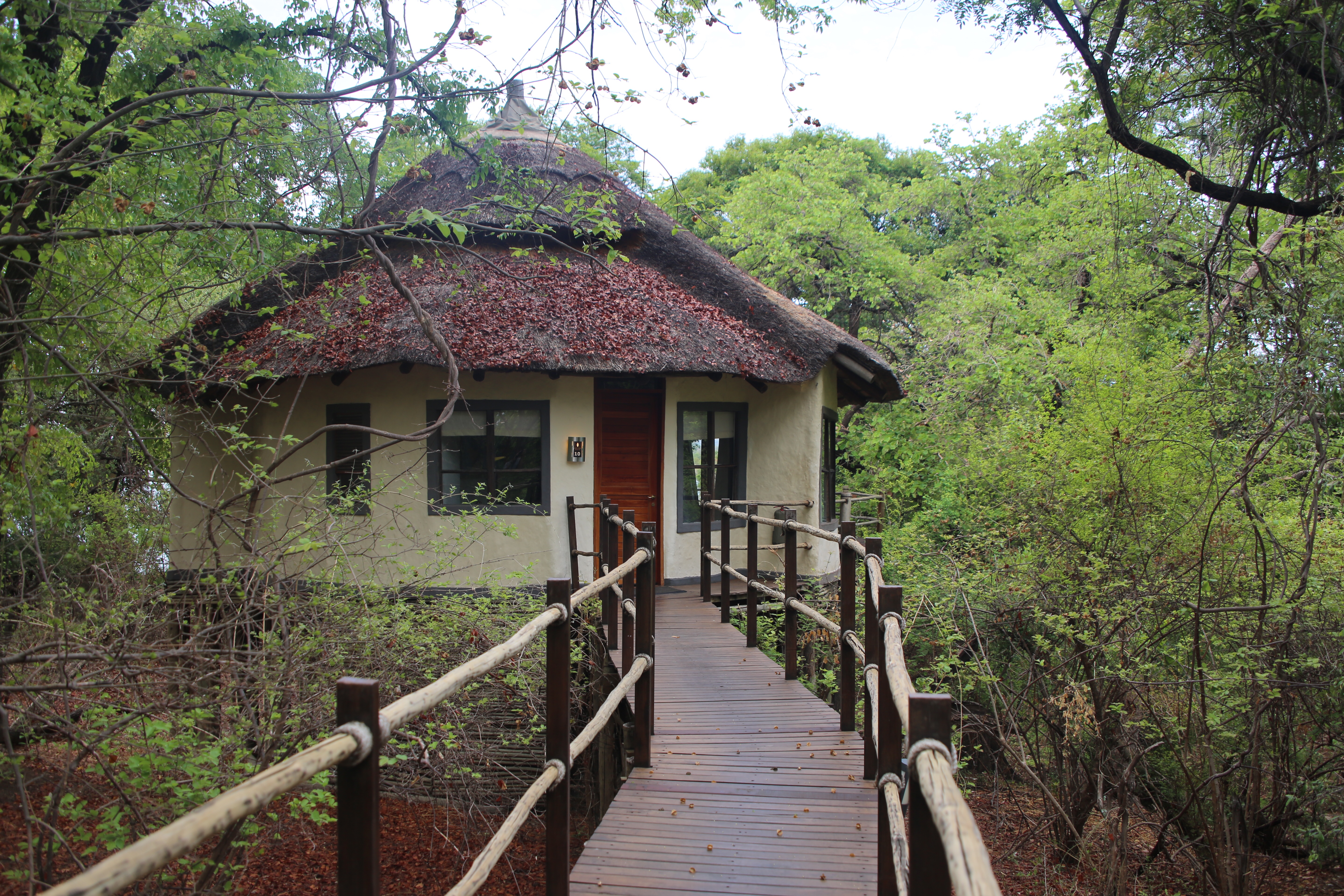
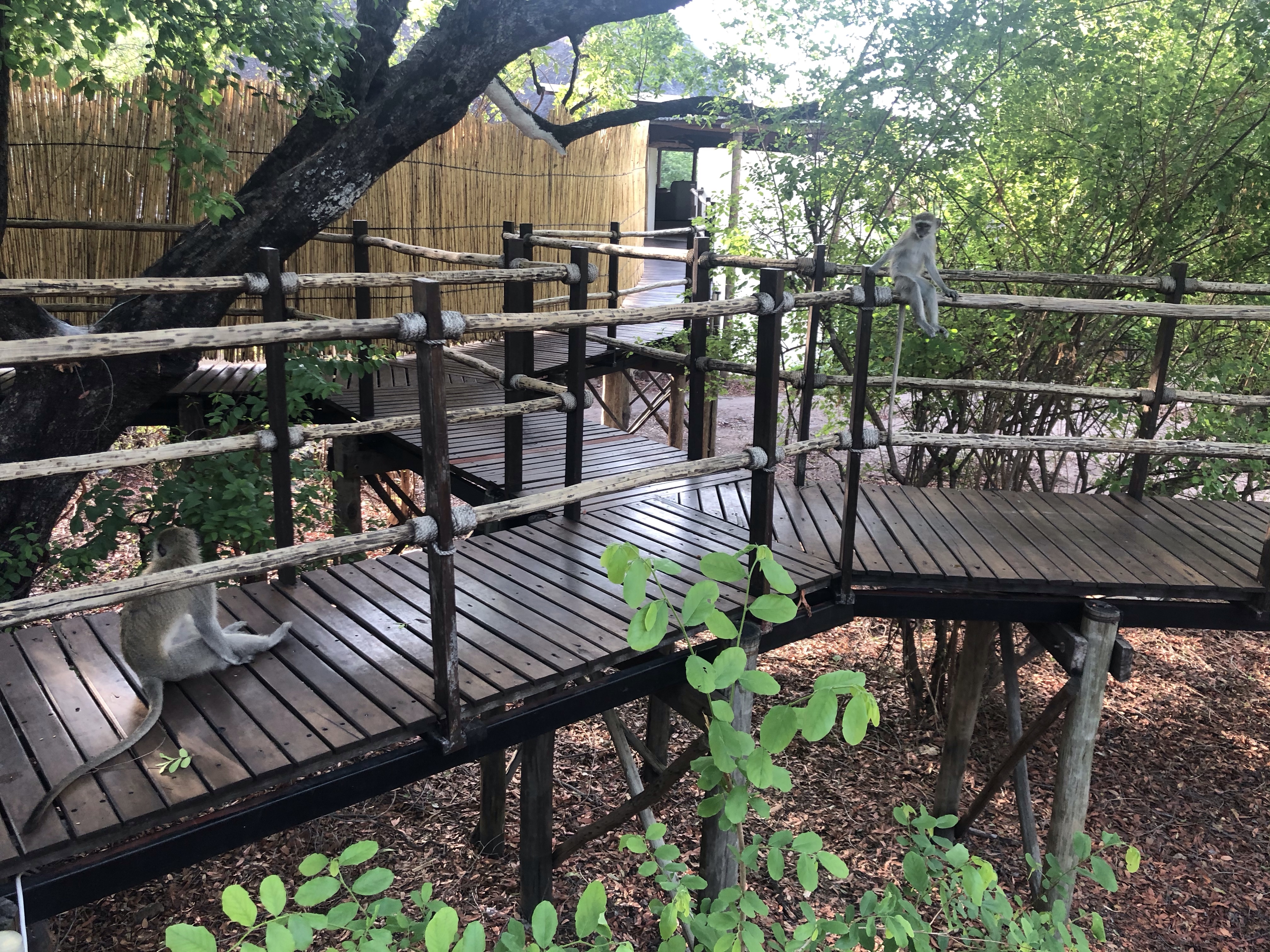
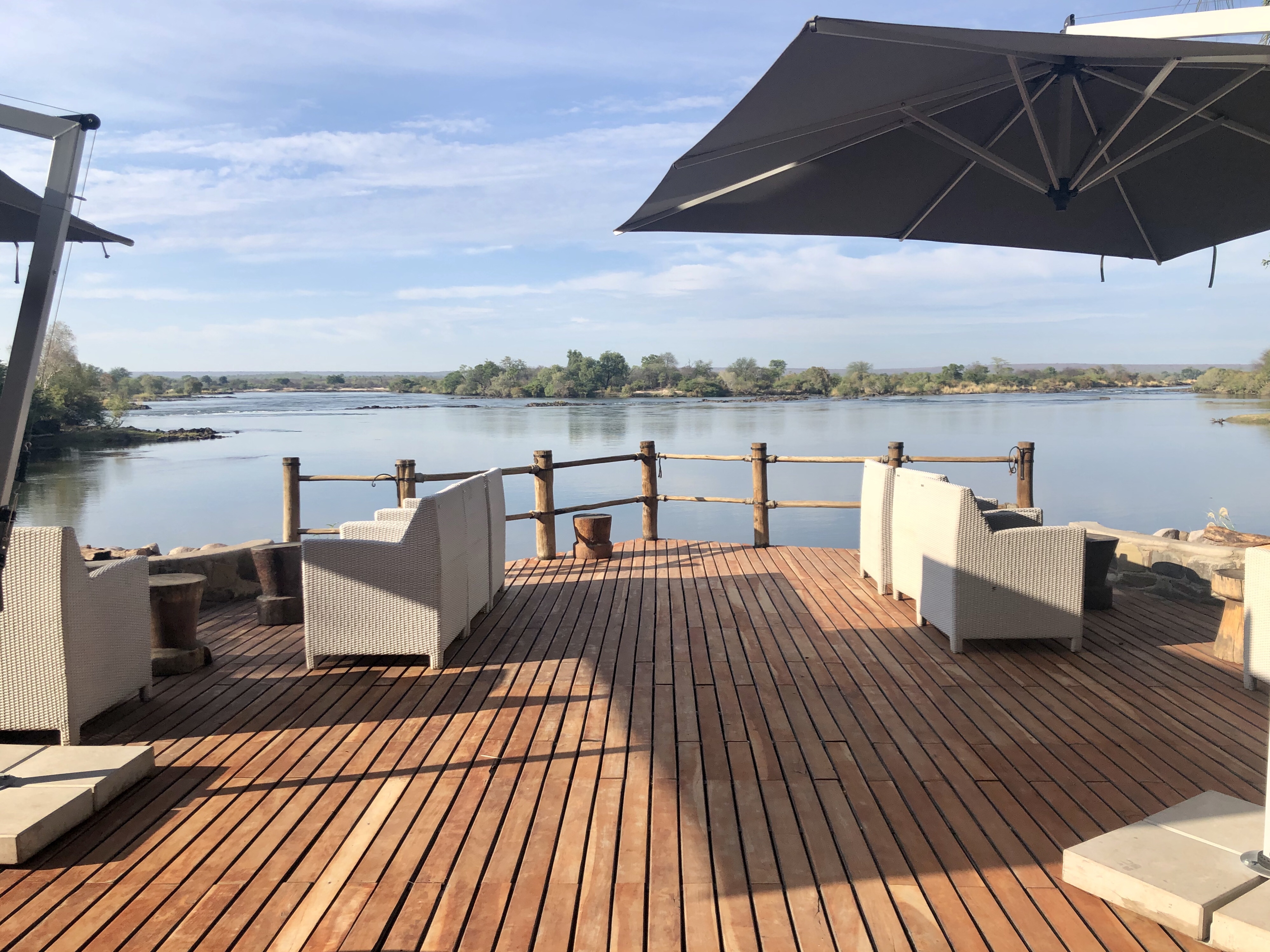
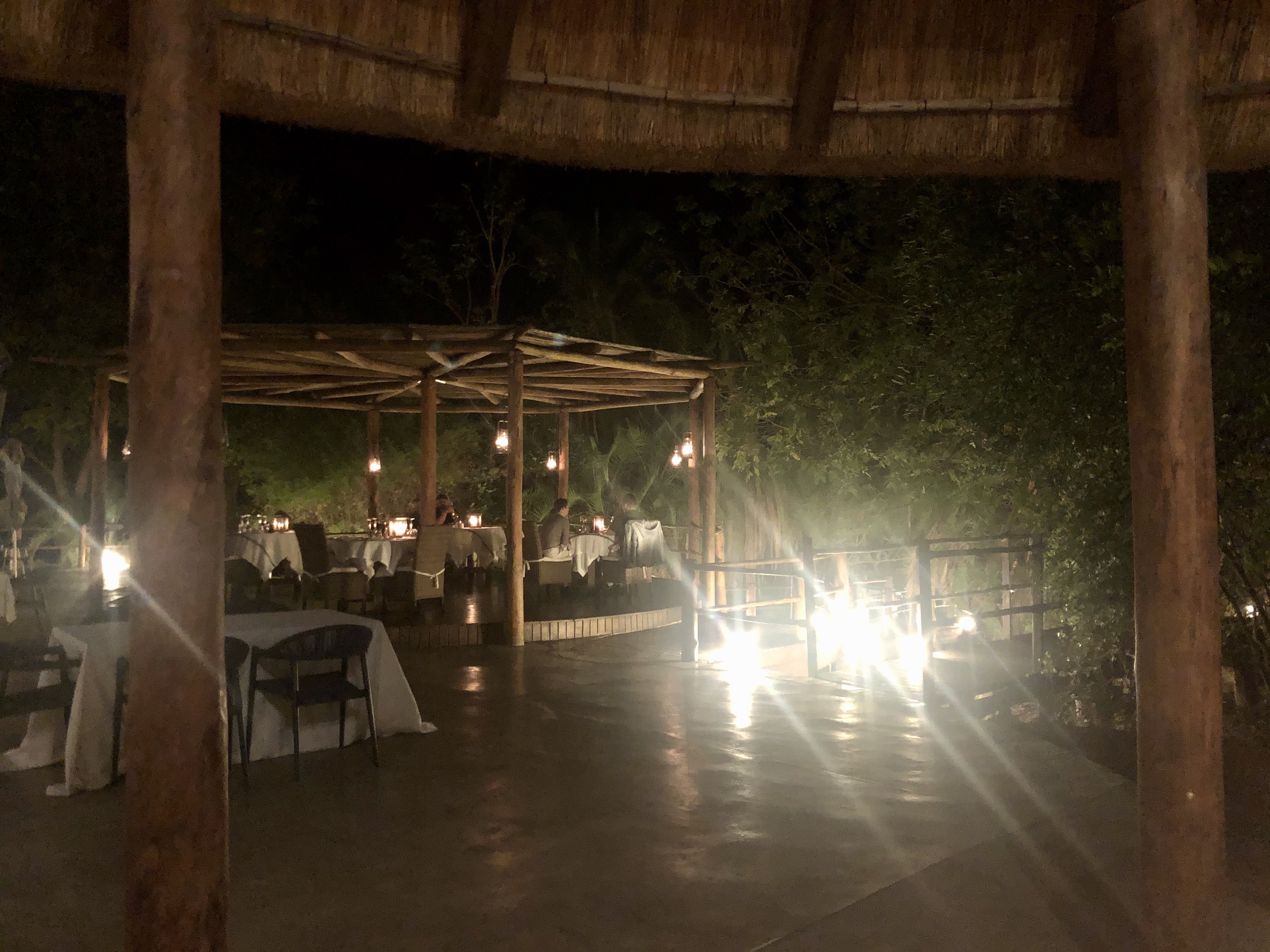
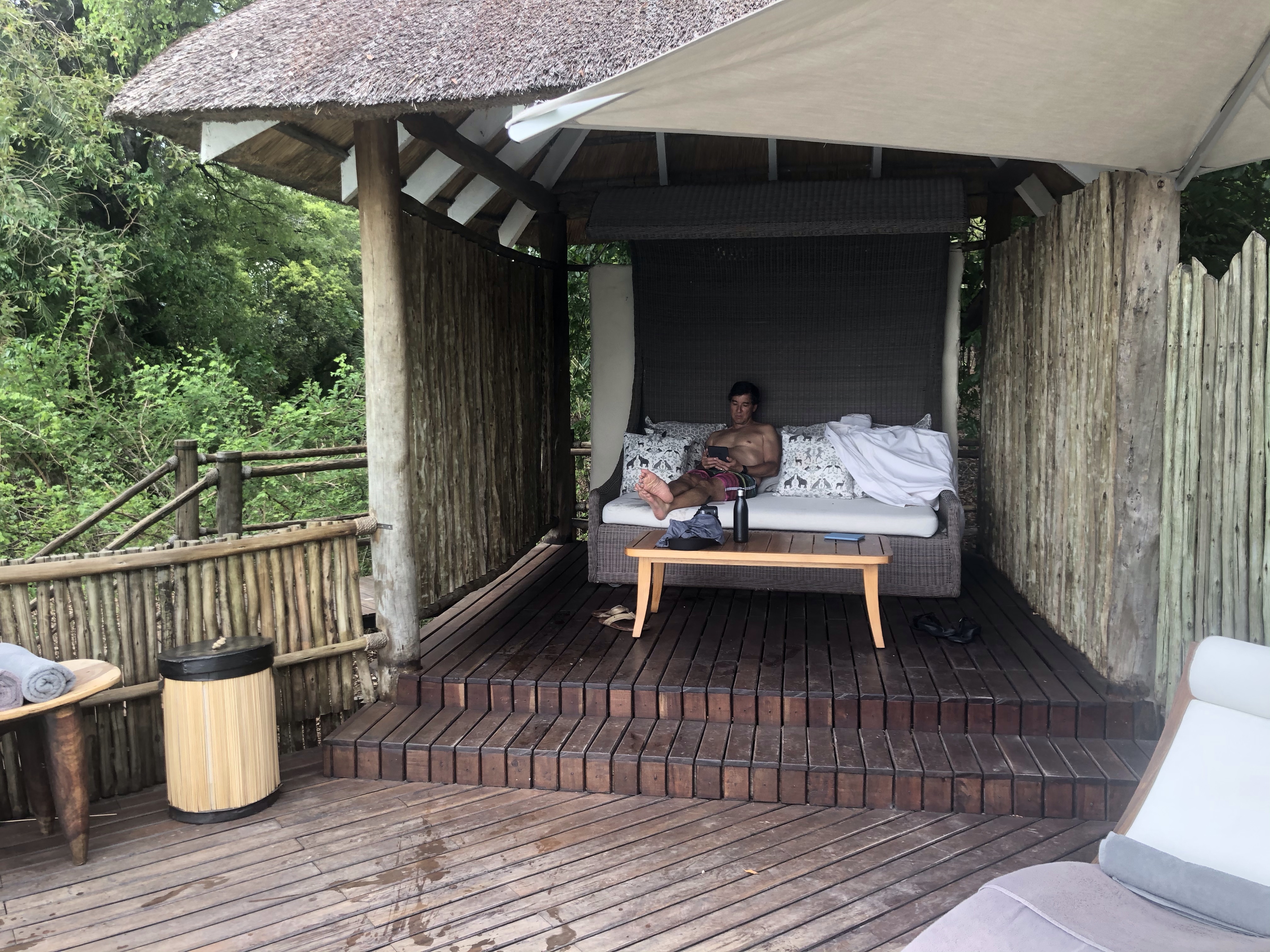
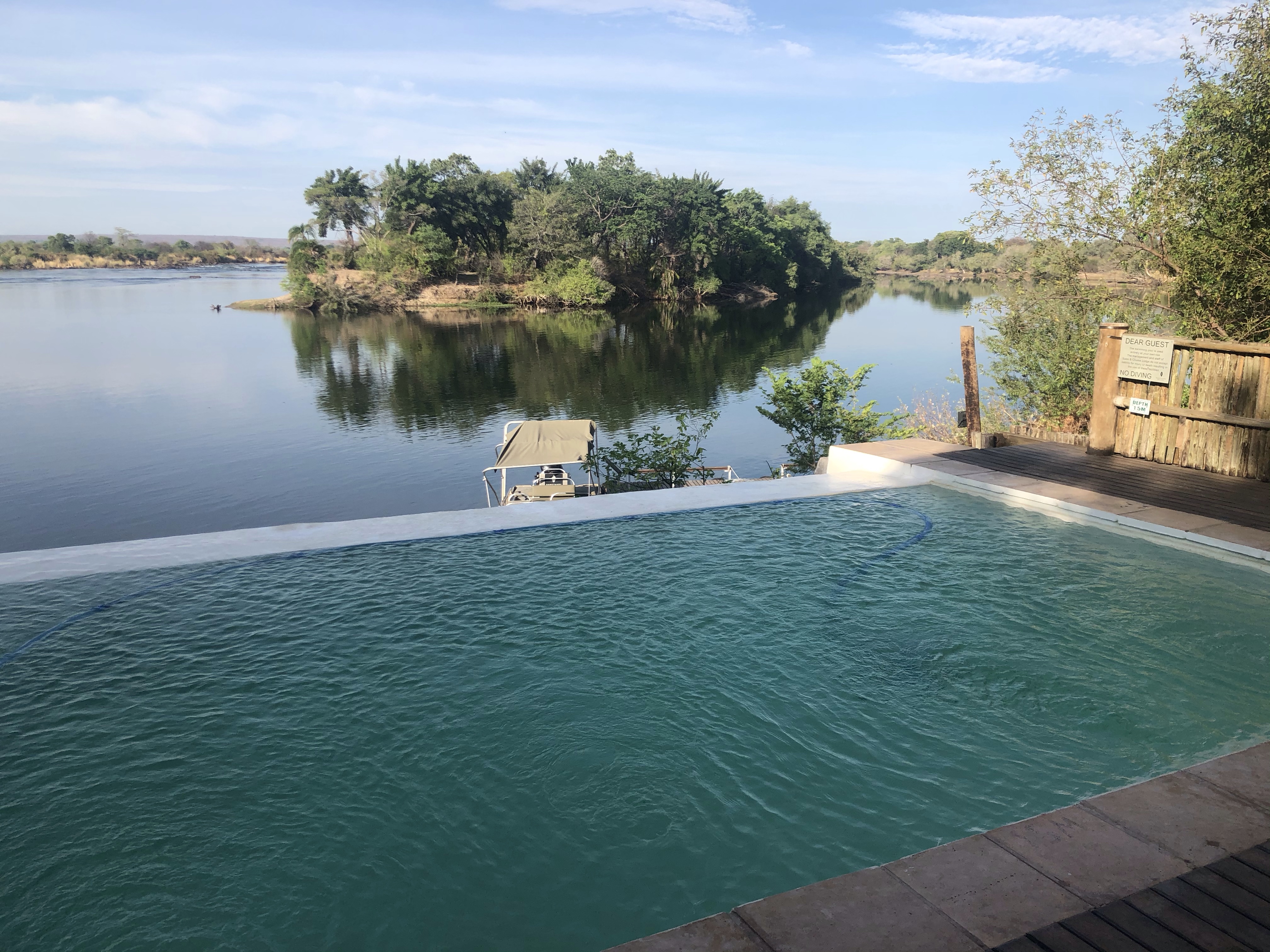
Victoria Falls is fed by the Zambezi River. Our resort sat right on the Zambezi looking west into Zimbabwe. Called Sanctuary Sussi and Chuma (Dr. Livingstone “discovered” Victoria Falls on his explorations. Sussi and Chuma were his guides), the resort consisted of 12 elevated huts that they called treehouses. We got around by walkways that were 8 to 10 feet off the ground. With the wild animals in the area, we had to be escorted to our rooms at night just like we did on safari in South Africa. The place is beautiful and we highly recommend it should you come to Zambia.

Not only is this a stunning resort with amazing service, they are also tremendously supportive of their local community. We had a chance to visit the nearby village of Nakatindi. Sussi and Chuma along with Abercrombie and Kent have provided assistance to the education, health and economic well-being of this 3000-person village.

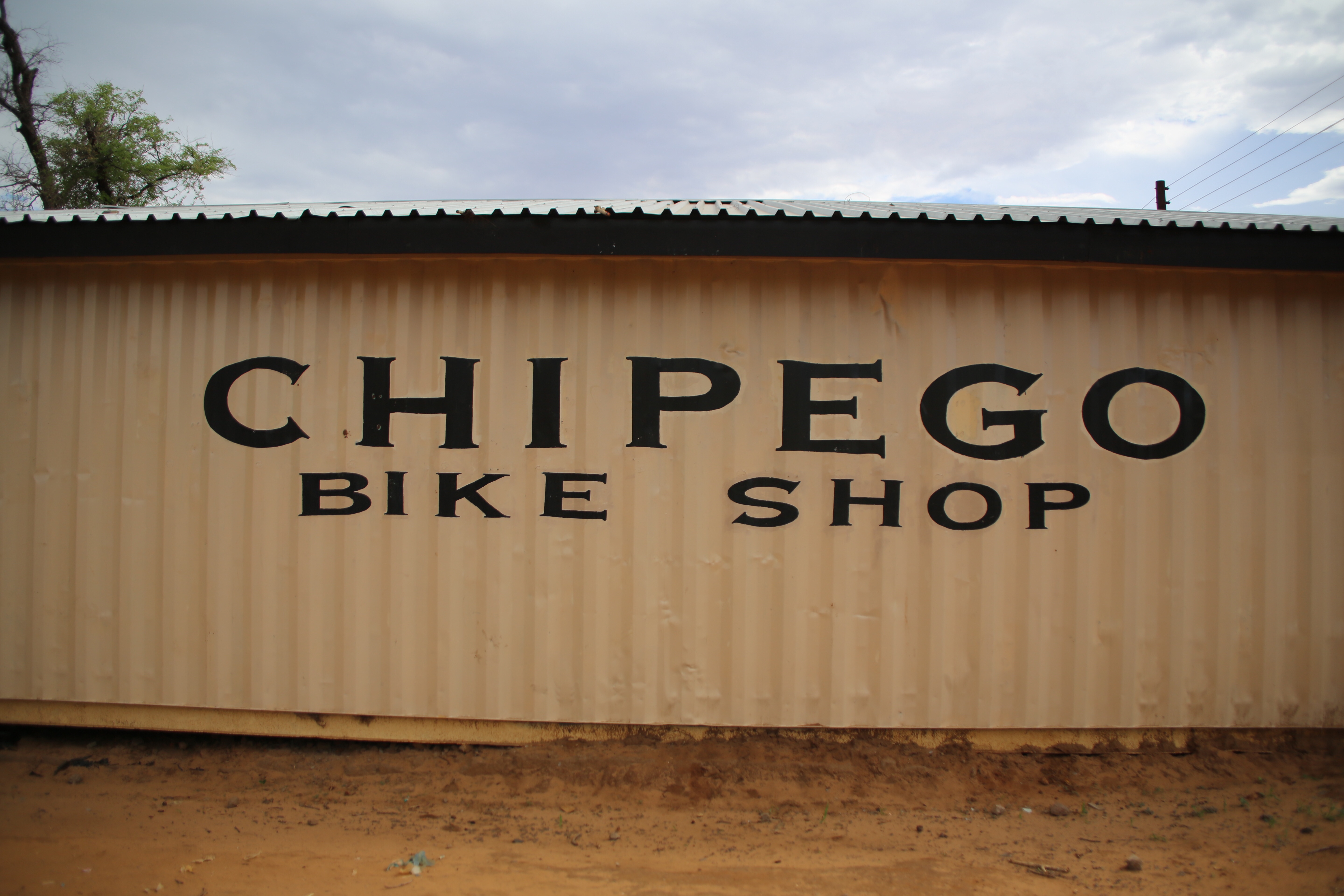
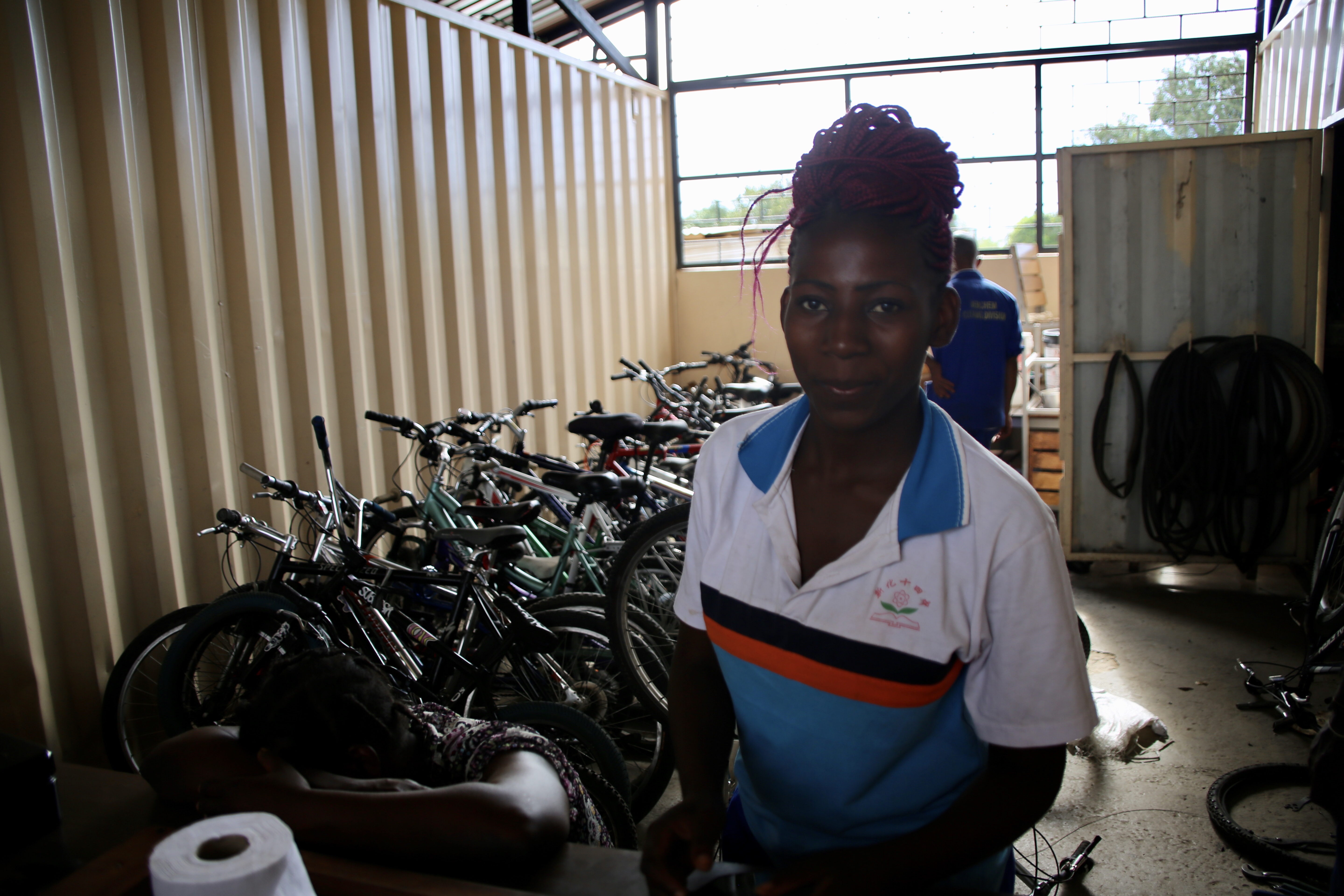
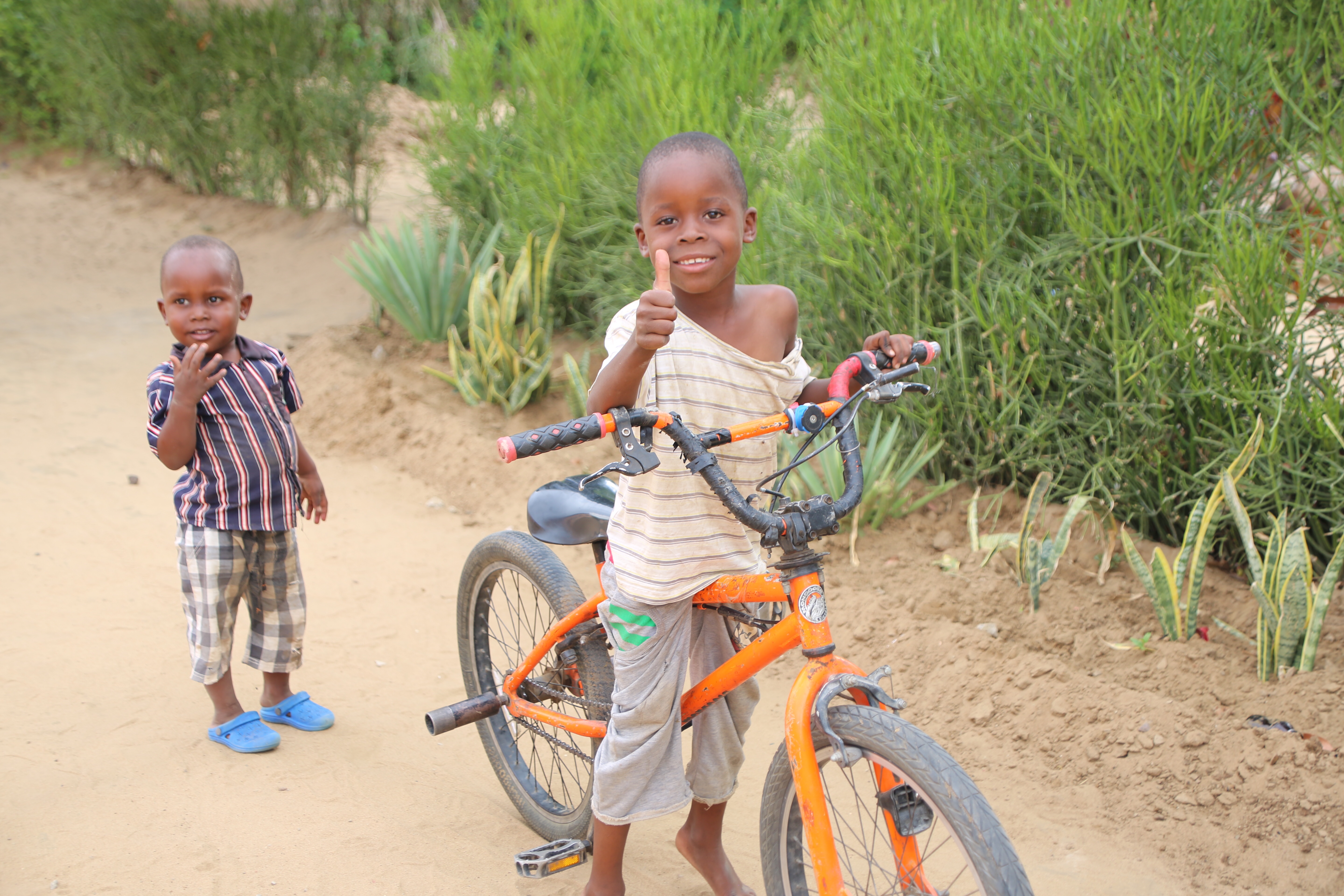
Our first stop in the village was the commerce section. There they had a barbershop, fruit and vegetable stands, a bike shop, jewelry store and other miscellaneous stands. Having good friends who are in to cycling (that’s you Mike and Chris), we decided to walk in to the bike shop. This shop gets used bicycles donated to them from the US, Australia, and Great Britain. They fix them up and sell them to locals. They also donate a bike to each child in the village who graduates eighth grade. The high school is several miles away so the bikes help them to further their education.

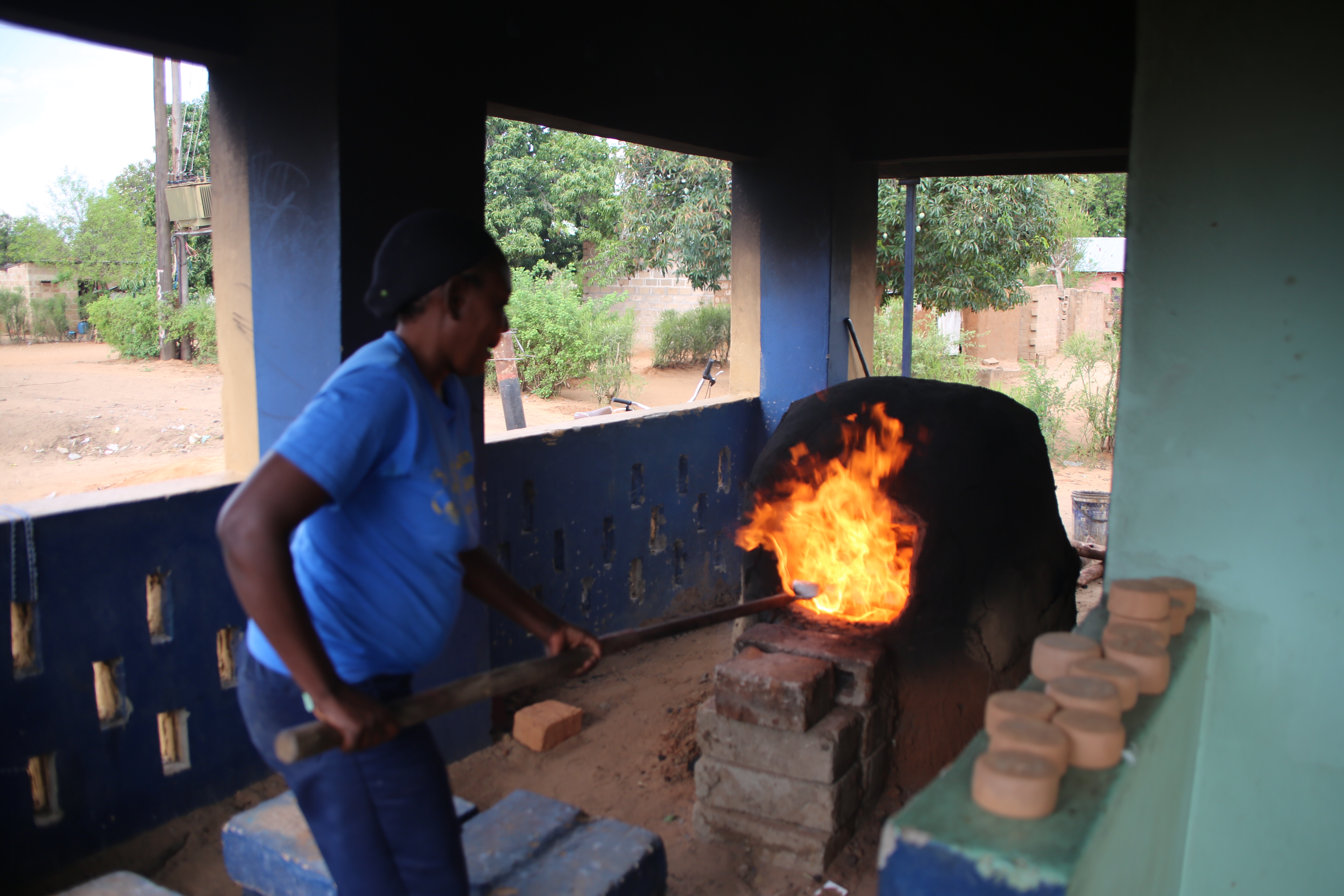
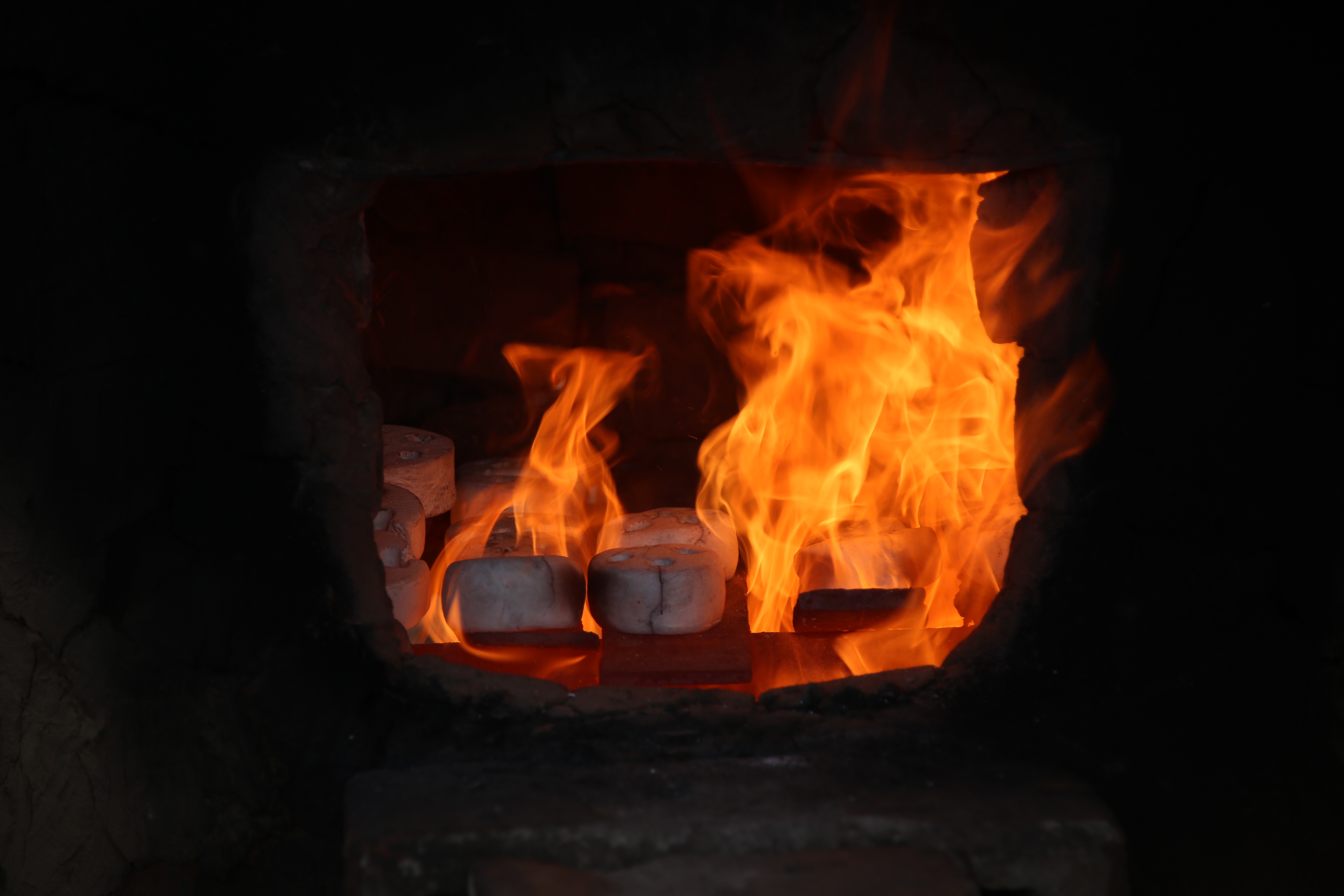
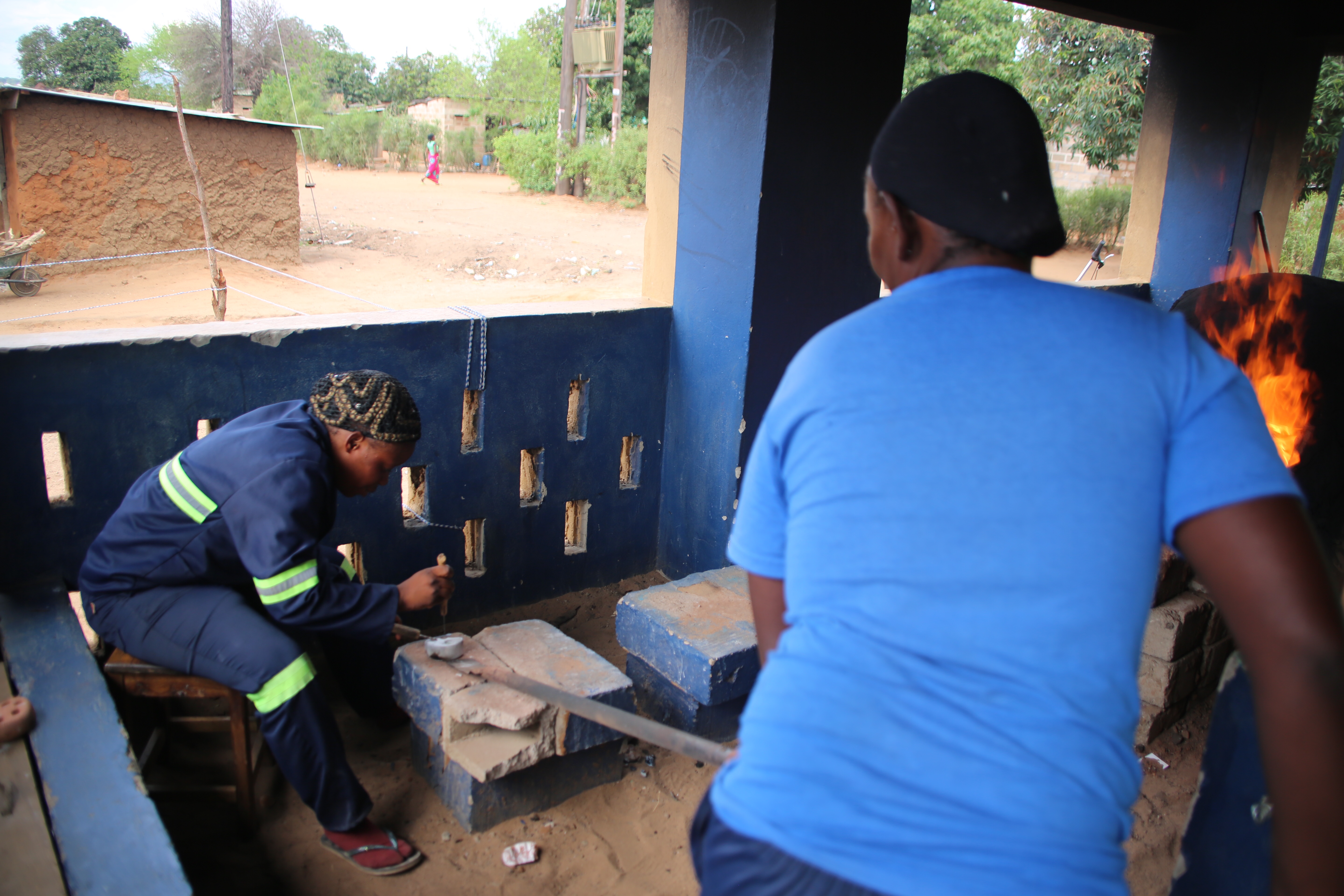
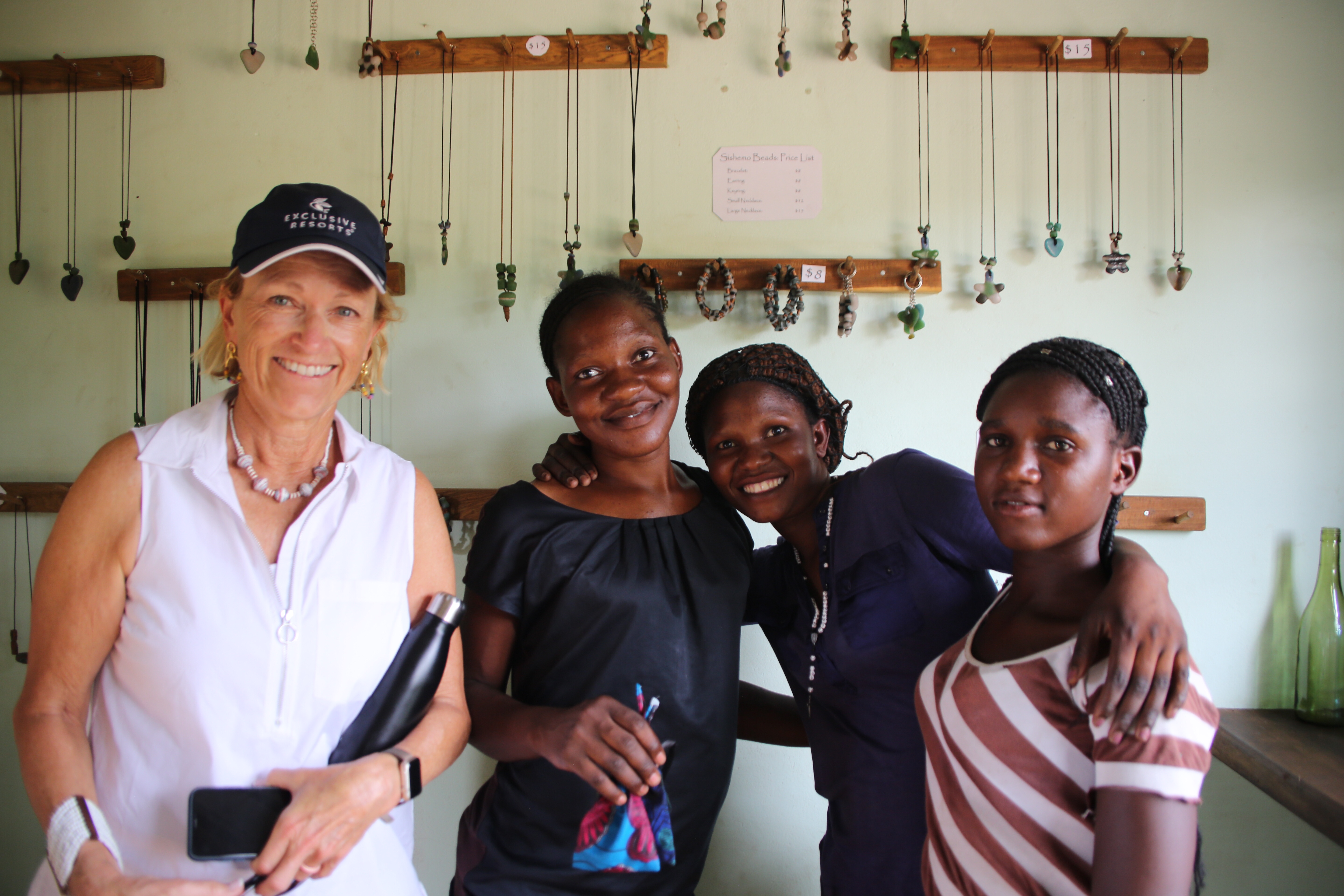
We went next to the jewelry store. The artisans here crush up empty glass bottles , melt the glass and form it into beads, hearts, and other beautiful pieces of jewelry. Lisa, of course, decided to support a local business and will be coming home with a few nice pieces.

Sussi and Chuma resort helped both of these stores with training on how to run a business, financial support to get started, and, they even sell the jewelry in their own store.

The village seems to do a great job of self-governing. They have elected village leaders, a neighborhood watch program, and they regularly work with the federal government for support even though they don’t seem to get much help from that source. Crime isn’t a major problem in the village. They have worse issues with elephants trampling through town, eating vegetables and making a mess.

Their most recent addition has been a health clinic, again supported by Abercrombie and Kent and our resort. HIV is a serious problem in Zambia, orphaning millions of children and driving the country’s average life expectancy down below the age of 50. The clinic as staffed by nurses with an on-call doctor who visits periodically. The clinic allows people who are sick to get immediate treatment; it provides health education, including sex education for teens; and, dispenses needed medication. The HIV problem is improving meaningfully because the clinic is here. And, people are getting better health care overall.

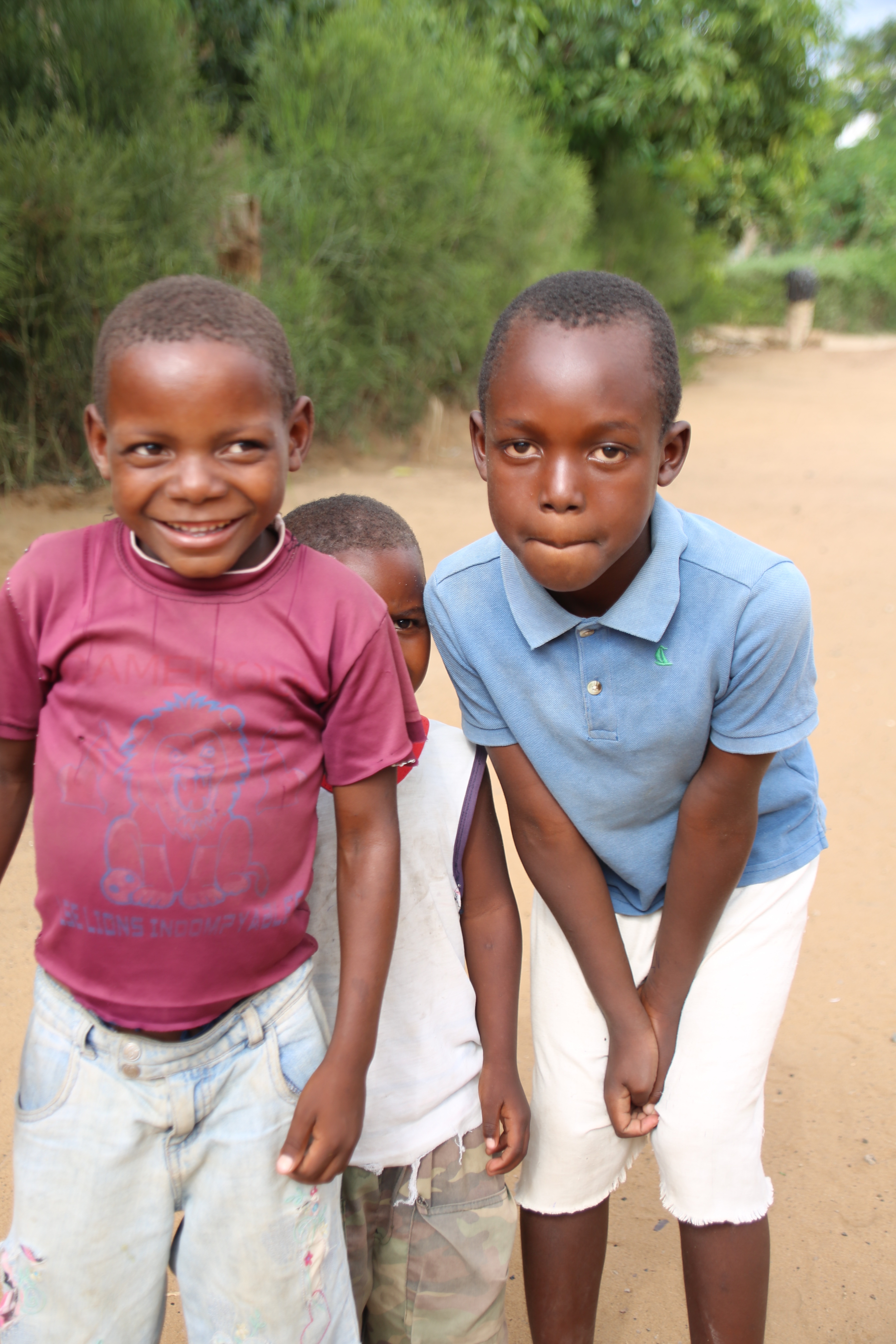
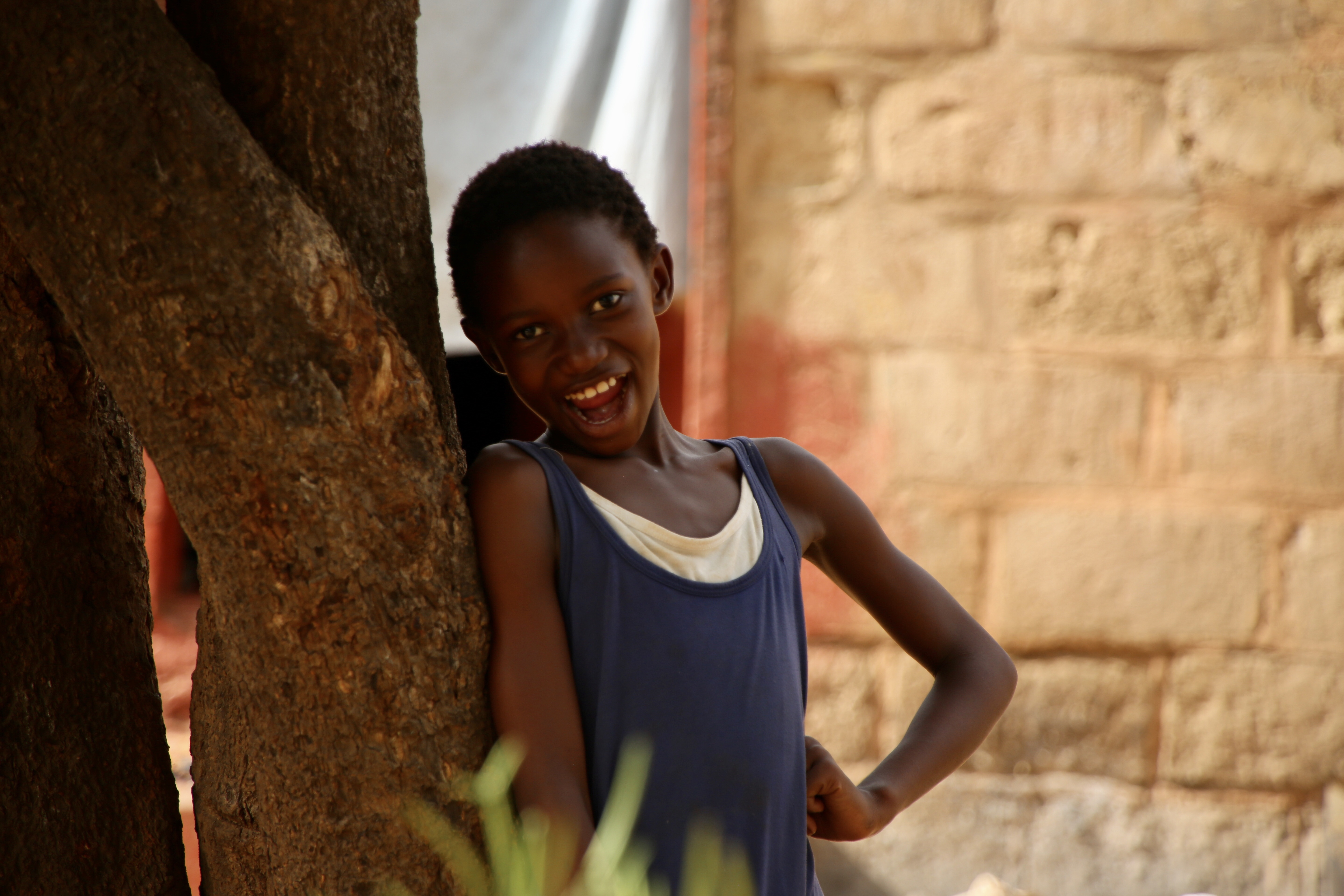
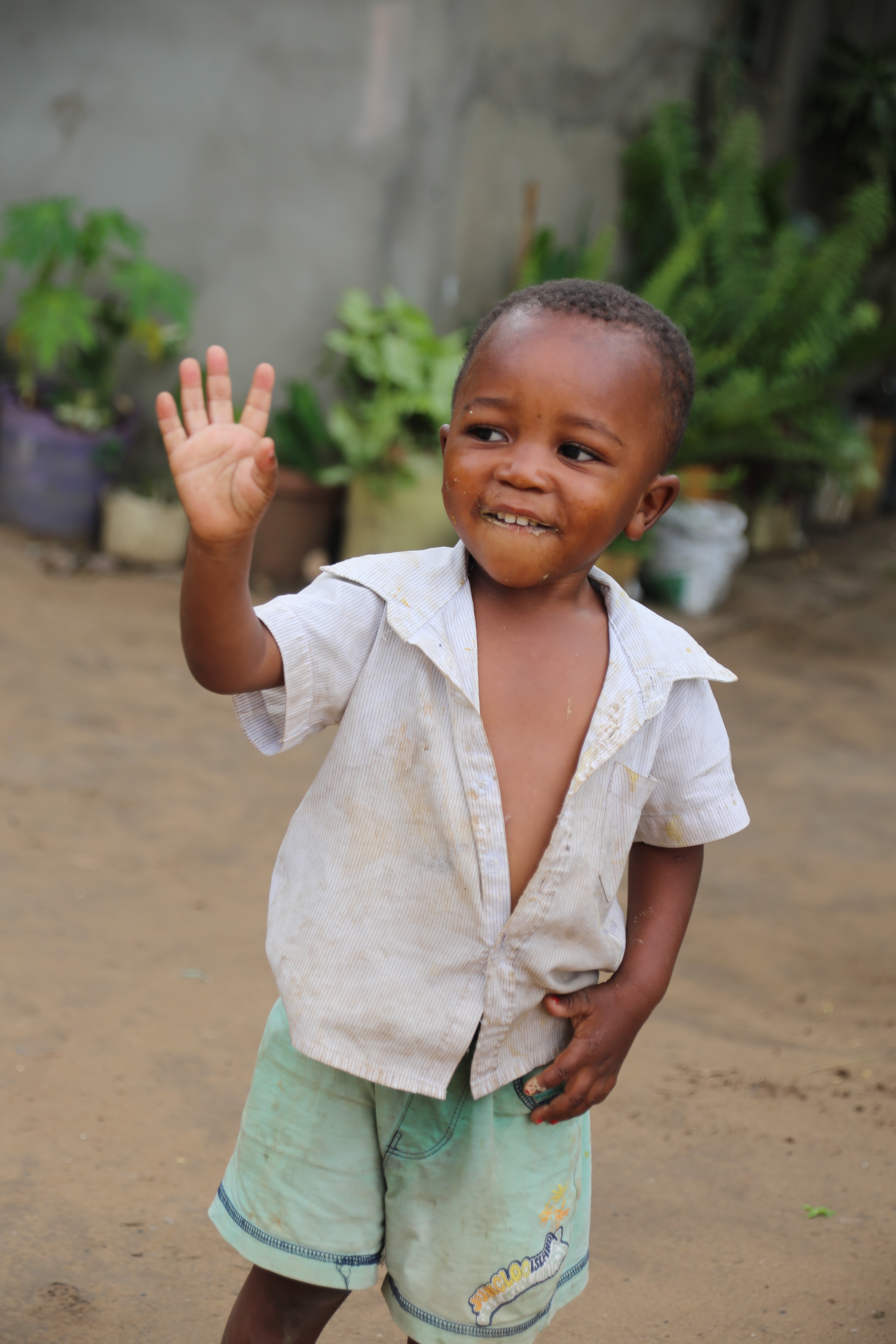
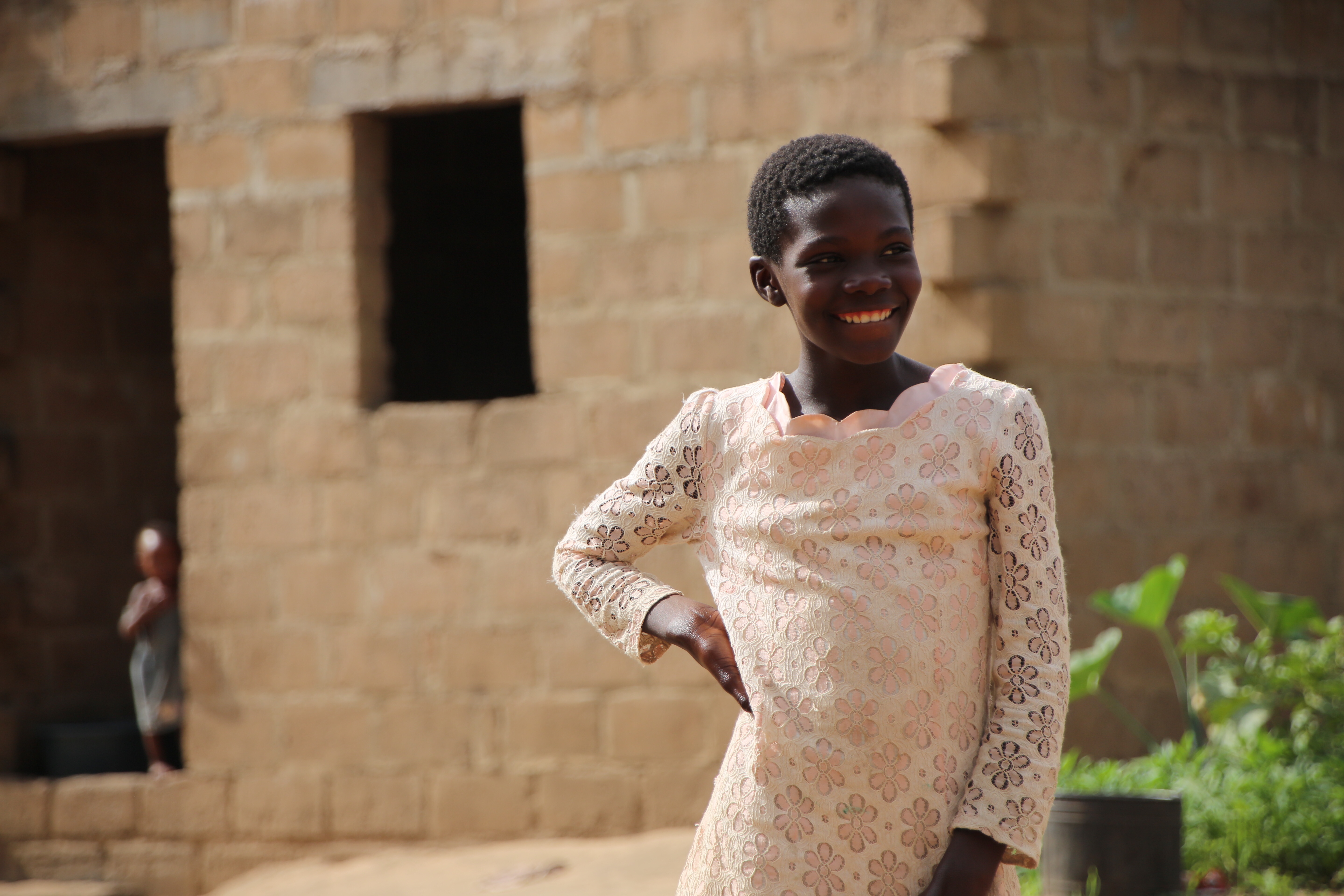
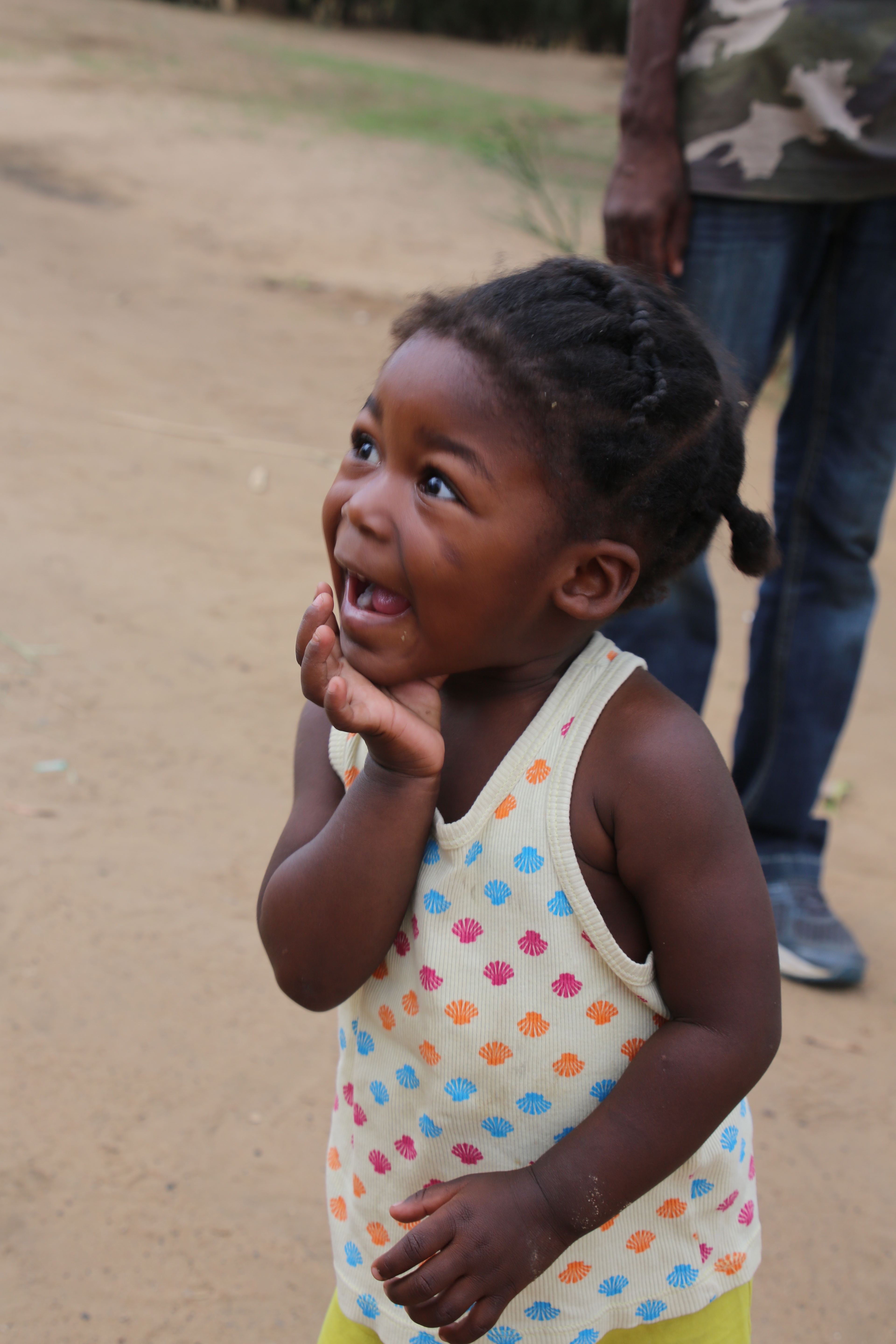
The children were delightful with several following on our tour asking for their picture to be taken, looking for high fives, or jumping into our arms to be hugged. The last major area of support from Sussi and Chuma was the school. They provide support to give free lunches to all the children so they can focus on learning, not their empty stomachs.

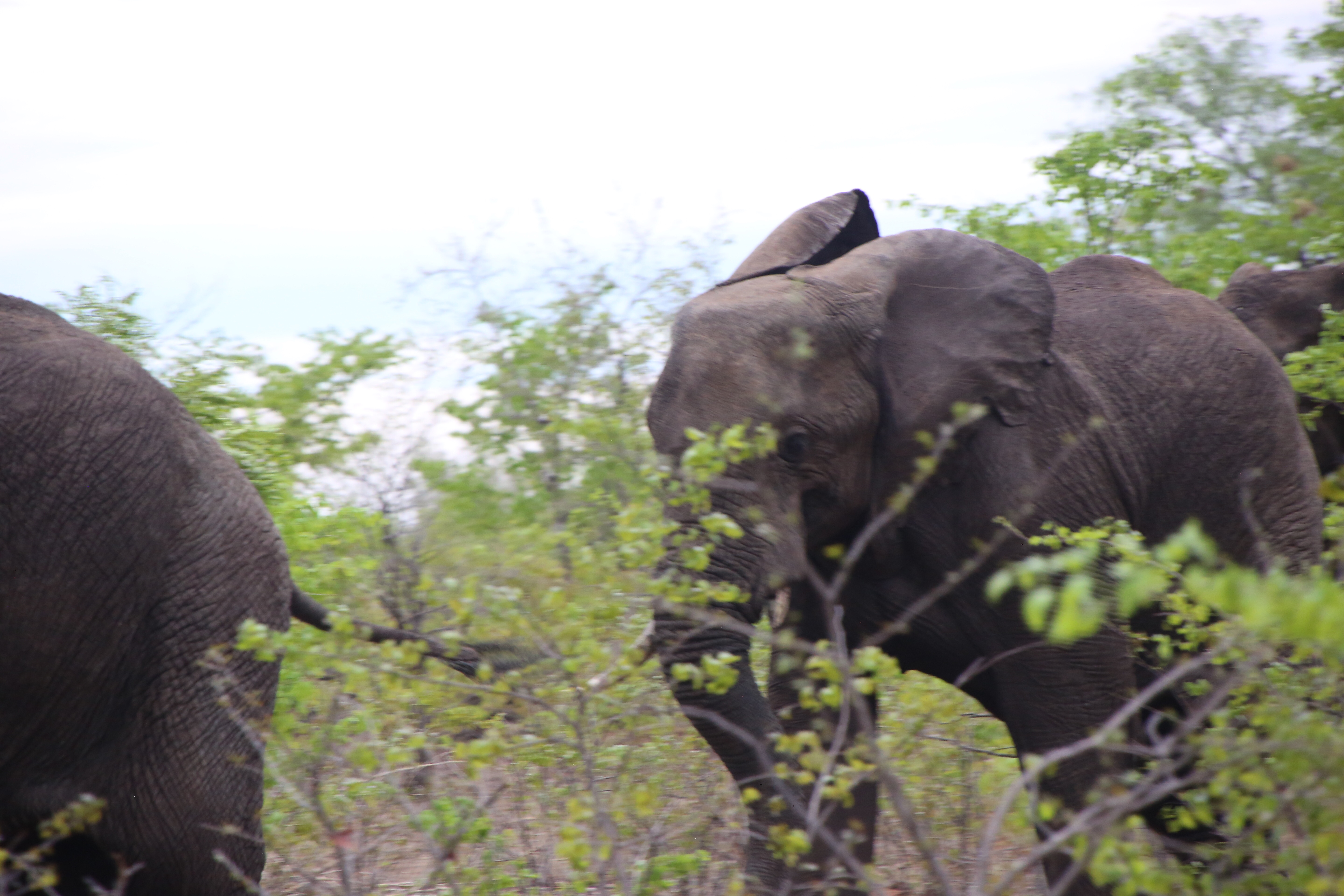
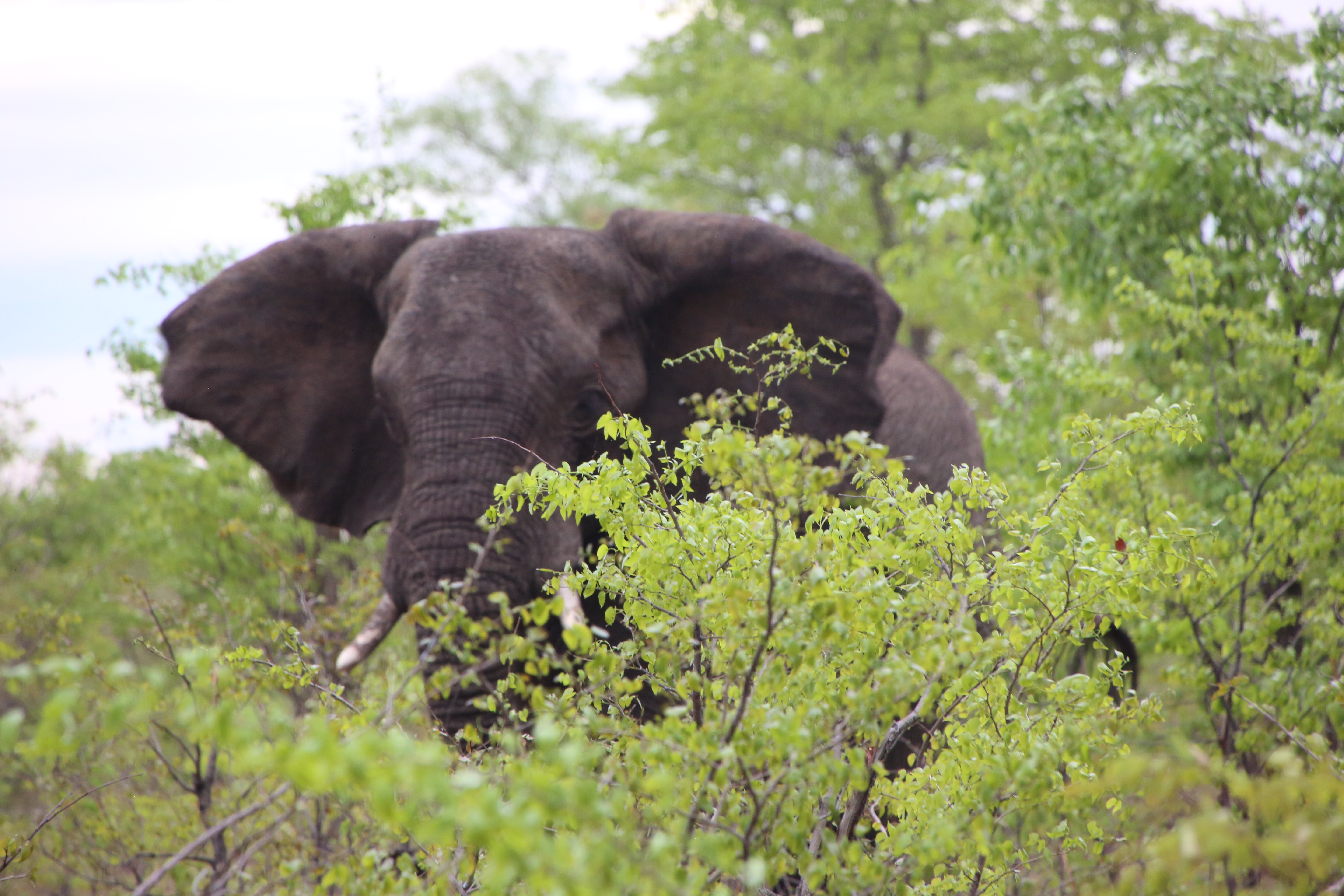
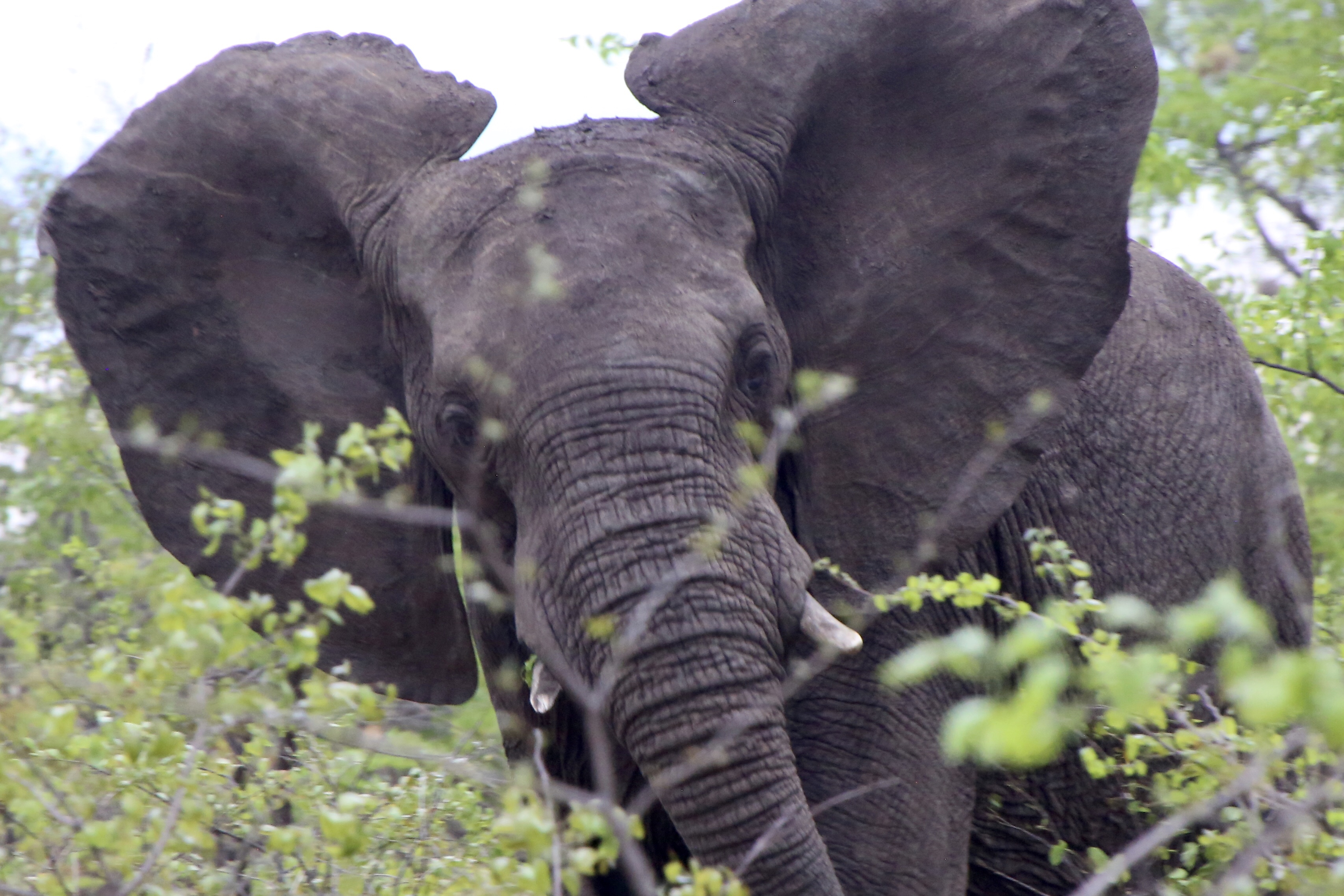
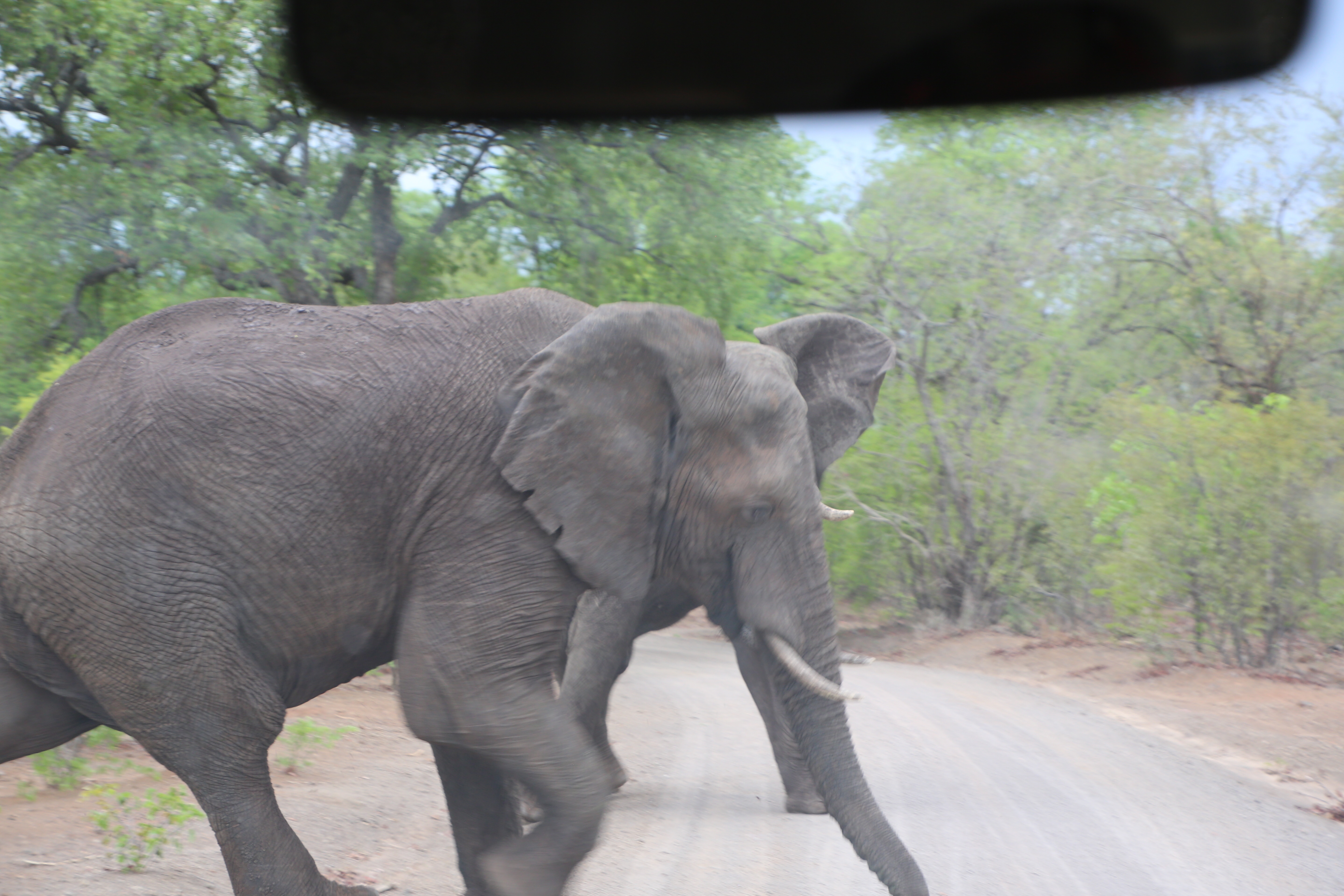
As we left the village and drove back up the road to our resort, a herd of elephants came charging through the bush, running straight at up and across the road both in front of and behind our car. It was quite a sight.

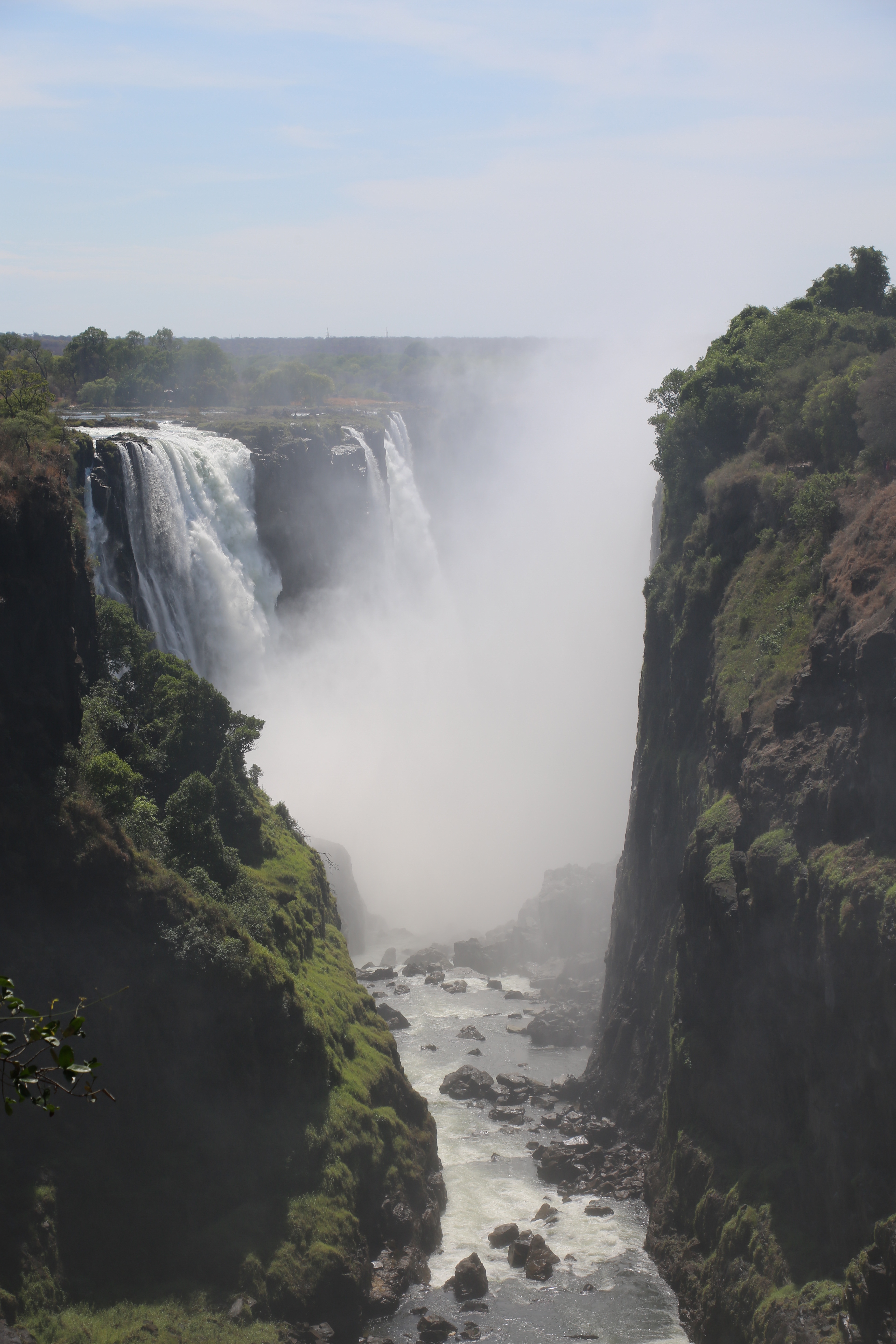
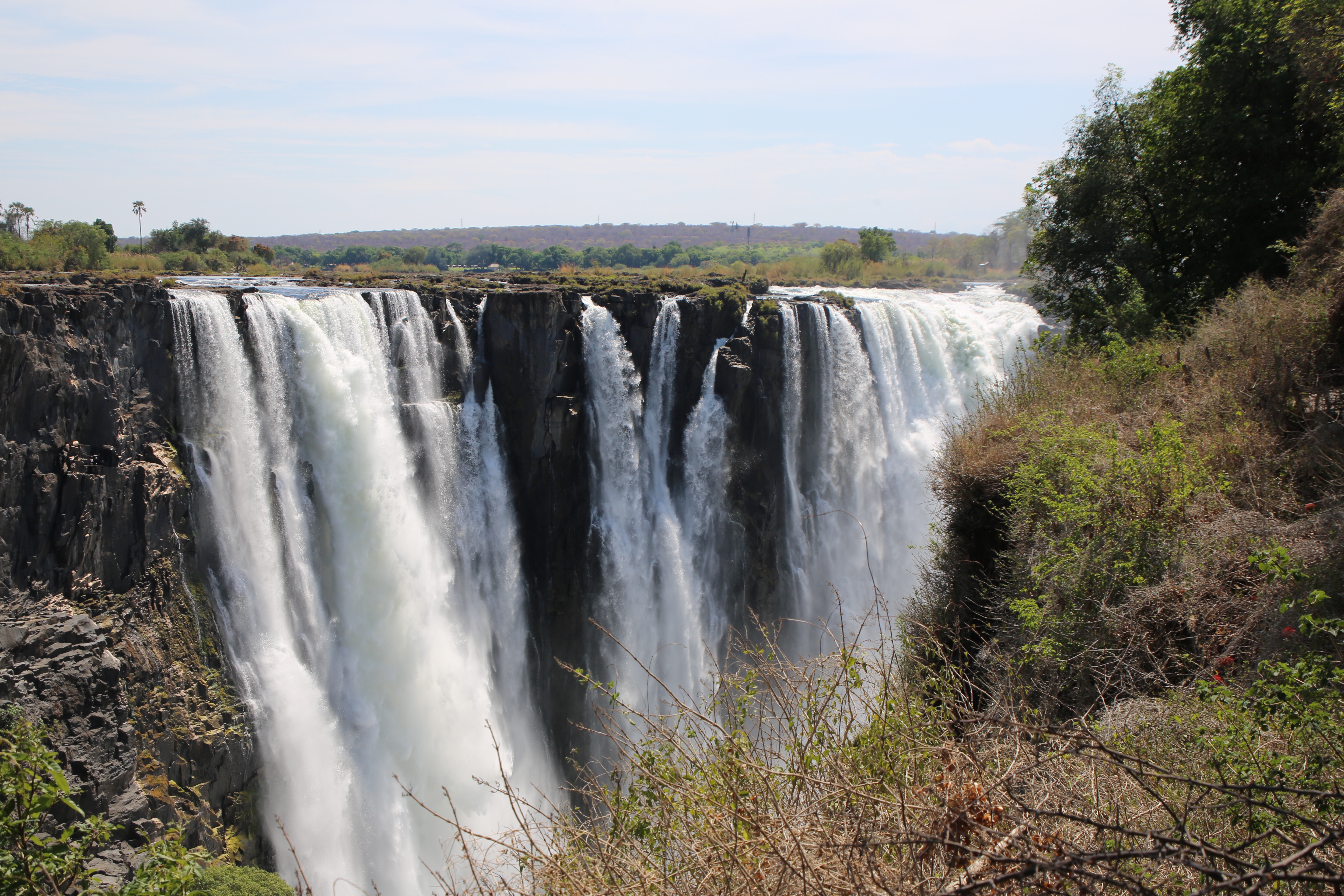
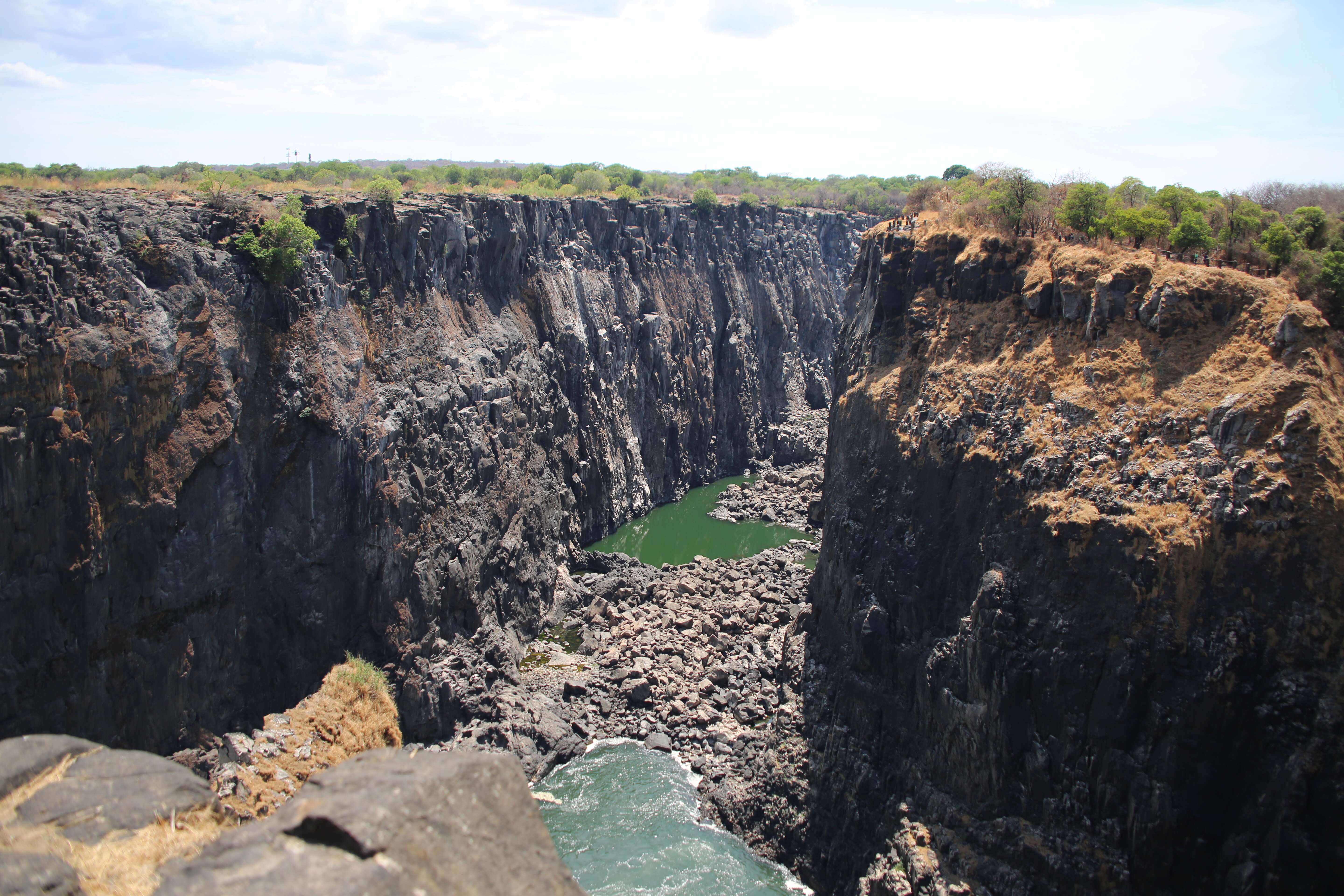
Victoria Falls flows from the Zambezi river into a deep gorge. Unlike Niagara Falls, it flows at varying strengths depending on the time of year. During the rainy season in January, for example, it is roaring across its full length of 1.25 miles. We were here in the dry season so the flow is far less with much of the cliff dry and exposed. Nevertheless, it is an incredible sight. We looked at it from both the Zimbabwean side, which flows all year, and the Zambian side that is dry this time of year.

This section of the falls runs fast and furious during the rainy season. It is dry right now as the Zambezi River is low.

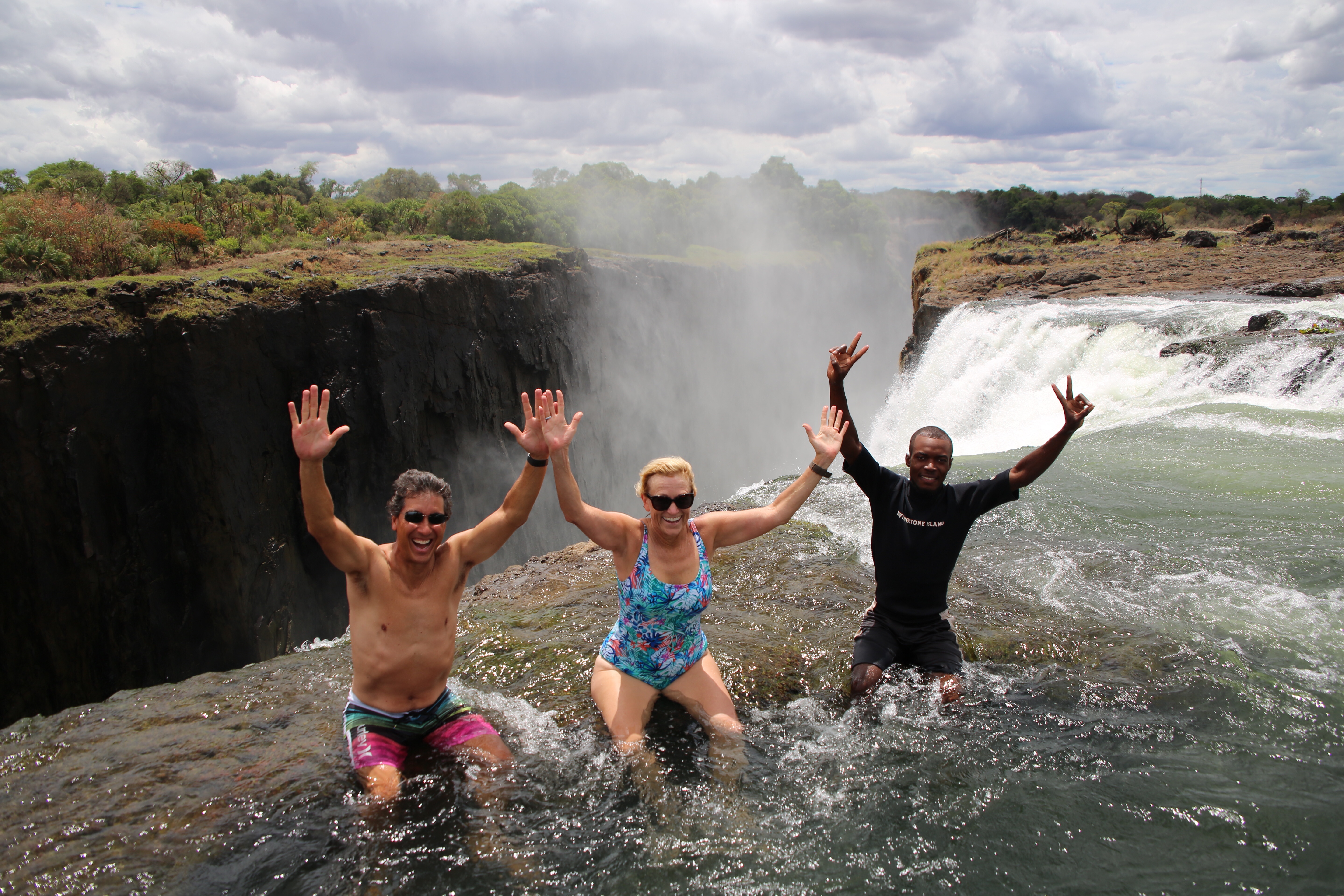
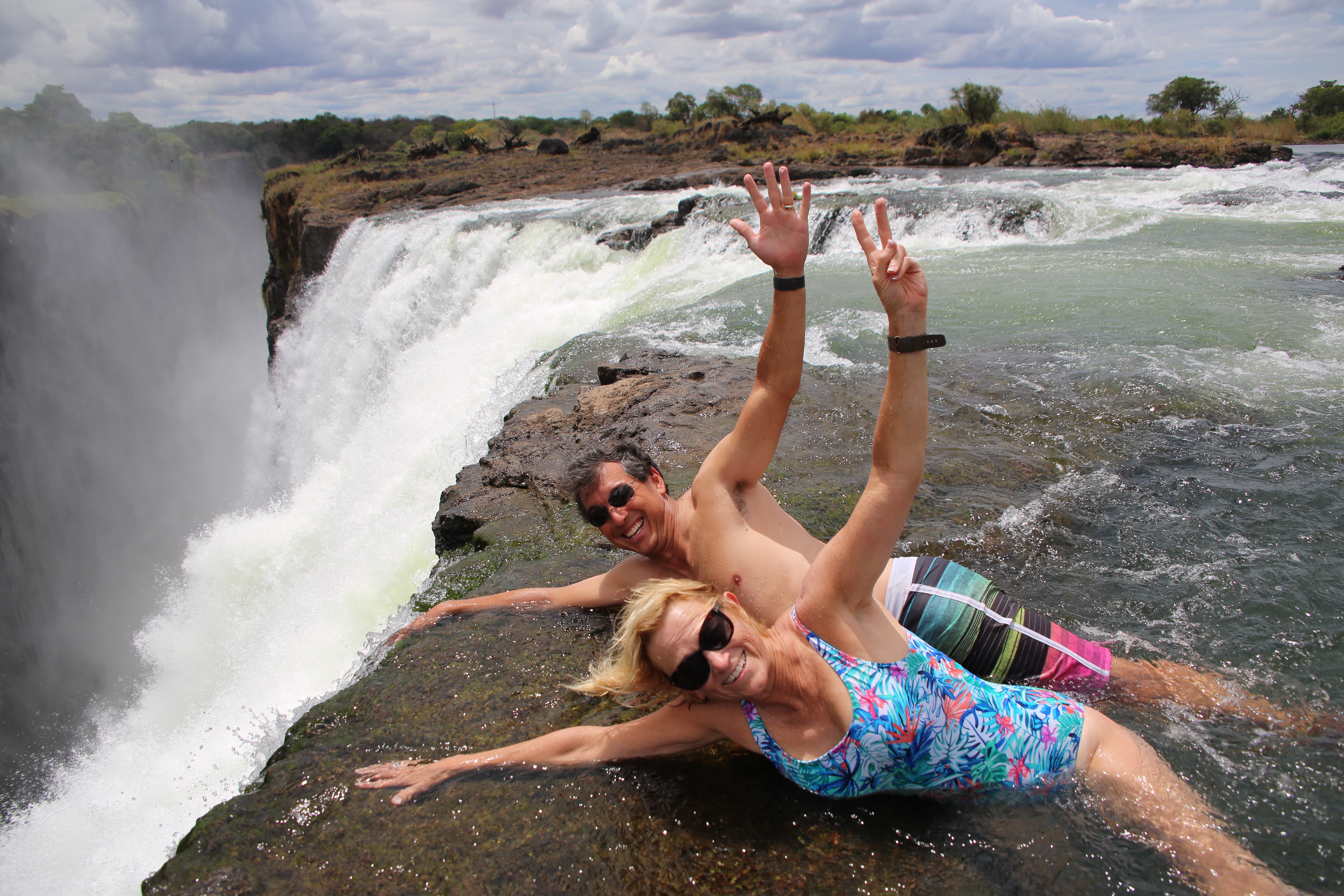
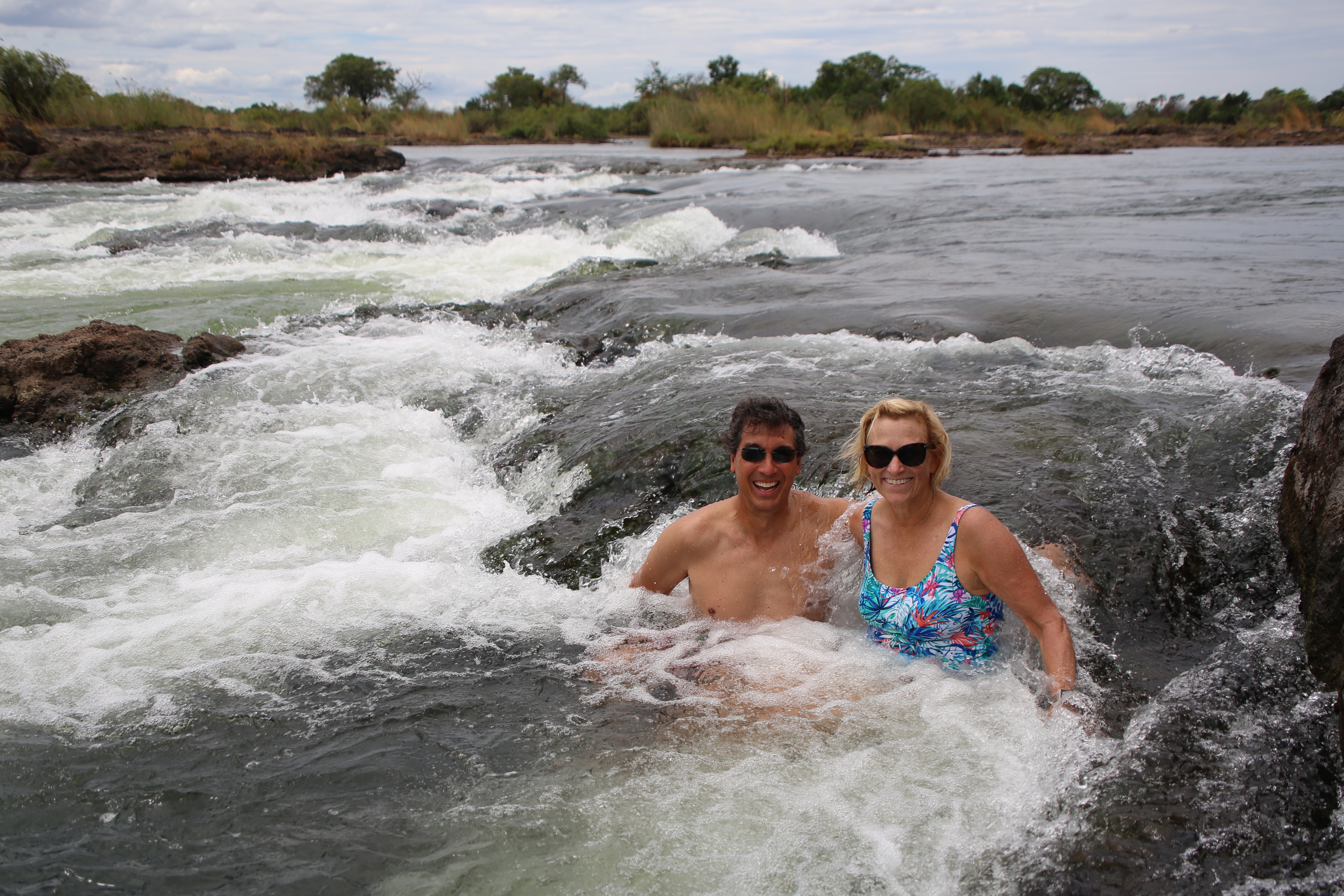
After visiting the falls from the, um, general viewing area, we decided to get up close and personal with the falls. We went for a swim in the Devil’s Pool which is a natural pool at the top of the falls. One can only visit Devil’s Pool when the water is low as it is today. Otherwise the volume of water would sweep one over the falls. Getting there required a boat trip out to Livingstone Island, a short hike to the falls, and a swim out to the pool. While the height certainly got our attention, we were more concerned for our guides who had no problem walking out to the edge and leaning out so they could get just the right angle on a photo for us. Oh, and Lisa really didn’t care for the small fish in the pool that nibbled on our feet (see our Vietnam blog on her fish pedicure). All-in-all it was a fun, exhilarating experience.

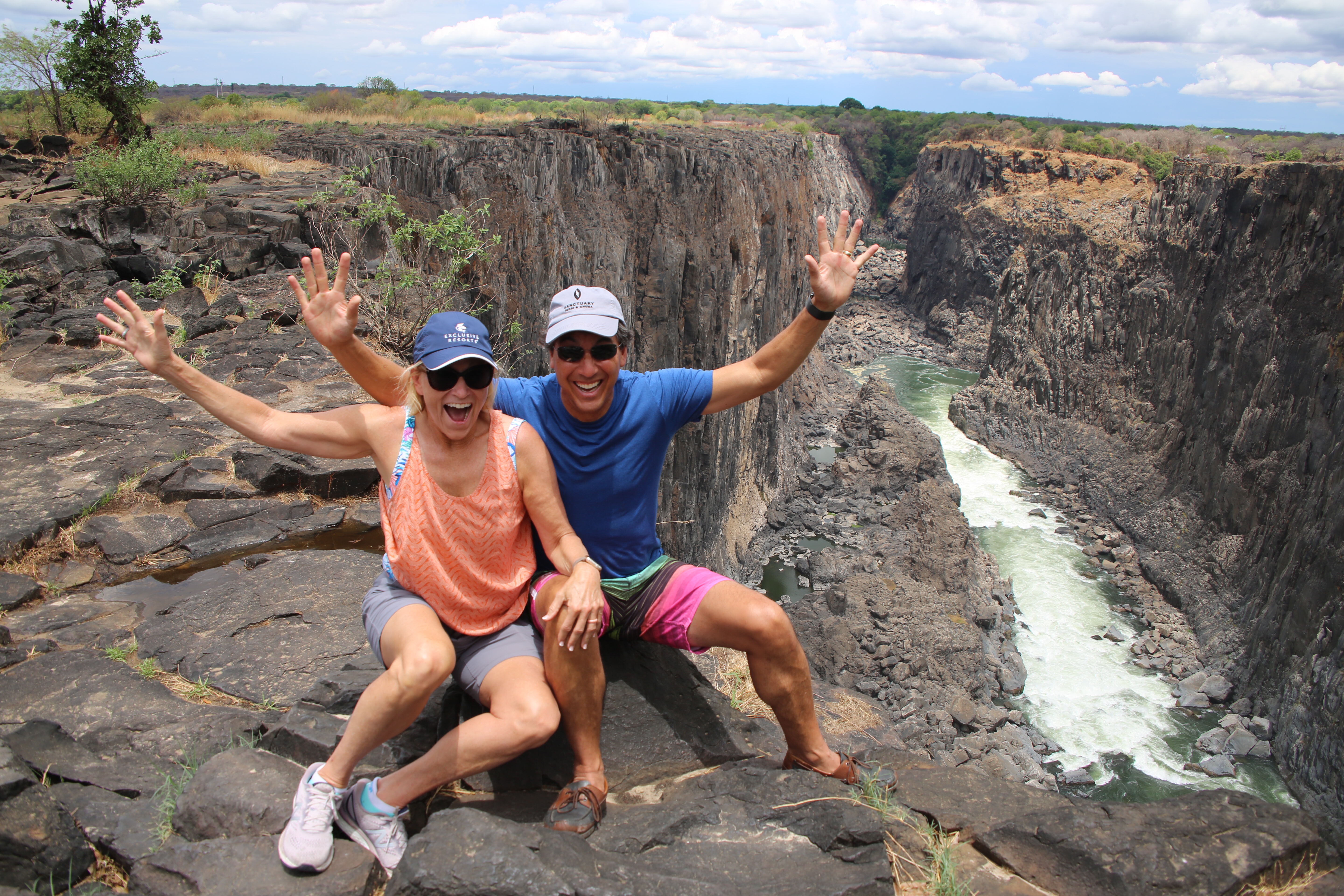
Here we are before swimming out to the pool on the edge of the cliff where the falls are dry today.

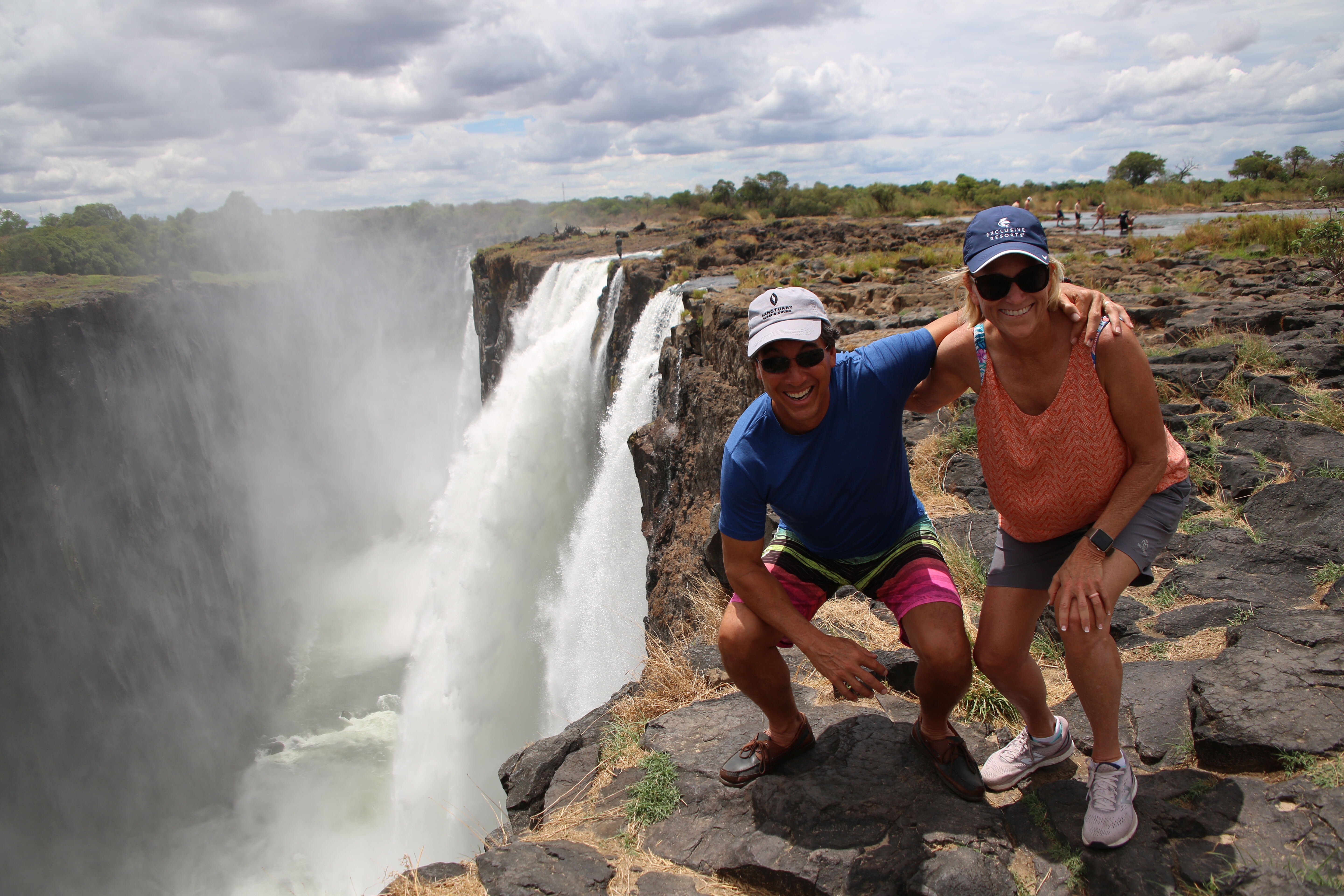
And, here we are at the edge of the roaring falls.

And, finally, here we are hamming it up in the pool.

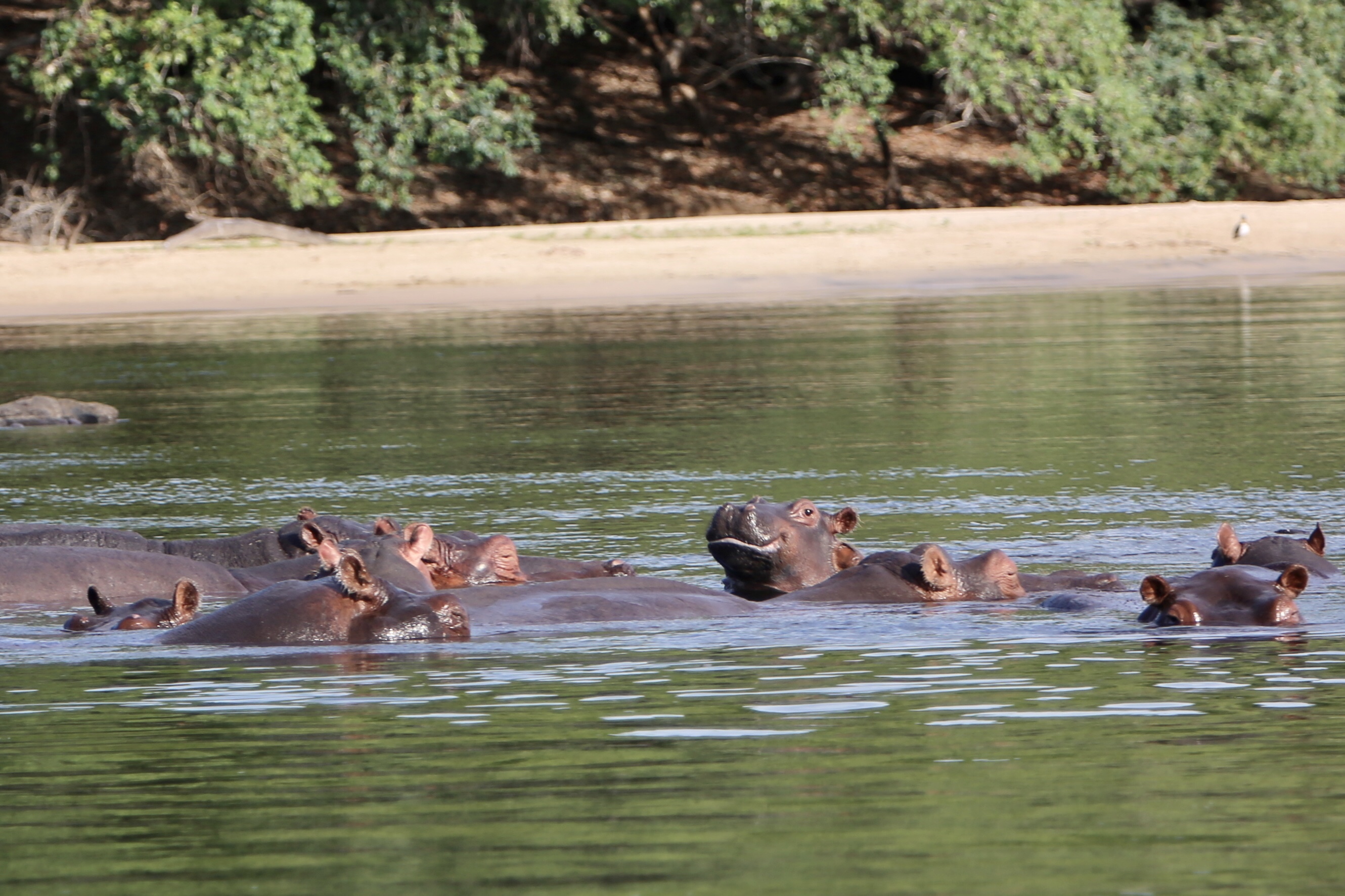
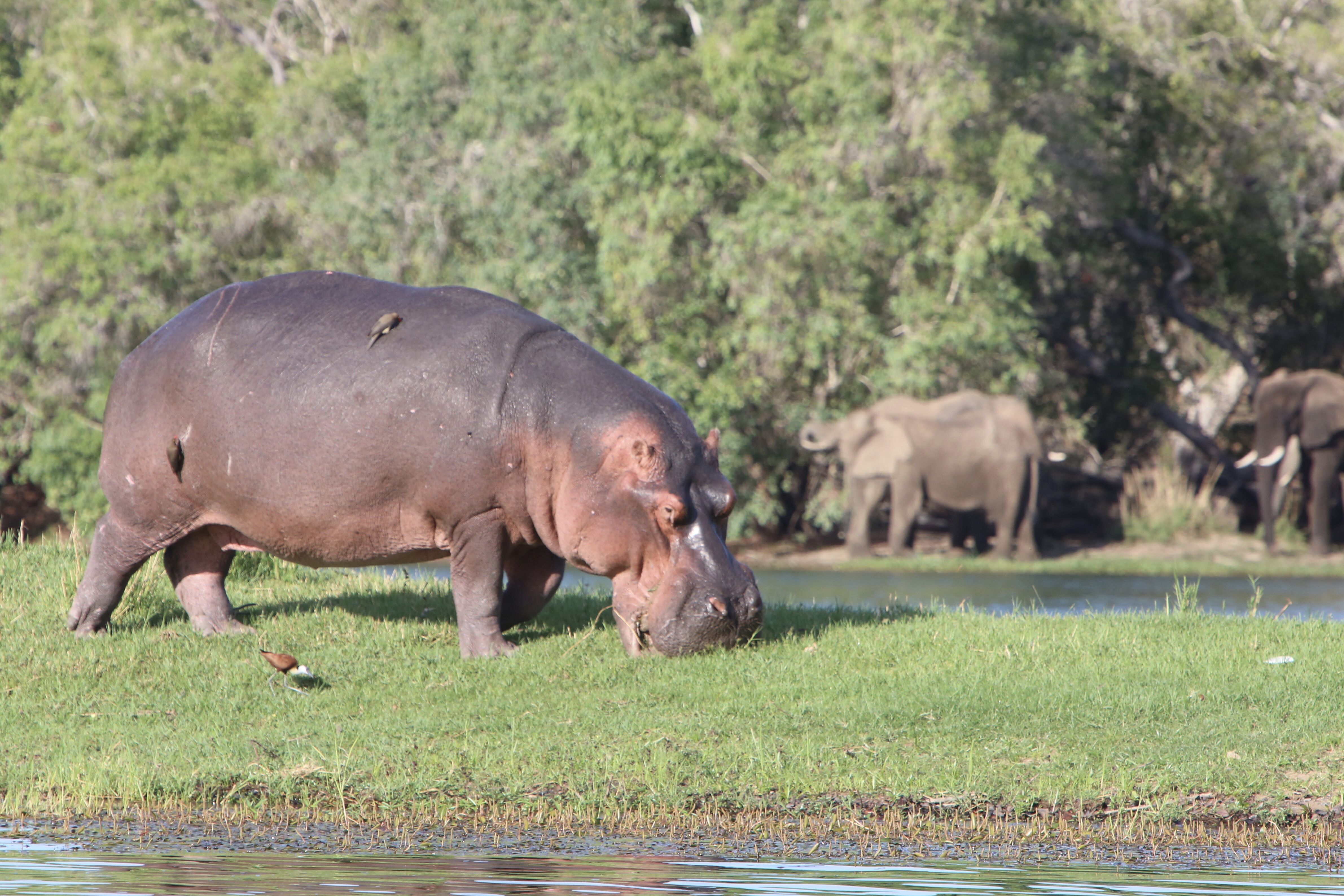
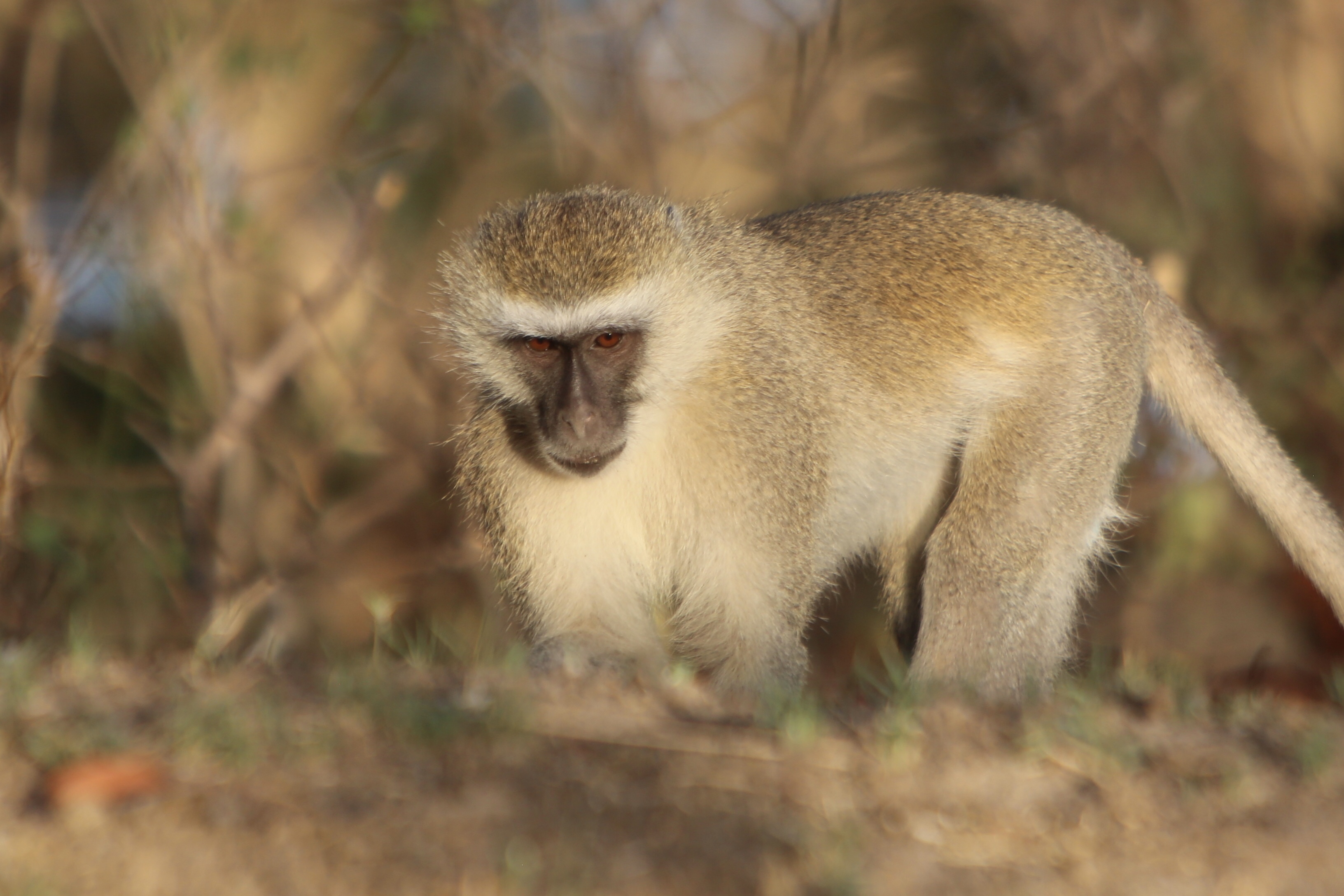
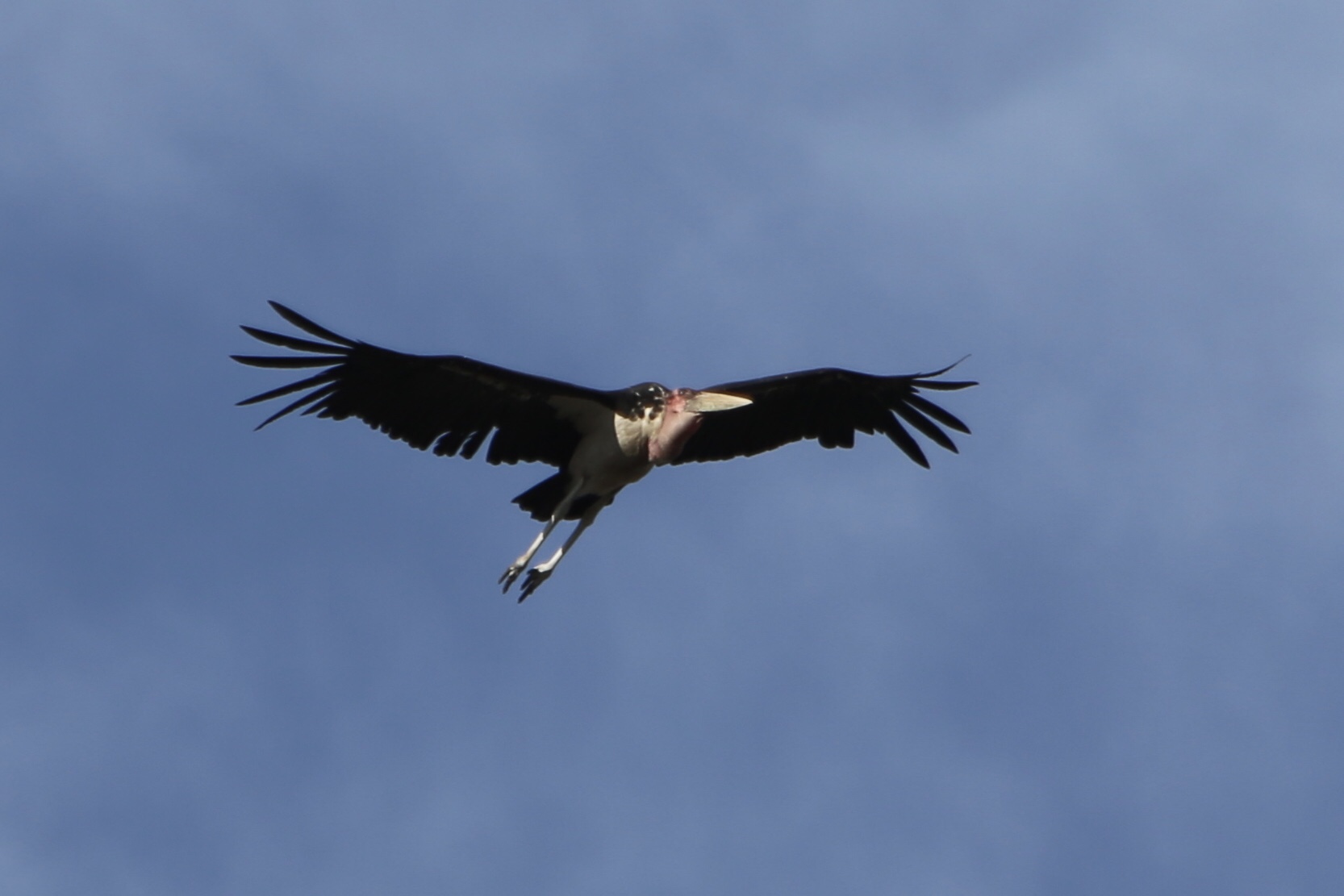
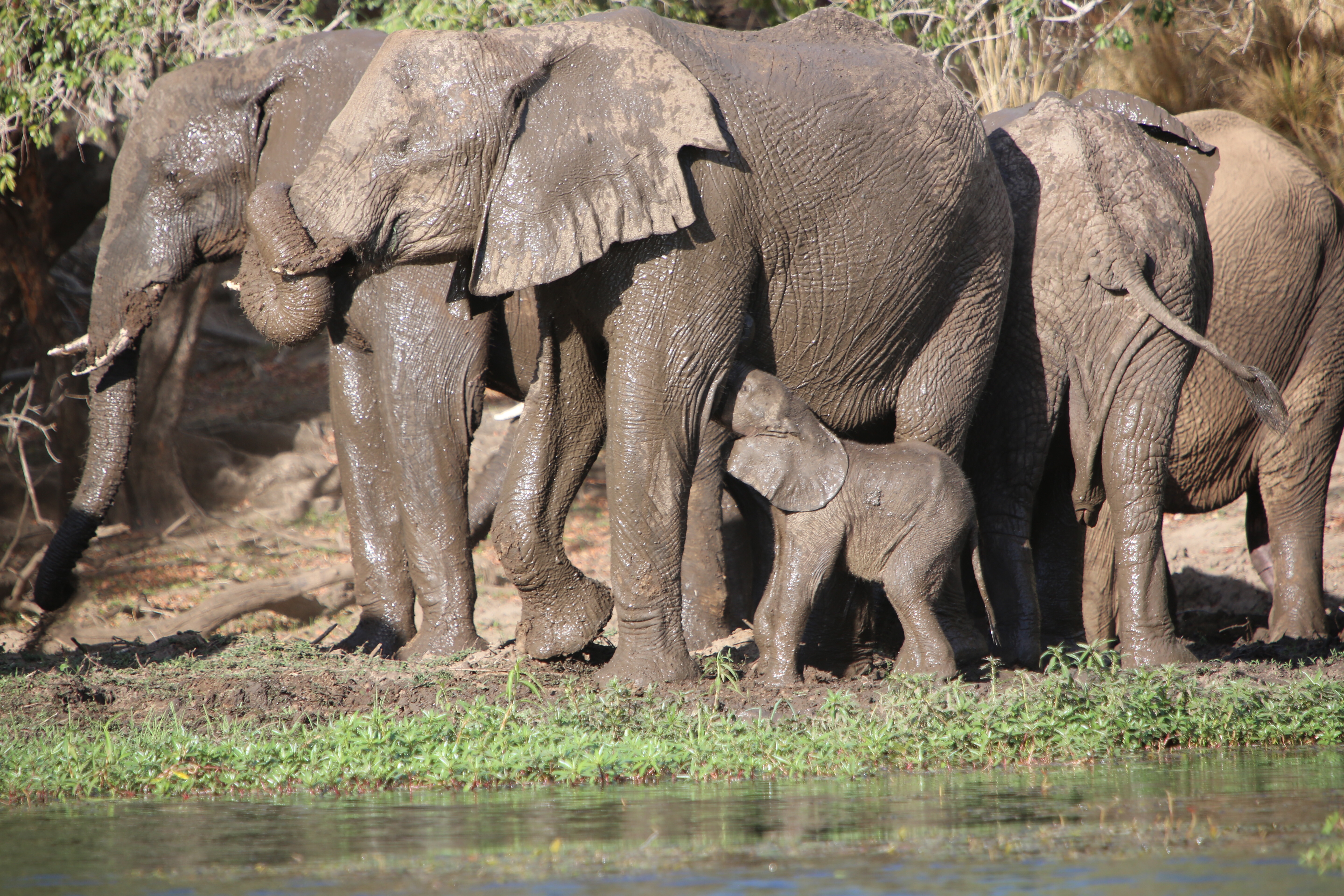
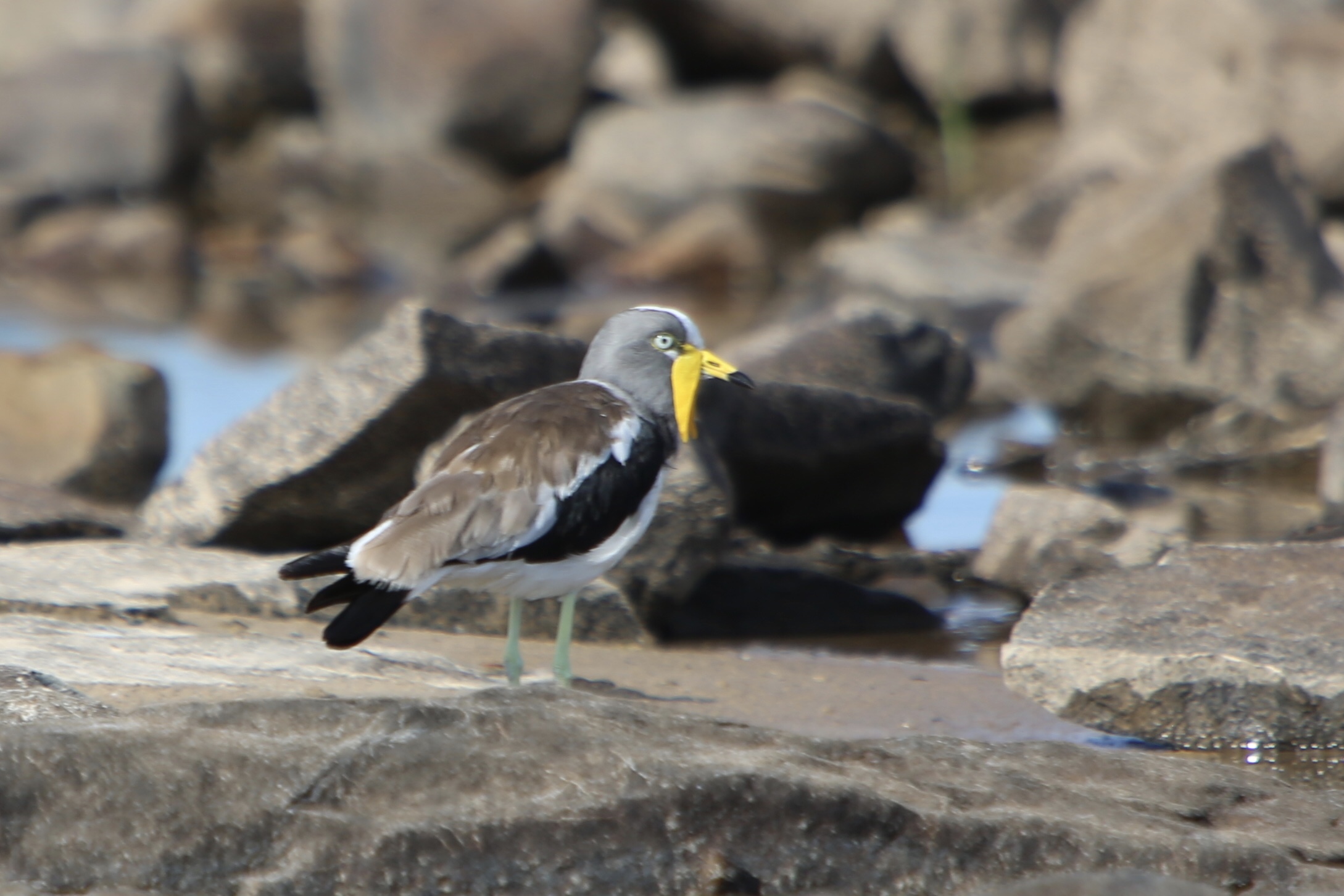
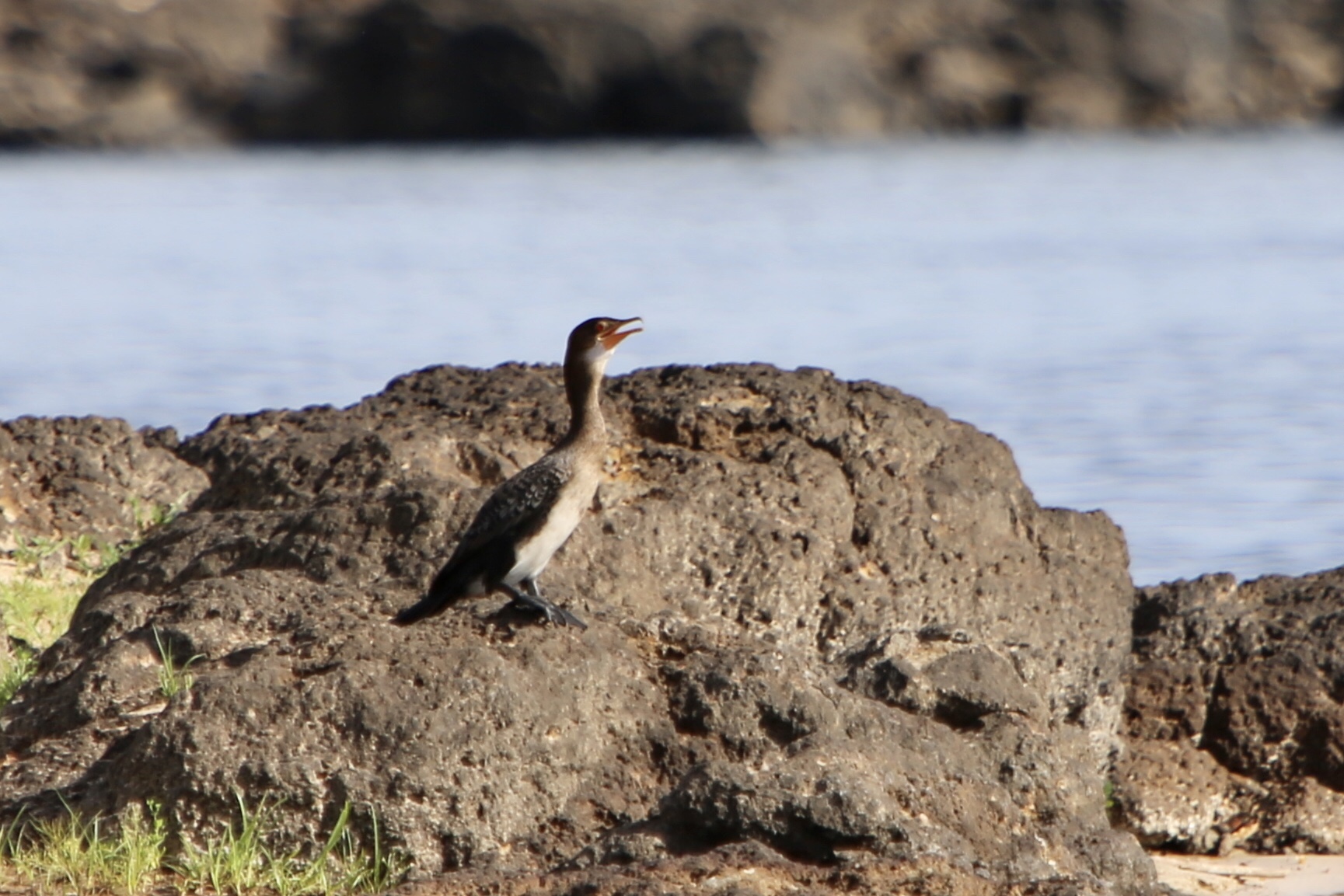
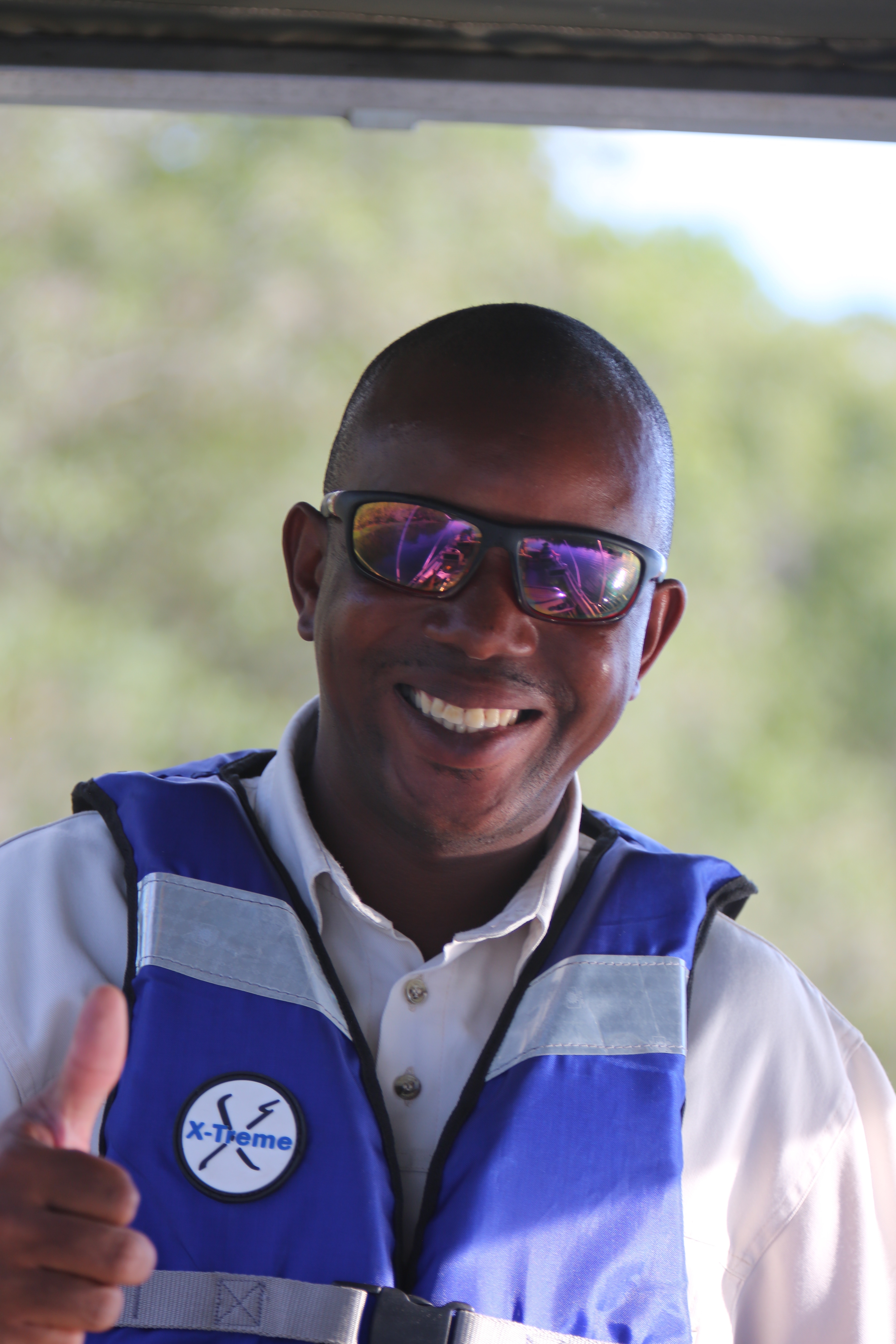
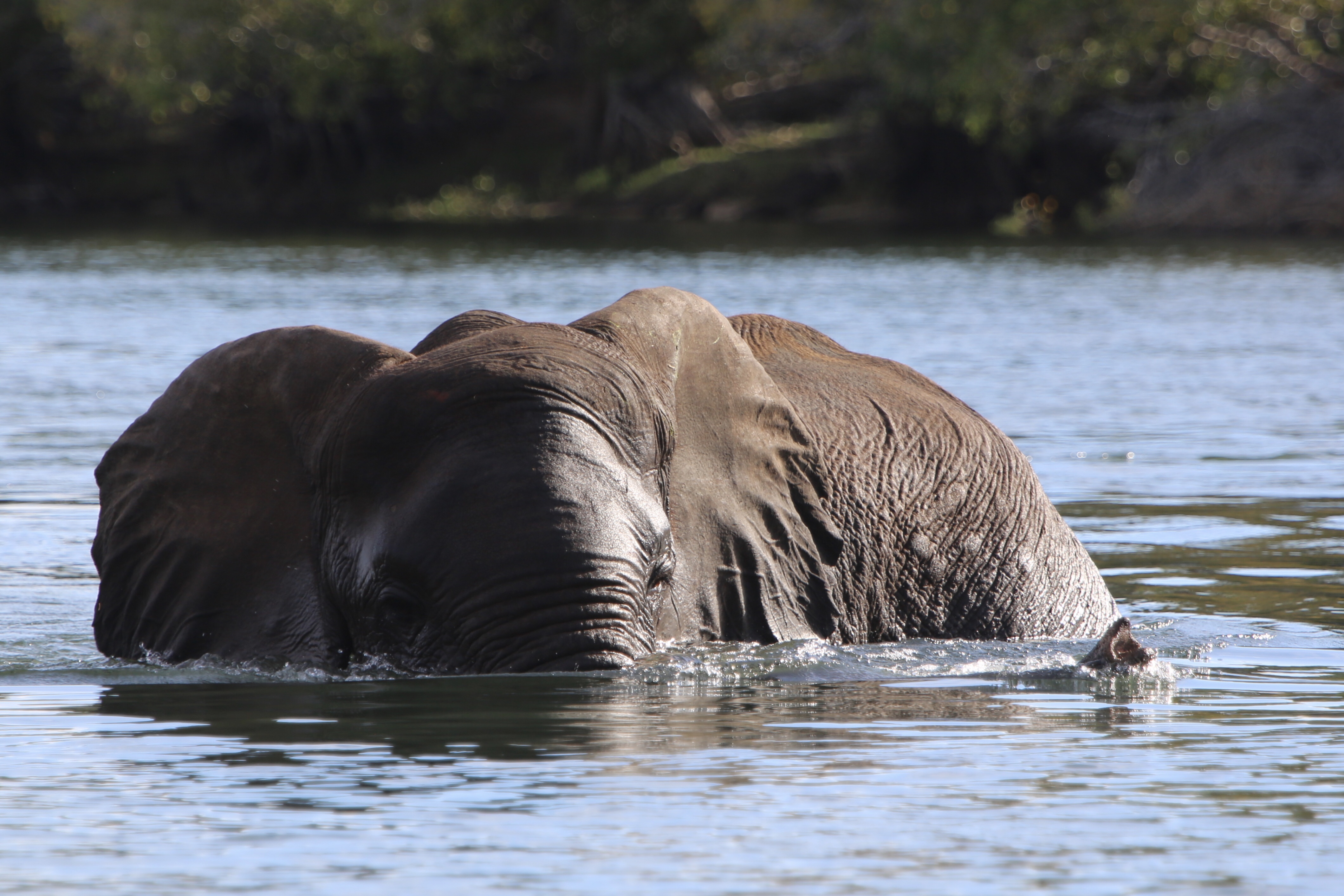
On our final evening we took a river cruise with our resort guide, Junior. The boat ride was essentially a safari on the water. We saw an elephant crossing the river, hippos both in and out of the water, monkeys, a herd of elephants on the bank, and many exotic birds. It was one of our favorite activities.

Zambia is an exotic, friendly, beautiful place to visit. We are so glad we visited. We’ll be back someday.

Categories: Africa, Safari, Travel, Victoria Falls, Zambia | Tags: , , , , , , | 3 Comments

Things We Learned on our First Safari

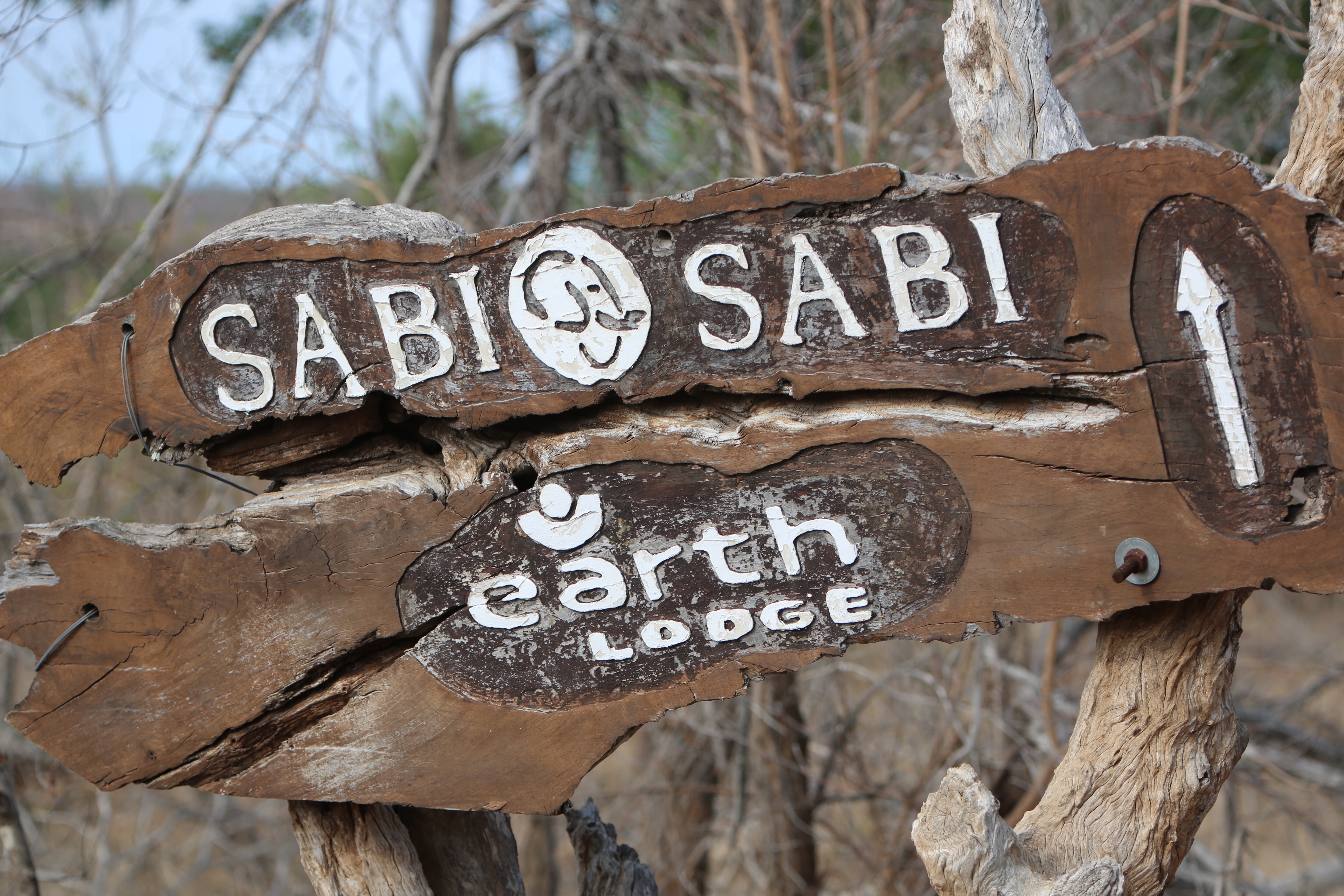
Brad and I are in Sabi Sabi Private Game Reserve experiencing our first safari and enjoying every second of it. Here are a few things we have learned so far. In no particular order whatsoever.

— Safaris happen when the animals are most active. This means that you get up at the crack of dawn, rest during the middle of the day, and go back out in the evening. Because you are out for three and four hour stretches, they do require that you plan ahead for your beverage management. For me, that means maybe only a half cup of coffee before we go! Yikes!

— Be prepared to gain five pounds. The dining schedule goes like this.

5:30 am: Light Breakfast

9:00 am: Hearty Breakfast

1:00 pm: Lunch

4:00 pm: Afternoon High Tea

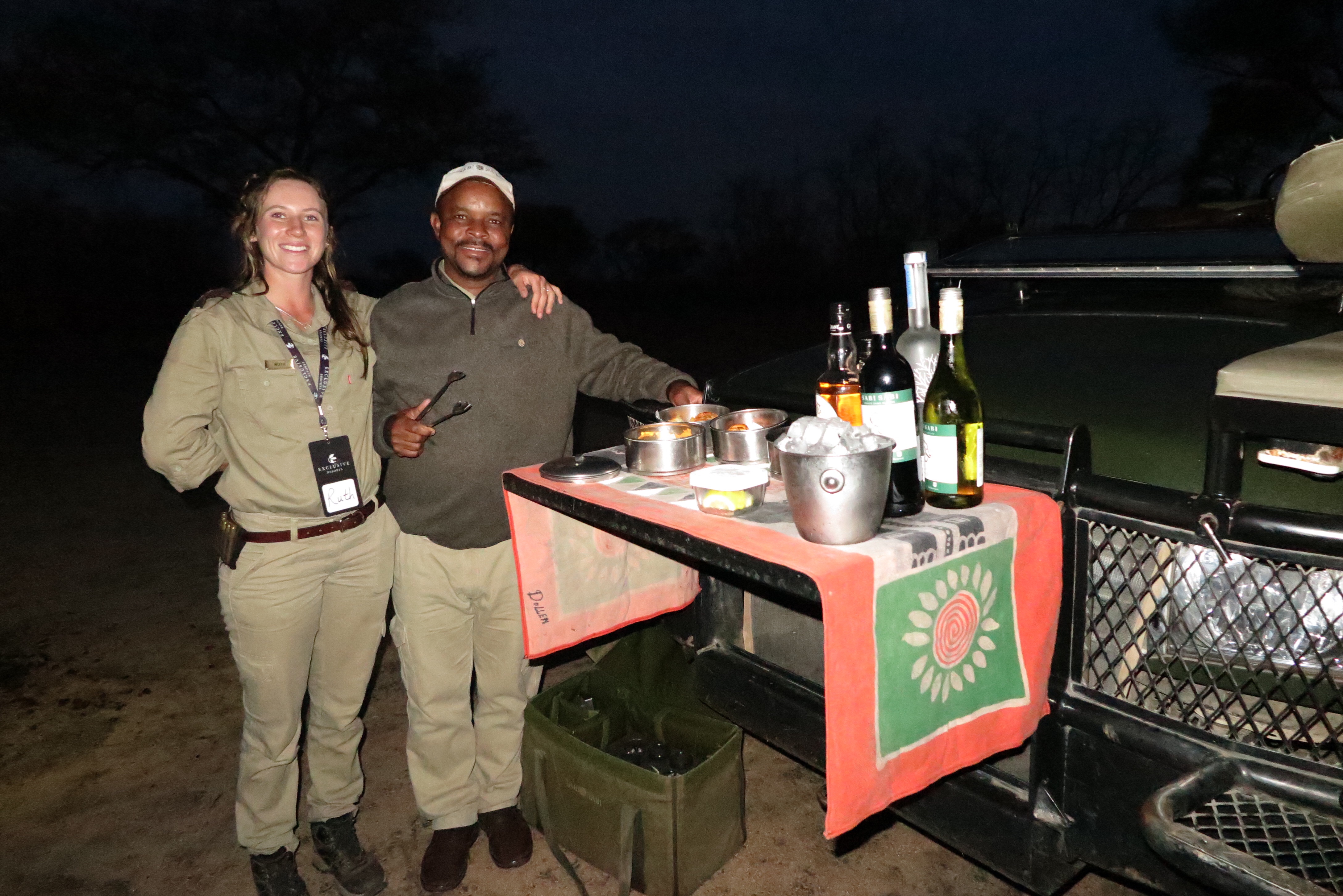
6:30: Cocktail while watching the sunset in the Savannah

7:30: Pre-dinner drinks in bar

8:00: Dinner

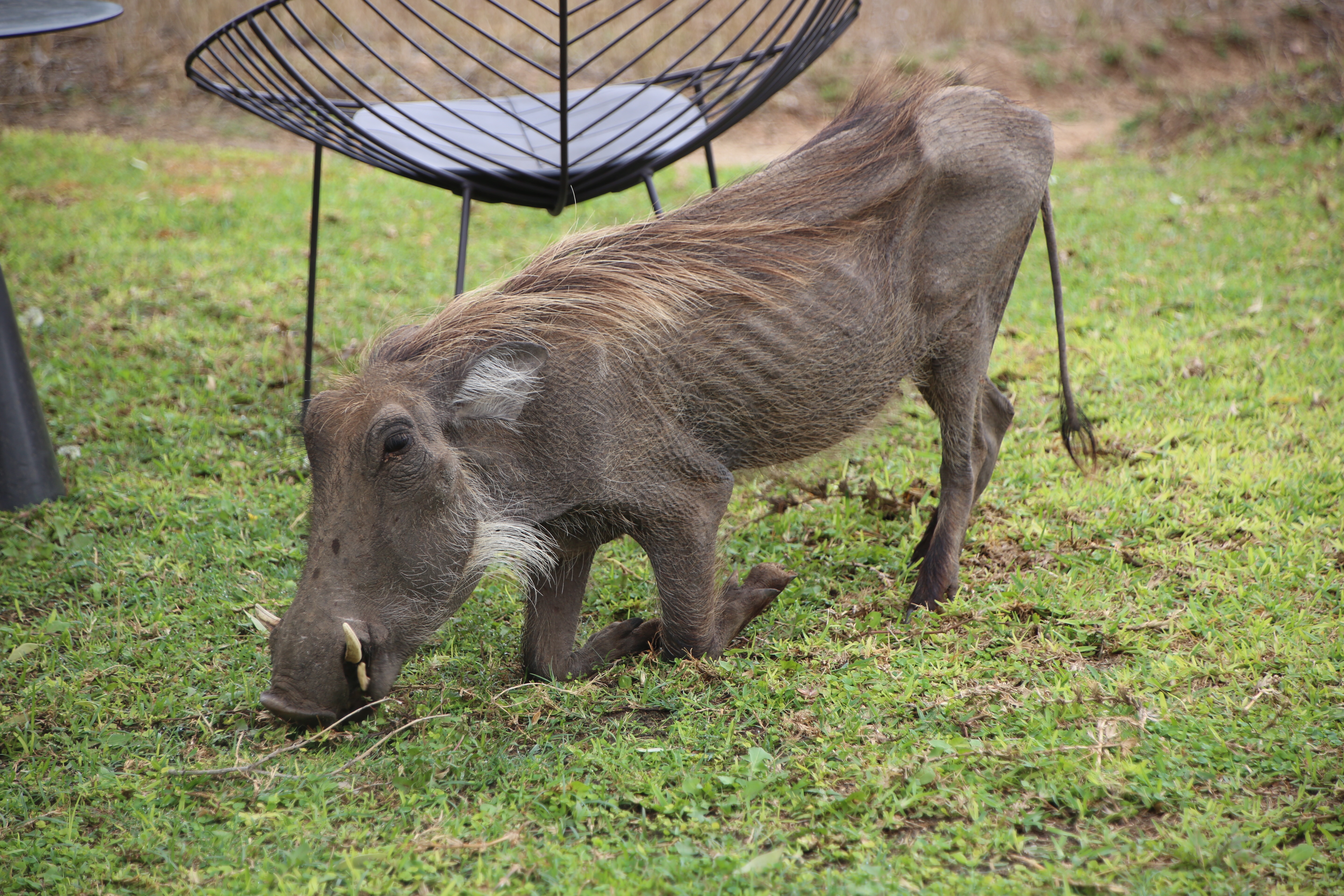
— Have your camera at the ready at all times. Impala, Kudu, and Warthogs have joined us at the lodge and at our patios. Apparently, just recently an elephant was found on the roof of our lodge!

— You will be escorted to your room by a guide when it gets dark. You don’t want to become someone’s midnight snack!

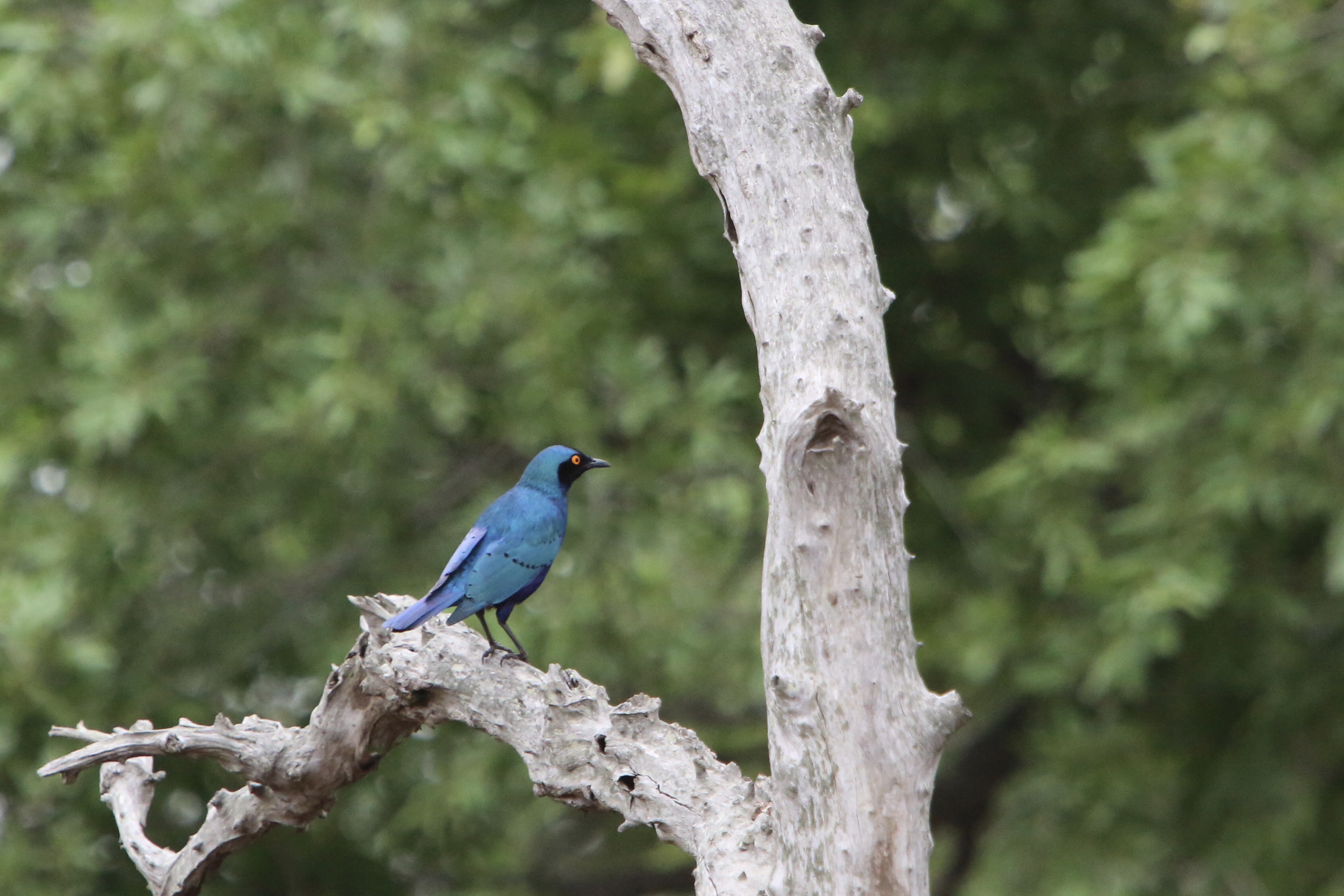
— Safaris can be relaxing. There are hundreds of species of birds here and their songs are very peaceful. I may have become a “birder” on this trip and could be joining Mary Frandsen in her love and appreciation of birds. Sorry Brad and Mike!

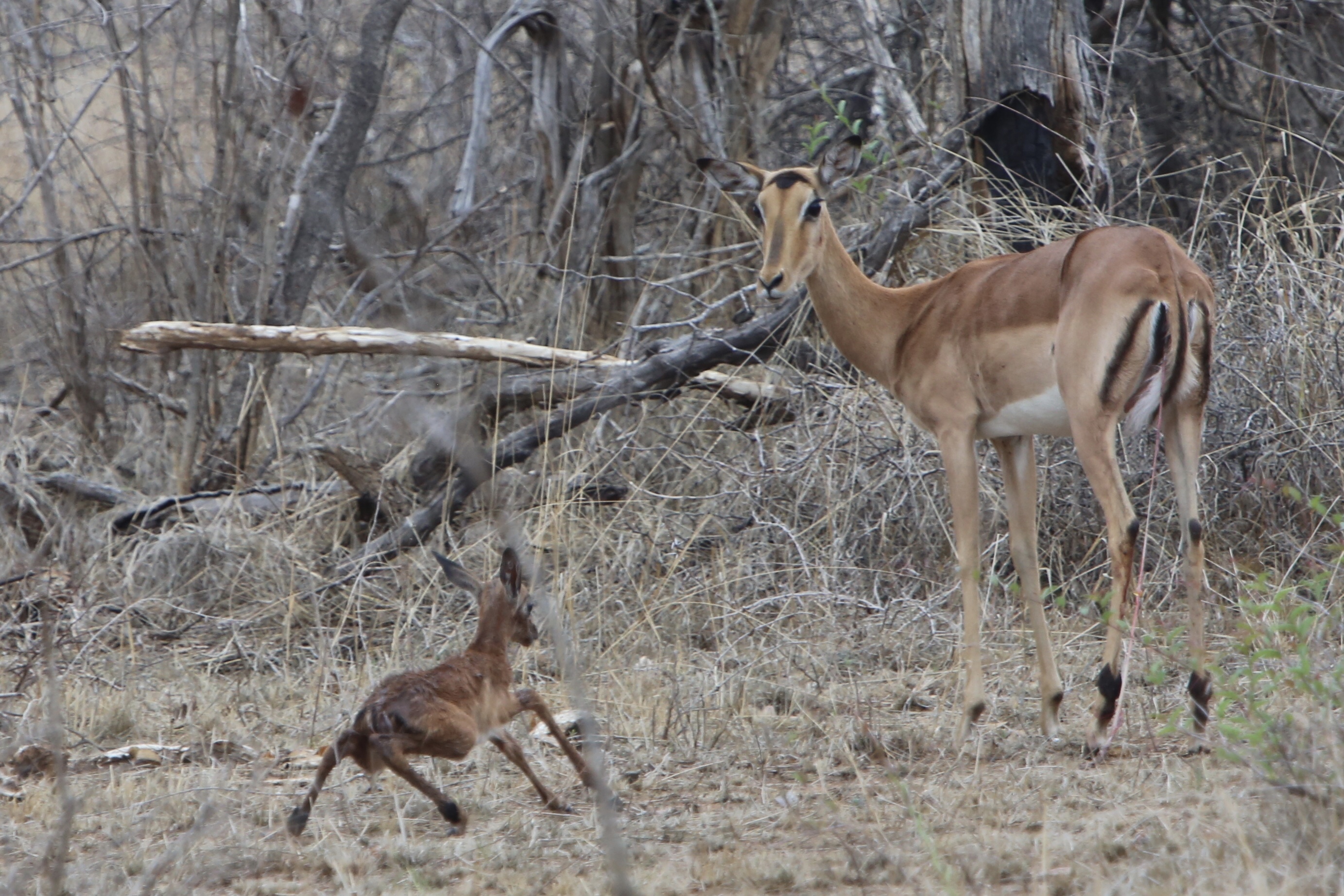
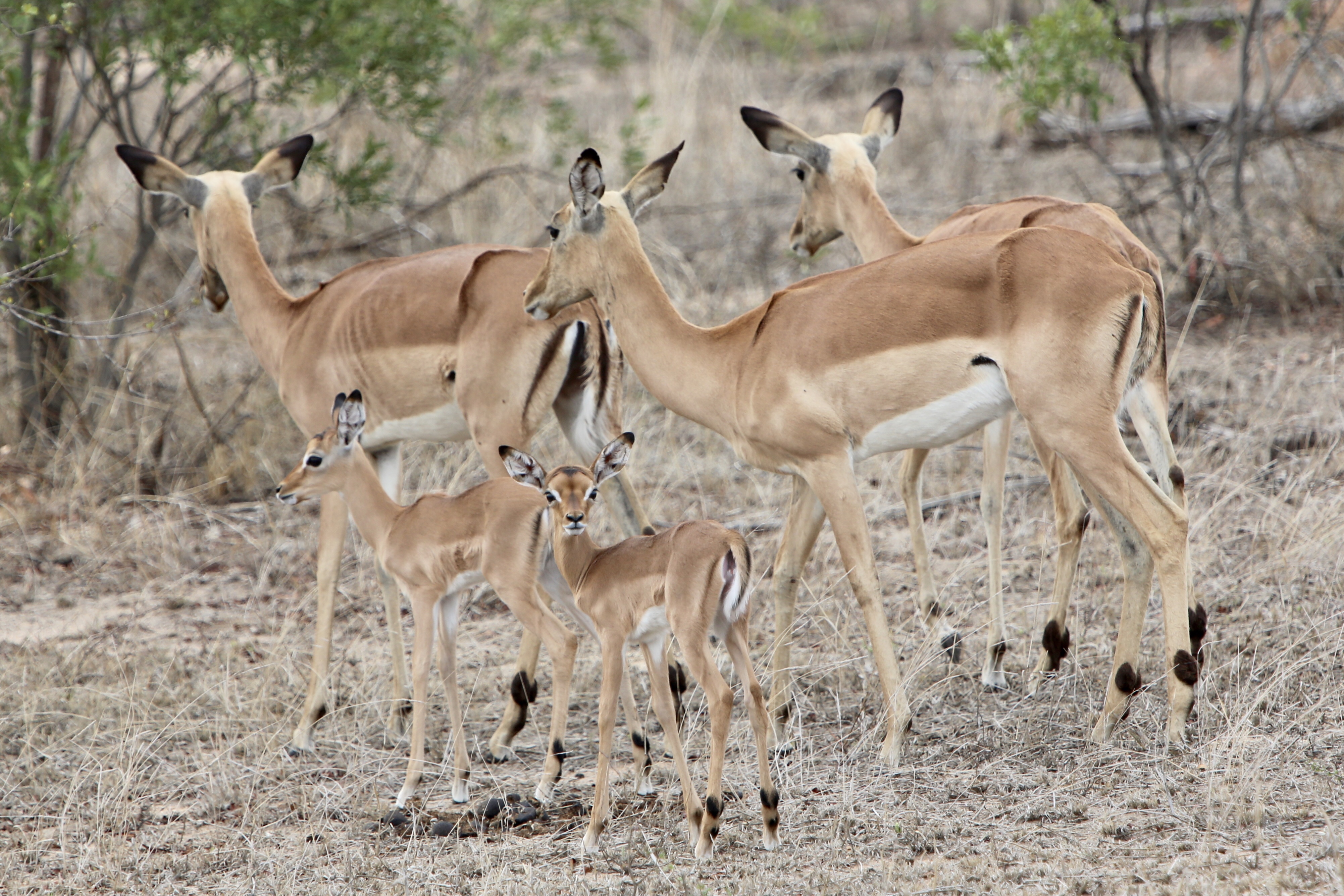
— Safaris can be joyous. We witnessed the birth of a baby impala and watched her take her first steps. She wobbled and fell down several times at the beginning but with her Mother’s encouragement she was up and running in about five minutes. It was joyful.

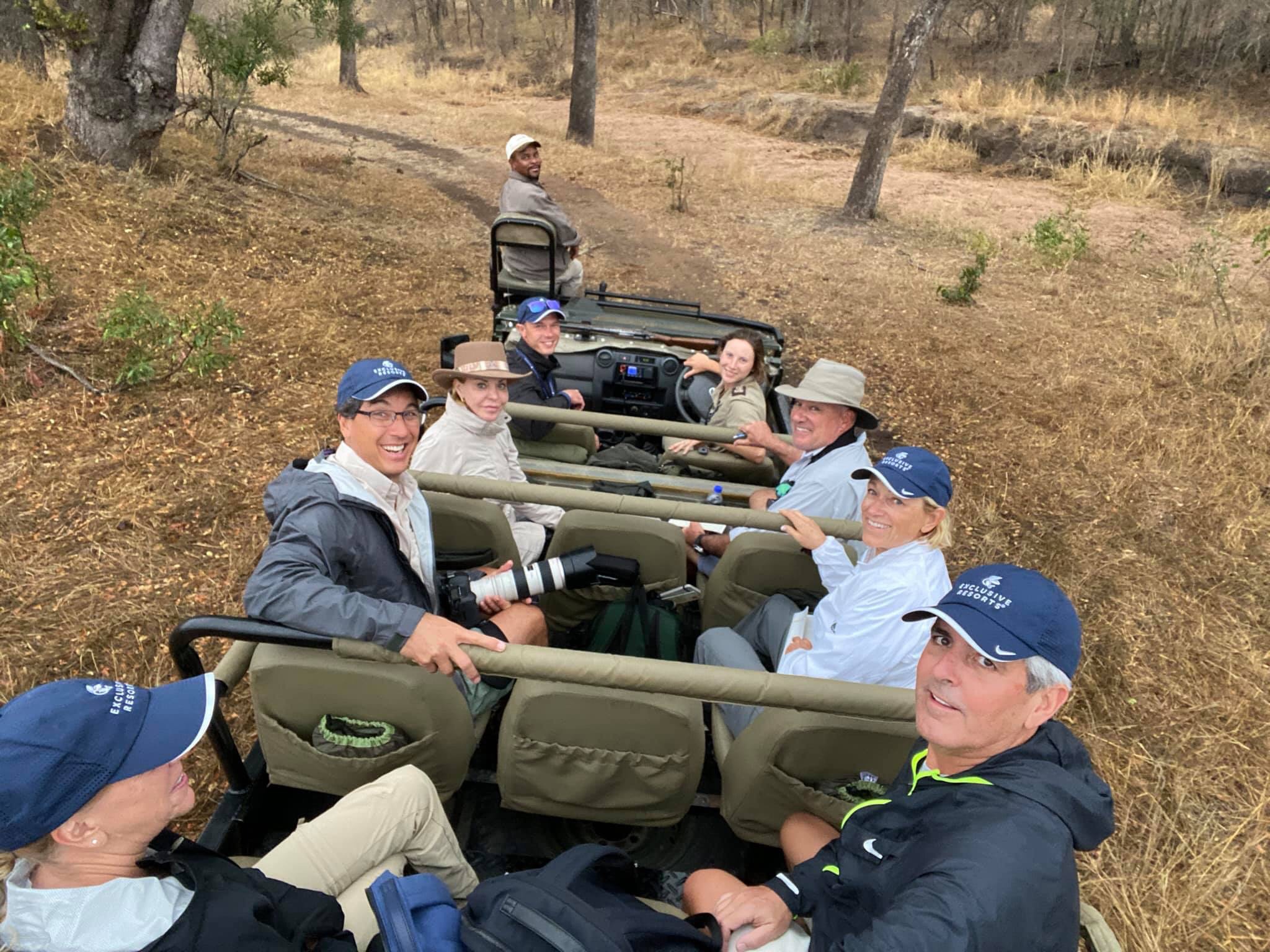
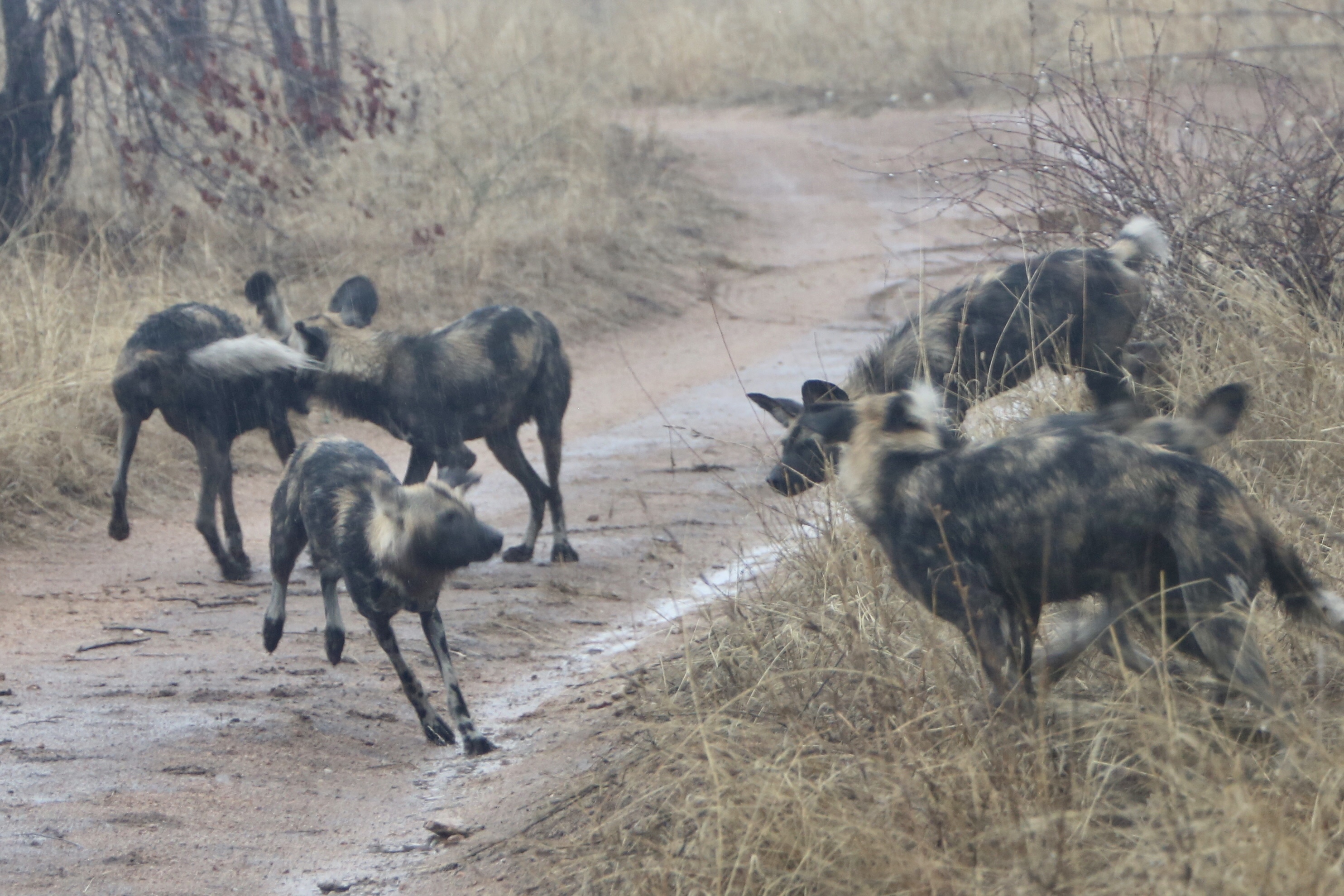
— Safaris can be intense. Think the Indiana Jones ride in Disneyland on steroids. We got a call that there was a wild dog siting one morning and our guide, Ruth, sped so fast in the pouring rain that we may or may not have almost lost Mary Stevens out the back of the Jeep once or twice!

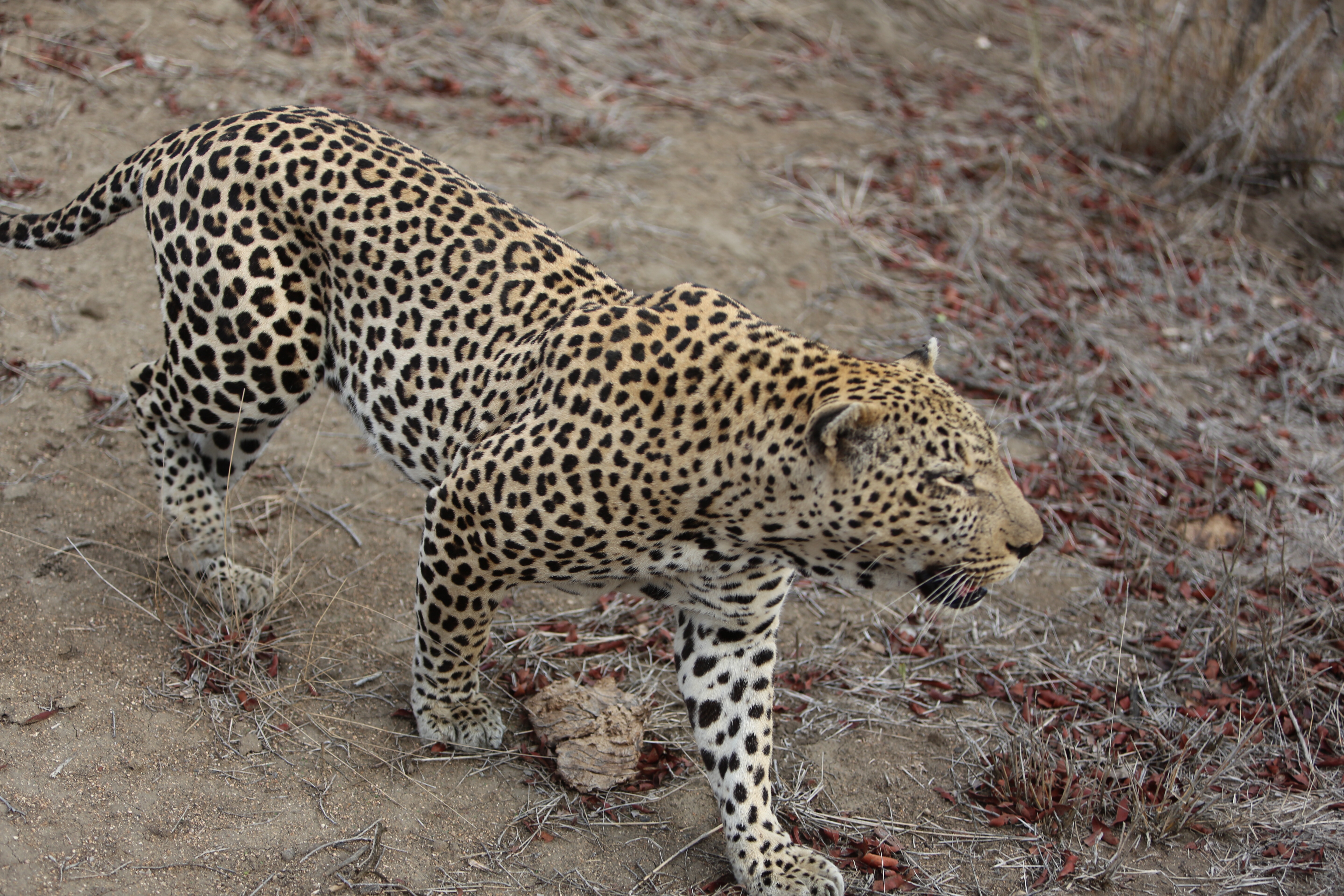
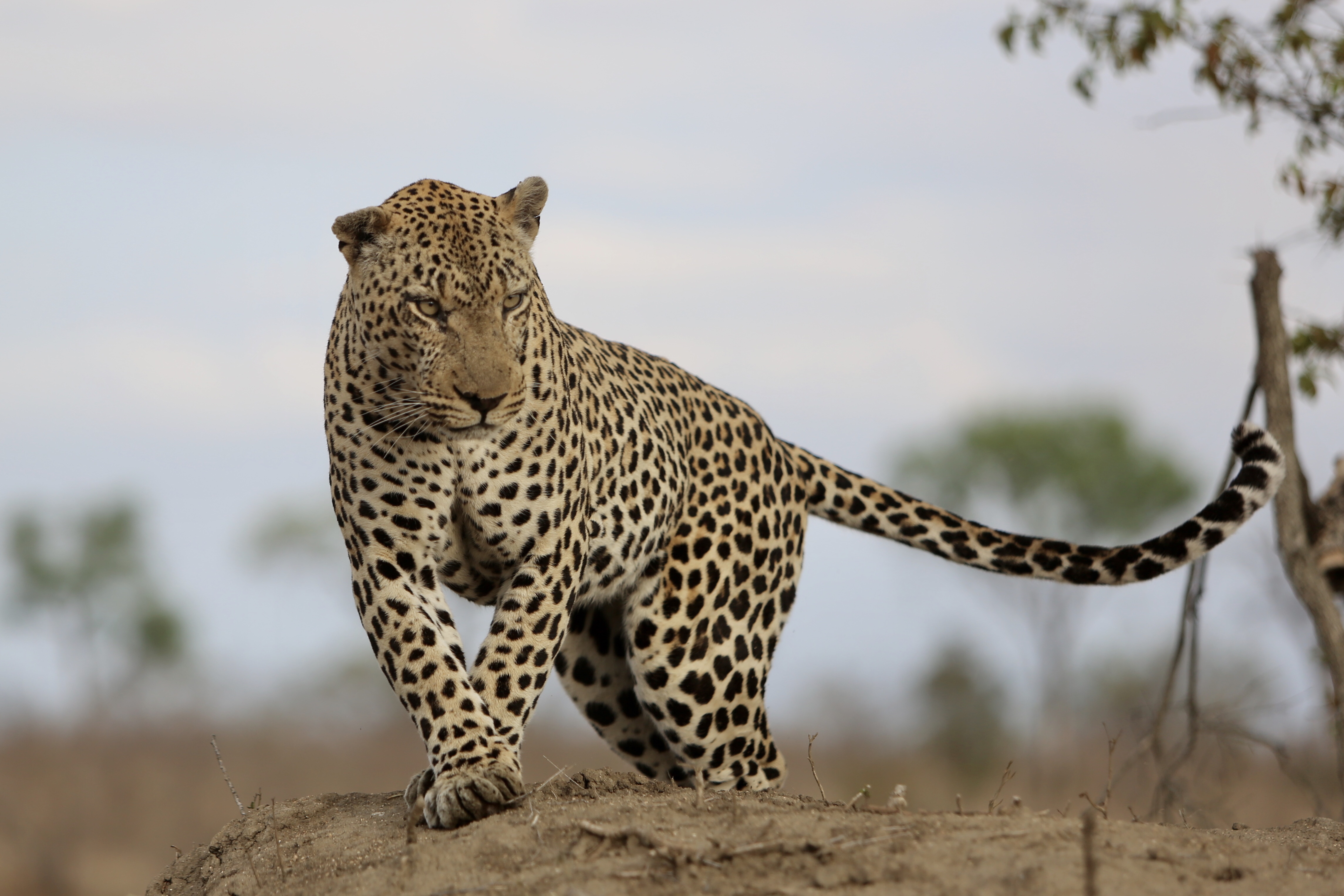
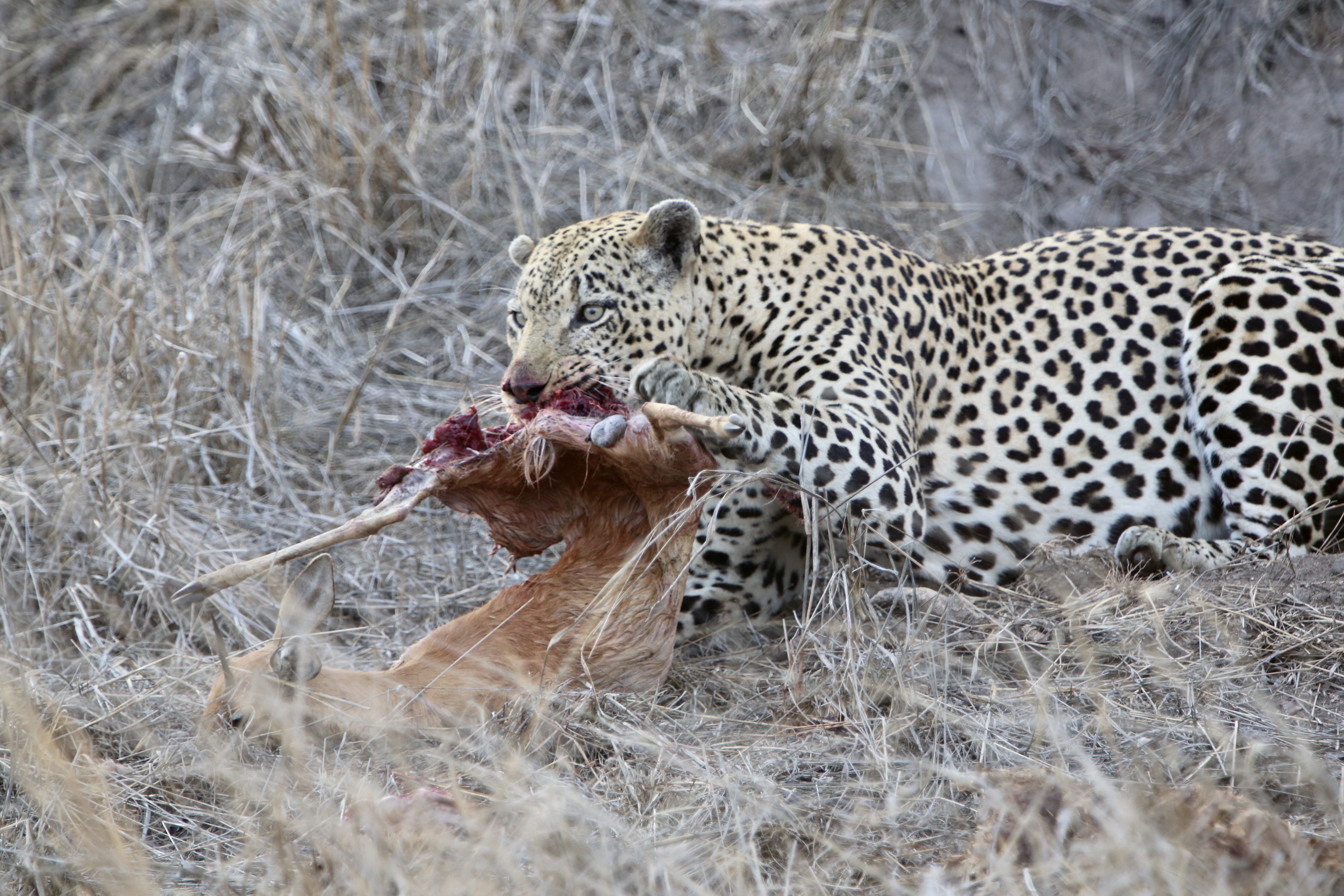
Safaris can be heart-stopping. We came upon a leopard yesterday and he came within five feet of our Jeep in his effort to go find dinner. A few of us in the Jeep stopped breathing for a moment or two.

— Shamans are real. We visited a shaman in the nearby village and she predicted our group would see a leopard and within thirty minutes on the ride home we all encountered our first leopard. He had been eluding us for days.

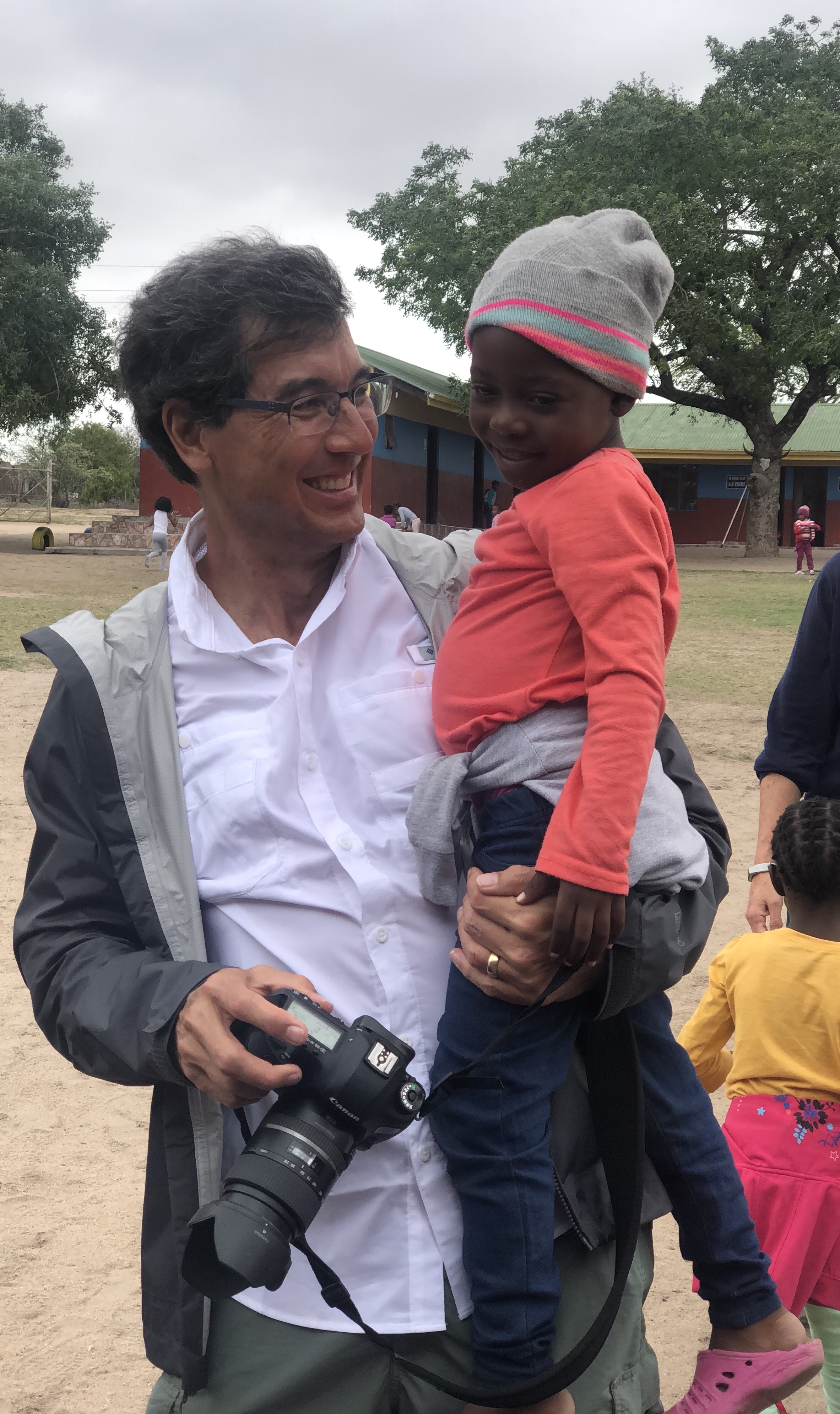
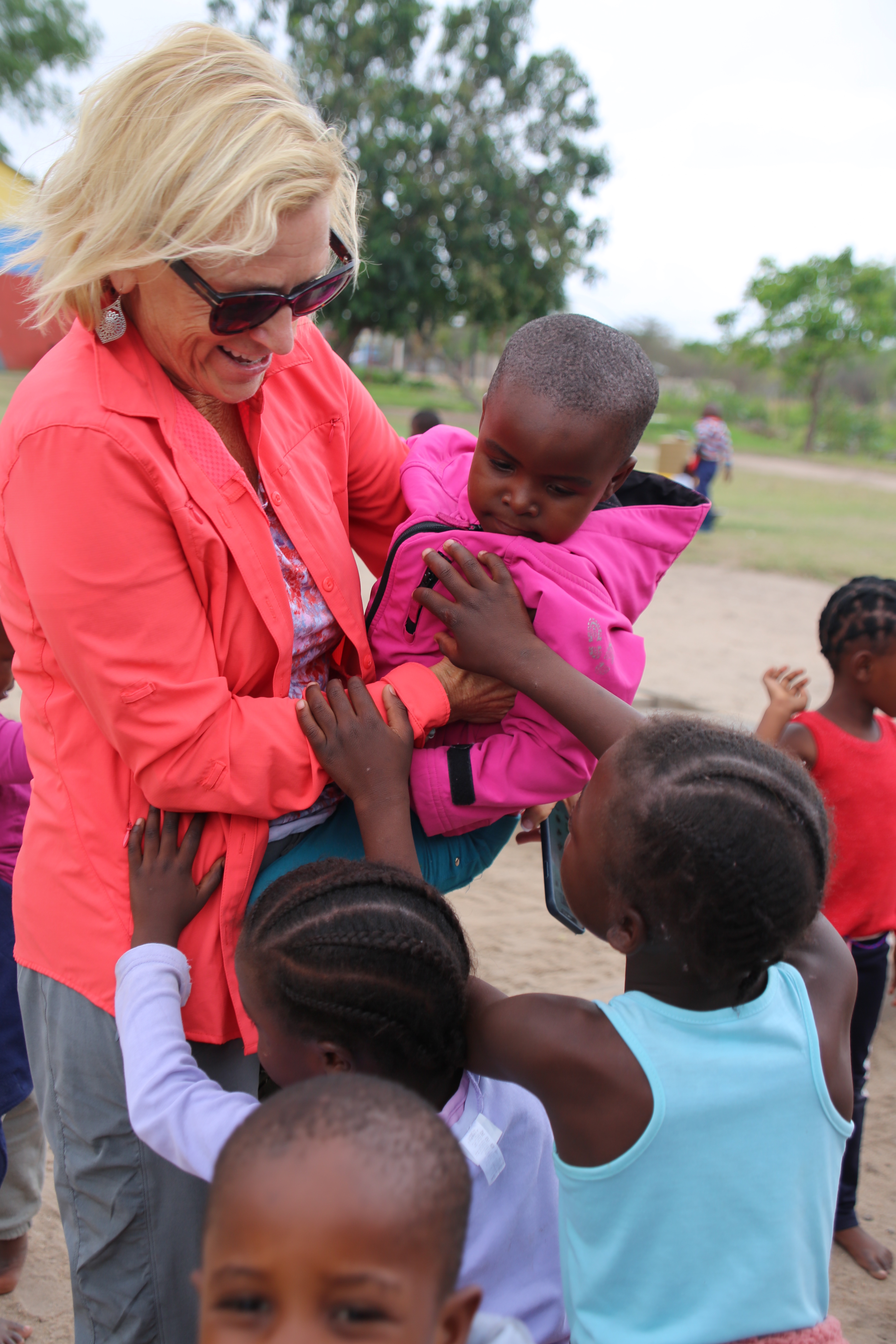
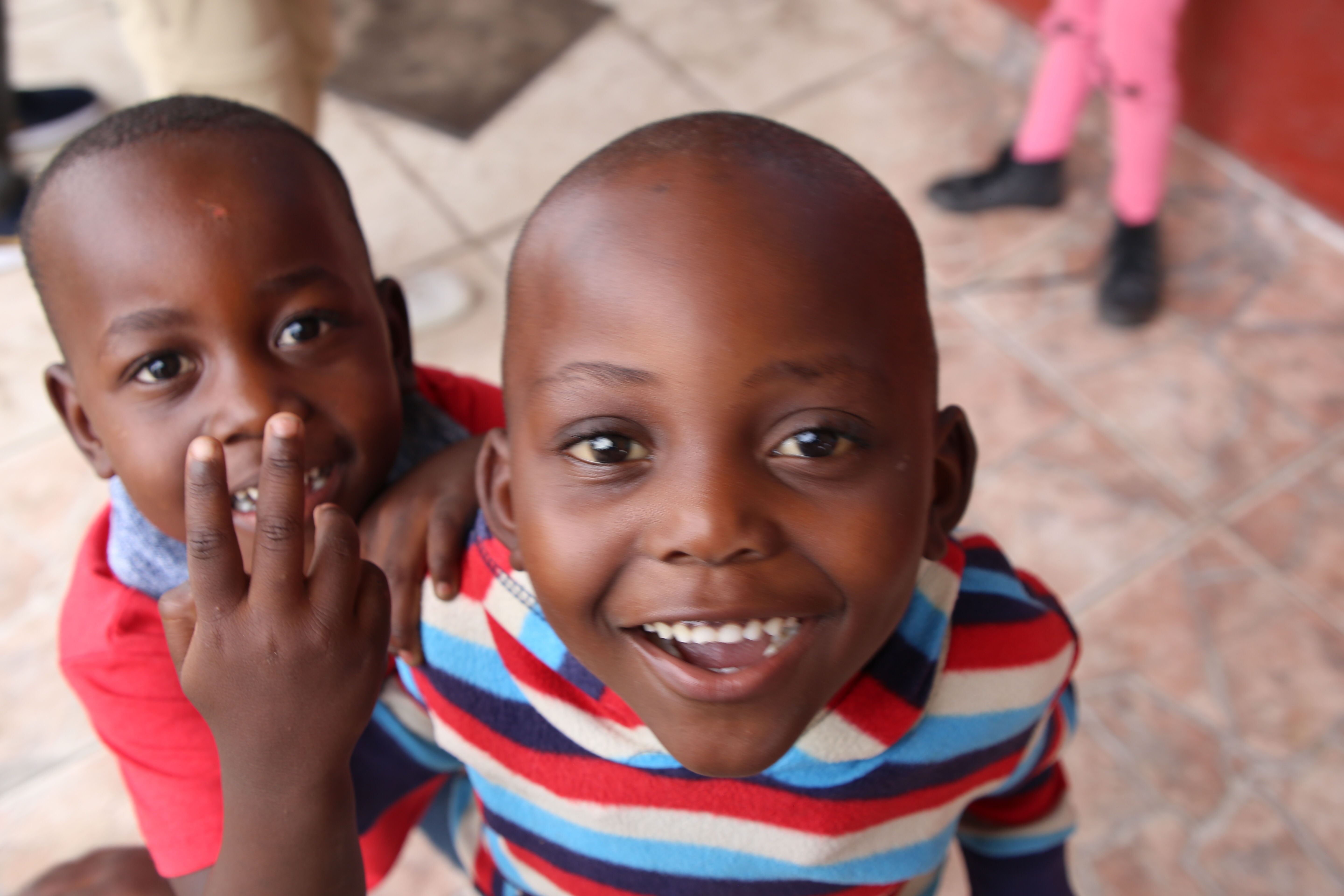
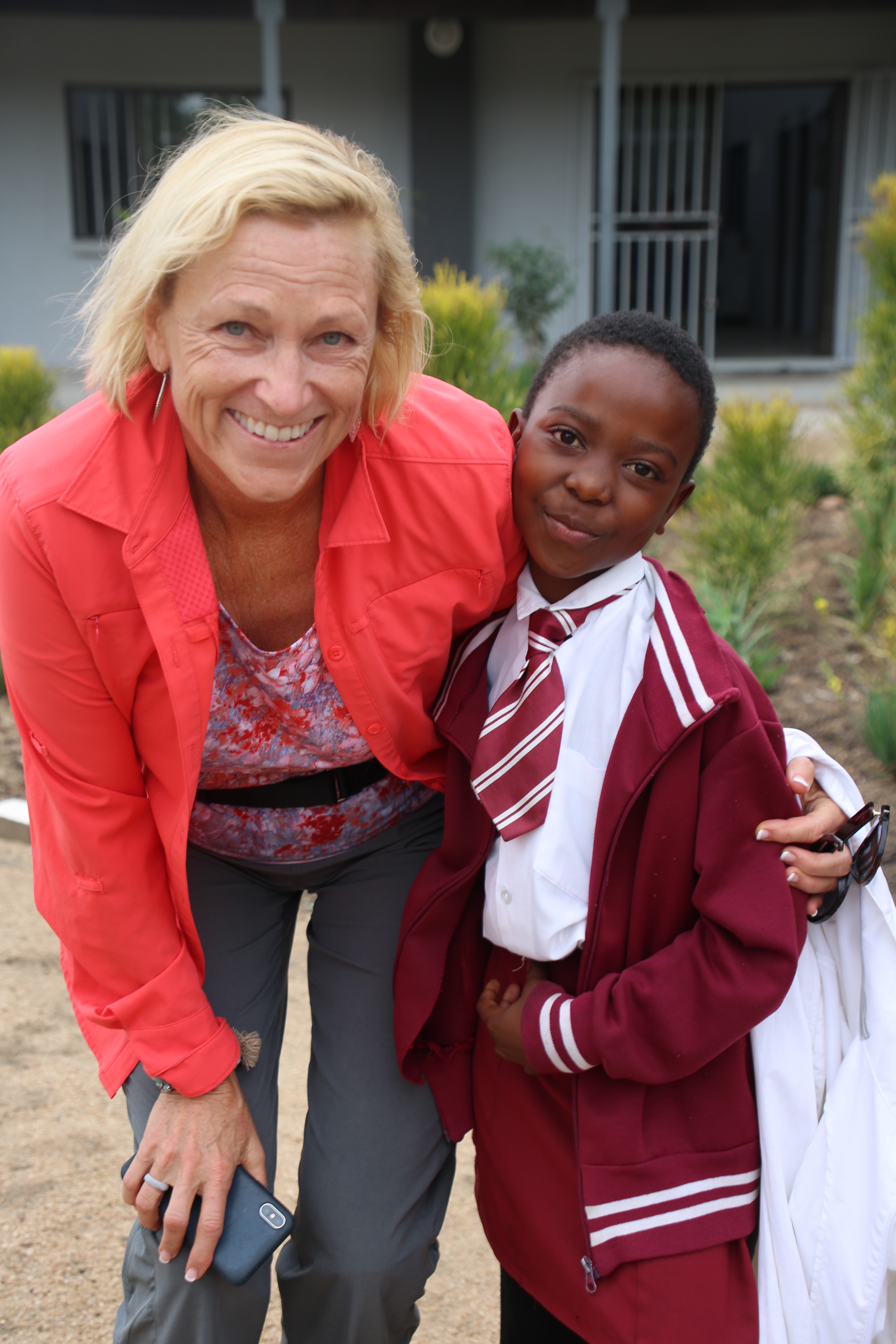
— African children are loving and are eager to pose for photos and give you hugs. We spent a morning at several nearby schools and were completely overwhelmed by the children’s hugs and smiles.

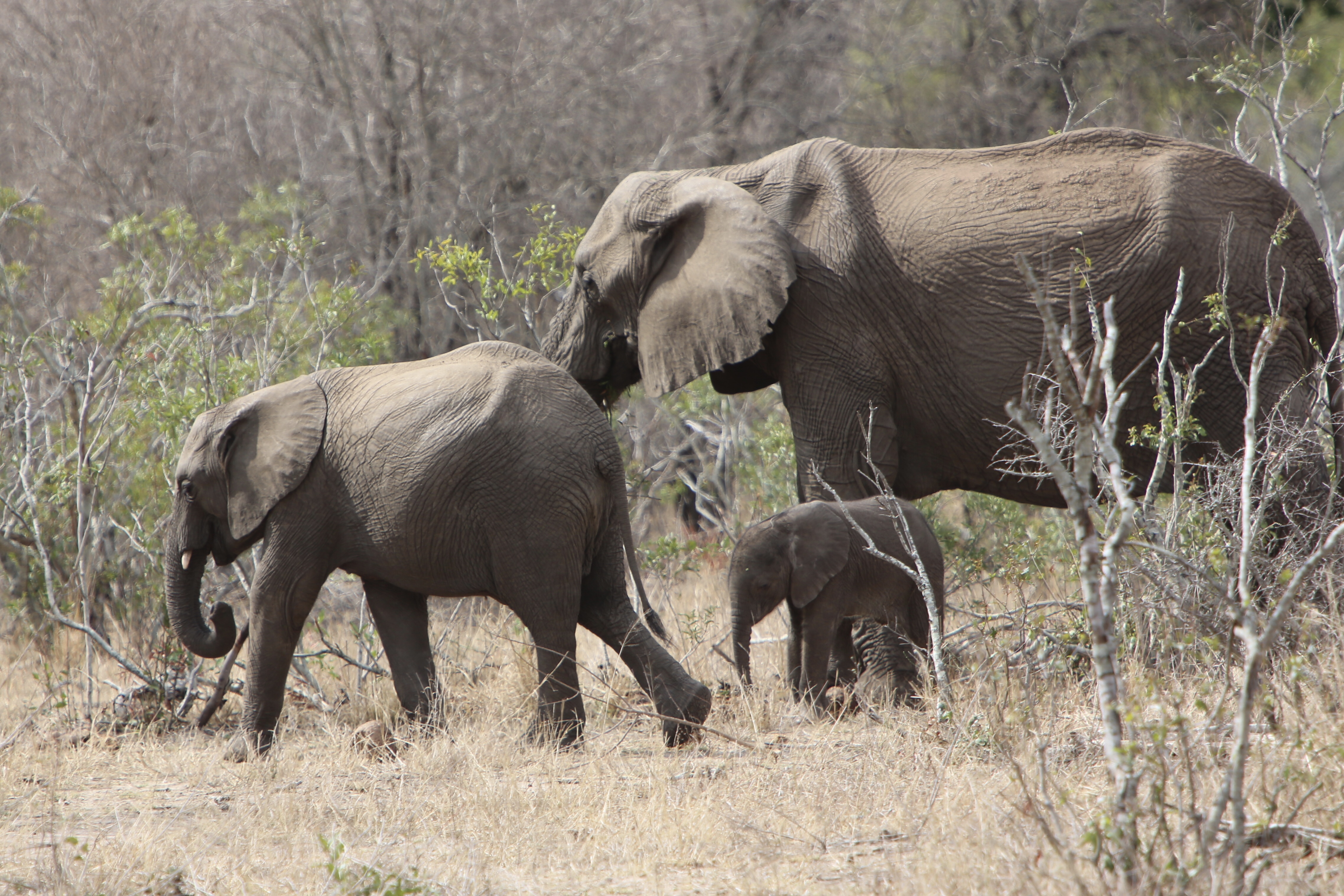
— Mothers are the heroes of the Savannah but also can be the most vulnerable. The gestational periods for elephants can be up to 22 months , the Rhino up to 15-16, while the hippo and impala are only 6-8 months. The Lionesses have cubs in only 110 days. The Mothers we saw were very protective of their young while the male species were off galavanting or possibly watching football! Sadly, Mothers and Babies can also be prey because they are the most vulnerable especially after they have just given birth.

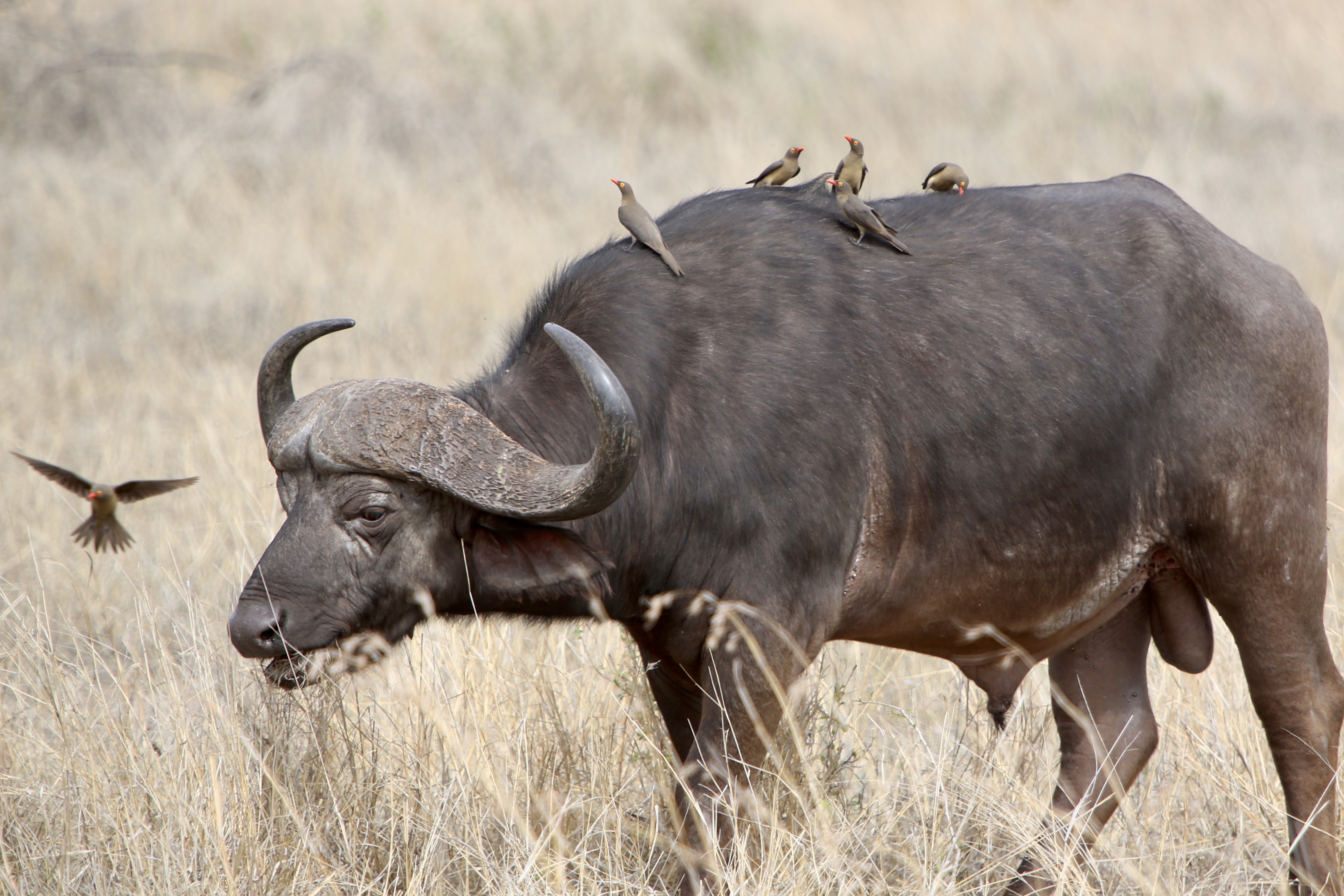
— There is an incredible diversity of animals and birds on the Savannah and they even provide you a check list to mark them off! I love lists so it has been great fun. So far, I have checked off 24 animal species including animals I had never heard of like Kudus, Bushbucks, and Duikers. We have also checked off 32 species of beautiful, colorful birds with names like the Square-Tailed Nightjar, the Red-Billed Oxpecker, and the Lilac-breasted Roller.

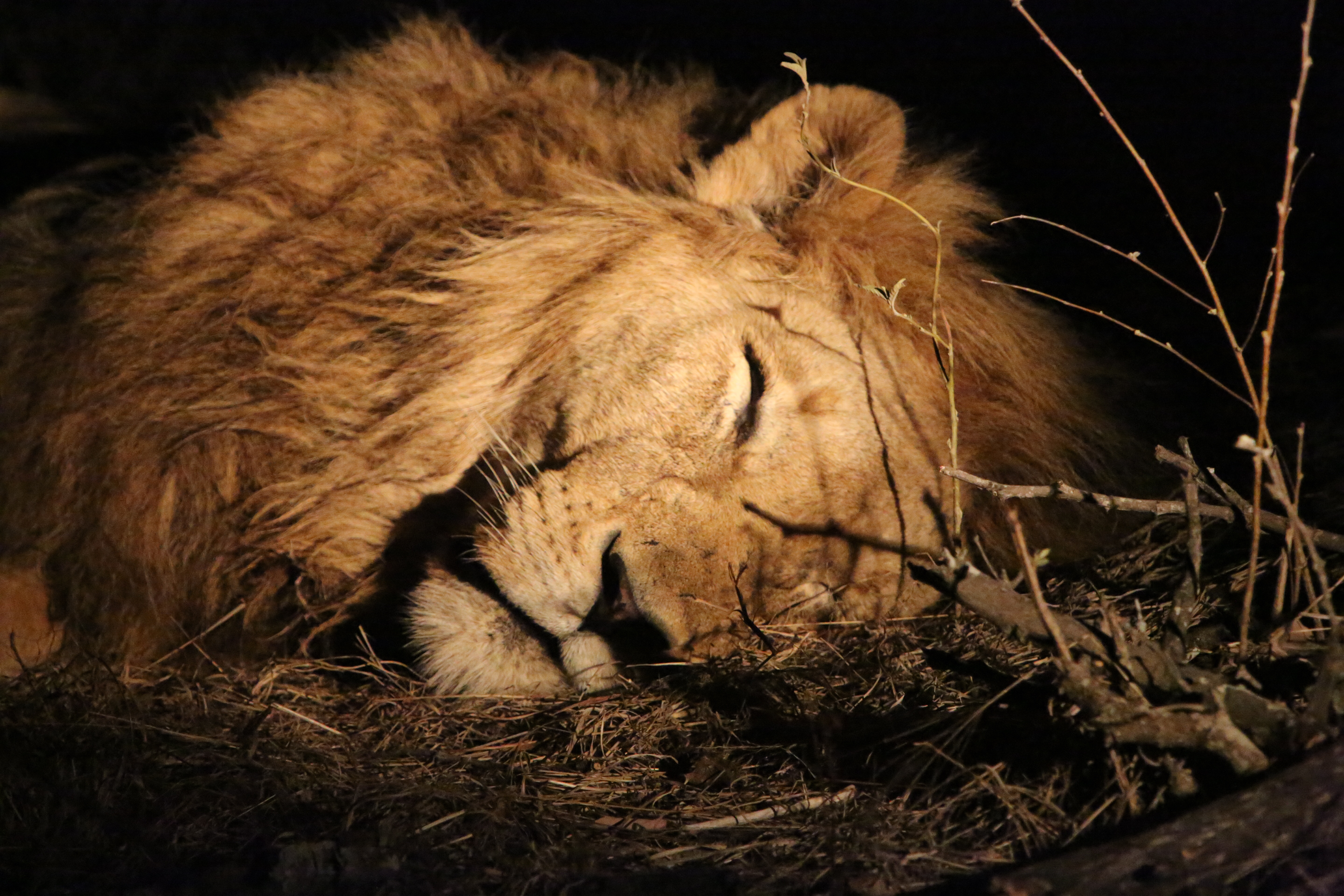
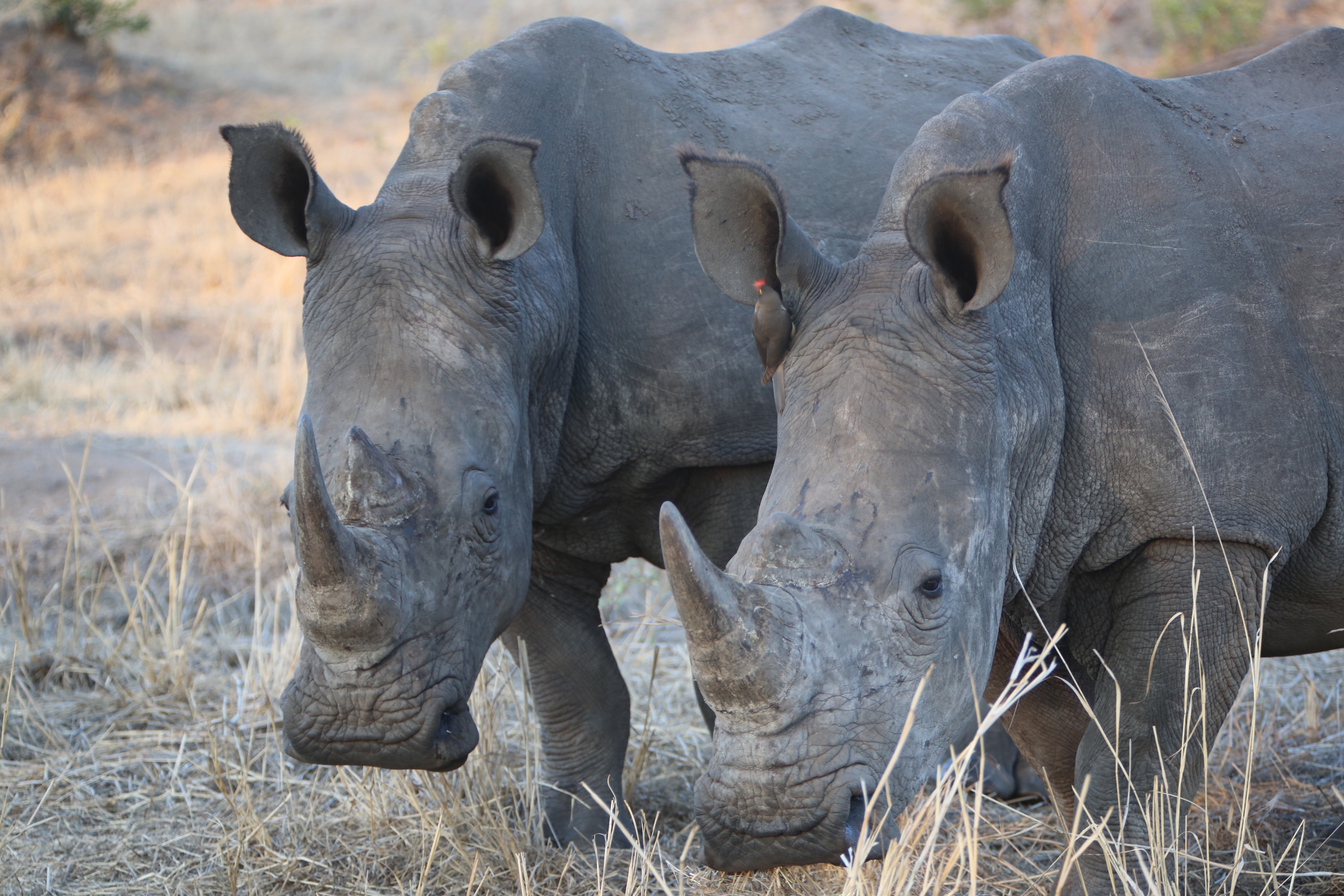
— We saw the Big Five and are allowed to go off road to follow them. So far, we have seen Lions, Rhinos, Cape Buffalo, Elephant, and our elusive Leopard. Following a leopard as he went after a kill might be one of the most exciting animal experiences I have ever heard. We have been close to seeing the Magnificent Seven which include all the Big Five, Wild Dogs, and Cheetah. All we need to do is find that rarely-sighted Cheetah.

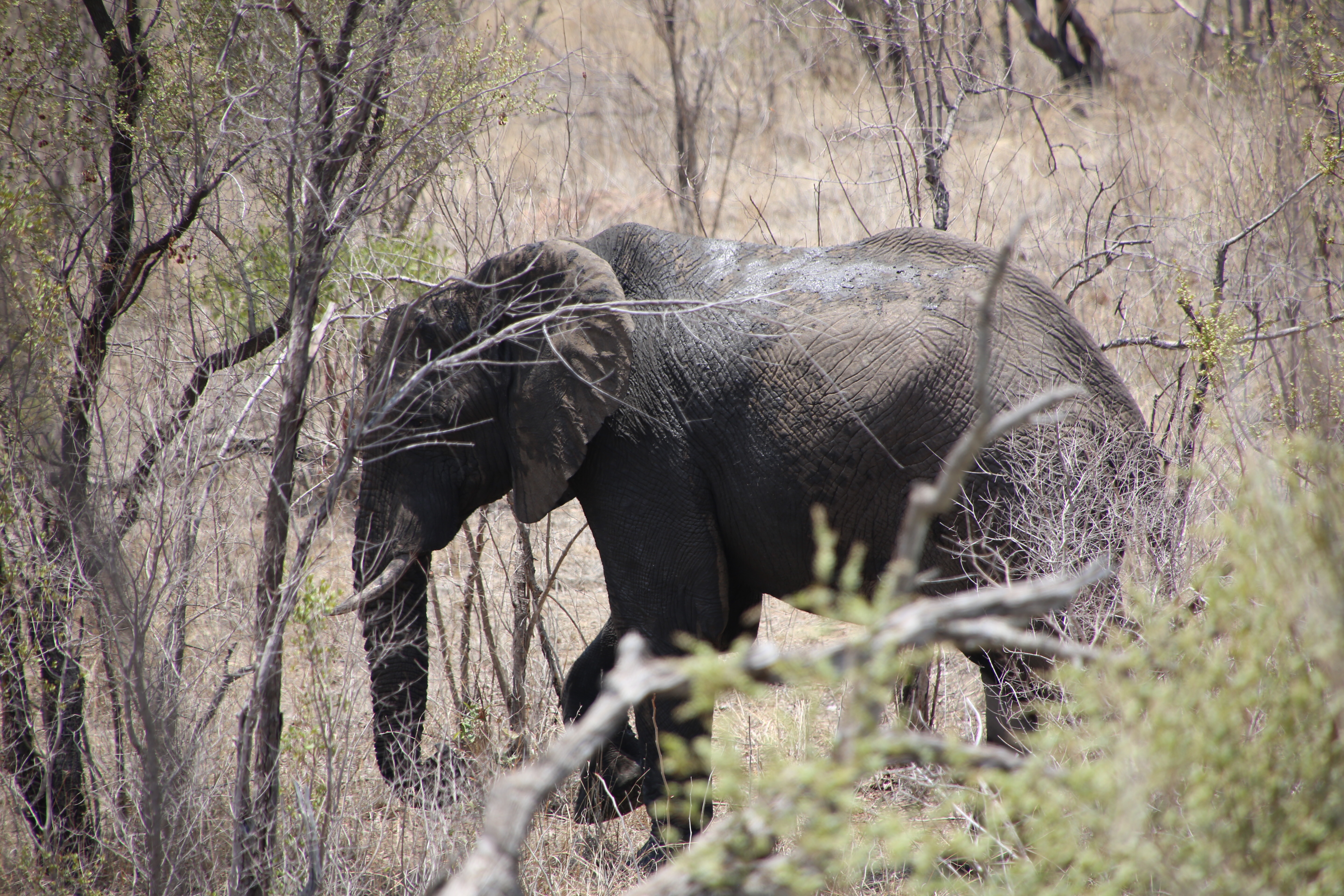
— Bush Walks have their own element of excitement. We went out today with two guides whose rifles were loaded and told us what to do if we happened to run upon a lion or elephants. The rules are no walking and talking and no running away or screaming if we happen upon a large animal. While we were on foot, we chanced upon an elephant, a hippo, and more kudu. Not your average walk around the property!!

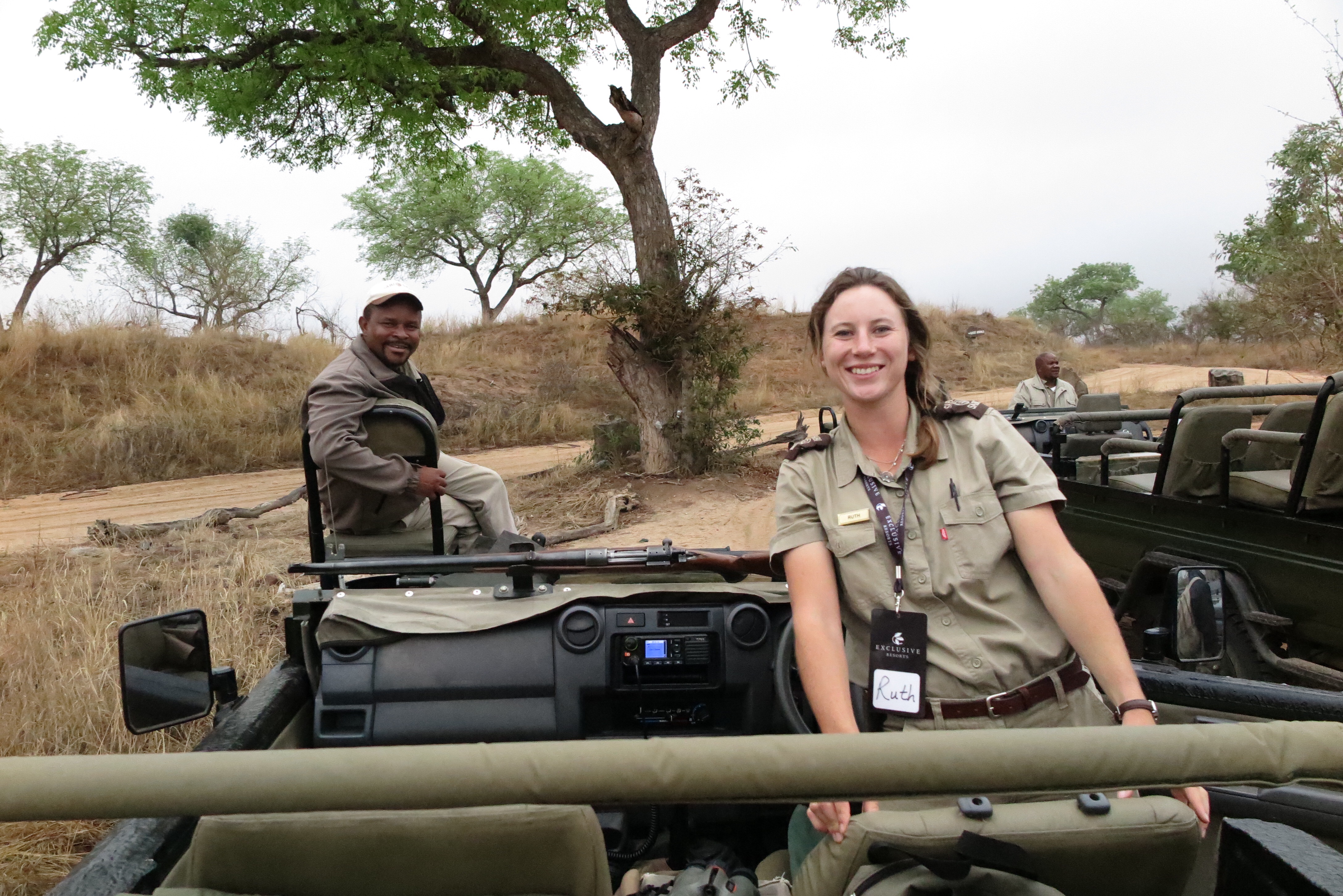
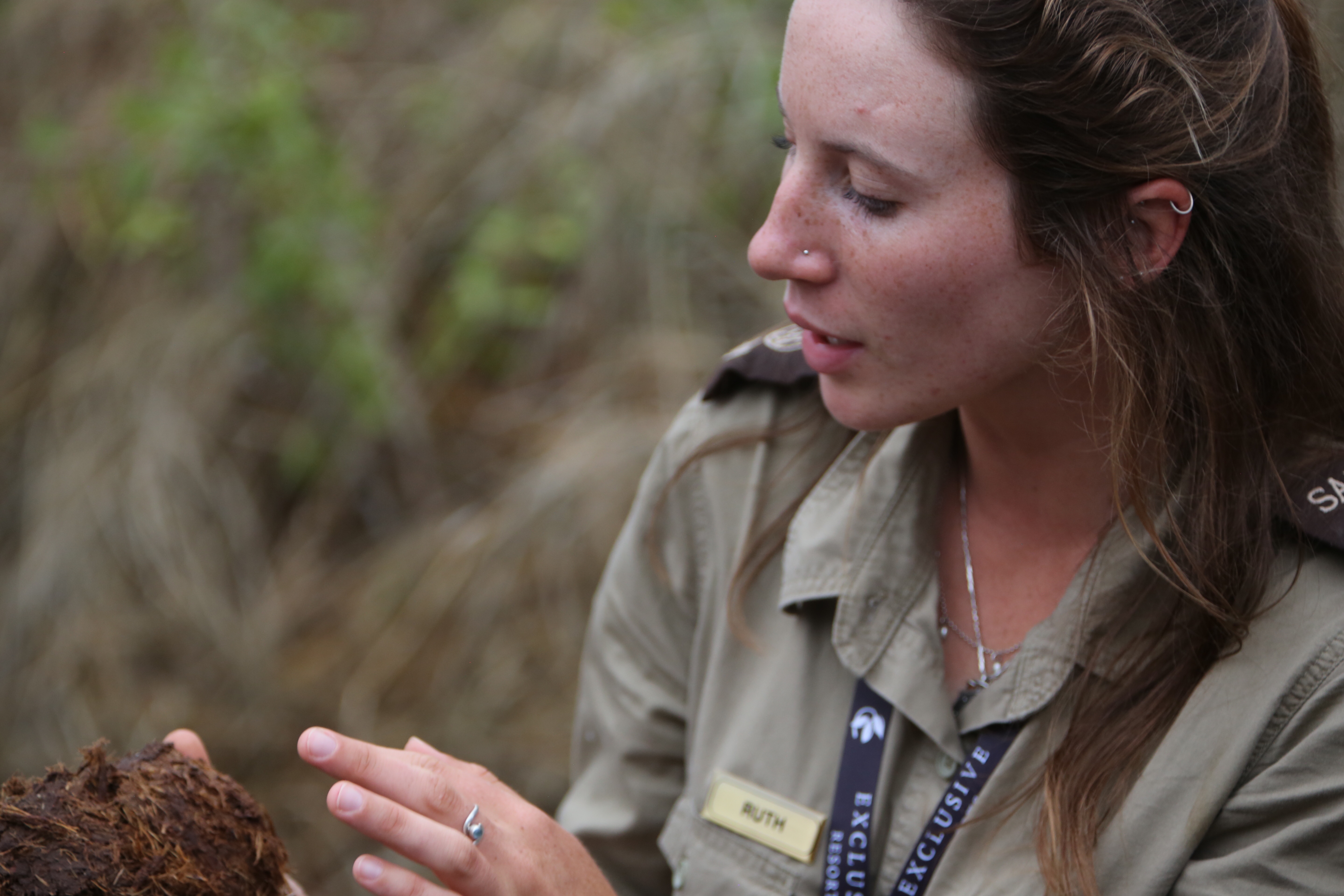
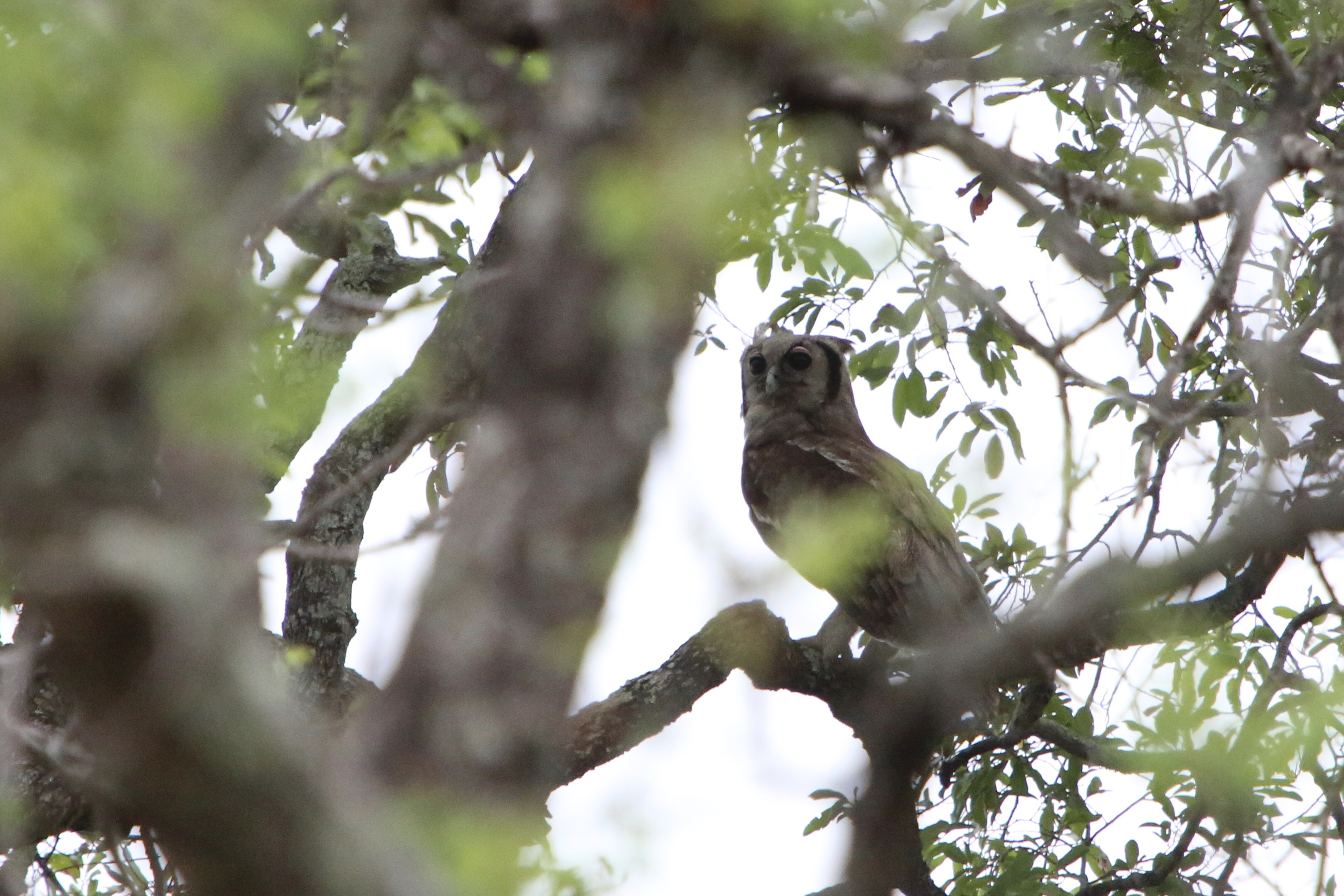
Our guide and tracker are passionate and incredibly knowledgeable. Our guide, Ruth is a 23 year old woman from CapeTown who has a love of the Savannah that is unparalleled. Her knowledge of every living creature that we have encountered is astounding. She is willing to pick up Elephant Dung and show us everything the elephants have had for breakfast as well as telling us colorful mating stories of African Crake (The males stick around in this story). Dollen, our tracker can sight a Serval in the high grass in the dark or a Verreaux’s Eagle Owl in a dense tree from afar. His sensory perception is unreal. We have felt fortunate to have Ruth and Dollen as our team this week. It is going to be hard to say good-bye tomorrow. There will be tears.

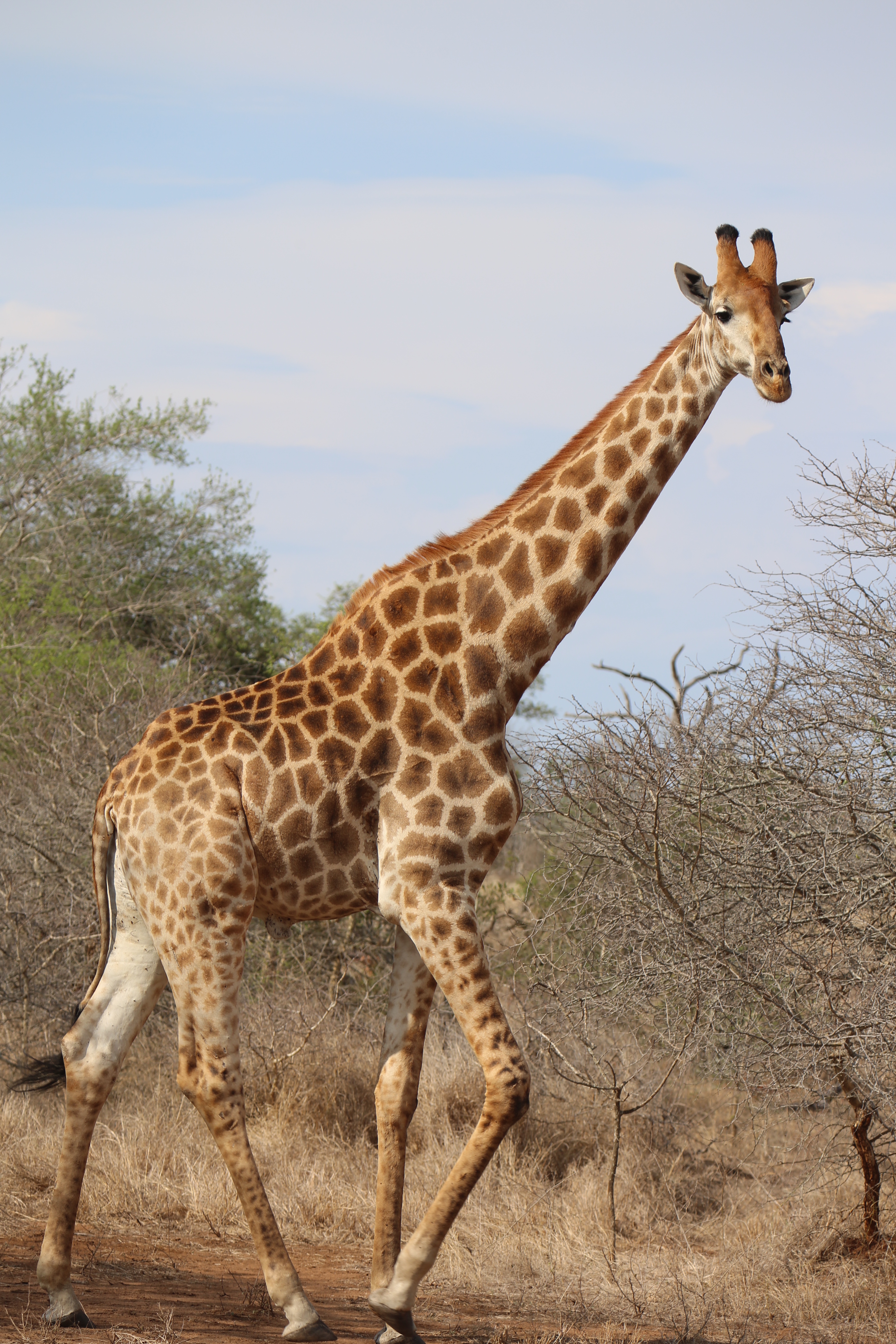
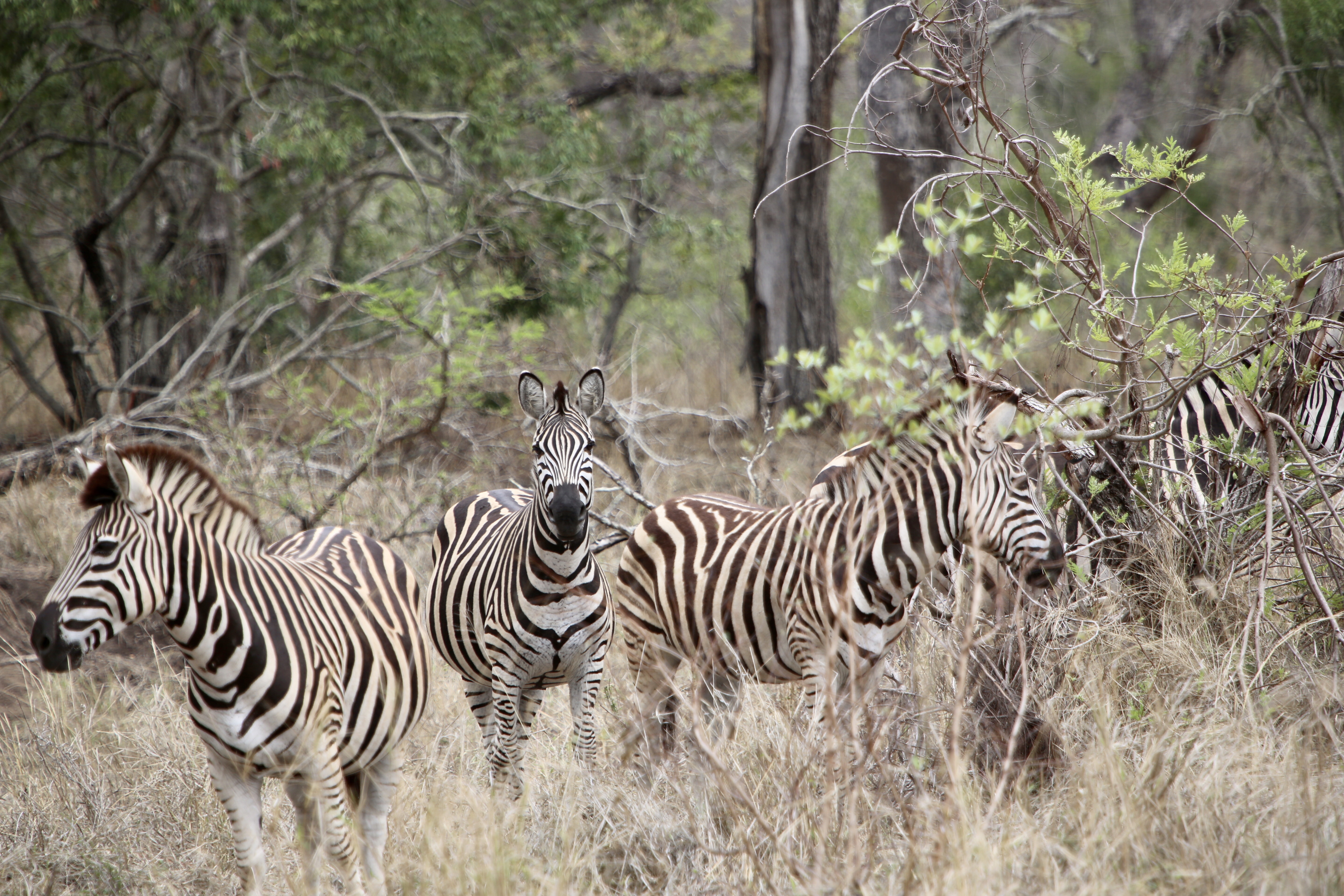
Here are a sampling of other animals we saw along the way:

Categories: Africa, Safari, South Africa, Travel | Tags: , , , , , , | 9 Comments

The Atacama Desert — Earth, Wind, Fire, and Water (a little bit)

The driest place on Earth.

The Atacama desert in northern Chile receives less rainfall than the Mojave desert, the Sahara desert, and anywhere else on the planet. The wetter area, where we are staying, receives 1 to 2 inches of rain per year. Other places in the region get a mere drop of precipitation. Most of the water for the region comes in the form of snowmelt running off from the Andes Mountains to the east.

We landed on Thursday (after the apple caper) in Calama. We felt like we had traveled to another planet. There was no vegetation whatsoever for miles. When we finally saw green, it was in the form of little stubby brush sparsely sprinkled on the landscape. As we traveled throughout the area in the next couple of days, we found it to be extremely diverse. Part Indiana Jones and the Temple of Doom; part Start Wars in the original movie; and, we’re convinced that the Mars Rover actually landed here in another part of the desert.

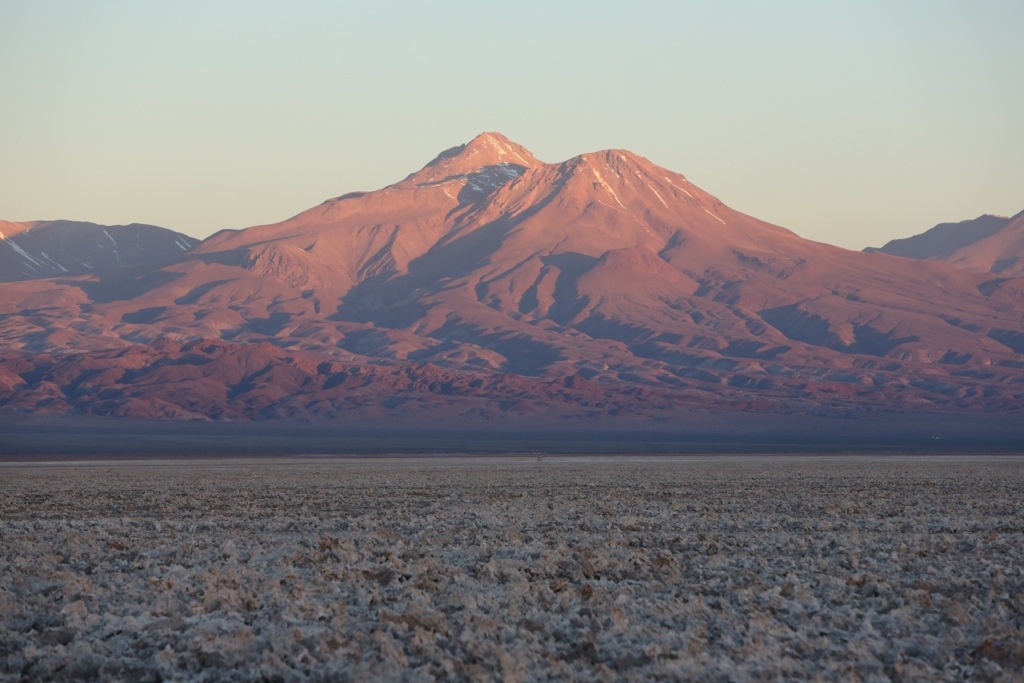
We’re in the high desert — about 8,000 feet above sea level. The mountains surrounding us rise to 18,000 feet. The area is dominated by volcanoes. In fact, there are 150 active volcanoes in Chile — 10% of the world’s active volcanoes. Several are visible from our vantage point.

It is difficult for us to convey the magnificence of this place. The pictures don’t even do it justice. The population consists of miners (one of the largest copper mining areas in the world) and indigenous people who have been here for thousands of years. The area is geologically active; and, the landscape varies greatly. Our resort is in an oasis that is fed by one of the few precious rivers that flow from the Andes.

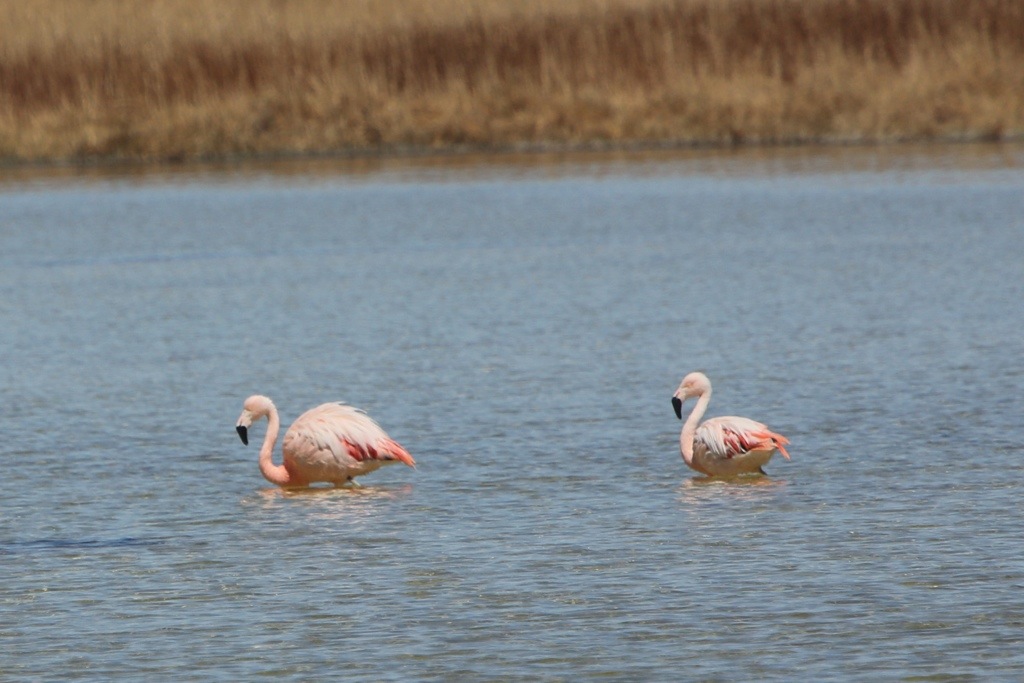
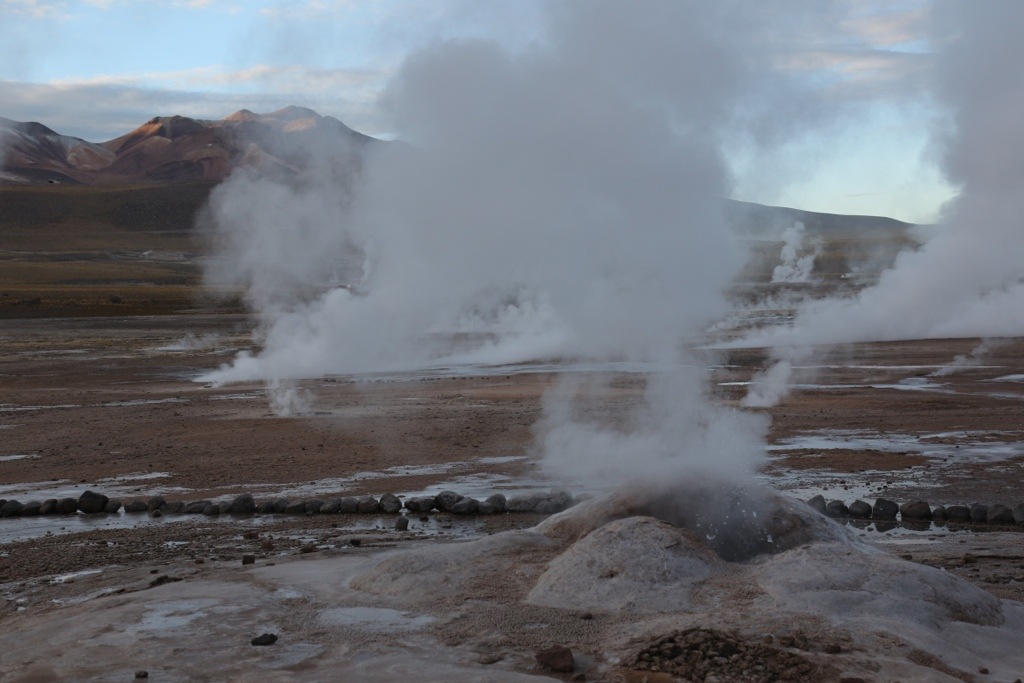
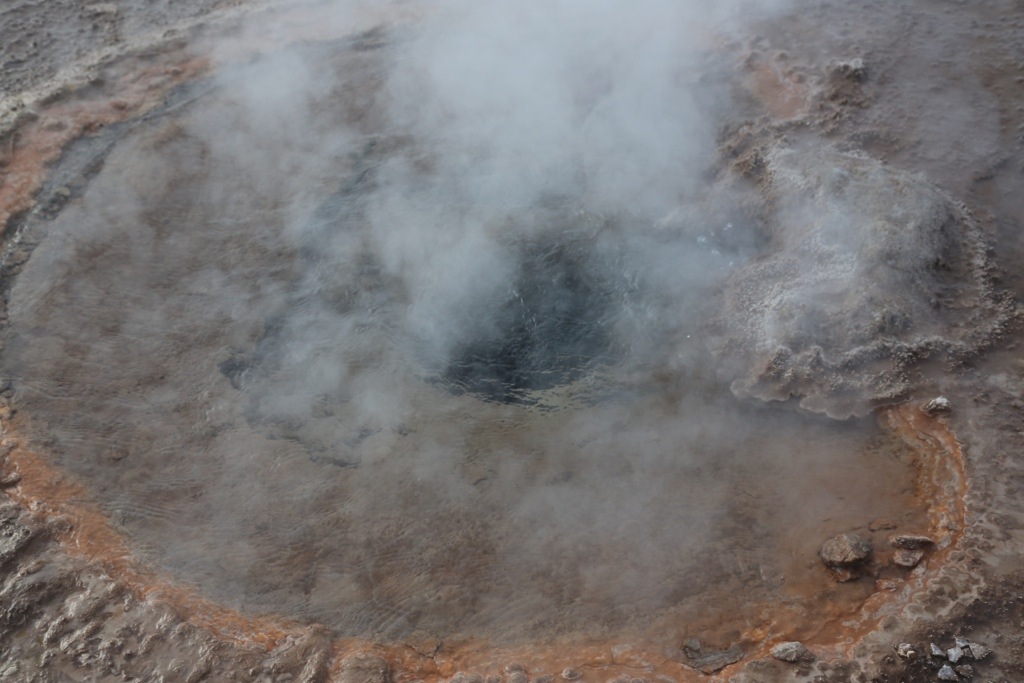
We started in the Atacama Salt Flats. Pink flamingoes thrive here on the brine shrimp that are the only marine life in the salt lagoons. We got up very early one morning to see the Tatio Geysers that sit at 15,000 feet above sea level in the mountains. We moved on to the Puritama Thermal Hot Springs for a dip; we watched the sun set on the mountains with colors changing from brown to pink to red. At night we went stargazing. Because of the altitude, the dry air, and the lack of city lights, this is one of the best places in the world for observatories. The Milky Way was prominent, looking like hazy clouds in the sky (for you, Laura Kapp). We saw the Magellenic Clouds for the first time ever since they sit deep in the southern sky and can’t be seen from the Northern Hemisphere.

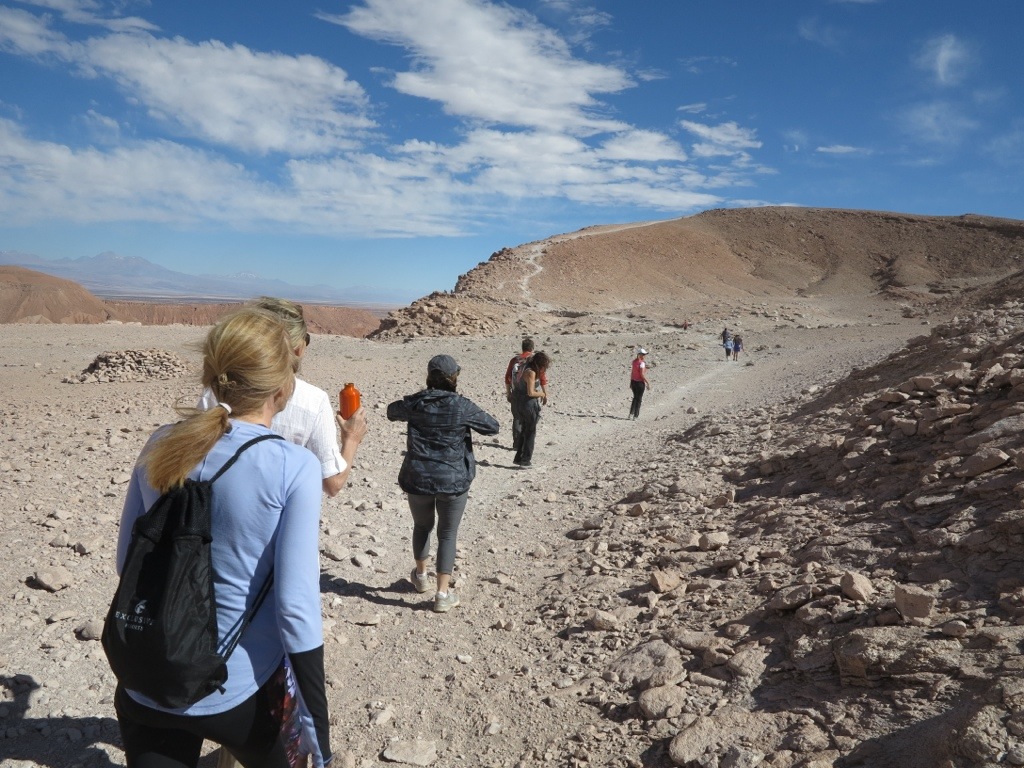
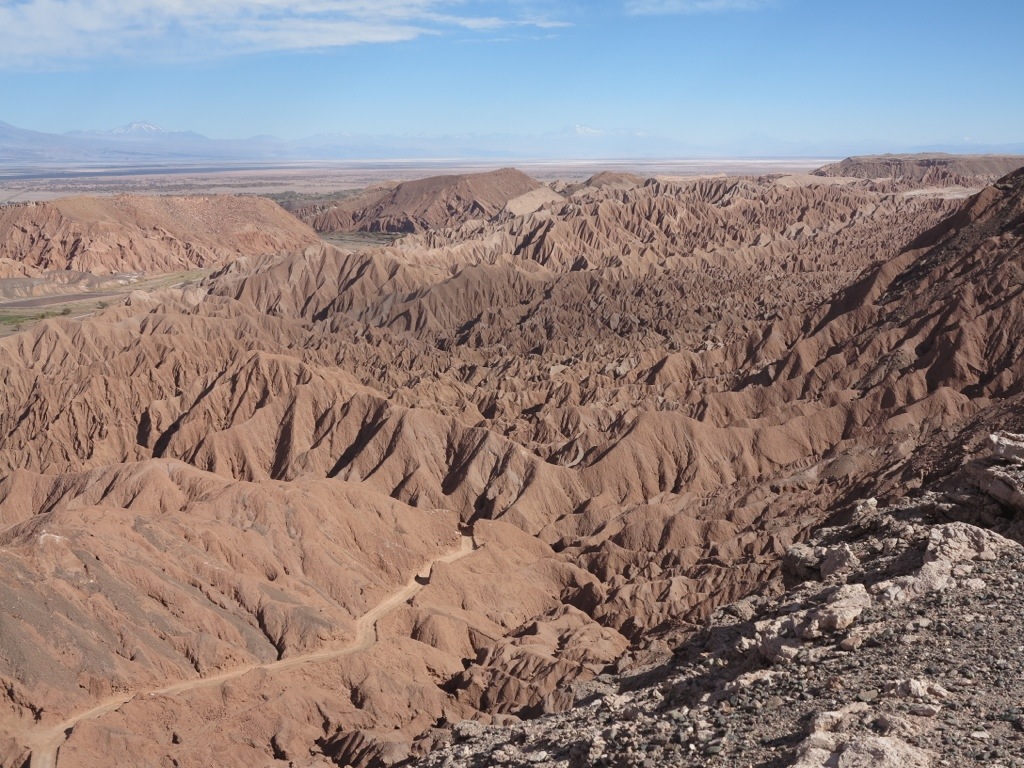
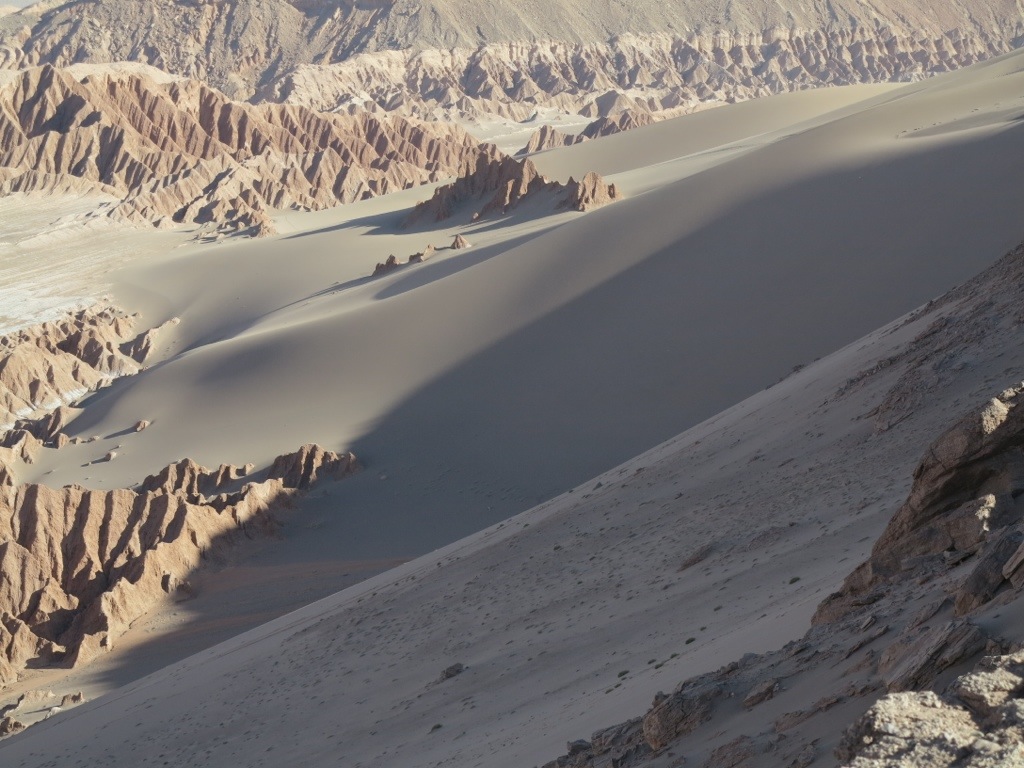
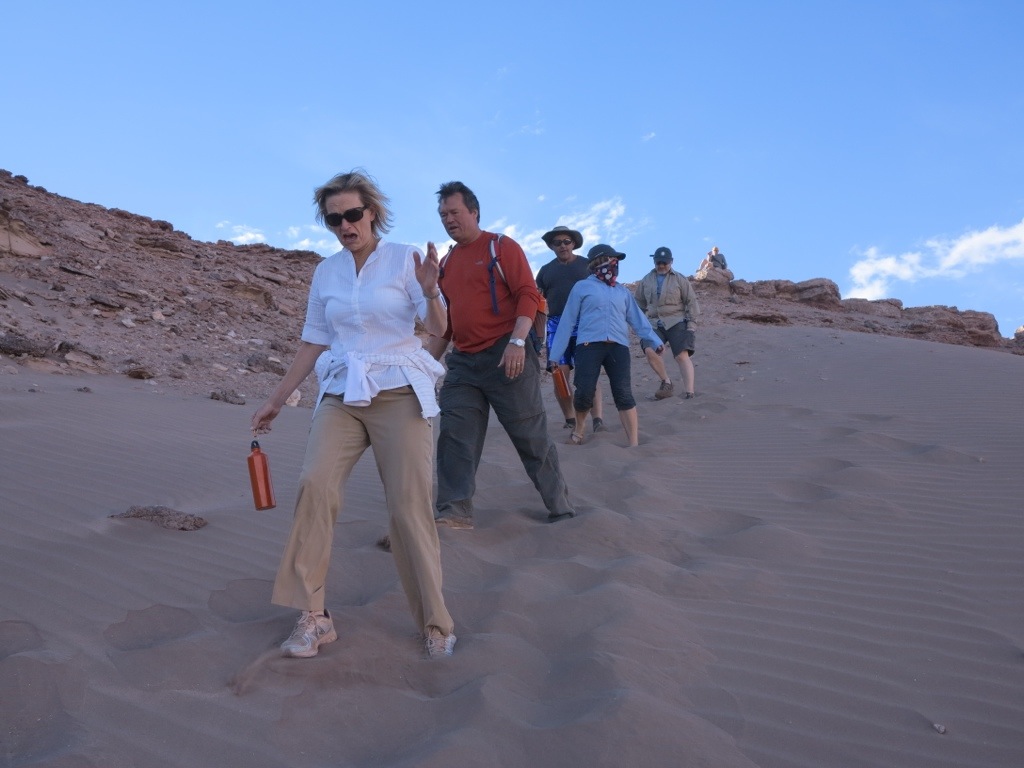
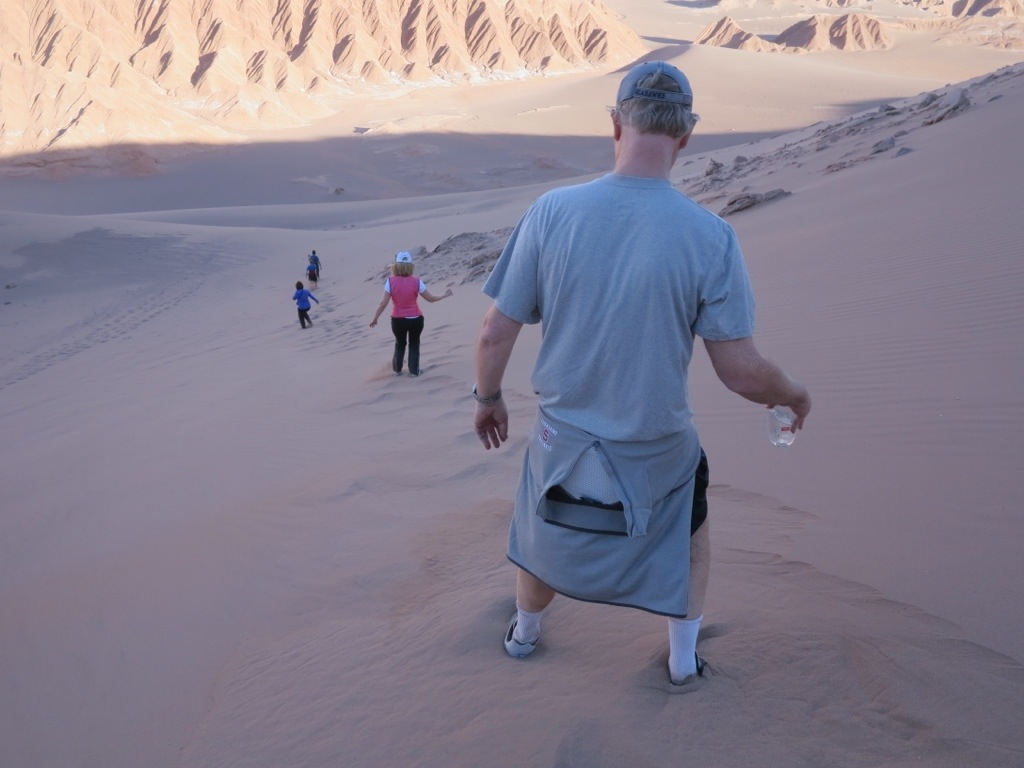
We then went on one of the most amazing hikes we’ve ever done. Climbing to the top of a ridge, we had a spectacular view of — I’m not sure how to describe it — the jagged red peaks near our resort. We traversed the ridge until we came upon the largest sand dunes we’ve ever seen. The sand literally climbed to the top of the cliffs on the ridge we were hiking.

The guide suddenly stopped and said to us, “we’ll go down here.” Uh, where? There was nothing but giant, steep dunes over the cliff for as far as we could see. “Here,” he said. Down the sand. Whoa. The looks on all the faces of the people in our group were simply stunned. One said, “Where is the other way down. I’m not going down there.” Lisa asked me to stay right with her and hold her hand. Most just kept an uncomfortable look on their faces and stayed silent.
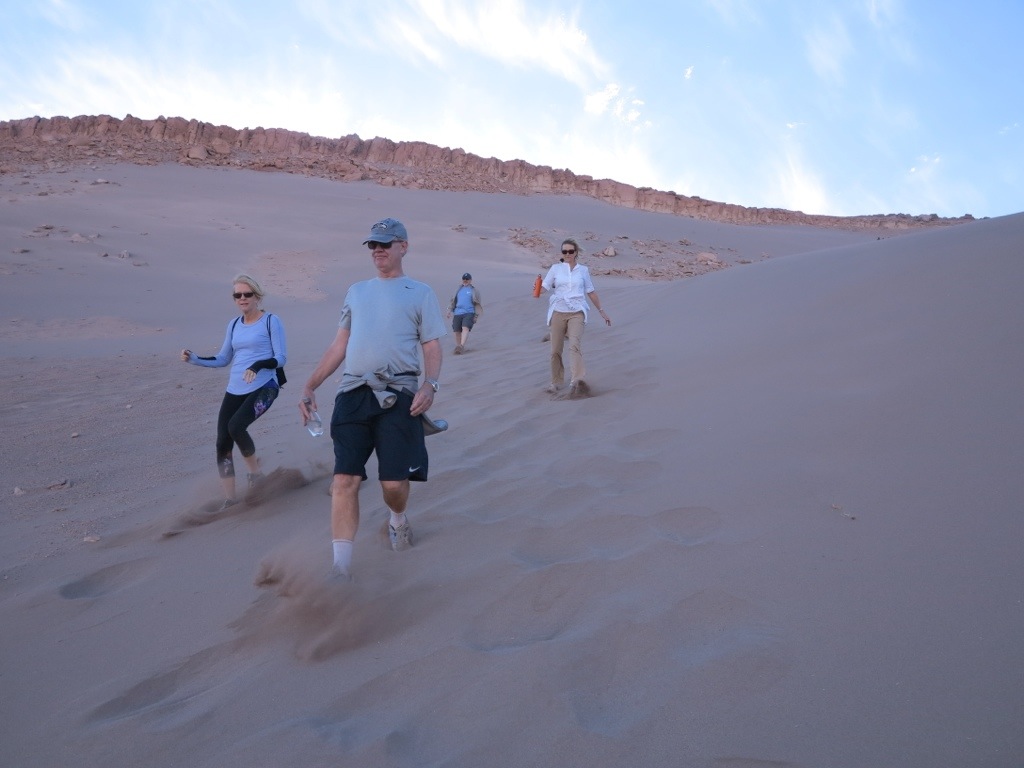
One by one people stepped off the cliff and onto the sand dune. It was soft and deep. Soon we were all slipping and sliding and gliding and running down this steep sand pile. An entire group of fifty-somethings started whooping and hollering like 12-year olds. It was the most amazing hiking experience we’ve ever had. When we got to the bottom we were all exhilarated, high-fiving and laughing out loud. We emptied our shoes of the five pounds of sand that had accumulated in them and hiked out the bottom of the canyon. We drank a well-deserved Chilean beer and toasted our accomplishment.

Take some time to review the photos below. Even though they don’t fully do the region justice — it is so spectacular in person — you’ll get an idea of what we experienced. Before coming here, we had never even heard of the Atacama Desert. This once-in-a-lifetime experience will now forever be with us.

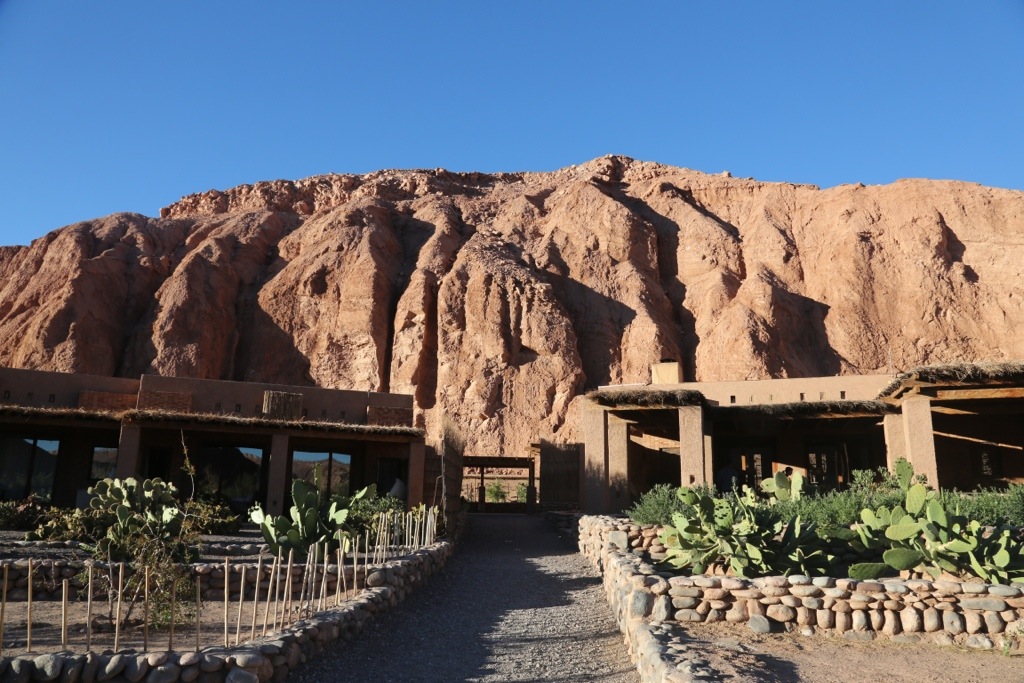
20131006-112939.jpg
Our resort — Alto Atacama

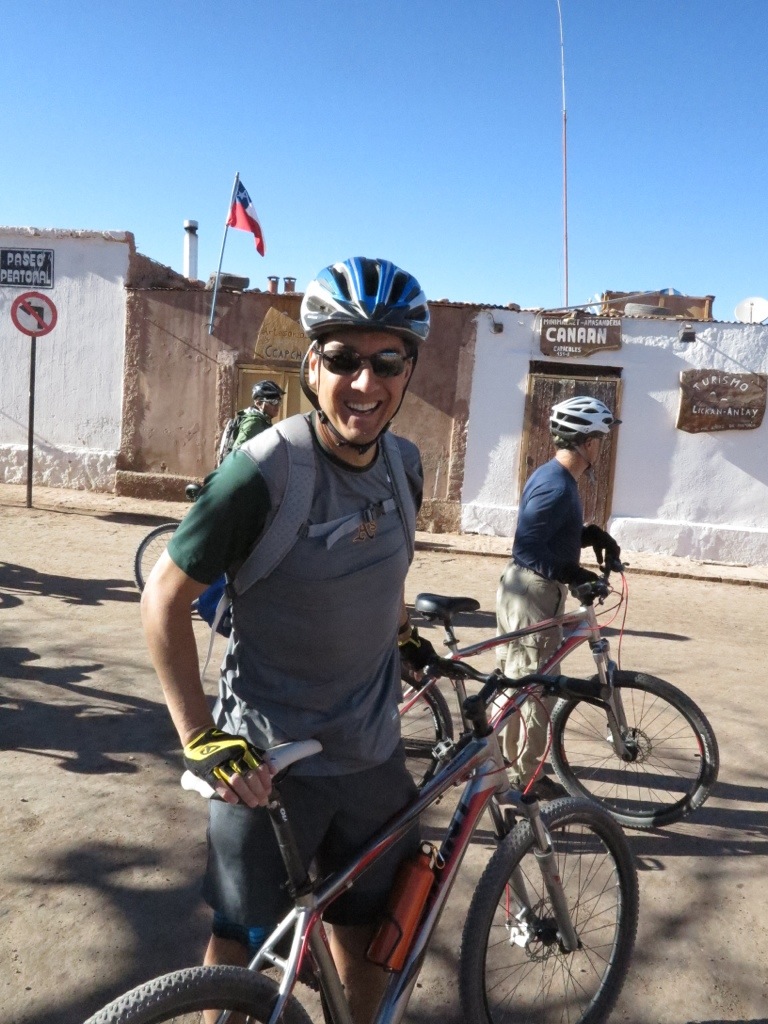
20131006-113425.jpg
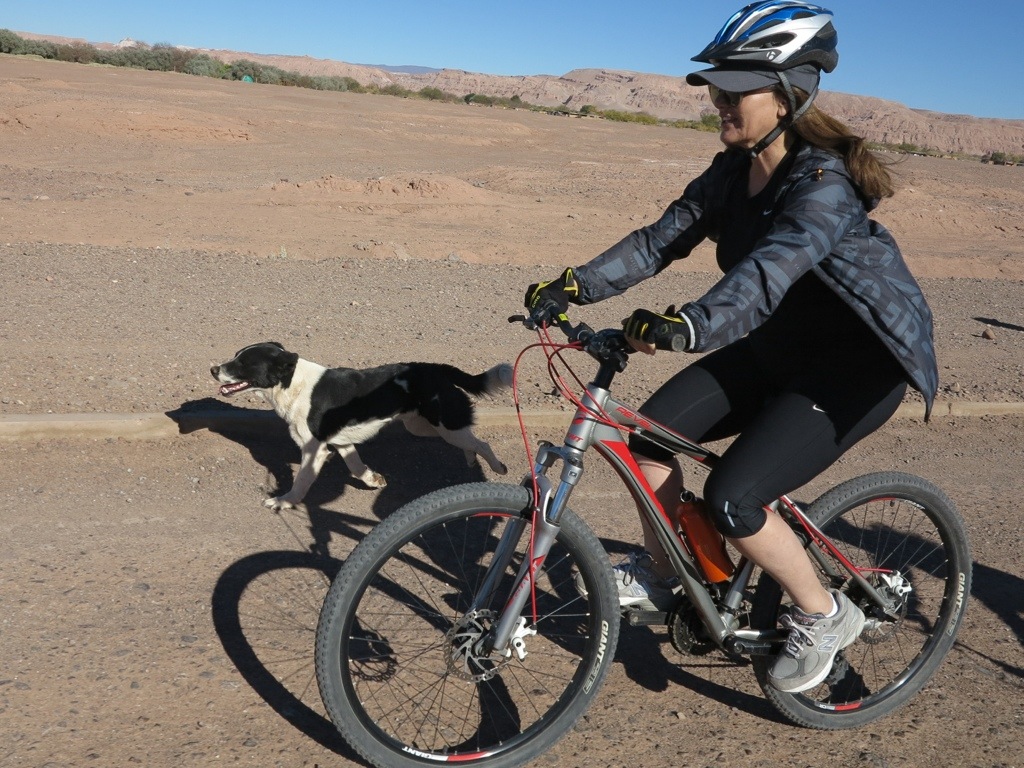
We rode mountain bikes for the 13 miles to the Cejar Lagoon — it is as salty as the Dead Sea.

20131006-113550.jpg
This dog ran the full 13 miles with us. The guide says he does this every day.

20131006-113102.jpg
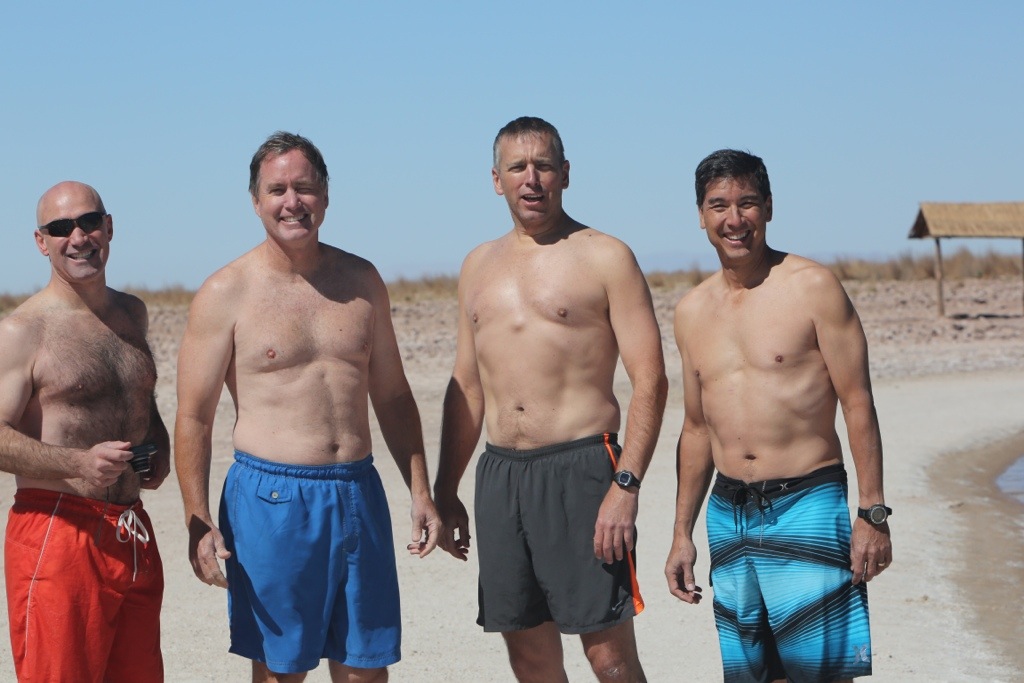
Dugald, Lance, Matt, and Brad before diving into the 55 degree salt water at the lagoon.

20131006-113300.jpg
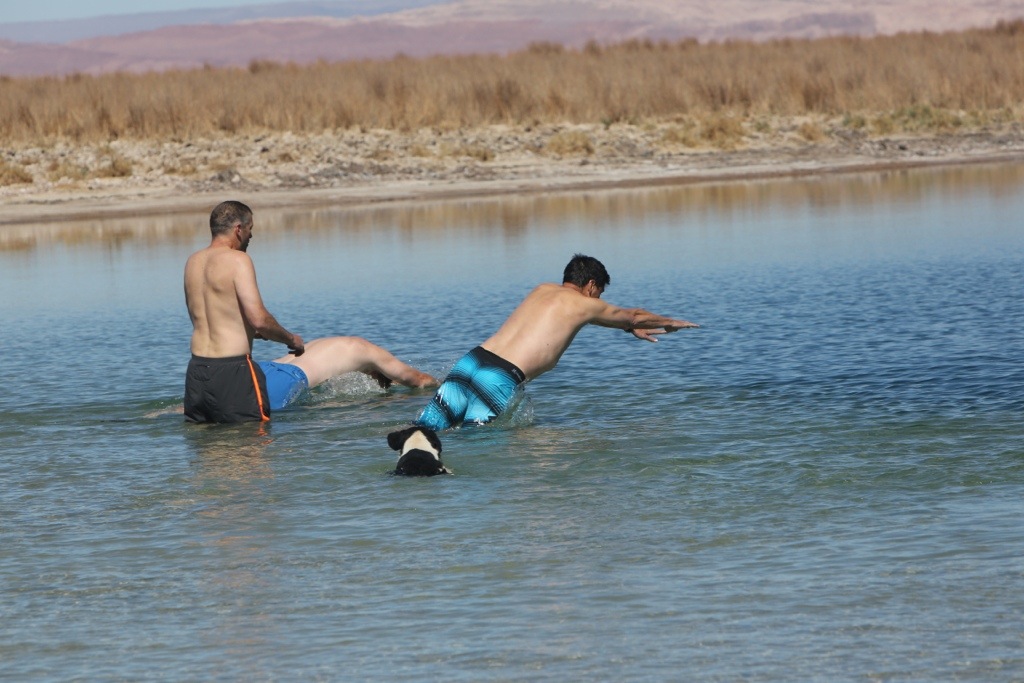
Diving in. Notice the dog came in with us.

20131006-113954.jpg
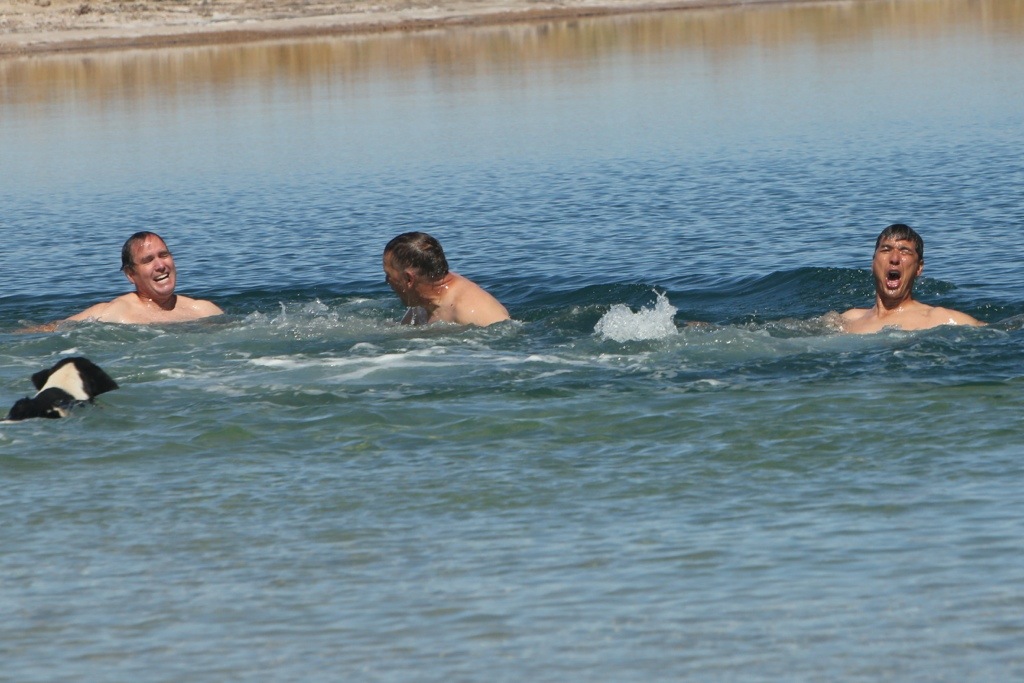
The water was very, very cold. And, the salt burned the eyes. But, we did it!

20131006-114108.jpg
Lisa’s version of diving in.

20131006-114419.jpg
The pink flamingoes. Arne and Donna Larson, these two are for you.

20131006-114523.jpg
The flying flamingoes.

20131006-114832.jpg
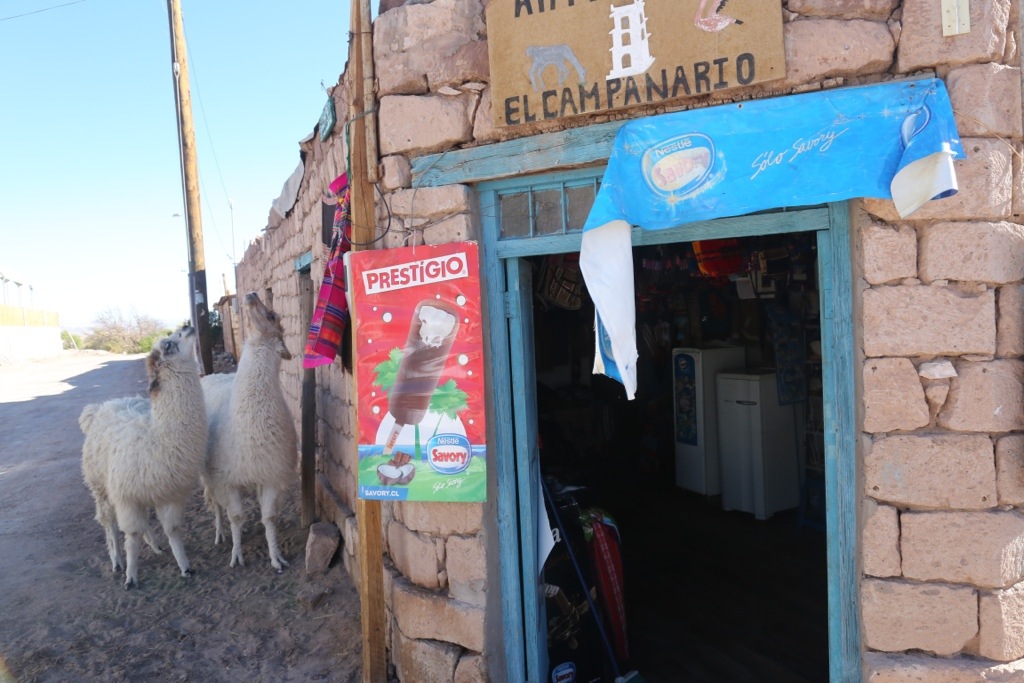
We bought sweaters from this store in Tocanao. They were made from these llamas.

20131006-115006.jpg
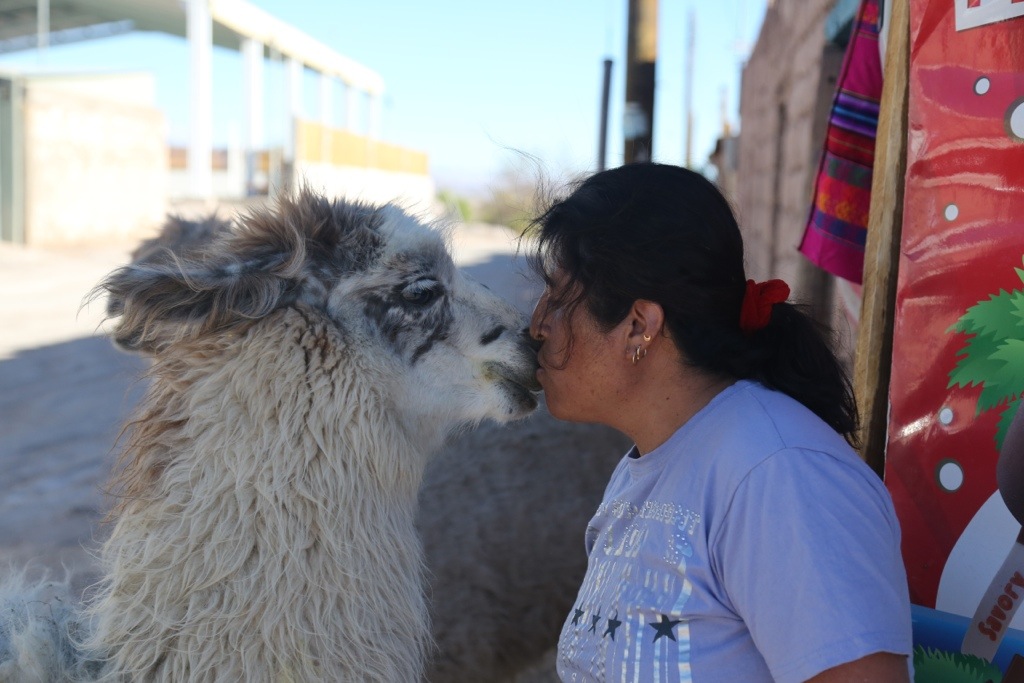
The store owner kissing her llama.

20131006-115353.jpg
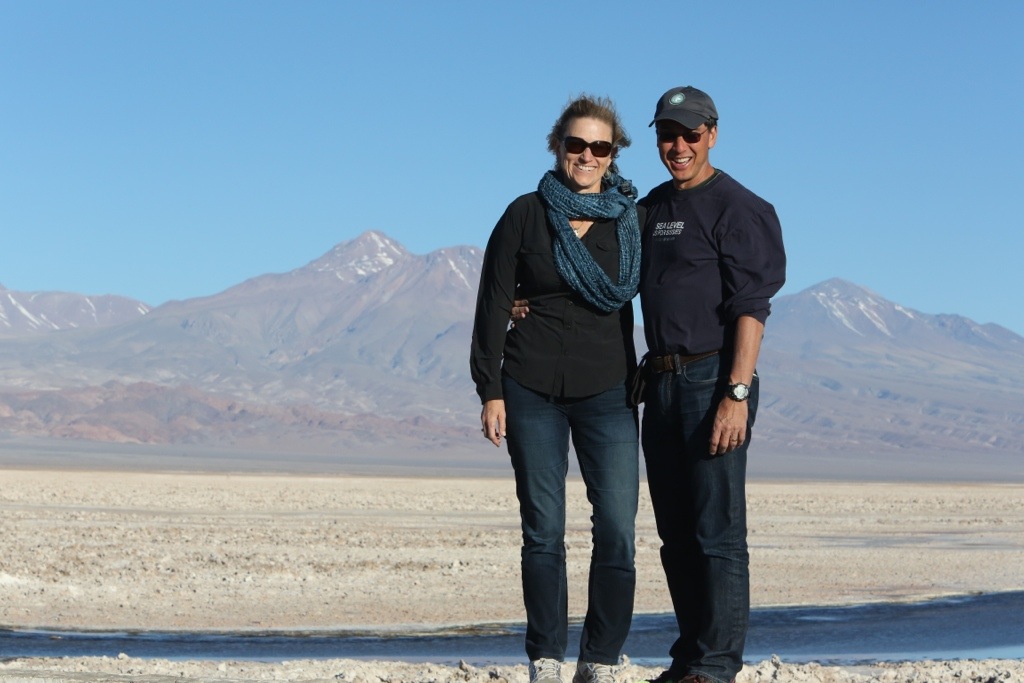
Lisa and Brad on the salt flats in front of an Andes volcano. I know it looks like a green screen shot, but, it’s real.

20131006-115530.jpg
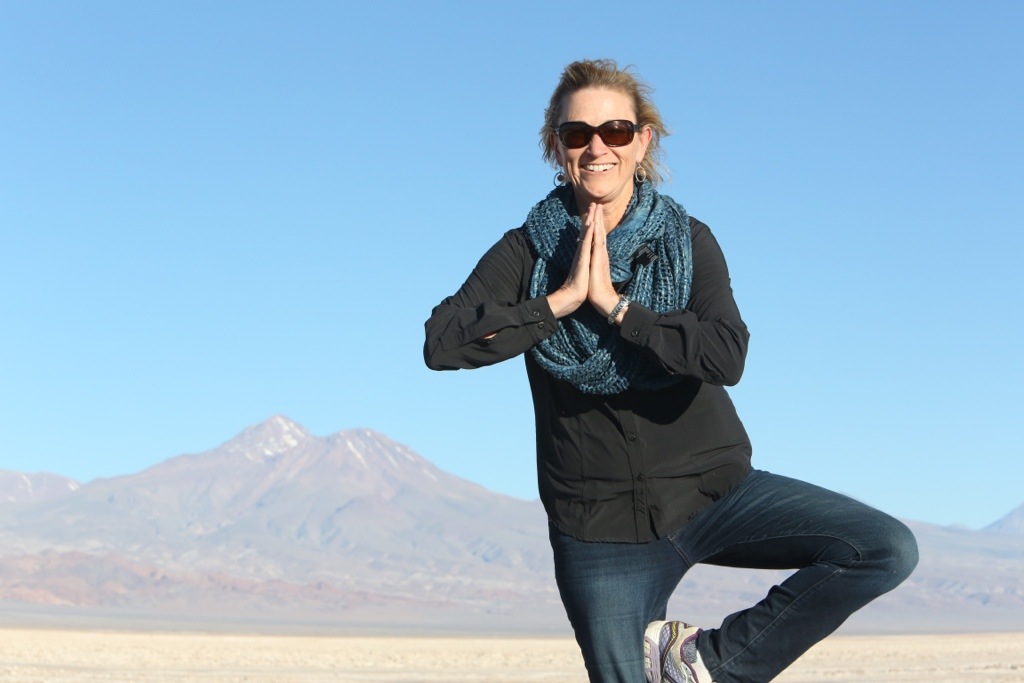
Lisa in her yoga pose. She has to do one everywhere we go!

20131006-115636.jpg
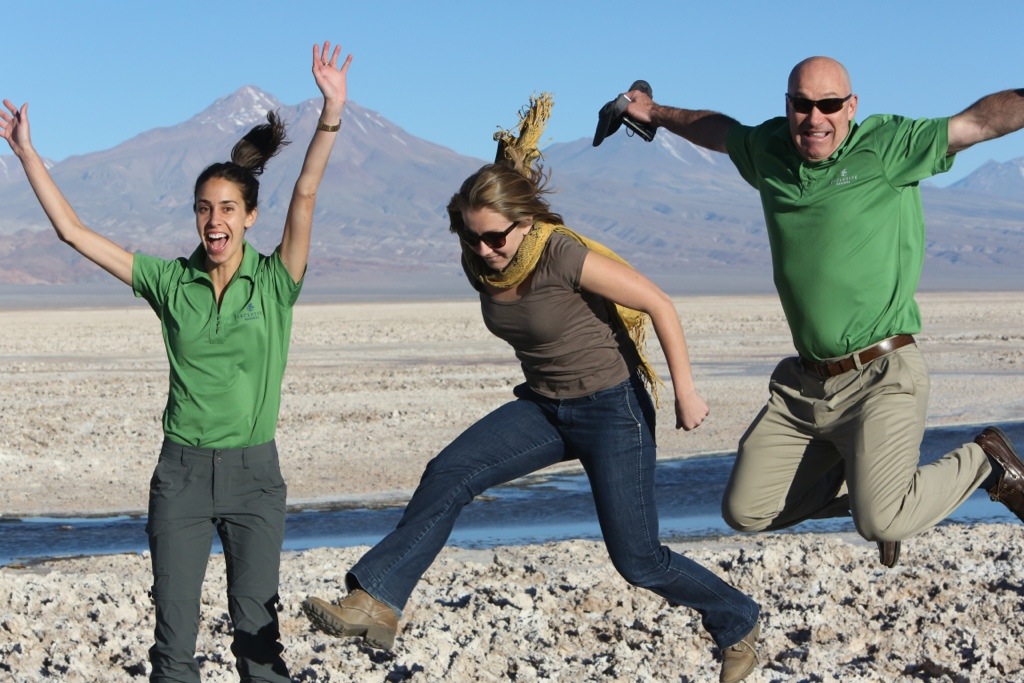
Our fun, fantastic Exclusive Resorts tour leaders — Stephanie, Hallie, and Dugald

20131006-150010.jpg
Sunset over the Atacama Salt Flat with a volcano in the background.

20131006-150207.jpg
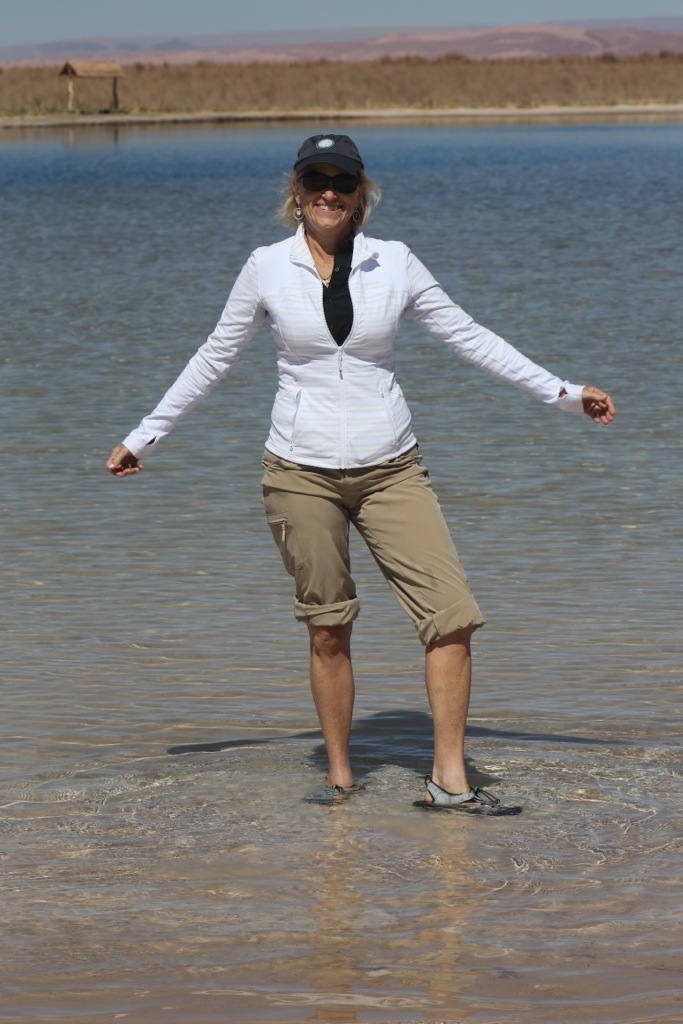
Lisa looking “ruggedly attractive.”

20131006-150707.jpg
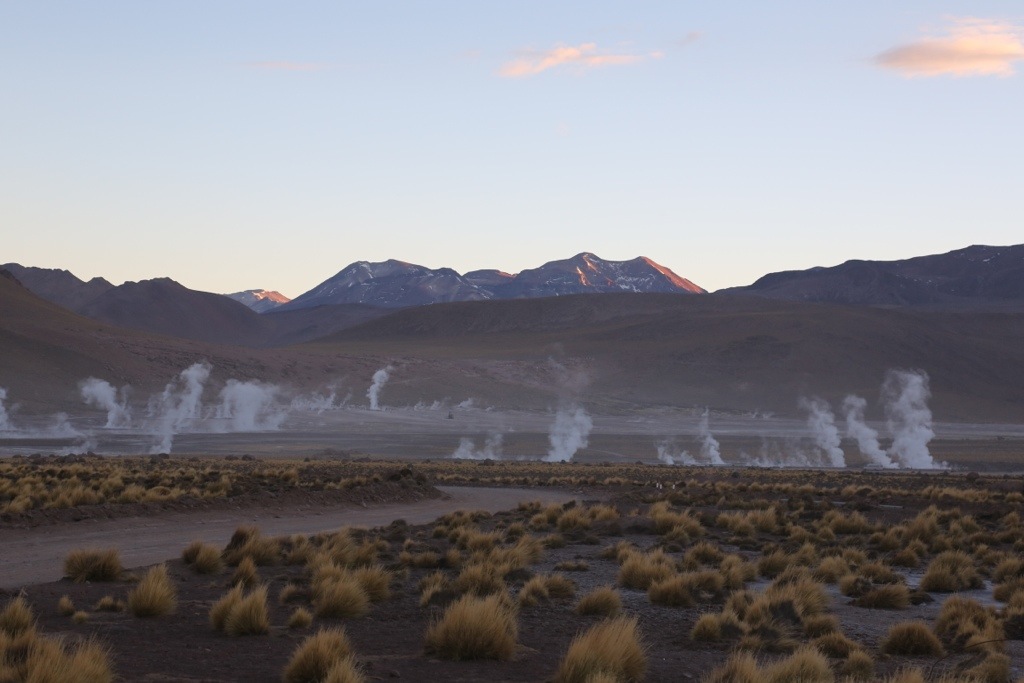
The Tatio Geysers at sunrise. They are at 15,000 ft above sea level. It was 13 degrees Fahrenheit outside. Brrr.

20131006-151306.jpg

20131006-151516.jpg

20131006-151551.jpg
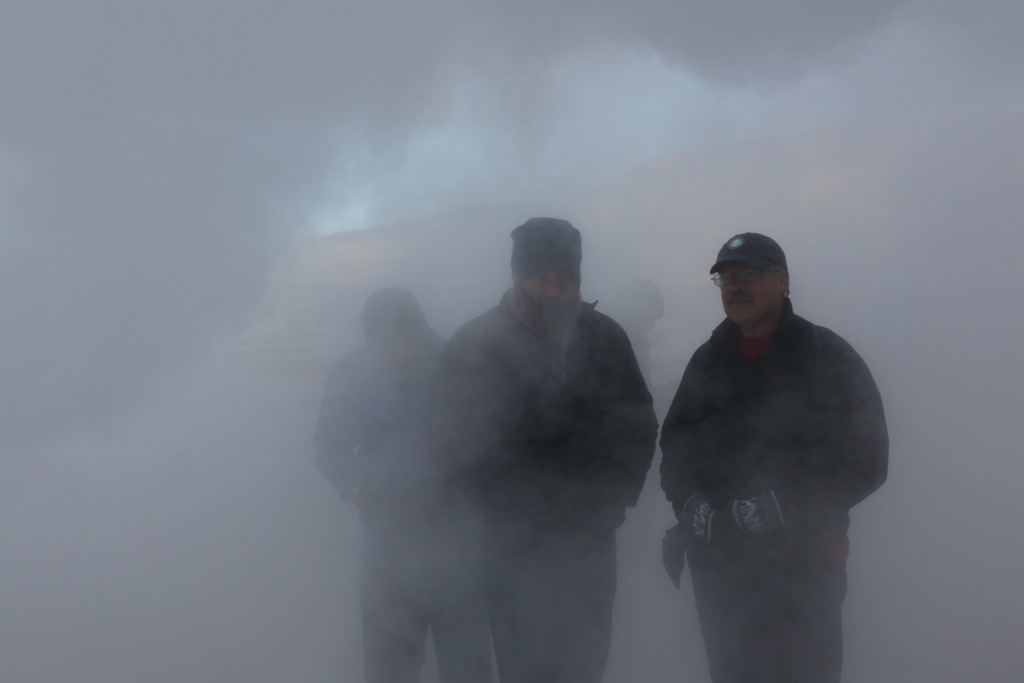
The boys standing in the steam from a geyser. Unlike Yellowstone, you can walk right up and look at them.

20131006-151804.jpg
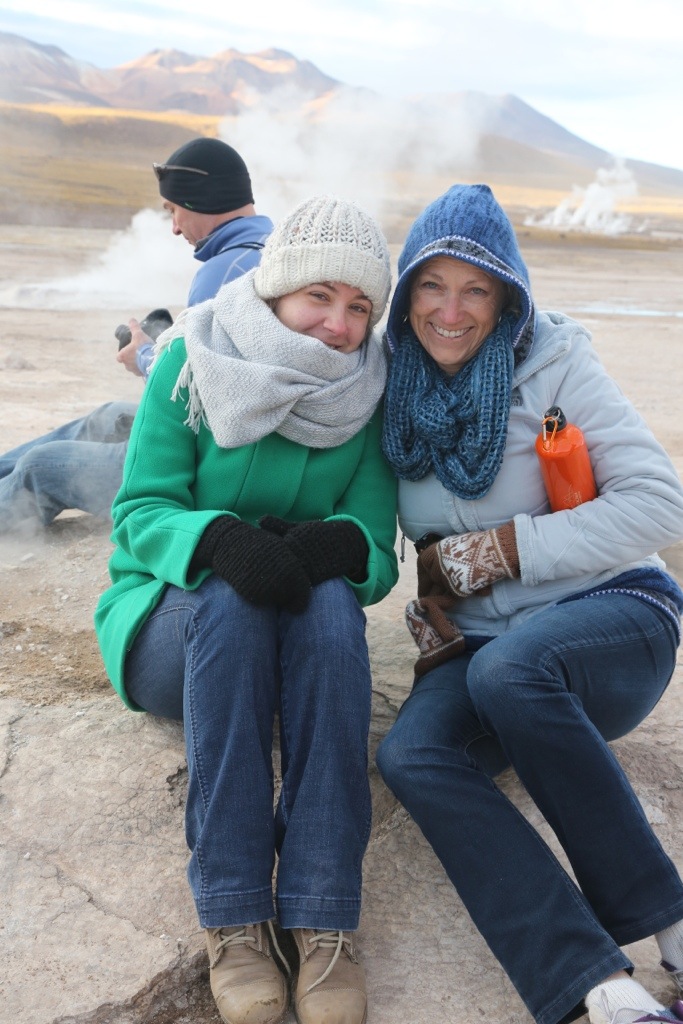
Lisa and Hallie warming themselves on a hot rock. Note the smiles as they thaw out somewhat.

20131006-152122.jpg

20131006-152320.jpg
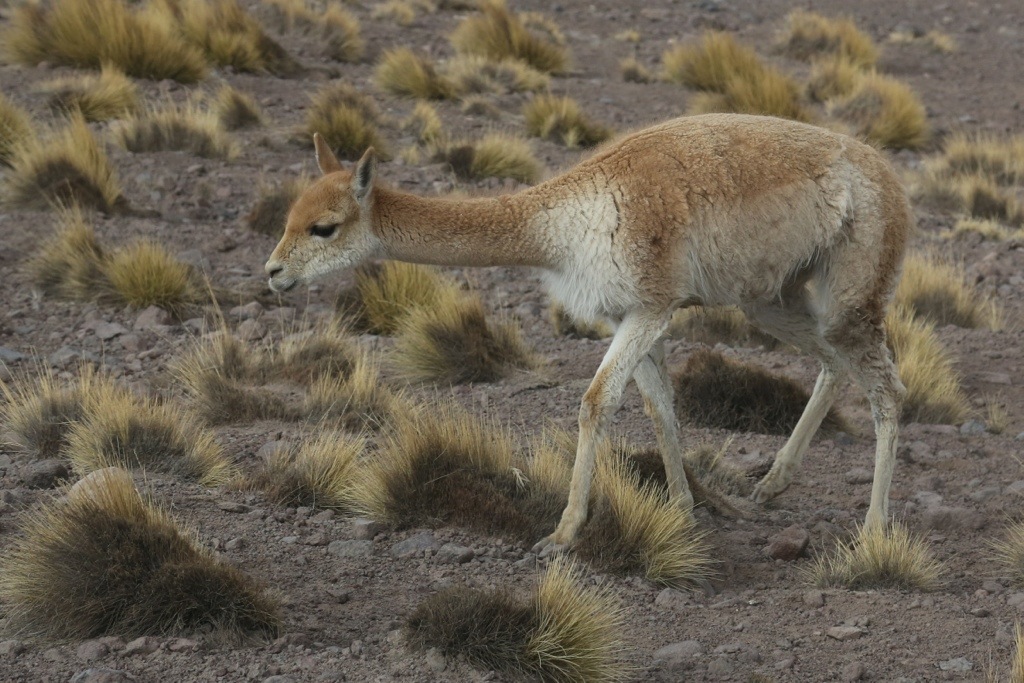
A vicuna — a small animal related to camels and llamas.

20131006-194047.jpg
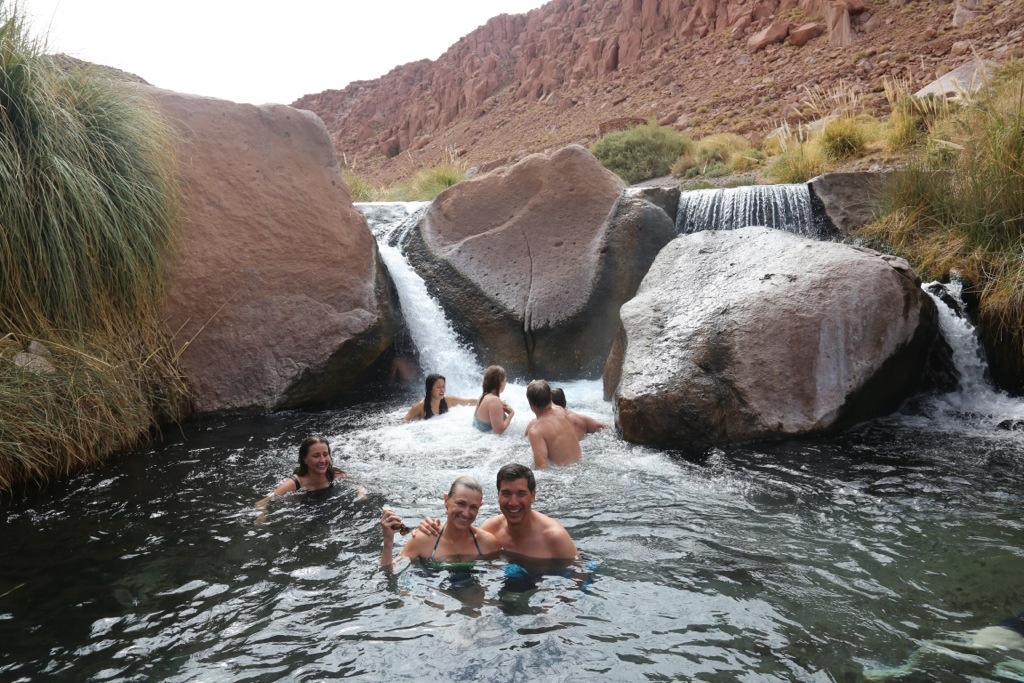
Here we all are in the Puritama Thermal Springs thawing out from our visit to the geysers. The same geologic phenomenon that heats the geysers warms the water here.

20131006-194422.jpg
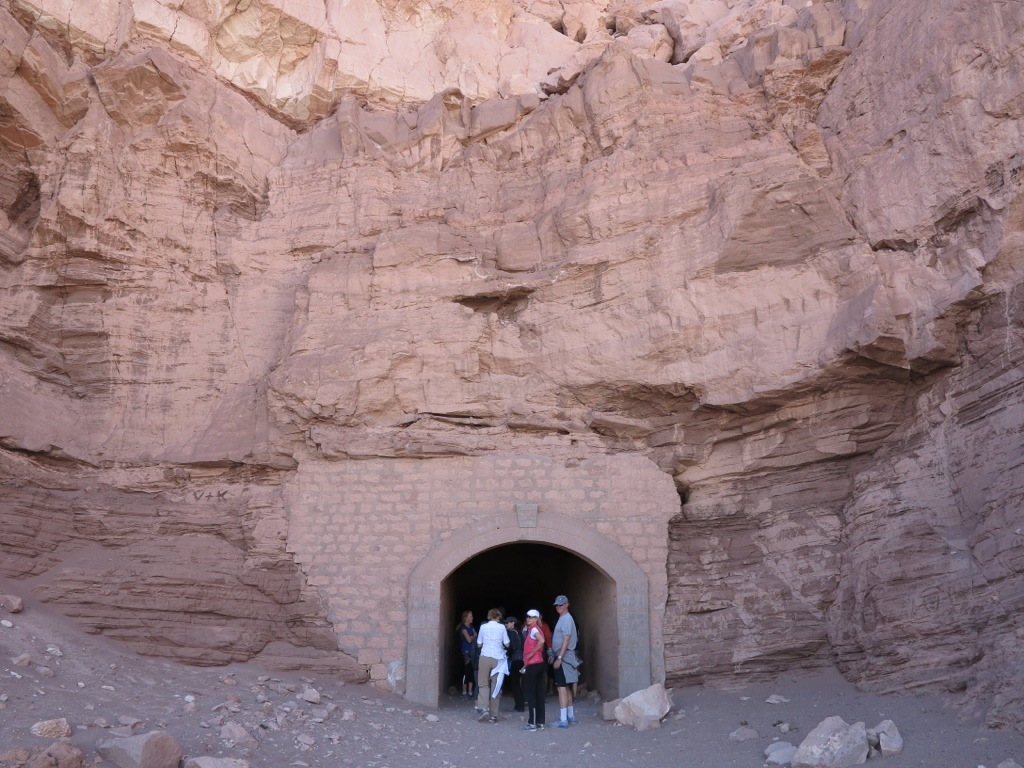
And finally, the now infamous hike. We entered in this “Indiana Jones-like” tunnel. It was about a quarter mile long and unlit. We truly learned the meaning of the phrase “light at the end of the tunnel.”

20131006-194702.jpg
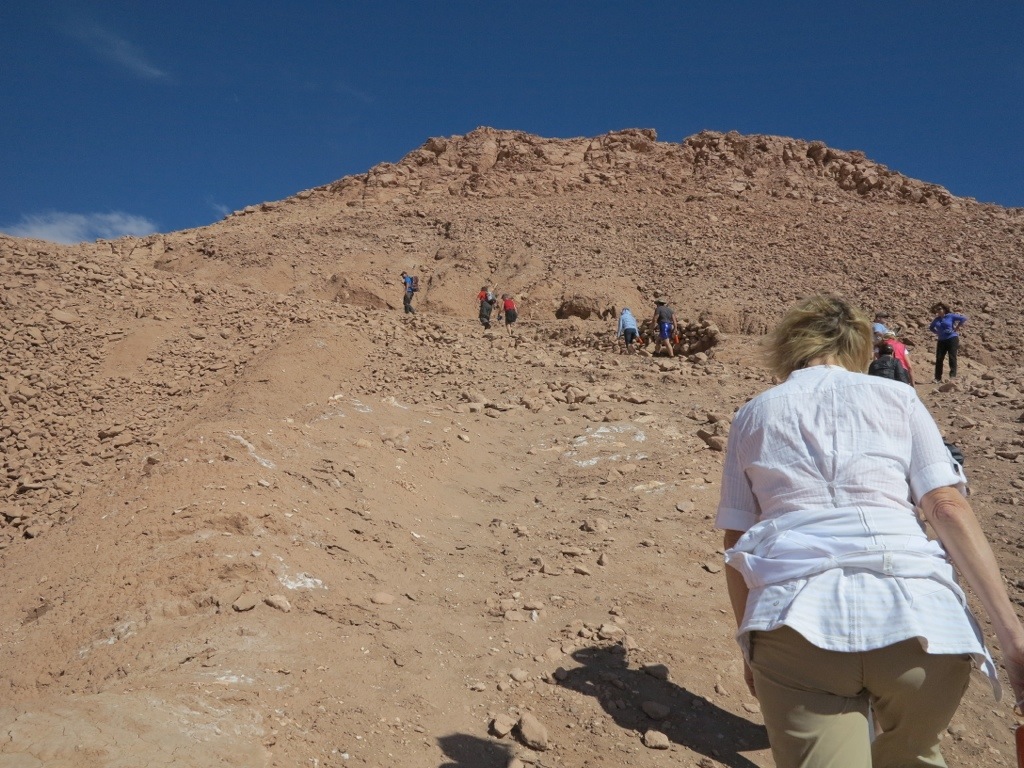
Climbing to the top of the ridge we would walk for the next few miles.

20131006-194757.jpg
Not to the top yet!

20131006-194926.jpg
The view from the ridge. We have never seen anything like this before.

20131006-195208.jpg
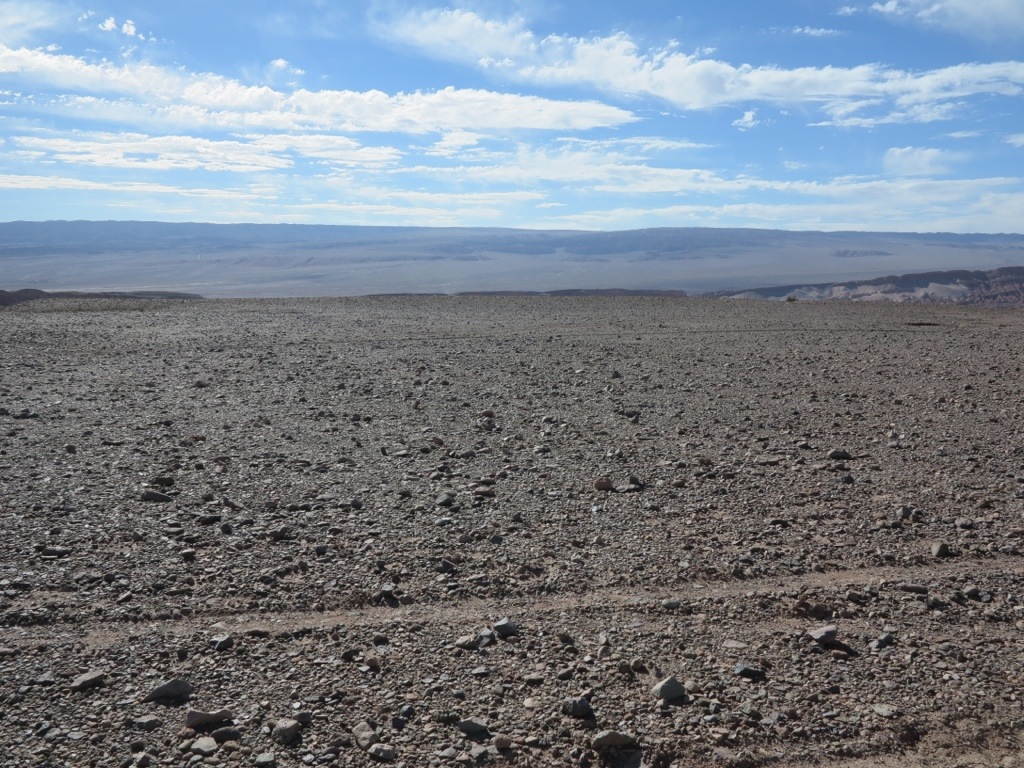
I think those tracks in the foreground are from the Mars Rover. It really landed here.

20131006-195257.jpg
Look at that monstrous sand dune reaching all the way up to the ridge. I joked that we could slide down it if we wanted to. I didn’t realize how, right I would be.

20131006-195507.jpg
Starting our way down. I think Lisa is saying, “Brad, what have you gotten me in to!!?”

20131006-195648.jpg
Heading down. It’s steep and deep.

20131006-195923.jpg
About 10% of the way down. That’s the ridge we were hiking at the top of the photo.

20131006-200159.jpg
Everyone has their confidence and is beginning to run down.

20131006-200322.jpg
Getting to the bottom. Look at how far up the ridge is from here.

20131006-201553.jpg
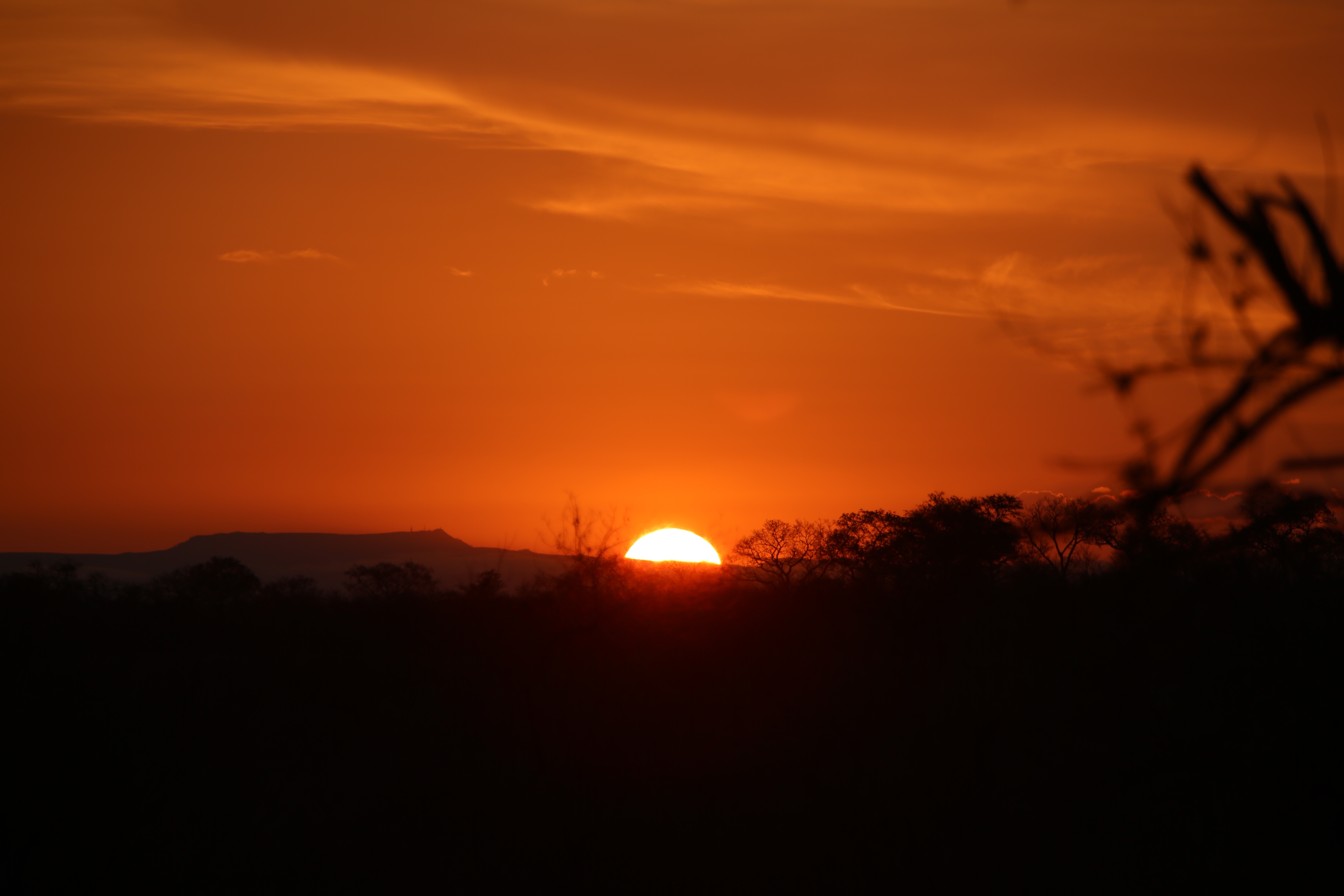
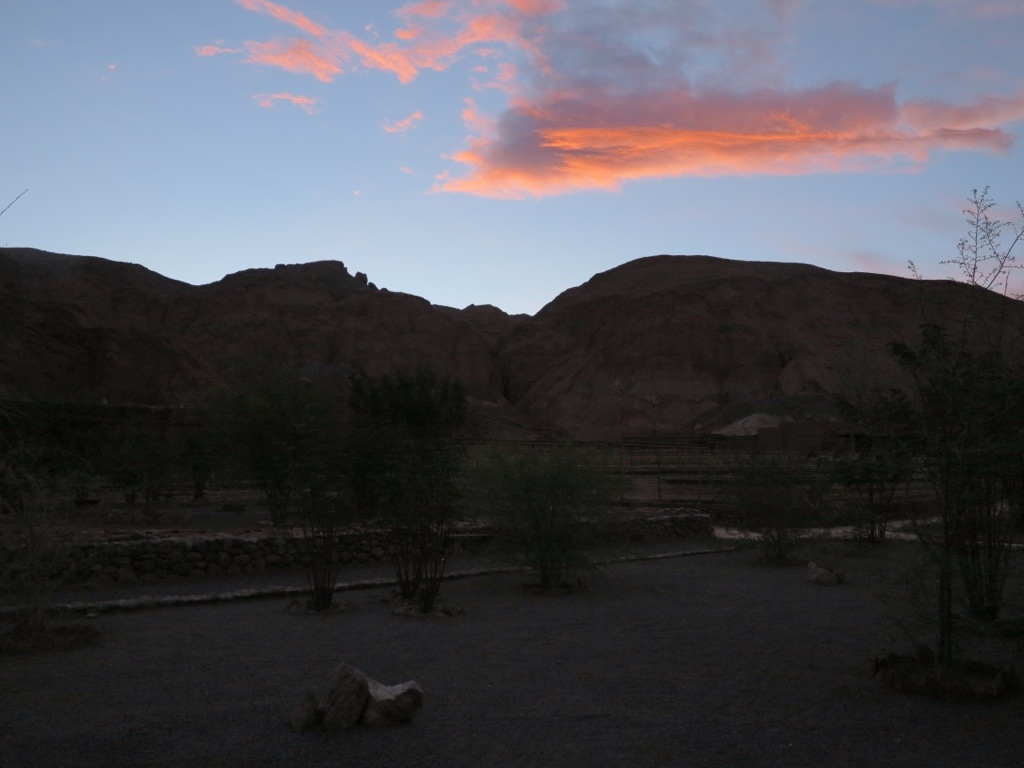
After a long, satisfying day, we were treated to this beautiful orange sunset back at our resort.

Categories: Uncategorized | Tags: , , , , , | 3 Comments

Mendoza — Wine Country by the Mountains

A serious change of pace.

We left the hustle-bustle of Buenos Aires by plane for our two-hour flight to Mendoza. The distance was more than the few hundred miles we flew. Mendoza sits in the shadow of the Andes Mountains in the northeastern part of Argentina. Mt. Aconcagua is the tallest mountain in the Western Hemisphere at 22,837 ft. above sea level. For context, the tallest mountains in Colorado are a mere 14,000+ ft. While Buenos Aires had that European flair, Mendoza is notably Latin American with a Southwestern US feel.

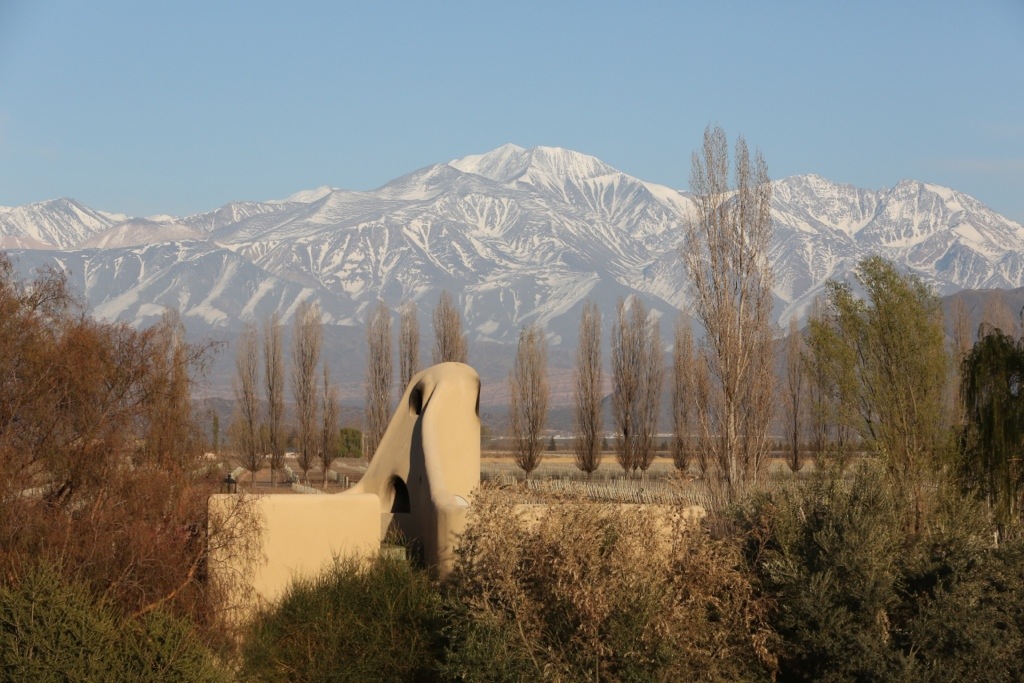
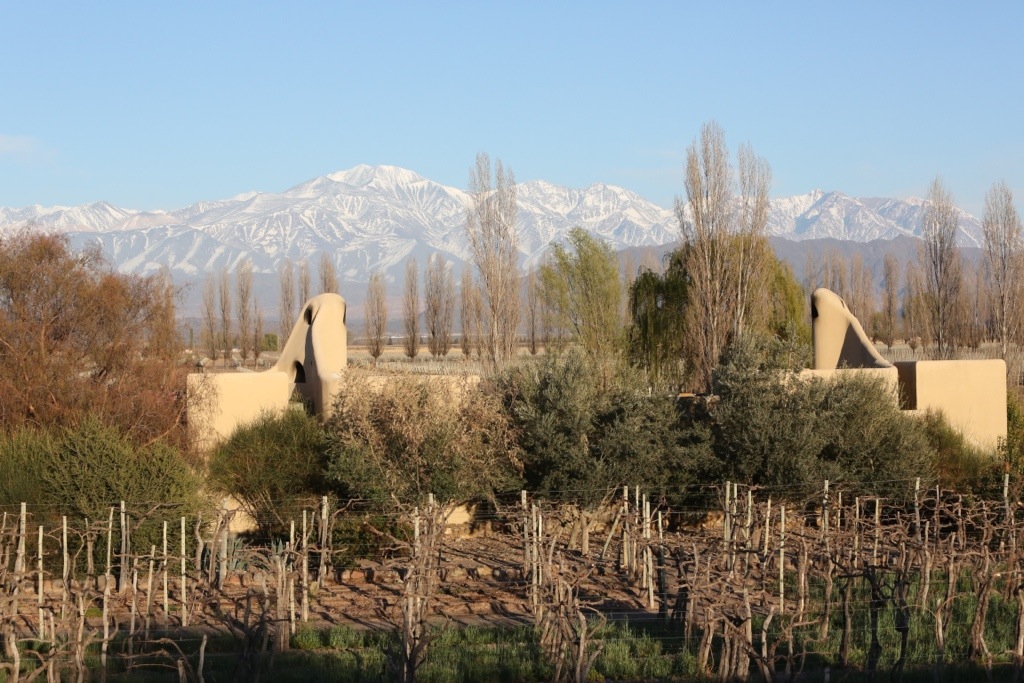
We drove out of town and into wine country to our lodging at the Cavas Wine Lodge. Our accommodations were individual adobe and stone villas set among the vineyards with spectacular views of the Andes. The unique architecture features a funny-looking chimney and rooftop deck. They are such cozy little places that we weren’t sure we wanted to leave our villa for the many events we had scheduled.

20131002-182158.jpg
One of the villas with the Andes mountains in the background.

20131002-182629.jpg
The villas among the vineyards. Note the lack of growth on the vines. We’re still in early Spring before bud break.

20131002-182953.jpg
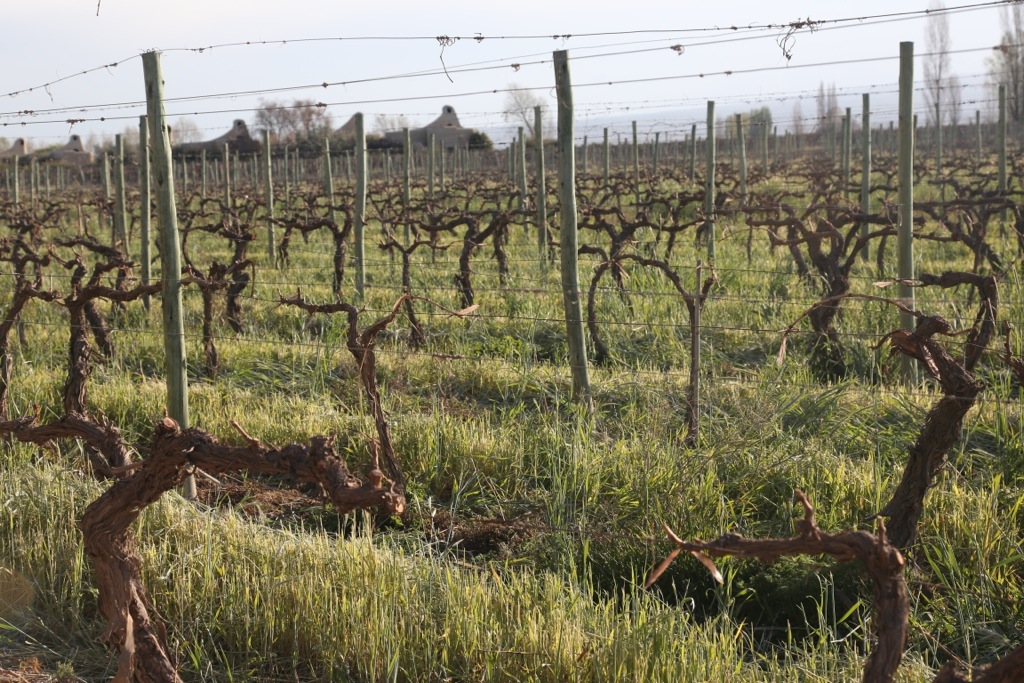
The very old vines on the property.

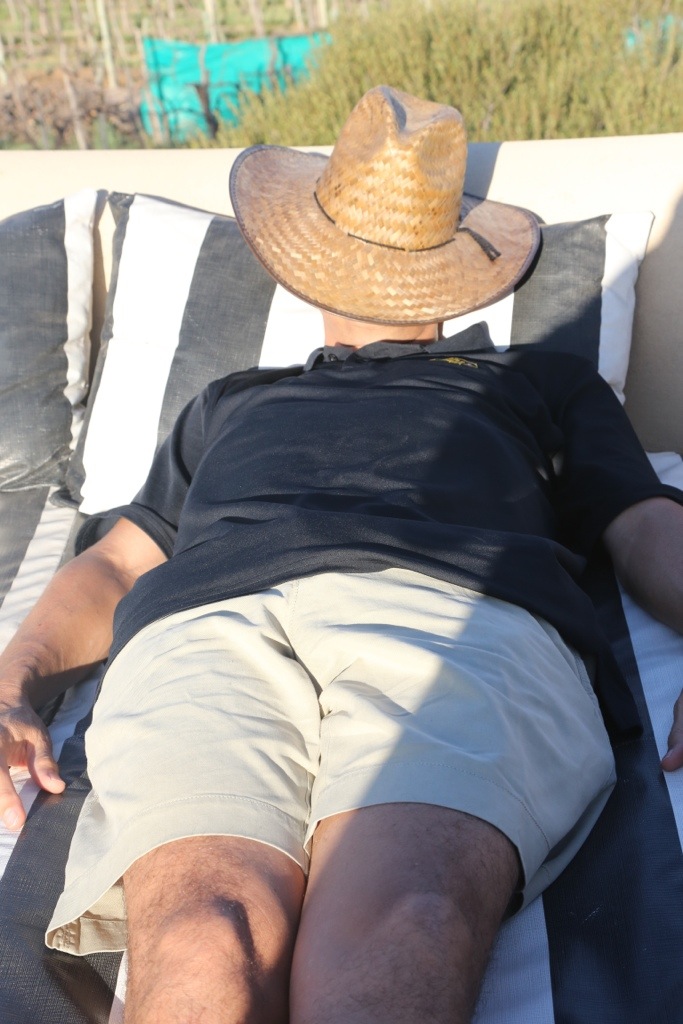
After a delicious lunch we unpacked and relaxed for a bit on the rooftop deck. I might have relaxed a bit too much:

20131002-183240.jpg

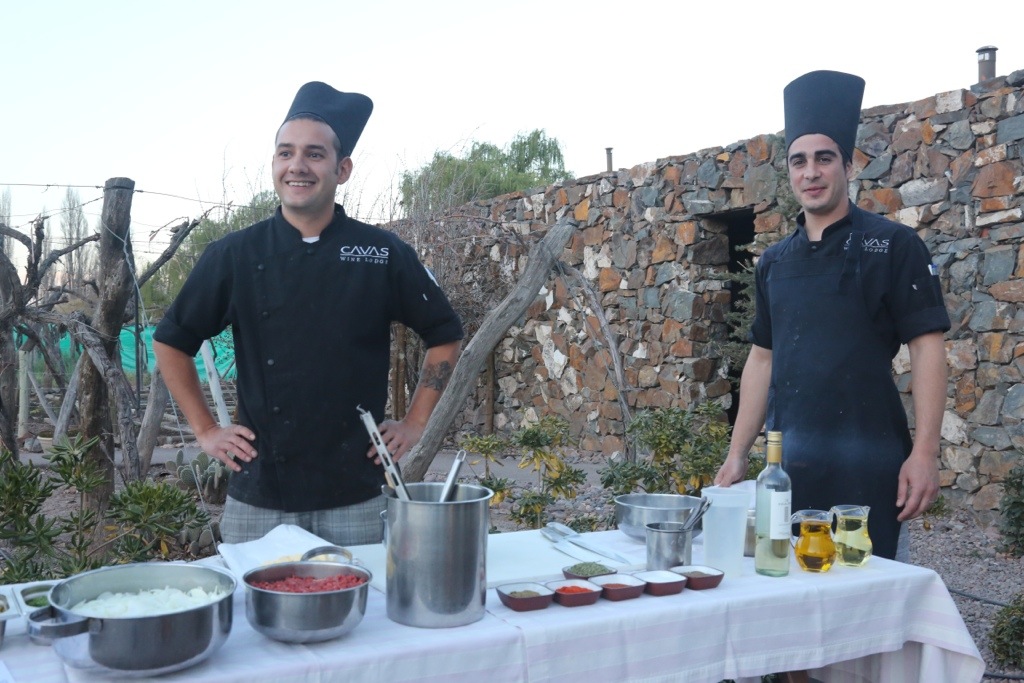
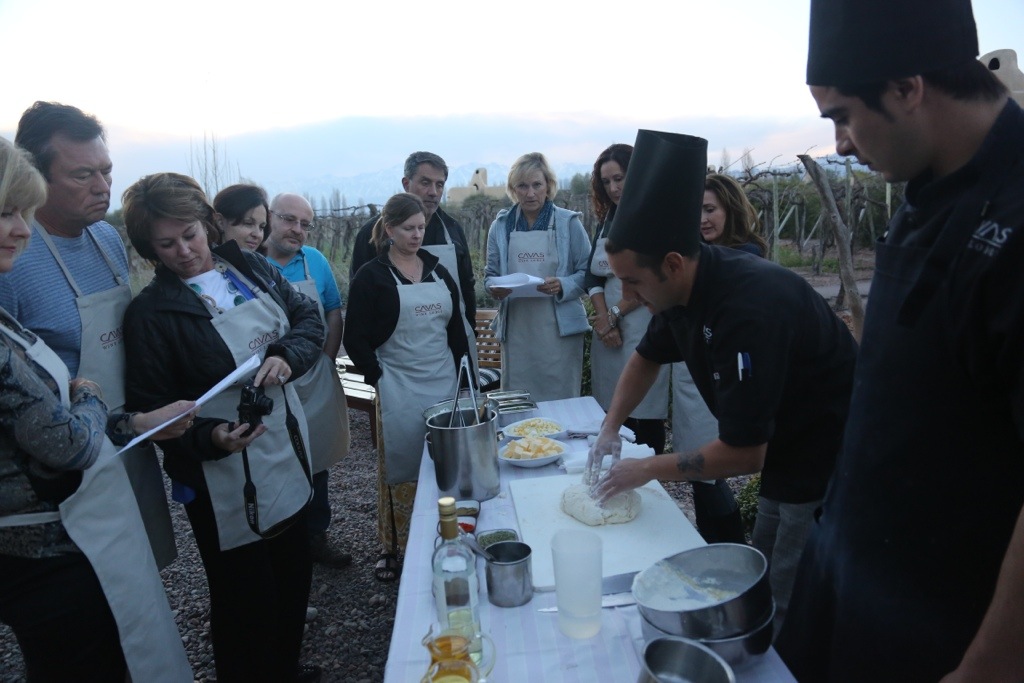
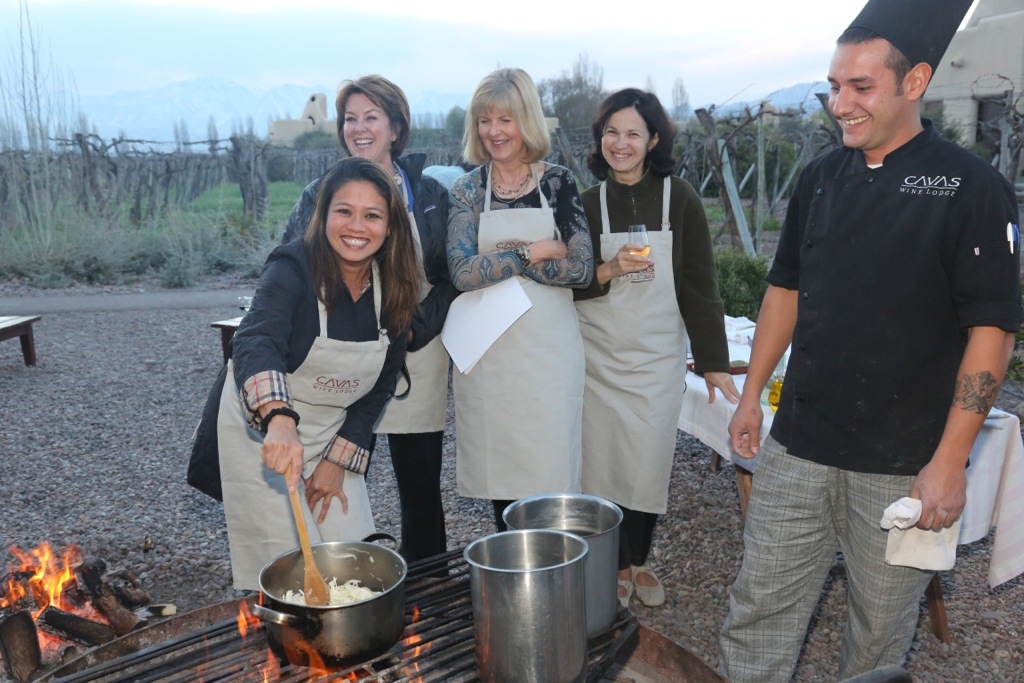
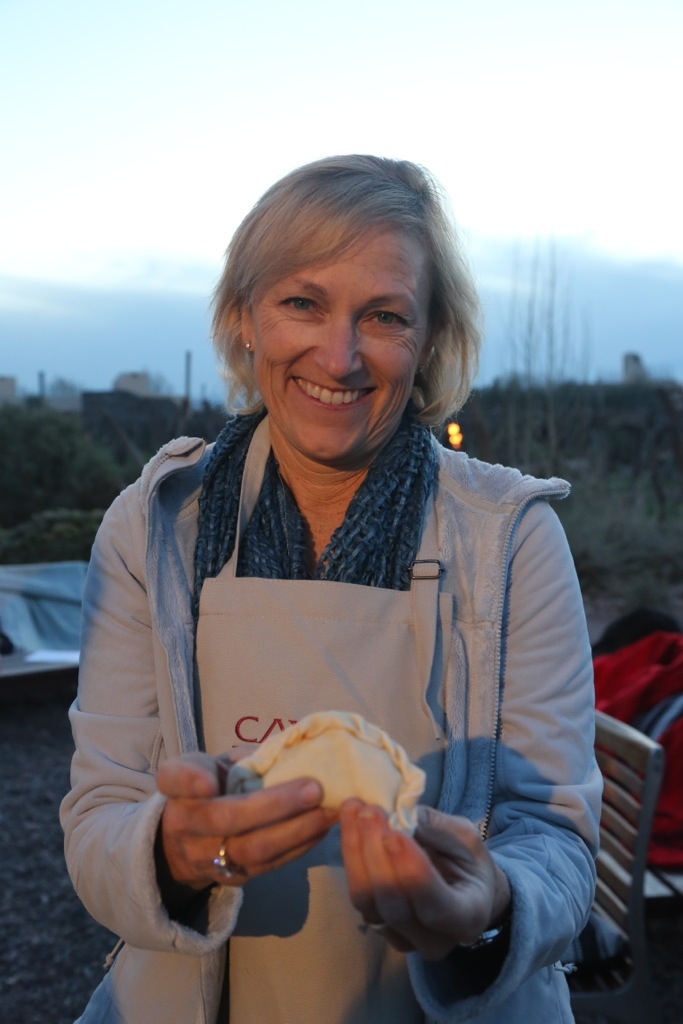
We got a cooking class before dinner from the lodge’s great chef. Our first lesson was in making empanadas, a traditional Argentine appetizer. Empanadas are pastries with delicious fillings. Ours had beef, green olives, paprika, grilled vegetables, and many herbs. The Argentines are very good at creating foods with complex flavors. Our chef was no exception. OK, these things taste great. But, making them certainly isn’t as easy as it looks. Our group was less than supportive as my every attempt at rolling up the edge of the dough into the perfectly twisted seal failed miserably. My only consolation was that Lisa was only marginally better than I was. For our friends expecting empanadas when you visit, watch for the Trader Joe’s version.

20131002-184118.jpg
The chefs ready to teach their eager subjects.

20131002-184300.jpg
The, uh, eager subjects.

20131002-184510.jpg
Myla helping to make the veggies for the empanadas.

20131002-184809.jpg
Chef folding his empanada perfectly.

20131002-185018.jpg
Our group struggling to do what chef just showed us.

20131002-185215.jpg
Lisa’s art work.

Wine Tasting

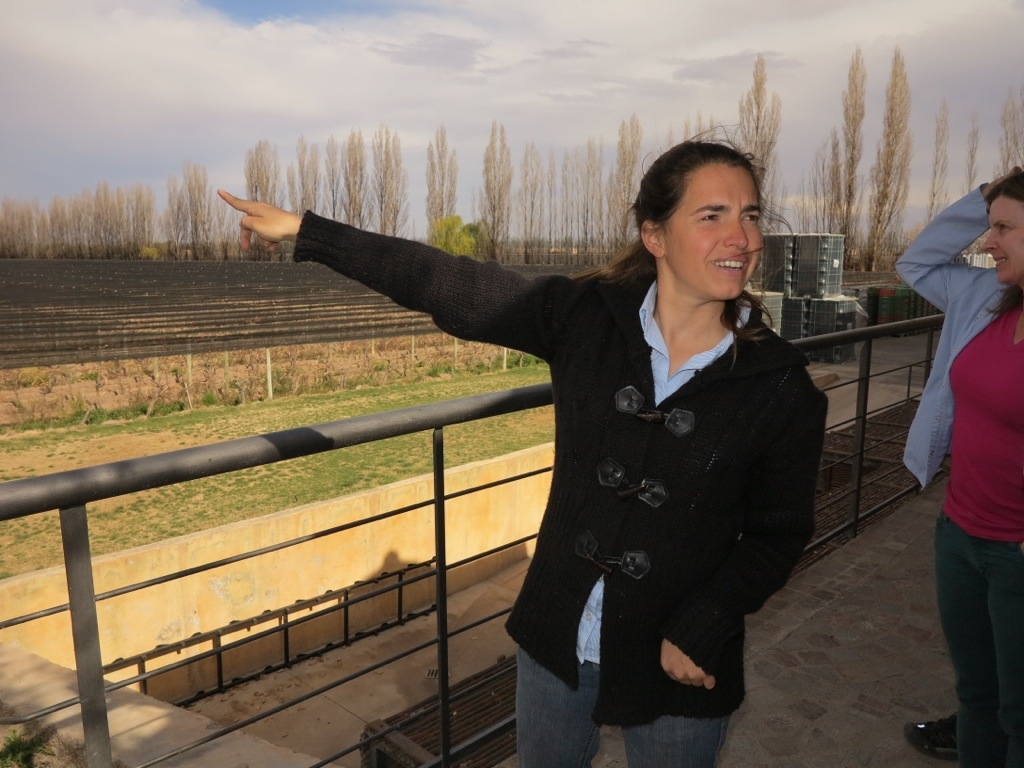
The next morning we arose for a full day of hiking, biking, horseback riding and, of course, wine tasting. Lisa and I were really looking forward to the activity because, to be truthful, we have been consuming many more calories than we’ve been burning. We couldn’t remember the last time we had been hungry. We drove over to the Uco Valley. It sits between the foothills and the Andes and is considered the Napa Valley of Argentina. While the roads are not yet very developed — many are still dirt — the wine industry is revving up. We hiked, biked, and had a wonderful picnic overlooking the valley. We then headed over to one of the prominent wineries in the region for a tasting.

Grape vines were brought to Mendoza 500 years ago by the Europeans. So winemaking isn’t new to the region. But, for many years it was a local industry. During the mid-1900s winemaking ramped up but the quality was less than desirable. They started to improve the quality in the 1970s, but, the region took a major hit in what was known locally as the “Beer Crisis”. Sounds innocuous enough, but, when Argentines began switching to other drinks, such as beer, the industry nearly collapsed (Brad Collins, we blame you). Many old vintners simply went out of business. But, in the end, this worked out well for the region as new winemakers moved in with a resolve to improve the quality. By the late 1990s Mendoza was becoming known throughout the world. And, when the dot com bubble burst, the global recession and devalued peso allowed the vintners to sell their high-quality product to other countries at a great price. Malbec, the dominant grape in the region had been used by the French as a blending grape in their Bordeaux wines. But the Argentines turned it into a global phenomenon as a grape that could stand on its own.

20131002-191656.jpg
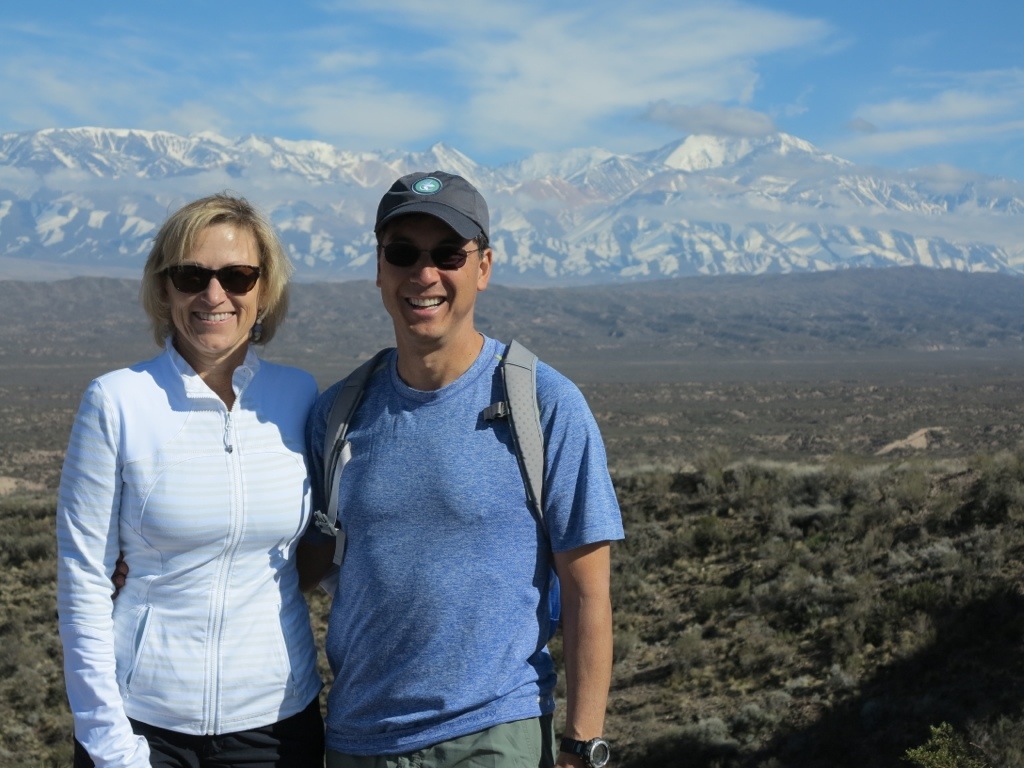
Lisa and I overlooking the Uco Valley.

20131002-235119.jpg
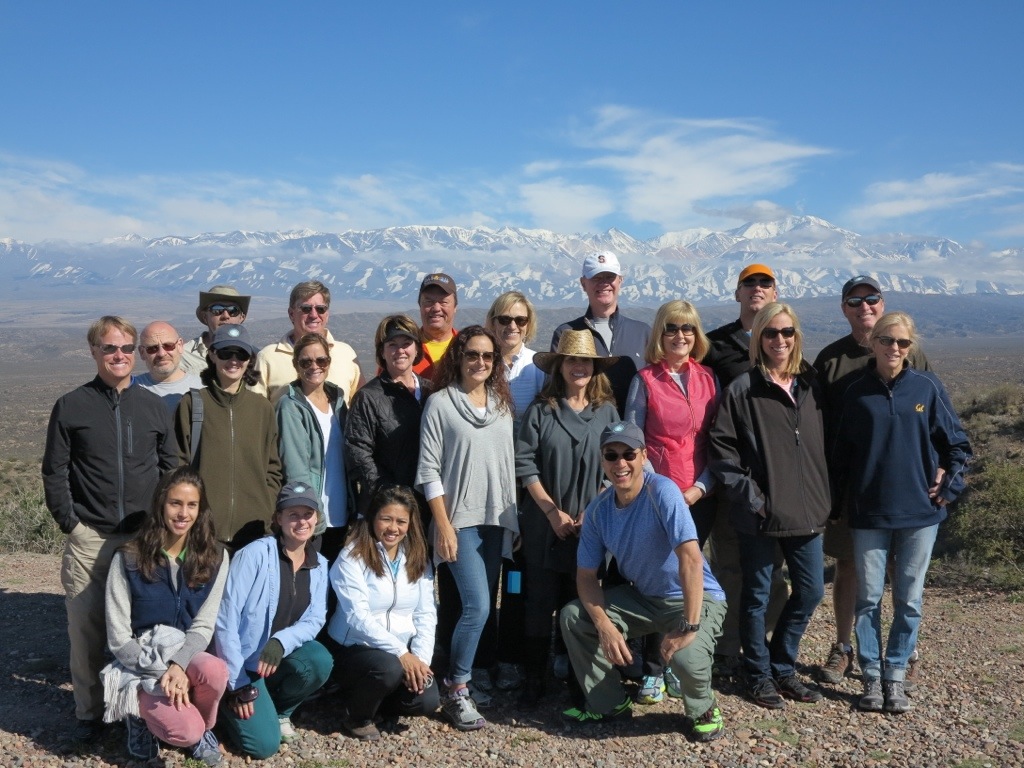
Our traveling companions

20131002-235347.jpg
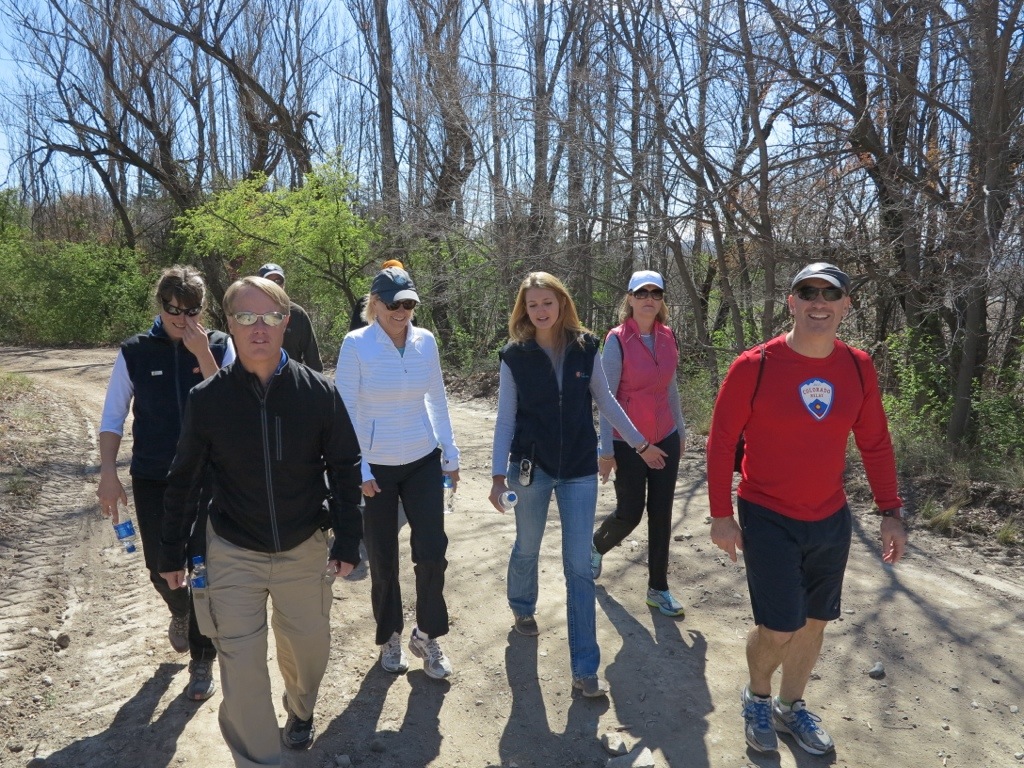
The Hikers

20131002-235510.jpg
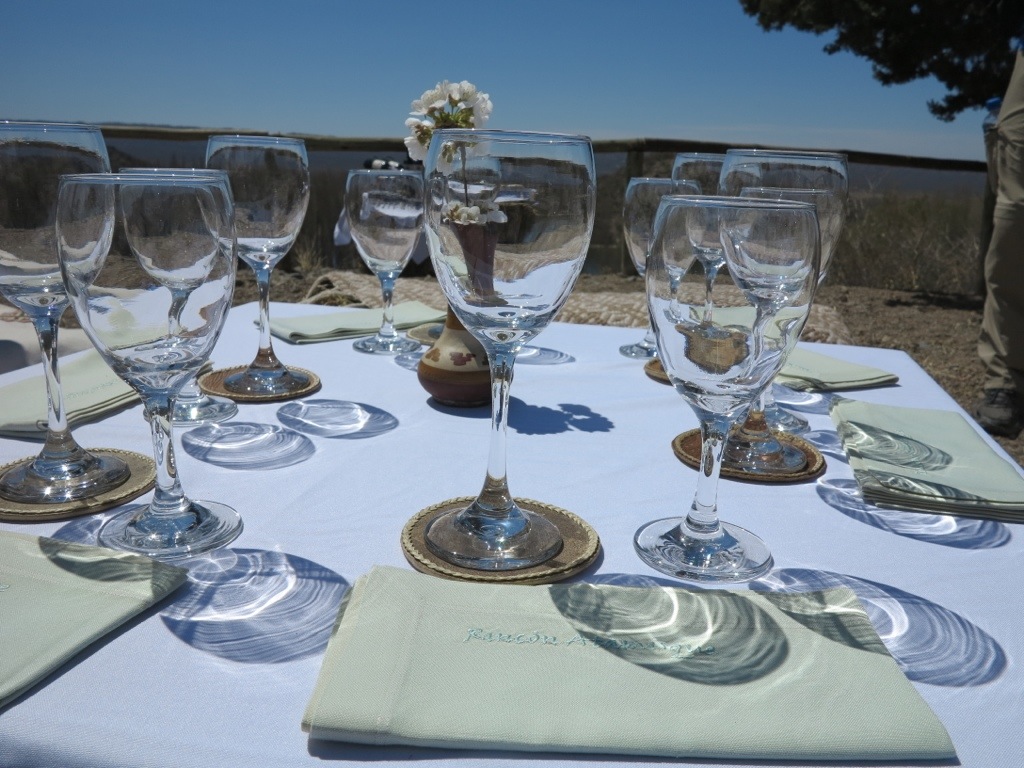
Picnic Lunch

20131002-235608.jpg
Gorgeous Setting for Lunch

20131002-235759.jpg

20131002-235830.jpg
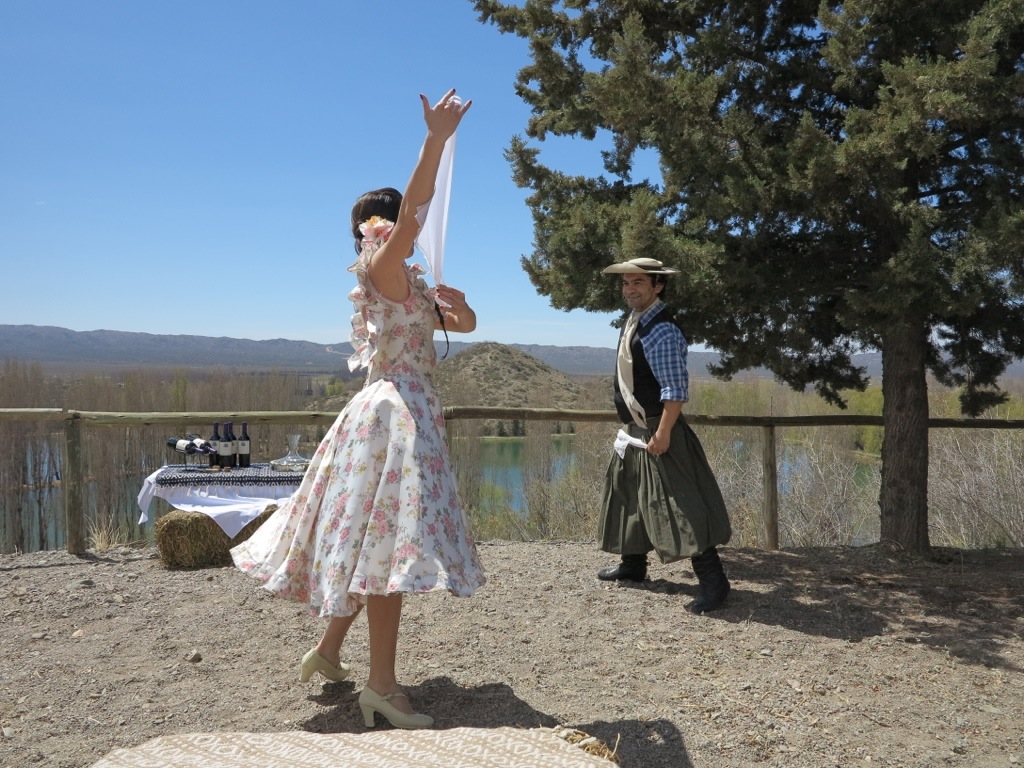
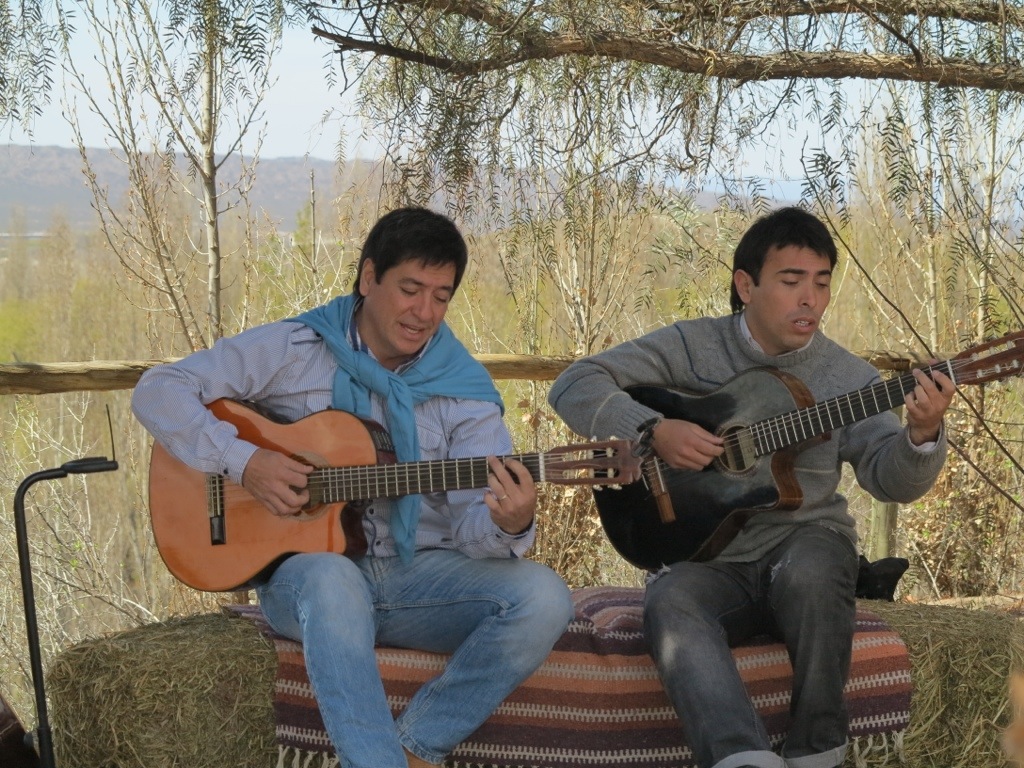
Traditional Argentine Dancers and Musicians at Lunch

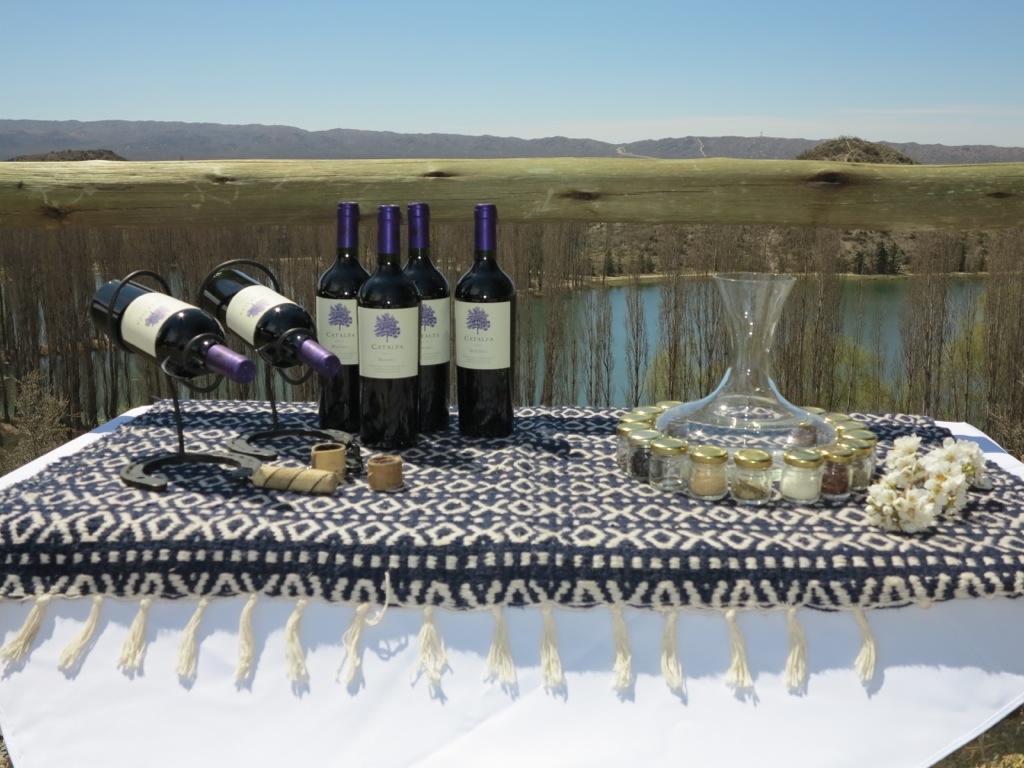
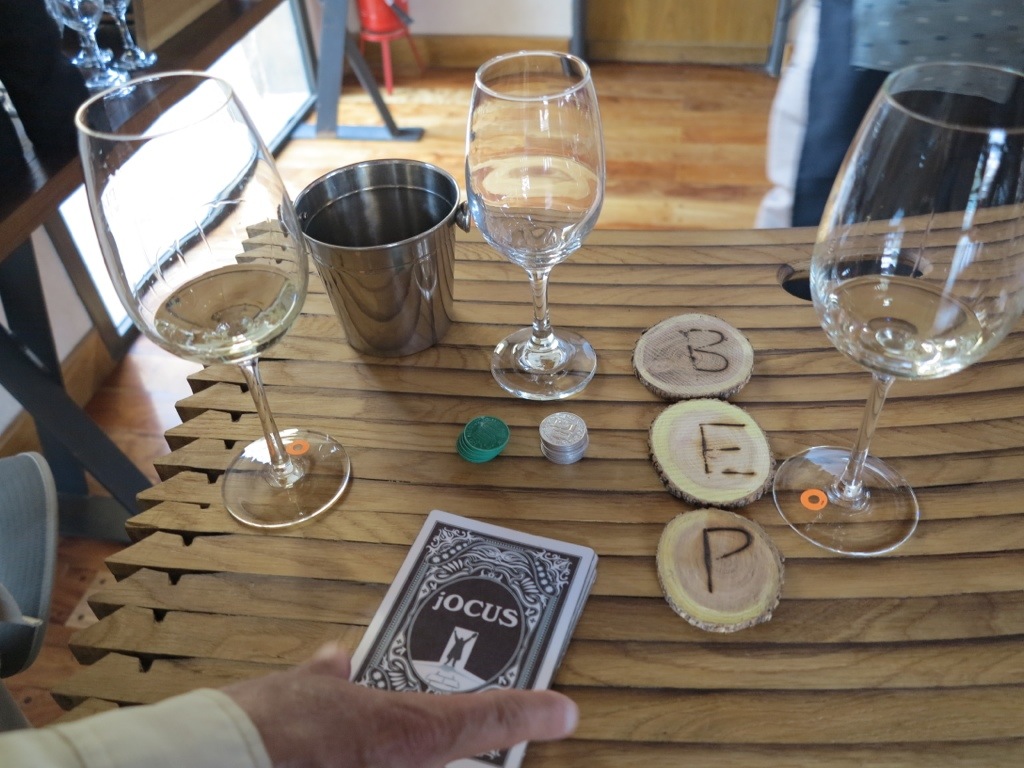
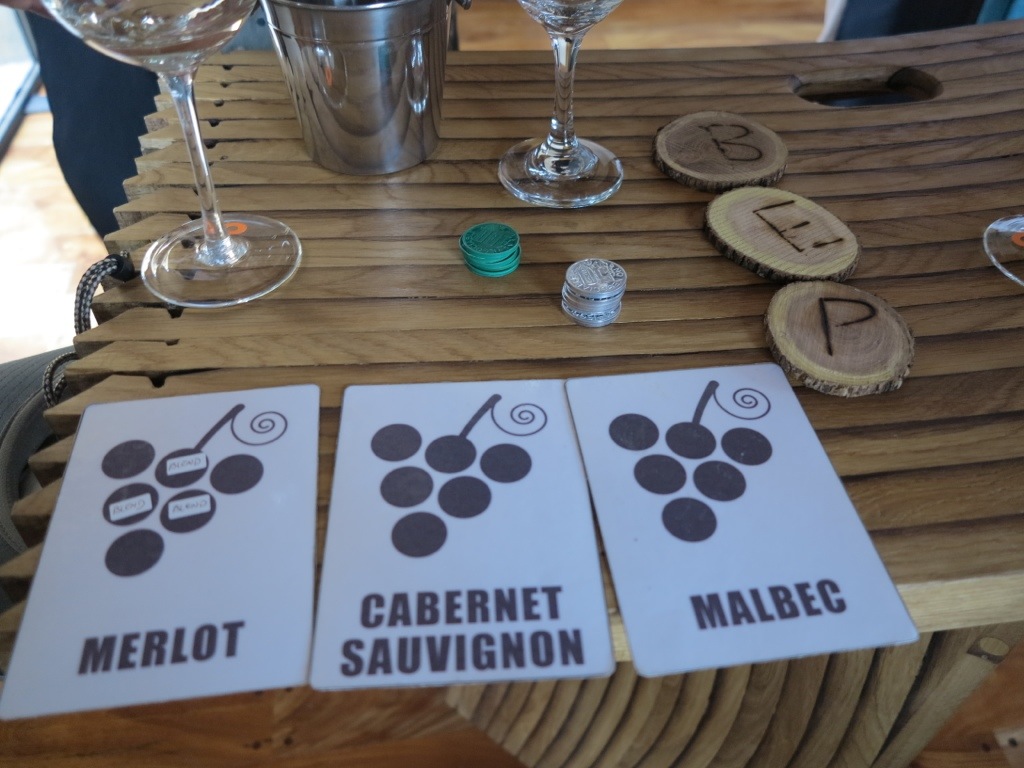
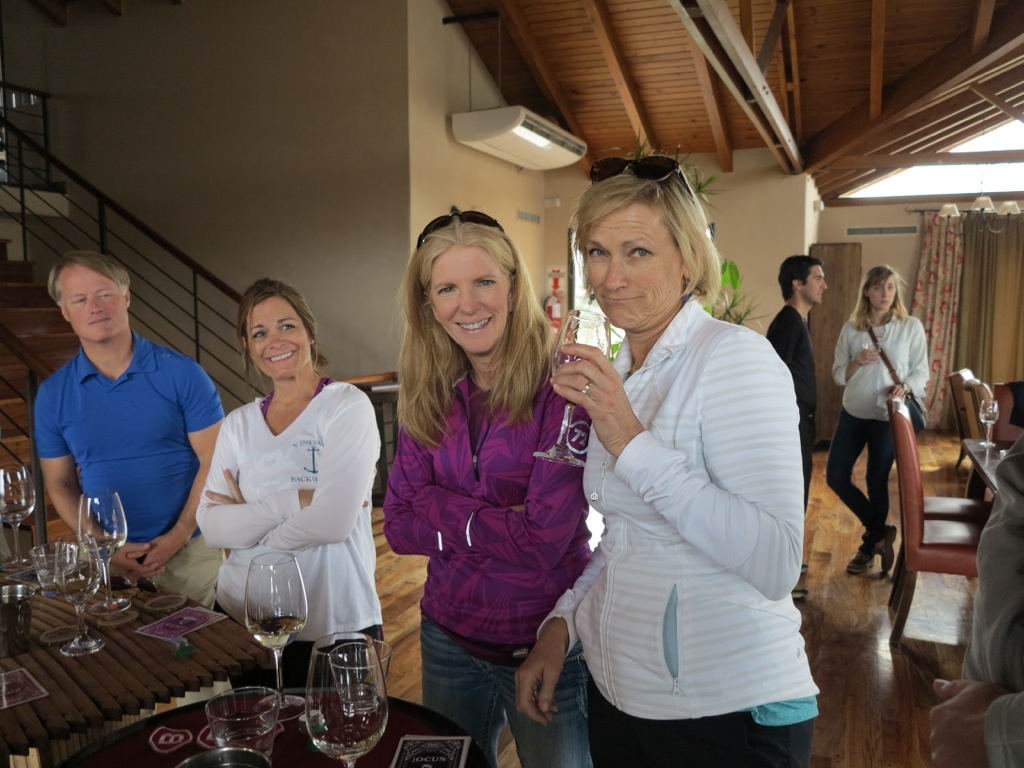
After lunch, we went to a local winery named Piattelli. The wine was exceptional and the winemaker was a joy to talk to and learn from. The best part of the experience was learning a new wine-tasting game! All we will tell you is that it involves blind tasting wine, placing bets, and winning prizes. You can look forward to playing this game at our house at an upcoming party!

20131003-000450.jpg

20131003-000515.jpg
The Piattelli Winemaker giving us a tour

20131003-000649.jpg

20131003-000711.jpg
Blind Wine-Tasting Game.

20131003-000903.jpg
Lisa and Sonja trying to guess their wine.

20131003-001039.jpg
Lisa is not too happy about Dugald beating her out at the end of the game!

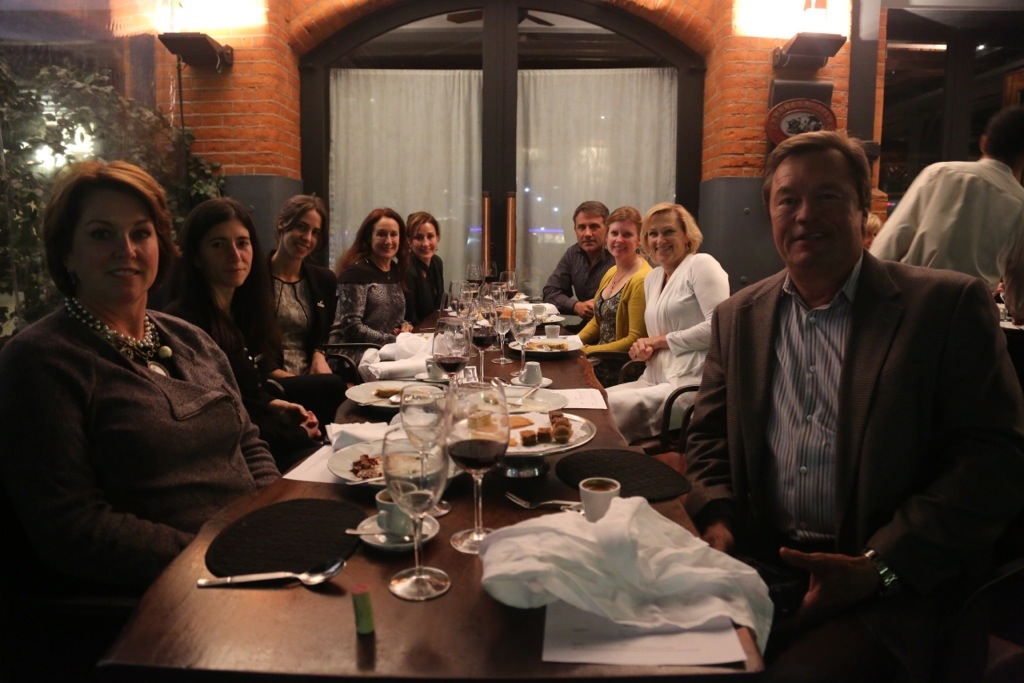
We still had one more excursion in us this evening before the day was done. A group of us went to the restaurant 1884 in the town of Mendoza. 1884 is run by renowned chef Francis Mallman and has been voted one of the best restaurants in Argentina. The food was delicious although the portion sizes could have fed four people with each serving. The best part of the evening was being able to dine with Dana Wilke, a family friend from Danville, who is studying abroad here with a program with UC Davis. She is just starting her program and has plans to have a wonderful adventure here while taking five classes entirely in Spanish. All in all, we loved Mendoza and could easily spend a few more days here discovering all that this area has to offer.

20131003-001954.jpg

20131003-002523.jpg
Dinner at 1884 with Dana Wilke

Categories: Uncategorized | Tags: , , , , | 2 Comments

And Now….Dancing the Argentine Tango

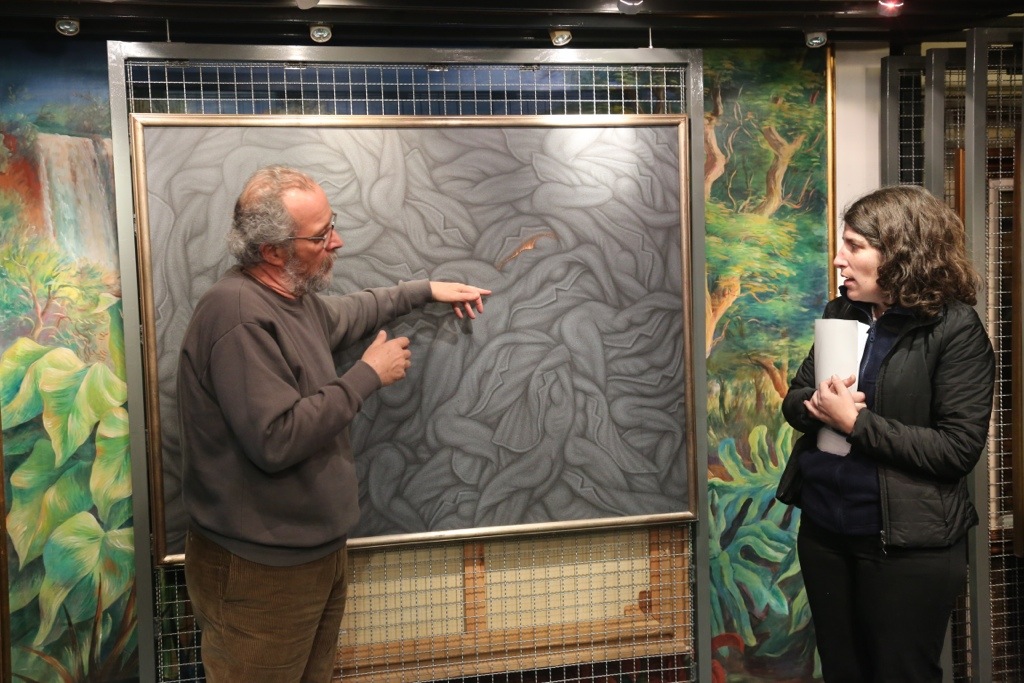
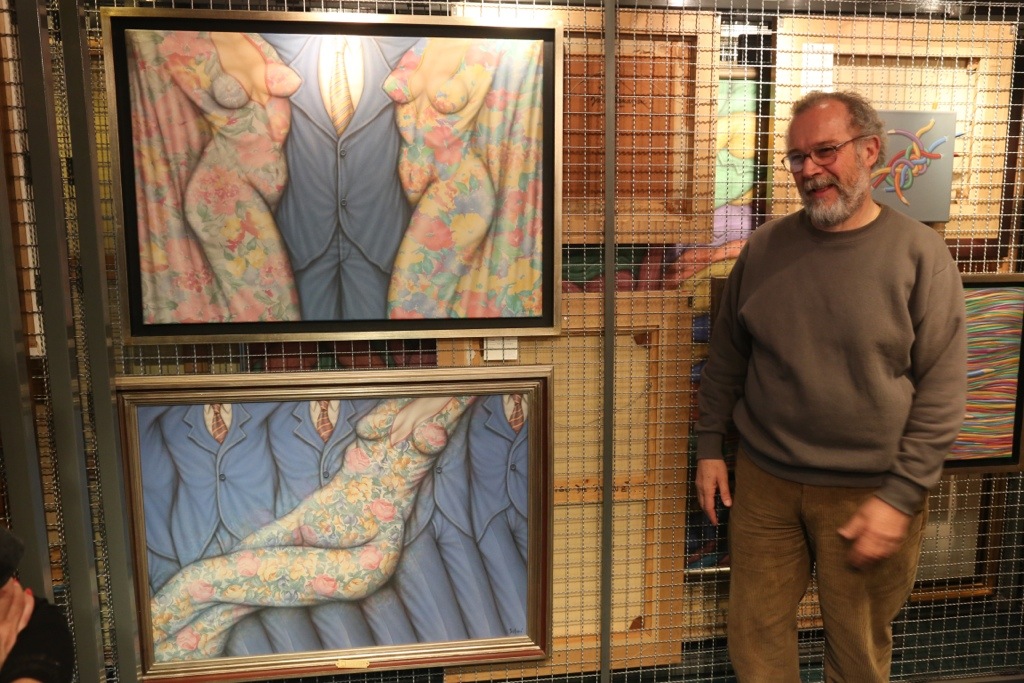
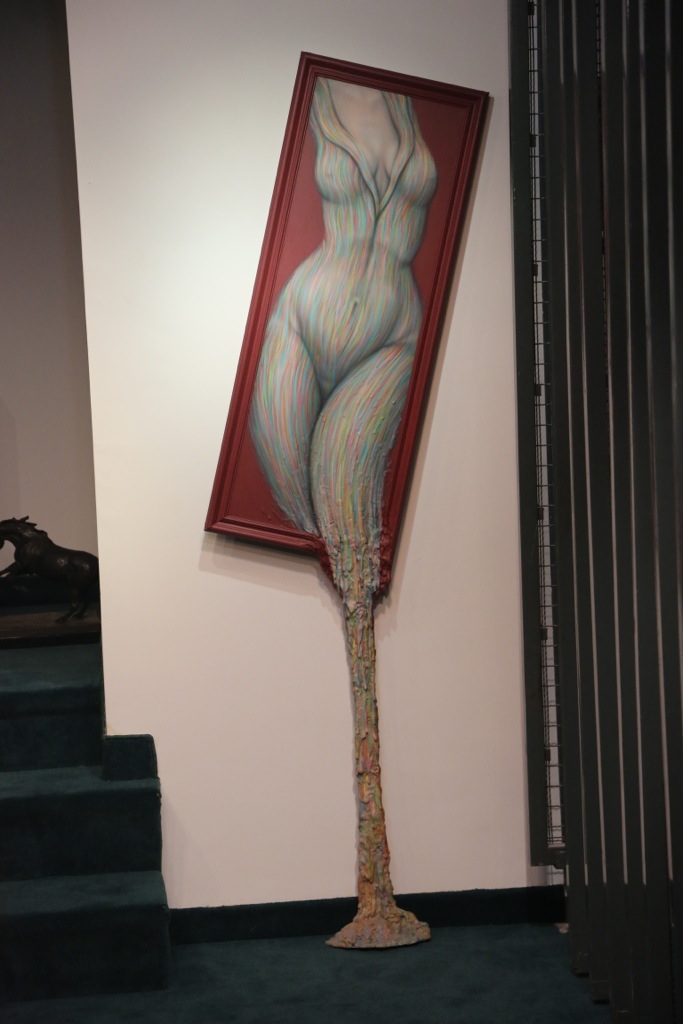
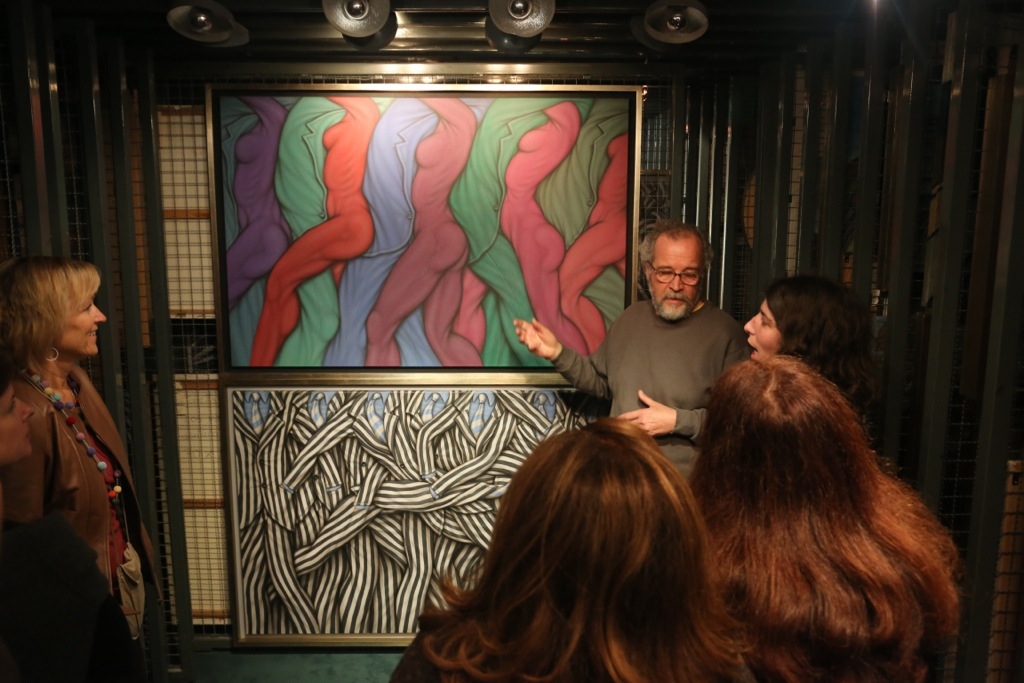
Today was filled with interesting discussions about art, sex, and tango. How often does that happen on a Monday? Our morning started with an intimate presentation by Ernesto Bertani; a famous Argentinian artist. He displayed and explained his various works of art at a local gallery. Because he knows no English, his words were translated by one of our guides. His works were very sensual so frequently our guide had to pause and give us a funny look and then translate his views on lovers, sexuality, and politics. We found his work to be fascinating. He painted series of pictures about the loss of creativity in the modern world, the loss of identity in the Argentinian system, and the tension between men and women. Here are a few pictures of his different pieces.

20130930-234255.jpg

20130930-234310.jpg

20130930-234328.jpg

20130930-234342.jpg

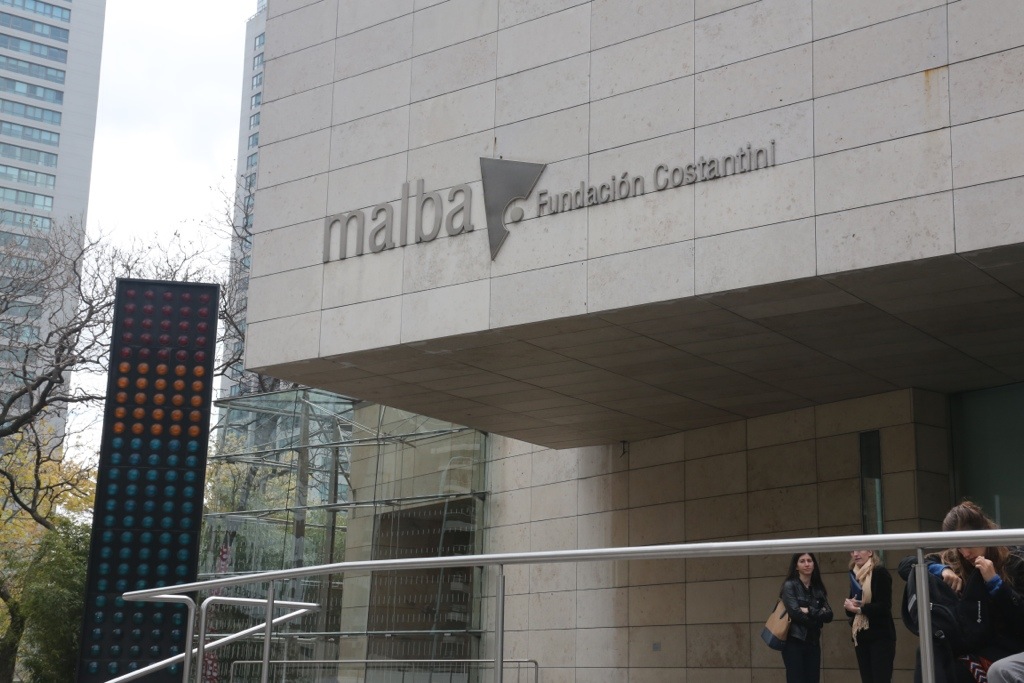
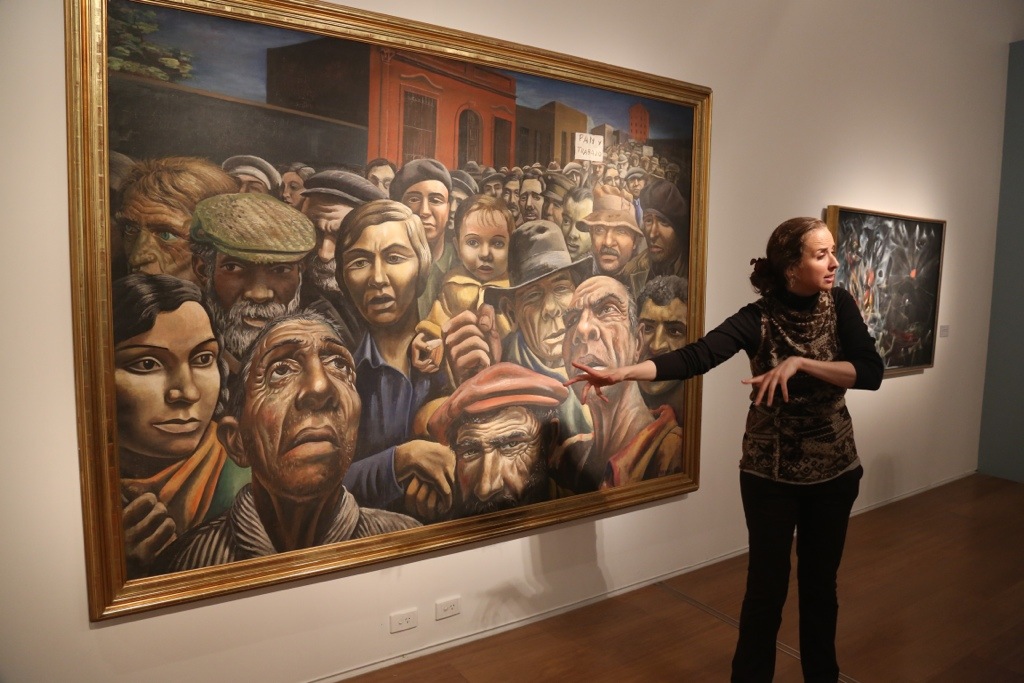
After visiting with Ernesto, we took a tour of the MALBA Art Museum which features more than 200 works by contemporary and modern Latin American artists. We recognized some of the more famous pieces and were introduced to the complex, fascinating world of Latin American art.

20130930-234722.jpg

20130930-234738.jpg

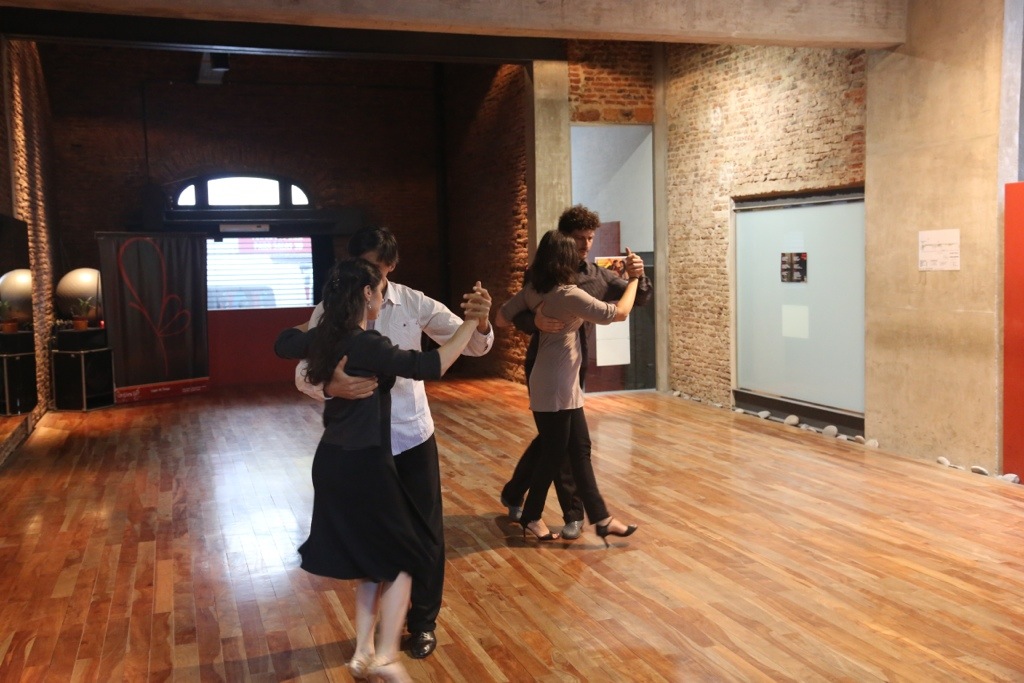
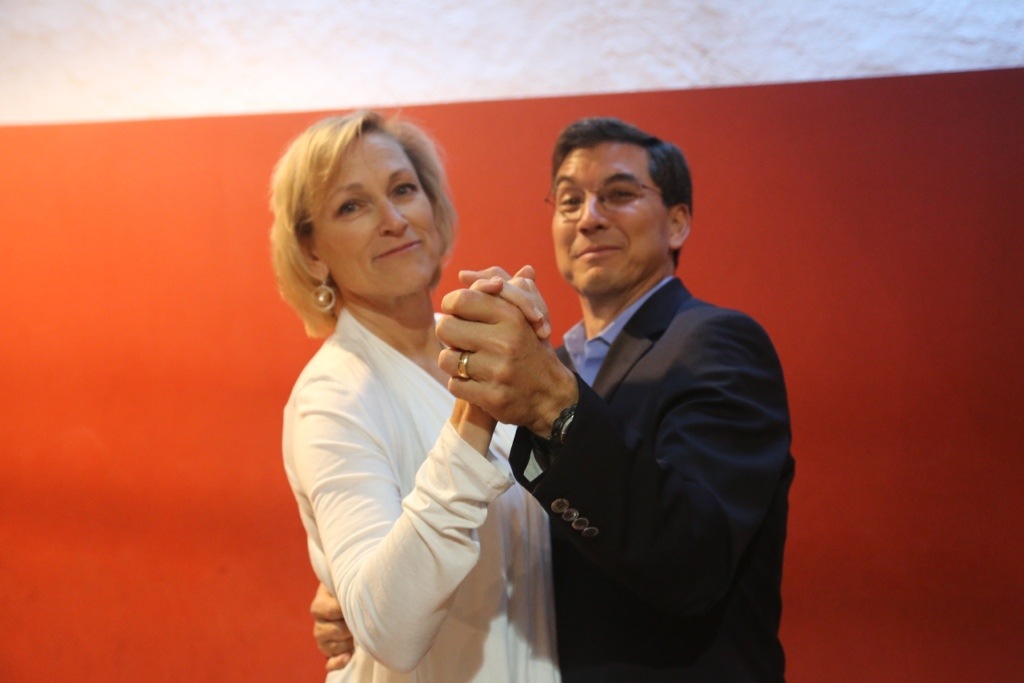
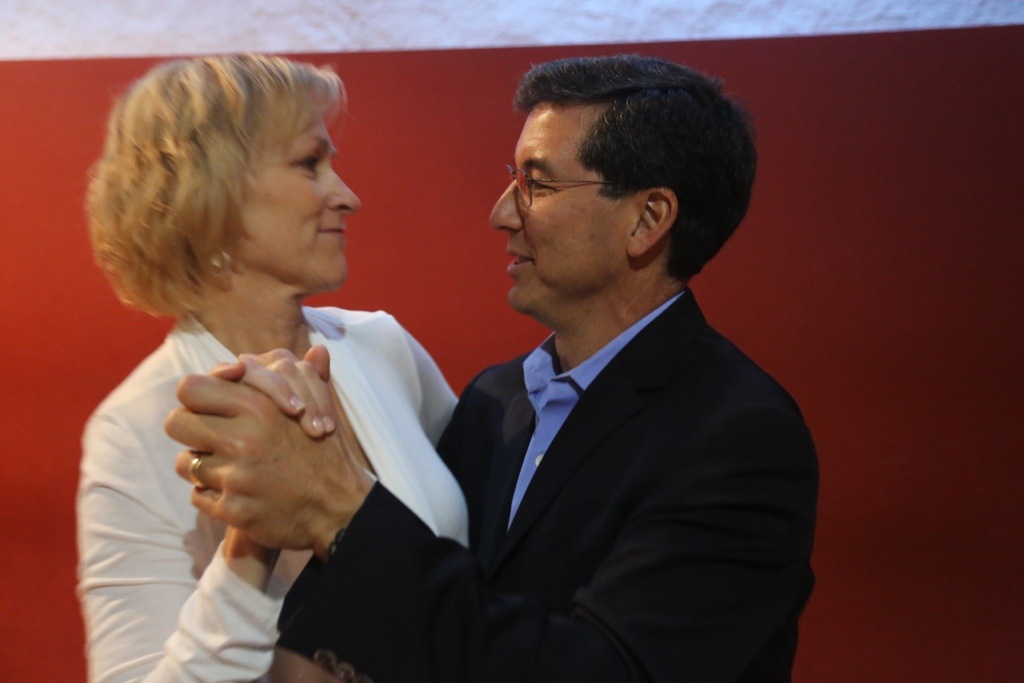
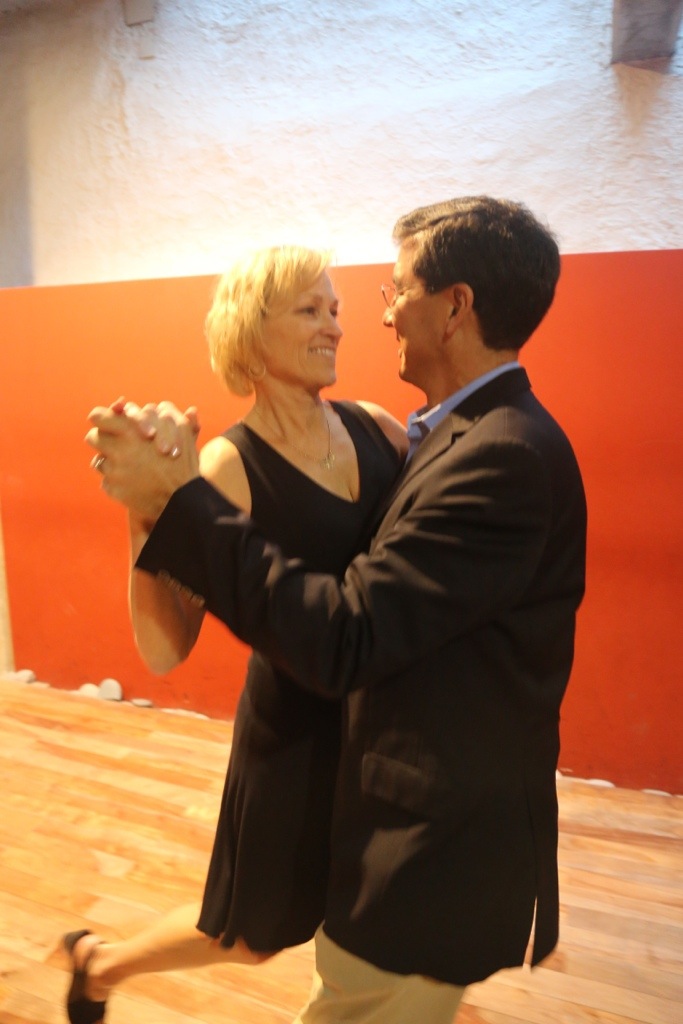
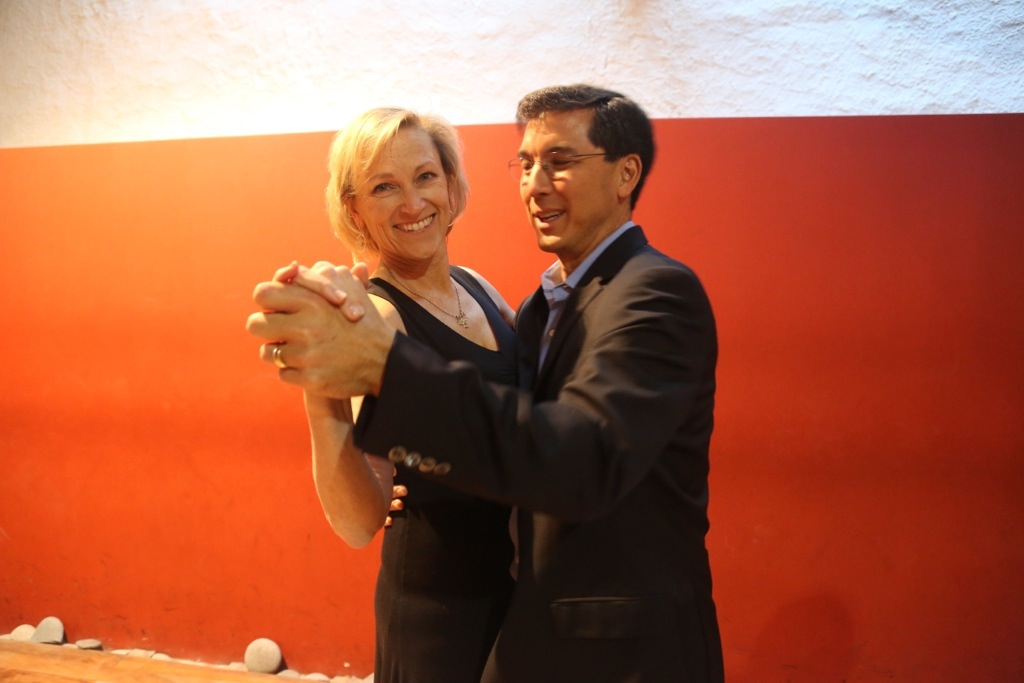
But the highlight of the day had to be our Argentine tango lessons! We were escorted to a private dance studio where we all taught how to do the tango. I was hoping my recent love of Zumba might get me through the tango but quickly learned that the two had nothing to do with one another. We were taught some basic dance steps at the beginning and Brad and I felt like we were at a Junior High School Dance. With each step we would count One, Two, Three, Four. As soon as we would “master” one move, the professionals would teach us a new twist….some new turns; a little move called the Ocho; a new way to hold our arms. It was very challenging but also a lot of fun. Our teachers were extremely patient and tried their best to encourage us!! Needless to say, we will not be heading to Dancing With The Stars anytime soon!

20130930-235256.jpg

The Professionals

20130930-235509.jpg

20130930-235527.jpg

<img src="http://lisab

20130930-235849.jpg

20130930-235914.jpg

Pretending to Be Professionals

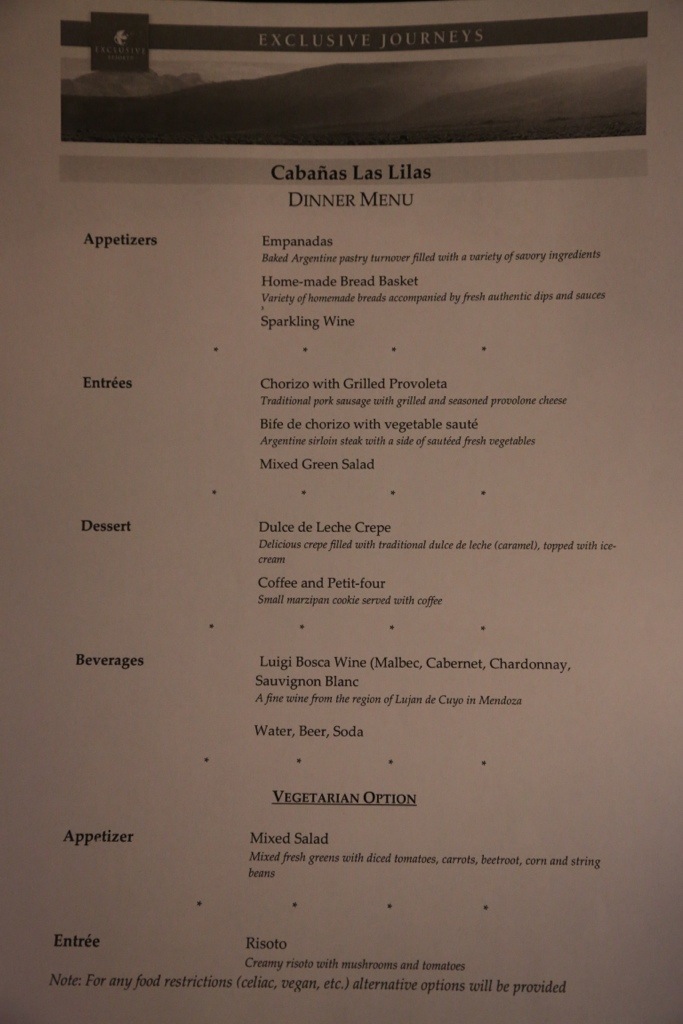
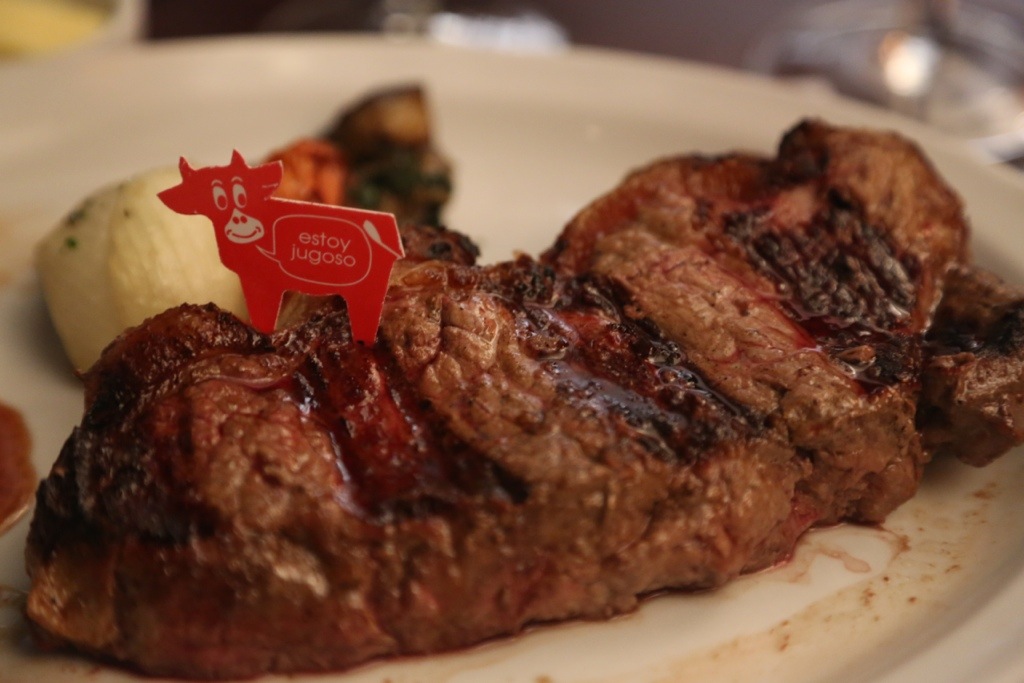
After our Tango lessons, we went to a renowned Argentine restaurant called Cabana Les Lilas in Puerto Madero. We sat outside by the port and had a delicious meal of authentic Argentinian Fare: Empanadas, Wonderful Cheeses and Breads, Delicious Local Grass-Fed Beef, and Dulche de Leche Crepes. We were absolutely stuffed at the end of the meal.

20131001-000242.jpg

20131001-000254.jpg

20131001-000306.jpg

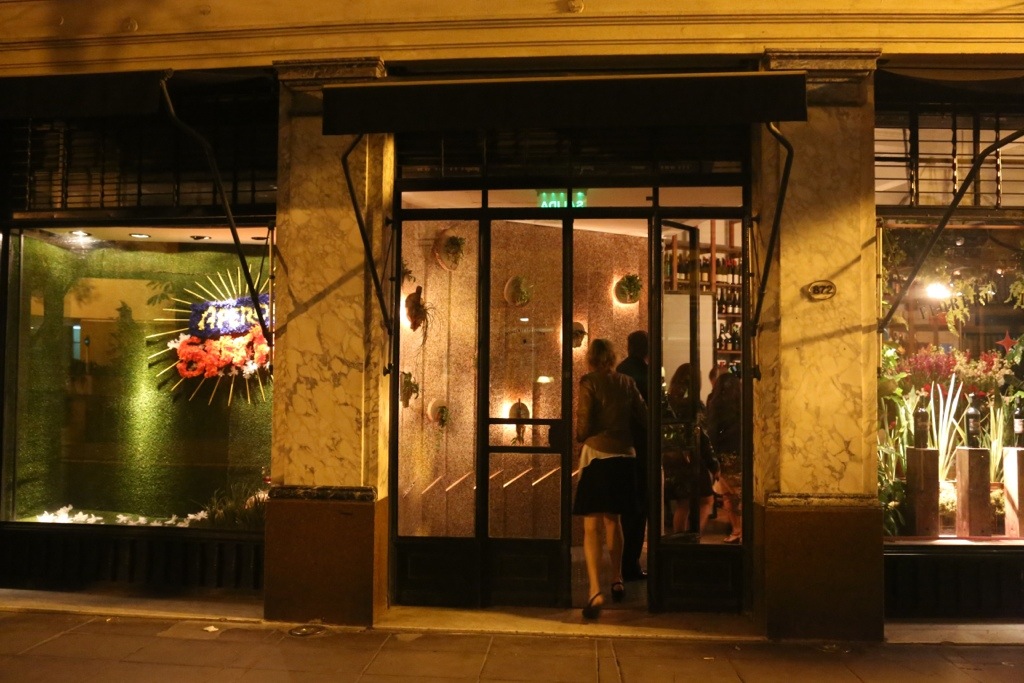
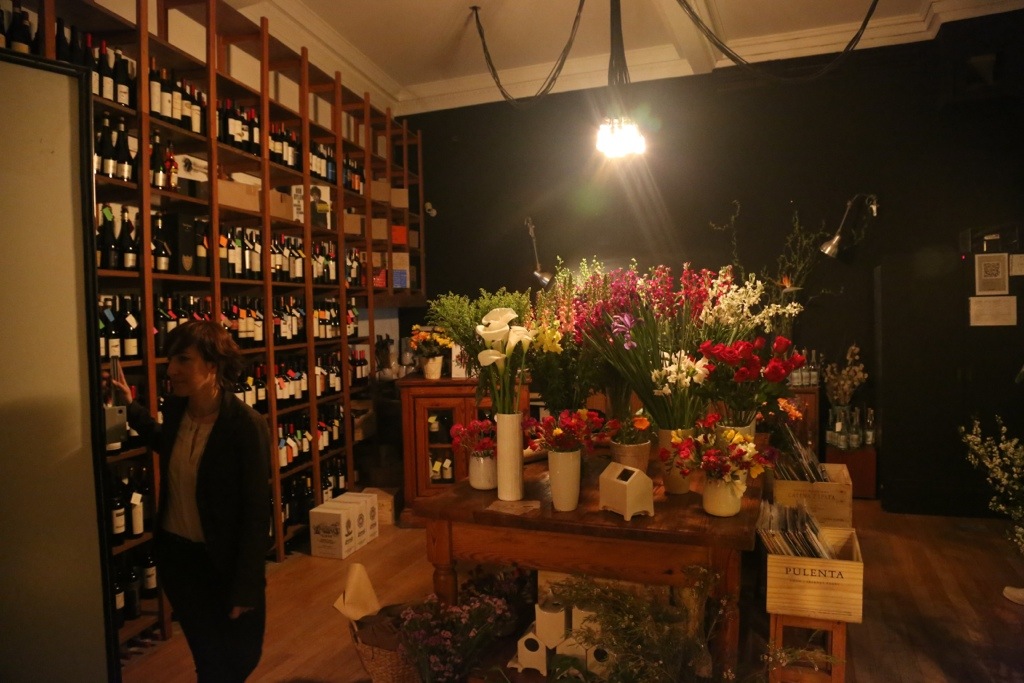
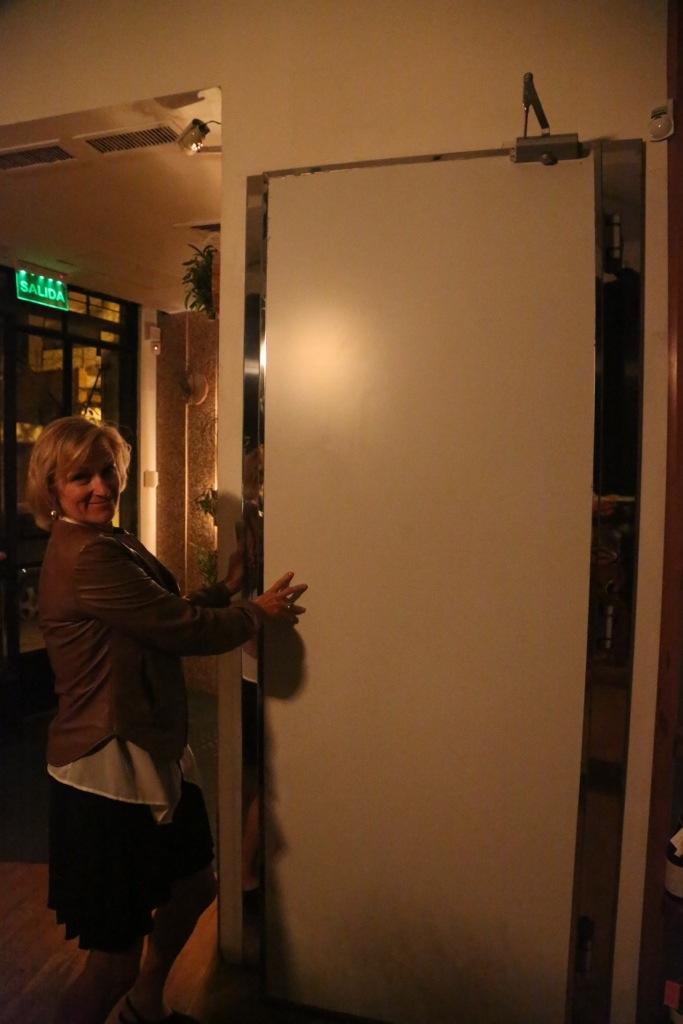
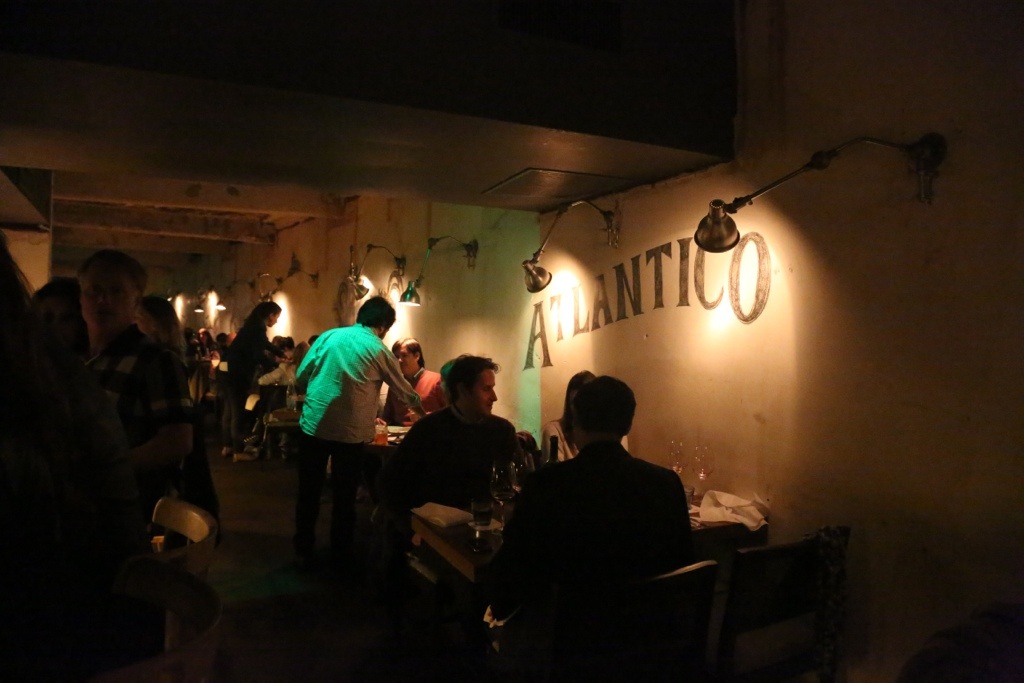
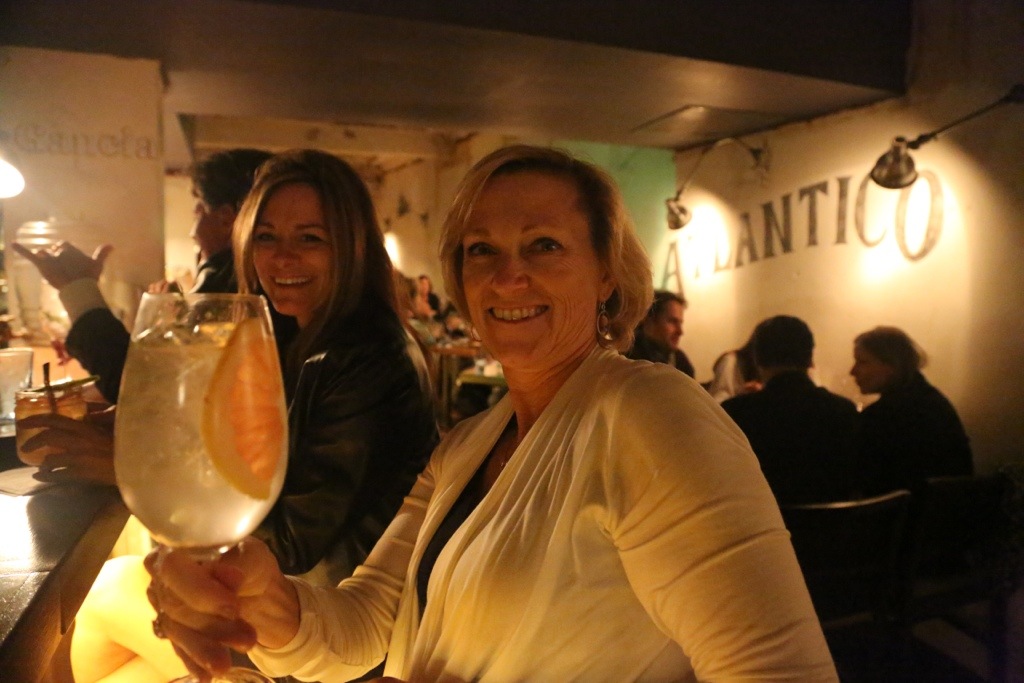
Since this was our last night in Buenos Aires, we decided we had to go out for one last drink to a nearby speak-easy. By day, it passes as a floral shop but by night you go into a secret door down to the basement for drinks and delicious food. The owner makes his own gin and we had the most delicious gin and tonics that we have ever had. Very refreshing (I think the secret was the grapefruit slice and the sprig of thyme). It was the end to a wonderful, last day in Buenos Aires.

20131001-001040.jpg

20131001-001052.jpg The interior of the flower shop.

20131001-001619.jpg
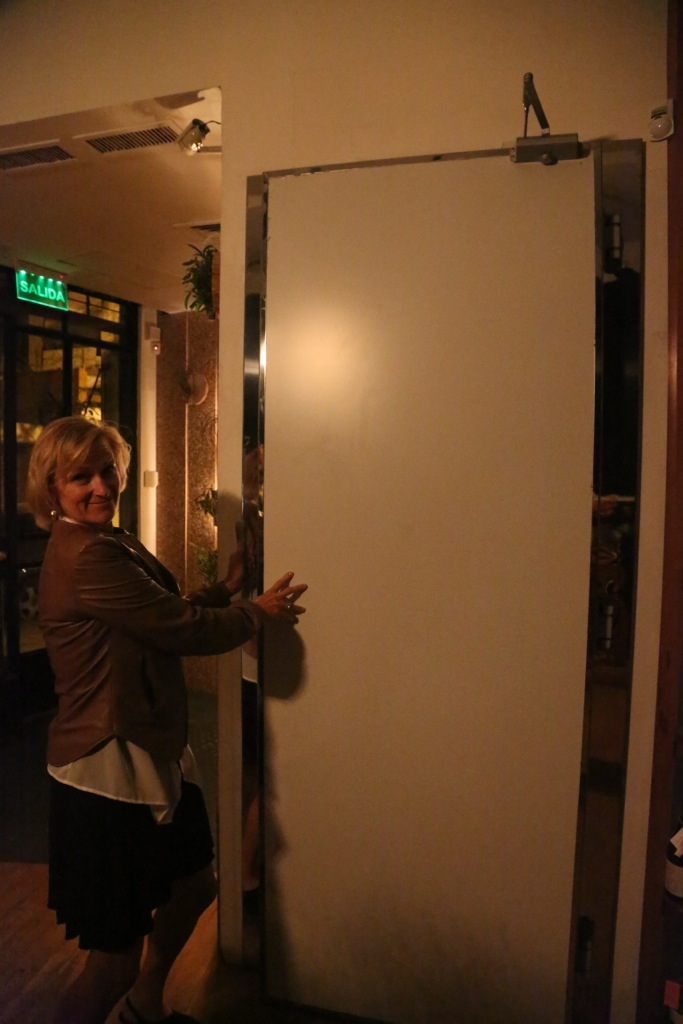
Looks like a floral refrigerator? No, it’s the secret door to the basement and our mysterious speak-easy bar.

20131001-001110.jpg

20131001-001125.jpg

<img

20131001-001601.jpg

Categories: Uncategorized | Tags: , , , , , , | 3 Comments

Blog at WordPress.com.