Posts Tagged With: Photography

Hakone: Volcanoes, Hot Springs, Shogun, and the Elusive Mount Fuji

As we left Kyoto for the mountainous town of Hakone via bullet train, Brett, our guide told us that we might be able to catch a glimpse of the iconic Mount Fuji as we rode the rails north. It was a beautiful sunny day and our hopes for a glimpse of the sacred volcano were high.

I pulled my camera out of its bag and attached the telephoto lens hoping for that photo the all who visit Japan long to capture. Brett went out of the front of the rail car to a large window in order to check on the mountain’s visual status. We waited for word to join him.

As he trundled back to his seat he said, “It isn’t visible. Covered in clouds.” Disappointed, I put my camera back in its case.

We got off the bullet train and got on the bus for our 30 minute ride to Hakone. Hakone is a town of 11,000 people that sits right in the middle of Fuji -Hakone-Izu National Park — one of Japan’s largest and busiest national parks. While the town is small in population, it is graced with 20 million visitors each year, 18 million of whom are Japanese tourists.

They come for the hot springs. Hakone is surrounded by active volcanoes. While none are currently erupting, the geothermal activity heats up underground water creating plentiful hot water rife with healing and soothing minerals. The onsen, or Japanese hot baths, are highly popular and, with Hakone being only a 90-minute drive from Tokyo, people flock here for weekends and holidays.

The Hakone Open Air Museum

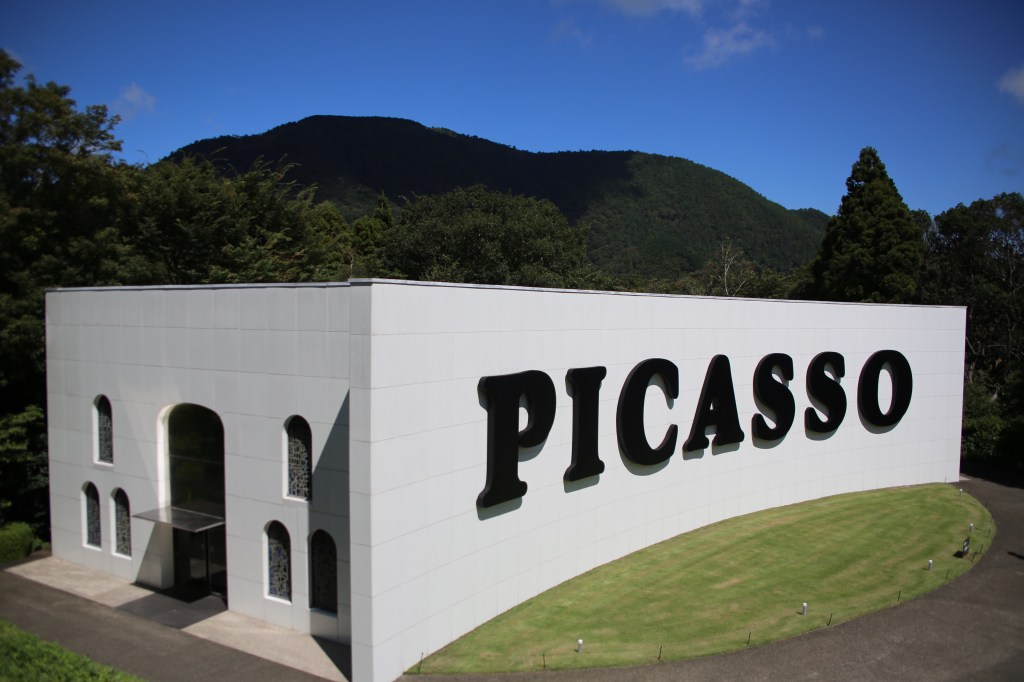
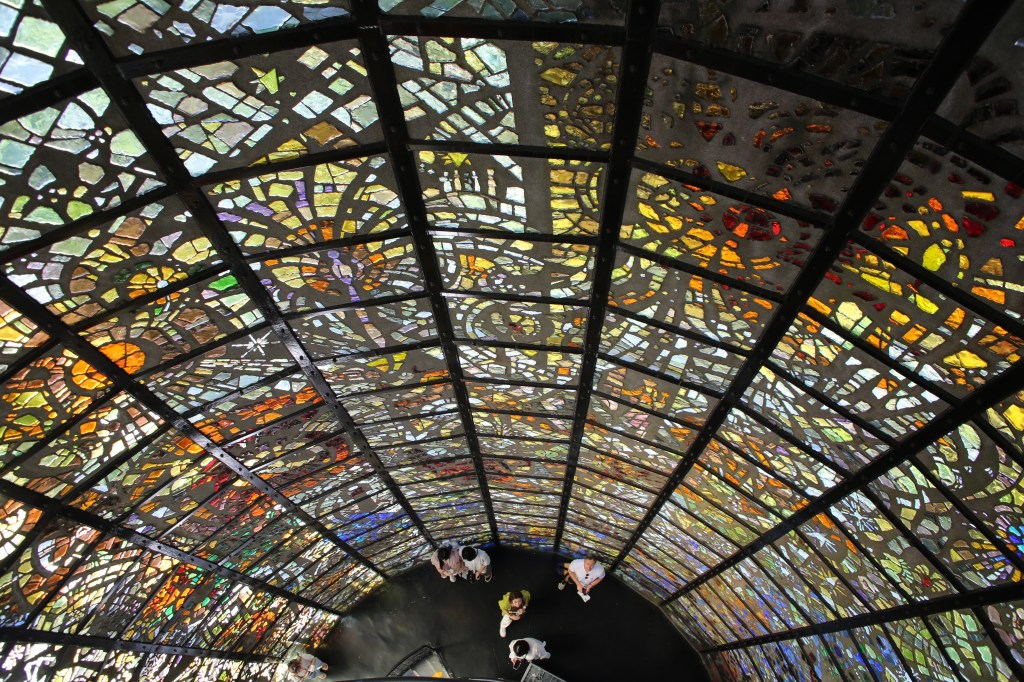
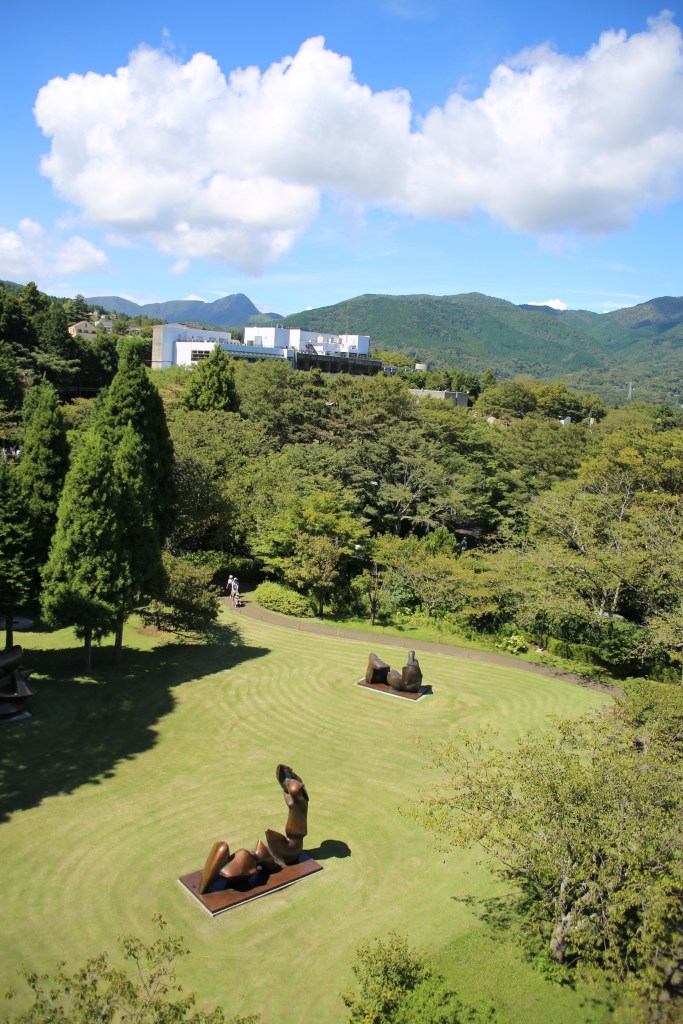
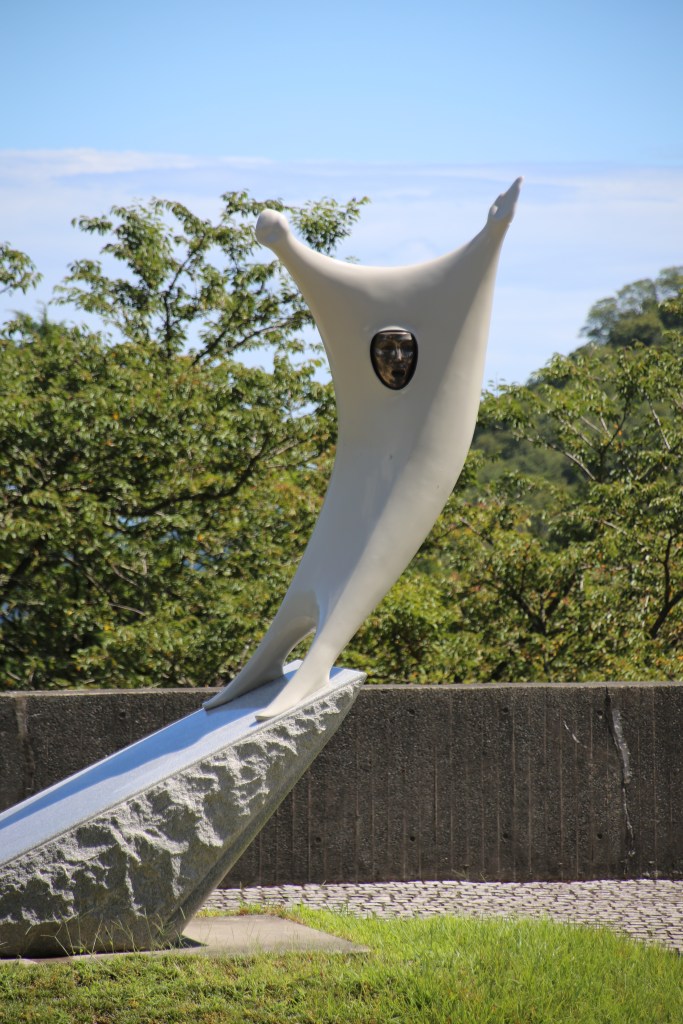
Before we got our shot at an onsen, we stopped in to the Hakone Open Air Museum. The multi-acre exhibit held pieces by both Japanese and worldwide artists. Even if you aren’t an art lover you would love strolling the meandering paths though the grounds. There was a two-story building full of Picasso’s works and many outdoor sculptures.
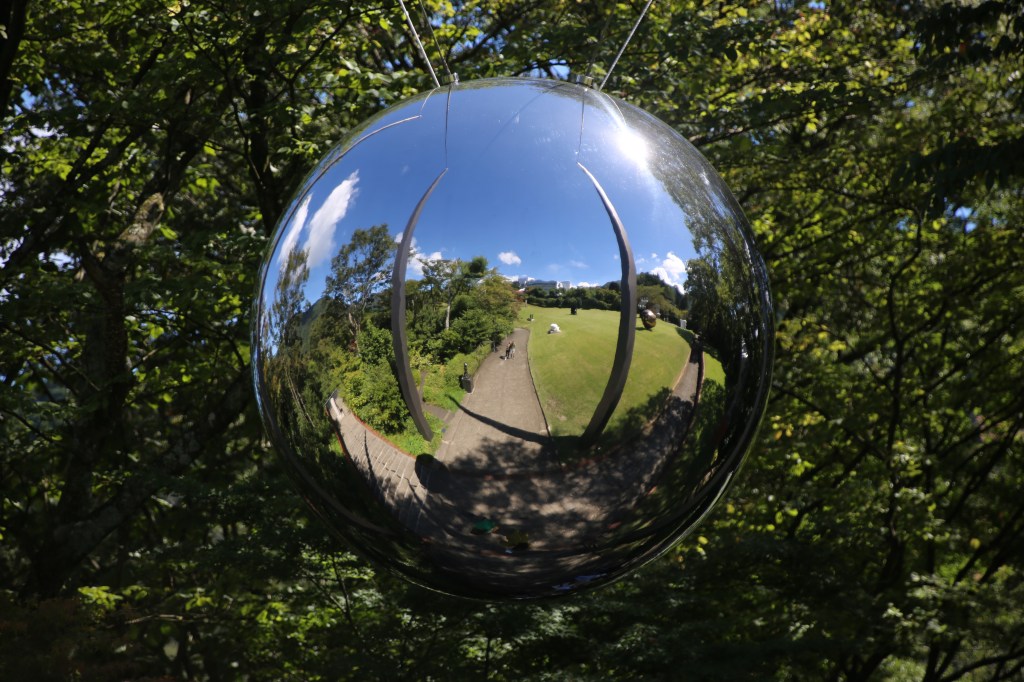
A suspended ball reflecting back on us.
The building housing many of Picasso’s works.
A towering sculpture of stained glass.
Sculptures in the spacious grounds of the museum.

The Gora Kadan Ryoken

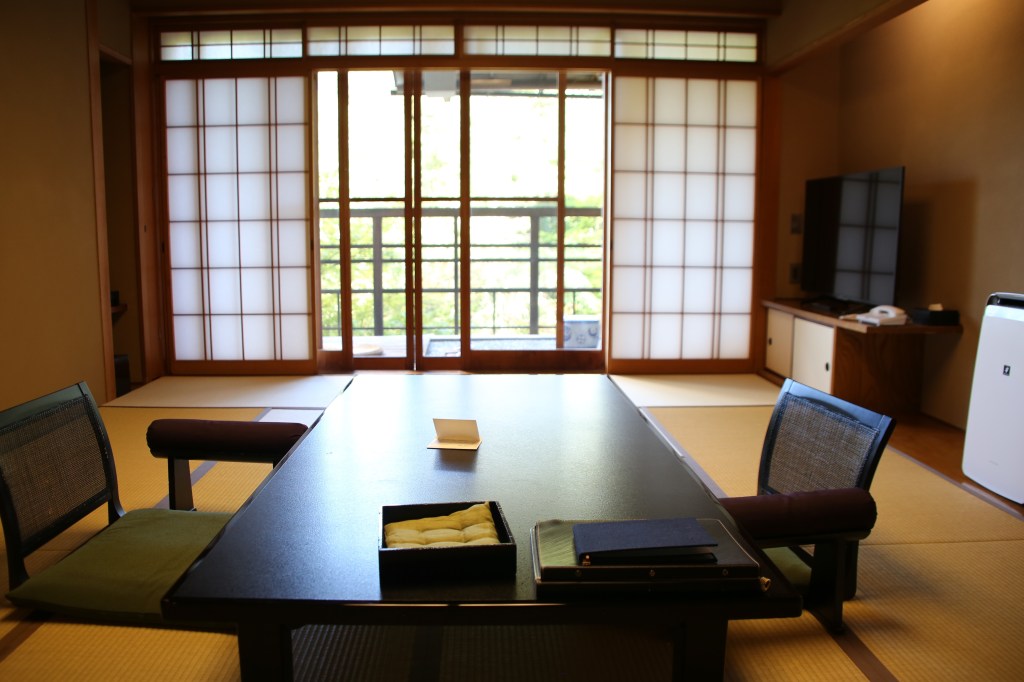
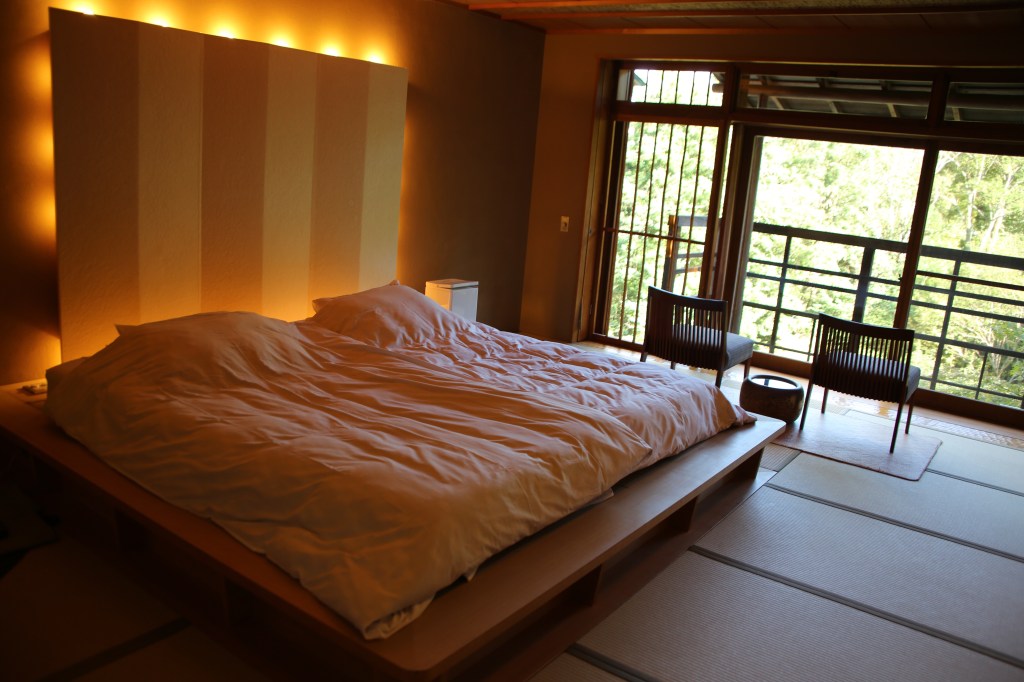
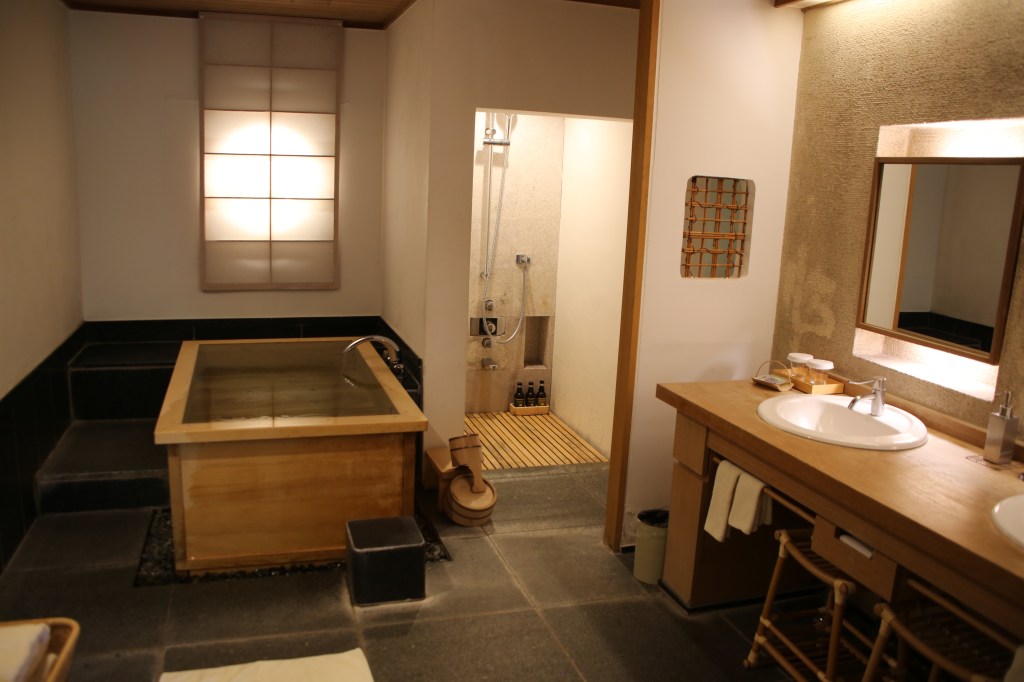
After lunch we checked into our ryoken. A ryoken is a traditional Japanese-style inn. We’re about to experience a couple of nights the Japanese way! Our inn, the Gora Kadan (https://www.ryokancollection.com/ryokan/gora_kadan/) was formerly a retreat for the Emperor in the mid-1700s. Rooms in a ryoken are sparse with clean lines, tatami floors, and futons for beds (not the college dorm type, very plush comfortable ones). Ours had a private onsen (Japanese hot tub) with hot water that constantly flowed in from a hot spring. We wore yukatas, which are a simpler version of a kimono. More like a comfortable, classy bathrobe.
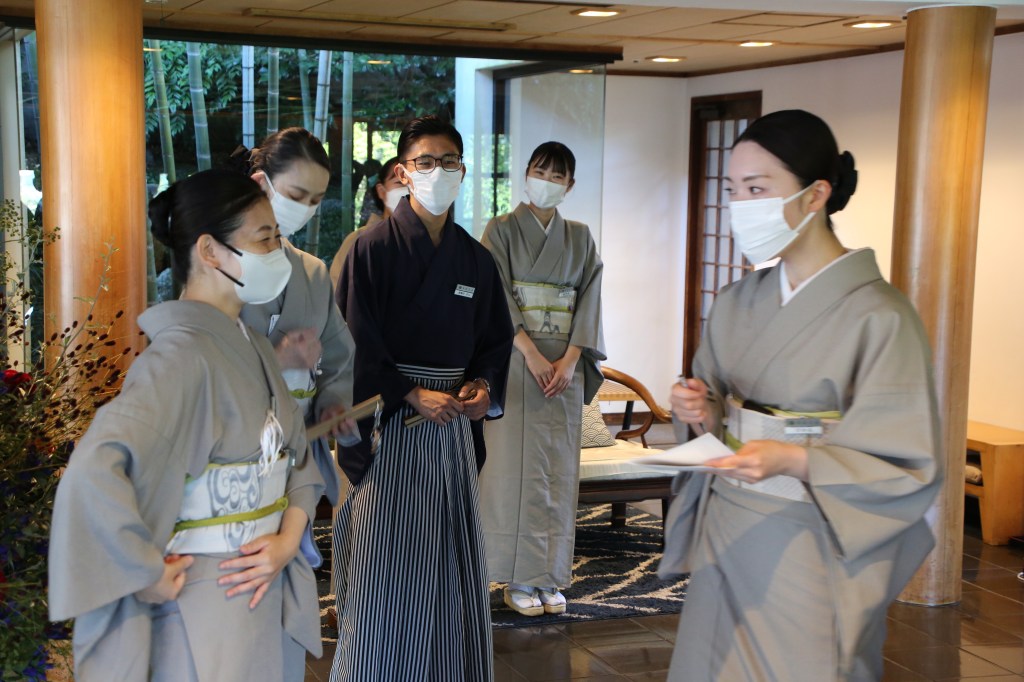
We were greeted by many staff members dressed in kimonos at our ryokan.
The hallway was stunning.
Our living room had a table at which we sat on the floor.
Our bedroom sported futons on the floor.
Our bathroom had an onsen (hot tub with water flowing in from a hot spring), a shower, and a sauna. The toilet is in a separate room in a ryokan.

We were served a Kaiseki dinner (traditional multi-course Japanese meal) in our room. Kaiseki focuses on the art of food as well as the taste. Each course was beautifully crafted making our dinner both attractive and delicious.
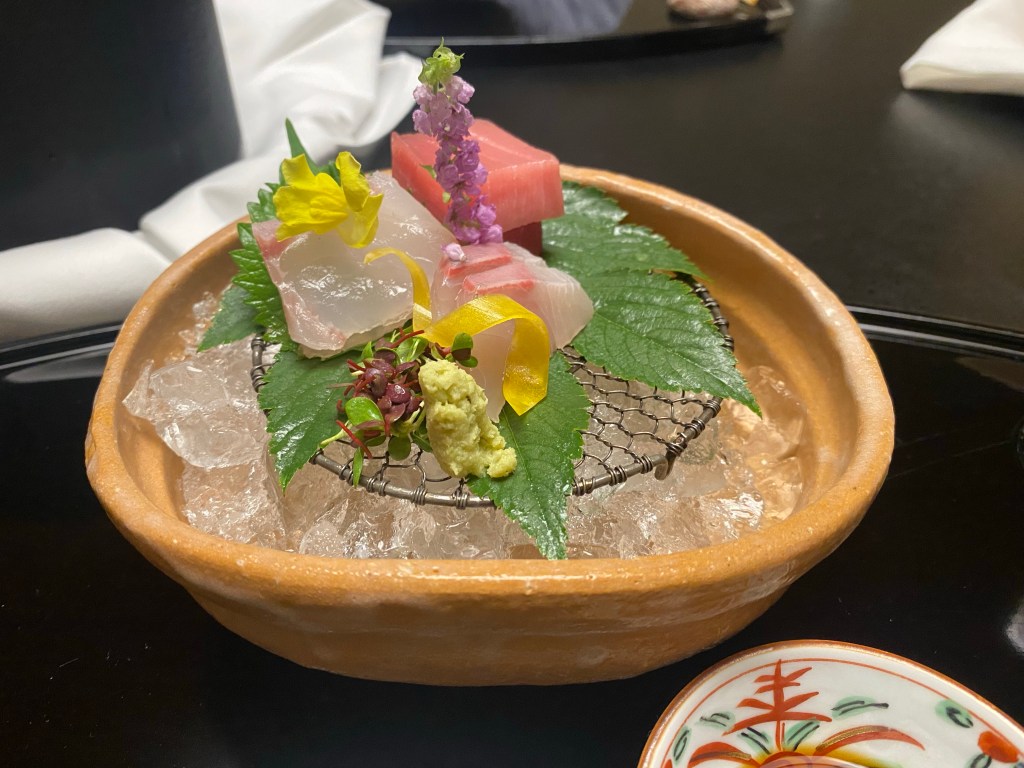
The first course.
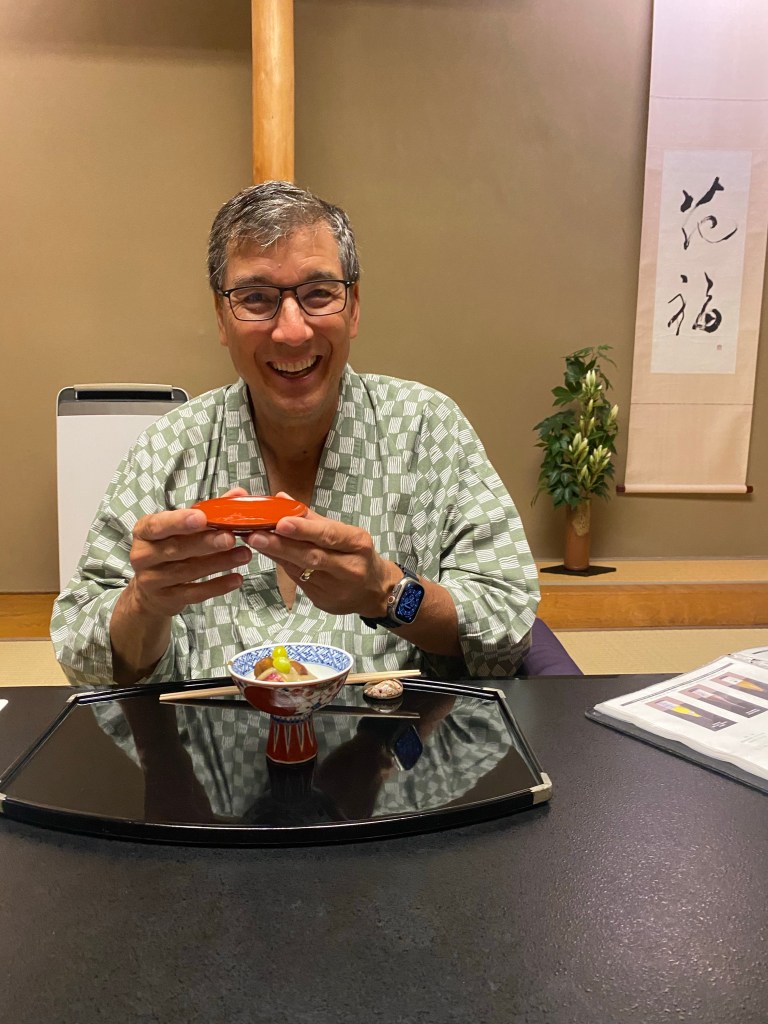
Me in my yukata drinking plum wine with another course.
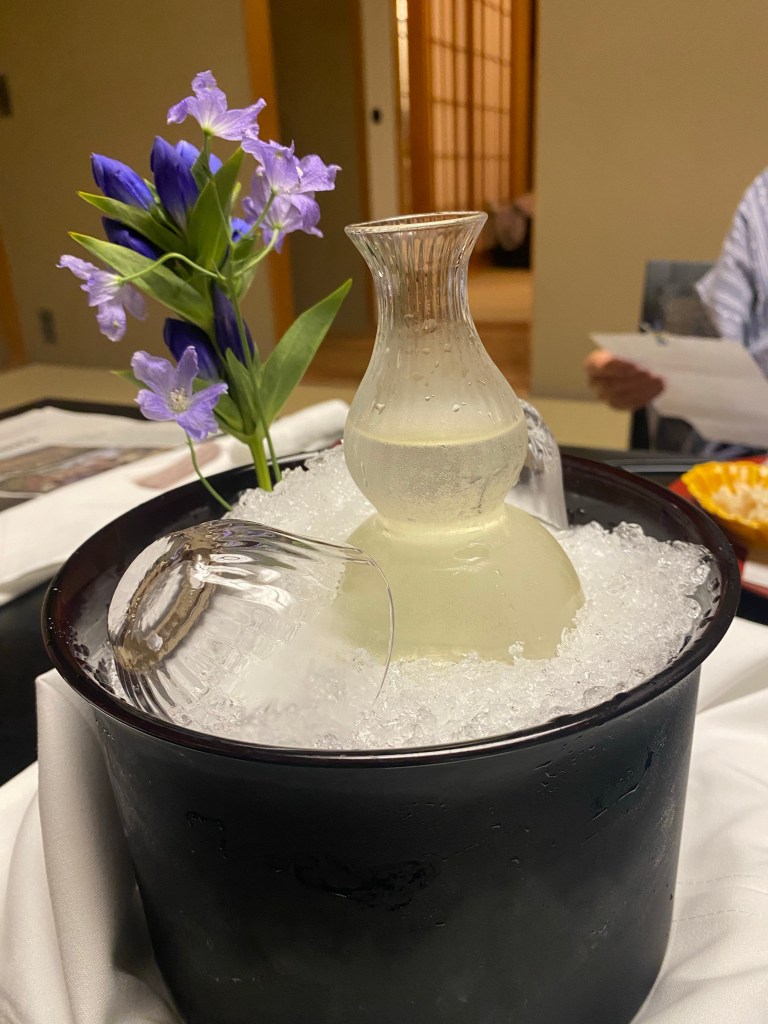
Of course, we had sake with our meal.

After two hours enjoying a wonderful meal, Lisa and I were full and a bit stiff from sitting on the floor. I think this style of eating takes some practice.

The Owakudani Volcano and the Search for Mount Fuji

The next morning we left for a gondola ride over an active volcano. We met our local guide Shin to help us learn about the area. The gondola took us up the mountain. As we climbed toward the volcanic crater we noticed many dead trees. Shin said the volcano erupted in 2015 and the fumes killed many of the trees. Comforting.

It was another beautiful day. Shin said that as we crested the mountain there was a chance we would see Mount Fuji. In September Mount Fuji is only visible in about one in every ten days. So he didn’t want to get our hopes up. As we approached the top we all waited anxiously, if not cautiously as we had been disappointed on the bullet train the day before. Slowly we climbed an then as we came over the peak . . .
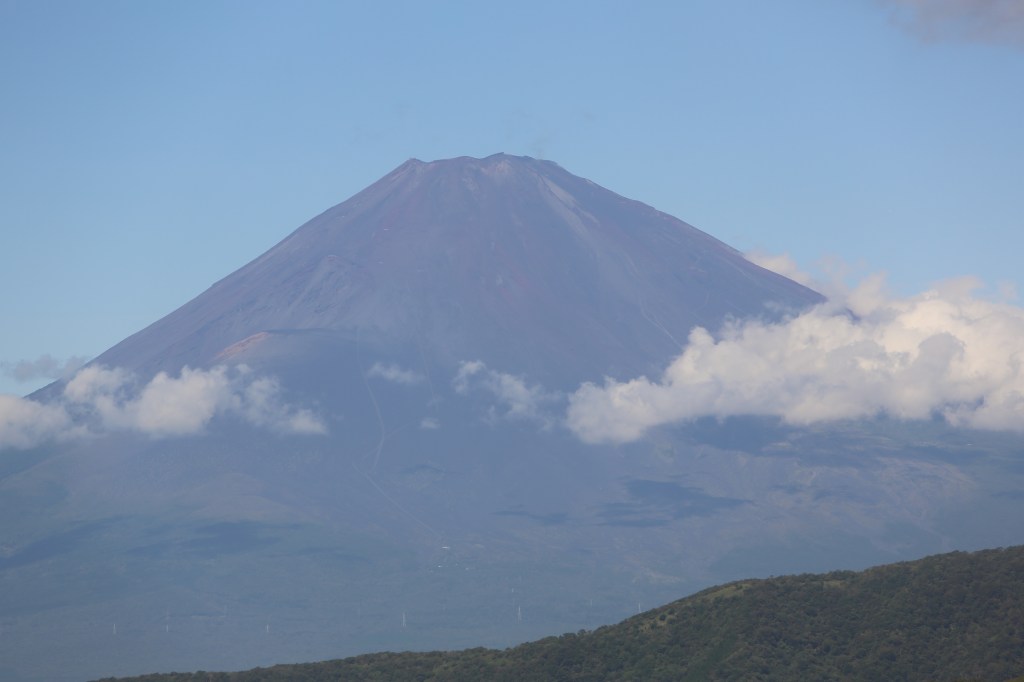
Mount Fuji!!

There it was in all of its glory. It was beautiful. We usually see photos of Fuji with snow on it. But, being September, there wasn’t any snow. Still its symmetrical shape and towering strength make it awe inspiring to see. Mount Fuji rises only to about 12,300 feet bone sea level. But, with the land around it being much lower, it sits alone at these heights.

Once we digested the view of Mount Fuji, we retrained our focus on the volcanic crater immediately below us. It has steam rising from vents and areas of yellow sulfur splayed throughout. The volcano has been commercially tapped to supply all the onsen in Hakone. They pump water into the volcano to heat it and absorb the minerals and then send it down the mountain. Apparently it is a very lucrative business.
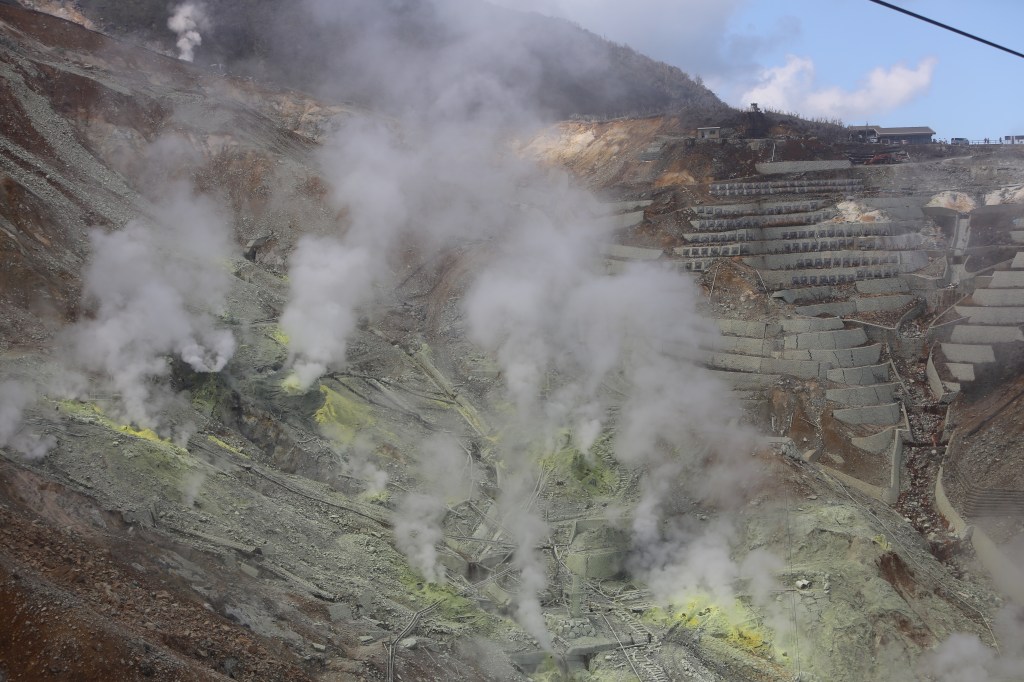
The Owakudani crater.

We got off the gondola and walked around to look at the crater, go to a viewing spot for Mount Fuji to take photos and to eat black eggs. Yes. Black eggs. They boil regular chicken eggs in a steam vent in the volcano. The sulfur mixes with the iron in the egg and turns the shell black. It is said that if you eat one it will add seven years to your life.
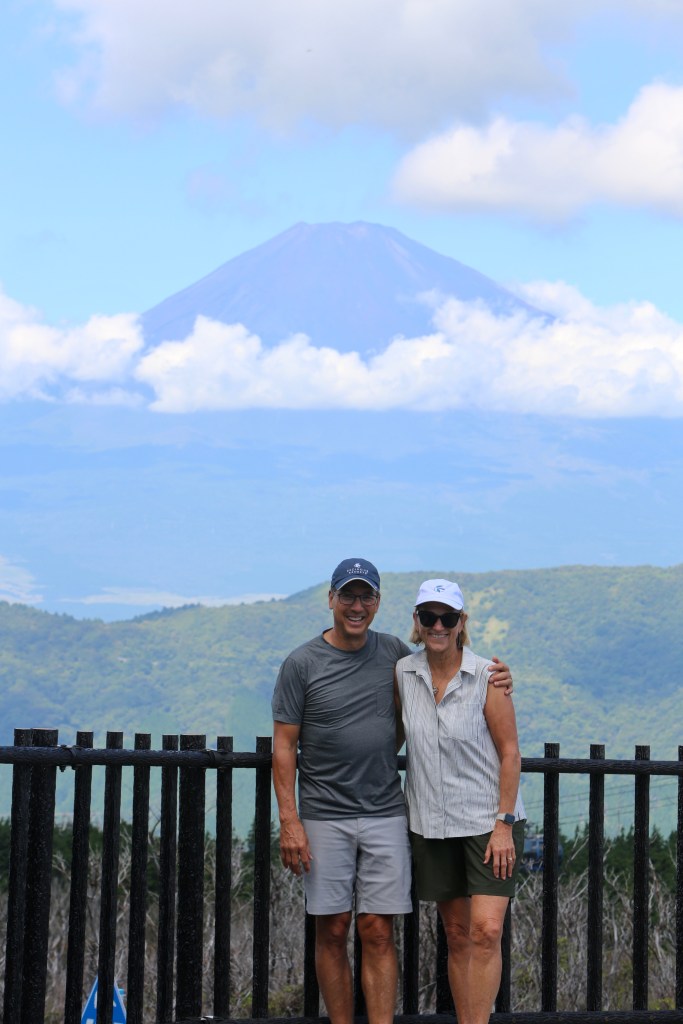
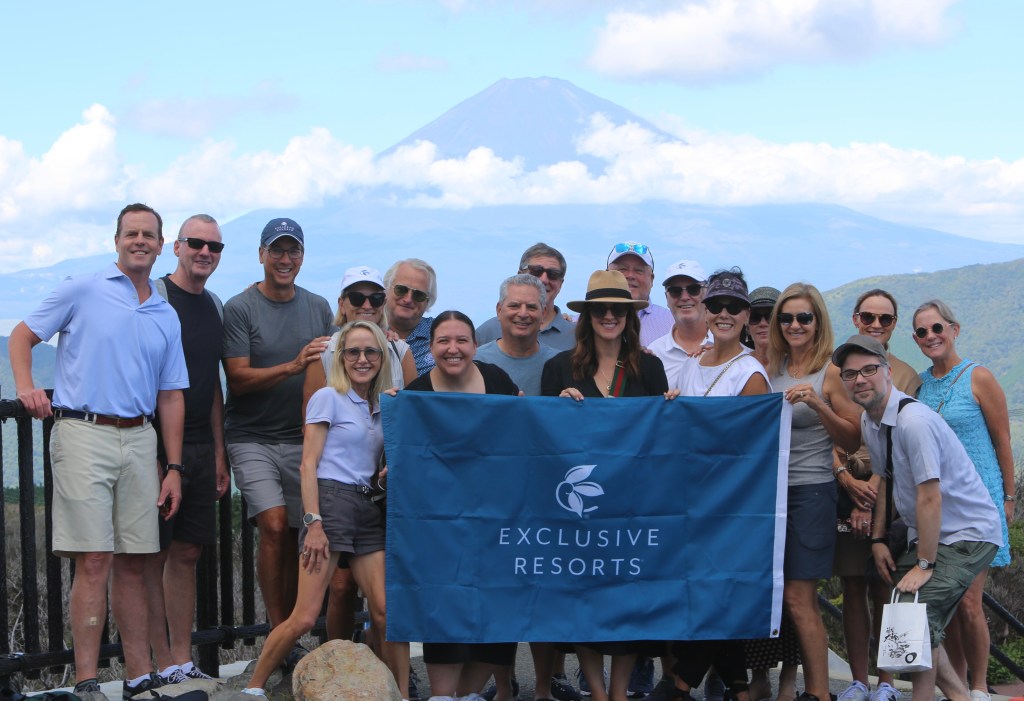
Our whole group in front of Mount Fuji.
A black egg. Lisa and I split one so I guess we’ll each add 3 1/2 years to our lives.
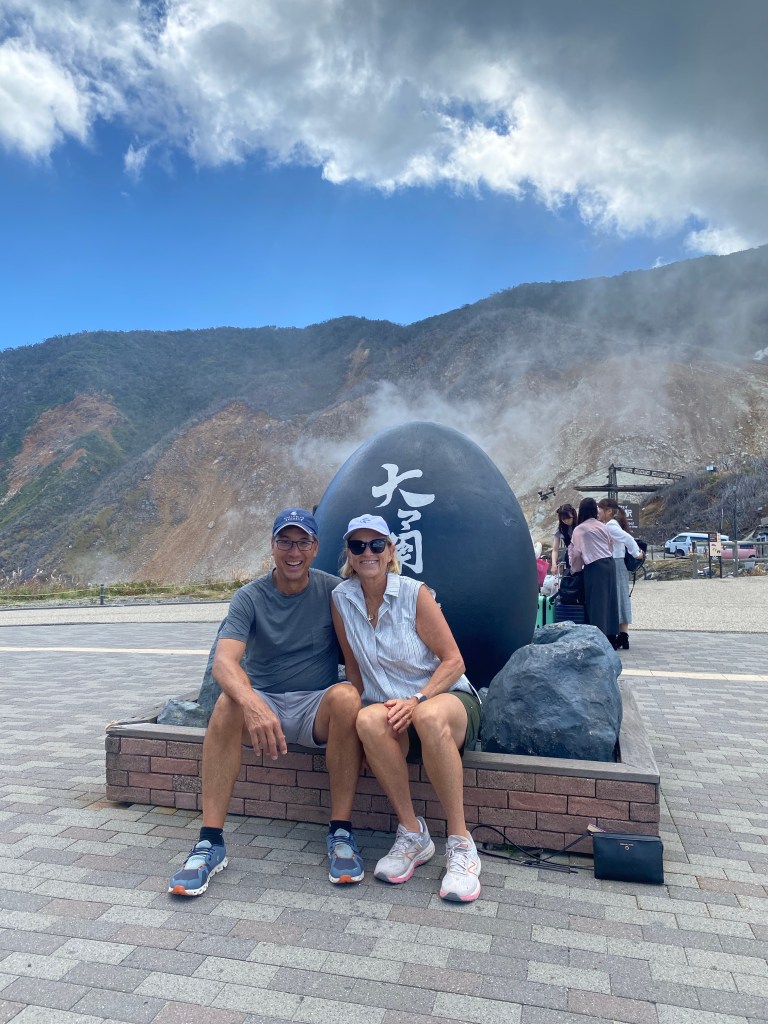
Sitting in front of a giant black egg.

We then went down to Lake Ashi right below the volcano. We rode a pirate ship across the lake — yes, a pirate ship. Apparently the man who started the boat company in the 1960s had recently visited Disneyland and loved how it made the children happy. He wanted to make the local children happy and it stuck. Children have been happily sailing Lake Ashi for the past 60 years.

A pirate ship on Lake Ashi.

The Hakone Checkpoint

We got to the other side of the lake, ate lunch and then headed to the Hakone Checkpoint. Bear with me while I explain (with apologies to historians for the simplified version).

Tokugawa was a Shogun (military general) in the 1600’s who defeated the army from the east and united Japan. He wanted Japan to be at peace for the first time in centuries. In times past, the victor would simply kill the other Shogun and that would be the end of it.

Tokugawa didn’t want to make martyrs of his enemies that could inspire revolution. So, once he relocated the Japanese capital from Kyoto to Edo (now Tokyo), he told the losing Shogun to relocate to Edo. They refused because they would have to forfeit all of their land and wealth. So, Tokugawa kidnapped their wives and oldest sons and brought them to Edo. He told them that if they wanted to see their families they would need to come the roughly 300 miles on the Tokaido Highway to Edo and spend every other year there.

Of course the men, being of much importance, couldn’t travel without a large contingent of servants, security, supplies, etc. All travel was on foot then, so, they walked. Up sprung inns, suppliers, and other businesses along the route. This meant the generals had to spend much of their wealth to make the two-week trek to Edo. Poor generals can’t mount a coup. Smart guy, that Tokugawa.

He also put in checkpoints on the Tokaido Highway, the most important one being at Hakone whose valley was a strategic choke point in the mountains. Hakone checkpoint was on the shore of Lake Ashi and required all who passed to have papers that showed permission to travel the route. Most focus was placed on women and children to ensure the wives and sons of the shogun weren’t escaping back to Kyoto. Get caught trying to escape — off with your head.
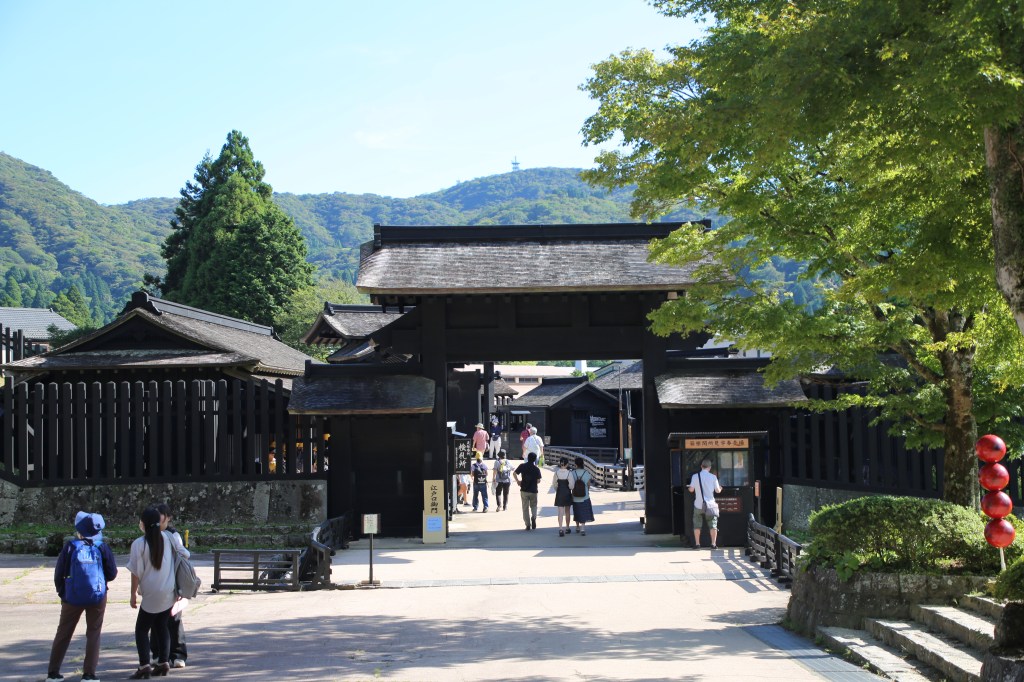
The Hakone Checkpoint

Tokugawa also had a softer side. Since the Tokaido Highway was such a traveled route between Kyoto and Tokyo, he had cedar trees planted all along the way to provide shade for travelers. Those trees, now 400 years old, still grace the road today.
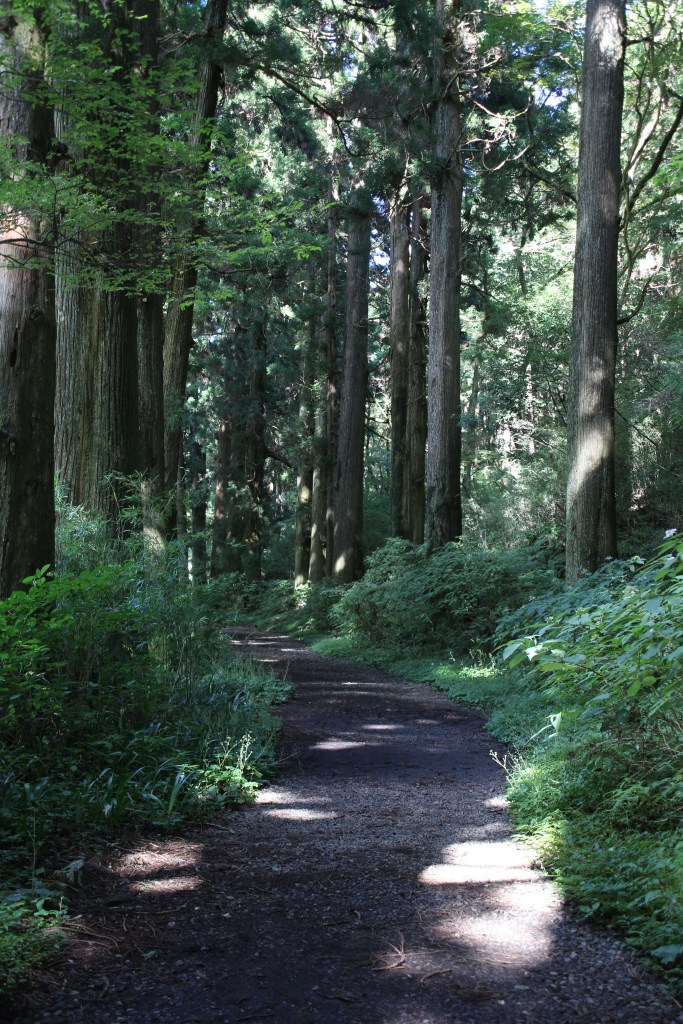
A section of the Tokaido Highway with 400-year old cedar trees on both sides.

How Do You Open This Box!?!

Hakone is also know for the famous trick box. They are beautiful wooden boxes that appear to have no opening. Fiddle with it long enough and you will find hidden panels that, when manipulated in a specific order, will open the box. So cool.

We got one in our room at the ryokan when we checked in. I worked on it for 45 minutes before I figured out how to open it. It took another 30 minutes or so before I could replicate the moves I made the first time. My box takes 10 moves. There are boxes that can take dozens or even hundreds of moves to open. I don’t have time for that!
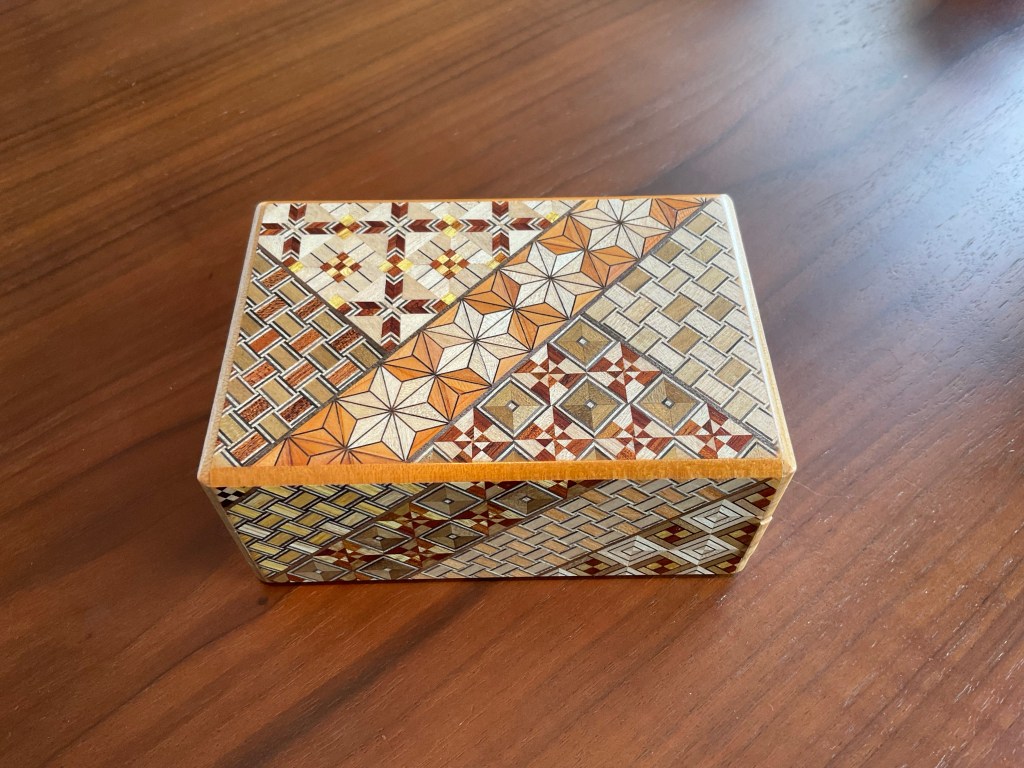
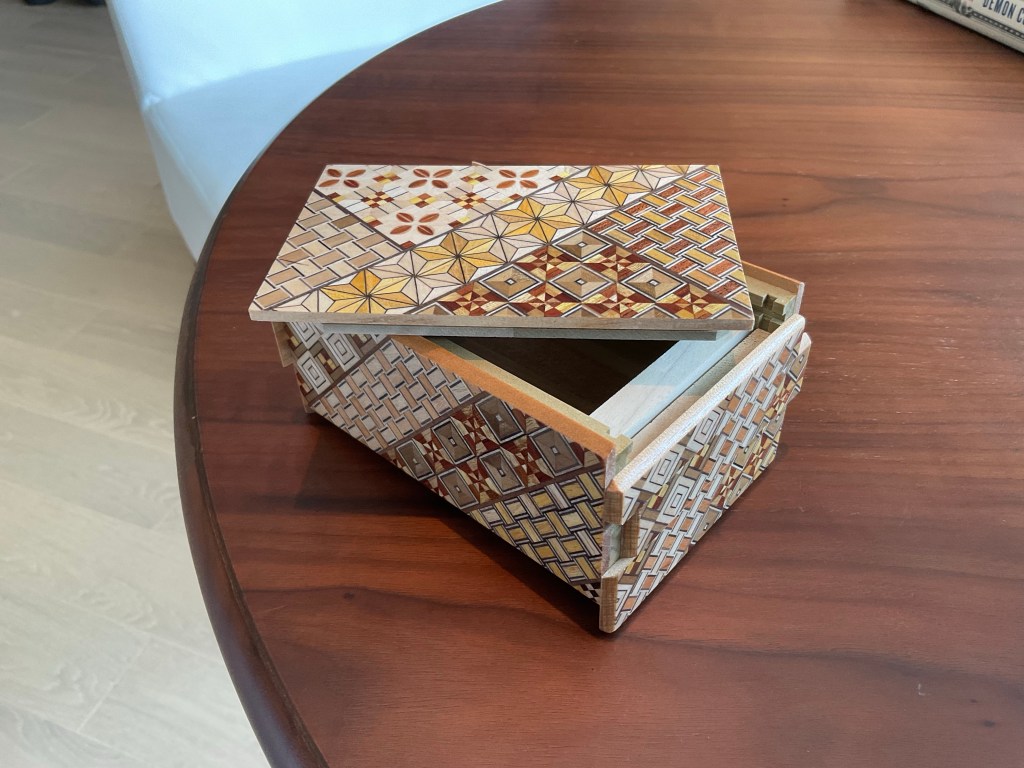
How do you open it?
Voila!

We went to the store where the boxes are made. They aren’t painted. Each different color is actually a different type of wood. The craftsman who makes them showed us how they take the pieces, glue them together, then shave off a panel for the box. Fascinating.
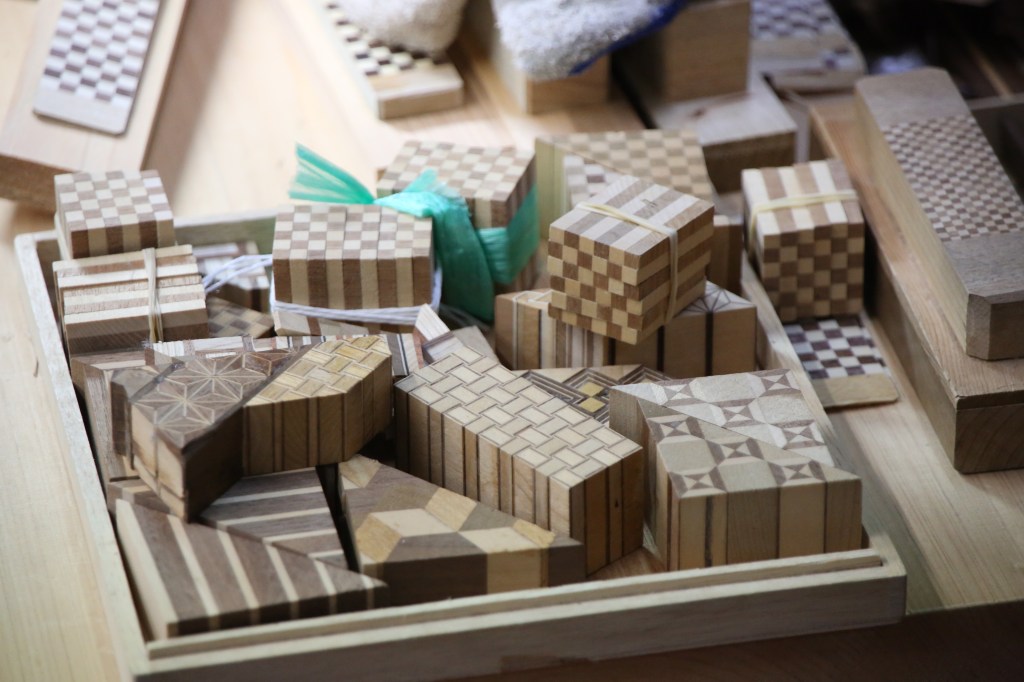
Different types of wood glued together in a cube.
Shaving off the top of one of the cubes to get a veneer for the box.

We might be coming home a with a few of these boxes to give to grandkids. Simpler ones, of course.

That’s it for today. We are heading back to Tokyo with a stop in a beach town on the way. We’ll wrap up with our final thoughts on Japan in our next installment.
Categories: Japan, Travel | Tags: , , , , | Leave a comment

We Left Our Hearts in Kyoto, Japan

Although we were only in Kyoto for three days, the city captured our hearts and spirit. With hundreds of temples and shrines located in the city, sometimes with retail shops or condos built up around them, it is hard not to feel a little spiritual as you walk around the quaint, picturesque streets.

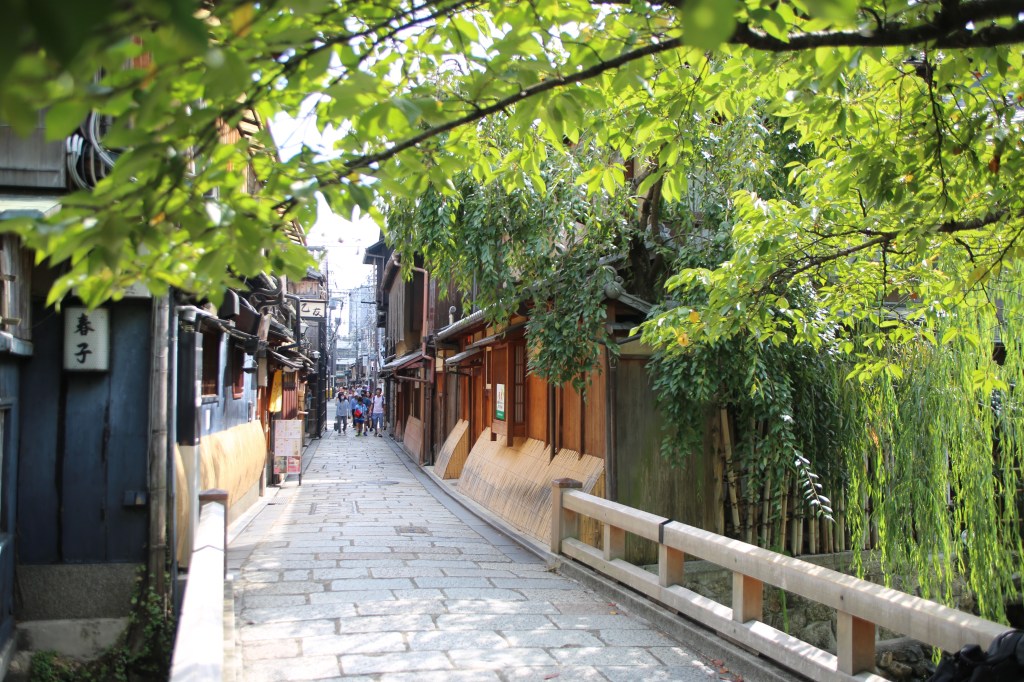
A quaint little street in the Gion District of Kyoto.

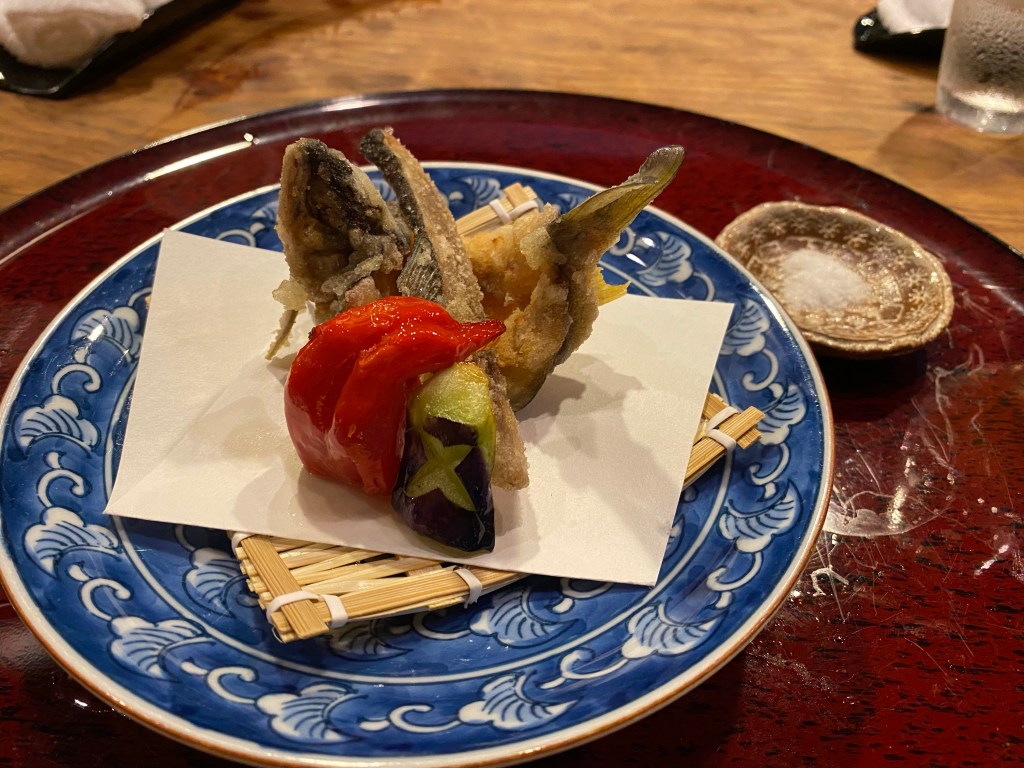
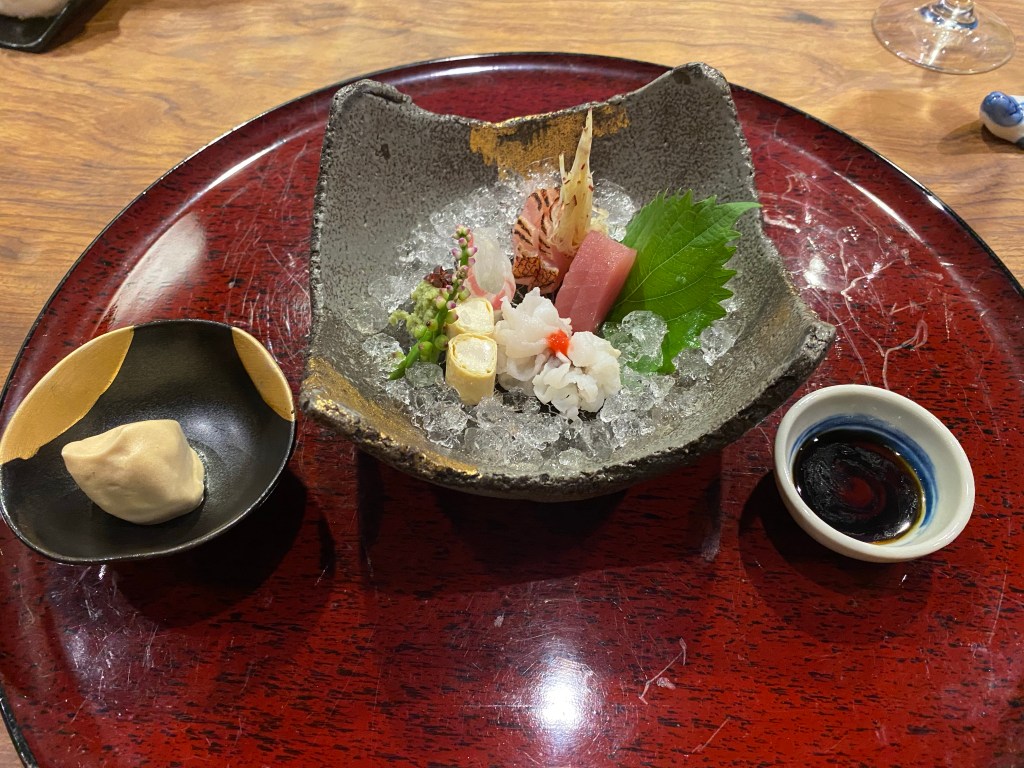
Before we talk about our last day of adventures, let’s talk about Japanese Cuisine. We have had it all and probably way too much of it. Each meal is multiple courses served on exquisite ceramic plates and bowls…so many small bowls! So far, we have had sushi, ramen, robotayaki, tempura, yakitori, teppanyaki, and most recently kaiseki. Our Kaiseki meal in Kyoto was like nothing we have ever had before. It was about ten courses but we lost count after course number seven or so. Kaiseki is a type of art form that balances the taste, texture, appearance, and colors of food. We had our own chef who artfully arranged and garnished each dish with leaves and flowers and interesting sauces. We had an animated conversation with a cute Italian couple next to us which made the two hours of dining fly by!

The first course in our Kaiseki meal.
The Kaiseki version of fried fish.

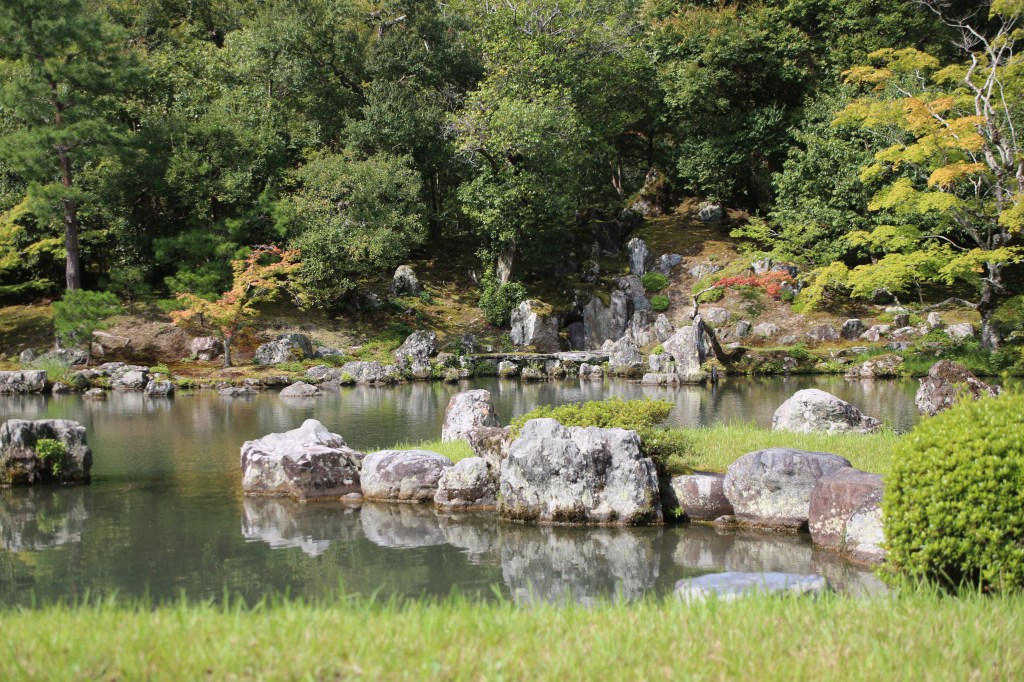
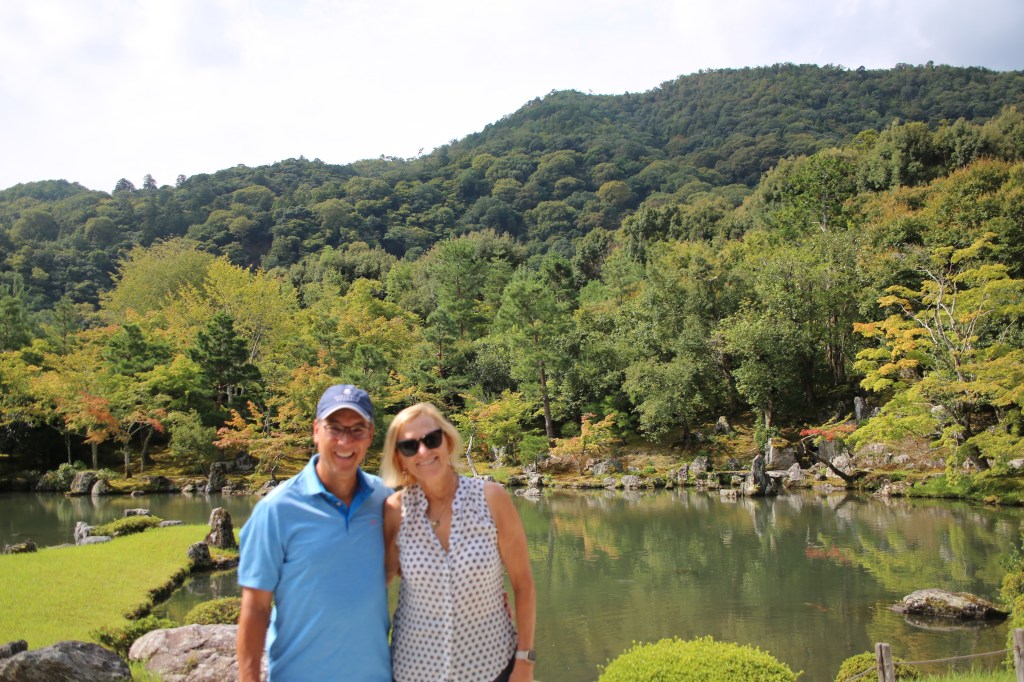
On our last day, we visited a magnificent Buddhist temple and gardens at the Tenryuji Temple in Arashiyama. The gardens, constructed by hand 800 years ago, are beautiful and apparently breath-taking (and crowded) when the maple trees turn in the Fall.

The Sogen Pond in the Tenryuji Garden.
Mugging in front of the Sogen Pond.

We did a little shopping and found some Washi-traditional Japanese paper-for our good friend Dana. She put in a little special request as she makes her own note cards and prints. We hope we got the right kind but it was a fascinating shopping experience looking at all the different kind of paper.

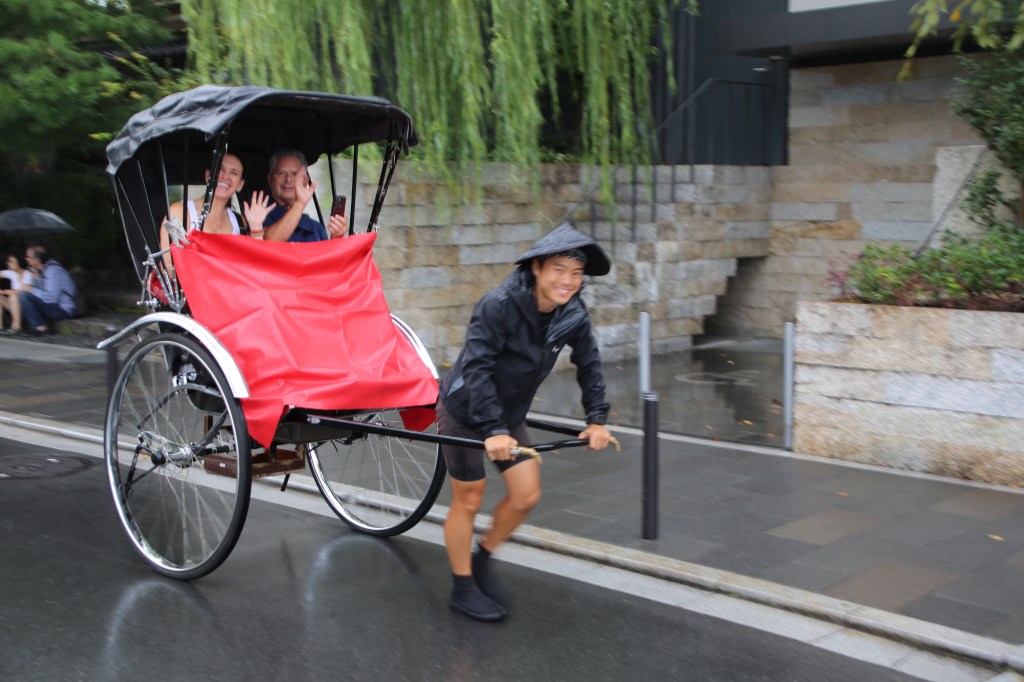
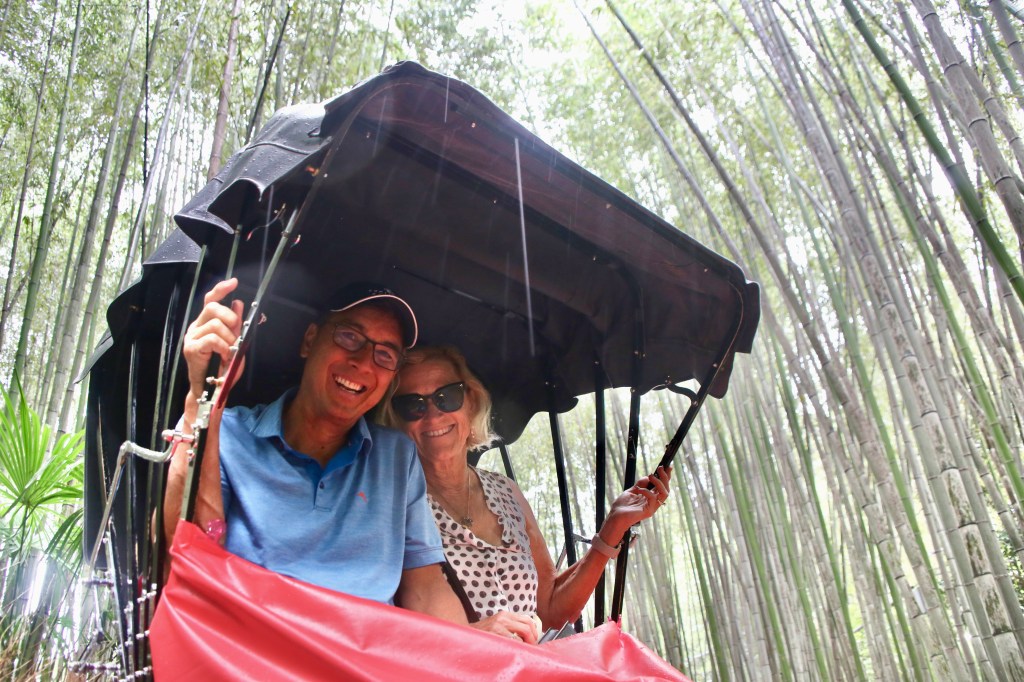
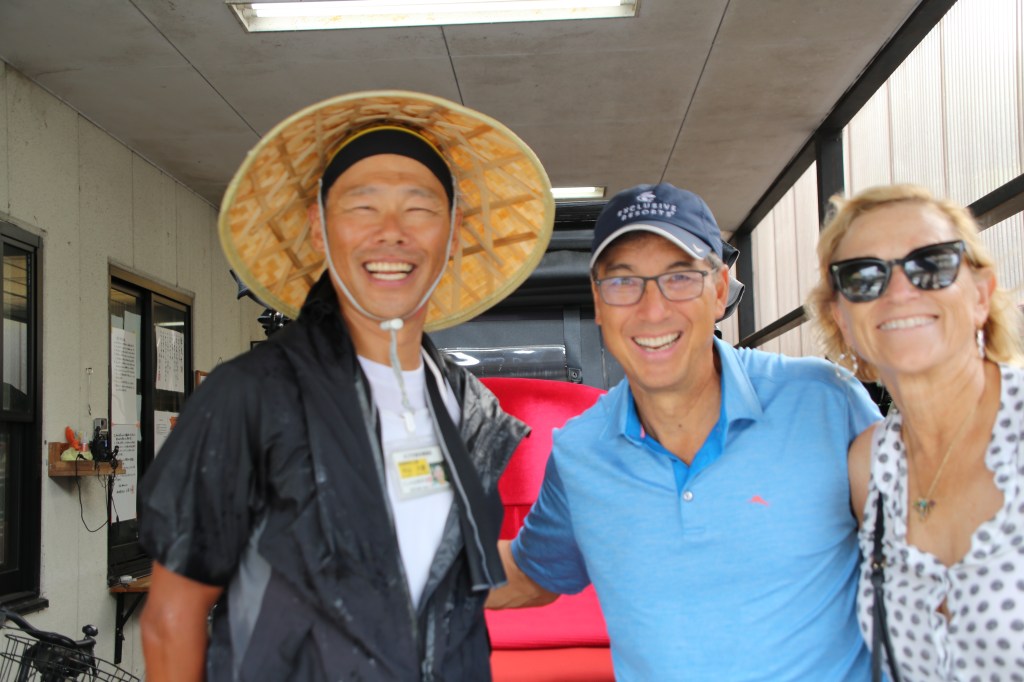
After shopping, we headed to our rickshaw (as one does) and headed into the Bamboo Forest. Our guide had been doing his job for 26 years and said he goes last because he is now the slowest. We did not find him slow at all and felt quite guilty about eating all that extra Japanese food as he had to pull us up hills into a spectacular bamboo forest. He was very proud of his city and he pointed out interesting landmarks and encouraged us to come back to visit and see some lesser-known temples and gardens.

Lisa and our rickshaw driver. We loved him.
Two of our tour companions in their rickshaw.
Riding through the bamboo forest.
Us with our driver at the end of the ride.

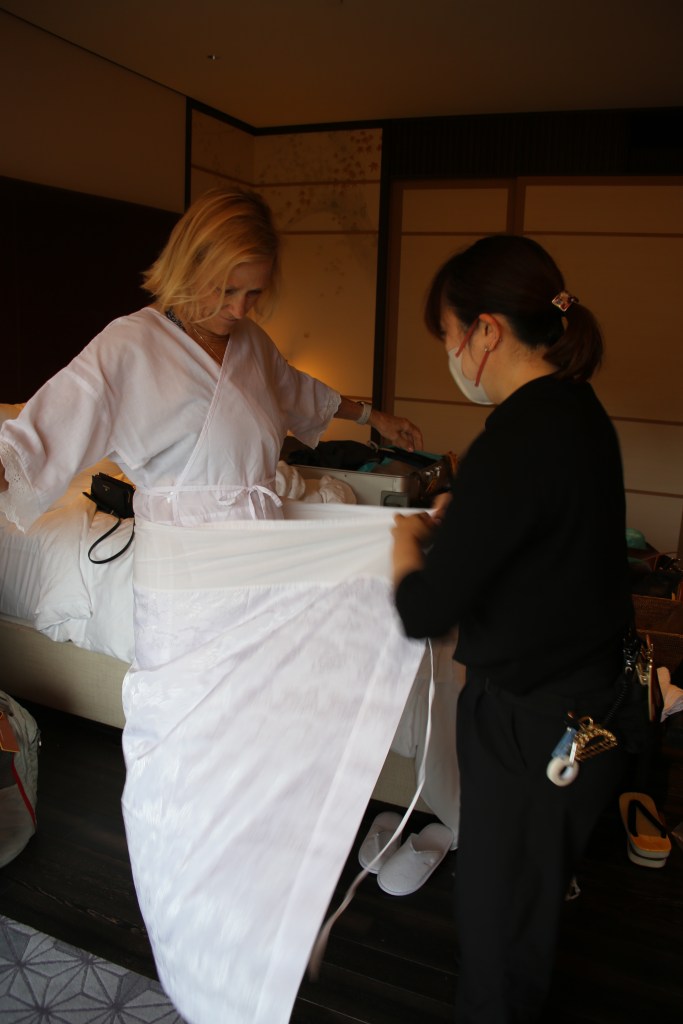
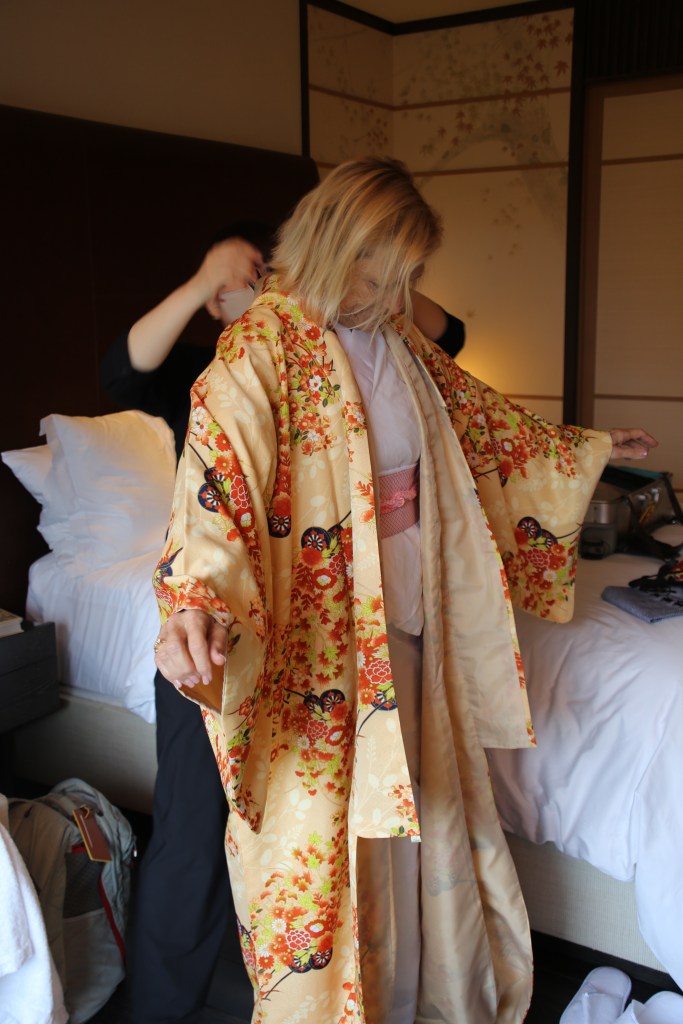
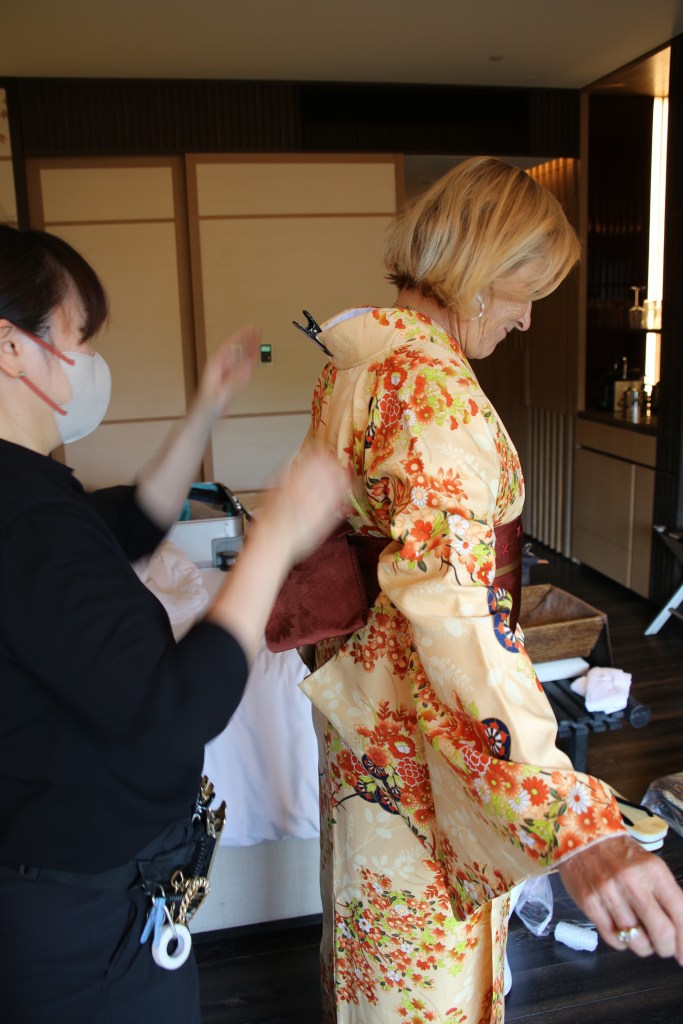
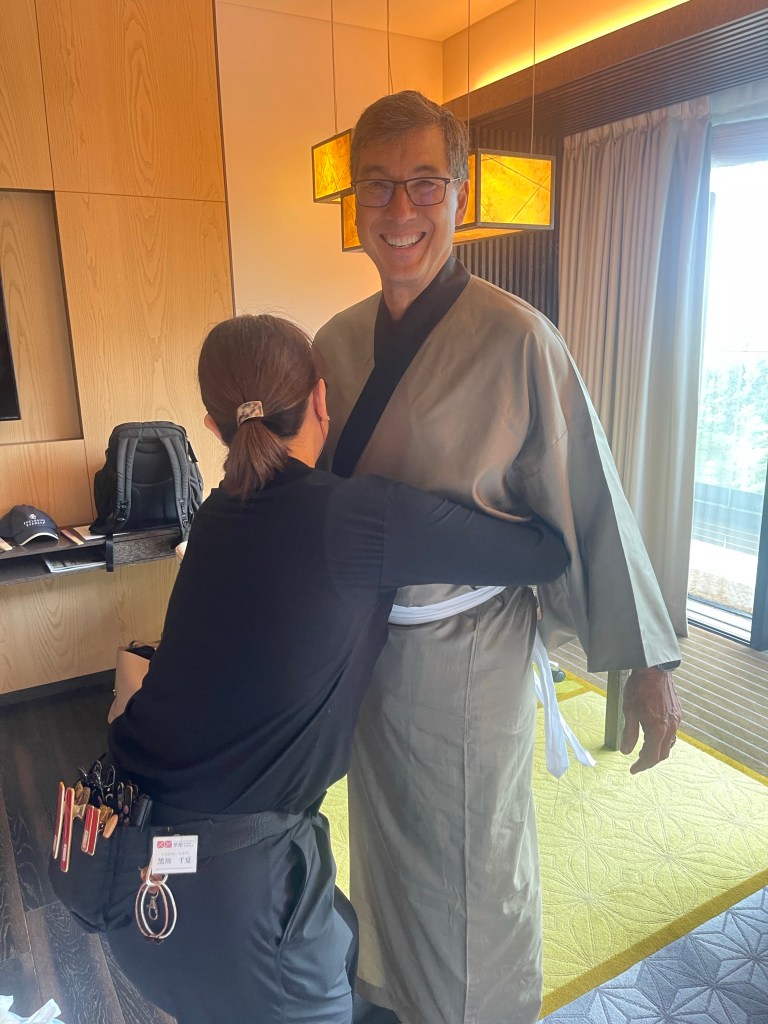
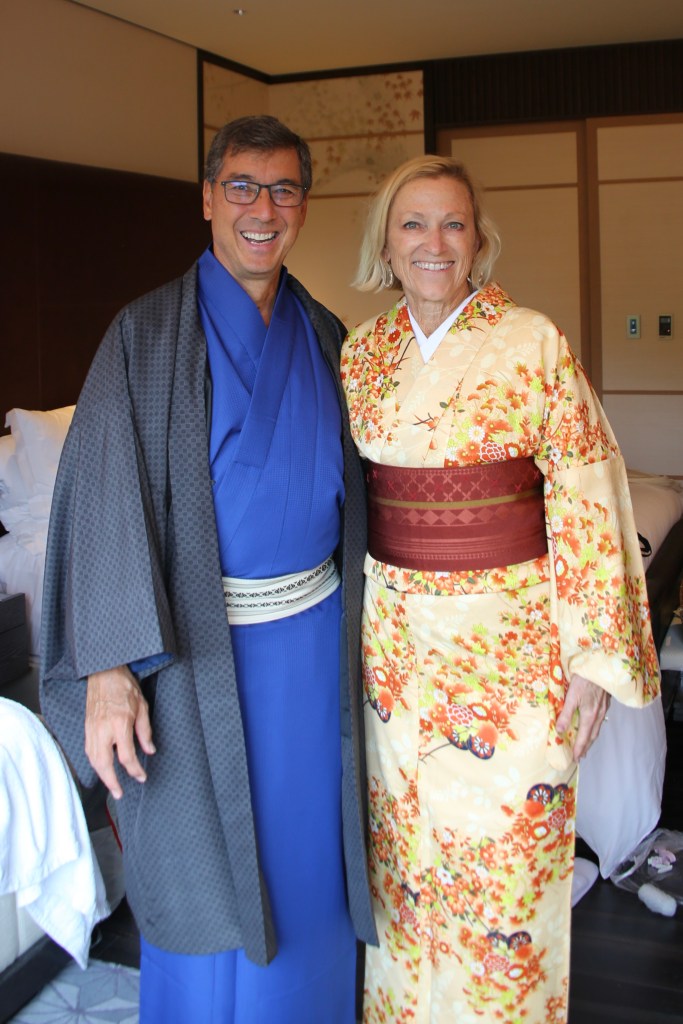
The big event of the day was getting fit into and dressed into our own kimonos. Oh my! What a process. There are at least four layers of clothing for the women and each layer is pulled very tightly. I now know what corsets used to feel like in the Victorian era. Brad also had about three layers in his kimono so he also got dressed and tugged and tightened and layered. We now have appreciation for all of the people we have seen wearing kimonos in Kyoto. It must take them at least an hour to get ready every day and I have no idea how you would get into one if you were by yourself.

Putting on the base layers of the kimono.
Putting on the outside layer.
Adding one of four belts. Why four? Who knows.
Putting on the finishing touches.
Brad’s was simpler to put on but still required many layers.
The finished product.

Walking is an adventure unto itself. Because the skirt is so tight and the shoes are small, you have to take very small baby steps and be careful going up and down stairs.

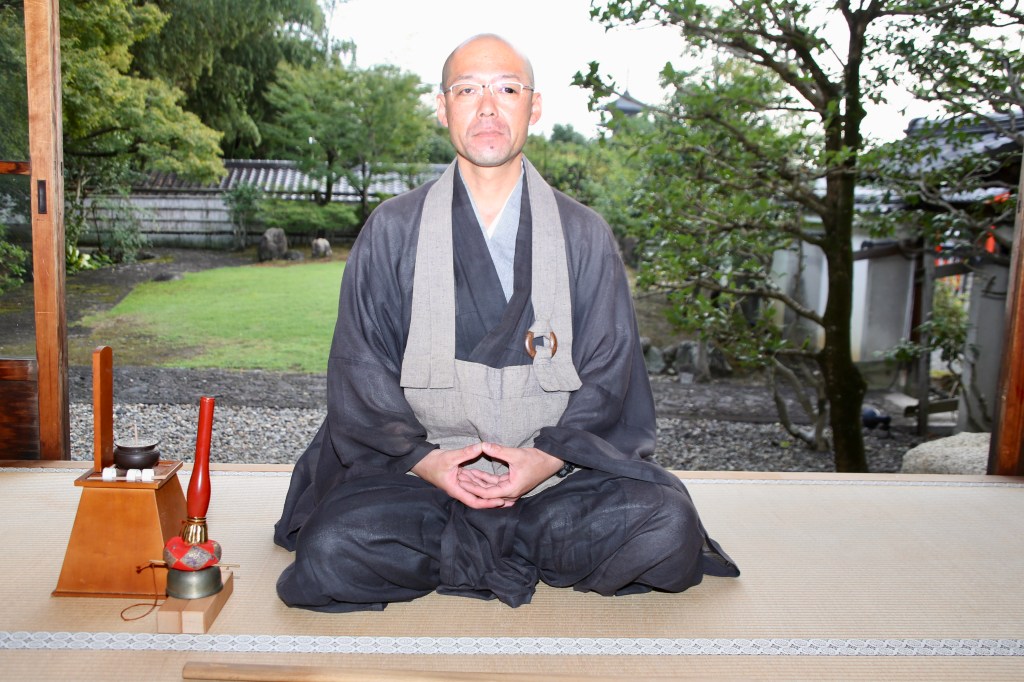
Dressed in our Kimonos, we headed to the Gesshi-in Temple for a Zen Meditation session. We learned that some of the monks actually meditate for 18 hours per day in a nearby temple. We were only doing a ten-minute session—the American version I suspect. He instructed us not to slouch and to breathe deeply for our meditation. Believe me, it is not possible to slouch in a kimono. Breathing deeply is another story and forget about eating. No wonder the Japanese women are so small.

Our Zen Master.

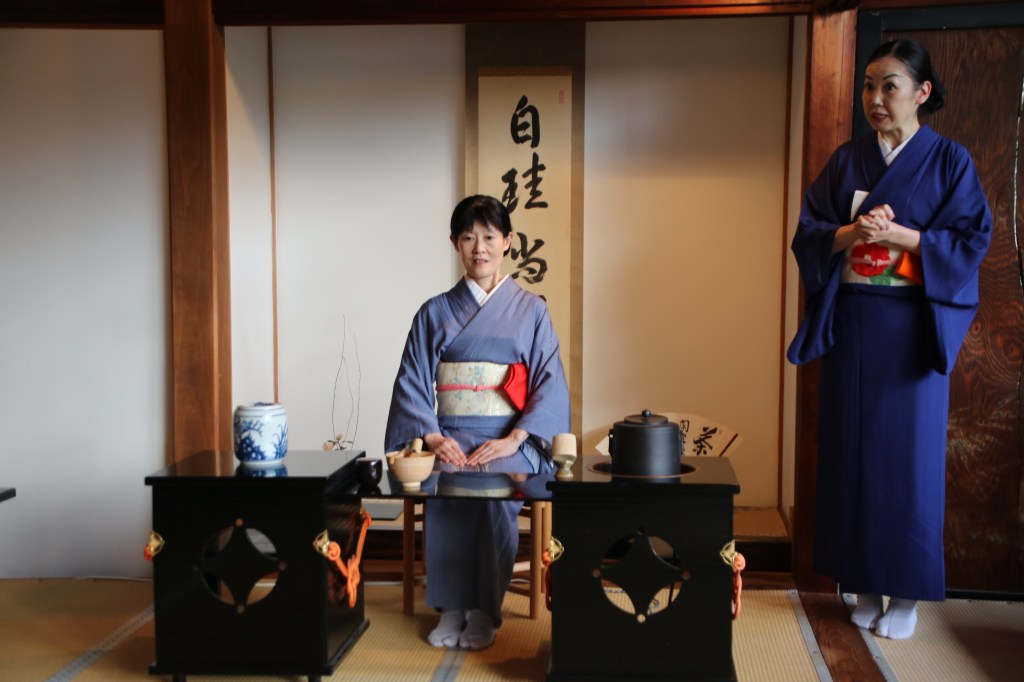
After we had our moment of Zen, we participated in and learned about a traditional Japanese Tea Ceremony. Tea is very closely tied to Zen as the man who brought Zen to Japan hundreds of years ago also brought green tea. The macha tea was delicious and we enjoyed the serenity of it all.

Our host for a traditional tea ceremony.

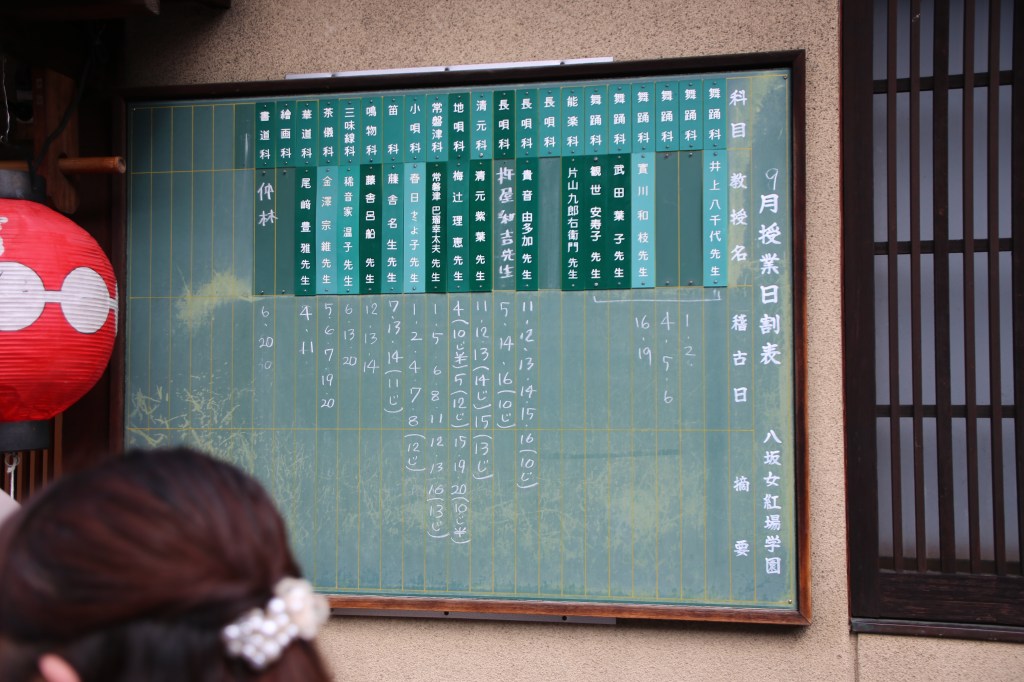
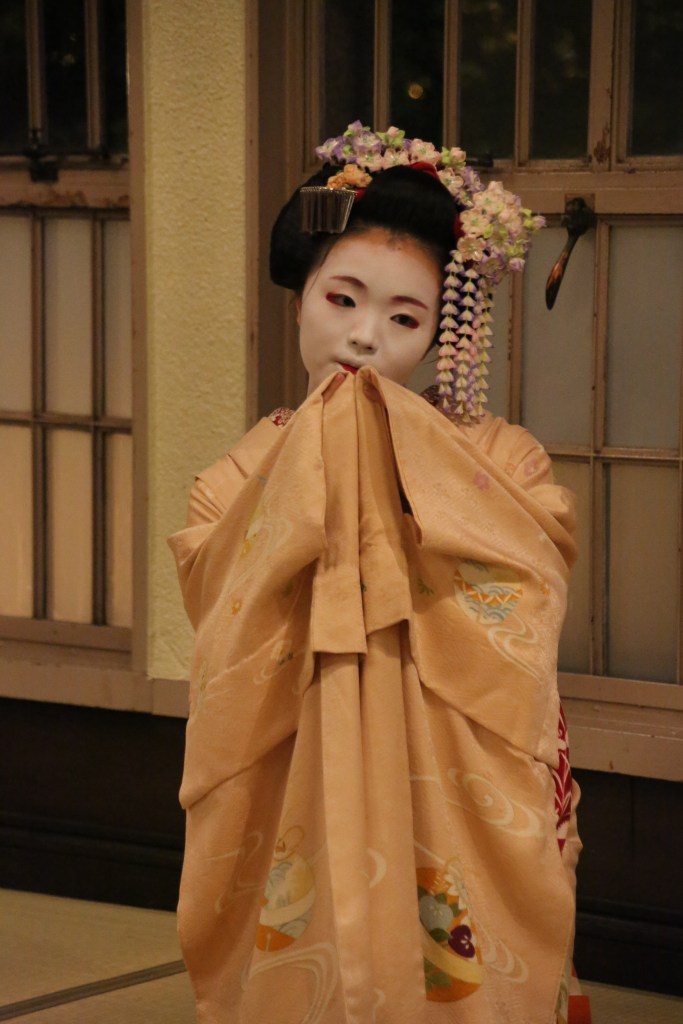
Off to dinner where we walked slowly taking baby steps along the path. We were treated to a special ceremony by two geikos (which is geisha in Kyoto dialect) and a maiko (a young apprentice). In the 1920’s there were over 80,000 geisha. Now there are a little over 200 women. A girl can choose to enter an Okiya — a school to develop Geisha — as soon as she graduates middle school. She makes the decision herself but must get her parents’ permission. The Okiya is a boarding school that teaches these girls everything the need to know about being a Geisha — music, dance, puppetry, the art of conversation, etc. The maiko are not allowed to have any social media, cell phones or internet connectivity while they are learning the trade. They go each morning to a chalkboard where they find out their schedule for the day. They then go to those classes. Imagine your 15-year-old daughter doing this. While it is their own choice and they must have their parents’ permission, it is still a daunting challenge for a young girl.

The chalkboard showing the Maiko what classes they have that day.

A typical day involves classes from 9:00 am- 2:00 pm, followed by makeup, dressing into beautiful kimonos, and hair prep for the evening, and then going out every night to entertain groups from about 6:00 until Midnight. Geisha work almost exclusively at traditional inns, teahouses, and restaurants. Contrary to common perceptions about Geisha, they only engage in proper activities. The fee for the Geisha’s time is sent at the end of each month (apparently they never charge the same amount) in the form of a “Love Letter.” I am not sure I consider our PG&E invoices love letters but maybe it’s a new way of thinking about monthly bills. One more thing, the Geiko and Maiko only get two days off per month. They are hard working women!

A young Maiko (apprentice) dancing for us.
A Geiko (full geisha) dancing for us.

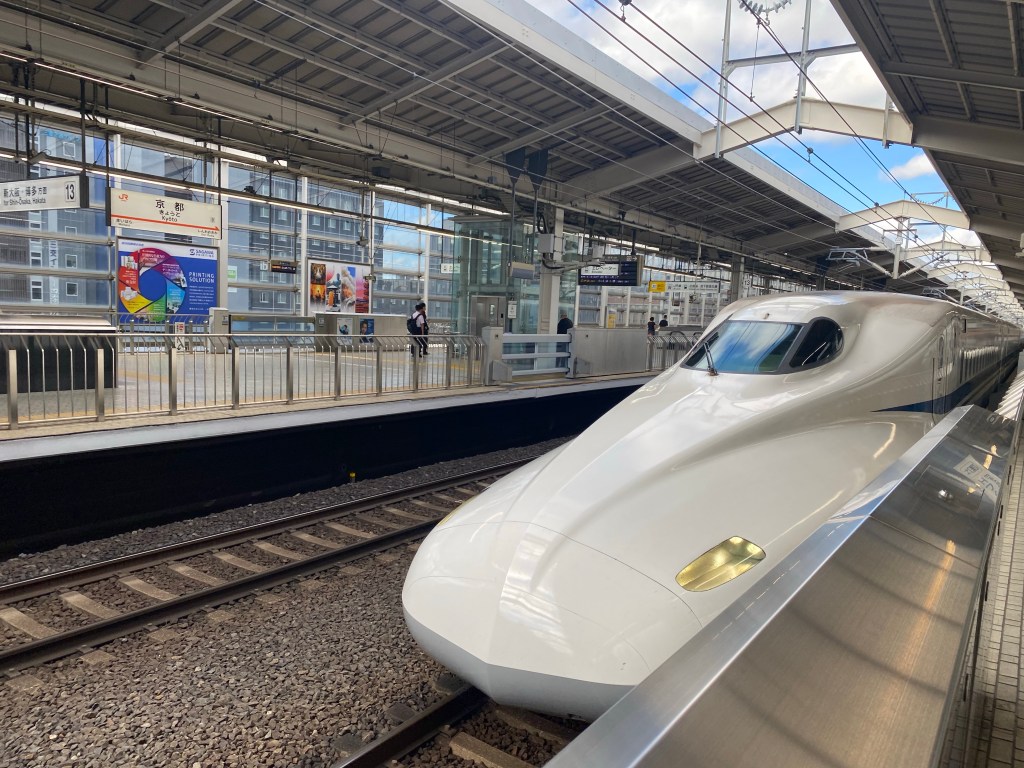
We loved Kyoto and would highly recommend spending time here if you are ever traveling to Japan. It is the center of Japanese culture and a necessary stop to fully gain an appreciation for the rich history of this country. We are currently back on our very efficient, comfortable bullet train to the mountain town of Hakone where we will be staying in a ryokan — a traditional Japanese inn — and we might even get a little time to relax in an onsen hot spring.

Our bullet train arriving to take us to Hakone.
Categories: Asia, Japan, Travel | Tags: , , , , | 2 Comments

KYOTO: Land of Shrines, Temples, Kimonos, and Geisha

On Saturday (Sept 9th), we took the Bullet Train to Kyoto. What an efficient, clean way to travel! The Bullet Train or Shinkansen has a speed of approximately 200 MPH and got us to Kyoto in 2 ½ hours. In the 50-plus-year history of the Bullet Train, there has not been a single passenger fatality or injury due to derailments or collisions. Equally impressive, the Bullet Train has carried over 10 Billion Passengers and in the most recent reporting the average delay from the schedule per train was only 24 seconds. I think BART could learn a thing or two about how the Bullet Town operates!

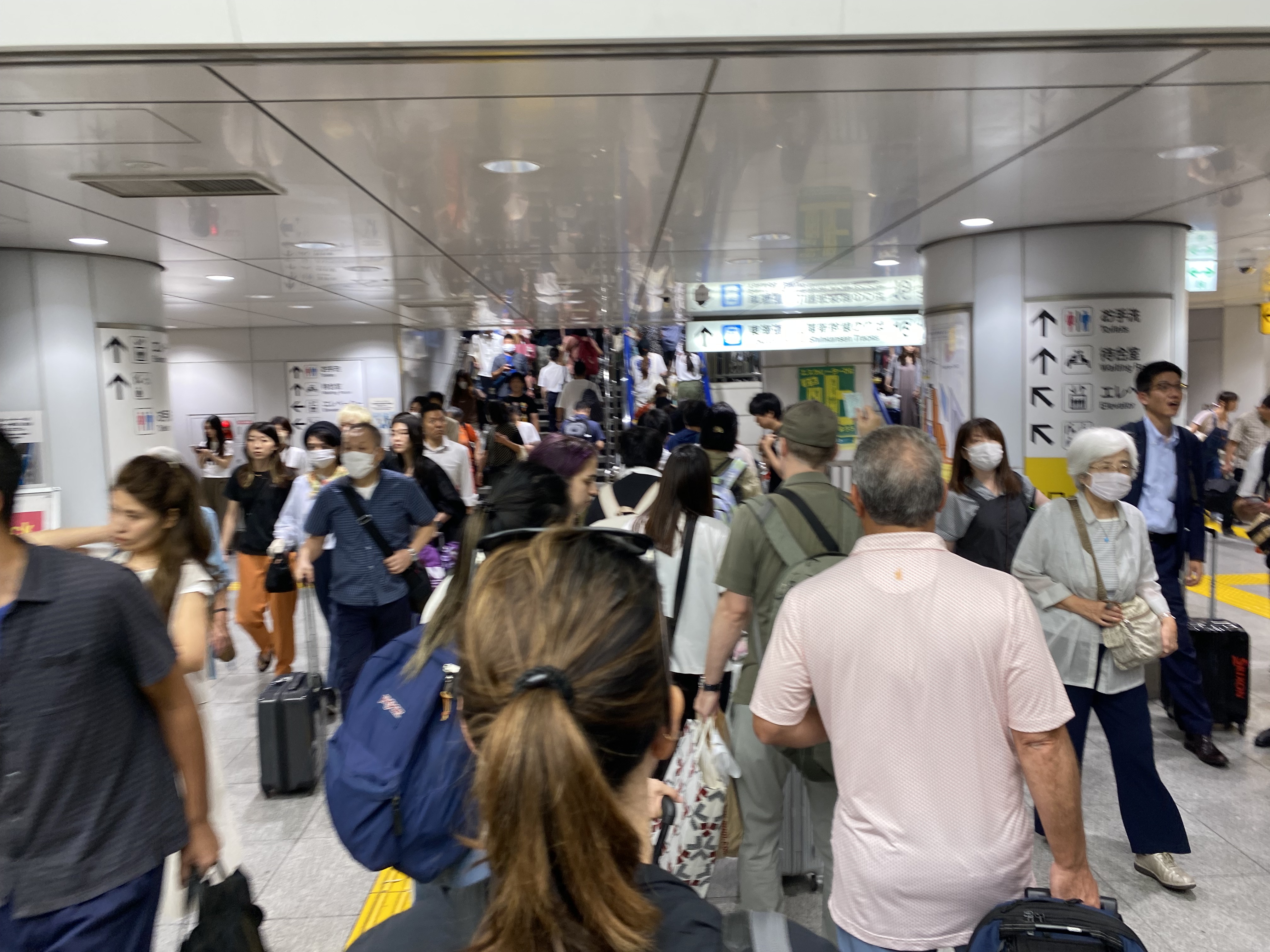
Tokyo’s Toikaido Station is bustling. Think Grand Central in New York.
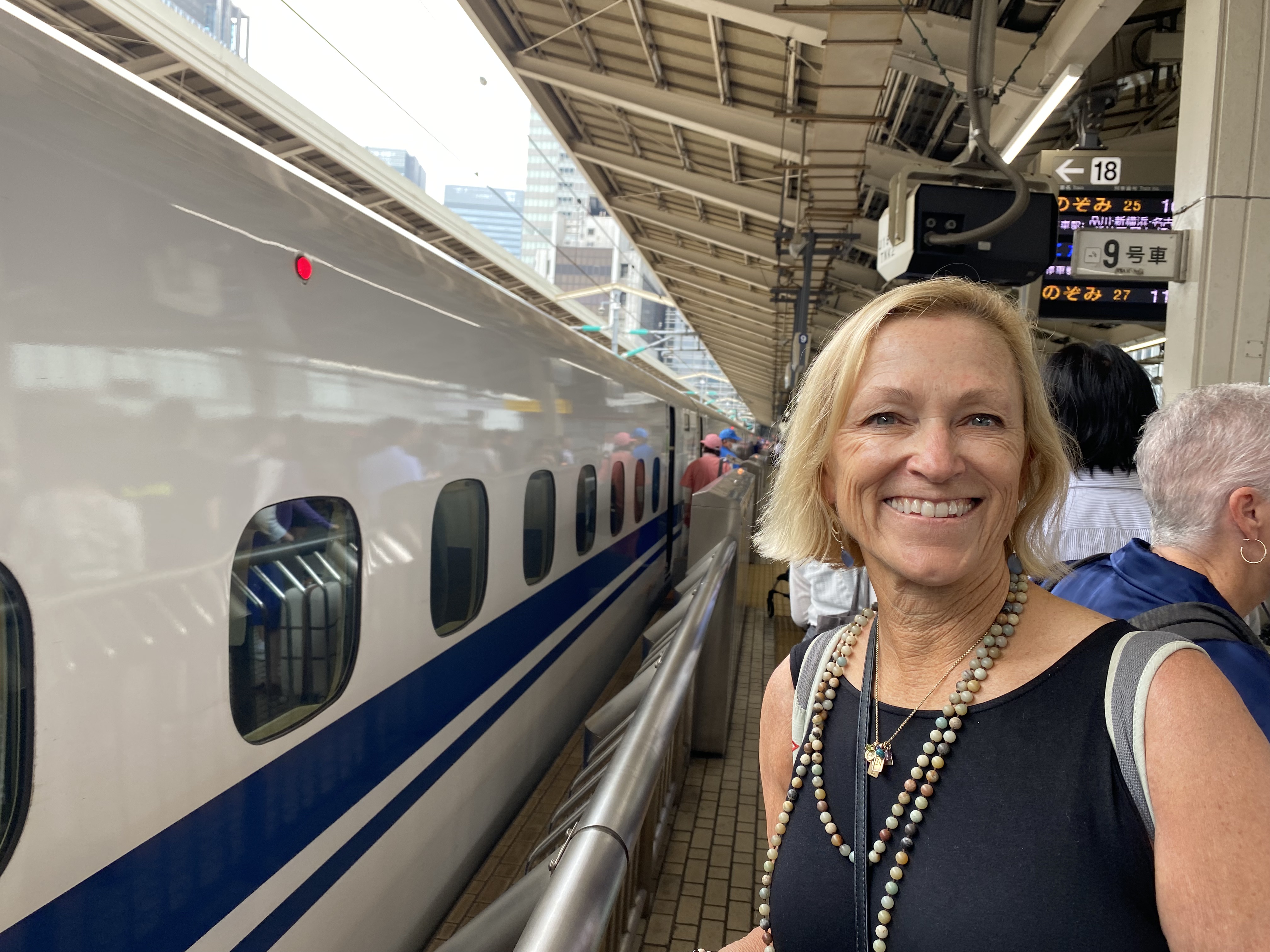
Getting ready to board our Bullet Train to Kyoto.

A little bit about Kyoto before we talk about our first day. Kyoto is a metropolis of approximately two million people and is considered the cultural capital of Japan. It has over 2000 religious places-1600 Buddhist temples and 400 Shinto Shrines, many of them dating back to the 700 and 800’s. An interesting fact about Kyoto was that it was originally on the list to be targeted for the atomic bomb in 1945 but at the insistence of the Secretary of War Henry Stinson, Kyoto was removed from the list. Henry had honeymooned in Kyoto and loved the place for its history and charm and saved it from the Atomic Bomb. It is the reason that, unlike Tokyo that suffered severe bombing in the war, Kyoto still has many ancient cultural landmarks.

Kyoto seems very rich in culture and heritage.  We walked around the narrow streets and saw many women and men exquisitely dressed in kimonos even in the 90 degree temperatures!  According to our guide Bret, the people of Kyoto also have an air about them.  He told us that in Japanese culture, the hosts will serve green tea at the end of a party or gathering to signify that the evening is over and it’s time for the guests to go home.  In Kyoto, the hosts serve green tea when their guests first walk through the door!

A woman in a kimono on a street in the Gion District.
Homes on a creek running through the Gion District.
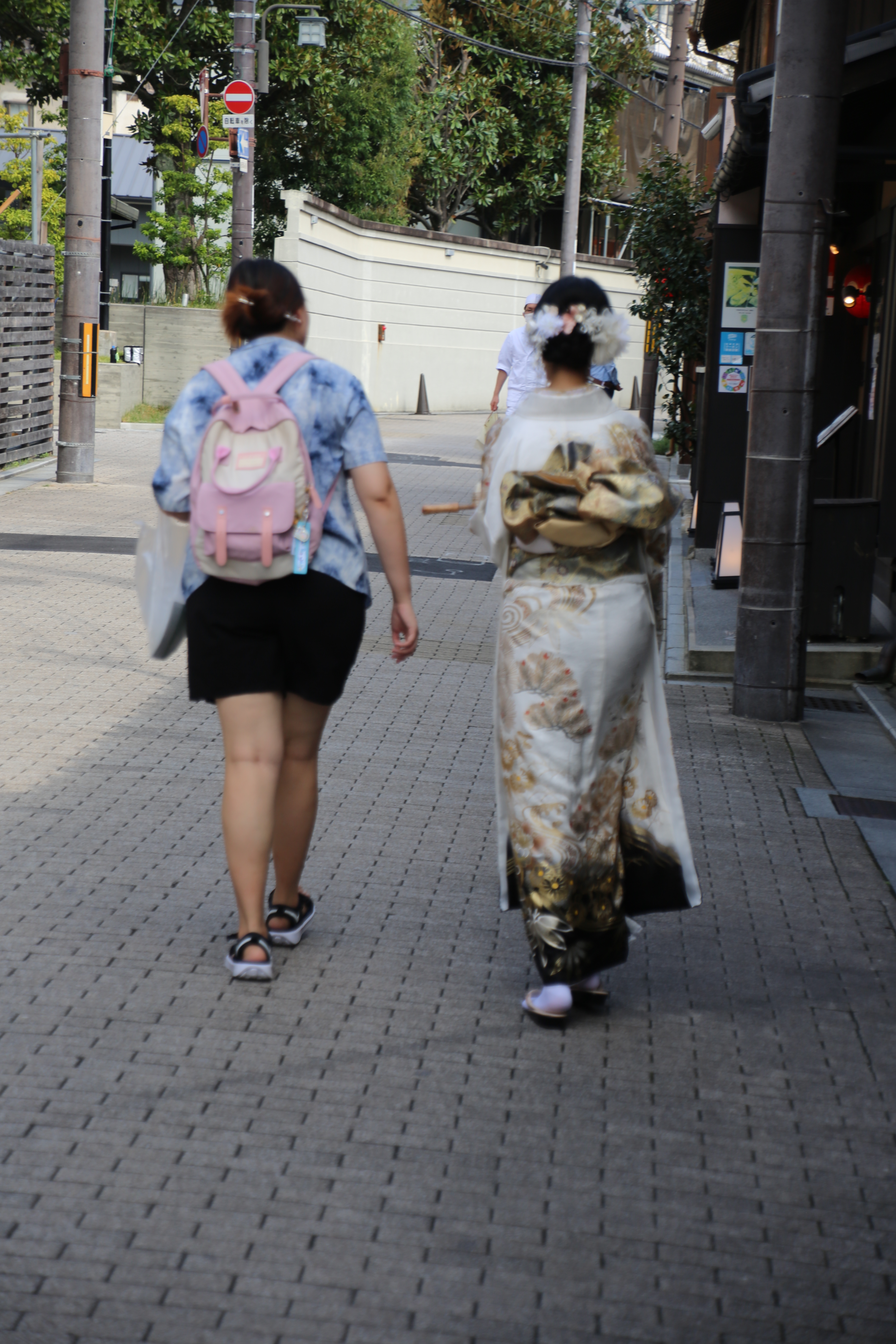
A girl in a kimono walking with her friend in modern clothing.

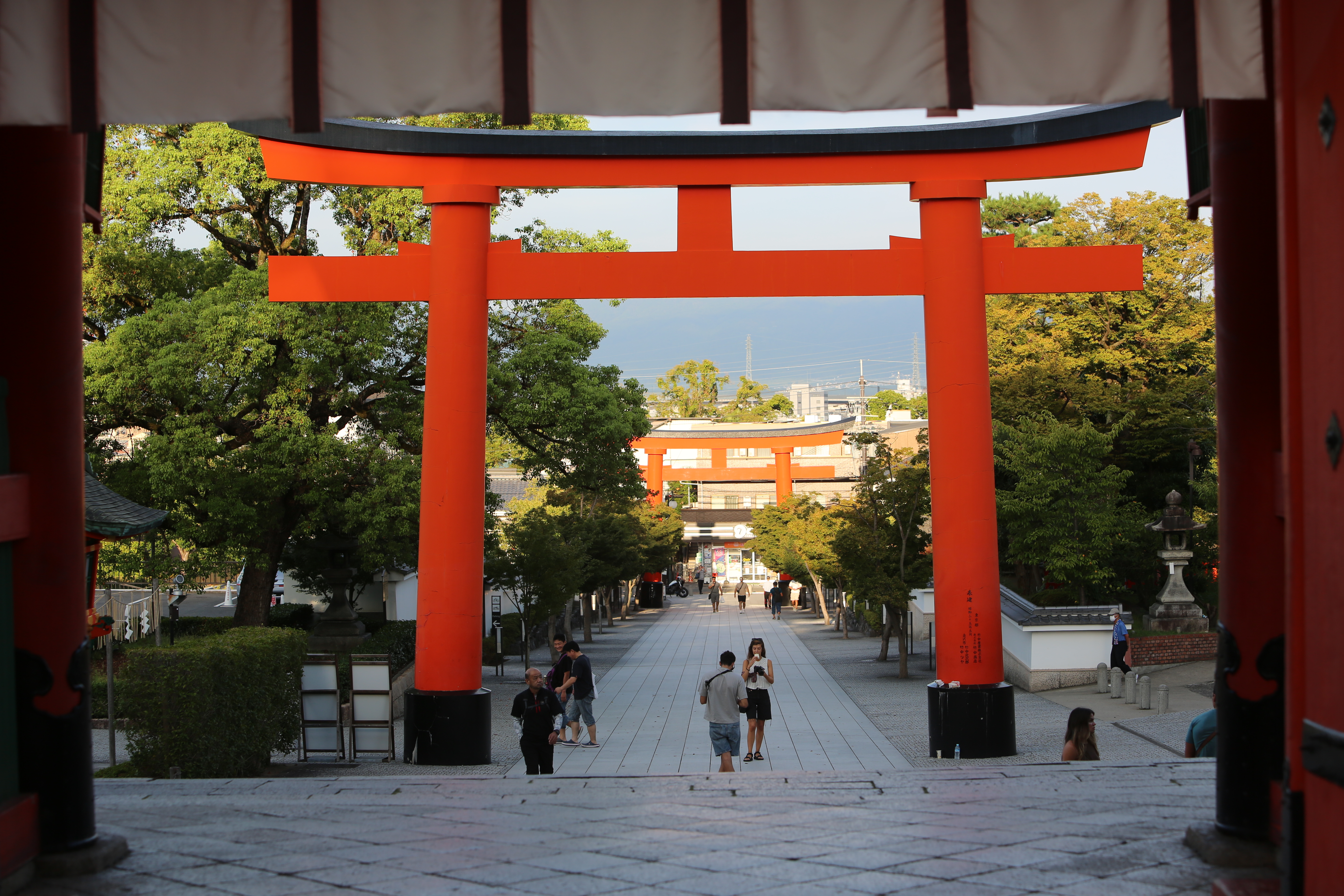
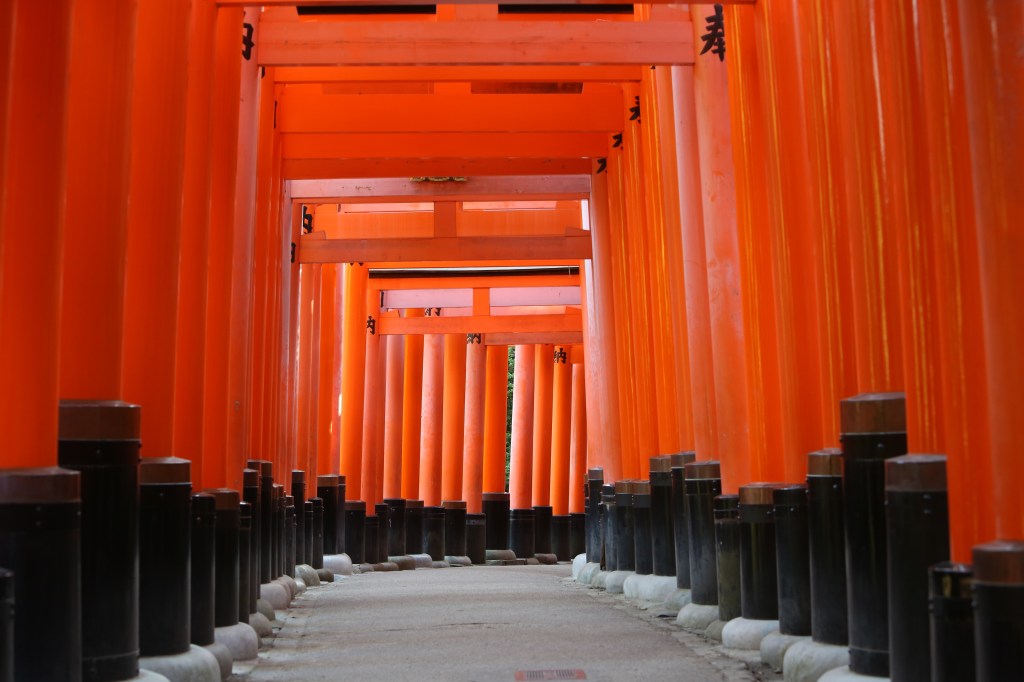
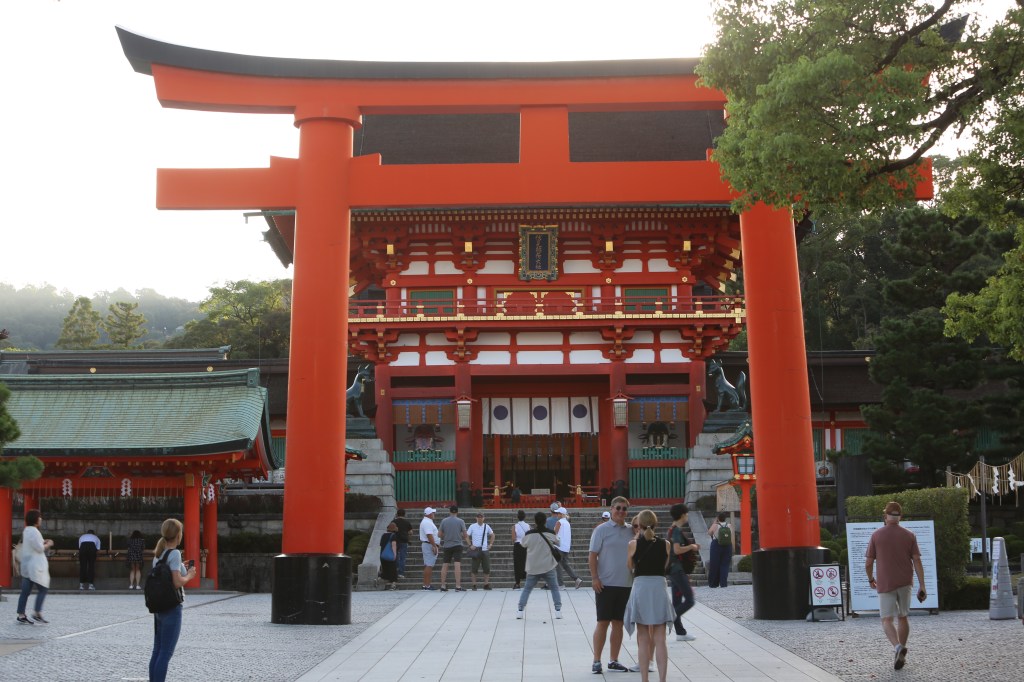
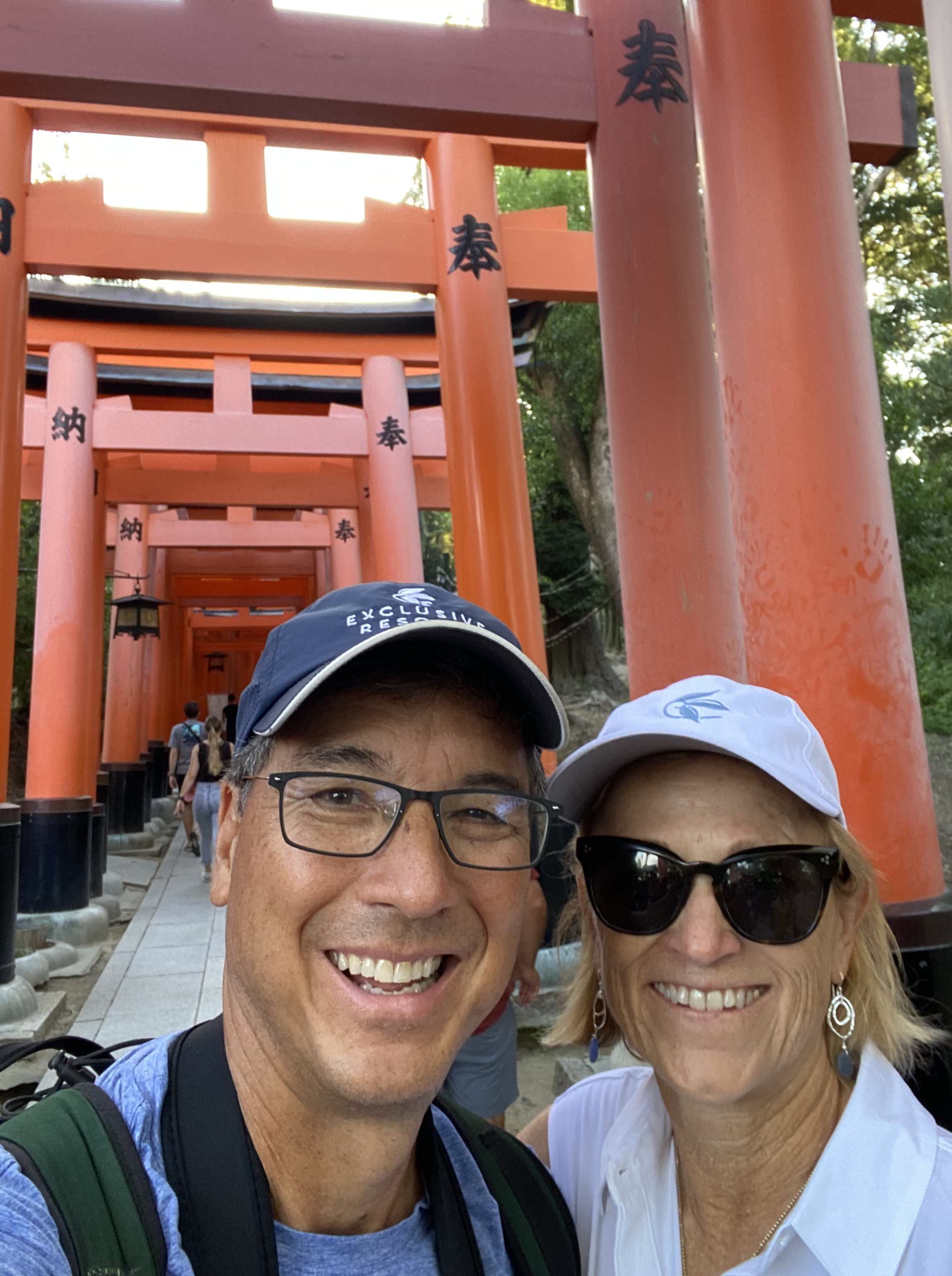
This morning we got up bright and early at 6:00 am to see the Torii Gates at Fushimi Inari-taisha. (Brad didn’t get much sleep last night because, of course, he watched his beloved Colorado Buffaloes beat Nebraska at 1:00 am in the morning here. Did you expect anything differently from him?) The 10,000 Torii Gates and the shrine(s) are one of the most popular tourist attractions in all of Japan. Hence our guide insisted that we get there to enjoy the area before all of the thousands of tourists descended upon it. The shrine was founded in the year 711 and the temple gates are the oldest in Japan. Their Vermilion color wards off evil spirits and represents the sun. The gates were truly a sight to be seen and we climbed up through about 2000 of them feeling like our sins had been absolved and our dreams and wishes might someday come true. Truly it was a spiritual place made even lovelier at dawn.

The entrance to the shrine.
The Torii gates.
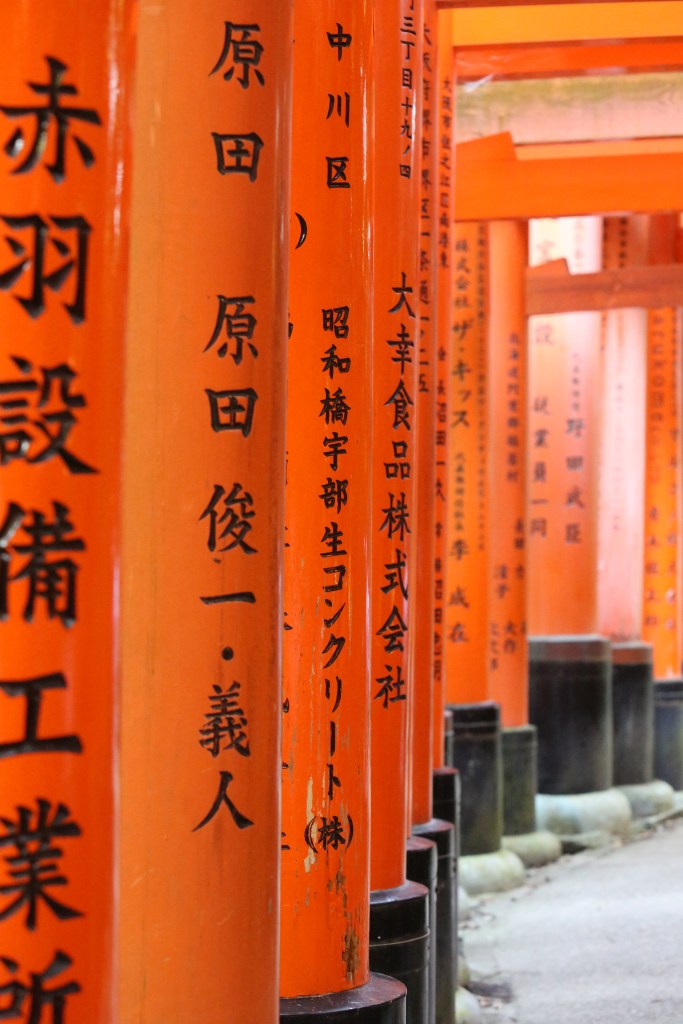
The writing signifies the person or company that sponsors that gate.
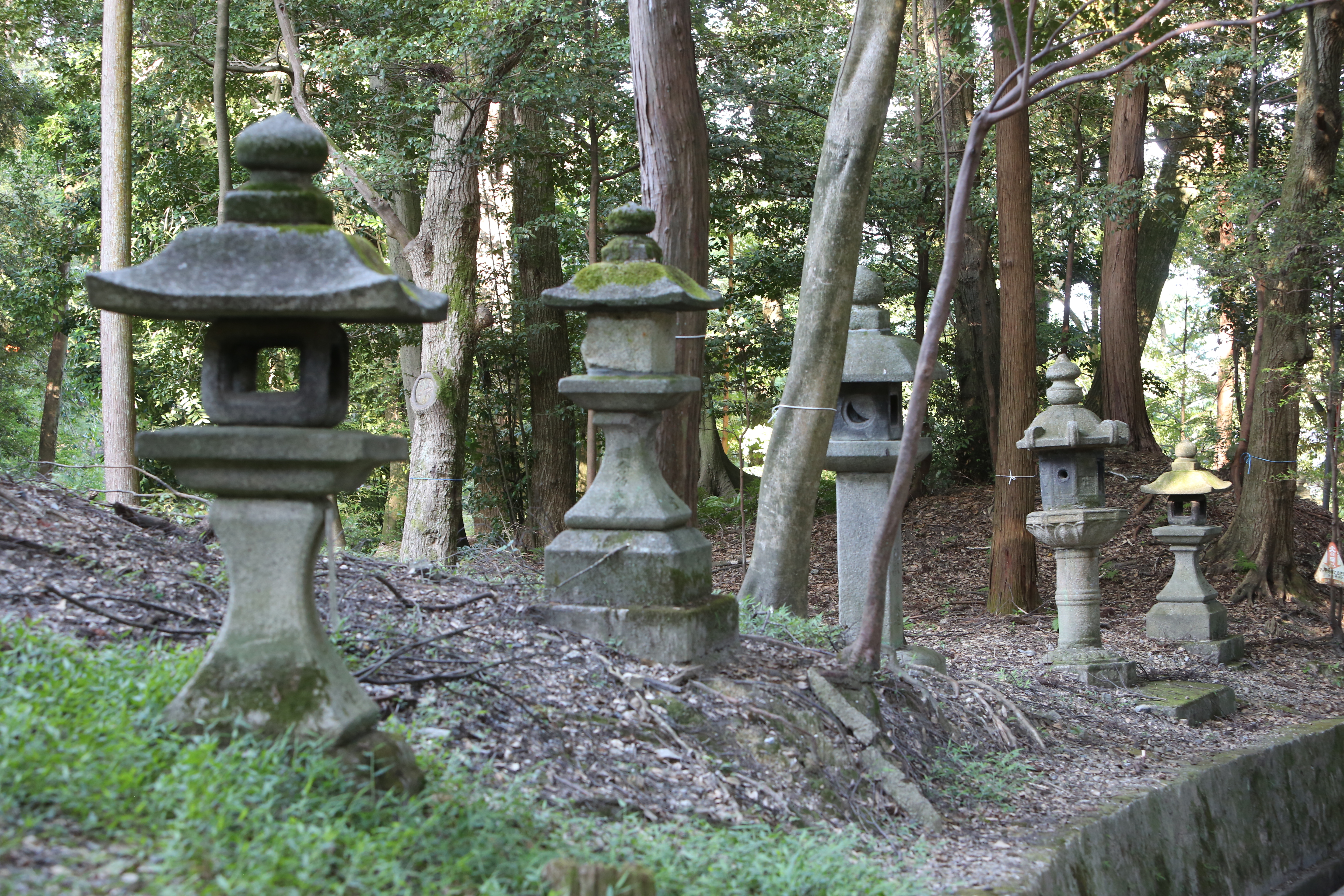
A row of lanterns on the grounds of the shrine.
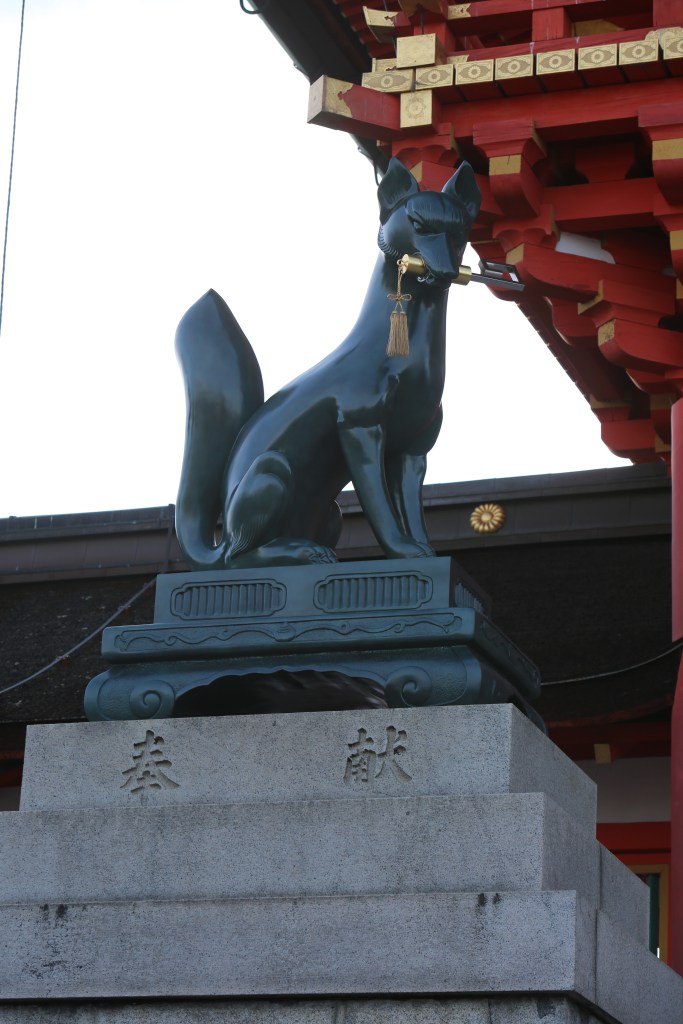
This fox guards the entrance to the shrine. The fox is holding a key — the key to success.
Front view of the shrine.

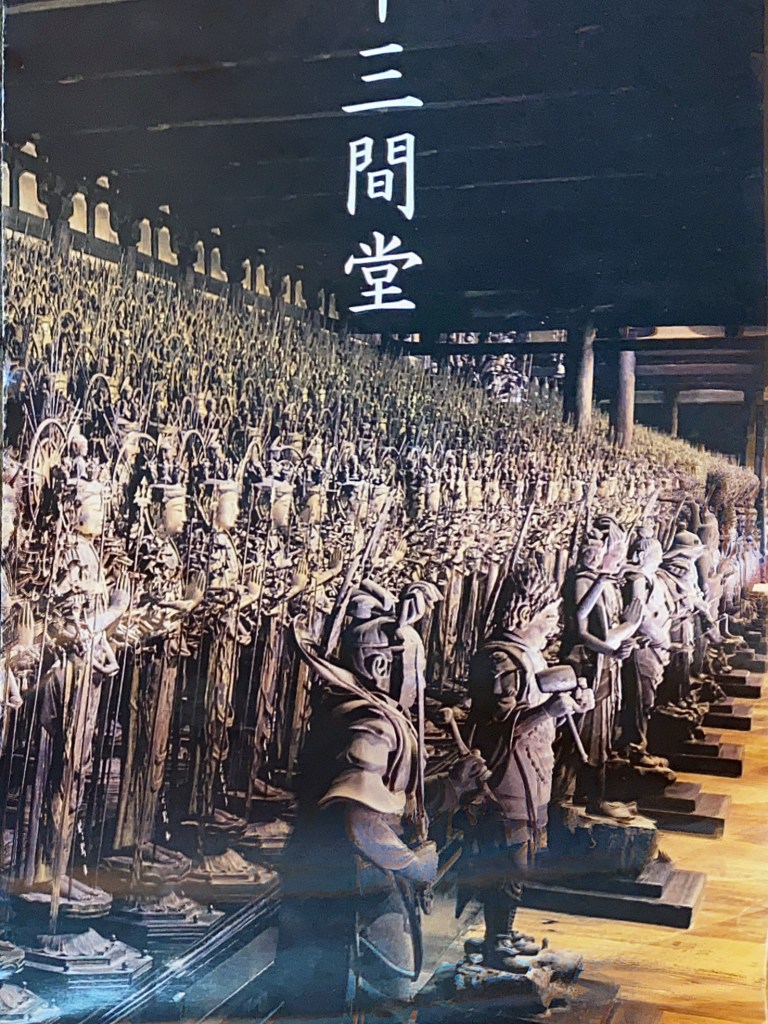
The rest of our day was spent at SanJusangendo (a Zen Buddhist Temple) and walking around a beautiful Zen Garden at Totofukuji temple. The SanJusangendo temple is famous for its 1001 Thousand-Armed Kannon Statues (Yes, they are supposed to have 1000 arms each but, I think they only depicted about 20 or so on the statues.) We weren’t allowed to take pictures in the Temple so this stock photo will have to do so you get an idea of how amazing this Temple was. The Zen Garden was just that…very Zen-like. It was built in the 1300’s and is a typical rock and sand garden. The monks at the temple groom the garden every seven-ten days and it takes about seven or eight hours. I am still very curious as to how they keep the circles and lines so perfect without a single footprint or line out of place. Can someone explain that to me?

The 1001 statues in the Buddhist Temple. This is a photo from our brochure. It is prohibited and very bad luck to take photos inside the temple.
The Zen garden.

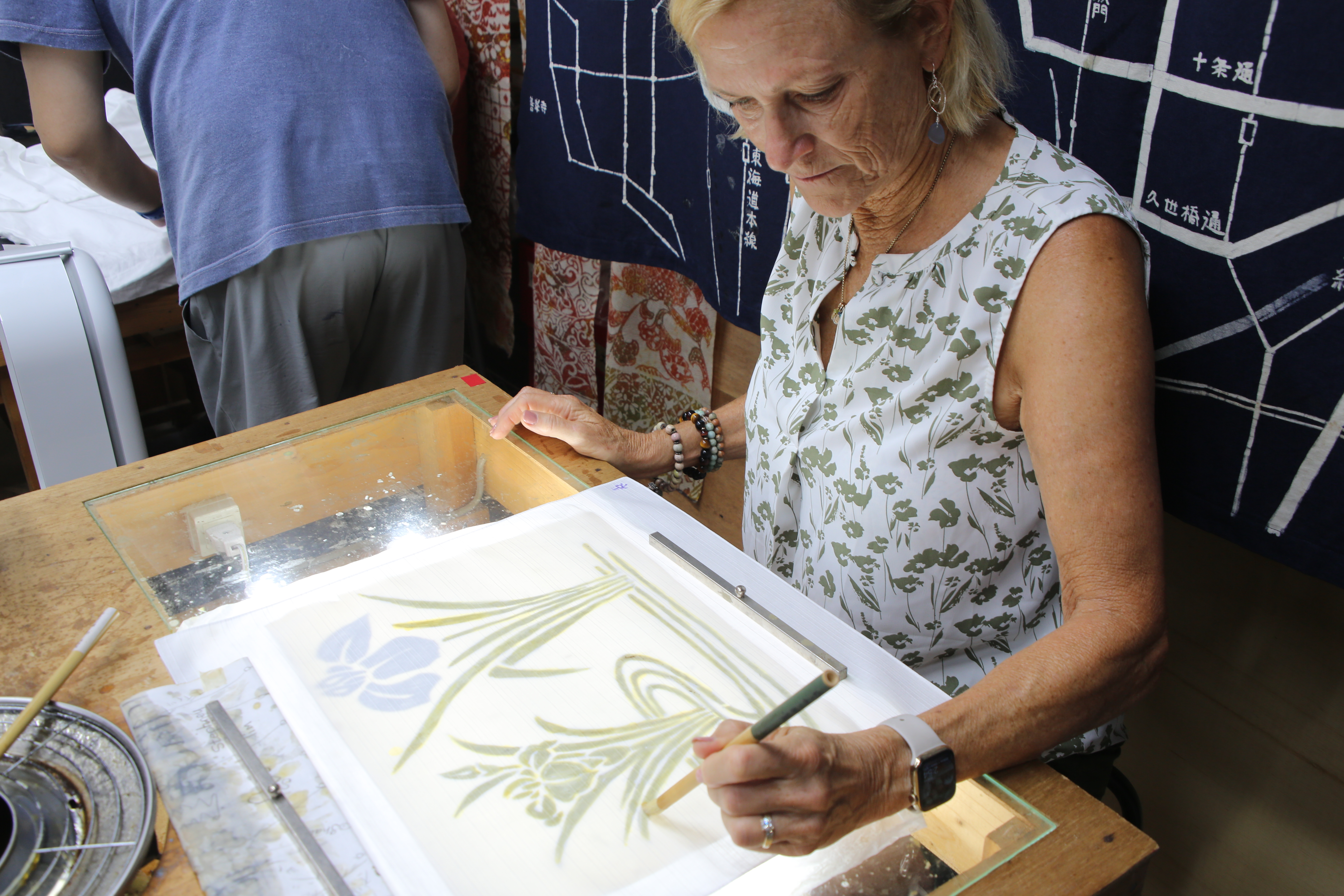
We met together for lunch at an amazing Ramen restaurant in downtown Kyoto and then got very creative at a Roketsu dyeing studio. We learned the ancient art of wax-resistant art at a hands-on studio. The whole process can take up to 20 steps for completion although I think our group might have skipped a few steps in order to make it home in time for “happy hour.” We all picked out different stencils and then painted/traced our stencil onto fabric with wax. It was very important to put a LOT of wax on your fabric so we kept having to brush our paintings over and over. We were worried that our prints would look like one big blob but the helpful people in the studio coached us along the way. (Although the older grandmother giggled and laughed a lot at us and probably made a few disparaging remarks in Japanese about our lack of talent!) After we painted the wax on our fabrics, they were all placed in a large tub of indigo dye and soaked and poked a lot. Lots of rinses and different things happened next but we were all left with beautiful pieces of art and we ooohed and ahhhhed a lot about what amazing artists we were. (Although I am sure the Grandmother didn’t really think so!)

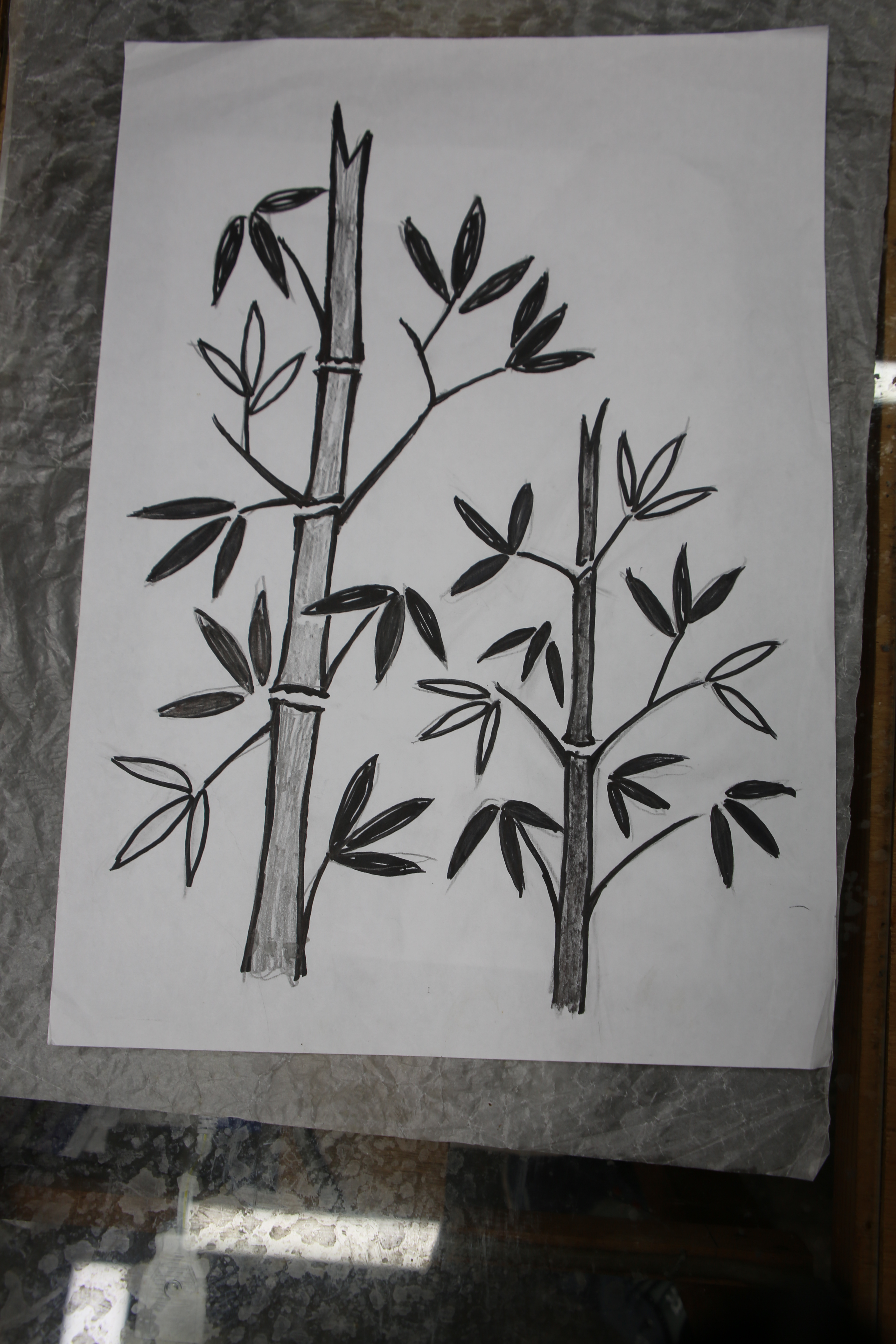
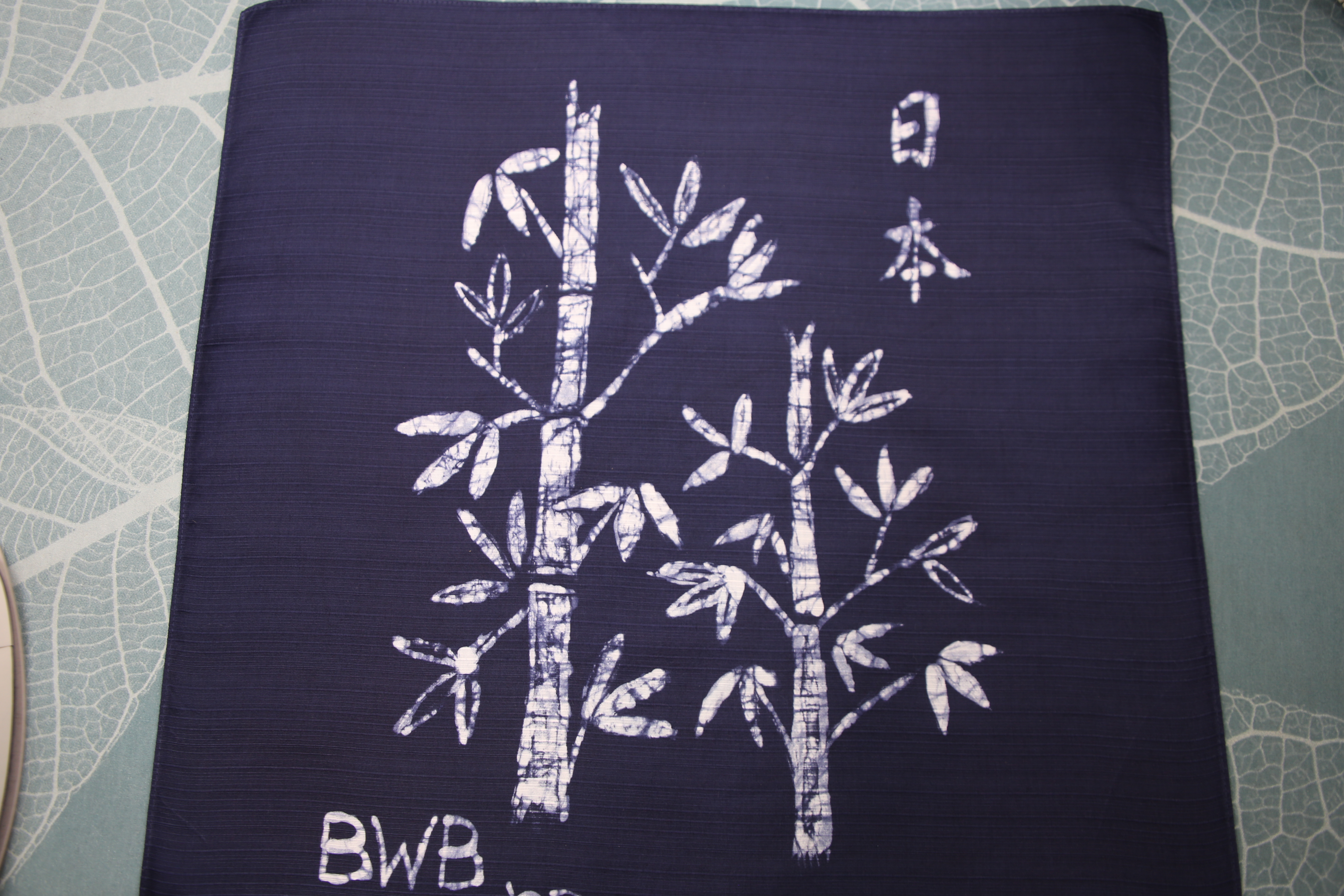
The stencil for Brad’s tapestry.
Painting the wax onto my art piece.
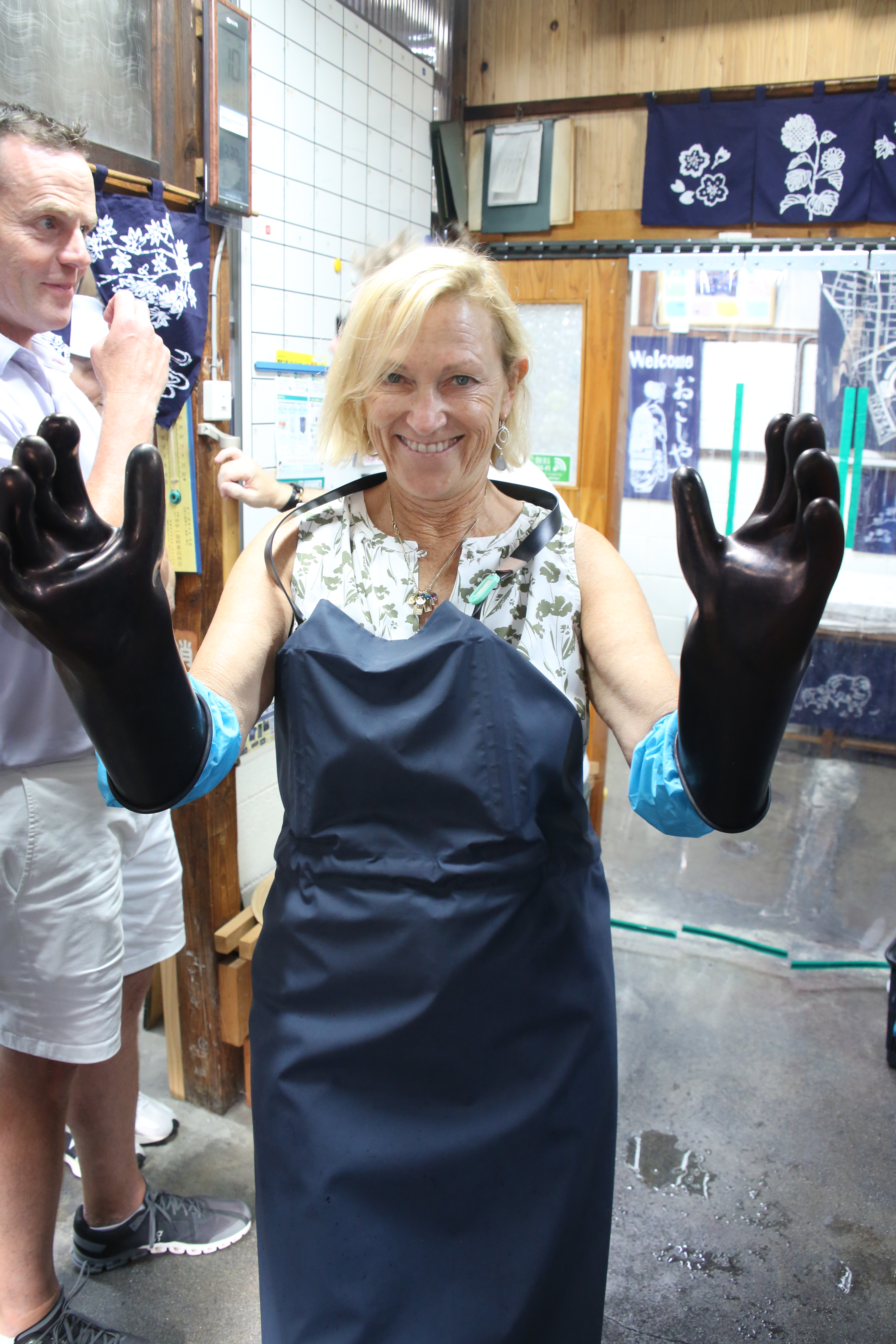
All dressed up to help with the dyeing process.
Brad’s finished product.
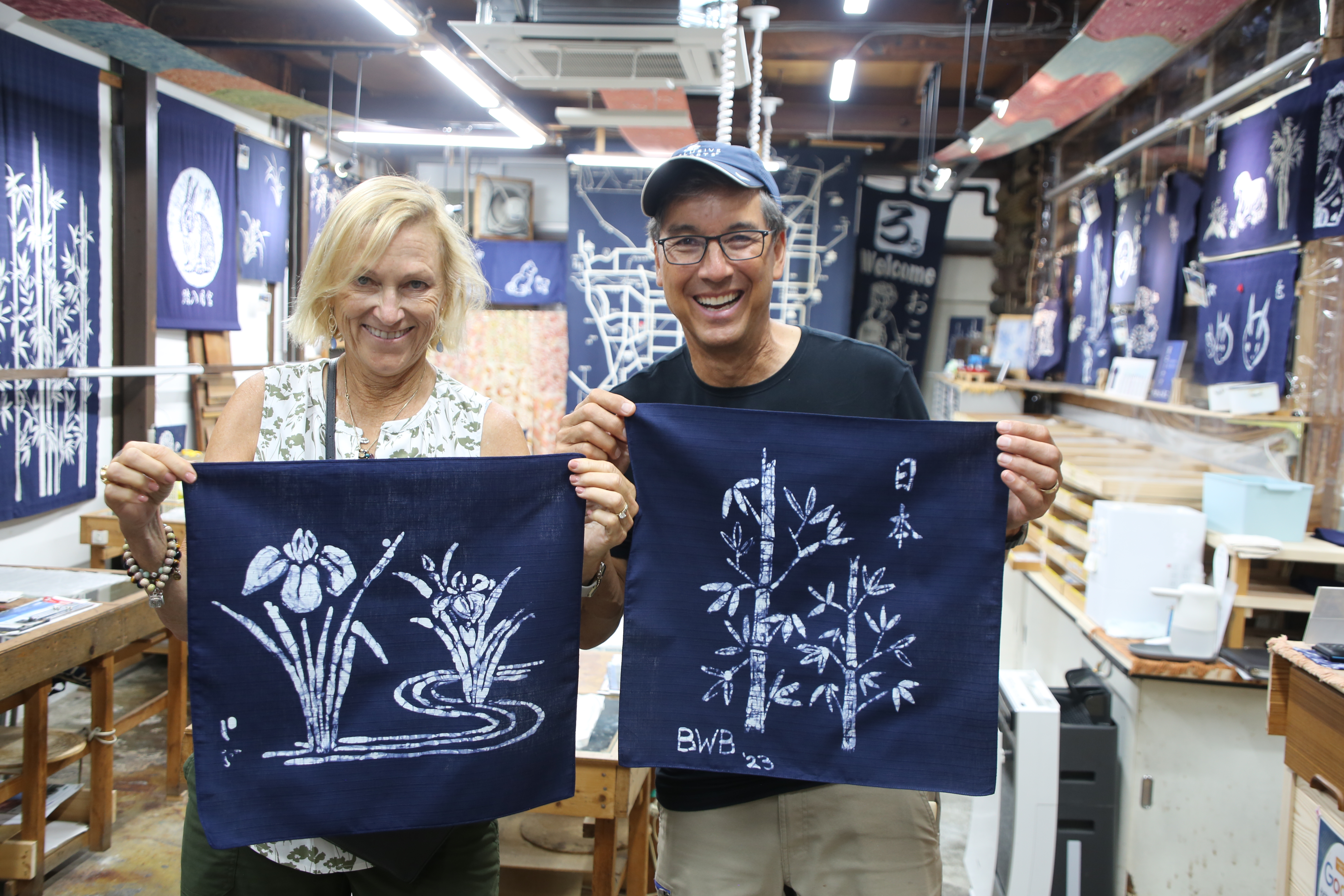
Proudly showing off our new tapestries. We’ll hang them in Boulder.

So…that’s it for our first 24 hours in Kyoto.  Tomorrow we’ll spend some time learning more about the geishas and the geisha culture here in Kyoto.  I thought I knew a little bit about the culture after reading “Memoirs of a Geisha” a while back but have found out that only about 80% of what was in that book was accurate.  And to make things worse, the Japanese hate that novel for its inaccurate depiction of a Geisha!  I hope to be enlightened tomorrow

Categories: Japan, Travel | Tags: , , , , , | 3 Comments

Tokyo: The World’s Largest City — Quiet, Clean, and Civilized

Maybe we knew it at some point. Maybe we just forgot. But, as we headed to Tokyo we didn’t realize we were flying to the largest city in the world. Tokyo’s 39 million people dwarfs New York’s 19 million. What was even more surprising was how quiet, clean and uncongested 39 million people could be.

We arrived at the Peninsula Hotel in Tokyo’s Ginza District a day before our official tour began. The Ginza district is the 5th Avenue of Tokyo sporting high-end shopping, great restaurants and glitzy hotels. It also, like most of the rest of Tokyo, has a 7-Eleven.

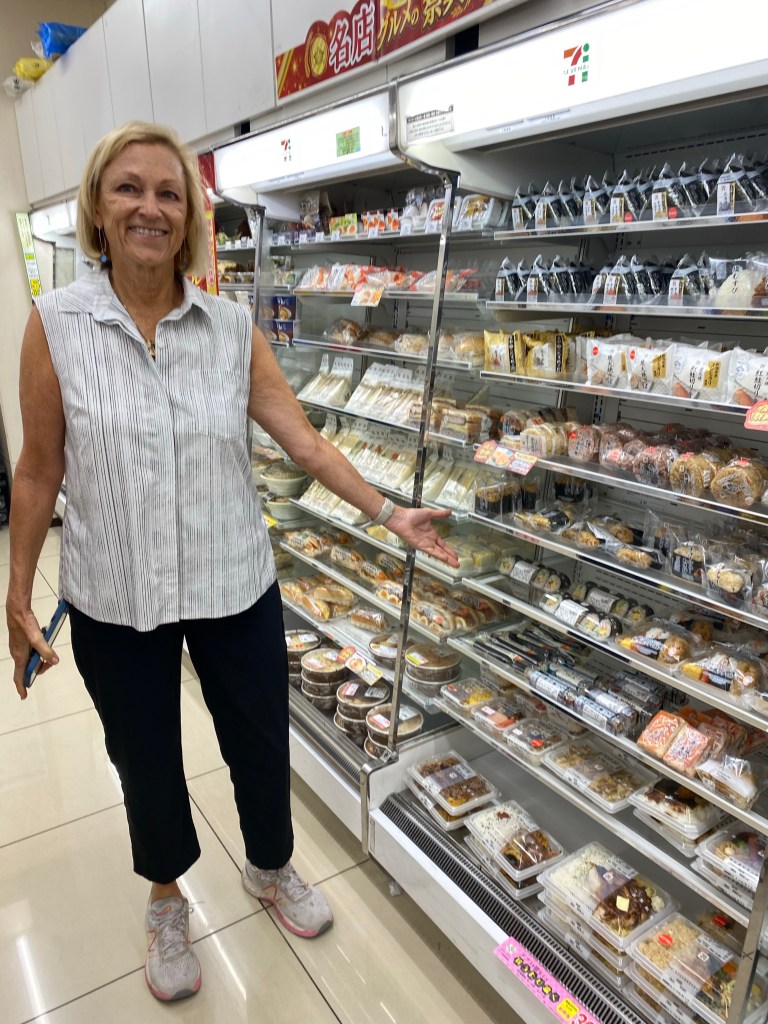
Our daughter Stephanie came to Japan during her semester abroad. She told us we had to see a 7-Eleven. It’s nothing like the ones at home she said. So, since the iconic convenience store was right across the street from our hotel, that was our first stop in Japan.

I will say it was impressive. Prepared foods, and not just microwave hot dogs. All the packaged foods you would expect and some you might not. Although I did not notice my beloved Oreo cookies, there certainly were many other selections. Drug store staples like Band-AIDS and Advil graced the shelves as did many drink choices. Since ATMs are less common in Japan, many people come here to get cash. Many places don’t accept credit cards so access to cash is important.

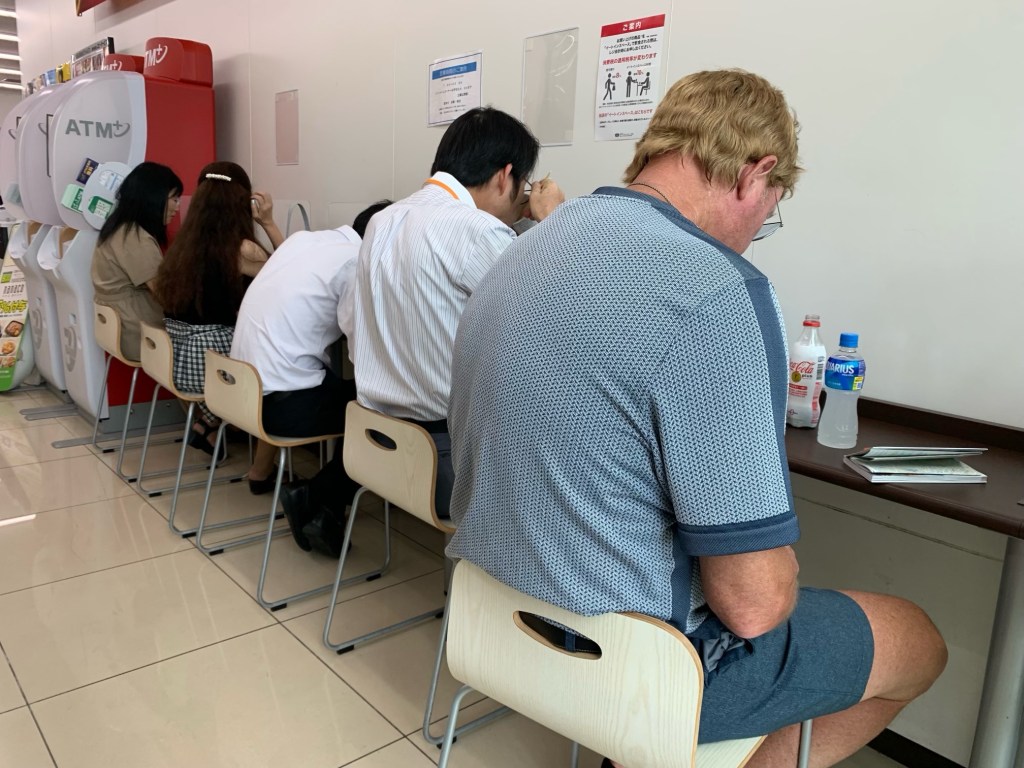
And, finally, there was, upstairs, a seating area that people use to eat. It did, however, look more like a crammed set of work cubicles than a restaurant. We chose to skip the food at 7-eleven and found a nice sushi restaurant.

Lisa pointing out the 7-Eleven food selection.

Now by total coincidence, Lisa’s brother Bob was coming to Japan at the same time we were. We found out a few months ago that we would be near one another at the end of the trip so we arranged to get together then. What we didn’t know was that he and his wife Elizabeth would be there at the beginning. As it turned out, he checked into the same hotel, and ended up in a room on the same floor, two doors down from us. Sometimes our life feels like The Truman Show. This was one of those times.

Anyway, Bob and Elizabeth needed a snack and some water (it’s very hot and humid here) so they stopped by 7-Eleven. Unlike us, Bob chose to eat at the, um, dining area. Most Japanese people are relatively small. Bob is not. This made for an interesting spectacle.

Bob “relaxing” at 7-Eleven.
Bob, Elizabeth, Lisa and me in the top floor bar at the Peninsula Hotel. A slightly more comfortable venue.

The Imperial Palace

Japan has had an Emperor for thousands of years. He used to have his residence in Kyoto when that city was the capital. He and the capital moved to Tokyo in 1868. The Emperor used to be the sovereign ruler of Japan but, in 1945, after the war, he became a symbolic figurehead similar to the British royalty. The country is now a democracy, with the government being run by a Prime Minister and the Diet (legislature).

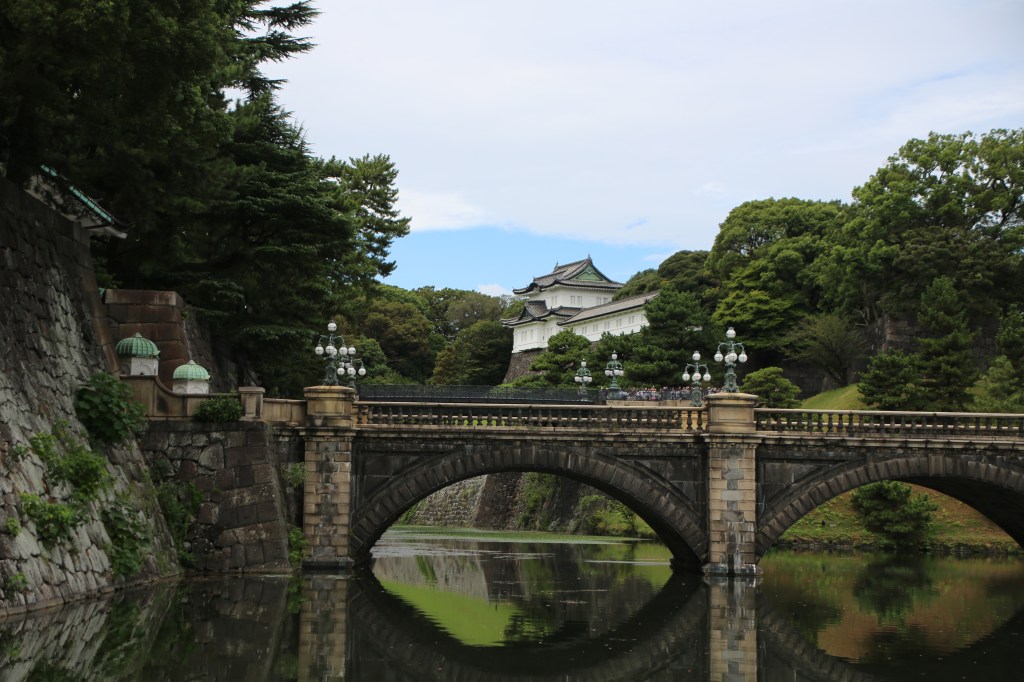
The Imperial Palace still houses the Emperor, his wife and daughter. The grounds are immense and lie right in the middle of Tokyo. It was said that in the 1980s when Japanese real estate was in a period of tremendous appreciation, that the value of the palace grounds was worth more than all of the real estate in California. Whew.

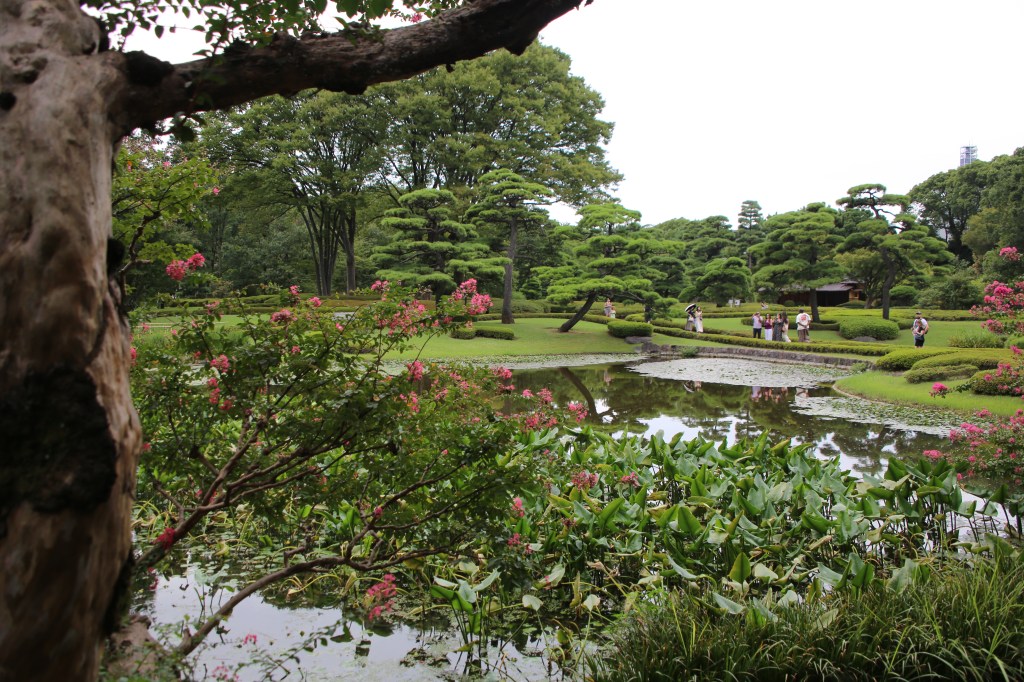
Lisa and I decided to wander over to the grounds on day one and then visited the Imperial Gardens the next day with our tour group. While you really can’t get much of a glimpse of the palace itself, the grounds are beautiful and you get a real perspective on the importance of the Imperial history of Japan.

A Bridge onto the palace grounds. There is a moat that was used to protect the palace. It fully surrounds the property.
We strolled through the Imperial Gardens.
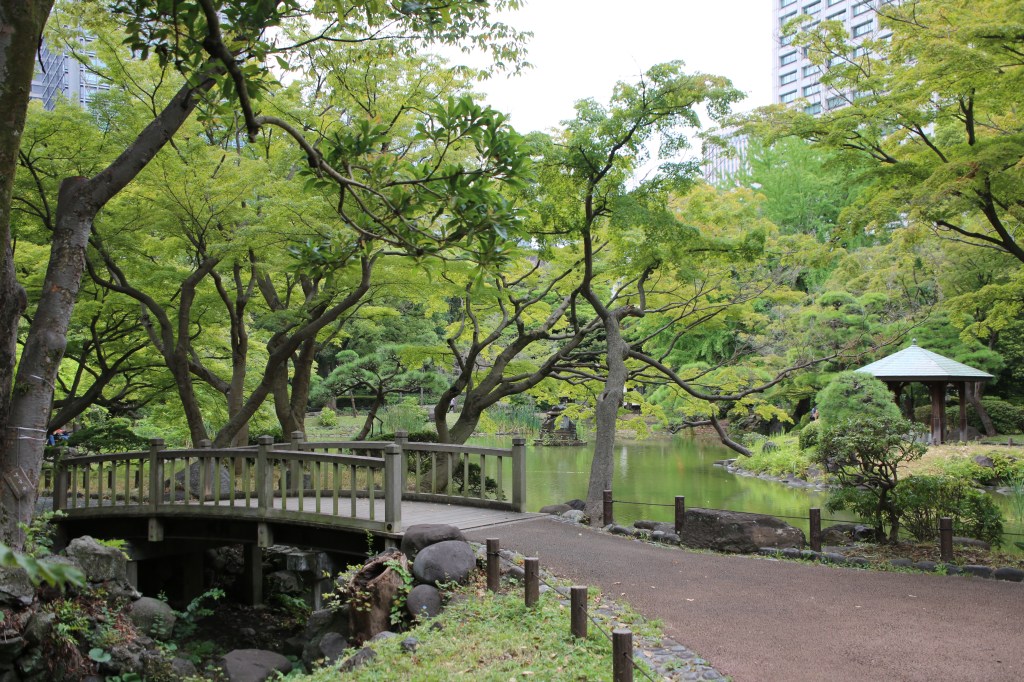
We also walked through Hibiya Park which abuts the Palace grounds.

Taiko Drumming

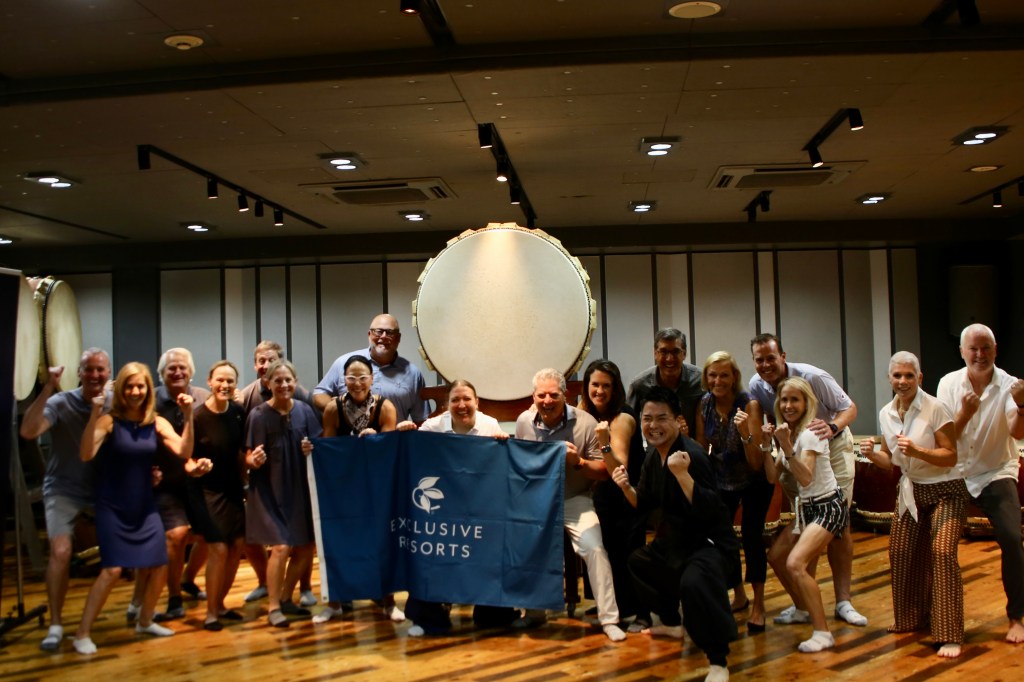
Taiko drumming is an ancient Japanese art that was used to motivate troops into battle. We weren’t looking for a fight, but, it’s also supposed to be good exercise and a lot of fun so the first stop with our Exclusive Resorts group was to a Taiko drumming studio.

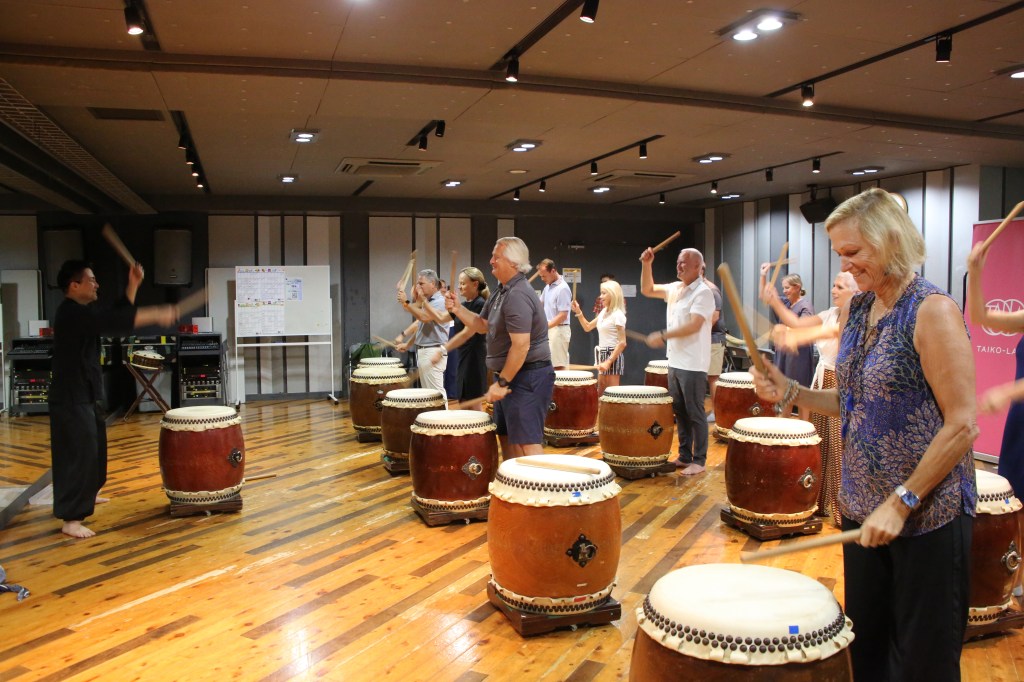
As we entered we removed our shoes and were ushered into a room full of drums. Lisa and I took our position behind two good looking drums. The instructor was an experienced professional Taiko drummer and taught us some of the traditional rhythms used in the art. Apparently the Japanese also clap out many of these rhythms at baseball games as well. We’ll have to try that when we get home.

Anyway, he was a good teacher and our group were good students as we worked our way through the progressively more complicated drum sequences. It is, though, a bit embarrassing when everyone else is silent and you bang on your drum with gusto. Our instructor was quite forgiving so he didn’t chide me too much.

The class enthusiastically banging their Taiko drums.
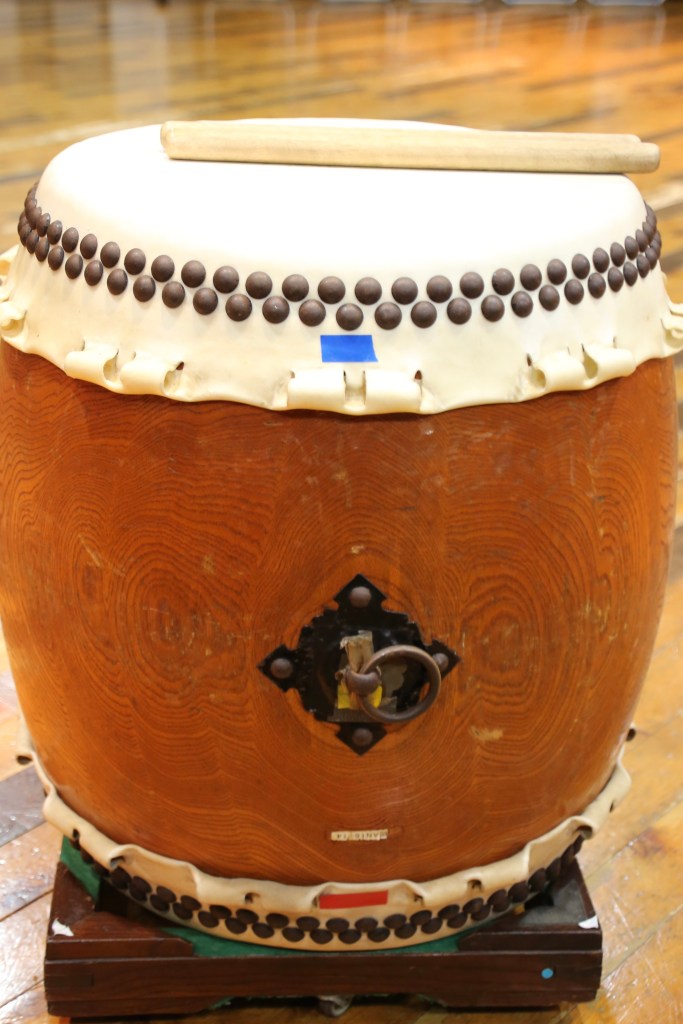
My drum. Kinda’ cool.

Our instructor spoke English very well and was very entertaining. He had an accent and phrasing very similar to my maternal grandmother. I miss her.

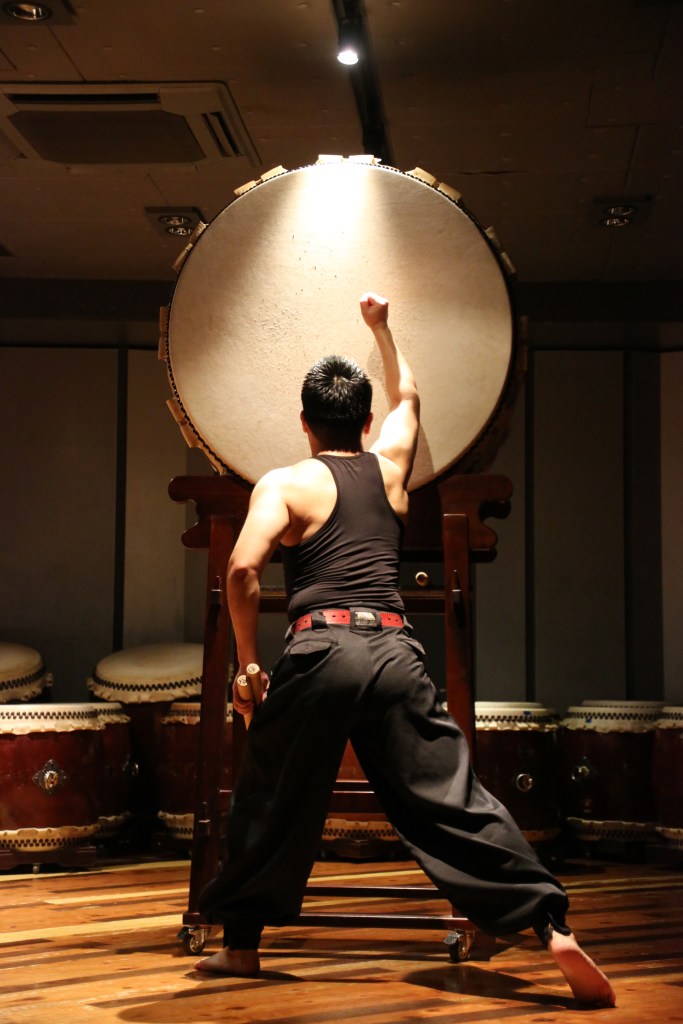
Once we finished our drumming session he did a demonstration of what real Taiko drumming sounded like. It was complex, intense, and very inspiring. I can see how warriors could be motivated to battle after listening to him.

Our instructor playing a self-composed piece.
Our newly inspired travel group.

A Michelin-Starred Lunch?

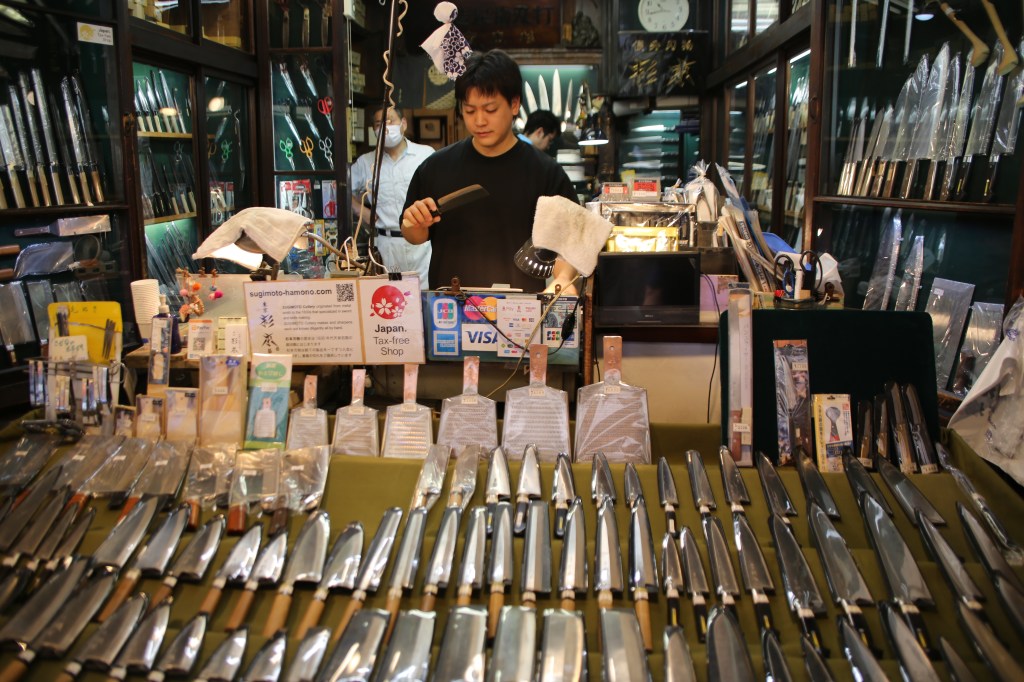
Next stop, the Tsukiji Fish Market. It was the center of Tokyo’s fish trade for centuries. A few years ago the government relocated the market to another part of town (Brett, our tour leader calls the new place “Soulless”). So, while the fish auction and major wholesale activity is gone, the market that grew up around that wholesale activity is still going strong. We wandered through the booths selling fish, produce, and other goods on our way to lunch.

The Tsukiji Fish Market
Wagyu beef at the market.
They even sell Japanese knives, some of the best in the world.

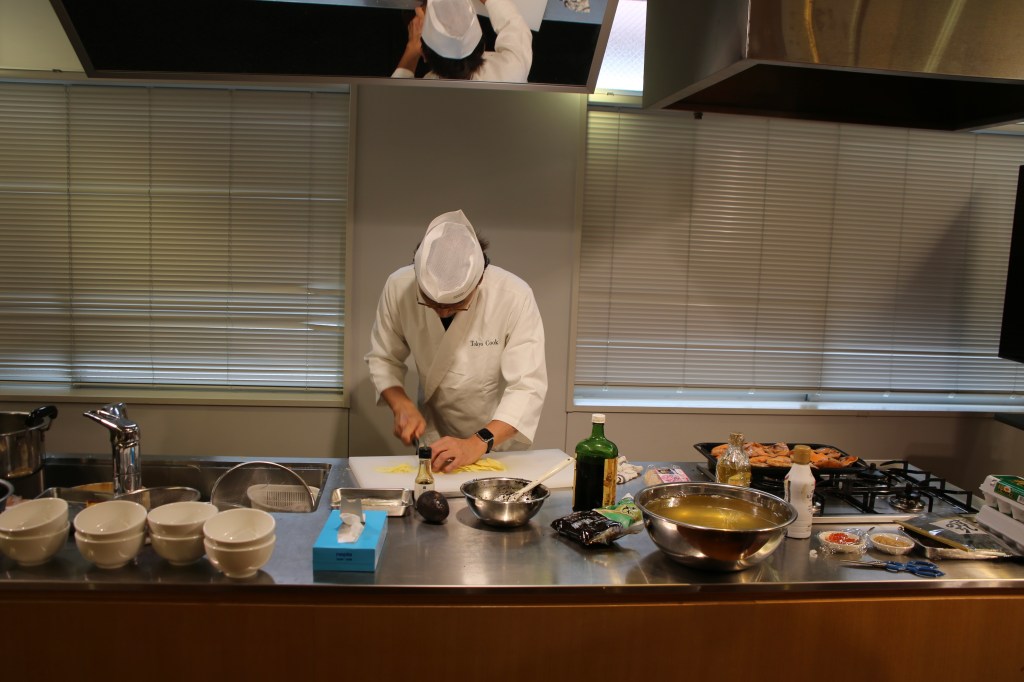
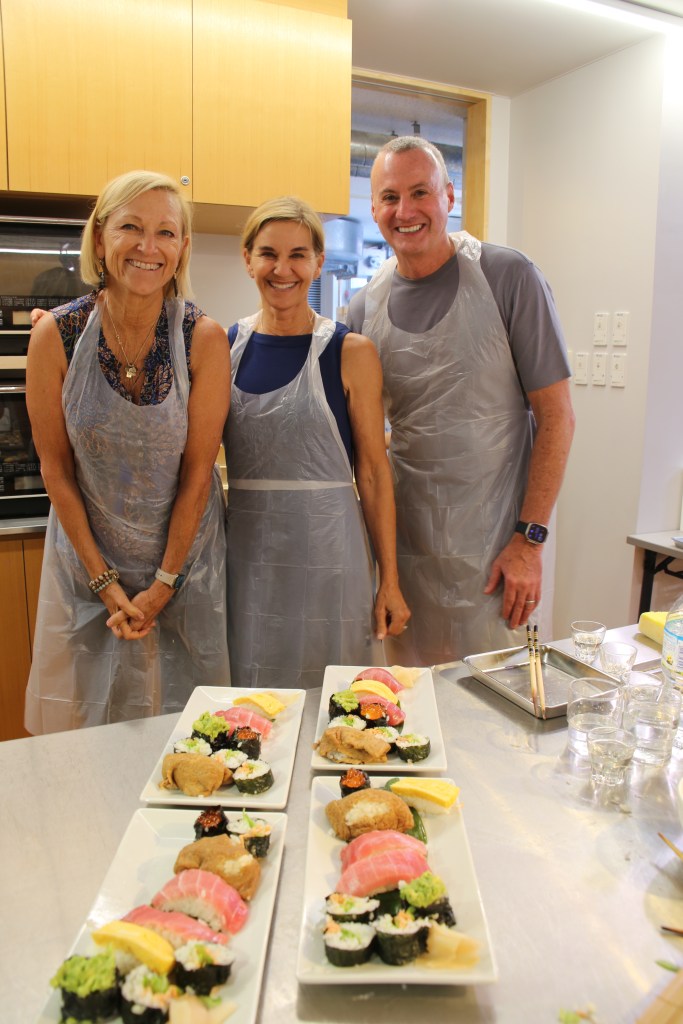
We then walked to lunch. Michelin-starred chef Yoshida-san was there to teach us how to make sushi. Wait a minute. We’re making our lunch? I know he’s a good chef. I just hope he’s a good teacher.

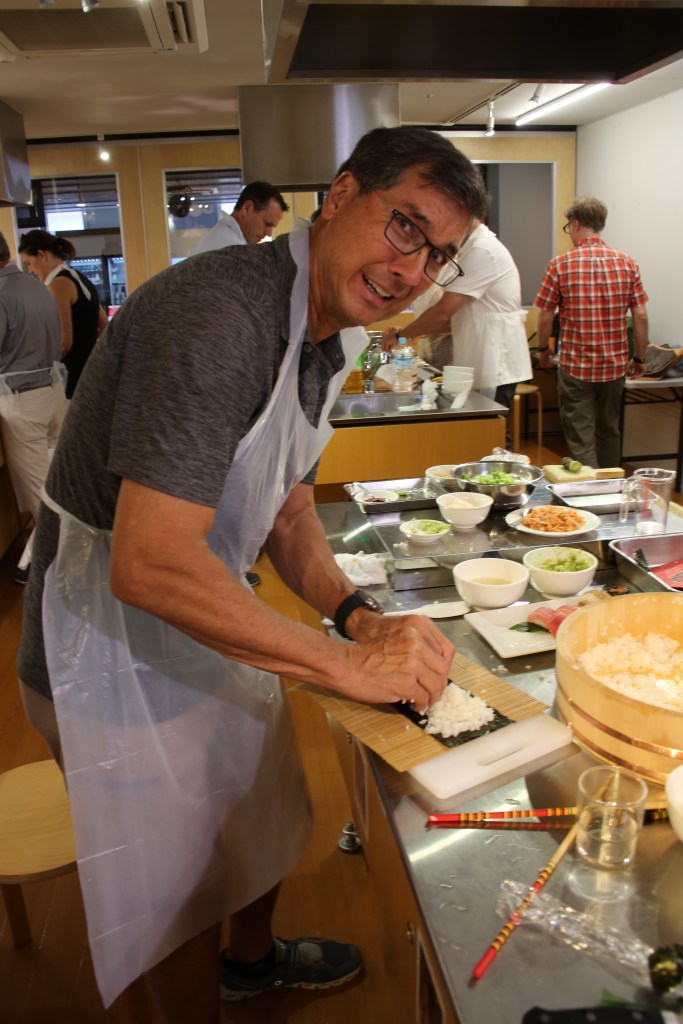
Chef Yoshida showed us how to make sushi rice. He showed us how to cut the fish, form the rice, add the wasabi, and proportion everything properly. For sushi rolls he showed us how to make the rolls so they stayed together and looked good. Our team, Lisa, Kevin, Mary, and I dug right in and started preparing our lunch.

Chef Yoshida
Chef Yoshida showing us how to properly cut the fish.
Somehow I got nominated to construct the sushi rolls. A lot of pressure.
Our lunch. Michelin didn’t give us a star, but, we were happy.

Typhoon #13

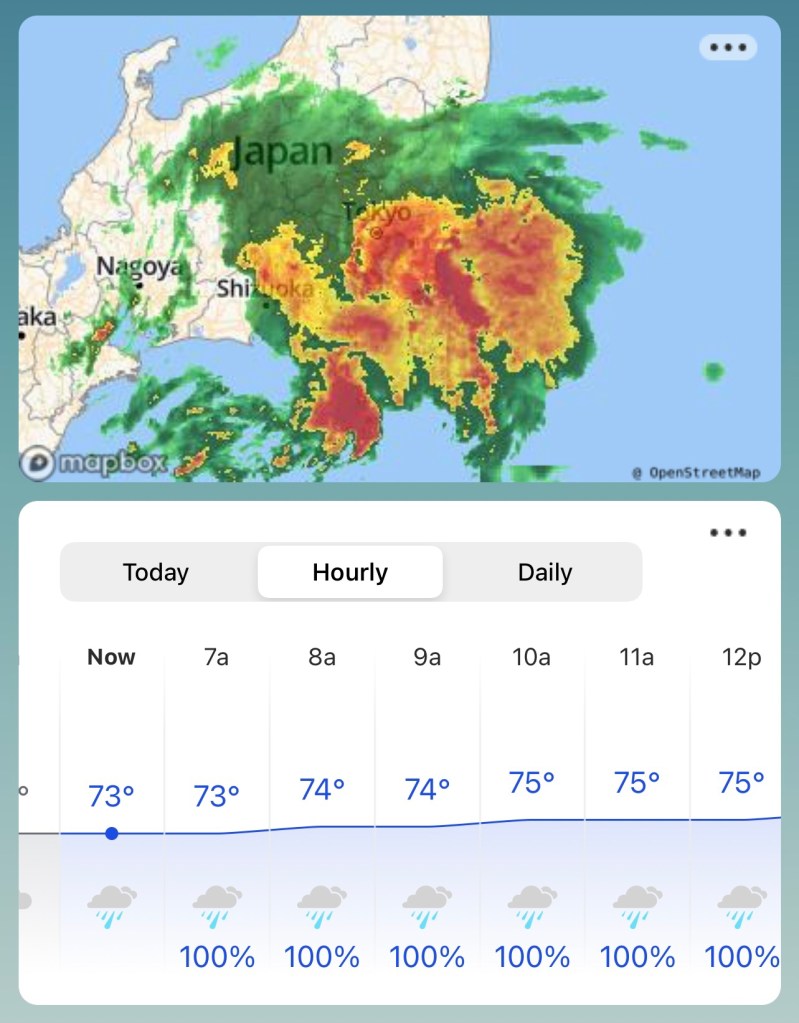
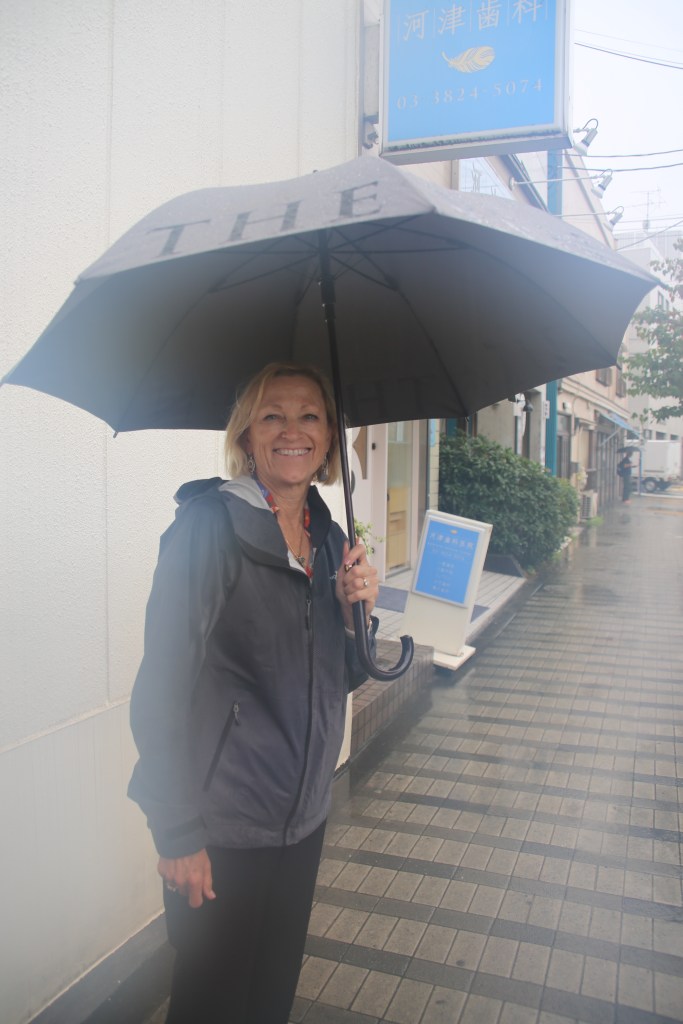
A typhoon is a tropical storm or hurricane that occurs in the Pacific Ocean. We woke up to one on Friday morning. It was the thirteenth typhoon to hit Japan in 2023. The winds weren’t too bad, but it did rain quite a bit. This changed our plans for the day somewhat but we are only here for a limited time so we pushed through and did what we could.

The radar image of typhoon #13 hitting Tokyo. On Friday.

We got to our first stop and were going to walk through a neighborhood but no sooner did we get there than the wind picked up and scuttled our plans. The two guys who were there to help usher us around waited outside the bus. We invited them in but they wanted to ham it up in the storm. They really were pretty funny.

Hamming it up in the typhoon.
We won’t let a little typhoon slow us down.

Somehow, Exclusive Resorts arranged for a special private prayer ceremony for us at Sensoji Temple, the oldest Buddhist Temple in Tokyo. It was deeply moving and we all got to participate. We couldn’t take cameras in so I have no photos. But, the experience is one we will not forget.

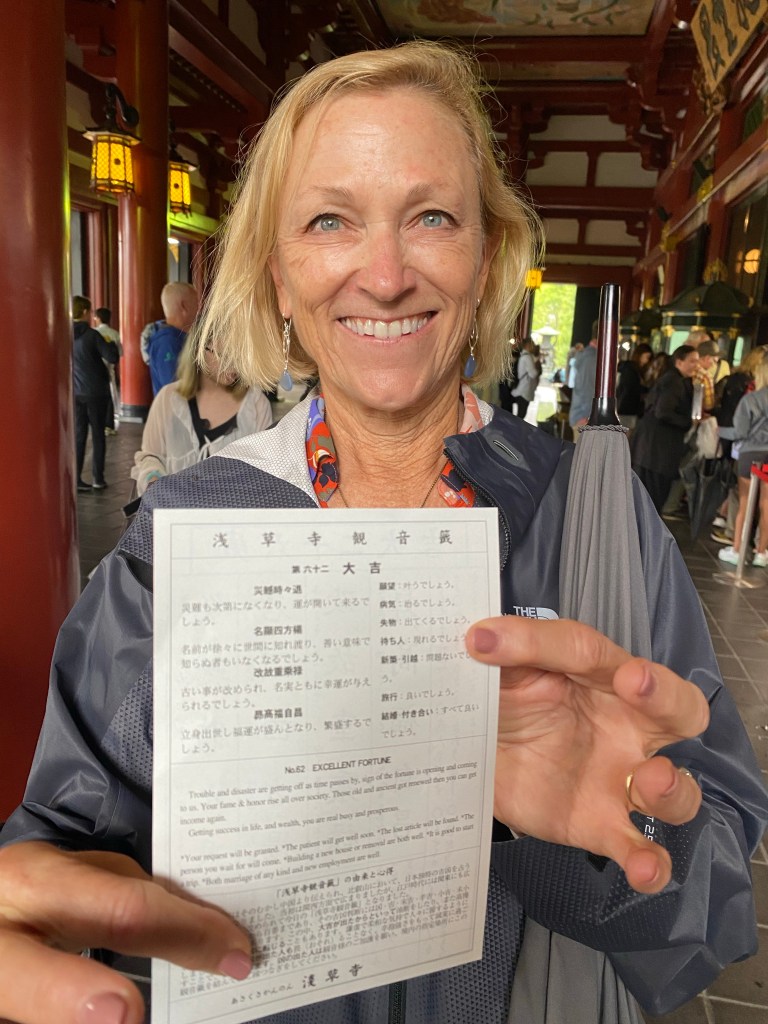
After we were done, we went back into the public area and shook long sticks out of a hole in a canister that had a number on it. We then opened a drawer that corresponded to that number and retrieved a fortune. Lisa shook out her lot, opened her drawer and got an “excellent fortune.” Riches, happiness, good luck, all the things.

Lisa’s Excellent Fortune.

I then shook out my number, opened my drawer and . . . Very Bad Fortune. Things don’t look so good for me. I had to ask Brett, our guide how Lisa could have a happy marriage and I have a bad one. Brett didn’t answer. He just ushered me over to this set of metal bars where you tie up bad fortunes. By doing so, you allow the winds to eventually blow away the bad fortune. I hope we have another typhoon soon.

The Tokyo SkyTree

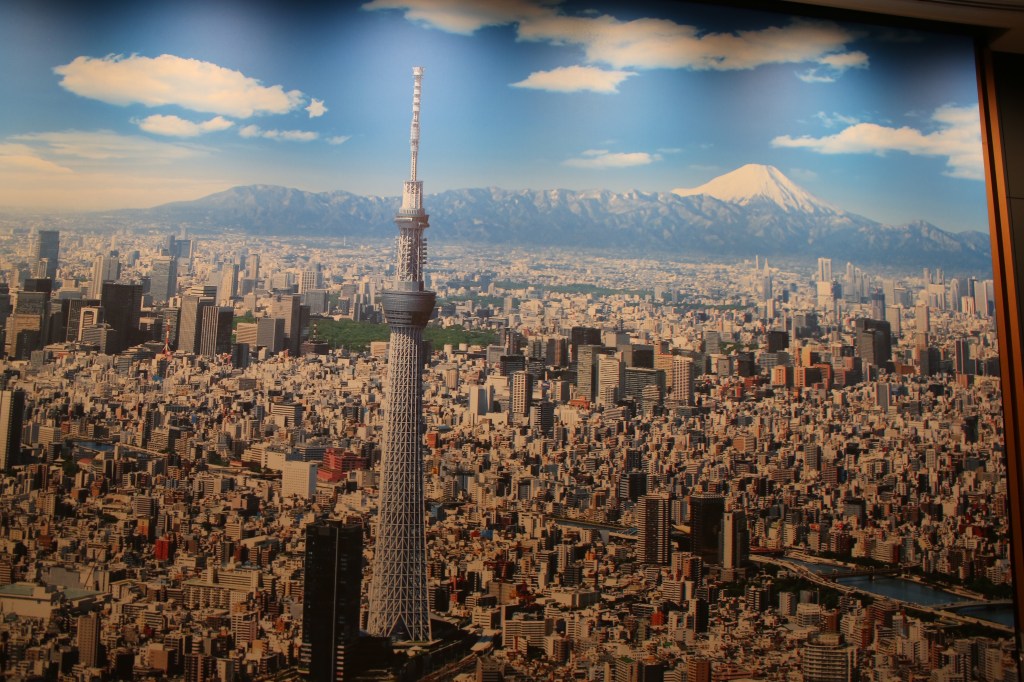
Next stop, one of the tallest structures in the world. When it was completed in 2011, the Tokyo SkyTree, at 2080 feet, was the tallest structure on Earth. It has since been passed by two others, but, it is still way up there. We couldn’t wait to eat lunch up there and enjoy the view.

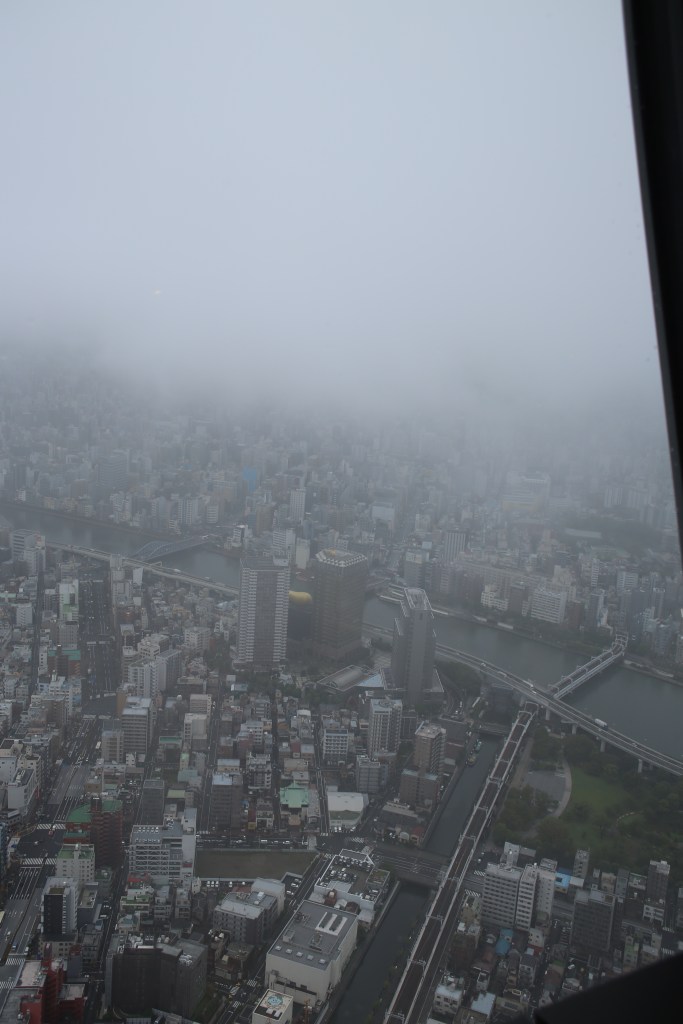
Uh, wait. There’s a typhoon coming through today. Well, at least we got lunch.

Here is the photo on the ground floor showing us what we were going to see when we got to the top.
Here was the view we actually got. It disappeared again after about five minutes.

The Shinto Shrine

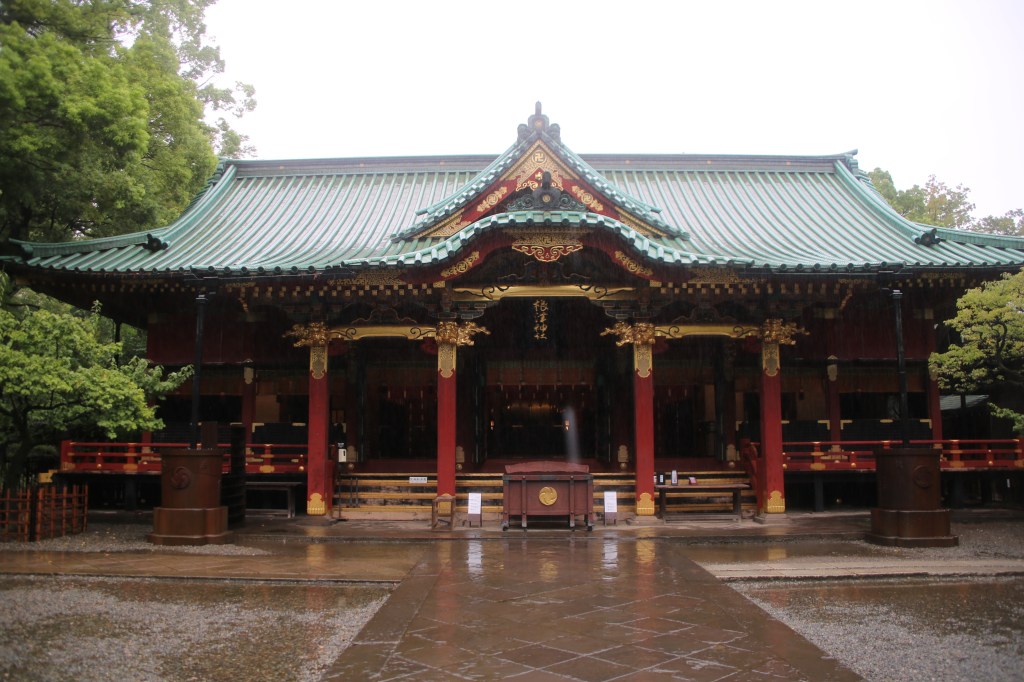
We then headed over to the Yanesen, an old section of Tokyo that survived the bombing during the war. Japan has two primary religions — Buddhism and Shintoism. We visited the Buddhist Temple in the morning. In the afternoon we visited one of Japan’s oldest Shinto Shrines, the Nezu Shrine founded in 1705.

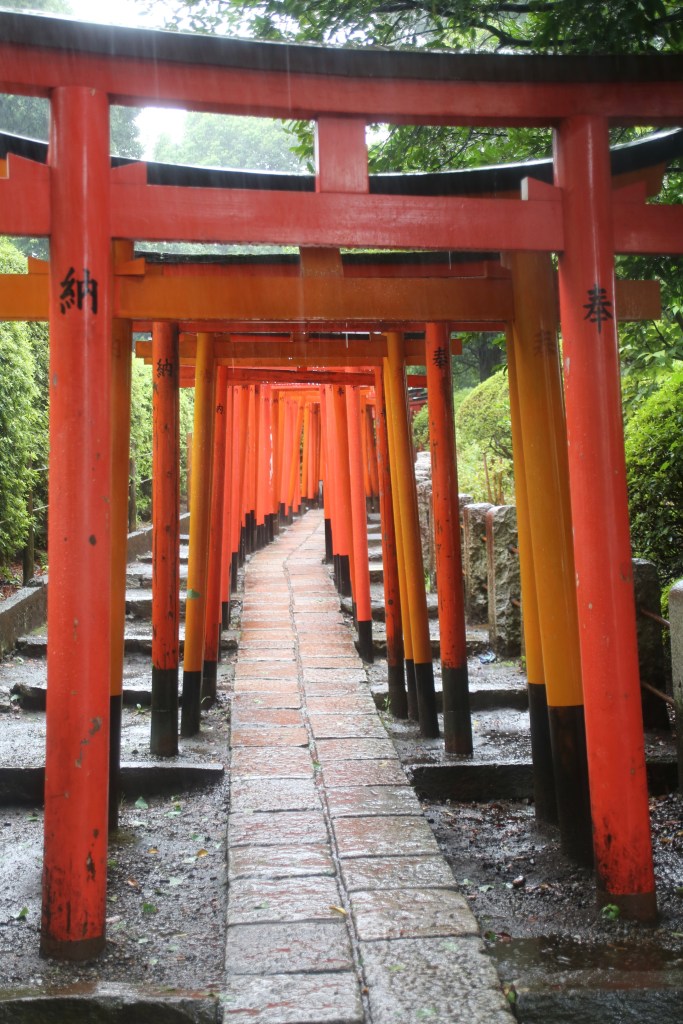
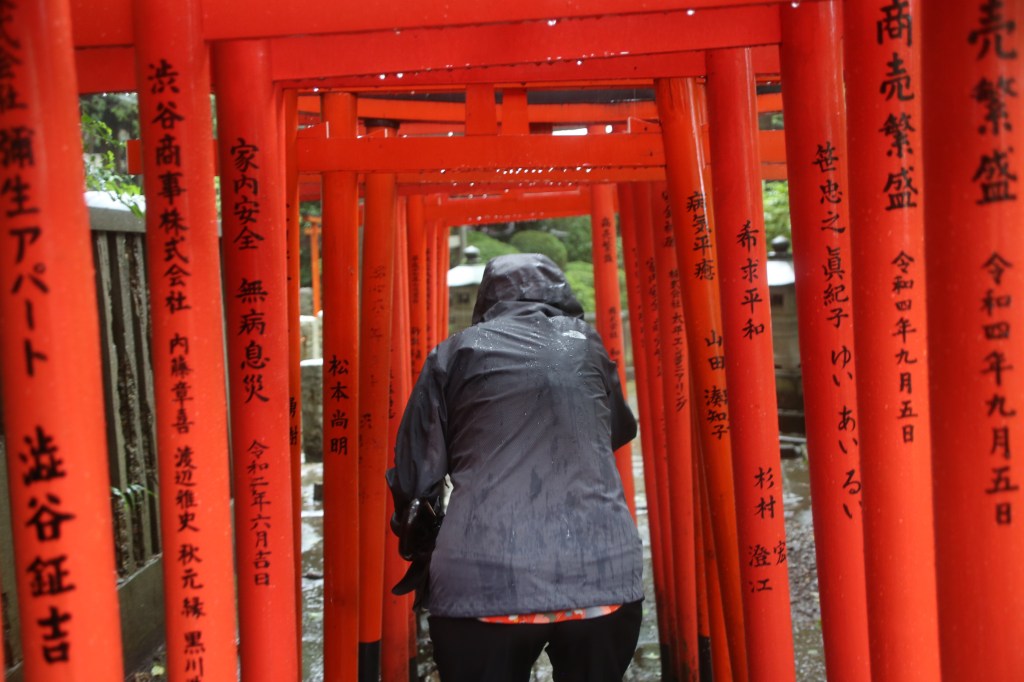
It was beautiful. The Torii gates at the Shrine are said to remove a sin for every gate you walk through. Some of us decided we needed to make several rounds through the gates. Regardless, the Shrine was a sacred place that exuded great meaning. It was a special visit.

The main building at the Shinto Shrine
The Torii gates
Lisa and I walking through the gates in the rain.

Our visit to Tokyo has been inspiring and educational. The people of Japan, the culture, the food, and the city are something to behold. There were no honking horns, traffic jams, trash on the ground, crime, or rude behavior. Pretty good for 39 million people all sharing a city together.

Our next stop is Kyoto. We’ll tell you about that in our next post.

Categories: Japan, Travel | Tags: , , , | 2 Comments

Japan — Exploring our Roots in the Land of the Rising Sun

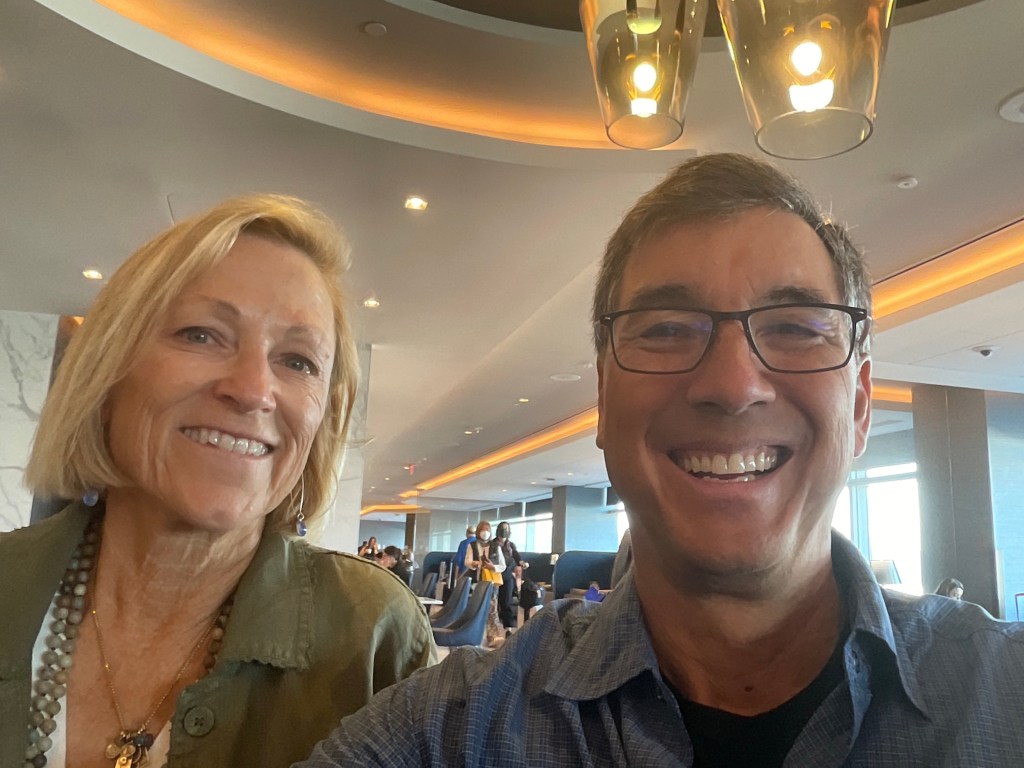
Lisa and I are writing this from United Airlines’ Polaris Lounge at the San Francisco International Airport. We are getting ready to board a flight for Tokyo, Japan, our next international adventure.

Anxiously awaiting our flight to Tokyo

My family has roots in Japan. My Mother is Japanese and, even though neither she nor I have been there or really even have much of a Japanese cultural upbringing, there is something special about visiting a place of one’s ancestral origin. Our daughters Amanda and Stephanie visited Japan during their Semester at Sea in college. They said it was one of their favorite stops.

This will be another Exclusive Resorts group excursion beginning with three days in Tokyo. We then head to Kyoto for three days; two days in Hakone; and finish up with four more days in Tokyo. We will be traveling with seven other couples who we know nothing about. If our past experience is any indicator, we will have 14 new friends by the time the trip concludes.

Through total coincidence, Lisa’s brother Bob is going to be in Japan at the same time we are. He and his wife Elizabeth are on a Backroads trip. We do have to warn you, my tone deaf brother-in-law has been practicing all week for a trip to a karaoke bar with us. I pity all who are within hearing range of our attempt at rock stardom.

Join us as we update you on our adventures and insights. We are really looking forward to telling you about it!

Categories: Japan, Travel | Tags: , , , , | 2 Comments

It Takes Two

There is a song in the musical “Into the Woods” by Stephen Sondheim called “It Takes Two”. It’s a song sung between the baker and his wife when they go out for an adventure in the woods and realize that facing their challenges together would be more successful than doing so individually. Its main refrain goes like this, “It takes two, I thought one was enough but it takes two of us.” The married couple realize how much they have changed in their adventure. Instead of always doing things independently they learn to team up as they face life in the woods.

That song kept playing in my head while we were on our 18-day adventure “Into the Woods” up to Canada. Brad and I are both fiercely independent and some might stay a little stubborn. Just ask our friends and family. At home, we have our individual lives and tasks and to-do lists (Well, I make the to-do lists for Brad). We have also been happily married for 37 years on July 6th so we do know a little about working together and getting along as well, but, a small Sprinter van can test that togetherness very quickly.

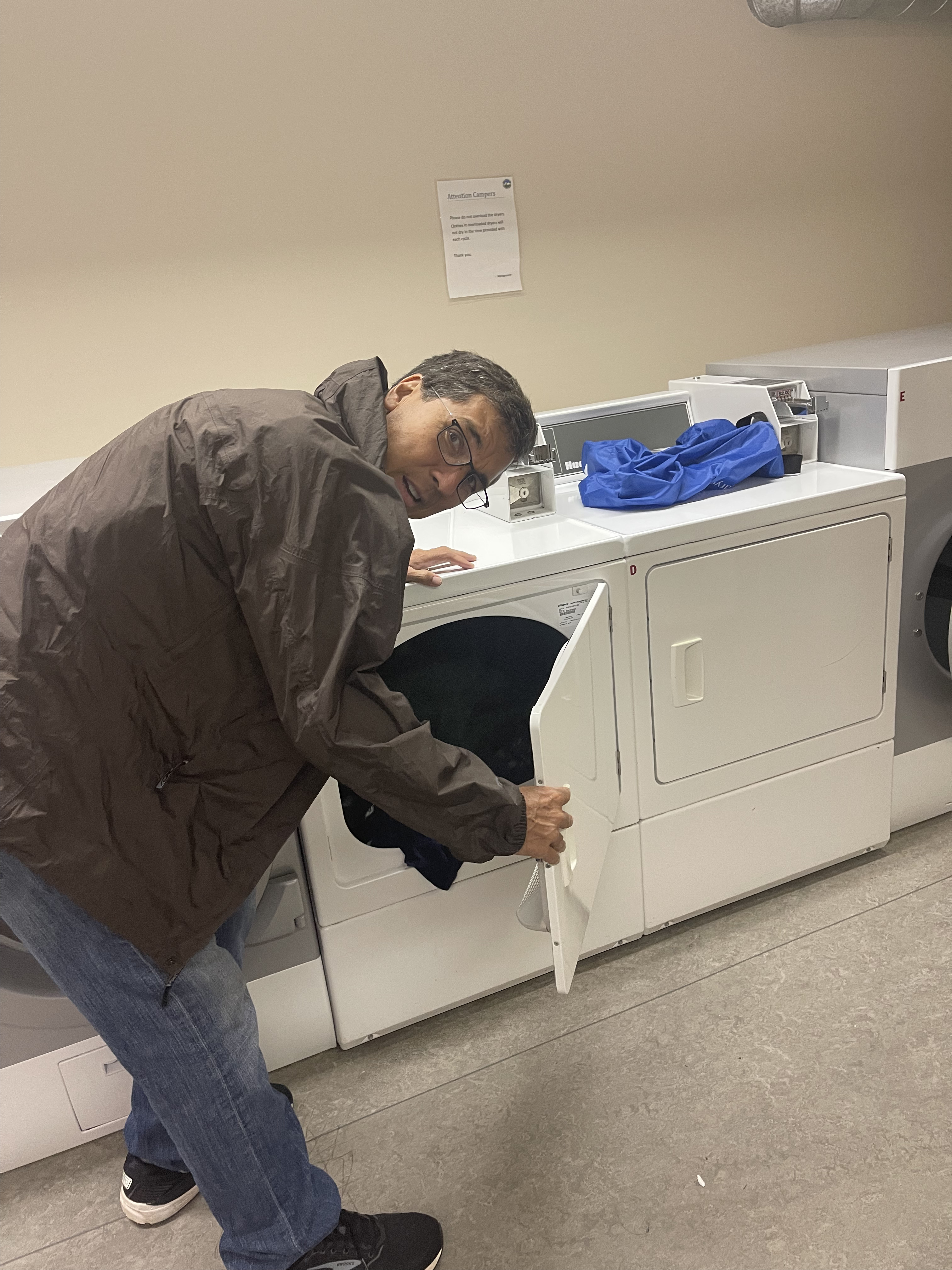
We do almost everything together in the Winona Rider. We planned the trip together, we did the menu planning, we organized the van, and we packed our things together. Each day on the trip we have to make the bed, do the dishes, make the meals, do the grocery shopping, and do the laundry together. I think you get my point. We each have our own jobs even in the Rider but we have to work together and do a dance at times around each other to make it all work in such a small space. We even write the blog together. I often sit down and just put down all of my ideas with very little attention to grammar or facts in the evening. I am a bit of a night owl so that works best for me. Brad, on the other hand, likes to get up earlier than me so he looks at my draft and “cleans it up” as we like to call it. It’s a team effort and it works!

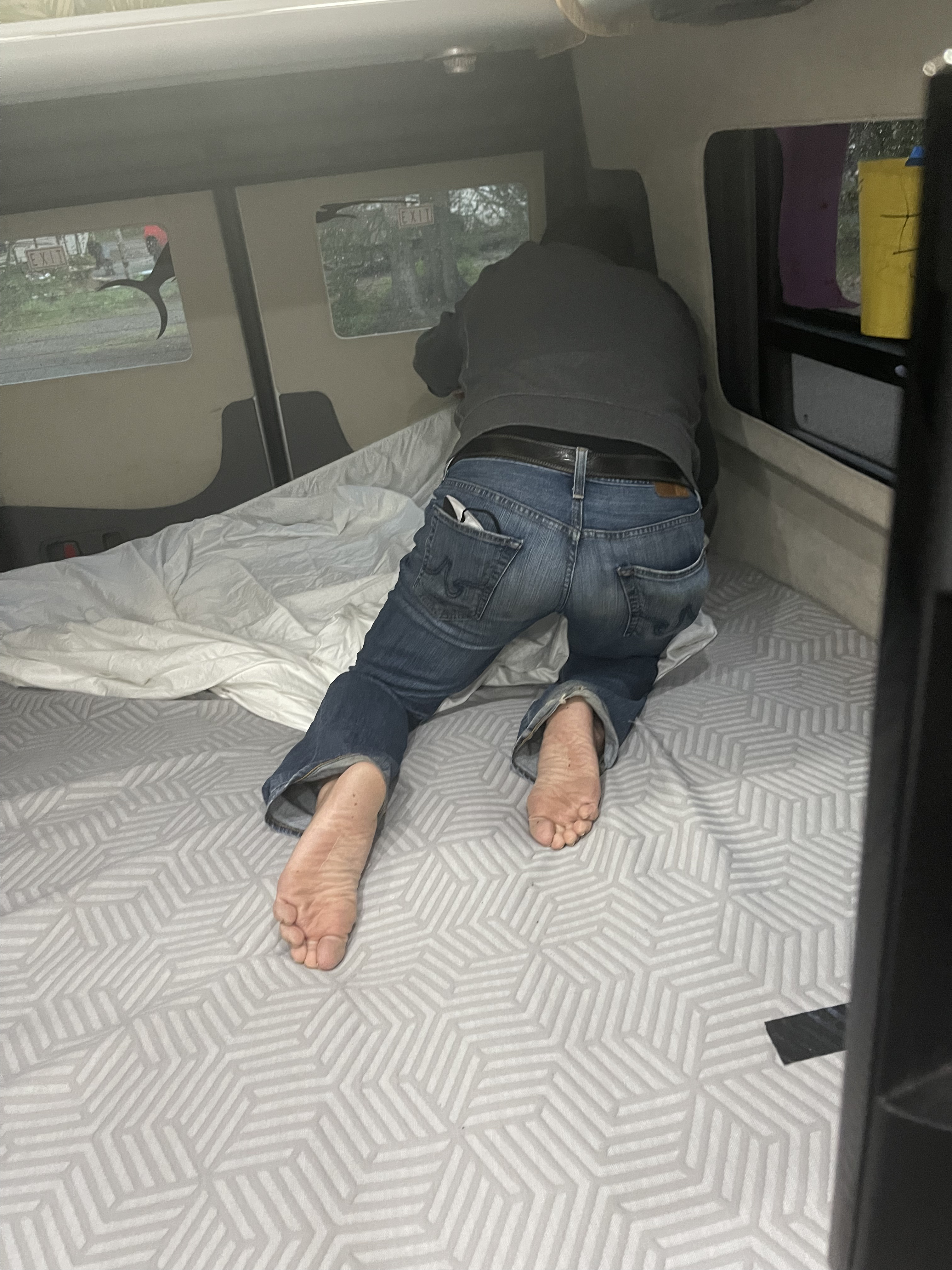
That being said, I would be remiss if I didn’t acknowledge that Brad does the lion’s share of the hard work. He is the man who does all of the hook-ups at our various destinations (including manning the dump station) and also the man who does a combo of gymnastics and yoga trying to make our bed every night. He is also the man who deals with the dogs when they need to get up early and go out! He, of course, does all of the driving while I entertain him with my intellectual chatter about the news of the day or my research about what we should do that day or where we should go to lunch. And, most importantly, he is the man who makes the coffee in the morning and pours the wine in the evenings and I am forever grateful to him for that.

Brad’s Nightly Bed Making Skills…A little bit yoga, a little bit gymnastics
Doing the Laundry…Travel is not alway glamorous

Before we sign off for another year, I thought I would leave you all with a few lists of what we learned and discovered on our trip. We went almost 4000 miles, spending time in five states, two provinces, and one new country over 18 days. It was the trip of a lifetime and possibly our favorite Winona Rider trip to date.

Places to put on your Bucket List

Banff, Banff, Banff! And then really all of the other places we visited. We didn’t have a dud. I would consider going in September next time because we did have cold temps sometimes and had to forego a couple of hikes because they still had ice and snow.

Lake Louise at Banff National Park

Places/Things that Surprised Us

Blind Bay in Canada. One of the most serene lakes we have ever visited. Such a lovely evening and it beat our expectations!

Low Tides, ferries and the Winona Rider don’t mix well.

The overflowing waters in the rivers and lake in the Pacific Northwest and Canada

The genuine kindness of the Canadian people, including drivers on the highway.

Blind Bay Sunset. Ahhhh!

Places that Disappointed Us

Nothing really disappointed us but it was a bummer to have needed reservations to get into Glacier and to be turned away. It was also disappointing that the parking lot was full at Lake Louise the first time. Our advice — plan ahead and do your research when visiting US national parks. Their rules change frequently. It is also sad that we can’t hike with our dogs in the United States national parks. Canadian national parks let you hike with your dogs on leash. Oh, but don’t forget to bring bear spray!

The dogs in the morning

Things that Bug Us

Lack of recycle bins in RV parks. What is with that? It’s really hard to be eco-conscious at places without recycling.

Loud trucks and people who run their generators at night.

Bad Wifi/Cell Reception. We have a blog to write and Wordle to play. We need our internet. (Although I felt a little silly complaining about that fact when one of our RV neighbors was chatting with us and told us he hasn’t watched anything live on a screen in 24 years because his house in Washington has no cable or internet. I stopped whining after that.)

Things in our Van that we still don’t understand:

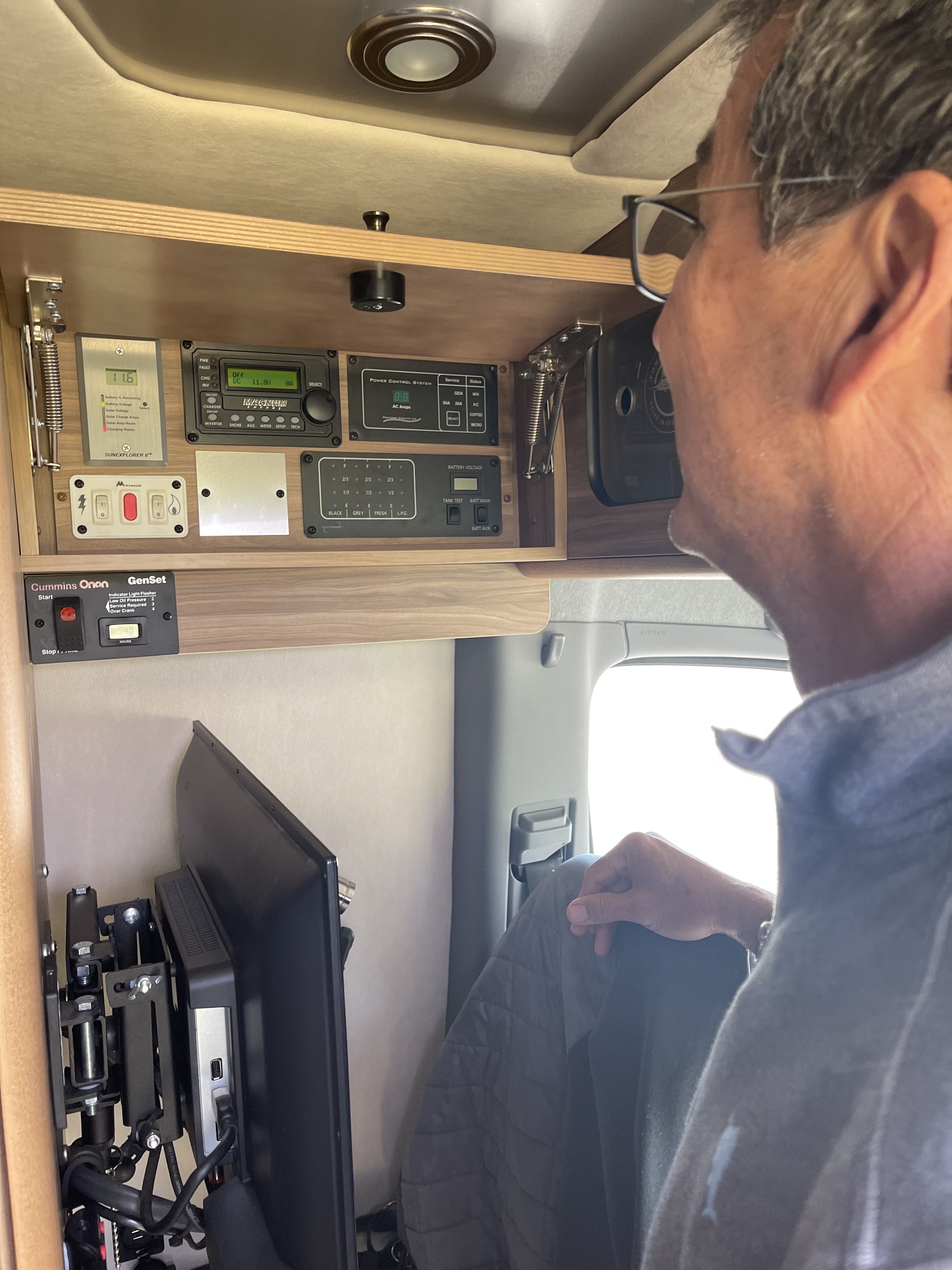
How our power system works. Seems to be no rhyme nor reason.

How we sleep so amazingly well every night in such a small space!

The day we lost our power and waited 2 1/2 hours for the solar to kick in.

Things to do to be happy for 18 days in a Sprinter Van:

Book a hotel for a few nights at the middle and end of the trip.

Take showers in the camp sites if they have a good one

Laugh at each other’s jokes (sometimes that requires effort)

Play Farkle

Stay off Twitter

Drink good wine nightly

Don’t look in any mirrors

Spend time with friends that you normally wouldn’t get to see and have friends you see often meet you somewhere. We are forever grateful that our friends met us and opened up their homes to us along the way.

The Cohens in Portland
The Hoffbergs in Vashon Island
The Frandsens in Bend

And, lastly, Things we Can’t Travel Without in the Winona Rider:

French Press Coffee Maker

Our dogs

A Sense of Humor

Good Wine

And, most importantly, each other

Our 2022 blogging days have come to an end and we’ll see you all next year! We are always ready to take suggestions of where we should go and what we should see. Thanks for all of your feedback these last three weeks. We have enjoyed staying in touch with you, our friends.

Categories: Travel | Tags: , , , , , , , , , , , , , , , , , | 10 Comments

Blackwell Island — Richard Branson has Nothing on Us!

We left Glacier National Park and headed back west to Coeur d’Alene, Idaho, our next stop. Coeur d’Alene sits on a beautiful lake and is surrounded by mountains. This was to be no more than a waypoint to our stop in Bend, Oregon. But, we knew it was pretty and would be worth a quick visit.

Then, as we planned our stop, we saw that there was an RV park right on the lake called . . . Blackwell Island RV Park. Yes, the RV park was on an island on Lake Coeur d’Alene called Blackwell Island. Well, we have to stop there. Lisa and I took a trip to the British Virgin Islands and sailed by Necker Island which is owned by Richard Branson. We didn’t own Blackwell Island. Heck, we didn’t even know it existed until now. But, we knew that, unlike Necker Island, we could stay there.

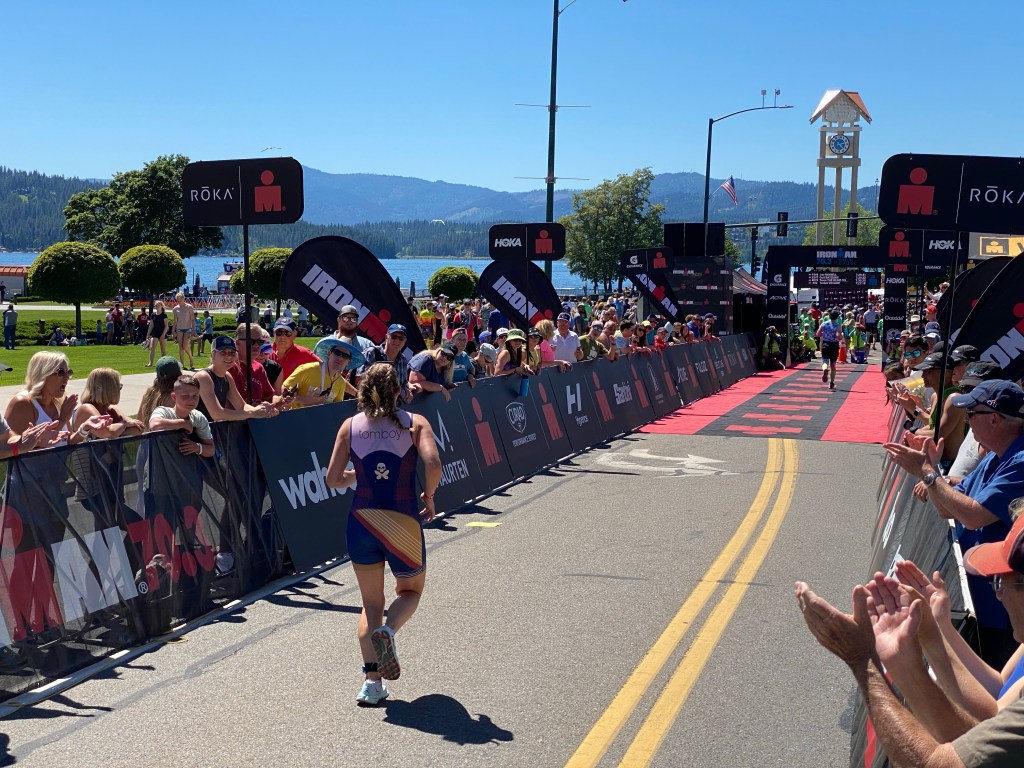
It was a short drive from Glacier to Coeur d’Alene so Lisa and I headed into town for a look before going to “our” island. As we got downtown we saw many street closures and a lot of people milling around. So, we had to stop to take a look. Turns out there was the Coeur d’Alene Ironman taking place that day and downtown was the finish.

The finish line for the half-Ironman

It was fun to experience the energy of the event. We stopped to grab a beer. Well, I grabbed a beer and Lisa got an iced tea. A trio of Irish singers came along and did a number for us. Coeur d’Alene is so welcoming. Of course we had to tip them so maybe not that welcoming.
Our Irish bards

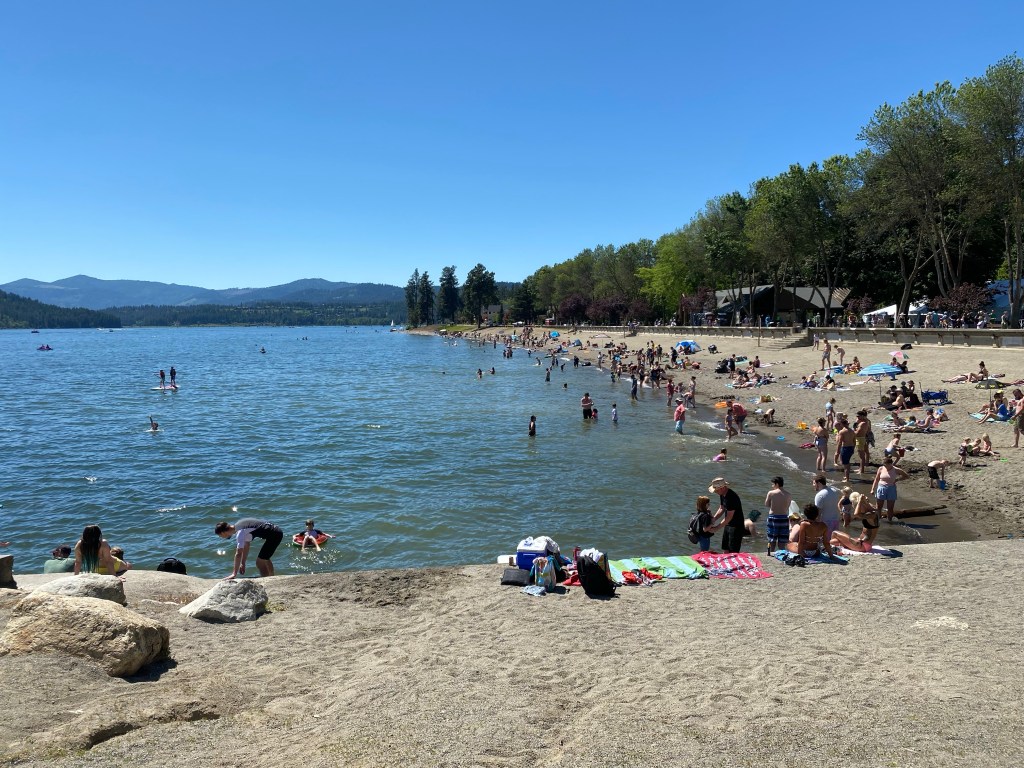
We moseyed over to the lake where people were lounging on the beach. It was 98 degrees here which was a bit of a shock to our bodies that had acclimated to mountain chill. A welcomed shock, however.

The beach on Lake Coeur d’Alene.

We then went back to the Winona Rider and, with great anticipation, headed over to Blackwell Island. We drove up and I went into the RV office to check in. When the woman asked my last name, I said, “Blackwell.” The whole staff (all three of them) turned around to look at me. One of them said, “We’ve been laughing about that one since we saw the reservation.” I wasn’t sure how to take that.

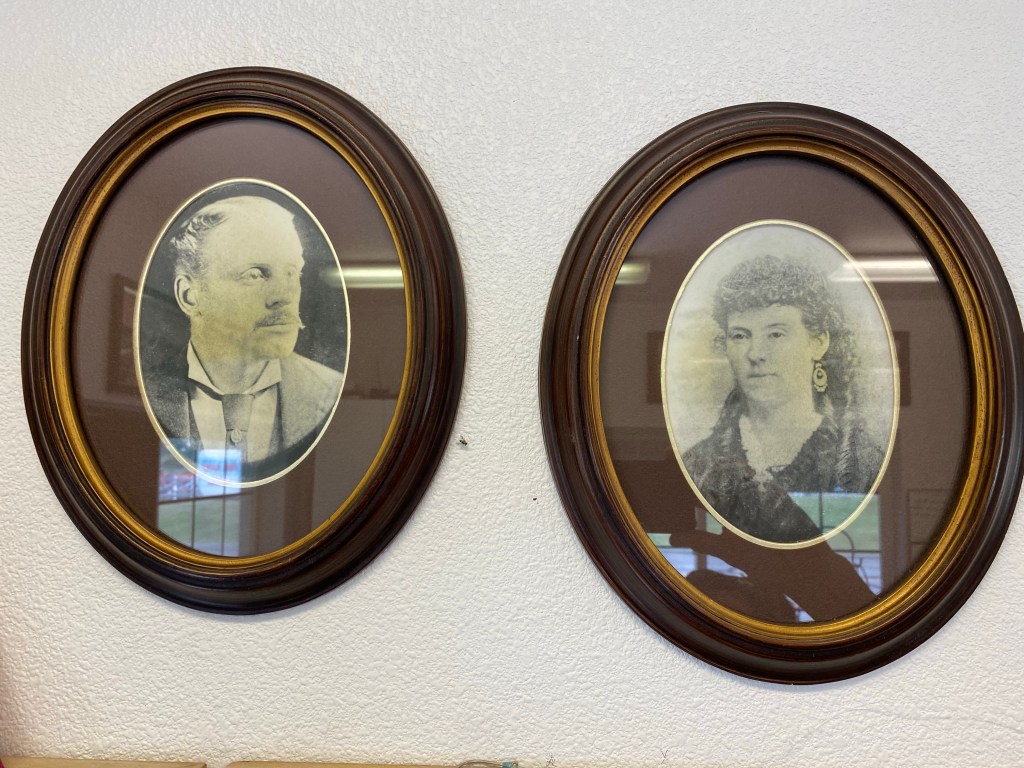
I asked who the Blackwells were and they point to photos on the wall behind me. There they are. They owned a big sawmill and gave most of the land for the beach and parks to the town. There you go. If you want an island named after you you have to have a sawmill and give the town a park.

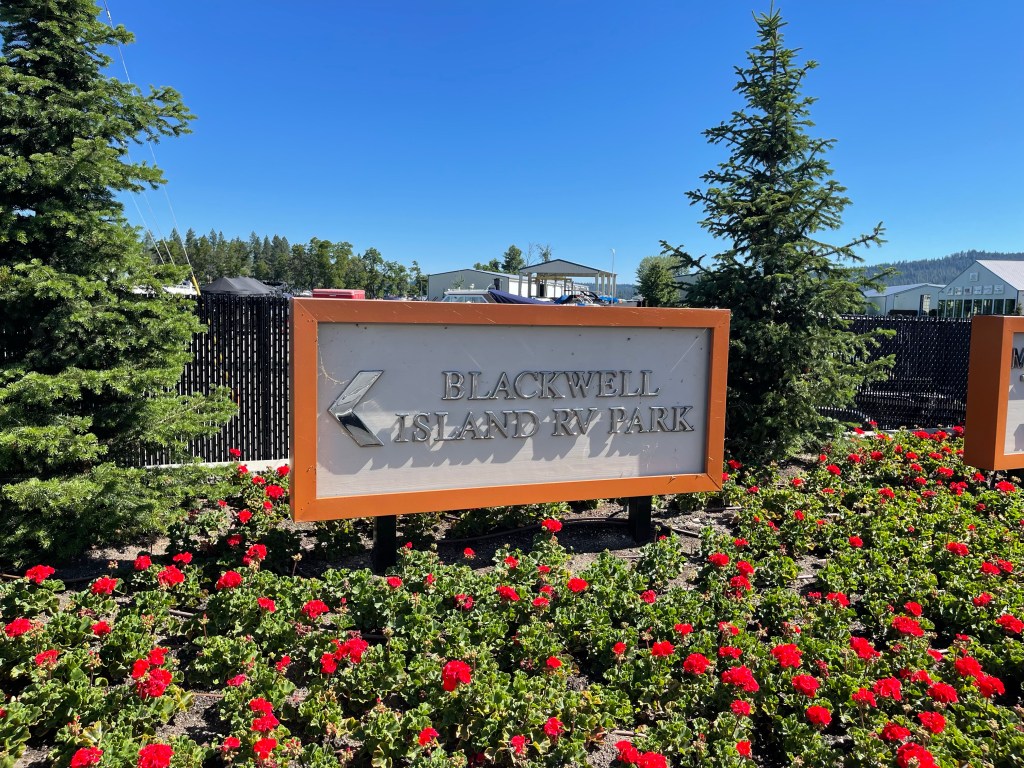
The entrance to our RV park on Blackwell Island
Pictures of the Blackwells on the wall. They look, uh, nice?

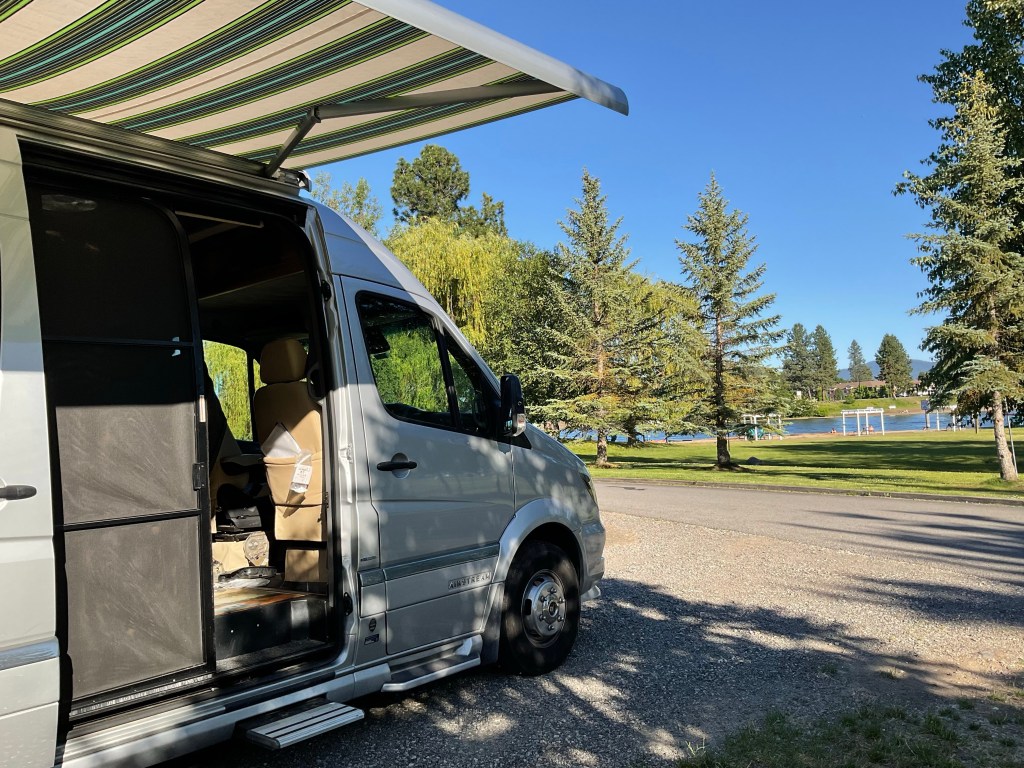
It was a cute little island and we had a nice spot overlooking a small park and the water. Other than that, it was a nice, uneventful visit. We grilled a couple of steaks, had salad, and nice bottle of Hall wine and took a sunset walk.

Our spot for the evening.
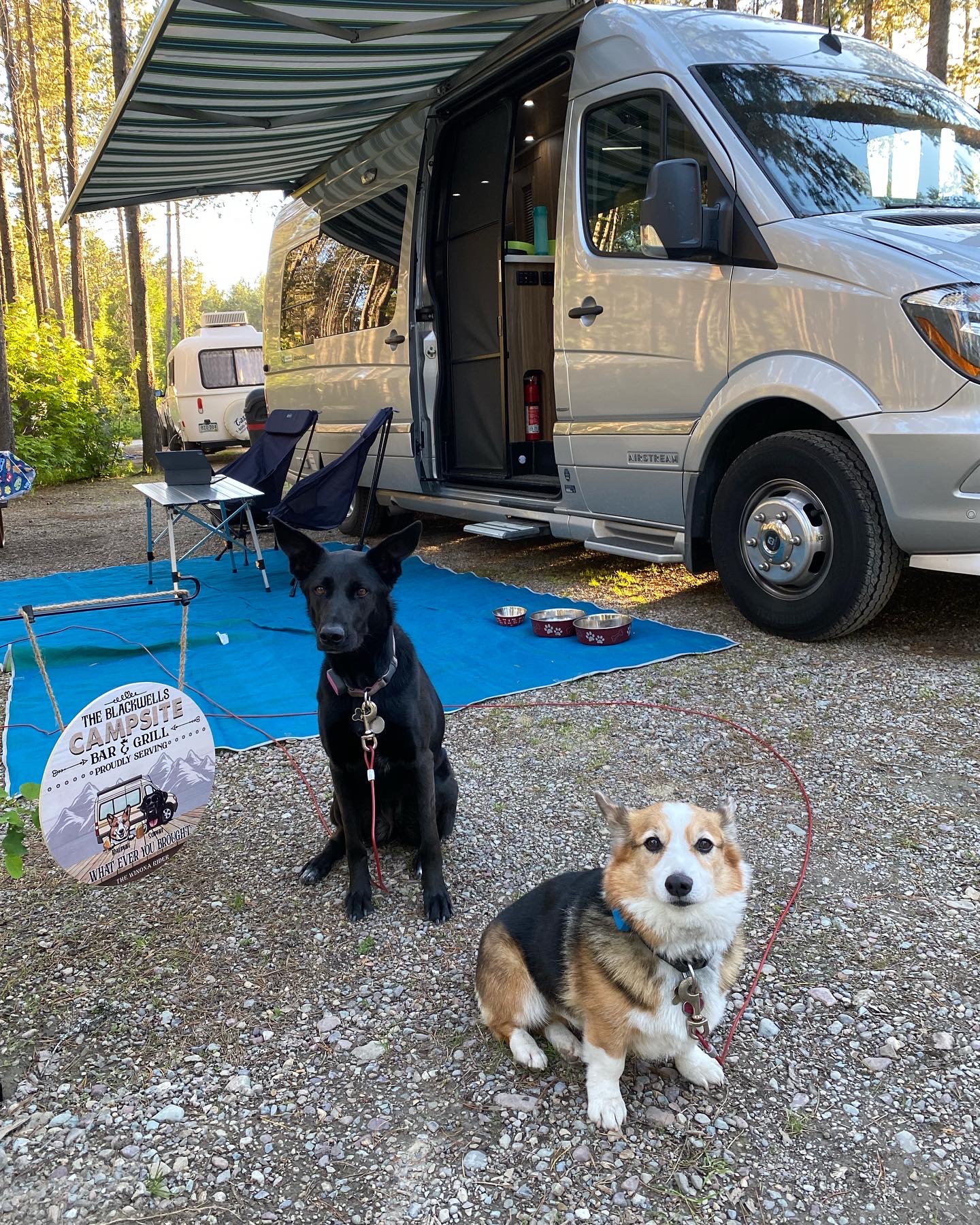
Sophie and Ralphie liked Blackwell Island
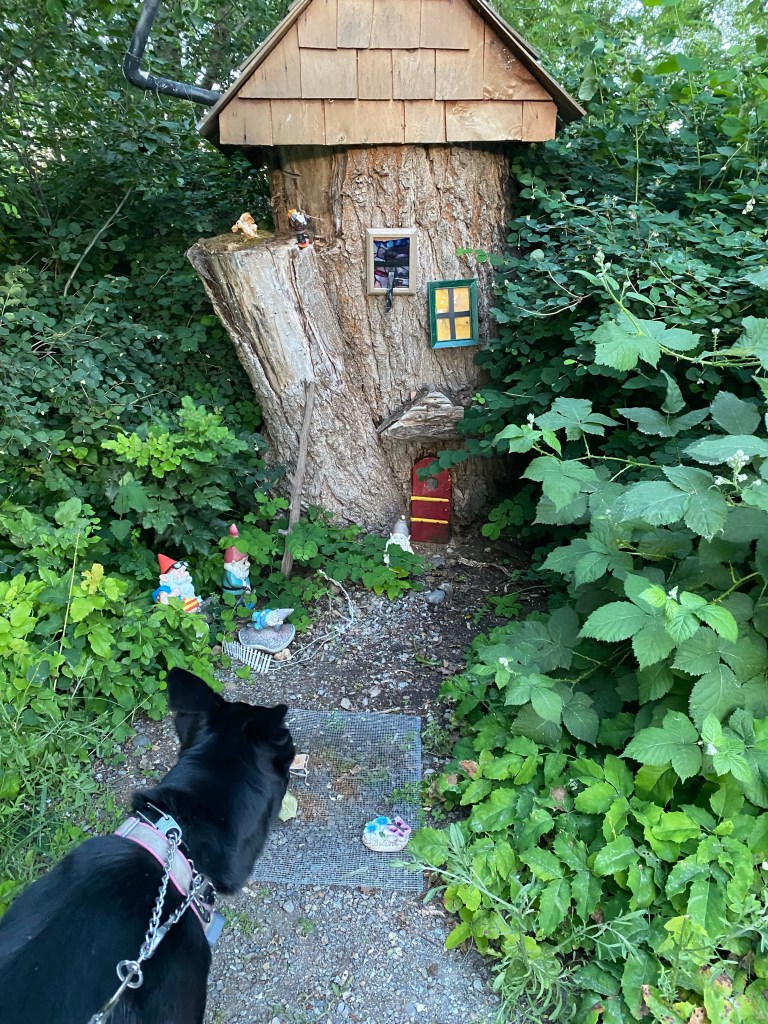
We found a gnome house on our walk. Sophie wasn’t too sure about it.
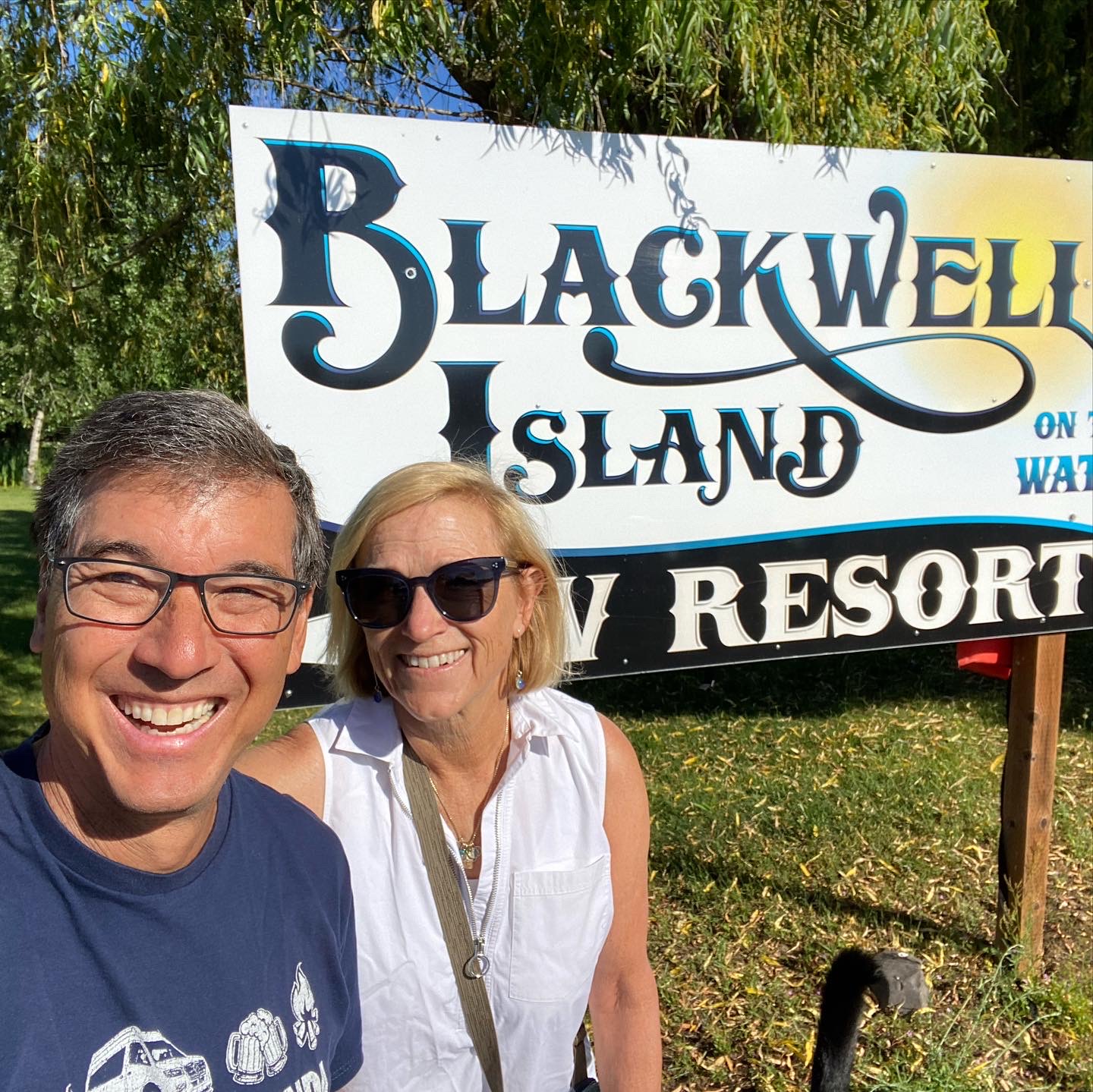
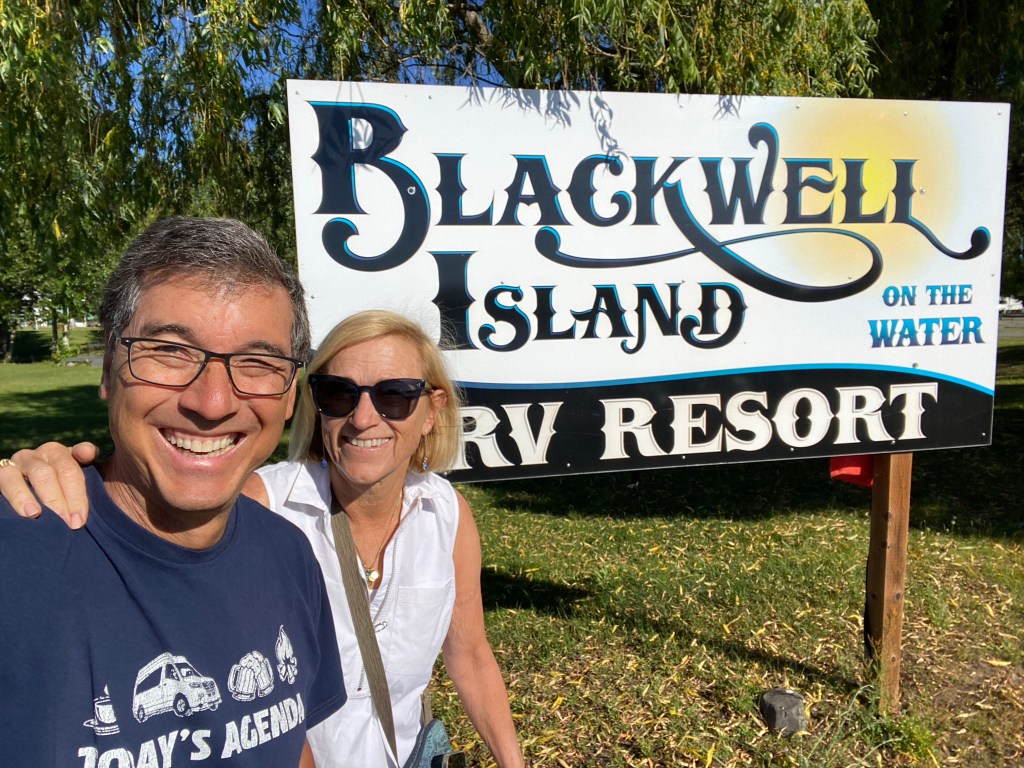
The Blackwells on Blackwell Island

Other than that, nothing really happened. Sorta reminds me of the old Smothers Brothers song, The Wreck of the Old 49, where nothing happens.

The Wreck of the Old 49.

Anyway, it was a nice visit, it was fun to stay on a namesake island, and maybe Richard Branson will read this and invite us to Necker Island. I doubt it though.

Next, we’re off to Bend, Oregon.

Categories: Travel | Tags: , , , , , , , , | 3 Comments

Our Terrible, Horrible, No Good, Very Bad Day — Glacier National Park

We woke up on Thursday morning at the West Glacier KOA RV Park. The thermometer read 37 degrees. Lisa hates the cold.

Every trip has a day that just doesn’t go as planned or doesn’t come easy. We’ve all experienced it. Sometimes it’s a major medical issue like the time Lisa broke her wrist on a remote doctor-less island in the British Virgin Islands. Sometimes it’s a major inconvenience like Brad being detained by Chilean Security for having an apple in his backpack and being interrogated so long that we missed our flight to the Atacama Desert. Other times it’s nothing major. You just have a day where nothing seems to go right.

Our first day in Glacier National Park was the latter.

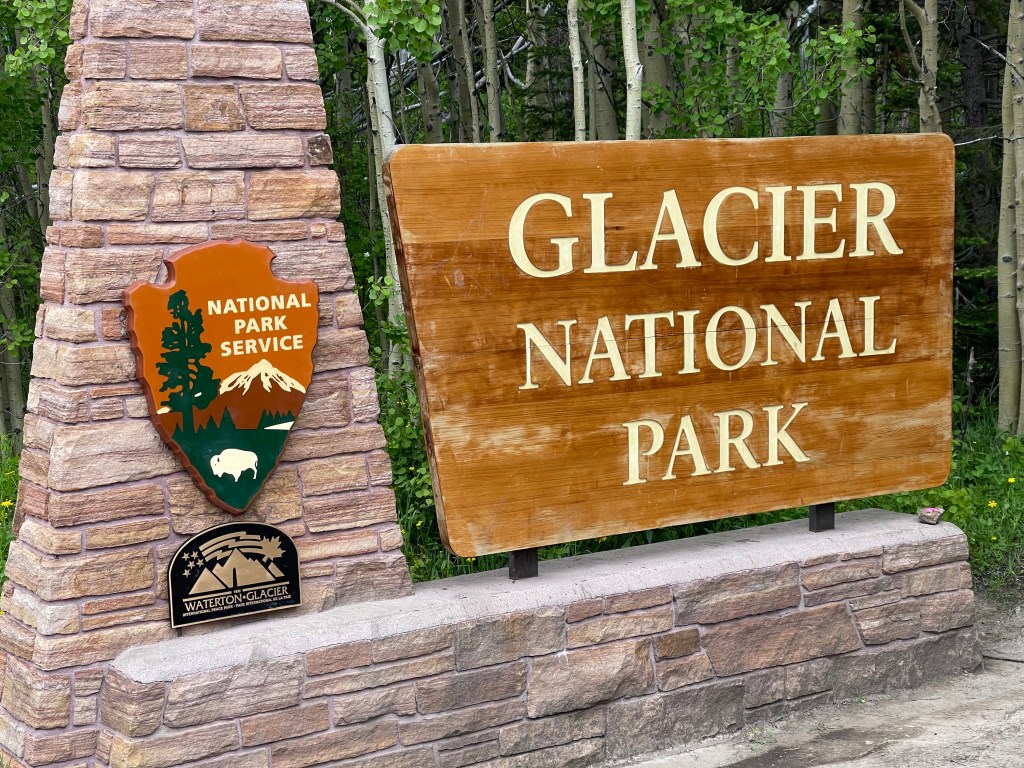
The entry sign looked so inviting.

It all started early in the morning with a text and a photo of a Covid test. Our youngest daughter, Stephanie, had just tested positive for Covid. She took a few more tests and indeed, she had the dreaded virus. She wasn’t feeling too badly but, nonetheless, we were concerned.

While Lisa was texting with Steph, we got the early morning breaking news alerts informing us that the Supreme Court had reversed Roe v Wade. We felt punched in the gut and the news immediately put us in foul moods and we went on a few expletive-laden rants. Lisa suggested we turn the RV around and head back to Canada, find a nice place to live and send for the kids and grandkids. We pondered that idea as we headed off to Glacier National Park.

We arrived at the West Entrance of Glacier and were confronted with electronic signs that told us to have our vehicle passes and ID ready. We had no idea what that meant. As we pulled up to the nice but official looking park official, Brad asked, “We don’t know what a vehicle reservation is.” She smiled and succinctly ushered us off to an area for cars without park reservations. There, a lovely woman explained to us that we could not go into the west entrance of the park without a reservation. That reservation needed to be made months ago. She did say we could see the park from the East side without a reservation and enthusiastically explained some of the sights we could see along the way. She also gave us hope by saying that we could come back at 4:00 and enter the west side without a reservation, This woman has a hard job telling people who didn’t do their research (like us) that they can’t visit the park yet she handled it with a lovely attitude.
A few other things she mentioned ever so nicely were: 1) Our dogs weren’t allowed on any of the trails in the park except one short paved one. 2) We couldn’t’ take our RV on the infamous Going-to-the-Sun-Road because it was too long. 3) It didn’t matter anyway because most of the road was closed because of ice and snow. 4) Have a Great Day! Things she forgot to mention: 1) The two east entrances to the park are an hour-and-a-half away.

As we turned around, Lisa mentioned that there is an old wives tale that bad things happen in threes so we had just had our three bad things for the day. Again, off we went with hope of seeing the sights the park ranger had suggested. As we drove along, we watched the temperature drop to 45 degrees and it started to rain. It had warmed to 60 degrees on the west side. OK, well, maybe four things and then we were good to go.

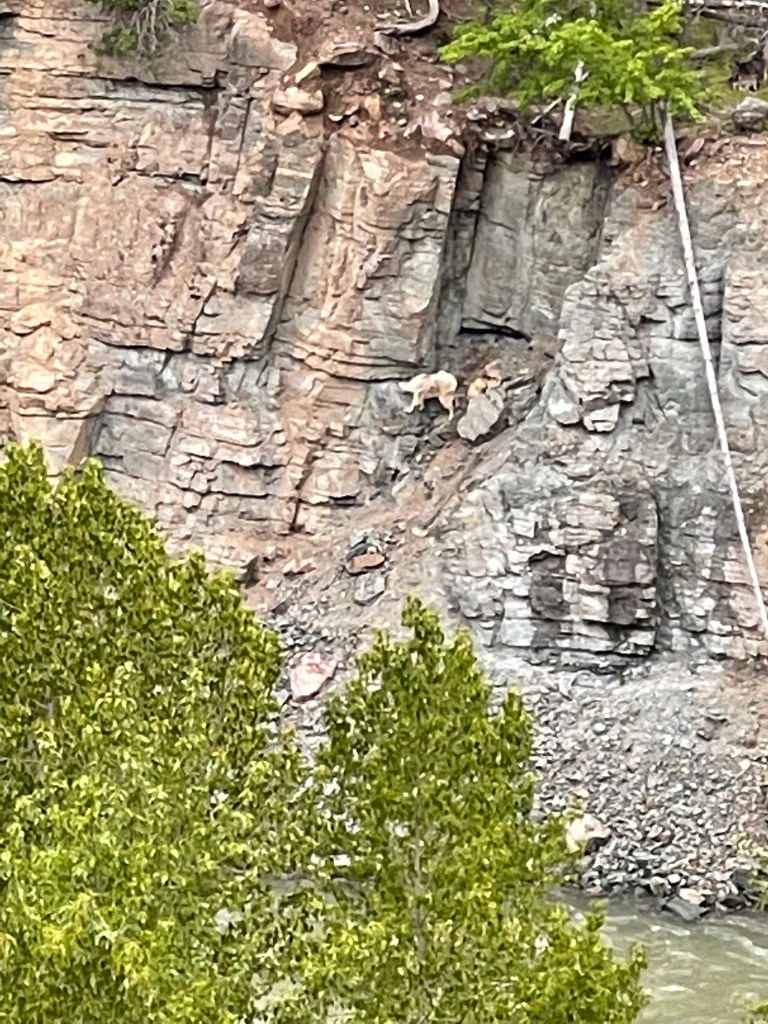
The day continued to confound us. We did see the cool sight at Goat Lick Overlook. — a family of mountain goats rock-climbing and yes, licking rocks. That was cool. We think our luck is changing.

Goats licking rocks, of course.
Goats on rocks.

We got to the Glacier’s Two Medicine Lake entrance at noon. Great! We can have a nice lunch at the lake. We pulled up to the gate and the ranger said sternly, “This entrance is closed. Come back at 2:30” Really?!?

Ugh. This is becoming a very bad day.

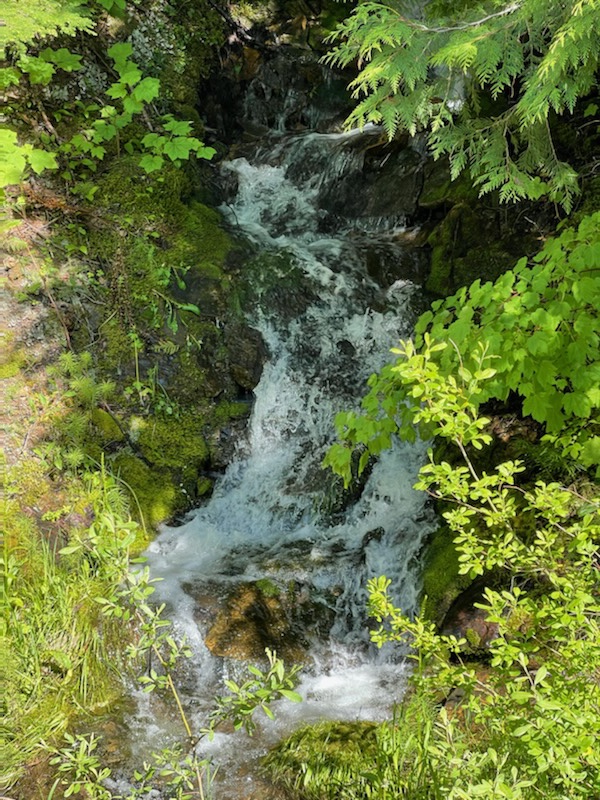
As we drove away we found a pullout and stopped to have lunch. As we pulled in a guy had stopped to pee. I’m sure we embarrassed him. He was also having a bad day. There was, however, a nice little waterfall and the view of the mountains was pretty good. So we stayed and ate lunch.

The view at lunch

The drive to the other east entrance — St. Mary — was a slow winding road. It took us a while to get there.
The high and winding road . Don’t look down or take your eyes off the road.

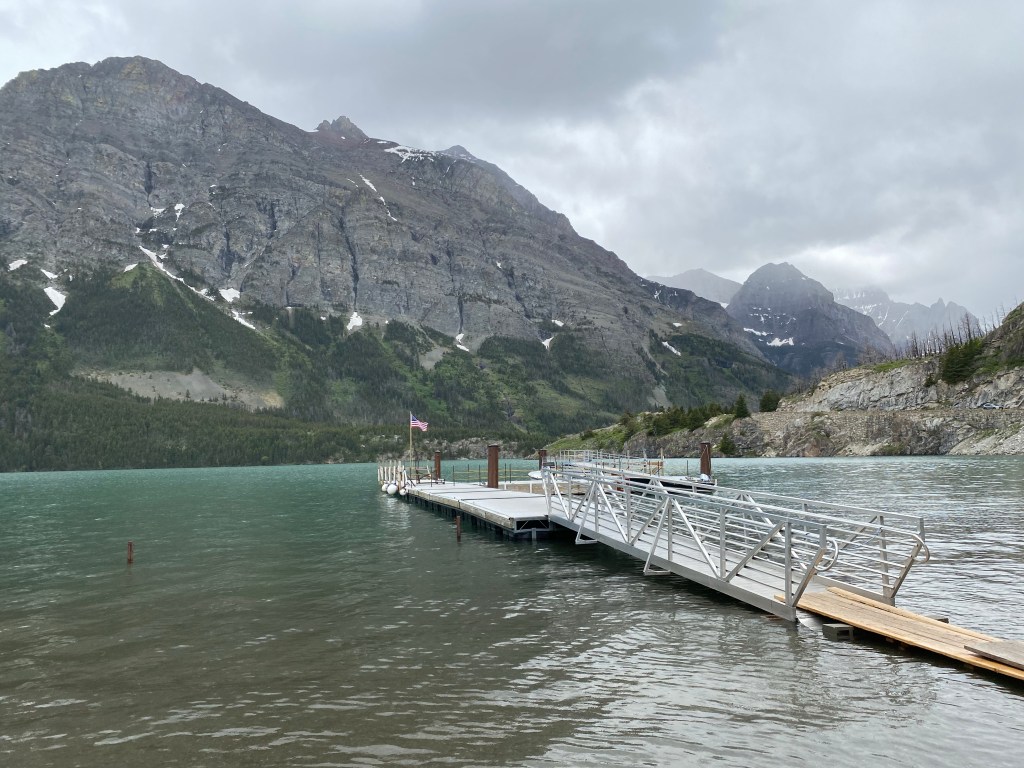
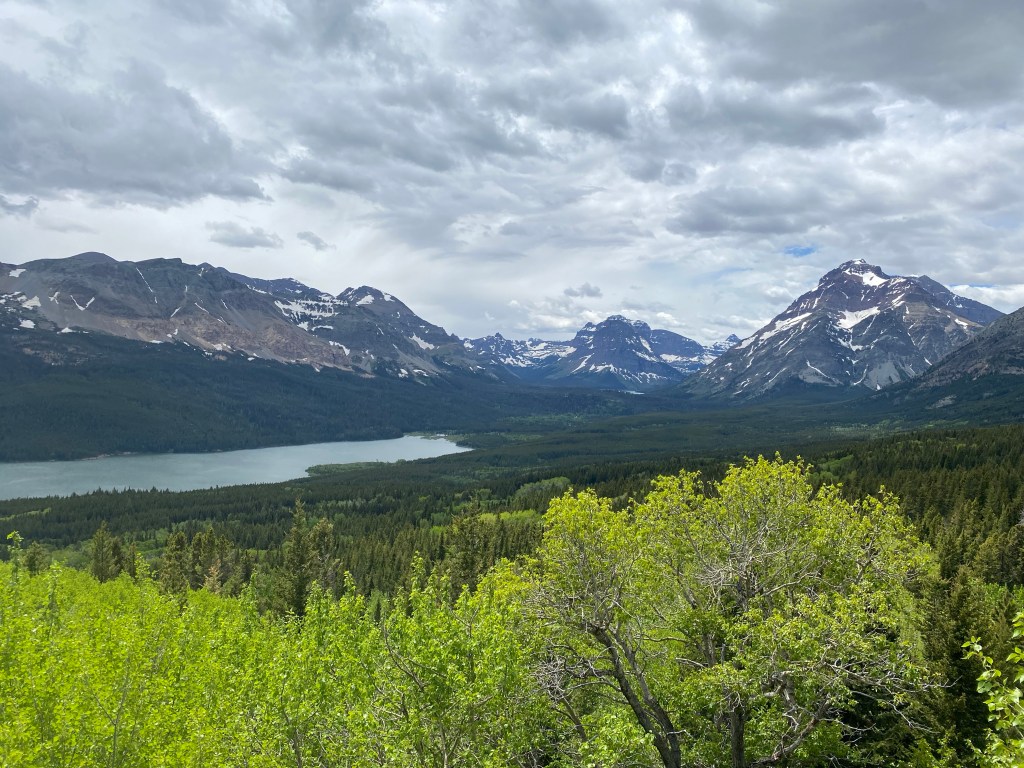
We got to the St. Mary entrance and were allowed into the park. Yes! But, we only got six miles in before a sign informed us that only vehicles under 21 feet could continue. The Winona Rider is 24 feet long. We stopped to walk along the lake a bit but because it was 45 and raining we didn’t stay long. We took a few pictures, saw some bear poop, we think, and figured we could at least check off Glacier National Park on our map at home.

St. Mary Lake
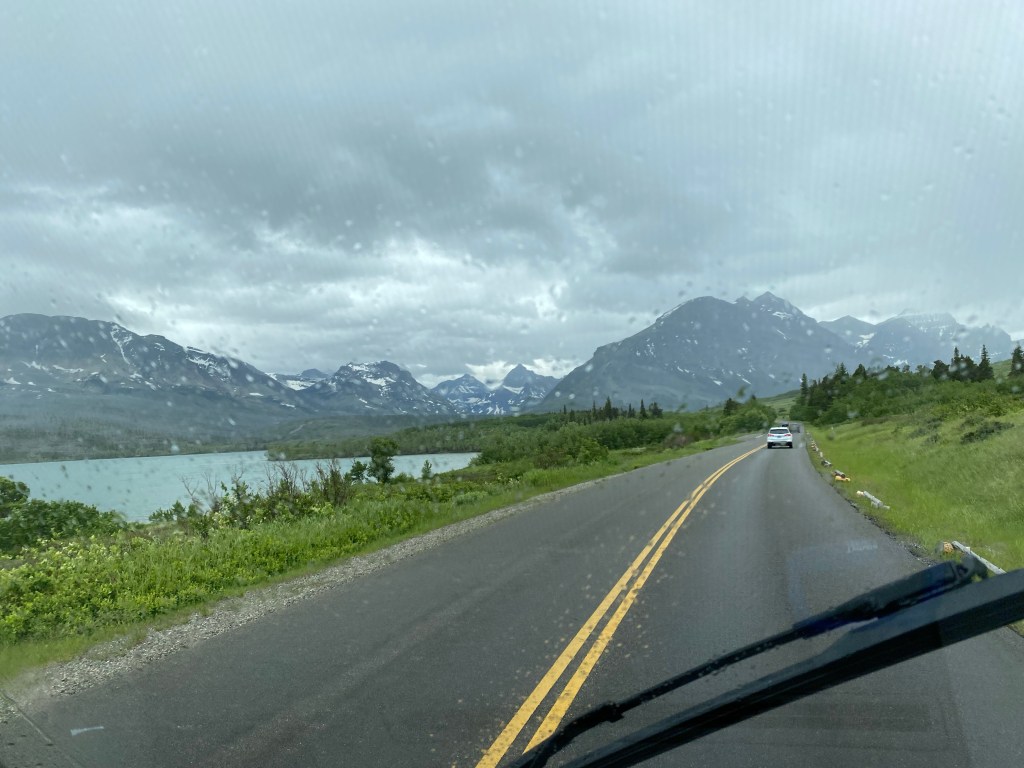
The view from our long and winding road.
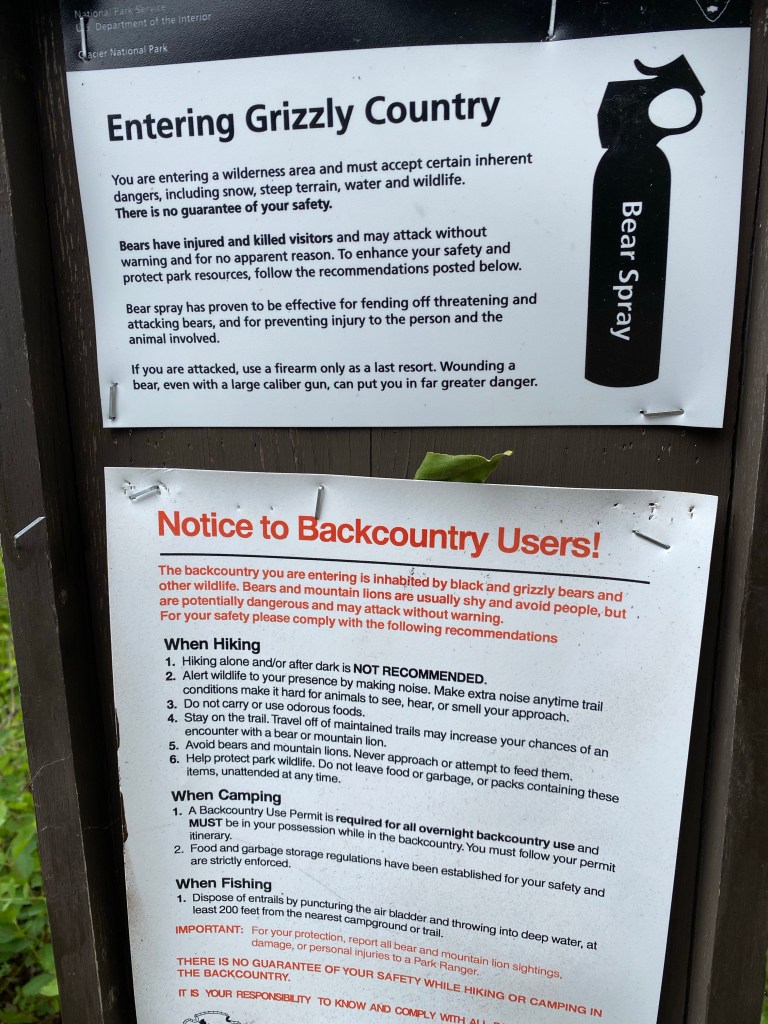
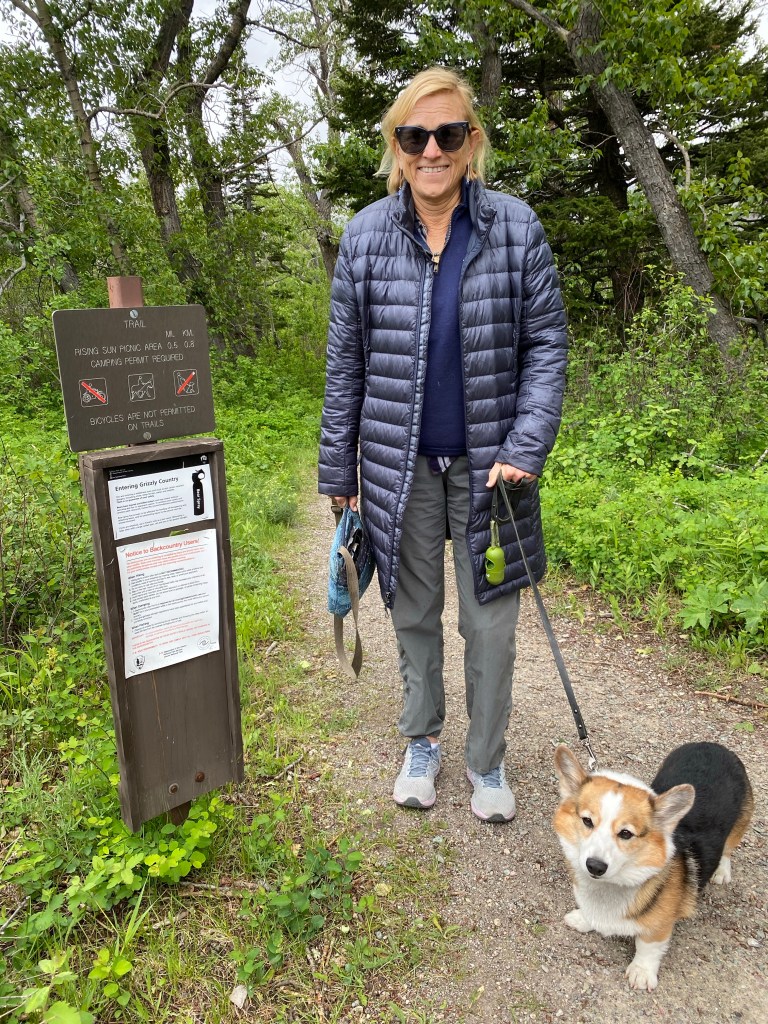
Our short walk in the rain even had grizzlies.
A cold Lisa walking our bear attractant.
Maybe we’d better get back in the van.

The St. Mary entrance was about a hundred miles from our campsite and it was now 4:30. We decided it had been a long day and we should head home. There was a lot of road construction on the way up so we decided to go home on a different route. About 20 miles in, we came upon a very serious accident that blocked both lanes of the road. We sat for a while but realized it could be closed for a long time so we turned around and back tracked to the winding road with the heavy construction. It took us another two hours to get home. We were tired and in bad moods. Even the gnocchi dinner we made was mushy and not too good.

Yeah. It was raining.

We went to bed vowing that our second day would be a better day.

Day 2: Our Wonderful, Beautiful, Not Bad, Very Good Day

We woke up on Day 2 and the sun was shining with a forecast of 73 degrees. It was already a better morning than the day before. Daughter Stephanie, although having Covid was feeling reasonably fine and was mostly just bored. The Supreme Court decisions of the week still infuriated us but we resolved that we would get more politically involved when we get home and start doing what we could to take action (instead of moving to Canada), and lastly we had a plan to get into West Glacier at 4:00 pm.

With such a beautiful day at our beckoning, we had to take the dogs on a hike. We found an area that accepted dogs near Kalispell and drove 30 minutes to the West. It was a beautiful hike with lots of wild flowers and good views. Sophie and Ralphie were quite happy, maybe even giddy, because they could be off-leash for much of this hike.

We’re hiking and it’s sunny!
Beautiful views along the trail.
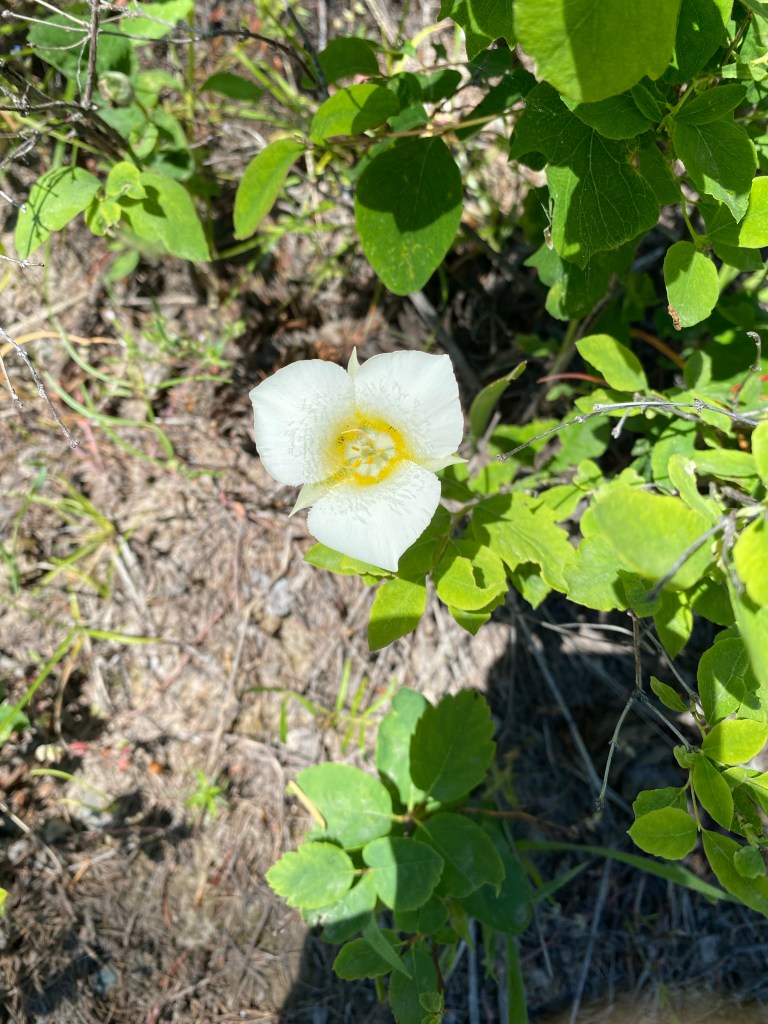
Lots of wildflowers

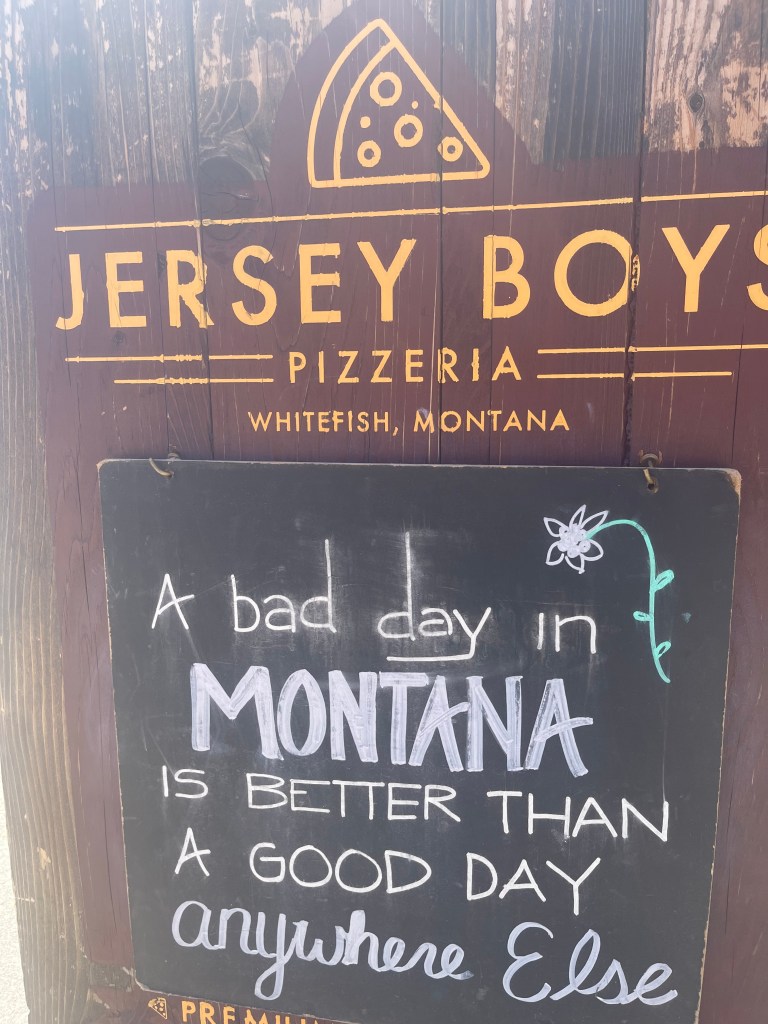
We went to the quaint town of Whitefish for lunch where we indulged in a post-hike beer and some pizza at a local pizzeria. It was some of the best beer we have had in a long while! While at lunch we talked about the day before. Those goats on the rocks were pretty cool. Remember when we were on that winding drive? Wasn’t the view amazing? Oh, and lunch by the waterfall. How often does that happen?That lady that told us we couldn’t come in was so sweet. It was interesting how we remembered the highlights. Maybe yesterday wasn’t such a bad day after all. Then Lisa noticed a sign on the street at our pizza place.

Wisdom and perspective from Jersey Boys Pizza. Oh, and their beer is really good.

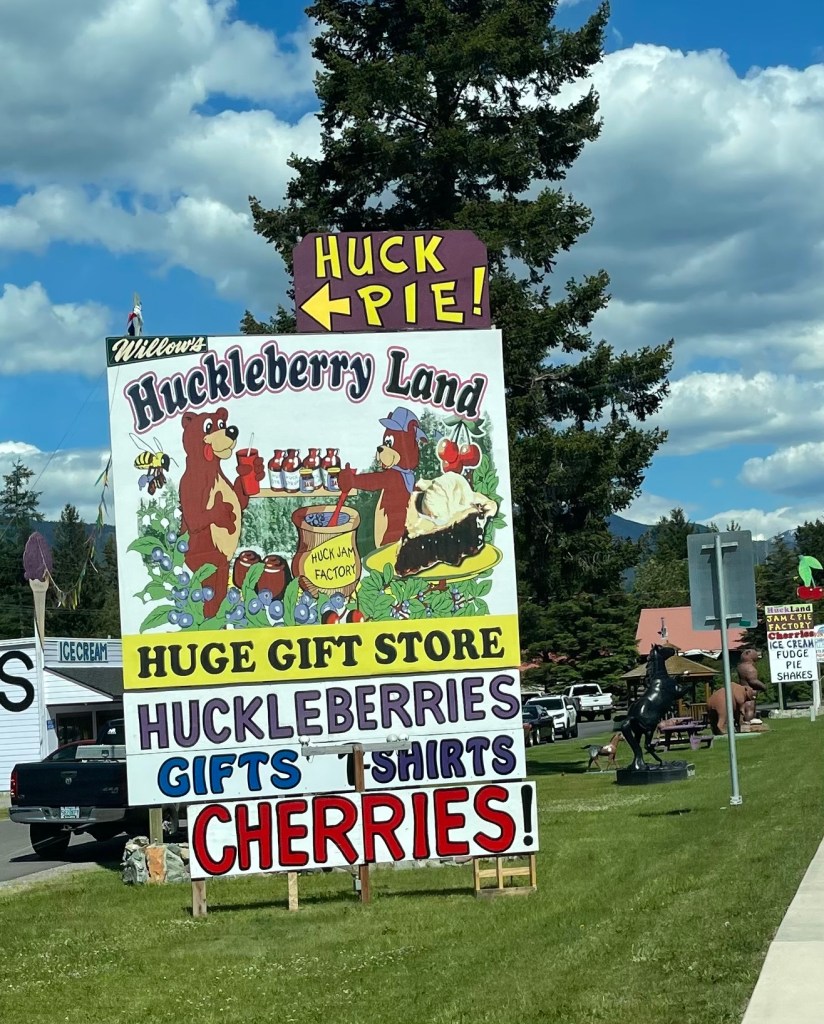
On the way back to West Glacier, we just had to stop at the Huckleberry Land and buy ourselves some huckleberry pies for dinner. I’m not sure we’ve ever had a huckleberry before. It’s a bit like a blueberry but tases more like a blackberry. They grow them here. Huckleberries are everywhere.

I’m sure this place is for locals.

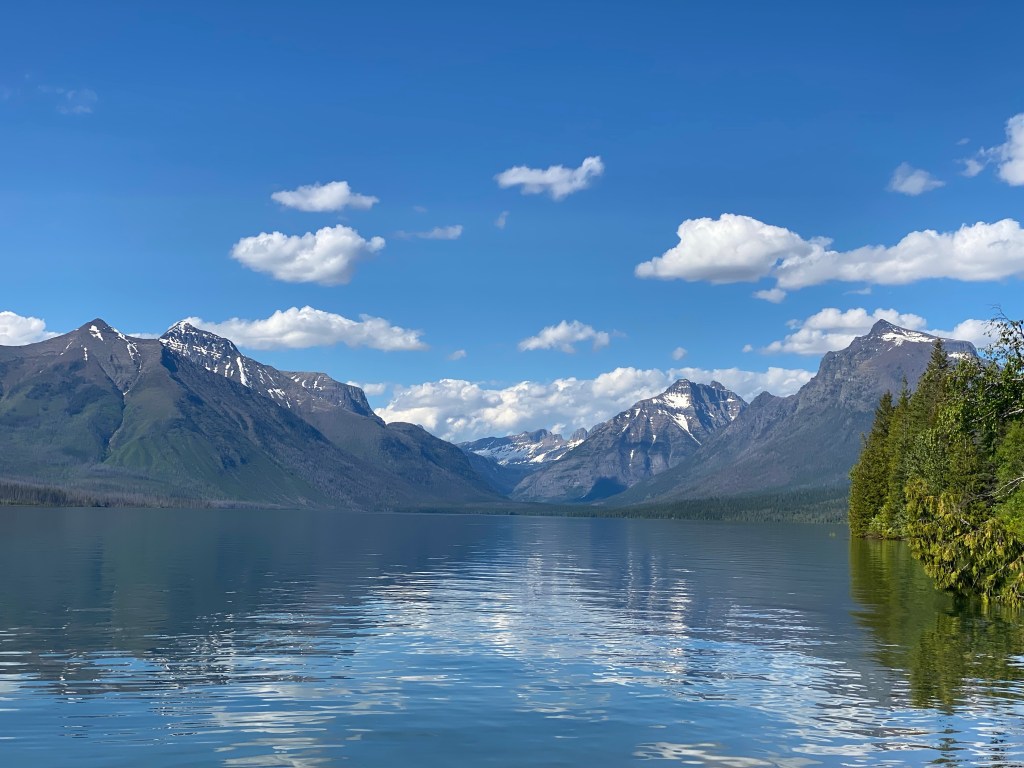
The 4:00 hour arrived and we got in line, holding our breath that we would be let in to the park. They waved us through and we were in, just like that! We took a scenic drive along Lake McDonald and stopped whenever we could to take pictures. We did have to turn around about 14 miles in because of the size of our RV but we were thrilled with what we got to see.

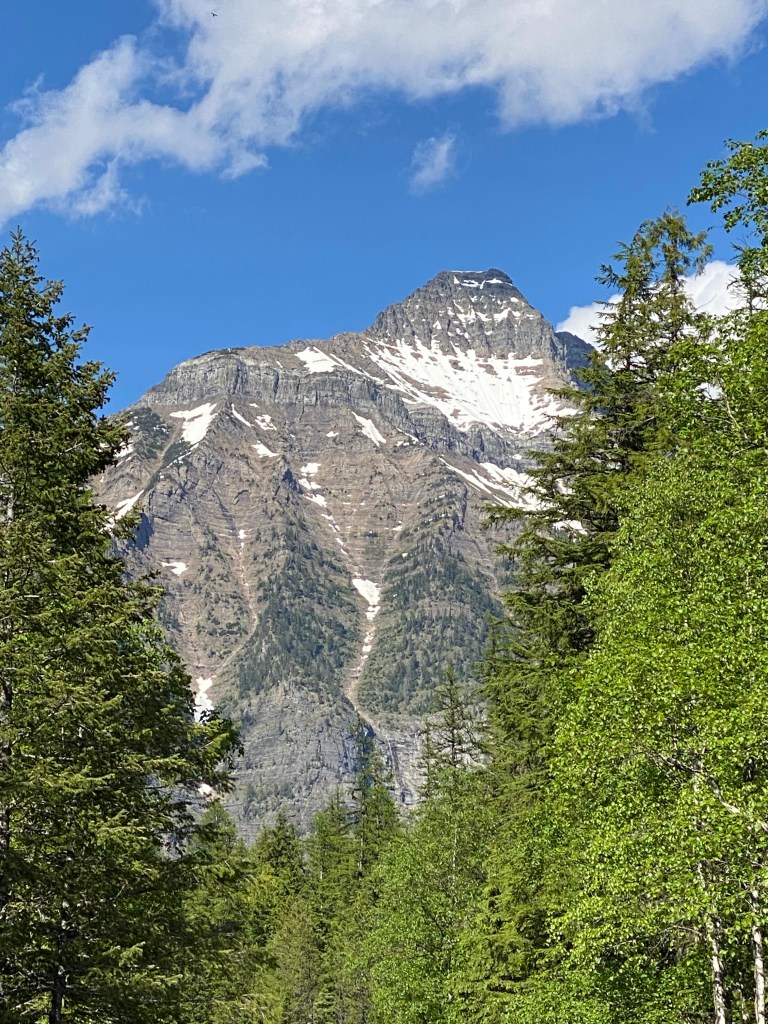
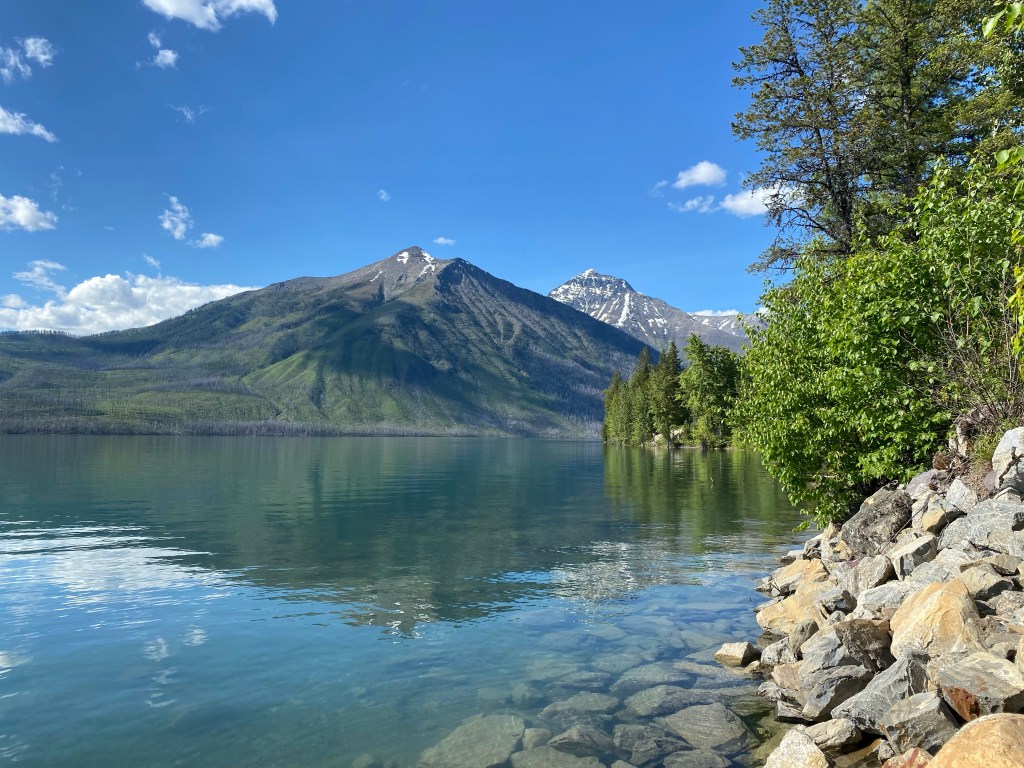
The mountains overlooking Lake McDonald.
Beautiful mountains
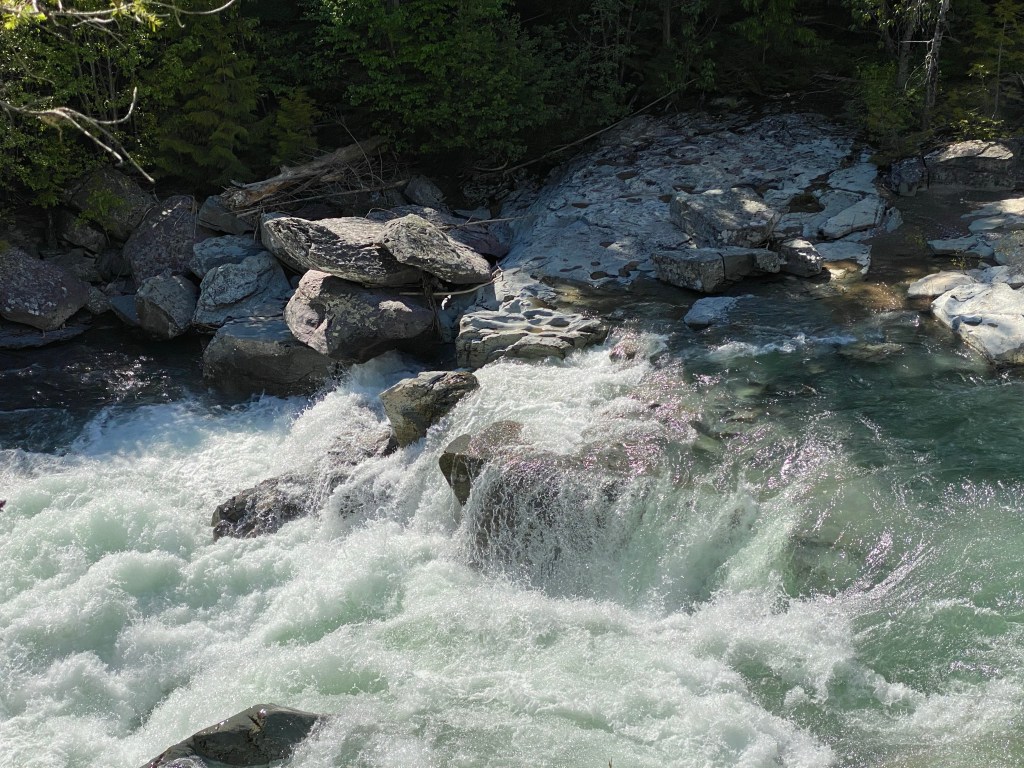
Avalanche Creek was flowing and had many waterfalls.
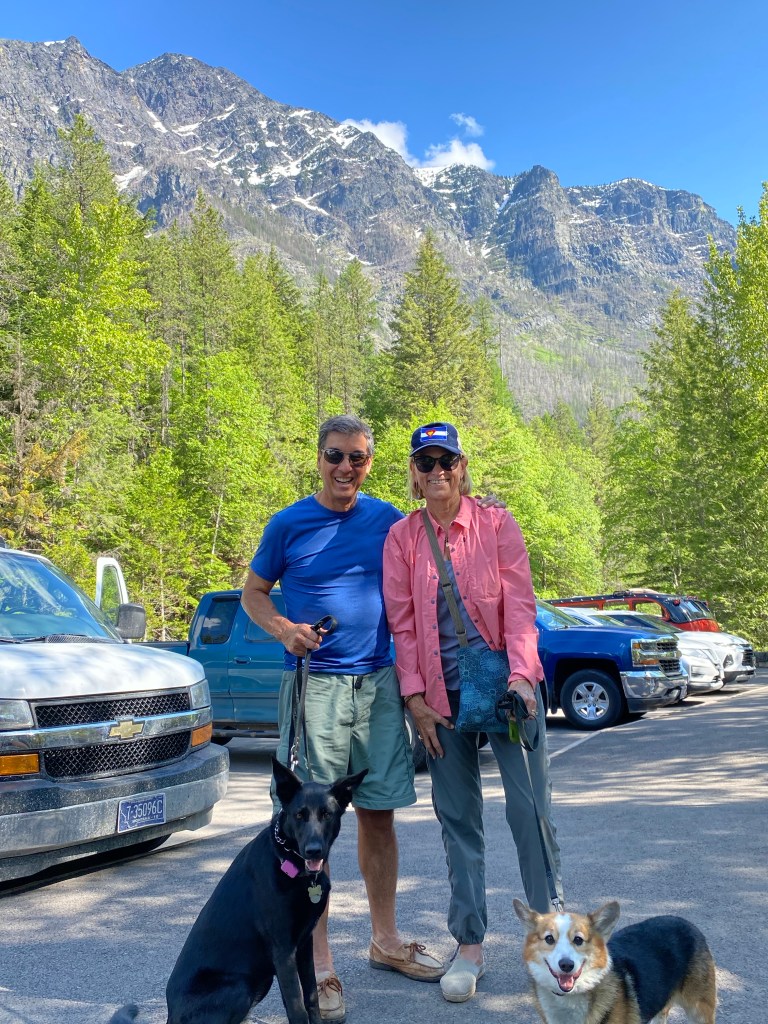
Parking to see the waterfalls.

We spent our last evening at our RV Park by getting a delicious meal of huckleberry chicken and huckleberry ribs all served with some delicious homemade mac and cheese and cornbread. We even shared some huckleberry pie for dessert. Our RV Park was a KOA near the entrance of West Glacier. At first, Lisa thought it was a bit too crowded and busy (she hates crowds of all kinds) but we both grew to love it. The spa-like showers won us over at the beginning of the stay but the homemade meals, the attention to every detail, the kids who were having the times of their lives riding bikes and making tie-dye shirts made this place unique and special.

The dogs enjoying our campsite.

Our stay in Glacier was a tale of two very different days and attitudes and experiences. But that’s the magic of travel; every day tells a different story and no day is like the other. Perhaps our first day wasn’t really a terrible, horrible, no good, very bad day after all. And, really, a bad day traveling is better than a good day anywhere else, right?

Next we’re off to Blackwell Island Idaho.

Categories: Travel | Tags: , , , , , , , , , , , | 4 Comments

Banff Canada — It Took our Breath Away

We left Shuswap Lake at around 9:30 and headed west toward Banff. We thought we were in the mountains until, about an hour later, the real mountains appeared. It was one of those moments when your breath catches and you marvel at the beauty of the view.

Now, we have seen mountains before. After all, we met in Colorado and got married there. And, we love Colorado mountains. These mountains, however, were different. They went straight up. They had craggy cliffs and jagged peaks. It’s hard to describe. And, the photos clearly don’t do them justice. But, let’s just say we were awed. And, for these world travelers, that’s hard to do. We now know why Lisa’s mom and dad so wanted us to visit, as they did thirty years earlier.

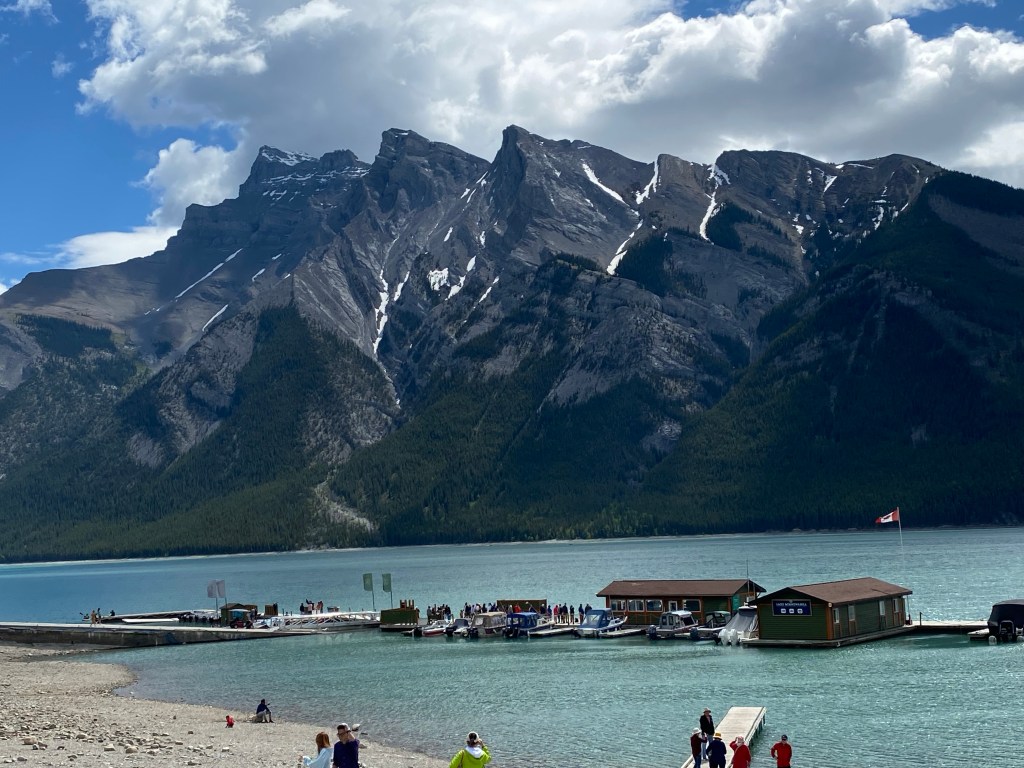
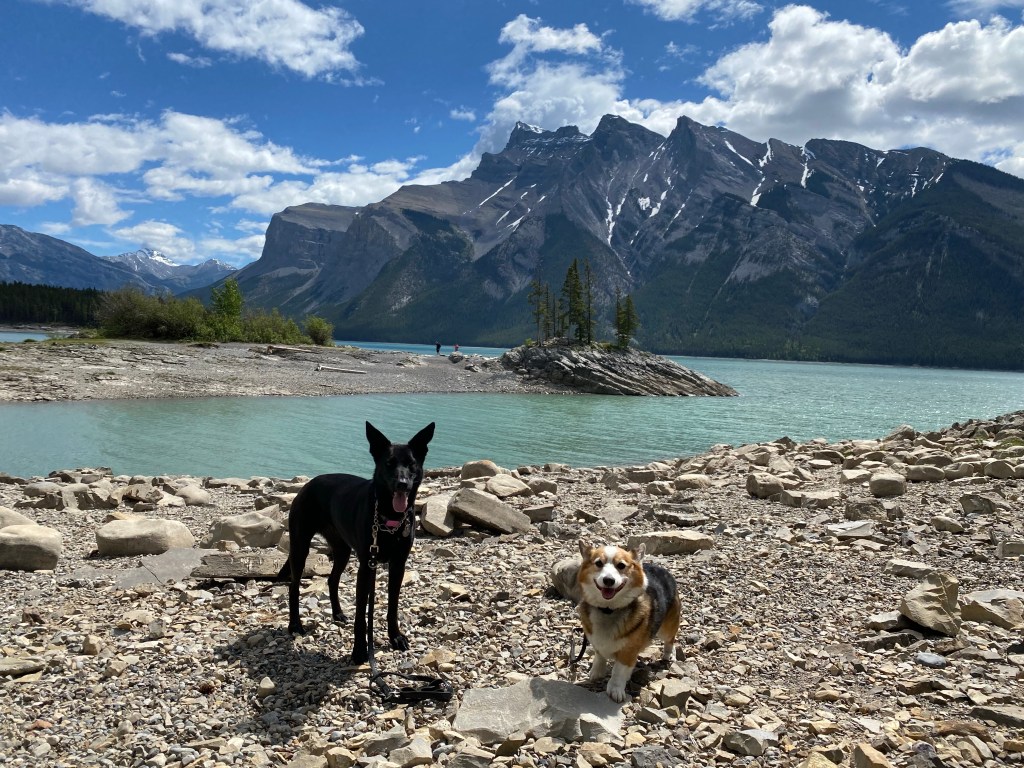
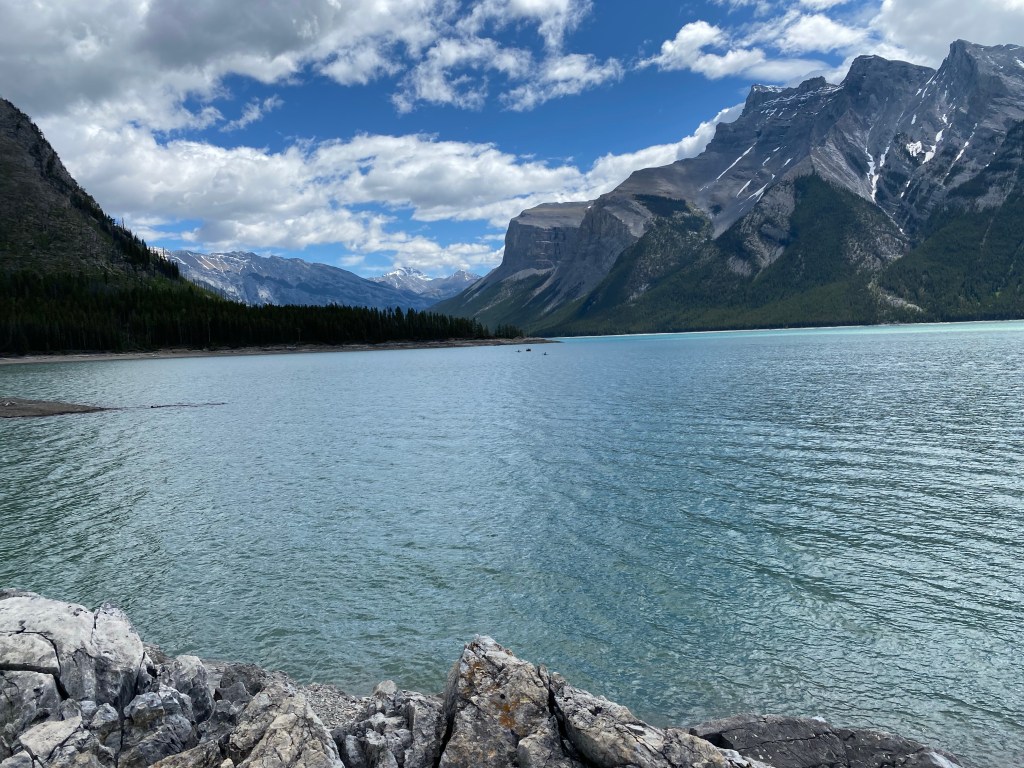
The Canadian Rockies overlooking Lake Minnewanka.

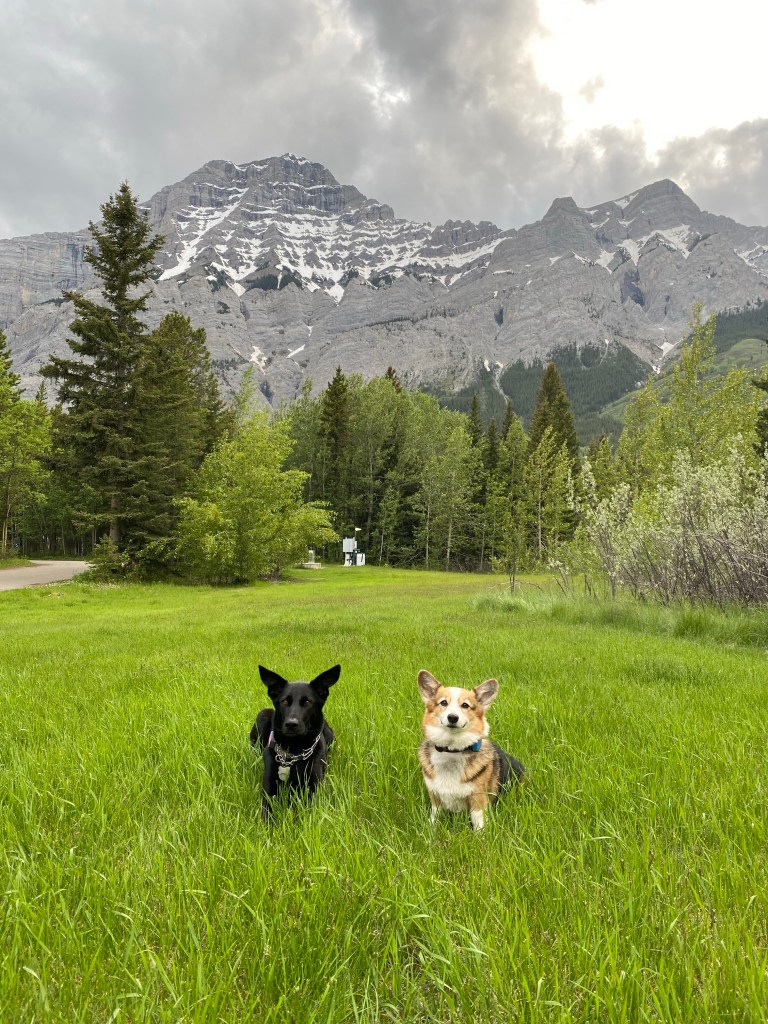
We only had two days to explore Banff National Park. So, we knew we couldn’t possibly see all it had to offer. But, if we could get in a couple of nice hikes, see some of the key offerings, and enjoy the views, we would be satisfied. We arrived at our camp on Monday evening. It was stationed at the base of the towering Mount Kidd. We set up camp and then set out to explore the area.

Sophie and Ralphie posing before Mount Kidd
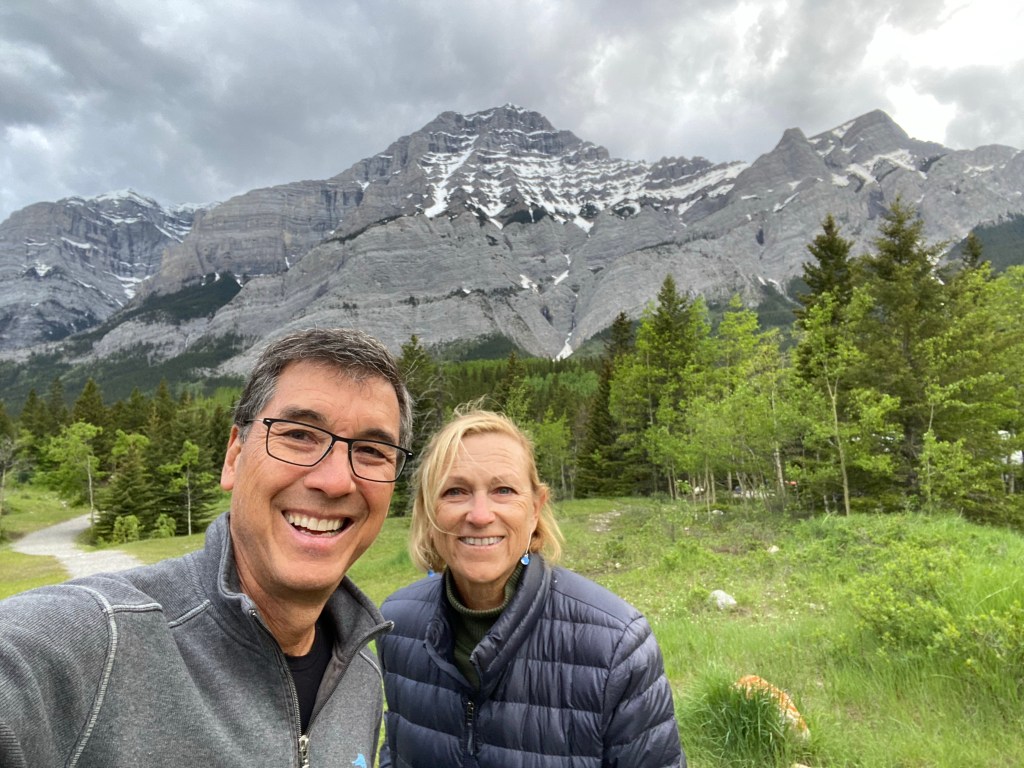
If the dogs get a photo, well, then so do we.
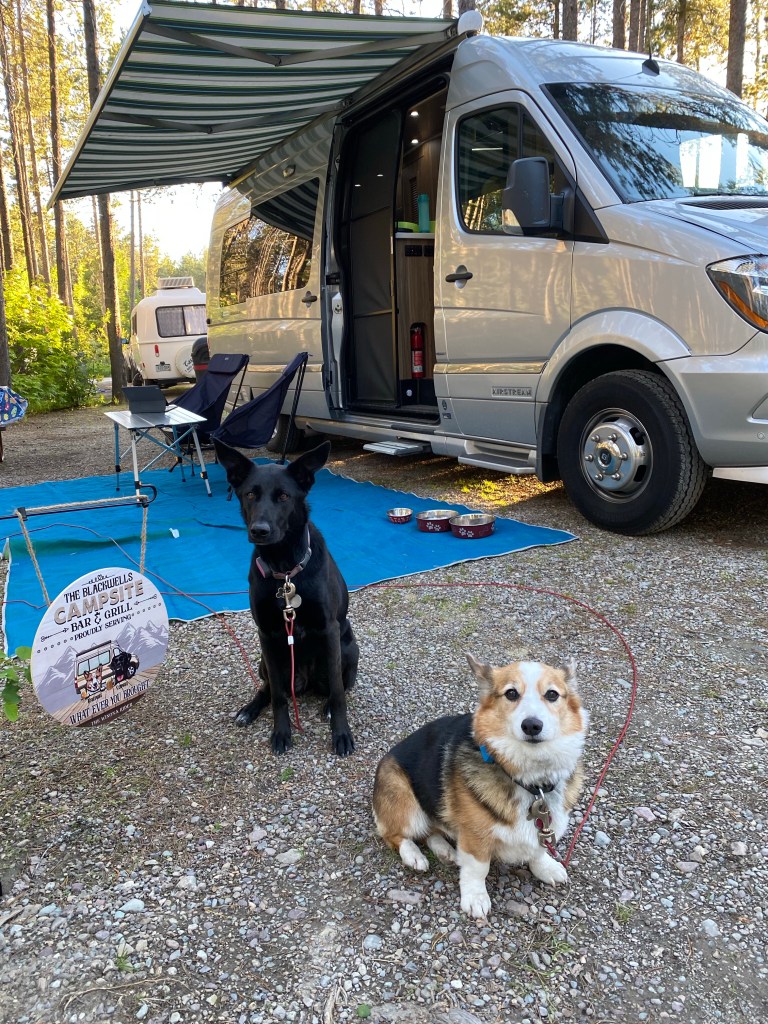
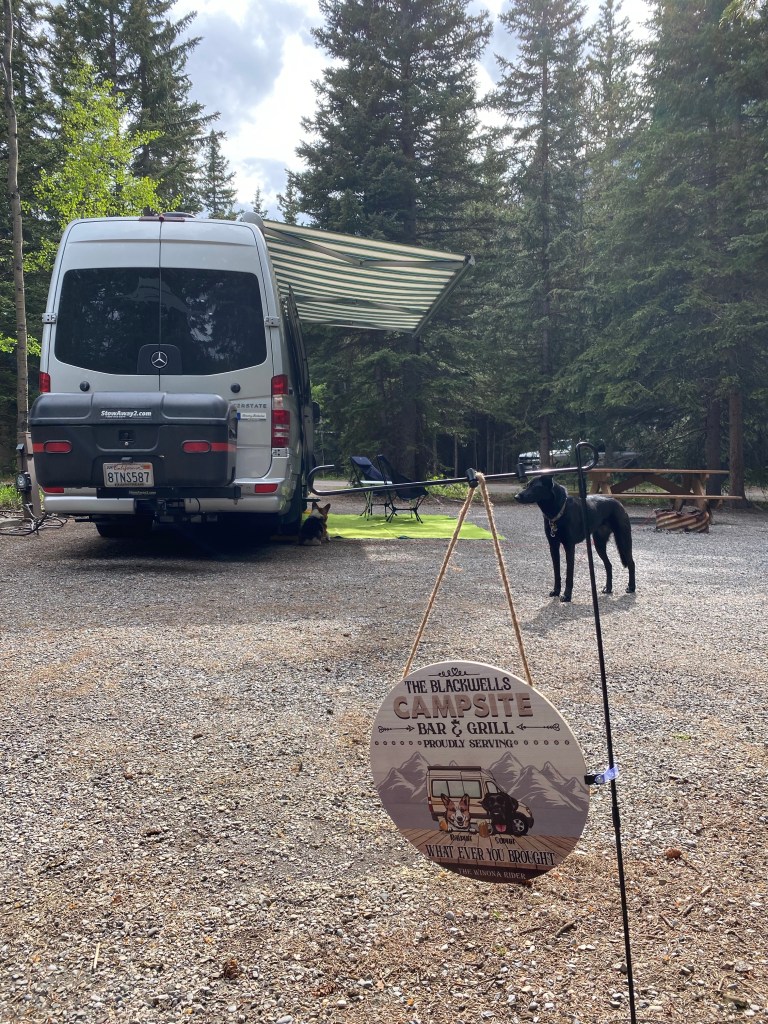
The Blackwell Campsite Bar and Grill

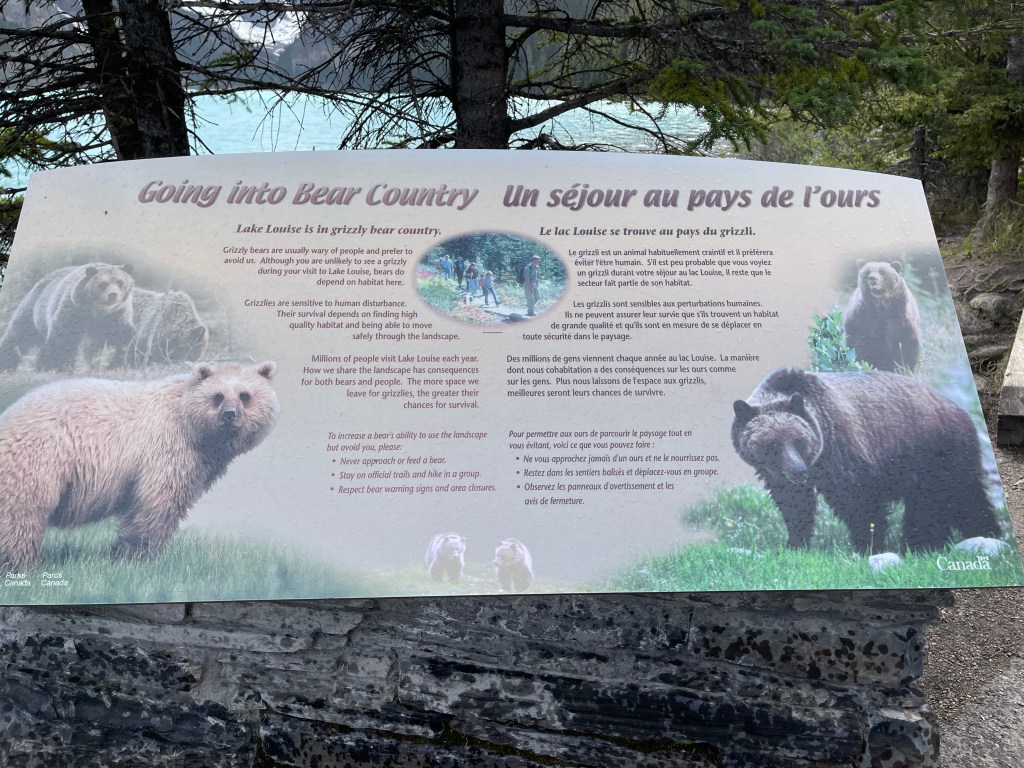
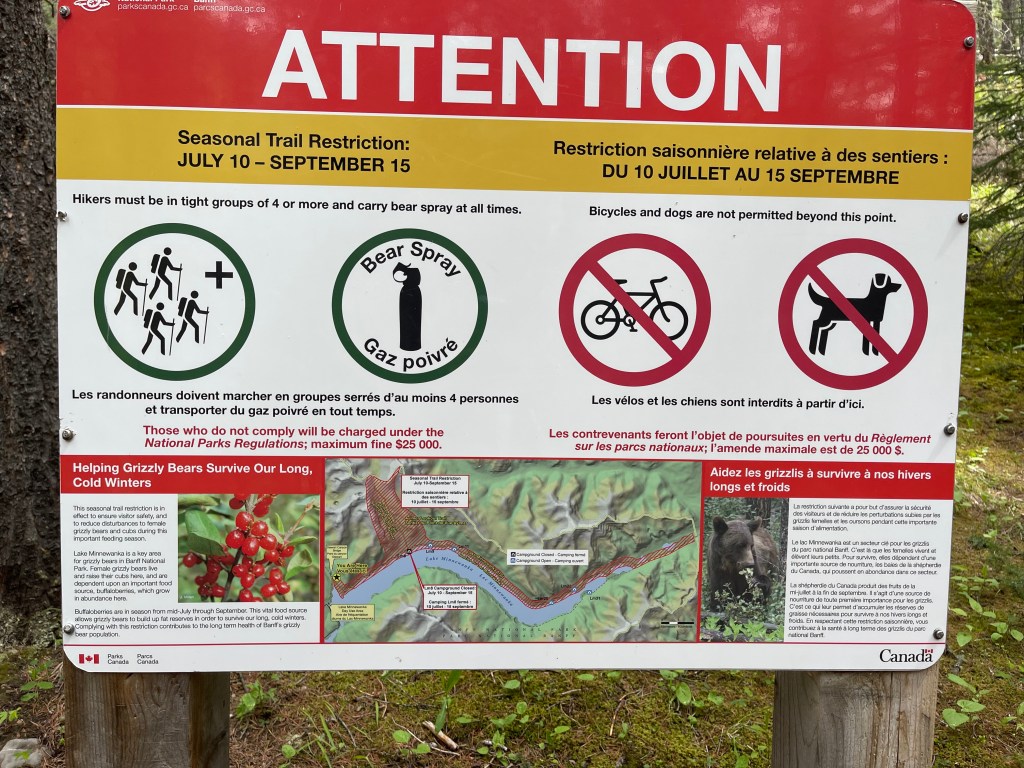
Those hikes we mentioned? Well, we were constantly being warned about bears. Not those friendly black bears we have in California. Grizzly bears. Signs told us not to go hiking without bear spray. That’s like super, ultra, extra-strength pepper spray. You’re supposed to carry it with you and have the presence of mind to pop off the safety and spray a charging bear in the eyes before he eats you. Even our campsite had constant reminders along with a big fine if you left bear “attractants” out overnight. Attractants are anything a bear might want to eat — leftover food, an ice cooler, Ralphie. That kind of thing.
We had many opportunities to be educated about bear behavior.
The sign as we entered our camp.
There were four of us but two were dogs. Hmmm.

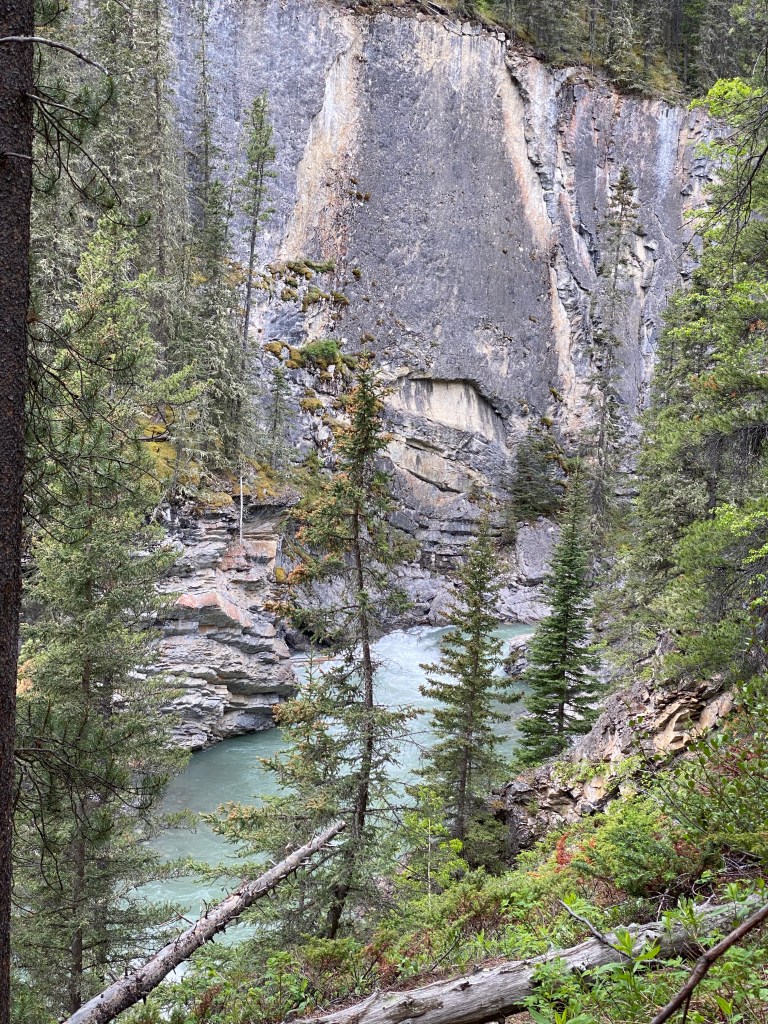
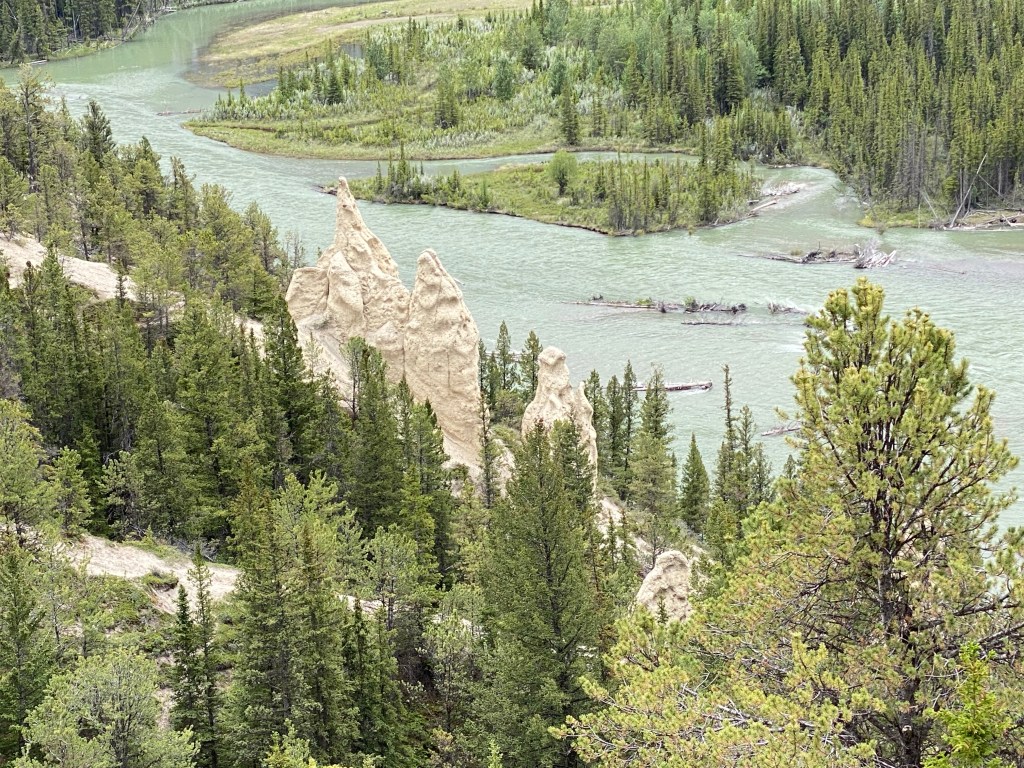
Fortunately, we keep the Winona Rider equipped with bear spray so we were ready. So, off we went on two beautiful hikes. One began at Lake Minnewanka and headed up the canyon on the river that feeds it. And, one hike was from Tunnel Mountain to “the Hoodoos.” We learned about hoodoos at Bryce Canyon National Park so this hike held promise.

Before we show you photos of the hikes, we need to explain the aqua blue water you’ll see in the rivers and lakes. The landscape at Banff National Park is largely influenced by glaciers carving the stone in the mountains. As these glaciers move down the rock, they grind the stone into a super fine powder called rock flour. This rock flour flows in the streams, rivers, and lakes creating silty water. The stone isn’t bright blue, rather, it absorbs all incoming light except this aqua color giving the waters a magical turquoise appearance.

The shore of Lake Minnewanka
Lake Minnewanka
The Cascade River flowing through Stewart Canyon and feeding Lake Minnewanka.
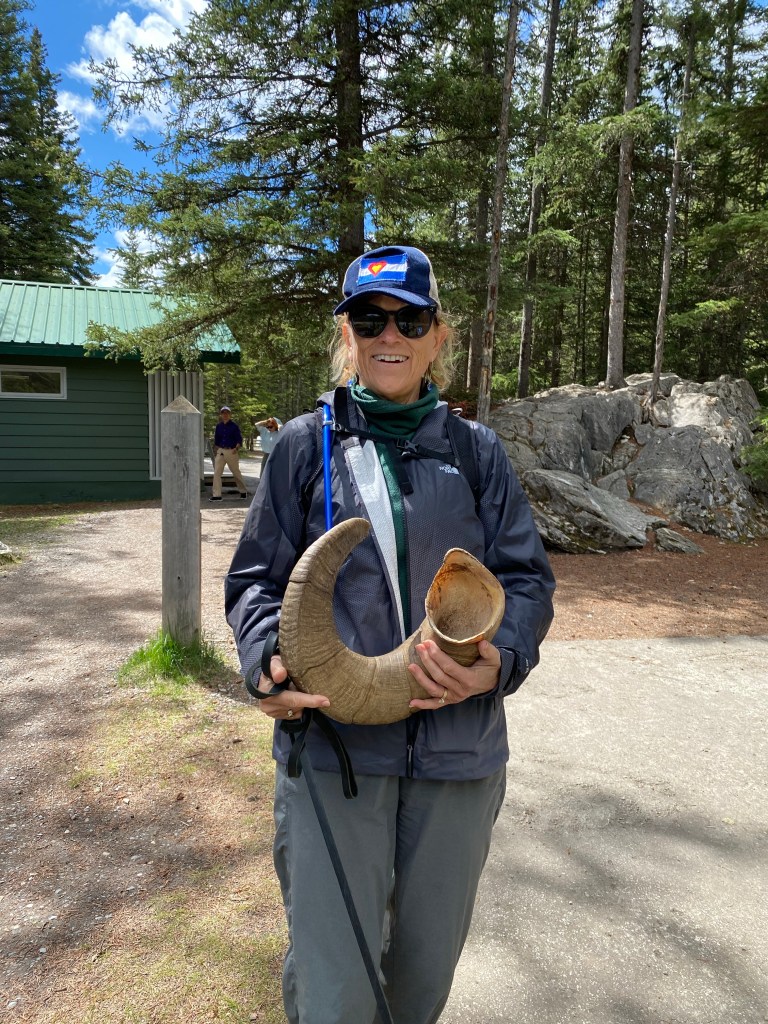
A ranger let Lisa holding a bighorn sheep horn. She learned how they get their name.
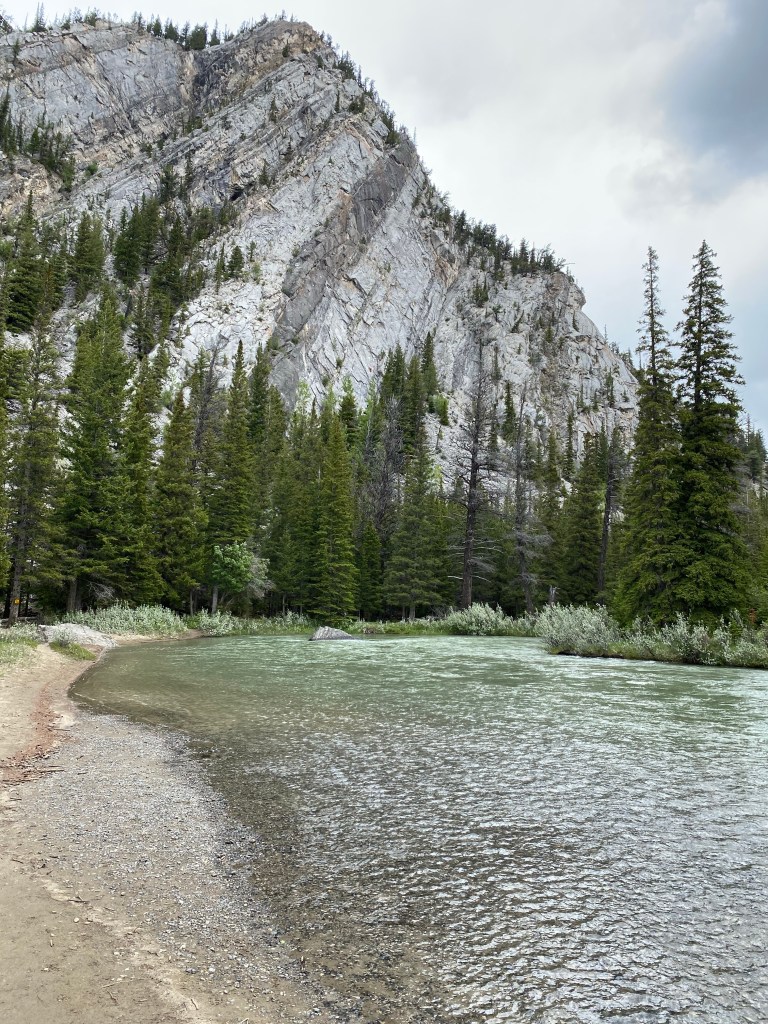
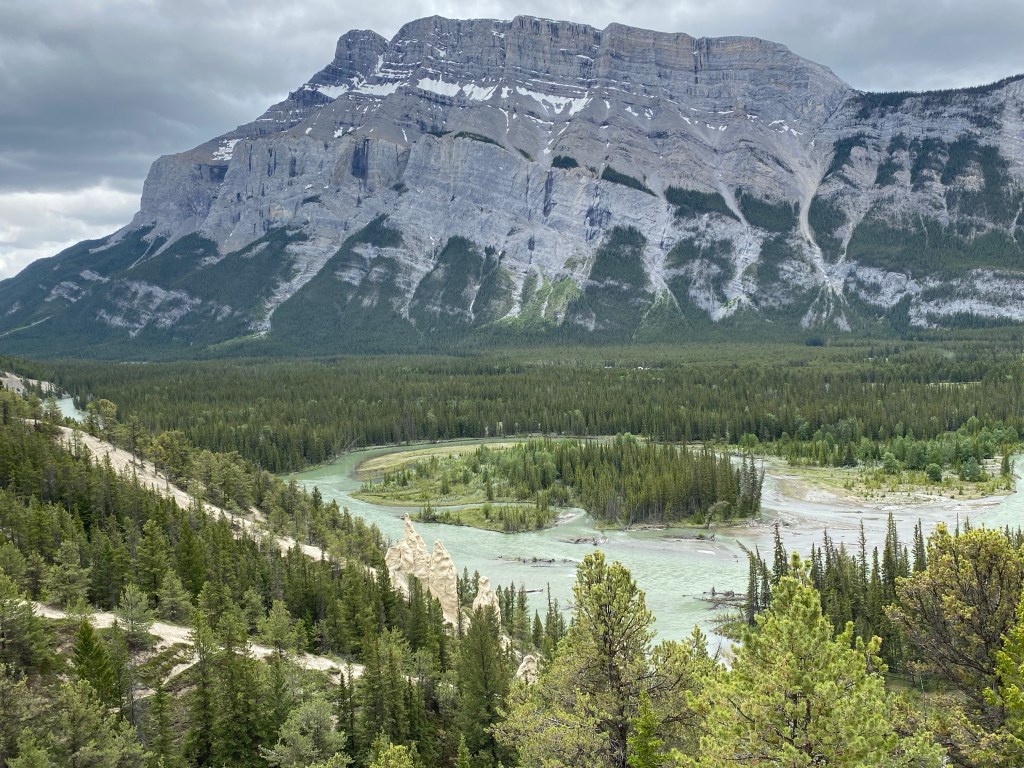
We hiked along the Bow River on our way up to the hoodoos.
The view on our way to the famed hoodoos was spectacular.
If you look closely you can see rock climbers scaling this wall. No, thank you.
The hoodoos. Needless to say they were underwhelming. But, the hike itself was incredible.
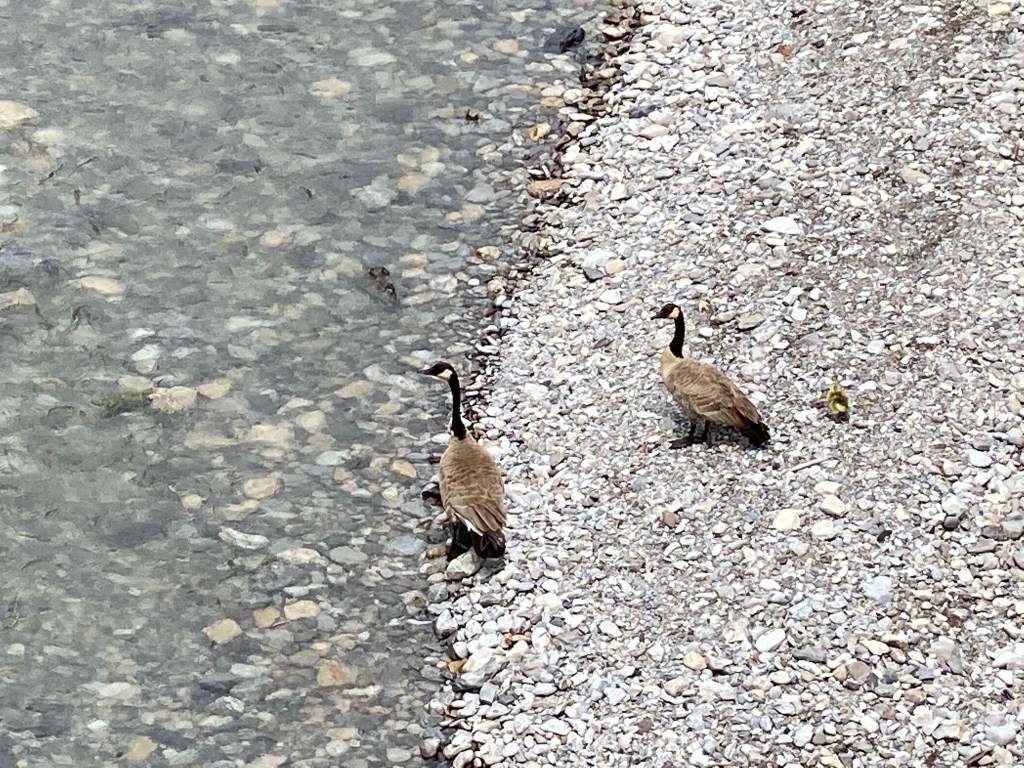
No bears, but, we did see a pair of Canadian Geese with their baby.

Lake Louise

Lake Louise is the most famous site in Banff National Park. So, of course, we wanted to see it. We got up on our first morning and headed out to the lake. It was an hour-and-a-half drive so it took us a while to arrive. Once we approached the turnoff to the lake, signs informed us that the parking lot by the lake was full. We needed to go to the park and ride lot. Lisa, never deterred by these things said, “let’s just drive up and see if we can get in.” So, we drove up. And, we didn’t get lucky.

So, we drove back down to the park and ride where they summarily informed us that dogs were specifically not allowed. (I think they read our blog about Ralphie.) So, we drove home with the beautiful mountain views as our consolation prize.

The next day, we decided to head up at the end of the day. While we wouldn’t be able to get in a hike this way, we might be able to get in to see the lake. As we approached we got the same no parking available signs. Lisa, still not deterred, said we should drive up and see if we could get lucky.

We got to the top by the lake (You can’t see the lake from your car, by the way), and the same people that waved us back down the mountain appeared to be doing so again. But, no . . . They were sending us up to another lot right by the lake. We’re in!

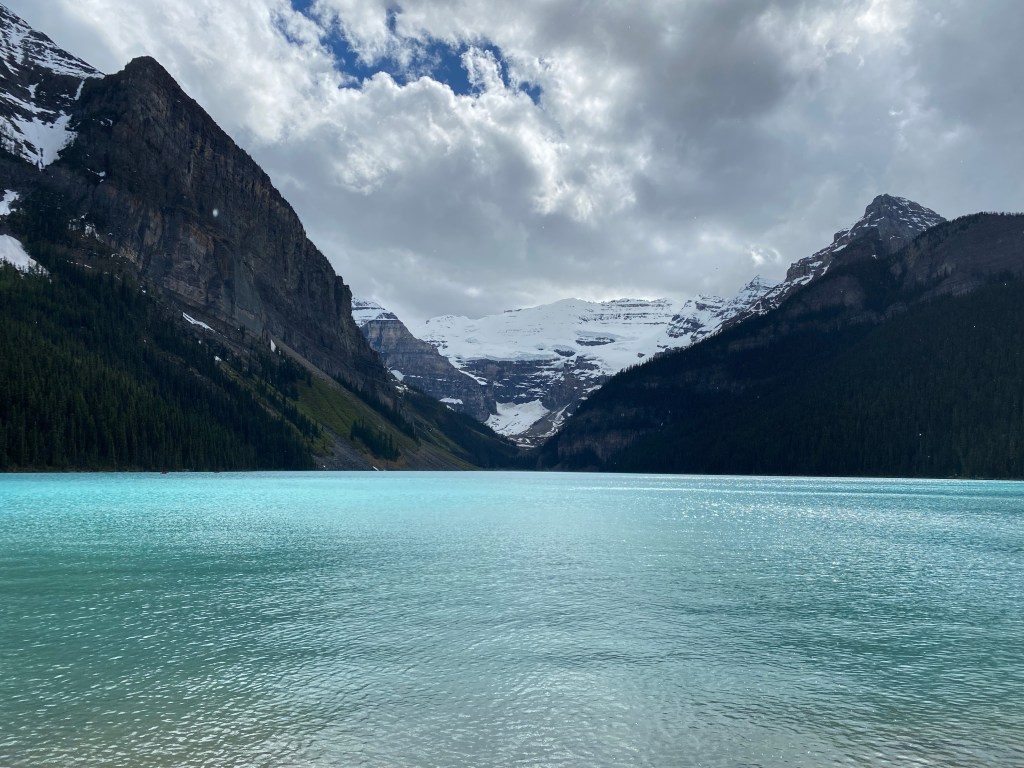
It was worth it. The lake is all that was advertised. It was a bit of a cloudy day so the blue wasn’t as iridescent as it could have been. But, no matter. It was spectacular.

Lake Louise
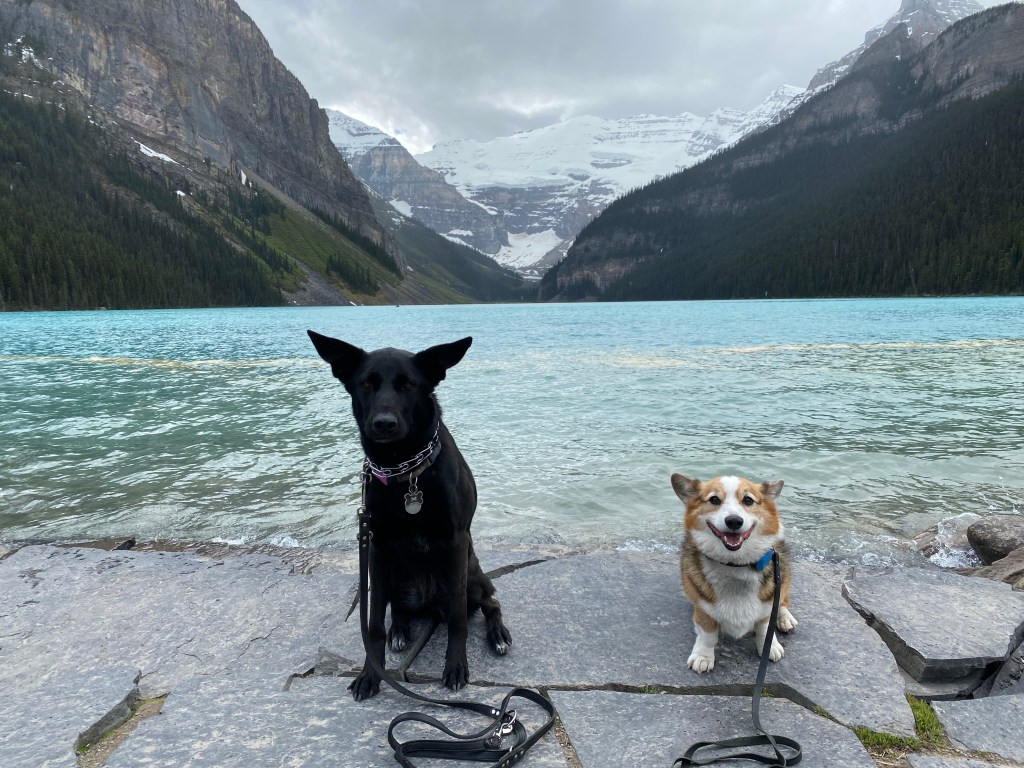
The dogs mugging it up by the lake.
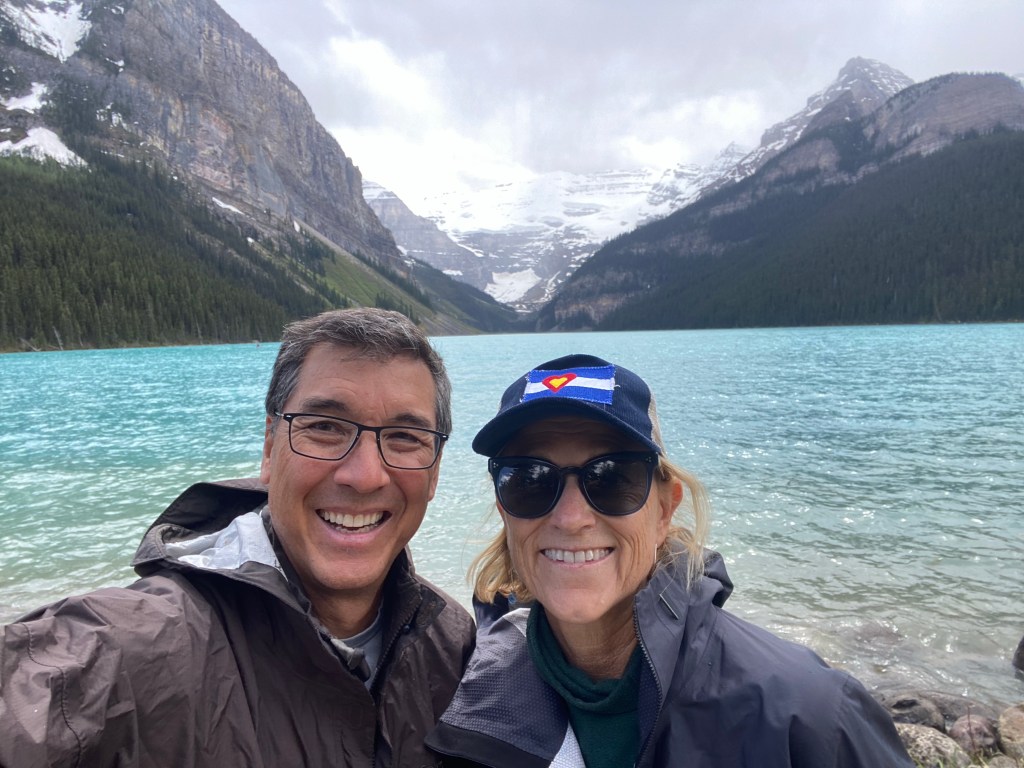
Shameless Lake Louise selfie.
A bit of sun caught this corner of the lake to give you a sense of the color.

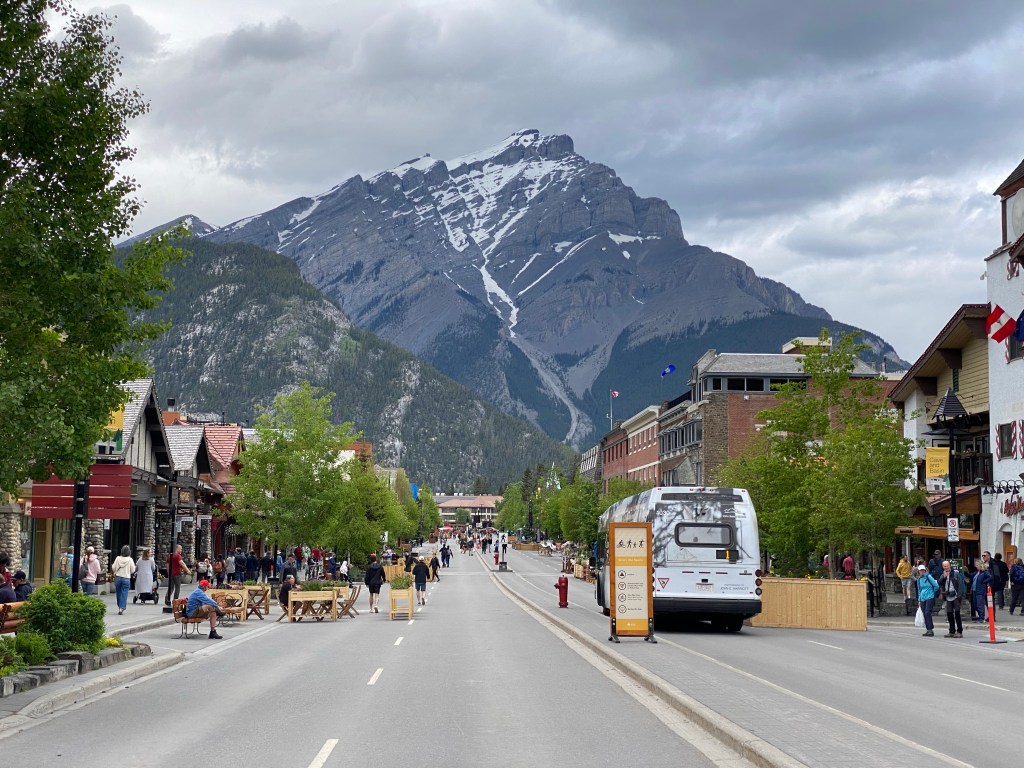
We went into the town of Banff one afternoon and, as we always do in a new place, bought a Banff Christmas ornament for the tree. While it was clearly aimed at tourists, it was clean and beautiful.

Downtown Banff
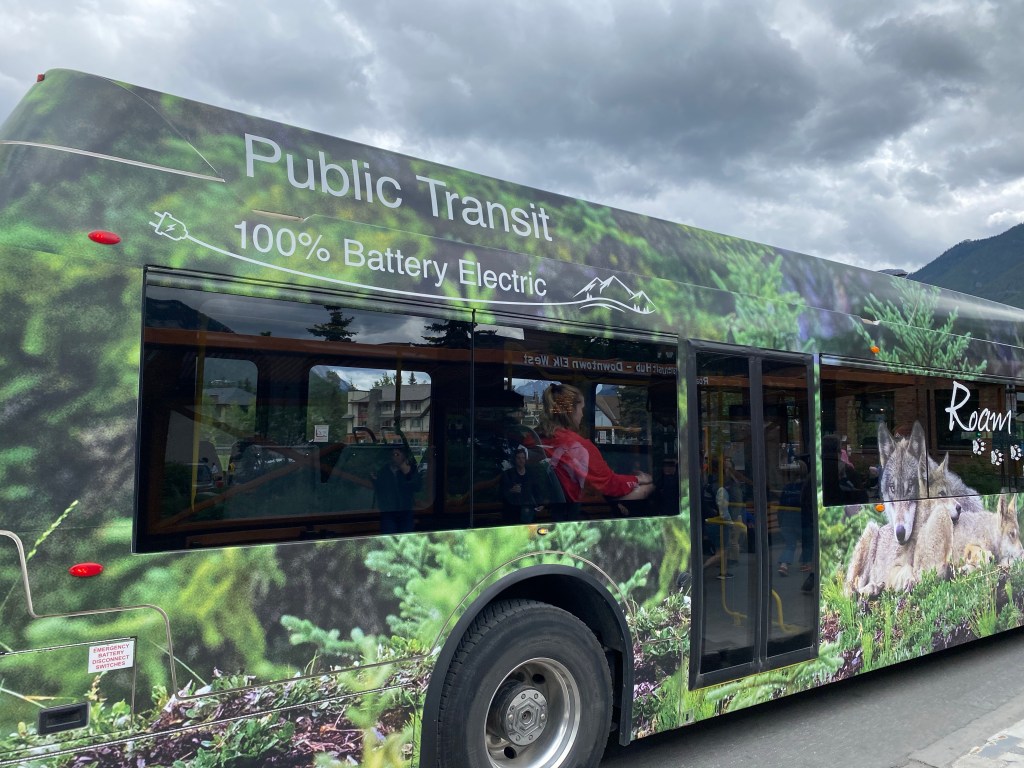
Lot’s of clean public transportation.
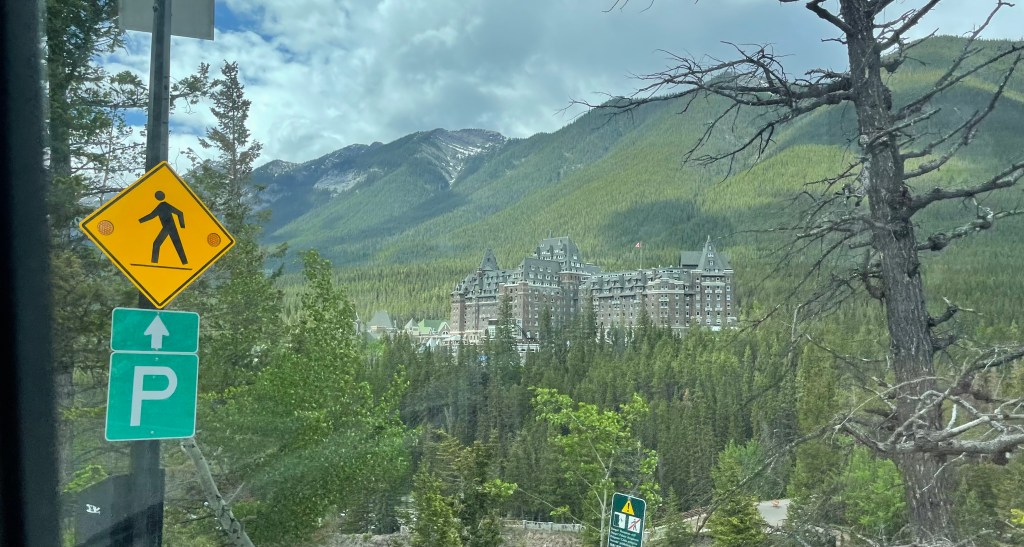
The Fairmont Banff Springs. We had lunch here. It was really nice.

Canadians

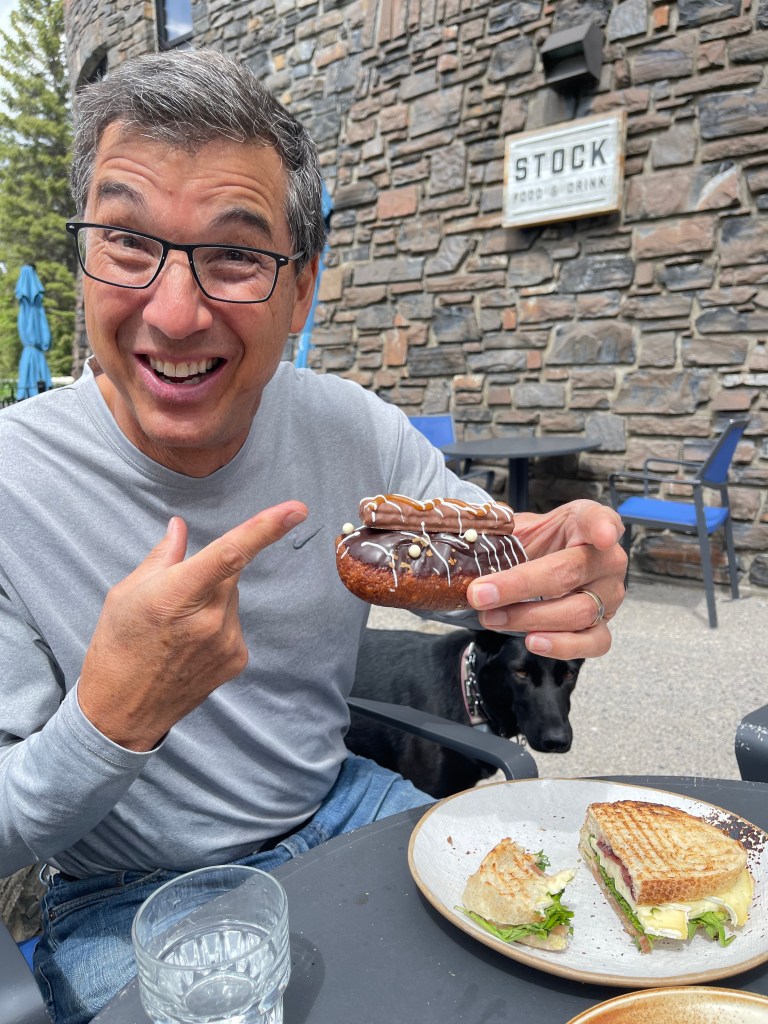
We’ve spent the past week in Canada and, while the country is beautiful, our lasting impression will be of the people of this country. They were polite, kind, friendly and accommodating. Not just some of them — but, everyone we met were plain good people. Even the drivers were polite. When Brad mis-communicated an order at lunch, the wait staff were so apologetic that they got the order wrong, they brought out this amazing dessert for free and offered coffee and tea and water for the dogs. Now that’s hospitality, eh?

Not sure what this dessert is, but it had a Twix bar on top and in the middle. And, it was delicious. Sophie’s not impressed.

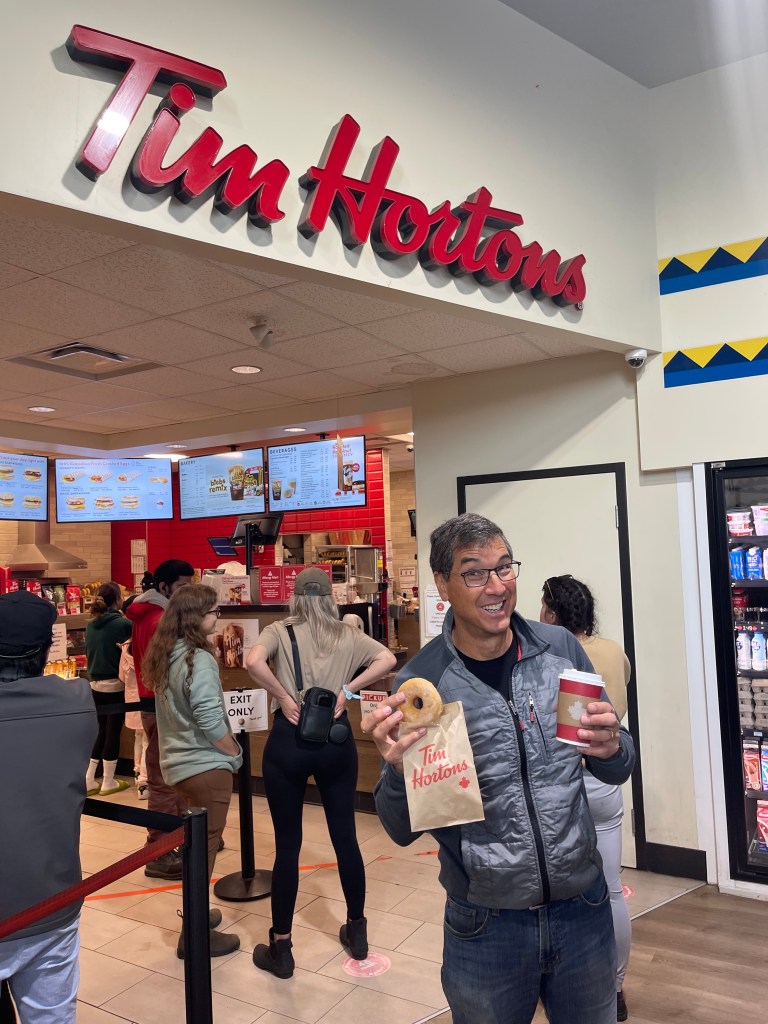
This trip so far has been an incredible experience. We highly recommend both Vancouver and Banff National Park for your future travel plans. On our way out of town we did, finally, stop at a Tim Horton’s. We do recommend Lake Louise. Tim Horton’s — well, you’re on your own for that.

Glazed donut and black coffee at Tim Horton’s

Next, we’re back in America at Glacier National Park, Montana.

Categories: Travel | Tags: , , , , , , , | 4 Comments

Blind Bay on Shuswap Lake. A little Slice of Heaven

We drove out of Vancouver saying goodbye to the friendly staff at the Fairmont Pacific Rim. The doorman was particularly fond of Ralphie. Lisa offered to leave Ralphie with him. I quickly ushered Ralphie into the van.

As we entered the Canadian Rockies, Google Maps kept trying to get us to Shuswap Lake, today’s destination, via a longer circuitous route. Highway 5, the trans-Canadian Highway, is the most direct route but, for some reason, Google had a bias against it. We decided to ignore Mr. Google and obey geometry — the shortest distance between two points, and all. Given the popularity of our “something went wrong” blogs, you’ll be disappointed to know we arrived an hour-and-a-half faster than Google’s suggestion with no mishaps.

Lisa and I stopped for lunch in Kamloops, a town of about 90,000 residents in the foothills. Apparently, Kamloops is known for being the Tournament Capital of Canada. Hard to tell. We just stopped at a nice park on the river and had a picnic lunch. Ralphie nipped at a little girl who tried to pet him. Lisa asked if we could go back to the Fairmont and give him to that nice doorman.

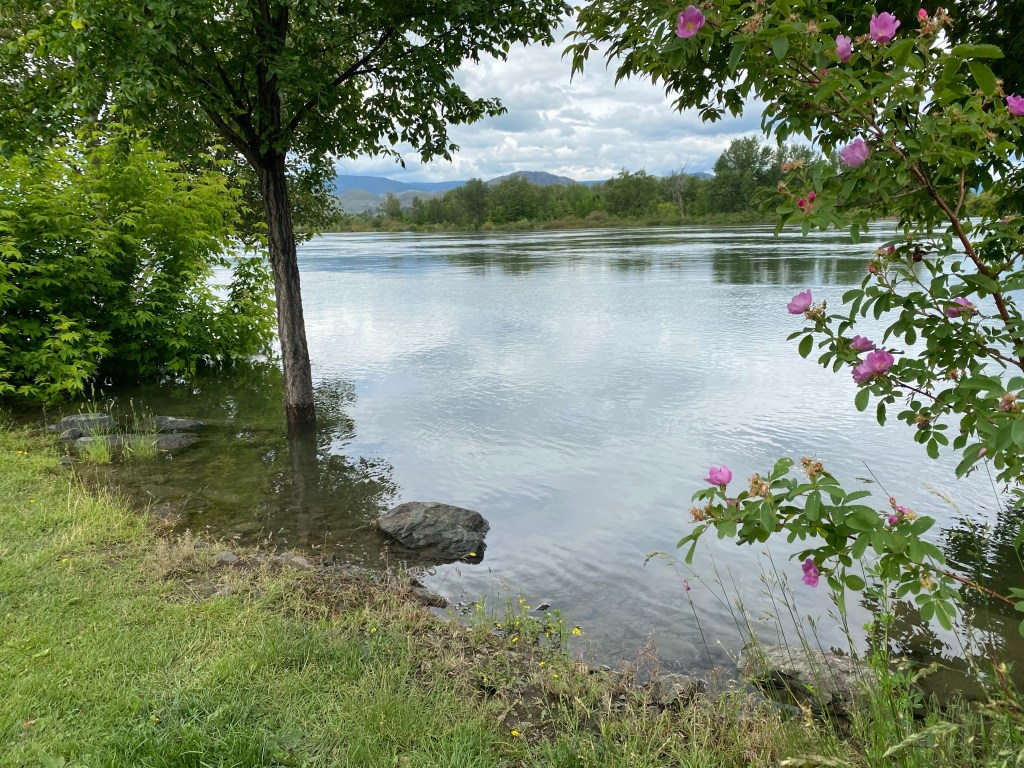
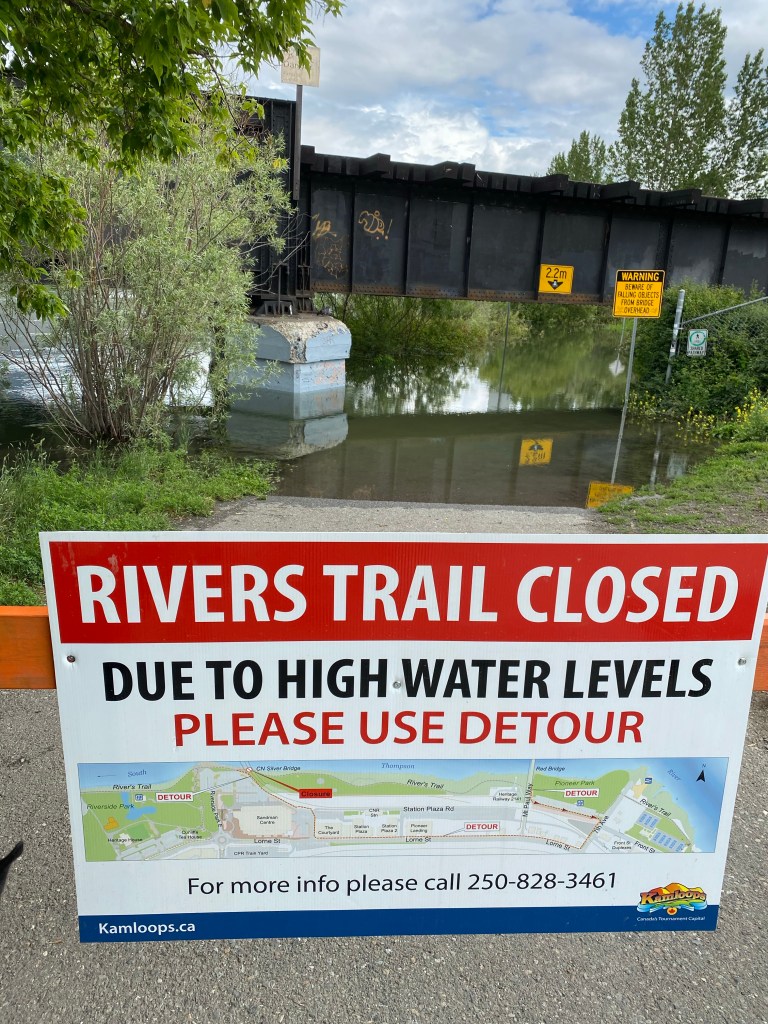
The river was quite high. There has been record rainfall in the area so lakes and rivers are overflowing their banks.

The Thompson River overflowing its banks
There used to be a trail under the railroad tracks here.

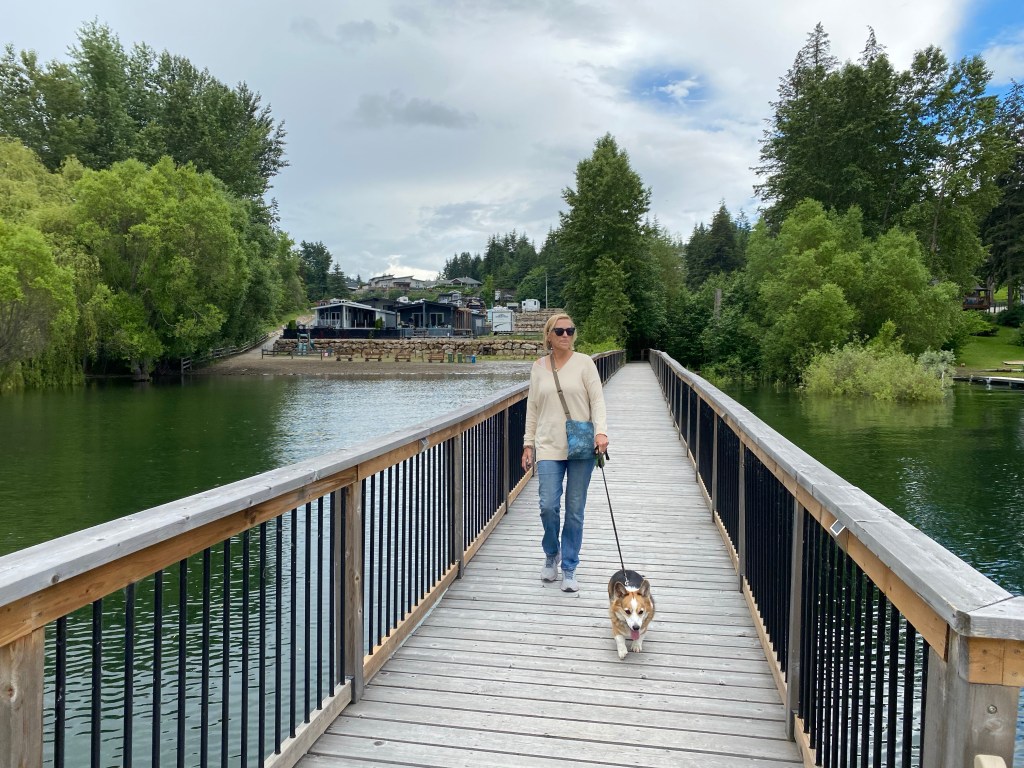
We arrived at Blind Bay Resort, our RV Park, at around 4:00. The nice woman at the check-in desk sent us to our spot, a beautiful site overlooking Shuswap Lake (pronounced shoe-schwap). It is a beautiful place and we have been sorry this is only a one-night waypoint on our trek to Banff.

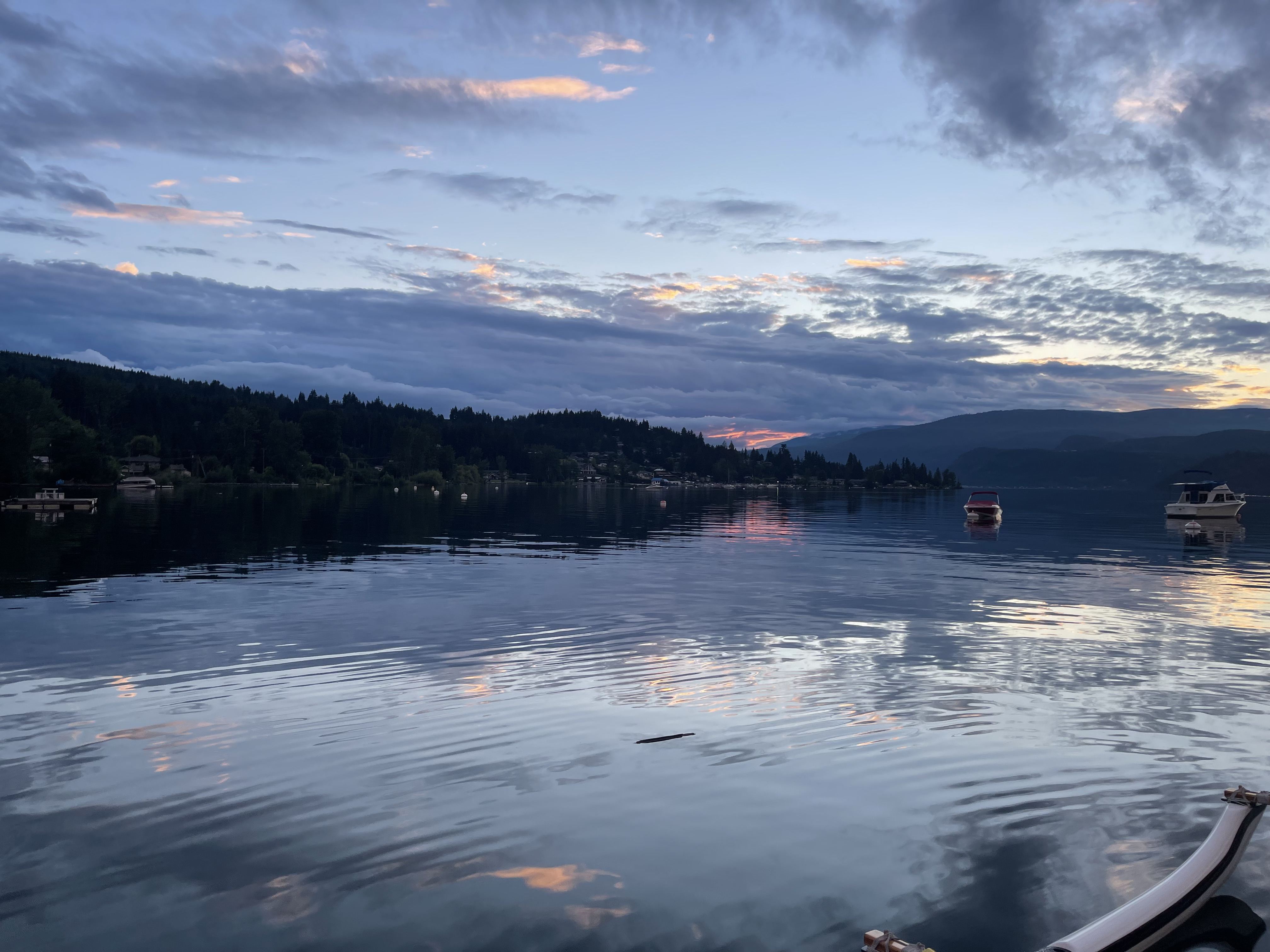
We set up camp, went on a walk, grilled up some burgers (accompanied with Hall wine, of course) then went to watch the sunset on the pier. It was a beautiful evening and we marveled at the little but rewarding experiences we are having by traveling in our little RV know as the Winona Rider.

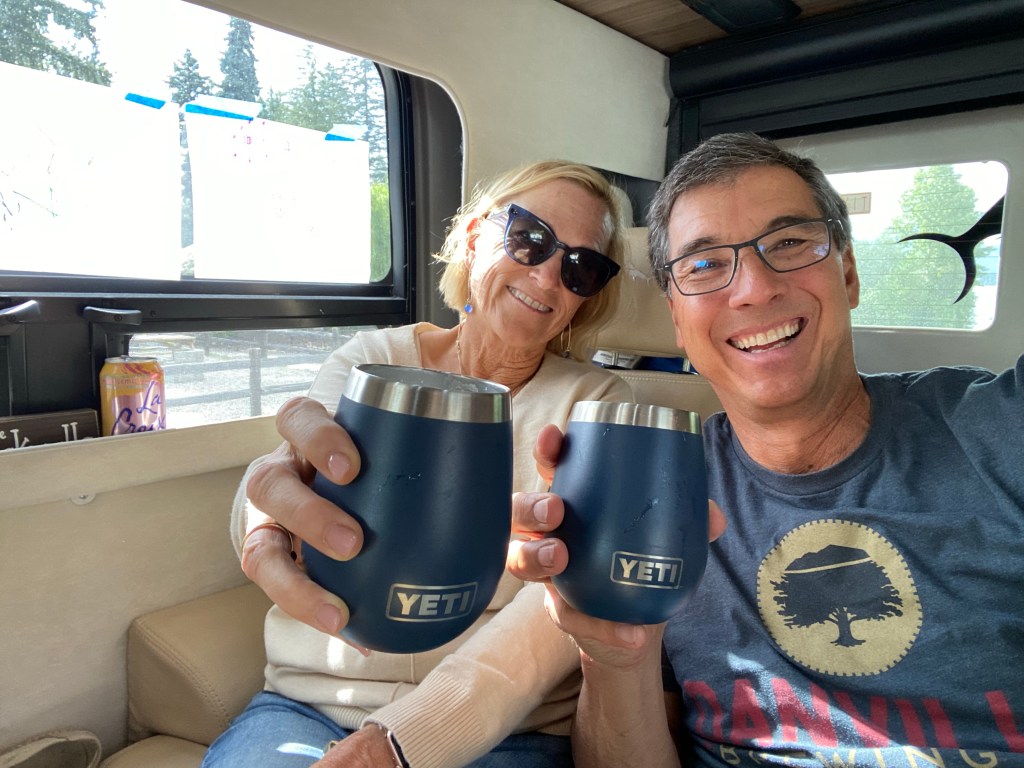
Enjoying a beer upon arrival at Shuswap Lake
No one on the pier for Lisa to give Ralphie to.
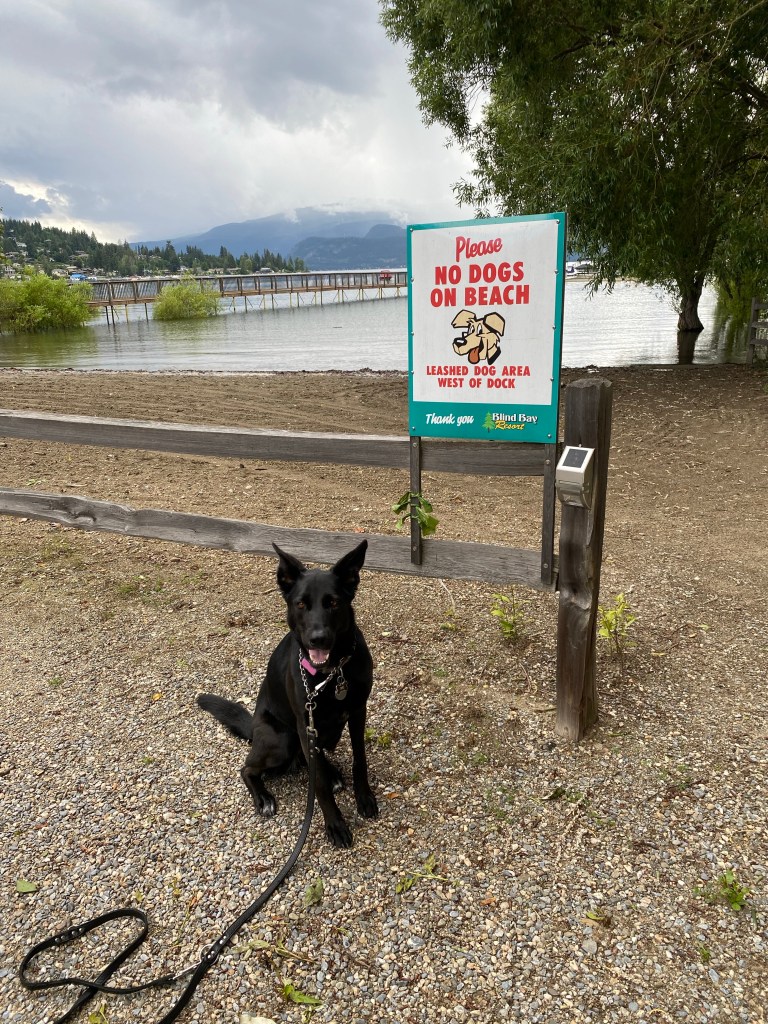
Oh well, the beach is largely consumed by the high lake level anyway.
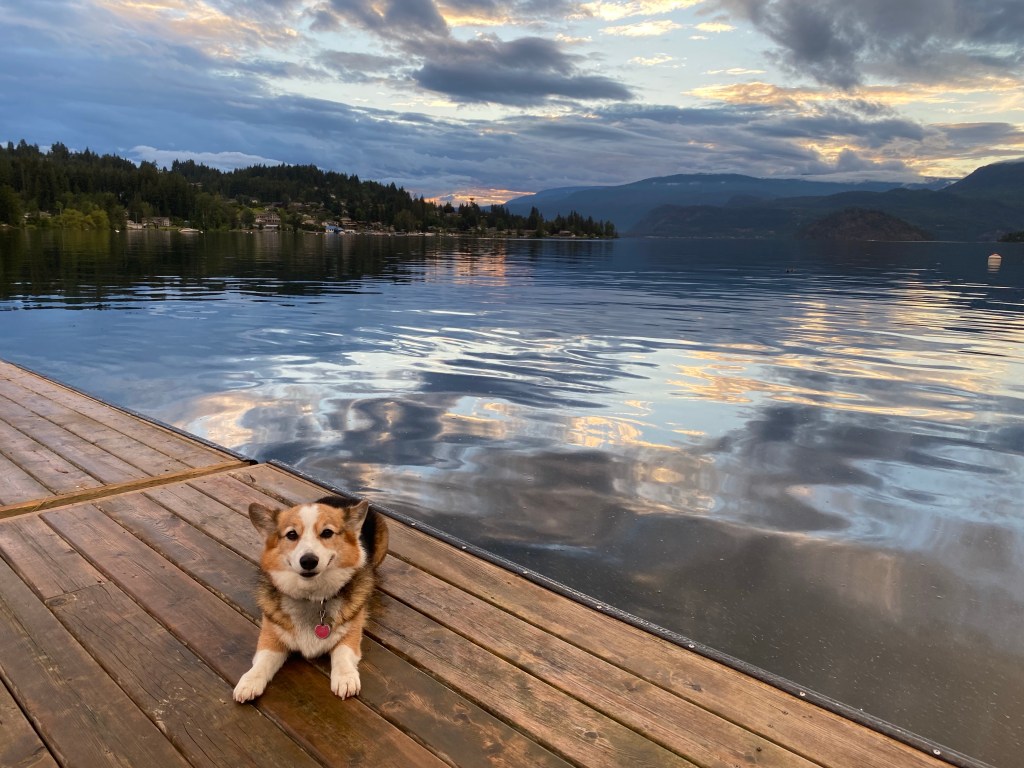
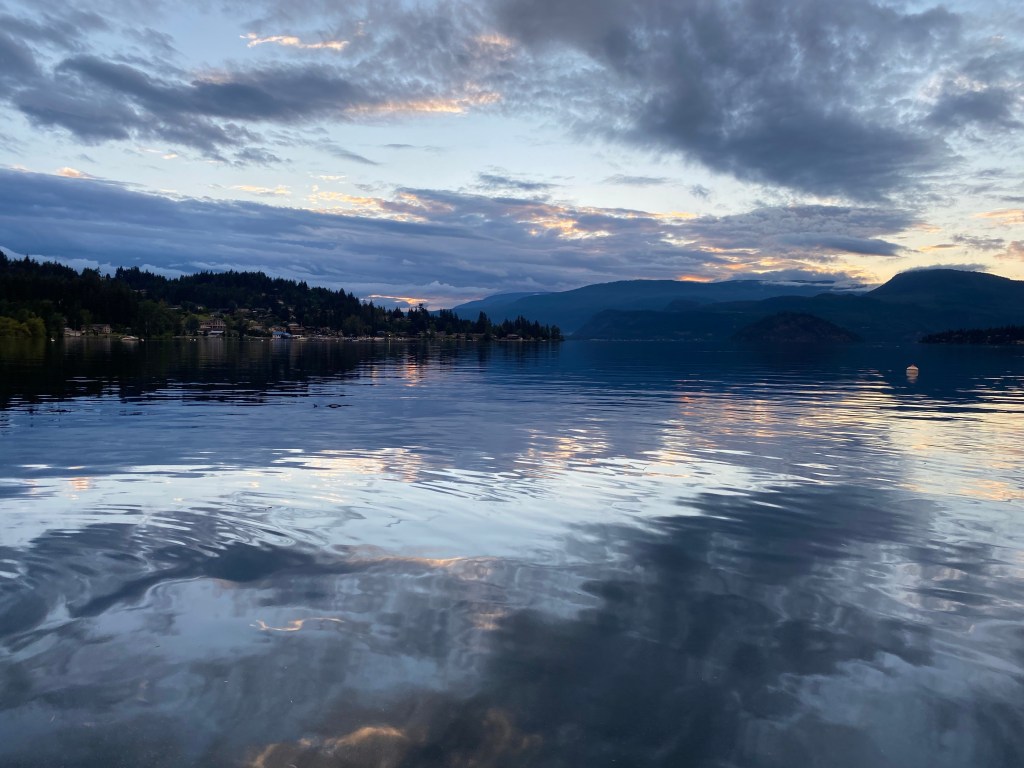
The end of the dock at sunset
Blind Bay at Sunset
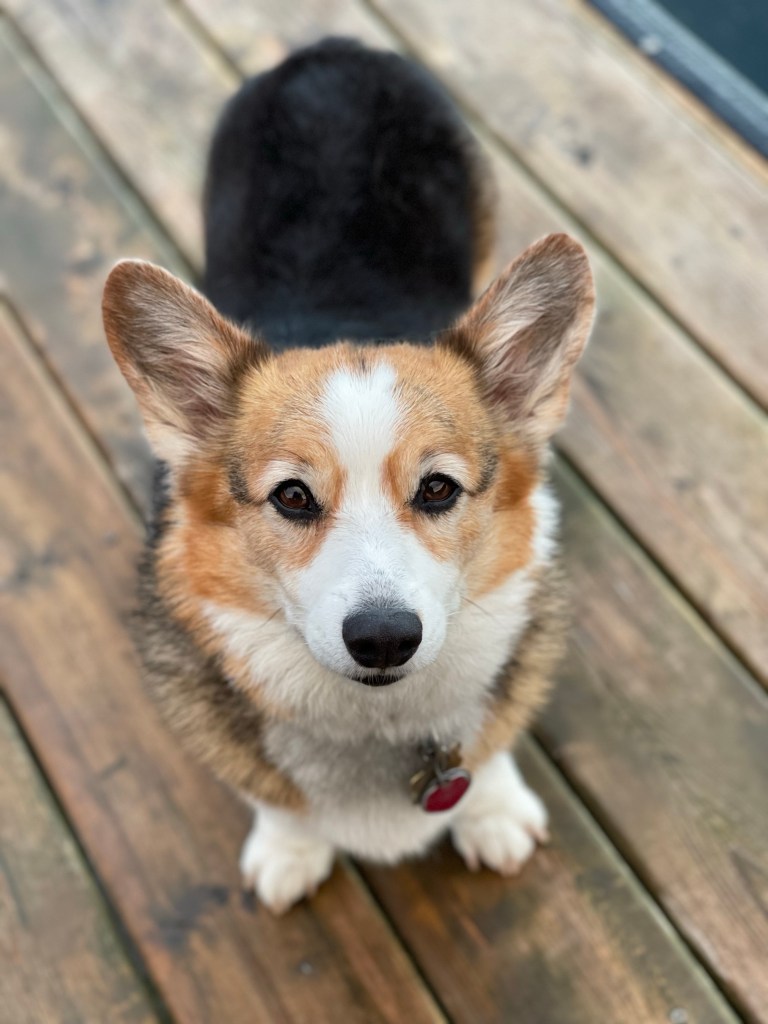
“No, really. I’m innocent.”

Next stop. Banff.

Categories: Travel | Tags: , , , , , , , | 1 Comment

Blog at WordPress.com.