Posts Tagged With: Hiking

Out of Africa

When we first told friends and family that we were going to Africa this year, they all said the same thing. Africa will forever change you and it will help put life’s priorities in perspective. We weren’t exactly sure how we would be changed but we went into this trip with an open mind and a curious attitude.

We stayed in lovely resorts and all had excellent service. The African people we met were friendly and courteous wherever we went. I told Brad that I think the people in Africa smile when they talk and always have a sparkle in their eyes and a heart-felt greeting.

But it was our guides and their personal stories that we will always remember when we look back at our trip.

We will remember Charles and Junior in Zambia who talked about their country with pride and concern. They had pride in their culture and the beauty of their country but concern about their economy and the future. Zambia’s economy has a 60 percent unemployment rate and the majority of Zambians live below the international definition of poverty with an average life expectancy of 41 years.They were experiencing daily power outages while we there due to lack of infrastructure during the drought periods (most of the power is hydroelectric) and both of them talked about the high levels of corruption in their government. They both talked about their concerns with how global warming would affect their families in the future.
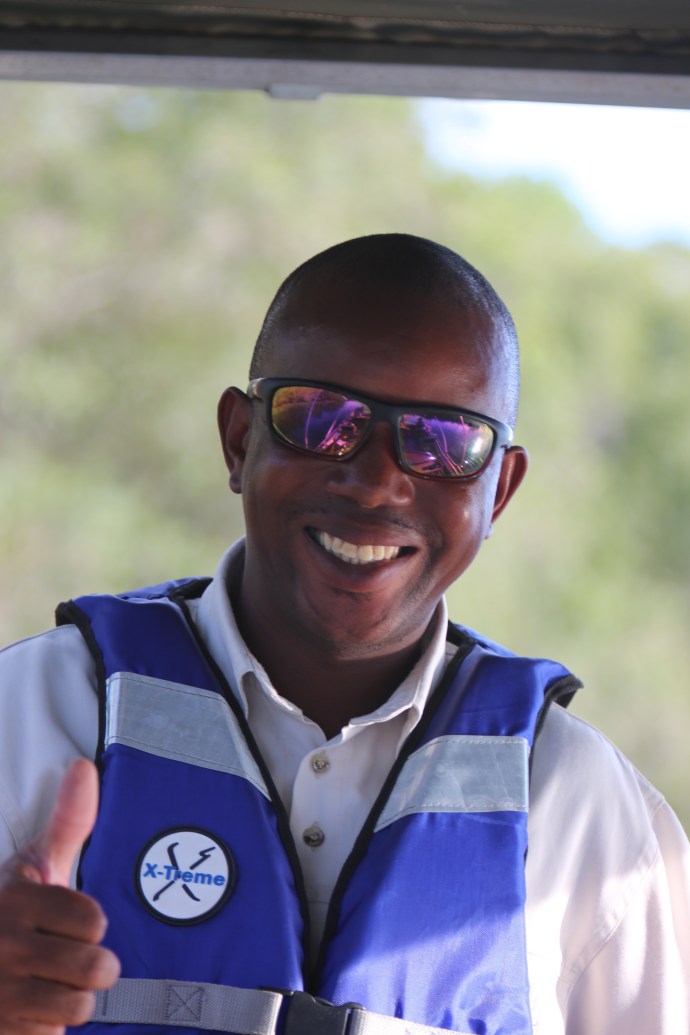
Junior

We will remember our guide at the Nakatindi Village. He had great pride in the accomplishments of his humble village and the fact that he had been selected to be a tour guide. He talked about how grateful he was that Abercrombie and Kent and our resort at Sussi and Chuma had provided funds and training for the people of his village. The village now has a commerce center where people are trained to run their own business. The Bike Shop was especially impressive and the shop was exploding with bicycles that had been delivered from overseas. The community has a neighborhood watch program and each community area has their own form of democratic leadership to make sure the villagers needs are met. The adults were all friendly to us and the children were out playing games and soccer with each other. The village really doesn’t have crime and are mostly concerned about the destruction that the elephants could bring to their homes. The biggest threat to the village continues to be the spread of AIDS and health care issues. He has already seen how the new clinic has helped the community. He is frustrated that the government ignores their village and they must rely on private donations to improve their standard of living.
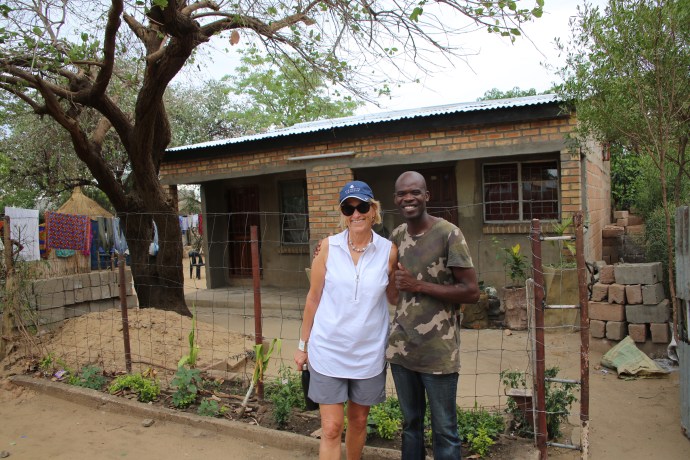
We will never forget Mo in Kliptown in Soweto who is running an educational program for the youth of the township. He also has to rely on private funds and donations as the township receives very little help from the government. He is very proud of the program’s accomplishments and more young people are getting skills to have jobs as a result of his group’s hard work. I still can’t get the image of the port-a- potties that ten-twelve families have to share (they only get cleaned twice a week). The lack of power and water is also a huge issue for the township.
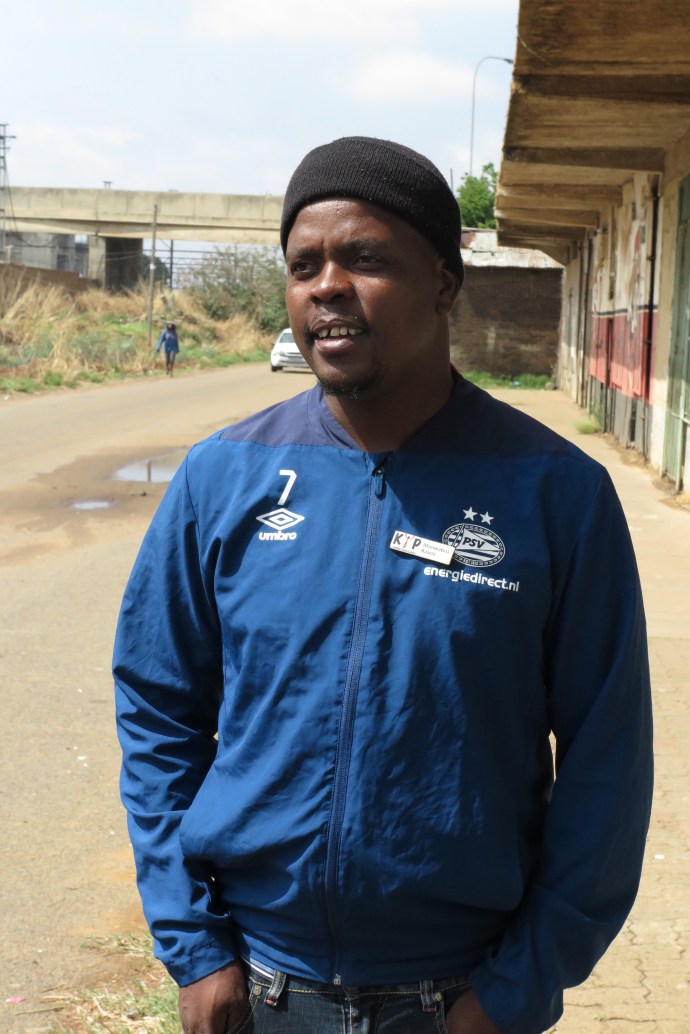
Monwabisi Baleni — AKA Mo

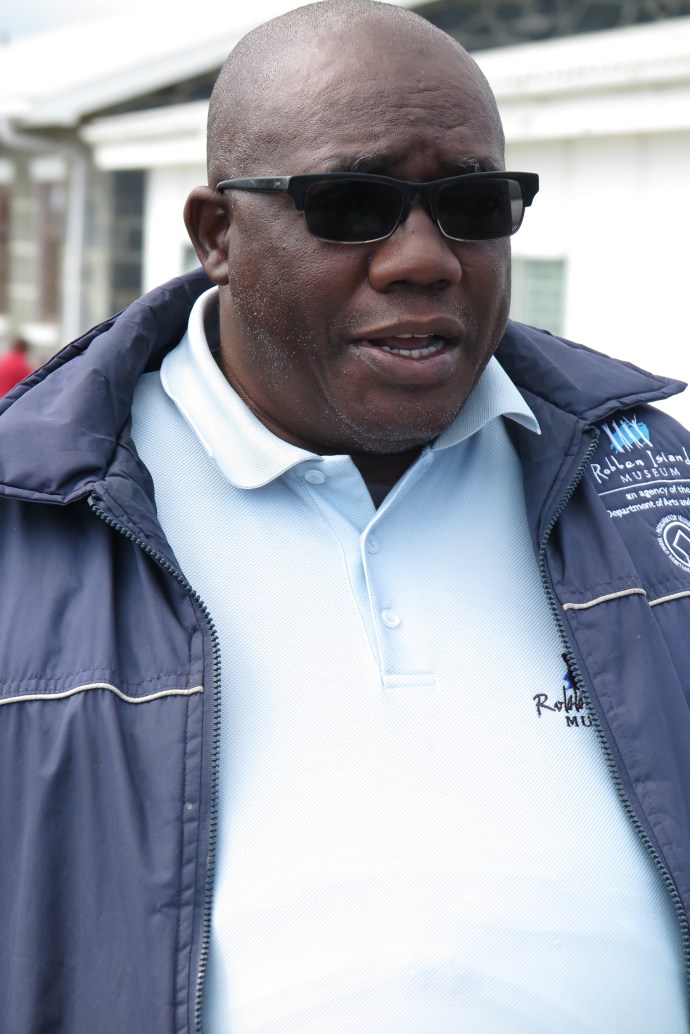
Our guide, Thulani, stunned us with his accounts of daily life in Robben Island. When he slammed a prison door to let us know how it feels to be locked in, it was very powerful. Being allowed to go in Nelson Mandela’s cell was also very powerful and sobering. The memories of Apartheid are still painful and emotional for Thulani.
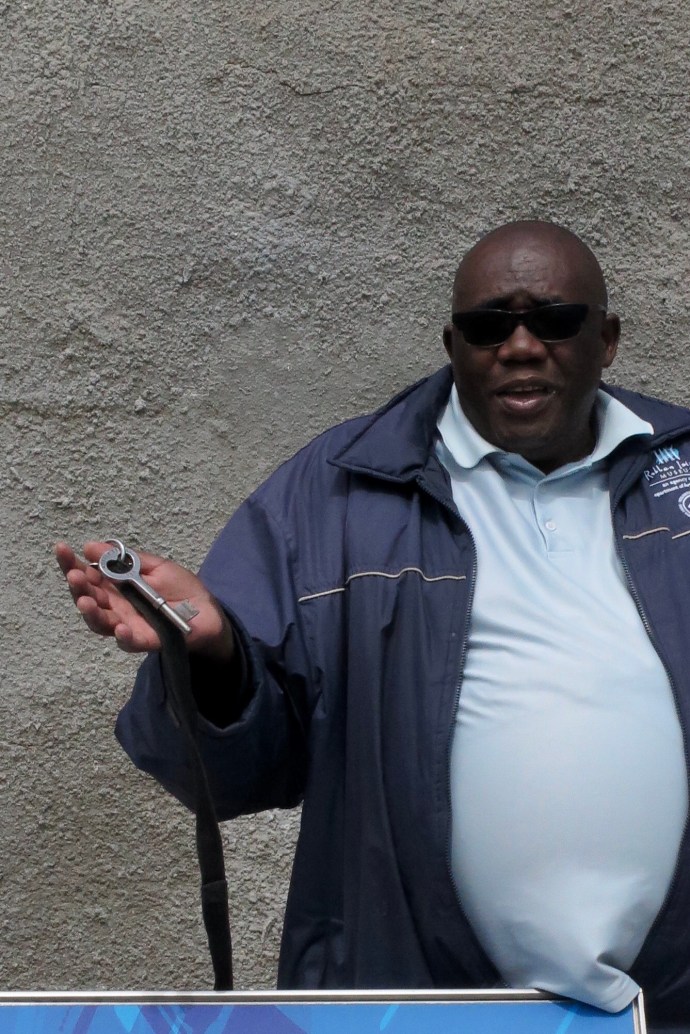
Thulani Mabaso

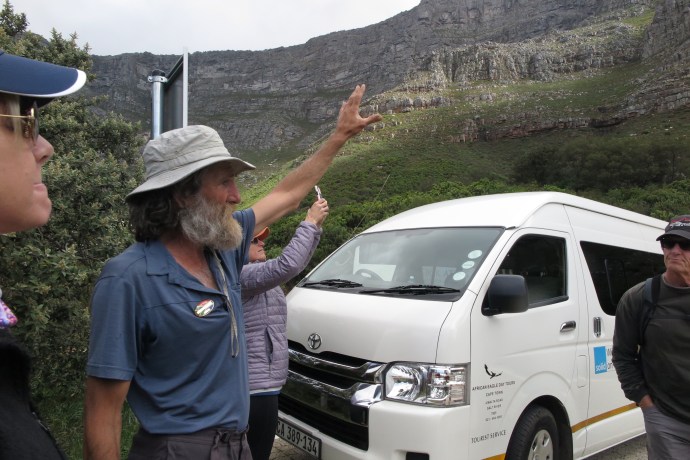
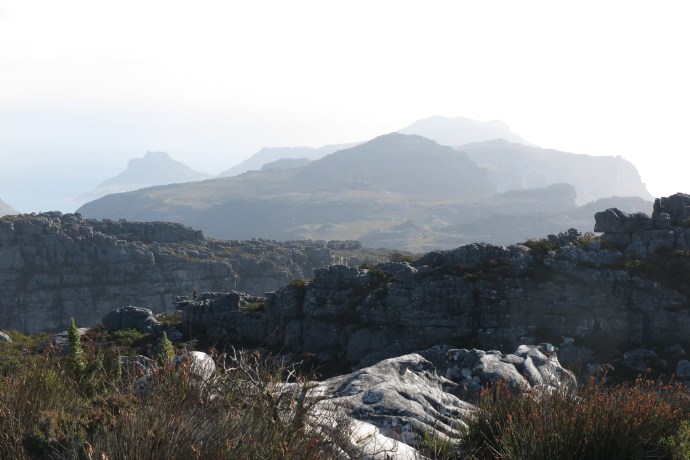
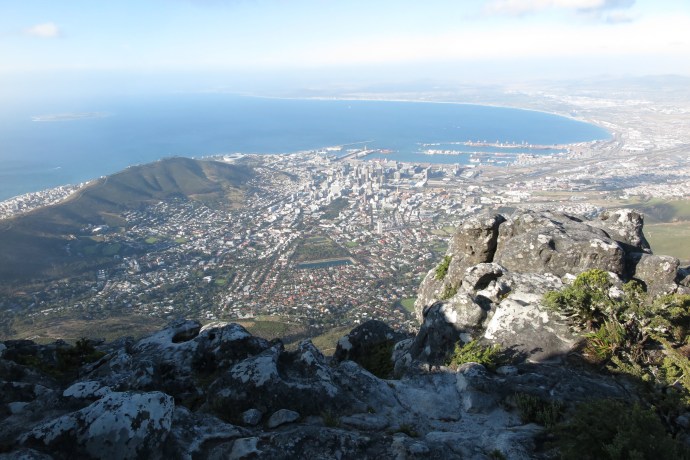
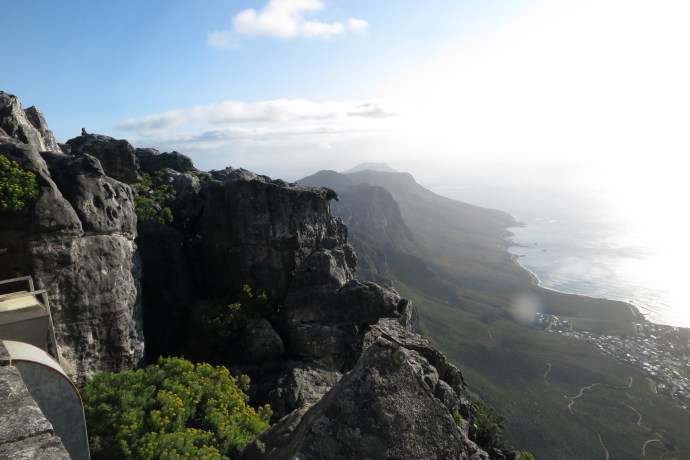
Our mountain man guide, Ross, who took us up Table Mountain was right out of the movies. At one point, he stopped and let us take a much-needed break from our vertical hike and had us look around at the view. He has been climbing Table Mountain since he was five years old and said that as far he was concerned this place was his heaven. How could he want any more out of life?
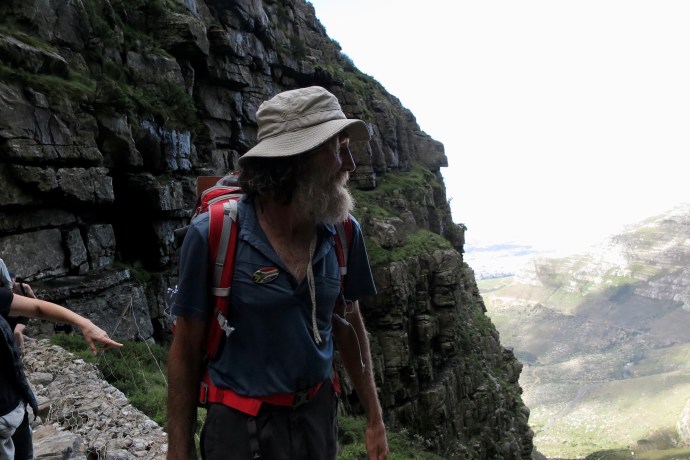
Ross, our Table Mountain hike guide, right of of central casting.

Our encounters with the African children in the villages will be our favorite memory of all. If I had the resources (and youth) of Angelina Jolie, I would have adopted them all as well! The heartbreak of watching the kids play in the filth of Kliptown, the joy of the 4th graders in the rural area of Sabi Sabi as they showed us their new robotics kits that Exclusive Resorts had donated, the hugs of all of the five and six year olds at the pre-school are memories forever. I struck up a conversation with one of the fourth graders while she was doing the robotics demonstration. She seemed exceptionally bright and told me she plans to be a doctor. I hope she will achieve her dreams. We will also remember the little girl in Zambia who looked to be about Maile’s age. She came running towards Brad and leaped into his arms as if he was her own Grandpa and gave him a long, big hug.

Speaking of grandparents, we will also remember the role of the grandparent in the family unit in the villages in Africa. The extended family is all important in Africa and grandparents are held in high esteem. They take over much of the child-rearing while the parents go to work and apparently at the age of nine or ten they are responsible for all of the sex education conversations. The children stay in the same room with their parents until that age and then the parents need to build a new room on their house. If they can’t do that, the kids have to go spend every night with their grandparents. We love spending time with Max and Maile but I am not sure if we would want to be in charge of child-rearing once they approach puberty! Families all live close to one another with brothers and sisters and cousins all in the same area if not house. We were told that even if younger people get educated and get jobs and are able to move up and leave the villages and townships, their parents and grandparents would never consider leaving their homes no matter how humble.

No one will probably let us forget some of the crazy, daring things we did willingly and maybe a little unwillingly. At home, I am a reasonably risk-averse person. Brad maybe not as much. But on vacation in an exotic place, it’s fun to try new things. Shark-diving, swimming in waterfalls; having leopards approach our Jeep; taking a bush walk with guides with armed rifles wondering if a lion might be just around the corner; going on a river boat trip down the Zambezi hoping that the rocks we were getting close to were not hippos; and hiking up Table Mountain worried that I rubbed into a Blister Bush (look it up!) that would cause horrible blisters and scars for life. . . These were all things that we don’t encounter back in Danville. Of course, nothing was more concerning than living without WiFi in Zambia and not being able to keep up with the political world back home or play Words with Friends! (Just kidding of course…..mostly it was a wonderful break from reality)
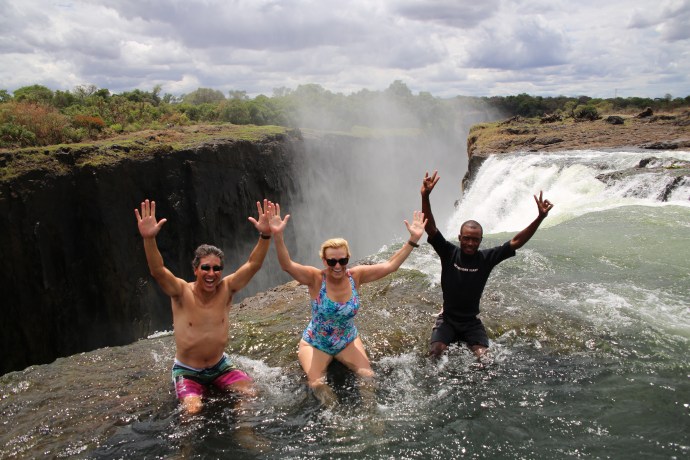
Devil’s Pool

Our guide Ruth at Sabi Sabi stole our hearts and captivated us on every safari ride. Ruth really brought the Savannah to life for us with her her excitement for each and every creature from dung beetles and millipedes to magnificent leopards and giraffes. I mean how many guides have you had in your life that will pick up elephant dung and passionately describe everything in it? That’s a special skill! Her animal and bird mating stories will stick with us and make us laugh for years to come. Ruth is only in her early 20’s and we are curious where this love of the natural world will take her. Whatever she does, she will be successful. And, yes, there were tears when we all said goodbye.
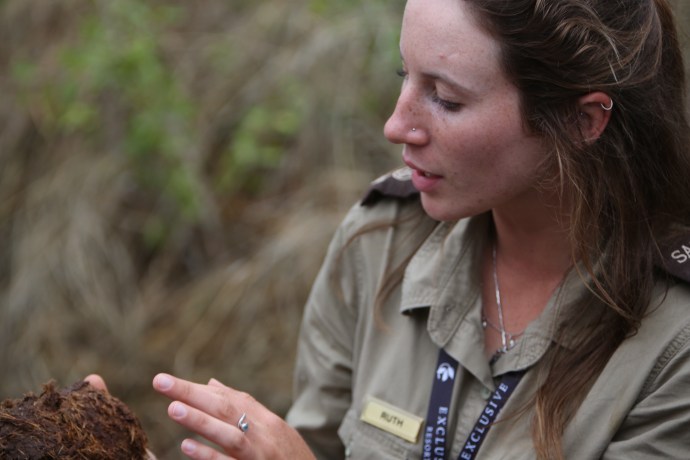
Ruth, our safari guide examining elephant dung

And lastly, we’ll remember Cameron. He was our group leader for the entire trip from Johannesburg to Cape Town. His attention to detail and love of his country showed in all of his actions. It’s a hard job being in charge of thirteen different couples in multiple foreign lands with security and weather issues out of your control. Luckily, like most of our Exclusive Resorts group, this group got along famously, all joined with our love of travel and learning about other cultures. We all commented about how great our karma was on this trip but we all know that it was Cameron’s planning and good nature that made the great things happen.
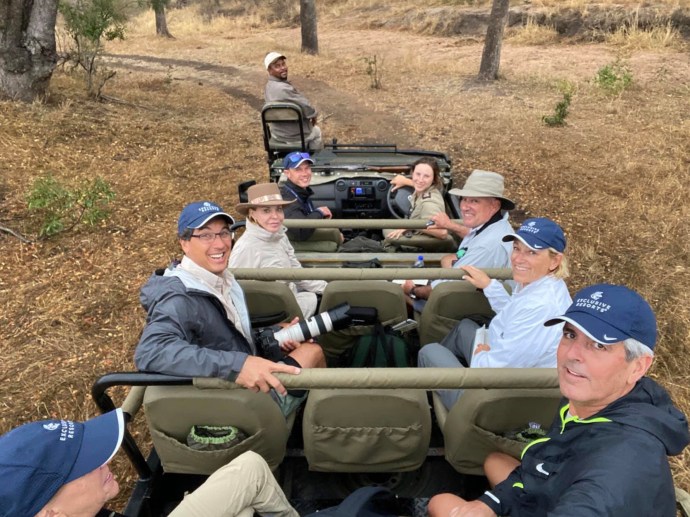
Cameron in the front,left seat. Photo by Dave Stevens

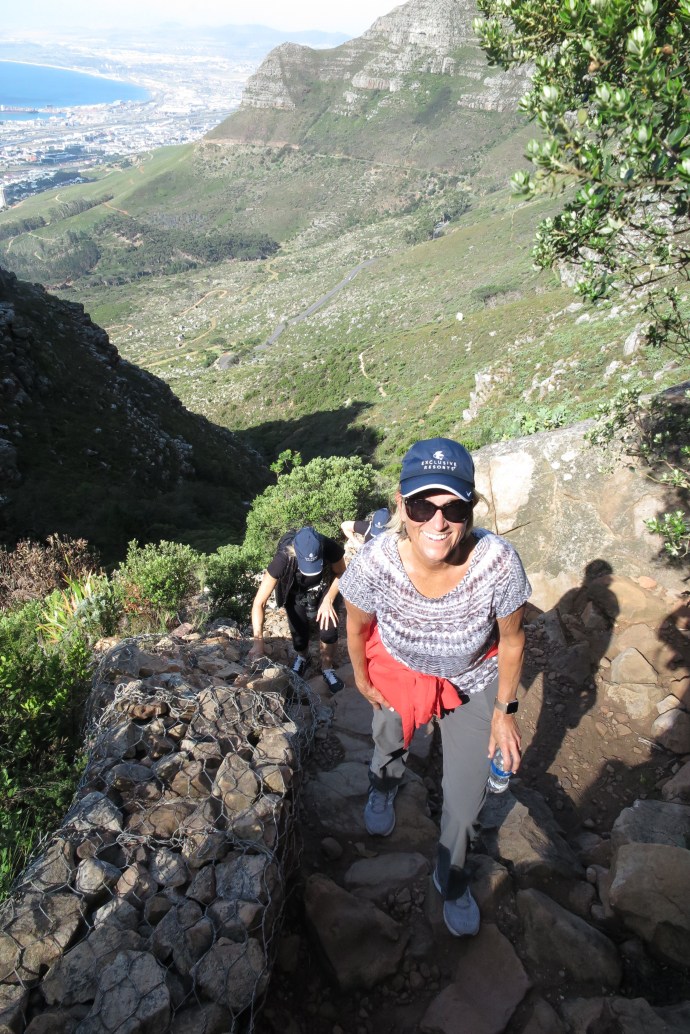
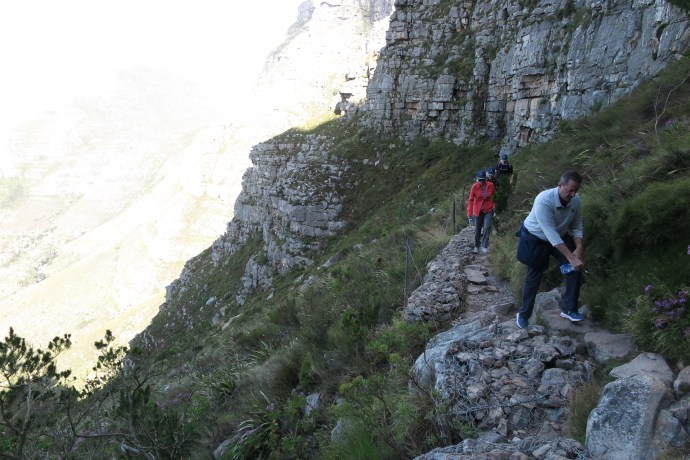
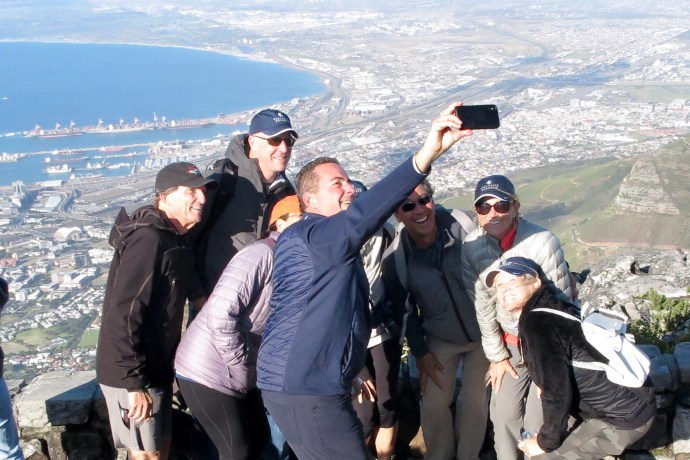
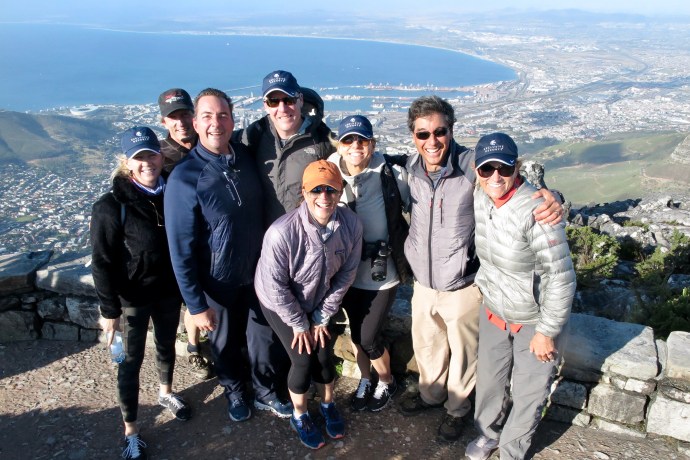
Our Table Mountain hiking group
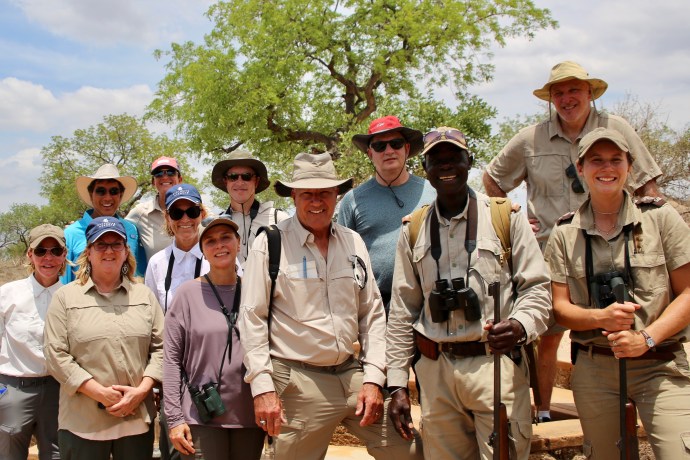
The bush walk group

So as we end our blog and have left South Africa, we would agree that we are changed for the better, equipped with a new perspective of the importance of family and ancestors and a different viewpoint on happiness and priorities. We also are challenged to understand the poverty and racial issues that still exist in parts of Africa and the lack of basic necessities in the villages and townships. Their governments all need to find the resources to do more for their people so they don’t need to rely solely on private donations for basic needs.
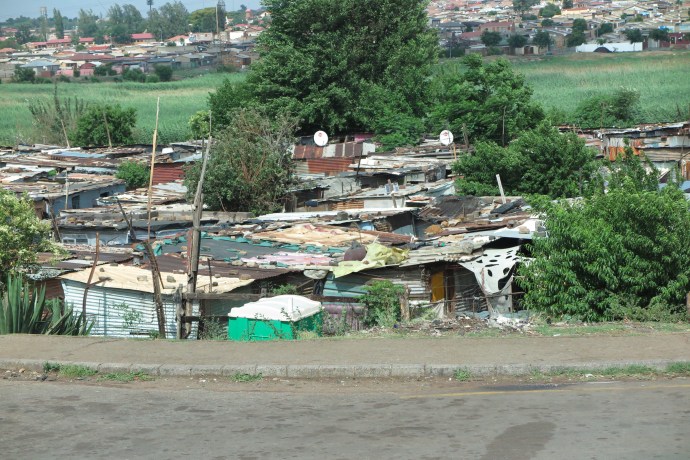
A neighborhood in Soweto

On my brother Bob’s recommendation, Brad and I read Nelson Mandela’s autobiography “Long Walk to Freedom” during this trip. It made our visits to Mandela’s home in Johannesburg, the Apartheid Museum, and his prison cell on Robben Island even more powerful. We can learn a lot from Nelson Mandela during our present time. I think any blog about South Africa should end with his words so I will leave you with these. They are still meaningful in today’s world.

“I never lost hope that this great transformation would occur. I always knew that deep down in every human heart, there is mercy and generosity. No one is born hating another person because of the color of his skin, or his background, or his religion. People must learn to hate, and if they can learn to hate, they can be taught to love, for love comes more naturally to the human heart than its opposite.”

Goodbye Africa. We can’t wait to come back and visit again.
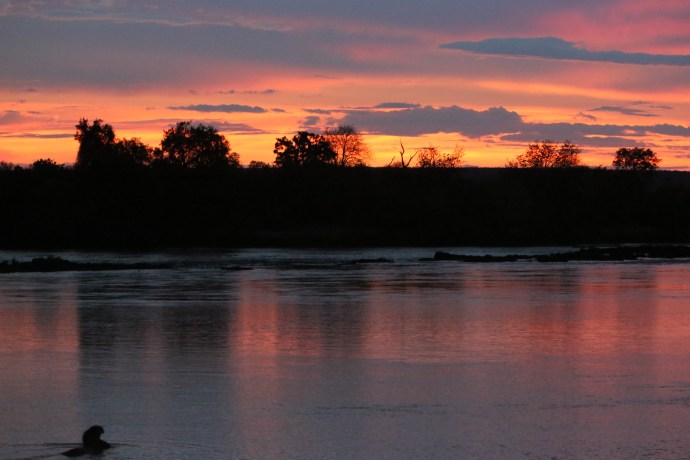
Sunset on the Zambezi River
Categories: Africa, Cape Town, Safari, South Africa, Travel, Victoria Falls, Zambia | Tags: , , , , , , , , , | 3 Comments

A Day in Cape Town — Prisoners, Their Guard, and a Hike up Table Mountain

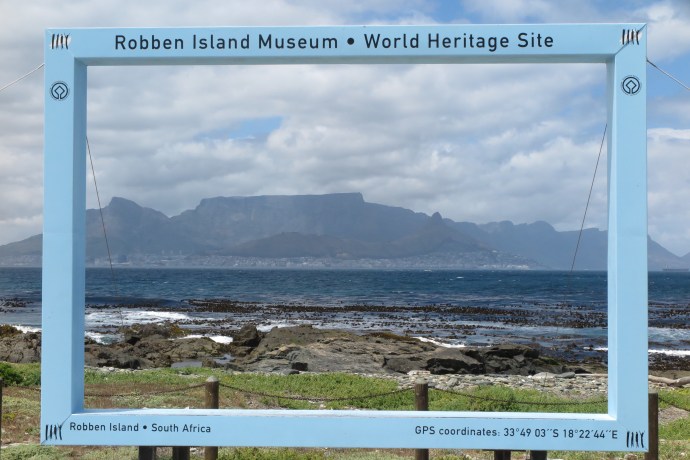
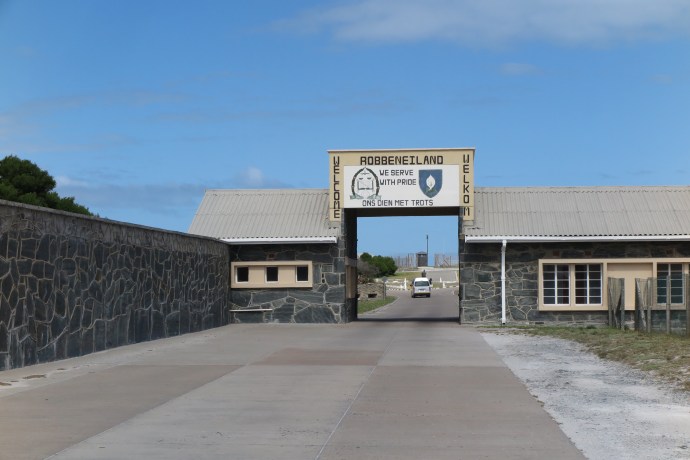
“I set off a bomb at a military building. I didn’t want to kill anyone and no one died. But, I made a statement about apartheid,” said Mabaso. Thulani Mabaso was a prisoner at Robben Island, a flat round island in the bay seven miles from Cape Town. He was imprisoned when he was 19 and finally freed when Nelson Mandela negotiated the release of all Pocahontas prisoners in 1991 — 12 years later.

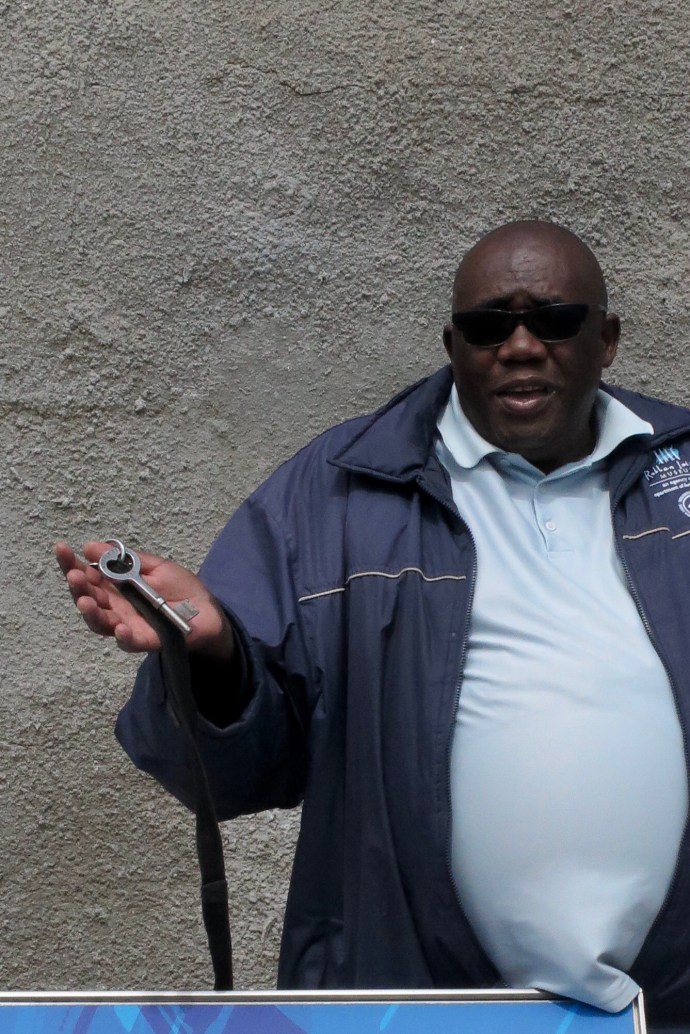
Mabaso was our tour guide at Robben Island. He was articulate and passionate as he led our group through the prison where Nelson Mandela spent 17 of his 28 years in prison. All of us were riveted at his emotional recollections of Mandela and the conditions at the prison.

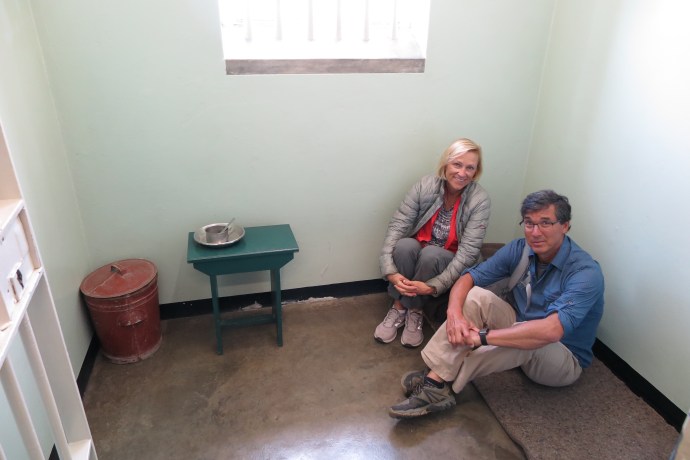
We saw the place where prisoners were processed into the prison. They were stripped, searched (in the only places that can be searched when one is naked), and issued clothing. The black prisoners were made to wear shorts to remind them the oppressive system of apartheid viewed them as mere “boys.” Leaders like Mandela were placed in a 6 ft. by 6 ft. cell with a mat as a bed, three blankets, and a bucket to use as a toilet.

Mabaso was quite proud that he was given a master key to the prison, an item he would have prized while incarcerated there. He planned to open the cell where Mandela had stayed. He bragged that other tour groups were only allowed to peek in.

While at Robben Island, Mabaso, like all political prisoners, was tortured. They beat him, cut him, forced him to eat his feces, and many other unspeakable acts. Family had to make arrangements to visit prisoners six months in advance. The prisoners, however, didn’t know about the visit until shortly before it occurred. Then they could only visit for 30 minutes with a glass wall between them. Once, Mabaso was told his father was coming to see him in a couple of days. He was so excited. When the time came for his father’s visit, he was brought to the warden’s office. They told him that he would be receiving no visitors that day. His father had been shot seven times and killed in his driveway the day before. They laughed at him and taunted him. He returned to his cell and cried.

When Mandela became president of South Africa in 1995, he closed Robben Island as a prison and converted it into a museum so the country would always remember. During the reunion of political prisoners that followed, Mabaso said he rose the ferry out to the island, but, he couldn’t force himself to get off. Once everyone else had exited, a crewman told him he had to disembark. He forced himself off. It was a highly emotional moment as the memories of his abuse came flooding back.

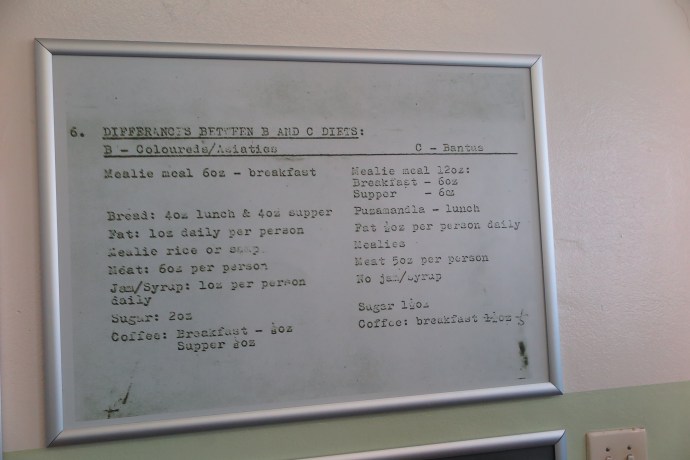
He then walked us to B section, the place where Mandela was imprisoned. We were able to enter his tiny cell. Mandela was about 6’4″ so he couldn’t even fully stretch out when he laid down on his mat. The prison only held Black (Bantu) and Coloured (Indians, mixed race, Asians) prisoners. White prisoners were held elsewhere. Black prisoners were given far fewer privileges, including a more sparse diet. Lisa and I have been reading Mandela’s autobiography, Long Walk to Freedom. It was incredible to us to see in person the place he described so vividly. We walked into the cell and sat on his mat. We could feel his presence there. I imagined what 17 years in this place would be like.

The daily schedule was unchanged. The were awakened, lights on at 5:30am; they were let out of their cells to clean their buckets at 6:45 am; they then ate a meager breakfast. The were chained up and walked to the limestone quarry about a mile away where they worked at breaking up and moving stone that would not be used for anything. At 4:00 they returned and took cold seawater showers that cleaned off the dirt and sweat but made them itchy from the salt. Mabaso said he read about Colgate soap that reduced the itching effect of the seawater. It worked and he said he still uses it today. The were then fed dinner and put back in their cells only to do it all over again the next day. They had Sundays off, but, Mabaso said it was the longest day of the week because they stayed in their cells most of the day.
Mabaso told us that the view of Table Mountain from Robben Island kept him sane. He once said that he would climb to the top of that mountain some day. A guard overheard him and said, “In your dreams.” Shortly after his release in 1991, Mabaso climbed Table Mountain. He said his dream had come true.
President Obama came to visit Robben Island during his visit to South Africa. Mabaso was there to coordinate the event and help lead him around the prison. A very proud day for him. You can read more about Thulani Mabaso’s story here: https://www.atlasobscura.com/articles/apartheid-in-south-africa
Speaking of climbing Table Mountain, Lisa and I did just that later the same day. The mountain is steep and rocky. The 2 1/2-mile, 2500 foot climb took us a little less than 2 hours, and ensured we slept very well last night! Our guide, Ross, looked straight out of central casting and was a fantastic educator on flora, fauna and trail tips. We were hot and sweaty for most of the steep, rocky climb. But, as we neared the summit, the winds picked up and the temperature dropped substantially. That caused us all to become a bit chilled as we waited for the tram rise down. Still, the views from the top were spectacular and we felt a tremendous sense of accomplishment as we posed for selfies in celebration.

Categories: Africa, Safari, South Africa, Travel | Tags: , , , , , , , , | 2 Comments

The Atacama Desert — Earth, Wind, Fire, and Water (a little bit)

The driest place on Earth.

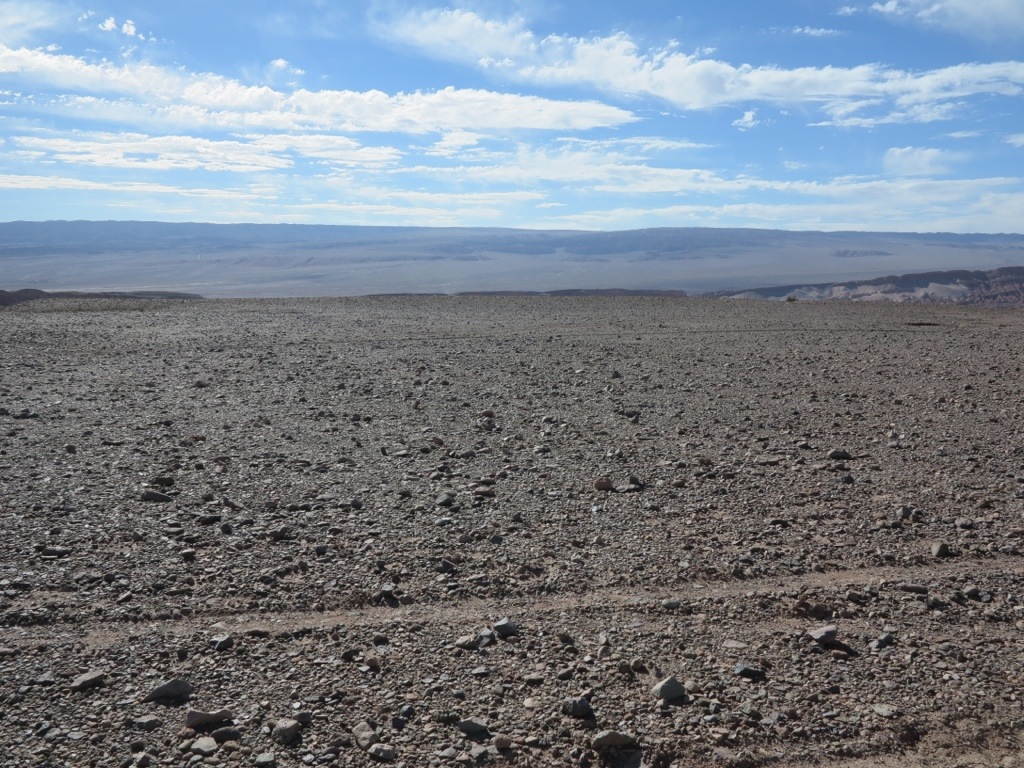
The Atacama desert in northern Chile receives less rainfall than the Mojave desert, the Sahara desert, and anywhere else on the planet. The wetter area, where we are staying, receives 1 to 2 inches of rain per year. Other places in the region get a mere drop of precipitation. Most of the water for the region comes in the form of snowmelt running off from the Andes Mountains to the east.

We landed on Thursday (after the apple caper) in Calama. We felt like we had traveled to another planet. There was no vegetation whatsoever for miles. When we finally saw green, it was in the form of little stubby brush sparsely sprinkled on the landscape. As we traveled throughout the area in the next couple of days, we found it to be extremely diverse. Part Indiana Jones and the Temple of Doom; part Start Wars in the original movie; and, we’re convinced that the Mars Rover actually landed here in another part of the desert.

We’re in the high desert — about 8,000 feet above sea level. The mountains surrounding us rise to 18,000 feet. The area is dominated by volcanoes. In fact, there are 150 active volcanoes in Chile — 10% of the world’s active volcanoes. Several are visible from our vantage point.

It is difficult for us to convey the magnificence of this place. The pictures don’t even do it justice. The population consists of miners (one of the largest copper mining areas in the world) and indigenous people who have been here for thousands of years. The area is geologically active; and, the landscape varies greatly. Our resort is in an oasis that is fed by one of the few precious rivers that flow from the Andes.

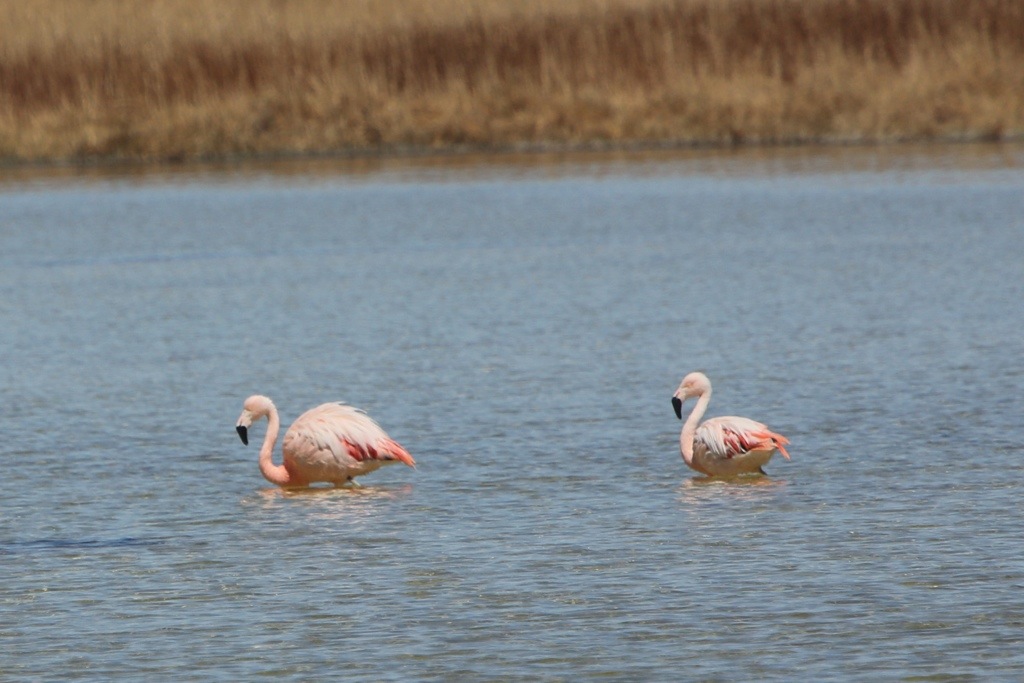
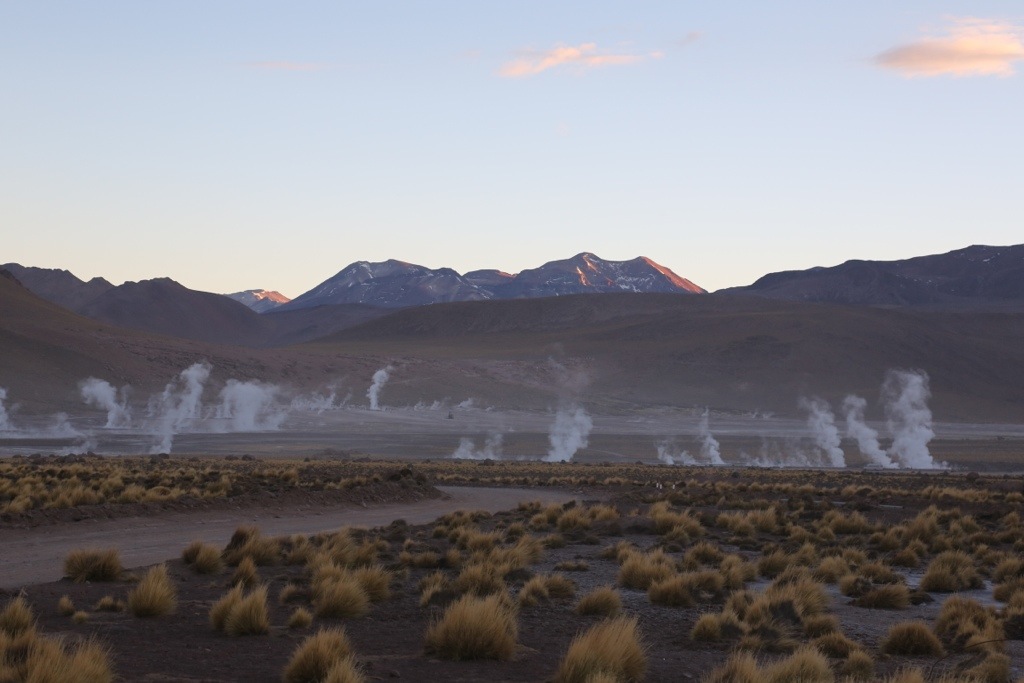
We started in the Atacama Salt Flats. Pink flamingoes thrive here on the brine shrimp that are the only marine life in the salt lagoons. We got up very early one morning to see the Tatio Geysers that sit at 15,000 feet above sea level in the mountains. We moved on to the Puritama Thermal Hot Springs for a dip; we watched the sun set on the mountains with colors changing from brown to pink to red. At night we went stargazing. Because of the altitude, the dry air, and the lack of city lights, this is one of the best places in the world for observatories. The Milky Way was prominent, looking like hazy clouds in the sky (for you, Laura Kapp). We saw the Magellenic Clouds for the first time ever since they sit deep in the southern sky and can’t be seen from the Northern Hemisphere.

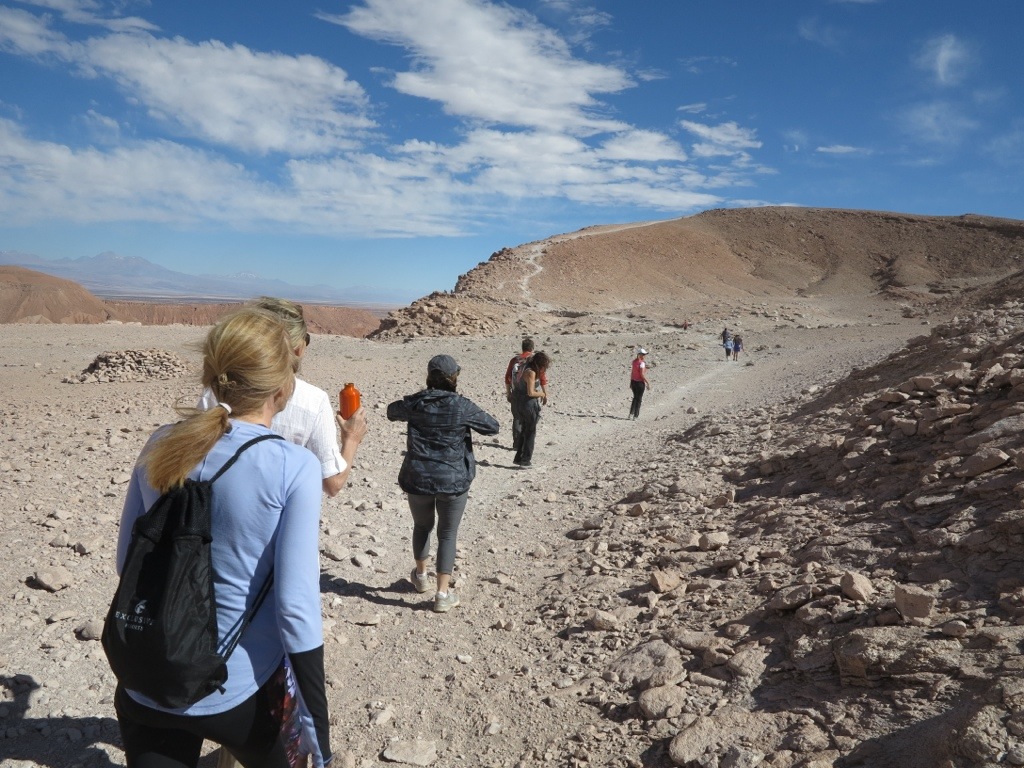
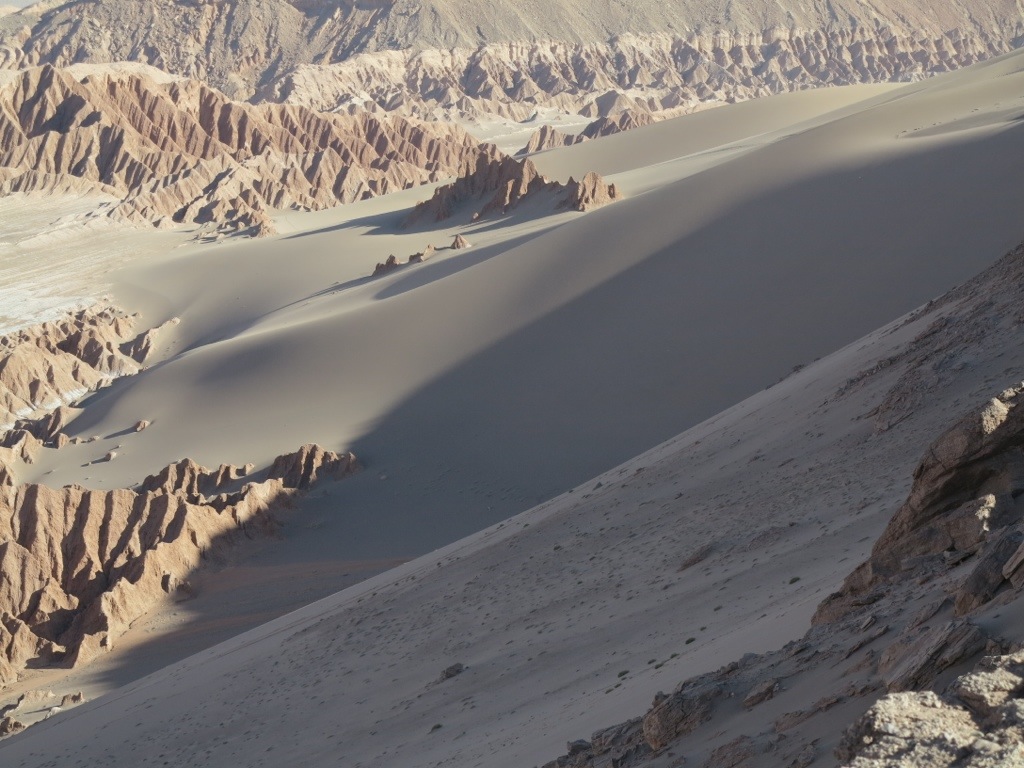
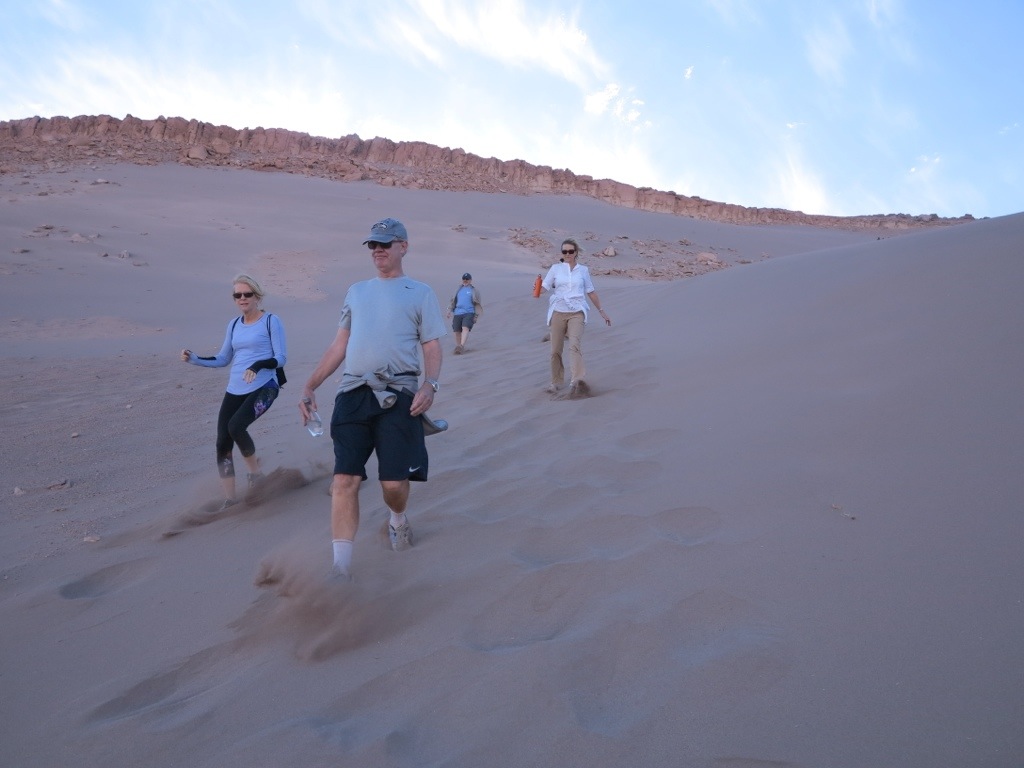
We then went on one of the most amazing hikes we’ve ever done. Climbing to the top of a ridge, we had a spectacular view of — I’m not sure how to describe it — the jagged red peaks near our resort. We traversed the ridge until we came upon the largest sand dunes we’ve ever seen. The sand literally climbed to the top of the cliffs on the ridge we were hiking.

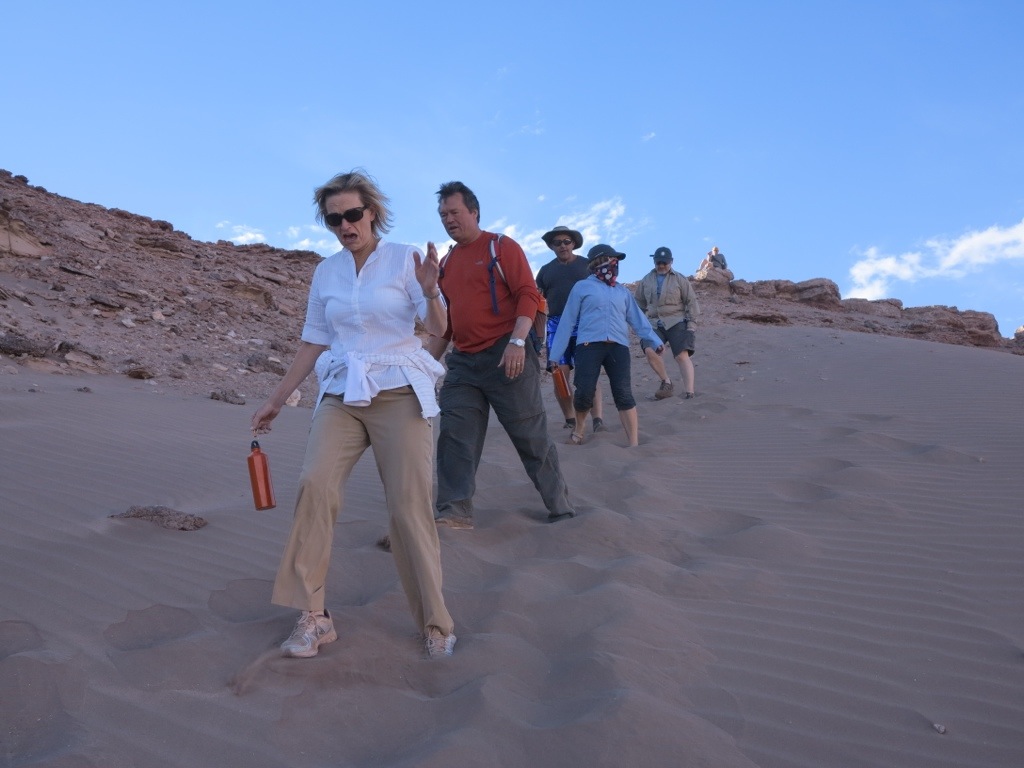
The guide suddenly stopped and said to us, “we’ll go down here.” Uh, where? There was nothing but giant, steep dunes over the cliff for as far as we could see. “Here,” he said. Down the sand. Whoa. The looks on all the faces of the people in our group were simply stunned. One said, “Where is the other way down. I’m not going down there.” Lisa asked me to stay right with her and hold her hand. Most just kept an uncomfortable look on their faces and stayed silent.

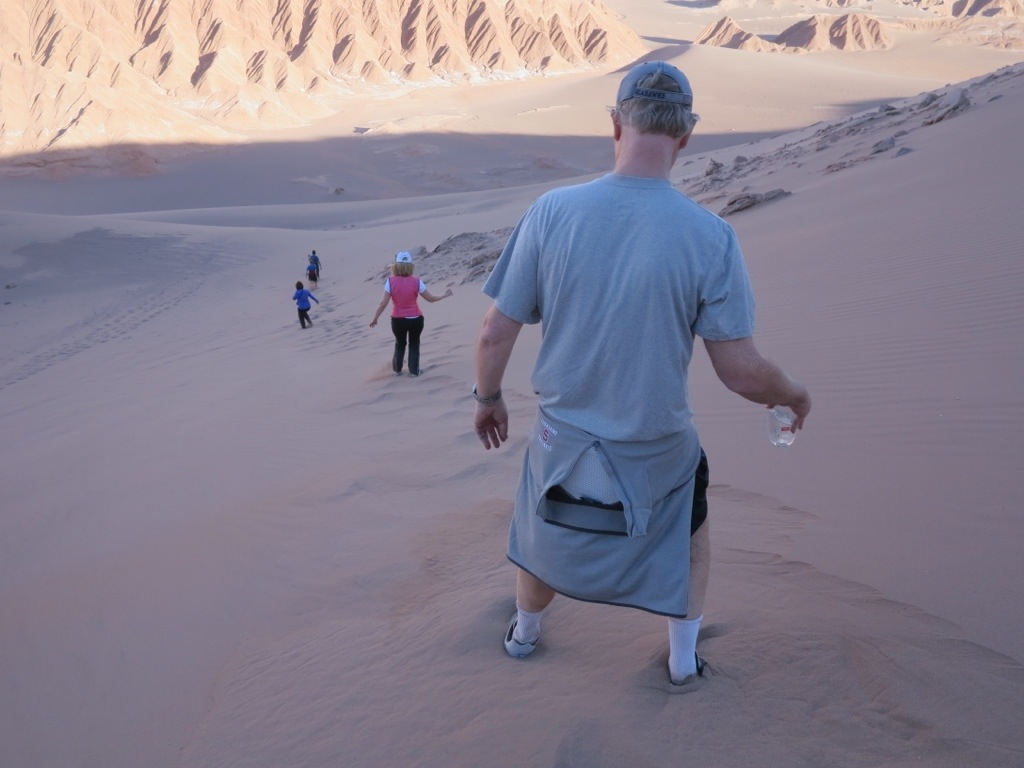
One by one people stepped off the cliff and onto the sand dune. It was soft and deep. Soon we were all slipping and sliding and gliding and running down this steep sand pile. An entire group of fifty-somethings started whooping and hollering like 12-year olds. It was the most amazing hiking experience we’ve ever had. When we got to the bottom we were all exhilarated, high-fiving and laughing out loud. We emptied our shoes of the five pounds of sand that had accumulated in them and hiked out the bottom of the canyon. We drank a well-deserved Chilean beer and toasted our accomplishment.

Take some time to review the photos below. Even though they don’t fully do the region justice — it is so spectacular in person — you’ll get an idea of what we experienced. Before coming here, we had never even heard of the Atacama Desert. This once-in-a-lifetime experience will now forever be with us.

20131006-112939.jpg
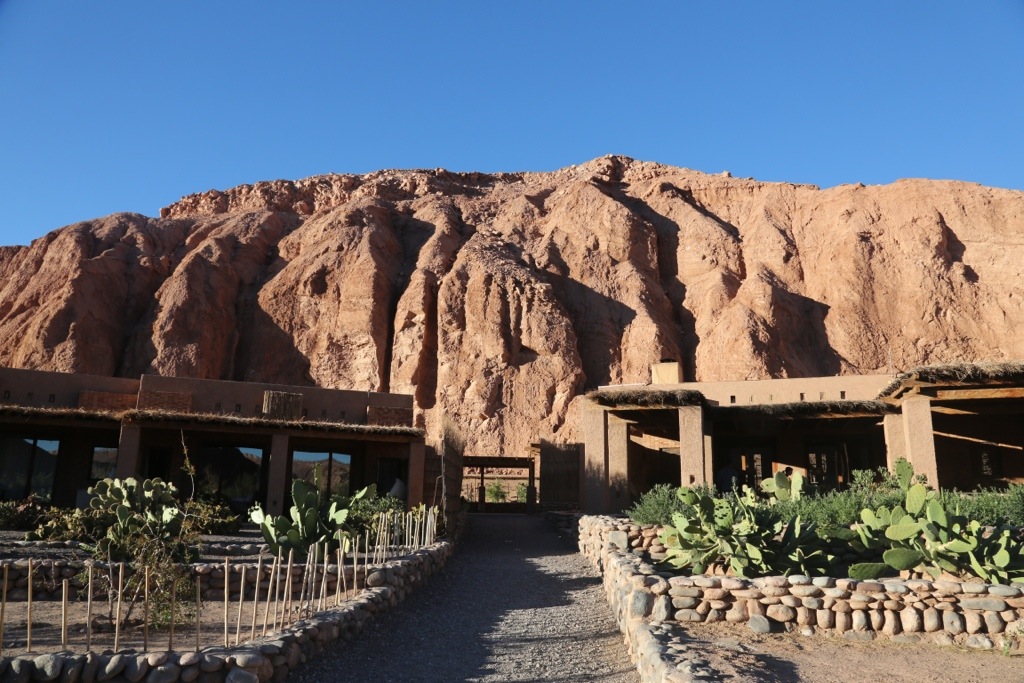
Our resort — Alto Atacama

20131006-113425.jpg
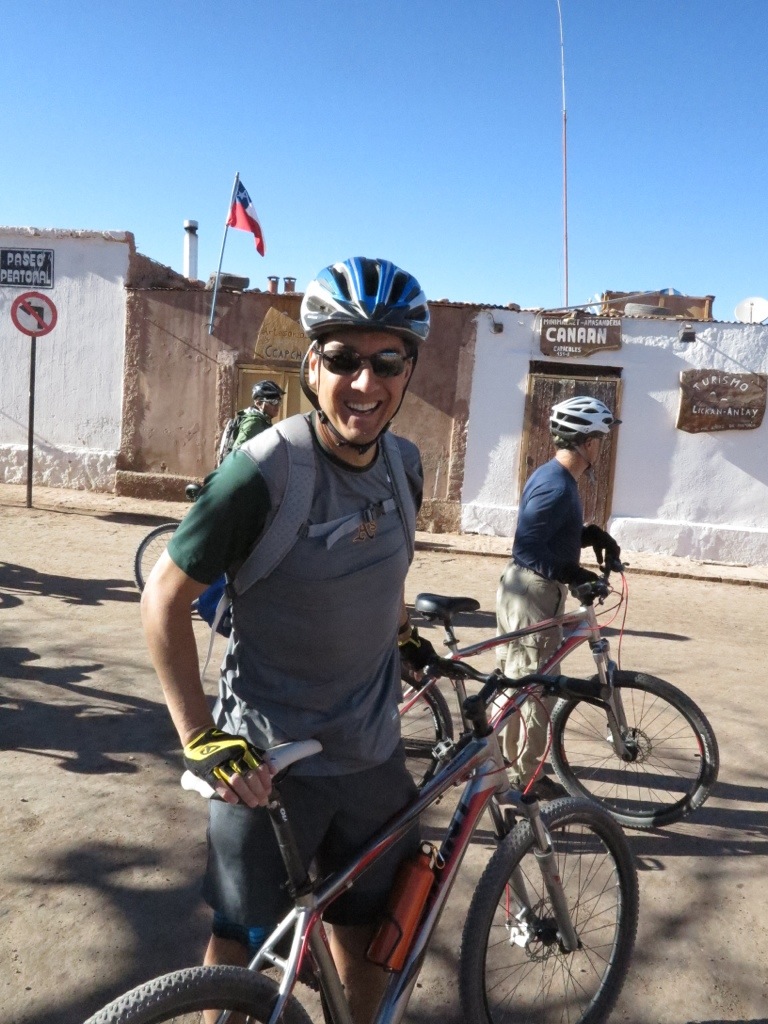
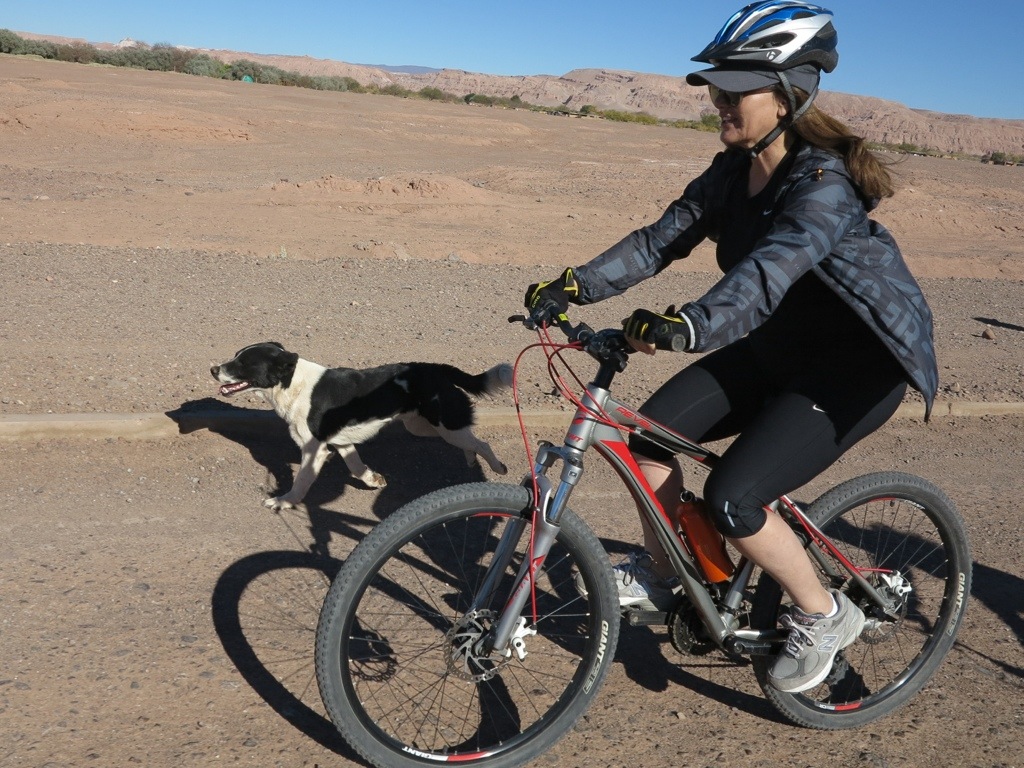
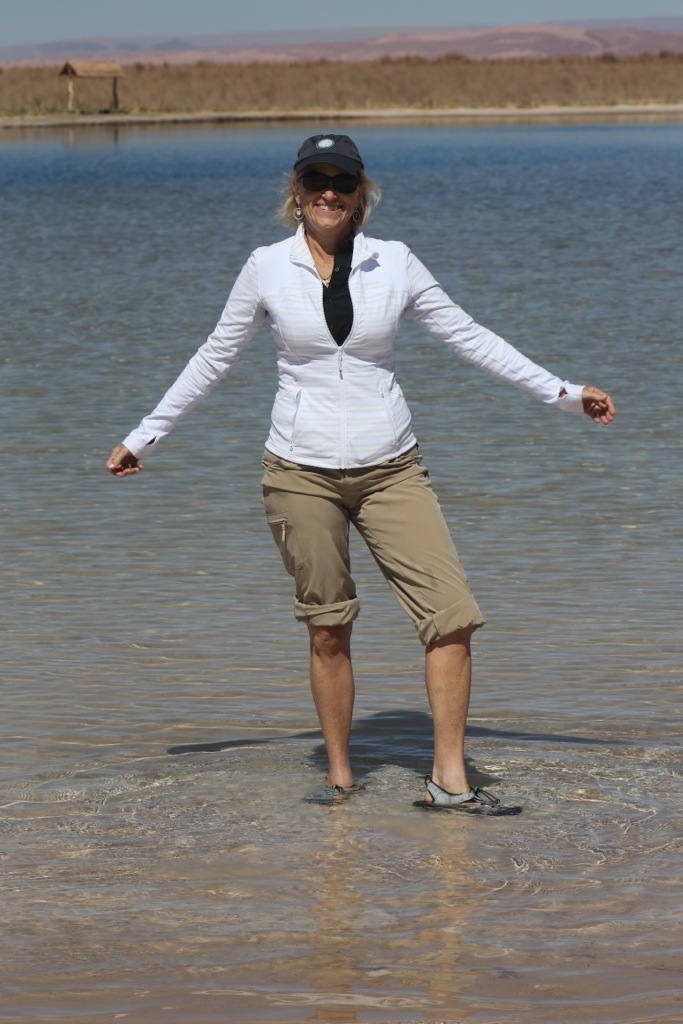
We rode mountain bikes for the 13 miles to the Cejar Lagoon — it is as salty as the Dead Sea.

20131006-113550.jpg
This dog ran the full 13 miles with us. The guide says he does this every day.

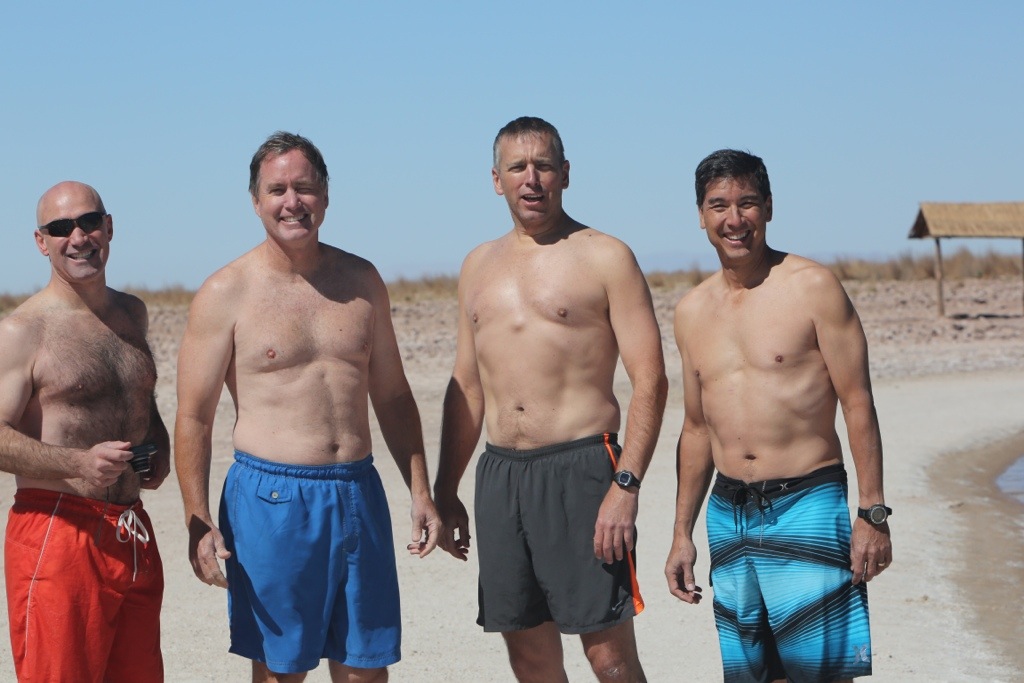
20131006-113102.jpg
Dugald, Lance, Matt, and Brad before diving into the 55 degree salt water at the lagoon.

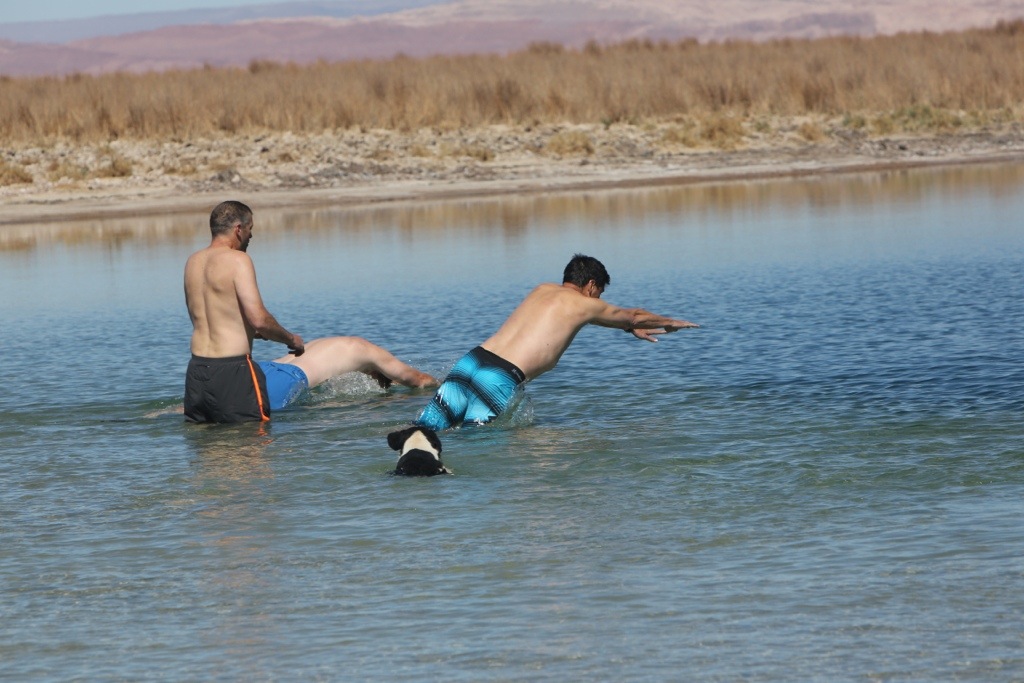
20131006-113300.jpg
Diving in. Notice the dog came in with us.

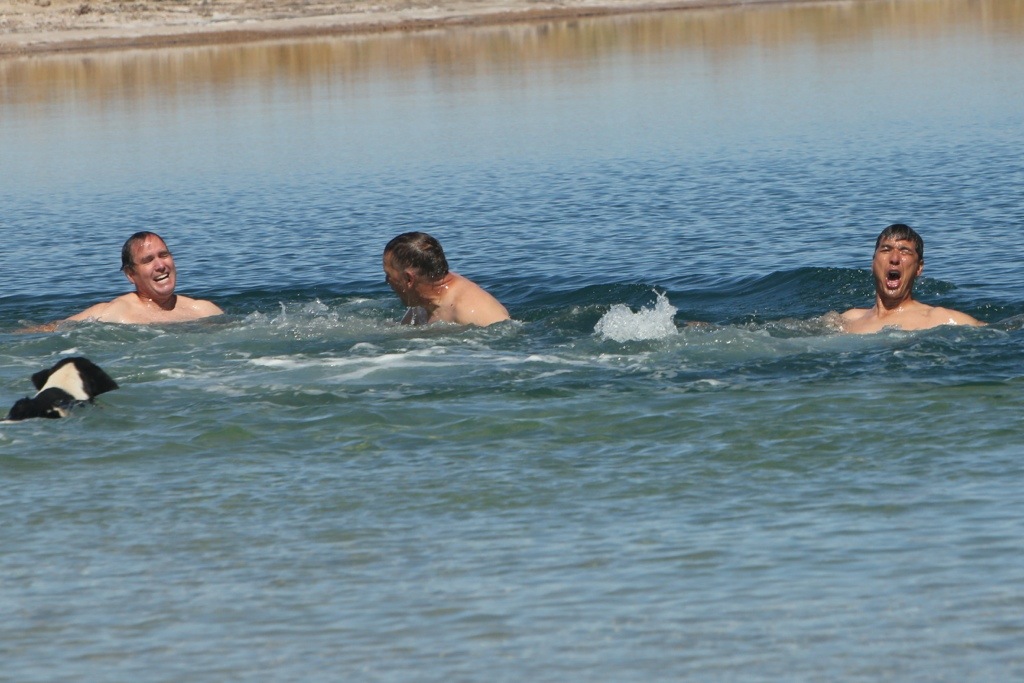
20131006-113954.jpg
The water was very, very cold. And, the salt burned the eyes. But, we did it!

20131006-114108.jpg
Lisa’s version of diving in.

20131006-114419.jpg
The pink flamingoes. Arne and Donna Larson, these two are for you.

20131006-114523.jpg
The flying flamingoes.

20131006-114832.jpg
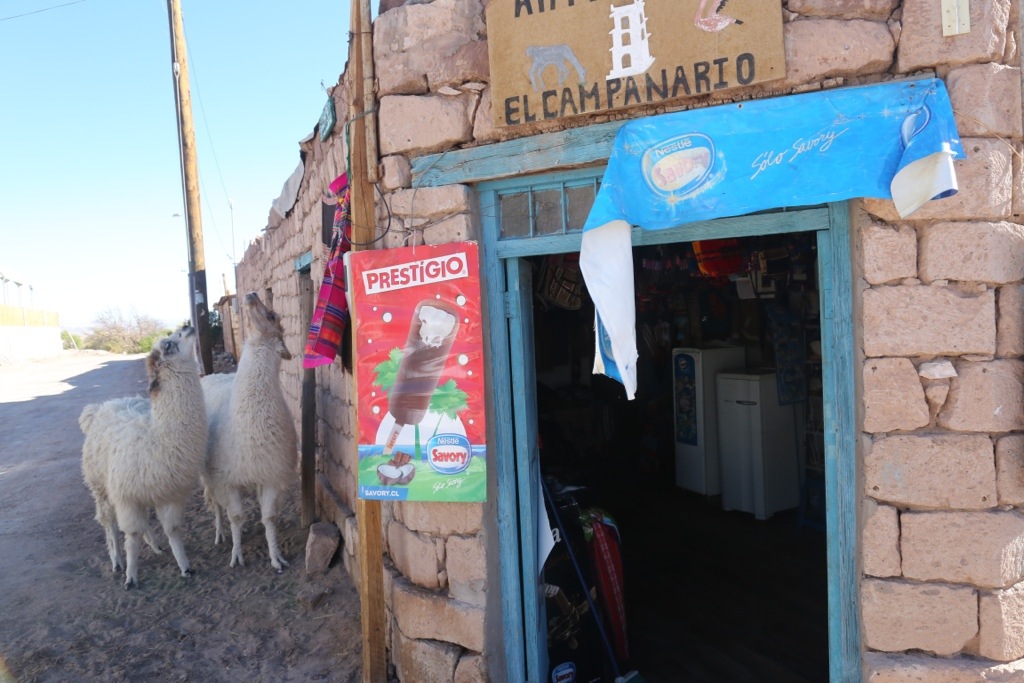
We bought sweaters from this store in Tocanao. They were made from these llamas.

20131006-115006.jpg
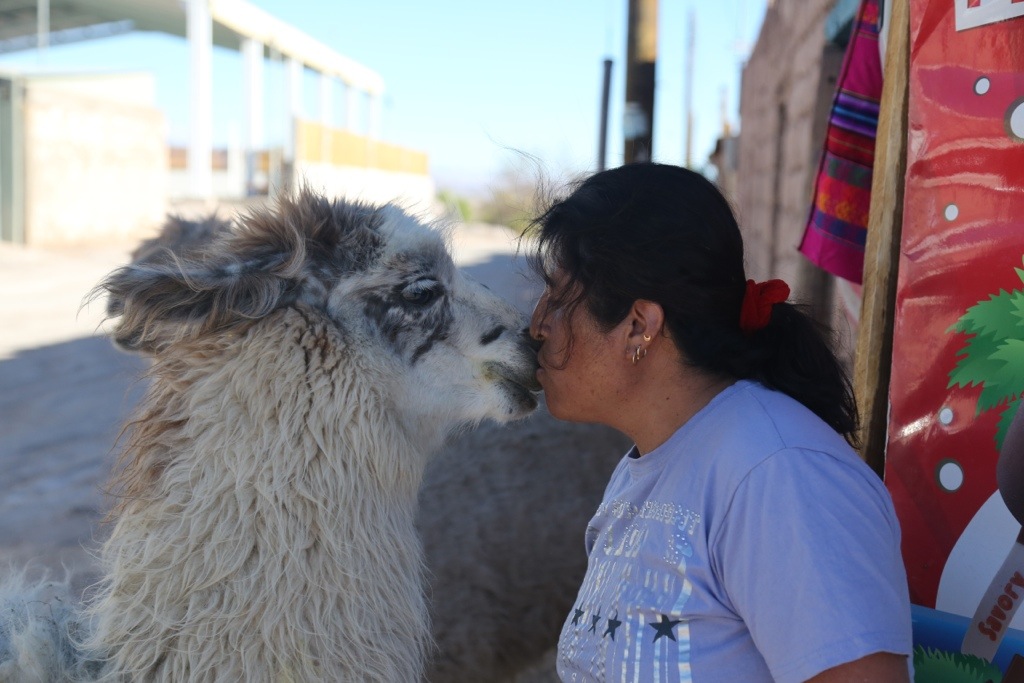
The store owner kissing her llama.

20131006-115353.jpg
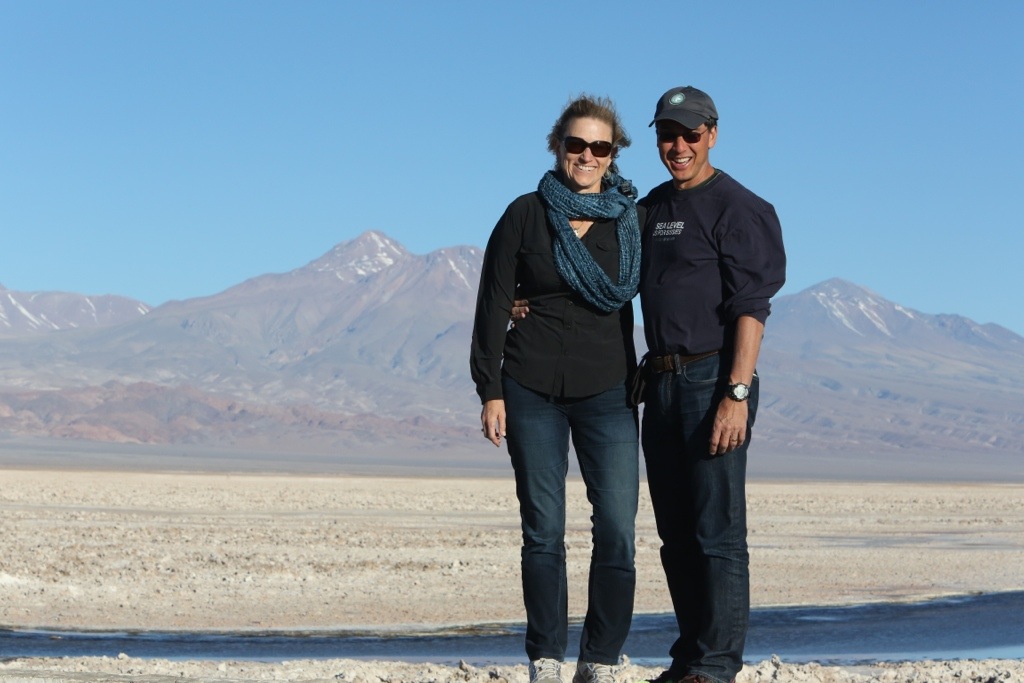
Lisa and Brad on the salt flats in front of an Andes volcano. I know it looks like a green screen shot, but, it’s real.

20131006-115530.jpg
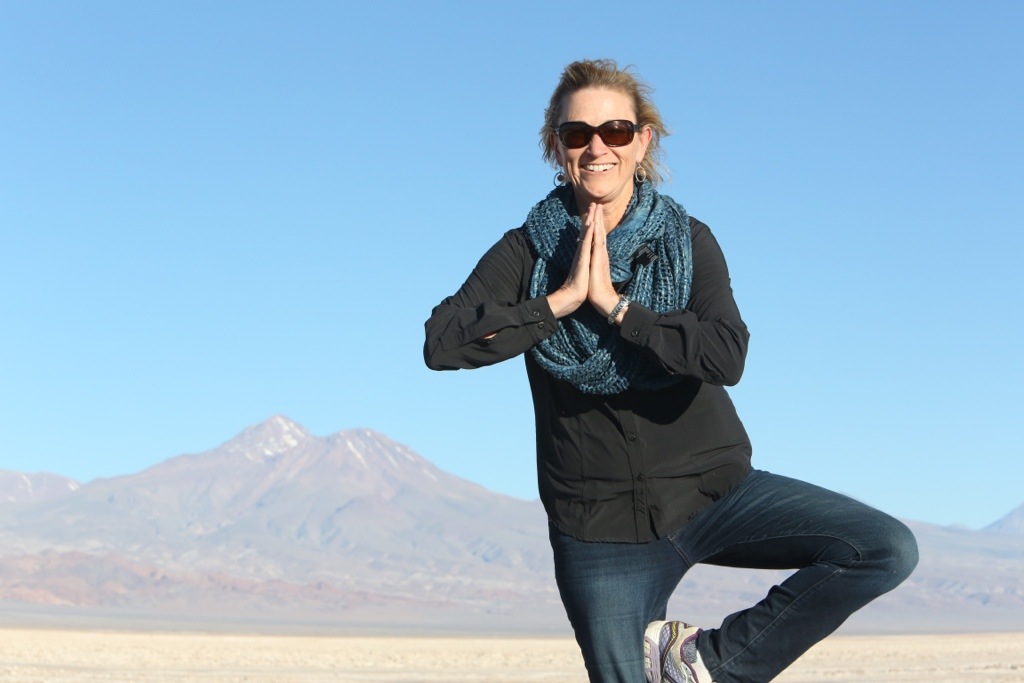
Lisa in her yoga pose. She has to do one everywhere we go!

20131006-115636.jpg
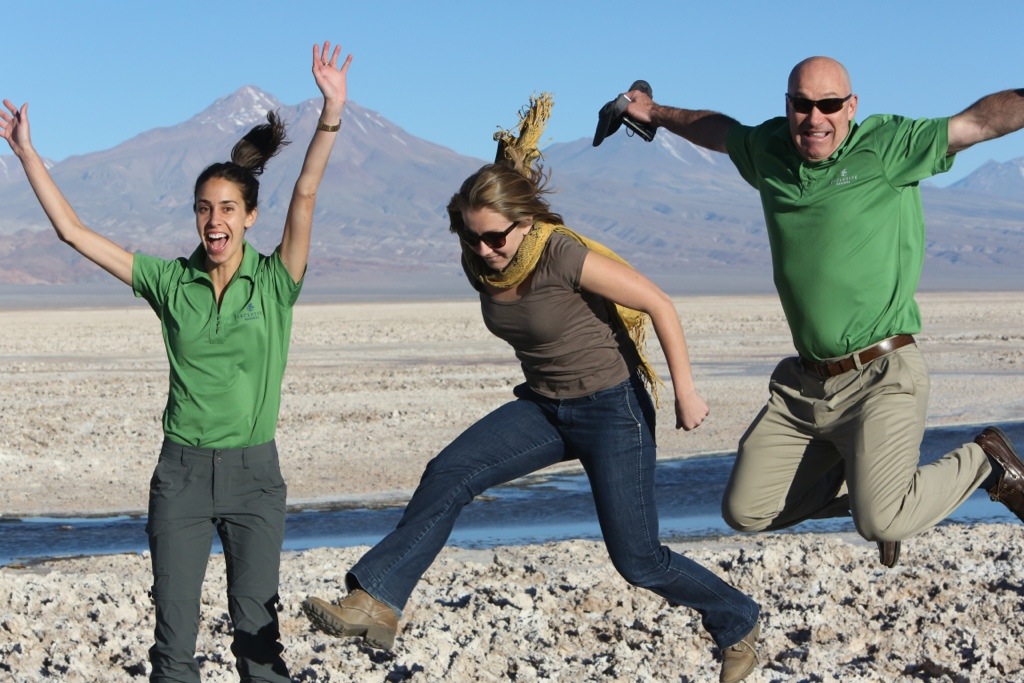
Our fun, fantastic Exclusive Resorts tour leaders — Stephanie, Hallie, and Dugald

20131006-150010.jpg
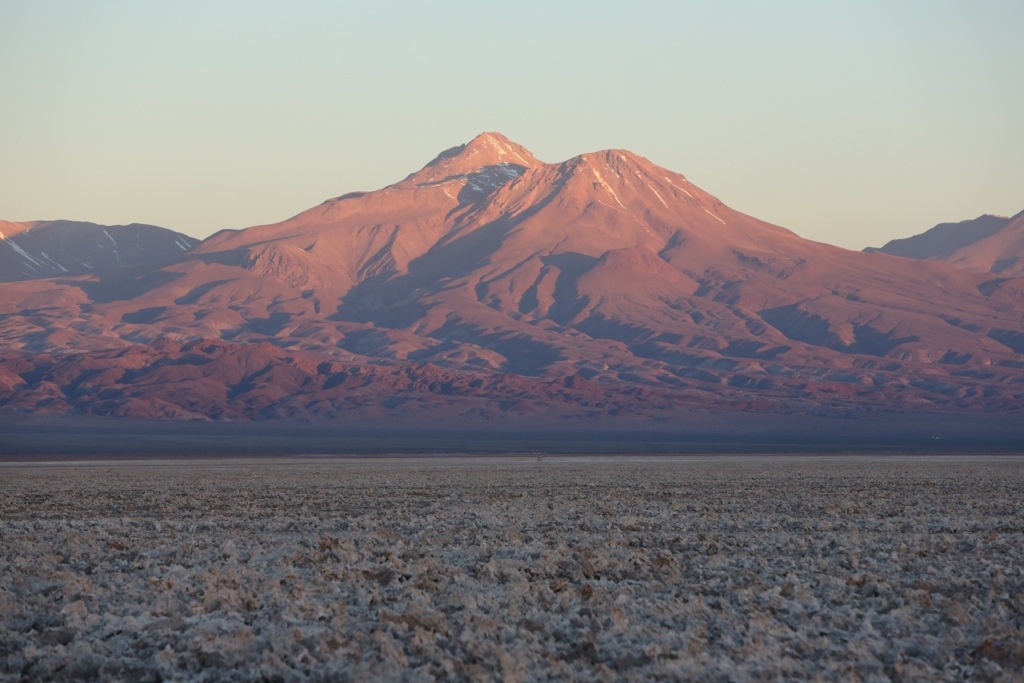
Sunset over the Atacama Salt Flat with a volcano in the background.

20131006-150207.jpg
Lisa looking “ruggedly attractive.”

20131006-150707.jpg
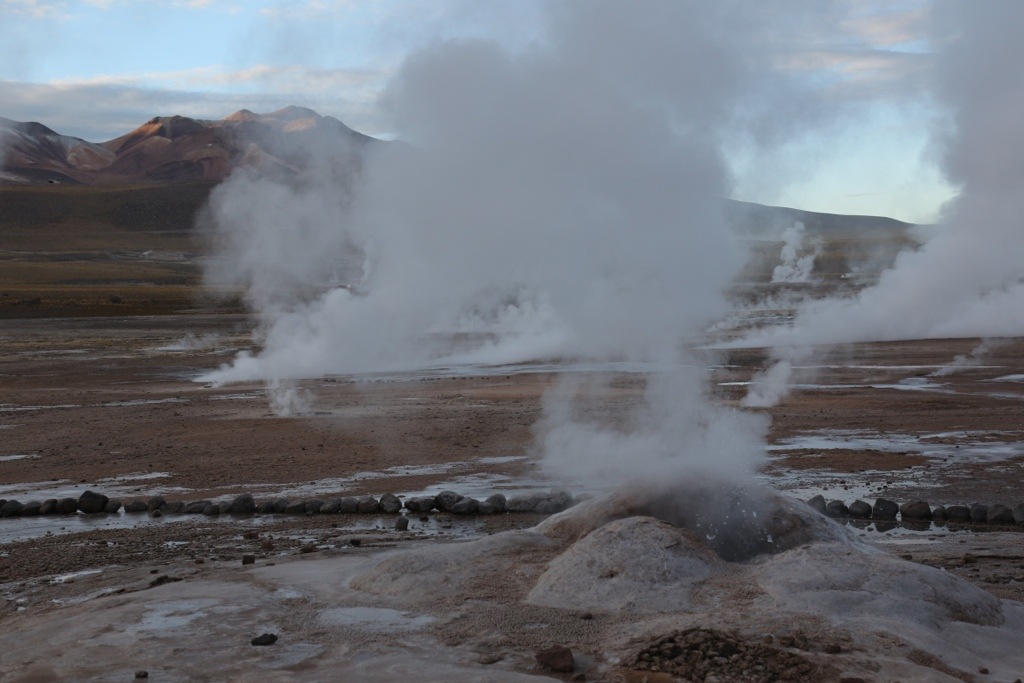
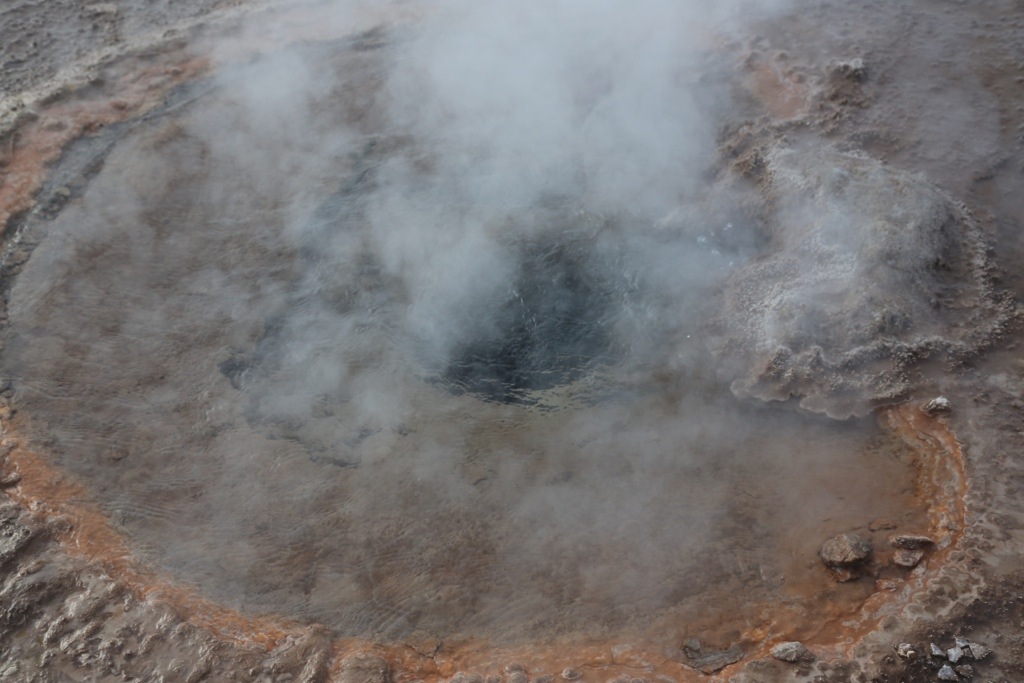
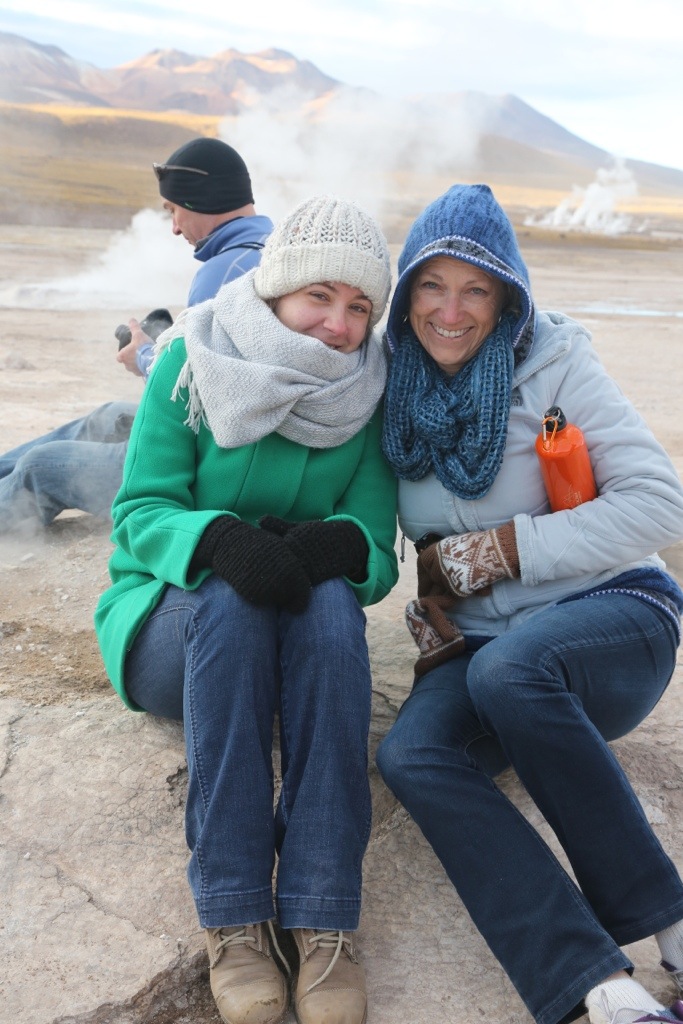
The Tatio Geysers at sunrise. They are at 15,000 ft above sea level. It was 13 degrees Fahrenheit outside. Brrr.

20131006-151306.jpg

20131006-151516.jpg

20131006-151551.jpg
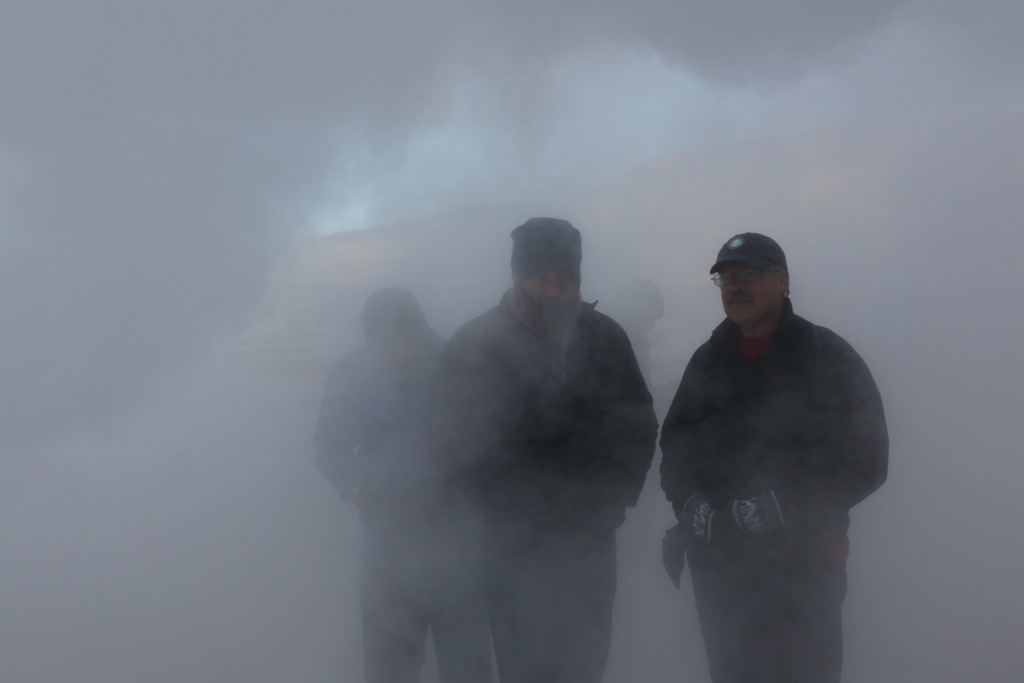
The boys standing in the steam from a geyser. Unlike Yellowstone, you can walk right up and look at them.

20131006-151804.jpg
Lisa and Hallie warming themselves on a hot rock. Note the smiles as they thaw out somewhat.

20131006-152122.jpg

20131006-152320.jpg
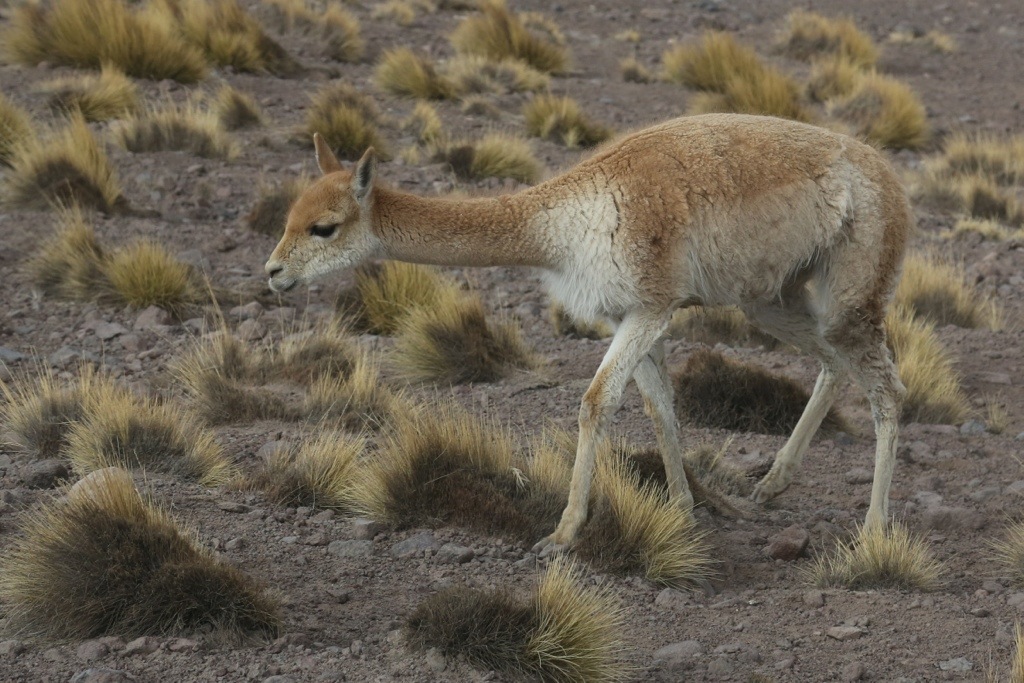
A vicuna — a small animal related to camels and llamas.

20131006-194047.jpg
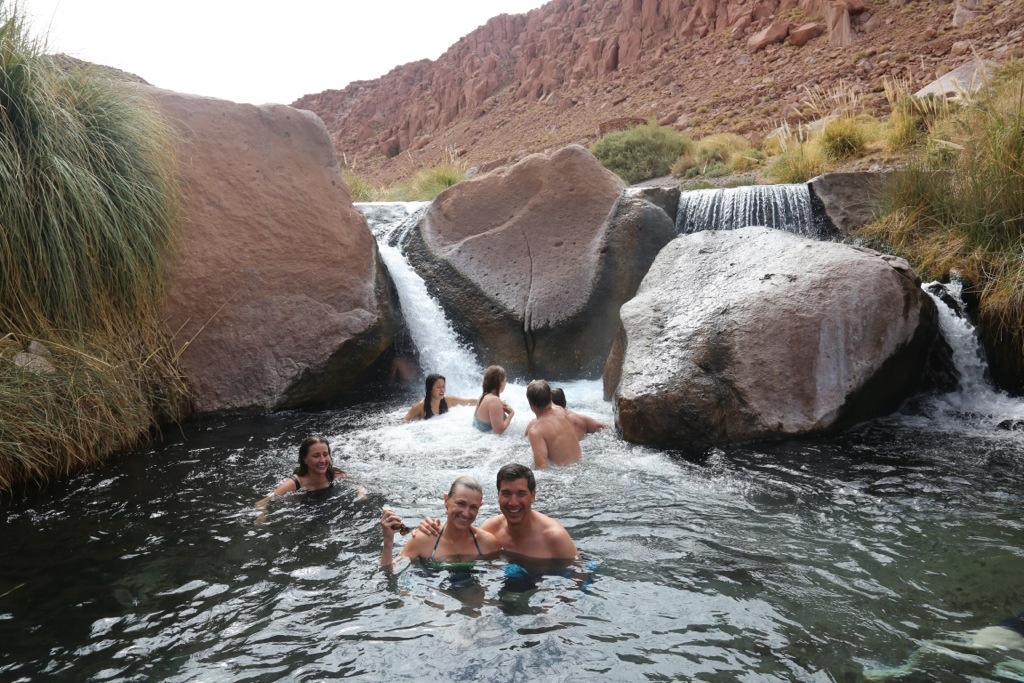
Here we all are in the Puritama Thermal Springs thawing out from our visit to the geysers. The same geologic phenomenon that heats the geysers warms the water here.

20131006-194422.jpg
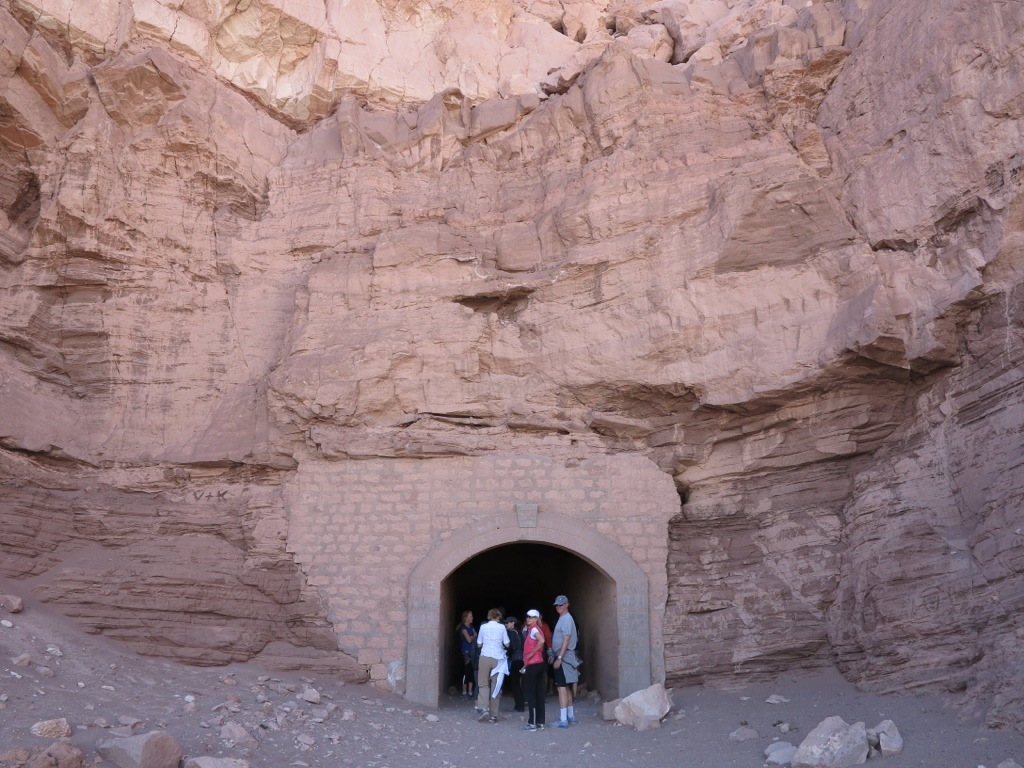
And finally, the now infamous hike. We entered in this “Indiana Jones-like” tunnel. It was about a quarter mile long and unlit. We truly learned the meaning of the phrase “light at the end of the tunnel.”

20131006-194702.jpg
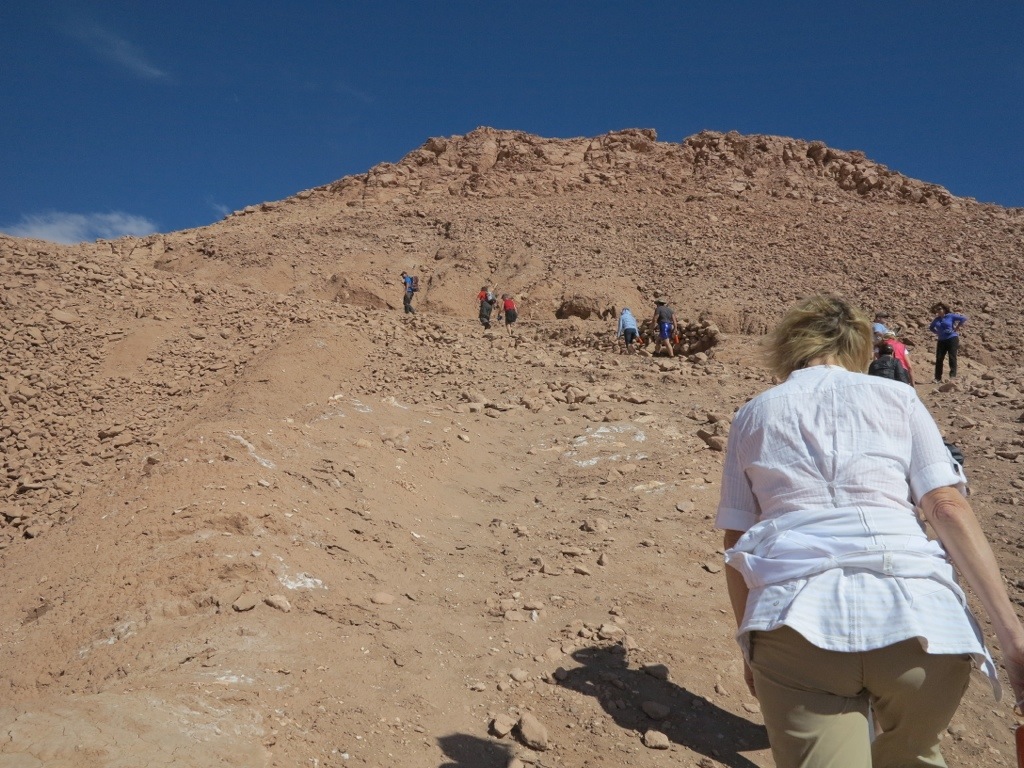
Climbing to the top of the ridge we would walk for the next few miles.

20131006-194757.jpg
Not to the top yet!

20131006-194926.jpg
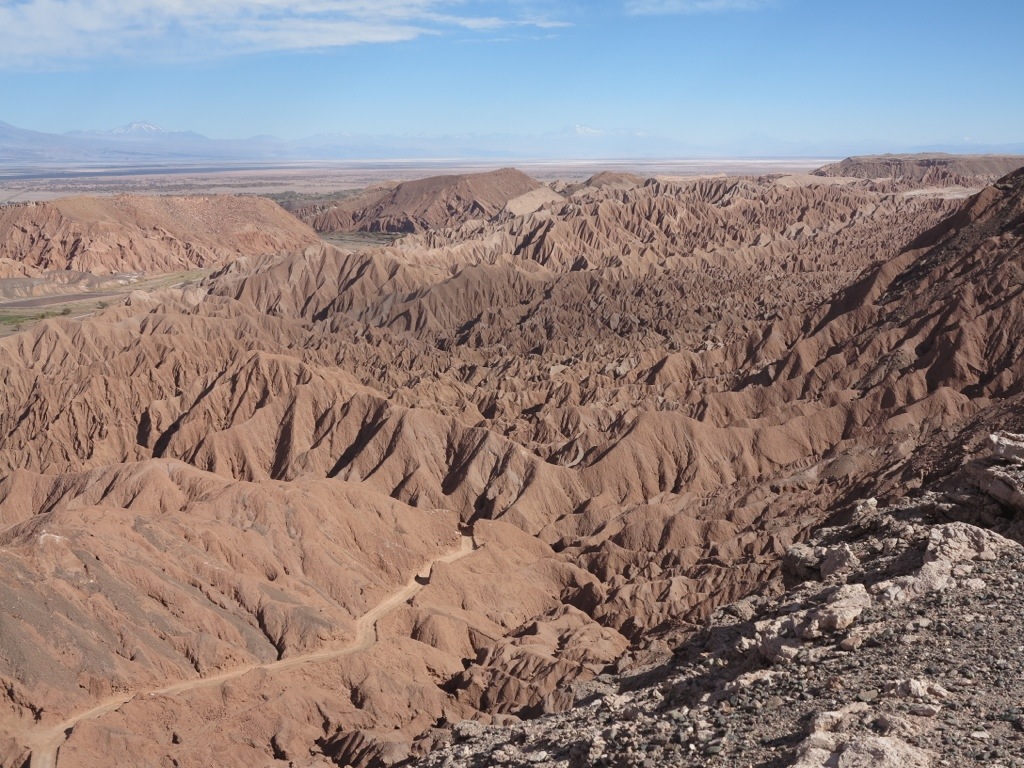
The view from the ridge. We have never seen anything like this before.

20131006-195208.jpg
I think those tracks in the foreground are from the Mars Rover. It really landed here.

20131006-195257.jpg
Look at that monstrous sand dune reaching all the way up to the ridge. I joked that we could slide down it if we wanted to. I didn’t realize how, right I would be.

20131006-195507.jpg
Starting our way down. I think Lisa is saying, “Brad, what have you gotten me in to!!?”

20131006-195648.jpg
Heading down. It’s steep and deep.

20131006-195923.jpg
About 10% of the way down. That’s the ridge we were hiking at the top of the photo.

20131006-200159.jpg
Everyone has their confidence and is beginning to run down.

20131006-200322.jpg
Getting to the bottom. Look at how far up the ridge is from here.

20131006-201553.jpg
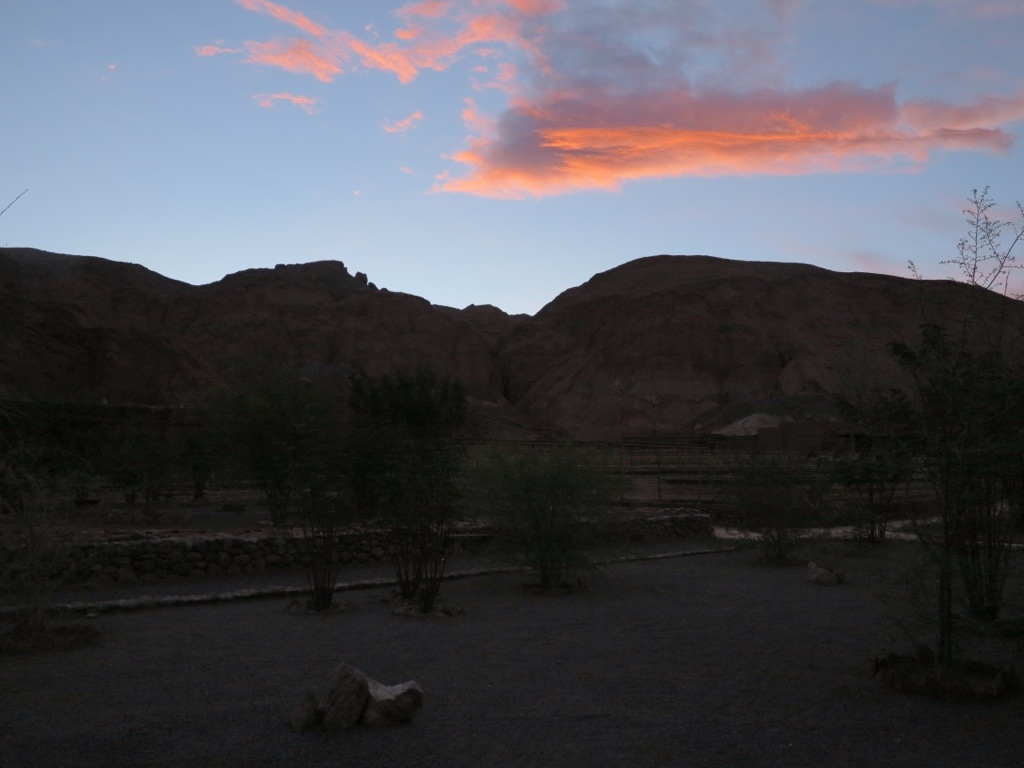
After a long, satisfying day, we were treated to this beautiful orange sunset back at our resort.

Categories: Uncategorized | Tags: , , , , , | 3 Comments

Blog at WordPress.com.