Posts Tagged With: Art

Copenhagen: The Land of Almost Nearly Perfect People

We have never been to any of the Scandinavian countries. We decided, by seeing other people’s photos, watching the show the “Bear” that featured Copenhagen, and knowing that we enjoy good food and wine, that Copenhagen was top on our list.  My friend, Joan Stucka, sent me a book by Michael Booth about Scandinavia entitled “The Almost Nearly Perfect People” and it certainly had us intrigued.  Denmark has been named the Happiest Place in the World. Oprah even came to visit and agreed that the Danes were surely the world’s happiest. We were ready to go to Copenhagen and share in some of this happiness for 72 hours.

Although the weighty job of judging world-beating happiness in just three days is impossible, I will say the city is extremely vibrant, young, clean, and just plain contagious.  We arrived on a beautiful, warm sunny Sunday afternoon and the place was bursting with people enjoying the sunshine.  The famous canals and waterways were packed full of boats. People were swimming and sunning themselves.  Every café was filled to the brim along Nyhavn, a popular street full of colorful buildings and a variety of restaurants.  Jet lag was no longer a possibility with all of this energy around us.  We walked the famous shopping area, The Stroget and began to enjoy the vibrancy of Copenhagen.
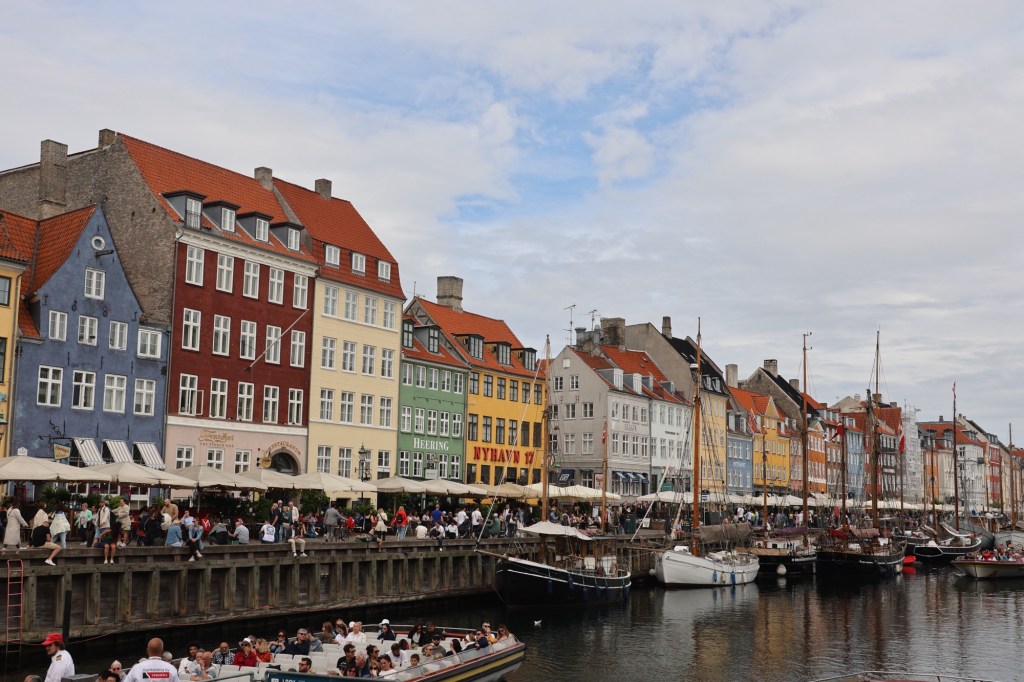
Nyhaven Street. A historic area full of open air restaurants, colorful buildings, and old sailing vessels.
A beautiful day on the canals — pleasure craft on the water, cyclists on the bridge, and sunbathers on the shore.

In the following three days, we learned a lot about Copenhagen’s history through a wonderful Old Town city and food tour and a boat trip out on the canals and waterways.  We took to the streets on our bikes and worked our way to the famed Little Mermaid statue (Copenhagen was the home of Hans Christian Anderson), and saw the current palace of the monarchy.  We figured out the subway and train system and went out to the Lousiana Art Museum in Humlebaek (Thanks to our friend Shelley Freeman who gave us the recommendation). We ate lots of open-faced sandwiches (smorrebrod) and dined on outstanding Danish-inspired French Cuisine.
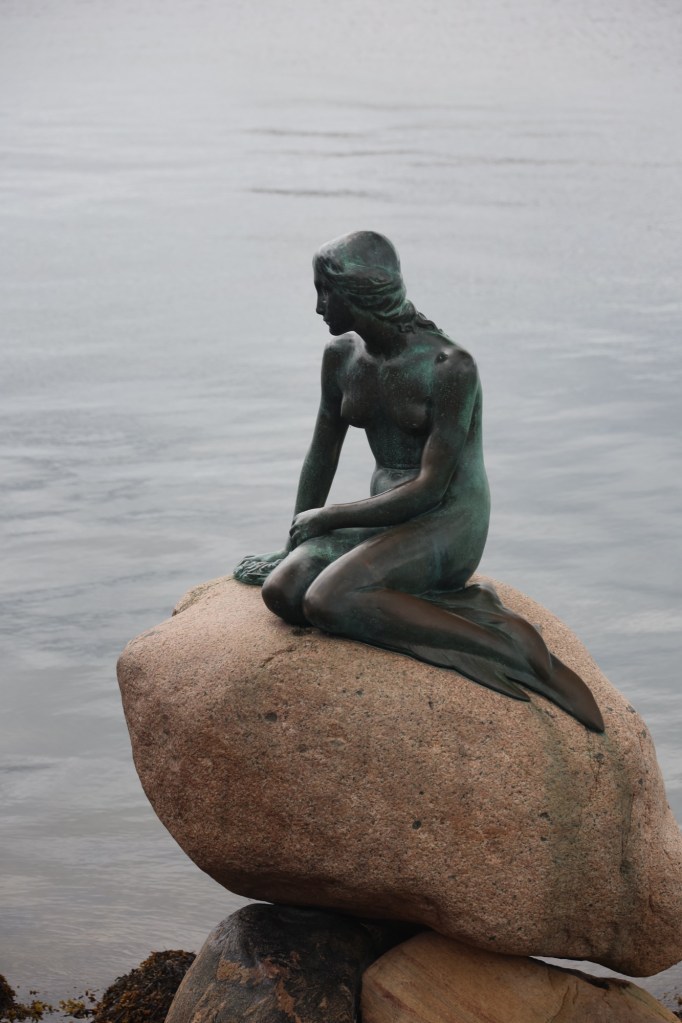
The famous Little Mermaid statue. Hans Cristian Andersen, who wrote the fairy tale, was from Copenhagen.
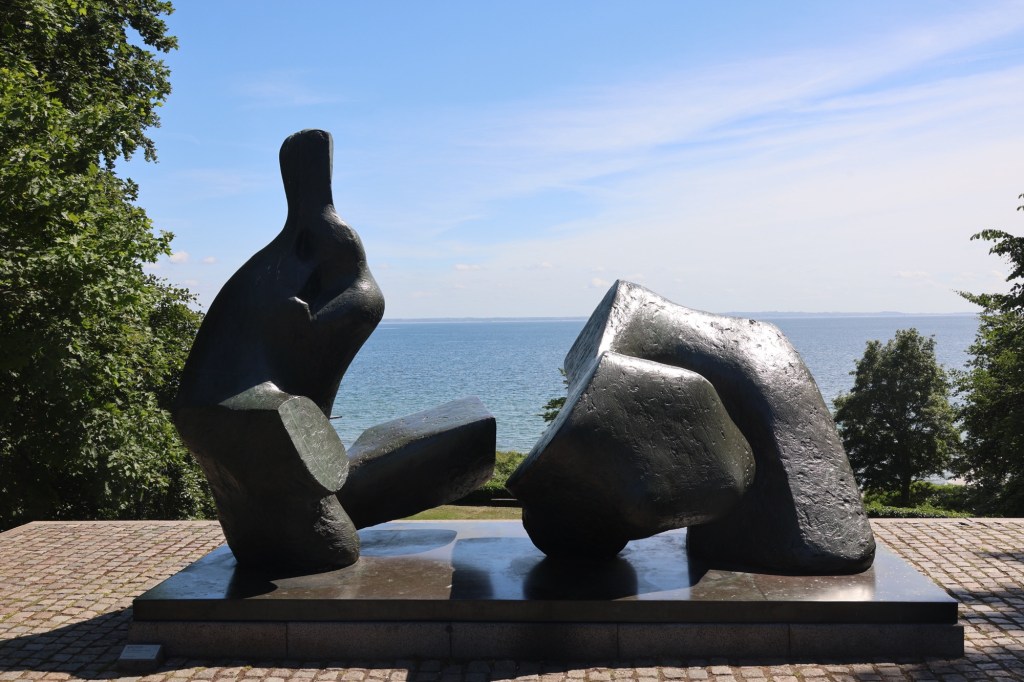
A sculpture from the Louisiana Art Museum about 30 miles north of Copenhagen. We could see Sweden across the strait.
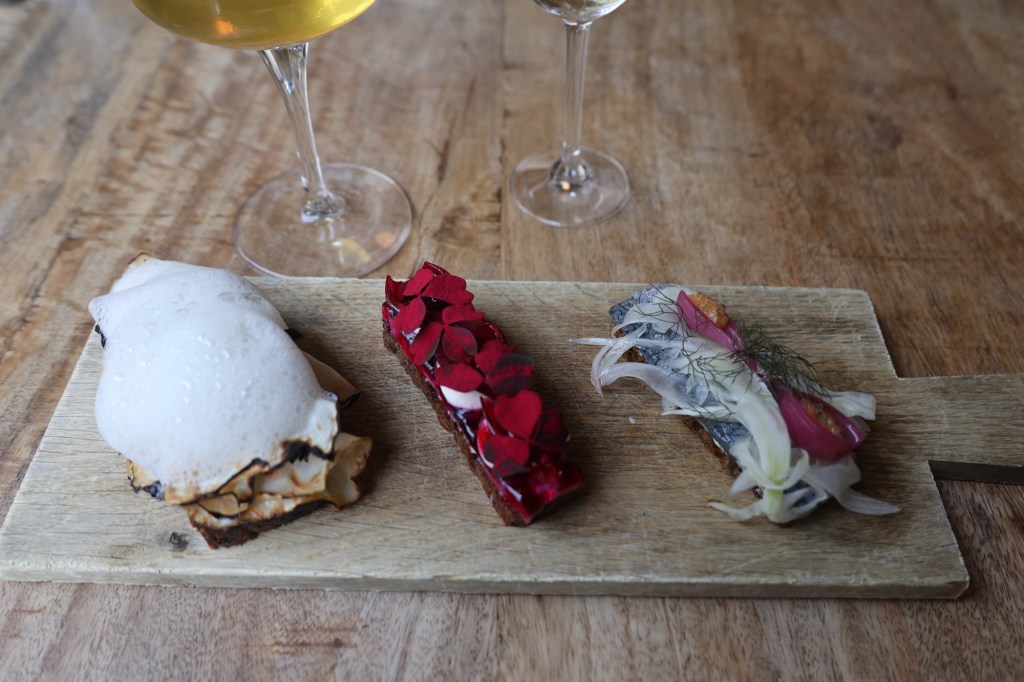
An upscale, modern take on smorrebrod, the traditional open-faced sandwiches of Denmark. These featured herring, beets, and cheese foam. All were delicious.
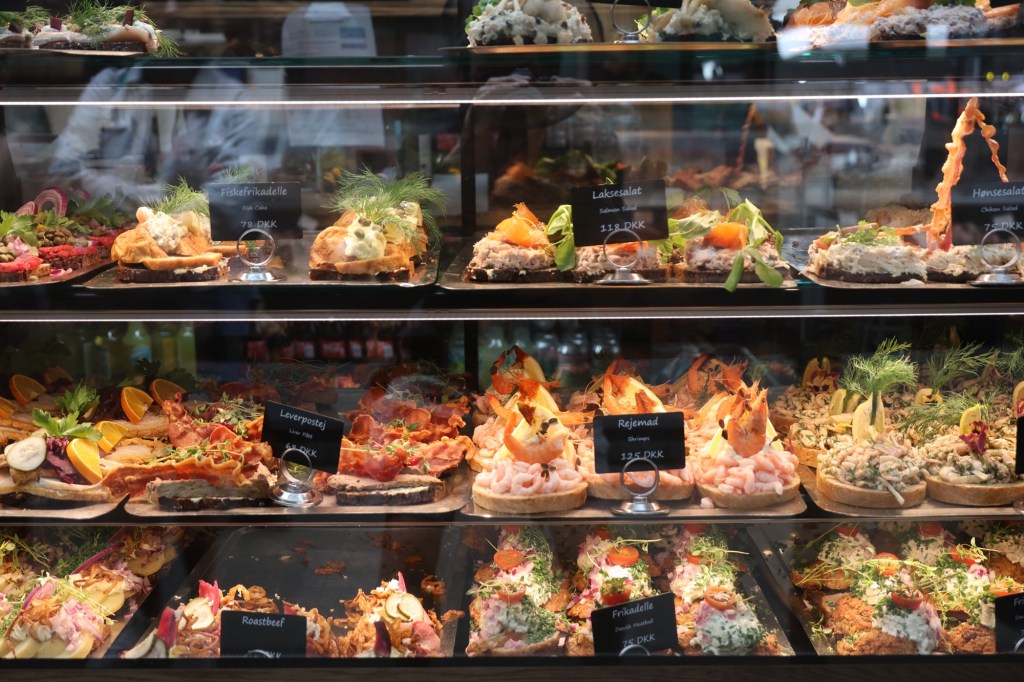
A more traditional display of smorrebrod.

After pondering the question of happiness, talking to as many people as we could and reading Michael Booth’s book, here is what we came up with:

— The Danish people seem to be a very content group.  The live in a society that values income equality.  There are very few people at the top or at the bottom of the income spectrum.  They have free quality education and health care and take good care of their senior citizens and their pre-schoolers.

— The Danes trust each other and their politicians.  We were there during a run-up to an election and there must have been about ten different political groups represented.  Apparently, they get together as a coalition and represent the wills of the people so there is little divisiveness between parties.  They certainly are not envious of America’s current situation.
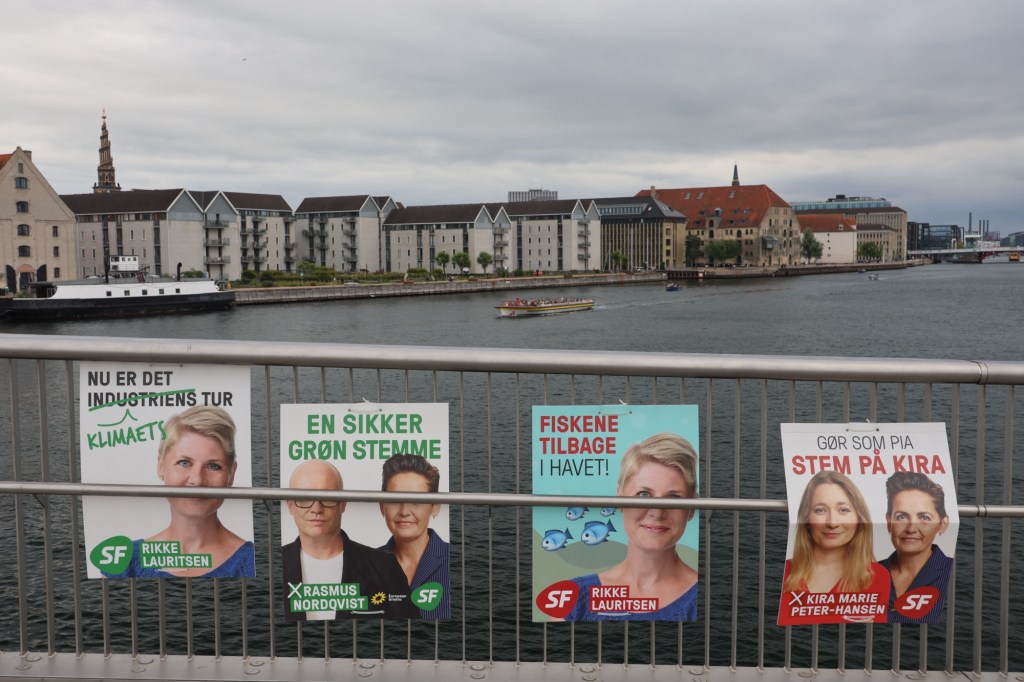
There were posters all over the city for the upcoming election to represent Denmark in the European Parliament.

— The Danes love their Royal Family.  They feel that they are one of them and they are often seen in public (The King even sponsors – and runs in – a half marathon).  Their children even go to public schools. The Danish Queen, Queen Margrethe abdicated her throne in January of 2024 to let her son Frederik become King; an act that astonished the people because she was so beloved.  King Frederik is known to be a man of the people and even met his wife Mary at a bar in Australia rather than some arranged affair.
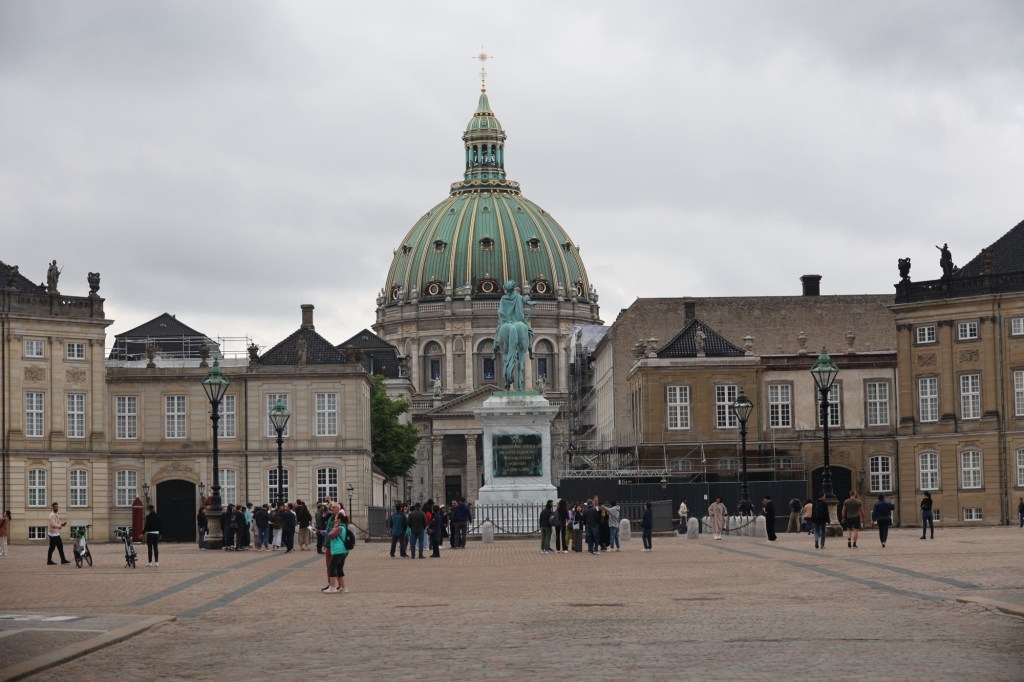
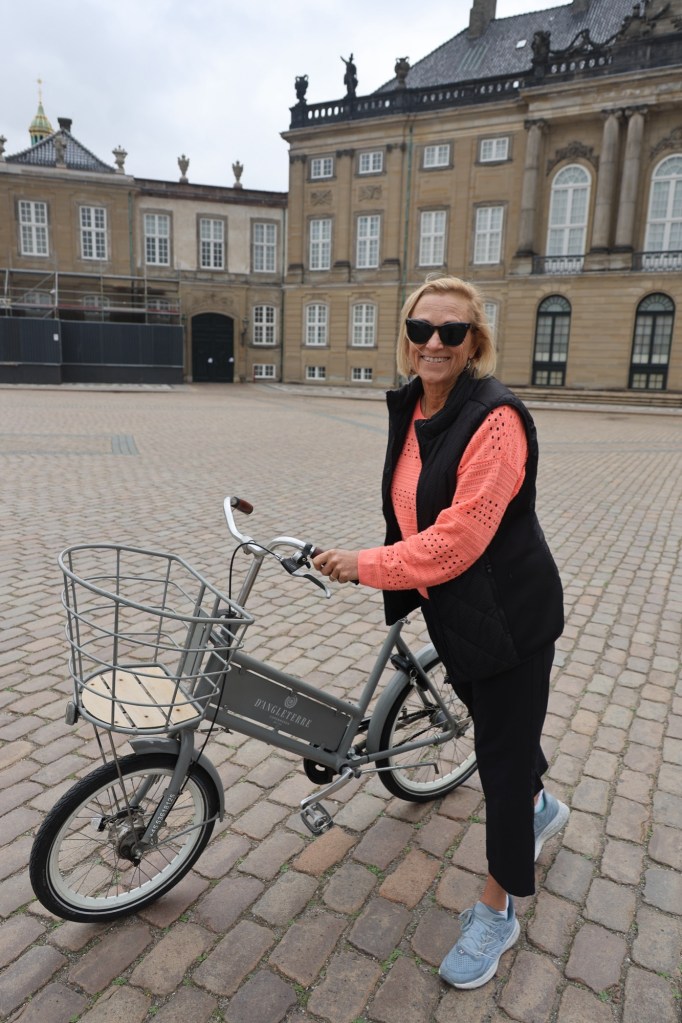
The Amalienborg Palace, the royal residence.
We rode our bikes over to the palace.

— The Danes pay a lot of money in taxes — up to 72%.  That means they work until Thursday before they earn their own money.  Amazingly, they seem to do it without complaining because it helps give them all a high standard of living.  90% of Danes can be considered middle class.  And, no one can cheat and pay less on their taxes like in other countries.

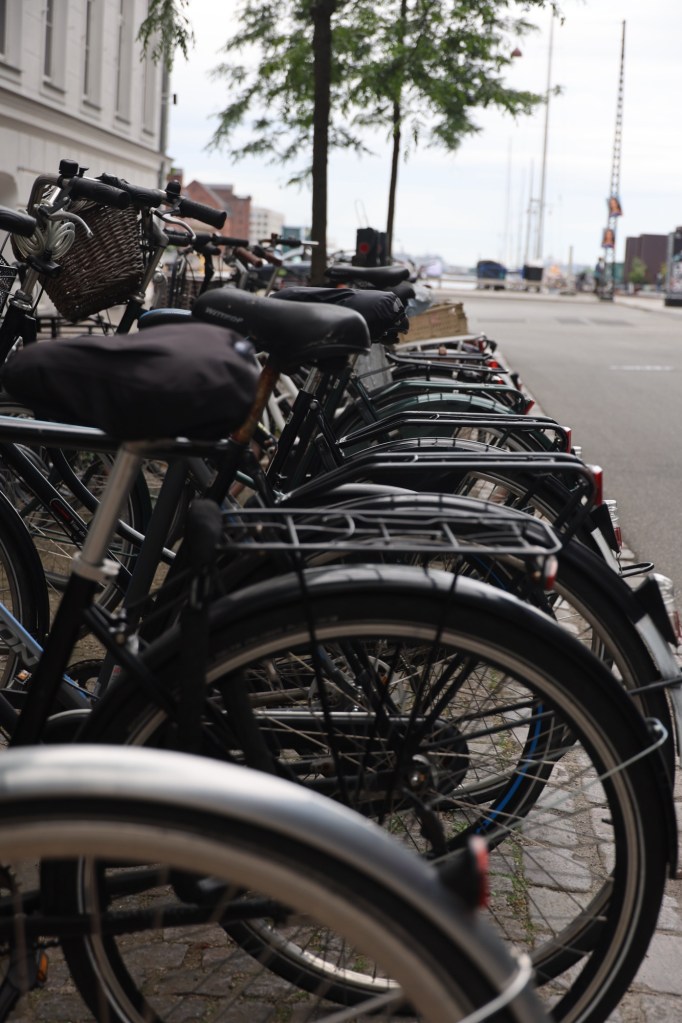
— The Danes love their bicycles. The streets are full of hundreds of bikes at all times!  60% of Copenhagen people ride their bikes to and from work.  There are a couple of reasons for that statistic.  There are bike lanes everywhere so it makes cyclists safer on the roads.  But most likely the main reason is that cars are taxed at 100% so owning a car is a very expensive proposition.
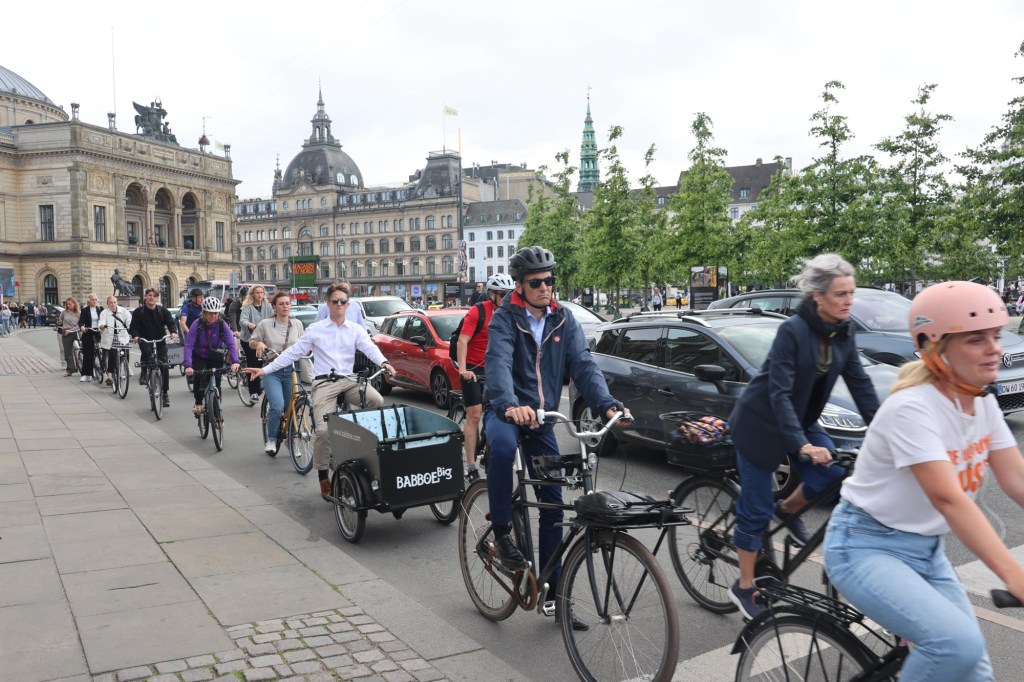
There are more bikes than cars on the road.
There are many of these contraptions out and about. Moms and Dads taking their kids along.
Entire parking lots of bikes were everywhere.

— Danes are very social and love being involved in clubs and groups of all kinds.  We saw many running clubs while we were walking around the city.  Apparently there are clubs for everyone and every interest.  The saying is that a Dane will go to a party and within eight minutes figure out three degrees of separation with everyone at the gathering.  Forget Kevin Bacon’s six degrees of separation.  They only need three!  Our boat tour was called a social sailing trip with the main objective of getting to know each other and share in experiences rather than simply hearing a lecture about history.
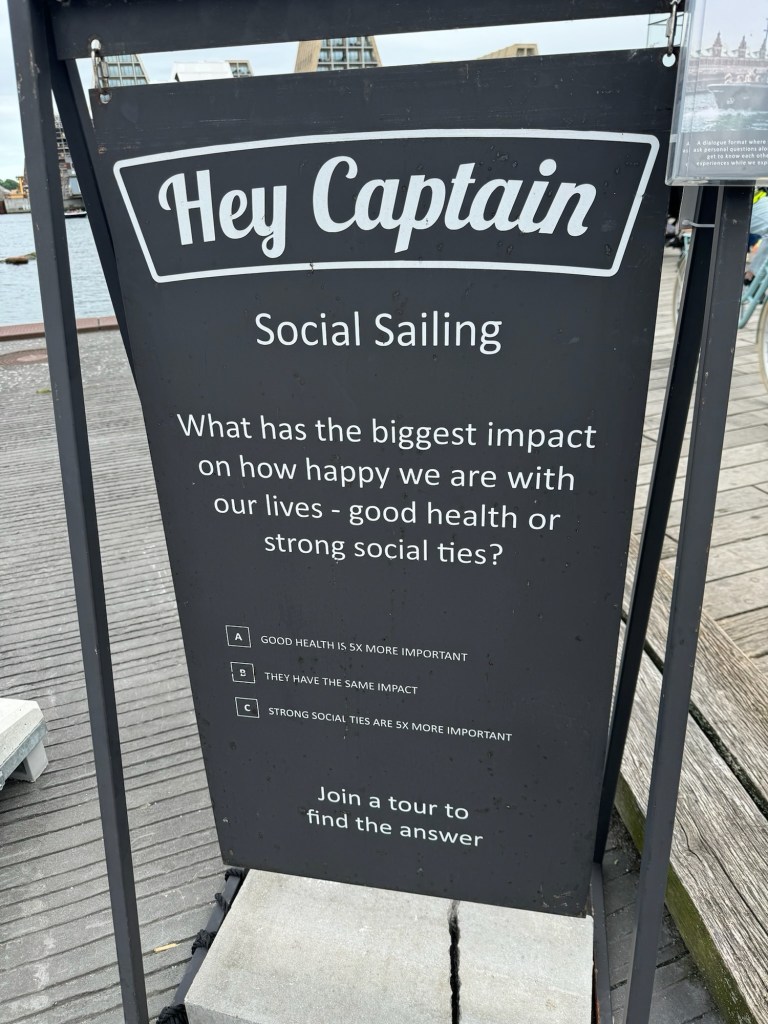
I think the answer is B but our captain says it’s C.
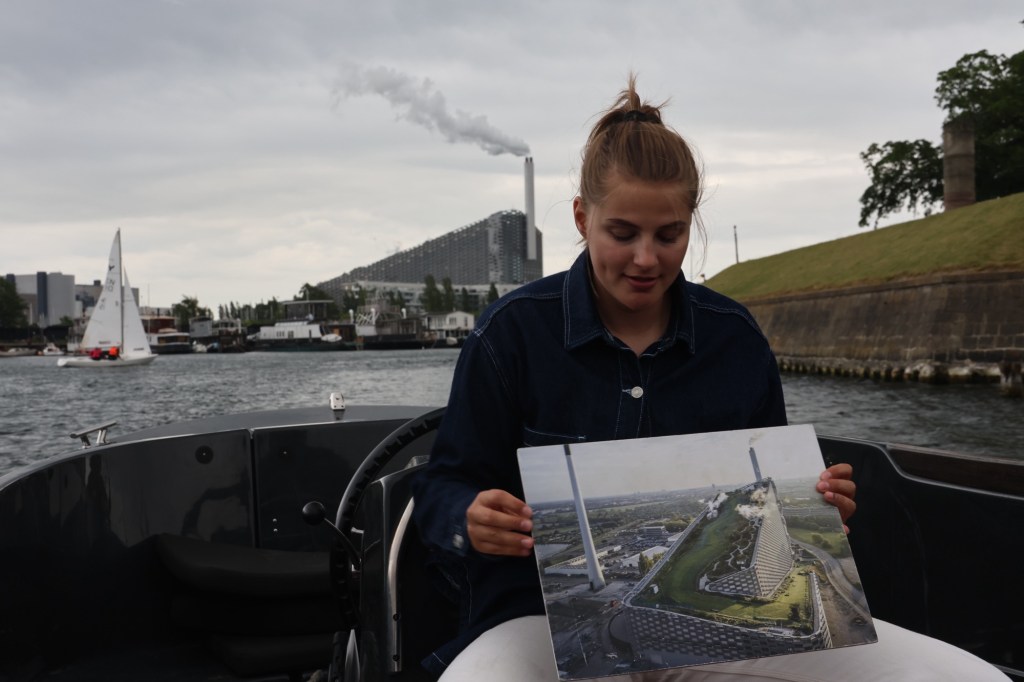
Our captain showing us the ski slope built into the recycling plant seen in the background.

— Recycling, electric cars, and environmental measures are very important to the Danes.  We saw nearly as many electric cars as gas-powered ones and the government is very proactive when it comes to the environment.  Their trains and subways are clean and efficient and a very popular way to commute.

— Sadly, they smoke a lot and they smoke at restaurants outdoors.  Our one big complaint. Apparently the Danish tobacco industry has a grip on its population.

— Their language is impossible to translate for Americans but everyone speaks English so it is easy to get information.  They have added three extra letters to their alphabet to make it even more confusing.

OK, we know what you’re thinking. But, this translates to “Your Speed.”

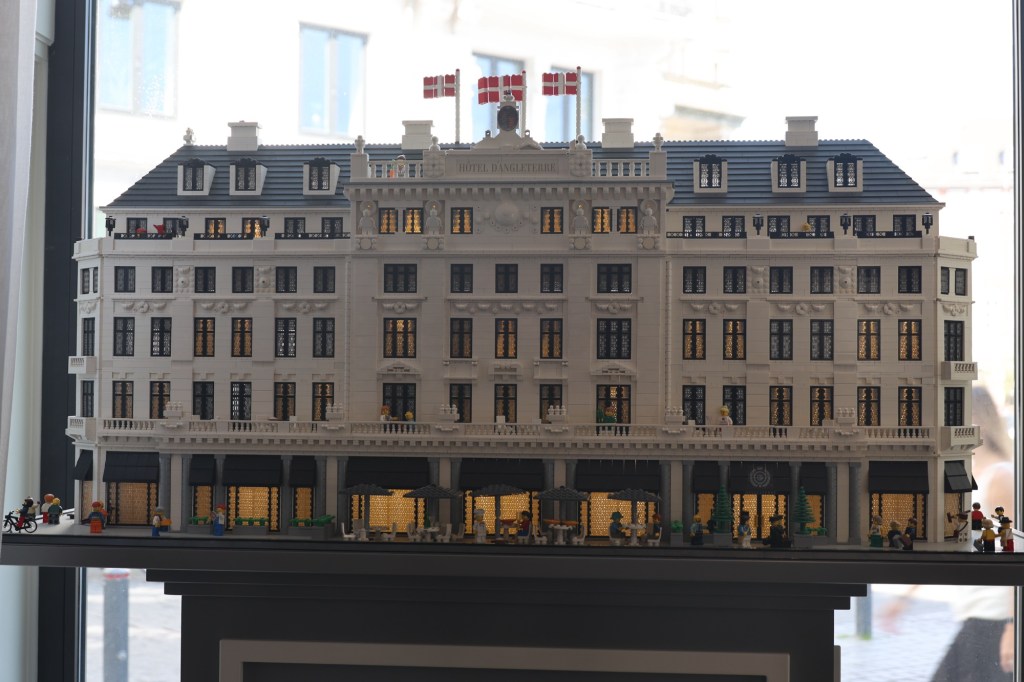
— If you are into Legos, the company started in Denmark in 1932. The word lego means, play well. They have the original Legoland about three hours out of the city! Our hotel had a replica in their lobby made completely out of Legos.
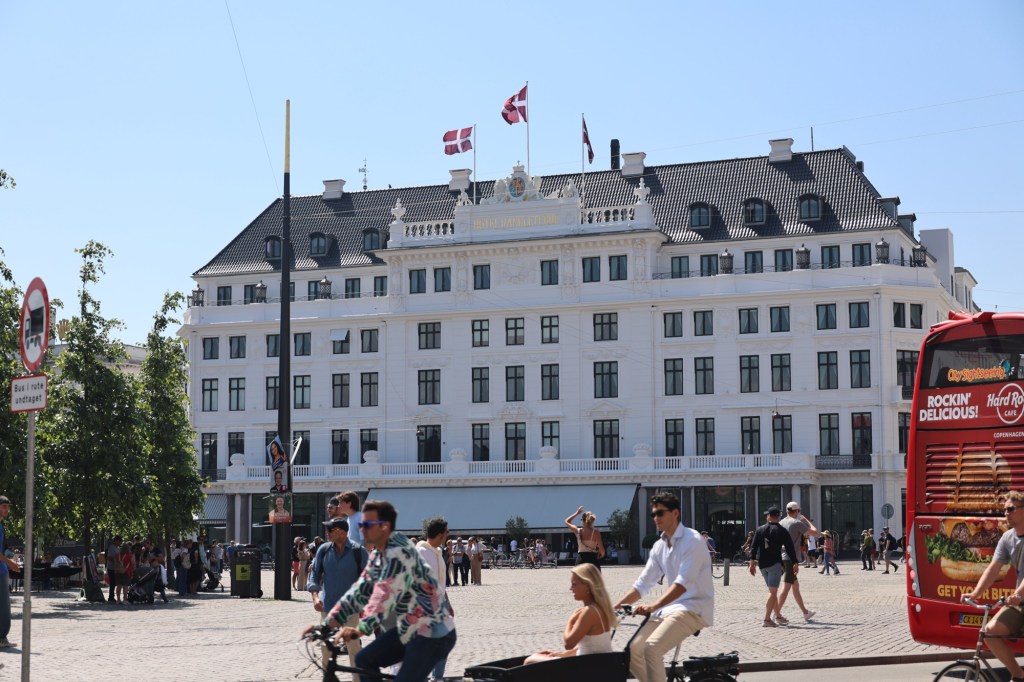
Our hotel, the Hotel D’Angleterre
It’s Lego replica in the lobby.

Copenhagen ended up on the very top of our list of favorite places to visit.  The city is walkable and bikeable, the people are vibrant, and there are no safety concerns, and it is a culinary paradise. We loved our 72 hours in this beautiful country.
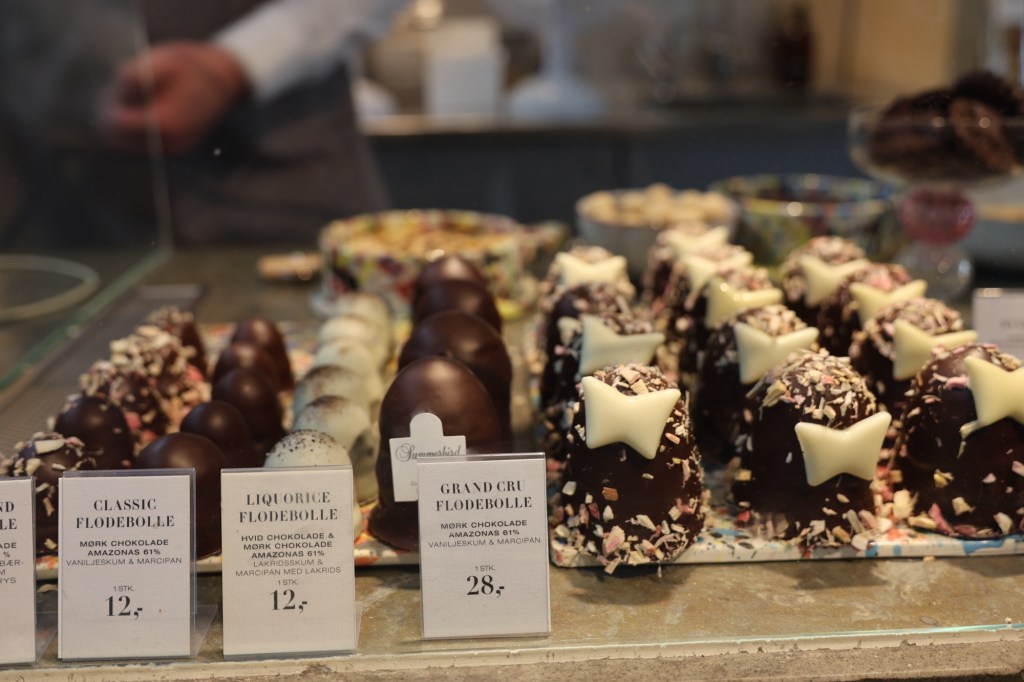
Chocolate is readily available.
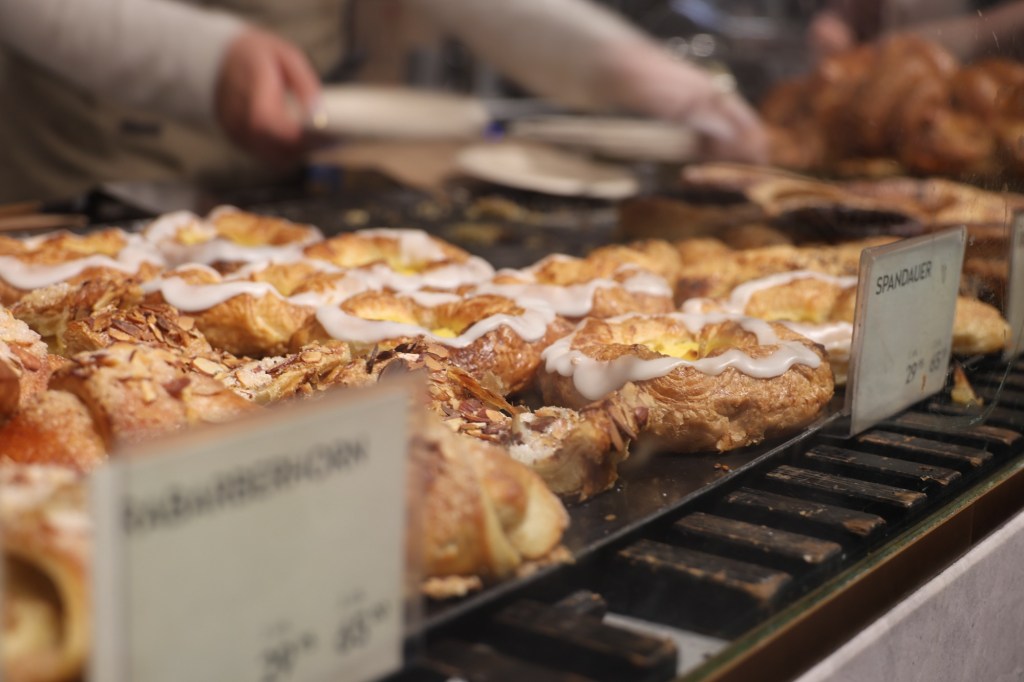
Another source of happiness in Denmark — the danish.
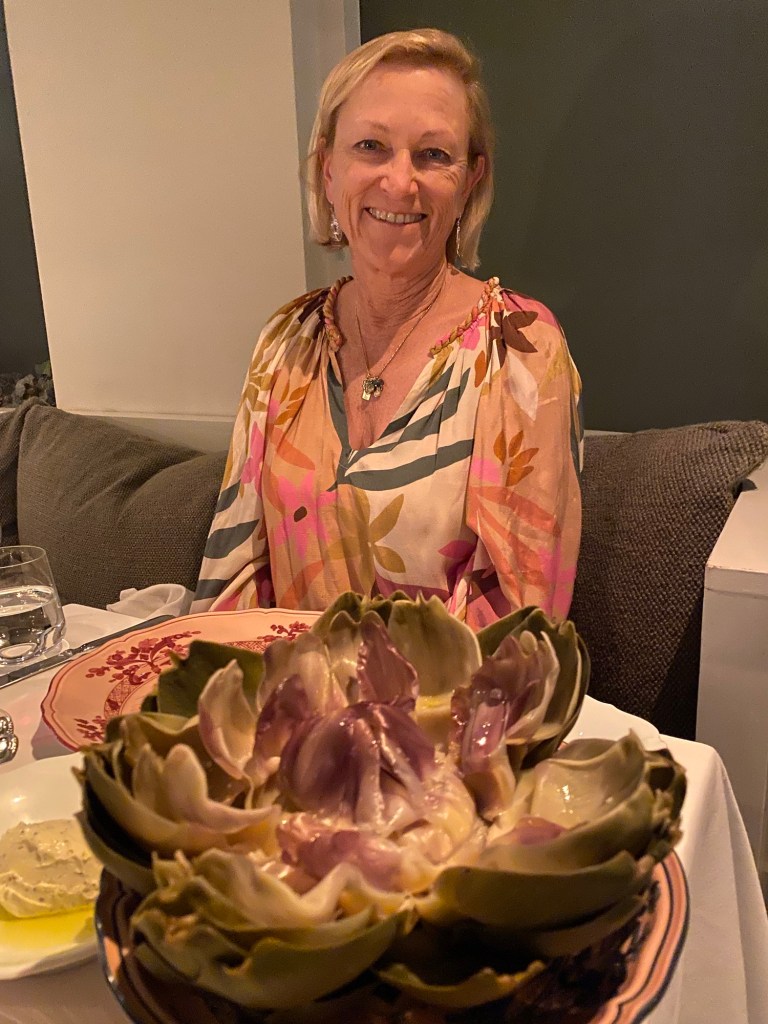
Lisa getting ready to enjoy our giant grilled artichoke.
The Danes love licorice. Here is a whole wall full of various licorice candies.
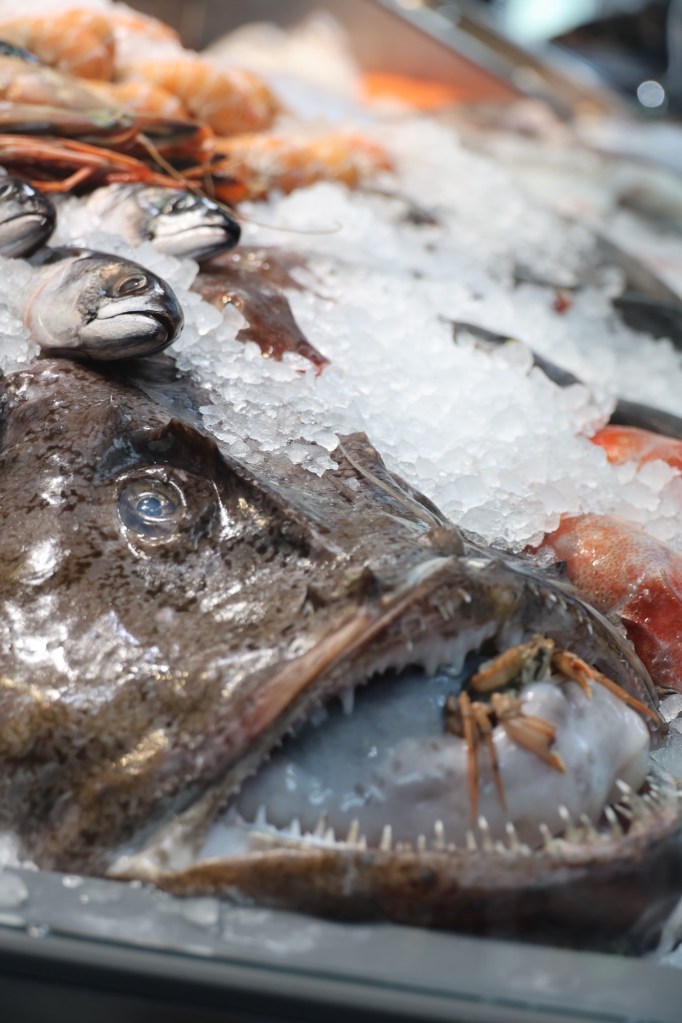
No place is Denmark is more than 32 miles from the coast. So fish is a staple of the Danish diet. This monkfish is ugly, but tastes delicious.
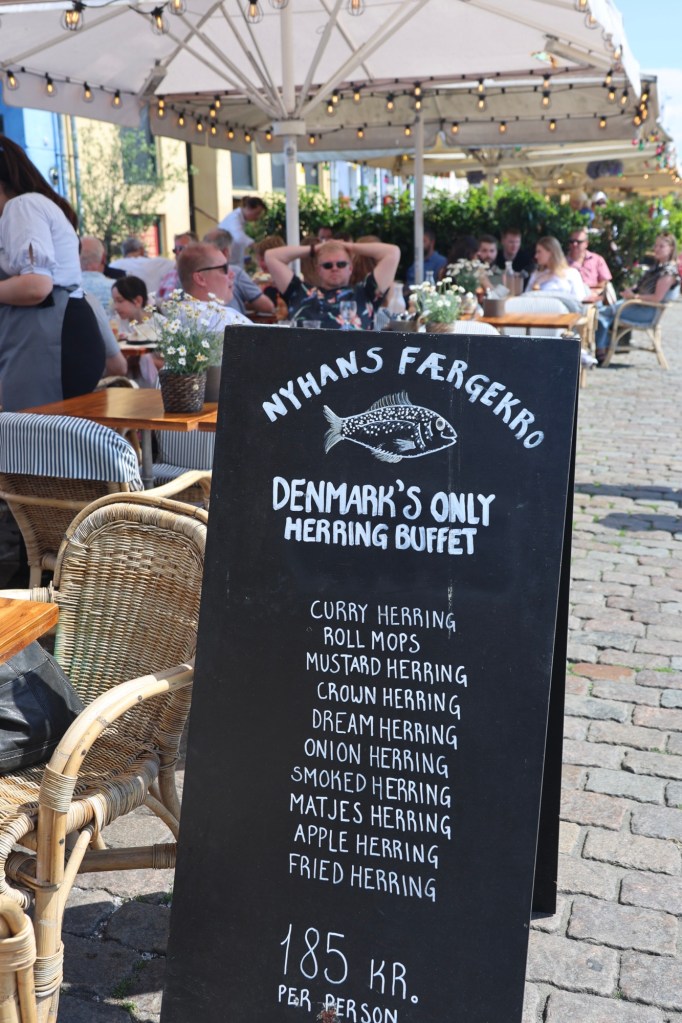
And, it’s pretty easy to find herring. This sign reminded me of the Forrest Gump scene about shrimp.
Categories: Denmark, Scandinavia, Travel | Tags: , , , , , | 2 Comments

KYOTO: Land of Shrines, Temples, Kimonos, and Geisha

On Saturday (Sept 9th), we took the Bullet Train to Kyoto. What an efficient, clean way to travel! The Bullet Train or Shinkansen has a speed of approximately 200 MPH and got us to Kyoto in 2 ½ hours. In the 50-plus-year history of the Bullet Train, there has not been a single passenger fatality or injury due to derailments or collisions. Equally impressive, the Bullet Train has carried over 10 Billion Passengers and in the most recent reporting the average delay from the schedule per train was only 24 seconds. I think BART could learn a thing or two about how the Bullet Town operates!

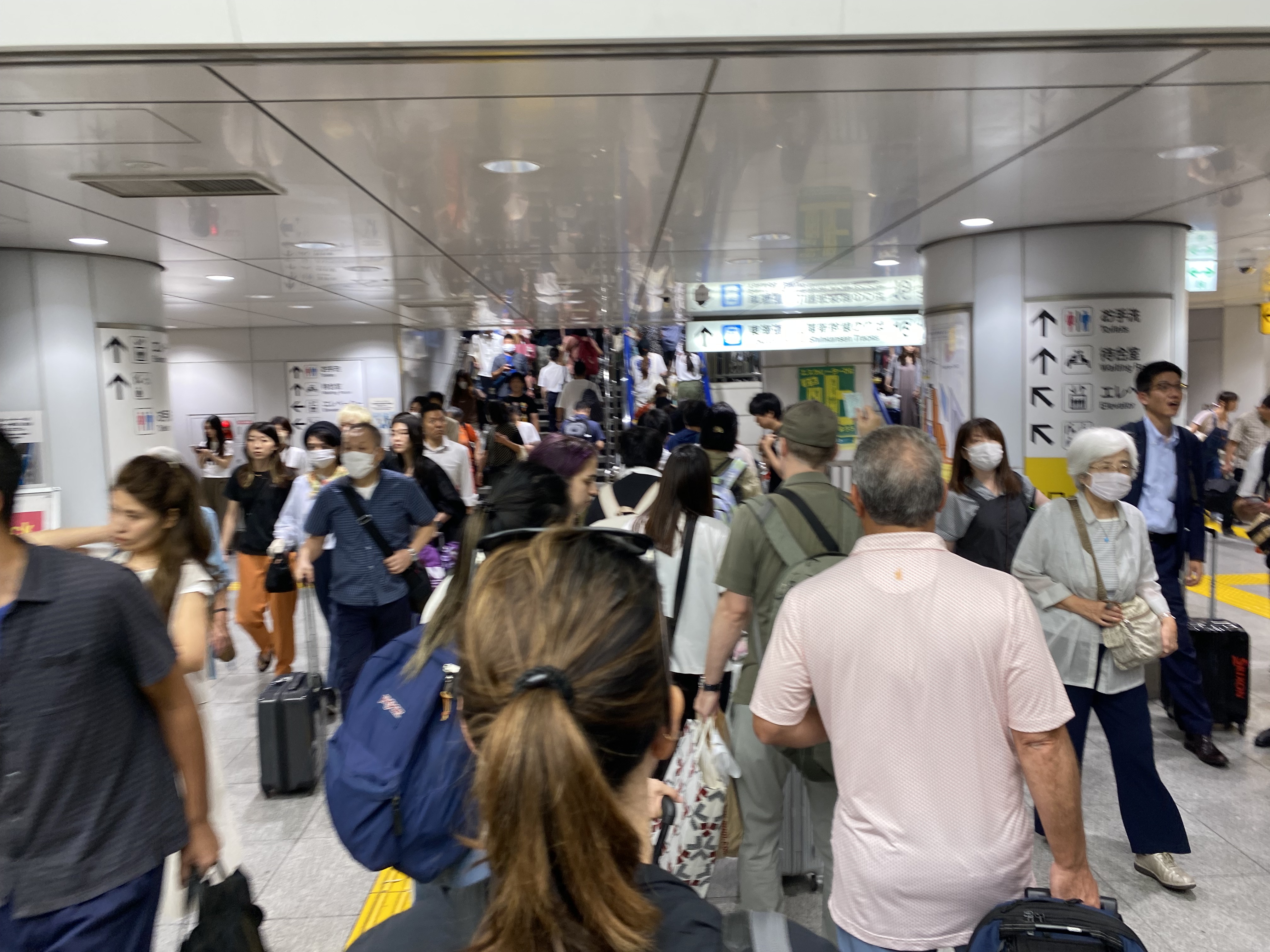
Tokyo’s Toikaido Station is bustling. Think Grand Central in New York.
Getting ready to board our Bullet Train to Kyoto.

A little bit about Kyoto before we talk about our first day. Kyoto is a metropolis of approximately two million people and is considered the cultural capital of Japan. It has over 2000 religious places-1600 Buddhist temples and 400 Shinto Shrines, many of them dating back to the 700 and 800’s. An interesting fact about Kyoto was that it was originally on the list to be targeted for the atomic bomb in 1945 but at the insistence of the Secretary of War Henry Stinson, Kyoto was removed from the list. Henry had honeymooned in Kyoto and loved the place for its history and charm and saved it from the Atomic Bomb. It is the reason that, unlike Tokyo that suffered severe bombing in the war, Kyoto still has many ancient cultural landmarks.

Kyoto seems very rich in culture and heritage.  We walked around the narrow streets and saw many women and men exquisitely dressed in kimonos even in the 90 degree temperatures!  According to our guide Bret, the people of Kyoto also have an air about them.  He told us that in Japanese culture, the hosts will serve green tea at the end of a party or gathering to signify that the evening is over and it’s time for the guests to go home.  In Kyoto, the hosts serve green tea when their guests first walk through the door!

A woman in a kimono on a street in the Gion District.
Homes on a creek running through the Gion District.
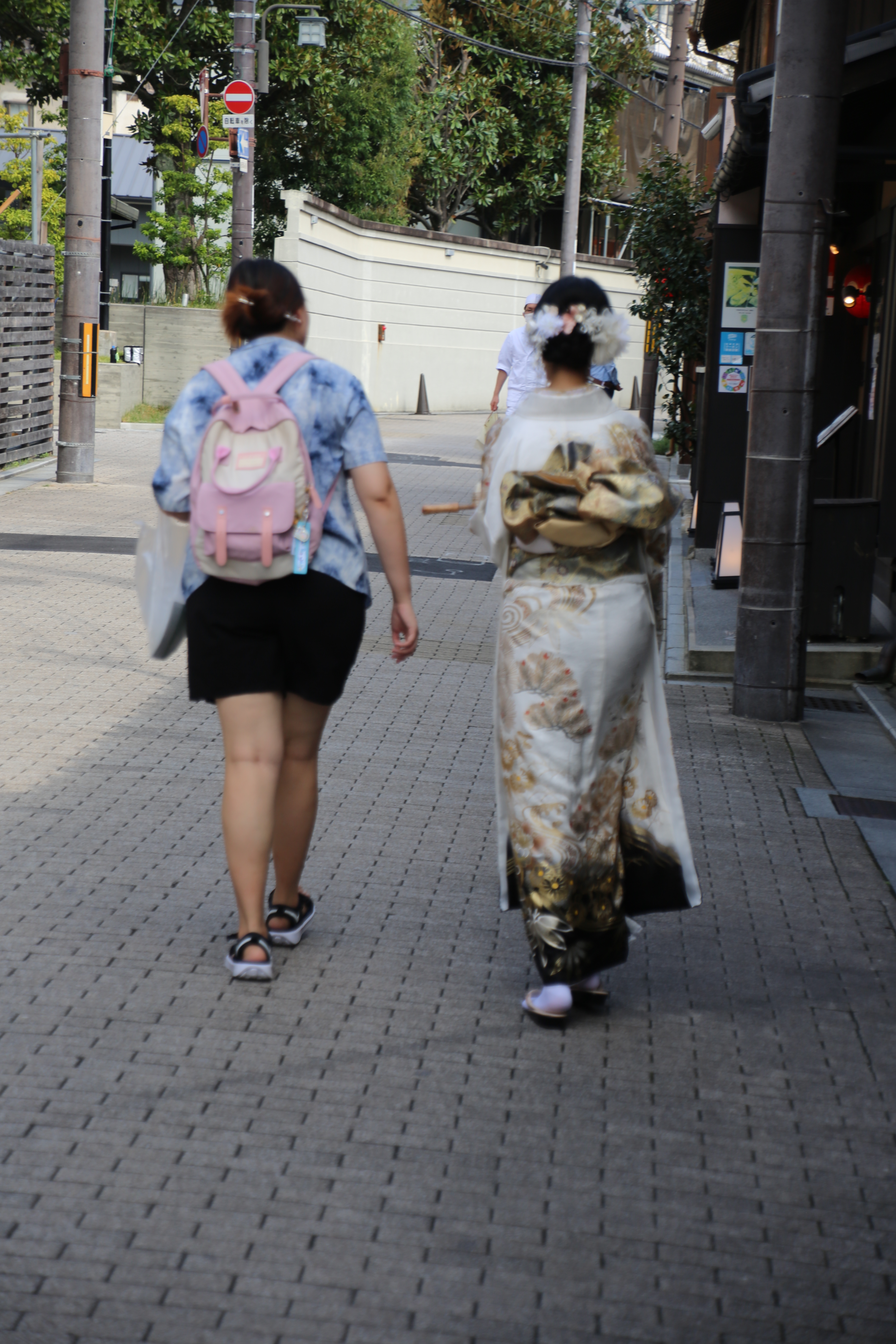
A girl in a kimono walking with her friend in modern clothing.

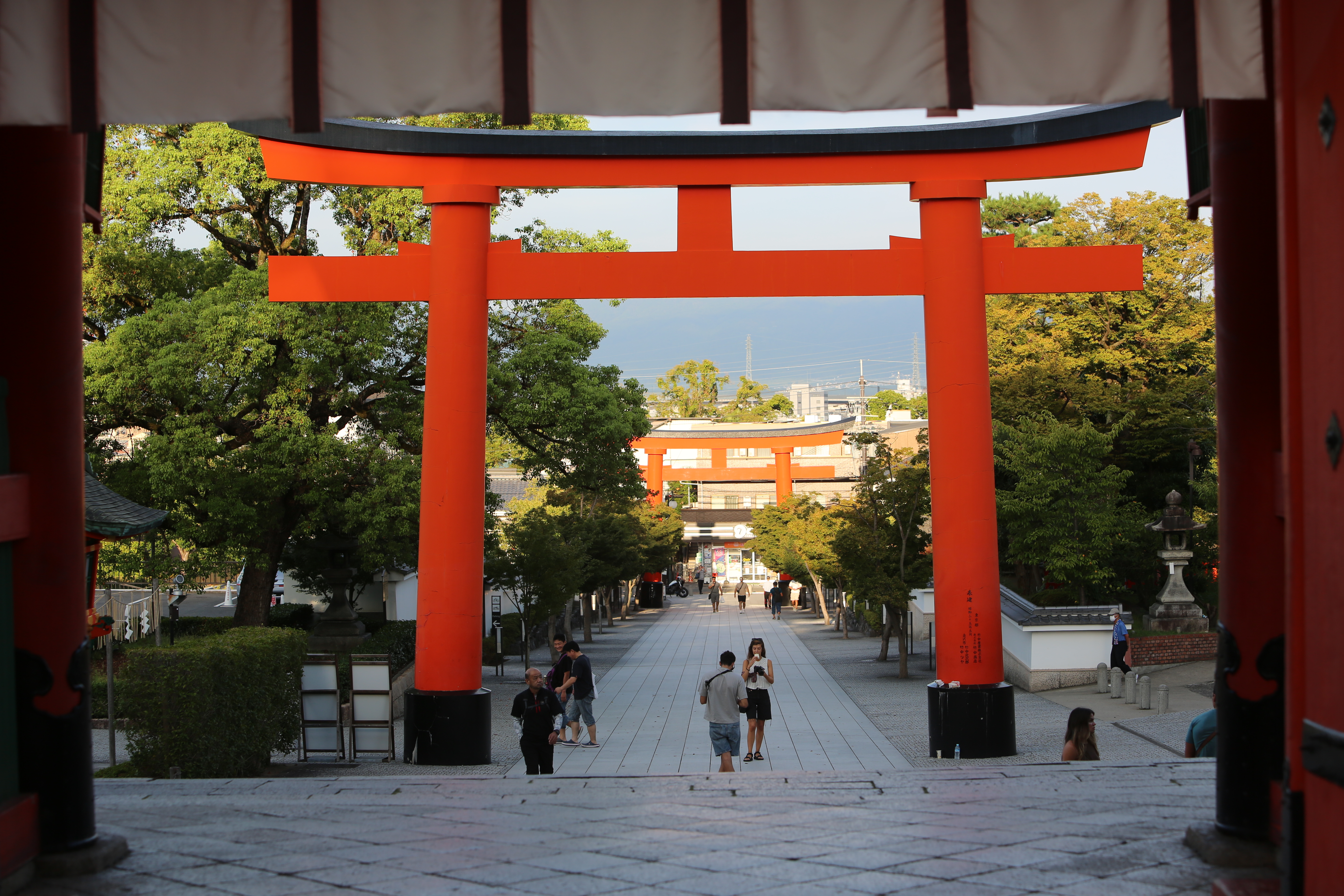
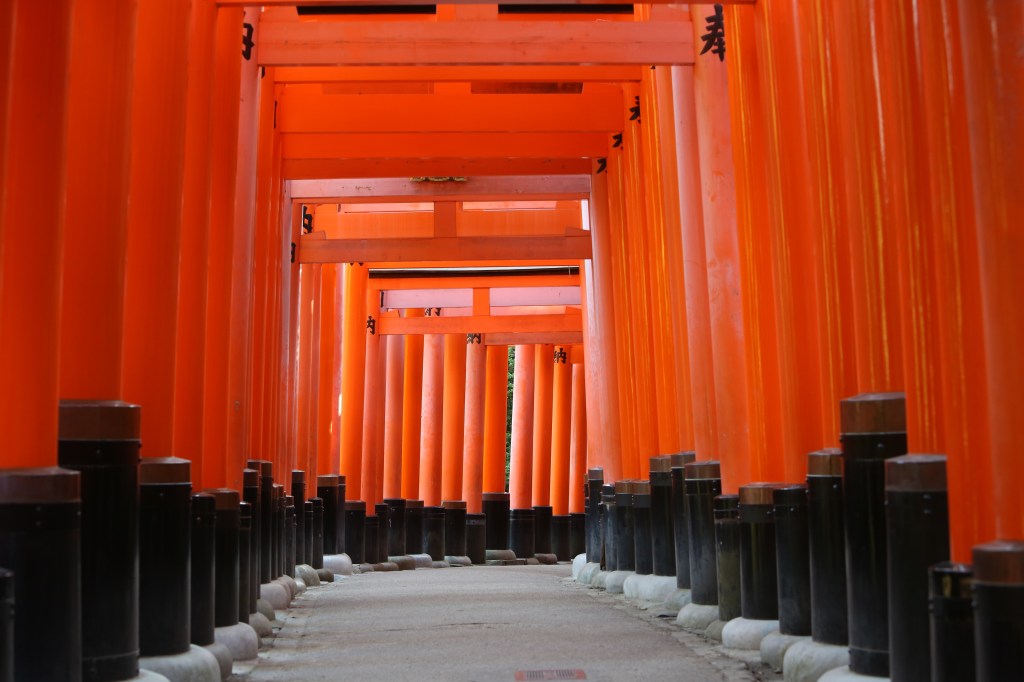
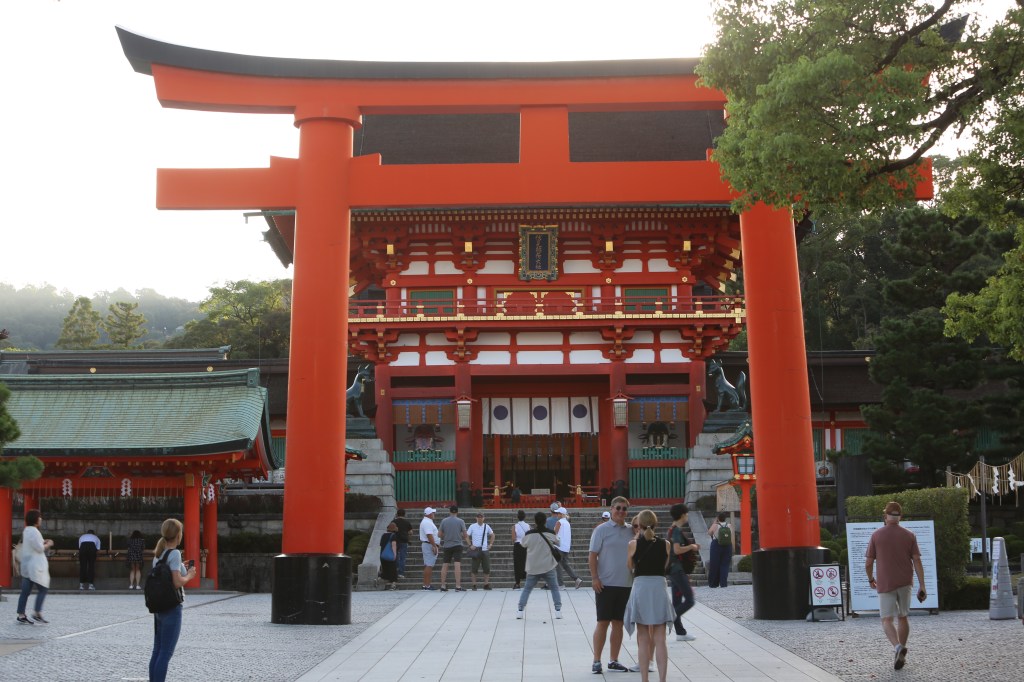
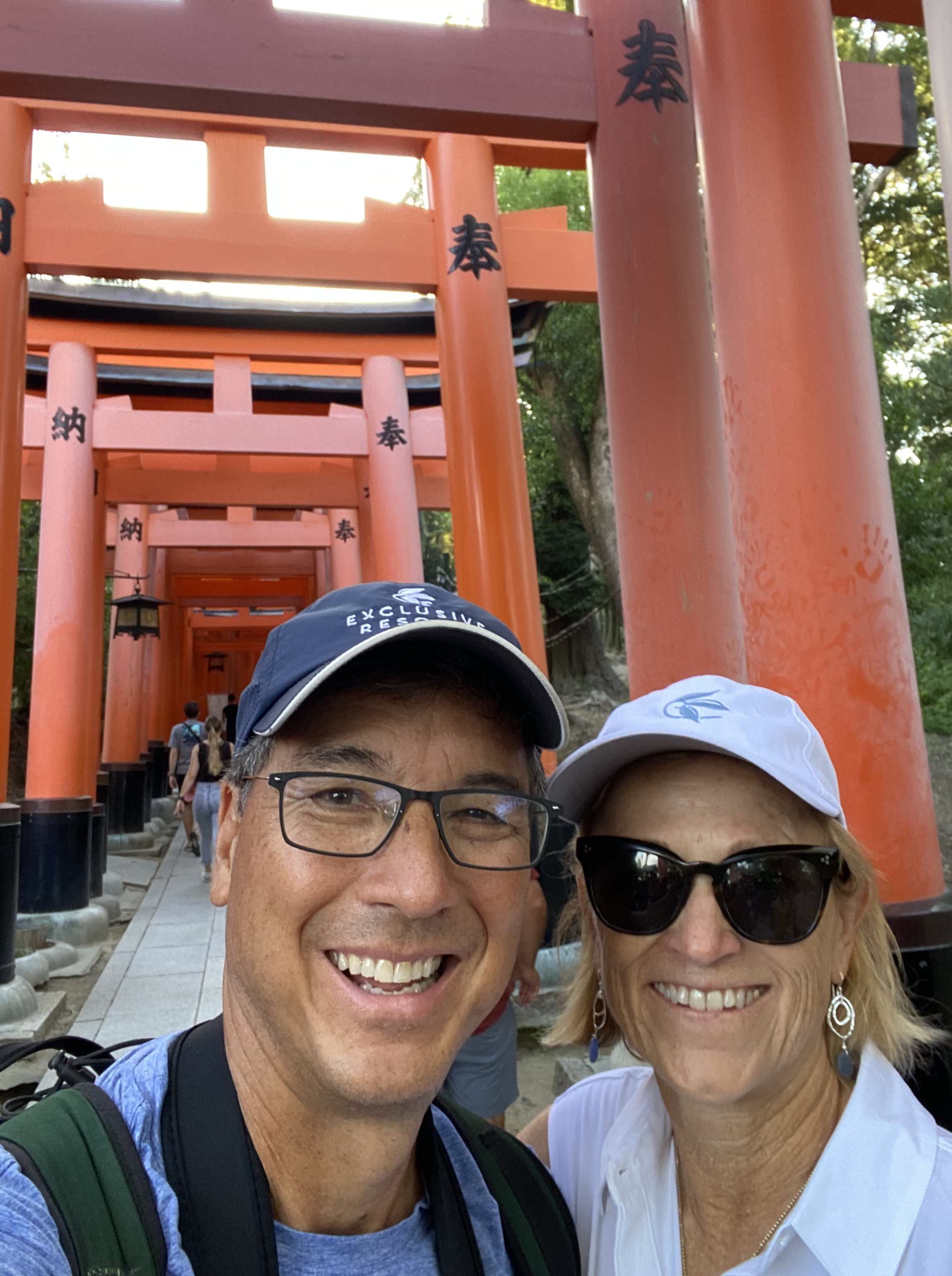
This morning we got up bright and early at 6:00 am to see the Torii Gates at Fushimi Inari-taisha. (Brad didn’t get much sleep last night because, of course, he watched his beloved Colorado Buffaloes beat Nebraska at 1:00 am in the morning here. Did you expect anything differently from him?) The 10,000 Torii Gates and the shrine(s) are one of the most popular tourist attractions in all of Japan. Hence our guide insisted that we get there to enjoy the area before all of the thousands of tourists descended upon it. The shrine was founded in the year 711 and the temple gates are the oldest in Japan. Their Vermilion color wards off evil spirits and represents the sun. The gates were truly a sight to be seen and we climbed up through about 2000 of them feeling like our sins had been absolved and our dreams and wishes might someday come true. Truly it was a spiritual place made even lovelier at dawn.

The entrance to the shrine.
The Torii gates.
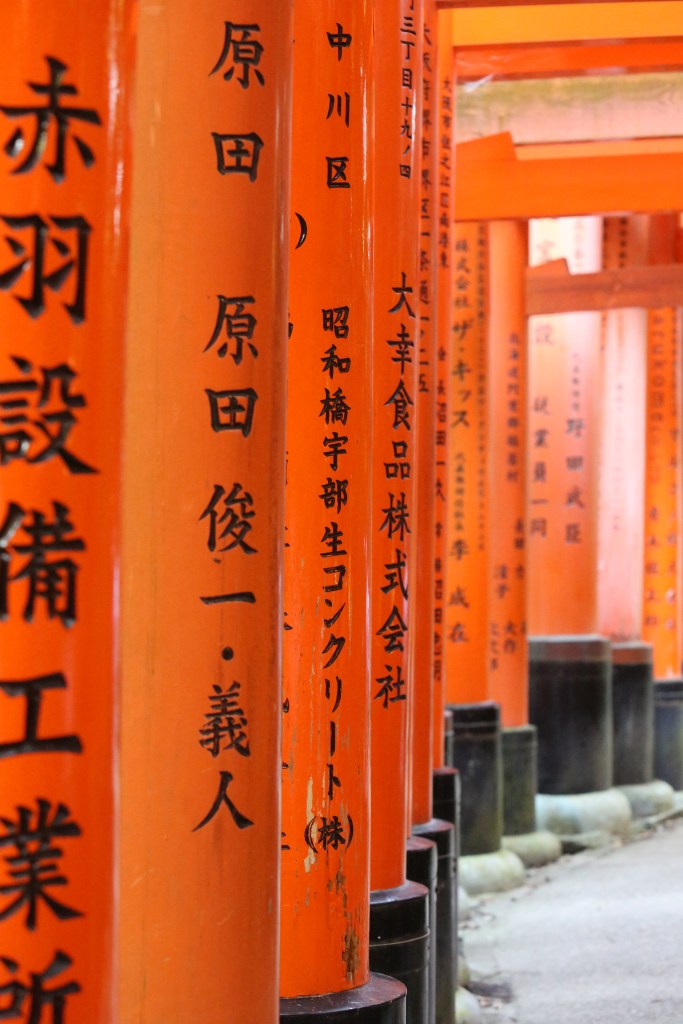
The writing signifies the person or company that sponsors that gate.
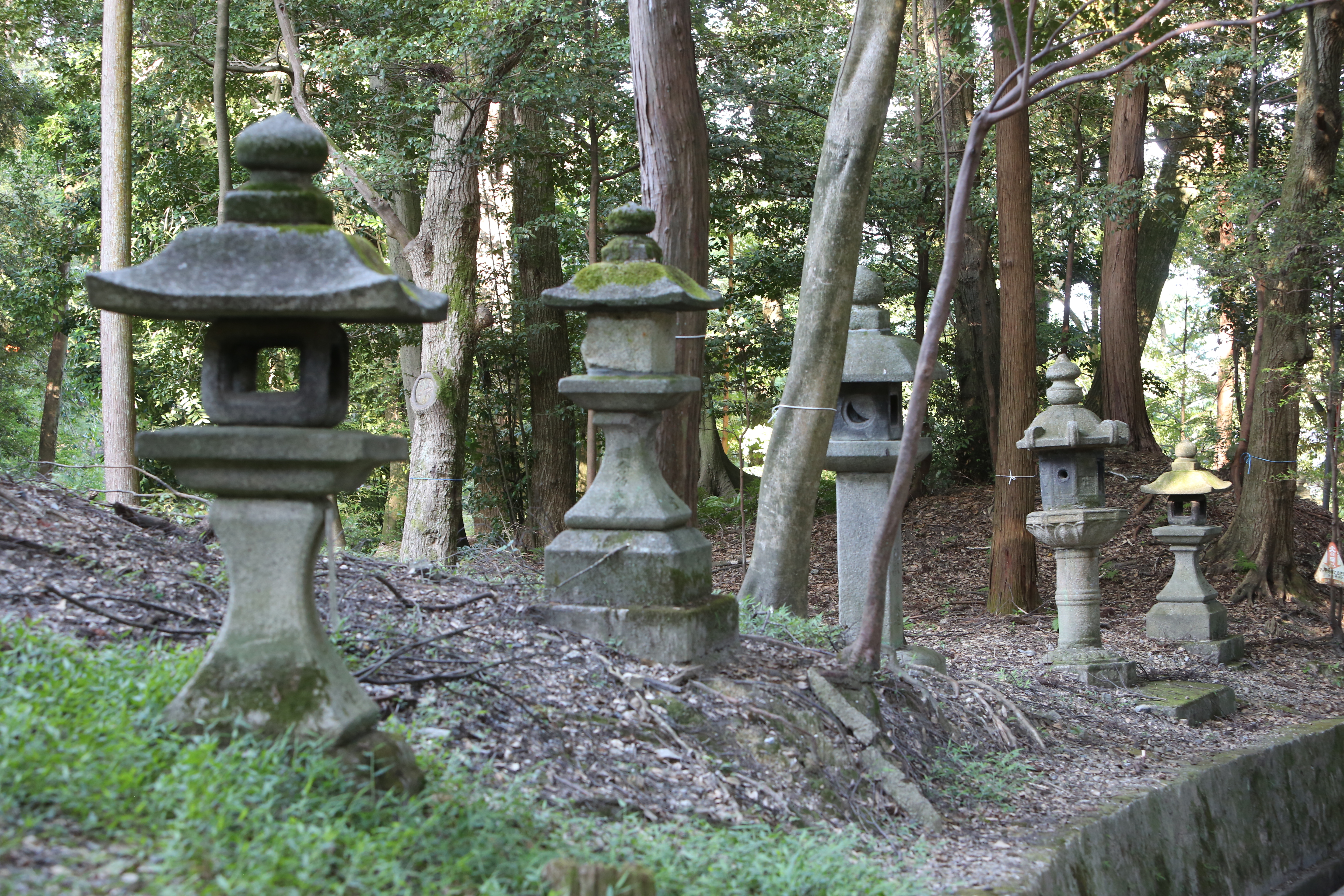
A row of lanterns on the grounds of the shrine.
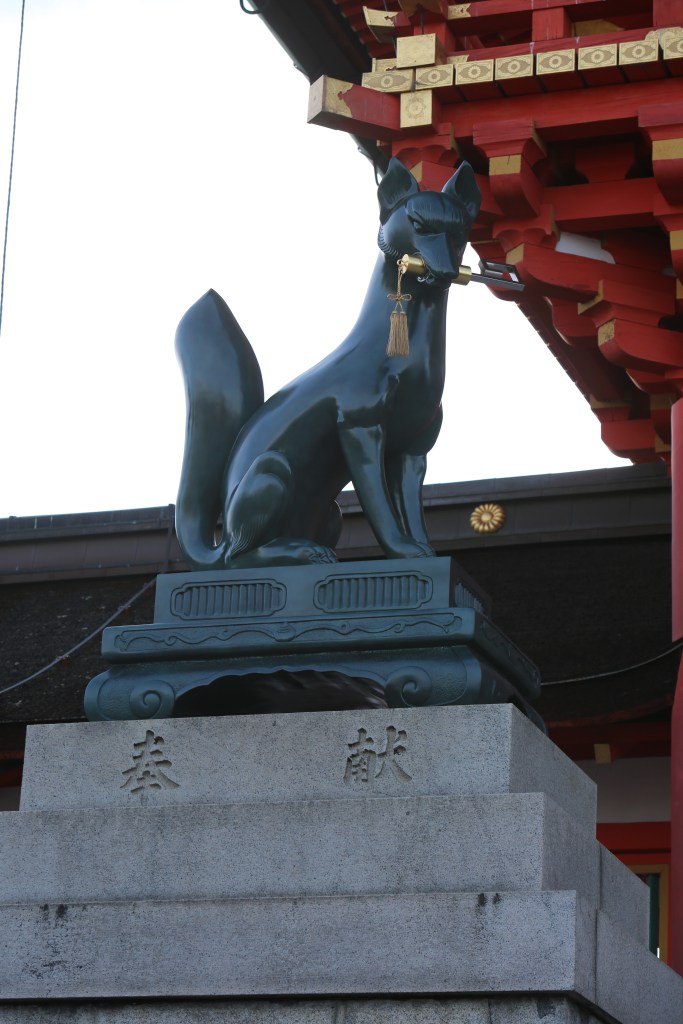
This fox guards the entrance to the shrine. The fox is holding a key — the key to success.
Front view of the shrine.

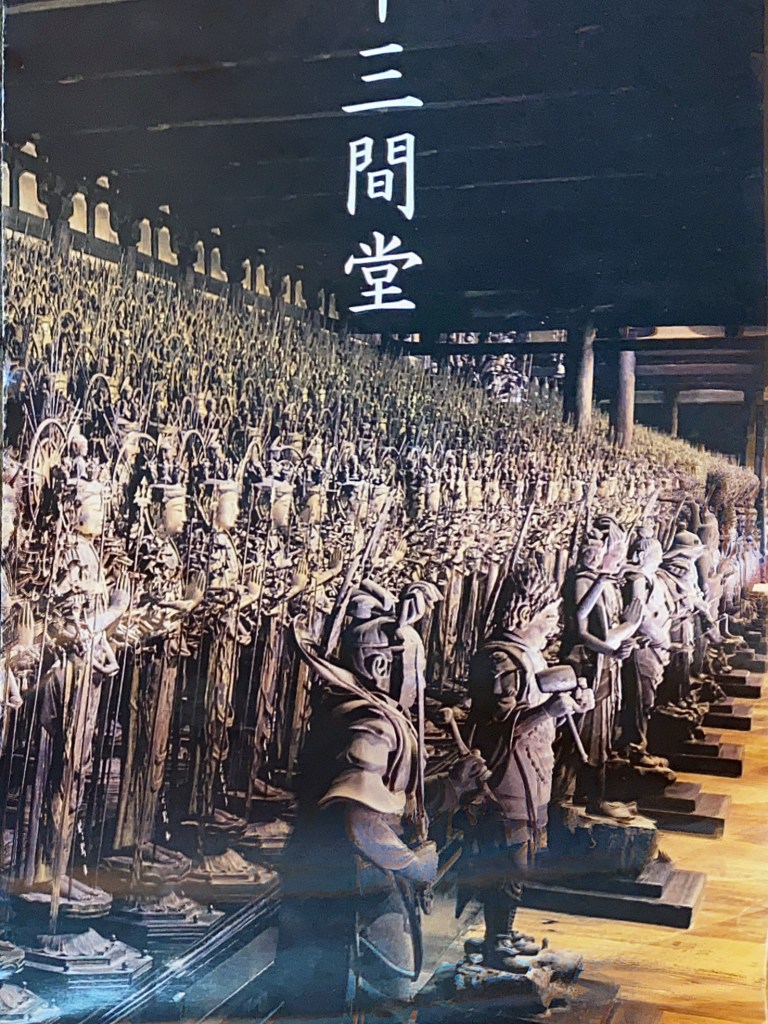
The rest of our day was spent at SanJusangendo (a Zen Buddhist Temple) and walking around a beautiful Zen Garden at Totofukuji temple. The SanJusangendo temple is famous for its 1001 Thousand-Armed Kannon Statues (Yes, they are supposed to have 1000 arms each but, I think they only depicted about 20 or so on the statues.) We weren’t allowed to take pictures in the Temple so this stock photo will have to do so you get an idea of how amazing this Temple was. The Zen Garden was just that…very Zen-like. It was built in the 1300’s and is a typical rock and sand garden. The monks at the temple groom the garden every seven-ten days and it takes about seven or eight hours. I am still very curious as to how they keep the circles and lines so perfect without a single footprint or line out of place. Can someone explain that to me?

The 1001 statues in the Buddhist Temple. This is a photo from our brochure. It is prohibited and very bad luck to take photos inside the temple.
The Zen garden.

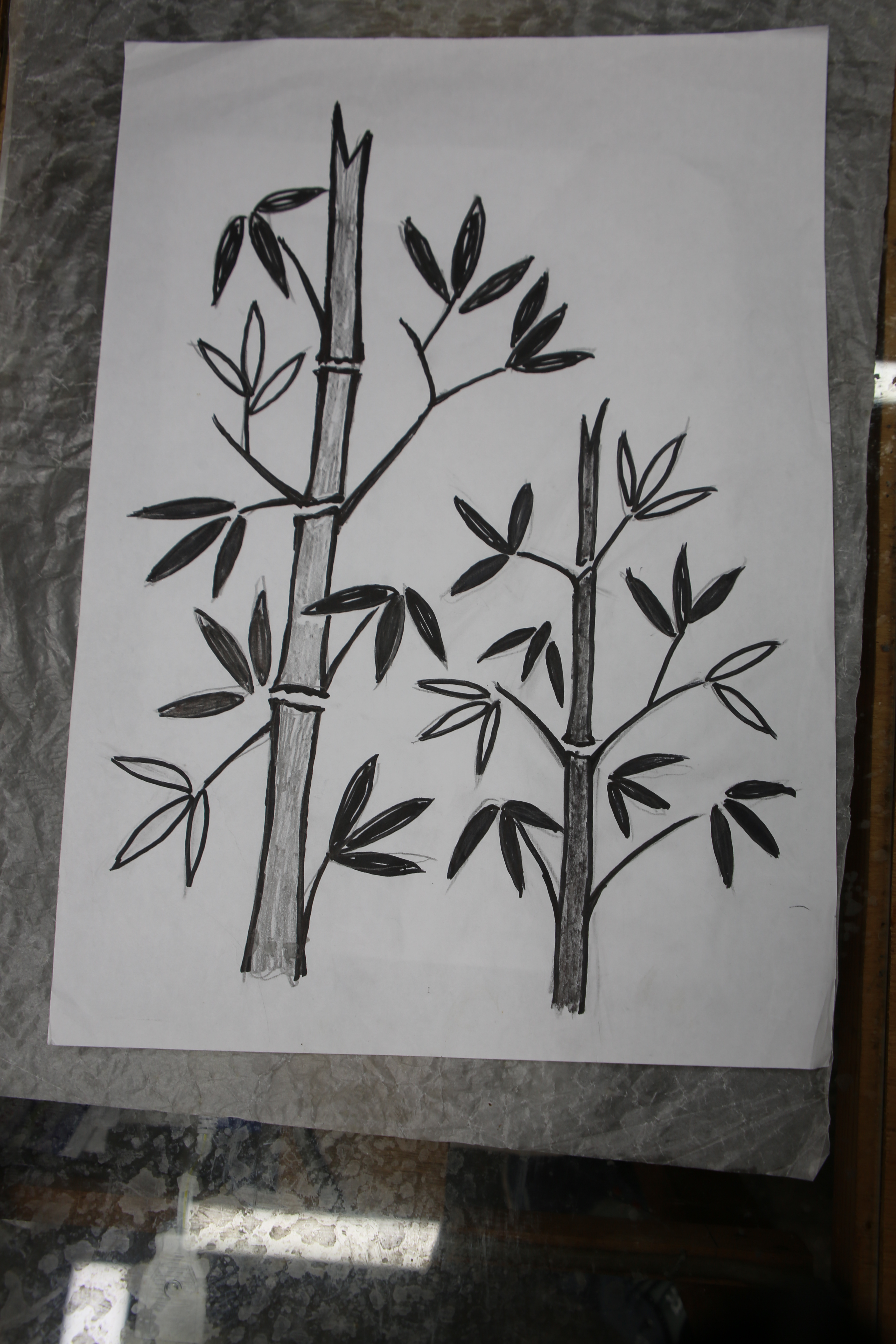
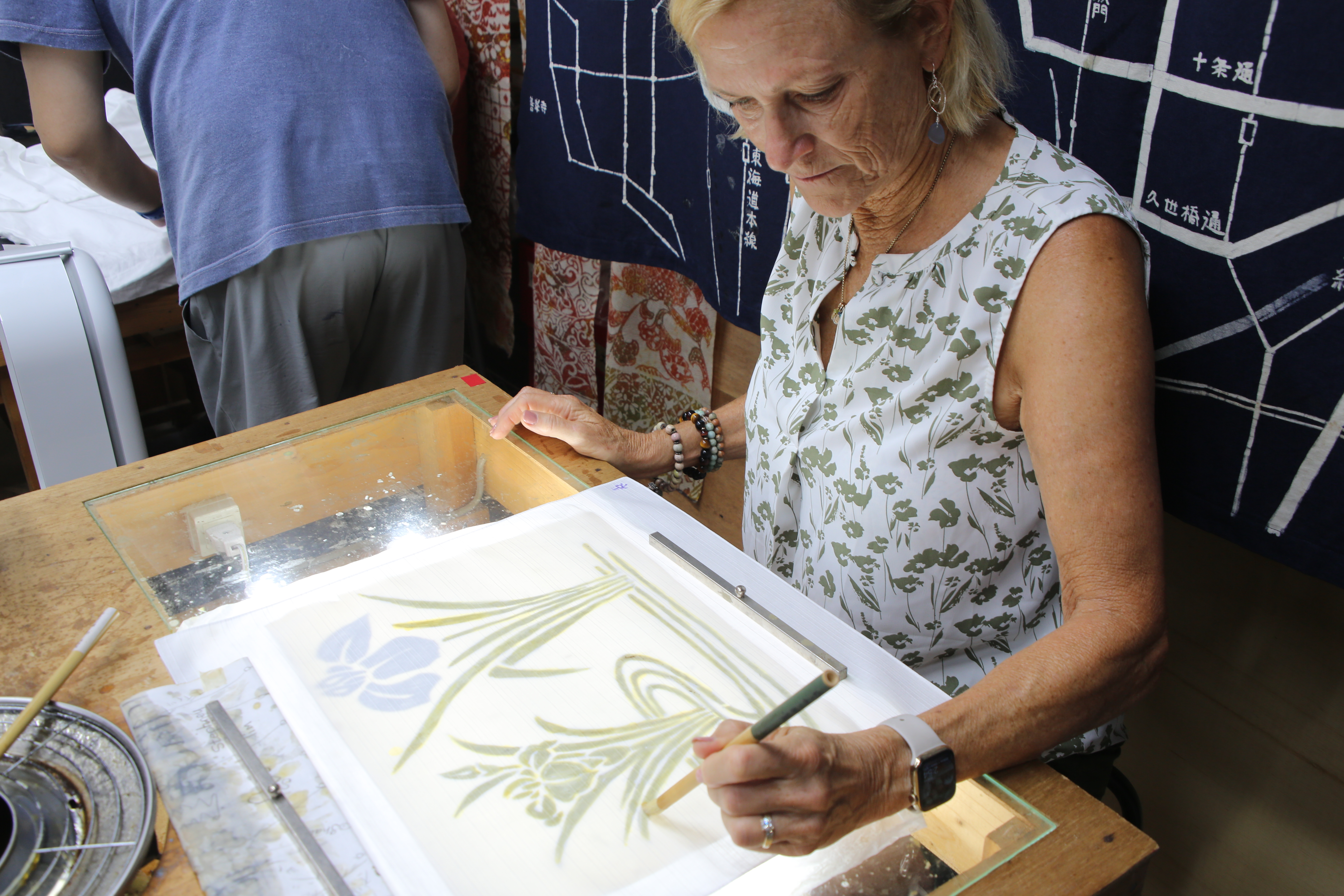
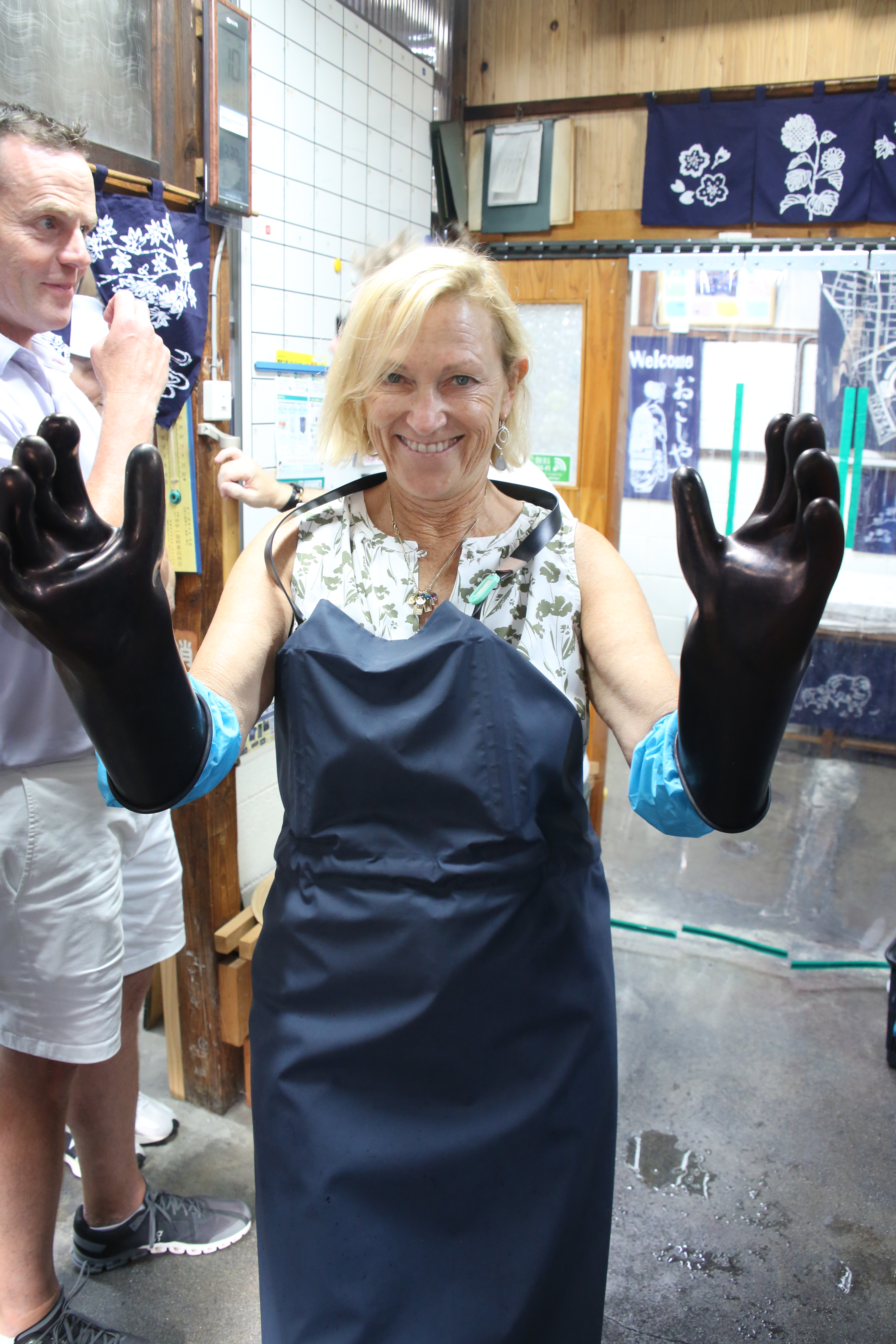
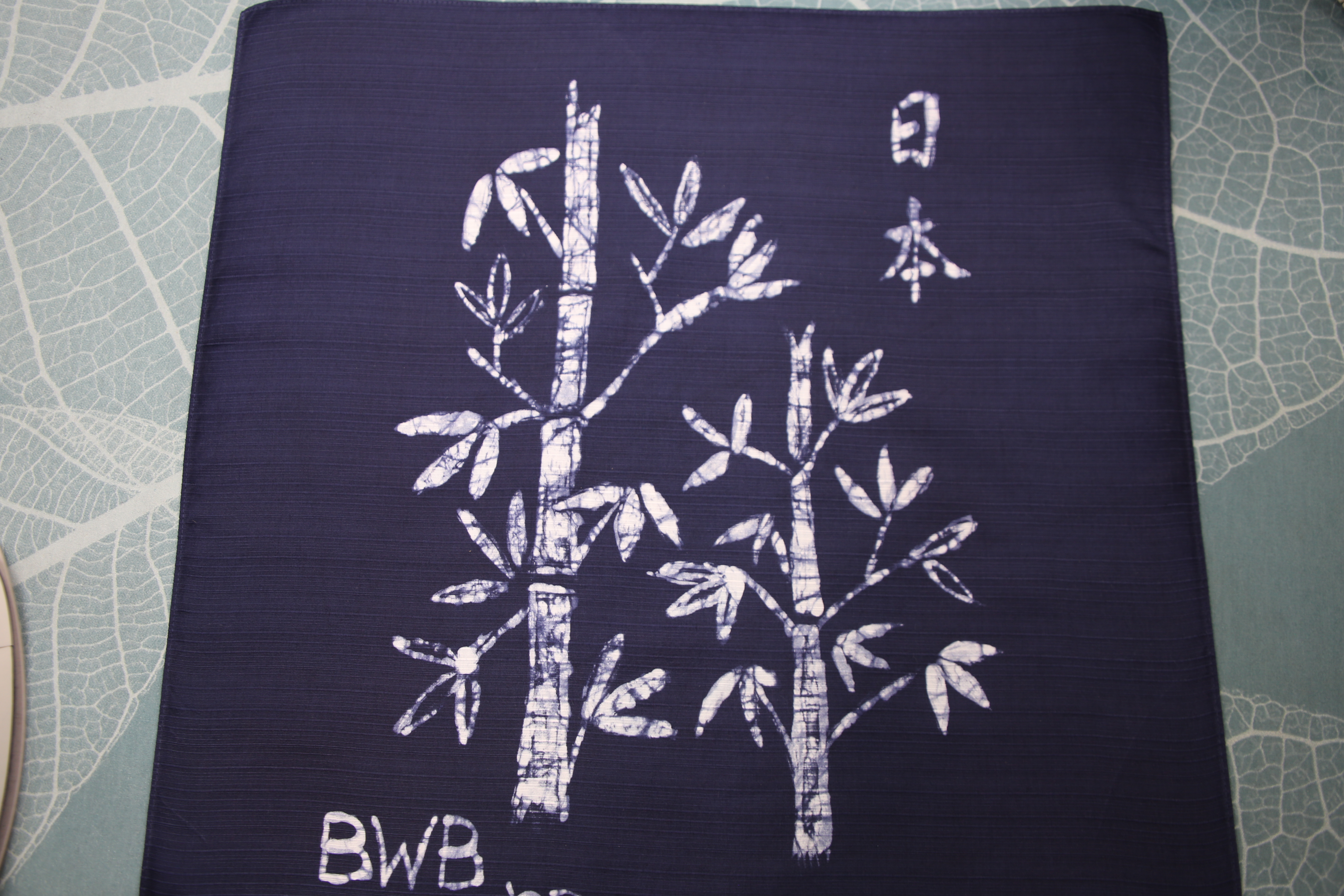
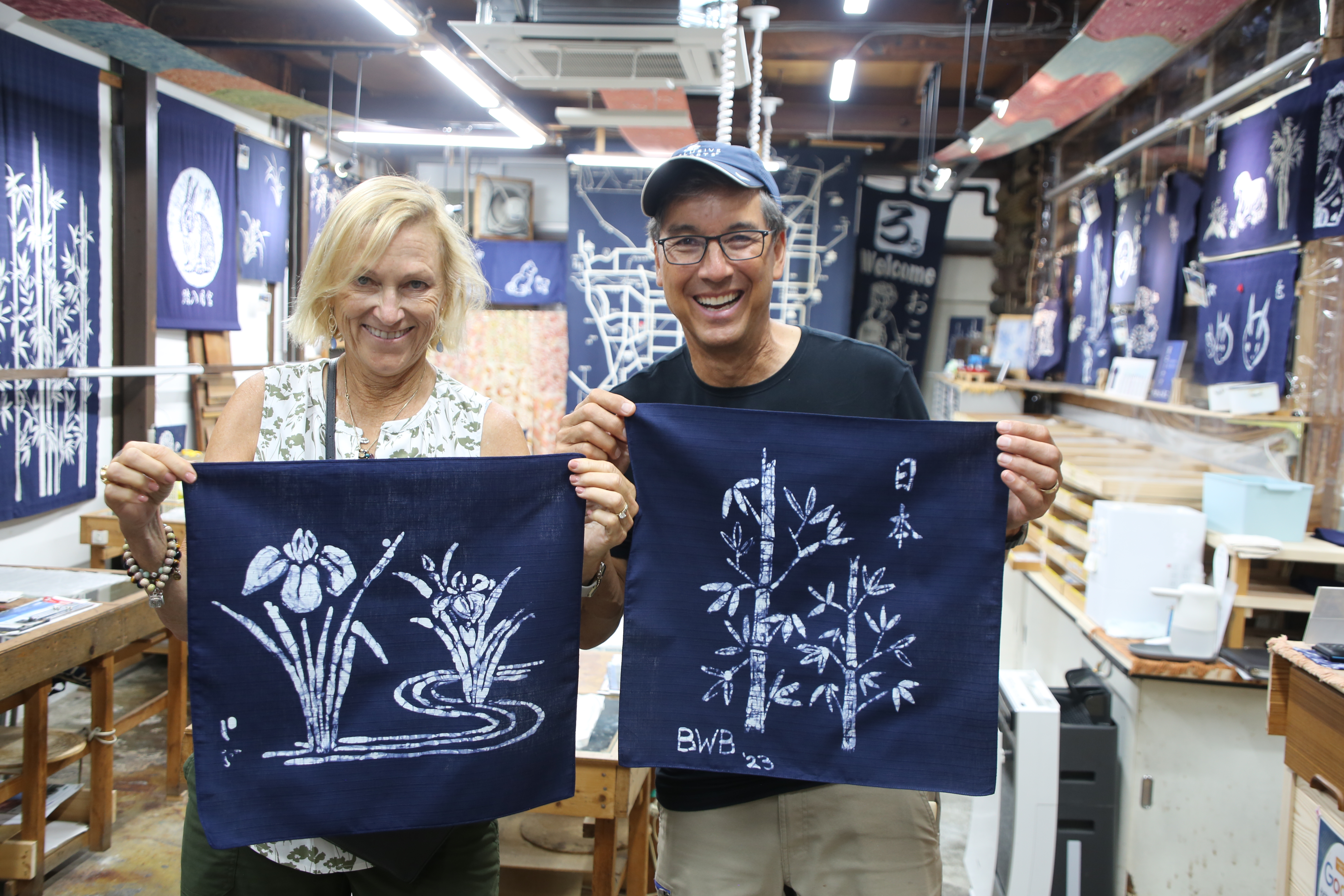
We met together for lunch at an amazing Ramen restaurant in downtown Kyoto and then got very creative at a Roketsu dyeing studio. We learned the ancient art of wax-resistant art at a hands-on studio. The whole process can take up to 20 steps for completion although I think our group might have skipped a few steps in order to make it home in time for “happy hour.” We all picked out different stencils and then painted/traced our stencil onto fabric with wax. It was very important to put a LOT of wax on your fabric so we kept having to brush our paintings over and over. We were worried that our prints would look like one big blob but the helpful people in the studio coached us along the way. (Although the older grandmother giggled and laughed a lot at us and probably made a few disparaging remarks in Japanese about our lack of talent!) After we painted the wax on our fabrics, they were all placed in a large tub of indigo dye and soaked and poked a lot. Lots of rinses and different things happened next but we were all left with beautiful pieces of art and we ooohed and ahhhhed a lot about what amazing artists we were. (Although I am sure the Grandmother didn’t really think so!)

The stencil for Brad’s tapestry.
Painting the wax onto my art piece.
All dressed up to help with the dyeing process.
Brad’s finished product.
Proudly showing off our new tapestries. We’ll hang them in Boulder.

So…that’s it for our first 24 hours in Kyoto.  Tomorrow we’ll spend some time learning more about the geishas and the geisha culture here in Kyoto.  I thought I knew a little bit about the culture after reading “Memoirs of a Geisha” a while back but have found out that only about 80% of what was in that book was accurate.  And to make things worse, the Japanese hate that novel for its inaccurate depiction of a Geisha!  I hope to be enlightened tomorrow

Categories: Japan, Travel | Tags: , , , , , | 3 Comments

And Now….Dancing the Argentine Tango

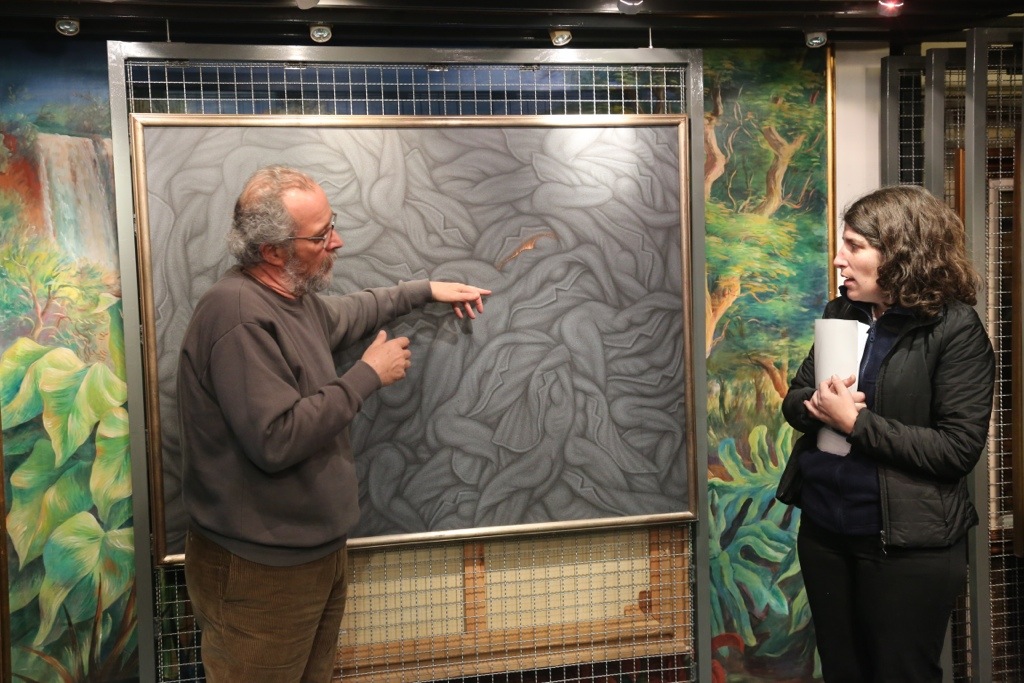
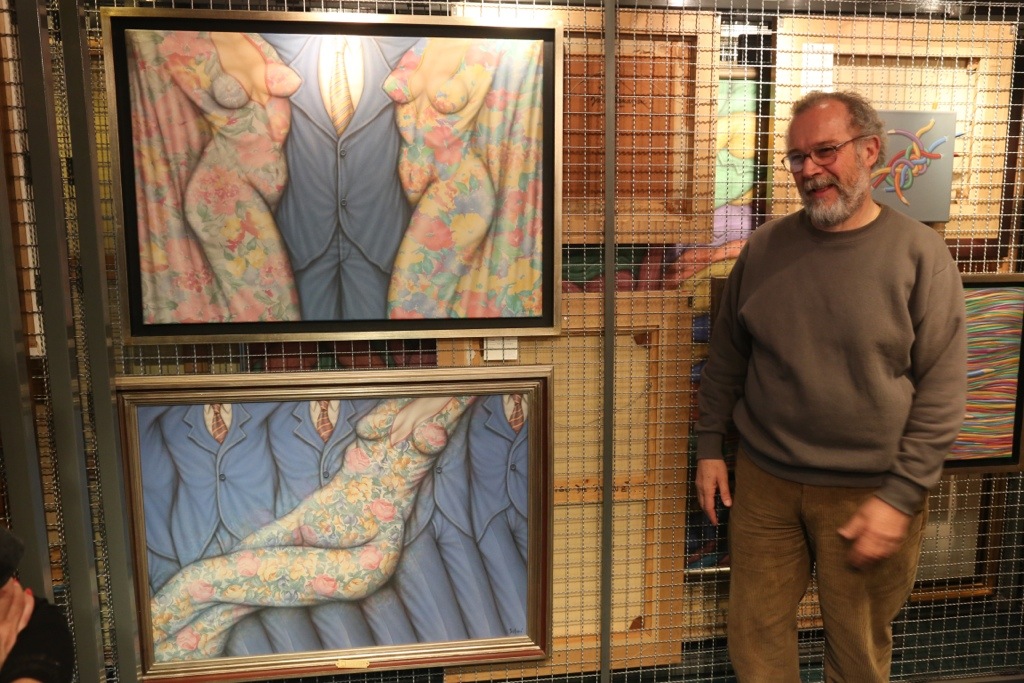
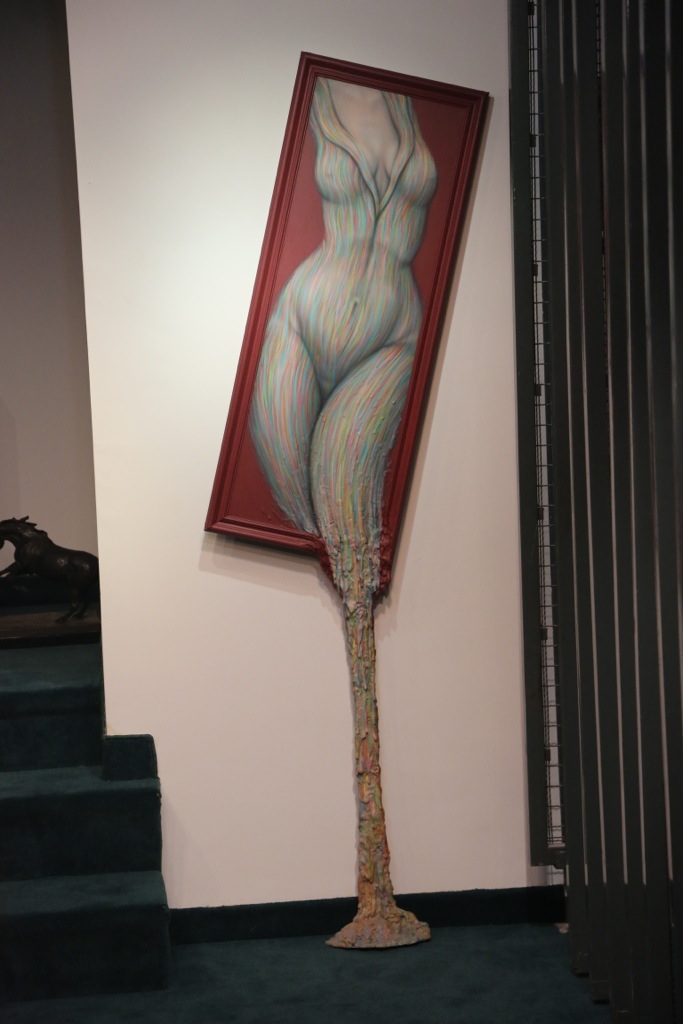
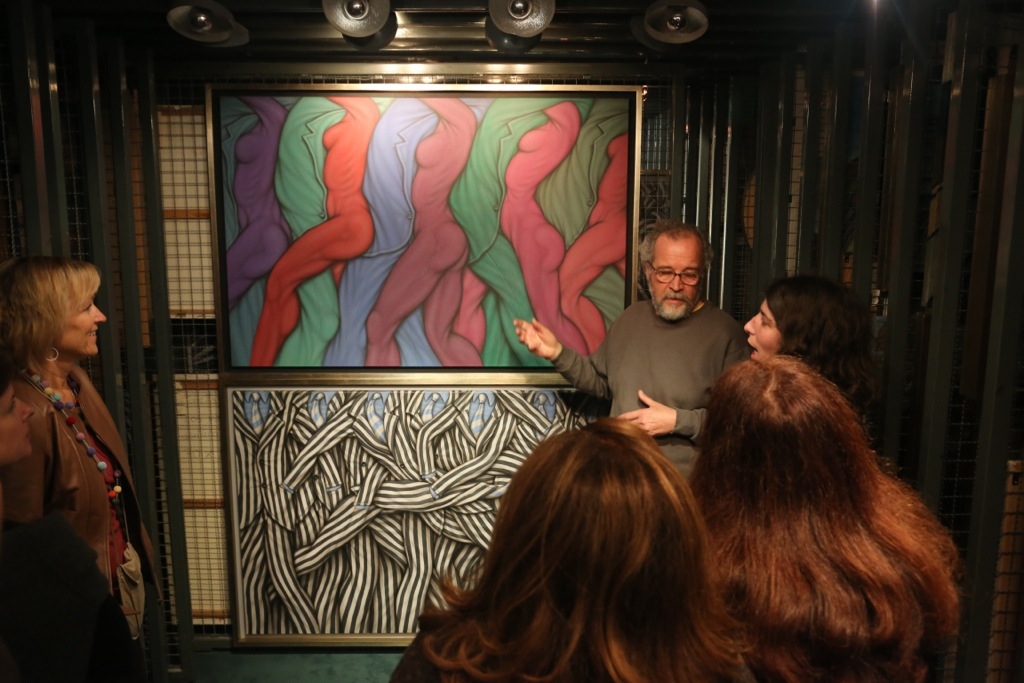
Today was filled with interesting discussions about art, sex, and tango. How often does that happen on a Monday? Our morning started with an intimate presentation by Ernesto Bertani; a famous Argentinian artist. He displayed and explained his various works of art at a local gallery. Because he knows no English, his words were translated by one of our guides. His works were very sensual so frequently our guide had to pause and give us a funny look and then translate his views on lovers, sexuality, and politics. We found his work to be fascinating. He painted series of pictures about the loss of creativity in the modern world, the loss of identity in the Argentinian system, and the tension between men and women. Here are a few pictures of his different pieces.
20130930-234255.jpg

20130930-234310.jpg

20130930-234328.jpg

20130930-234342.jpg

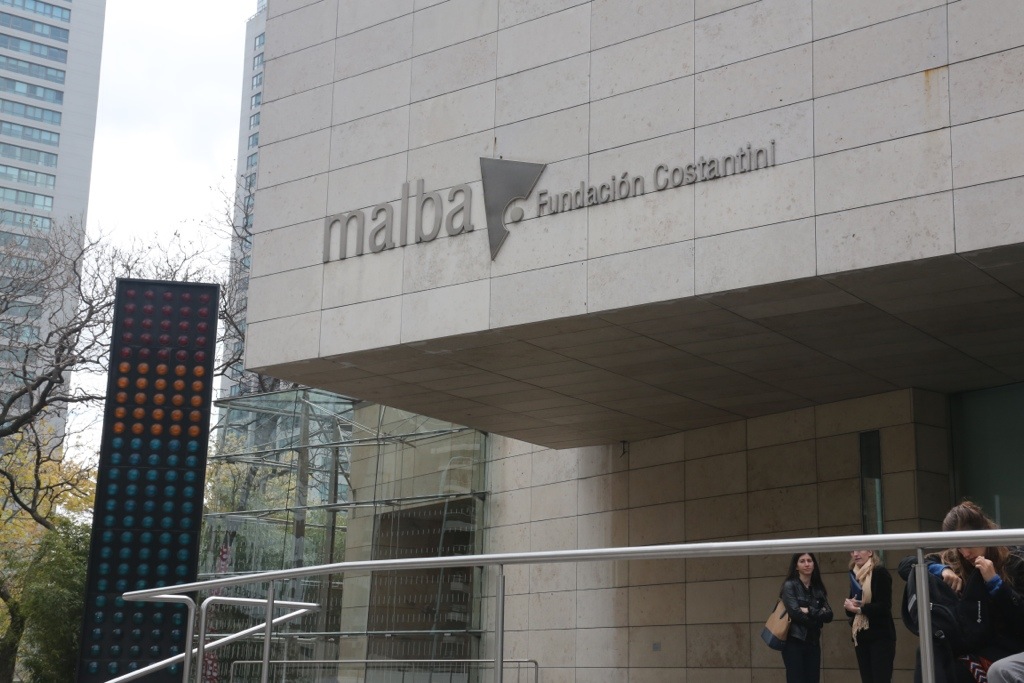
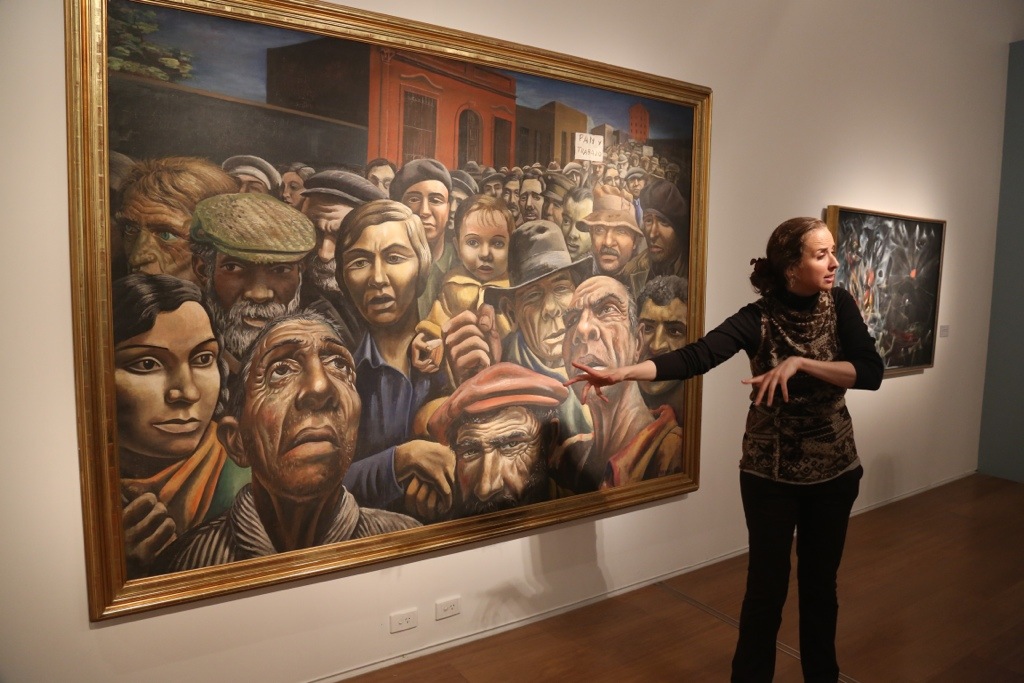
After visiting with Ernesto, we took a tour of the MALBA Art Museum which features more than 200 works by contemporary and modern Latin American artists. We recognized some of the more famous pieces and were introduced to the complex, fascinating world of Latin American art.

20130930-234722.jpg

20130930-234738.jpg

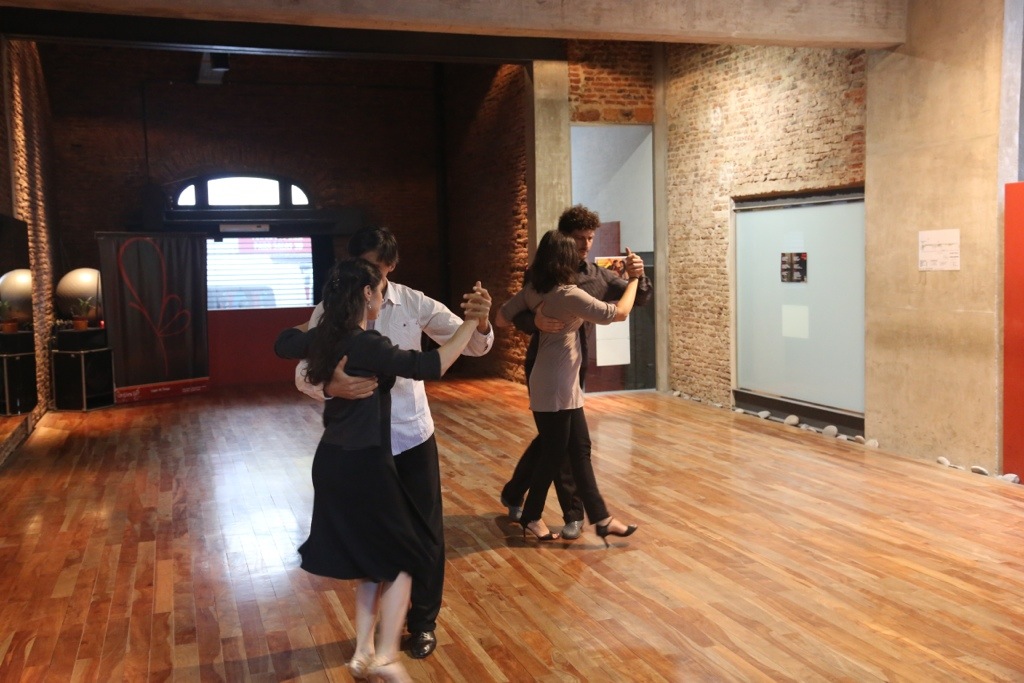
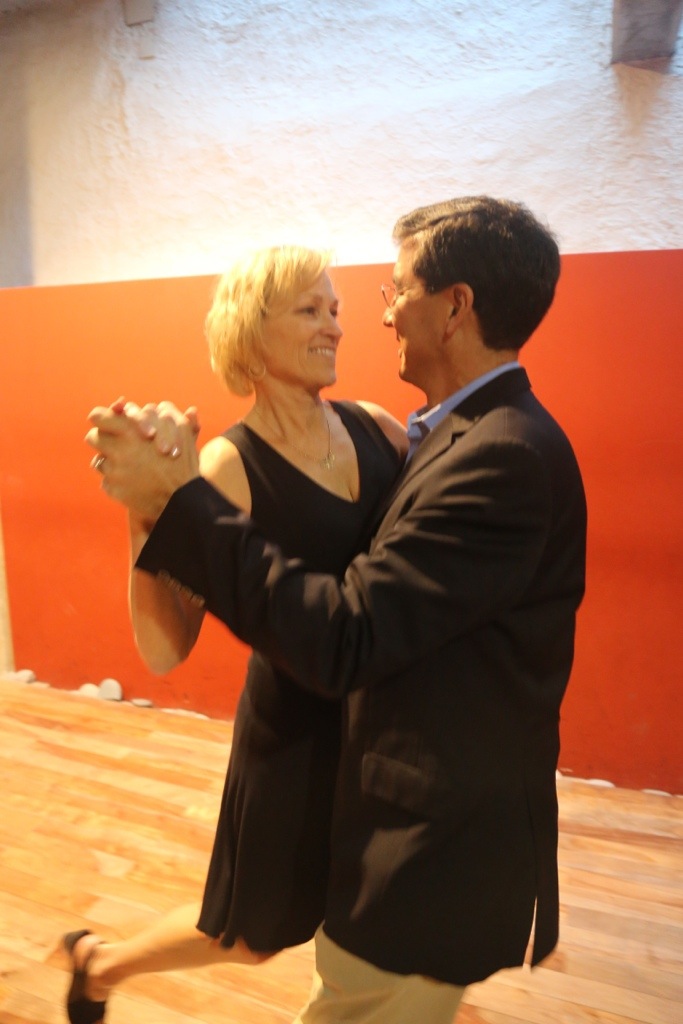
But the highlight of the day had to be our Argentine tango lessons! We were escorted to a private dance studio where we all taught how to do the tango. I was hoping my recent love of Zumba might get me through the tango but quickly learned that the two had nothing to do with one another. We were taught some basic dance steps at the beginning and Brad and I felt like we were at a Junior High School Dance. With each step we would count One, Two, Three, Four. As soon as we would “master” one move, the professionals would teach us a new twist….some new turns; a little move called the Ocho; a new way to hold our arms. It was very challenging but also a lot of fun. Our teachers were extremely patient and tried their best to encourage us!! Needless to say, we will not be heading to Dancing With The Stars anytime soon!

20130930-235256.jpg

The Professionals

20130930-235509.jpg

20130930-235527.jpg

<img src="http://lisab

20130930-235849.jpg

20130930-235914.jpg

Pretending to Be Professionals

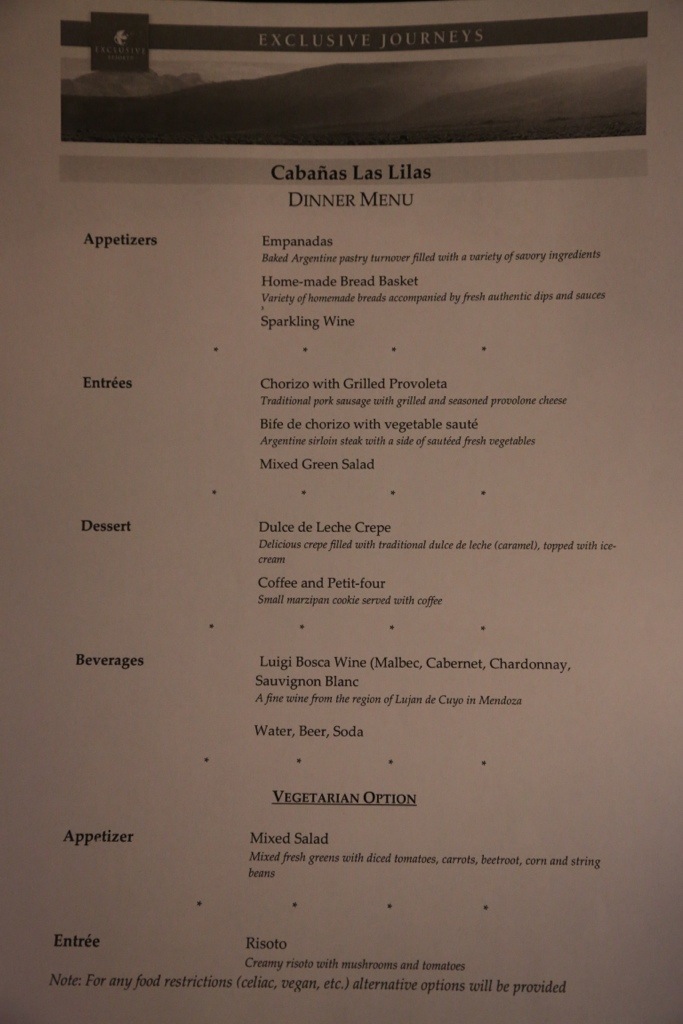
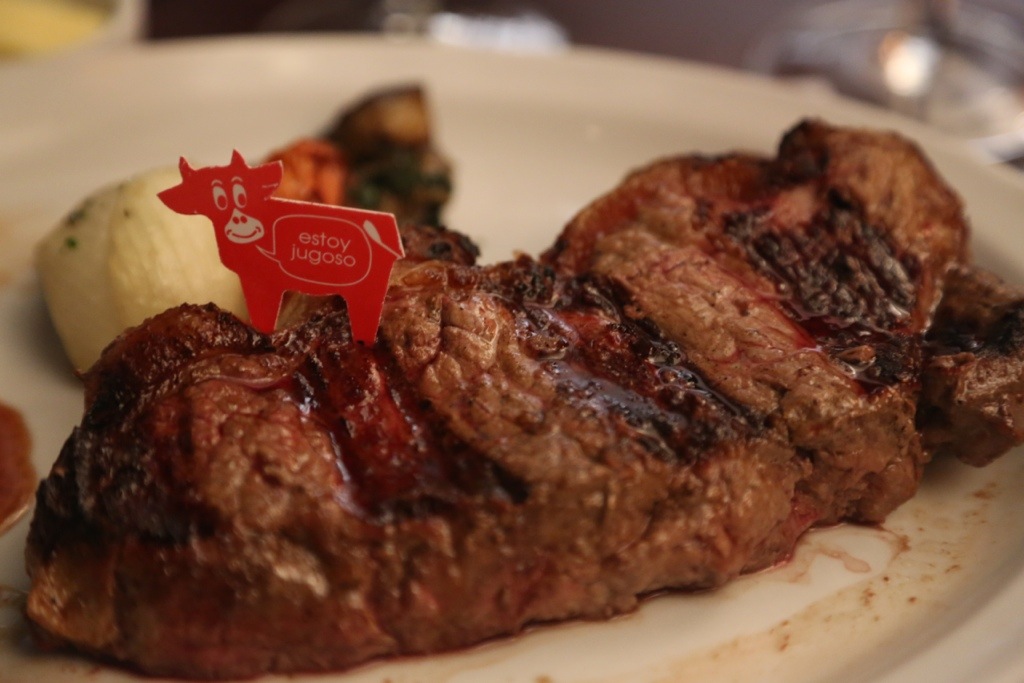
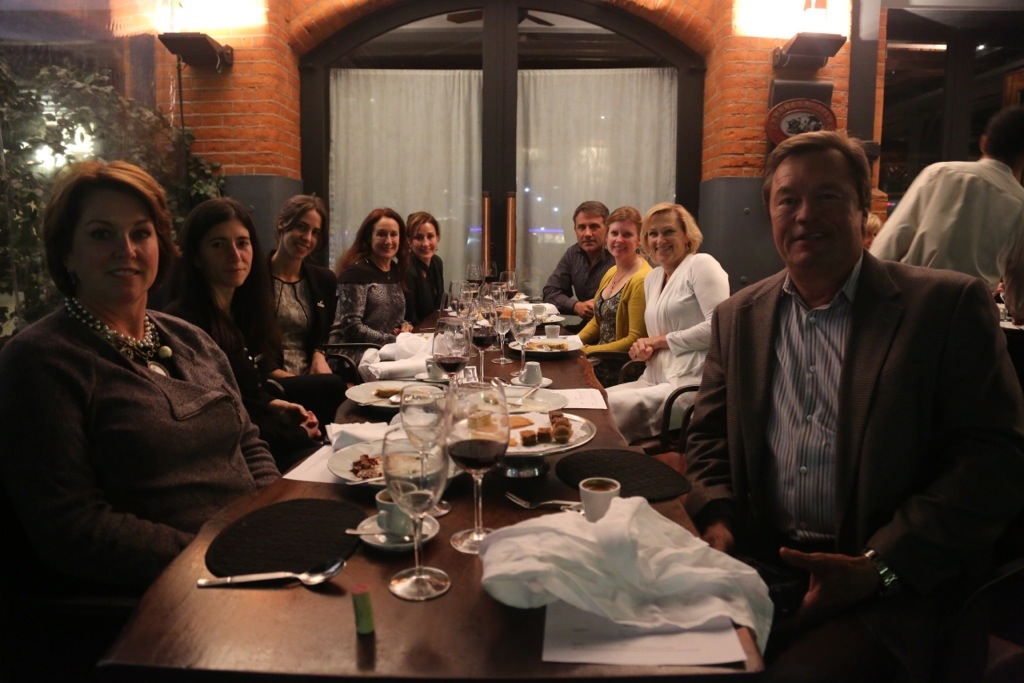
After our Tango lessons, we went to a renowned Argentine restaurant called Cabana Les Lilas in Puerto Madero. We sat outside by the port and had a delicious meal of authentic Argentinian Fare: Empanadas, Wonderful Cheeses and Breads, Delicious Local Grass-Fed Beef, and Dulche de Leche Crepes. We were absolutely stuffed at the end of the meal.

20131001-000242.jpg

20131001-000254.jpg

20131001-000306.jpg

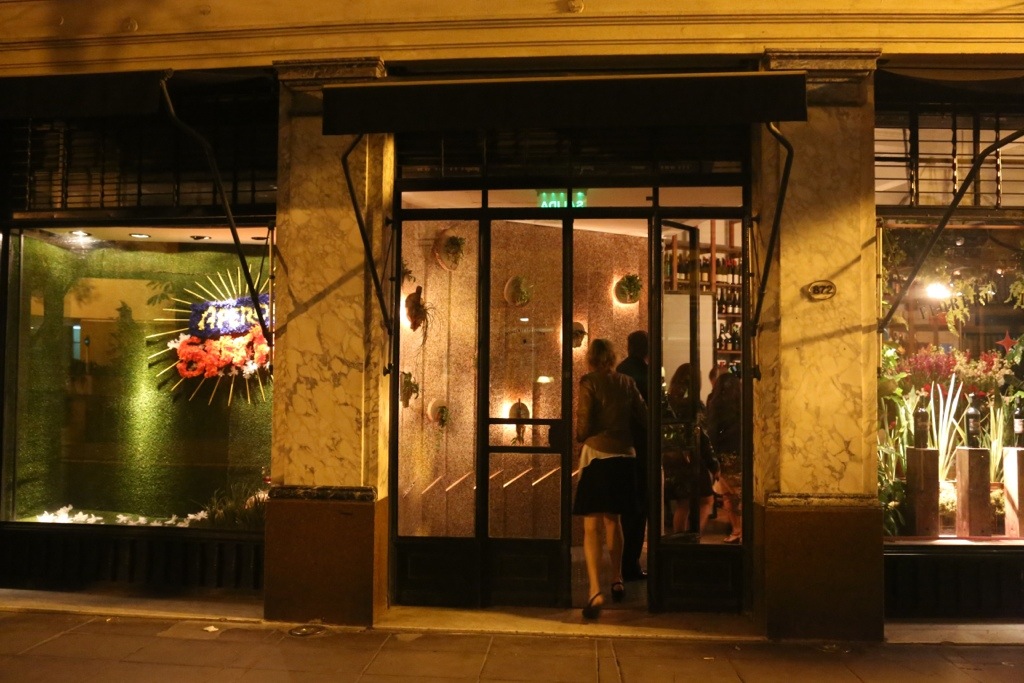
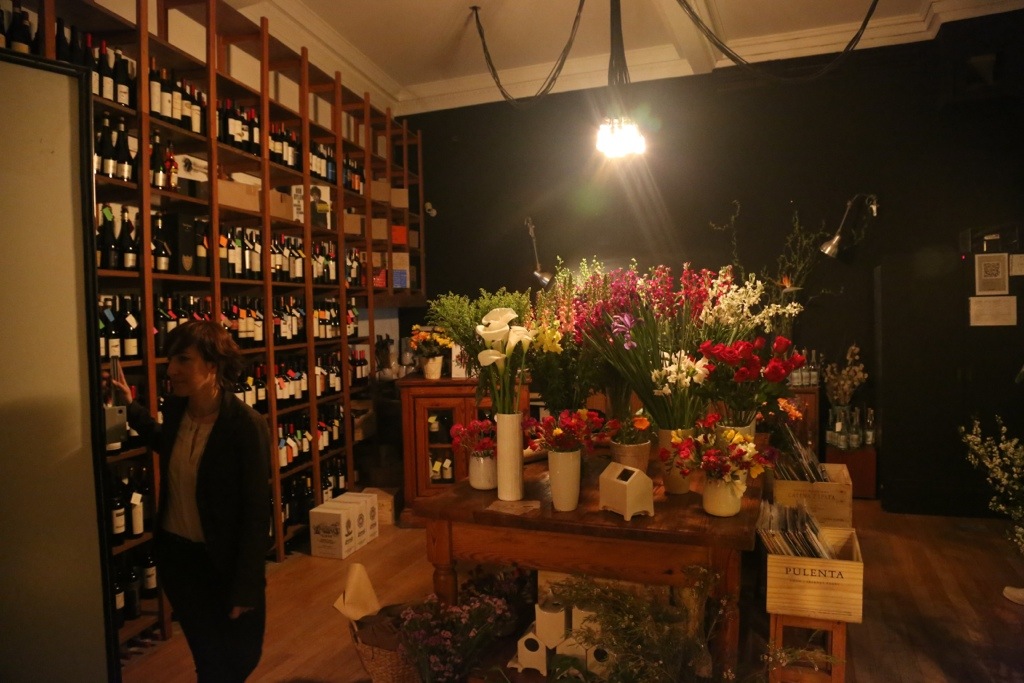
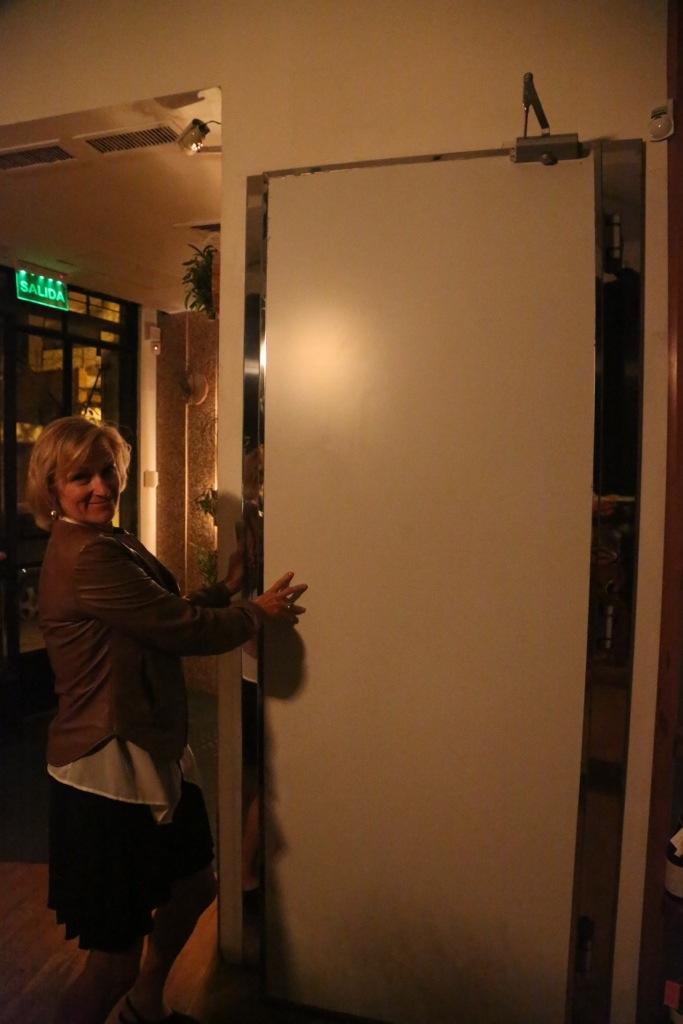
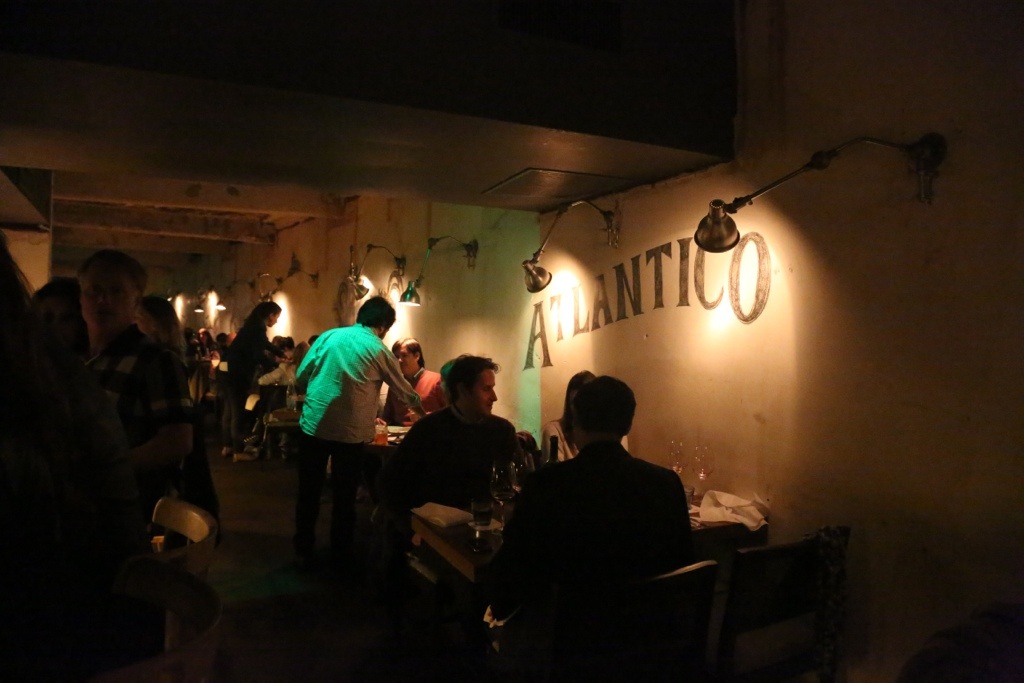
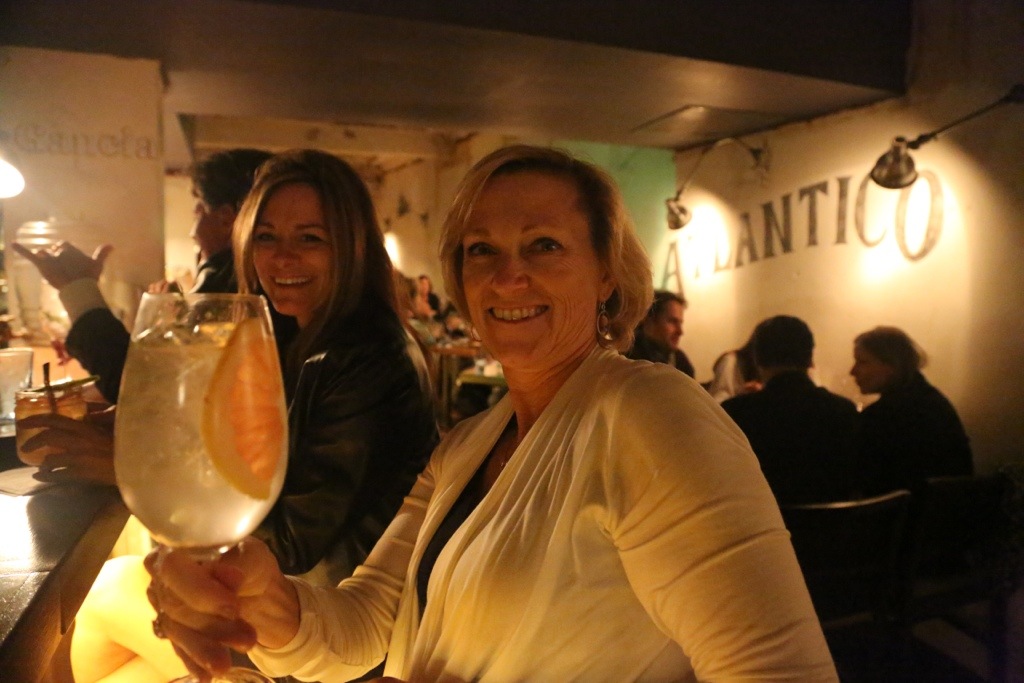
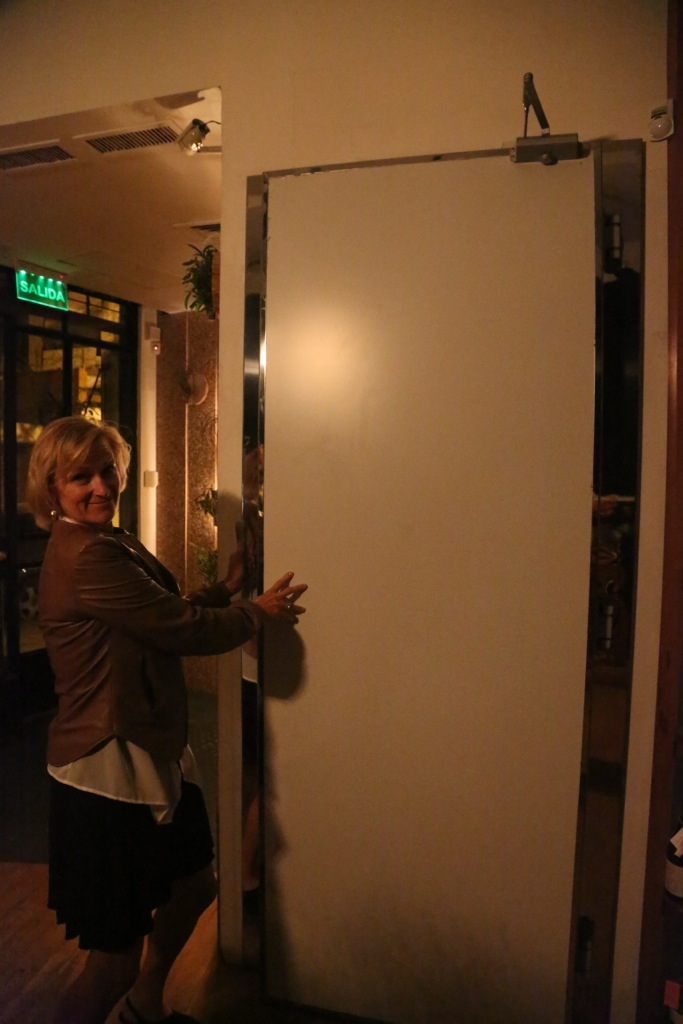
Since this was our last night in Buenos Aires, we decided we had to go out for one last drink to a nearby speak-easy. By day, it passes as a floral shop but by night you go into a secret door down to the basement for drinks and delicious food. The owner makes his own gin and we had the most delicious gin and tonics that we have ever had. Very refreshing (I think the secret was the grapefruit slice and the sprig of thyme). It was the end to a wonderful, last day in Buenos Aires.
20131001-001040.jpg

20131001-001052.jpg The interior of the flower shop.

20131001-001619.jpg
Looks like a floral refrigerator? No, it’s the secret door to the basement and our mysterious speak-easy bar.

20131001-001110.jpg

20131001-001125.jpg

<img

20131001-001601.jpg

Categories: Uncategorized | Tags: , , , , , , | 3 Comments

Blog at WordPress.com.