Asia

Lisa’s Light-Hearted Lasting Impressions of Japan

  1. The polite people. The people of Japan are lovely and extremely polite. Every good-bye, whether in a store or a hotel, involves many thank yous and much bowing and waving. Purchasing an item at a retail store feels like a privilege and a bit of a ritual. There is no rushing through the transaction. Every item is inspected and wrapped. Your credit card is taken and returned with two hands and a bow. The shopkeeper will walk you to the door and bow and wave until you are no longer in view. The same thing happens when you leave a hotel or simply ask where the bathroom is. There is no pointing. You will be escorted and they will watch you go in to the facilities with a wave and a bow!
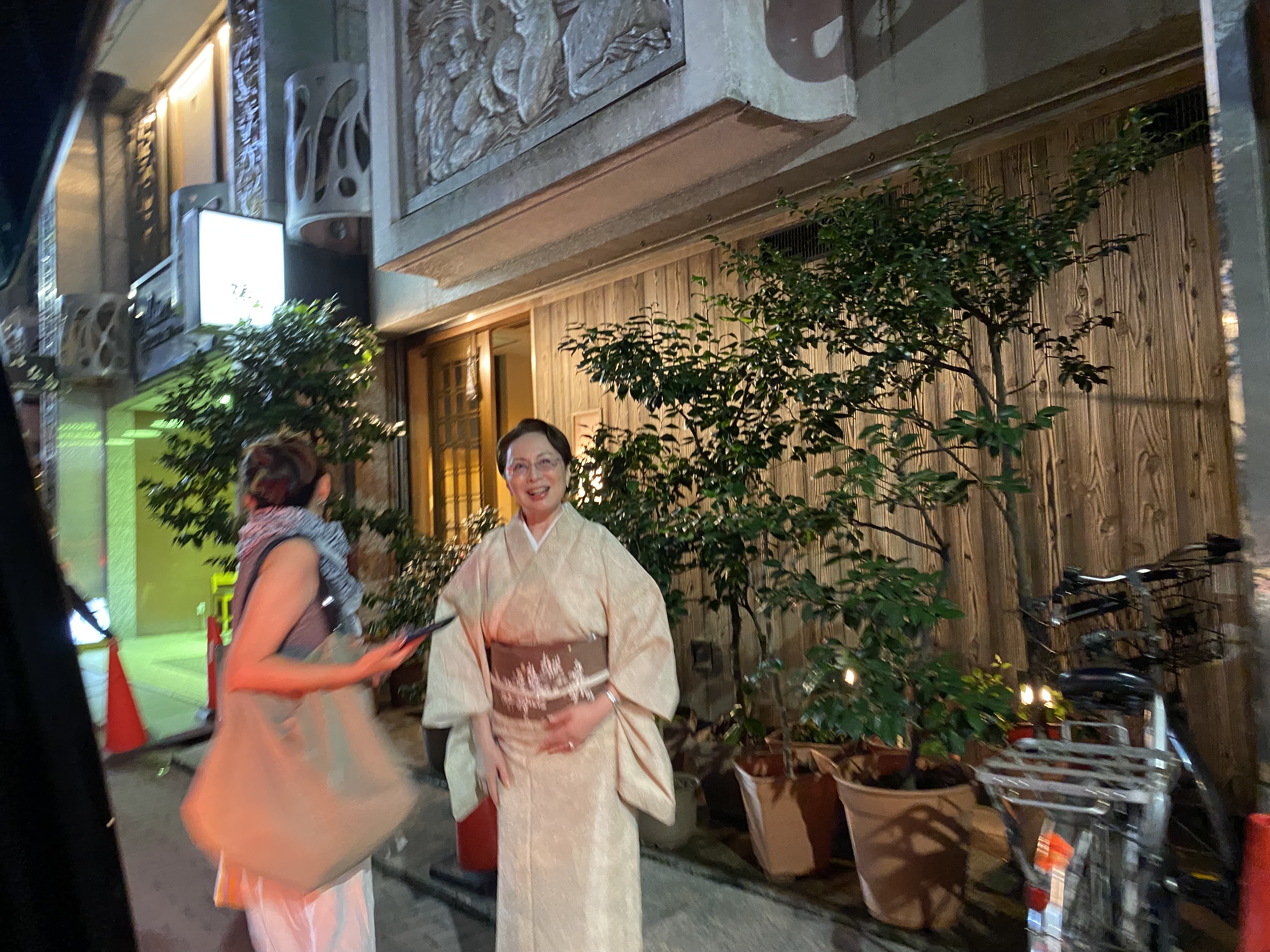
This lovely owner of a Sushi restaurant followed us out to our taxi with bows and thank you’s and gifts!
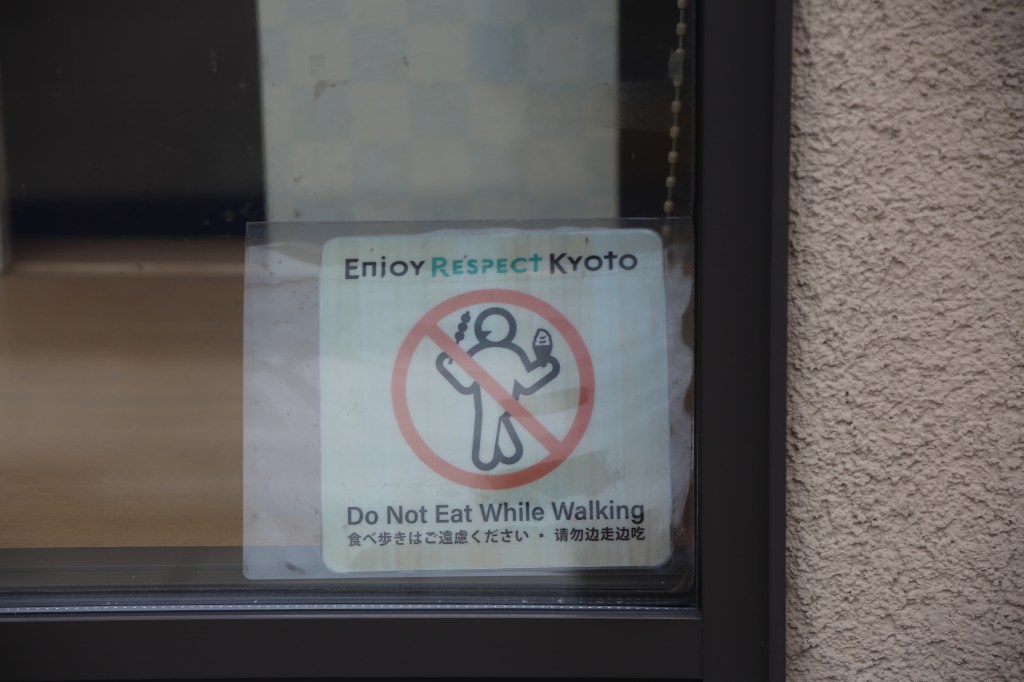
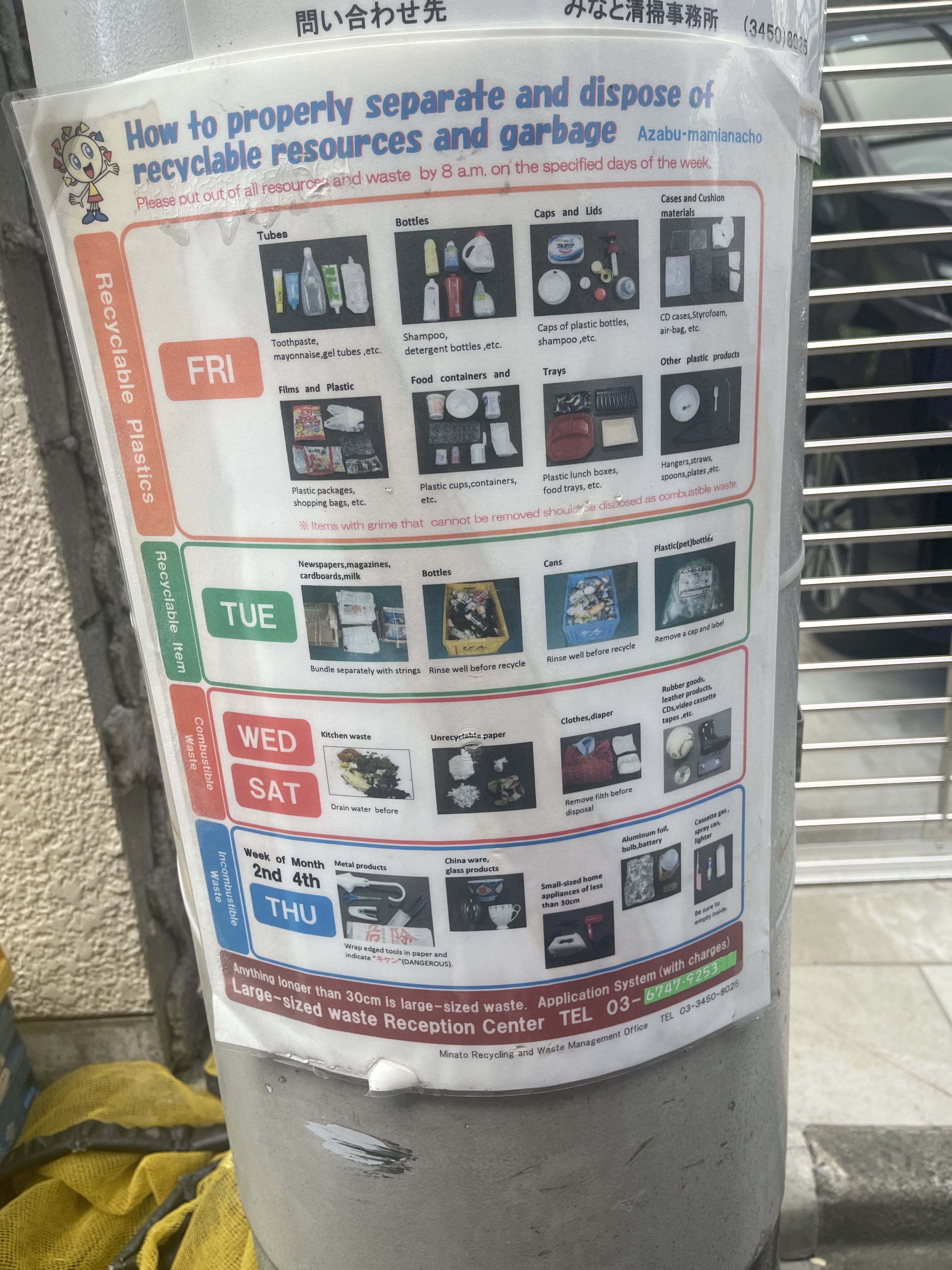
  • The cleanliness. We never saw trash on the city streets of Tokyo or the village of Hakone. We also saw very few trash receptacles. People are expected to bring a bag and take their trash back home with them. There is an elaborate recycling schedule. Here is a picture of what to separate and when each item is picked up. I am not sure how they sort each item and where they keep it in their apartments and small houses but I understand that everyone follows the recycling rules. Also, there are many signs asking you not to eat and drink while walking. It would be very bad form if you do!
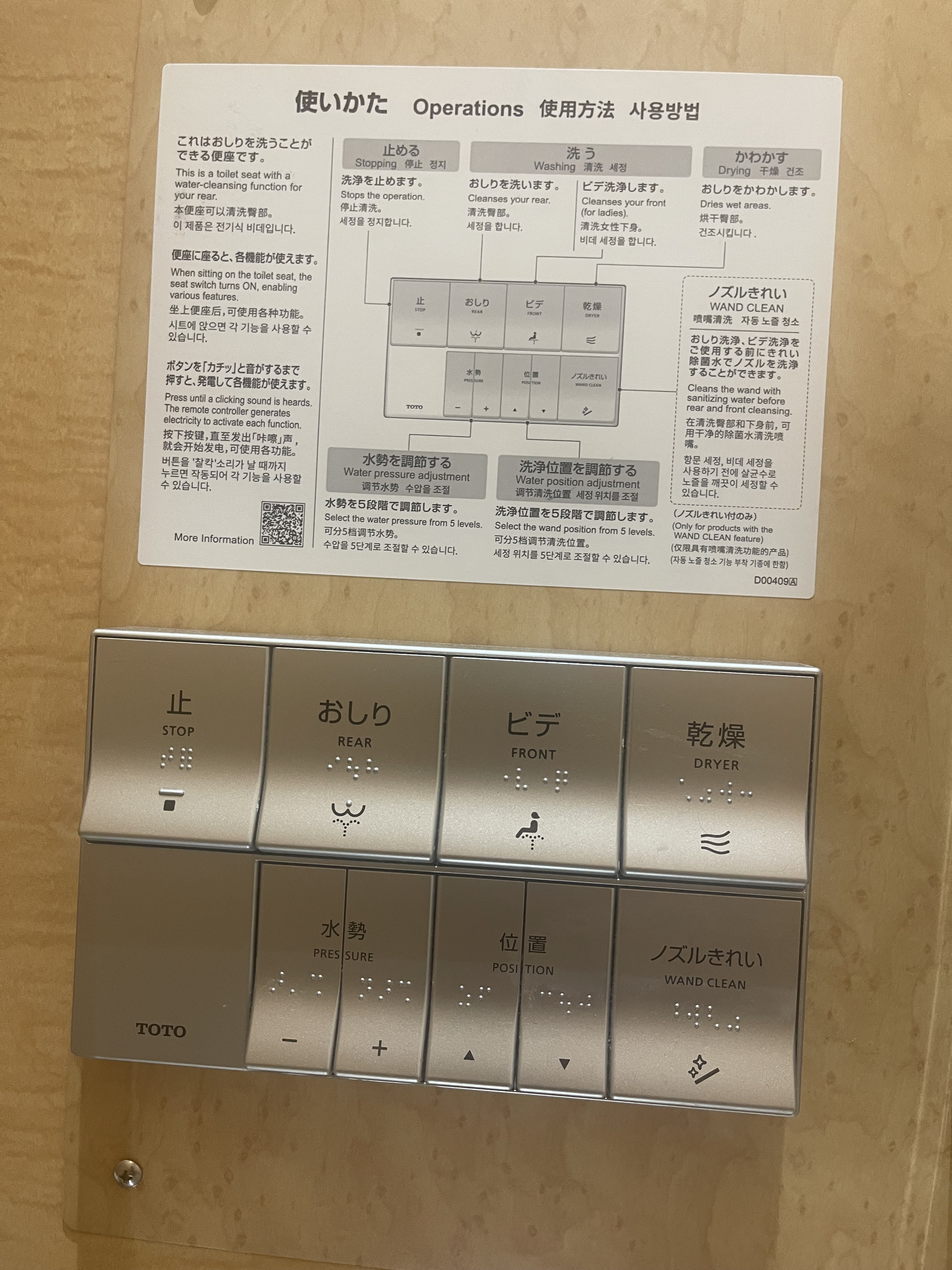
  • The bathrooms.  Speaking of cleanliness, the bathrooms are unbelievable.  Even the public bathrooms have fancy ToTo washlets.  We haven’t flushed a toilet in two weeks!  The washlets do it for us.  Also, there are again very many rules on how to use the toilets and what to do while in the bathroom in case you are new to the washlet situation.
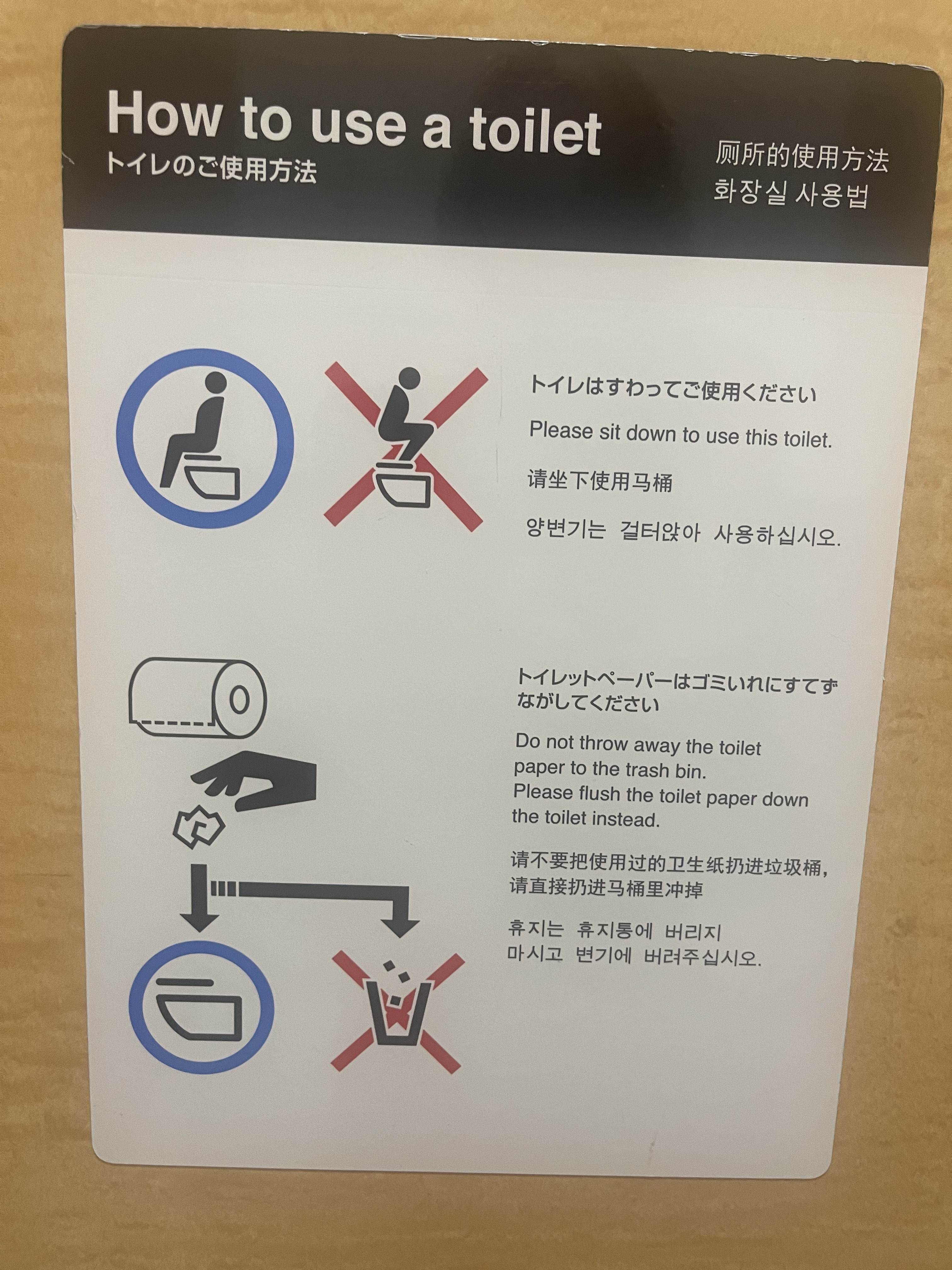
One of the many signs to show us how to use a toilet
All bathrooms public and private had fancy ToTo Washlets (I even think I heard birds chirping with one!)
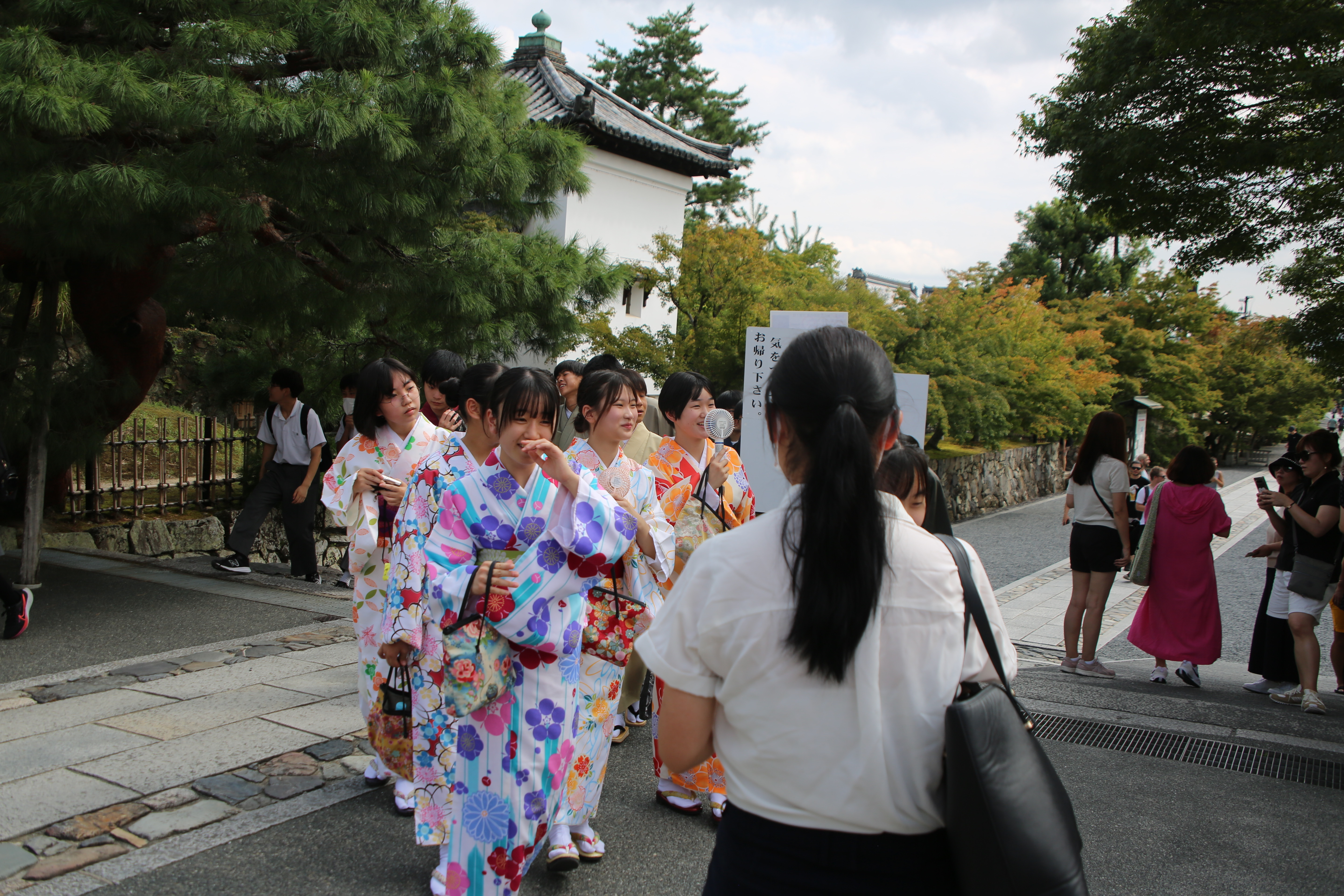
  • The heat and humidity. We now understand why the Japanese use fans so much. It was HOT and HUMID the whole time we were in Japan. It’s not a lot of fun but the fans do make it more pleasant. I still don’t understand how the women of Kyoto wear the multi-layered Kimonos with all that heat!
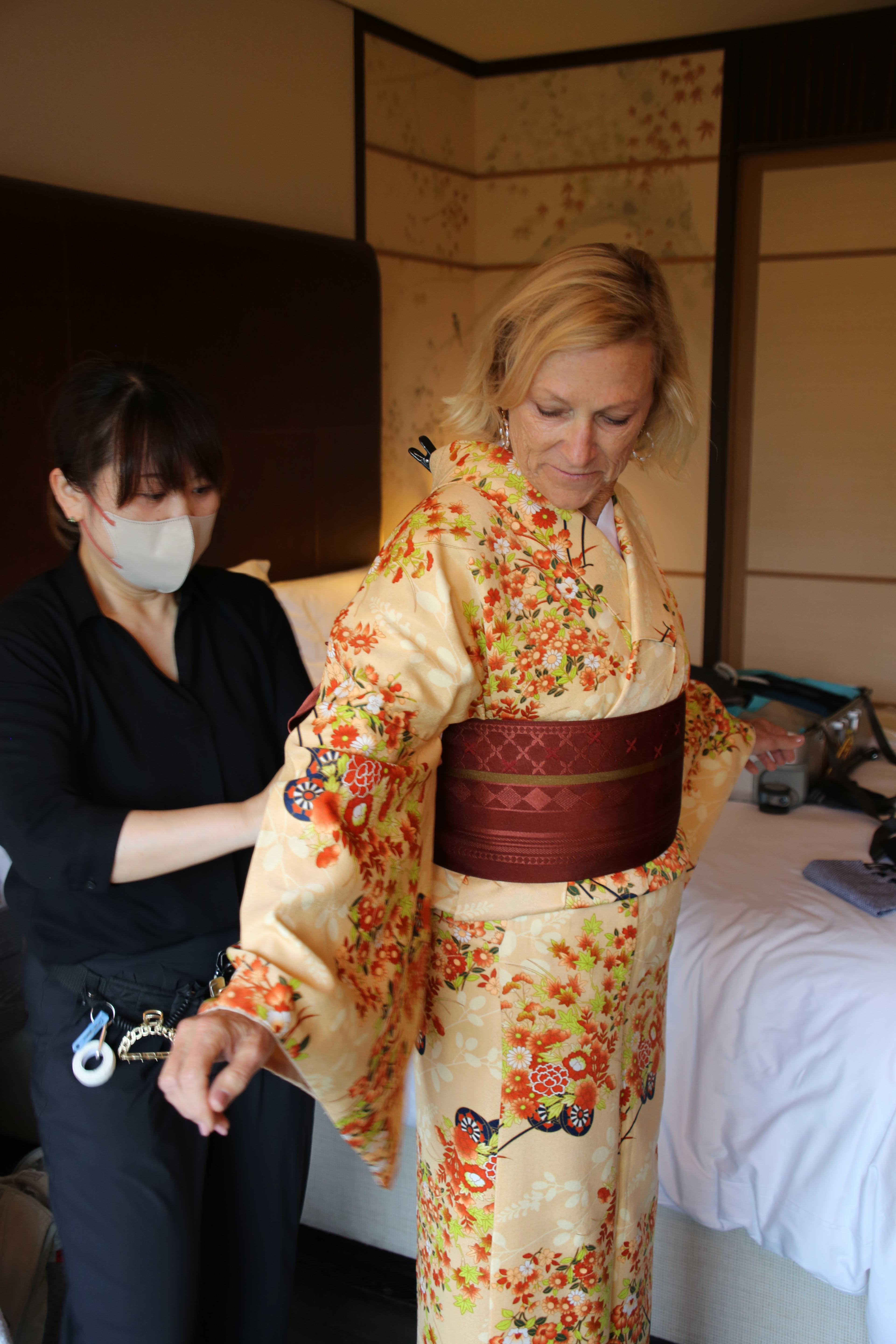
So Many Layers in 90 Degree Heat!
  • Lost in Translation Moments. Although Japan is an easy country to travel to and there is a lot of English on signs and in restaurants (and also there is Google Translate), we still had a few moments where we fumbled our understanding. One instance was our last night in Tokyo when Brad and Elizabeth ordered a very nice glass of red wine only to find out that they only got 2 ounces. Elizabeth thought it was just for tasting the wine and was a little surprised to find out that was her entire and quite expensive pour!
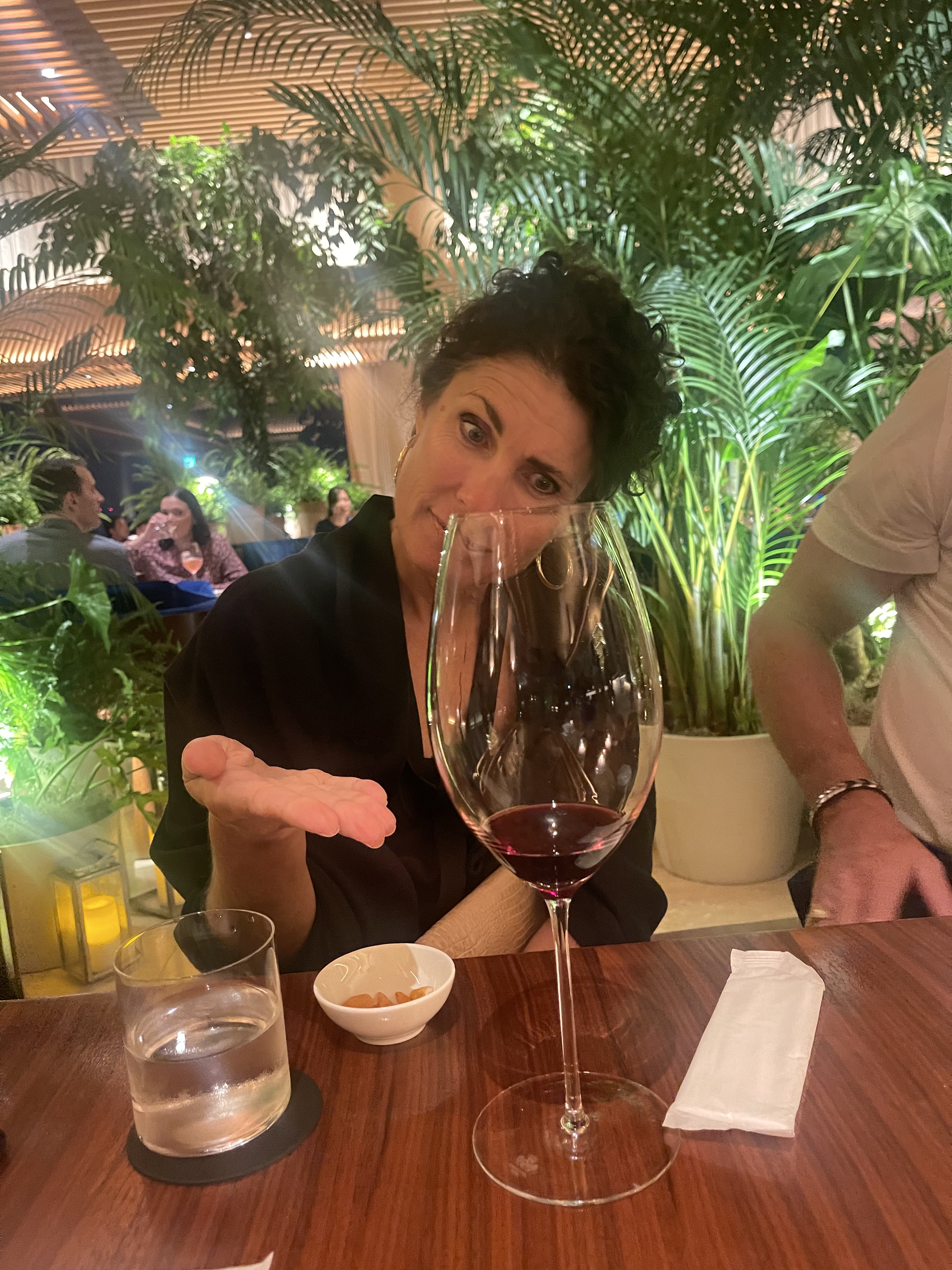
That’s a very big glass for such a small pour!

One of the members of our group was being fitted for his kimono in his room and had on gym shorts. The seamstress asked him to take off his shorts because she didn’t want the extra material to show. He asked several times if she wanted him to take them off right there in the room. She said yes. He obliged. Upon doing so, the seamstress let out a surprised shreak! I guess he should have changed in the bathroom after all!

  • Japanese Children. Japanese children are quite an independent lot. They walk themselves to and from school beginning in Kindergarten without their parents. If they need to take a bus or a train, they do that by themselves as well. Our guide said it is safe because all of the adults on the train look after the children. Japanese children also spend a lot of their time at school. They typically go six or seven days a week. They take classes from about 8:30-3:30, take their chosen club (baseball, science, music) from 3:30-5:30 and then have homework from 5:30-7:30. Rinse and repeat at least six days a week. The process for getting into pre-schools, day cares, and regular public school is also an intense one with a rating system and only one time per year to apply. Sounds worse than college applications in the U.S.!
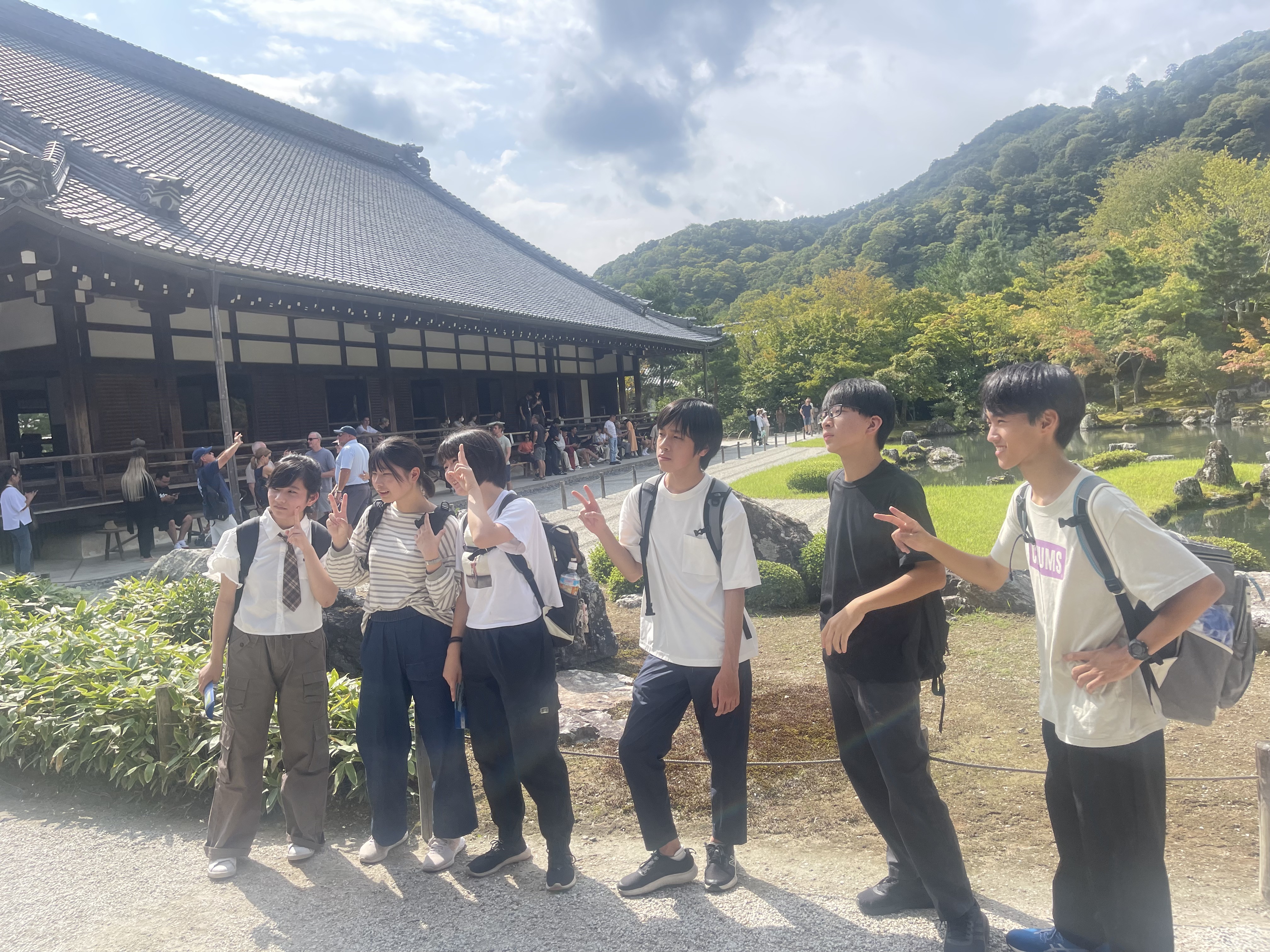
Some Japanese boys hamming it up on a school field trip.
Japanese girls were dressed in kimonos on their field trip.
  • Karaoke is really a hoot especially with a king-sized beer and a private room.  The private room was key with my brother joining us!
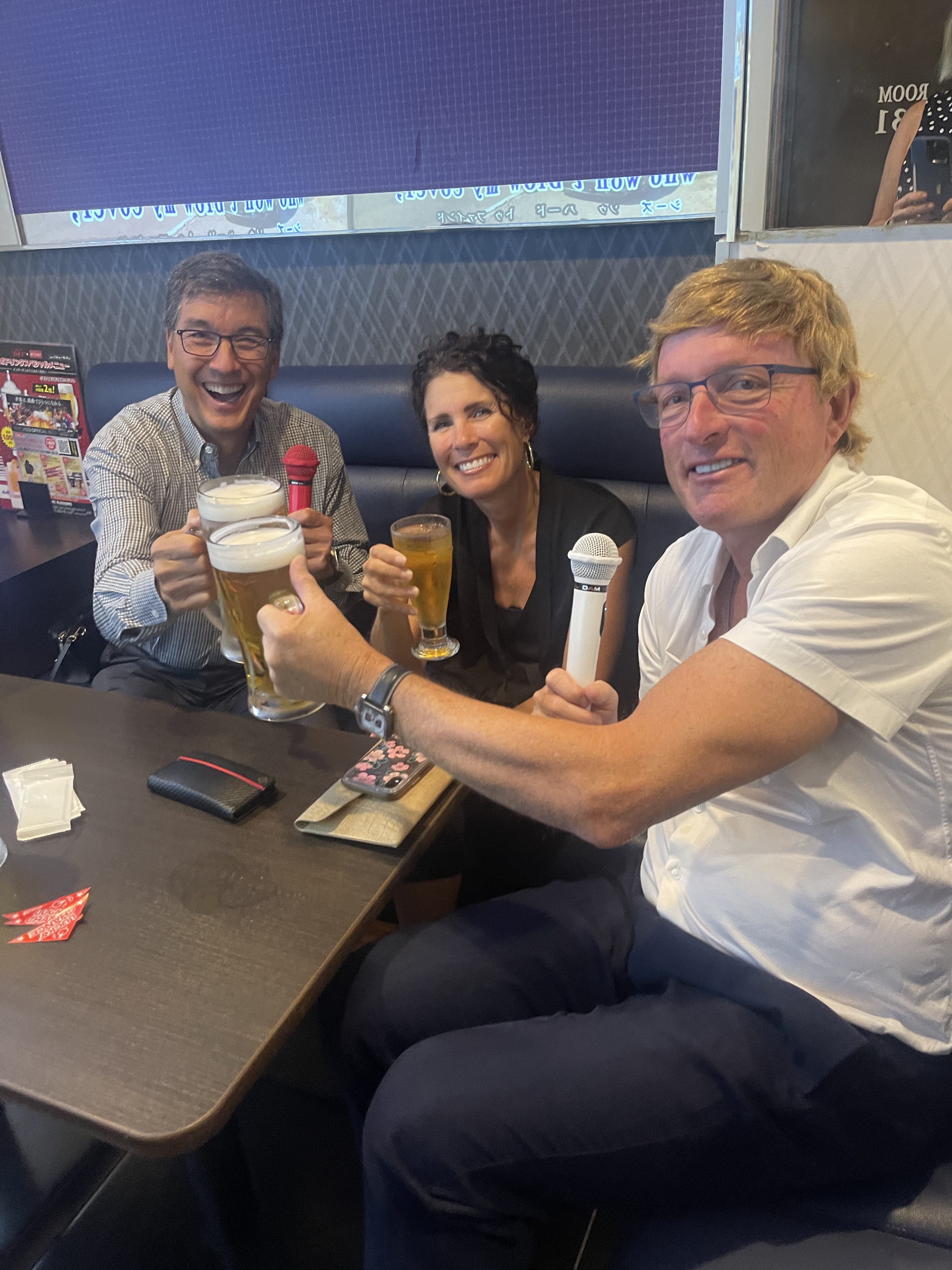
“Sing Us A Song, You’re the Piano Man!” Karaoke in Tokyo was a blast.
  • Everything else is so quiet. We never heard a horn honk in Tokyo. In most restaurants there was barely a hush and many people are very soft talkers. Apparently, it is ill-mannered to talk on the subway. We only got in trouble once as a group for talking too loud and we didn’t even think we were loud at all. Americans as a culture are much louder and messier. (See Point #2)
  • Less than 1% of Japanese people own a gun.  Those who own a gun use it for shooting wild boar.  In the entire country of Japan with a population of 126 million, there were only 10 shootings last year.  Most of those were hunting accidents.  I’m just going to leave that right there.
  • The time change is confusing. We were sixteen hours ahead of our home in Danville. One of us watched sports at 1:00 am to see his beloved Buffs. Sunday Football is on Monday morning. We were finishing our last glass of wine when most of our friends and family were enjoying their morning coffee. We were always a day ahead of Brenda and Chris Dittmore in Wordle! If only we could also see into the future with the stock market, too. We lost a day coming here and currently our Monday is going to last 40 hours. We leave at 5:00 PM Monday, the 18th in Tokyo and arrive at 10:25 AM Monday, the 18th in San Francisco. Back to the Future or something like that!
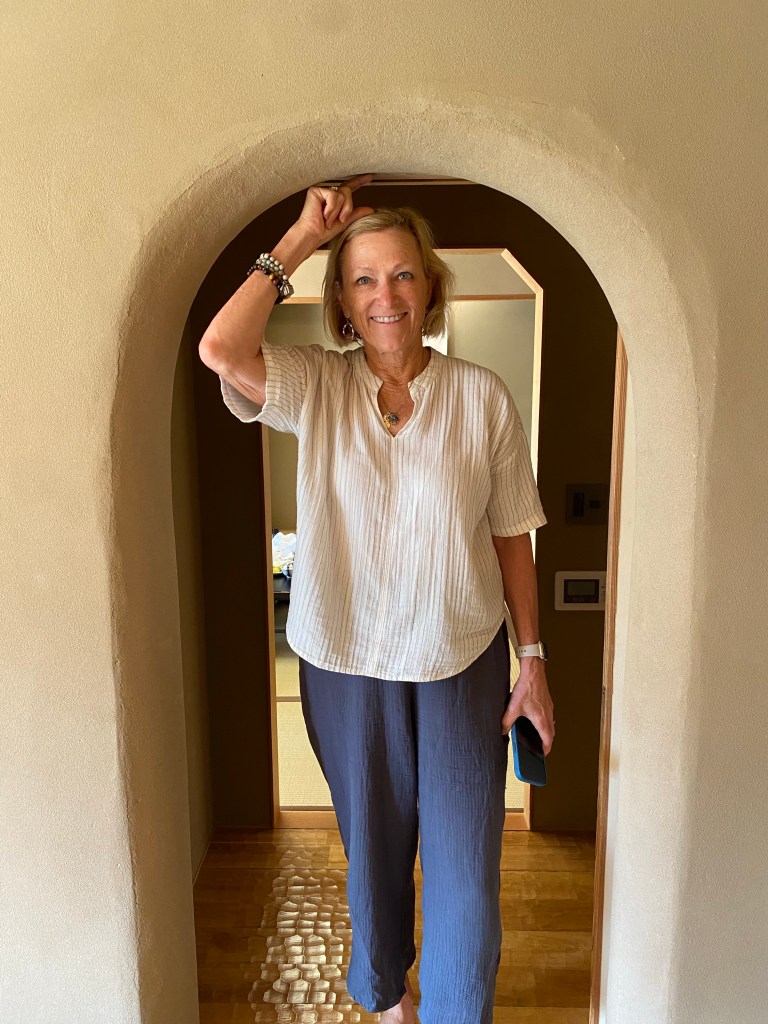
  • Watch Your Head. If you are over about 5’8″, you might come back with some bumps and bruises on your head. Ryokans — Japanese Inns are especially problematic for tall people. I could make it through the doors, Brad could not. Learning to sit on the floor to eat is also a bit of a challenge. Practice before you arrive by doing some stretching and yoga.

And one final thing, by all means travel to Asia if you get a chance! Don’t put off the opportunity if you are given it. If you do come to Japan, remember to pack a lot of black clothes (the standard color in Tokyo) , don’t eat or drink on the streets, speak softly, learn how to use your chop sticks, eat all the food even if you don’t know what you are eating, sing your heart out in Karoake, bring a fan, never litter, embrace Eastern culture and temples and shrines, and leave with a new way of seeing the World!
Categories: Asia, Japan, Travel | Tags: , , , , | Leave a comment

Brad’s Final Thoughts on Japan

“Wherever you go becomes part of you somehow.” — Anita Desai

A man once told me he didn’t travel because he could see everything he wanted to see in a National Geographic magazine. I believe he couldn’t be more wrong. Visiting a place — seeing it, smelling it, meeting the people, eating the food, being immersed in it — somehow it changes you in ways a simple photograph could never begin to accomplish.

Twenty years ago, Lisa and I had traveled throughout the US but had experienced very little international travel. Beginning in 2004 when we first visited Italy, the travel bug bit us hard and we have been taking every opportunity to see new places, both familiar and totally foreign.

We always leave a new place as slightly different people than when we left home. As we gain a deeper understanding of new cultures, as we meet interesting people who come from a different perspective, as we become immersed in a place so different from who we are, we emerge, I’d like to think, as a better version of ourselves. I am sure you have had this same experience as you have visited new places.

Japan has been special. It is home to ancestors I’ve never known. But, it has provided me with a window into who I am and who my family is. Here are few thoughts and observations of our trip.

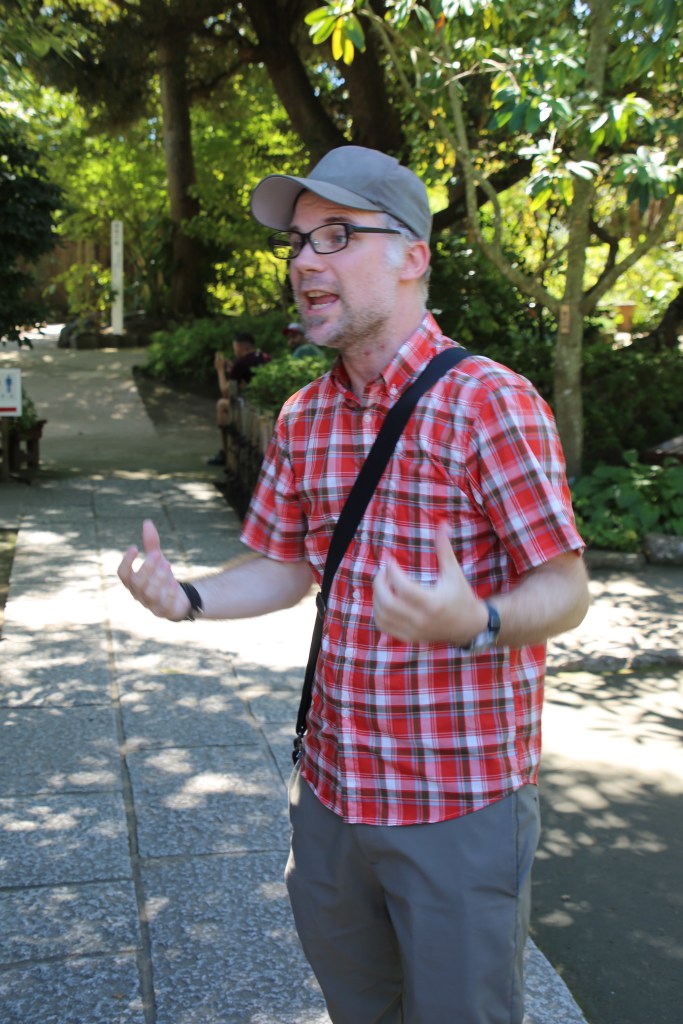
Brett, our Tour Leader

Brett was born and raised in a small rural town in northwest Iowa — the last type of person you would expect to have as your tour expert in Japan. On our last day he told us about how he got here. He was six-years old and had he checked out a book on Japan from his elementary school library. He loved that book. He was particularly fond of a photograph of a giant Buddha. He wanted badly to see it. Once the book came due, he rechecked it out. He continue to recheck it throughout his elementary school years. It resided in his backpack the entire time, the pages becoming worn from flipping through it so often.

He moved on to middle school and, to his chagrin, the new library did not have that book. But, he found other books on Japan and he devoured them just as he did when he reached high school. At graduation he went back to his elementary school library to see if, by chance, he could buy that book with the big Buddha in it. They apologized and said the library no long had it.

At his graduation ceremony he was handed a package by the school principle. In it — the book he so coveted. They had removed it from the library to give to their prized student. He almost cried. Brett went to Iowa State (sorry for their football loss this week) and furthered his studies in Asian culture. In 2006 he got a job as a journalist in Japan — his dream. On his first week in Japan, he headed for Kamakura on the coast south of Tokyo to visit The Kotoku-in Temple where the big Buddha resides.

It was so much larger than his six-year-old self could have imagined, and the emotional impact of his journey to this point was overwhelming for him.

The Big Buddha in Kamakura

Brett stayed in Japan, married a Japanese woman and now has a 6-year-old daughter himself. He is the best guide and best storyteller we have ever met. He brought the country and its history alive for us. And, he is a living testament to following your heart and your dreams.

Brett passionately relating a story on Japanese history.

The People of Japan

Japanese people proved to be kind, polite, thoughtful, and, um, quiet. Yes, quiet. Restaurants are quiet as people eat and softly talk to one another. Trains are quiet, cars don’t honk, there is no shouting in the streets, I think this is another way they show consideration for others.

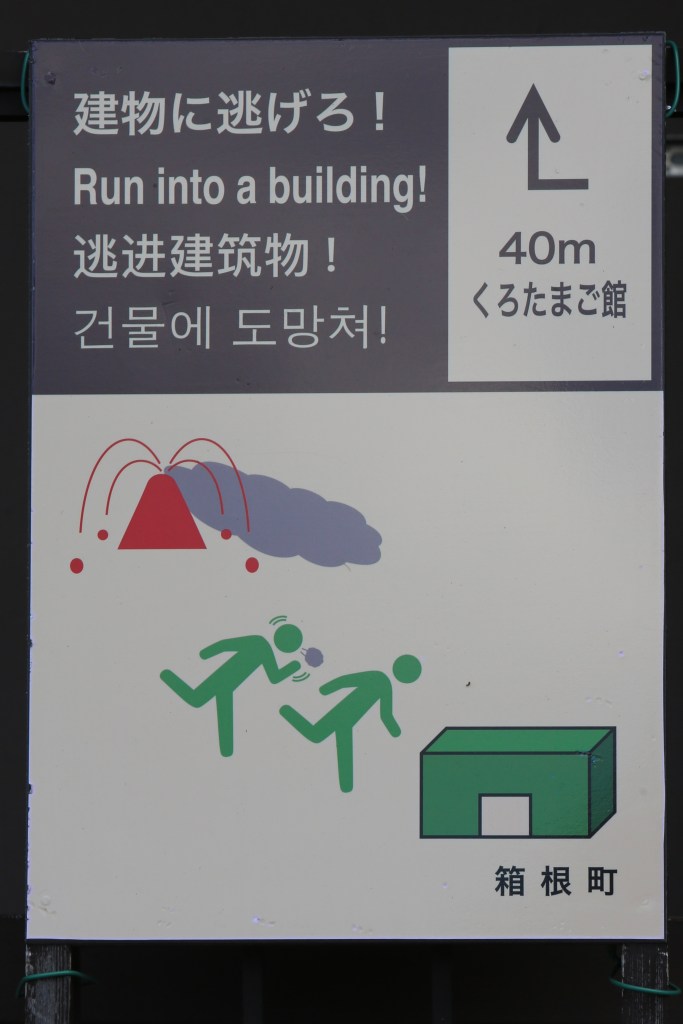
The culture also rewards rule following and conformity — two traits unfamiliar in America. There was no jay walking, signs on how to behave were everywhere. And, people heeded those signs.

No one eats while walking on the street.
Everyone probably heeds this one.

We found the Japanese people to be delightful. We call our family the loud family because everyone talks at high volume all at the same time. I don’t think this comes from the Japanese side of our heritage.

Religion is a big part of Japanese life. There are Shinto shrines and Buddhist temples everywhere. Huge ones that have been there for centuries and little tiny ones tucked into a side street that barely takes up more room than a parked car. Many Japanese people are not particularly religious. But, if this makes sense, religion is still a big part of their lives and their culture.

Japanese Food

The food was wonderful. Japanese food selections are broad and delicious. There is a theme, though. Most dishes include fish. Sashimi was served at most meals. Rice is a staple. Every meal includes soy sauce.

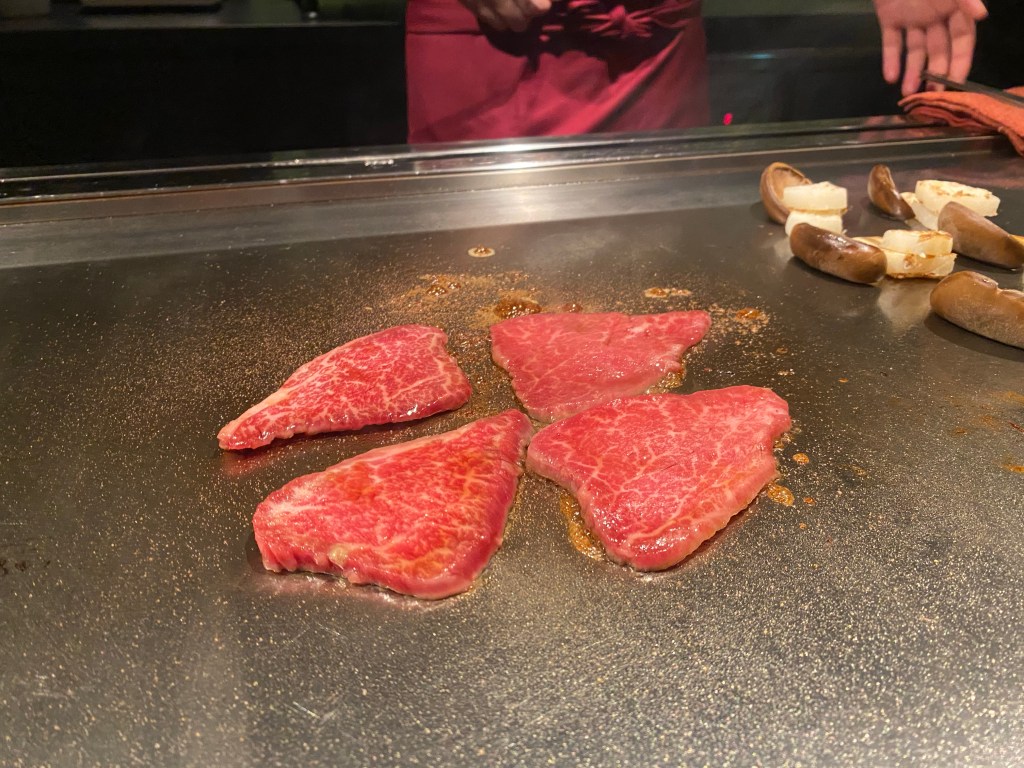
Japanese beef is some of the best in the world. We had the privilege of eating Kobe beef. Much of what is called Kobe beef in America isn’t authentic. Most Kobe beef never leaves Japan. Kobe beef literally melts in your mouth. It is very rich. Don’t eat too much in one sitting or you will feel it at 2:00 am. I say that from experience.

Kobe beef on a Japanese grill.

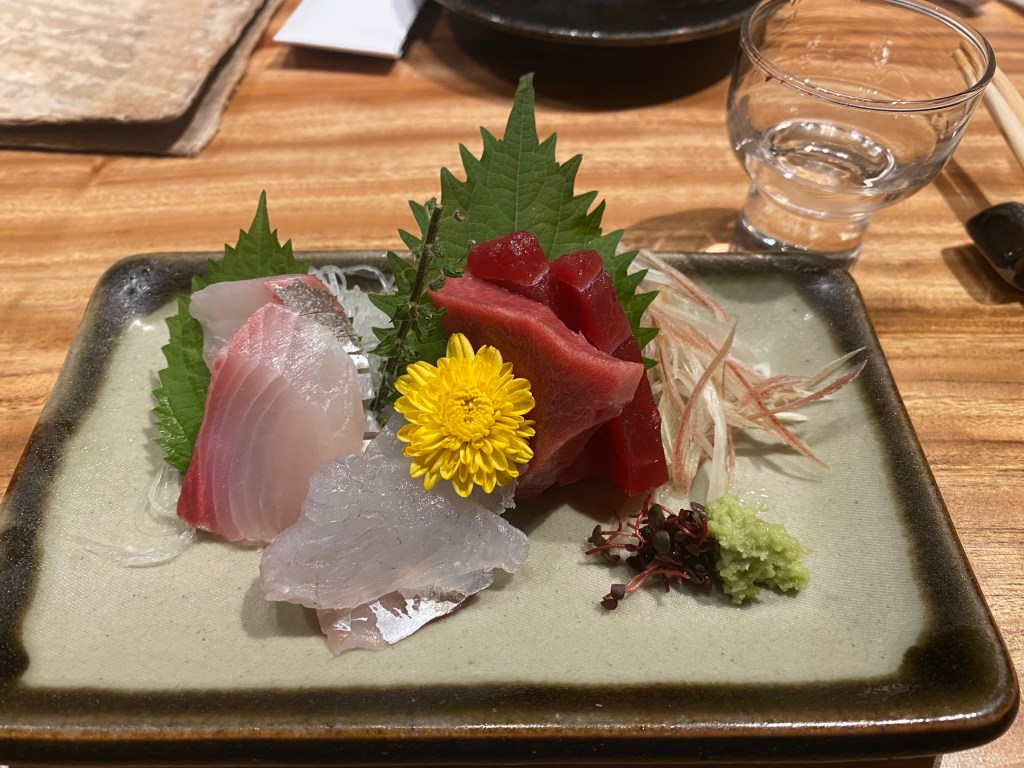
For the Japanese, food is art. Our meals were as beautiful to look at as they were delicious.

Delicious Art.

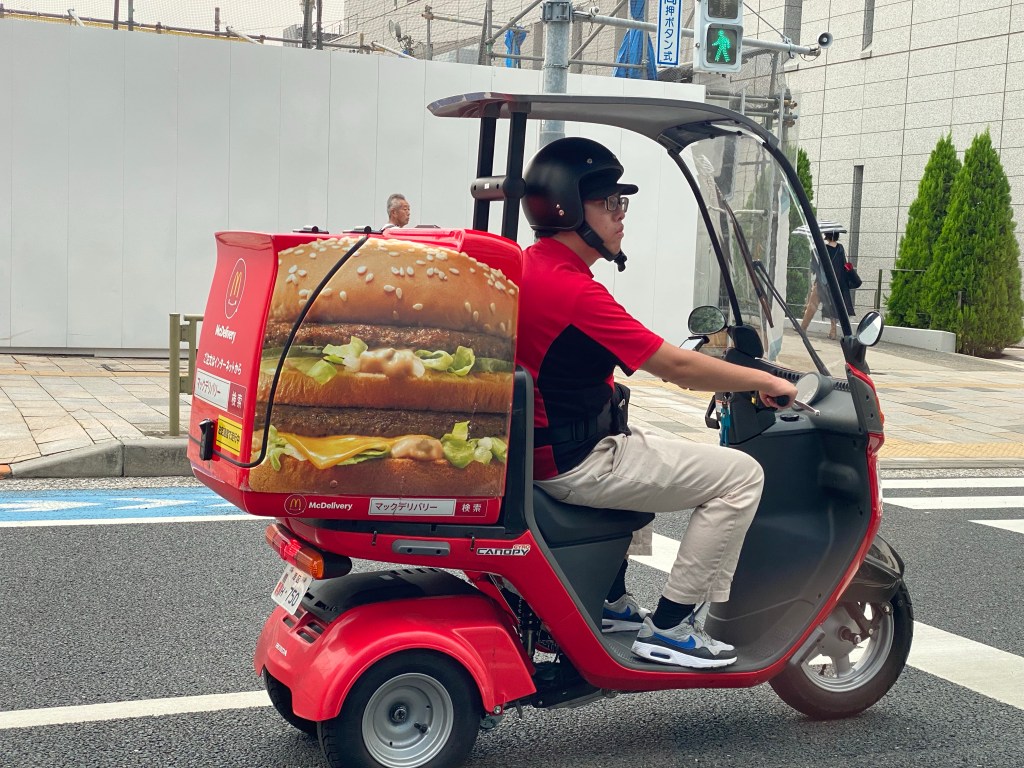
Now, this doesn’t mean that all food in Japan is this way. It seemed as if you could get anything delivered — even some of our American “favorites.“

McDelivery.

Bugs

The weather during our visit was very hot and humid. We were regularly out in 90 degree heat with 90 percent humidity. Yet, to our surprise, we didn’t get a single mosquito bite. In fact, except for the water bugs skipping along the ponds, we didn’t see many bugs at all.

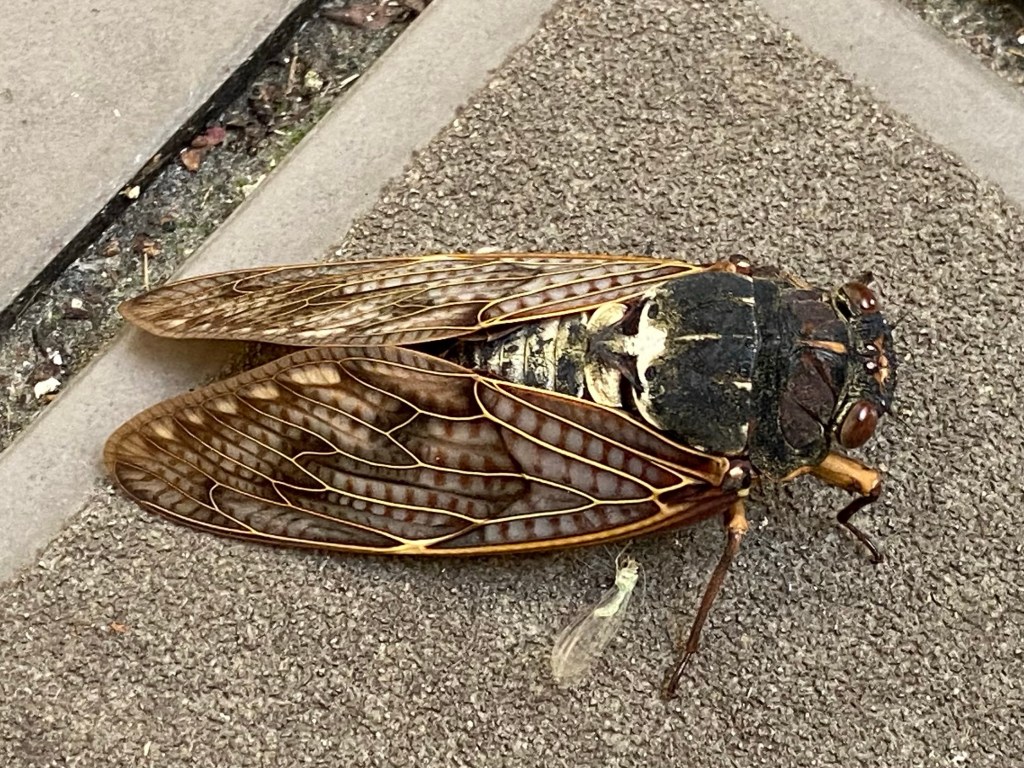
Now, the bugs we did see were very big. As we were walking around the ryokan in Hakone we saw a large Japanese cicada. It had an iridescence that made it beautiful. While it is harmless, this was no consequence to Lisa as it flew right at her.

Japanese cicada.

Our guide, Shin, had gathered the beer cans from our group and was taking them to a recycle bin when a Japanese giant hornet landed on one of the cans, apparently attracted by the beer (Japanese beer is quite good). These are the world’s largest hornets and their sting is said to be very painful. Shin didn’t seem to mind and neither did the hornet. So, no one got hurt. The hornet was very large, quite beautiful, and awe inspiring.

Japanese giant hornet.

The Future of Japan

The Japanese population has been shrinking since 2010. Growth rates have been very slow since the 1980s. Birth rates have been declining as a result of heavy work demands, a high cost of living, and other factors. The United States has two growth engines working for it — birth rates and immigration. The Land of Opportunity has always attracted hard working people from around the world with the promise of achieving the American Dream. This keeps our economy chugging along.

Japan’s history took a different path. The country was isolated from the rest of the world for 250 years, ending in 1868. And, while Japan has been reopened for over 150 years, the remnants of that policy has meant a severely restrictive immigration policy.

This combined with the low birth rate has led to an almost constantly stagnant economy for the last 40 years. And, with an aging population, Japan will not be able to support health care and retirement income for its seniors in the future. As one of the people in our group said, there will be a day of reckoning before too long.

The Japanese people are innovative, resourceful, and pragmatic. I expect them to find solutions to this problem. It won’t, however, be without difficulty.

So Long, Japan

We left Japan this Monday afternoon and went to the airport for a 5:10 pm departure. We landed in San Francisco on Monday morning at 9:45. We arrived 7 1/2 hours before we left — at least that’s what the clock told us. Our Monday will be 40 hours long.

Yes, as Anita Desai said, wherever you go does become a part of you. And, while being half Japanese has meant that Japan has always been a part of me, traveling to this beautiful country, meeting its wonderful people, and experiencing the culture of this foreign land means that it is is much more a part of me today. It’s now a part of Lisa, too.

Categories: Asia, Japan, Travel | Tags: , , , , | 4 Comments

We Left Our Hearts in Kyoto, Japan

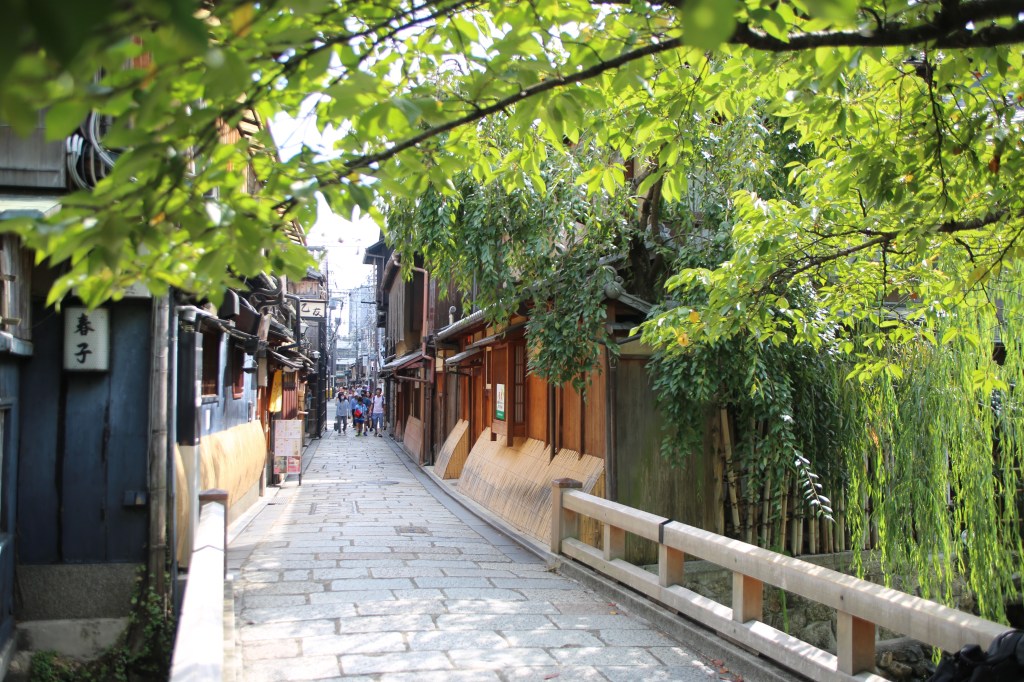
Although we were only in Kyoto for three days, the city captured our hearts and spirit. With hundreds of temples and shrines located in the city, sometimes with retail shops or condos built up around them, it is hard not to feel a little spiritual as you walk around the quaint, picturesque streets.

A quaint little street in the Gion District of Kyoto.

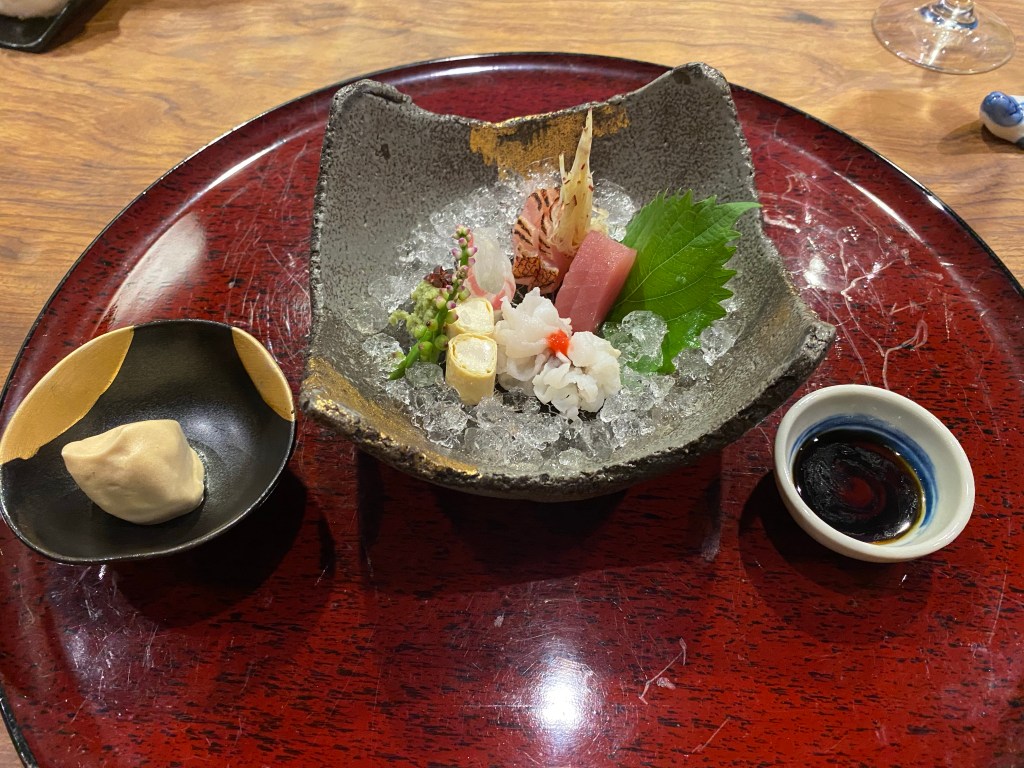
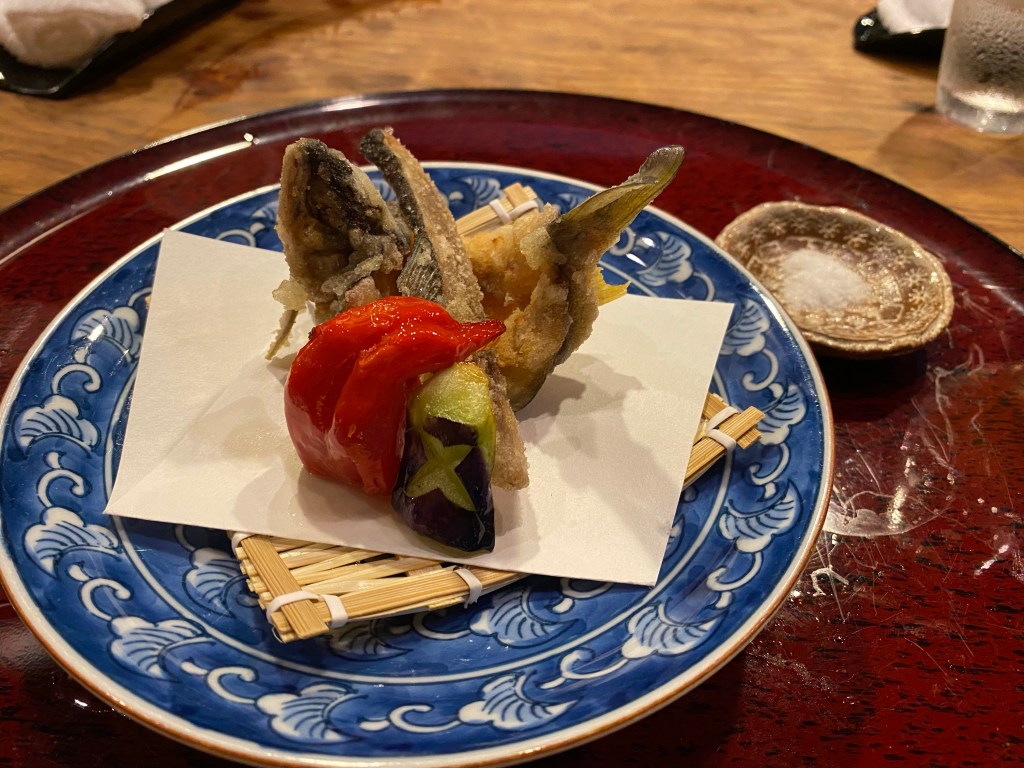
Before we talk about our last day of adventures, let’s talk about Japanese Cuisine. We have had it all and probably way too much of it. Each meal is multiple courses served on exquisite ceramic plates and bowls…so many small bowls! So far, we have had sushi, ramen, robotayaki, tempura, yakitori, teppanyaki, and most recently kaiseki. Our Kaiseki meal in Kyoto was like nothing we have ever had before. It was about ten courses but we lost count after course number seven or so. Kaiseki is a type of art form that balances the taste, texture, appearance, and colors of food. We had our own chef who artfully arranged and garnished each dish with leaves and flowers and interesting sauces. We had an animated conversation with a cute Italian couple next to us which made the two hours of dining fly by!

The first course in our Kaiseki meal.
The Kaiseki version of fried fish.

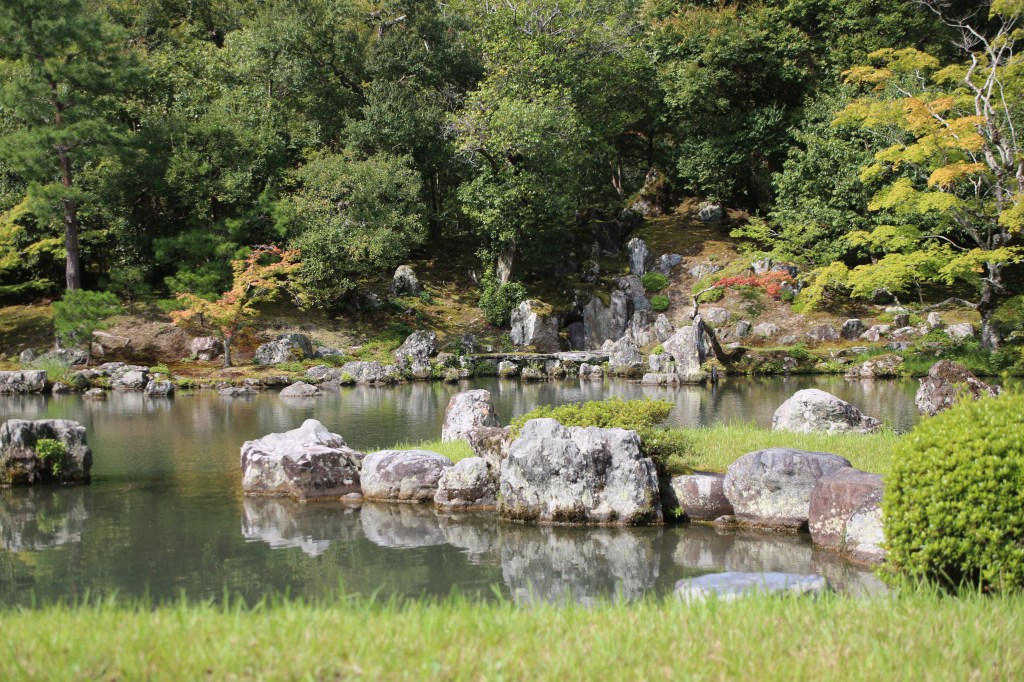
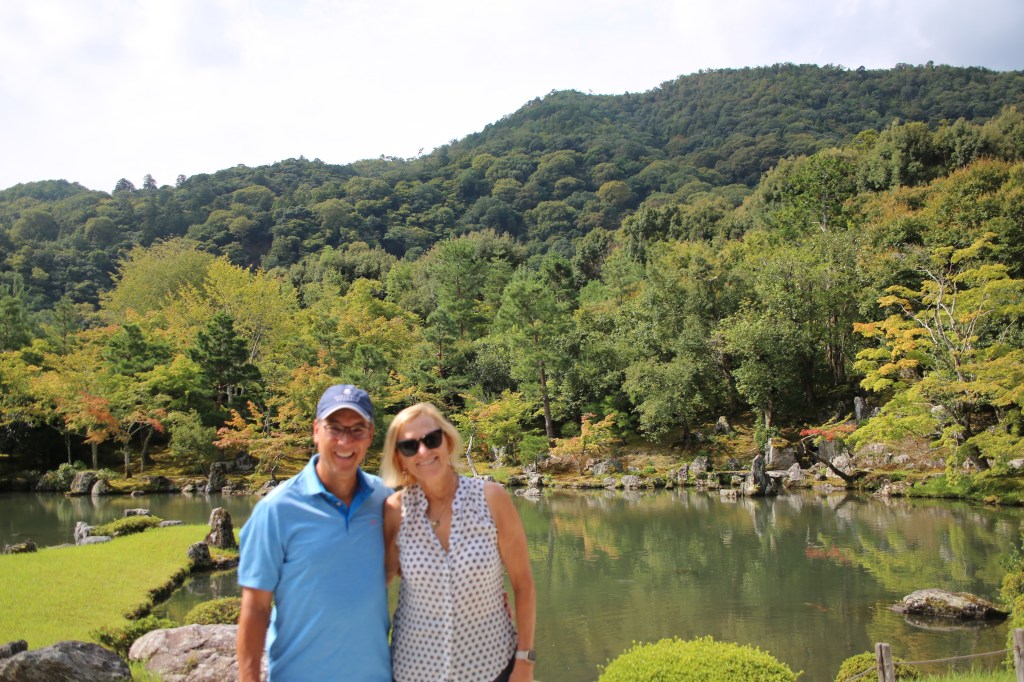
On our last day, we visited a magnificent Buddhist temple and gardens at the Tenryuji Temple in Arashiyama. The gardens, constructed by hand 800 years ago, are beautiful and apparently breath-taking (and crowded) when the maple trees turn in the Fall.

The Sogen Pond in the Tenryuji Garden.
Mugging in front of the Sogen Pond.

We did a little shopping and found some Washi-traditional Japanese paper-for our good friend Dana. She put in a little special request as she makes her own note cards and prints. We hope we got the right kind but it was a fascinating shopping experience looking at all the different kind of paper.

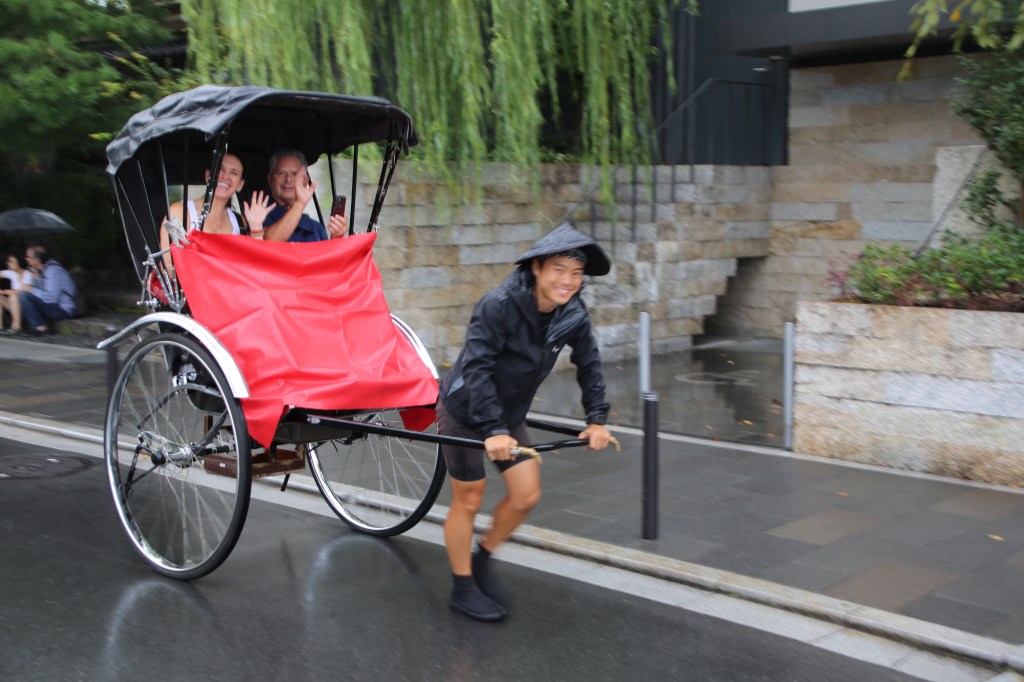
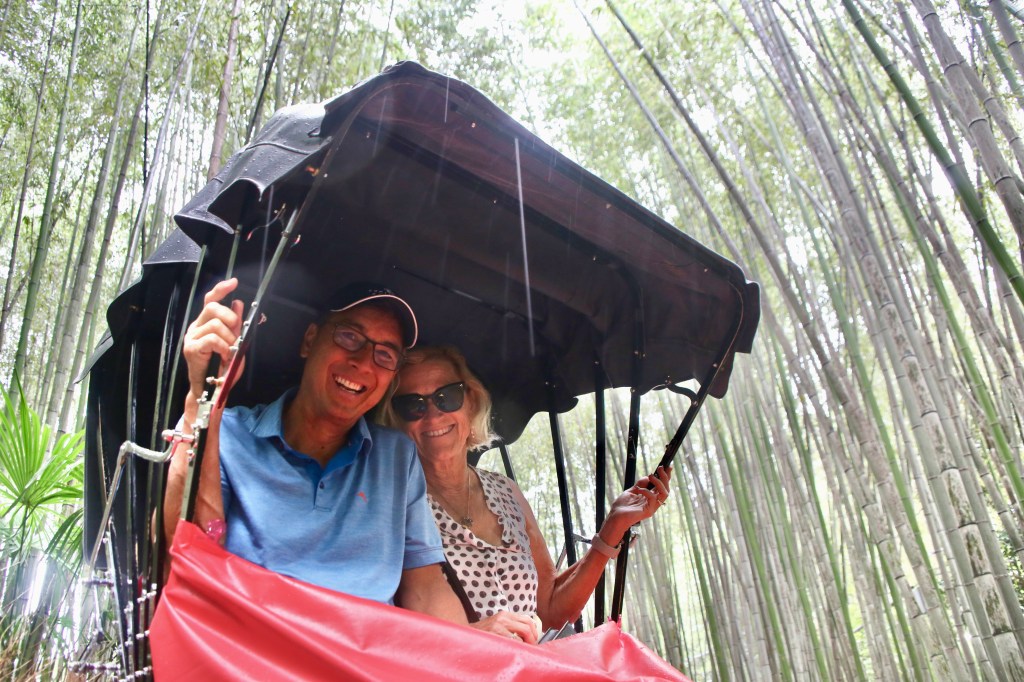
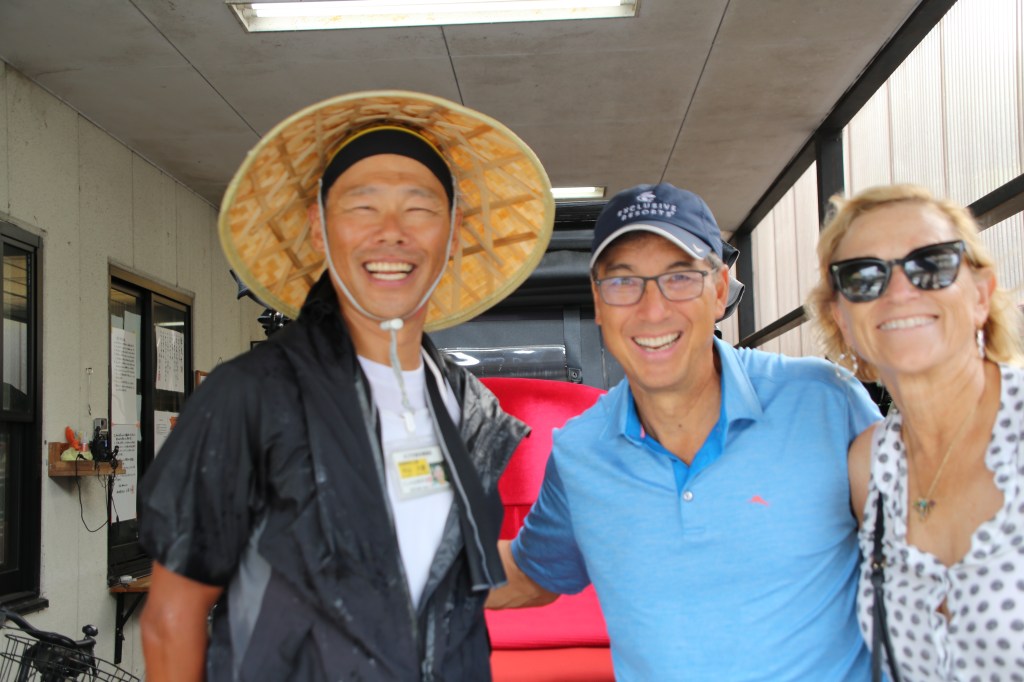
After shopping, we headed to our rickshaw (as one does) and headed into the Bamboo Forest. Our guide had been doing his job for 26 years and said he goes last because he is now the slowest. We did not find him slow at all and felt quite guilty about eating all that extra Japanese food as he had to pull us up hills into a spectacular bamboo forest. He was very proud of his city and he pointed out interesting landmarks and encouraged us to come back to visit and see some lesser-known temples and gardens.

Lisa and our rickshaw driver. We loved him.
Two of our tour companions in their rickshaw.
Riding through the bamboo forest.
Us with our driver at the end of the ride.

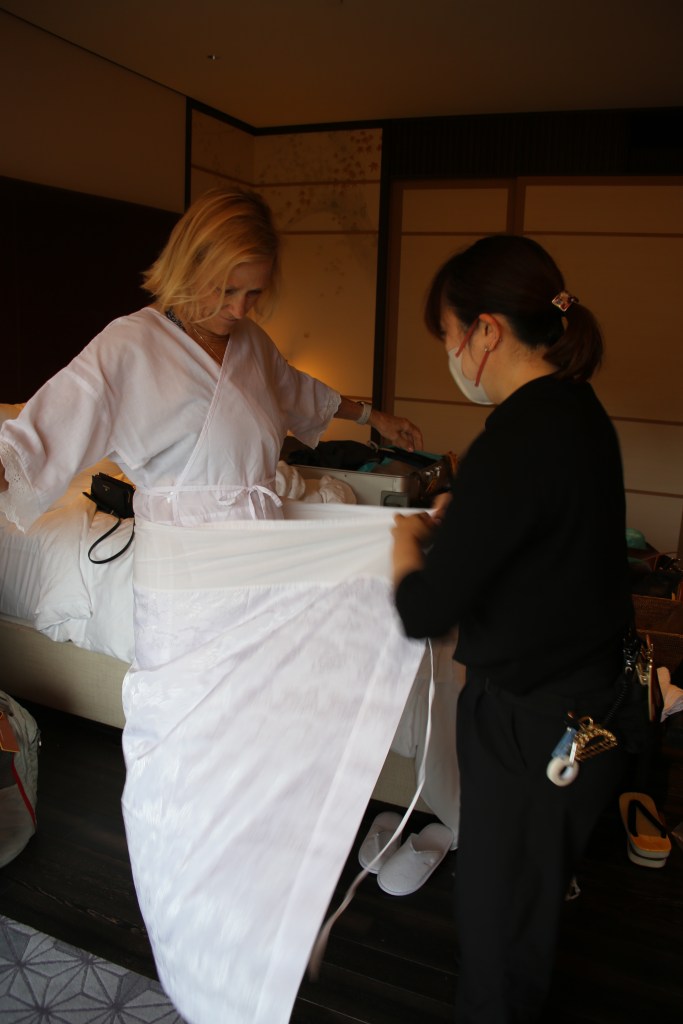
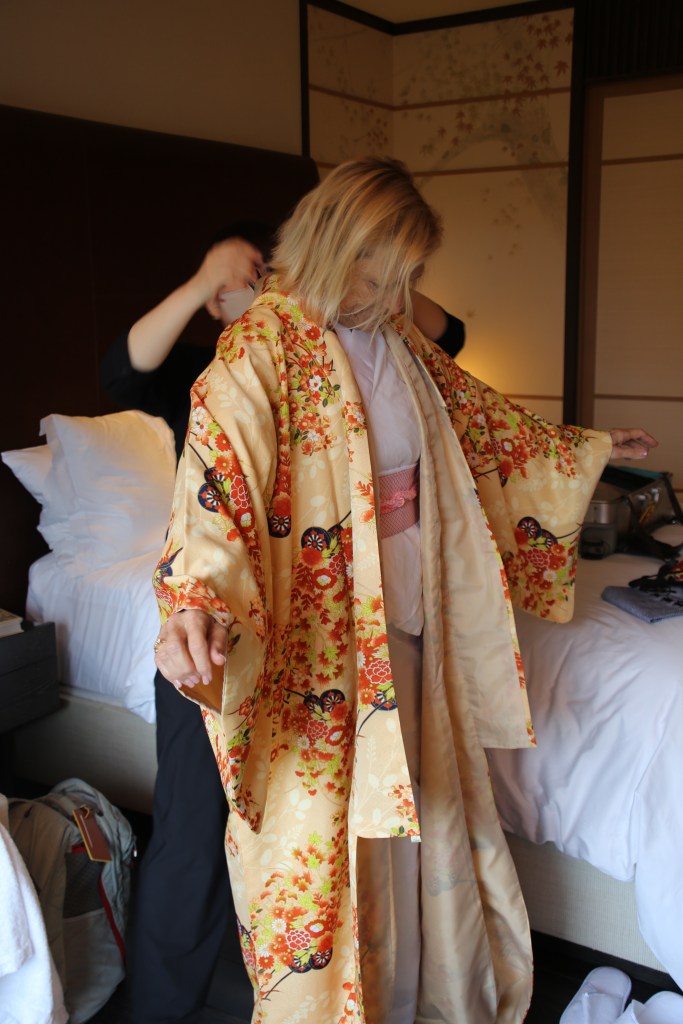
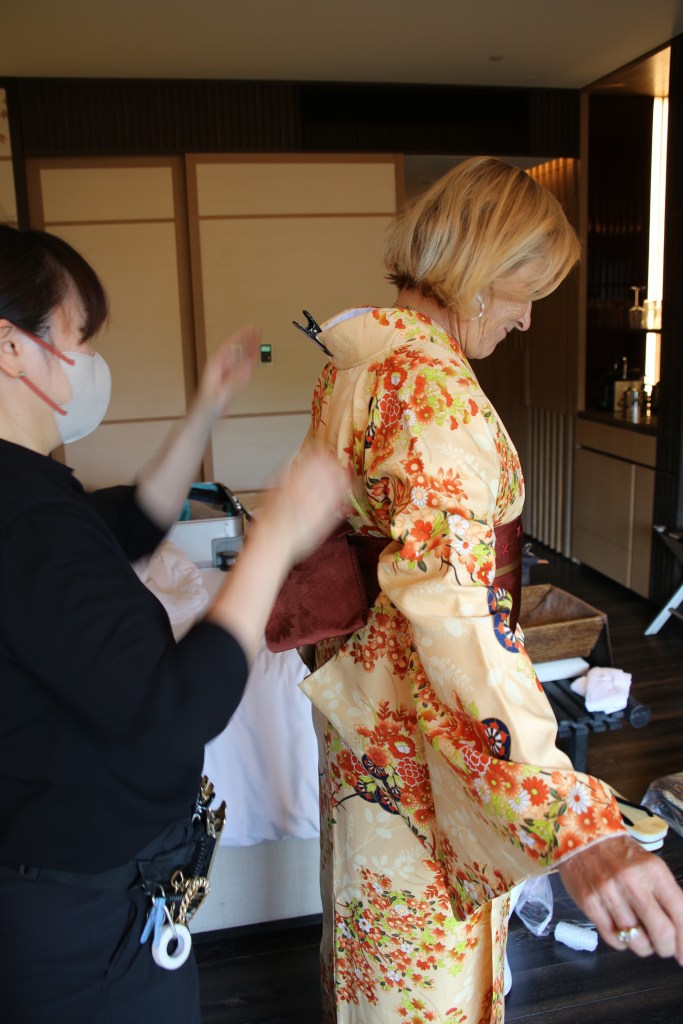
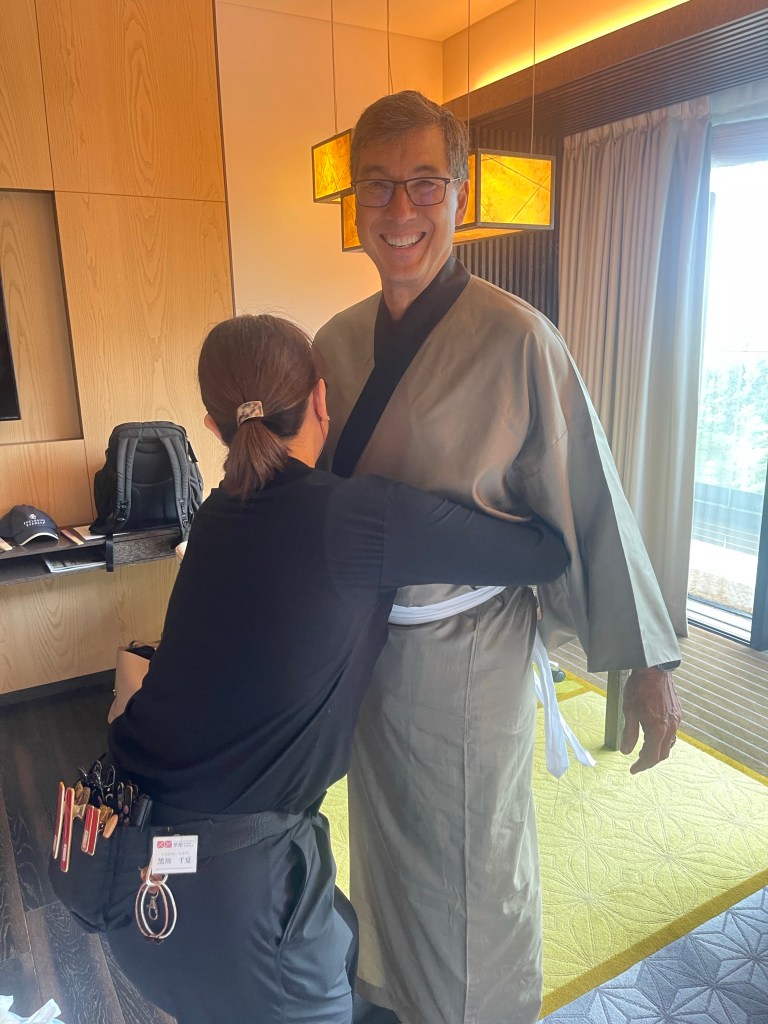
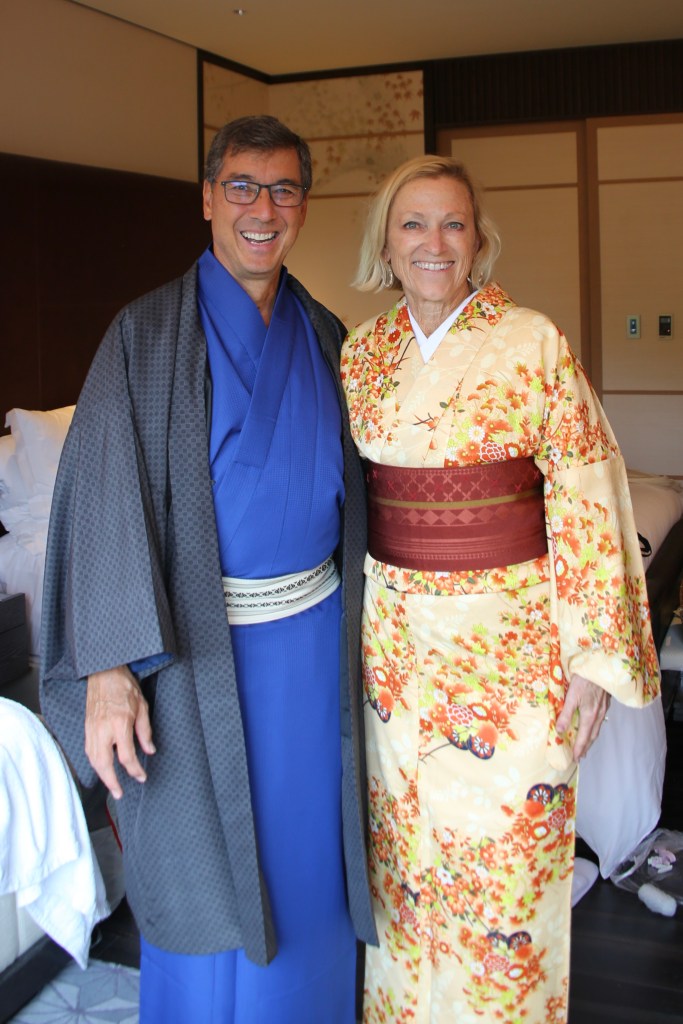
The big event of the day was getting fit into and dressed into our own kimonos. Oh my! What a process. There are at least four layers of clothing for the women and each layer is pulled very tightly. I now know what corsets used to feel like in the Victorian era. Brad also had about three layers in his kimono so he also got dressed and tugged and tightened and layered. We now have appreciation for all of the people we have seen wearing kimonos in Kyoto. It must take them at least an hour to get ready every day and I have no idea how you would get into one if you were by yourself.

Putting on the base layers of the kimono.
Putting on the outside layer.
Adding one of four belts. Why four? Who knows.
Putting on the finishing touches.
Brad’s was simpler to put on but still required many layers.
The finished product.

Walking is an adventure unto itself. Because the skirt is so tight and the shoes are small, you have to take very small baby steps and be careful going up and down stairs.

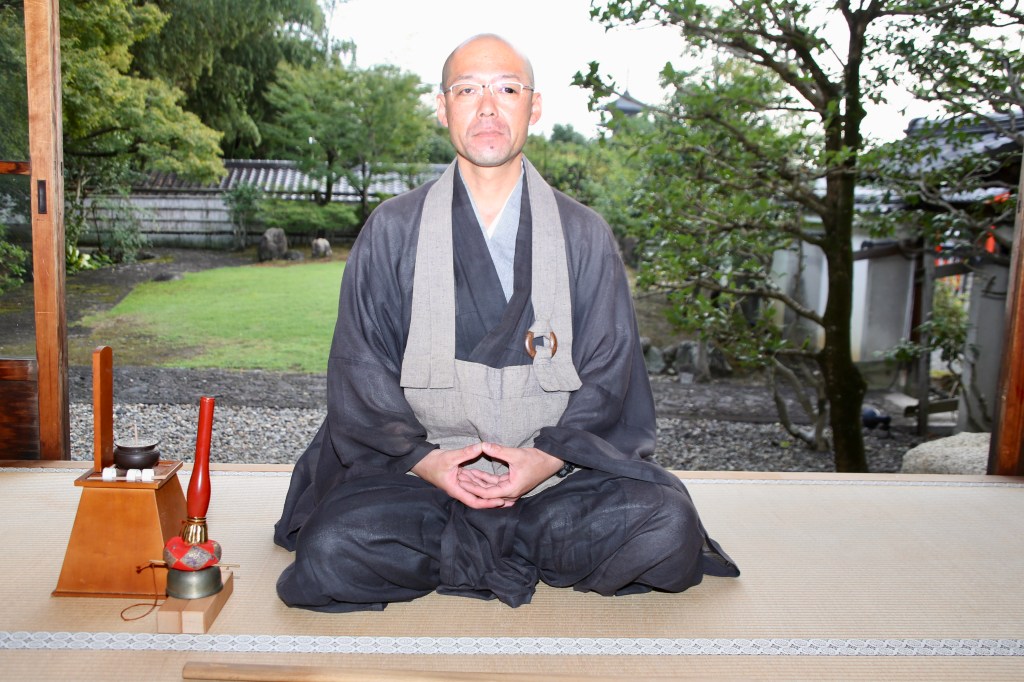
Dressed in our Kimonos, we headed to the Gesshi-in Temple for a Zen Meditation session. We learned that some of the monks actually meditate for 18 hours per day in a nearby temple. We were only doing a ten-minute session—the American version I suspect. He instructed us not to slouch and to breathe deeply for our meditation. Believe me, it is not possible to slouch in a kimono. Breathing deeply is another story and forget about eating. No wonder the Japanese women are so small.

Our Zen Master.

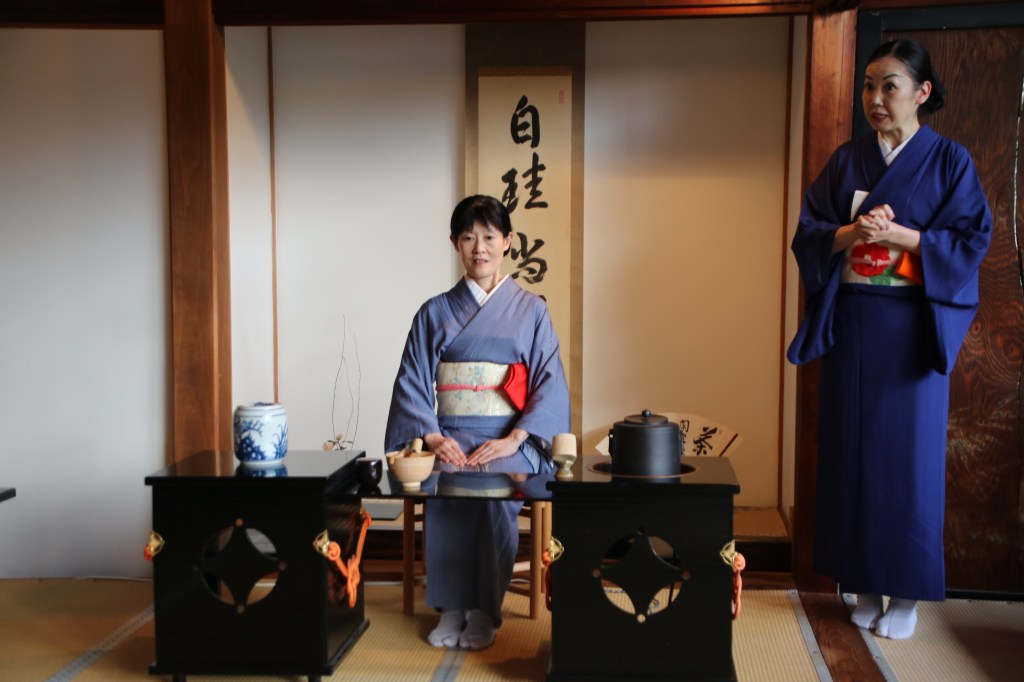
After we had our moment of Zen, we participated in and learned about a traditional Japanese Tea Ceremony. Tea is very closely tied to Zen as the man who brought Zen to Japan hundreds of years ago also brought green tea. The macha tea was delicious and we enjoyed the serenity of it all.

Our host for a traditional tea ceremony.

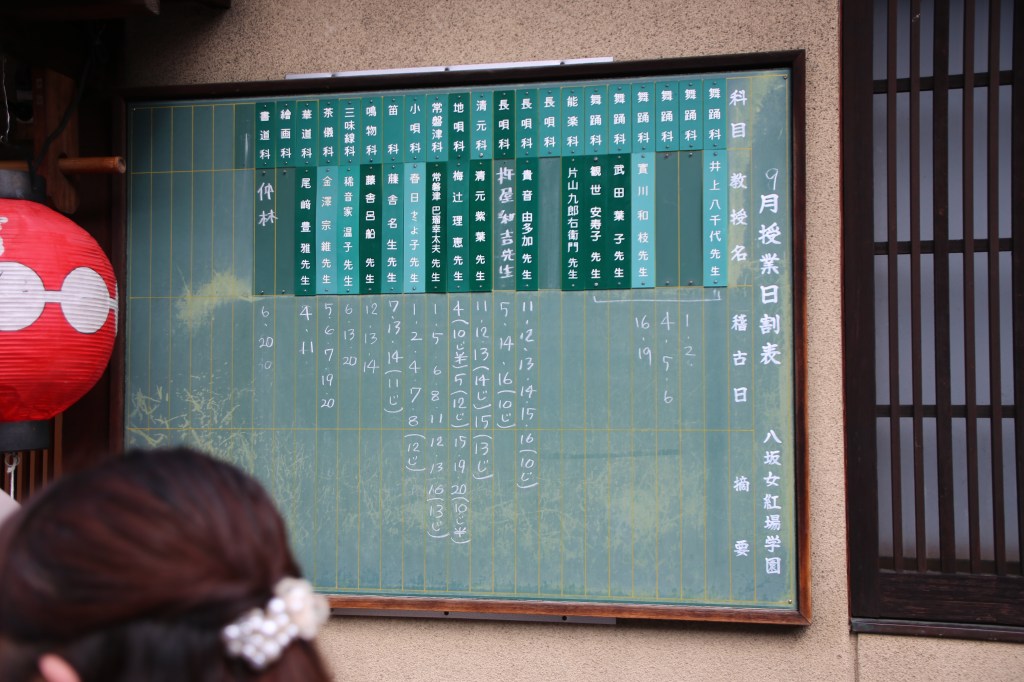
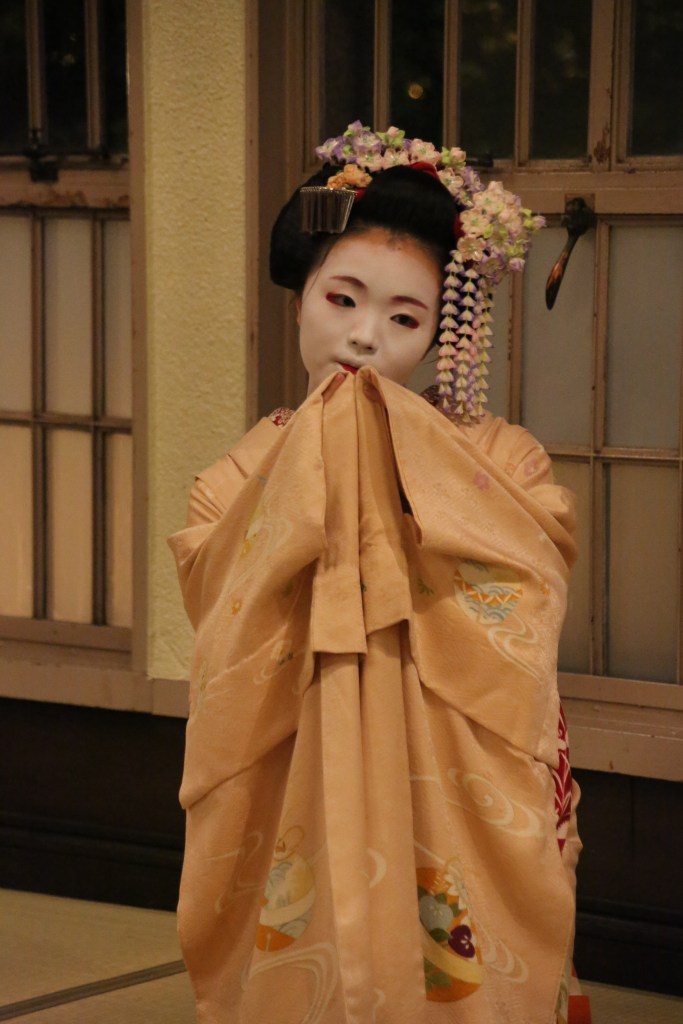
Off to dinner where we walked slowly taking baby steps along the path. We were treated to a special ceremony by two geikos (which is geisha in Kyoto dialect) and a maiko (a young apprentice). In the 1920’s there were over 80,000 geisha. Now there are a little over 200 women. A girl can choose to enter an Okiya — a school to develop Geisha — as soon as she graduates middle school. She makes the decision herself but must get her parents’ permission. The Okiya is a boarding school that teaches these girls everything the need to know about being a Geisha — music, dance, puppetry, the art of conversation, etc. The maiko are not allowed to have any social media, cell phones or internet connectivity while they are learning the trade. They go each morning to a chalkboard where they find out their schedule for the day. They then go to those classes. Imagine your 15-year-old daughter doing this. While it is their own choice and they must have their parents’ permission, it is still a daunting challenge for a young girl.

The chalkboard showing the Maiko what classes they have that day.

A typical day involves classes from 9:00 am- 2:00 pm, followed by makeup, dressing into beautiful kimonos, and hair prep for the evening, and then going out every night to entertain groups from about 6:00 until Midnight. Geisha work almost exclusively at traditional inns, teahouses, and restaurants. Contrary to common perceptions about Geisha, they only engage in proper activities. The fee for the Geisha’s time is sent at the end of each month (apparently they never charge the same amount) in the form of a “Love Letter.” I am not sure I consider our PG&E invoices love letters but maybe it’s a new way of thinking about monthly bills. One more thing, the Geiko and Maiko only get two days off per month. They are hard working women!

A young Maiko (apprentice) dancing for us.
A Geiko (full geisha) dancing for us.

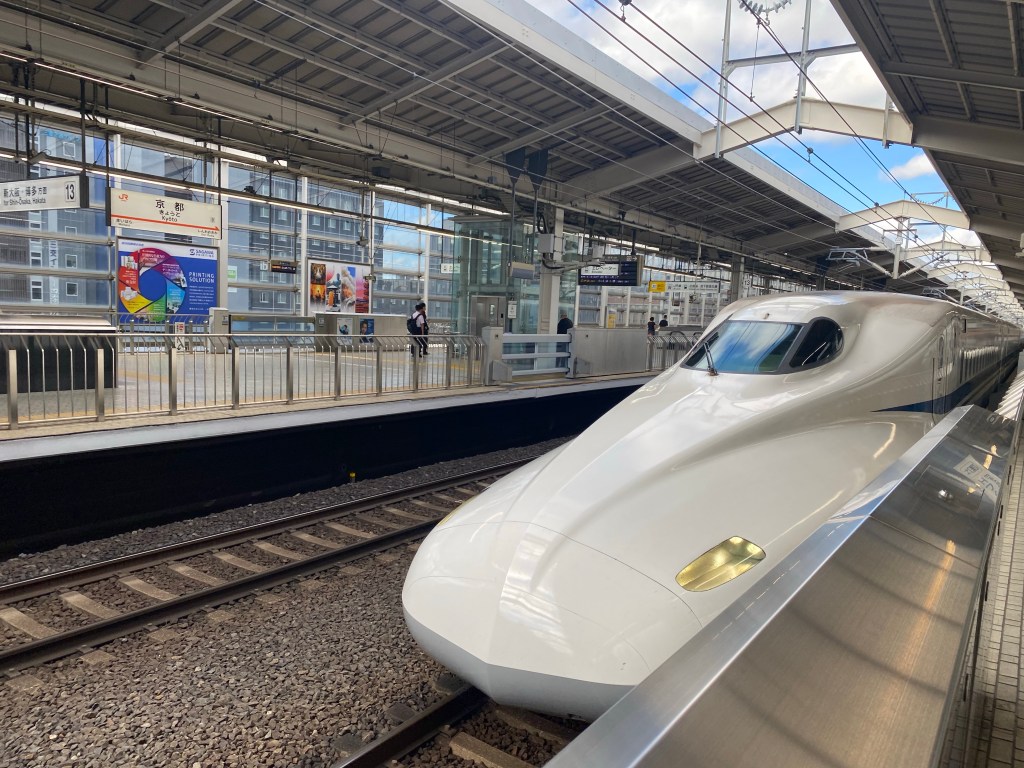
We loved Kyoto and would highly recommend spending time here if you are ever traveling to Japan. It is the center of Japanese culture and a necessary stop to fully gain an appreciation for the rich history of this country. We are currently back on our very efficient, comfortable bullet train to the mountain town of Hakone where we will be staying in a ryokan — a traditional Japanese inn — and we might even get a little time to relax in an onsen hot spring.

Our bullet train arriving to take us to Hakone.
Categories: Asia, Japan, Travel | Tags: , , , , | 2 Comments

The Mighty Himalayas

On Tuesday, Nov 3, Brad and I are heading out for a two week journey to the Himalayan countries. We’ll visit Thailand, Bhutan, China, and Tibet.  The wonderful team through Exclusive Resorts will be our travel guide and have given us our packing lists, visas, and tons of advice on how to sleep at high altitude!  We will be traveling from Bangkok at sea level to over 14,000 feet in Tibet.  Packing for this adventure is a challenge as well since the current temperature in Bangkok is 92 degrees and in Lhasa, Tibet it is 36 degrees with snow showers!  Packing only 44 lbs of luggage for such different climates could be our first real test of the trip!

We chose the Himalayas because it brought together hiking, spiritual and cultural events, and just plain breath-taking views for Brad to photograph!  We also hope to go to a lot of markets and add to the canvas food pictures on our kitchen wall.  I personally am looking forward to meeting with an astrologer, learning about Tibetan medicine and buddhism, and taking an archery lesson among all of the other site-seeing opportunities.  It’s going to be a trip we won’t soon forget!

Our original trip was to include Nepal but we no longer can visit there because of the devastating earthquake that hit the country last spring.  We had friends on that journey and were following them via Facebook.  They were in the airport the day the earthquake hit and were able to leave five hours later. They were, however, definitely affected by the quake and how close they came to being in a disaster of epic proportions.  We are saddened that we still cannot visit Nepal because the infrastructure is not capable of hosting tourists yet.  We know that this must be devastating to the economy and people of Nepal.

We will try our very best to keep you posted about our journeys via this blog but we have been told that some of the countries we will visit won’t allow us to post via Facebook (What? The horror!) and the internet.  When I called AT&T yesterday to get extra international coverage, they let me know that they really don’t have an international service plan where we are going so we should try not to use our phones unless there is a true emergency!  I guess we really will be off the grid!

We have published our itinerary on the side of this blog so you can follow where we are during the next two weeks.  At this point, they are just words and names on an itinerary to us as we have never been to any of these places before and have only briefly read our travel books.  (I’m not sure that Brad even knows exactly what day and time we are leaving yet!)  Those of you who have followed us before know that our trips have had many interesting twists and turns from Brad being detained in Chile for a contraband apple to Lisa getting a fish massage in Cambodia and, of course, to Brad’s infamous $2.50 haircut.  (They are in previous posts if you are interested!)  Who knows what mishaps lie ahead!

Enjoy the journey with us!

Brad and Lisa

Categories: Asia, Travel | Tags: , , , , , , , | 15 Comments

Blog at WordPress.com.