
Before Sunrise.
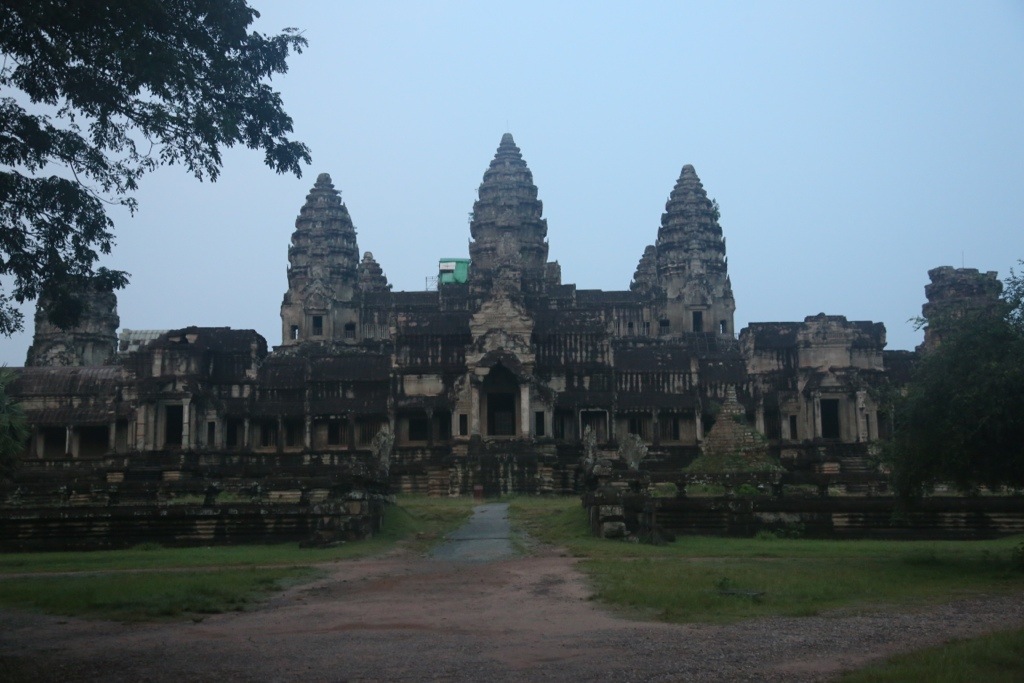
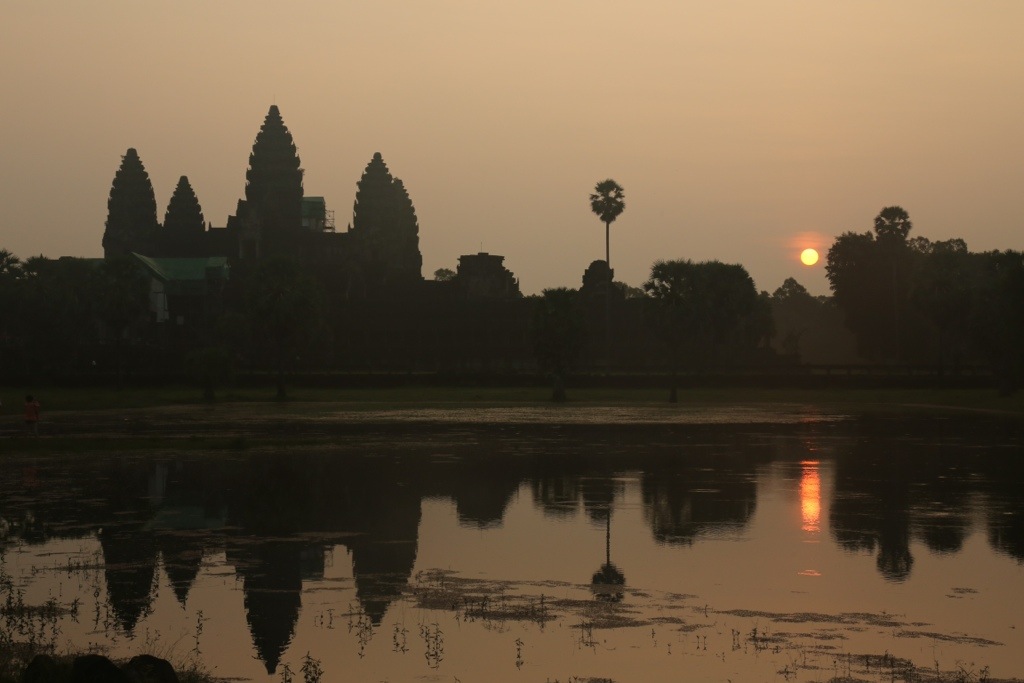
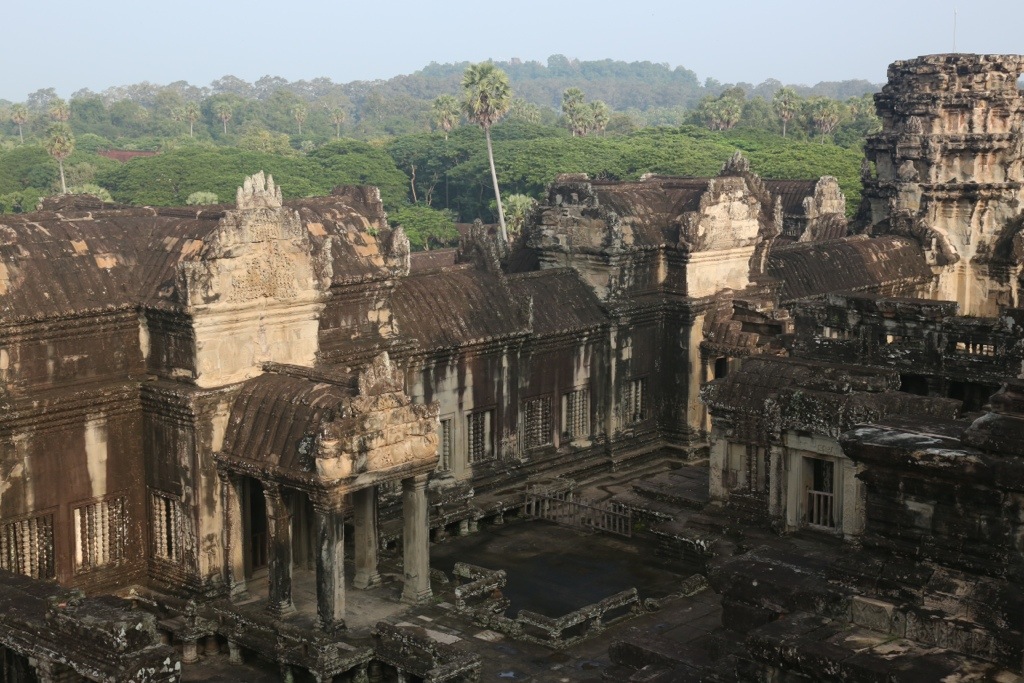
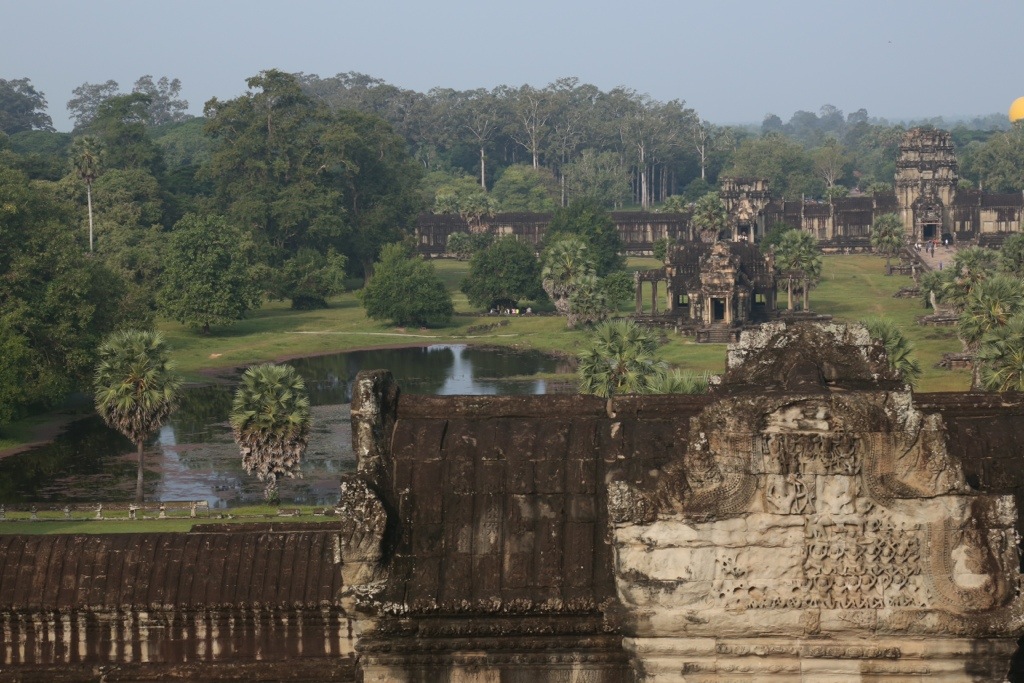
It was still dark when we rose this morning to visit Angkor Wat, the 12th-century temple touted as the largest Hindu temple in the world. One can only be awed by something that was viewed by people standing in the same spot nearly one thousand years ago. We left early to catch the splendor of viewing the structure at sunrise, and to beat both the heat and the crowds. Our guide, Soeun, is a master at getting us to the right place at the right time. He walks quite fast — likely a function of his knowledge of the perfect time to be at the perfect place to get the perfect photograph. Lighting on the temples makes all of the difference.
But, his pace could also have been influenced by his background. Cambodia, like all of the Southeast Asian countries, has a colorful and troubled past. But, Cambodia’s troubles have much more recency to them. The “Killing Fields” happened in our lifetime. For us, it was something we heard about in the news or saw in the movies. For Soeun and every other Cambodian, it was real life.
The Khmer Rouge, led by Pol Pot, ruled Cambodia from 1975 to 1979. The regime launched a reform policy that sought to eliminate all opposition. Famine, a lack of medical care, and mass executions killed over two million citizens during the period. Every family was — and still is — affected by the Killing Fields. Soeun was lucky — both his parents, who were farmers, survived. But, he had ten siblings, five of whom were “disappeared.” It makes sense that he should walk quickly.
We were told by another guide as we arrived in the country, that everyone over 45 has mental illness as a result of the stress they were under during the Khmer Rouge reign. Who wouldn’t be so deeply affected by such horror? There is an edge to the people that we didn’t feel in Vietnam or Laos. Still they are friendly, welcoming, and hopeful for a better future. But, better educational and medical systems will be needed for them to make good progress.

Lisa Removing her “troubles”in the happy room

The Oxcart and the Floating Village
We went back back to the hotel for breakfast then set off for another adventure. Tonle Sap lake is the largest freshwater lake in Southeast Asia and sits smack in the middle of Cambodia. It is unusual in that it shrinks and grows dramatically based on the season. During the rainy season the lake can quintuple in size eating up large swaths of land. We’re at the end of the rainy season so the lake is large and takes about 20 minutes to drive there from our hotel. In the dry season it will take over an hour to get to the much more distant lake shore.
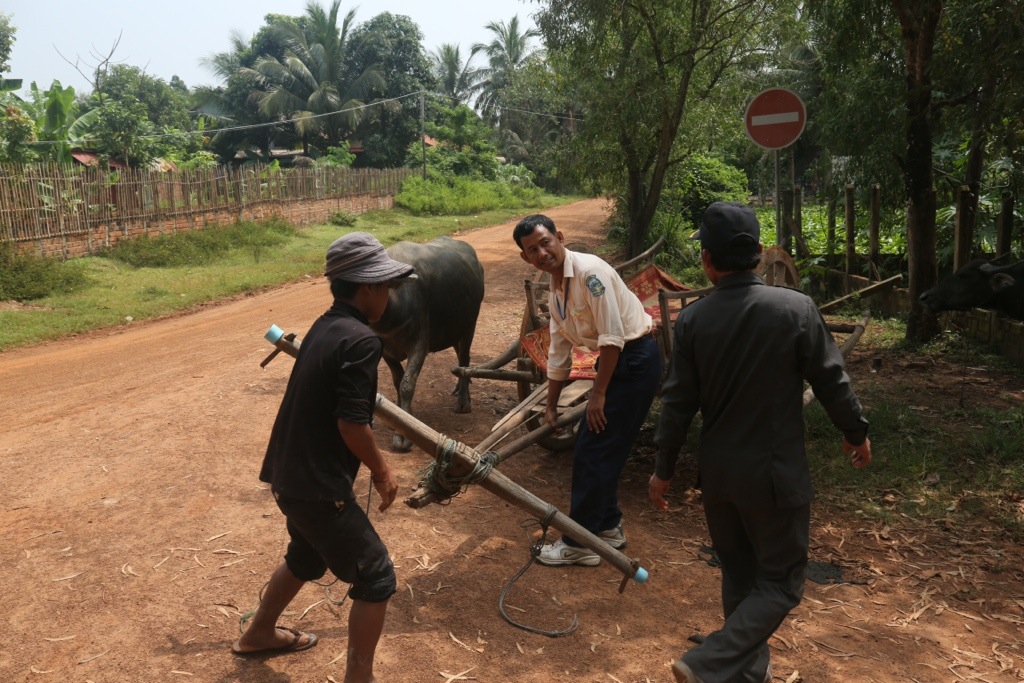
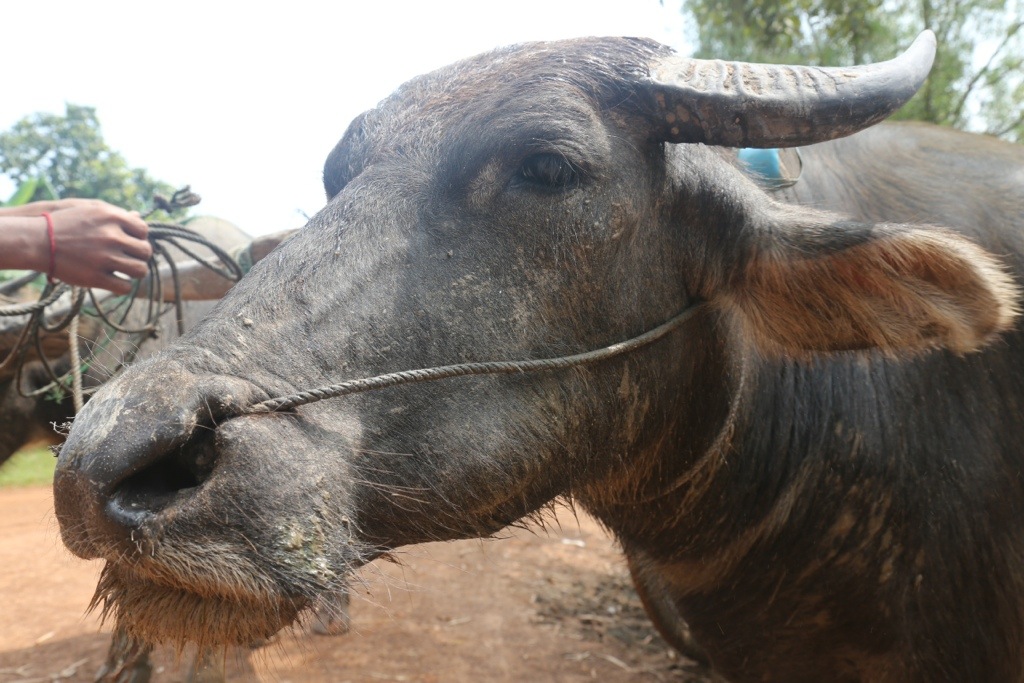
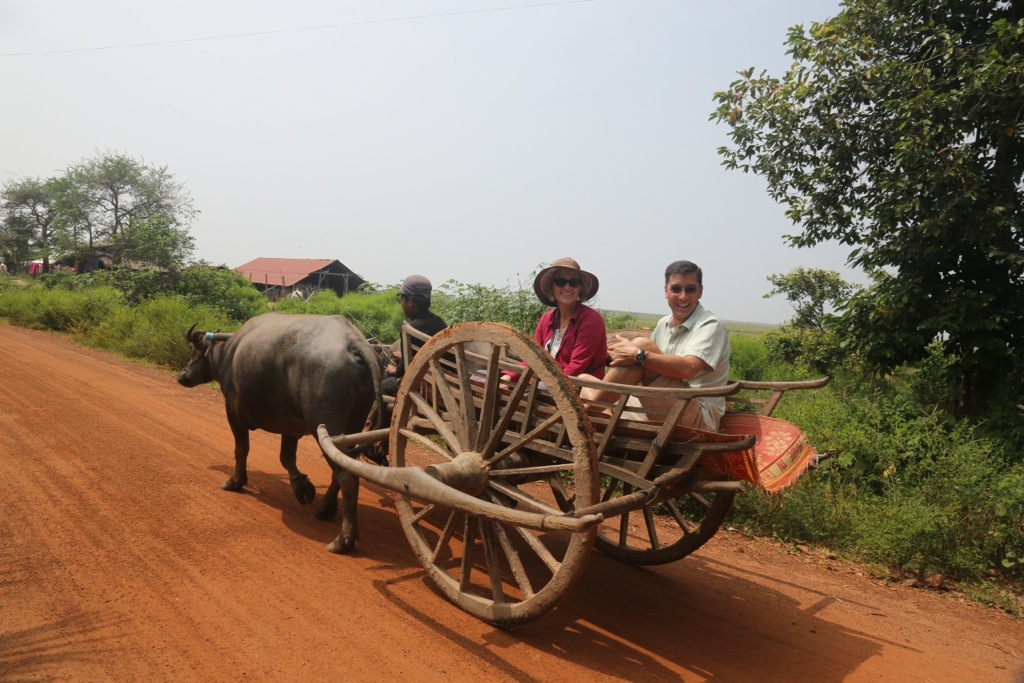
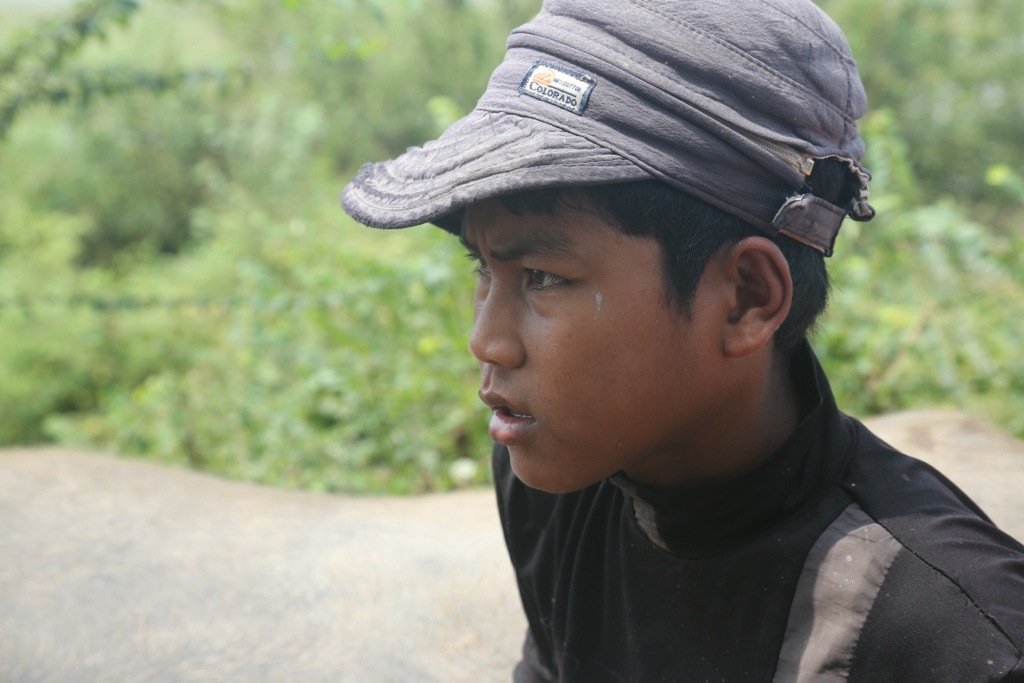
On the way we came across a boy with an oxcart and two water buffalo. He was selling rides on the somewhat deserted road to the lake. We took him up on it. How often does one get to ride in an oxcart (water buffalo cart?)? After hooking up the buffalo, the boy motioned us into the cart. The ride was s-l-o-w. It is very hot and humid here so it wasn’t long before Lisa said, “Are we done yet?” Then, to make the trip even more exciting, a carful of our tour mates drove up beside us, pointed, laughed and began snapping pictures. Our very own paparazzi vehicle.
Well, after about ten minutes and two hundred yards, we exited the vehicle. One more item scratched off the bucket list.

Cambodian barber shop. Too bad I got that haircut in Vietnam.
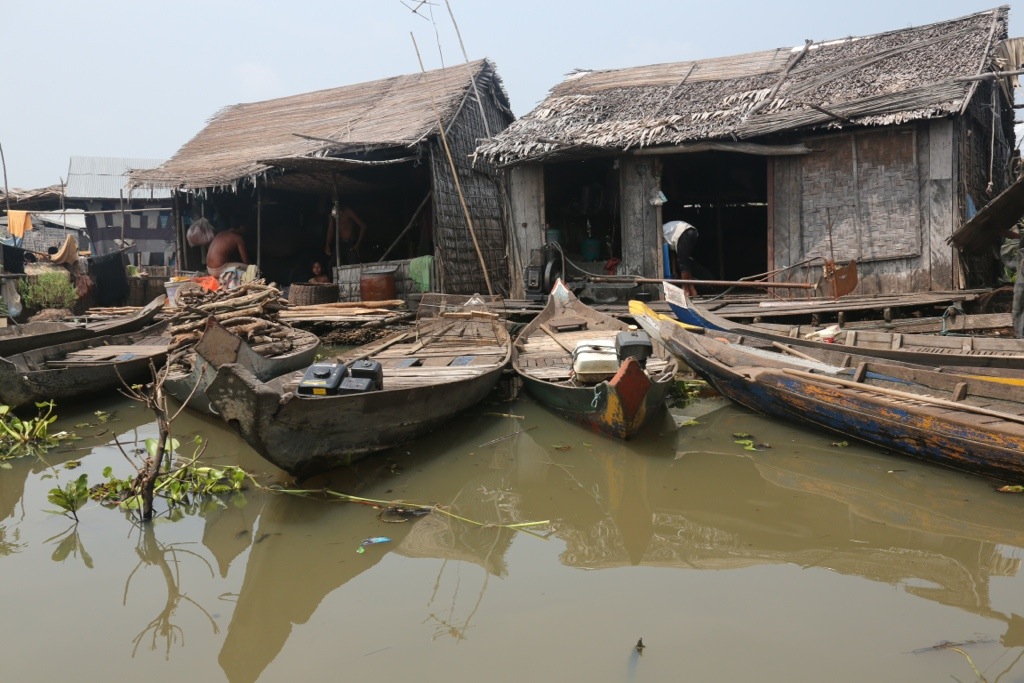
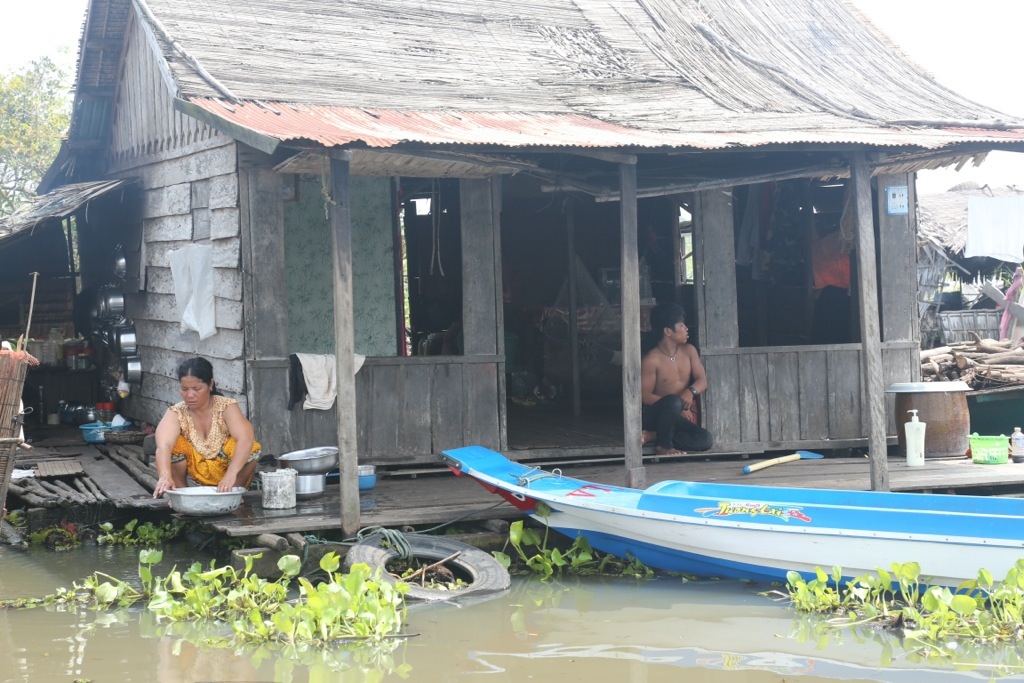
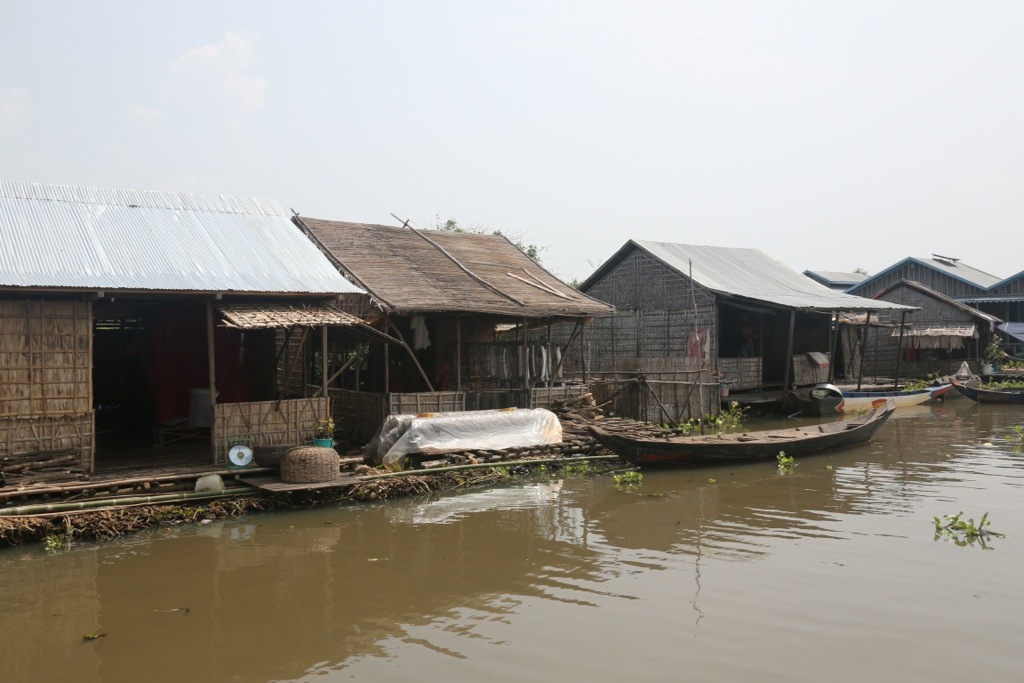
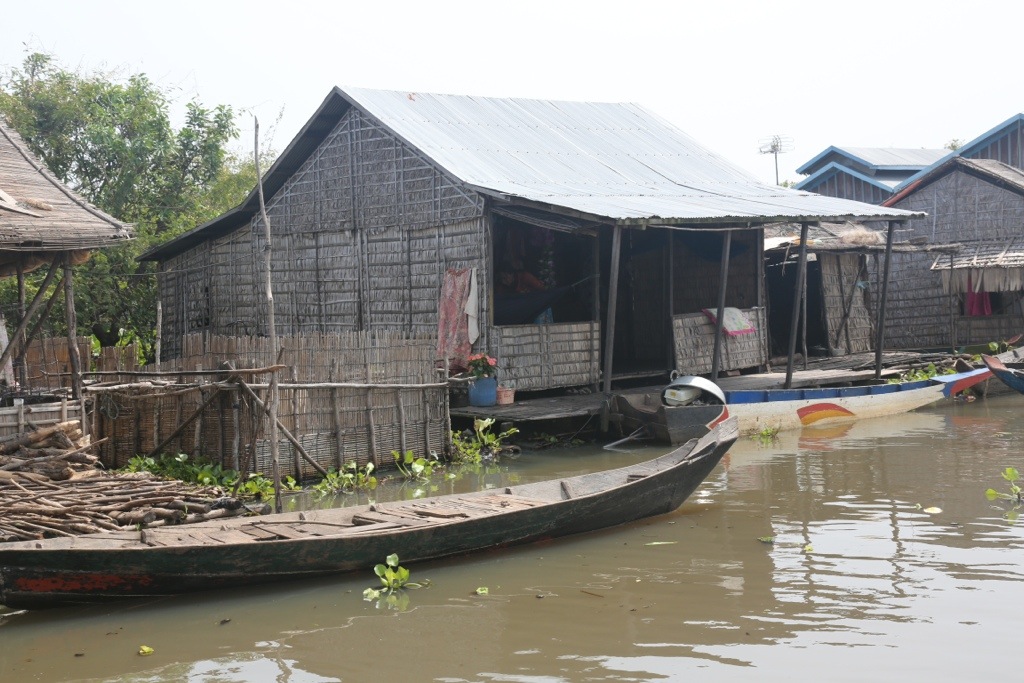
Anyway, we drove out to a boat launch and got in a rather strange looking boat to take us to the floating village. The village is a fishing hamlet on home made Cambodian houseboats. Because the lake is so transient, the residents of the village need to stay mobile so they can move as the lake does. Since they are fishermen, it wouldn’t make sense to be far from the lake shore during the dry season.
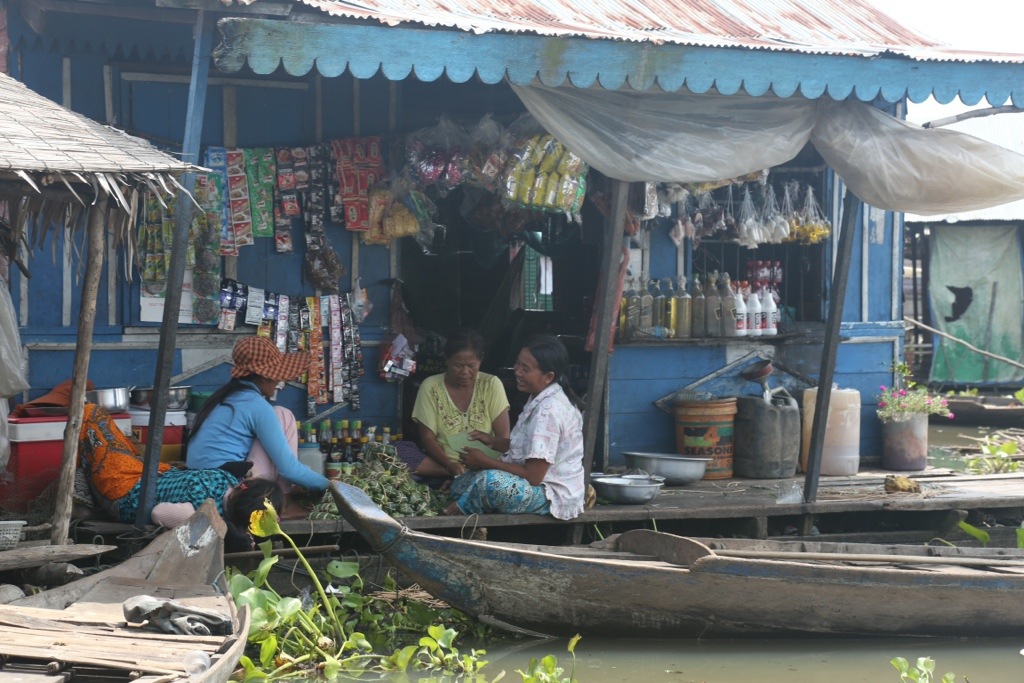
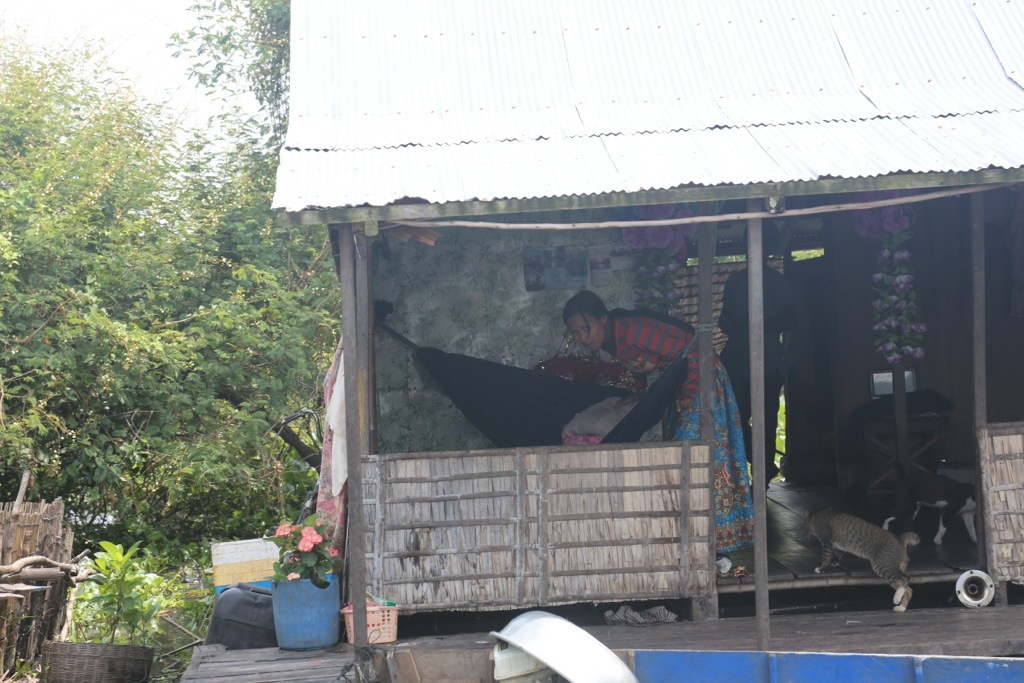
After about 20 minutes we arrived in a different world. The homes — more like floating shacks — were assembled in a town that came from another era. They used car batteries for power. There was a shop that used a gas-powered generator to recharge the batteries. The houses floated on bamboo poles bound together and they mostly used palm fronds, grass, or wood for walls and ceilings. It gave Lisa and I an indescribable understanding of the conditions much of the world lives with. We felt simultaneously lucky and awed at the experience.
Yet, children played, dogs lounged, mothers cooked, babies swung in hammocks, people smiled and waved. Happiness truly is more than can be provided by material goods. This community, always on the move, is anchored by those things that bind us all — friendship, community, family.
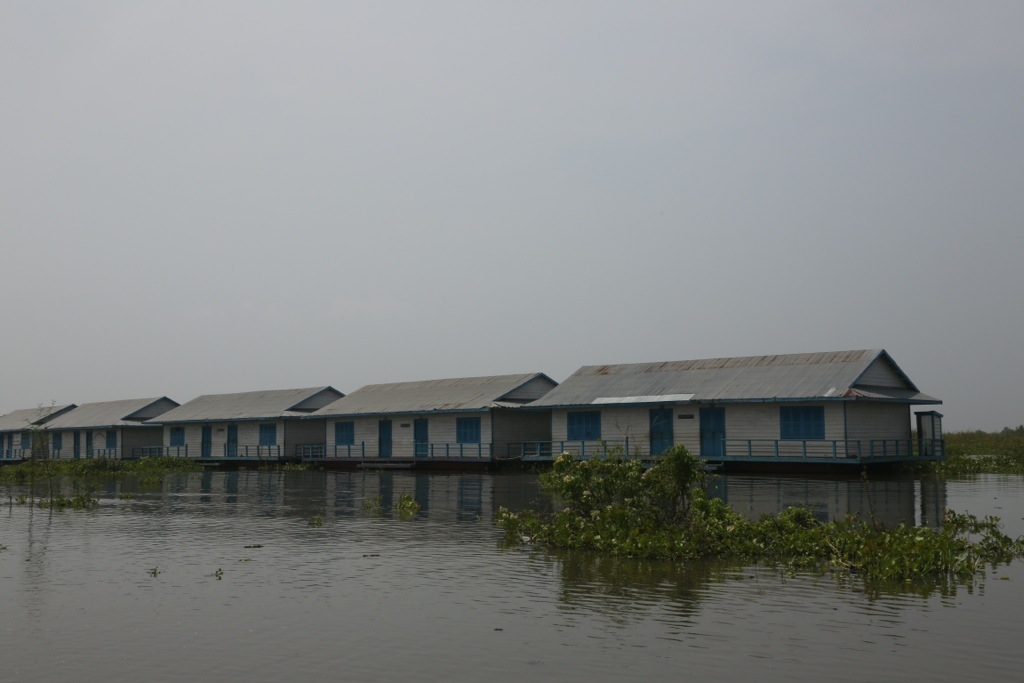
A floating school


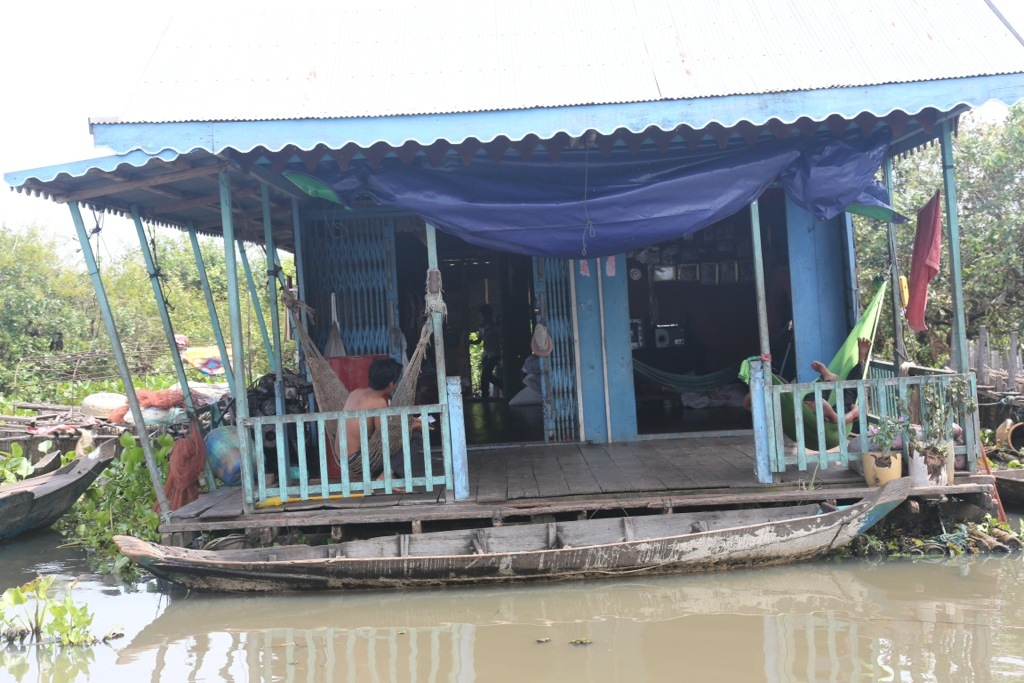




Our funny-looking boat.
 Lisa and Brad's Travels
Fabulous photos. Of course.